Fall Blooming Flowers: 7 Picks That Keep Your Garden Colorful Until Frost
Most gardens peak in June and go downhill from there. By September, the daylilies are done, the coneflowers are brown, and the only color left is the fading green of foliage. But it doesn't have to be that way—fall is actually the longest bloom season if you choose the right plants.
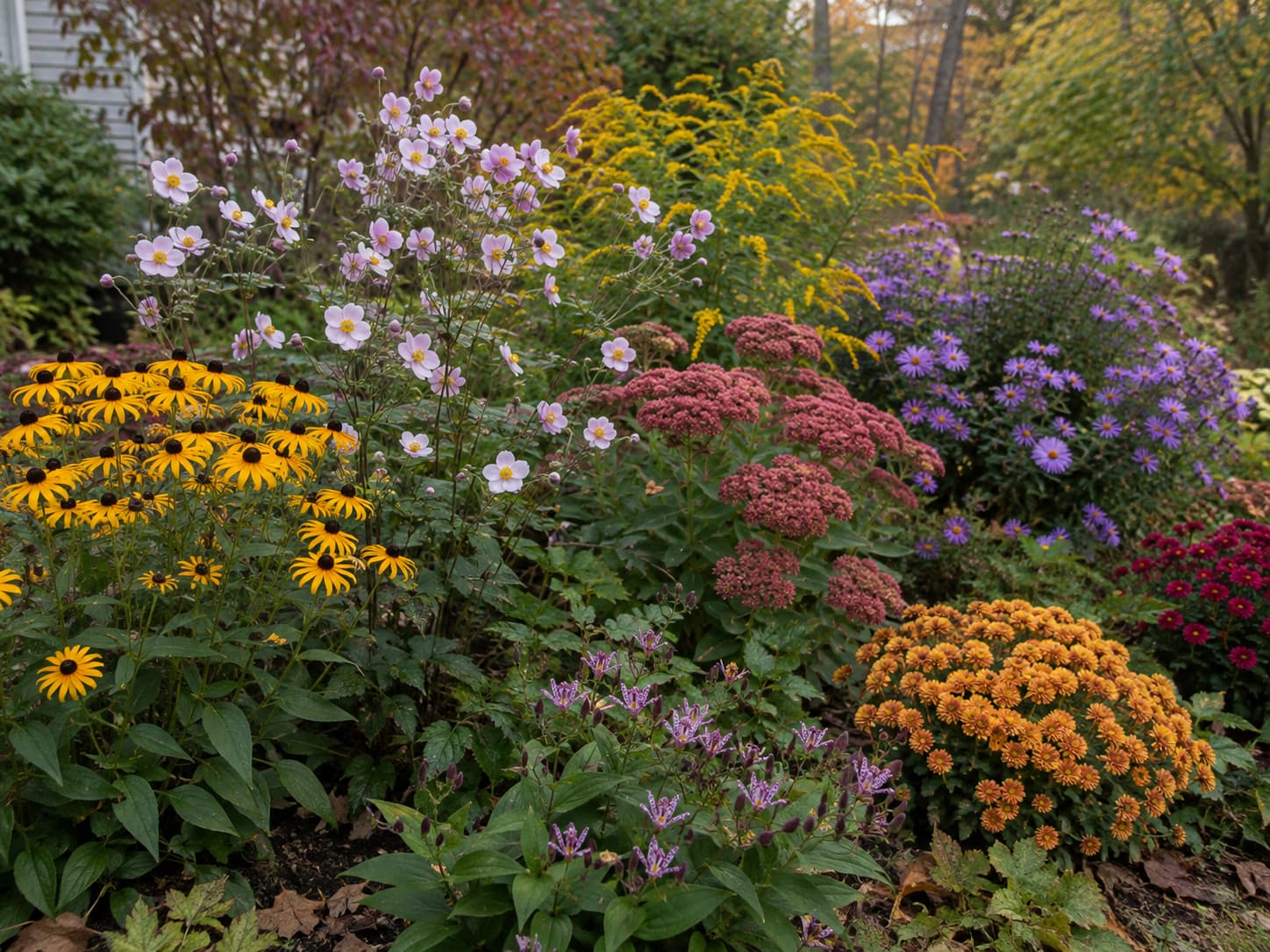
I learned this in 2024 when my August garden looked like a flower cemetery. I spent that winter researching fall bloomers, and in spring 2025 I planted seven specific perennials and annuals designed to carry color from August through first frost (early November in my Zone 6b garden). The result: my garden had more flowers in October than it did in June.
This guide covers those seven plants—how to grow each one, which varieties perform best, and how to combine them for 10+ weeks of continuous fall color. Three of them (asters, goldenrod, and mums) already have dedicated articles on this site, so I'll give you the highlights here and link to the deep dives.
greenmuse-illustration-seven-fall-blooming-flowers-until-frost.jpg
Fall Blooming Flowers: 10-Week Bloom Calendar
greenmuse-illustration-fall-flower-bloom-sequence-august-to-frost.jpg
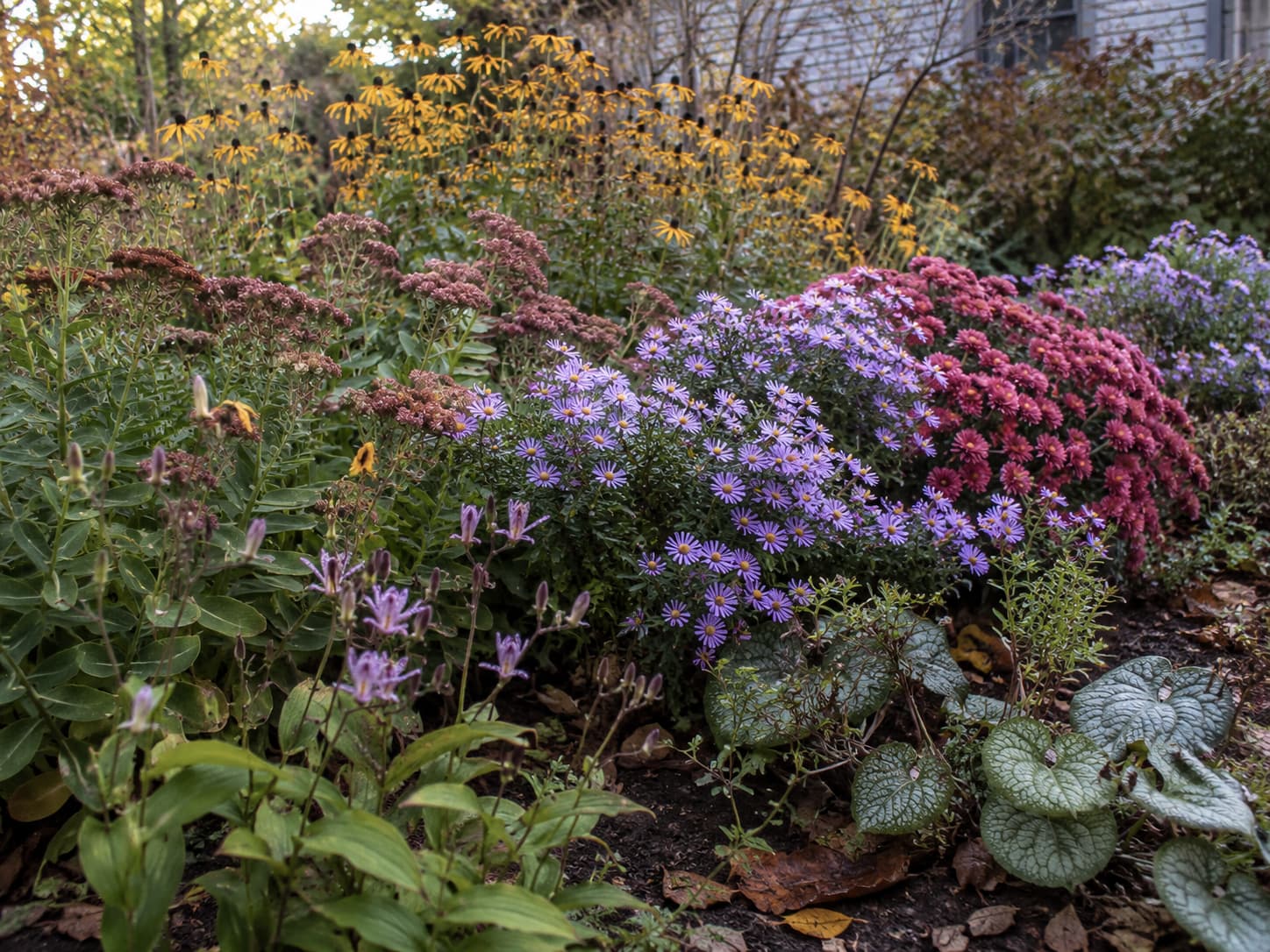
Here's when each of the 7 flowers peaks, and how they overlap to cover the entire fall season:
| Week | Aug | Sep | Oct | Nov |
|---|---|---|---|---|
| Early | Black-eyed Susan, Japanese Anemone | Goldenrod, Asters | Asters, Mums | Mums |
| Mid | Black-eyed Susan, Japanese Anemone, Sedum | Goldenrod, Asters, Sedum | Mums, Asters | Mums (if frost holds) |
| Late | Japanese Anemone, Sedum | Asters, Mums, Toad Lily | Toad Lily, Mums | — |
Drag the bar below or swipe horizontally to view the remaining columns.
1. Black-Eyed Susan (Rudbeckia fulgida)
greenmuse-illustration-black-eyed-susan-late-summer-fall-garden.jpg
Bloom time: Mid-July through September
Height: 24–36 inches
Deer resistance: Moderate (deer browse occasionally but usually move on)
Hardiness: Zones 3–9
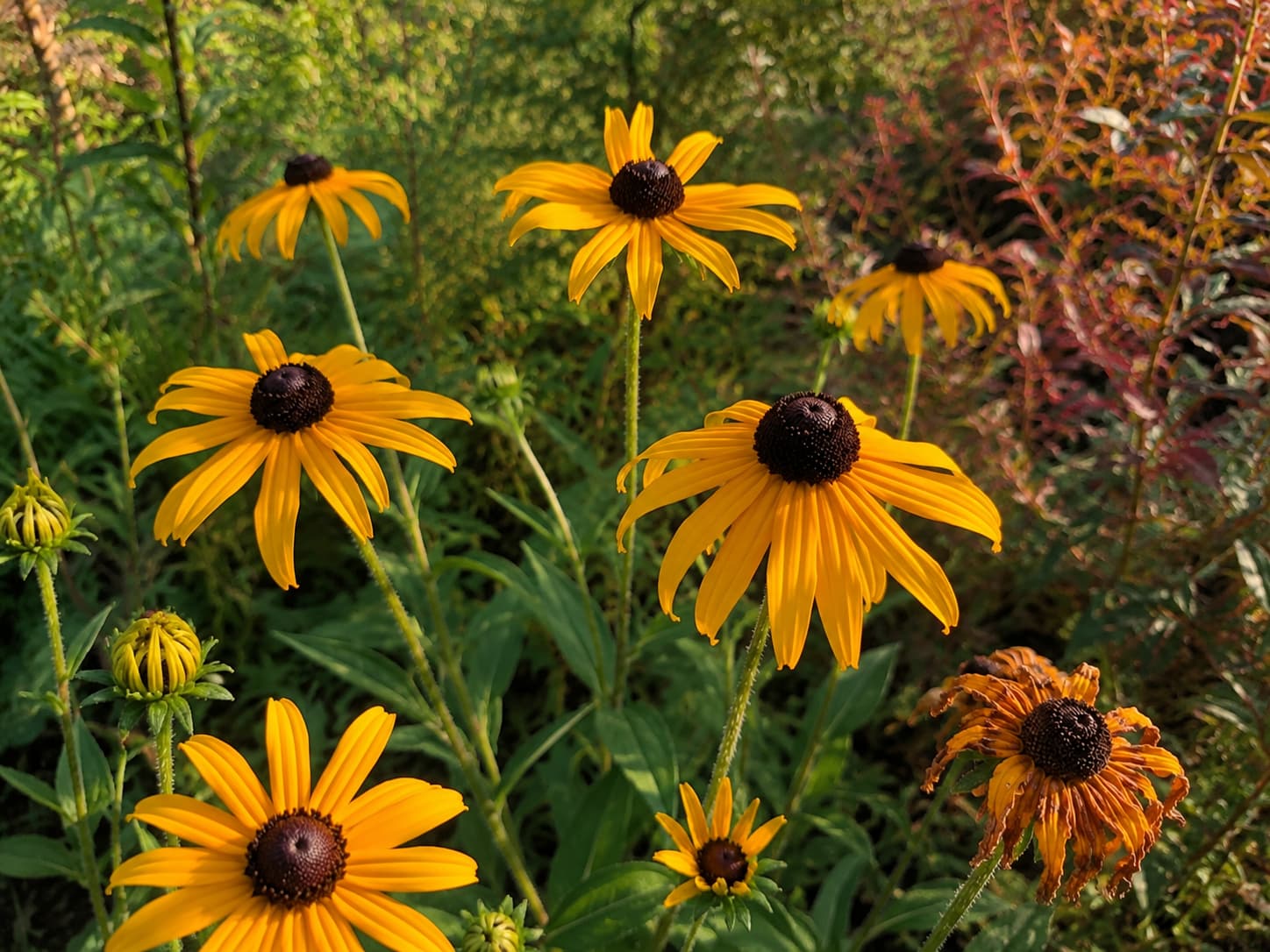
Black-eyed Susans are the bridge between summer and fall. They start blooming in mid-July when your summer perennials are fading and keep going strong through September. The golden-yellow petals with dark centers are iconic—and they look better in mass plantings than as individuals.
The One Variety to Grow: 'Goldsturm'
'Goldsturm' is the industry standard for a reason: it's a widely grown, dependable cultivar with a long bloom season. It was the 1999 Perennial Plant of the Year, and 25+ years later, nothing has surpassed it. Plants form neat clumps 24 inches tall and 18 inches wide, covered in 3–4 inch golden flowers from July through September.
I planted three 'Goldsturm' in 2024. By 2025, each clump had expanded to 24 inches wide and produced 40+ flowering stems. Once established, they generally need little routine care beyond seasonal cleanup.
Care Summary
- Light: Full sun (6+ hours)
- Soil: Any well-drained soil; tolerant of clay and drought once established
- Water: Weekly in dry spells; drought-tolerant after the first year
- Deadheading: Optional—removing spent blooms extends flowering by 2–3 weeks, but seed heads feed goldfinches in fall
2. Japanese Anemone (Anemone × hybrida)
greenmuse-illustration-japanese-anemone-fall-part-shade.jpg
Bloom time: August through October
Height: 36–48 inches
Deer resistance: High (deer rarely bother them)
Hardiness: Zones 4–8
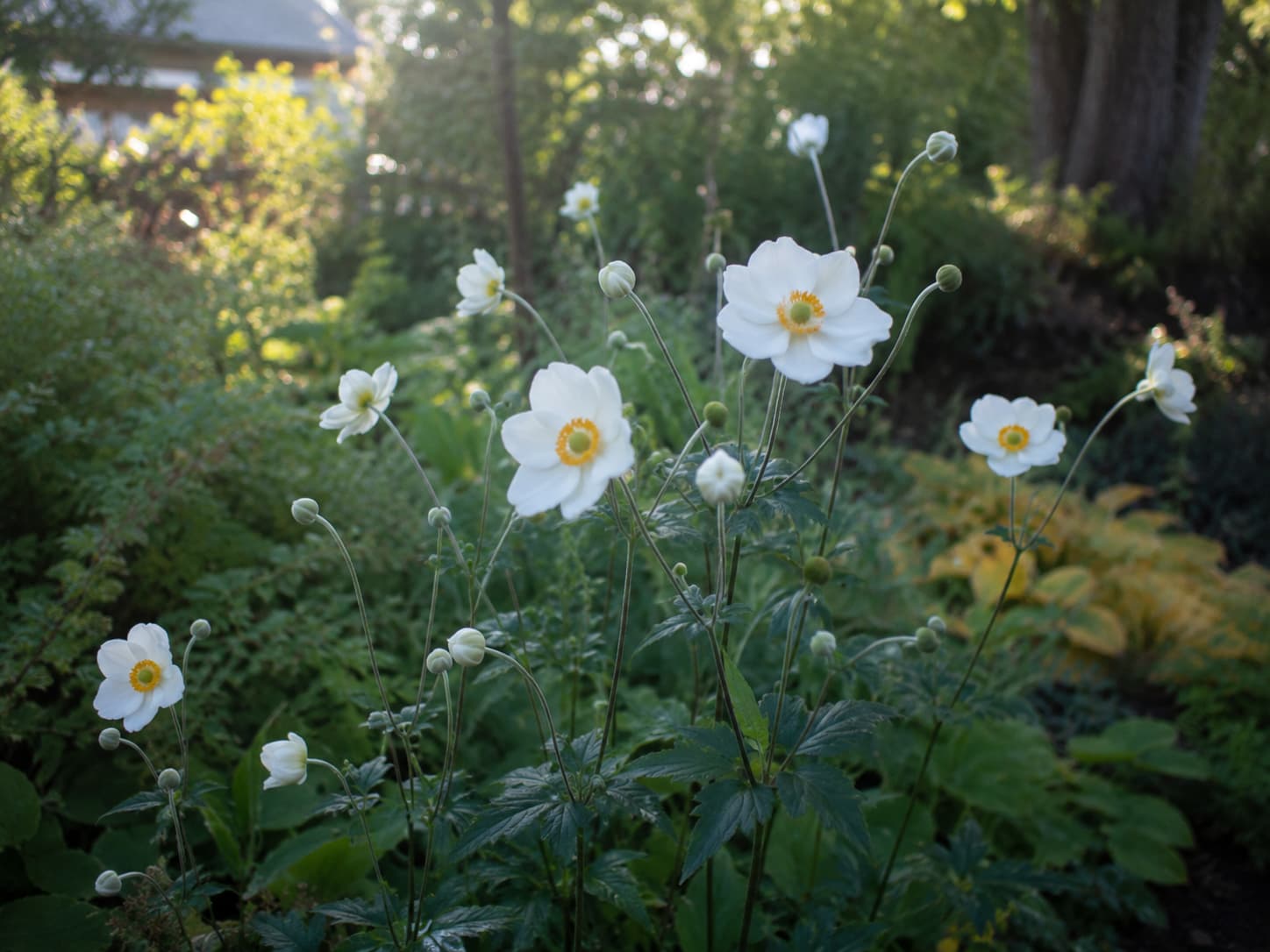
Japanese anemones produce elegant, saucer-shaped flowers on wiry stems that sway in the breeze. They look delicate but are surprisingly tough—and they bloom in the awkward gap between summer perennials fading and fall asters opening.
Best Varieties
| Variety | Flower Color | Height | Notes |
|---|---|---|---|
| 'Honorine Jobert' | White with yellow center | 36–48″ | The classic—elegant in shade gardens; AGM winner |
| 'September Charm' | Silvery pink | 30–36″ | More compact; good for smaller spaces |
| 'Robustissima' | Soft pink | 36–48″ | The most cold-hardy selection; reliable in Zone 4 |
Drag the bar below or swipe horizontally to view the remaining columns.
Care Summary
- Light: Part shade to shade (morning sun + afternoon shade is ideal)
- Soil: Rich, moist, well-drained; add compost at planting
- Water: Consistent moisture; don't let soil dry out completely
- Spread warning: Anemones spread by rhizomes and can be aggressive in ideal conditions. Plant where they have room to fill in, or contain them with a root barrier.
My 'Honorine Jobert' is planted on the north side of my house where it gets 2 hours of morning sun. It blooms for 8 weeks starting in mid-August—pure white flowers floating above the dark green foliage like moths in a garden. It's the most asked-about plant in my fall garden, and it requires almost nothing from me.
3. Sedum 'Autumn Joy' (Hylotelephium spectabile)
greenmuse-illustration-autumn-joy-sedum-fall-color.jpg
Bloom time: August through October (flower heads evolve in color)
Height: 18–24 inches
Deer resistance: High
Hardiness: Zones 3–9
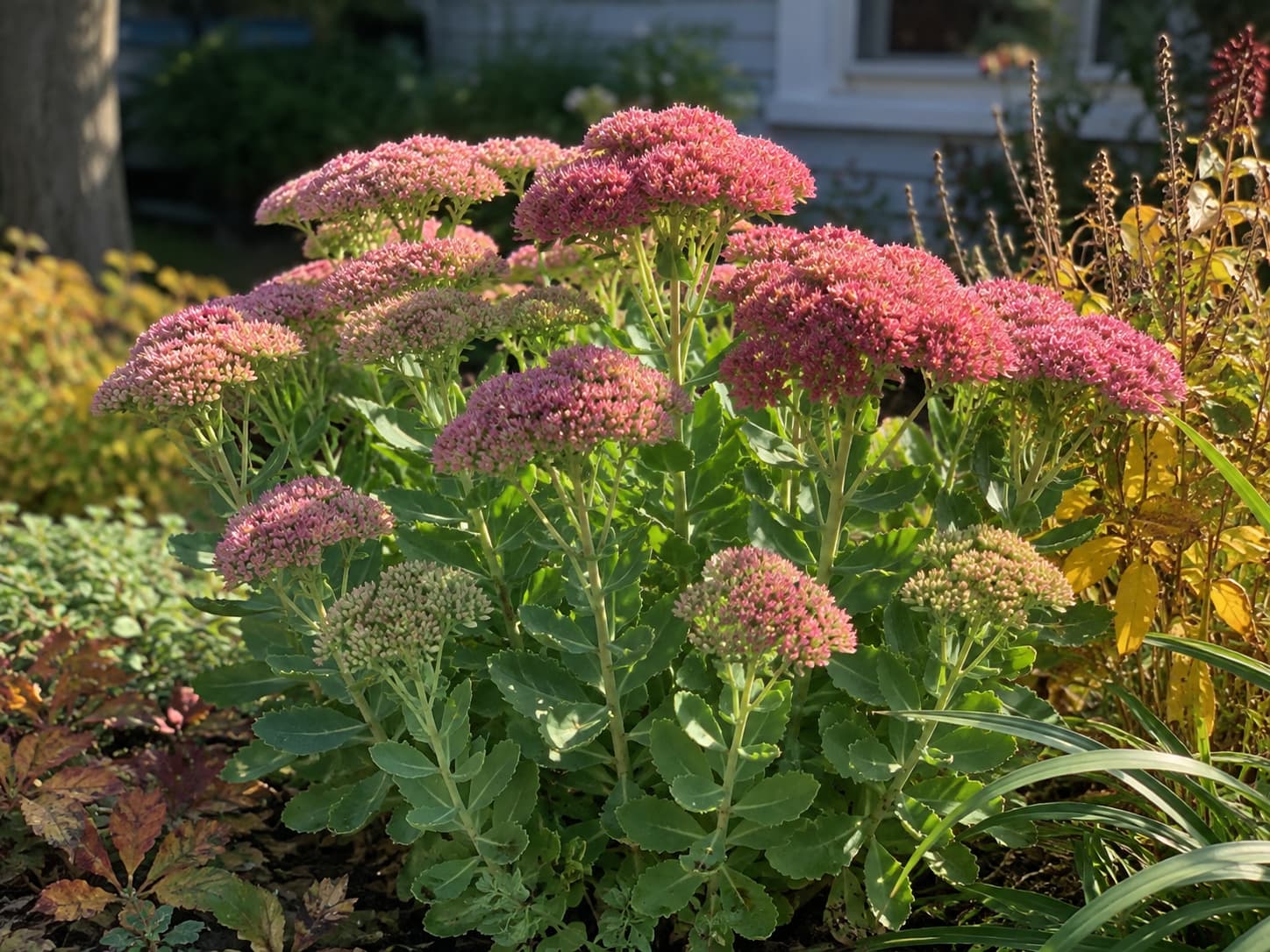
No fall garden list is complete without 'Autumn Joy'—and for good reason. Its flower heads start as pale pink broccoli-like buds in August, deepen to rich rose in September, and turn coppery-bronze in October. Even after frost kills the plant, the dried flower heads stand through winter, catching snow and providing structural interest.
Why 'Autumn Joy' Is the Perfect Beginner Plant
- Drought-tolerant: Succulent leaves store water; survives neglect
- Pest-free: Virtually no insect or disease problems
- Deer-resistant: Fleshy leaves are unpalatable
- Four-season interest: Buds → bloom → color change → dried seed heads → winter silhouette
- Butterfly magnet: The flat flower heads are landing pads for monarchs in September
Care Summary
- Light: Full sun
- Soil: Well-drained; tolerates poor, sandy, or gravelly soil. Will rot in heavy wet clay.
- Water: Rarely needed once established; every 2 weeks in drought
- The Chelsea Chop: Cut stems back by half in late May for bushier, shorter plants that don't flop. See our asters & daylilies article for the full Chelsea Chop technique.
4. Goldenrod (Solidago spp.)
greenmuse-illustration-goldenrod-fall-garden-pollinators.jpg
Bloom time: August through October
Height: 24–60 inches depending on variety
Deer resistance: High
Hardiness: Zones 3–9
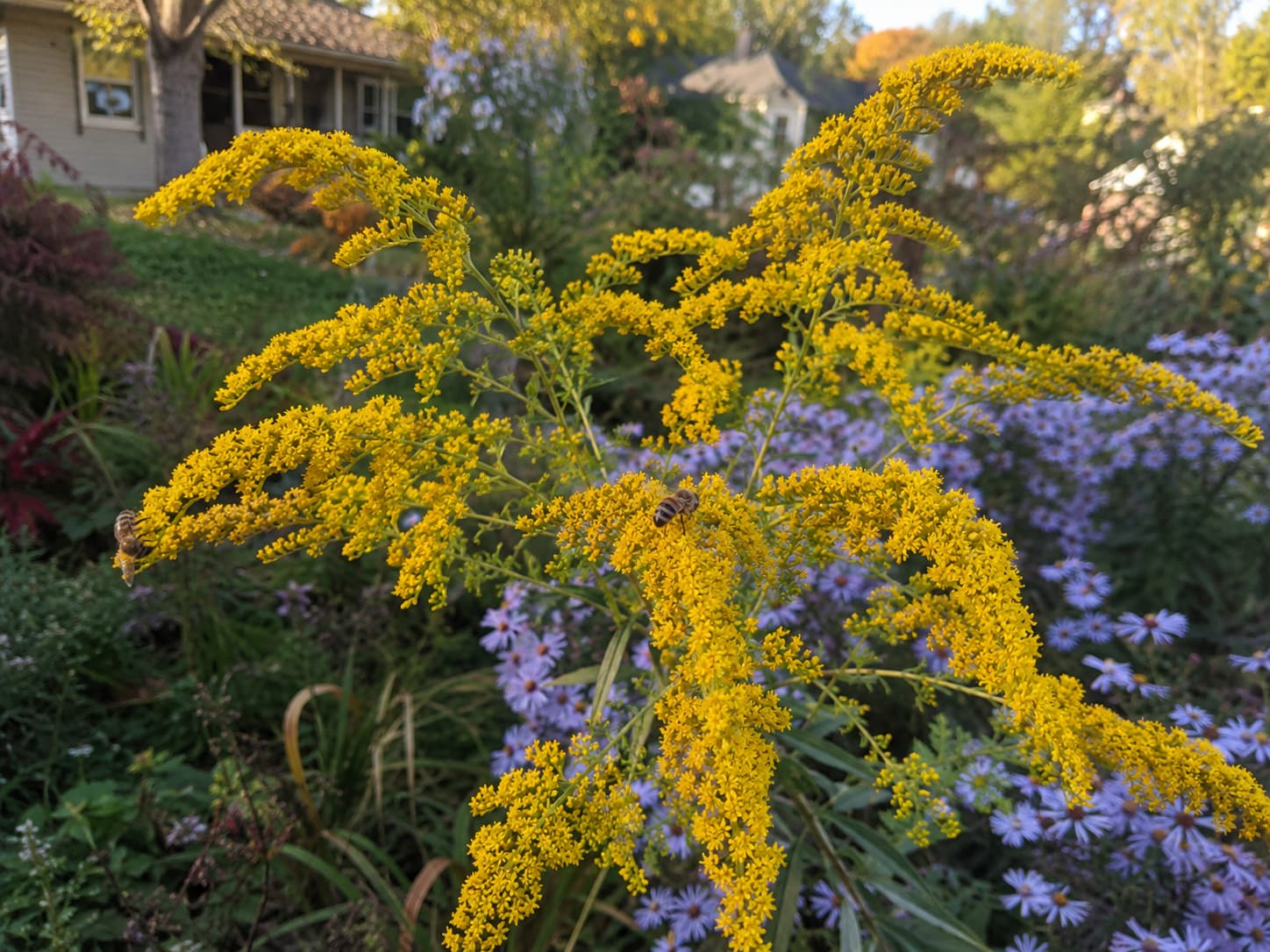
Goldenrod is the most misunderstood flower in the American garden. Millions of people blame it for fall allergies when the real culprit is ragweed—a completely different plant with invisible, airborne pollen. Goldenrod pollen is heavy and sticky, designed to stick to bees, not float into your nose. For the full allergy science and growing guide, see our complete goldenrod article.
The 3 Best Varieties for Garden Use
| Variety | Height | Why This One |
|---|---|---|
| 'Golden Fleece' | 18–24″ | Compact; perfect for small gardens and containers; doesn't spread aggressively |
| 'Fireworks' | 36–40″ | Arching sprays of gold; the most dramatic garden presence |
| S. rugosa 'Wichita Mountains' | 36–48″ | Tough, drought-tolerant native; best for naturalizing in meadow-style plantings |
Drag the bar below or swipe horizontally to view the remaining columns.
5. Asters (Symphyotrichum spp.)
greenmuse-illustration-purple-aster-fall-garden.jpg
Bloom time: September through October (some into November)
Height: 12–48 inches depending on variety
Deer resistance: Moderate
Hardiness: Zones 3–8
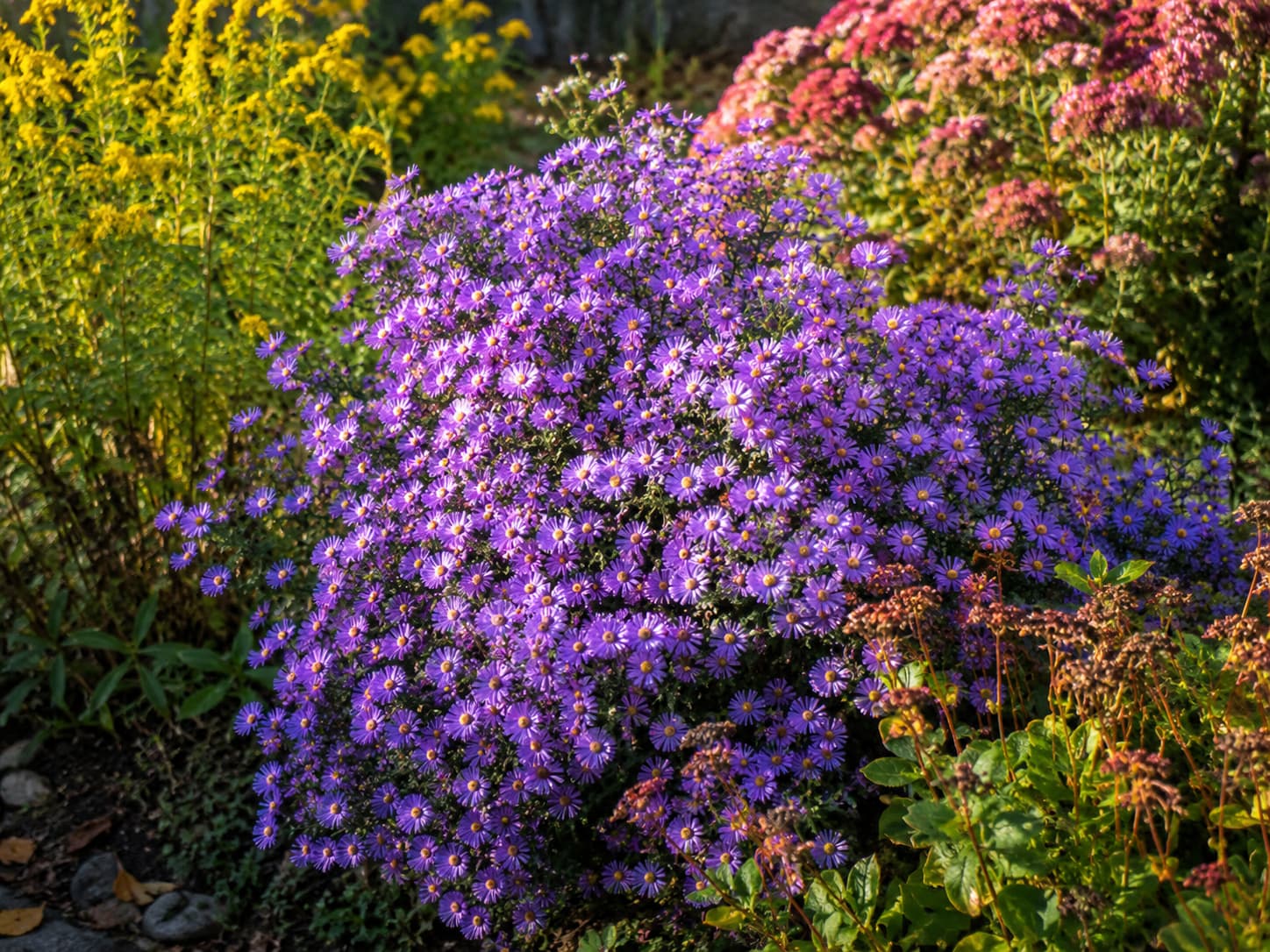
Asters are the backbone of the fall garden. Their daisy-like flowers in purple, pink, white, and blue peak when everything else is shutting down. For deep-dive care on the most popular species, see our New England aster guide and our asters & daylilies article.
4 Aster Varieties That Actually Bloom Well
| Variety | Color | Height | Why It's Special |
|---|---|---|---|
| 'Purple Dome' (New England aster) | Deep purple | 18″ | Naturally compact—no staking needed; covered in 100+ flowers |
| 'Alma Potschke' (New England aster) | Rosy-pink | 36–48″ | The most vivid pink in the fall garden; needs staking |
| 'October Skies' (Aromatic aster) | Sky blue | 18–24″ | Fragrant foliage; one of the latest bloomers (into November) |
| 'Wood's Blue' (Wood's aster) | Light blue | 12–18″ | Shade-tolerant; great under trees; very compact |
Drag the bar below or swipe horizontally to view the remaining columns.
Care Summary
- Light: Full sun for best bloom; 'Wood's Blue' tolerates part shade
- Soil: Average to moist; doesn't tolerate drought as well as sedum or goldenrod
- Water: Weekly; more in drought
- Pinching: Cut tall varieties back by half in late May (Chelsea Chop) to prevent flopping
- Division: Divide every 3–4 years in spring to maintain vigor
6. Mums (Chrysanthemum)
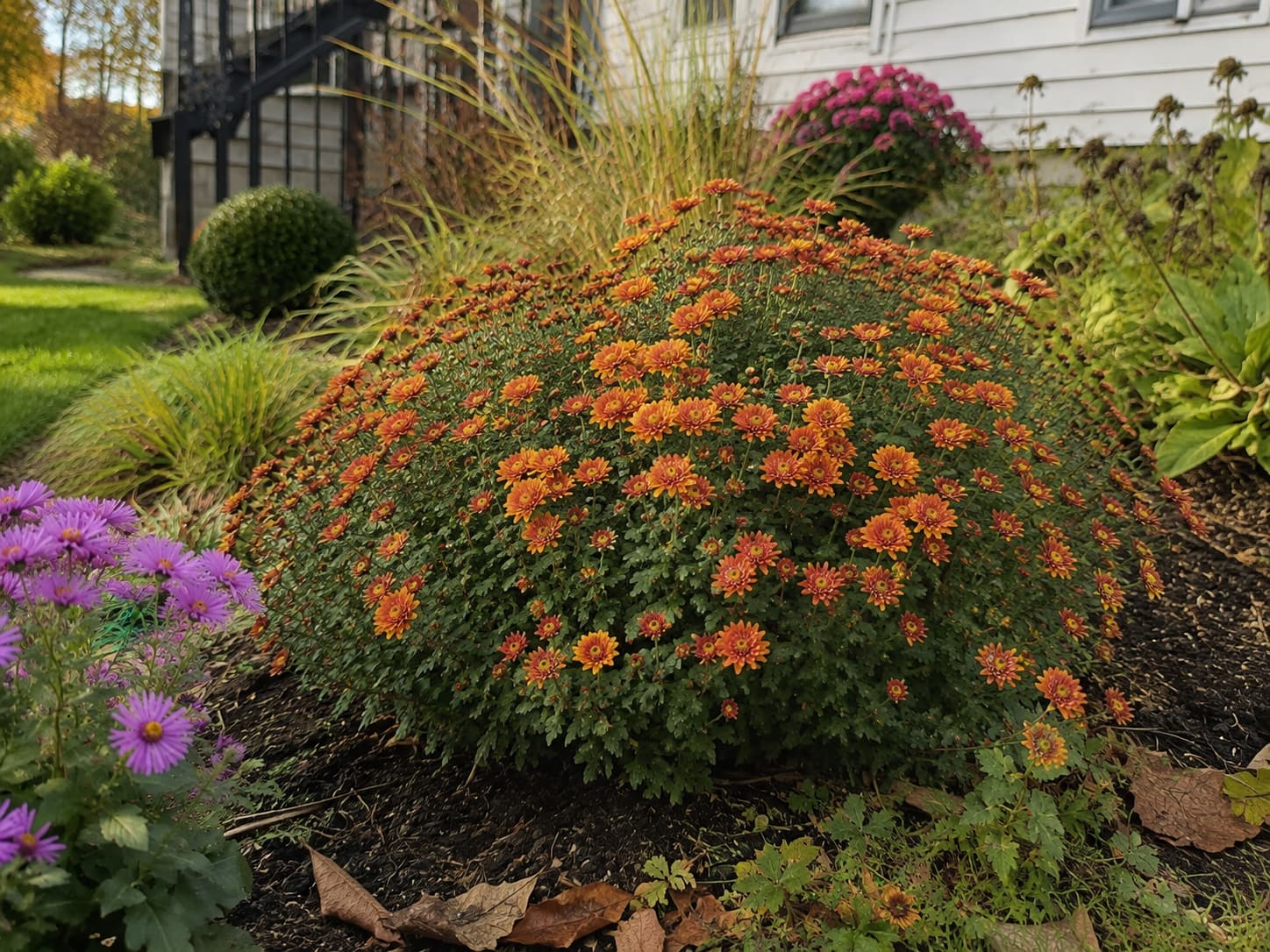
greenmuse-illustration-hardy-garden-mums-fall-border.jpg
Bloom time: September through November (garden mums) or forced for one-season display (florist mums)
Height: 12–36 inches
Deer resistance: High (aromatic foliage deters browsing)
Hardiness: Zones 5–9 for garden mums; florist mums are not winter-hardy
Mums are the most recognizable fall flower—and the most misunderstood. The $5 pots at the grocery store in October are florist mums, bred for a single spectacular bloom and then discarded. They're not bred to survive winter. If you want mums that come back year after year, you need garden mums (also called hardy mums), which are a different class entirely.
Florist Mums vs. Garden Mums
| Florist Mums (grocery store) | Garden Mums (nursery) | |
|---|---|---|
| Return next year? | Usually not | Yes, for 3–5 years |
| Bloom size | Large, showy, one per stem | Smaller, numerous, covering the plant |
| Price | $5–8 | $8–15 |
| Root system | Weak; no energy stored for winter | Sturdy; develops roots all season |
| When to plant | Don't bother planting—enjoy in the pot and compost after | Spring or early fall (at least 6 weeks before ground freezes) |
Drag the bar below or swipe horizontally to view the remaining columns.
Best Garden Mum Varieties
- 'Sheffield Pink': Single salmon-pink daisies; most reliable rebloomer; grows 24 inches tall
- 'Clara Curtis': Single pink; extremely hardy (Zone 4); late September bloom
- 'Ryan's Daisy': Single pink with yellow center; vigorous; named after a legendary plantsman
For the complete mum care guide including tea-making varieties, see our chrysanthemum overview.
7. Toad Lily (Tricyrtis hirta)
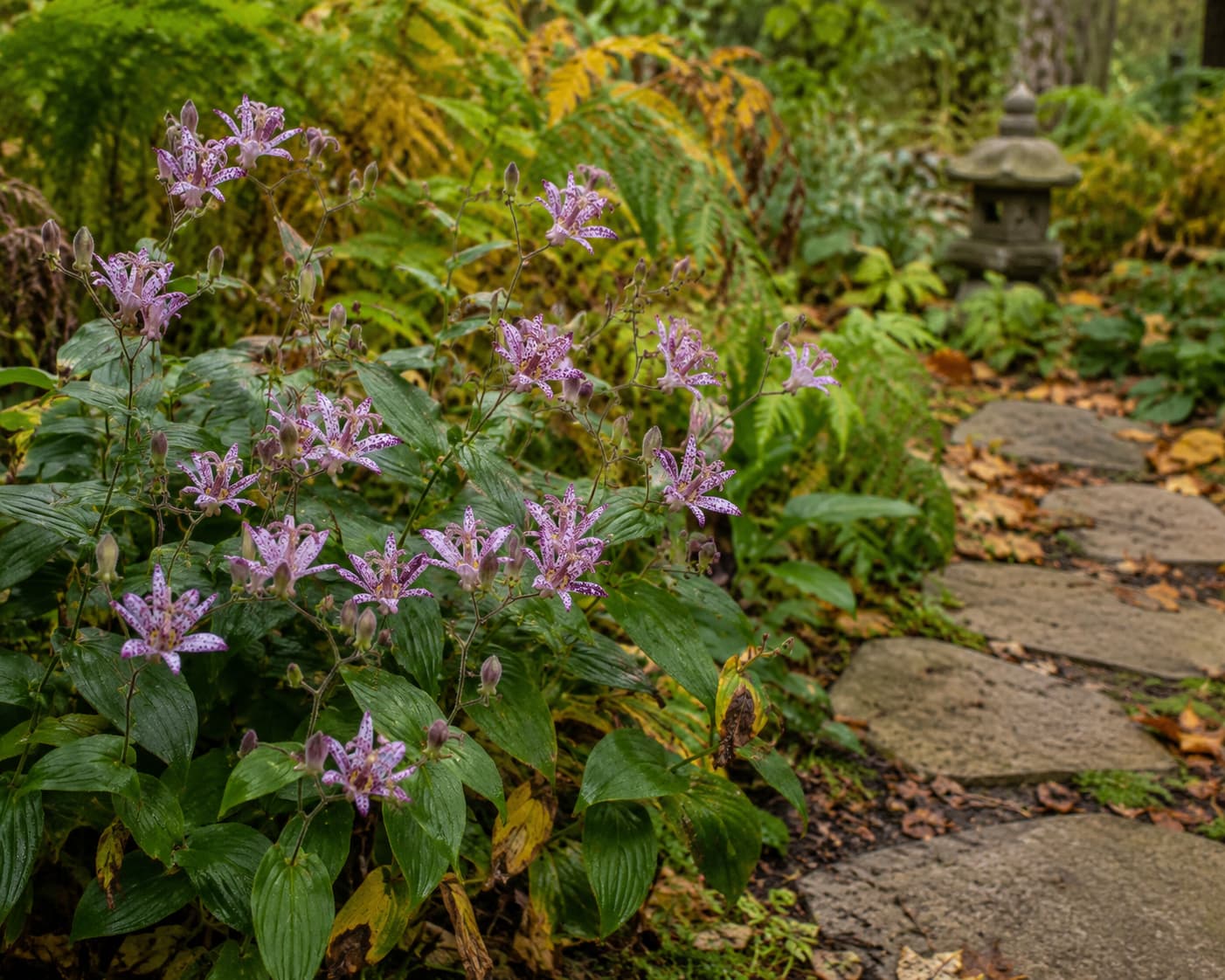
greenmuse-illustration-toad-lily-shade-fall-garden.jpg
Bloom time: September through October
Height: 24–36 inches
Deer resistance: High
Hardiness: Zones 4–8
Toad lilies are the secret weapon of the shade garden. They produce orchid-like flowers covered in purple spots—each bloom is only 1 inch across, but a mature plant carries dozens of them along arching stems. They bloom in deep shade when almost nothing else will, making them the only shade-tolerant flower on this list.
Care Summary
- Light: Part shade to full shade (morning sun is fine; avoid afternoon sun)
- Soil: Rich, moist, woodland-type soil with compost
- Water: Consistent moisture; don't let soil dry out
- Plant where you'll see the flowers up close: Along a path, at the edge of a seating area, or in a raised container—the spotted blooms reward close inspection
My toad lilies grow under a dogwood tree where they get dappled morning light. Every October, visitors kneel down to look at the flowers and say "What IS that?" It's the most conversation-starting plant in my garden, and it requires almost no care beyond spring mulching.
Fall Blooming Flowers for Containers: 3 Pot Recipes
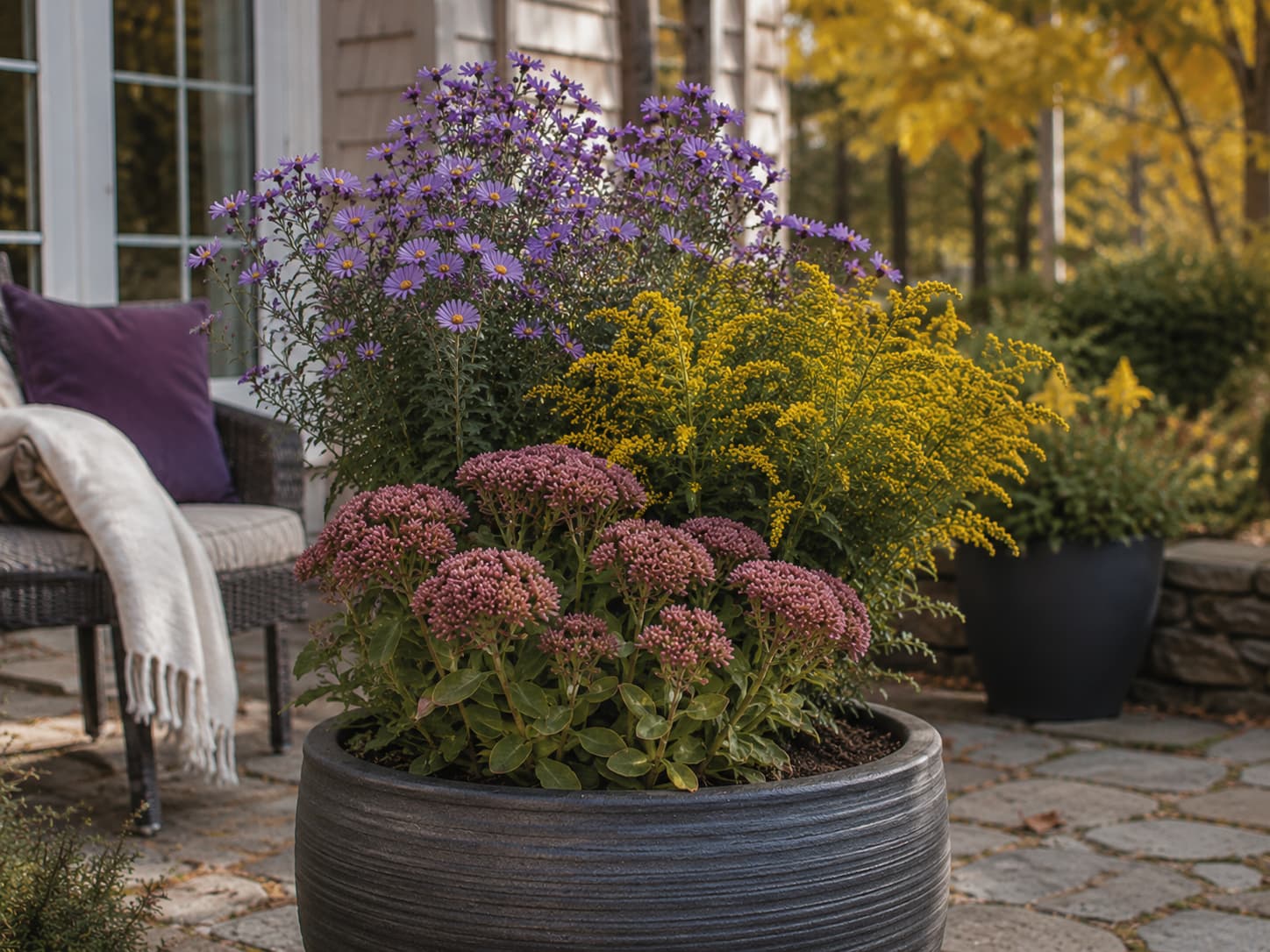
greenmuse-illustration-fall-container-garden-asters-sedum-goldenrod.jpg
If you don't have garden beds, you can still have fall color on a balcony or patio. Here are three container combinations that work:
| Container | Plants | Pot Size | Bloom Period |
|---|---|---|---|
| "Sunset Heights" | 1 'Autumn Joy' sedum (center) + 3 'Golden Fleece' goldenrod (back) + 3 'Purple Dome' aster (front) | 18″ diameter, 14″ deep | Aug–Oct |
| "Shady Elegance" | 1 'Honorine Jobert' anemone (center) + 2 toad lilies (sides) + 1 'Wood's Blue' aster (front) | 16″ diameter, 12″ deep | Aug–Oct |
| "Budget Bright" | 3 garden mums ('Sheffield Pink') + 2 ornamental kale (for foliage contrast) | 14″ diameter | Sep–Nov |
Drag the bar below or swipe horizontally to view the remaining columns.
Deer Resistance in the Fall Garden: What to Expect
Fall is prime deer browsing season—natural forage is declining and deer are desperate. Here's how the 7 flowers rank:
| Usually Avoided | Sometimes Browsed | More Vulnerable |
|---|---|---|
| Sedum 'Autumn Joy' | Black-eyed Susan | Asters (especially young growth) |
| Goldenrod | Japanese Anemone | Mums (new growth in spring) |
| Toad Lily | — | — |
Drag the bar below or swipe horizontally to view the remaining columns.
If deer pressure is severe in your area, prioritize sedum, goldenrod, and toad lily. Protect asters and mums with repellent spray (Deer Off or Liquid Fence, applied every 2 weeks). For a complete pest management approach, see Summer SOS: How to Spot & Stop Common Pests.
Preparing Your Fall Garden in Spring: The Counterintuitive Timing
Here's the catch with fall bloomers: you plant them in spring, not fall. Most fall-blooming perennials need a full growing season to develop root systems strong enough to support late-season flowers. If you plant asters or anemones in September, they may not survive winter.
The spring shopping list for a fall garden:
- April–May: Plant aster, anemone, goldenrod, toad lily, and sedum from nursery pots
- May: Direct-sow black-eyed Susan seeds (or buy plants)
- May: Pinch/chop tall asters and sedum to prevent flopping
- June–July: Plant garden mums (early planting gives roots time to establish)
- August: Enjoy the first blooms
- October: Take photos and plan next year's additions
I made the mistake of planting 'Purple Dome' asters in September 2024. They bloomed beautifully for 3 weeks, then died over winter because the roots hadn't established. In spring 2025, I replanted the same variety and pinched it in May. By October, it was a 24-inch dome covered in 150+ purple flowers—and it survived the following winter without issue. Spring planting for fall bloomers. Always.
Designing With Fall Blooming Flowers: Repeat and Drift
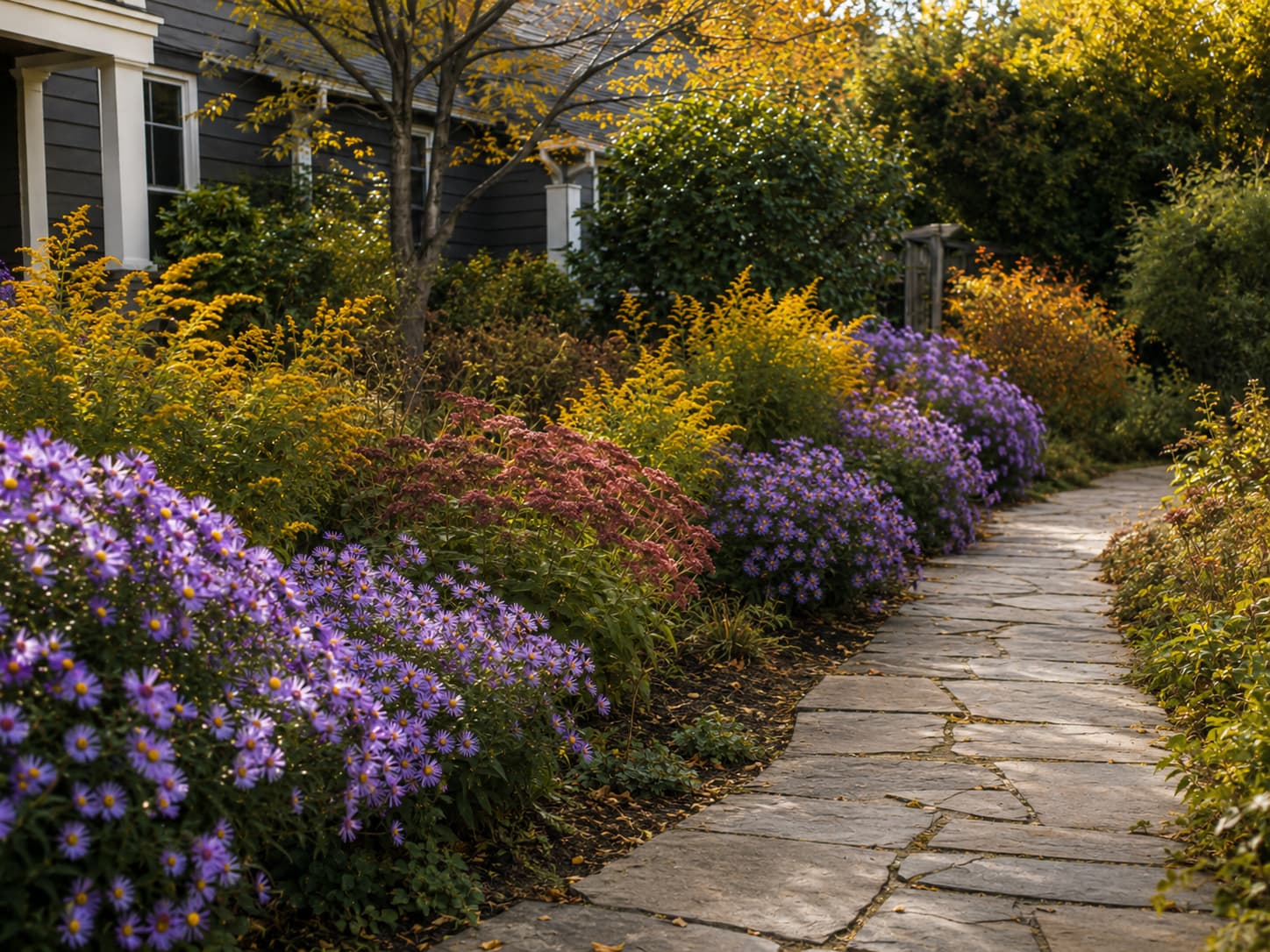
greenmuse-illustration-fall-border-aster-goldenrod-sedum-garden-path.jpg
The biggest mistake in fall garden design: planting one of everything. A single aster surrounded by bare soil looks isolated and sad. Fall flowers have the most impact when planted in drifts of 5–7+ plants of the same variety, repeated along a border or path.
Here's why: fall light is lower and warmer than summer light. It creates long shadows and golden tones that make mass plantings glow. Five 'Purple Dome' asters together form a purple cloud that stops people in their tracks. One aster in a bare bed is just a purple dot.
3 Design Formulas That Work
- The Warm Border: Goldenrod (back) → Black-eyed Susan (middle) → Sedum 'Autumn Joy' (front). All warm golds and pinks. Repeat this trio every 6 feet along a fence or wall.
- The Cool Border: 'October Skies' aster (back) → White anemone (middle) → Toad lily (front edge, where you can see the spotted flowers). Purples, whites, and blues. Stunning in morning light.
- The Mixed Drift: Alternate groups of 5 goldenrod and 5 purple asters in a zigzag pattern along a path. The gold-and-purple combination is a classic fall pairing that occurs naturally in meadows—and it's one of the most photographed color combos in garden magazines.
For balcony gardens, use the same principle but in containers: group 3 pots of the same plant together instead of mixing one of everything.
Cutting Fall Flowers for Bouquets
Fall flowers make long-lasting cut arrangements. Here's what works best:
| Flower | Vase Life | Tips |
|---|---|---|
| Black-eyed Susan | 7–10 days | Cut when petals are fully open; recut stems underwater |
| Japanese Anemone | 5–7 days | Delicate stems; use in small arrangements; change water daily |
| Sedum 'Autumn Joy' | 10–14 days | Cut when color is deep rose; lasts forever as a dried flower too |
| Goldenrod | 7–10 days | Strip lower foliage (it wilts fast); pair with purple asters |
| Asters | 7–12 days | Cut when ½–¾ of the flowers on each stem are open |
| Toad Lily | 5–7 days | Short vase life but incredible detail in small arrangements |
| Garden Mums | 14–21 days | The longest-lasting cut flower on this list; change water every 3 days |
Drag the bar below or swipe horizontally to view the remaining columns.
My favorite September arrangement: 3 stems of goldenrod, 5 stems of 'Purple Dome' aster, and 2 stems of 'Autumn Joy' sedum in a mason jar. It lasts 12 days and costs exactly $0 from my own garden. The same bouquet at a farmers' market would be $15–20.
Fall Blooming Flowers FAQ
1. Can I plant fall-blooming perennials in fall?
2. My asters always flop over. How do I fix this?
3. Do mums really come back every year?
4. What's the latest-blooming flower on this list?
5. Can I grow these from seed?
Sources
- Chicago Botanic Garden. "Plant Evaluation Notes: Asters." chicagobotanic.org, 2023. chicagobotanic.org
- University of Vermont Extension. "Fall-Blooming Perennials." uvm.edu/extension, 2024. uvm.edu/extension
- Missouri Botanical Garden. "Plant Finder: Fall Interest." missouribotanicalgarden.org, 2024. missouribotanicalgarden.org
- Penn State Extension. "Gardening with Fall-Blooming Plants." extension.psu.edu, 2023. extension.psu.edu