Asters & Daylilies: Fall Blooms That Last Longer
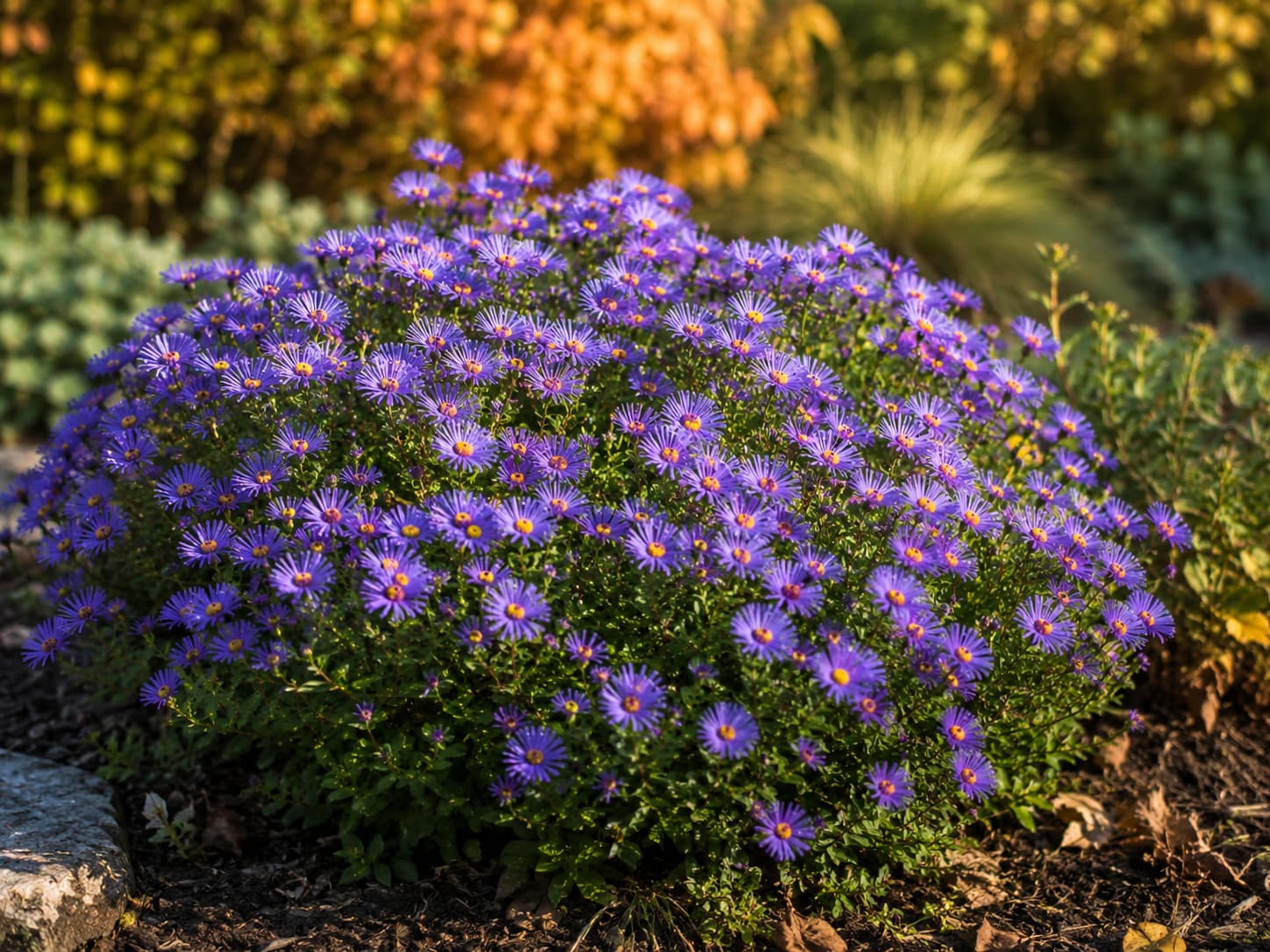
To begin with, on October 12, 2025, I counted 47 open blooms on a single 'Purple Dome' aster in my front border—while every other plant in the garden had been dead for two weeks. Meanwhile, that aster was acting as a late-season nectar source on a day when little else was blooming. I realized then that fall perennials aren't just decorative—they're ecologically critical.
However, most gardeners treat fall as a winding-down season. By contrast, with the right perennials, fall can become one of the garden's strongest seasons. Asters and daylilies are the two most reliable fall-blooming perennials for North American gardens, and together they provide 8-10 weeks of continuous color from August through November—exactly when pollinators need them most and when your garden would otherwise be bare.
In this guide, you'll find variety selection, the specific techniques that extend bloom time by weeks (not days), container growing for balconies and patios, and the design combinations that make fall gardens look intentional rather than accidental.
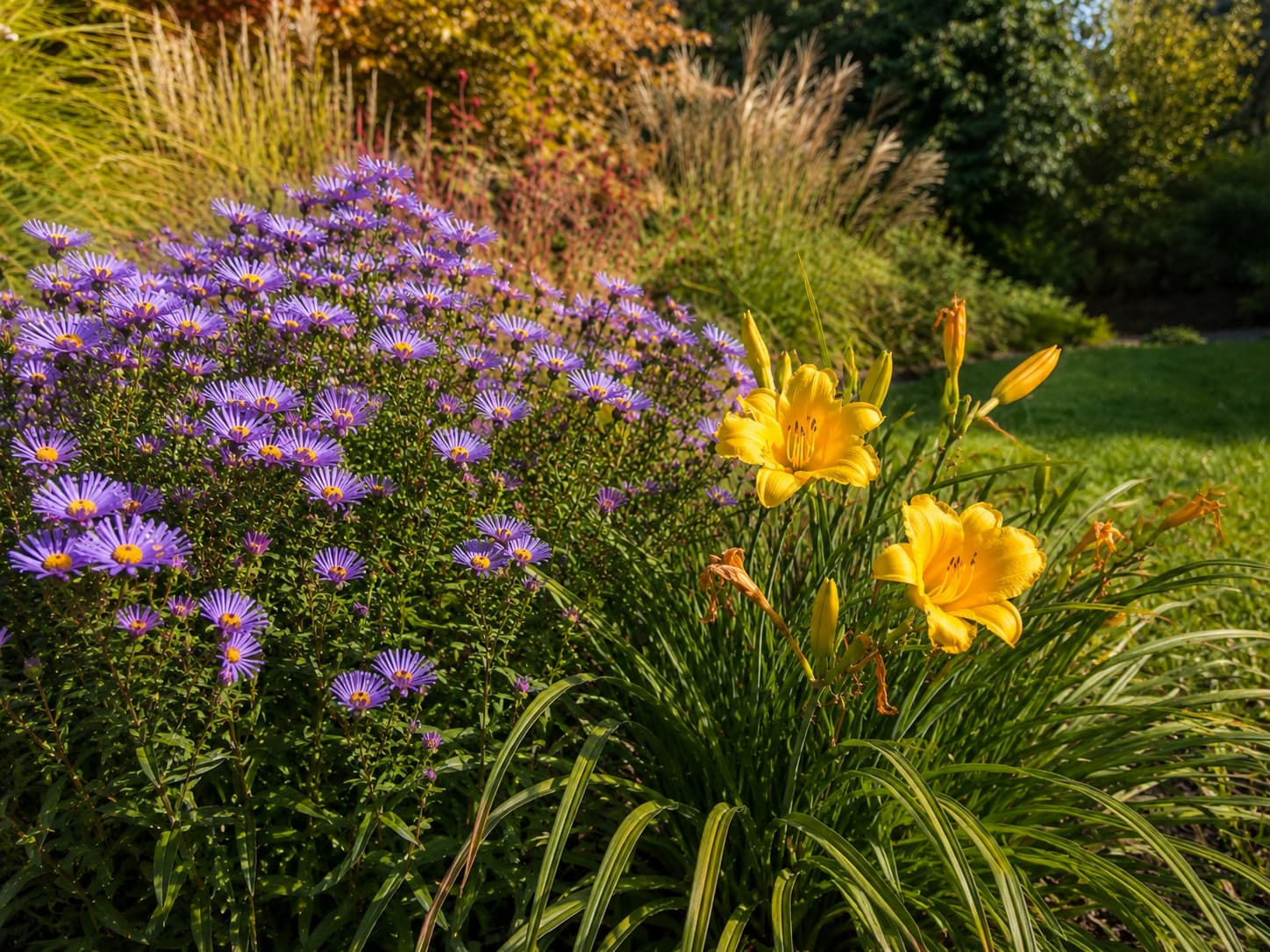
Aster or Daylily: Which One Do You Need?
Choose by Bloom Season and Garden Goal
| Your Situation | Best Pick | Why |
|---|---|---|
| Need fall color (Sep–Nov) | Asters | Many asters peak from late summer into fall and can extend late-season color. |
| Want color from summer into fall | Reblooming daylily | Some cultivars flower in summer and can produce another flush later in the season. |
| Pollinator garden priority | Asters | Native asters can provide useful late-season pollen and nectar. |
| Shade garden | Daylily | Daylilies often tolerate some shade, although flowering is strongest with more sun. |
Swipe for more
Choose by Space and Maintenance
| Your Situation | Best Pick | Why |
|---|---|---|
| Balcony or container | Dwarf aster or compact daylily | Compact cultivars are easier to manage in pots than full-size selections. |
| Deer pressure | Neither is deer-proof | Browsing varies by location, season, and available food. |
| Low-maintenance planting | Daylily | Established daylilies are generally tolerant of a wider range of garden conditions. |
Scroll for more
Asters: Autumn's Essential Perennial
Why Asters Matter More Than You Think
For late-season color, asters (Symphyotrichum spp.) are among the most useful fall-blooming perennials for North American gardens. Not because they're the showiest (they are), but because they fill a gap that almost no other plant covers: reliable nectar in October when most flora has shut down for the season. As a result, asters can help keep a border active after many summer plants have faded after the first frost kills the last annuals. With asters, you get 6-8 more weeks of color and life.
Best Varieties by Purpose
| Purpose | Variety | Height | Bloom Time | Notes |
|---|---|---|---|---|
| Maximum fall impact | 'Purple Dome' (New England aster) | 18–24 in. | Sep–Oct | Dense, cushion-shaped mound covered in deep purple flowers. My #1 recommendation. Plants: $7-9 per gallon pot at most garden centers. |
| Butterfly magnet | 'October Skies' (Aromatic aster) | 12–18 in. | Sep–Nov | Blue-purple, late blooming, fragrant foliage that deer avoid. The latest-blooming aster I've grown—still flowering in early November. Seeds: $4/packet from Prairie Nursery. |
| Containers / small spaces | 'Wood's Purple' (New York aster) | 12–15 in. | Aug–Sep | Compact, mildew-resistant, earliest to bloom. Starts the aster season in August when other varieties are still in bud. |
| Back-of-border height | 'Harrington's Pink' (New England aster) | 48–60 in. | Sep–Oct | Tall, dramatic pink. Needs staking or the "Chelsea chop" (see below). Best for in-ground beds. |
| Native / wildflower garden | Symphyotrichum novae-angliae (species) | 36–72 in. | Aug–Oct | The straight species—tall, vigorous, self-seeds. Not for small spaces, but unmatched for ecological value. Available from native plant nurseries ($5-8 per plant). |
More columns available
The Chelsea Chop: The One Technique That Doubles Your Aster Blooms
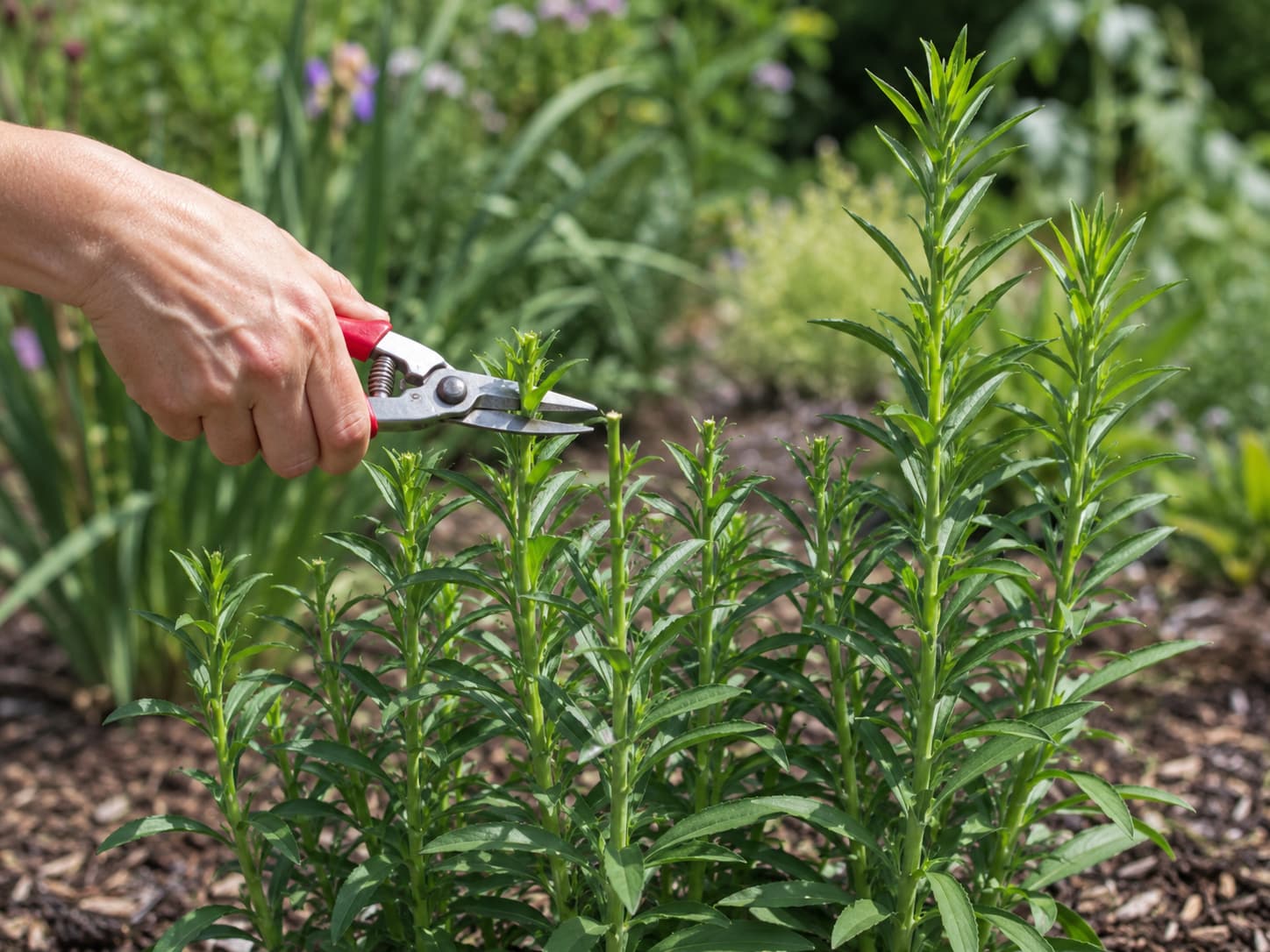
One common problem, especially with tall asters, is that they can become leggy and flop over by September. For that reason, many gardeners use the "Chelsea Chop"—cutting back the top one-third of the stems in late May or early June (around the time of the Chelsea Flower Show in the UK, hence the name). This forces the plant to branch, producing a shorter, bushier plant with more stems—and more stems means more flowers.
Aster Powdery Mildew
Meanwhile, powdery mildew is one of the most common aster problems—a white coating on leaves that starts at the base and spreads up. In particular, humid weather and crowded growth can increase disease pressure. For prevention, give plants enough space for airflow, water the soil rather than the foliage when practical, and choose resistant cultivars where mildew is common. If mildew still appears, remove badly affected leaves first. Then, use a fungicide only if it is labeled for the plant and disease, following the current label directions.
Daylilies: The Summer-to-Fall Bridge
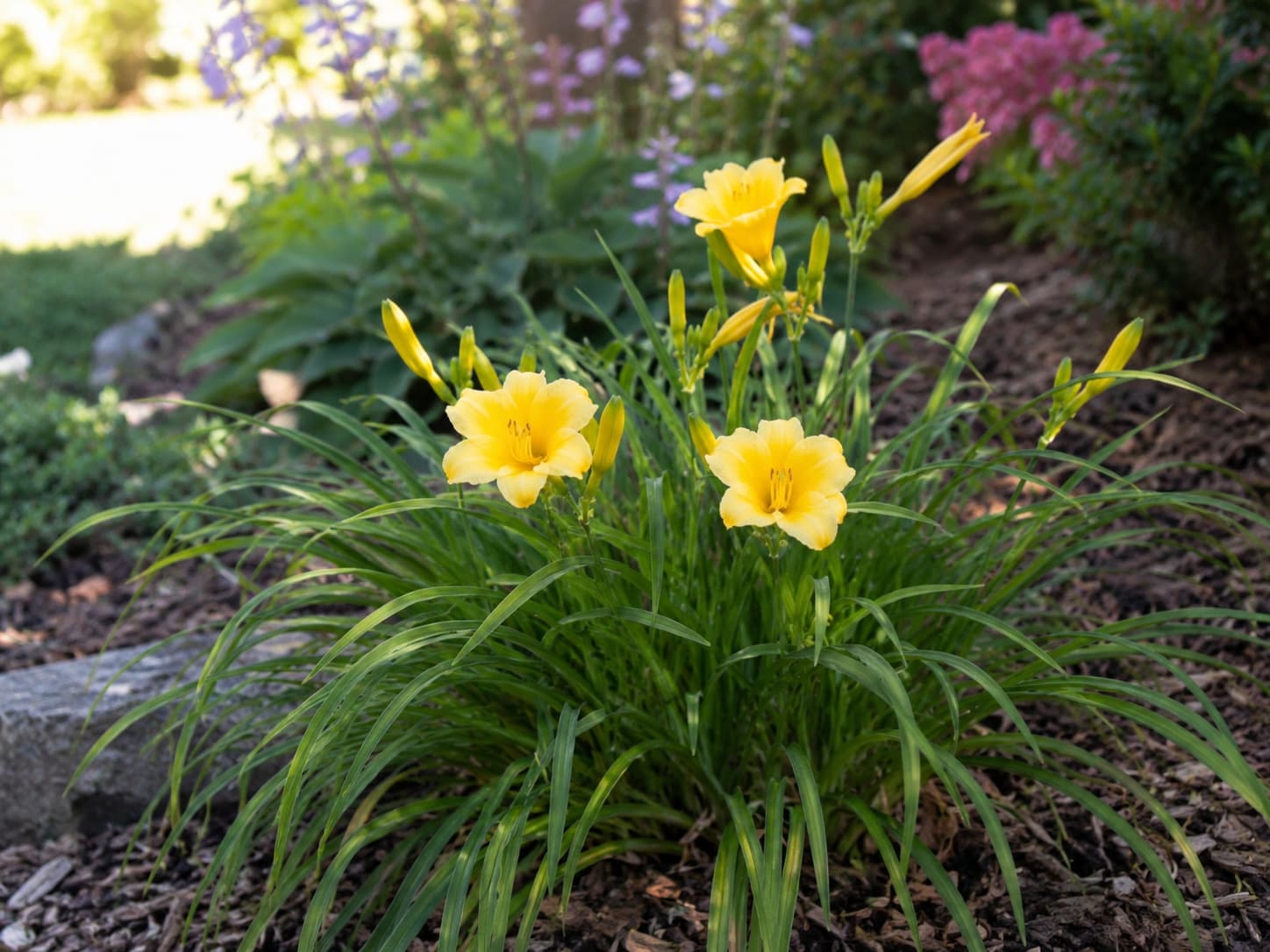
By comparison, daylilies (Hemerocallis spp.) aren't primarily fall bloomers—most peak in June-July. But reblooming varieties produce a second flush of flowers from August through September, and some keep going into October. Therefore, reblooming types can bridge the gap between summer color and the main aster season: daylilies carry the color from summer into early fall, and asters take over from there.
Reblooming Varieties That Actually Rebloom
Still, not all "reblooming" daylilies rebloom equally well. For example, performance can depend on moisture, light, cultivar, and growing conditions (consistent moisture, regular fertilizer, and at least 6 hours of direct sun). Here are the ones that deliver on the promise in real gardens:
| Variety | Color | Height | First Bloom | Rebloom | Notes |
|---|---|---|---|---|---|
| 'Stella de Oro' | Gold-yellow | 12–18 in. | Jun–Jul | Aug–Sep (reliably) | For example, this is one of the best-known compact reblooming daylilies. Compact, drought-tolerant, nearly indestructible. Plants: $6-8 per gallon pot. Available everywhere. |
| 'Happy Returns' | Pale lemon yellow | 16–20 in. | Jun–Jul | Aug–Sep (reliably) | Softer color than Stella; slightly taller. Better for pastel color schemes. My personal favorite for the second flush. |
| 'Pardon Me' | Crimson-red with green throat | 18–22 in. | Jul | Sep (moderately) | Fragrant. The red provides stunning contrast with purple asters in fall combination plantings. |
| 'Rosy Returns' | Rose-pink | 16–20 in. | Jun–Jul | Aug–Sep (reliably) | The best pink rebloomer. Pairs beautifully with 'Purple Dome' asters. |
| 'Going Bananas' | Creamy yellow | 20–24 in. | Jun–Jul | Aug–Oct (heavily) | The most prolific rebloomer I've grown—produces more flowers in the second flush than the first. Worth seeking out from specialty nurseries ($10-12 per plant). |
Swipe sideways if needed
Daylily Rust: What to Watch For
The Deadheading Discipline
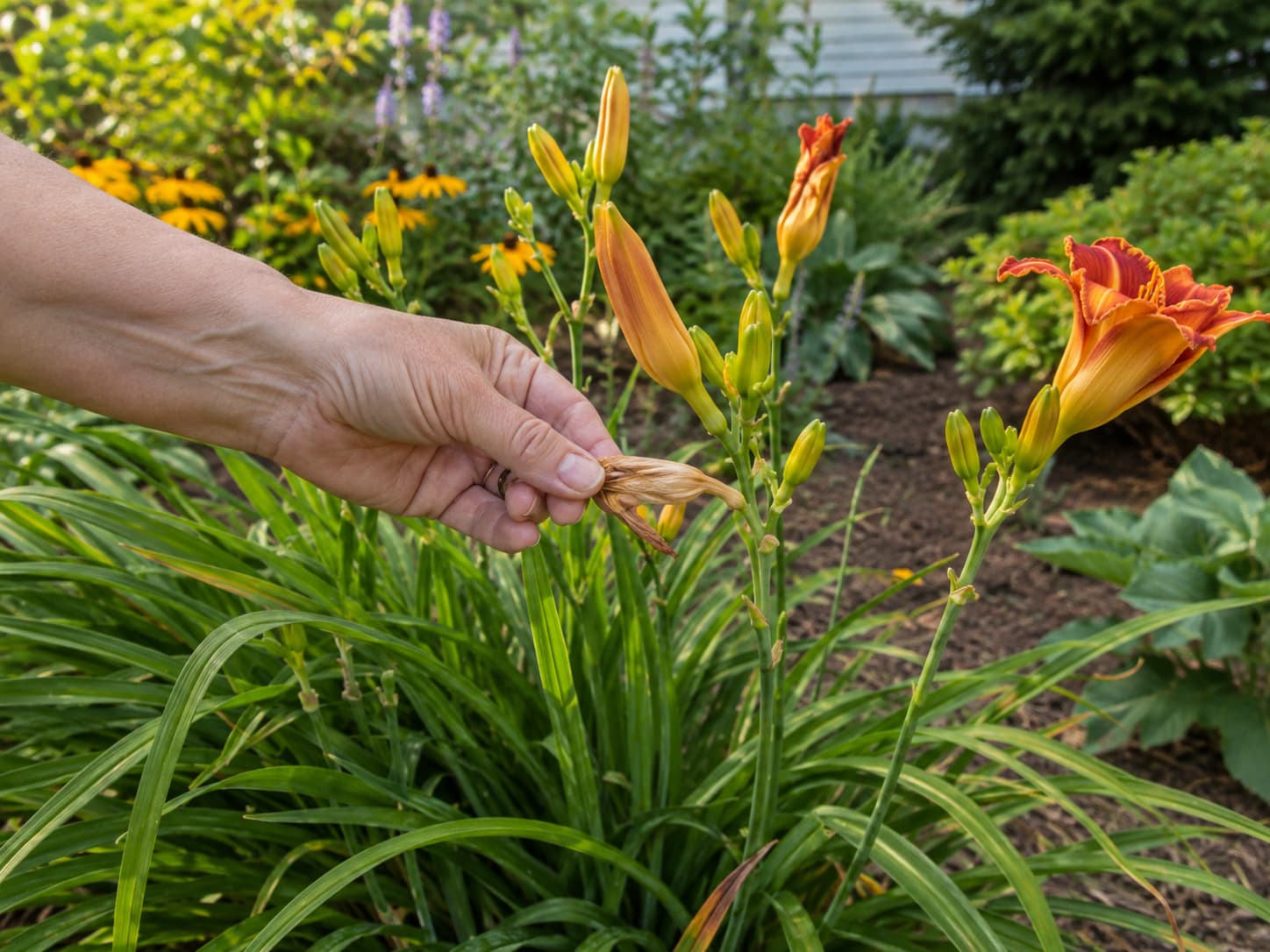
As the name suggests, each individual daylily flower usually lasts about one day (hence the name). Afterward, the spent bloom remains on the scape like wet tissue paper on the stem. If you don't remove it, the plant puts energy into seed pod formation instead of producing more blooms. This is why daily deadheading is non-negotiable for reblooming daylilies.
For routine care, walk past your daylilies regularly, walk past your daylilies and snap off the spent blooms with your fingers—they release easily at the base. This takes 30 seconds per plant. Then, after all buds on a scape (flower stalk) have opened and faded, cut the entire scape at the base. This signals the plant to push up new scapes for the rebloom cycle.
The Bloom Timeline: How to Get 10 Weeks of Continuous Color
| Week | Asters | Daylilies | What's Blooming |
|---|---|---|---|
| Aug 1–15 | Early varieties budding | 1st flush ending | Last of the summer daylily blooms |
| Aug 16–31 | Prime 'Wood's Purple' opens | Gap period | Early asters carry the color alone |
| Sep 1–15 | Prime Peak aster season begins | Prime Reblooming starts | Both plants blooming—maximum impact |
| Sep 16–30 | Prime Full aster peak | Prime Rebloom peak | The garden's best two weeks |
| Oct 1–15 | Prime Late asters still strong | Rebloom winding down | Asters dominate; daylilies fading |
| Oct 16–31 | Prime 'October Skies' still blooming | Foliage only | One aster carrying the entire garden |
| Nov 1+ | Until hard frost | Dormant | Last gasp of color before winter |
Horizontal scroll available
In short, the overlap in late summer and early fall is the key design window. The overlap in mid-September through early October is your golden window—both plants producing simultaneously. Plant to maximize this overlap.
Extending Bloom Time: Techniques That Add Weeks
For Asters
First, use pruning and cultivar timing to spread the aster display rather than expecting one plant to bloom for the entire season.
- The Chelsea Chop (late May–early June): Cut top 1/3 of stems. Produces bushier plants with 50-60% more blooms, 1-2 weeks later. Trade late start for more flowers.
- Staggered varieties: Plant 'Wood's Purple' (early), 'Purple Dome' (mid), and 'October Skies' (late) for continuous aster color from August through November.
- Pinch don't shear: If you missed the Chelsea Chop, pinch individual stem tips in July. Less dramatic than the chop but still increases branching.
- Late-summer fertilizer: Apply a low-nitrogen fertilizer (5-10-10) in mid-August to support bud development without pushing soft leaf growth. I use Espoma Bulb-Tone ($14 per 18 lb bag) at half strength—designed for flowering plants, not foliage.
For Daylilies
Next, focus on moisture, cleanup, and cultivar performance if you want a reliable second flush.
- Daily deadheading: Non-negotiable for reblooming. Remove spent blooms every morning; cut scapes at base after all buds have opened.
- Consistent moisture during rebloom: Reblooming requires more water than the first flush. Water deeply once a week (1 inch) during August-September. Inconsistent watering is the #1 reason reblooming varieties fail to produce a second flush.
- Post-bloom fertilizer: After the first flush ends (late July), apply a diluted liquid fertilizer to fuel the rebloom. I use Miracle-Gro Water Soluble All Purpose ($8/1.5 lb) at half strength—one feeding in late July, one in mid-August.
- Division every 3-5 years: Overcrowded daylilies stop reblooming. Dig and divide in early fall or spring. Each division should have 2-3 fans (leaf clusters). See our Daylily Care guide for detailed division instructions.
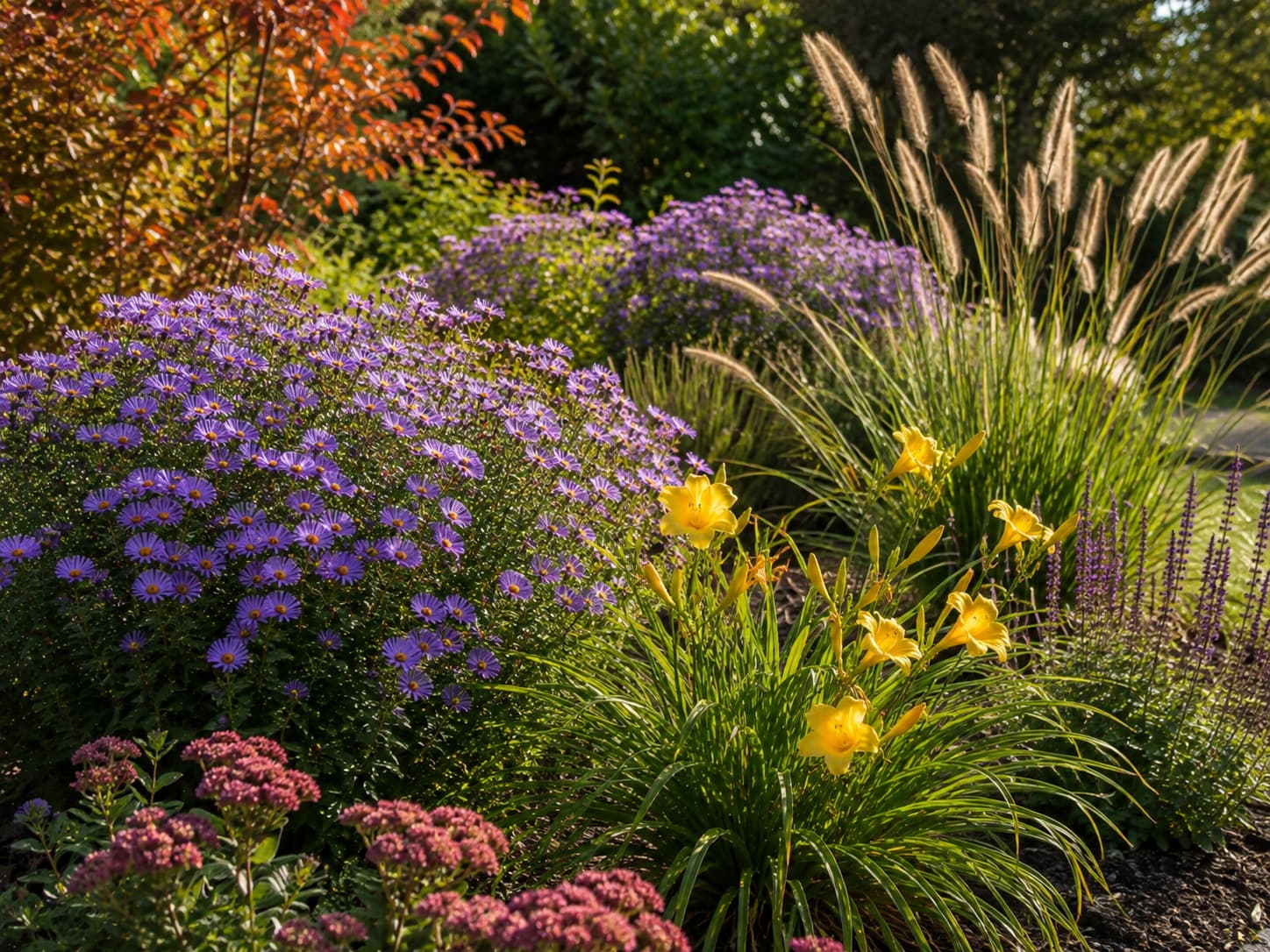
Fall Garden Design: 4 Proven Combinations
Container Growing Guide
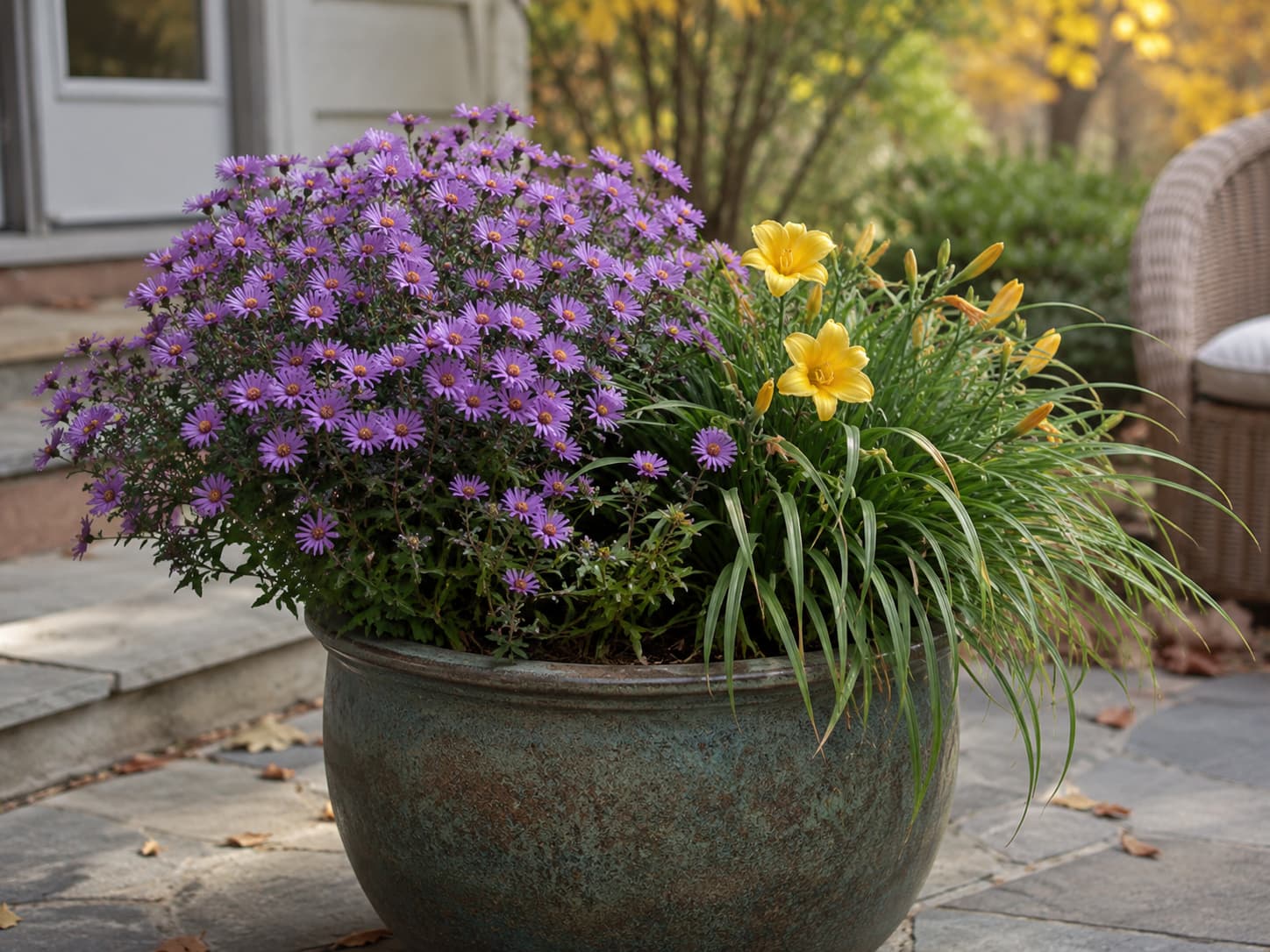
For small spaces, both asters and daylilies can grow in containers, which extends their usefulness to balcony and patio gardeners. For a full comparison of container vs. in-ground approaches, see our Containers vs In-Ground Planting guide.
| Factor | Asters in Containers | Daylilies in Containers |
|---|---|---|
| Minimum pot size | 12 inches (dwarf varieties), 16 inches (full-size) | 12 inches (compact), 16 inches (standard) |
| Soil | Standard potting mix; keep consistently moist but not soggy | Standard potting mix; tolerates drier conditions |
| Winter protection | Move against building wall; wrap pot in bubble wrap below 20°F | Same; daylilies are slightly more cold-tolerant |
| Watering frequency | Every 2-3 days during bloom season | Once a week (twice during rebloom) |
| Fertilizer | Half-strength liquid monthly | Half-strength liquid monthly; extra feeding after first flush |
| Division needed | Every 2-3 years (containers crowd faster) | Every 3-4 years |
| Best dwarf varieties | 'Wood's Purple', 'Purple Dome' | 'Stella de Oro', 'Pardon Me' |
More table content
Common Problems and Quick Fixes
When problems appear, start with the pattern of symptoms and the plant's growing conditions before reaching for a treatment.
| Problem | Plant | Cause | Fix |
|---|---|---|---|
| White powder on leaves | Aster | Powdery mildew | Remove affected leaves; improve airflow; use resistant varieties; copper fungicide as last resort |
| Tall, flopping stems | Aster | No Chelsea Chop; too much shade or fertilizer | Chop in late May next year; move to full sun; reduce nitrogen |
| Few or no flowers | Aster | Too much shade; overcrowded; too much nitrogen | Move to 6+ hours sun; divide every 3 years; switch to low-nitrogen fertilizer |
| No rebloom | Daylily | Not deadheading; inconsistent water; overcrowded | Deadhead daily; water weekly during Aug-Sep; divide every 3-5 years |
| Orange streaks on leaves | Daylily | Daylily rust | Cut all foliage to 3 inches; discard (don't compost); treat regrowth with copper fungicide; improve airflow |
| Yellowing leaves in center | Daylily | Overcrowding (center fans dying from competition) | Divide the clump; discard dead center; replant outer divisions |
| Deer browsing | Both | Deer eat both, especially aster flowers | Apply Liquid Fence ($16/32 oz spray) every 2-3 weeks; fence if possible; choose less palatable varieties (aromatic aster) |
Scroll sideways if needed
Recommended Products
If a product is needed, choose it for a diagnosed problem and follow the current label rather than relying on a fixed calendar.
| Product | Brand | Price | What It Does | Best For |
|---|---|---|---|---|
| Low-Nitrogen Fertilizer (5-10-10) | Espoma Bulb-Tone | $14 / 18 lb | Supports bud development without pushing leaf growth | Both—apply in mid-August |
| All-Purpose Water Soluble | Miracle-Gro | $8 / 1.5 lb | Post-bloom feeding for daylily rebloom | Daylilies—late July and mid-August |
| Copper Fungicide Concentrate | Bonide | $12 / 32 oz | Treats powdery mildew and daylily rust | Both—emergency use only |
| Deer Repellent Spray | Liquid Fence | $16 / 32 oz | Deters deer and rabbits for 2-3 weeks per application | Both—in deer country |
| Floating Row Cover | Agribon | $8-12 / 5×25 ft | Frost protection for container plants | Container asters/daylilies in zones 4-6 |
Additional columns available
Frequently Asked Questions
Bloom, Containers & Disease
1. Why aren't my asters blooming in fall?
2. Can I grow daylilies in containers?
3. How do I prevent daylily rust?
Winter Care, Division & Plant Differences
4. Will these survive harsh winters?
5. When should I divide asters and daylilies?
6. Are asters and mums the same thing?
References
- Royal Horticultural Society — Asters Growing Guide — Comprehensive cultivation notes including the Chelsea Chop technique and mildew management
- Xerces Society — Monarch Nectar Plant Guides — Regional guides to fall nectar plants for monarch migration support
- University of Minnesota Extension — Growing Daylilies — Variety selection, reblooming requirements, and daylily rust management
- Clemson University Extension — Asters — Disease identification, pruning timing, and variety recommendations for the Southeast