PLANT GUIDE
What Is a Chrysanthemum? — A Complete Guide to Mums, Meanings, and Care
A clear, practical guide to chrysanthemums — what they are, how they grow, and why gardeners often misunderstand them.
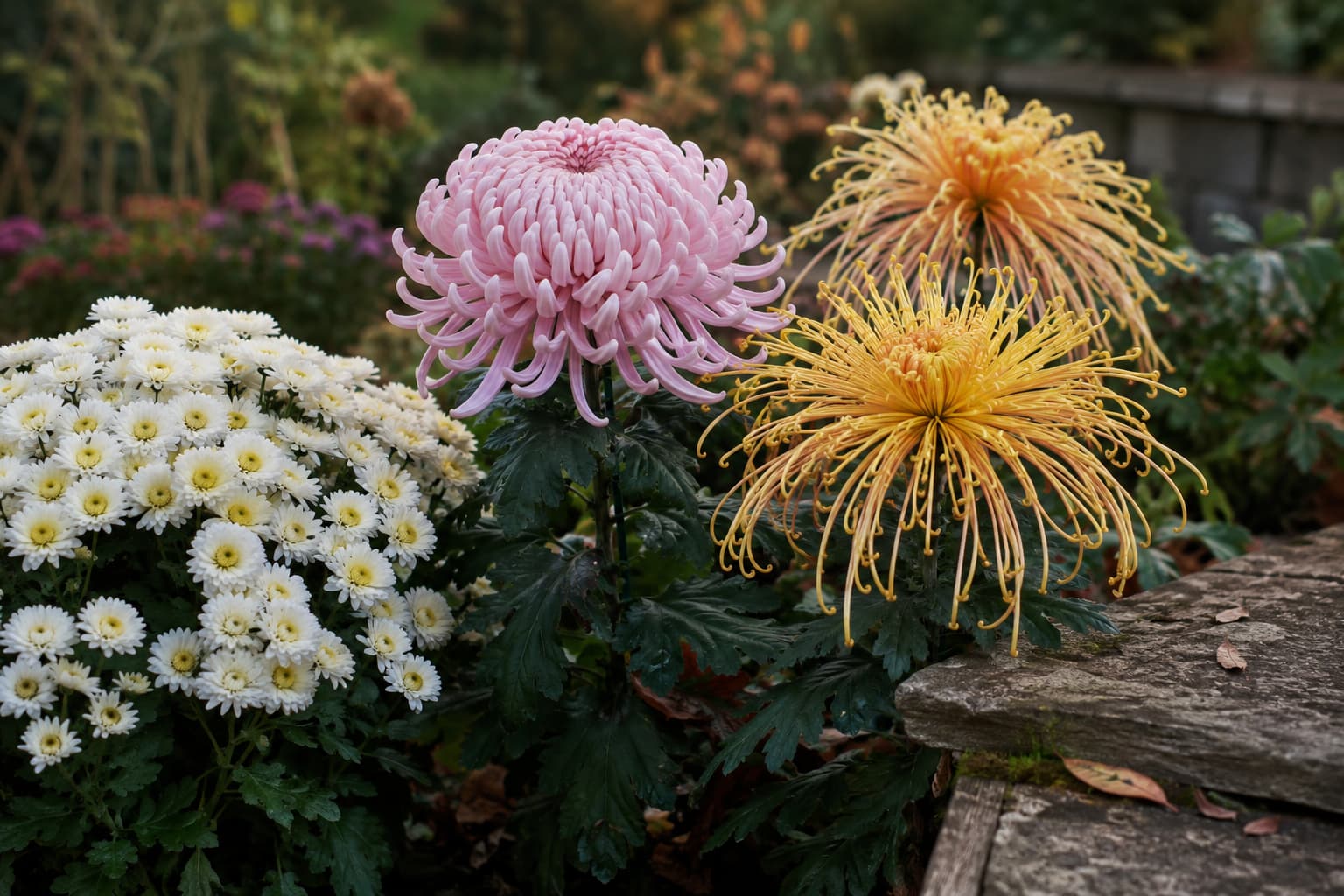
If you’ve ever walked past a garden center in fall, you’ve seen them everywhere — neat mounds of color labeled simply as “mums.”
But what exactly is a chrysanthemum?
Chrysanthemums are perennial flowering plants in the daisy family (Asteraceae), grown for their fall blooms, ornamental value, and surprising adaptability.
In the U.S., they are often treated as seasonal décor. In reality, many varieties are long-lived perennials — they are not “one-season plants,” but are frequently grown that way due to timing and climate.
What Is a Chrysanthemum?
Chrysanthemums belong to the genus Chrysanthemum, native mainly to East Asia and cultivated for over 2,000 years.
- Perennial plants (many varieties return yearly)
- Members of the Asteraceae (daisy) family
- Photoperiod plants — bloom is triggered by shorter day length
Their bloom timing is controlled more by daylight length than temperature, which is why they naturally flower in late summer and fall.
Are “Mums” and Chrysanthemums the Same?
Yes. “Mum” is simply the shortened name for chrysanthemum.
- “Mums” usually refers to compact, mass-produced garden varieties sold in fall
- “Chrysanthemums” includes garden perennials, florist types, and heirloom species
Important correction: not all mums are short-lived annuals. Many are perennials — but they often fail to return due to planting time, heat stress, or winter conditions.
Popular Chrysanthemum Types
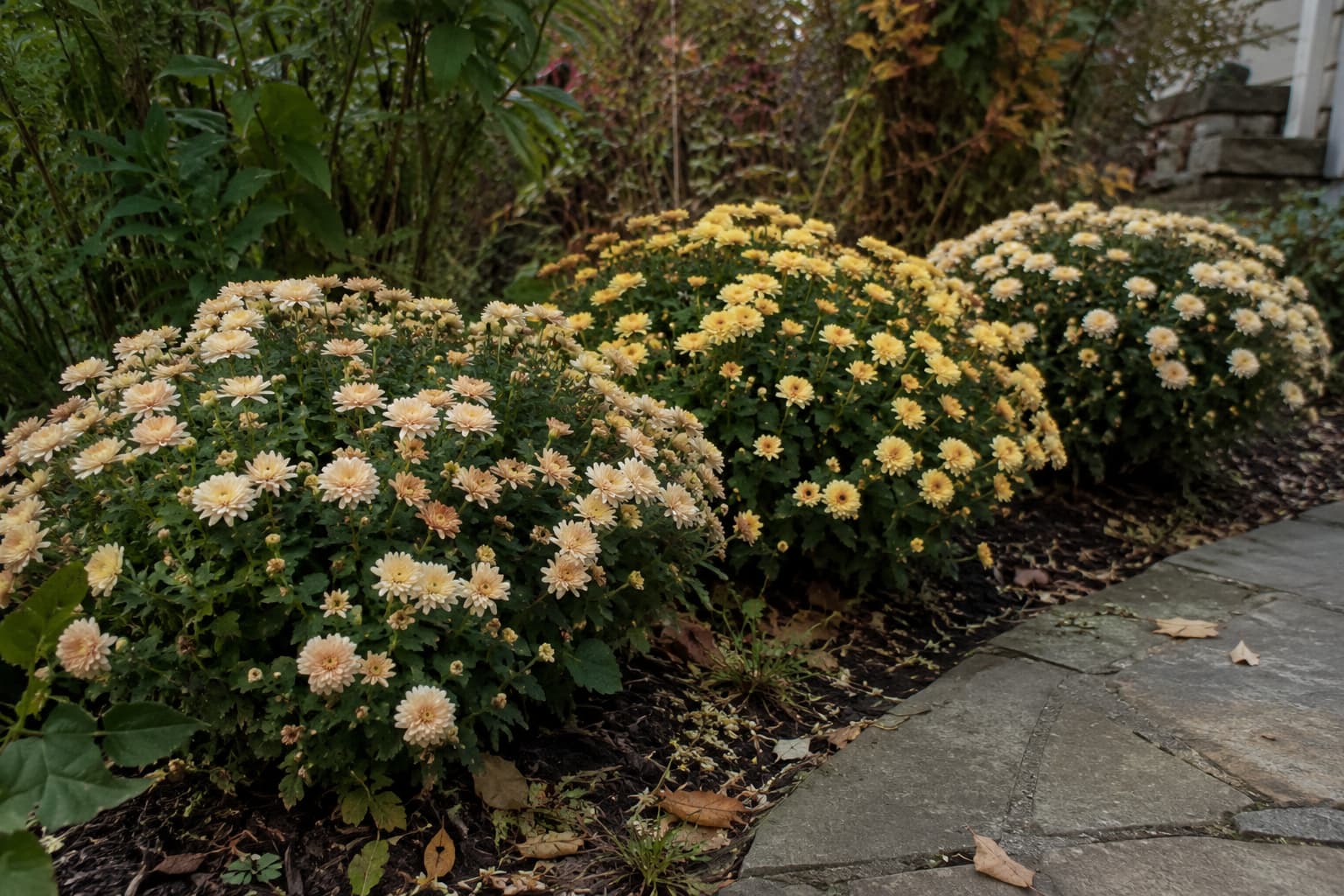
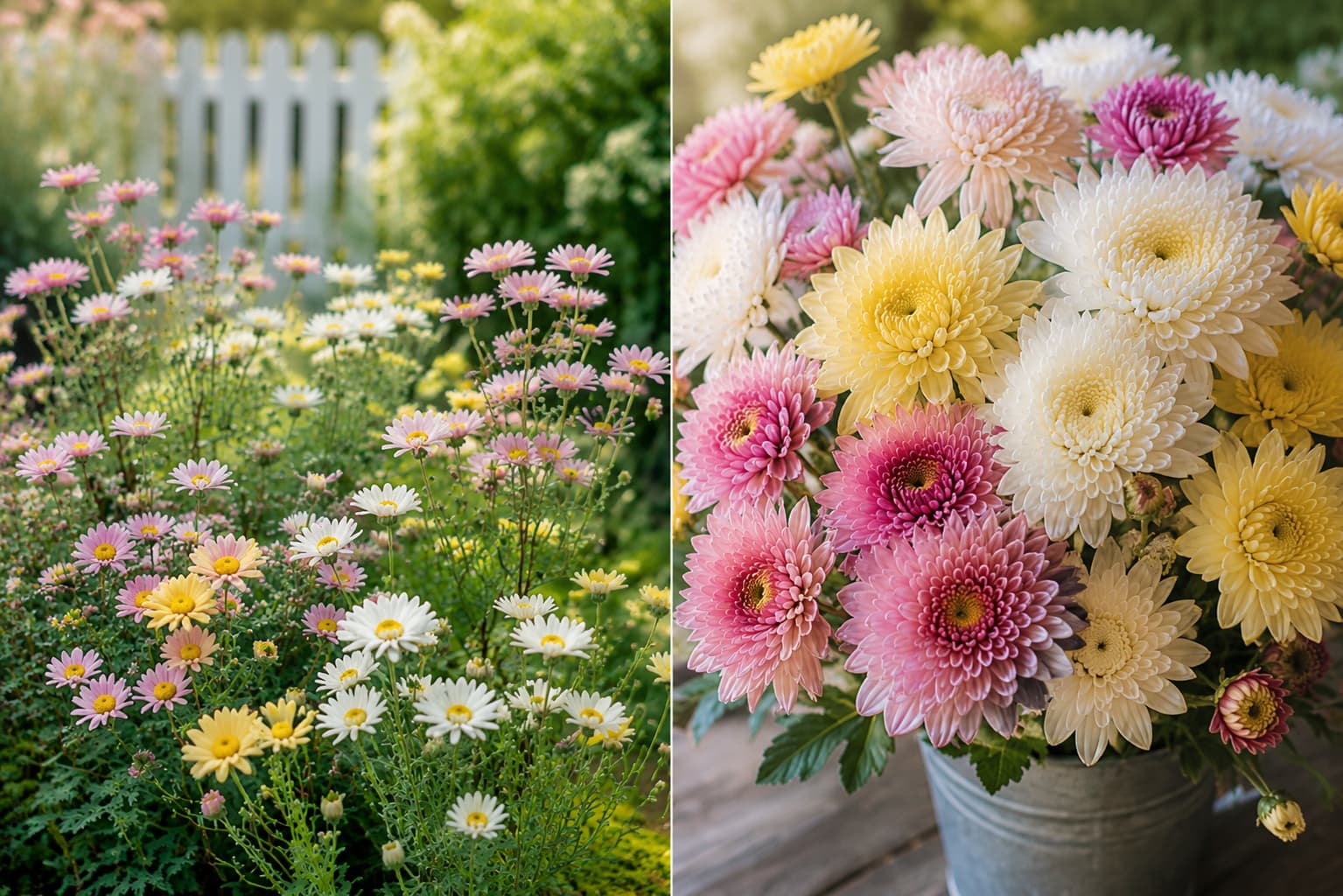
Garden Mums
- Hardy perennial types
- Best for outdoor planting
- Can return if planted early enough
Florist Mums
- Grown for cut flowers and display
- Often not winter-hardy
- Bred for large blooms, not survival
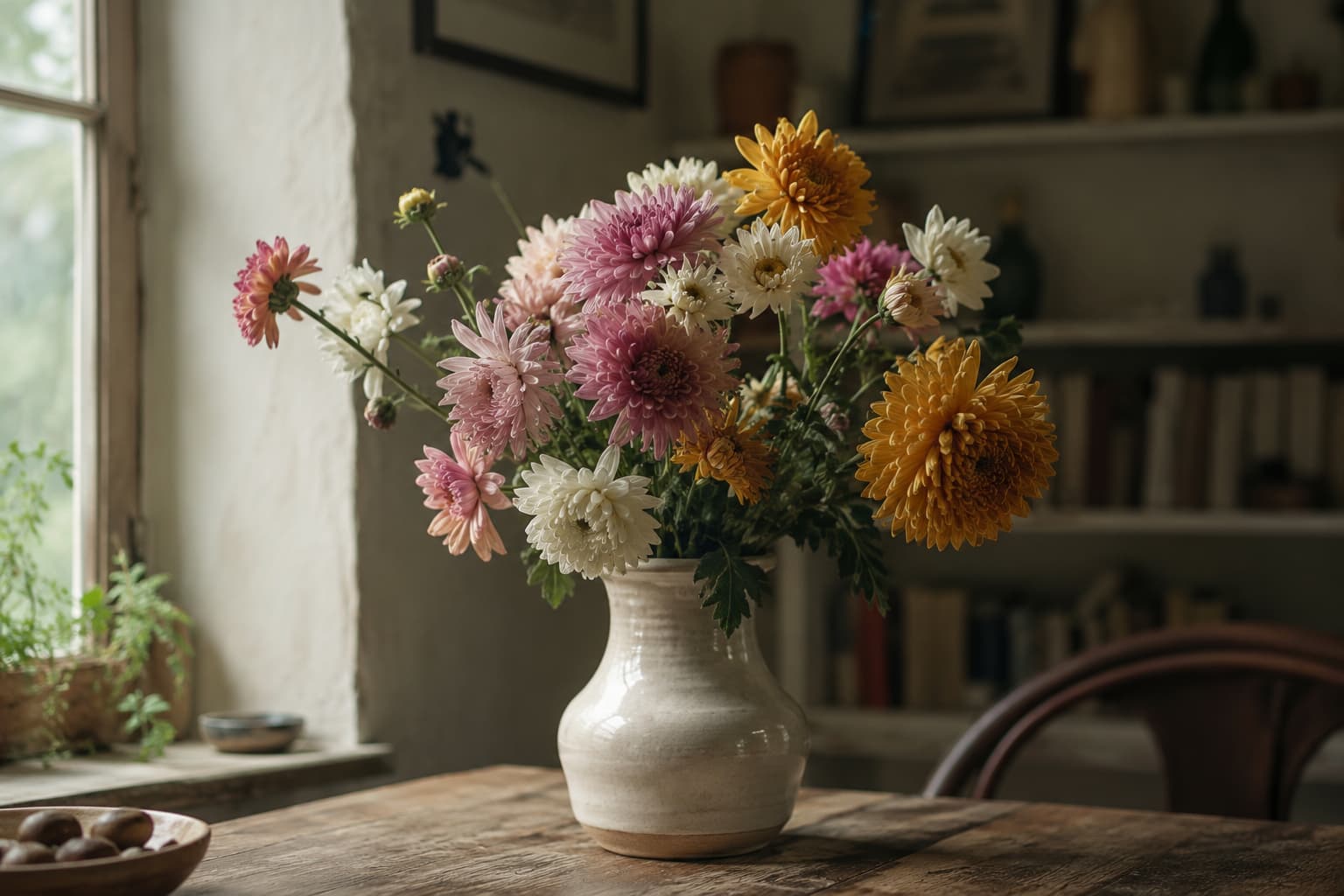
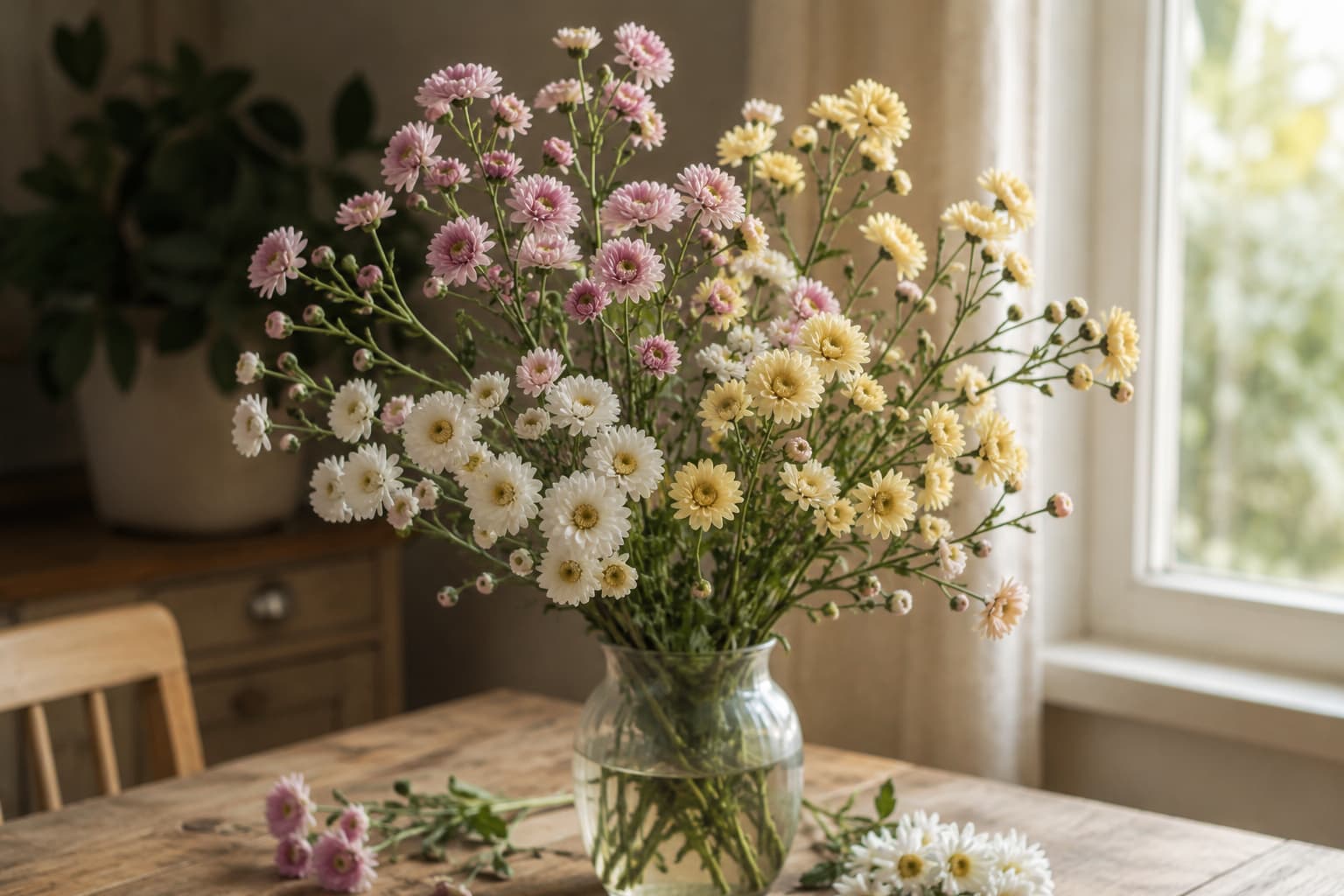
Spray Mums
- Multiple small blooms per stem
- Common in bouquets
- Often mistaken for daisies
Species / Heirloom Chrysanthemums
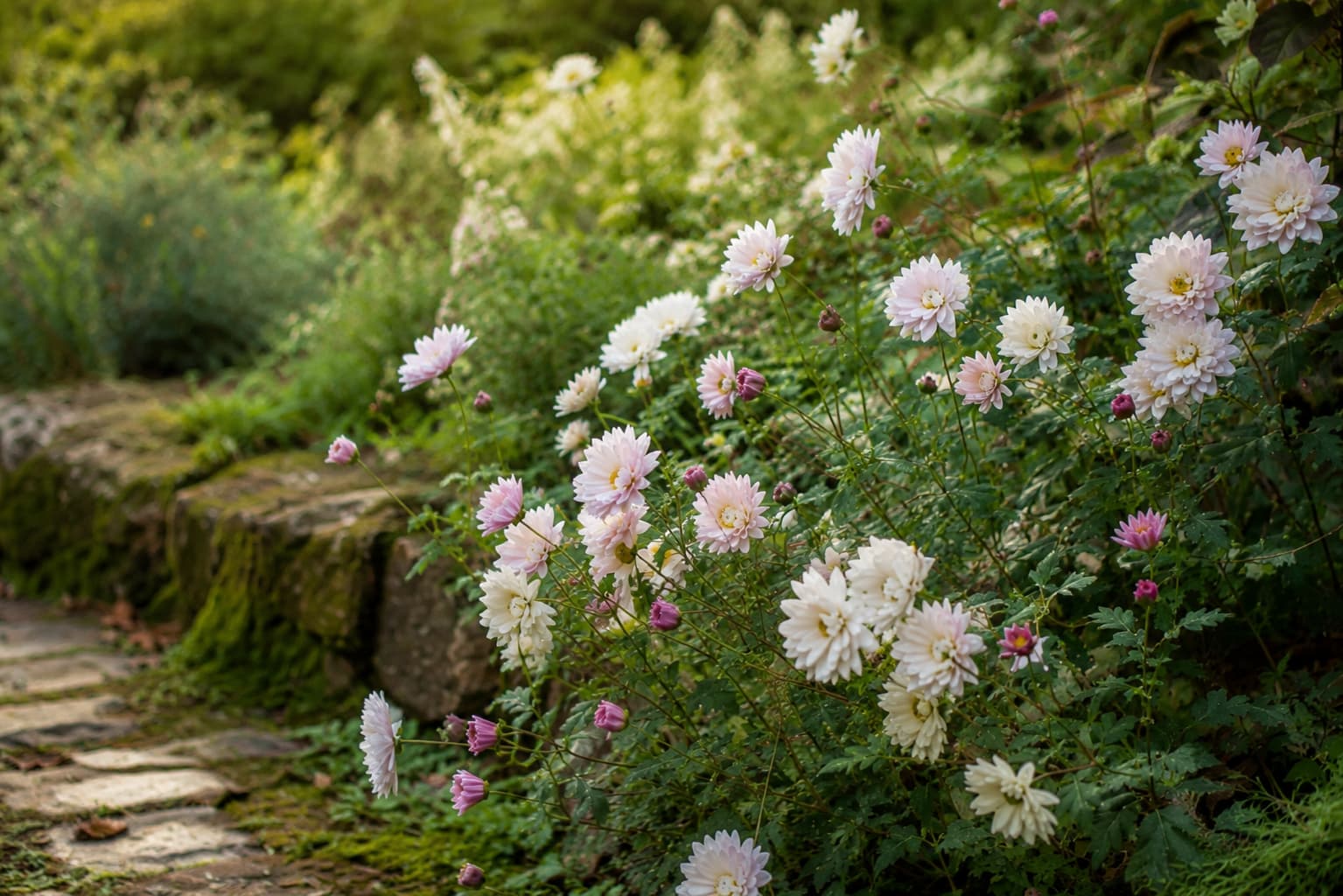
- More natural growth habit
- Often more resilient than hybrids
- Longer bloom stability in gardens
Choosing the wrong type for your climate is one of the biggest reasons people think chrysanthemums “don’t come back.”
How Chrysanthemums Grow
Chrysanthemums are short-day plants, meaning they bloom when nights become longer.
- Late summer → bud formation begins
- Short days → flowering triggers activate
- Artificial night light can delay blooming
They also prefer well-draining soil. Root stress from poor drainage is one of the most common hidden causes of plant decline.
Chrysanthemum Care Basics
Light
Full sun (6+ hours daily), with morning sun preferred in hot climates.
Soil
Well-draining soil is essential. Heavy soil shortens plant lifespan significantly.
Water
Keep soil evenly moist but never waterlogged.
Pinching
Pinch stems in spring/early summer to encourage bushier growth and more blooms. Stop by mid-summer.
Common Problems
No flowers: often caused by light pollution or excess nitrogen
Sudden collapse: usually drainage or root stress, not disease
Weak flowering: inconsistent watering or late fertilizing
Chrysanthemum Meaning
U.S.: friendship, positivity, seasonal abundance
Europe: remembrance and memorial symbolism
East Asia: longevity, resilience, integrity
Color also influences meaning — white for remembrance, yellow for joy, red for vitality.
A Final Perspective
Chrysanthemums are not just fall decorations — they are long-lived perennials shaped by light, timing, and care.
When understood correctly, they become reliable garden plants rather than disposable seasonal flowers.