New England Aster: The Fall Celebration Flower Your Garden Needs
Why New England Aster Earned a Place in My Fall Garden
To begin with, on October 28, 2025, I cut a bouquet of 'Purple Dome' aster, 'Harrington's Pink' aster, and 'Fireworks' goldenrod from my garden for a friend's Thanksgiving table. Meanwhile, the asters had already been blooming for weeks, with no sign of stopping. As a result, my friend's response was: "Where did you buy these? They're perfect." However, I had not bought them; I had grown them. In other words, the planting returned year after year with limited routine care. and zero maintenance beyond a May haircut.
For example, New England aster (Symphyotrichum novae-angliae) is a strong native choice for late-season color. In addition, it is native to eastern North America, Meanwhile, its flowering period can extend well into the late season, For pollinators, its late flowers provide nectar and pollen when fewer alternatives remain, Finally, established plants return as perennials when the site and climate suit them. However, some gardeners avoid it because they don't know about it, or they've only seen the tall, floppy, mildew-covered wild form and assumed that's all there is.
In this guide, you'll find cultivars that solve those problems, the one pruning technique that makes the difference between a mediocre plant and a spectacular one, and how to use New England aster for cut flowers and fall celebrations.
For comparison, for a broader guide covering multiple aster species paired with daylilies, see our Asters & Daylilies: Fall Blooms That Last Longer guide. This article focuses exclusively on Symphyotrichum novae-angliae—why this one species deserves its own guide.
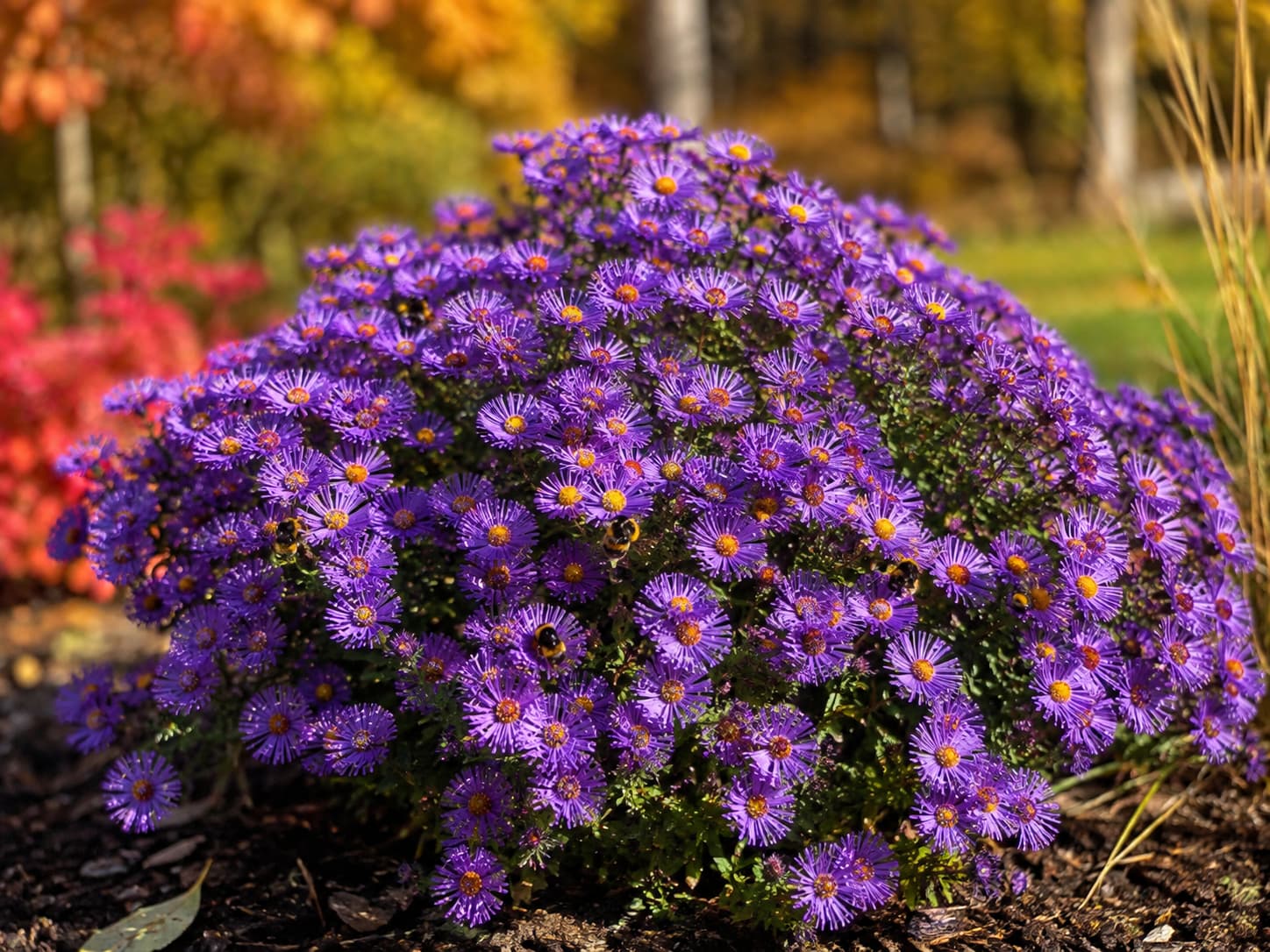
A Perennial Alternative to Rebuying Fall Color
Why New England Aster Specifically?
First, remember that North America has many native aster species. Therefore, it helps to look at what makes New England aster useful in a garden.
| Feature | New England Aster (S. novae-angliae) | Most Other Asters |
|---|---|---|
| Bloom size | 1.5–2 inches (largest of any fall aster) | 0.5–1 inch |
| Color range | Purple, pink, blue, white, magenta, rose | Mostly lavender or pale purple |
| Petal count | 40–100+ rays per flower (very full) | 15–30 rays (thinner look) |
| Flower density | Entire plant covered in blooms | Flowers at stem tips only |
| Bloom duration | 8–10 weeks | 4–6 weeks |
| Cultivar selection | 20+ named cultivars available | 5-10 named cultivars |
| Pollinator value | Top-tier (large flowers = accessible nectar) | Good, but smaller flowers attract fewer species |
| Cut flower vase life | 7–10 days | 3–5 days |
Swipe for more
In short, New England aster combines large flowers, strong late-season color, and useful cultivar choices. New England aster has bigger flowers, more of them, in more colors, for a longer time, with better vase life. If you're planting one aster, this is the one.
Best Cultivars: Choose the Right One for Your Space
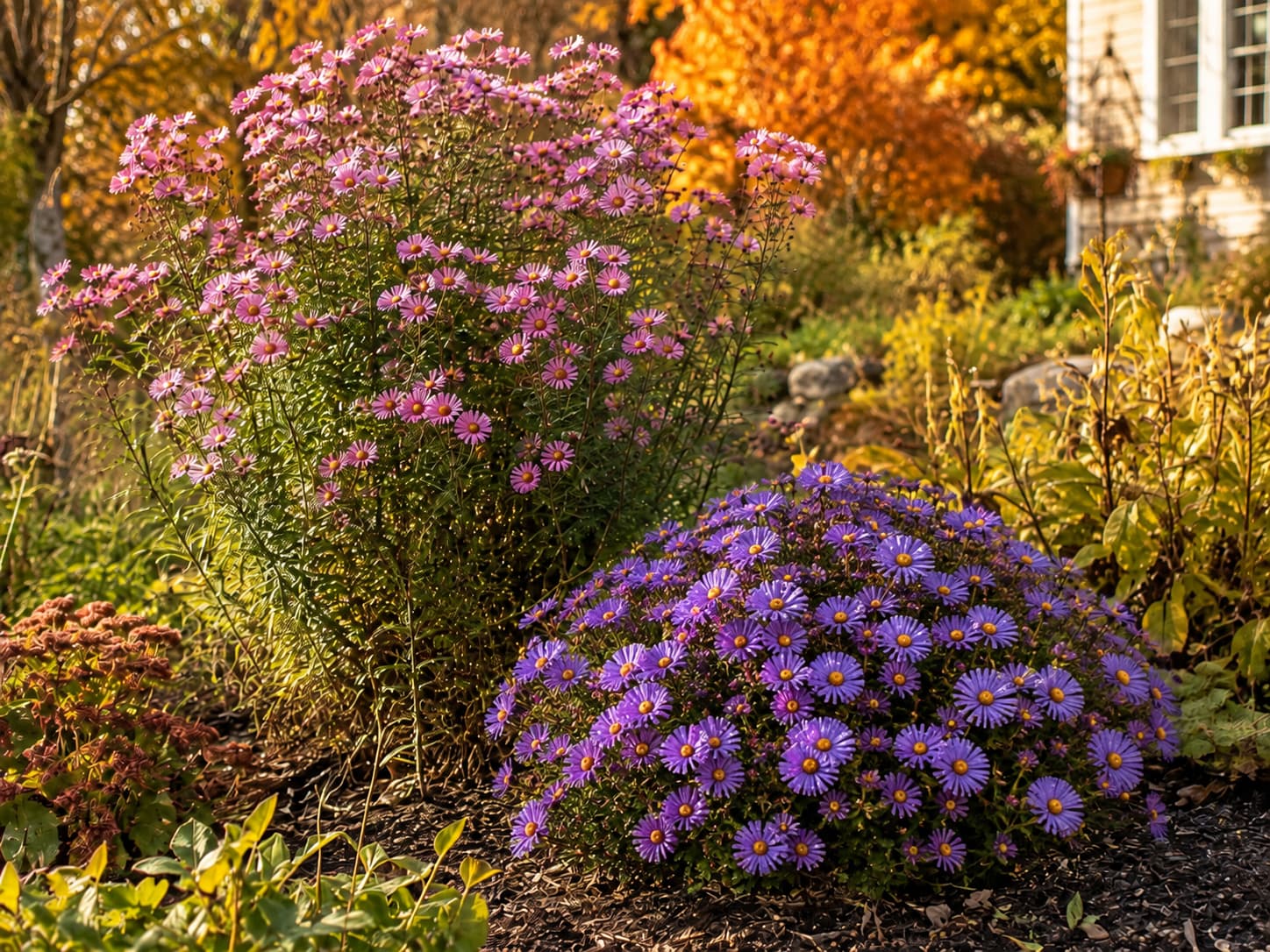
Next, the species plant can grow tall enough to overwhelm a small border., which is too large for most gardens and requires staking. Therefore, choose a named cultivar when predictable height matters. bred for garden performance. For example, these cultivars cover several heights and color ranges:
| Cultivar | Color | Height | Best For | Mildew Resistance | Source & Price |
|---|---|---|---|---|---|
| 'Purple Dome' | Deep purple | 18–24 in. | Small gardens, containers, front-of-border. The #1 recommendation. Compact, self-supporting, never needs staking. | Excellent | $7-9 / gallon pot (widely available) |
| 'Harrington's Pink' | Rose-pink | 48–60 in. | Back-of-border, dramatic height. Needs Chelsea Chop or staking. Best for large gardens. | Good | $8-10 / gallon pot (specialty nurseries) |
| 'Alma Pötschke' | Hot pink/magenta | 36–42 in. | Mid-border. Most vivid pink aster available. Needs light support or Chelsea Chop. | Good | $8-10 / gallon pot |
| 'Andenken an Alma Pötschke' | Salmon-pink | 30–36 in. | Warmer pink tones for pastel gardens. Slightly more compact than the standard form. | Good | $8-10 / gallon pot |
| 'Barr's Pink' | Deep rose | 36–48 in. | Rich color, larger individual flowers. Classic English garden cultivar. | Moderate | $9-12 (specialty nurseries) |
| 'September Ruby' | Ruby-red with yellow center | 36–48 in. | The reddest aster available. Stunning with goldenrod. Needs Chelsea Chop. | Good | $8-10 / gallon pot |
Scroll for more
The Finally, Chelsea Chop: The One Technique That Changes Everything
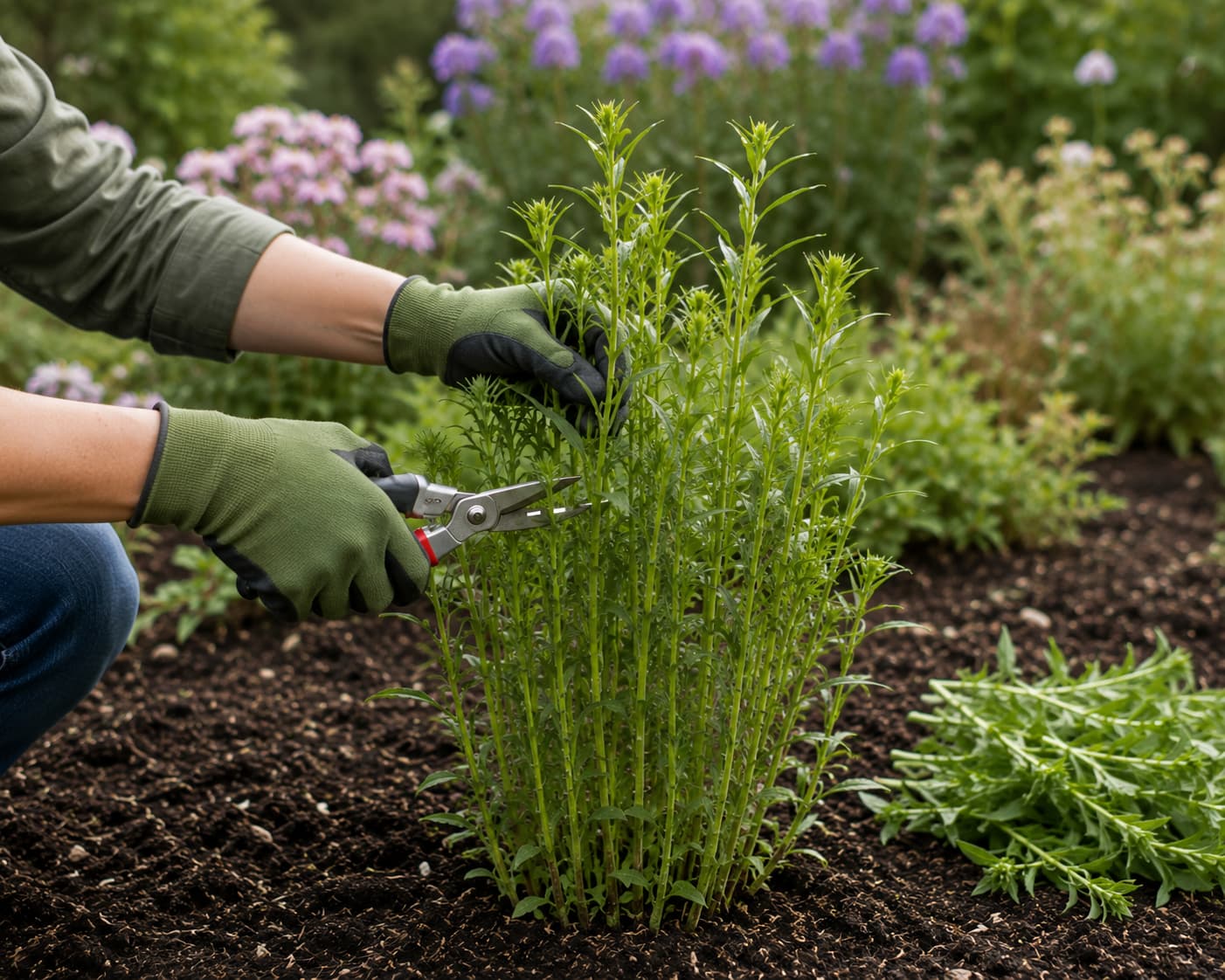
Most importantly, if you grow a tall cultivar, consider the Chelsea Chop: remove roughly the upper portion of young stems in late spring. The technique is associated with the timing of the Chelsea Flower Show in the UK.
In practice, this pruning encourages branching and can reduce the finished height of vigorous cultivars. As a result, a tall aster may become easier to keep upright without heavy staking.
What the Chelsea Chop Does
- Reduces height by 30-50% — For example, a tall 'Harrington's Pink' can finish much shorter after pruning a manageable 2.5-3 feet.
- Doubles the number of stems — As a result, cut stems can branch and create more flowering shoots, each producing flowers.
- Eliminates the need for staking — Therefore, shorter, branched plants are often easier to keep upright.
- Delays bloom by 1-2 weeks — However, the trade-off is a later start to flowering. but gain bushier plants with more flowers.
How to Do It
- First, wait until late spring when the young stems are actively growing., when stems are 12-18 inches tall.
- Next, use clean scissors or pruners. Cut each stem back by one-third. Make the cut just above a set of leaves.
- Then, allow the plant to branch below the cuts. at the cut point within 7-10 days.
- Finally, avoid cutting so late that flower-bud development is disrupted.—the plant won't have time to develop buds before fall.
For the full Chelsea Chop explanation with asters and daylilies together, see our Asters & Daylilies guide.
Growing Guide
Basic Requirements
| Factor | Requirement | Notes |
|---|---|---|
| Sun | Full sun is preferred. For example, strong light usually supports sturdier growth | In partial shade, stems get leggy and flower production drops dramatically. Full sun = sturdy stems + dense blooms. |
| Soil | Well-drained, average to lean | However, clay can work when drainage remains adequate. Avoid rich, heavily amended soil—too much fertility produces floppy leaf growth at the expense of flowers. |
| Hardiness | Zones 3–8 | Extremely cold-hardy. Survives -30°F in Zone 3 with snow cover. Fails in Zone 9+ where winters aren't cold enough for dormancy. |
| Water | Moderate | In general, established plants tolerate short dry periods better than newly planted ones. Water weekly during bloom season for best flower production. Avoid soggy soil. |
| Fertilizer | Minimal or none | Therefore, avoid pushing excessive leafy growth with unnecessary fertilizer. A one-time application of low-nitrogen fertilizer (5-10-10) in mid-August is optional. Skip it entirely if your soil is already fertile. |
| pH | 5.8–7.0 | Finally, it adapts to a useful range of garden soils. |
More columns available
Planting Steps
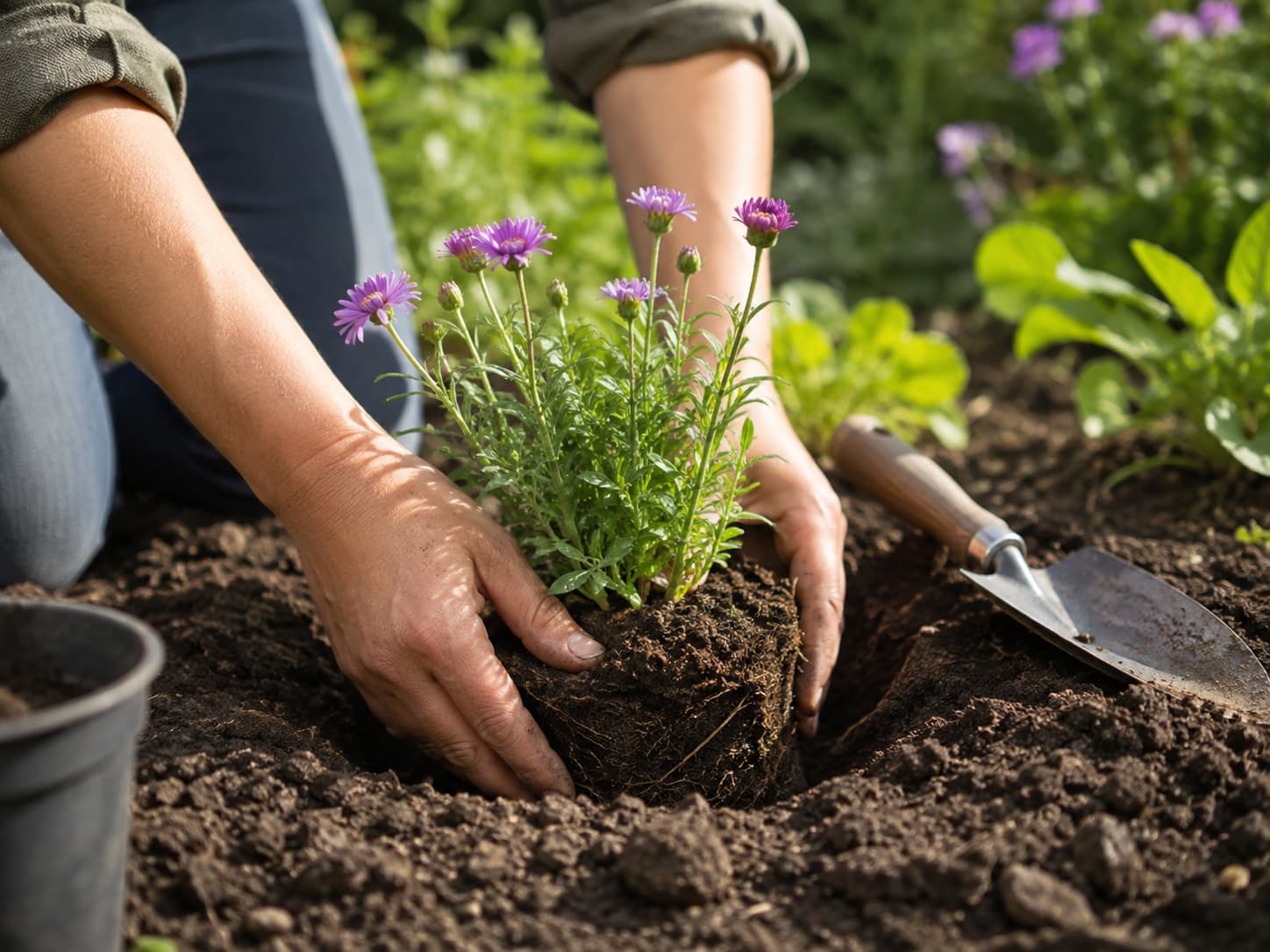
- First, choose a site with strong sun and well-drained soil. and well-drained soil. For example, too much shade can produce weaker stems and fewer flowers.
- Next, dig a hole twice the width of the pot and the same depth.
- Then, tease apart circling roots if the plant is root-bound. However, root-bound nursery plants benefit from gently loosening circling roots—if left circling, they'll strangle the plant within a year.
- Afterward, plant at the same depth as it was in the pot. The crown (where stems meet roots) should be at soil level, not buried.
- In addition, water deeply after planting, then weekly for 4-6 weeks during establishment.
- Then, mulch around the plant without burying the crown., keeping it 2 inches from the crown to prevent rot.
- Finally, mark your calendar for late-spring pruning if the cultivar needs it. in late May—do it the first year and every year after.
Division: Every 2-3 Years
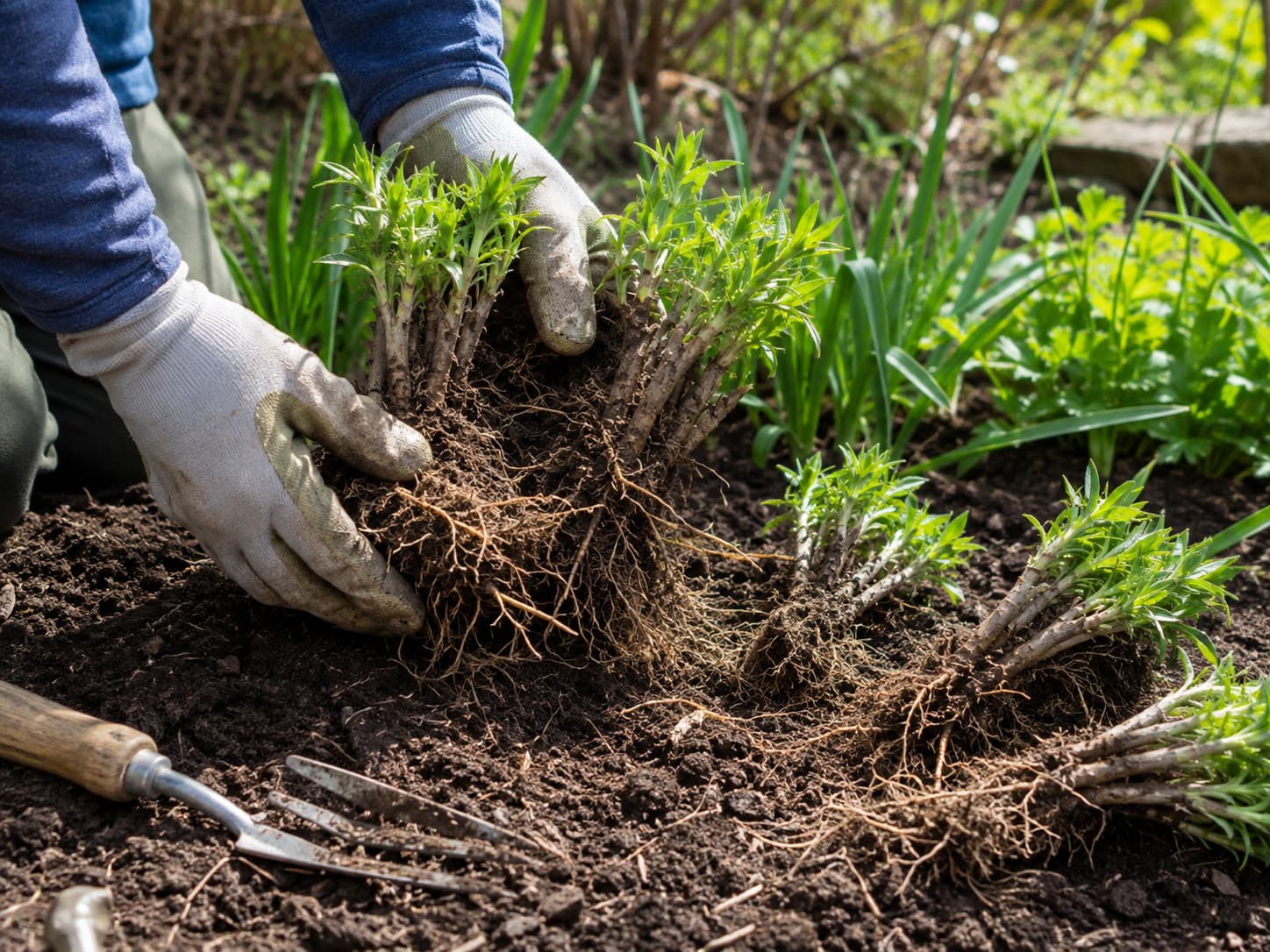
Meanwhile, New England aster can expand into a substantial clump. As a result, older clumps may eventually thin in the center. after 2-3 years as outer stems outcompete the center for resources. Therefore, divide when the clump becomes crowded or develops a weak center. (green ring around a dead center), it's time to divide.
- First, divide in early spring as new growth begins., when new growth is 2-3 inches tall, dig up the entire clump.
- Next, discard any clearly dead center material.
- Then, separate healthy outer sections into divisions, each with 3-5 growing shoots and healthy roots.
- Afterward, replant the divisions 18-24 inches apart at the same depth.
- Finally, keep new divisions evenly watered while they re-establish. Divisions bloom the same year.
New England Aster in Containers
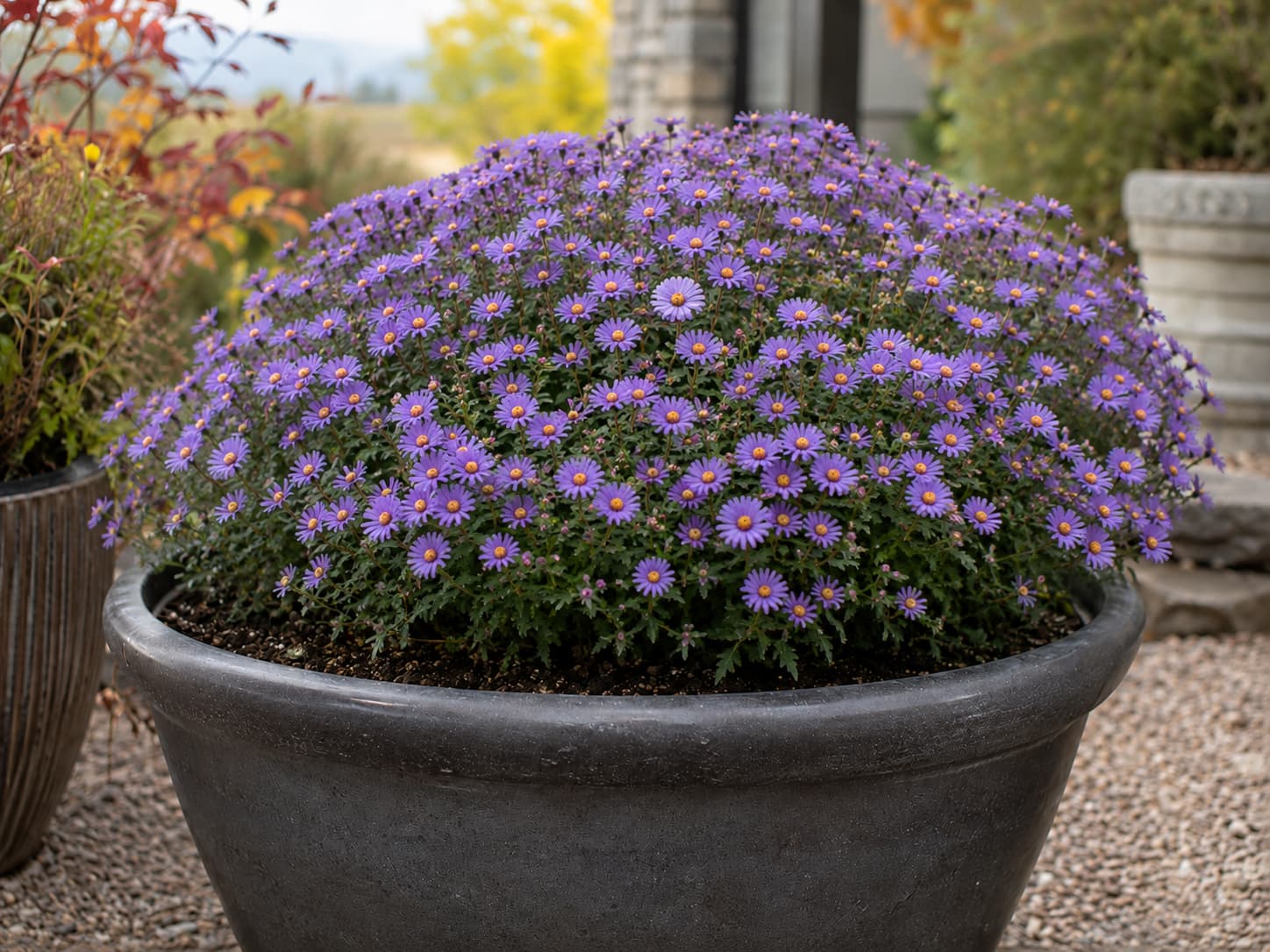
For containers, compact 'Purple Dome' is one of the easiest New England aster cultivars to manage. For example, its compact habit fits more comfortably in a pot than tall selections. fits comfortably in a pot, and its self-branching habit means no staking. By comparison, taller cultivars need more pruning, support, and root space. for containers unless you Chelsea Chop aggressively.
Container Specifications
- First, pot size: 14-inch diameter minimum for one 'Purple Dome' plant. A 16-inch pot gives room for 2-3 seasons before division is needed.
- Next, soil: Standard potting mix. Add a handful of perlite for drainage if the mix holds too much water.
- Then, watering: Every 2-3 days during bloom season. Once a week in spring. Check by sticking your finger 2 inches into the soil—if dry, water.
- In addition, winter: Container asters need root zone protection below 25°F. Wrap the pot in bubble wrap and move against a building wall. Or bring into an unheated garage for the coldest weeks.
- Chelsea Chop: Yes, even in containers. It keeps the plant proportional to the pot.
For more detail, see our, see our Containers vs In-Ground Planting guide.
Pollinator Value: Deeper Than You Think
In addition, New England aster can provide valuable late-season floral resources. "attracts bees." For example, different pollinator groups use asters in different ways:
- Specialist bees: For example, some native bees have close relationships with asters are oligolectic on asters—they require aster pollen to reproduce. Therefore, late-season asters can be especially useful when fewer other flowers remain., these bees cannot complete their life cycle.
- Monarch migration: Meanwhile, New England aster can remain in flower during the fall migration period blooming along the eastern monarch migration corridor in October. The Xerces Society lists it as a top-3 fall nectar source for monarchs.
- Bumblebee queens: In addition, fall-blooming asters provide late nectar to bumblebees for bumblebee queens building fat reserves before hibernation. Without sufficient fall nectar, queens die over winter and don't found new colonies in spring.
- Butterfly species count: Finally, asters also support a broad community of insects beyond adult bees and butterflies, New England aster supports 109 species of Lepidoptera (butterflies and moths) as either a nectar source or caterpillar host plant.
Aster Powdery Mildew: Prevention and Treatment
However, powdery mildew is a common New England aster problem. New England aster disease. For example, it often appears as white powdery growth on leaves. on lower leaves in late summer and spreads upward. In addition, humid conditions, crowding, and shade can increase disease pressure., crowded plantings, and shady locations.
Prevention (Ranked by Effectiveness)
- First, choose cultivars with useful mildew resistance when the disease is common in your area. 'Purple Dome' and the 'Wood's' series have excellent resistance. Species plants and 'Harrington's Pink' are more susceptible.
- Next, provide strong light and good air circulation. Space plants 18-24 inches apart. Don't crowd them against walls or fences.
- In addition, water the root zone when practical instead of routinely wetting foliage. Wet leaves + humidity = mildew paradise.
- Finally, thin an overly dense clump when better airflow is needed. if the clump is very dense. Remove 20-30% of the emerging stems to improve airflow through the center.
Treatment
However, if mildew appears despite prevention, start with sanitation and airflow before using a treatment. (1) First, remove badly affected leaves and dispose of diseased material appropriately.—do not compost them, bag and discard. (2) Next, improve airflow around crowded stems. (3) However, do not rely on homemade sprays as a universal treatment; use a product or method supported for the plant and disease in your region. (1 tbsp baking soda + 1 gallon water + a few drops of dish soap) or a 40/60 milk-to-water solution—both have university-proven efficacy against powdery mildew. (4) Finally, for severe cases, Bonide Copper Fungicide ($12/32 oz concentrate) applied according to label directions.
Cut Flowers and Fall Decorating
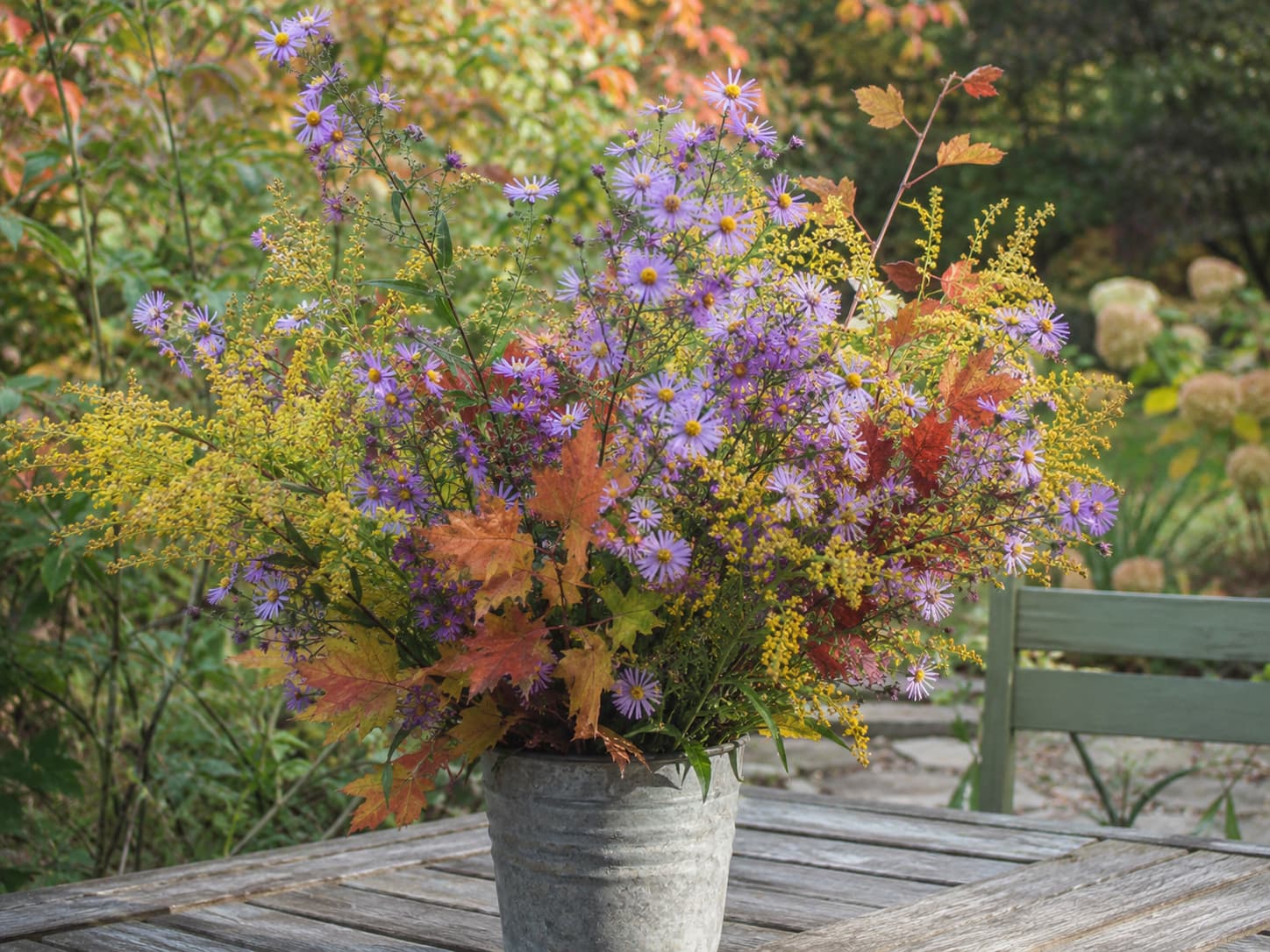
For fall arrangements, New England aster can also work as a useful cut flower.—7-10 days in a vase, longer than most fall perennials. In addition, its flower color and branching stems fit autumn arrangements well. and vivid colors make it a natural for autumn celebrations.
Cut Flower Technique
- First, cut stems during the cooler part of the day. when flowers are fully open. For example, cooler harvest conditions can reduce immediate wilting.
- Next, choose stems with plenty of open flowers 70-80% of the flower cluster is open. Therefore, choose stems with enough flowers already open.
- Then, strip lower leaves that would sit below the water line.
- Afterward, place the stems in clean water with floral preservative or a pinch of sugar.
- Finally, refresh the vase water regularly. Recut stems at an angle each time.
- In general, vase life varies with harvest stage, temperature, and water cleanliness.
4 Fall Decorating Ideas
Companion Planting: The Classic Fall Garden
| Companion | Color | Bloom Time | Why It Works |
|---|---|---|---|
| Goldenrod (Solidago) | Golden yellow | Aug–Oct | For example, purple asters and goldenrod create a strong complementary color contrast. Both native, both pollinator magnets. See our Goldenrod guide. |
| Black-eyed Susan (Rudbeckia) | Gold/black | Jul–Oct | Meanwhile, Black-eyed Susan can overlap with aster; seed heads persist into winter for bird food |
| Ornamental grasses (Switchgrass, Fountain grass) | Bronze/tan | Year-round interest | In addition, ornamental grasses add vertical contrast and movement; grasses provide the "texture" that makes fall gardens look designed rather than accidental |
| Sedum 'Autumn Joy' | Pink→copper→rust | Aug–Nov | By comparison, sedum color changes as fall progresses; dried flower heads persist into winter for structural interest |
| Chrysanthemums | Various | Sep–Nov | Finally, chrysanthemums can fill gaps between aster clumps; complementary bloom times. Chrysanthemum guide. |
Swipe sideways if needed
Common Problems and Quick Fixes
| Problem | Cause | Fix |
|---|---|---|
| Tall, floppy stems | No Chelsea Chop; too much shade or fertilizer | For example, prune at the appropriate late-spring stage next year; move to full sun; stop fertilizing |
| White powder on leaves | Powdery mildew | First, remove affected leaves and improve airflow; use resistant cultivars; apply baking soda or milk spray |
| No flowers second year | Not enough sun; overcrowded; too much nitrogen | Next, move or divide the plant only when the diagnosed cause supports that change (6+ hours); divide every 2-3 years; stop fertilizing |
| Center of clump dying | Natural aging—outer stems crowd out the center | Then, divide the clump when crowding or center dieback is confirmed; discard dead center; replant outer divisions |
| Leaves turning yellow and dropping | Overwatering or poor drainage | Meanwhile, adjust watering to the actual moisture level; improve drainage; check for root rot |
| Few flowers despite full sun | Planted too deep; crown buried; or insufficient cold period | Finally, make sure the crown is not buried too deeply; ensure it's at soil level, not below |
Horizontal scroll available
Recommended Products
| Product | Brand | Price | What It Does |
|---|---|---|---|
| Low-Nitrogen Fertilizer (5-10-10) | Espoma Bulb-Tone | $14 / 18 lb | For example, optional feeding should be based on soil fertility and product directions for bud support; skip entirely if soil is fertile |
| Copper Fungicide Concentrate | Bonide | $12 / 32 oz | However, use a fungicide only when it is labeled for the plant and disease; use as last resort after cultural controls |
| Plant Support Rings | Various | $8-12 / set of 3 | Meanwhile, support rings can help taller plants that were not pruned the Chelsea Chop; place over emerging stems in May |
| Floating Row Cover | Agribon | $8-12 / 5×25 ft | Finally, winter protection should match the container, cultivar, and local climate; also prevents late-season pest damage |
Swipe for more
Frequently Asked Questions
Bloom, Staking & Containers
1. Why are my asters not blooming?
First, check three common causes: (1) Not enough sun—New England aster needs 6+ hours of direct sun. For example, shade can reduce flowering and weaken stems. (2) Crown planted too deep—the crown must be at soil level, not buried. (3) Too much nitrogen—fertilizer pushes foliage at the expense of flowers. Therefore, reduce unnecessary nitrogen and reassess light before expecting improvement.
2. Do I need to stake New England aster?
In general, staking depends on cultivar height, pruning, light, and exposure. For example, compact 'Purple Dome' often stands without the support required by taller cultivars—it's naturally compact. By comparison, taller cultivars may need pruning or support the Chelsea Chop in late May or physical support (grow-through rings or stakes) to prevent flopping.
3. Can I grow New England aster in containers?
Yes. For containers, compact cultivars are the easiest place to start. First, choose a roomy pot with standard potting mix, Then, water according to actual root-zone moisture during bloom, and Finally, protect the root zone when winter conditions exceed the cultivar's container tolerance in winter. All other cultivars get too large for containers.
Mums, Cutback & White Cultivars
4. Is New England aster the same as the mums sold at garden centers in fall?
No. By contrast, asters and chrysanthemums belong to different genera. from different genera. In contrast, asters and chrysanthemums differ in growth habit, hardiness, and garden use that come back year after year. Most "fall mums" are treated as annuals—many aren't winter-hardy in northern zones even though they're labeled as perennials. Therefore, compare the specific cultivar and climate rather than assuming every fall plant behaves the same way, asters win. For instant seasonal impact, mums work. See our Chrysanthemum Guide for the full comparison.
5. When should I cut back New England aster?
After flowering, choose your cutback timing based on garden cleanup, seed, and habitat goals. and foliage turns brown (November-December). Cut all stems to 2-3 inches above ground. However, cutback timing can be delayed when you want to retain stems and seed heads for habitat—you'll remove seeds that feed birds and habitat for overwintering beneficial insects. In spring, new growth emerges from the crown.
6. How do I get white New England aster?
Finally, white-flowered forms are less common than purple and pink selections. (sometimes sold as 'White Savings' or simply "white New England aster") is less commonly available but exists. For example, specialty perennial nurseries may carry white-flowered selections like Bluestone Perennials or White Flower Farm ($10-12 per plant). It's not as vigorous as the purple forms but provides essential contrast in fall arrangements.
References
- Royal Horticultural Society — Asters Growing Guide — Chelsea Chop technique, mildew management, and cultivar recommendations
- Xerces Society — Monarch Nectar Plant Guides — New England aster listed as a top fall nectar plant for monarch migration
- Clemson University Extension — Asters — Disease identification, cultivar comparison, and regional growing advice
- US Forest Service — Symphyotrichum novae-angliae — Native range, ecological value, and pollinator relationships