Goldenrod for Fall: Growing Guide, Allergy Facts & Why Every Autumn Garden Needs It
To begin with, on September 22, 2025—the autumn equinox—I stood in my backyard and counted 14 monarch butterflies feeding on a single clump of 'Fireworks' goldenrod. Fourteen. On a plant I'd spent years pulling out because I thought it was making me sneeze. It wasn't. Ragweed was. Goldenrod was feeding the monarchs.
In fact, goldenrod (Solidago spp.) is the most misunderstood plant in North American gardening. It's been falsely accused of causing allergies, unfairly dismissed as a weed, and overlooked by gardeners who don't realize it's one of the single most valuable perennials they could plant. In fall, when almost everything else is done, goldenrod carries your garden's color—and your local ecosystem—on its golden shoulders.
In this guide, you'll find the truth about goldenrod and allergies (with science), which varieties to plant (they're not all the same), how to grow them in gardens and containers, and how to use them for fall decorating that's both free and genuinely beautiful.
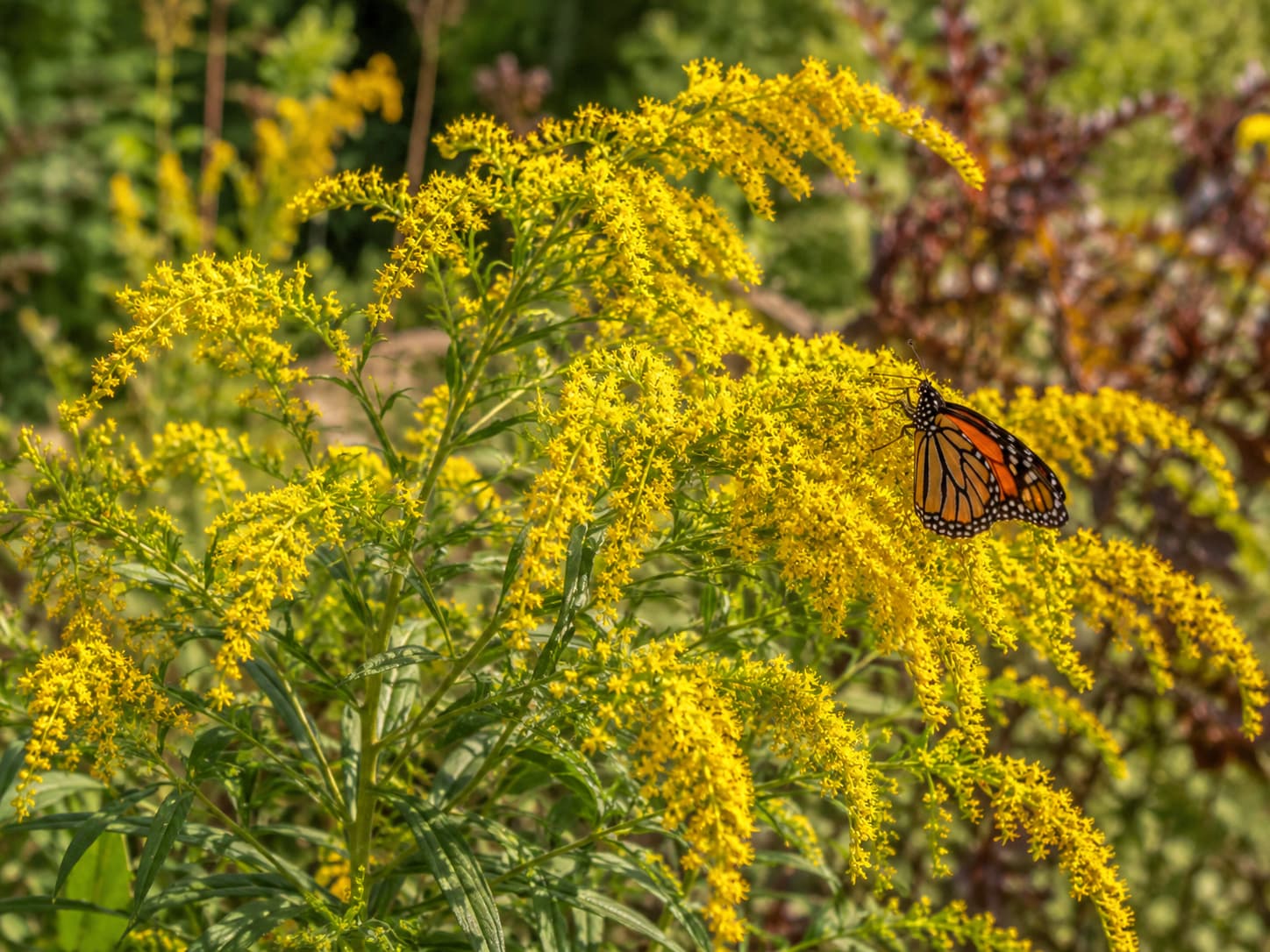
greenmuse-illustration-goldenrod-fireworks-monarch-fall-overview.jpg
The Allergy Myth: Goldenrod vs. Ragweed
Why Goldenrod Gets Blamed
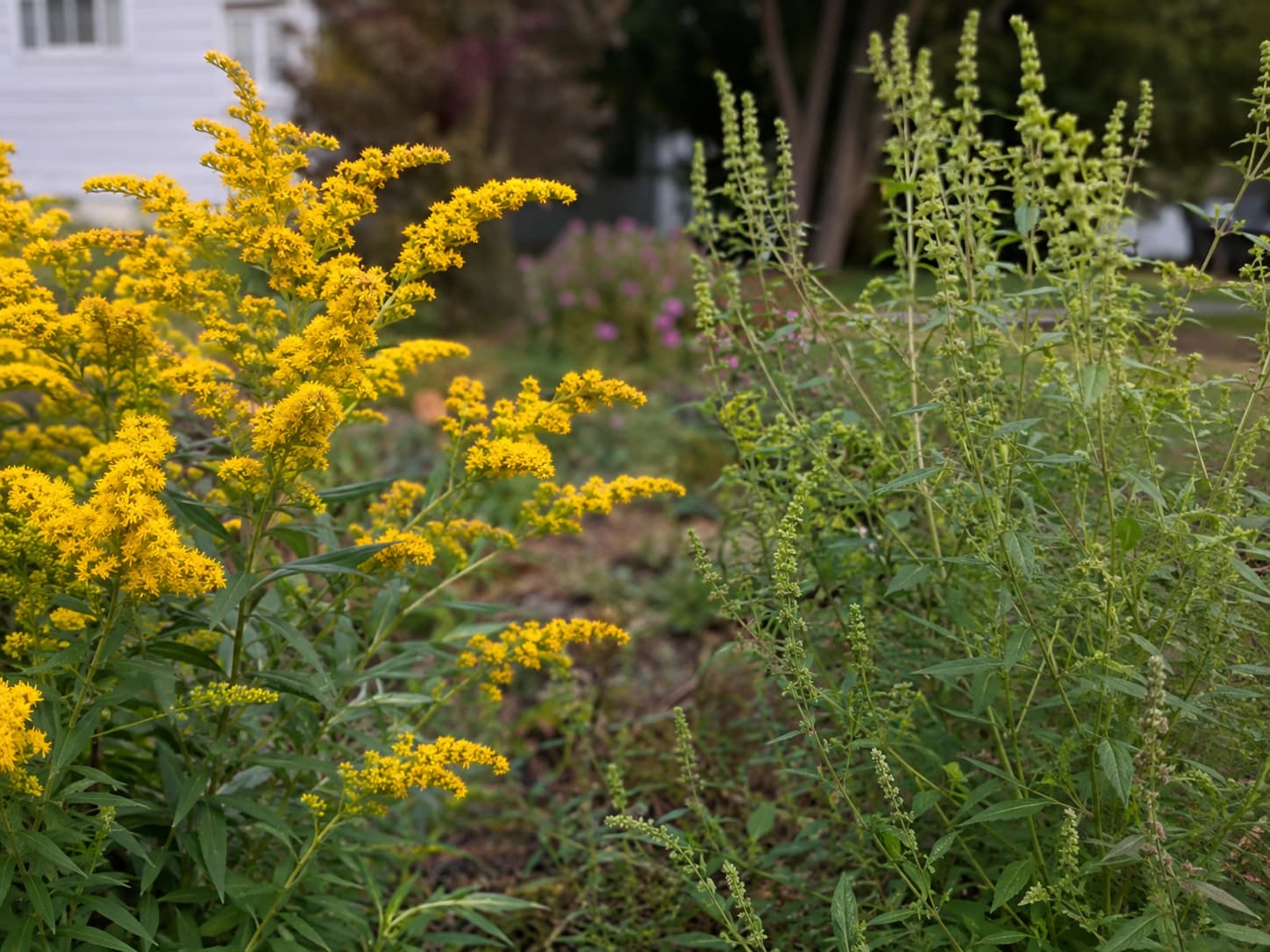
greenmuse-illustration-goldenrod-vs-ragweed-fall-comparison.jpg
First, let's clear up the biggest reason people avoid goldenrod.
More importantly, goldenrod is generally a much smaller airborne allergy concern than ragweed. The comparison becomes clearer when you look at how the two plants move pollen:
- For example, goldenrod pollen is relatively heavy and is mainly carried by insects rather than wind. It physically cannot reach your nose unless you stick your face directly into a flower.
- By contrast, ragweed (Ambrosia spp.) pollen is lightweight and airborne—a single ragweed plant produces up to 1 billion pollen grains per season, carried by wind for miles.
- At the same time, both plants can bloom from late summer into fall. Goldenrod is visible and bright, so people notice it and blame it. Ragweed is inconspicuous with green flowers, so people don't notice it—but it's the actual culprit.
- Therefore, allergy guidance focuses much more strongly on ragweed pollen than on showy goldenrod flowers, including the AAAAI (American Academy of Allergy, Asthma & Immunology).
Goldenrod and Ragweed Side by Side
| Feature | Goldenrod (Solidago) | Ragweed (Ambrosia) |
|---|---|---|
| Flower color | Bright yellow, showy | Green, inconspicuous |
| Pollen type | Heavy, sticky, insect-carried | Lightweight, airborne, wind-carried |
| Pollen per plant | Small quantity | Up to 1 billion grains |
| Allergy risk | None (unless you're a bee) | Major — primary cause of fall hay fever |
| Ecological value | Top-tier pollinator plant | Minimal — wind-pollinated plants feed few insects |
| Garden value | High — beautiful, long-blooming, drought-tolerant | None — weed with no ornamental value |
Drag the bar below or swipe horizontally to view the remaining columns.
Which Goldenrod Is Right for Your Garden?
Match the Plant to Your Space
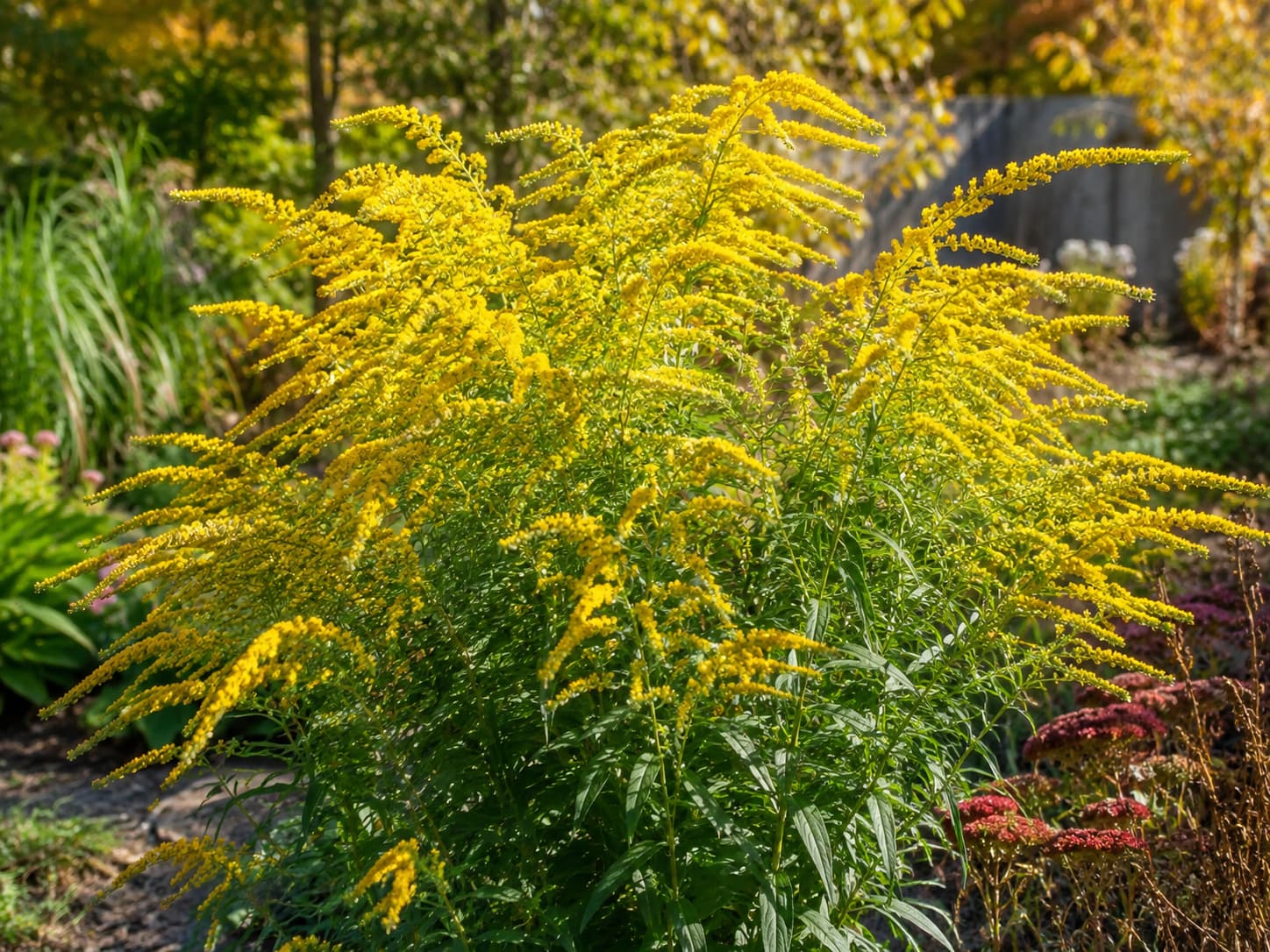
greenmuse-illustration-fireworks-goldenrod-autumn-garden.jpg
Next, remember that the genus Solidago includes many different species in North America. They range from 12-inch groundcovers to 7-foot giants. As a result, choosing the right one matters—plant the wrong species and you'll have an 8-foot monster swallowing your garden.
| Your Situation | Best Variety | Why |
|---|---|---|
| Small garden or container | 'Golden Fleece' (S. sphacelata) | 12-18 in., compact mound, won't take over. The only goldenrod for small spaces and pots. |
| Mid-size border, best overall | 'Fireworks' (S. rugosa) | 30-36 in., arching sprays like golden fireworks, slow-spreading clump. The most popular cultivar for good reason. |
| Back of border, dramatic height | S. speciosa (Showy Goldenrod) | 36-48 in., upright red-tinted stems, large flower clusters. More vertical than 'Fireworks'. Does not spread aggressively. |
| Cottage / wildflower meadow | S. odora (Sweet Goldenrod) | 24-48 in., fragrant anise-scented leaves, well-behaved clump. Leaves can be dried for tea. |
| Groundcover / erosion control | S. caesia (Blue-stemmed Goldenrod) | 18-30 in., arching stems with blue-green tint, spreads slowly in shade. One of the few goldenrods for part shade. |
| Deer problem | 'Fireworks' or S. odora | Both have resinous foliage that deer avoid. No goldenrod is completely deer-proof, but these are the least browsed. |
Drag the bar below or swipe horizontally to view the remaining columns.
Watch for Strong Spreaders
Growing Guide: Easier Than You Think
In general, goldenrod is one of the lower-maintenance perennials you can grow. For instance, many species evolved in prairies, meadows, and open woodland habitats—tough, drought-prone, poor-soil environments. The conditions that kill fussier perennials are exactly what goldenrod prefers.
Basic Requirements
| Factor | Requirement | Notes |
|---|---|---|
| Sun | Full sun (6+ hours) | Most species tolerate light shade; S. caesia tolerates moderate shade. Bloom quantity drops in shade. |
| Soil | Any well-drained soil | Prefers average to lean soil. Rich soil produces floppy growth with fewer flowers. Don't over-amend. |
| Hardiness | Zones 3–9 (varies by species) | All varieties listed above are hardy to at least Zone 5; most to Zone 3. |
| Water | Low–moderate | Drought-tolerant once established (after first growing season). Water weekly during establishment, then only during extended drought. |
| Fertilizer | None needed | Fertilizing goldenrod produces tall, floppy plants with weak stems. Lean soil = sturdier plants. This is the opposite of most perennials. |
| pH | 5.5–7.5 | Extremely adaptable. Not picky. |
Drag the bar below or swipe horizontally to view the remaining columns.
Planting and Establishment
greenmuse-illustration-planting-goldenrod-garden-bed.jpg
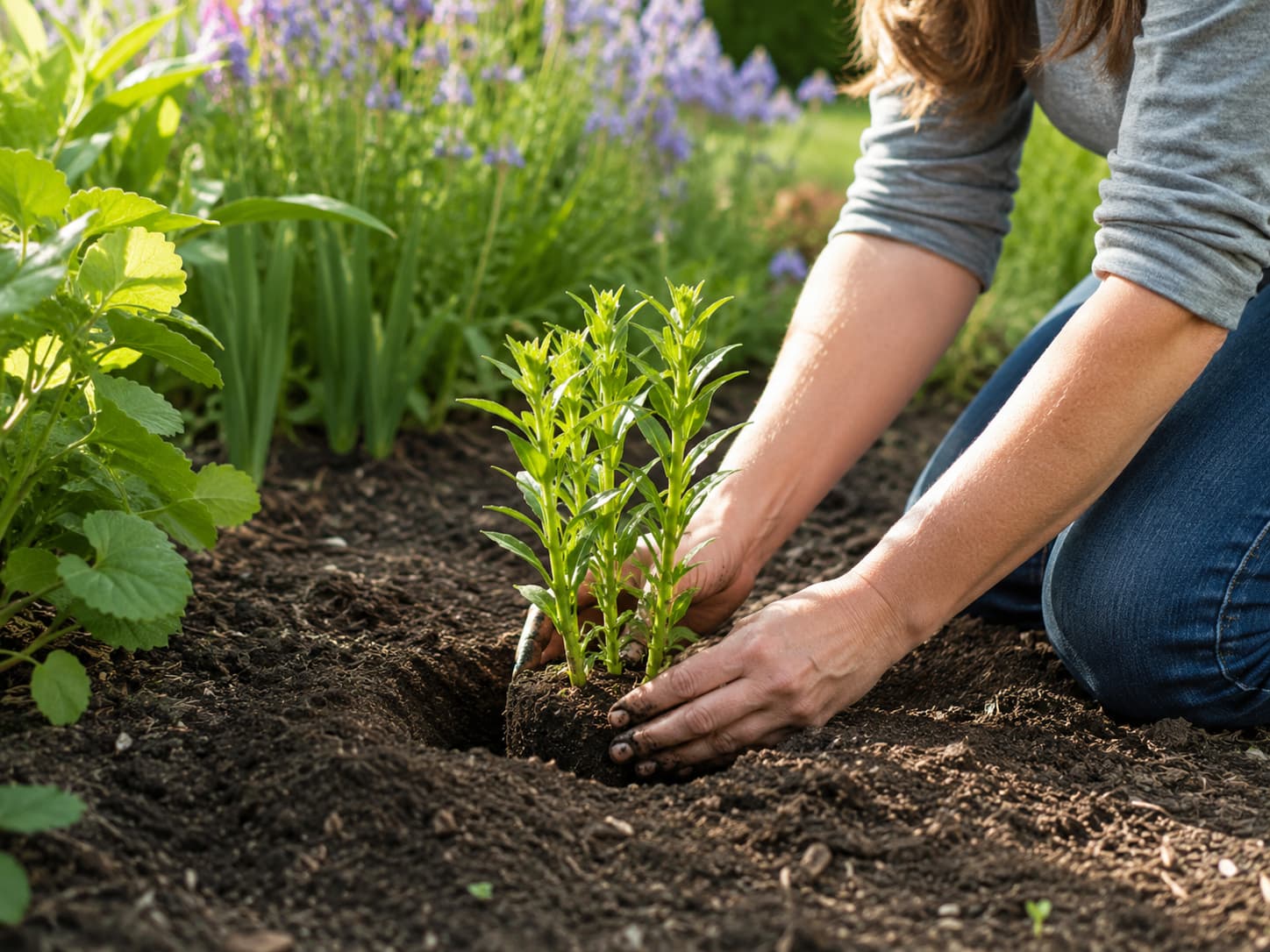
For planting, spring or early fall can both work. For example, spring planting gives the roots a full season to establish before winter. Meanwhile, fall planting can also work when roots have enough time to establish before hard freezes.
- First, dig a hole about twice the width of the pot and roughly the same depth.
- Next, loosen the roots gently if the plant is root-bound. Goldenrod roots are vigorous and will circle if pot-bound—tease them apart.
- Then, plant at the same depth as it was in the pot. Don't bury the crown.
- After planting, water deeply, then weekly for the first 4-6 weeks.
- In addition, add a modest layer of shredded bark to conserve moisture and suppress weeds. Keep mulch 2 inches away from the crown to prevent rot.
- Do not fertilize. Seriously. Zero. Nothing.
The Chelsea Chop Works on Goldenrod Too
If your goldenrod tends to get tall and leggy, (especially in richer soil), cut the top one-third off all stems in late May or early June. This forces branching and produces a shorter, bushier plant with more flower spikes. The same technique that works on asters works on goldenrod—see our Asters & Daylilies Fall Blooms guide for the full Chelsea Chop explanation.
Goldenrod in Containers
greenmuse-illustration-golden-fleece-goldenrod-container-fall.jpg
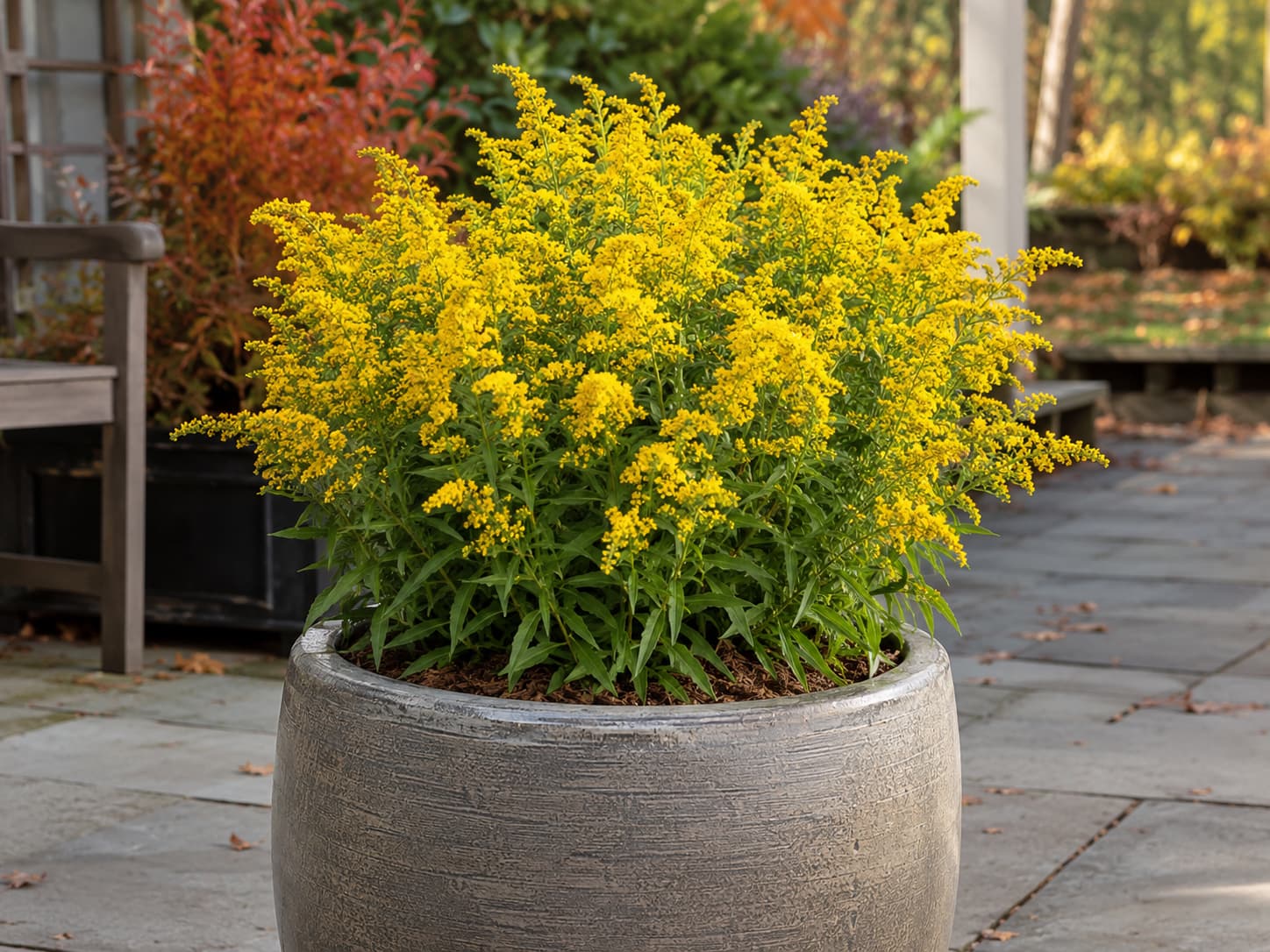
For small spaces, goldenrod can also grow in containers, and compact cultivars are the easiest place to start. At 12-18 inches, it's naturally compact and produces a full, rounded mound of golden flowers that cascades slightly over pot edges.
Container Specifications
- First, choose enough root room: a larger pot is generally easier to manage than a very small one. Deeper is better—goldenrod has a substantial root system.
- Next, use a well-drained container mix. Don't add compost or fertilizer to the mix. Mix in a handful of sand or perlite for drainage if your mix tends to hold water.
- Then, check moisture regularly rather than watering by a fixed calendar. Every 10-14 days in spring and fall. Goldenrod in containers is less drought-tolerant than in-ground.
- In cold weather, protect the root zone from repeated freeze-thaw swings; wrap in bubble wrap below 20°F. Goldenrod roots in containers freeze at higher temperatures than in-ground roots.
- Division: Every 2-3 years. Container goldenrod crowds faster than in-ground.
For more container growing principles, see our Containers vs In-Ground Planting guide.
The Pollinator Case: Why Goldenrod Is Ecologically Irreplaceable
greenmuse-illustration-monarch-butterfly-feeding-goldenrod.jpg
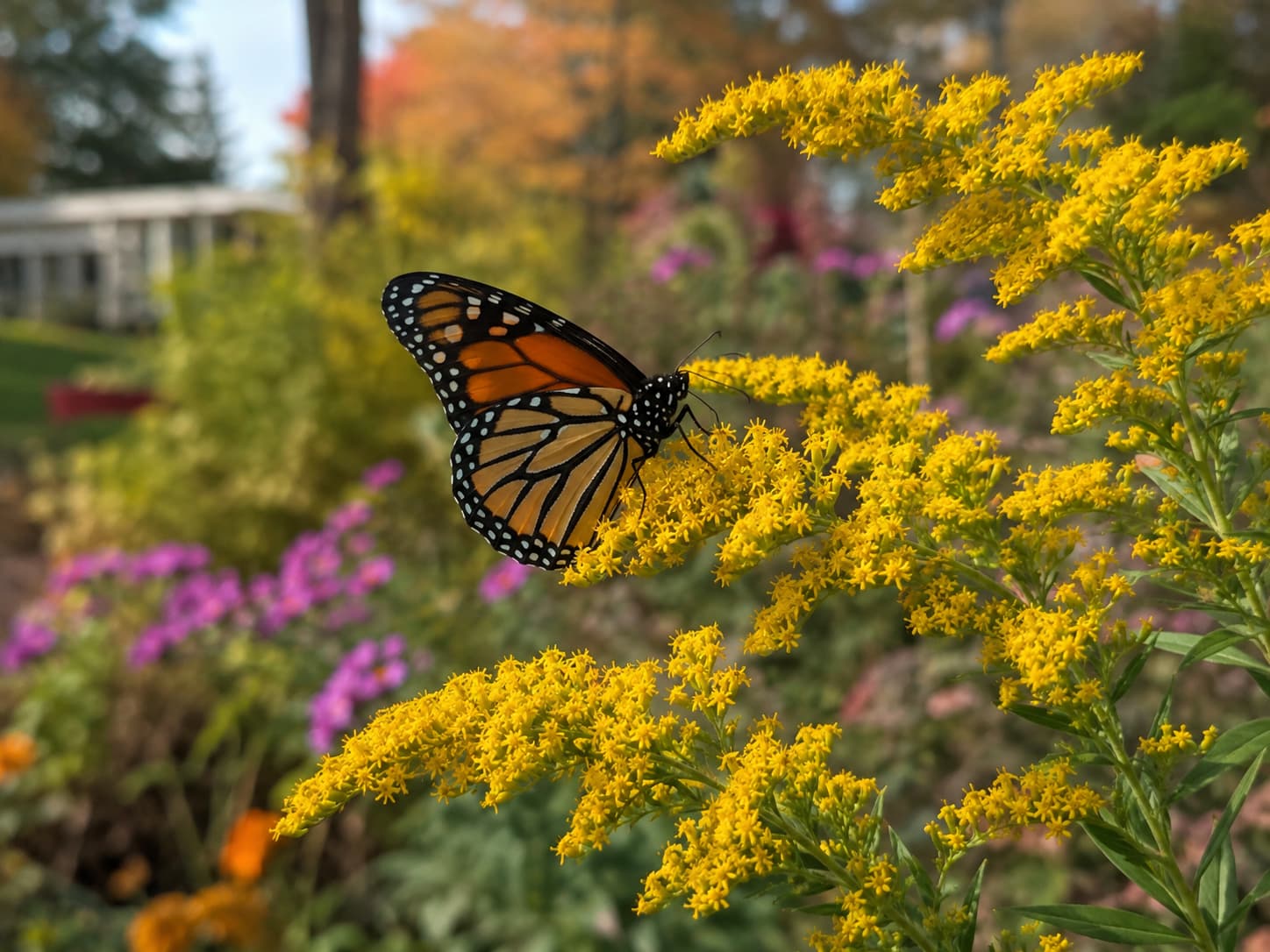
Ecologically, goldenrod can be an important late-season nectar and pollen source in many parts of North America. Here's what the data shows:
- For example, some specialist bees use goldenrod pollen: 11 species of native bees are oligolectic on goldenrod—they can only feed their larvae goldenrod pollen. Without goldenrod, these bees go extinct locally.
- In addition, migrating monarchs may visit goldenrod for nectar: Goldenrod is a critical nectar fueling station for monarch butterflies migrating south in September-October. The Xerces Society lists it as a top-3 fall nectar plant for monarch corridors.
- Meanwhile, honey bees can also work goldenrod flowers late in the season: Goldenrod nectar produces a dark, strong-flavored honey that beekeepers rely on to get their hives through winter. In many regions, it's the last significant nectar flow before frost.
- Finally, goldenrod also supports caterpillars and other insects as a host plant: 100+ species of Lepidoptera (butterflies and moths) use goldenrod as a host plant for their caterpillars, including the wavy-lined emerald and several specialist moths.
Goldenrod vs. Ragweed: How to Tell Them Apart
Because the two plants bloom at similar times, this visual comparison can help separate them:, here's a definitive visual guide:
| Feature | Goldenrod | Ragweed |
|---|---|---|
| Flower color | Bright golden yellow | Dull green, barely visible |
| Flower shape | Showy plumes, arching sprays, or flat-topped clusters | Small, dangling spikes of green bumps |
| Leaf shape | Narrow, lance-shaped, often with smooth or slightly toothed edges | Deeply lobed, fern-like, similar to carrot foliage |
| Height | 12–72 in. depending on species | 12–72 in. depending on species |
| When you touch the flower | Pollen sticks to your finger (sticky, heavy) | Yellow dust puffs into the air (lightweight, airborne) |
| Bloom time | August–October | August–October (same time—this is why they're confused) |
Drag the bar below or swipe horizontally to view the remaining columns.
However, avoid relying on a touch test alone. Touch the flower with your finger. If yellow pollen sticks to your skin, it's goldenrod. If a cloud of dust puffs into the air, it's ragweed—and that dust is the stuff making you sneeze.
Using Goldenrod for Fall Decorating
greenmuse-illustration-dried-goldenrod-fall-arrangement.jpg
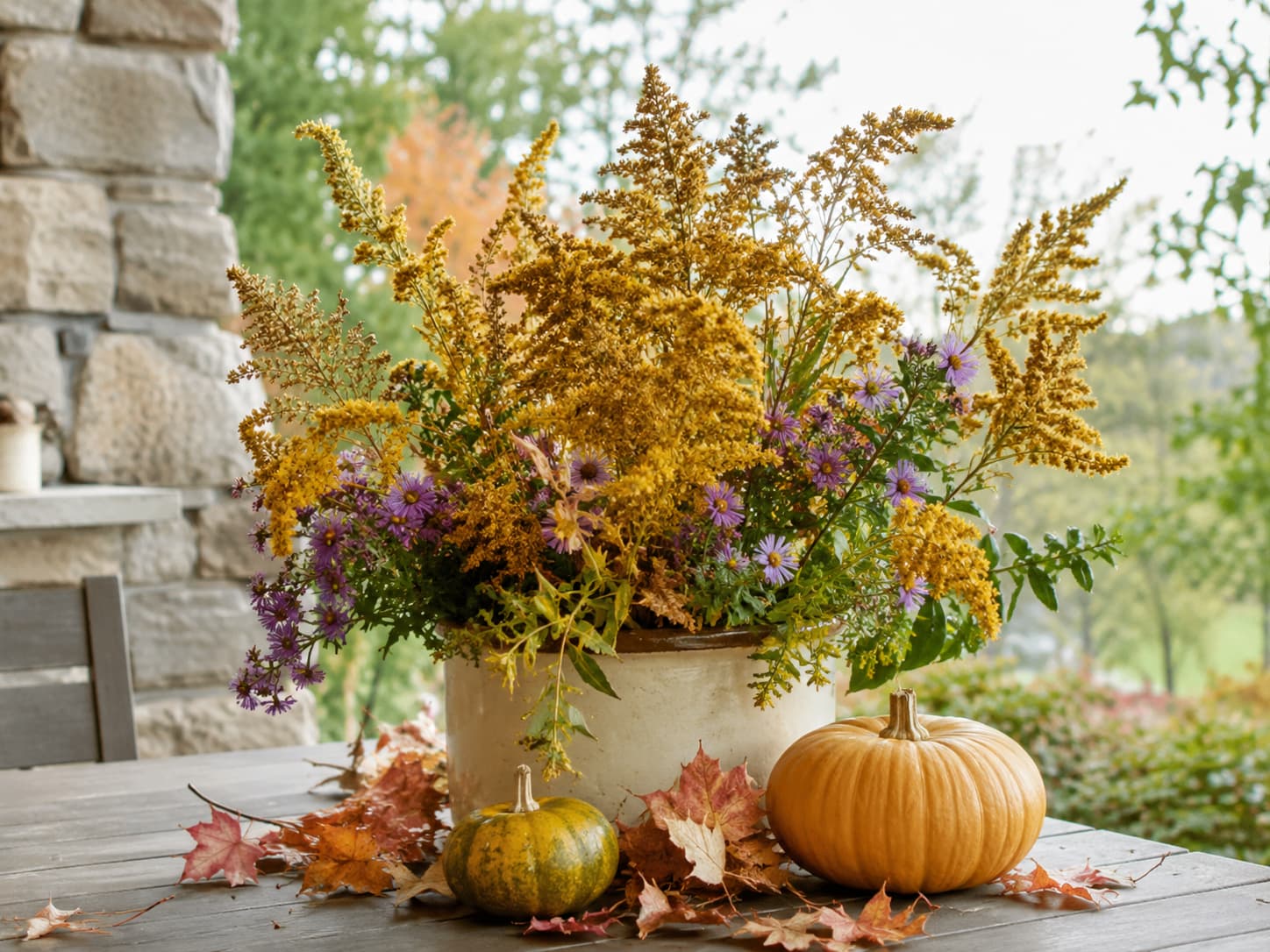
Beyond the garden, goldenrod can also be useful in seasonal arrangements. For fresh arrangements, cut stems when many florets are open and place them in clean water. In addition, dried stems can hold their color for a long time when prepared well. Meanwhile, homegrown stems can also reduce the need to buy seasonal filler flowers.
Cut Flower Tips
- First, cut stems after dew has dried, when about 2/3 of the florets on each plume are open. If you cut when all florets are still budded, they may not open indoors.
- Next, strip the lower leaves (they'll rot in water and shorten vase life).
- Then, place the stems in clean water. Add a pinch of sugar or floral preservative.
- Finally, refresh the water regularly. Vase life: 7-10 days.
Drying Goldenrod
- For drying, cut stems when many florets are open but before they start to fade or go to seed.
- Next, hang them upside down in small bundles (5-7 stems) in a warm, dark, dry place for 2-3 weeks.
- Meanwhile, a darker drying area can help reduce fading; sunlight bleaches it to tan.
- Dried goldenrod lasts indefinitely. I have bundles from 2024 that are still bright gold.
4 Fall Decorating Ideas
Bloom Calendar and Companion Plants
| Month | Goldenrod | Best Companions Blooming |
|---|---|---|
| July | Early species starting | Black-eyed Susans, coneflowers, daylilies |
| August | Prime Peak begins | Early asters, phlox, Russian sage |
| September | Prime Peak — most species | Prime New England asters, chrysanthemums, sedum |
| October | Prime Late species still strong | Prime Late asters, ornamental grasses, turtlehead |
| November | Until hard frost | Ornamental kale, dried grasses |
Drag the bar below or swipe horizontally to view the remaining columns.
For garden design, goldenrod pairs especially well with purple asters—this is the palette you see along roadsides and meadows across eastern North America in September. More importantly, the two groups often overlap in bloom time, which makes the pairing useful for both color and pollinators. Finally, for aster variety recommendations and fall bloom extension techniques, see our Asters & Daylilies guide.
Common Problems and Quick Fixes
| Problem | Cause | Fix |
|---|---|---|
| Tall, floppy stems | Too-rich soil or too much shade | Move to leaner soil and full sun; apply the Chelsea Chop in late May |
| Spreading too aggressively | Planted S. canadensis (Canada goldenrod) | Remove and replace with clump-forming varieties ('Fireworks', S. speciosa, S. caesia) |
| Powdery mildew on leaves | High humidity + poor air circulation | Space plants 18-24 inches apart; avoid overhead watering; remove affected leaves |
| Few flowers | Too much shade or too much nitrogen | Move to full sun; stop fertilizing; goldenrod blooms best in lean soil |
| Rust (orange spots on leaves) | Fungal disease, more common on S. canadensis | Remove affected foliage; improve airflow; avoid overhead watering; choose resistant cultivars |
| Deer browsing | Deer will eat goldenrod flowers in areas with high deer pressure | Apply Liquid Fence ($16/32 oz spray) every 2-3 weeks; plant S. odora (most deer-resistant due to aromatic foliage) |
Drag the bar below or swipe horizontally to view the remaining columns.
Goldenrod Tea: The Forgotten Herbal
Separately, sweet goldenrod (S. odora) has anise-scented leaves that make a pleasant, naturally sweet herbal tea. After the Boston Tea Party in 1773, colonial Americans drank goldenrod tea as a substitute for imported British tea—they called it "Liberty Tea." The tradition is worth reviving.
How to Make Goldenrod Tea
- First, correctly identify S. odora before harvesting leaves (not other species—most are too bitter) in the morning after dew dries.
- Next, follow a trusted food or herbal-safety source for preparation amounts.
- Then, steep according to the preparation method you are following.
- The flavor is naturally sweet and anise-like. No sweetener needed.
- Finally, leaves can also be dried for later use—hang stems upside down in a warm, dark place for 1-2 weeks, then strip leaves and store in a labeled jar.
Frequently Asked Questions
Growth, Containers & Allergies
1. Is goldenrod invasive?
2. Can I grow goldenrod in containers?
3. Does goldenrod really not cause allergies?
Cutback, Spread & Transplanting
4. When should I cut back goldenrod?
5. Will goldenrod take over my garden?
6. Can I transplant goldenrod from the wild?
References
- Xerces Society — Monarch Nectar Plant Guides — Goldenrod listed as a top fall nectar plant for monarch migration corridors
- Royal Horticultural Society — Solidago Growing Guide — Cultivation notes including variety selection and management
- American Academy of Allergy, Asthma & Immunology — Ragweed Allergy — Definitive medical explanation distinguishing ragweed (allergen) from goldenrod (harmless)
- US Forest Service — Solidago canadensis — Native range, ecological value, and pollinator relationships