7 Heat-Loving Flowers That Thrive in Summer Scorch
To begin with, in August 2025, during a 12-day heatwave where temperatures never dropped below 95°F, I watched my petunias crisp up like potato chips while my Lantana produced more blooms than it had all season. As a result, I stopped fighting my climate and started planting for it.
However, if you're gardening through a very hot summer, you already know: regular flowers can't handle this. The heatwaves are longer, the droughts are deeper, and "full sun" on a balcony or patio means something very different than it did five years ago.
In this guide, you'll find seven flowers that don't just survive blazing heat—they produce their best color when everything else is fried. I've grown every one of them in containers, and I'm including the specific varieties, pot sizes, and mistakes I've made so you can skip straight to blooms.
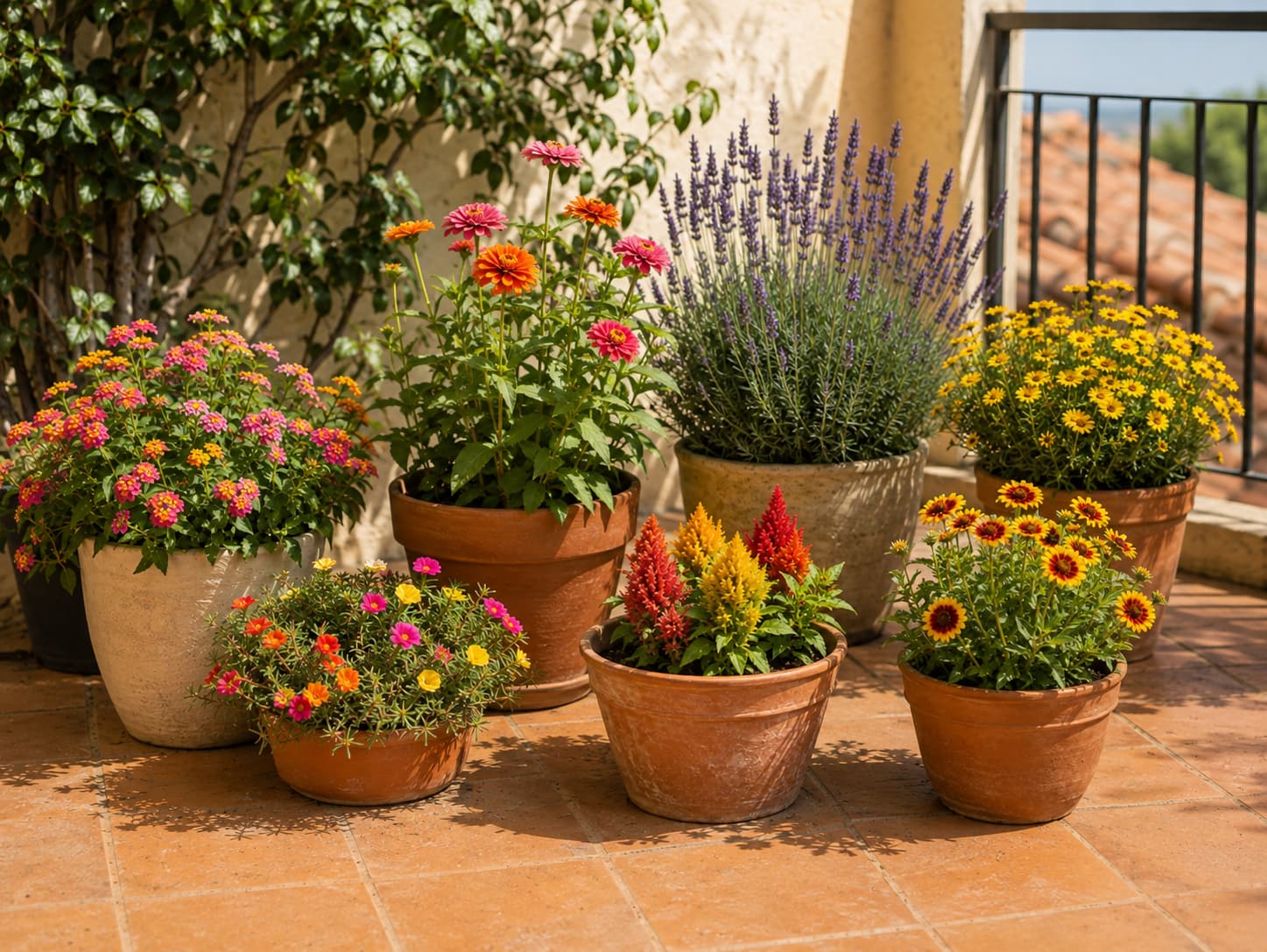
Which Heat-Loving Flower Is Right for You?
First, match the flower to your specific situation. Therefore, the best choice depends on your light, watering routine, space, and climate.
| Your Situation | Best Pick | Why |
|---|---|---|
| Balcony, containers only, can't water daily | Portulaca | Succulent leaves store water; survives 3+ days without watering in 90°F+ heat |
| Balcony, want maximum color impact | Lantana | Blooms nonstop from June to frost; each flower cluster lasts 2-3 weeks |
| Raised beds or in-ground, want cut flowers | Zinnia | The more you cut, the more they bloom; vase life 7-10 days |
| Hot patio, want fragrance + pollinators | Lavender | Deer-proof, rabbit-proof, and the scent intensifies in heat |
| Beginner, want impossible-to-kill color | Blanket Flower | Perennial that comes back year after year; thrives on neglect |
| Small pots or hanging baskets | Portulaca or Celosia | Both stay compact; Portulaca trails, Celosia adds vertical drama |
| Xeriscaping, zero supplemental water | Lavender or Portulaca | Both survive on rainfall alone once established (after first 6-8 weeks) |
Swipe for more
Quick Reference Chart
| Flower | USDA Zones | Container? | Drought Tolerance | Bloom Season | Min Pot Size |
|---|---|---|---|---|---|
| Lantana | 8–11 (annual elsewhere) | Yes | High | Jun–frost | 12 in. |
| Zinnia | 3–10 (annual) | Yes | Moderate | Jun–Oct | 8 in. |
| Blanket Flower | 3–10 | Yes | High | May–frost | 10 in. |
| Portulaca | 2–11 (annual) | Yes | Very high | Jun–frost | 6 in. |
| Celosia | 2–11 (annual) | Yes | Moderate | Jul–frost | 8 in. |
| Lavender | 5–9 | Yes | Very high | Jun–Aug | 14 in. |
| Coreopsis | 4–9 | Yes | High | Jun–Sep | 10 in. |
Scroll for more
1. Lantana (Lantana camara)
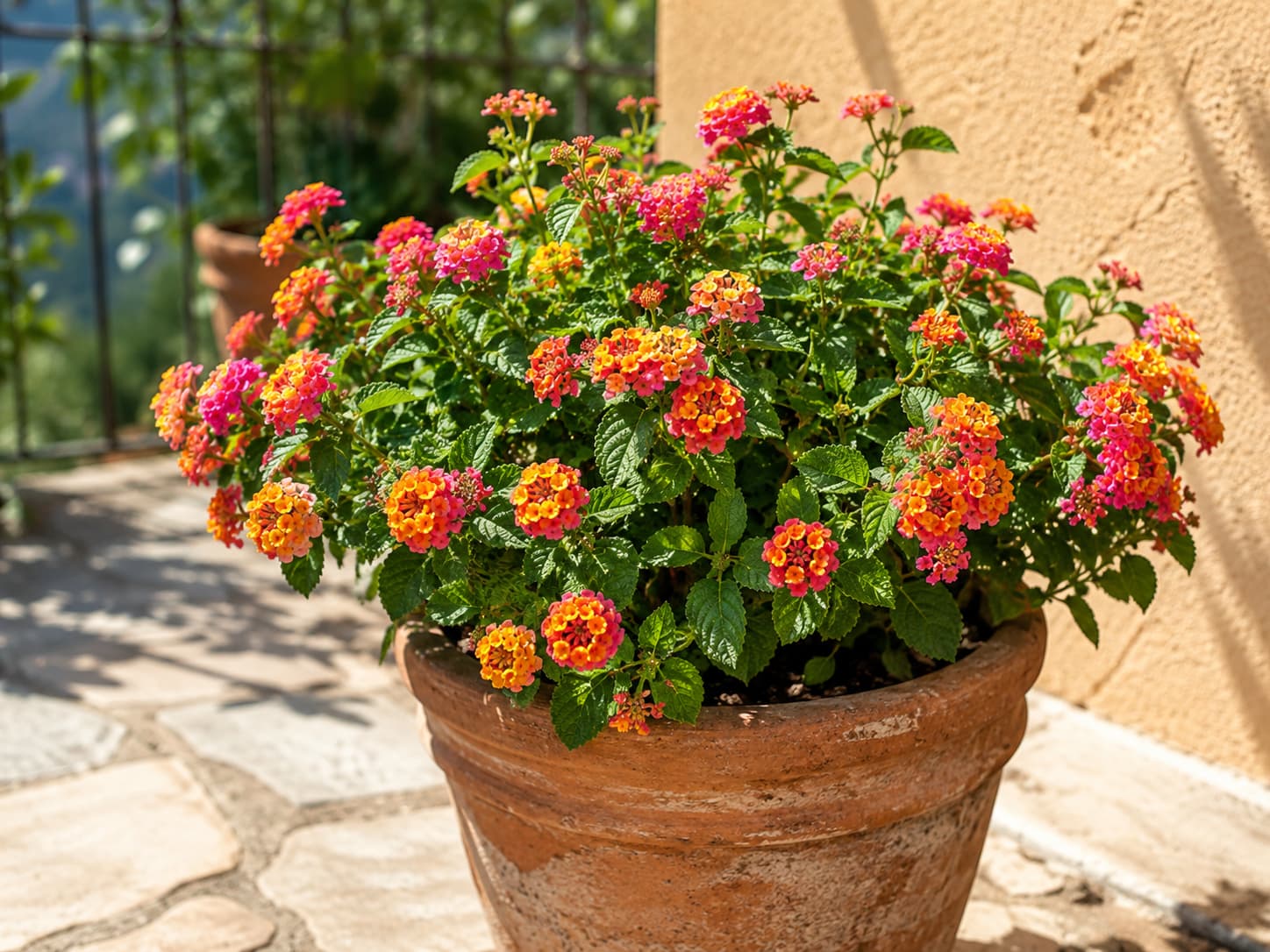
For example, Lantana has been one of the most reliable heat-loving flowers in my container tests. In July 2025, during a 108°F stretch, my 'New Gold' Lantana in a 14-inch terracotta pot produced 47 flower clusters in a single week—more than my neighbor's entire petunia collection. In addition, established Lantana can keep flowering through periods of strong summer heat.
Best Varieties for Containers
- 'New Gold' — Solid gold-yellow, compact (18-24 in.), the most heat-tolerant variety I've grown. For example, it is widely available at many garden centers ($5-7 per 4-inch pot).
- 'Confetti' — In addition, it produces multi-color clusters in pink, yellow, and orange, slightly more trailing habit, great for hanging baskets.
- 'Chapel Hill Yellow' — Meanwhile, this selection is more cold-tolerant if you're in Zone 7-8 and want it to perennialize.
Container Growing Guide
For containers, use a roomy pot with drainage holes. Standard potting mix works—Lantana is not picky about soil. Most importantly, drainage matters: if the mix stays soggy after rain, add a handful of perlite. Lantana will rot in wet soil faster than it will die from drought.
Then, water according to how quickly the root zone dries rather than by a rigid calendar. In 95°F+ heat, this means every 2-3 days for a 12-inch pot. In a 14-inch pot, every 3-4 days. However, do not assume daily watering is necessary—Lantana prefers to dry out between waterings.
For feeding, follow the fertilizer label and adjust to plant growth rather than using more product to force blooms. (I use Miracle-Gro Water Soluble All Purpose, $8 for 1.5 lbs). In general, excess fertility can favor leafy growth over flowering.
Lantana Safety & Placement
Common Lantana Mistakes
- Overwatering — The #1 killer. Lantana's leaves will yellow and drop when overwatered, which people mistake for underwatering, so they water more. Therefore, check the soil before deciding whether the plant needs water.
- Not deadheading — Spent flower clusters develop into green berries. If you don't remove them, the plant puts energy into seed production instead of more blooms. Instead, remove spent clusters as needed if you want to limit fruit and seed development.
- Too much shade — Finally, Lantana grown with too little direct sun will grow leggy, produce few flowers, and be more susceptible to whiteflies.
2. Zinnia (Zinnia elegans)
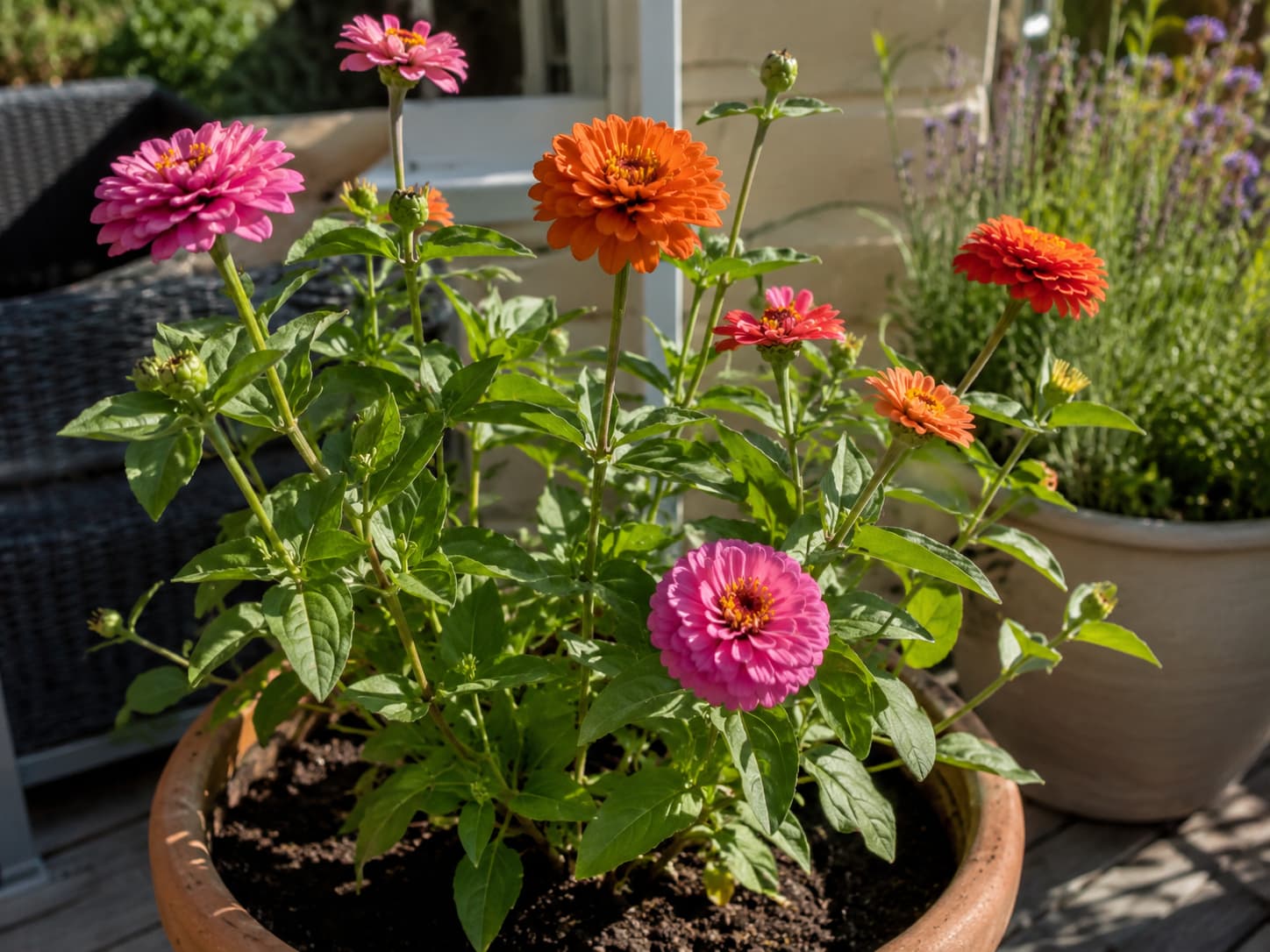
Next, zinnias are an easy entry point into cut-flower gardening. On July 4, 2025, I picked a bouquet of 'Benary's Giant' zinnias from my balcony containers—and they lasted 9 days in a vase. After cutting, the plants produced another flush of blooms within a week. In practice, regular harvesting and deadheading can encourage continued flowering. the more you cut, the more they grow.
Best Varieties for Heat
- 'Benary's Giant' Series — 3-4 ft tall, dinner-plate-sized blooms (4-5 in.), the gold standard for cut flowers. For example, seed is available from specialty suppliers ($4.50 per packet of 50 seeds). Resistant to powdery mildew, which is critical in humid heat.
- 'Profusion' Series — 12-18 in., compact, disease-resistant, self-cleaning (no deadheading needed). Therefore, it is a practical container choice. Available at most garden centers ($3-5 per 4-inch pot).
- 'Zahara' Series — Similar to Profusion but with larger individual flowers and even better disease resistance. In addition, its compact habit works well in smaller patio pots.
From Seed to Bloom in 60 Days
Therefore, direct sowing can be useful when you want to minimize root disturbance., so direct-sow them where they'll grow. In containers: fill pot with moist potting mix, press 2-3 seeds into the soil surface, cover lightly with 1/4 inch of mix, and keep moist. However, germination speed varies with temperature, moisture, and seed quality. Then, thin to the strongest seedling when they have 2 sets of true leaves.
For a longer bloom season, stagger sowings rather than planting everything at once., sow a new batch every 3 weeks from May through July. As a result, staggered sowings can extend the overall display.
Zinnia Disease Alert
However, powdery mildew can become a major zinnia problem in humid conditions. powdery mildew—a white powdery coating on leaves that starts at the base and works up. First, space plants for airflow (at least 8 inches apart), water at soil level (never on leaves), and choose disease-resistant varieties (Profusion, Zahara, Benary's Giant). For example, if mildew appears, remove affected leaves immediately and spray with a 40/60 milk-to-water solution—a university-proven organic control. Finally, if a labeled treatment is needed, use Bonide Copper Fungicide ($12 per 32 oz concentrate) as a last resort. See our Summer Pest SOS guide for more on heat-season plant problems.
3. Blanket Flower (Gaillardia)
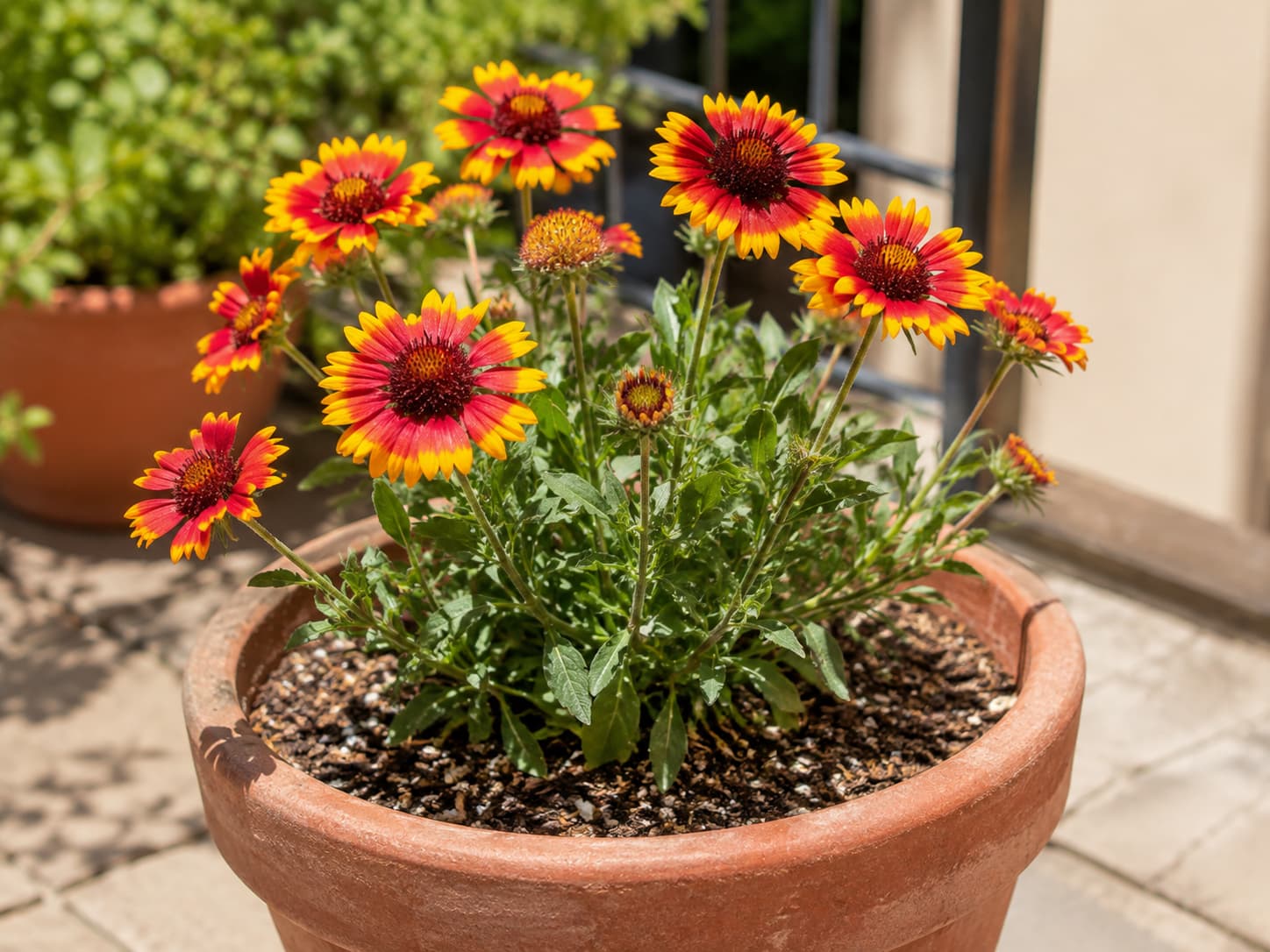
By comparison, blanket flower combines first-year bloom with perennial potential in suitable climates.—in the best way. In addition, it can bloom in its first season, requires almost no care, and comes back stronger each spring. For example, my 'Arizona Sun' Gaillardia has survived three consecutive summers on my balcony, including the 2025 heatwave, with zero supplemental watering after its first 8 weeks.
Best Varieties
- 'Arizona Sun' — Red-orange with yellow tips, 10-12 in., compact and floriferous. For example, it is grown as a perennial across a broad range of climates. My #1 recommendation for beginners. Available from Burpee ($6 per plant).
- 'Goblin' — Deep red, 12-14 in., one of the most cold-hardy varieties. Meanwhile, it can suit colder gardens who want reliable perennial color.
- 'Mesa Yellow' — Pure bright yellow, 14-16 in., more upright habit, In addition, it can also be used as a cut flower.
Why It's Called "Blanket Flower"
For context, the common name is often linked to the colors resemble traditional Native American blanket patterns, and when planted in drifts, the flowers literally blanket the ground. As a result, its prairie background helps explain its preference for sun and well-drained soil. that evolved in conditions exactly like what we're experiencing in 2026—blazing sun, infrequent rain, and poor soil.
4. Portulaca (Moss Rose)
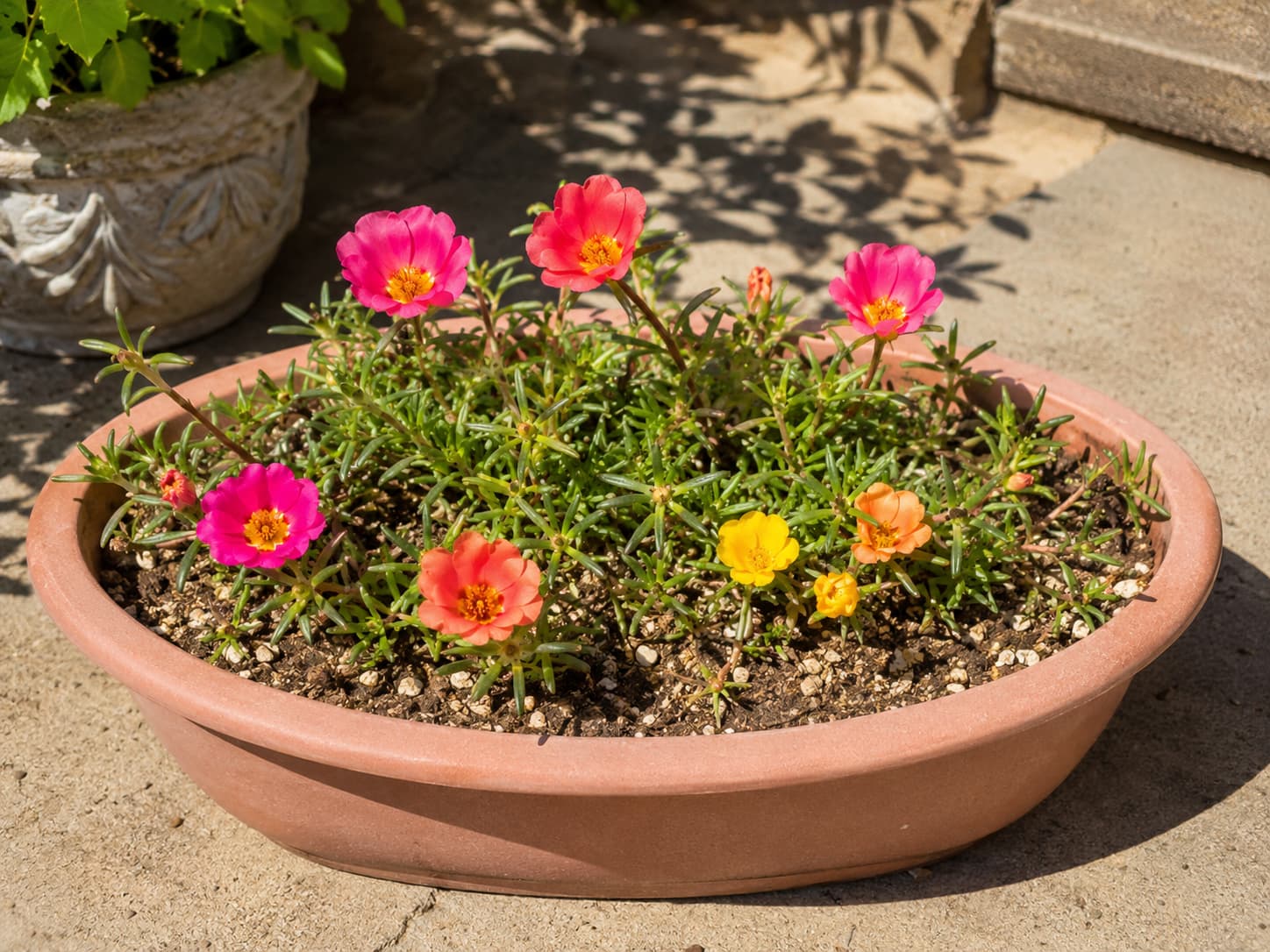
Meanwhile, Portulaca is especially well adapted to dry container conditions. that genuinely doesn't care if you forget to water it for a week. In other words, its fleshy leaves help buffer short dry periods, and its roots are minimal—designed to grab quick moisture and hoard it. For example, I once left my Portulaca unwatered for several days during a summer trip. during a July 2025 trip (my plant-sitter forgot). By contrast, the Portulaca remained in good condition. Even so, the Portulaca remained in bloom.
Best Varieties
- 'Sundial' Series — Stays open longer in the day (many Portulaca close by afternoon), mixed colors and a trailing habit. Therefore, it works well in hanging baskets. My top pick for hanging baskets.
- 'Happy Hour' Series — By comparison, it tends to bloom earlier (55 days from seed), more compact, wider color range including bicolors. Great for small 6-inch pots.
- 'Mojave' Series — Meanwhile, it produces relatively large flowers, slightly more upright, better for visual impact in containers.
The One Thing Portulaca Needs
Most importantly, Portulaca needs strong direct sun for reliable flowering. Portulaca will not bloom in shade. In other words, bright indirect light is not the same as the direct sun Portulaca prefers.—it needs 6+ hours of direct sun. Therefore, if you have a shady balcony, skip this one entirely.
In addition, Portulaca flowers often close at night and in dull weather. and on cloudy days. Therefore, if you want evening color on your patio, pair it with Four O'Clock flowers, which open in late afternoon.
5. Celosia (Cockscomb)
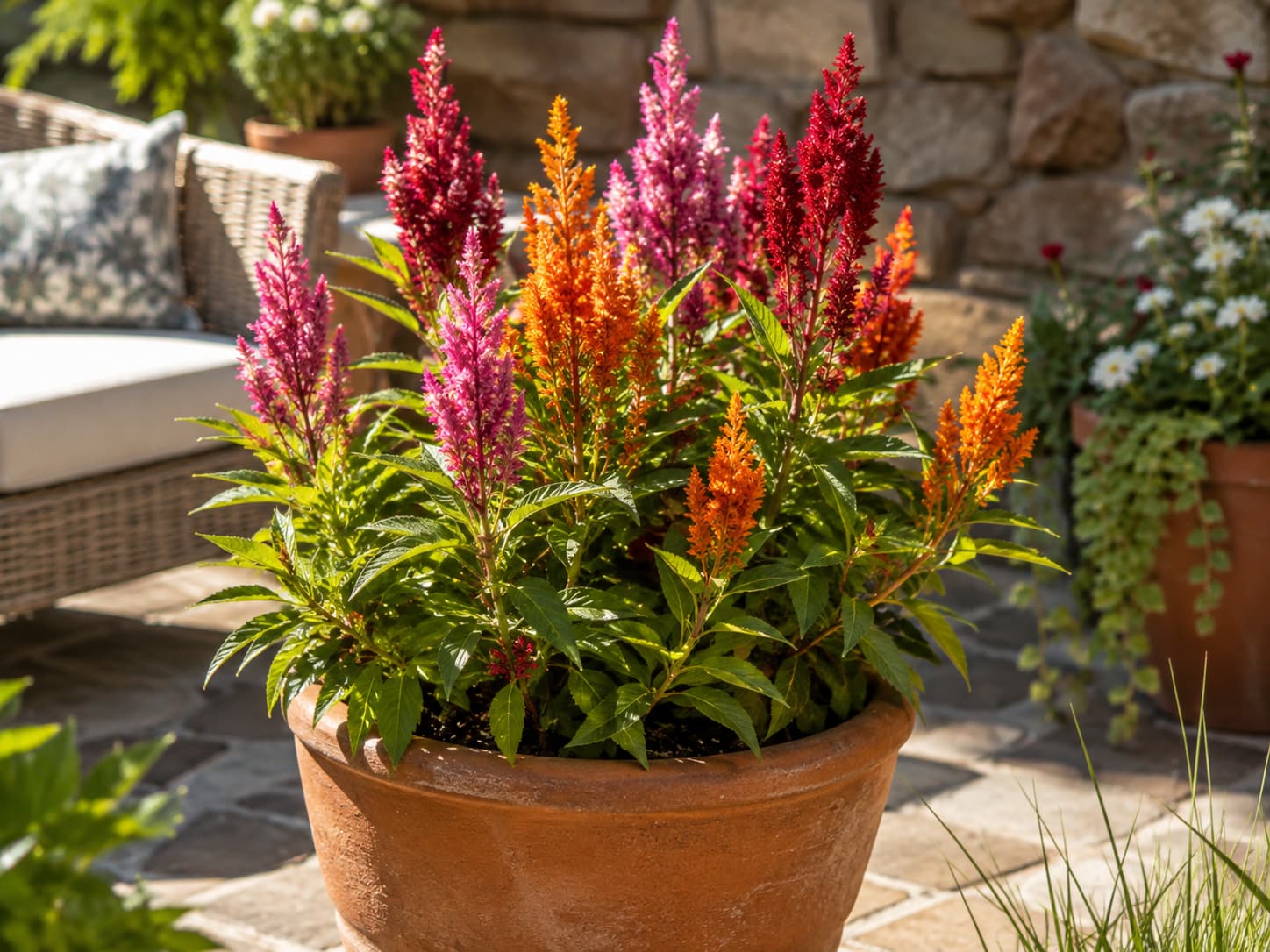
Next, Celosia brings a very different texture to hot-weather containers.—and I mean that as a compliment. For example, its crested or feathery blooms in neon shades stop people on the street. For example, my 'Century Red' Celosia in a 10-inch pot drew more compliments last summer than anything else on my balcony, including from the mail carrier who doesn't care about plants.
Two Types, Different Vibes
- Plumed Celosia (C. argentea var. plumosa) — Feathery, flame-shaped spikes. Upright habit, 12-36 in. depending on variety. For example, it works well as a vertical accent in mixed containers. Try 'Century' series ($4 per 4-inch pot).
- Crested Celosia (C. argentea var. cristata) — Brain-like, ruffled, fasciated flower heads. By contrast, crested forms have a very different, ruffled look. Therefore, consider selections such as 'Cramer's Amazon' or the 'Bombay' series. These are the ones people photograph.
Growing Tips
For planting, wait for reliably warm conditions before moving Celosia outdoors.—don't plant it out until nighttime temperatures are consistently above 55°F. In containers, use an 8-10 inch pot. However, Celosia still needs regular moisture checks in containers. water when the top inch of soil is dry, typically every 2 days in 90°F+ heat.
In addition, pinching can encourage a bushier plant on suitable cultivars. the first central stem. Then, when the plant is established and the cultivar responds well to pinching, pinch off the tip of the main stem. As a result, the plant can produce more side shoots., and you'll get 3-5 flower spikes instead of one. As a result, branching can create a fuller display. By comparison, my unpinched plants were much less branched. and got single-stemmed plants that flopped over. Therefore, I now pinch suitable Celosia varieties when I want a fuller shape.
6. Lavender (Lavandula spp.)
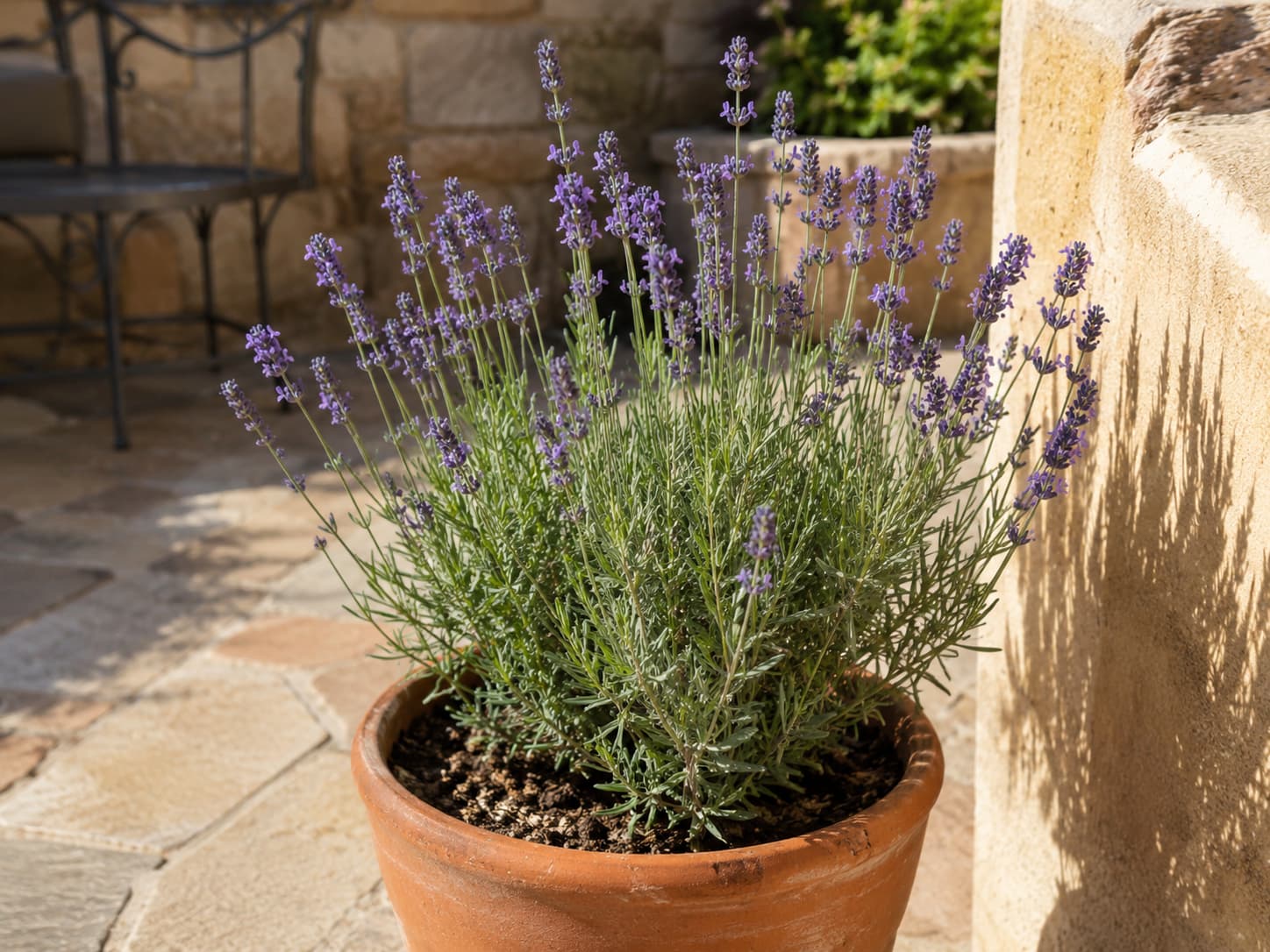
By contrast, lavender can provide value beyond its summer bloom period.: summer blooms, year-round fragrance, and dried harvests for sachets and cooking. For example, in June 2025, I harvested stems from my 'Hidcote' Lavender in a 16-inch pot, dried them, and used them in linen sachets that still smell incredible 14 months later.
Best Varieties for Heat + Humidity
- 'Hidcote' — English lavender, 12-18 in., deep purple flowers, most cold-hardy (Zone 5). For example, 'Hidcote' is often chosen for fragrance and culinary or craft use. However, it is slower-growing than many annual flowers.
- 'Phenomenal' — The only lavender variety specifically bred for heat and humidity tolerance. In addition, it is commonly listed for a broad temperate hardiness range, grows 24-32 in. Therefore, if humid conditions have caused trouble with lavender before because of "humidity wilt," try this one. Available from White Flower Farm ($16 per quart pot).
- 'Provence' — French lavender, 24-30 in., Meanwhile, its longer stems are useful for drying, strongest fragrance. By contrast, Provence-type lavender is less cold-hardy than the toughest English selections (Zone 6-9) but the workhorse of commercial lavender fields in Provence for a reason.
Finally, for detailed pruning instructions (which directly affects bloom production), see our Lavender Pruning Guide: 4 Rules You Shouldn't Skip.
7. Coreopsis (Tickseed)
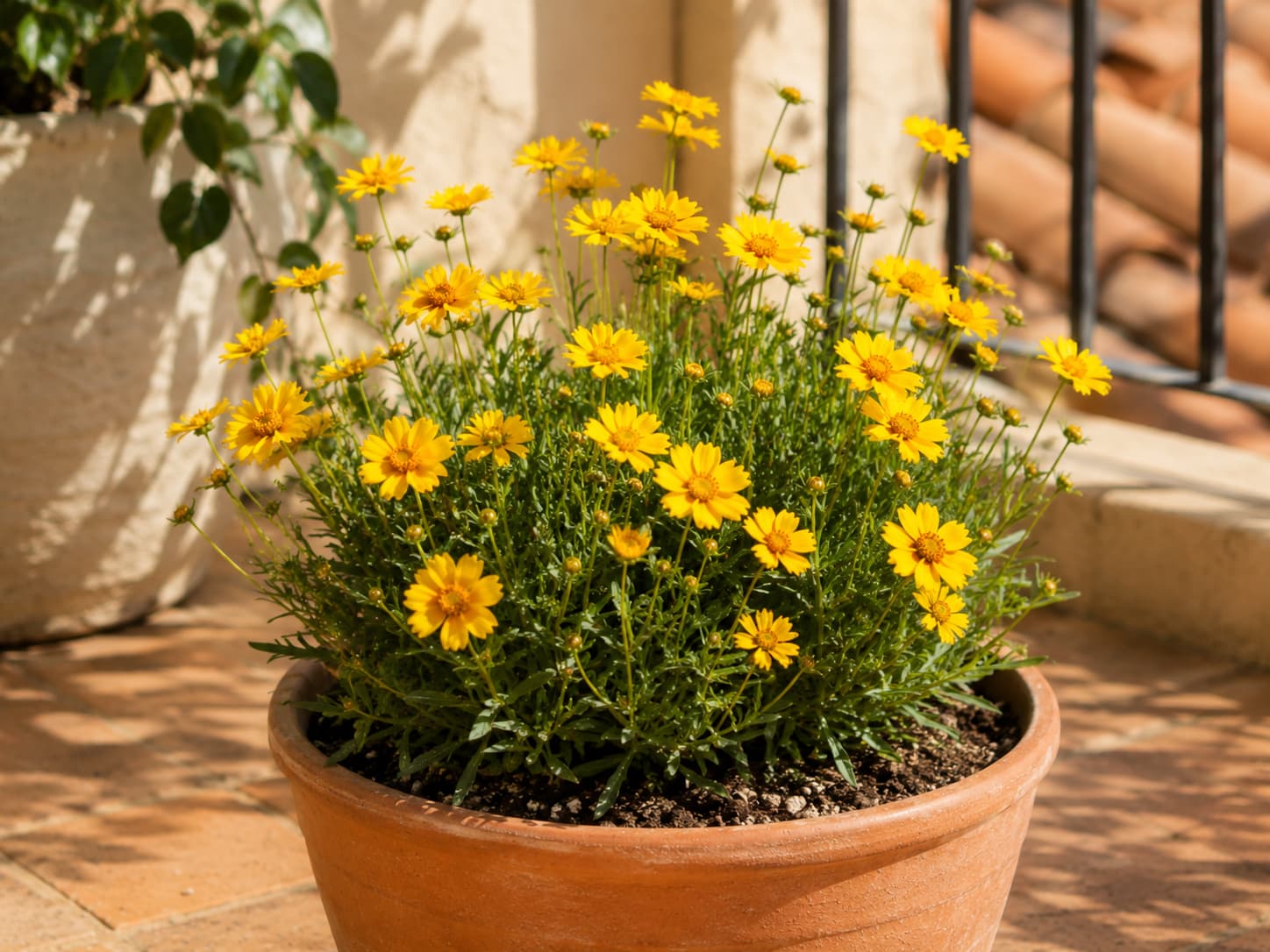
Finally, Coreopsis adds a long season of yellow color to sunny containers. In addition, many Coreopsis selections produce bright daisy-like flowers are the most cheerful flowers I've ever grown, and they're native to North American prairies, which means they're built for exactly the kind of heat and drought we're experiencing in 2026.
Best Varieties
- 'Early Sunrise' — Semi-double golden yellow, 18-24 in., blooms 3 weeks earlier than other varieties. For example, it is perennial in many temperate gardens. My top pick for the longest bloom season.
- 'Moonbeam' — Pale lemon yellow, threadleaf foliage, 12-18 in., By comparison, its threadleaf foliage gives it a finer texture. Perennial winner of the Perennial Plant Association's Plant of the Year. Available at most nurseries ($7-10 per quart pot).
- 'Zagreb' — Deep gold, threadleaf, 12-18 in., the most compact variety. Therefore, its compact habit can suit smaller containers.
Coreopsis in Containers
For containers, give Coreopsis enough root room and reliable drainage. (12-inch is better). In general, use a well-drained container mix rather than a heavy, waterlogged medium. Then, water according to root-zone moisture and weather. However, winter-wet potting mix can be a bigger problem than summer heat for perennial Coreopsis.—However, if you're overwintering it in a container, move the pot to a sheltered spot and reduce watering to once every 2-3 weeks.
Meanwhile, deadheading or shearing can keep the plant tidy and may encourage another flush. (Coreopsis will keep blooming regardless), but removing spent blooms prevents self-seeding and keeps the plant looking tidy. For example, Coreopsis and Blanket Flower can be paired where their water and light needs match., Coreopsis and Blanket Flower make a perfect pair—plant them together and they'll bloom from May to frost with almost no maintenance. For more ideas, see our Low-Maintenance Flowers That Bloom All Summer guide for more set-and-forget options.
Summer Bloom Calendar
Next, use bloom timing to plan for color across the season: so you can plan for continuous color all summer:
| Month | Lantana | Zinnia | Gaillardia | Portulaca | Celosia | Lavender | Coreopsis |
|---|---|---|---|---|---|---|---|
| May | Starting | Sow seed | Peak | Starting | — | Starting | Peak |
| June | Peak | First blooms | Peak | Peak | Starting | Peak | Peak |
| July | Peak | Peak | Strong | Peak | Peak | Fading | Strong |
| August | Peak | Peak | Strong | Peak | Peak | Dormant | Fading |
| September | Peak | Strong | Strong | Strong | Strong | Rebloom* | Rebloom* |
| October | Until frost | Until frost | Until frost | Until frost | Until frost | — | — |
More columns available
*Rebloom may be possible after cutting back suitable varieties. See variety-specific notes above.
Container Planting Guide
In general, all seven can be grown in containers when pot size, drainage, light, and watering are appropriate., but container growing in summer heat has specific challenges that in-ground planting doesn't. For more detail, see our guide to the pros and cons, see our Containers vs In-Ground Planting guide. Therefore, start with these container-specific checks:
| Problem | Why It Happens in Containers | Fix |
|---|---|---|
| Soil heats to 100°F+ | Pot walls can absorb and conduct heat; no ground insulation | Use light-colored pots; double-pot (place planted pot inside a larger outer pot with air gap); avoid black plastic |
| Water evaporates too fast | Small soil volumes can dry quickly in hot weather | Add water-holding crystals (e.g., Soil Moist, $8 per 1 lb jar, lasts all season); mulch pot surface with 1 inch of gravel or bark |
| Roots "cook" against pot wall | Sun-exposed pot walls can become much hotter than surrounding air | Use fiber or foam liners; keep pots 4+ inches from hot walls and railings |
| Nutrients leach out | Frequent watering can leach soluble nutrients from containers | Switch to slow-release fertilizer granules (e.g., Osmocote Smart-Release, $14 per 2 lb jug, feeds for 4 months) |
Swipe sideways if needed
Recommended Products
Before buying anything, match the product to a diagnosed need and follow the current label directions.
| Product | Brand | Price | What It Does | Best For |
|---|---|---|---|---|
| All-Purpose Water Soluble Fertilizer | Miracle-Gro | $8 / 1.5 lb | Monthly feeding for blooms | Lantana, Zinnia, Celosia, Coreopsis |
| Smart-Release Plant Food | Osmocote | $14 / 2 lb | 4-month slow release, set and forget | All 7 flowers (especially if you travel) |
| Copper Fungicide Concentrate | Bonide | $12 / 32 oz | Treats powdery mildew and bacterial spot | Zinnia mildew, emergency use only |
| Water-Holding Crystals | Soil Moist | $8 / 1 lb | Reduces watering frequency by 50% | All container-grown flowers in 90°F+ heat |
| 40% Shade Cloth | Various (Amazon) | $12 / 6×20 ft | Cuts heat stress without blocking bloom | Container plants on hot balconies/patios |
Horizontal scroll available
Common Failures and How to Fix Them
| Symptom | Most Likely Cause | Fix |
|---|---|---|
| Lantana leaves turning yellow and dropping | Overwatering (not drought) | Let soil dry to 2 inches deep before watering; check pot drainage |
| Zinnia white powder on leaves | Powdery mildew | First, remove affected leaves and improve airflow; spray milk/water 40/60; switch to resistant varieties next year |
| Portulaca not opening flowers | Not enough sun | Therefore, move it to a sunnier location when light is the limiting factor; no workaround for shade |
| Lavender stems turning black at base | Root rot from poor drainage | Next, inspect the roots and remove clearly decayed tissue if root rot is confirmed, replant in 50/50 potting mix + sand; ensure drainage holes aren't blocked |
| Celosia flopping over | Didn't pinch the central stem | However, an already tall plant may need support rather than late pinching. Next time, pinch at 8-10 inches tall |
| Blanket Flower all leaves, no flowers | Too much nitrogen / rich soil | Therefore, reduce unnecessary feeding and reassess the mix |
| Coreopsis blooming then stopping | Spent blooms set seed, plant stops producing | Finally, shear suitable plants after the first flush if rebloom is expected; will rebloom in 3-4 weeks |
Swipe for more
Frequently Asked Questions
Containers, Pollinators & Starting Plants
1. Can I grow all seven in containers on a balcony?
2. Do these flowers attract pollinators?
3. Can I start these from seed or should I buy plants?
Wildlife, Extreme Heat & Mixed Containers
4. What about deer and rabbits?
5. Will these survive a week of 100°F+ temperatures?
6. Can I mix these flowers in the same container?
References
- Royal Horticultural Society — Lantana Growing Guide — Expert cultivation notes for Lantana camara including hardiness and pruning
- University of Wisconsin Extension — Growing Zinnias — Variety selection, disease management, and cut flower harvest timing
- US Forest Service — Blanket Flower (Gaillardia aristata) — Native range, ecological value, and habitat preferences
- University of Minnesota Extension — Growing Lavender in the North — Cold-climate lavender varieties, drainage requirements, and overwintering