Rhododendron Care Guide: Soil, Planting, Pruning & Common Problems
A practical guide to acidic soil, shallow planting, filtered light, careful pruning, and the leaf symptoms that tell you what your rhododendron needs.
Rhododendron Care at a Glance
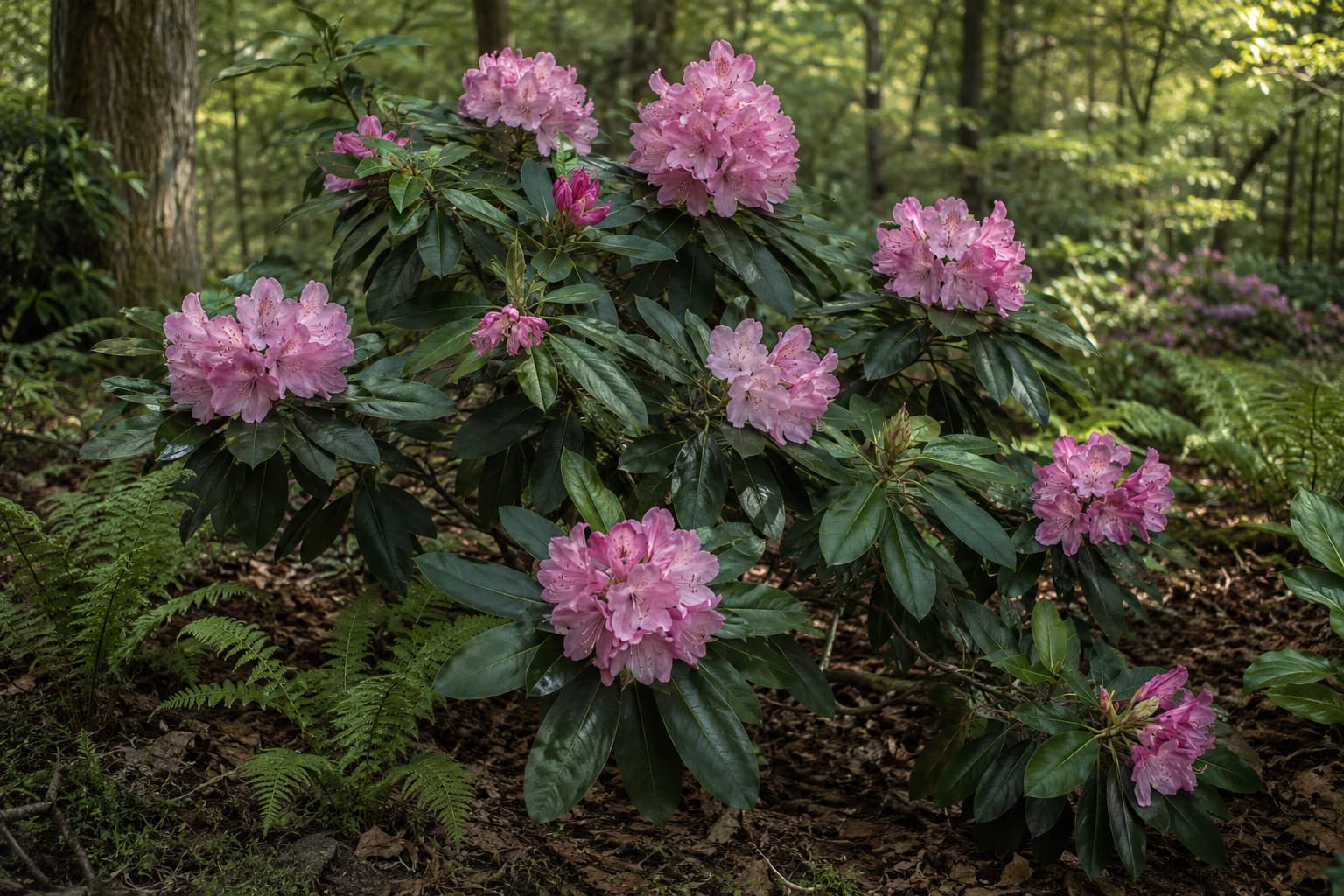
Rhododendrons do best in acidic, humus-rich, well-drained soil with reliable moisture and protection from harsh afternoon sun and drying winter wind. Most persistent problems begin with one of four issues: unsuitable soil pH, roots planted too deeply, poor drainage, or weather stress. Start with the site and root zone before reaching for fertilizer or sprays.
Rhododendron vs. Azalea: What Is the Difference?
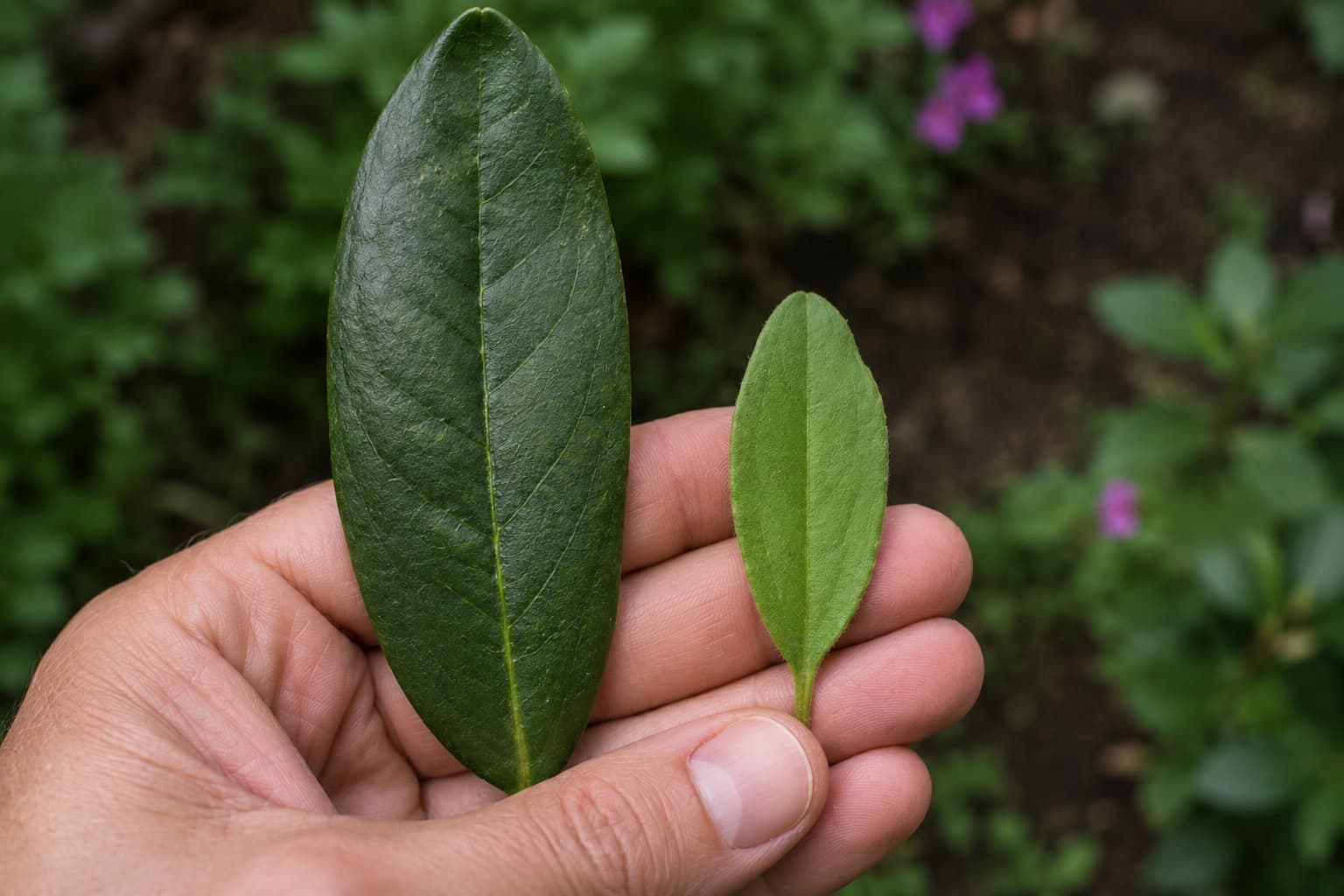
Azaleas belong to the genus Rhododendron, so the familiar saying is botanically correct: all azaleas are rhododendrons, but not all rhododendrons are azaleas. Gardeners usually use “rhododendron” for shrubs with larger, leathery leaves and rounded flower trusses, while “azalea” often refers to shrubs with smaller leaves and more open, funnel-shaped flowers.
| Feature | Typical Rhododendron | Typical Azalea |
|---|---|---|
| Leaves | Larger, thicker, often evergreen | Smaller and thinner; evergreen or deciduous |
| Flowers | Dense, rounded trusses | More open clusters or individual funnels |
| Stamens | Often 10 or more | Usually 5 |
| Habit | Frequently broad and substantial | Often finer-textured and more compact |
Rhododendron Plant Profile
| Feature | What to Know |
|---|---|
| Botanical name | Rhododendron spp. and hybrids |
| Plant type | Evergreen or deciduous woody shrub; a few species become small trees |
| Hardiness | Varies widely by cultivar; many garden types suit USDA Zones 4–8 |
| Mature size | From compact 2-foot plants to shrubs or trees exceeding 15 feet |
| Bloom season | Usually spring to early summer, depending on climate and cultivar |
| Preferred soil | Acidic, humus-rich, moist but well-drained |
| Root system | Fine, shallow, and easily stressed by compaction or waterlogging |
| Toxicity | Toxic if eaten by people, dogs, cats, horses, and livestock |
Choose the Site Before You Choose the Plant
A rhododendron that fits its site can remain attractive for decades. One forced into hot reflected sun, compacted clay, or alkaline soil may limp along without ever looking settled. Before planting, check four things: summer heat, winter wind, drainage, and mature size.
Light and Climate
Morning sun with afternoon shade is a reliable starting point. In cool, maritime climates, many rhododendrons tolerate more sun if their roots stay moist. In hot-summer areas, filtered light or afternoon shade helps reduce leaf scorch, drought stress, and lace bug pressure.
Climate Notes for Different Regions
In the Pacific Northwest, the UK, and other cool maritime regions, moisture and drainage may matter more than shade alone. In hotter parts of the southern United States or continental Europe, shelter from afternoon sun becomes more important. In cold-winter regions, choose a cultivar rated for your local minimum temperature and protect evergreen foliage from drying wind.
Drainage and Root Competition
Rhododendron roots sit close to the surface. They struggle in soil that remains saturated after rain, but they also compete poorly with dense turf and aggressive tree roots. Woodland-edge conditions are ideal only when the soil stays airy and the overstory does not take every drop of moisture.
Soil pH: Why Green Veins and Yellow Tissue Matter
Rhododendrons are ericaceous plants. They usually perform best in soil below pH 6, often around pH 4.5–5.5. As soil becomes more alkaline, iron and other nutrients can become less available even when those nutrients are physically present.
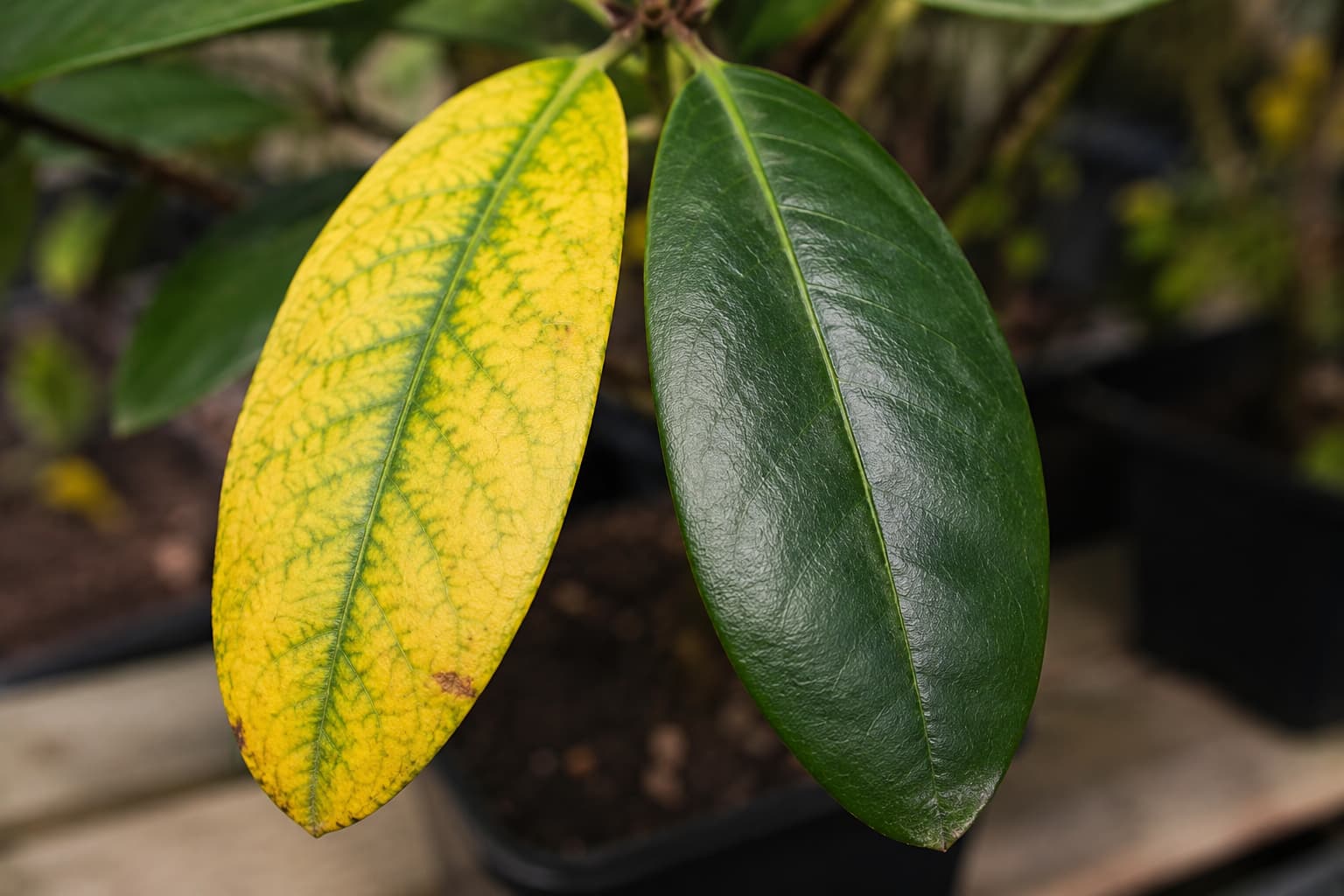
The classic result is interveinal chlorosis: the tissue between veins turns pale yellow while the veins remain greener. This pattern often appears first on younger leaves. However, high pH is not the only possibility—damaged roots, poor drainage, drought, and nutrient imbalance can produce overlapping symptoms.
How to Correct Unsuitable Soil
- Test before amending. Use a laboratory soil test or a reputable local service that gives amendment rates for your soil type.
- Use elemental sulfur only as directed. The correct amount depends on current pH, target pH, soil texture, and product concentration.
- Retest instead of repeatedly guessing. Soil pH changes gradually, and excessive acidification can damage roots.
- Use a container or raised bed when the site is strongly alkaline. In highly buffered soils, maintaining a suitable root zone can be easier than trying to change the entire garden.
Concrete Is a Reason to Test, Not an Automatic Ban
Mortar, rubble, and some construction materials can raise nearby soil pH. A rhododendron beside a wall may still grow well if the soil tests acidic and drains freely. Check the actual root zone rather than relying on a fixed distance rule.
How to Plant a Rhododendron in Three Steps
Open a Wide, Shallow Hole
Make the planting area wider than the root ball, but do not dig a deep pocket that encourages settling.
Set the Crown High
Keep the top of the root ball level with or slightly above the finished soil surface. Never bury the stem base.
Water and Mulch
Water thoroughly, then add an airy organic mulch while leaving a clear gap around the stems.
Inspect container-grown roots before planting. If roots circle tightly around the outside, loosen the outer layer carefully and spread what you can without tearing the entire root ball apart. Backfill mainly with the site soil so water moves consistently through the planting area rather than collecting in a highly amended pocket.
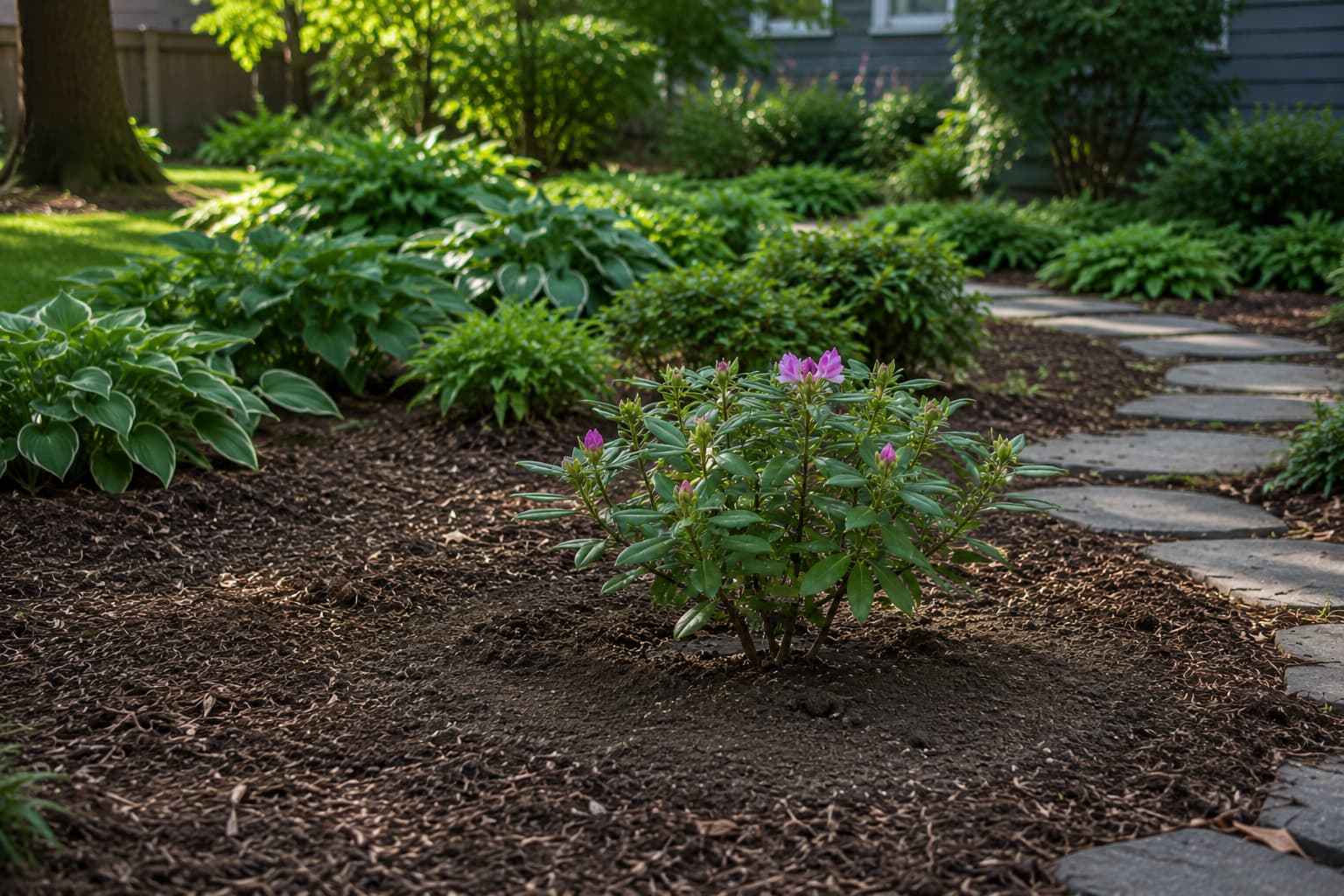
Greenmuse Planting Check
Step back before you finish. You should be able to see where the stems meet the root ball, the soil should slope gently away rather than form a bowl, and mulch should stop short of the woody stems.
Watering, Mulching, and Fertilizing
Watering
Keep the root zone evenly moist during establishment, especially through the first growing season and during dry spells. Water slowly enough to wet the root ball and nearby soil, then allow excess water to drain. A plant that wilts in wet soil may have damaged roots, so do not assume every drooping leaf needs more water.
Late-summer drought can reduce the quality of buds and new growth. Continue checking soil moisture after flowering instead of treating rhododendrons as “finished” for the year.
Mulching
Apply roughly 2–3 inches of pine bark, leaf mold, composted woodland material, or another loose organic mulch. Mulch helps buffer shallow roots from heat and moisture swings, but a thick mound against the stems can hold excess moisture and hide decay.
Fertilizing
Rhododendrons are not heavy feeders. Fertilize only when a soil test, weak growth, or a known deficiency gives you a reason. Use a product labeled for acid-loving plants and follow its rate. Excess nitrogen can produce soft growth, reduce cold hardiness, and encourage leaves at the expense of flowers.
Avoid Wood Ash Around Rhododendrons
Wood ash raises soil pH and adds soluble salts. Keep it away from rhododendrons, azaleas, blueberries, and other acid-loving plants unless a soil professional has specifically recommended it.
How to Prune Without Sacrificing Flowers
Most rhododendrons need less pruning than gardeners expect. Start by removing dead, damaged, or crossing growth. When size control or reshaping is necessary, light pruning soon after flowering generally preserves more of the following season’s display because flower buds develop on new growth later in the season.
Deadheading: Useful, but Optional
Removing faded flower trusses keeps the shrub tidy and prevents seed capsules from developing. It is not essential on a large, healthy plant, and it should not become a rushed job that damages the tender buds below. Support the stem, hold the spent truss at its base, and snap or pinch away only the faded cluster.
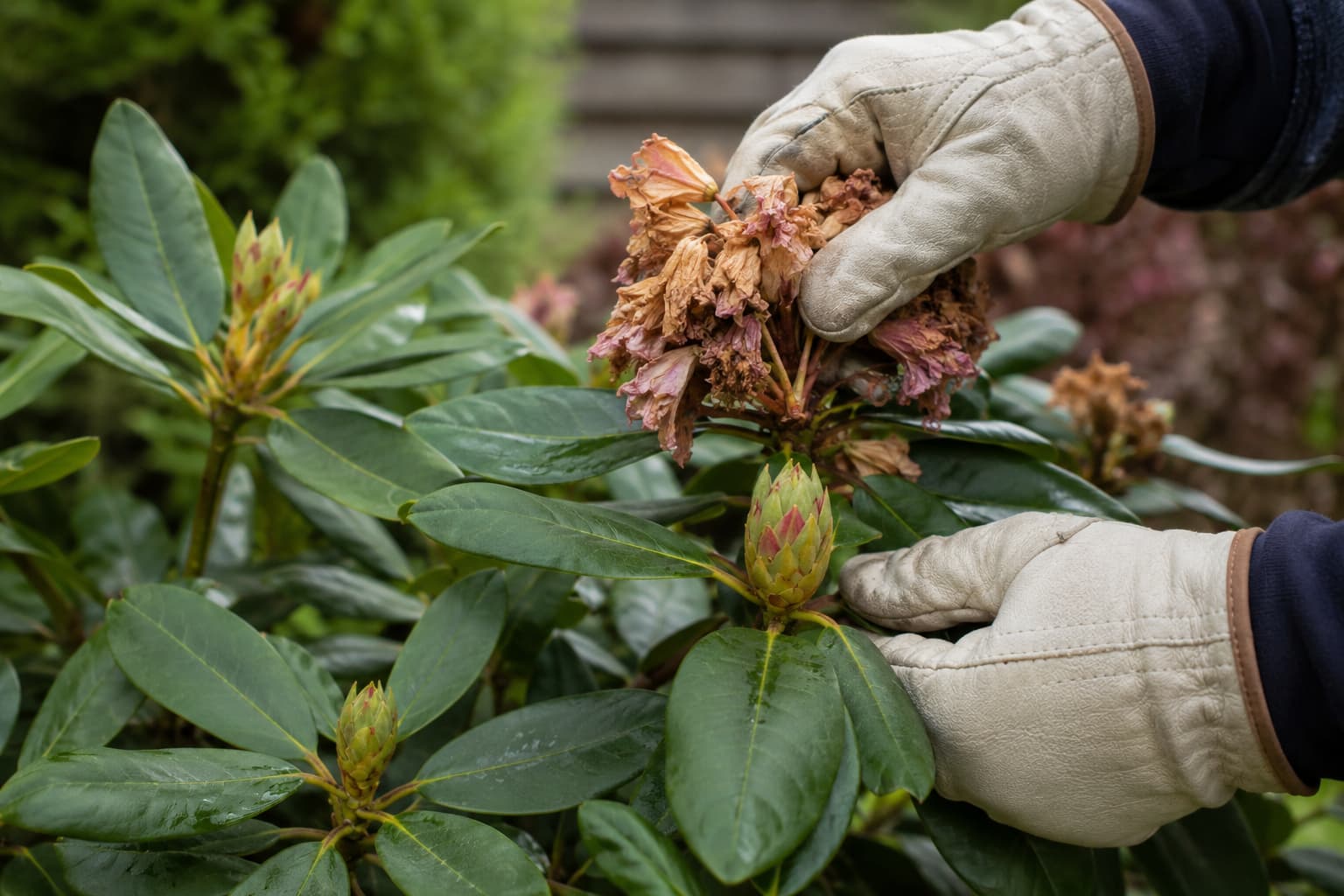
Rejuvenating an Old Shrub
A badly overgrown rhododendron may respond to harder pruning, but the result varies by species, cultivar, plant health, and climate. A staged renovation—shortening part of the oldest framework, then reassessing the following year—is usually less stressful than removing most of the canopy at once.
Common Rhododendron Problems: A Symptom Checker
Start with the pattern, not the product. Look at which leaves are affected, whether the soil is wet or dry, which side of the plant is damaged, and whether the problem appeared suddenly or gradually.
1. Yellow Leaves, Green Veins
Likely clue:Iron chlorosis associated with high pH or impaired roots.
First step:Test soil pH and drainage before applying iron or sulfur.
2. Brown Buds That Never Open
Likely clue:Winter injury, drought stress, or bud blast disease.
First step:Inspect for black, bristle-like fungal growth and compare damage across exposed and sheltered sides.
3. Silvery or Stippled Leaves
Likely clue:Lace bug feeding on the undersides of leaves.
First step:Turn leaves over and look for insects, cast skins, and dark varnish-like spots.
4. Brown Windward Foliage
Likely clue:Winter burn caused by frozen soil, sun, and drying wind.
First step:Wait for spring growth before removing branches that may still be alive.
5. Wilting in Wet Soil
Likely clue:Root stress or Phytophthora root and crown rot.
First step:Stop automatic watering, check drainage, and seek a local diagnosis before replanting.
6. White or Gray Leaf Coating
Likely clue:Powdery mildew or another superficial fungal growth.
First step:Improve airflow, avoid crowding, and confirm the diagnosis before treatment.
Lace Bug Damage: What to Look For
Lace bugs feed from the underside of the leaf. The upper surface develops pale stippling or a washed-out, silvery cast, while the underside carries dark specks and sometimes the delicate insects themselves. Damage is often worse on shrubs growing in hotter, sunnier, or drought-stressed locations.
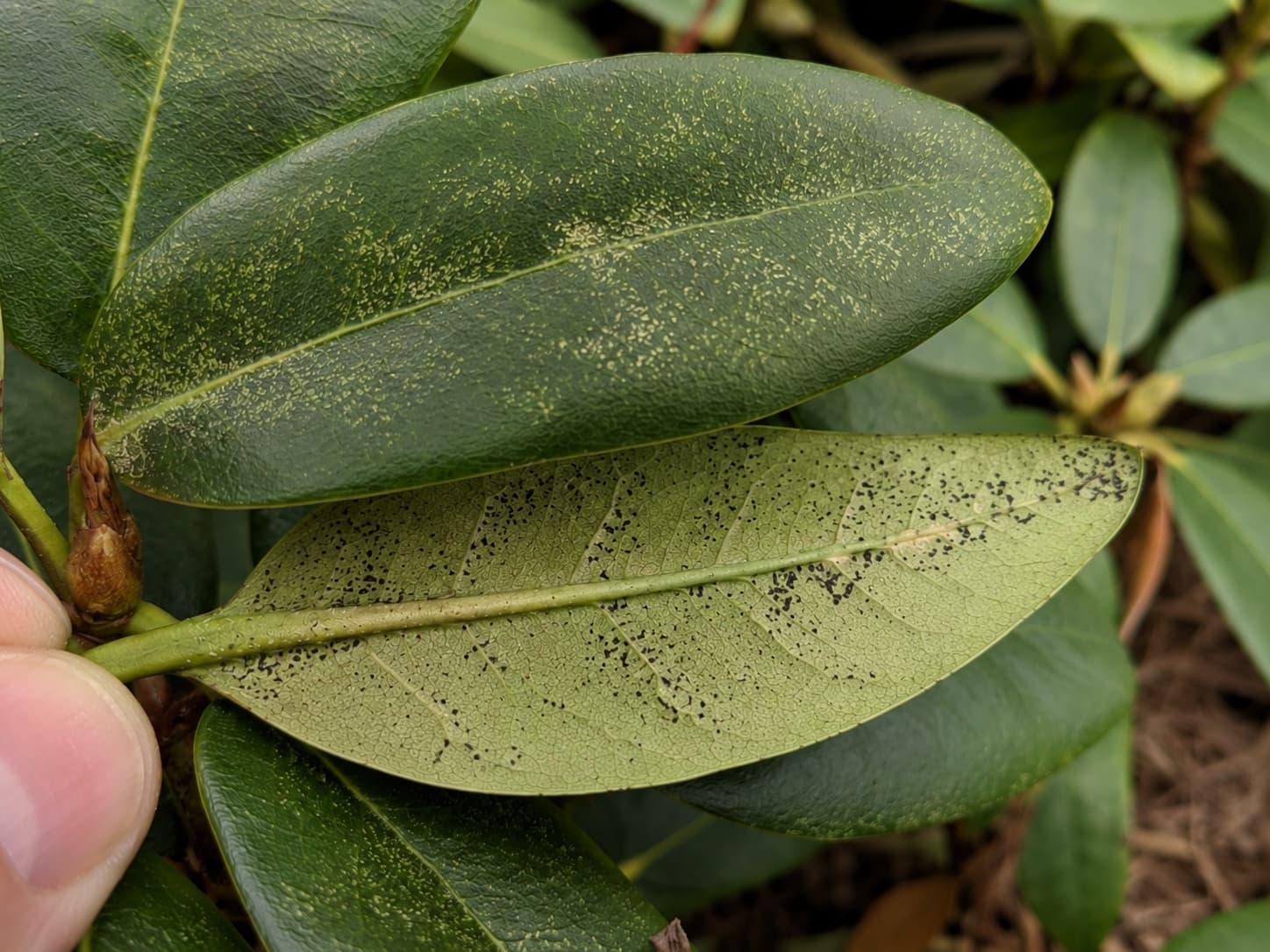
Start with Plant Comfort
Pest pressure often increases when a rhododendron is already stressed. Improving shade, mulch, watering consistency, and root health may not erase damaged leaves, but it can make new growth less vulnerable. When a pesticide is necessary, use one labeled for the pest and plant, target the correct life stage, and avoid treating open flowers.
Seasonal Rhododendron Care Calendar
Spring
Check winter damage, refresh mulch, watch for chlorosis, and enjoy the bloom before doing any shaping.
Early Summer
Deadhead if practical, complete light pruning after flowering, and inspect leaf undersides for lace bugs.
Late Summer and Fall
Protect developing buds from drought, stop pushing soft growth with high-nitrogen fertilizer, and water before winter dry spells.
Winter
Leave naturally curled cold-weather foliage alone, protect exposed evergreens from drying wind, and avoid heavy snow loads.
Rhododendron Toxicity: Important for Pet Owners and Families
Rhododendrons and azaleas contain grayanotoxins. Leaves, flowers, stems, and nectar can be harmful if eaten. Poisoning can affect the digestive, nervous, and cardiovascular systems.
Suspected Ingestion Needs Prompt Professional Advice
If a child, dog, cat, horse, or other animal may have eaten part of a rhododendron, contact an appropriate medical professional, veterinarian, or poison-control service promptly. Do not wait for symptoms and do not induce vomiting unless a professional directs you to do so.
- Place rhododendrons away from pets or young children who repeatedly chew plants.
- Remove fallen flowers and prunings from play areas, runs, paddocks, and drinking water.
- Wear gloves if plant sap irritates your skin, then wash your hands after pruning.
- Check pet-safety databases before choosing any replacement shrub; common names can be misleading.
How to Choose the Right Rhododendron
Cultivar selection matters as much as care. Choose for mature size, local cold hardiness, summer heat tolerance, flower color, and available root space. A compact plant that fits naturally will usually look better than a vigorous variety that needs repeated cutting.
| Garden Need | What to Look For | Common Examples |
|---|---|---|
| Cold-winter garden | Proven bud and foliage hardiness for your zone | P.J.M. Group, ‘Nova Zembla’, ‘Roseum Elegans’ |
| Small garden or container | Compact habit and slow mature growth | Yakushimanum hybrids and dwarf selections |
| Warm-summer region | Heat-tolerant local recommendations and afternoon shade | Regionally tested cultivars from specialist nurseries |
| Foundation planting | A mature size below windows and clear of walls | Compact, broad-mounded cultivars rather than vigorous standards |
Buy the Label, Not Just the Flower
A spectacular plant in bloom can be hard to resist, but the cultivar name tells you whether it will remain three feet tall or eventually fill a room-sized space. Photograph the label and check mature dimensions before planting.
Frequently Asked Questions
1. Why are my rhododendron leaves turning yellow?
Yellow tissue with greener veins often points to iron chlorosis associated with high soil pH, but poor drainage, root damage, drought, and nutrient imbalance can look similar. Check which leaves are affected, examine soil moisture, and test the root-zone pH before treating.
2. Why is my rhododendron not flowering?
Common causes include pruning after flower buds formed, deep shade, late-summer drought, cold-damaged buds, excess nitrogen, or a cultivar that is not well matched to the climate. Inspect the buds first: healthy flower buds are usually plump, while dead buds become dry or discolored.
3. When should I prune a rhododendron?
Remove dead or damaged wood when it is clearly identifiable. For routine size control or light shaping, prune soon after flowering. That timing gives the shrub a chance to produce new growth and form buds for the following season.
4. Do I have to deadhead rhododendrons?
No. Deadheading is mainly useful for appearance and for preventing seed capsules on plants you can reach comfortably. Large, established shrubs can be left alone. When deadheading, remove only the faded truss and protect the tender buds below.
5. Can rhododendrons grow in full sun?
Some cultivars tolerate full sun in cool climates when soil moisture remains reliable. In hot or dry regions, afternoon shade is safer. Strong sun can bleach foliage, scorch leaf edges, dry the root zone, and increase stress-related pest pressure.
6. Can I grow a rhododendron in alkaline soil?
Mildly unsuitable soil may be adjusted gradually after a soil test, but strongly alkaline or heavily buffered ground can be difficult to maintain. A raised bed or large container filled with an ericaceous growing medium is often more dependable.
7. What are the black spots under my rhododendron leaves?
When the upper surface is pale or stippled, dark varnish-like spots underneath strongly suggest lace bug residue. Look closely for nymphs, adults, cast skins, or eggs. Other leaf spots are possible, so confirm the pattern before treating.
8. Are rhododendrons poisonous to dogs?
Yes. Rhododendrons are toxic to dogs and other animals if eaten. Suspected ingestion requires prompt veterinary or poison-control advice, even before obvious symptoms appear.
Sources and further reading
- Royal Horticultural Society — How to Grow Rhododendrons
- Oregon State University Extension — Acidifying Soil for Acid-Loving Plants
- Clemson Cooperative Extension — Azalea and Rhododendron Insect Pests
- Clemson Cooperative Extension — Azalea and Rhododendron Diseases
- ASPCA — Rhododendron Toxicity
- Penn State Extension — Successful Tree and Shrub Planting
Final Thoughts
Rhododendron care becomes much simpler once you stop treating every symptom as a separate problem. The plant is usually asking for the same few things: an airy acidic root zone, dependable moisture, shelter from extremes, and restraint with pruning and fertilizer.
Begin with the root zone. Test the soil, check the planting depth, and watch how water moves after rain. Then look at the leaves and buds. A patient diagnosis is kinder to the plant—and usually more effective—than a shelf full of quick fixes.
What is your rhododendron showing you? Share your climate zone, soil pH, sun exposure, and leaf symptoms with the Greenmuse community.