How to Grow Mint: Complete Care for Pots, Watering, Pruning & Containment
Quick Answer
Mint (Mentha spp.) is a vigorous perennial herb that grows best with consistent moisture, good drainage, and full sun to partial shade. For most home gardens, a container is the easiest way to keep its spreading rhizomes and creeping stems under control. Water when the surface of the potting mix begins to dry, harvest or pinch the tips regularly to keep plants bushy, and refresh crowded containers every few years. In cold climates, many common mints die back above ground in winter and return from underground growth in spring.
Mint at a Glance
| Care point | Practical guidance |
|---|---|
| Botanical name | Mentha spp. |
| Plant type | Herbaceous perennial; many types spread vigorously through rhizomes and creeping stems. |
| Light | Full sun to partial shade. Some afternoon protection can help during very hot weather. |
| Water | Keep evenly moist, but avoid leaving the root zone waterlogged. |
| Soil | Moist, fertile, well-drained soil or potting mix. |
| Best container | About 12–16 inches wide is a useful starting size for controlling spread. |
| Hardiness | Varies by species and cultivar. Many common culinary mints are hardy perennials in temperate climates. |
| Harvest | Cut healthy young stems regularly once the plant is established and growing strongly. |
| Winter habit | Many mints die back above ground in cold weather and regrow from below-ground growth in spring. |
| Pet note | ASPCA lists garden mint (Mentha spp.) as toxic to dogs and cats; large ingestions may cause vomiting or diarrhea. |
Mint is easy to grow because it tolerates a wider range of conditions than many Mediterranean herbs, but that same vigor is why containment matters. The goal is not to make mint fragile or fussy. It is to give the plant enough moisture and light while making sure its roots and runners stay where you intended.
Which Type of Mint Should You Grow?
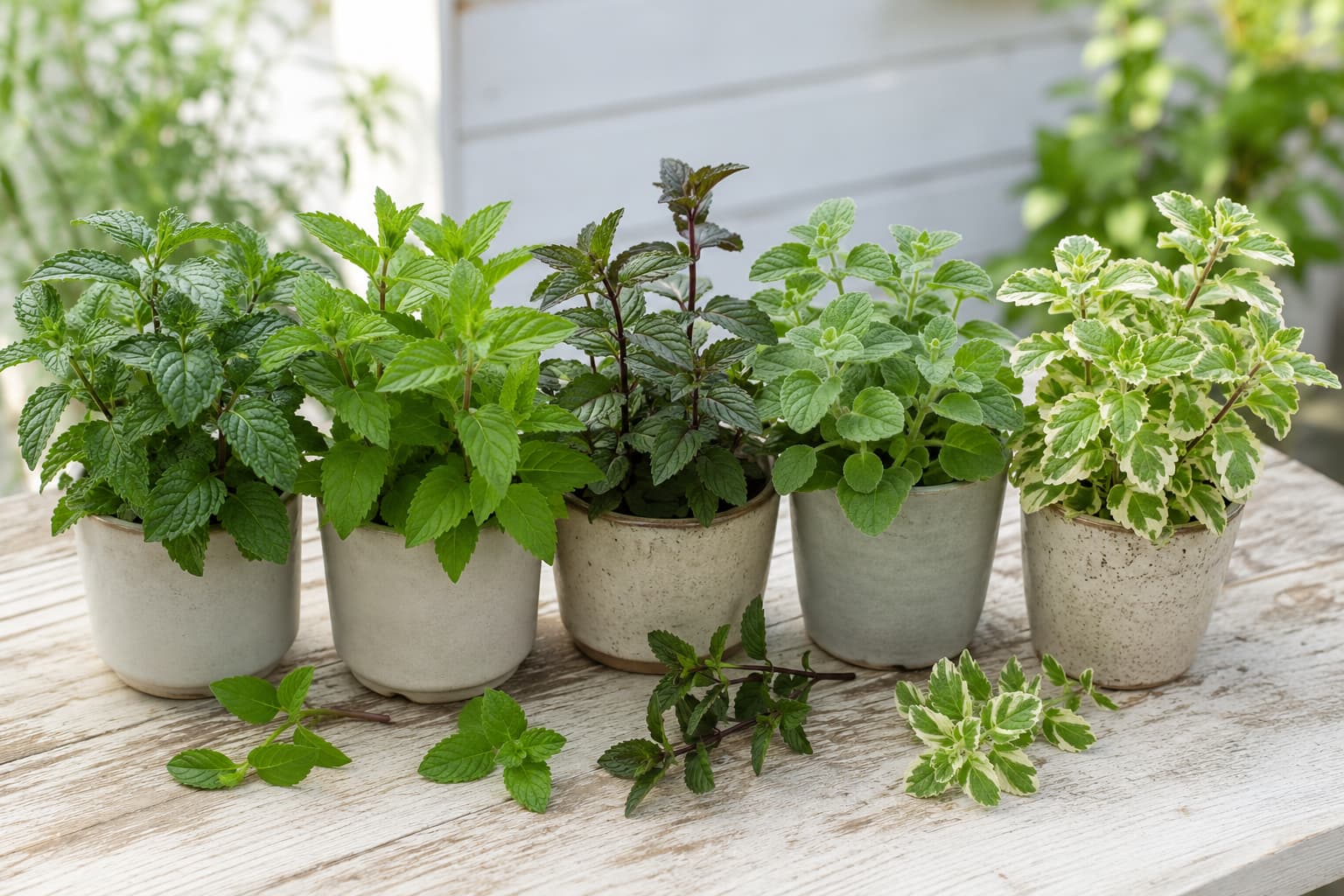
The name “mint” covers many species, hybrids, and cultivars. Peppermint is itself an accepted hybrid of watermint and spearmint, while other named mints may be selected for flavor, leaf color, or variegation. For everyday cooking, tea, and container growing, these are the most useful choices to know.
| Mint | Flavor and appearance | Good for |
|---|---|---|
| Spearmint Mentha spicata | Mild, sweet, familiar culinary-mint flavor. | Cooking, salads, sauces, drinks, everyday kitchen use. |
| Peppermint Mentha × piperita | Stronger cooling character and a sharper flavor. | Tea, desserts, chocolate pairings, strongly flavored drinks. |
| Chocolate mint | A peppermint-type cultivar with a rich aromatic profile. | Desserts, tea, chocolate pairings. |
| Apple mint Mentha suaveolens | Soft, rounded, often fuzzy leaves with a milder flavor. | Fruit, garnishes, mild herbal drinks. |
| Pineapple mint | Variegated apple-mint type with cream-and-green foliage. | Decorative containers, garnishes, light culinary use. |
Pennyroyal is not a culinary substitute for common mint
Pennyroyal (Mentha pulegium) should not be treated like peppermint or spearmint for tea or cooking. Keep it out of a “best culinary mint” shortlist and follow authoritative safety guidance if you encounter it.
Want a named variety to stay true?
Use cuttings or division rather than relying on saved seed. Mints hybridize readily, so seedlings may not reproduce the flavor or appearance of the parent plant.
Should You Grow Mint in a Pot or in the Ground?
For most small gardens, patios, balconies, and mixed herb beds, a pot is the easiest option. Mint can be grown in the ground where its spread is acceptable, but its rhizomes and creeping stems can colonize nearby soil quickly. A container gives you a much clearer boundary.
Why mint spreads so quickly
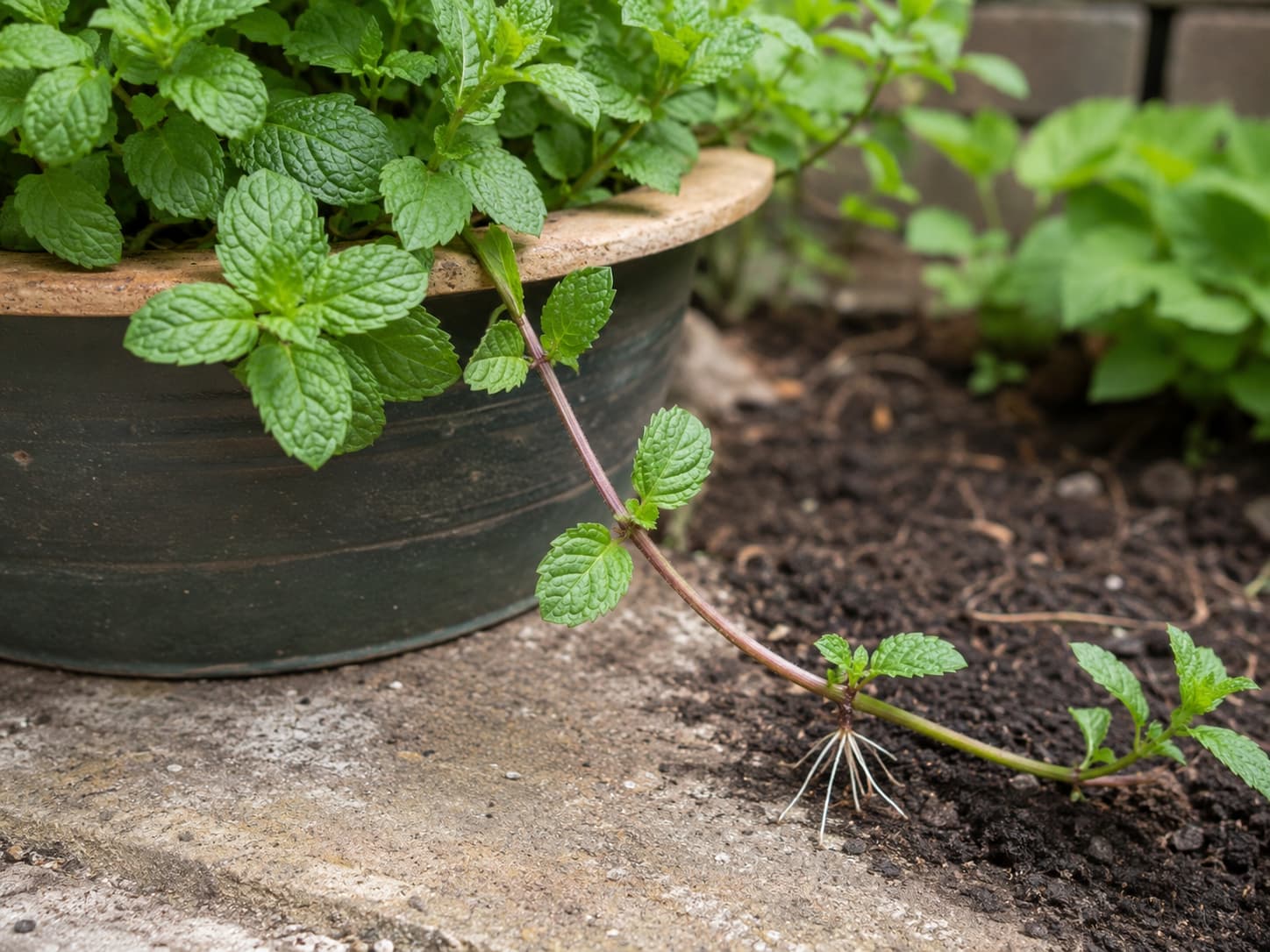
Many mints expand through underground rhizomes as well as stems that can root where they touch moist soil. That means a plant does not need to rely on seed to expand. A missed runner can become a new rooted section and continue moving outward.
Best pot size for mint
A container around 12–16 inches wide is a practical starting point for a single mint plant or small clump. More important than an exact diameter is having enough root room plus open drainage holes. Very small pots dry quickly and become congested sooner.
Can you bury the pot?
You can sink a bottomless container or a pot with suitable openings into a bed to slow lateral spread, leaving the rim slightly above the surrounding soil. Treat this as a management aid, not a permanent guarantee. Inspect the rim and nearby ground so runners do not simply cross over and root outside the barrier.
Containment check
During active growth, look around the pot rim, drainage area, and adjacent soil. Trim escaping shoots before they root. This takes minutes and is much easier than removing a mature mint patch later.
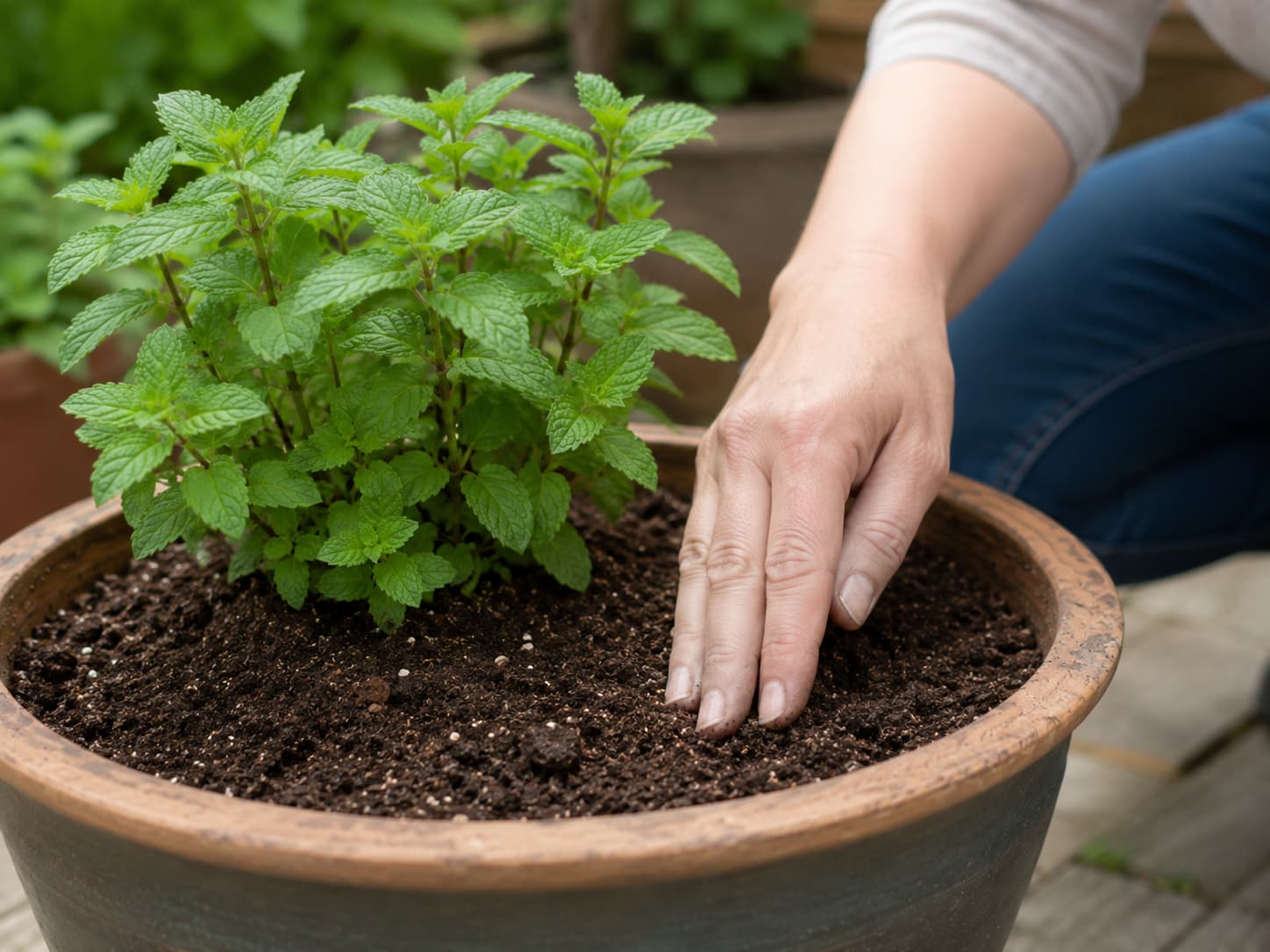
How to Plant Mint in 5 Simple Steps
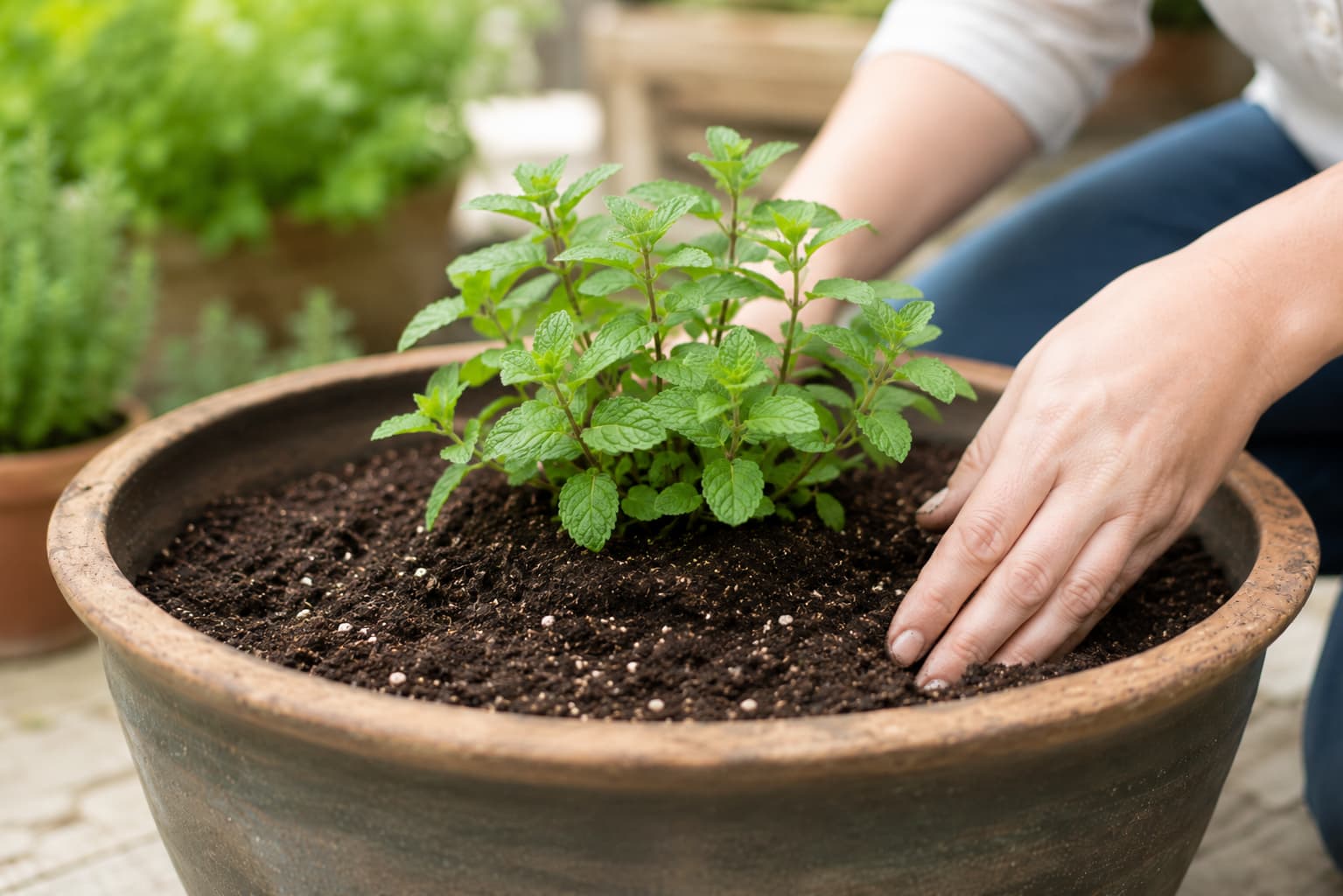
- Choose a controlled location. For easy maintenance, start with a freestanding container rather than an open garden bed.
- Check the drainage. Make sure the pot has unobstructed holes in the base. Mint likes moisture, but its roots still need oxygen.
- Add a fertile, moisture-retentive potting mix. Use a quality container mix that holds some moisture without collapsing into dense, airless soil.
- Plant at about the same depth. Set the crown close to its previous soil level rather than burying the stems deeply.
- Water thoroughly and settle it into suitable light. Saturate the root ball, let excess water drain, then place the pot in sun or partial shade according to your climate.
Newly planted mint may look slightly soft for a short time after transplanting. Keep the root zone evenly moist while it establishes, but do not compensate by leaving the pot permanently saturated.
How to Care for Mint
Light
Mint grows well in full sun to partial shade. In mild climates, several hours of direct sun can support sturdy, leafy growth. In very hot locations, afternoon shade can reduce heat stress and slow the rate at which a container dries. Indoors, weak light is a common reason stems stretch toward the window and leaves become more widely spaced.
Watering
Mint prefers more consistent moisture than rosemary, lavender, or thyme. Keep the mix evenly moist rather than constantly wet. Check with a finger before watering. When the surface begins to dry, water thoroughly until excess drains from the bottom.
A pot on a sunny balcony may dry far faster than the same plant on a sheltered windowsill. That is why “water every two days” is less useful than checking the actual root zone. Hot weather, wind, terracotta, small pots, and dense foliage all increase water demand.
Soil
Use a fertile, well-drained mix that still holds useful moisture. For containers, a fresh peat-free or other quality potting mix designed for container plants works well. Avoid using heavy garden soil by itself in a pot because it can compact and drain poorly.
Fertilizer
Mint does not need aggressive feeding. Fresh potting mix is usually a good start. As container nutrients are depleted through growth and watering, a balanced fertilizer can be used during active growth according to the product label. In garden soil, let soil condition or a soil test guide feeding rather than adding fertilizer automatically.
Temperature and seasonal growth
Many common culinary mints are hardy perennials in temperate climates, but hardiness varies by type. Strong summer heat may increase water demand or cause temporary stress, while cold weather can send the plant into dormancy. If the top growth disappears after frost, check the seasonal behavior of your variety before assuming the roots are dead.
Greenmuse rule: check the plant, not the calendar
Watering, feeding, and pruning schedules are useful reminders, not commands. Pot size, weather, light, root congestion, and growth rate can change what your mint needs from one week to the next.
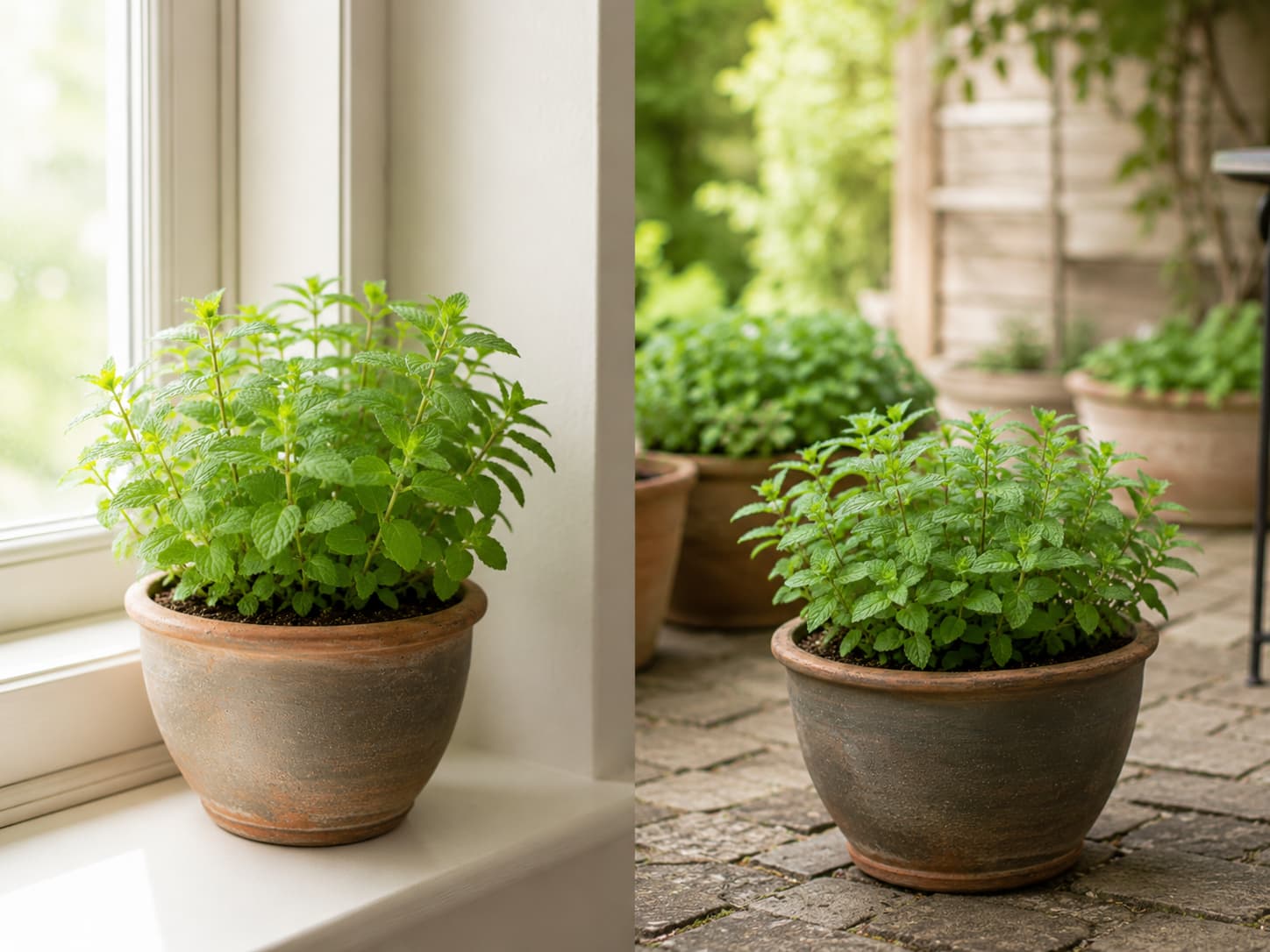
Growing Mint Indoors vs. Outdoors
Mint can grow in both settings, but the limiting factors are different. Outdoors, the main challenge is usually containment and summer moisture. Indoors, it is more often light and airflow.
| Condition | Indoor mint | Outdoor mint |
|---|---|---|
| Light | Use the brightest suitable window you have; stretched growth usually means the plant wants more light. | Full sun to partial shade; hot climates may benefit from afternoon protection. |
| Water | Check the pot regularly but expect slower drying in some indoor rooms. | Wind, sun, and heat can dry containers quickly. |
| Airflow | Avoid crowding foliage into a still, humid corner. | Space plants so leaves can dry and air can move around them. |
| Spread | A pot naturally limits the root system, although runners still need trimming. | Containment matters more if the plant can reach open garden soil. |
If an indoor window cannot provide enough light for compact growth, a small grow light can help. Greenmuse’s guide to grow lights for indoor herbs and succulents explains practical bulb and shelf options without relying on color temperature alone.
How to Prune Mint for Bushier Growth
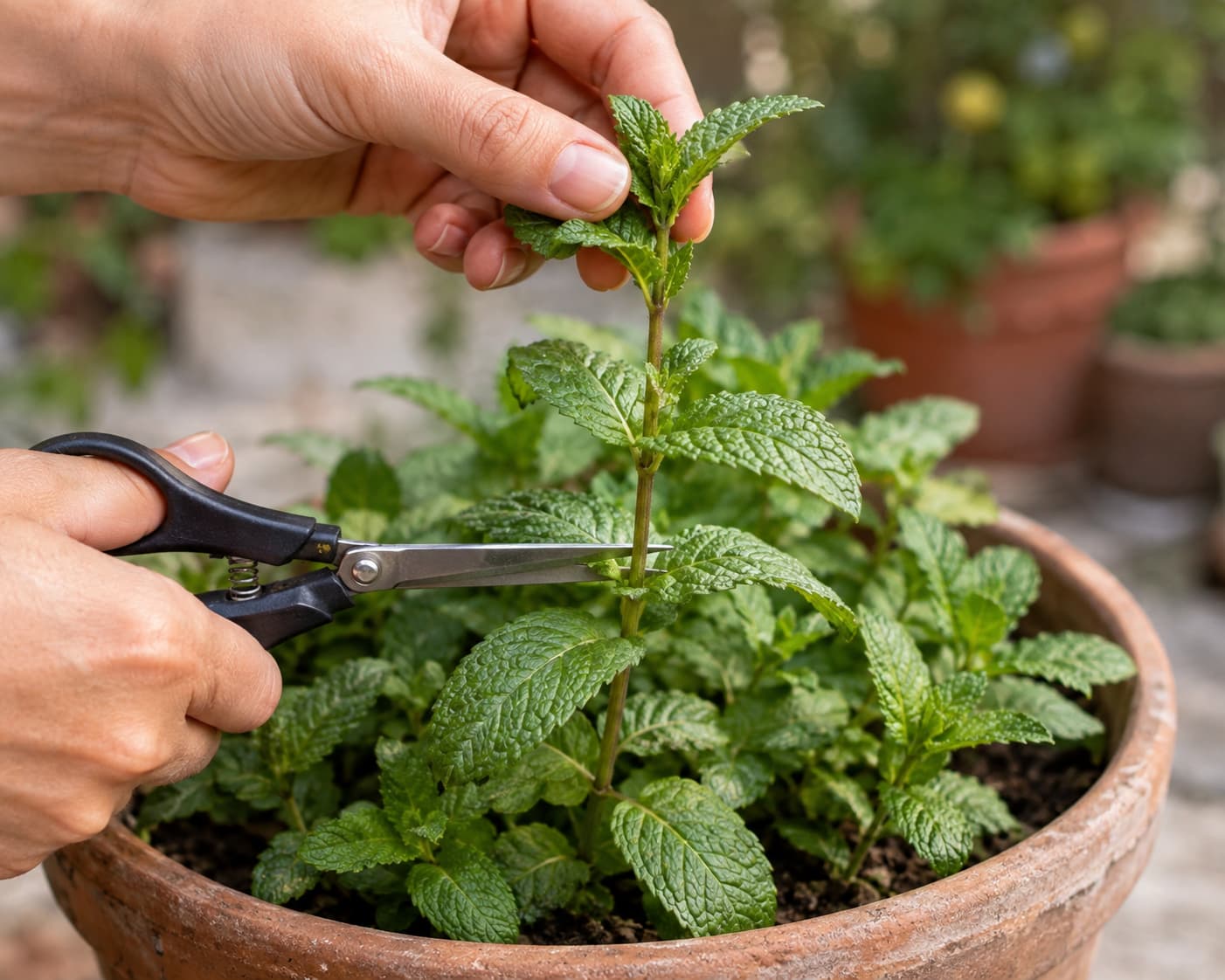
Regular harvesting doubles as pruning. When you cut the tip of a healthy stem just above a leaf node, buds below the cut can develop into side shoots. Over time, that produces a fuller plant instead of a few long stems.
- For routine shaping: remove the top section of long stems just above a pair of healthy leaves.
- If the plant is getting leggy: shorten several of the longest stems rather than picking individual leaves from the bottom upward.
- After flowering: an established plant can be cut back hard to encourage a flush of fresh shoots. RHS advises cutting finished mint back to about 2 inches (5 cm).
- If the center looks weak: check whether the root ball is congested. Pruning cannot compensate indefinitely for a plant that needs division or fresh potting mix.
You do not need a rigid weekly pruning schedule. Use the plant’s shape as the cue: when stems become tall, sparse, or top-heavy, cut back to healthy nodes and let new branching rebuild the plant.
How and When to Harvest Mint
Once the plant is established and producing plenty of new growth, harvest healthy young stems as you need them. Cutting stems is usually better for the plant’s shape than repeatedly stripping single leaves from the lower half of each shoot.
For fresh use
Choose clean, healthy stems with tender leaves. Cut above a leaf node and leave enough foliage behind for the plant to keep photosynthesizing. Regular harvesting can help maintain a compact shape.
For drying
If you want a larger batch for drying, harvesting around the beginning of flowering is a practical point used in extension guidance. Remove damaged or diseased leaves first, then dry the clean foliage with good airflow and away from harsh direct light.
If your mint has already flowered
Flowering is not a disaster. Harvest what you want, then cut the plant back to encourage fresh vegetative shoots. Pollinators may also use the flowers if you choose to leave part of the plant blooming outdoors.
How to Propagate Mint
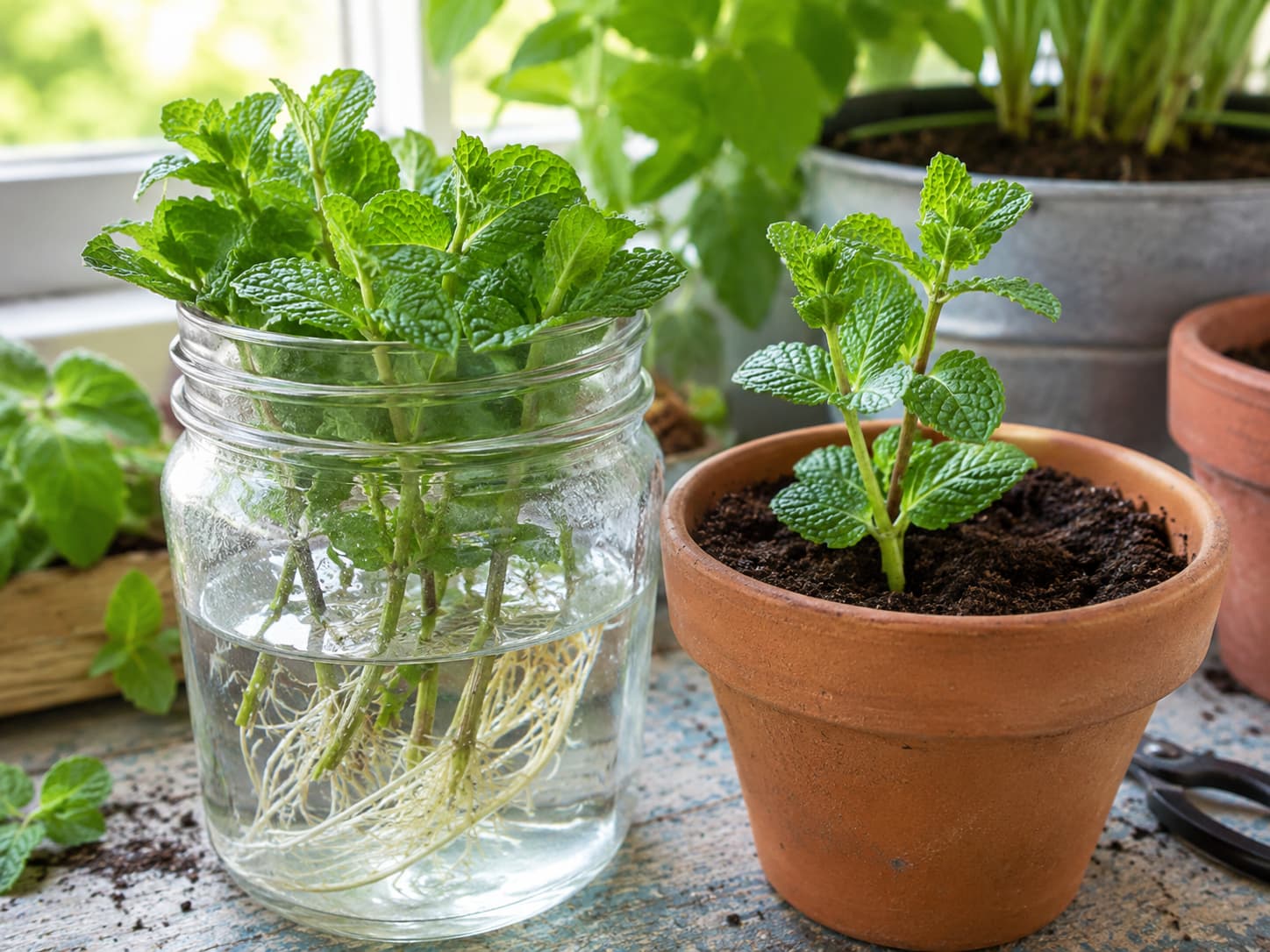
Mint is one of the easier herbs to propagate. If you want to preserve the characteristics of a named variety, use a vegetative method such as stem cuttings or division.
From stem cuttings
- Take a healthy non-flowering stem and cut below a node.
- Remove the leaves from the lowest section so they will not sit in water or wet mix.
- Root the cutting in water or a moist propagation mix.
- Once a useful root system has formed, pot it into fresh container mix and keep it evenly moist while it settles in.
From division
Division is ideal for a congested mature pot. Lift the root ball, separate a vigorous section with healthy roots and shoots, and replant it in fresh mix. This is also a simple way to renew an older container without keeping the entire crowded clump.
From rhizome pieces
Healthy rooted sections from the spreading underground growth can also be replanted. This is essentially using the plant’s natural spreading habit in a controlled way.
From seed
Some mints can be grown from seed, but seedlings may not come true to a named variety because mints hybridize readily. If flavor or cultivar identity matters, start with a known plant and propagate it vegetatively.
Peppermint is a special case
Peppermint (Mentha × piperita) is an accepted hybrid of watermint and spearmint. For a plant that matches the peppermint you already have, use a cutting, division, or another vegetative method rather than expecting seed to reproduce it reliably.
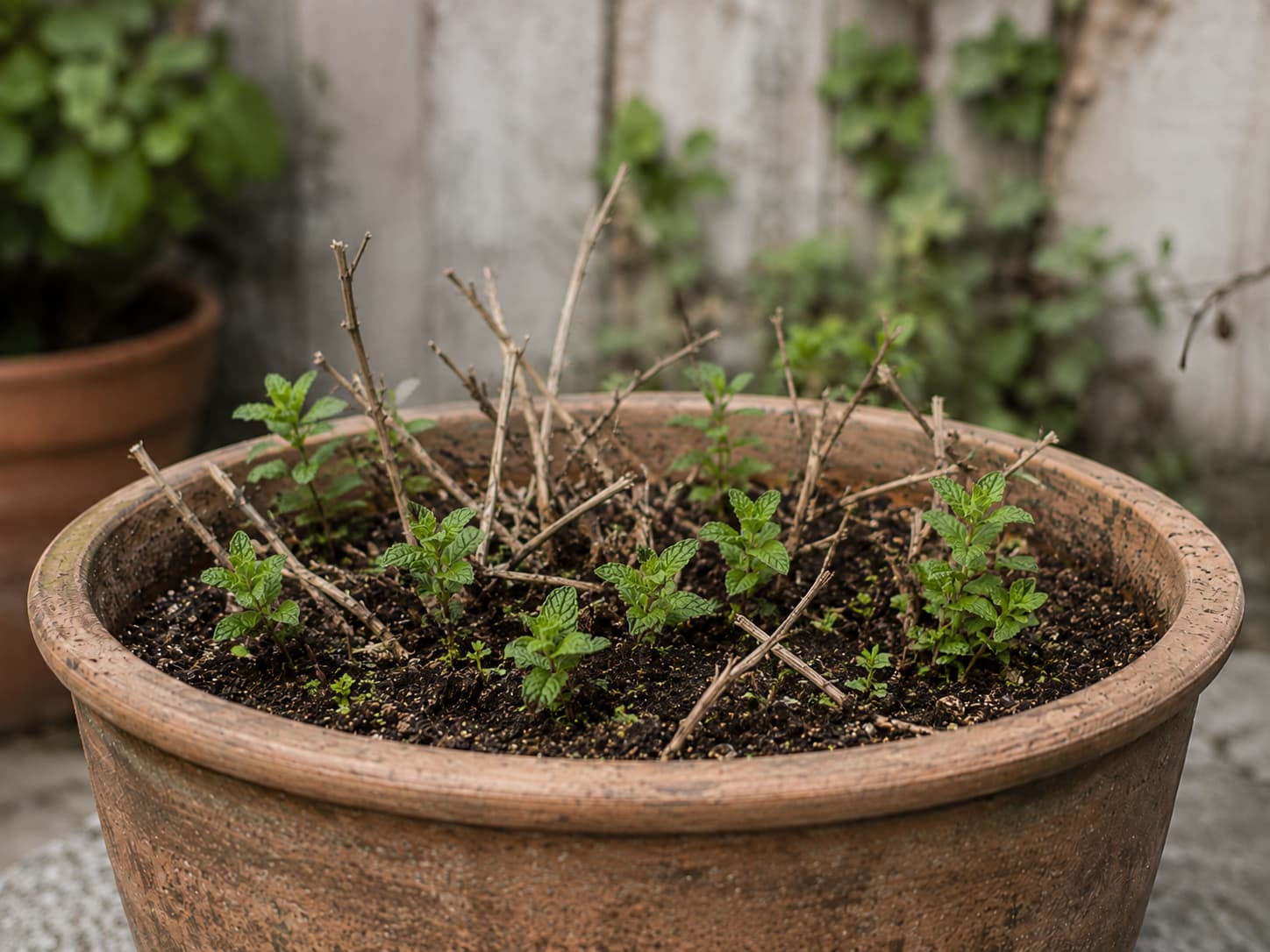
Does Mint Come Back Every Year?
Many common garden mints are herbaceous perennials. In climates with cold winters, the visible stems may die back while the underground growth remains alive. Fresh shoots can reappear when temperatures and day length improve.
In cold climates
Do not judge the plant only by its winter stems. After the top growth fades, cut away dead material when appropriate and protect the root zone from extreme container exposure. A pot above ground experiences colder root temperatures than the same plant growing in open soil.
In mild climates
Mint may stay partially leafy or slow down rather than disappearing completely. Reduce watering as growth slows, but do not let a container become bone-dry for long periods.
Container winter care
A sheltered position can reduce repeated freeze-thaw stress and prevent the root ball from becoming saturated through long periods of winter rain. The goal is neither a swamp nor a completely desiccated root ball.
Can you bring mint indoors?
Yes. A small pot can be moved to a bright windowsill for continued growth if indoor light is adequate. Inspect the foliage for pests before bringing an outdoor plant inside, and expect growth to be slower if winter light is weak.
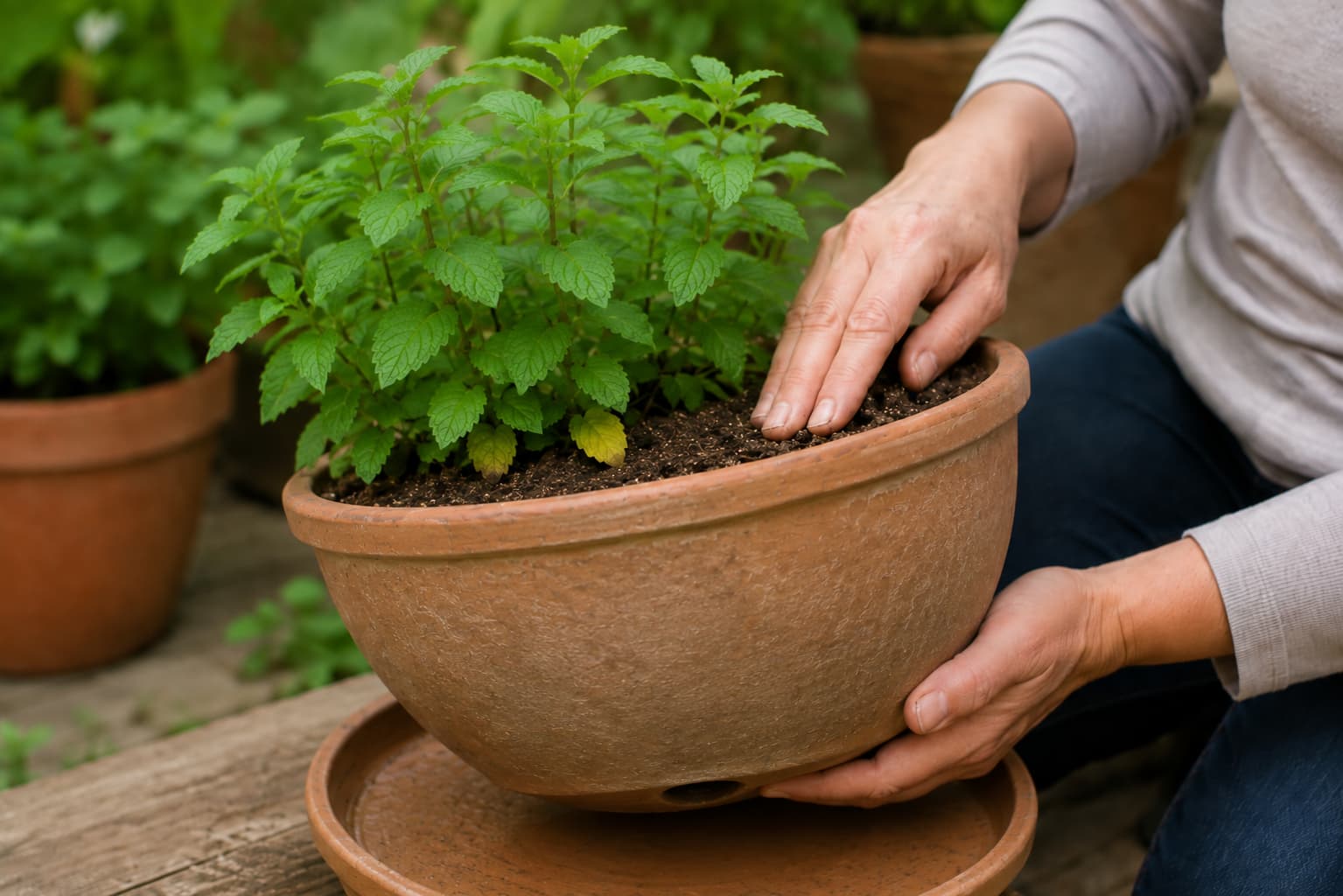
Common Mint Problems and How to Fix Them
Mint usually gives visible clues before it fails. The important part is not to match one symptom to one automatic diagnosis. Start with the growing conditions, then look more closely at the leaves, stems, roots, and pot.
| What you see | Check first | What to do next |
|---|---|---|
| Yellow lower leaves | Soil staying wet too long, severe drying, poor drainage, normal aging. | Check the root zone before changing the watering schedule. Improve drainage if the mix remains saturated. |
| Wilting | Dry soil, hot sun, recently disturbed roots, or a saturated root zone. | Feel the soil. Water a dry plant thoroughly; do not add more water if the mix is already wet. |
| Tall, leggy stems | Insufficient light and lack of pruning. | Increase usable light and shorten long stems above healthy nodes. |
| Brown or crispy edges | Heat, repeated drying, salt buildup, root stress. | Stabilize moisture, protect from extreme heat, and review fertilizer use. |
| Small or pale new growth | Weak light, exhausted potting mix, root congestion. | Improve light and check whether the plant needs feeding, division, or repotting. |
| Plant stopped growing | Season, cool temperatures, root congestion, low light. | Match the response to the season before assuming disease. |
| White powder on leaves | Powdery mildew. | Improve airflow, reduce crowding, and remove badly affected material. |
| Orange, yellow, or dark dusty spots | Mint rust. | Remove affected material, improve hygiene, and avoid propagating from diseased plants. |
One yellow leaf is not an emergency
Older lower leaves eventually age and drop. Worry more when yellowing is spreading quickly, new growth is affected, the stems are collapsing, or the root zone smells sour and stays wet for long periods.
Mint Pests and Diseases
Mint can attract sap-feeding insects, chewing pests, and fungal diseases. Start with identification and growing conditions before reaching for a treatment.
Aphids
Look for clusters on tender shoots, distorted young leaves, or sticky residue. A strong stream of water can remove light infestations outdoors. Recheck the plant before escalating treatment, especially if you plan to harvest the leaves.
Mint rust
Rust can produce orange, yellow, or darker spore-bearing spots and may cause affected leaves to decline. Remove diseased material and avoid using infected plants as propagation stock. Good sanitation matters because a vigorous mint plant can still carry disease into new pots.
Powdery mildew
A white, powdery coating is often associated with conditions that favor fungal growth. Improve spacing and airflow, avoid keeping foliage crowded and stagnant, and remove heavily affected leaves.
Chewing insects and mites
Holes, stippling, or distorted foliage deserve a close inspection of both leaf surfaces. Identify the pest before choosing a control method; not every hole needs a spray, and some damaged leaves can simply be removed if the plant is otherwise healthy.
Before treating mint you plan to eat
Confirm the pest, use the least disruptive effective approach, and follow the full label for any product used on edible plants—including harvest intervals where applicable.
How to Keep Mint From Taking Over
Containment works best when it is routine rather than reactive. You do not need to fear mint—you just need to decide where you want it to stop.
- Use a freestanding pot when you want the most predictable control.
- Leave space around the container so escaping runners are easy to see.
- Trim shoots before they root in neighboring pots or garden soil.
- Refresh crowded containers every few years by division and repotting.
- If mint is already in the ground, remove unwanted sections carefully and keep checking for regrowth rather than expecting one cleanup session to finish the job.
Frequently Asked Questions
Does mint need full sun?
No. Mint grows in full sun or partial shade. In very hot climates, afternoon shade can reduce stress. Indoors, give it a bright position because weak light often produces long, sparse stems.
How often should I water mint?
Do not use a fixed calendar. Keep the root zone evenly moist and water when the surface of the mix begins to dry. Pots may need checking much more often during hot, windy weather.
Can mint grow indoors?
Yes. Use a container with drainage and give the plant strong natural light or an appropriate grow light. Indoors, watch for leggy growth, stagnant airflow, and pests that arrive on plants brought in from outside.
Does mint come back every year?
Many common culinary mints are perennial and can return after winter dormancy, but hardiness varies by species, cultivar, and local conditions. Container roots are more exposed to cold than roots in the ground.
Why are my mint leaves turning yellow?
Check the soil before assuming one cause. Yellowing can follow prolonged wetness, severe drying, poor drainage, root congestion, weak light, or normal aging of older leaves. Widespread yellowing is more useful diagnostically than one old leaf.
Why is my mint tall and leggy?
Insufficient light and infrequent pruning are the usual things to check first. Move the plant to stronger usable light and cut stretched stems back above healthy leaf nodes to encourage branching.
Can I plant mint directly in the ground?
Yes, if you are comfortable managing its spread or have a location where expansion is acceptable. In mixed beds and small gardens, a container is usually easier to control.
How do I stop mint from spreading?
Grow it in a container, keep the rim and surrounding ground visible, and trim escaping runners before they root. Buried barriers can help but still need inspection.
How often should I prune mint?
Prune or harvest when stems become long enough to use and the plant has enough foliage to spare. Regular tip harvesting keeps mint bushier, but there is no need to force the same schedule year-round.
Can different mint varieties grow next to each other?
Yes. Growing them nearby does not change the flavor of the existing plants. The bigger genetic issue appears when you save seed, because seedlings may not come true to the parent. Use cuttings or division when you want to preserve a named variety.
Final Thoughts
Mint becomes much easier once you stop treating its vigor as a problem to “cure.” Give it moist but well-drained soil, useful light, regular harvesting, and a clear boundary, and that vigorous growth becomes an advantage.
For beginners, a wide container is the simplest place to start. You can see when the soil is drying, prune runners before they escape, divide the root ball when it gets crowded, and move the plant if summer heat or winter cold becomes a problem. That is a much more reliable strategy than trying to control mint after it has spread through an open bed.
Greenmuse takeaway: keep mint contained, check moisture instead of watering by the calendar, harvest above healthy nodes, and respond to symptoms only after you have checked the root zone and light.