Hydrangea Care: A Complete Beginner’s Guide to Planting, Pruning, and Color
Quick Hydrangea Care Summary
Hydrangea care starts with moist, well-drained soil, enough light to flower, and protection from harsh heat in warmer climates. The most important beginner skill is identifying the species before pruning.
Bigleaf and oakleaf types usually preserve flower buds on older stems, while panicle and smooth hydrangeas flower on new growth. Water deeply, mulch the root zone, and use soil tests rather than guesswork when changing flower color or applying fertilizer.
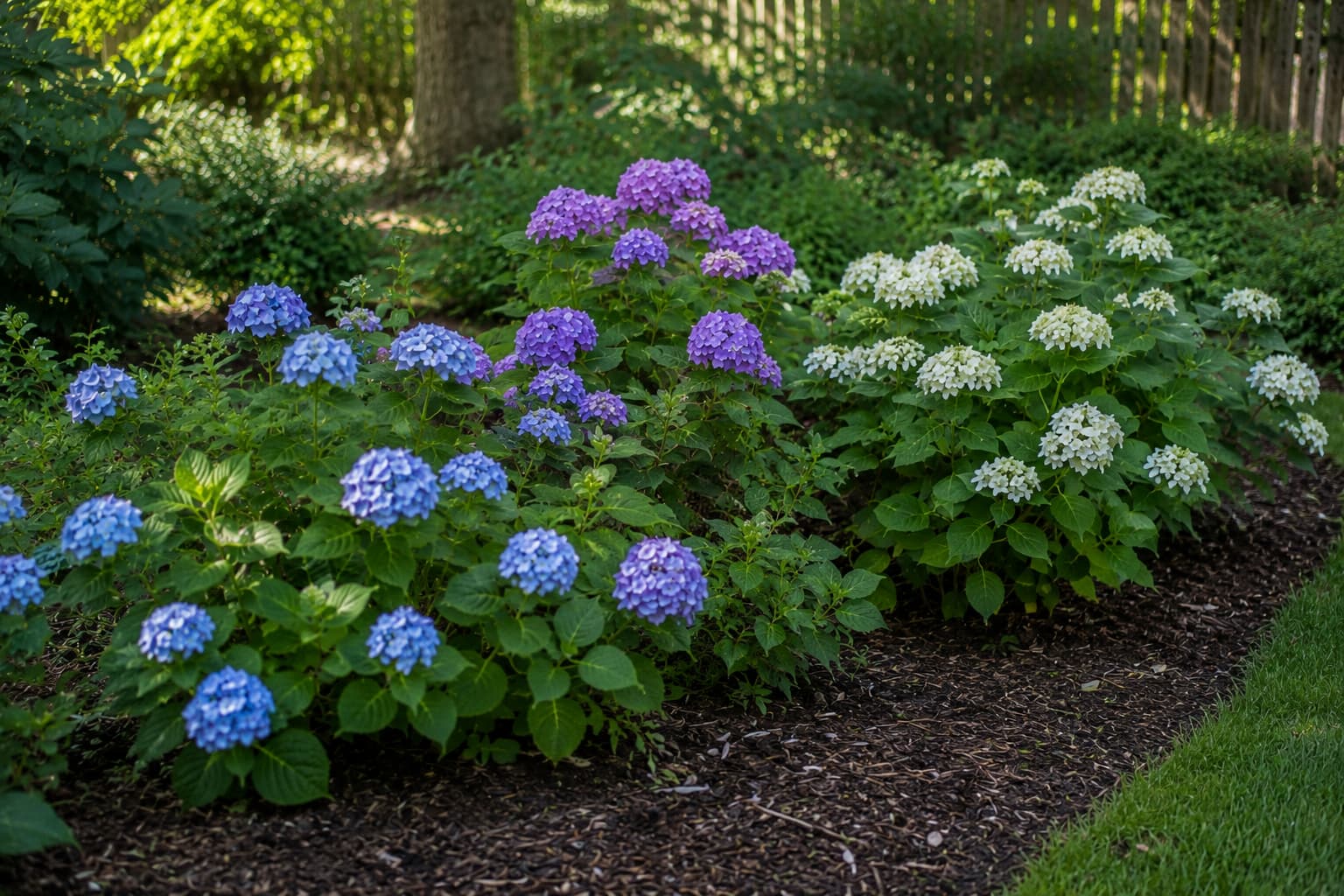
Hydrangeas are among the most useful flowering shrubs for home gardens, but they are not all cared for in the same way. Once you know which type you have, most decisions become straightforward: where it should grow, when it can be pruned, whether its flower color can change, and how much winter protection it needs.
My own reblooming bigleaf hydrangea once lost its early buds to a late April frost, then produced a later flush from new growth. That experience made me appreciate reblooming cultivars, but it also reinforced a broader lesson: species, cultivar, climate, and exposure matter more than any universal calendar.
Hydrangea Care Starts with Choosing the Right Type
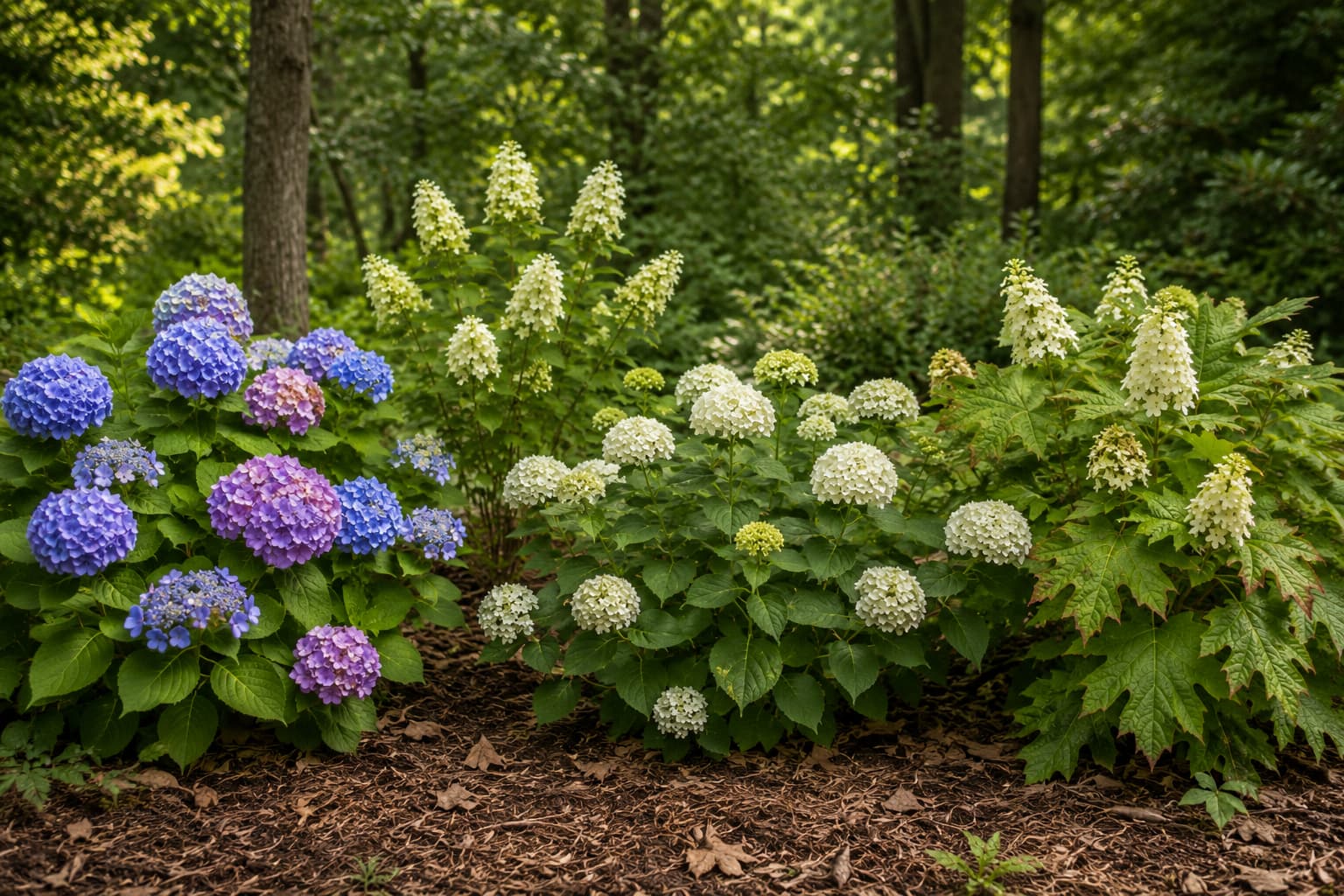
Six hydrangea species commonly appear in home landscapes. The four below cover most beginner purchases. For reliable hydrangea care, verify the botanical name on the label before relying on flower color alone.
| Type | How to recognize it | Best use and pruning habit |
|---|---|---|
| Bigleaf H. macrophylla | Mophead or lacecap clusters; many cultivars can shift blue, purple, or pink. | Part shade and sheltered sites. Usually flowers on old wood; reblooming cultivars may also flower on new growth. |
| Panicle H. paniculata | Cone-shaped clusters that often age from white or green to pink. | The most sun-tolerant common group when moisture is adequate. Flowers on new wood and tolerates spring pruning. |
| Smooth H. arborescens | Rounded white, green, or pink clusters on stems arising from the base. | Cold-hardy and useful in mixed borders. Flowers on new wood. |
| Oakleaf H. quercifolia | Oak-shaped leaves, cone-like blooms, autumn color, and peeling bark. | Woodland edges and naturalistic plantings. Flowers mainly on old wood; prune lightly after flowering. |
Other useful hydrangea types
Mountain hydrangea (Hydrangea serrata) resembles a smaller bigleaf hydrangea and often carries lacecap flowers. Many cultivars flower on old wood, so the same cautious pruning approach applies. Climbing hydrangea (Hydrangea anomala subsp. petiolaris) is a woody vine that attaches to walls, fences, and mature trees; it establishes slowly and needs little pruning beyond controlling its spread after flowering.
Hardiness ratings describe winter survival, not guaranteed flowering. A bigleaf hydrangea may survive the roots in a cold climate while losing old-wood flower buds above ground. Gardeners in colder areas who want dependable bloom should consider panicle or smooth hydrangeas, or choose reblooming bigleaf cultivars and protect the stems from winter wind.
What to check before buying
Read the botanical name, mature size, hardiness range, and pruning habit on the label. Choose a plant with several healthy basal stems, evenly moist roots, and no sour smell from the potting mix. A shrub covered in flowers can look impressive at the garden center, but a smaller plant with healthy foliage and a firm root ball often establishes just as well.
About newer cultivars: Strong-stem smooth hydrangeas such as Incrediball Storm Proof and FlowerFull are bred to improve weather resistance and reduce flopping. Availability and launch timing vary by region, so check the breeder’s current listing rather than relying on a single release year.
Quick identification clues
Round mopheads and flat lacecaps usually indicate bigleaf hydrangea. Cone-shaped clusters often indicate panicle or oakleaf hydrangea; oak-shaped leaves confirm oakleaf. Large rounded white heads on stems emerging from the base usually indicate smooth hydrangea.
How to Grow Hydrangeas: Light, Soil, and Planting
Shrubby hydrangeas generally prefer light shade, especially where summers are hot. Morning sun with afternoon protection is a reliable starting point for bigleaf and oakleaf types. In cooler regions, they can accept more sun if the soil stays moist. Panicle hydrangeas tolerate the most sun among the common groups, but even they flower and grow better when drought stress is avoided.
Choose moist, well-drained soil rather than a low spot that remains saturated. In heavy clay, improve the wider planting area with organic matter instead of creating a small pocket of highly amended soil that can collect water.
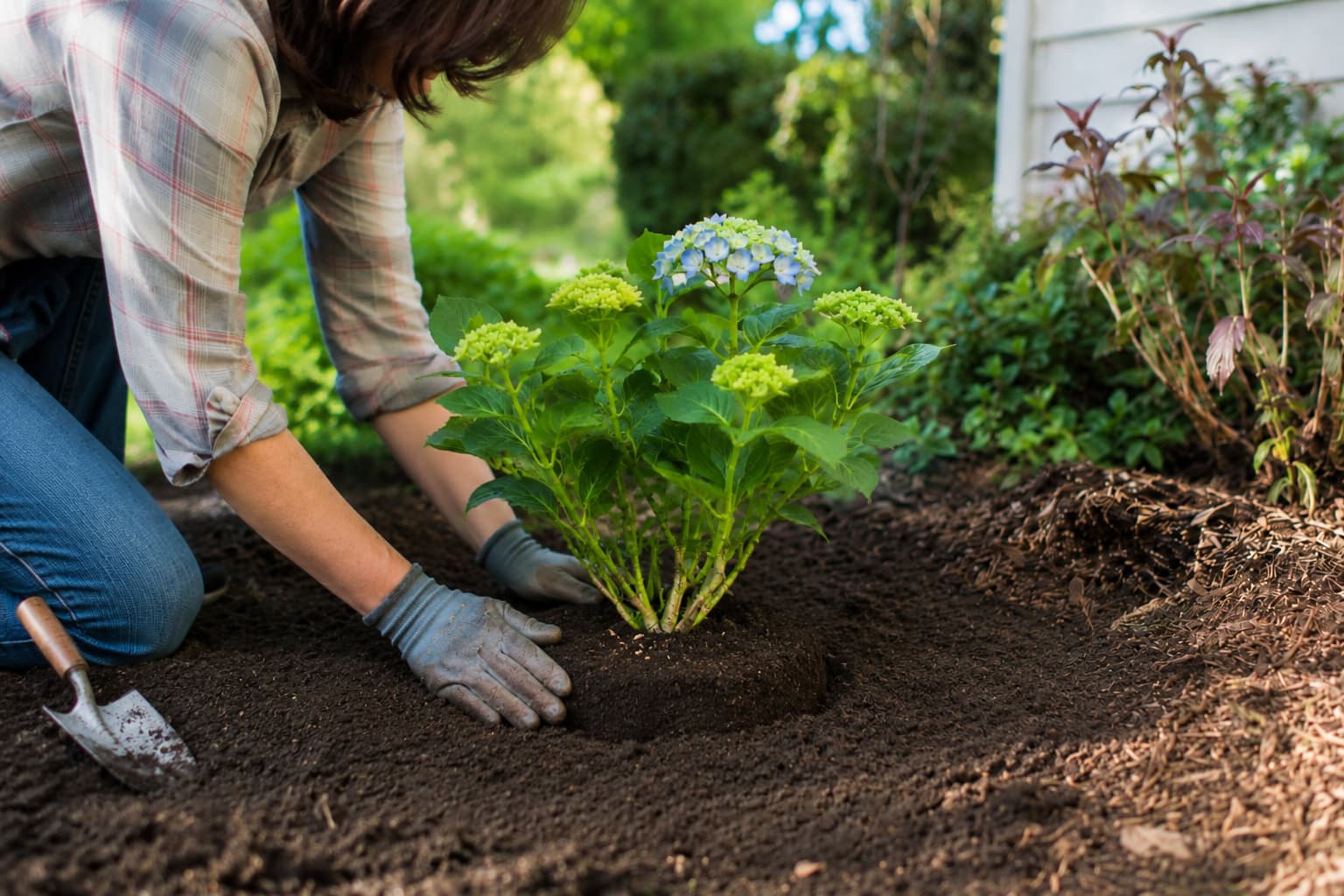
- Dig wide, not deep. Make the hole two to three times wider than the root ball and no deeper.
- Position the crown correctly. Set the top of the root ball level with or slightly above the surrounding soil.
- Backfill mainly with native soil. Use compost to improve soil structure where needed, but do not create a sharply different planting pocket.
- Water slowly. Soak the root zone thoroughly after planting and allow excess water to drain.
- Mulch without burying stems. Apply two to three inches of organic mulch and leave a clear gap around the plant’s base.
Match exposure to climate
In regions with cool summers, many hydrangeas tolerate more direct sun than the familiar “morning sun, afternoon shade” rule suggests. In hot inland or southern climates, late-afternoon shade can prevent scorched leaves and prematurely browned blooms. Wind also matters: exposed sites dry foliage and soil faster and can damage old-wood flower buds during winter.
Avoid planting beneath trees with dense surface roots, where competition for moisture can outweigh otherwise suitable light. If a site is naturally dry, choose a better-matched shrub rather than relying on constant irrigation.
After planting
During the first growing season, monitor the original root ball as well as the surrounding soil. Container-grown root balls can remain dry even when nearby garden soil feels damp. Water slowly enough for moisture to penetrate both areas, then allow air to return to the soil rather than keeping it continuously saturated.
Plant in early spring after severe freeze risk has eased, or in autumn while the soil is still warm and roots have time to establish. Avoid moving or installing a shrub during peak summer heat unless you can monitor moisture closely. This planting foundation makes later hydrangea care much easier.
Hydrangea Care Through the Seasons
| Season | Main jobs | Avoid |
|---|---|---|
| Spring | Check winter damage, refresh mulch, prune new-wood types, and remove confirmed dead stems from old-wood types after growth begins. | Cutting every stem before you know which buds survived. |
| Summer | Water deeply during dry weather, maintain mulch, and deadhead only when desired. | Frequent shallow watering or prolonged wetness on foliage and blooms. |
| Autumn | Stop pushing soft late growth, water before winter if the soil is dry, and leave sound dried flower heads for interest. | Routine late-season high-nitrogen feeding. |
| Winter | Protect exposed bigleaf flower buds in colder or windy sites; shelter containers where roots may freeze. | Plastic wrapping that traps moisture against stems. |
Seasonal timing shifts by climate. Southern Hemisphere gardeners should move the calendar by roughly six months, while gardeners in mild coastal climates may see growth begin earlier than the table suggests. Use bud development, local frost dates, and actual soil moisture as the final guide.
Leaving dried flower heads through winter is optional. They add structure and can help identify old-wood stems, but removing them is reasonable where snow or wind loads bend branches. Cut only the flower head and a short stem section unless you know the species tolerates harder pruning.
Good hydrangea care follows the plant and local weather rather than forcing every shrub onto the same calendar.
Hydrangea Care: Watering Without Root Rot
New hydrangeas need consistent moisture while roots spread into surrounding soil. Established plants still appreciate deep watering during dry periods, but there is no universal gallon schedule: plant size, soil texture, rainfall, wind, temperature, and container volume all change demand.
Check the soil several inches below the surface. Water when that layer begins to dry, applying water slowly over the root zone rather than splashing the leaves. Afternoon drooping during extreme heat can be temporary; drooping that remains the following morning is a stronger sign that the root zone is dry.
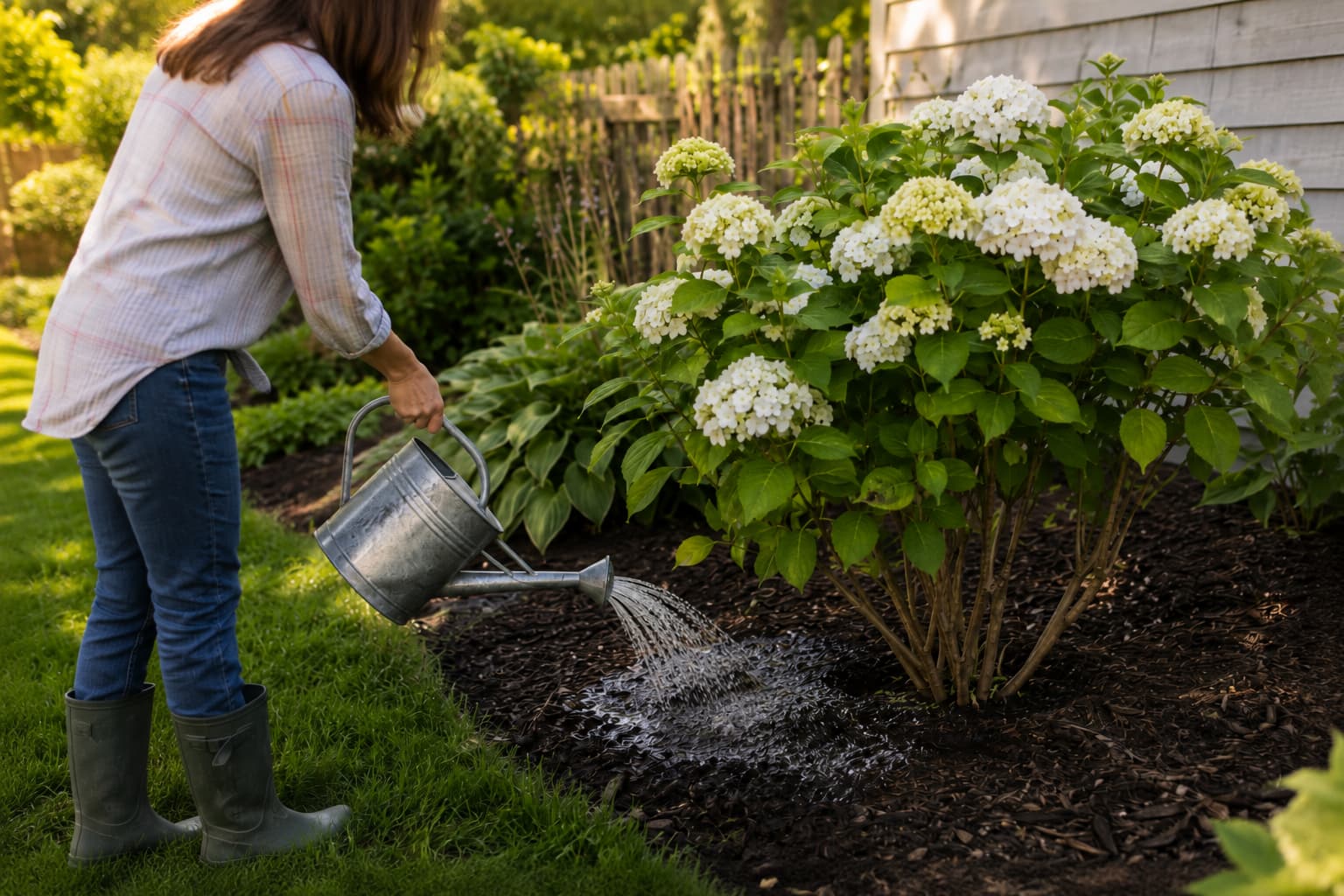
Mulch and moisture checks
Organic mulch moderates soil temperature and slows evaporation, but piling it against stems can keep the crown wet and encourage decay. Maintain a visible gap around the base. In clay soil, use the finger test or a small trowel before watering; the surface may look dry while the root zone remains wet. In sandy soil and containers, the opposite can happen and moisture may disappear quickly.
Hydrangeas in full flower can wilt temporarily on very hot afternoons even when the soil contains moisture. Check again in the cooler morning. If leaves recover overnight, the plant may be responding to heat rather than true drought. Persistent morning wilt, dry soil below the mulch, or crisp leaf margins justify a deep watering.
Warm spell followed by freeze: An unusually warm period can reduce cold hardiness and trigger early growth. A later sharp freeze may then damage buds and tender shoots, even where the overall winter was mild. Keep mulch in place until severe freeze risk has passed, and wait for spring growth before removing questionable stems.
Hydrangea Care: How to Prune Without Losing Flowers
Incorrect pruning usually causes a season without flowers; it rarely kills an otherwise healthy hydrangea. Identify the species first, then remove dead, damaged, or crossing growth with clean tools.
| Hydrangea | Flowers on | Pruning approach |
|---|---|---|
| Panicle | New wood | Prune in late winter or early spring. Reduce selectively rather than automatically cutting hard every year. |
| Smooth | New wood | Remove weak or damaged stems in late winter or early spring. Moderate pruning supports sturdier structure. |
| Bigleaf | Mostly old wood; some cultivars rebloom | Wait until growth reveals dead wood. Shape lightly after flowering and avoid cutting below healthy buds. |
| Oakleaf | Old wood | Prune lightly after flowering only when needed for shape, damage, or renewal. |
| Climbing | Older side shoots | Trim after flowering to control spread; extensive annual pruning is usually unnecessary. |
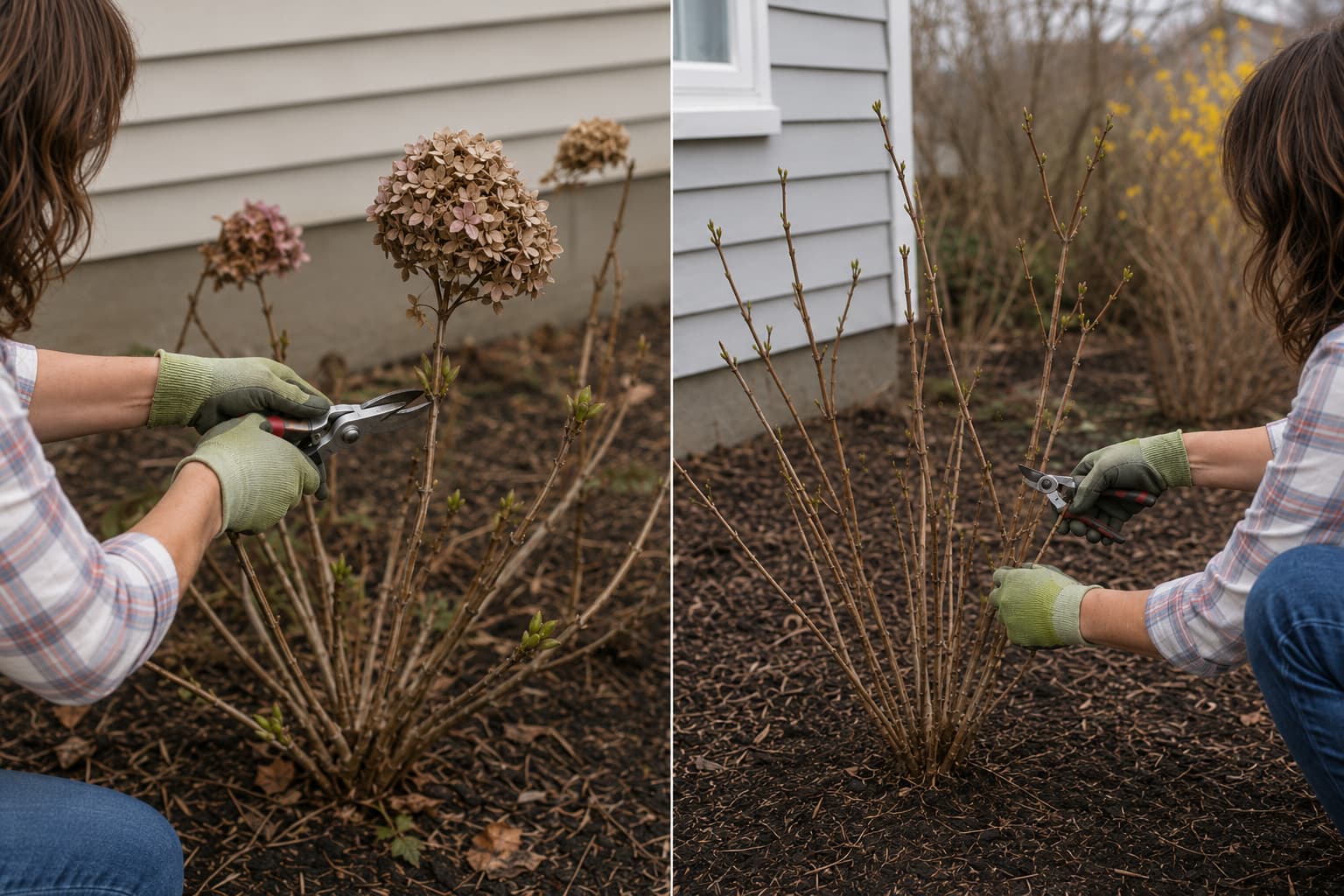
Tree-form panicle hydrangeas
A “hydrangea tree” is usually a panicle hydrangea trained on one trunk, not a separate species. Keep shoots from developing along the trunk and thin crowded branches within the head instead of shearing it into a tight ball. Young standards may need a sturdy stake until the trunk can support the canopy and wet flower heads.
When winter damage is uncertain
Do not rush to remove stems after a freeze. Scratch a very small patch of bark: green tissue suggests the stem may still be alive, but the best evidence is swelling buds and new leaves. Wait until normal spring growth is underway, then cut dead portions back to healthy tissue. This is especially important for bigleaf and oakleaf hydrangeas, where premature pruning can remove surviving flower buds.
Deadheading means removing the faded flower and only a short piece of stem. It is generally low-risk when you stop above healthy buds. Pruning removes more woody growth and must follow the species’ flowering habit.
Hydrangea Care and Flower Color: Change It Safely
Flower color changes mainly apply to suitable bigleaf and mountain hydrangea cultivars. White cultivars do not become blue or pink. Acidic soil can make aluminum more available, supporting blue flowers; less acidic conditions reduce aluminum availability and favor pink. Genetics, soil chemistry, water, and root health all influence the result.
- Blue: usually associated with acidic soil and available aluminum.
- Purple: often appears under intermediate conditions.
- Pink: usually associated with less acidic soil where aluminum is less available.
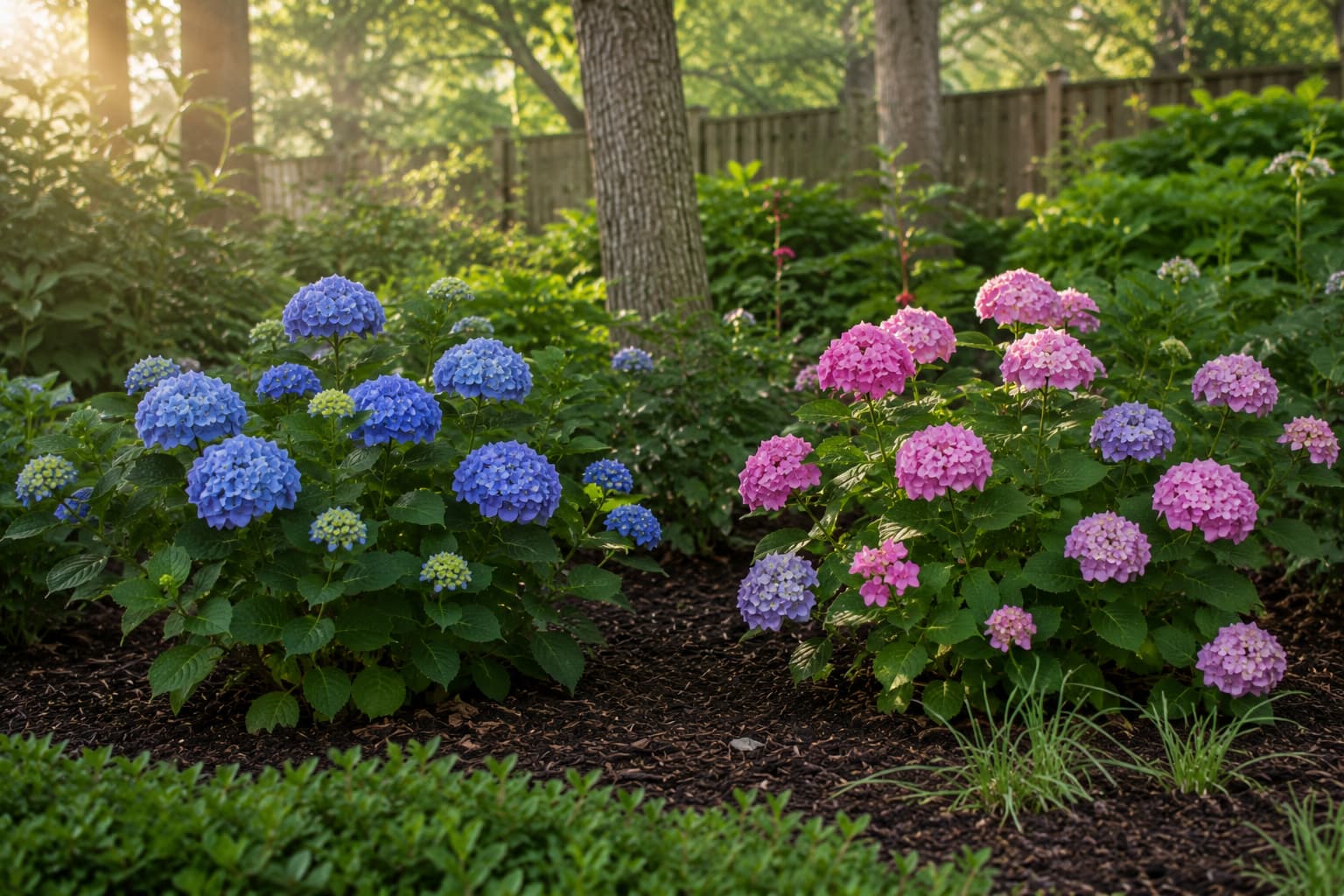
Why flowers may remain green
Green hydrangea flowers are not always a problem. Some cultivars naturally open green, mature to color, or return to antique green as the florets age. When buds stall, brown prematurely, or fail to develop normal color, review heat stress, moisture, light, and soil nutrition before adding an amendment. Excess phosphorus can reduce aluminum availability, but only a soil test can show whether that is relevant in a particular garden.
Changing pH is easier in containers because the potting mix is isolated from the surrounding soil. Even there, make gradual changes and monitor plant health. Trying to force a rapid color shift with repeated concentrated applications can injure roots and create nutrient imbalances.
Test the soil before changing it. Follow the amendment label and local soil-test recommendation because sulfur, lime, and aluminum-containing products vary in concentration and can damage roots when overapplied. Expect gradual change rather than an instant color switch.
Affiliate disclosure: Greenmuse may earn a commission from qualifying purchases, at no extra cost to you. Product links are examples rather than universal prescriptions. Always follow the product label and base soil amendments or fertilizer on a soil test whenever possible.
For gardeners who need a labeled soil-acidifying product, Espoma Soil Acidifier is one option. Coffee grounds do not provide predictable pH control or the aluminum needed for reliable blue color.
Growing Hydrangeas in Containers
When growing hydrangeas in pots, compact bigleaf, smooth, and panicle cultivars are practical choices. Use a container large enough for the mature root system, with generous drainage holes and high-quality potting mix. Containers heat and dry faster than garden soil, so check moisture frequently in summer.
In climates where the root ball may freeze solid, move the dormant pot into an unheated garage, shed, or protected cold frame. Keep the mix from becoming completely dry, but do not keep it saturated. Where moving is impossible, insulate the container and place it out of drying wind.
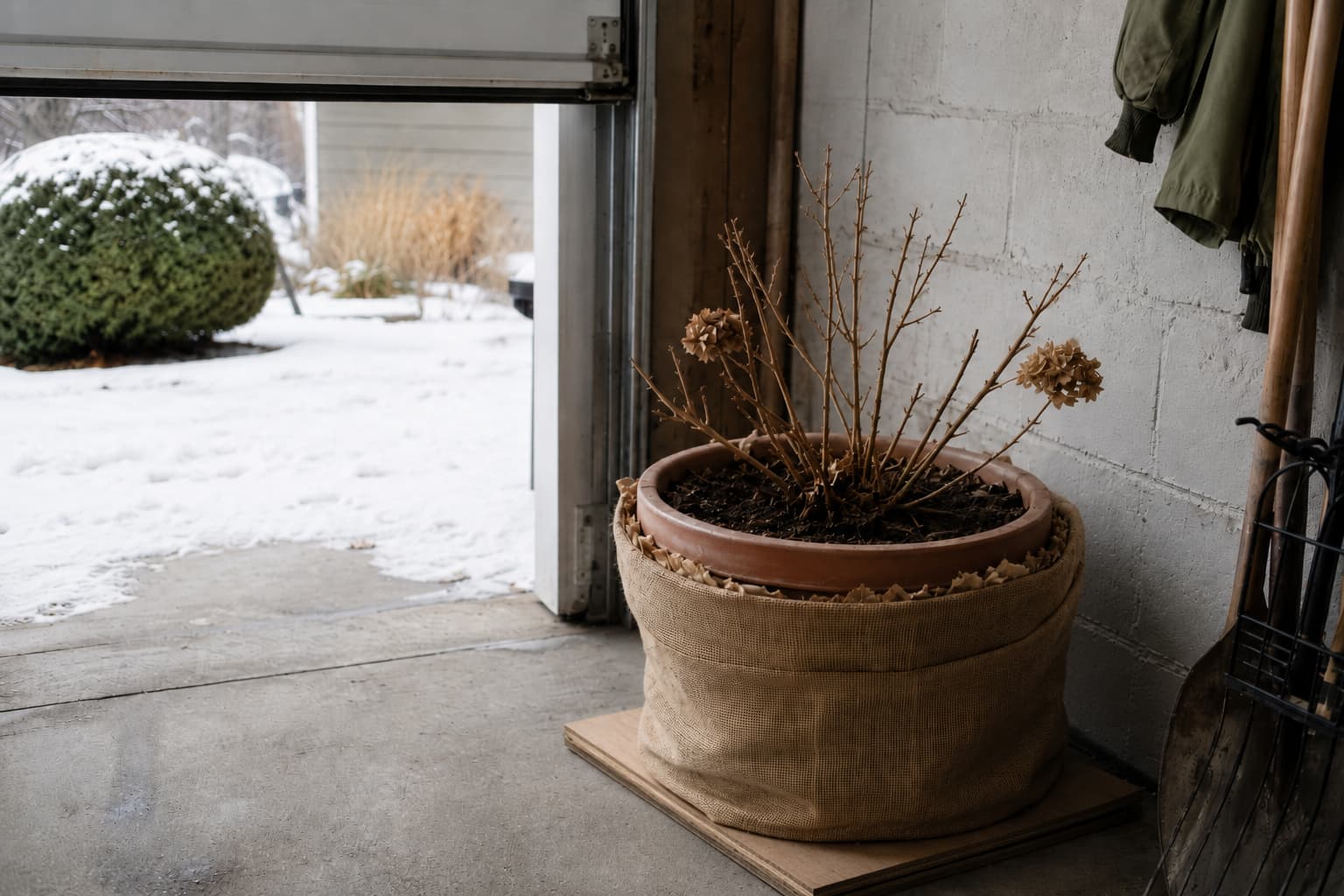
Choosing and maintaining the container
Start with a pot that gives the root ball several inches of room on all sides rather than placing a small plant immediately into an oversized, slow-drying container. Repot when roots fill the mix or watering becomes difficult. A broad, heavy pot also helps prevent a flowering shrub from tipping in wind.
Hydrangea Care Problems and Practical Fixes
| Symptom | Likely causes | First response |
|---|---|---|
| No flowers | Wrong pruning, frost-damaged buds, too much shade, excess nitrogen, or an immature plant. | Identify the species, check surviving buds, review light, and stop unnecessary feeding. |
| Yellow leaves with green veins | Iron chlorosis associated with unsuitable soil pH or impaired roots. | Test soil pH and drainage before applying iron or acidifying products. |
| Uniform pale growth | Nutrient shortage, root stress, waterlogging, or excessive fertilizer salts. | Check soil moisture, drainage, and recent fertilizer use; test soil where practical. |
| White powdery growth | Powdery mildew favored by susceptible foliage and humid conditions. | Improve airflow, avoid prolonged evening leaf wetness, remove badly affected debris, and use a labeled product only when needed. |
| Brown flower edges | Heat, dry soil, intense afternoon sun, wet blooms, or natural aging. | Check root-zone moisture and exposure before assuming disease. |
| Flopping stems | Large flower heads, weak cultivar structure, excessive nitrogen, or heavy rain. | Use discreet support, avoid overfeeding, and select stronger-stem cultivars when replacing plants. |
Separate cosmetic damage from serious decline
Leaf spots and powdery mildew can look alarming late in the season while causing limited long-term harm. Root problems are more serious: a shrub that remains wilted in wet soil, develops dark soft roots, or declines from the crown needs drainage correction rather than more irrigation or fertilizer. Remove heavily diseased fallen foliage and avoid moving contaminated soil between plants.
When symptoms appear soon after a herbicide application, lawn treatment, or nearby construction, consider chemical drift and root disturbance. Distorted new leaves, unusual twisting, and sudden injury on only one side of the plant may not fit a nutrient deficiency or fungal disease.
For hydrangea care troubleshooting, begin with the symptom pattern and growing conditions before reaching for a treatment.
Aphids often wash off with a firm stream of water. For slugs, reduce hiding places and use a labeled iron-phosphate bait such as Sluggo when appropriate. Follow the label and keep all garden products stored safely.
Hydrangea Care and Fertilizer: Use Less Guesswork
Many hydrangeas grow and flower well without routine feeding. Excess nitrogen can produce vigorous leaves at the expense of flowers and may contribute to weak stems. Start with compost and healthy soil structure, then use a soil test or visible plant need to decide whether fertilizer is warranted.
When fertilizer is needed, choose a labeled shrub fertilizer and follow the rate for plant size. Do not combine multiple products simply because each is marketed for hydrangeas. Espoma Holly-Tone is one example of an acid-forming fertilizer, but it should still be used according to the label and existing soil conditions.
Hydrangea Growing Guide: Propagating from Cuttings and Layering
This part of the hydrangea growing guide focuses on two simple propagation methods. Early summer stem cuttings are a practical way to multiply a healthy plant. Choose a nonflowering shoot, work with clean tools, and avoid claiming a fixed success rate because cultivar, temperature, sanitation, humidity, and aftercare all affect rooting.
- Cut a healthy 4–6 inch nonflowering shoot just below a node.
- Remove the lowest leaves and retain a small upper leaf area.
- Insert the cutting into moist, clean propagation mix; rooting hormone is optional.
- Maintain humidity without sealing the foliage in excessive heat.
- Keep it in bright indirect light and the mix evenly moist, not saturated.
- Begin acclimating after new roots and growth are evident.
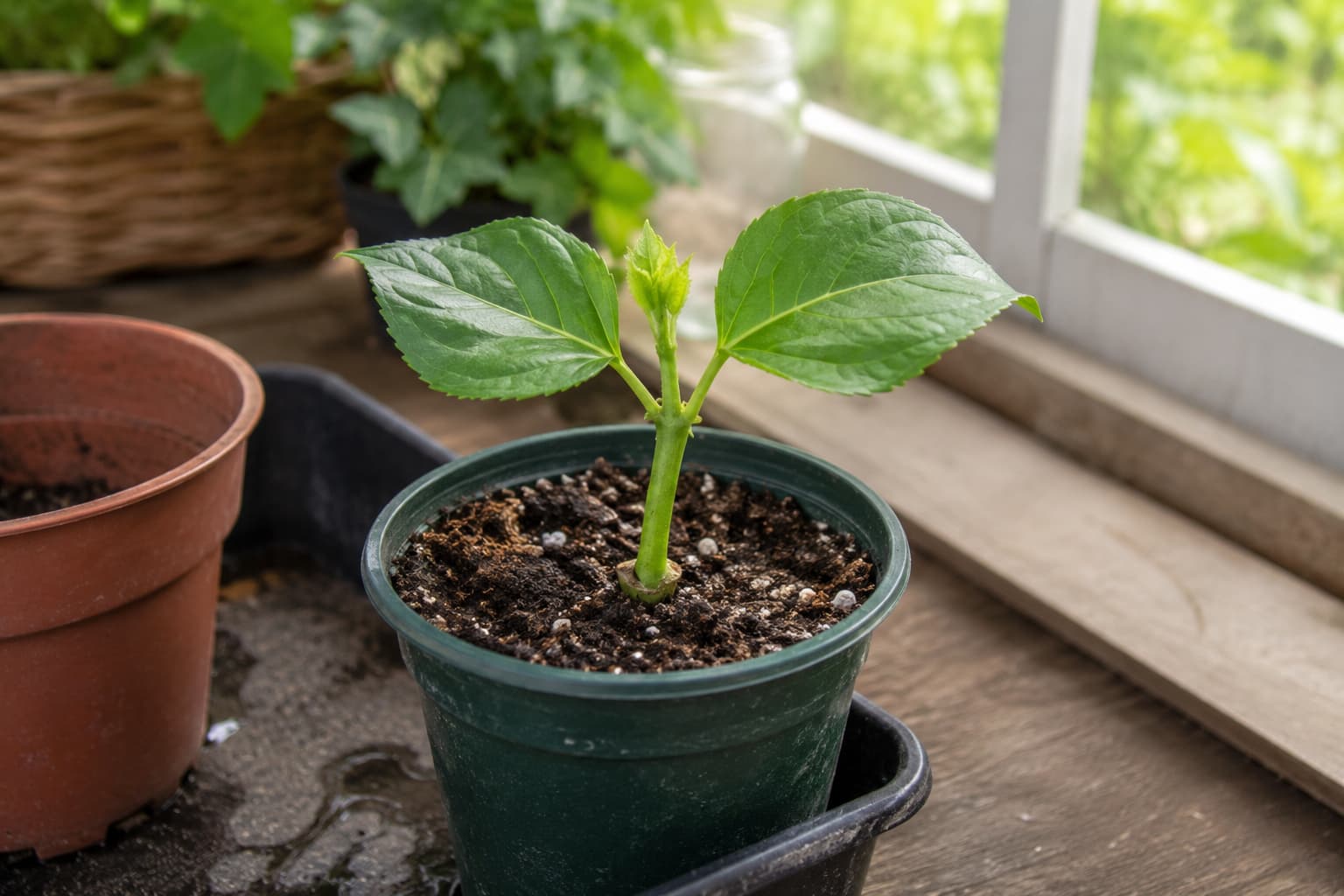
After roots form
Do not judge rooting by the calendar alone. A gentle resistance test and new growth are better signs than elapsed weeks. Once rooted, open the humidity cover gradually over several days so the cutting adapts to normal air. Grow it in a protected container until the root system holds the potting mix together, then transplant without burying the crown.
Ground layering is even simpler: bend a flexible lower stem to the soil, lightly wound the contact point, pin it down, and cover that section while leaving the tip exposed. It often roots reliably when the buried area remains moist, but success is never guaranteed.
Hydrangea Care FAQ
01Can hydrangeas grow in full shade?
Most will survive in deep shade but flower poorly. Shrubby hydrangeas generally perform best in light shade or with several hours of morning sun. Panicle hydrangeas tolerate more sun than most other common types when the soil stays moist.
02How big do hydrangeas get?
Mature size depends on species and cultivar. Compact selections may stay near 2–4 feet, while large panicle hydrangeas can exceed 8 feet. Always use the plant label’s mature height and width when planning spacing.
03When is the best time to transplant a hydrangea?
Move hydrangeas in early spring before active growth or in autumn with enough time for roots to establish before the ground freezes. Replant at the same depth and keep the root zone consistently moist during the first season.
04Do hydrangeas attract bees and butterflies?
Yes, but pollinator value varies. Lacecap and panicle hydrangeas expose more fertile flowers, while many mopheads contain a larger proportion of showy sterile florets.
05Can I grow hydrangeas in containers?
Yes. Choose a compact cultivar, use a large container with drainage holes, and expect the mix to dry faster than garden soil. In cold climates, move the dormant pot to a sheltered unheated space or insulate it thoroughly.
06Why are my hydrangea flowers turning brown at the edges?
Common causes include heat, dry soil, intense afternoon sun, natural aging, or prolonged wetness on the blooms. Check soil moisture first, then evaluate exposure and watering technique.
07Do coffee grounds turn hydrangeas blue?
Not reliably. Blue color requires a suitable bigleaf cultivar, acidic conditions, and available aluminum. A soil test and a labeled hydrangea colorant or soil amendment are more dependable than kitchen scraps.
08Why did my hydrangea suffer after a mild winter?
A warm spell can reduce cold hardiness and trigger early growth. A later sharp freeze may then damage buds and tender shoots. Keep mulch in place until severe freeze risk has passed and wait for spring growth before removing questionable stems.
09What is the difference between deadheading and pruning?
Deadheading removes the faded flower and only a short section of stem. Pruning removes more woody growth to shape or renew the shrub. On old-wood bloomers, avoid cutting below healthy buds unless the stem is dead.
10How long do hydrangeas live?
Hydrangeas can remain productive for decades when grown in suitable soil, moisture, and light. Longevity varies with species, climate, drainage, and maintenance, so fixed lifespan claims are not very useful.
Hydrangea Care: Final Thoughts
Hydrangea care becomes much easier once you stop treating every plant as the same shrub. Match the species and cultivar to your climate, provide light shade or suitable sun, maintain even moisture without waterlogging, and prune according to where the flower buds form.
The first season is mainly about root establishment. After that, restraint often produces better results than constant intervention: water when needed, mulch consistently, test soil before amending it, and wait for spring growth before deciding a stem is dead.
References
- Royal Horticultural Society — Growing shrubby hydrangeas
- Royal Horticultural Society — Hydrangea pruning guide
- University of Minnesota Extension — Pruning hydrangeas for best bloom
- Clemson Cooperative Extension — Hydrangea care
- Penn State Extension — Hydrangea diseases
- Proven Winners — Incrediball Storm Proof
- First Editions — FlowerFull smooth hydrangea