Succulents Made Simple: 7 Best Varieties for Beginners (And 3 That Often Struggle Indoors)
Here's what nobody tells you about succulents: most of the ones sold in garden centers are not beginner plants. For example, those beautiful rosette arrangements in decorative bowls may have been grown under controlled greenhouse conditions before spending time in retail displays. As a result, a plant can react quickly when it moves to a home with weaker light or slower soil dry-down.
Even so, I've killed more succulents than any other plant type—including a $28 aeonium that lasted 11 days on my kitchen counter in 2023. That failure sent me down a rabbit hole of figuring out which succulents actually cope well with ordinary home conditions. Over time, the biggest lesson became clear: the variety matters as much as the care routine. For instance, a Zebra Haworthia can tolerate more beginner mistakes. A Lithops may be much less forgiving.
What This Beginner Guide Covers
In this guide, you'll find 7 beginner-friendly succulents, 3 popular types that often struggle indoors, and a matching system for your specific windowsill conditions. In addition, for deep-dive care on the most popular succulent genus, see our Echeveria Care Guide.
The Light-Matching Rule: Why Most Succulents Fail
Before choosing a variety, start with the rule that matters most: match the plant to your light, not the other way around.
For practical indoor growing, it helps to think about succulent light needs in three broad groups:
| Light Category | Hours of Direct Sun | Windowsill Equivalent | Succulents in This Category |
|---|---|---|---|
| Full desert sun | 6–8+ hours | South-facing, unobstructed, no sheer curtains | Echeveria, Aeonium, Sedum, Sempervivum |
| Bright but filtered | 4–6 hours | East- or west-facing; south with sheer curtain | Haworthia, Gasteria, Faucaria |
| Low light tolerant | 2–4 hours | North-facing; bright room but no direct sun on leaves | Sansevieria, Zamioculcas (not technically succulent but often grouped), Gasteraloe |
Drag the bar below or swipe horizontally to view the remaining columns.
7 Best Succulents for Beginners (Ranked by Forgiveness)
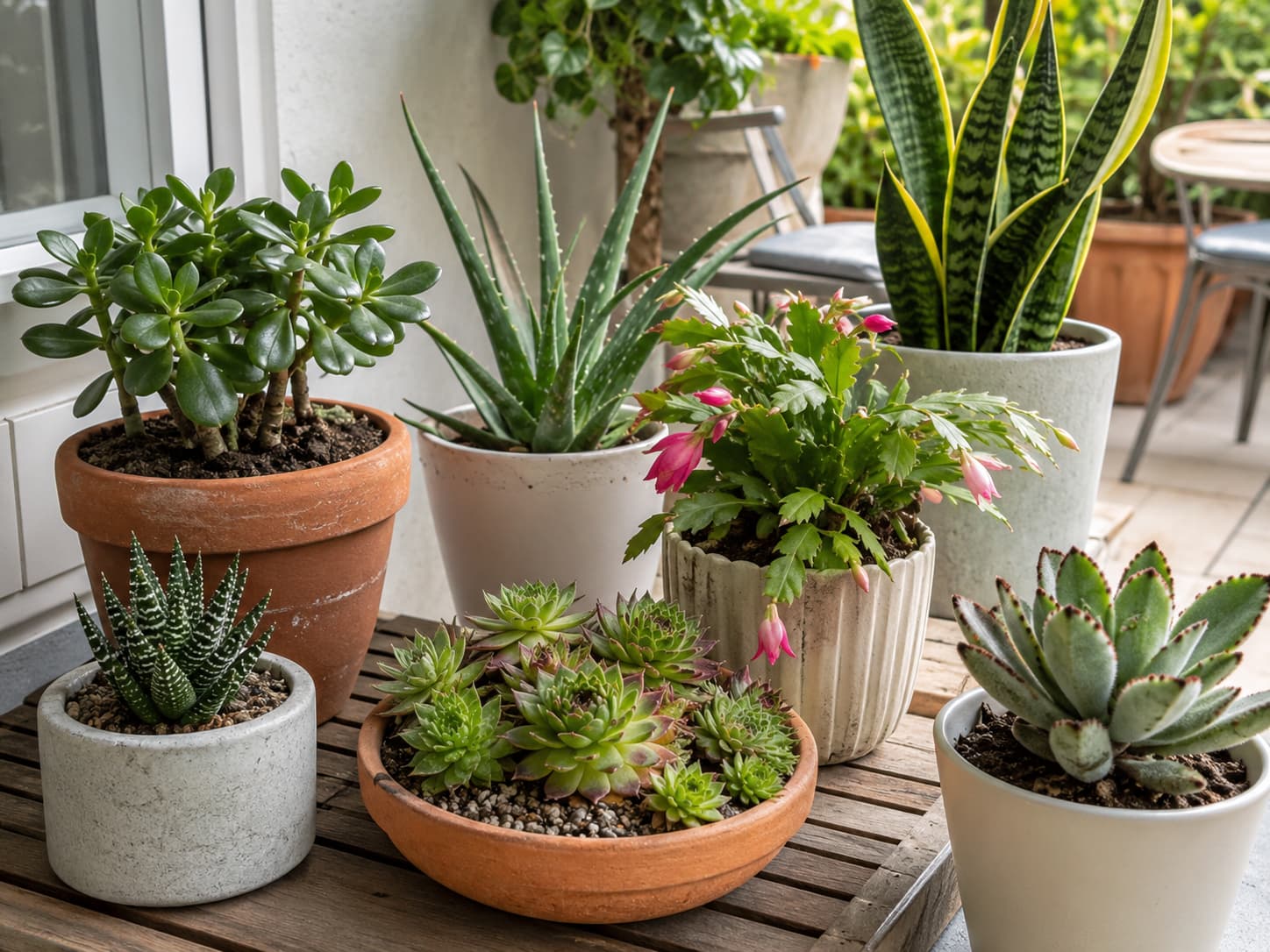
Overall, these seven varieties share three useful traits: they tolerate some inconsistency, adapt to a range of realistic conditions, and often show visible stress before the plant is beyond recovery.
1. Zebra Haworthia (Haworthiopsis attenuata)
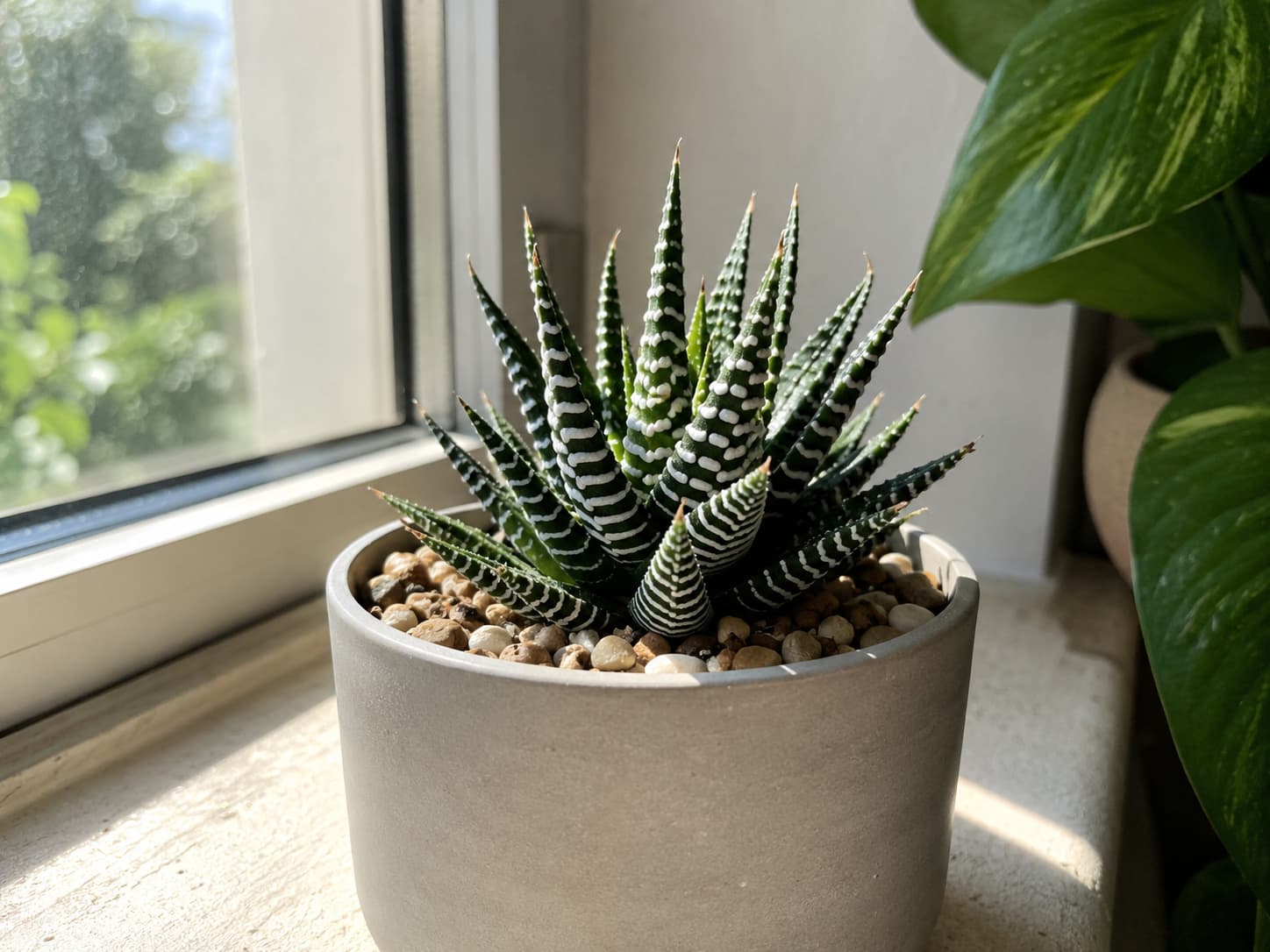
One of the easiest beginner succulents.
To begin with, Zebra Haworthia forms a small, compact rosette with white horizontal stripes on dark green leaves. Because it naturally grows in brighter filtered conditions rather than exposed desert sun, it generally tolerates less direct light than many succulents, making an east-facing window a practical starting point.
3 rules for Haworthia:
- Water every 2–3 weeks in summer, once a month in winter. The leaves store water; the plant will tell you it's thirsty by feeling slightly soft and flexible. Firm leaves = no water needed.
- East or west window is ideal. Avoid intense south-facing sun, which turns the leaves reddish-brown (stress coloring—survivable but not attractive).
- Don't repot often. Haworthias prefer being slightly rootbound. Repot only when the plant is visibly bursting out of its container (every 2–3 years).
In my experience, my Zebra Haworthia has survived two moves, a week without water during a vacation, and being knocked off a shelf by my cat. It's currently 3 years old and producing pups (baby offsets) around its base that I've separated and given to four different friends. So far, all four are still alive.
2. Snake Plant (Sansevieria trifasciata)
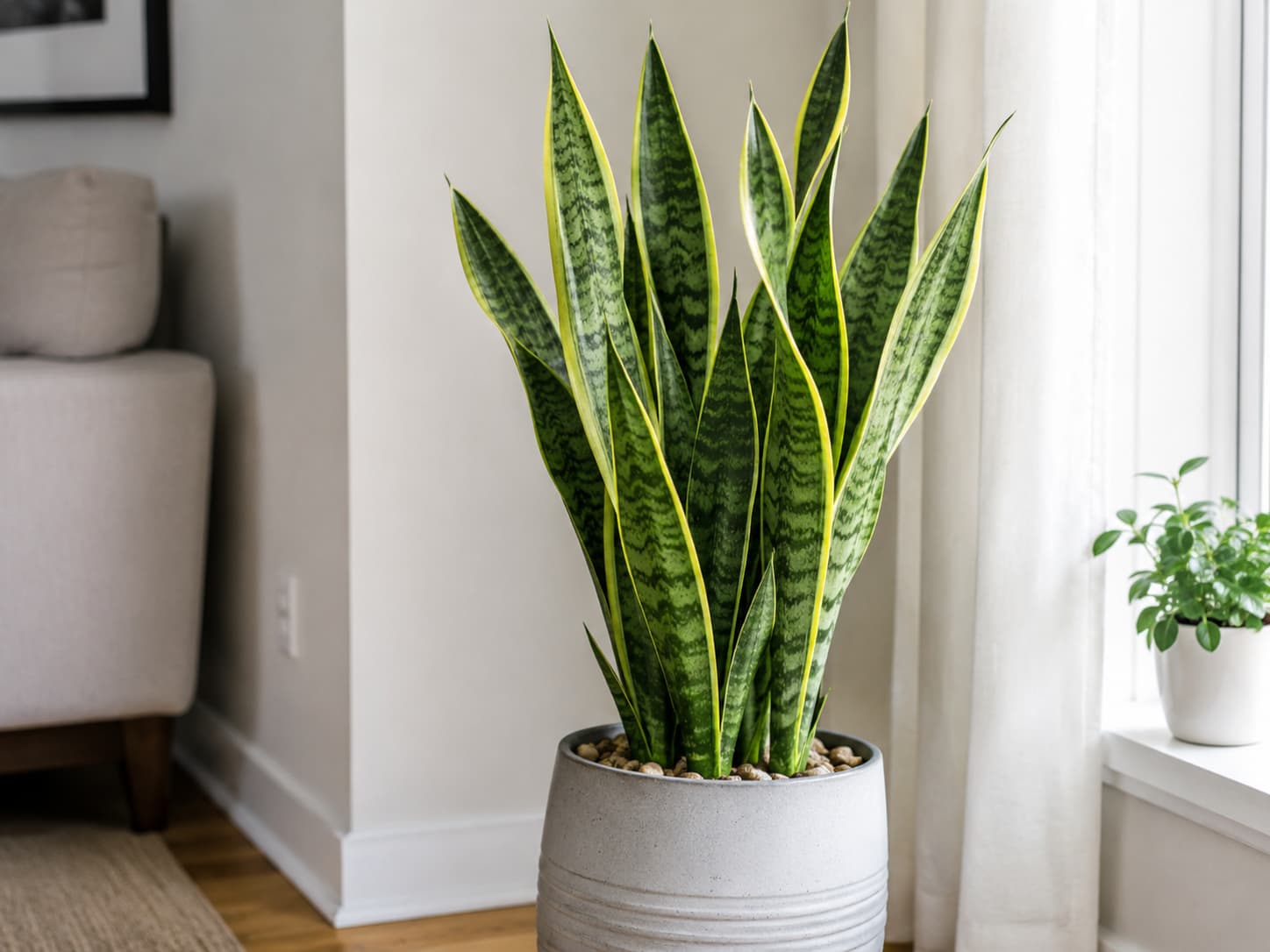
The extremely forgiving one.
Strictly speaking, snake plant is not a classic rosette succulent, but its thick water-storing foliage means it is often grouped with drought-tolerant houseplants. Visually, it stands apart with tall, stiff, sword-shaped leaves. For example, the variety 'Laurentii' has yellow edges, while 'Zeylanica' is pure green.
3 rules for Snake Plant:
- Water every 3–4 weeks in summer; every 5–6 weeks in winter. Overwatering is the only way to kill it—the leaves turn mushy at the base and smell terrible. If in doubt, wait another week.
- Any light except deep shade. Snake plants survive in north-facing windows (slow growth) and thrive in south-facing ones. They're one of very few plants that adapt to almost any light condition.
- Never let water sit in the leaf rosette. The center of the leaves forms a cup that collects water and causes crown rot. Always water at the soil level.
For comparison, I've had a 'Laurentii' in my north-facing bathroom for two years. It gets zero direct sun and ambient humidity from showers. Although growth is slow, it has produced several healthy new leaves. It's the only "succulent" I'd recommend for a room with no windows.
3. Jade Plant (Crassula ovata)
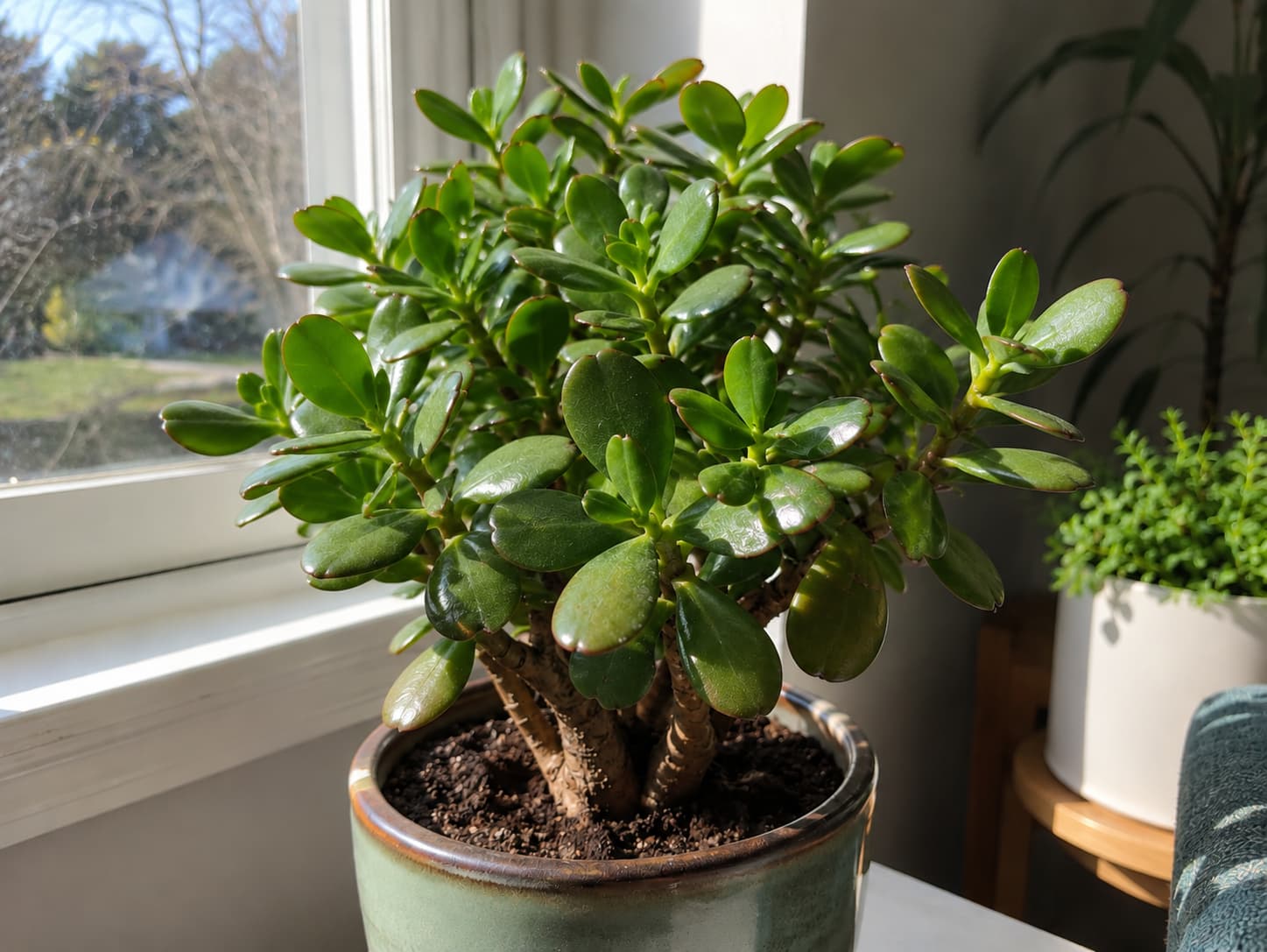
The one that becomes a family heirloom.
By contrast, jade develops thick, woody stems with oval glossy leaves. Moreover, jade plants can remain in cultivation for many years when conditions suit them. With time, older plants can develop a small tree-like silhouette in containers.
3 rules for Jade:
- South-facing window. Jades need strong light to maintain compact growth and develop the red leaf edges that indicate health. In low light, they stretch and drop lower leaves.
- Water every 2–3 weeks in summer; once a month in winter when growth slows. Wrinkled, soft leaves = thirsty. Plump, firm leaves = wait.
- Rotate monthly to prevent lopsided growth. Jades lean hard toward light, and a top-heavy plant in a small pot will literally tip over.
For context, my jade plant started as a small farmers' market cutting in 2024. It's now 14 inches tall with a trunk as thick as my thumb, living in a south window. I water it every 2 weeks from April through September and once a month from October through March. So far, it has remained healthy.
4. Aloe Vera (Aloe barbadensis miller)
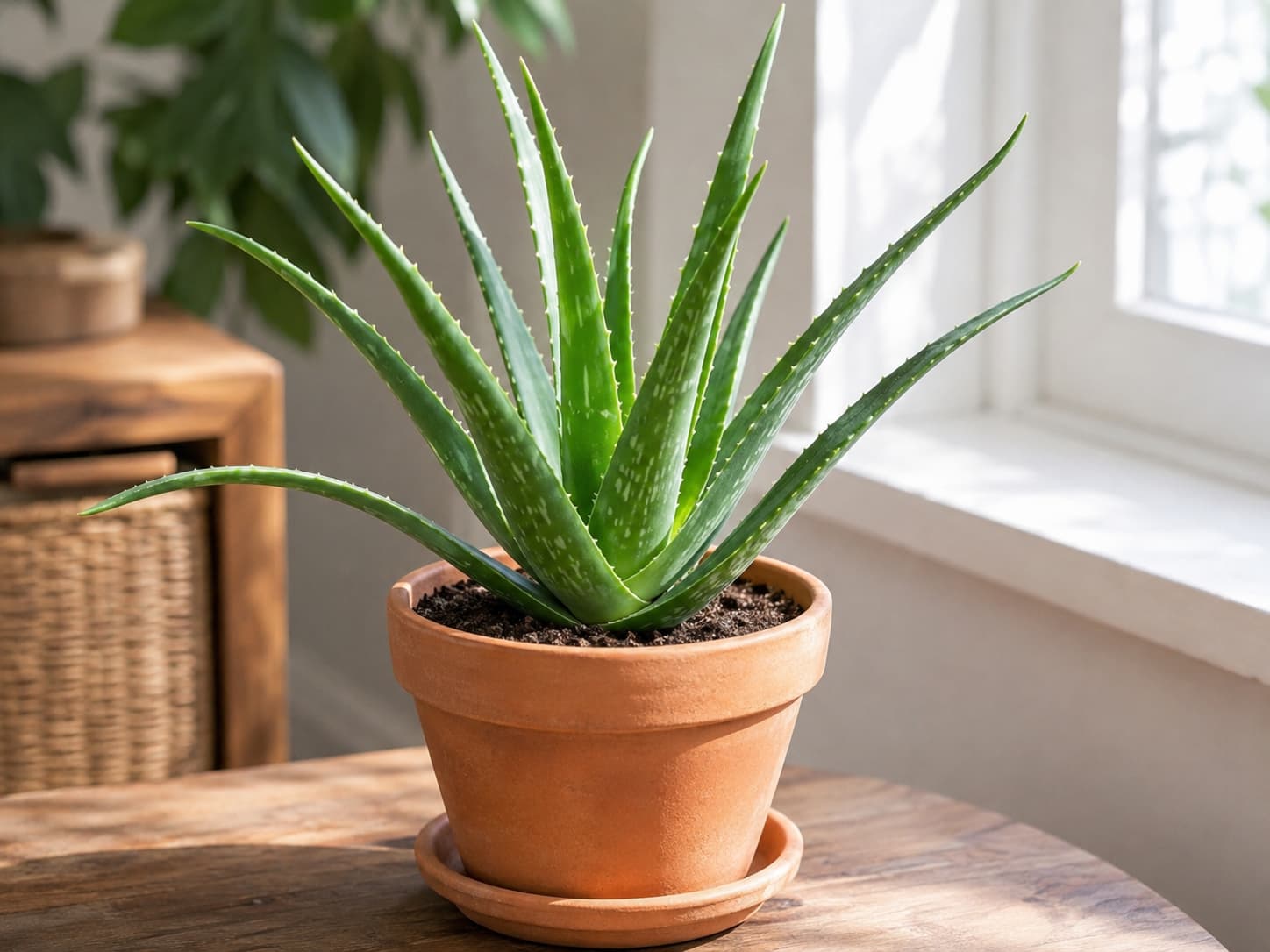
The practical one—first aid + houseplant.
Of course, aloe is widely known for the gel inside its leaves. As a houseplant, however, its main advantage is a clear, sturdy growth habit: thick, fleshy leaves arranged in a rosette, producing pups freely. If problems appear, see our complete guide to fixing a dying aloe vera.
3 rules for Aloe:
- Bright light but protect from midday sun. Aloe comes from the Arabian Peninsula where it grows under the partial shade of rocks and shrubs. However, harsh direct sun through glass can scorch leaves, especially when the plant has not been acclimated. East or west window is ideal.
- Water every 2–3 weeks in summer; once a month in winter. Therefore, avoid keeping aloe roots in persistently wet soil. Use terracotta pots (they breathe) with drainage holes.
- Harvest outer leaves for gel. Cut a mature outer leaf at the base, slice it open, and apply the gel directly to burns, scrapes, or insect bites. The plant will regrow from the center.
5. Christmas Cactus (Schlumbergera × buckleyi)
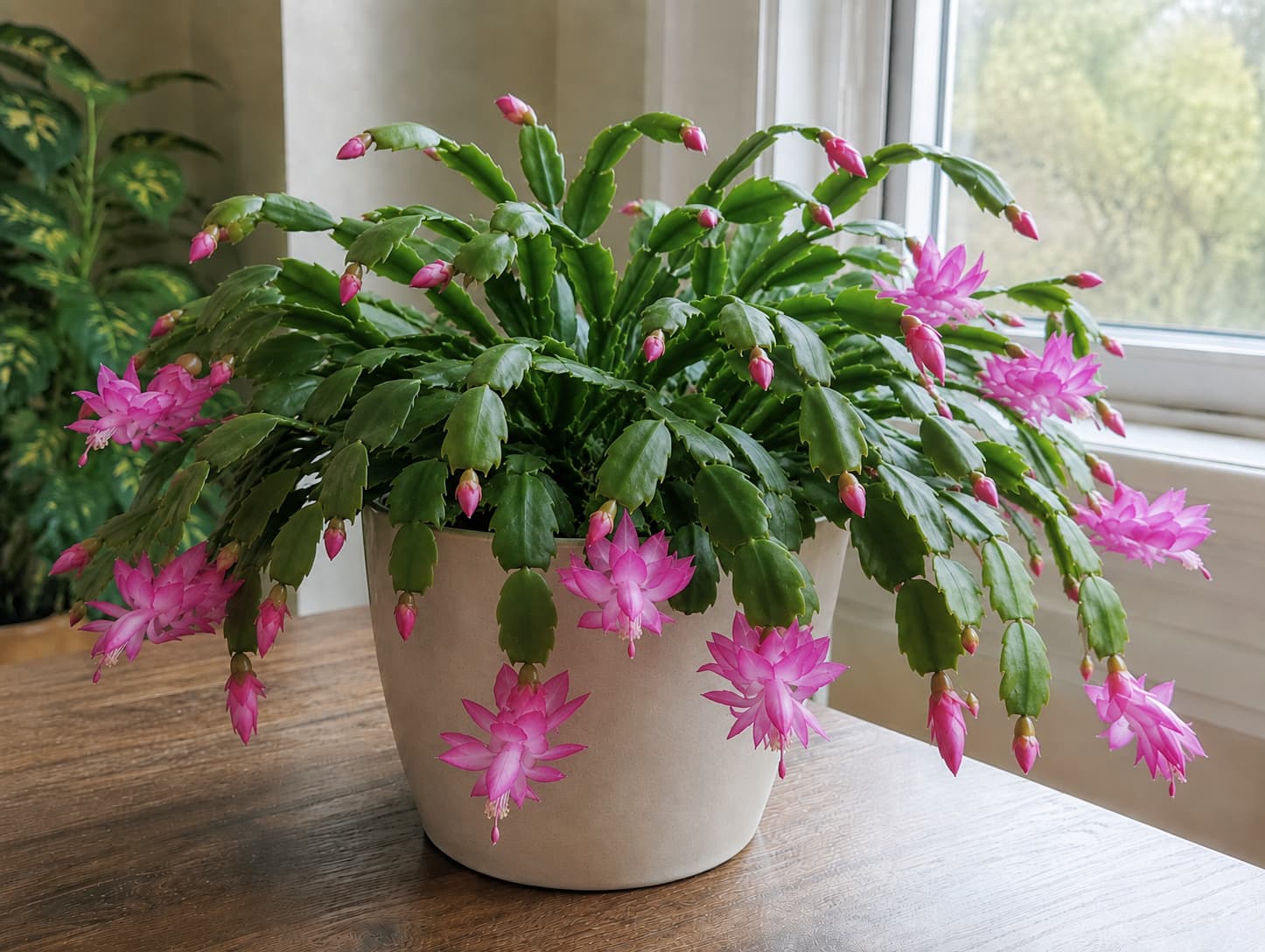
The rule-breaking succulent.
Most desert succulents prefer a drier root zone. Christmas cactus, however, needs a different routine with brighter filtered light and more even moisture. In fact, it is an epiphytic cactus from Brazilian forests rather than an exposed desert plant. Even so, its segmented stems still store water, so the plant should not remain constantly wet.
3 rules for Christmas Cactus:
- Bright indirect light. Avoid harsh, prolonged direct sun, which can stress or scorch the segments. An east window with morning light is perfect.
- Water when the top inch of soil is dry—more frequently than desert succulents, roughly every 7–10 days in summer. Avoid letting the mix stay bone-dry for long periods.
- To trigger blooming: Give it 12–14 hours of complete darkness per night for 6 weeks starting in October (put it in a closet or cover with a box from 6 PM to 8 AM). This mimics the short-day trigger that tells the plant to set buds. Blooms appear in December and last 4–6 weeks.
In my home, my Christmas cactus has bloomed in several consecutive winters. It sits on a north-east windowsill in my kitchen, gets watered roughly once a week, and gets the dark treatment from mid-October. As a result, its winter flowers add welcome color during the darkest part of the year.
6. Panda Plant (Kalanchoe tomentosa)
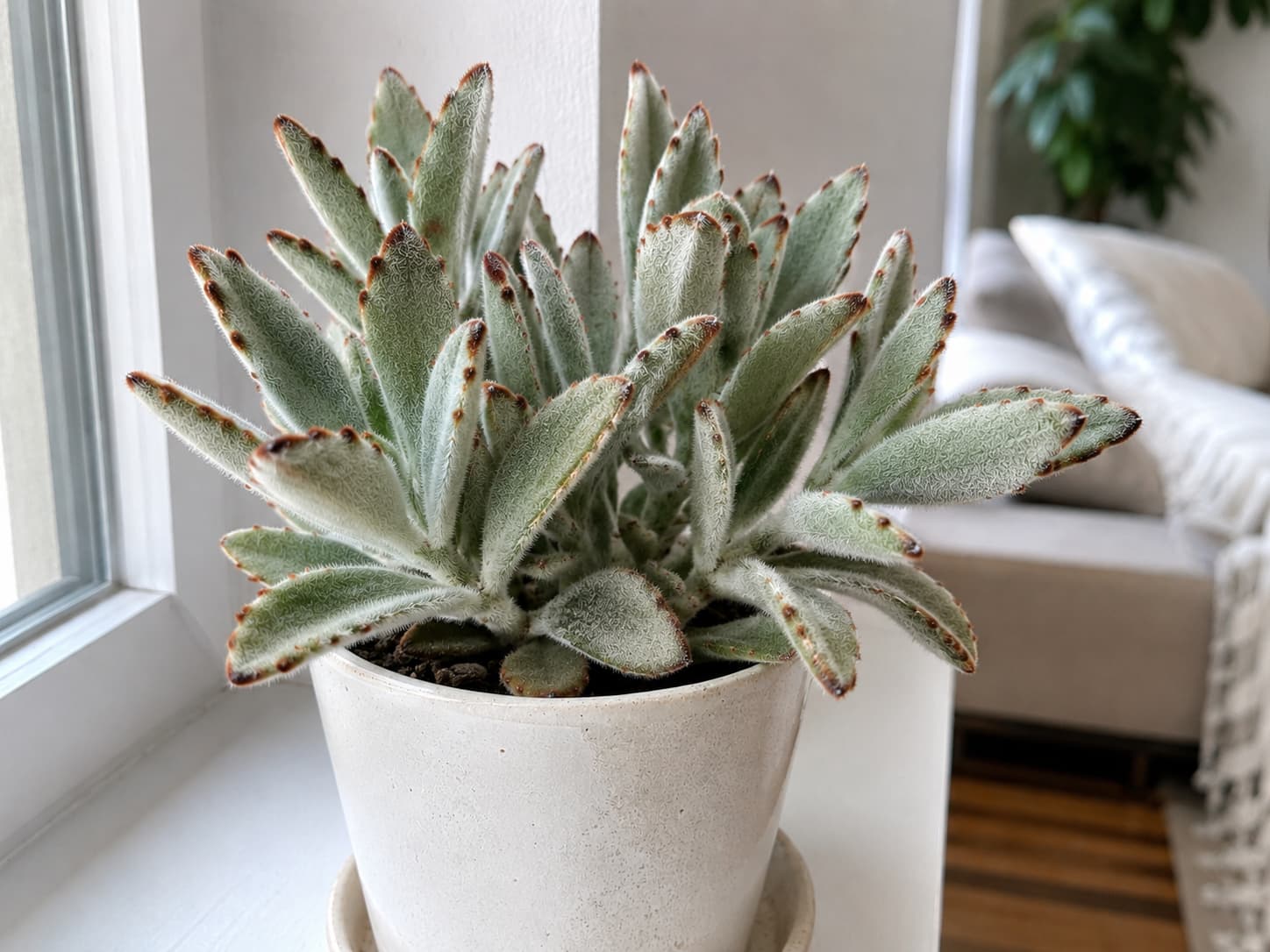
The fuzzy one—kids love it.
Visually, panda plant is easy to recognize by its oval leaves covered in dense pale fuzz with darker markings near the edges. Because of that texture, it tends to draw attention on a plant shelf. In addition, it adapts reasonably well to bright indoor conditions.
3 rules for Panda Plant:
- South or west window. Needs strong light to maintain the fuzzy coating (etiolated panda plants lose their fuzz and look bald—unattractive and stressed).
- Water every 2–3 weeks. Don't get water on the fuzzy leaves—it doesn't absorb through them, and trapped moisture causes leaf spots and rot. Always water at the soil level.
- Don't mist it. Unlike what some care guides suggest, panda plants hate humidity on their leaves. Therefore, keep the foliage dry rather than misting it. Keep the leaves dry.
7. Hens and Chicks (Sempervivum tectorum)
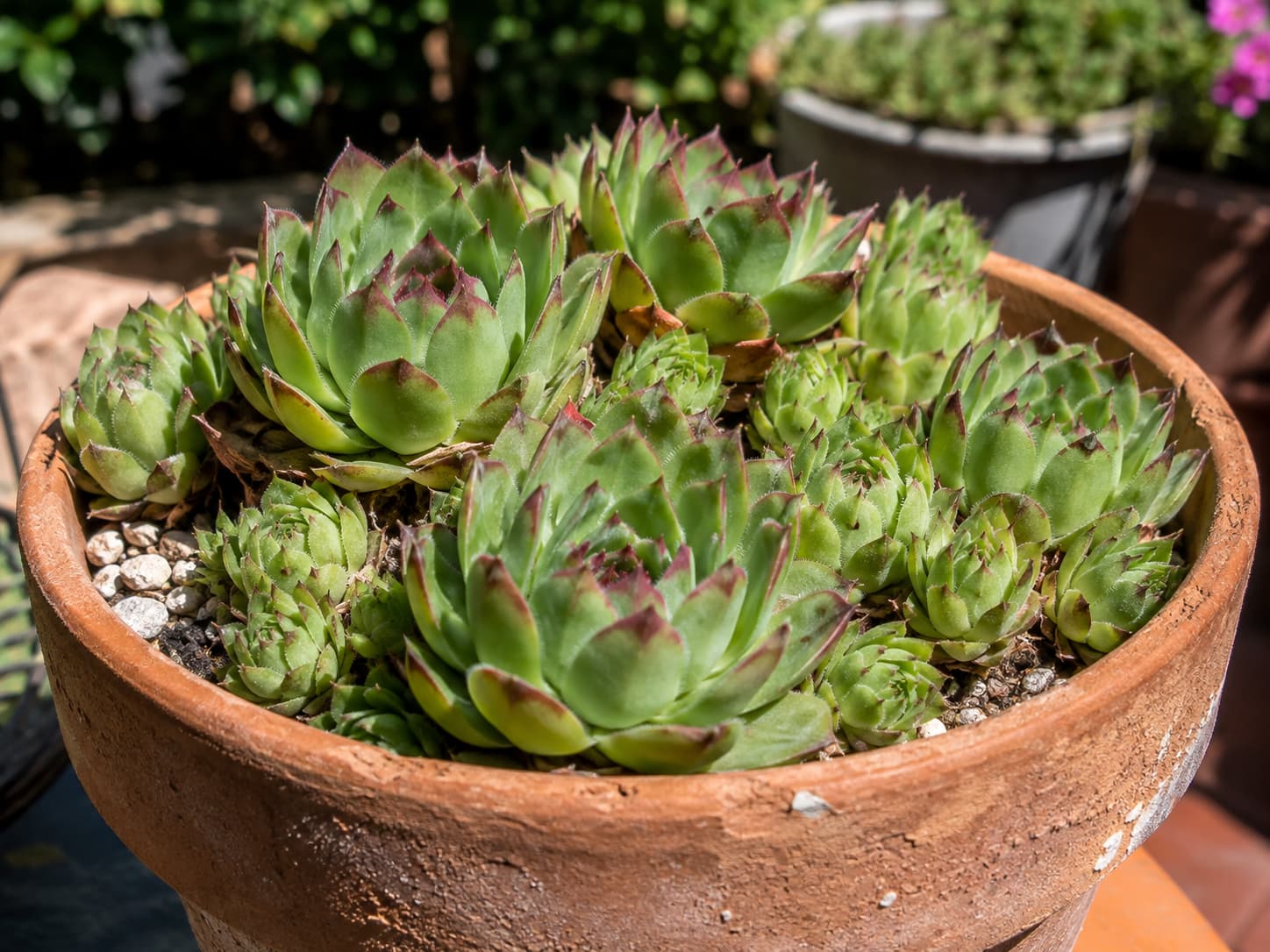
The outdoor champion.
There is one important caveat: Sempervivum is usually a better outdoor choice than an indoor one. Because it benefits from strong outdoor light and a natural seasonal cycle, it often performs poorly as a long-term houseplant. On the other hand, a sunny balcony, patio, trough, or rock garden can suit hardy Sempervivum very well.
3 rules for Sempervivum:
- Full sun outdoors. At least 6 hours. Indoors, it stretches into a sad rosette on a stalk. Put it on a balcony in an unglazed terracotta pot.
- Water according to how quickly the outdoor pot dries (more often than indoor succulents because wind and sun dry pots faster). In winter, reduce watering sharply and avoid keeping dormant plants wet.
- Separate the "chicks" (offsets) when they're 1–2 inches across. Afterward, each established offset can grow independently. A single plant produces 3–6 chicks per year—free plants. For more propagation ideas, see our leaf propagation guide.
3 Popular Succulents That Often Struggle Indoors (And Why)
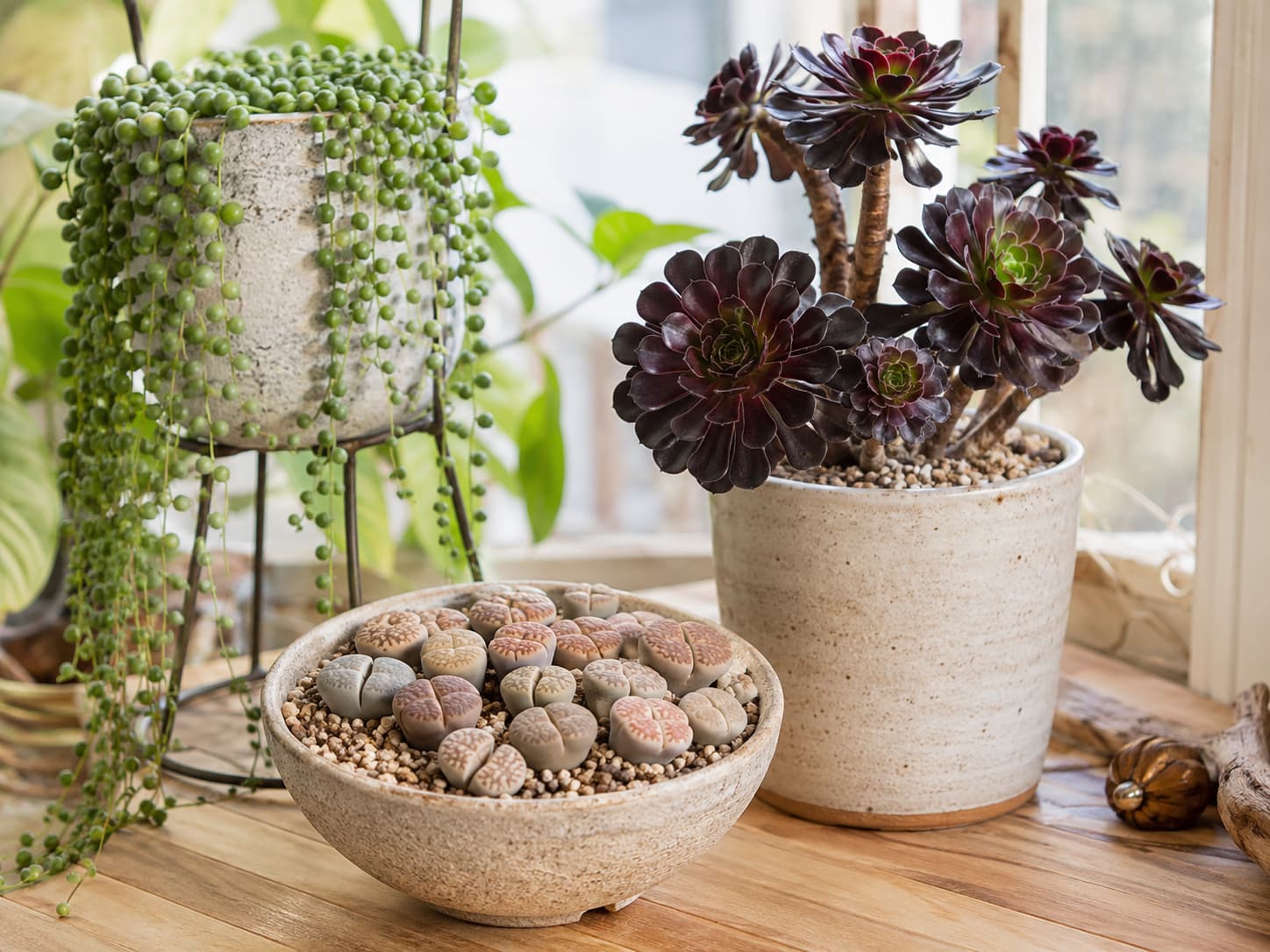
Despite their popularity, these three show up everywhere—in grocery stores, social feeds, and garden-center displays. They are beautiful. However, they can be much less forgiving indoors than the seven plants above.
Why These Three Need More Precision
Importantly, the problem is not that these plants are impossible. Rather, they punish mismatched light, watering, or seasonal care much faster than the beginner-friendly picks above.
1. Lithops ("Living Stones")
Why they die: Lithops have a bizarre watering cycle tied to their native Namibian desert. They grow in summer, shed their old leaves and grow new ones in fall, flower in winter, and go completely dormant in spring. Watering during the wrong phase kills them. As a result, generic year-round watering advice can be especially risky for Lithops.
Who should grow them: Experienced succulent collectors who track seasonal watering schedules meticulously. For beginners, however, there are easier choices.
2. Aeonium
Why they die: Aeoniums are winter-growers from the Canary Islands. They're summer-dormant—meaning they shut down and look terrible during the exact months you're most excited about your garden. Consequently, beginners may mistake seasonal leaf loss for thirst and add water when the plant is not actively using it. In addition, their active season does not line up neatly with generic summer-growing succulent advice.
Who should grow them: Gardeners in mild-winter climates (Zones 9–11) who can grow them outdoors year-round. Therefore, indoor growers in cold climates may find easier options elsewhere.
3. String of Pearls (Senecio rowleyanus)
Why they die: The spherical "pearls" are actually individual water-storage modules with tiny surface area and shallow roots. However, their shallow root system can dry quickly while the crown still remains vulnerable to rot after heavy watering. They need very specific conditions: bright indirect light, consistent but light moisture, and excellent airflow around the dangling stems. In practice, many homes do not provide all of those conditions consistently.
Who should grow them: Gardeners with a bright bathroom window (humidity + light) or a greenhouse. Alternatively, if String of Pearls repeatedly struggles, consider String of Bananas (Senecio radicans)—same look, much more forgiving.
The Quick-Match Table: Which Succulent for Your Windowsill?
| Your Window | Best Pick | Runner-Up | Avoid |
|---|---|---|---|
| South-facing, no obstruction | Jade Plant | Panda Plant | Christmas Cactus (too much direct sun) |
| South-facing, with sheer curtain | Aloe Vera | Echeveria (see care guide) | Lithops |
| East-facing | Zebra Haworthia | Christmas Cactus | String of Pearls |
| West-facing | Aloe Vera | Jade Plant | Christmas Cactus |
| North-facing | Snake Plant | Zebra Haworthia (survivable, not ideal) | Everything else |
| Balcony/patio (outdoor) | Hens and Chicks | Cactus varieties (see cactus care guide) | Aeonium (unless Zone 9+) |
Drag the bar below or swipe horizontally to view the remaining columns.
One Watering Rule That Works for All 7
Each variety above dries at a different rate. Nevertheless, the most useful shared principle is to water thoroughly and then wait for the root zone to dry to the degree that species prefers.
- Wait until the soil is completely dry (test with your finger or a bamboo skewer pushed to the bottom of the pot).
- Water thoroughly until it runs from the drainage holes.
- Empty the saucer 30 minutes later. Never let the pot sit in drained water.
- Don't water again until the soil is completely dry.
The most common mistake is watering on a calendar rather than checking the potting mix. For example, soil often dries more slowly in winter, while a warmer, brighter window can speed dry-down. By comparison, a cooler north-facing position may stay moist for longer. In short, check the soil and the plant rather than the calendar.
As a simple test in August 2024, I compared two identical Haworthias: one watered every 2 weeks on schedule and one watered only when the soil was fully dry. In that setup, the scheduled one developed root problems after 6 weeks (the soil wasn't drying fast enough in its north window). The "wait for dry" plant is still thriving two years later. Same plant, same window, different watering philosophy.
Soil and Pots: The 2 Things That Must Be Right
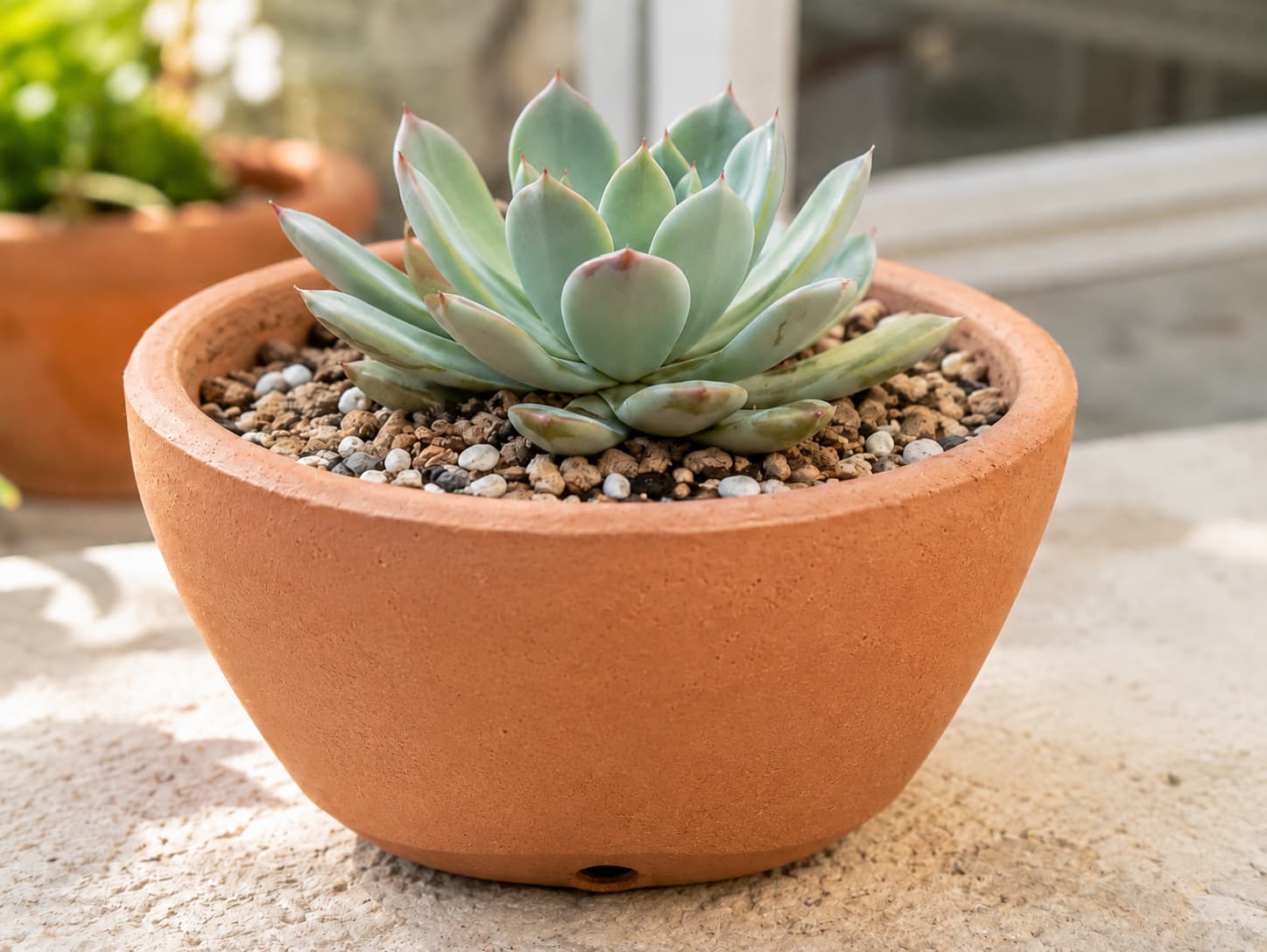
Next, soil and container choice determine how quickly water leaves the root zone.
Soil: Gritty Beats Rich
For many succulents, a dense standard potting mix can stay wet for too long. You need a gritty, fast-draining mix. For beginners, there are two simple options:
- Buy pre-mixed: Miracle-Gro Cactus, Palm & Citrus Mix ($7/8 qt bag at Home Depot) works out of the bag. It's not perfect (still holds a bit more moisture than ideal) but it's good enough for beginners.
- DIY mix (better, cheaper in bulk): 50% standard potting soil + 50% perlite or pumice by volume. In addition, a bag of perlite or pumice can be blended into a suitable potting mix to improve air space.
Never use: garden soil (compacts), sand from the beach (contains salt), or soil labeled "moisture-control" (the opposite of what succulents need).
Pots: Terracotta Wins
For beginners, unglazed terracotta is often the easiest pot material because its porous walls can help the mix dry faster. By contrast, glazed ceramic and plastic lose less moisture through the pot wall, so watering technique and drainage become even more important.
| Pot Material | Moisture Control | Weight | Price | Verdict |
|---|---|---|---|---|
| Unglazed terracotta | Excellent (breathes) | Medium | $2–6 for 4–6″ | Best choice |
| Glazed ceramic | Poor (traps moisture) | Heavy | $5–15 | Pretty but risky for beginners |
| Plastic | Poor (traps moisture) | Light | $1–3 | Only for drought-tolerant types (snake plant) |
| Concrete | Good (breathes) | Very heavy | $8–20 | Great for outdoor succulents |
Drag the bar below or swipe horizontally to view the remaining columns.
For beginners, a drainage hole is strongly recommended. Alternatively, if you love a decorative pot without drainage, keep the plant in a nursery pot with drainage and place that inside the decorative container (a "cache pot"). Remove the inner pot to water, let it drain, then put it back.
The $25 Beginner Succulent Starter Kit
If you're starting from zero, keep the setup simple. Using Zebra Haworthia as an example, you only need a suitable plant, a draining pot, and a fast-draining mix.
| Item | Specific Pick | Price |
|---|---|---|
| Zebra Haworthia (4″ pot) | Available at Home Depot, Lowe's, most garden centers | $6–9 |
| Terracotta pot (5″ with drainage) | Standard from any garden center | $3 |
| Cactus/succulent soil (8 qt bag) | Miracle-Gro Cactus Mix | $7 |
| Bag of perlite (8 qt) | Miracle-Gro or Hoffman | $5 |
| Total | ~$21–24 |
Drag the bar below or swipe horizontally to view the remaining columns.
After the first setup, leftover soil and mineral amendment can be reused for additional pots, which lowers the cost of each new plant.
Frequently Asked Questions
Watering, Light & Leaf Problems
1. How often should I water my succulent?
2. Why is my succulent growing tall and skinny?
3. Are succulents safe for cats and dogs?
Indoor Growing, Pets & Pests
4. Can I grow succulents in a room with no windows?
5. Why are the leaves falling off my succulent?
6. My succulent has white cottony stuff on it. What is that?
Sources
- University of California Division of Agriculture and Natural Resources. "Succulent Plants for the Home." anrcatalog.ucanr.edu, 2023. anrcatalog.ucanr.edu
- ASPCA Animal Poison Control. "Non-Toxic and Toxic Plants List." aspca.org, 2024. aspca.org
- University of Florida IFAS Extension. "Growing Succulents in Florida." edis.ifas.ufl.edu, 2023. edis.ifas.ufl.edu
- Colorado State University Extension. "Growing Succulents Indoors." extension.colostate.edu, 2024. extension.colostate.edu