Cactus Care 101: The Complete Beginner’s Guide to Growing Healthy Cacti
Cacti are the most forgiving plants on earth — and the most frequently killed by kindness. One of the most common causes of cactus decline is overwatering in heavy soil. A common beginner mistake is buying a euphorbia thinking it's a cactus — euphorbias look like cacti but have toxic latex sap and different care needs. This guide covers the six major cactus types, the universal care rules that apply to all of them, the gritty soil mix that prevents root rot, why winter dormancy triggers blooms, and how to tell a cactus from a euphorbia before you bring the wrong plant home.
Cactus Care at a Glance
- Light
- Bright light; most desert cacti need several hours of direct sun
- Water
- Water thoroughly, then wait until the mix is completely dry
- Soil
- Fast-draining cactus mix with generous mineral grit
- Pot
- A container with a drainage hole; terracotta is beginner-friendly
- Winter
- Many desert species benefit from a cooler, drier rest
- Main warning
- Do not confuse a cactus with a latex-producing euphorbia
In This Guide
- What Is a Cactus? (And Cactus vs. Euphorbia)
- 6 Major Cactus Types and Where to Use Them
- Universal Cactus Care Rules
- The Soil Mix: Why Standard Potting Soil Kills Cacti
- Winter Dormancy: The Bloom Trigger Most Beginners Miss
- Etiolation: Why Your Cactus Is Stretching
- Propagation: Offsets, Cuttings, and Seeds
- Frequently Asked Questions
What Is a Cactus? (And Cactus vs. Euphorbia)
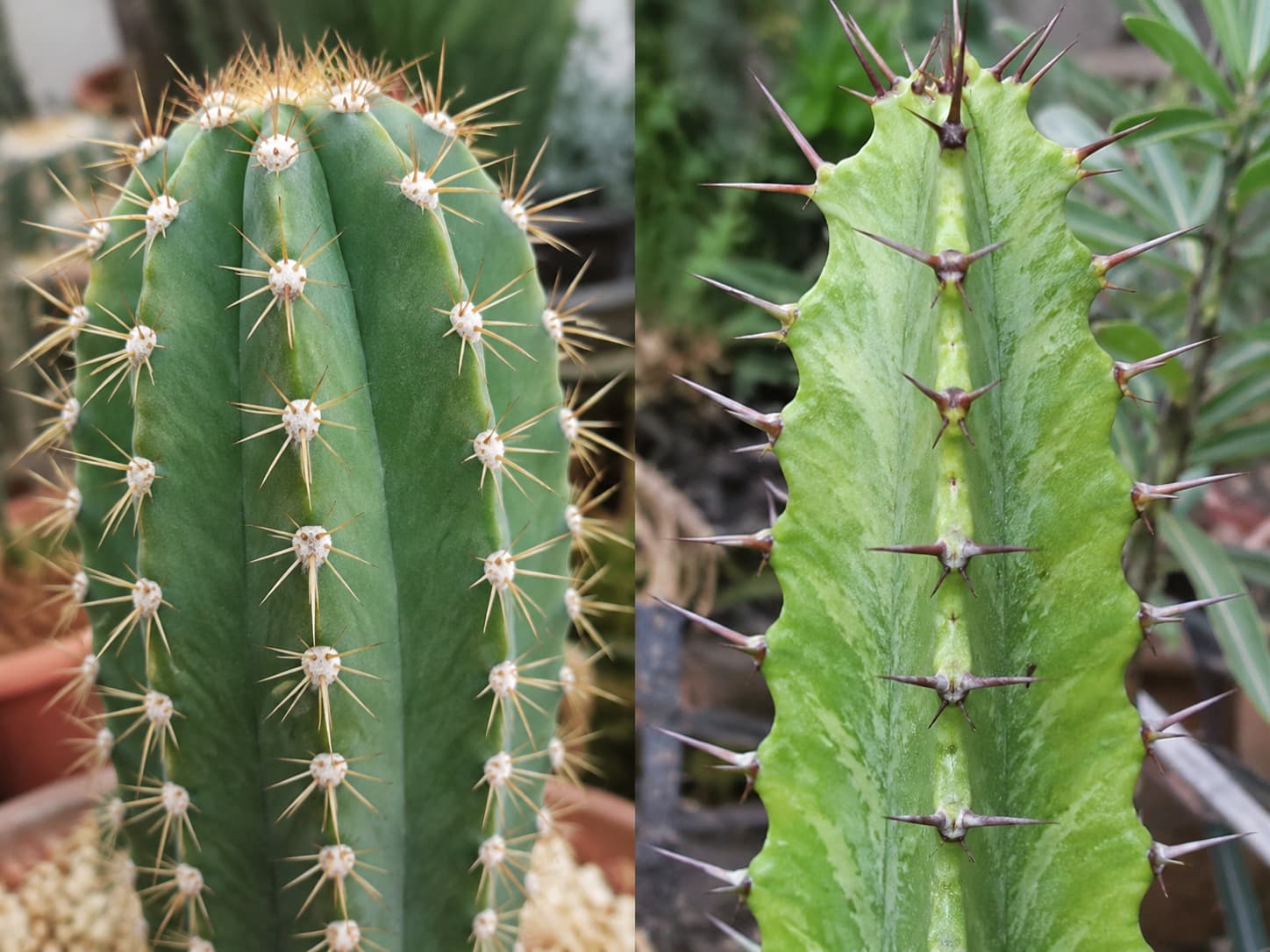
What makes a plant a true cactus? A true cactus belongs to the family Cactaceae and has areoles: specialized structures that produce spines, flowers, or new growth. Euphorbias may look similar, but they do not have areoles and can release irritating white latex.
Cacti are a family of plants — Cactaceae — containing over 1,700 species, all native to the Americas (with one exception: Rhipsalis baccifera, which also occurs naturally in Africa and Sri Lanka). Over time, they evolved in response to arid conditions, developing succulent stems that store water, spines that are modified leaves, and a specialized form of photosynthesis called Crassulacean Acid Metabolism (CAM) that allows them to open their stomata at night to conserve water.
The defining feature of a true cactus is the areole — a small, cushion-like structure from which spines, flowers, and new branches emerge. In other words, if a spiny succulent plant has areoles, it's a cactus; if it doesn't, it's something else. This single feature separates cacti from all other succulent plants.
The Euphorbia Mistake: It's Not a Cactus
Many plants sold as "cacti" at big-box stores are actually euphorbias — a completely different plant family (Euphorbiaceae) native to Africa. Euphorbias evolved spines and succulent stems through convergent evolution — they look like cacti because they adapted to similar dry environments, not because they're related. Euphorbias contain a toxic white latex sap that causes severe skin burns and can cause blindness if it gets in the eyes. True cacti do not produce the irritating white latex associated with euphorbias, although their spines and glochids can still injure people and pets. How to tell them apart: cacti have areoles; euphorbias have spines that emerge directly from the stem without areoles. Cacti flowers are large, showy, and multi-petaled; euphorbia "flowers" (cyathia) are tiny and inconspicuous.
6 Major Cactus Types and Where to Use Them
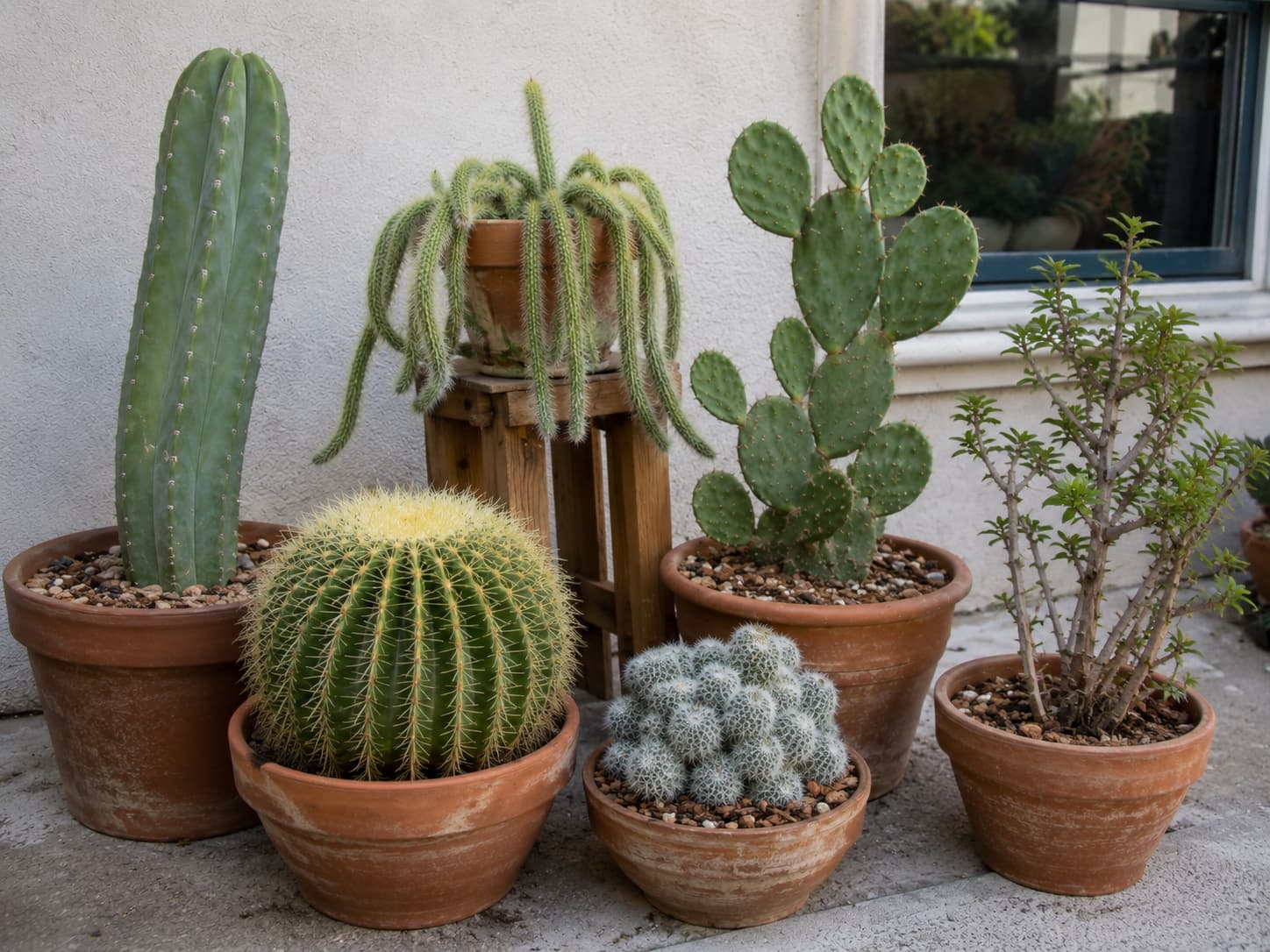
| Type | Shape | Examples | Best For | Care Note |
|---|---|---|---|---|
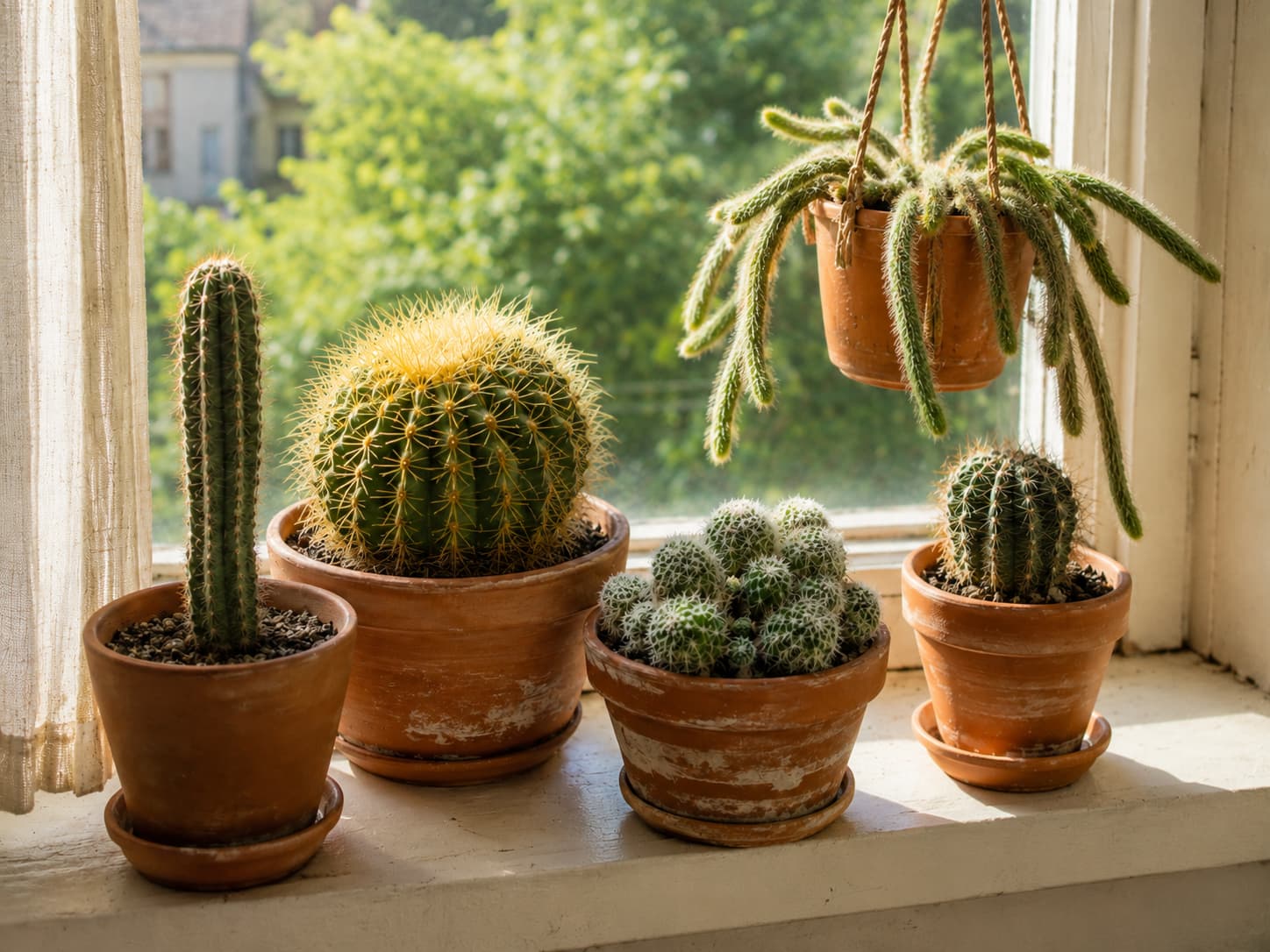
| Columnar | Tall, upright, ribbed pillars | Saguaro, San Pedro, Old Man Cactus | Floor plants, entryways, desert landscapes | Need the most light. Etiolate quickly indoors without grow lights. |
| Globular (Ball) | Round, barrel-shaped | Golden Barrel, Bishop's Cap, Rebutia | Desktops, windowsills, small spaces | Slowest growing. May bloom with proper dormancy. |
| Trailing / Epiphytic | Hanging, draping stems | Rat-tail Cactus, Rhipsalis, Dragon Fruit | Hanging baskets, macrame, shelves | Often jungle cacti — need more water and humidity than desert types. |
| Flat-Padded (Opuntia) | Flattened pads (cladodes) | Prickly Pear, Bunny Ears | Patios, outdoor beds, edible landscaping | Glochids (tiny barbed spines) are extremely irritating. Handle with tongs. |
| Miniature / Clumping | Tiny, often offsetting | Mammillaria, Rebutia, Gymnocalycium | Terrariums (open, dry), small pots, group displays | Easy to overwater. Small pots dry faster — check soil before watering. |
| Shrubby / Leafy | Bushy, with true leaves | Pereskia, some Opuntia | Outdoor landscaping, hedges | The only cacti with functional leaves. Ancestral cactus form. |
Universal Cactus Care Rules
How do you keep a cactus healthy? Give it strong light, a pot with drainage, fast-drying soil, and water only after the mix has dried completely. Most indoor failures come from weak light or soil that stays wet too long.
In practice, these core rules apply to every cactus in this guide, although jungle and desert types need some adjustments.
Light
Bright direct light — 6+ hours. South-facing window is ideal. West is second best. East and north windows are generally insufficient for desert cacti. Jungle/epiphytic cacti (Rhipsalis, Christmas cactus) tolerate lower light. Signs of insufficient light: etiolation (stretching), pale green color, leaning toward the light source.
Watering — The #1 Cause of Death
- Water deeply, then let the soil dry out completely. In summer: every 2–4 weeks. In winter: every 6–8 weeks, or not at all during dormancy.
- Check before watering. Stick a finger or wooden skewer into the soil — if it comes out damp, wait.
- Signs of overwatering: Soft, mushy body; yellowing or translucent skin; black spots at the base. Often fatal.
- Signs of underwatering: Plant shrivels, ribs become more pronounced. Easily fixed — water and it plumps up.
When in Doubt, Don't Water
A cactus will survive months of drought. It will die within weeks of overwatering. If you're unsure whether to water, wait another week. This single rule will save more cacti than any other piece of advice.
Temperature
Growing season: 65–85°F (18–29°C). Winter dormancy: 45–55°F (7–13°C) for desert cacti. Jungle cacti prefer 55–65°F (13–18°C) in winter. Protect from frost. Most cacti are damaged or killed below 30°F (-1°C).
Pots
For beginners, terracotta or unglazed clay is often the easiest choice. These materials wick moisture away from roots. By contrast, plastic pots retain water for longer and can increase rot risk when the mix is slow to dry. Regardless of material, a drainage hole is strongly recommended because trapped water sharply increases the risk of root rot.
The Soil Mix: Why Standard Potting Soil Kills Cacti
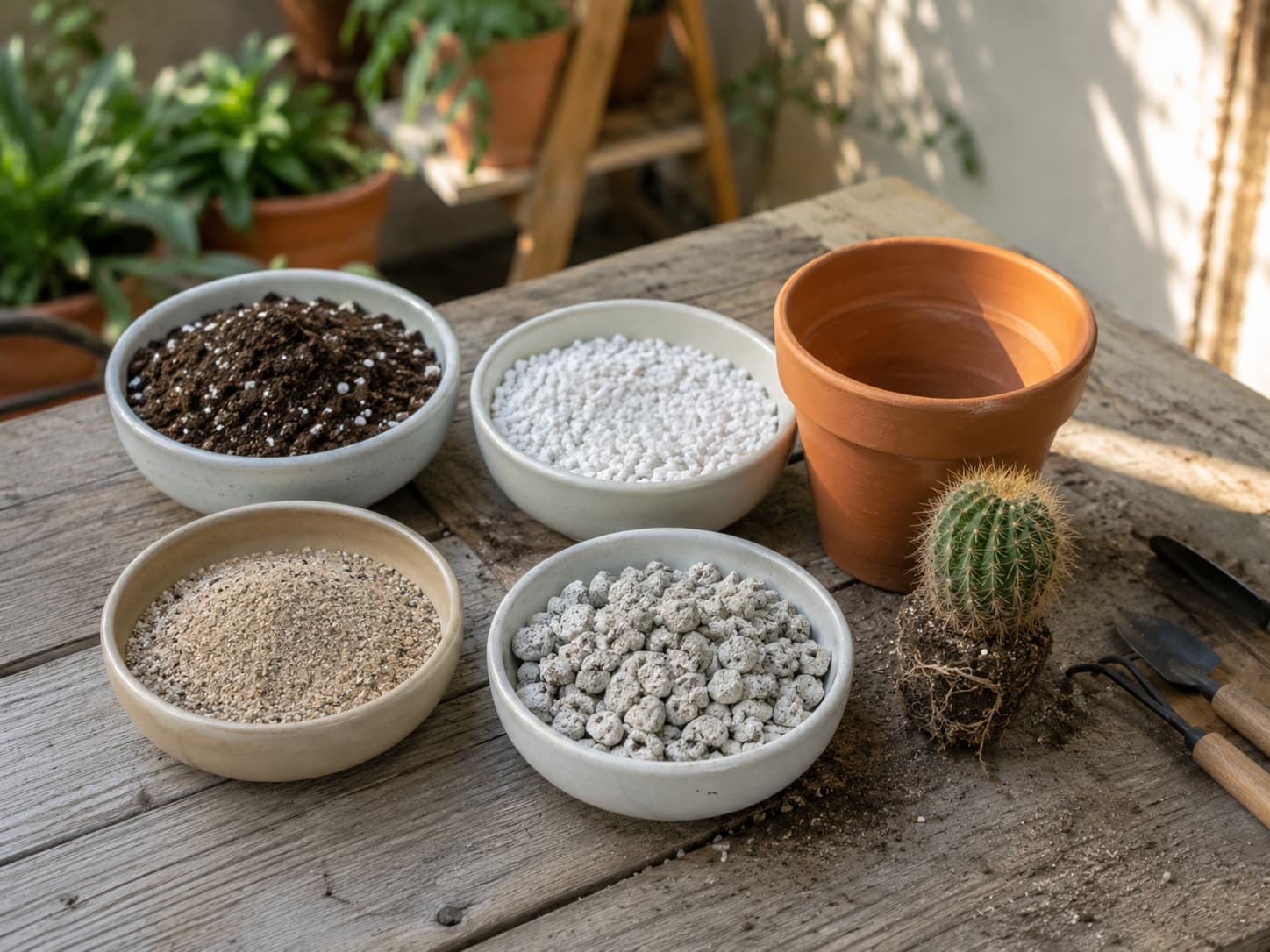
What soil should a cactus use? Use a loose, fast-draining mix with a substantial mineral component such as pumice, perlite, or coarse grit. Adjust the ratio for climate, pot material, and cactus type.
Standard potting mix is often rich in organic material such as peat moss or coco coir and is designed to hold moisture. By contrast, many desert cactus roots are adapted to much faster-draining mineral-rich substrates such as decomposed granite, volcanic rock, and coarse sand. As a result, a dense moisture-retentive mix can stay wet around cactus roots for too long.
The Gritty Cactus Mix
| Ingredient | Ratio | Purpose |
|---|---|---|
| Commercial cactus mix | 40–50% | Minimal organic matter base |
| Perlite or pumice | 25–30% | Aeration, drainage, prevents compaction |
| Coarse sand or crushed granite | 25–30% | Mimics native mineral substrate; adds weight for stability |
The goal is simple: water should move quickly through the pot and out the drainage hole rather than sitting around the roots. However, jungle and epiphytic cacti such as Rhipsalis and Christmas cactus generally need a somewhat more moisture-retentive mix than desert species because they are adapted to organic debris and humid forest conditions.
Winter Dormancy: The Bloom Trigger Most Beginners Miss
Do cacti need winter dormancy? Many desert cacti flower more reliably after a cooler, drier winter rest, but exact temperature and watering needs vary by species. Jungle cacti need a different routine.
Many desert cacti flower more reliably after a cooler, drier winter rest period. However, the exact temperature, duration, and watering reduction vary by species, so use the ranges below as a practical starting point rather than a universal rule.
- Timing: Roughly November through February — 3–4 months of rest.
- Temperature: Move to a cool location at 45–55°F (7–13°C). An unheated spare room, cool sunroom, or bright cool stairwell.
- Light: Plants still need light during dormancy. A cool south-facing windowsill is ideal.
- Water: Almost none. Lightly once every 6–8 weeks, or not at all if below 50°F. Cold, wet soil greatly increases the risk of rot.
- No fertilizer from October through March.
- Transition back gradually in spring. Resume watering slowly. Flower buds should appear within 4–8 weeks.
Jungle Cacti Need Different Dormancy
By contrast, Christmas cactus, Easter cactus, Rhipsalis, and other jungle or epiphytic species generally need more moisture than desert cacti during winter. Some holiday cacti also respond to cooler temperatures and longer nights when setting buds. Therefore, use species-specific guidance rather than applying a desert-cactus dormancy routine to every cactus.
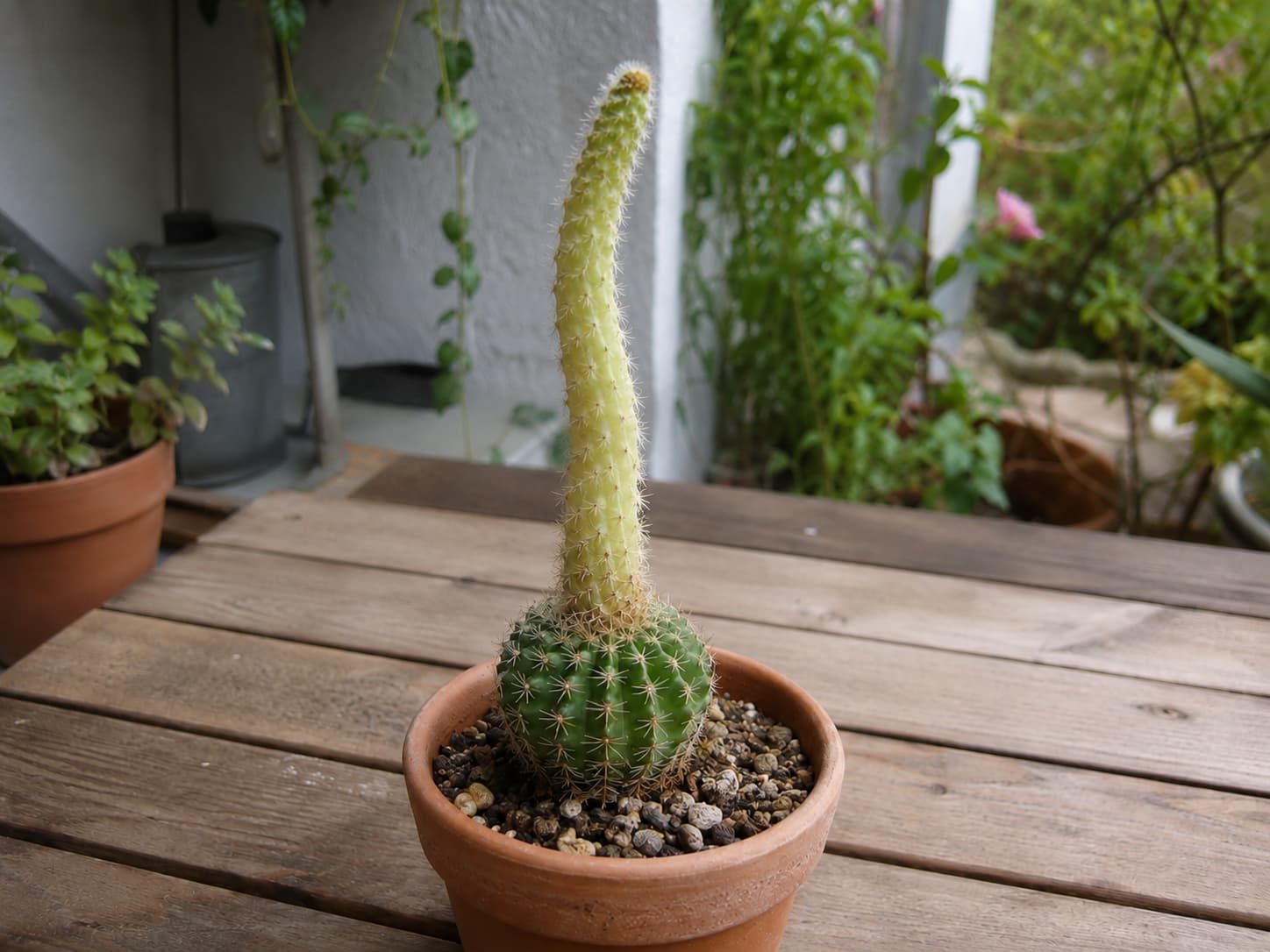
Etiolation: Why Your Cactus Is Stretching
Why is a cactus growing thin at the top? Thin, pale, stretched growth is usually etiolation caused by insufficient light. The stretched section will not return to its original shape, but brighter conditions can keep future growth compact.
Etiolation is permanent. When a cactus doesn't get enough light, it stretches toward the light source, producing thin, pale, elongated growth. The stretched portion will never thicken to match the rest of the plant. However, once the light improves, new growth can return to a more compact shape even though the old narrow section remains.
Therefore, prevention matters more than correction. Start with the brightest appropriate position, rotate the pot if growth leans strongly toward one side, and increase light gradually if the plant has been kept in shade. For very light-hungry columnar species indoors, a suitable grow light may be useful when window light is not enough.
Propagation: Offsets, Cuttings, and Seeds
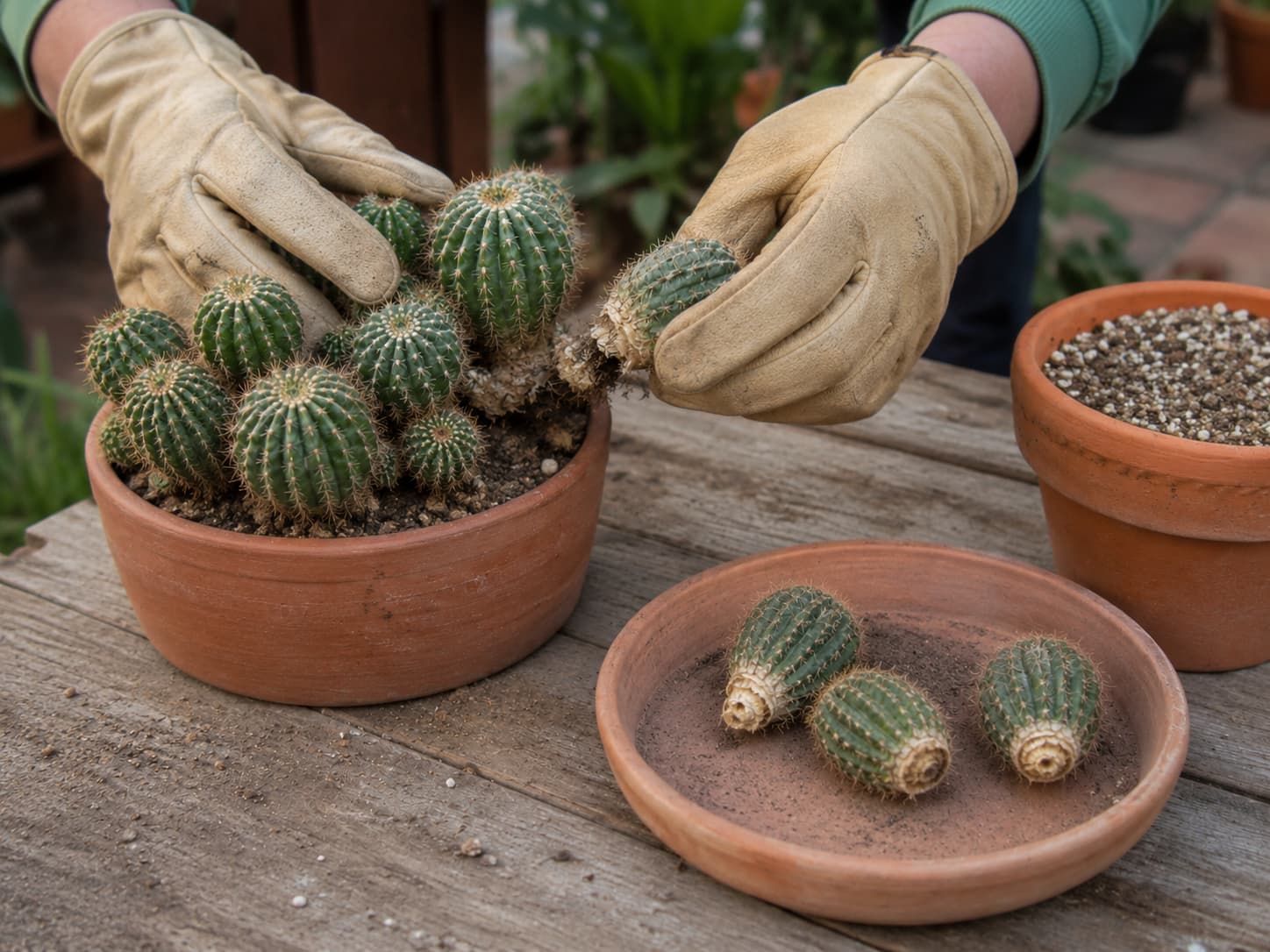
What is the easiest way to propagate a cactus? For clumping cacti, offsets are usually easiest. Remove a mature offset, let the wound dry, place it on dry gritty mix, and delay watering until rooting begins.
Offsets (Pups) — Easiest Method
Many globular and clumping cacti produce offsets at the base. First, wait until an offset is large enough to handle safely. Then remove it with gloves or tongs if the species is spiny. Let the wound dry and callus before placing the offset on a dry, gritty mix. Afterward, introduce water cautiously once rooting has begun rather than soaking an unrooted offset.
Cuttings — For Padded and Columnar Types
Likewise, use a clean, sharp knife for padded or columnar cuttings and allow the cut surface to dry and callus before planting. Callusing time varies with cutting size, species, temperature, and humidity. Once planted in a dry, gritty mix, keep the cutting on the dry side until it begins to root because unrooted tissue is more vulnerable to rot in persistently wet media.
Seeds — Slow but Rewarding
Finally, seeds are the slowest but most varied propagation route. Sow them on a clean, lightly moist seed-starting mix, maintain gentle humidity, and provide bright indirect light. Germination speed and seedling growth vary widely by species, so patience matters more than a fixed calendar.
Frequently Asked Questions
Watering, Identification and Rot
1.How often should I water my cactus?
Water when the mix has dried appropriately for the species and conditions. There is no universal calendar because pot size, temperature, light, season, and cactus type all change the dry-down rate. Therefore, check the mix before watering instead of relying on a fixed weekly schedule.
2.Is my plant a cactus or a euphorbia?
Check for areoles — small woolly or hairy bumps from which spines emerge. If the plant has areoles, it's a true cactus (family Cactaceae). If spines emerge directly from the stem surface without areoles, it's probably a euphorbia (family Euphorbiaceae). Euphorbias contain toxic white latex sap — do not get it on your skin or in your eyes. True cacti do not produce the irritating white latex associated with euphorbias, although their spines and glochids can still injure people and pets.
3.Why is my cactus turning soft and mushy?
Root rot from overwatering. Severe rot can be fatal, but early intervention may save healthy tissue. Unpot immediately, cut away all brown, mushy roots, and check if the rot has spread into the plant body. If the base is affected but the top is healthy, cut above the rot into clean tissue, let callus for 1–2 weeks, and replant in dry gritty mix. If rot has spread through the entire plant, it cannot be saved.
Blooming, Containers and Soil
4.Why won't my cactus bloom?
A missing or unsuitable winter rest can be one reason a mature desert cactus does not bloom. However, age, genetics, light intensity, nutrition, and species-specific temperature cues also matter. Check the needs of your particular cactus before changing winter care dramatically.
5.Can cacti grow in terrariums?
Closed terrariums are generally a poor match for desert cacti. They trap humidity and often lack drainage. Instead, use an open container with a drainage hole and a fast-draining mix. Jungle and epiphytic cacti tolerate more humidity, but they still need air movement and drainage.
6.What's the best soil for cacti?
A gritty, fast-draining mix with at least 50% mineral content. Start with 40–50% commercial cactus mix and add 25–30% perlite/pumice and 25–30% coarse sand or crushed granite. Water should drain through the pot in seconds. Standard potting soil holds too much moisture and will rot cactus roots. See the soil section above for the full recipe.
Pets and Mixed Cactus Plantings
7.Are cacti toxic to cats and dogs?
True cacti (family Cactaceae) are non-toxic. The danger is physical — spines can cause injury if a pet mouths or paws at the plant. Euphorbias (often mistaken for cacti) contain toxic latex sap that can cause severe reactions. Keep all spiny plants out of reach of curious pets regardless of toxicity.
8.Can I grow different cactus types together in one pot?
Yes, but match plants with similar light, moisture, and seasonal needs. For example, many desert species can share a fast-draining container when their growth rates and watering needs are similar. On the other hand, jungle or epiphytic cacti usually need more moisture and should not automatically be grouped with very dry-growing desert species.
Sources & Further Reading:
- Royal Horticultural Society — Cacti and Succulents Growing Guide
- Missouri Botanical Garden — Cactaceae Family Overview
- Cactus and Succulent Society of America — Cactus Culture and Care
- University of Washington — Indoor Cactus Care
- Arnold Arboretum of Harvard — Cactus and Succulent Collection
- ASPCA — Toxic and Non-Toxic Plants List
Final Thoughts
In short, cactus care comes down to matching light, drainage, and watering to the species you actually own. Beginners often run into trouble by keeping the mix wet for too long or giving a desert cactus less light than it needs. As a result, learning how quickly the pot dries is usually more useful than following a rigid watering calendar.
Here's what to remember:
- If it has areoles, it's a cactus. If it doesn't, it's not. Euphorbias are not cacti and have toxic sap.
- Gritty soil: 50%+ mineral content. Water should drain through in seconds.
- Water only when bone-dry. When in doubt, don't. Overwatering kills more cacti than everything else combined.
- Winter dormancy triggers blooms. 45–55°F, almost no water, 3–4 months.
- Etiolation is permanent. Bright light from day one prevents stretching.
- True cacti are non-toxic. Spines are the only hazard.
If you found this guide helpful, you might also enjoy our guides on Golden Barrel & Mammillaria Care and Echinopsis: The Firework Bloomers — two deep dives on specific cactus types.