When and How to Plant Spring Bulbs in Fall: A Beginner's Guide to Months of Color
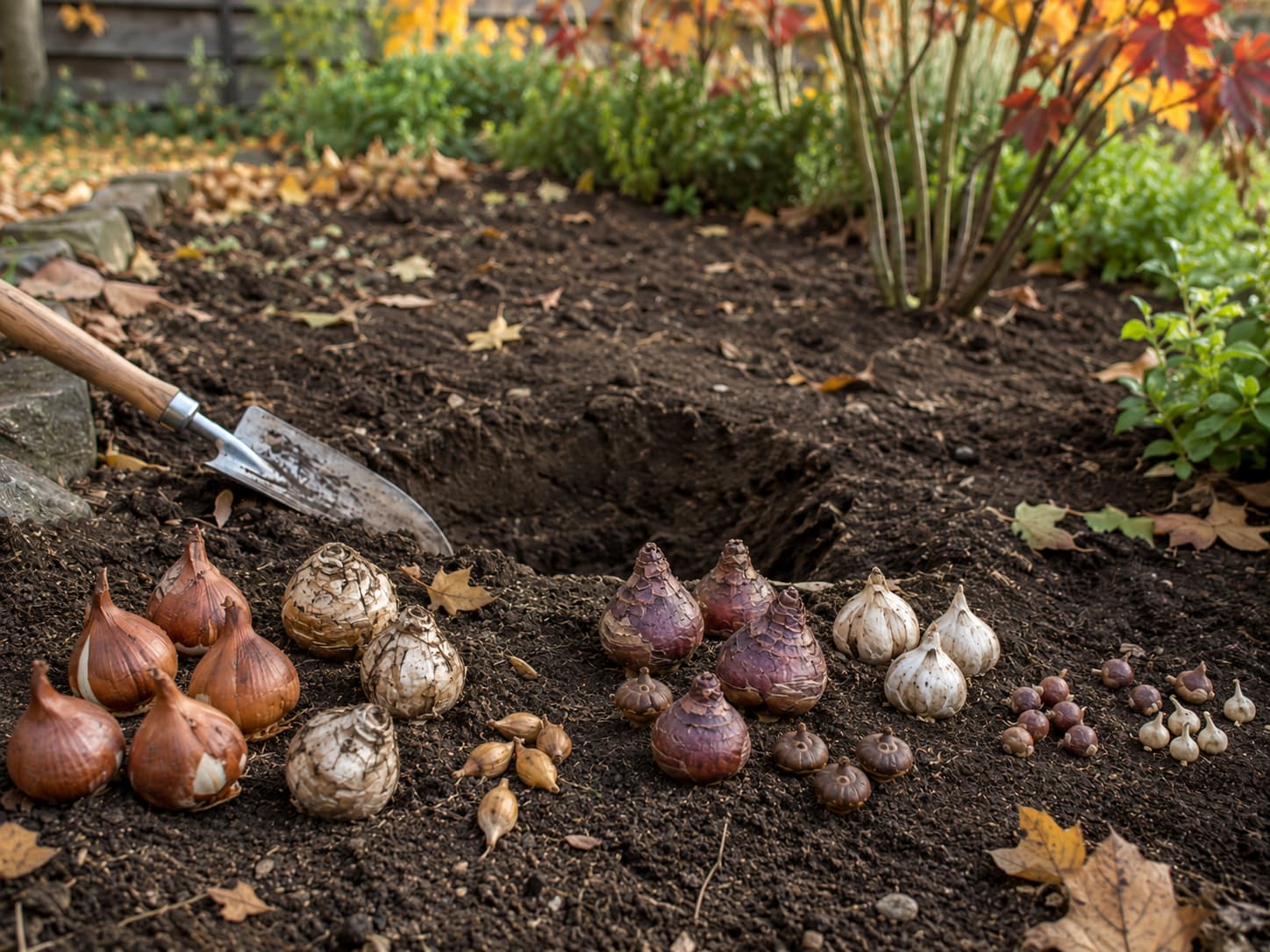
There's a specific kind of magic in planting an ugly brown onion-looking thing in October and watching a perfect tulip emerge from the soil in April. Spring bulbs are the closest thing gardening has to time travel—you do the work now, and your future self gets the reward.
The catch: you have to plant them in fall. Not spring. Not "whenever you remember." Most spring-blooming bulbs require 12–16 weeks of cold temperatures (below 45°F) to develop roots and trigger flowering. If you skip fall planting, you skip spring blooms—there's no workaround.
This guide covers when to plant (by zone), which bulbs to choose for months of continuous color, how deep to plant each one, and how to grow them in containers if you don't have garden beds. I've planted 200+ bulbs over three fall seasons and learned most of this the hard way—so you don't have to.
greenmuse-illustration-spring-bulbs-fall-planting-overview.jpg
Why Fall? The Cold Requirement Explained Simply
greenmuse-illustration-spring-bulbs-cold-winter-cycle.jpg
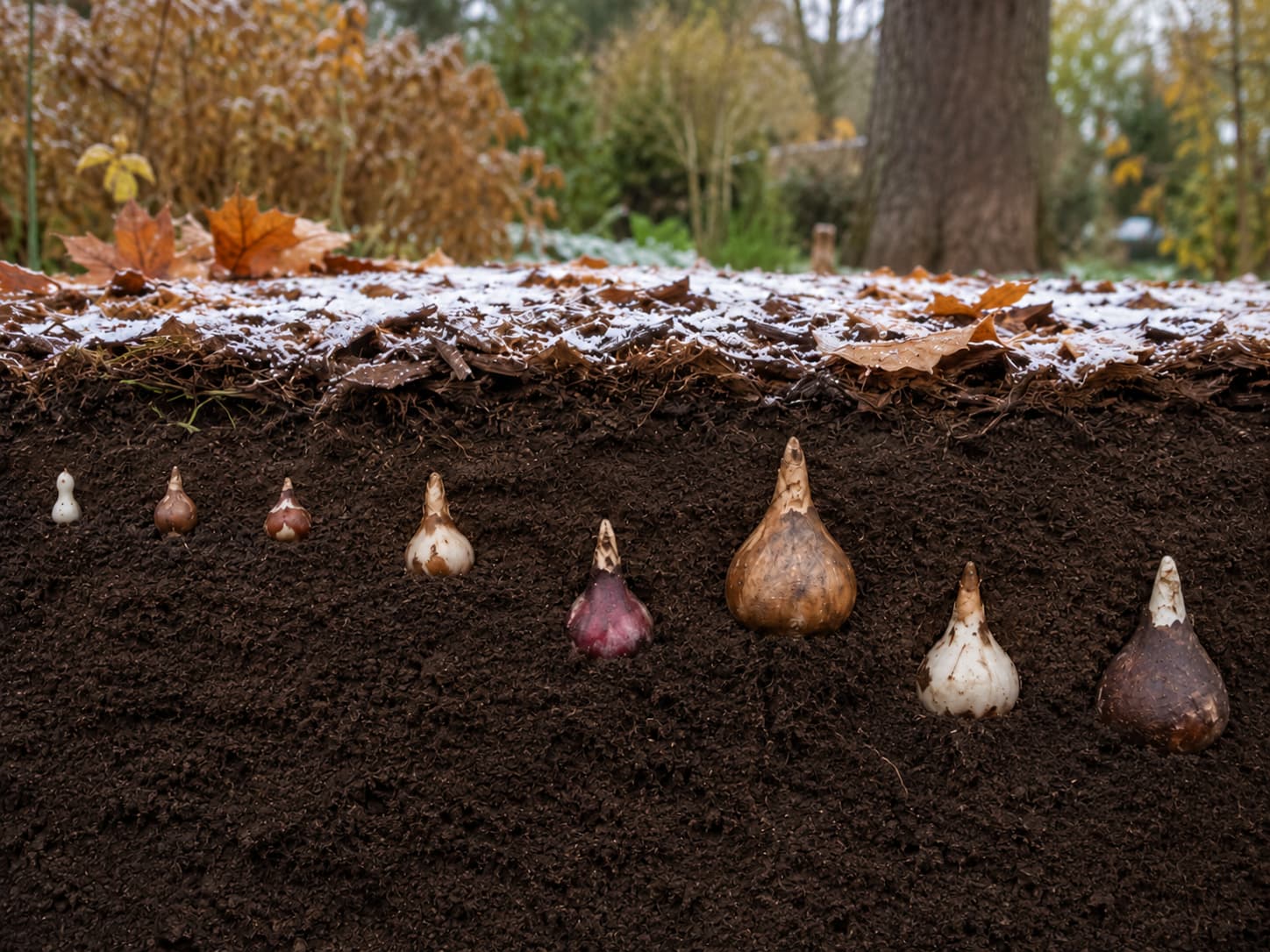
Spring bulbs come from climates with cold winters. Their life cycle: roots grow in cool fall soil → the bulb chills underground all winter → warming soil triggers the flower stem to push up → bloom → foliage feeds the bulb for next year → go dormant in summer.
That chilling period (called vernalization) is non-negotiable. Without 12–16 weeks of soil temperatures below 45°F, the flower bud inside the bulb never develops properly. You'll get leaves but no flower—or a stunted, distorted bloom.
| Bulb Type | Weeks of Cold Needed | What Happens Without Enough Cold |
|---|---|---|
| Tulips | 14–16 weeks | Leaves but no flowers ("blind" bulbs) |
| Daffodils | 12–14 weeks | Short stems, small flowers |
| Crocus | 12–15 weeks | Flowers may open at ground level |
| Hyacinths | 12–14 weeks | Loose, sparse flower spikes |
| Alliums | 12–16 weeks | Reduced flower size |
Drag the bar below or swipe horizontally to view the remaining columns.
Zone-by-Zone Planting Calendar
greenmuse-illustration-fall-bulb-planting-cool-soil-garden.jpg
| Zone | Plant Bulbs Between | Soil Temperature Target |
|---|---|---|
| 3–4 | Early Sep – Early Oct | Below 55°F at 6″ depth |
| 5–6 | Late Sep – Late Oct | Below 55°F |
| 7 | Oct – Mid Nov | Below 55°F |
| 8 | Nov – Early Dec | Below 55°F (may need pre-chill) |
| 9–10 | Dec – Jan (pre-chilled bulbs only) | N/A — refrigerator is your "winter" |
Drag the bar below or swipe horizontally to view the remaining columns.
The simple rule: Plant when nighttime temperatures are consistently in the 40s–50s°F but before the ground freezes solid. You want the soil cool enough that the bulb won't try to grow leaves above ground yet, but warm enough that roots can still develop before deep freeze. For most gardeners, that's about 6 weeks before your first hard freeze date.
7 Best Bulbs for Beginners (Ranked by Ease and Impact)
greenmuse-illustration-seven-best-spring-bulbs-for-beginners.jpg
| Bulb | Bloom Time | Height | Deer-Resistant? | Comes Back Year After Year? | Cost per 25 bulbs |
|---|---|---|---|---|---|
| Daffodils (Narcissus) | Early–mid spring | 12–18″ | Yes (toxic to deer/rodents) | Yes, multiplies freely | $15–20 |
| Crocus | Very early spring (sometimes late winter) | 3–6″ | Squirrels eat them | Yes | $10–12 |
| Tulips | Mid–late spring | 10–24″ | Deer love them | Treat as annuals in most zones (don't reliably return) | $12–18 |
| Grape Hyacinth (Muscari) | Mid spring | 6–8″ | Yes | Yes, spreads to form blue rivers | $8–10 |
| Alliums (ornamental onion) | Late spring–early summer | 24–48″ | Yes (all mammals avoid them) | Yes | $15–25 |
| Hyacinths | Early–mid spring | 8–12″ | Generally avoided | Weaker returns after year 2 | $12–15 |
| Snowdrops (Galanthus) | Late winter (first to bloom!) | 4–6″ | Yes | Yes, slowly spreads | $20–30 (more expensive but magical) |
Drag the bar below or swipe horizontally to view the remaining columns.
My Personal Top 3 for a "Plant Once, Enjoy for Years" Garden
If you only buy three types of bulbs, make it these:
- Daffodils — The #1 bulletproof bulb. Toxic to every pest (deer, rabbits, squirrels, voles). Returns and multiplies for decades. 'Tête-à-Tête' is a compact 6-inch variety that's perfect for containers and small spaces; 'Ice Follies' is a classic large-cupped white-and-yellow for garden beds.
- Grape Hyacinth (Muscari) — Plant these along the front of your border and within 3 years you'll have a solid band of cobalt blue in April. They're the most reliable "spreader" in the bulb world. 'Armeniacum' is the standard; 'Ocean Magic' has two-tone blue and is worth the extra $3.
- Allium 'Purple Sensation' — 3-inch purple drumstick flowers on 24-inch stems in late May, when everything else is finishing. They bridge the gap between spring bulbs and summer perennials. Deer-proof, rabbit-proof, squirrel-proof. They look like something from a Dr. Seuss book.
In fall 2024, I planted 50 'Tête-à-Tête' daffodils, 30 'Purple Sensation' alliums, and 75 Muscari along my front walkway. Total cost: $45. In spring 2025, that path was the most photographed spot in my neighborhood. The daffodils have already multiplied—each bulb produced 2–3 flowering stems in year two.
How Deep to Plant: The 3x Rule
greenmuse-illustration-spring-bulb-planting-depth-garden-bed.jpg
The general rule: plant a bulb at a depth 3 times the bulb's height. Measure from the bottom of the hole to the soil surface.
| Bulb Type | Bulb Size | Planting Depth (bottom of hole to surface) | Spacing |
|---|---|---|---|
| Crocus | 1″ tall | 3″ deep | 2–3″ apart |
| Grape Hyacinth | 1″ tall | 3″ deep | 2–3″ apart |
| Snowdrops | 1″ tall | 3″ deep | 2–3″ apart |
| Daffodils | 2″ tall | 6″ deep | 4–6″ apart |
| Tulips | 2″ tall | 6–8″ deep | 4–5″ apart |
| Hyacinths | 2″ tall | 6″ deep | 4–6″ apart |
| Alliums (large) | 3″ tall (bulb can be tennis-ball sized) | 8–10″ deep | 8–12″ apart |
Drag the bar below or swipe horizontally to view the remaining columns.
How to Plant: 3 Methods
greenmuse-illustration-bulb-planter-trench-container-methods.jpg
Method 1: Individual Holes (Best for Small Plantings)
Use a bulb planter (a cylindrical tool that pulls out a soil plug, $8–12 at any garden center). Push it into the soil to the right depth, lift out the plug, drop in the bulb (pointy end up), replace the soil, and press firmly. One hole per bulb. This is the most precise method and works well for mixed plantings.
Method 2: Trench Planting (Best for Large Drifts)
Dig a trench to the required depth across the planting area. Place bulbs in the trench at the correct spacing. Backfill with soil and press firmly. This is 5× faster than individual holes when you're planting 50+ bulbs of the same type. I plant my daffodils and Muscari in trenches.
Method 3: Container Planting (Best for Balconies and Patios)
Yes, you can grow spring bulbs in pots! The key requirement: the pot must stay cold enough for vernalization. Container soil freezes more deeply than ground soil, which is actually helpful in Zones 5–7—but in Zones 3–4, the entire root ball can freeze solid and kill the bulb.
greenmuse-illustration-layered-bulb-lasagna-container-fall.jpg
Container bulb planting rules:
- Use a pot at least 12 inches deep and 14 inches wide
- Fill with standard potting mix (not garden soil)
- Plant bulbs at the same depth as in-ground (measure from the soil surface)
- For a "lasagna" planting (multiple layers of different bulbs in one pot): plant late-blooming bulbs (tulips, alliums) at the bottom, mid-spring bulbs (daffodils) in the middle, and early bulbs (crocus, Muscari) near the top. Each layer gets its own depth, separated by 2 inches of soil. One pot can produce 8+ weeks of consecutive blooms.
- Move the pot to a sheltered spot (unheated garage, against the house foundation) after the first hard freeze. Don't bring it indoors—the bulbs need the cold.
- Water once after planting, then only when the soil is completely dry (once a month is usually enough in winter)
The lasagna method changed my balcony garden. In October 2025, I planted one 16-inch pot with 5 tulip bulbs at 8″ deep, 7 daffodil bulbs at 5″ deep, and 10 crocus bulbs at 3″ deep. From March through May 2026, that single pot produced crocus in March, daffodils in April, and tulips in May. Three months of flowers from one pot and 30 minutes of work.
The Continuous Bloom Calendar: 5 Months of Flowers
greenmuse-illustration-staggered-spring-bulbs-continuous-bloom.jpg
By choosing bulbs with staggered bloom times, you can have flowers from late February through early June:
| Month | What Blooms | Color |
|---|---|---|
| February–March | Snowdrops, Crocus (species types like C. tommasinianus) | White, purple, lavender, yellow |
| March–April | Daffodils (early varieties: 'Rijnveld's Early Sensation'), Grape Hyacinth | Yellow, white, cobalt blue |
| April | Daffodils (mid-season), Hyacinths, Tulips (early: 'Red Riding Hood') | Rainbow of colors |
| April–May | Tulips (mid: 'Negrita', 'Queen of Night'), Fritillaria | Purple, maroon, orange, white |
| May–June | Alliums, Late tulips, Camassia | Purple, white, blue |
Drag the bar below or swipe horizontally to view the remaining columns.
Deer, Squirrels, and Voles: Protecting Your Investment
greenmuse-illustration-protecting-fall-bulbs-from-squirrels-voles.jpg
Nothing is more frustrating than planting 50 tulip bulbs in October and finding 48 of them dug up and eaten by November. Here's what works:
| Pest | What They Target | Effective Protection |
|---|---|---|
| Squirrels/chipmunks | Crocus, tulips (they dig up freshly planted bulbs) | Lay chicken wire over the planting area and cover with 2″ of mulch. Remove in spring when shoots appear. Daffodils and alliums are naturally avoided. |
| Deer | Tulip flowers and foliage | Plant daffodils, alliums, and Muscari instead (deer won't touch them). For tulips, use deer repellent spray (Deer Off, $14) on emerging foliage and reapply after rain. |
| Voles | All bulbs (they tunnel underground and eat from below) | Plant bulbs in wire cages (hardware cloth with ½″ mesh, wrapped into a cylinder around the bulb cluster). Daffodils are generally avoided due to toxicity. |
Drag the bar below or swipe horizontally to view the remaining columns.
What to Do After Bulbs Bloom in Spring
greenmuse-illustration-spring-bulb-foliage-yellowing-after-bloom.jpg
The #1 mistake with spring bulbs: cutting the foliage down too early. After the flower fades, the leaves continue photosynthesizing for 6–8 weeks, storing energy in the bulb for next year's bloom. If you cut the foliage before it turns yellow naturally, you weaken or kill next year's flower.
The Post-Bloom Protocol
- Remove the spent flower head (so the plant doesn't waste energy making seeds), but leave the stem and all leaves intact.
- Let the foliage yellow and die back naturally. This takes 6–8 weeks after bloom. It's ugly—but necessary. Don't braid, tie, or fold the leaves (this reduces the surface area available for photosynthesis).
- Once the foliage is completely brown and pulls away easily, you can remove it. The bulb is now dormant and ready for summer.
- Mark the spot. Use golf tees or plant labels so you don't accidentally dig into the bulb cluster when planting summer annuals.
Hiding ugly bulb foliage: Plant perennials or annuals that emerge as the bulb foliage is dying back. Hostas, daylilies, and asters are classic companions—their emerging foliage covers the yellowing bulb leaves.
Bulb Planting in the Lawn: Naturalizing
One of the most stunning spring effects is bulbs blooming directly in your lawn—like a wild meadow. The trick is choosing the right bulbs and not mowing too early.
Best bulbs for naturalizing in lawns: Crocus (especially C. tommasinianus, which spreads freely), snowdrops, and miniature daffodils ('Tête-à-Tête', 'Jetfire'). Don't use tulips—they don't return reliably and the foliage is too tall for a lawn setting.
The mowing rule: Don't mow the area until the bulb foliage has fully yellowed (6–8 weeks after bloom). If you mow earlier, the bulbs won't return next year. This means that section of lawn will look "shaggy" longer than the rest—choose a spot where this is acceptable (a side yard, a back slope, under deciduous trees).
Buying Bulbs: What to Look For (And What to Avoid)
Not all bulbs are created equal. The size and firmness of the bulb at planting time directly affects the size and quality of the flower next spring.
4 Rules for Buying Healthy Bulbs
- Firm and heavy for their size. Pick up a bulb and squeeze it gently. It should feel solid, like a firm onion. If it feels light, hollow, or squishy, it's dried out or rotted—skip it.
- No mold or soft spots. Check the papery outer skin for blue-green mold patches or dark soft areas. A small amount of surface mold is cosmetic and won't affect performance, but deep mold or soft spots mean the bulb is decomposing from the inside.
- Bigger = more flowers. Within the same variety, larger bulbs produce more (and bigger) flowers. Top-size bulbs cost more but deliver noticeably better results. For daffodils, look for bulbs labeled "DN1" or "top size" (14–16 cm circumference). For tulips, 12+ cm circumference is the benchmark.
- Buy early, plant on time. Bulbs appear in garden centers in September. Buy them as soon as you see good selection—popular varieties sell out by mid-October. Store them in a cool, dry, dark place (a paper bag in the garage works) until planting time. Don't leave them in plastic bags, which trap moisture and cause rot.
Where to Buy Bulbs (Ranked by Quality)
| Source | Quality | Price | Best For |
|---|---|---|---|
| Specialty bulb companies (Brent and Becky's, John Scheepers, Van Engelen) | Highest — top-size, true-to-name, freshest | Medium–high | Large orders (50+); rare varieties |
| Local garden centers | Good — you can hand-pick each bulb | Medium | Small orders; seeing before buying |
| Big box stores (Home Depot, Lowe's, Costco) | Variable — often smaller bulbs; sometimes pre-packaged and dried out | Low | Budget bulk bags; common varieties only |
| Online marketplaces (Amazon, eBay) | Risky — no quality control; mislabeling common | Low | Not recommended for bulbs |
Drag the bar below or swipe horizontally to view the remaining columns.
In 2023, I bought a bag of 25 "mixed tulips" from a big box store for $8. The bulbs were small (10 cm circumference—below top size), and in spring 2024, 8 of the 25 produced blind stems (leaves but no flowers). The remaining 17 had small blooms on short stems. The following year, I bought 25 'Negrita' tulips from John Scheepers for $15 (top-size, 12+ cm). Every single one bloomed with full, rich purple flowers on 20-inch stems. The $7 difference bought dramatically better results.
Forcing Bulbs Indoors: Spring Flowers in January
If you can't wait until April, force bulbs indoors for winter blooms. The process is simple: pot the bulbs, chill them, then bring them into warmth and light.
Easiest Bulbs to Force
| Bulb | Chill Time | Bloom Time After Chilling | Scent? |
|---|---|---|---|
| Paperwhite narcissus | 0 weeks (no chilling needed!) | 3–4 weeks after potting | Intense, sweet—some love it, some hate it |
| Hyacinths | 12–14 weeks in fridge | 2–3 weeks after bringing to room temp | Incredible fragrance fills a room |
| Amaryllis | 0 weeks (tropical bulb, no chilling) | 6–8 weeks after potting | Minimal scent; spectacular blooms |
| Crocus | 12–15 weeks | 2–3 weeks | Light, sweet |
| Tulips | 14–16 weeks | 3–4 weeks | None |
Drag the bar below or swipe horizontally to view the remaining columns.
Quick paperwhite method (no chill needed): Fill a shallow bowl with 2 inches of pebbles or glass marbles. Place paperwhite bulbs on top, pointy end up, close together. Add water until it just touches the base of the bulbs. Keep in a cool dark spot for 2 weeks until roots form, then move to a bright window. Blooms in 3–4 weeks from start. This is my go-to holiday gift—$12 for a bag of 8 bulbs + a $4 bowl from the thrift store = 8 gifts that grow.
5 Bulb Combinations for Maximum Impact
Instead of planting one type of bulb in a row, combine varieties for layered color:
| Combination | Bulbs | Bloom Period | Where It Works Best |
|---|---|---|---|
| "Early Bird" | Snowdrops + Crocus 'Pickwick' + 'Tête-à-Tête' daffodils | Feb–Apr | Under deciduous trees (blooms before leaves fill in) |
| "Blue & Gold" | Muscari 'Armeniacum' + 'Ice Follies' daffodils | Mar–Apr | Front border; repeating drifts of 10+ each |
| "Dark & Dramatic" | Tulip 'Queen of Night' (deep maroon) + Allium 'Purple Sensation' | May | Middle of border; background of silver foliage plants |
| "White Night Garden" | Snowdrops + White Muscari + White daffodil 'Mount Hood' | Feb–Apr | Pathway edges; glows at dusk |
| "Balcony Lasagna" | 5 tulips (bottom) + 7 daffodils (middle) + 10 crocus (top) in one 16″ pot | Mar–May | Apartment balconies with cold exposure |
Drag the bar below or swipe horizontally to view the remaining columns.
Frequently Asked Questions
1. Can I plant bulbs in December? Is it too late?
2. Do I need to fertilize bulbs?
3. Why do my tulips not come back the second year?
4. Can I grow bulbs indoors without planting them outside?
5. Are spring bulbs safe for pets?
Sources
- University of Illinois Extension. "Bulbs and More." extension.illinois.edu, 2024. extension.illinois.edu
- USDA Agricultural Research Service. "Plant Hardiness Zone Map." planthardiness.ars.usda.gov, 2023. planthardiness.ars.usda.gov
- Cornell University Department of Horticulture. "Spring-Flowering Bulbs." gardening.cornell.edu, 2024. gardening.cornell.edu
- Missouri Botanical Garden. "Bulb Planting Guide." missouribotanicalgarden.org, 2023. missouribotanicalgarden.org