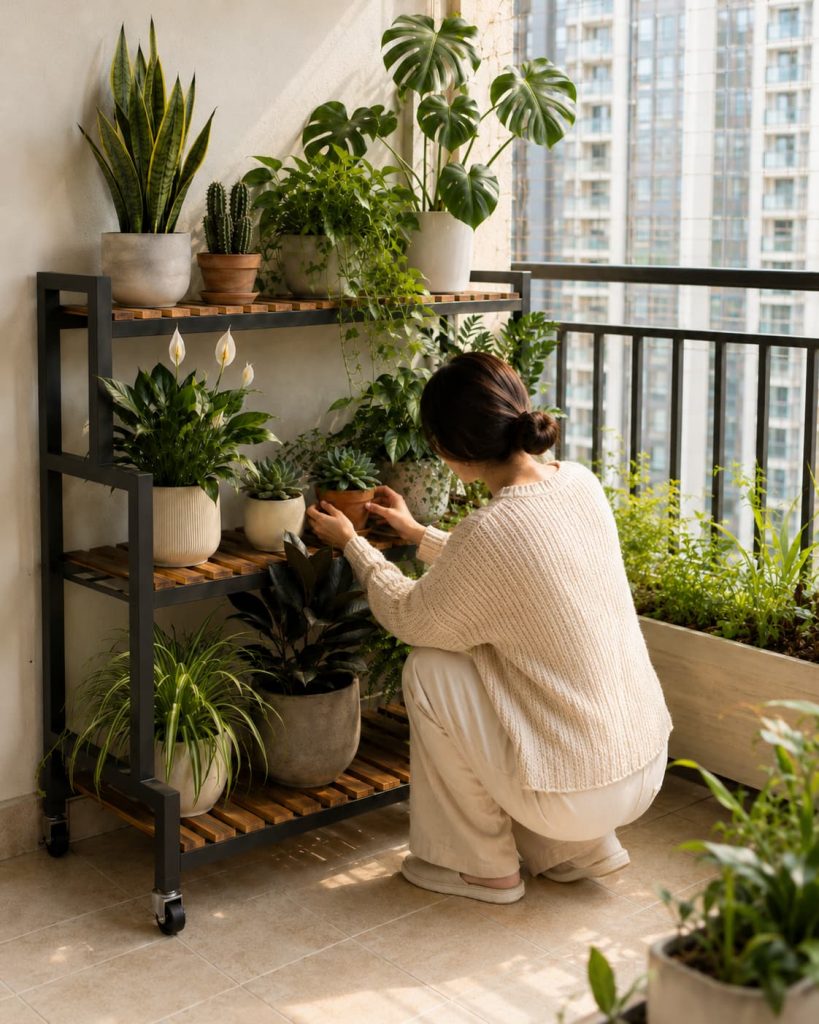
How to Keep Plants Alive While on Vacation: 5 DIY Methods That Actually Work
Learning how to keep plants alive while on vacation became personal after a 10-day trip left me with three dead ferns, a crispy calathea, and a monstera that had dropped half its leaves. I'd "watered everything really well" before leaving — which, it turns out, buys you about 4 days in summer heat. The rest of the time, your plants are on their own.
However, that expensive lesson pushed me to find solutions that actually work — not the decorative glass globes that empty in 2 days, and not "just ask your neighbor" (who will either forget or drown your succulents with daily watering). Here are five self-watering methods I've tested, the plants that can survive without you, and a pre-vacation checklist so you never come home to a plant graveyard again.
Why It Can Be Hard to Keep Plants Alive While on Vacation
First, vacation plant care is not just about thirst. These are four problems to plan for:
1. Summer heat accelerates drying. In July and August, indoor temperatures near windows can reach 85–95°F. For example, a 6-inch pot of basil that holds moisture for several days in spring can dry much faster in summer heat. Meanwhile, outdoor containers can dry even faster because of sun and wind.
Next, overwatering before you leave can cause rot. For example, flooding every pot before walking out the door can leave sensitive roots too wet. As a result, a warm, saturated root zone can raise the risk of root problems. This kills more vacation plants than drought, especially snake plants, ZZ plants, and succulents that hate wet feet.
In addition, light still matters while you're away. For instance, people sometimes close curtains for security or move plants to a dark guest room. After 10–14 days of insufficient light, tropical plants etiolate (stretch toward any available light), drop leaves, and decline. Therefore, keep enough usable light for the plants while you are away.
Finally, pests can multiply on stressed plants. For example, stressed plants can become easier places for spider mites or fungus gnats to build up. A mild infestation you didn't notice before leaving can explode into a major problem in 2 weeks of unchecked growth. Therefore, check for pests before a trip.
5 Ways to Keep Plants Alive While on Vacation
If you want to keep plants alive while on vacation, match the watering method to the plant rather than using one system for every pot. In practice, each method fits different trip lengths, plant types, and budgets. Most importantly, test any method for at least 3 days before trusting it on a real trip.
Method 1: Cotton Wick System $3–5 Up to 3+ weeks
For longer trips, this is the method I trust most. It's cheap, scalable, and works for almost every plant type.
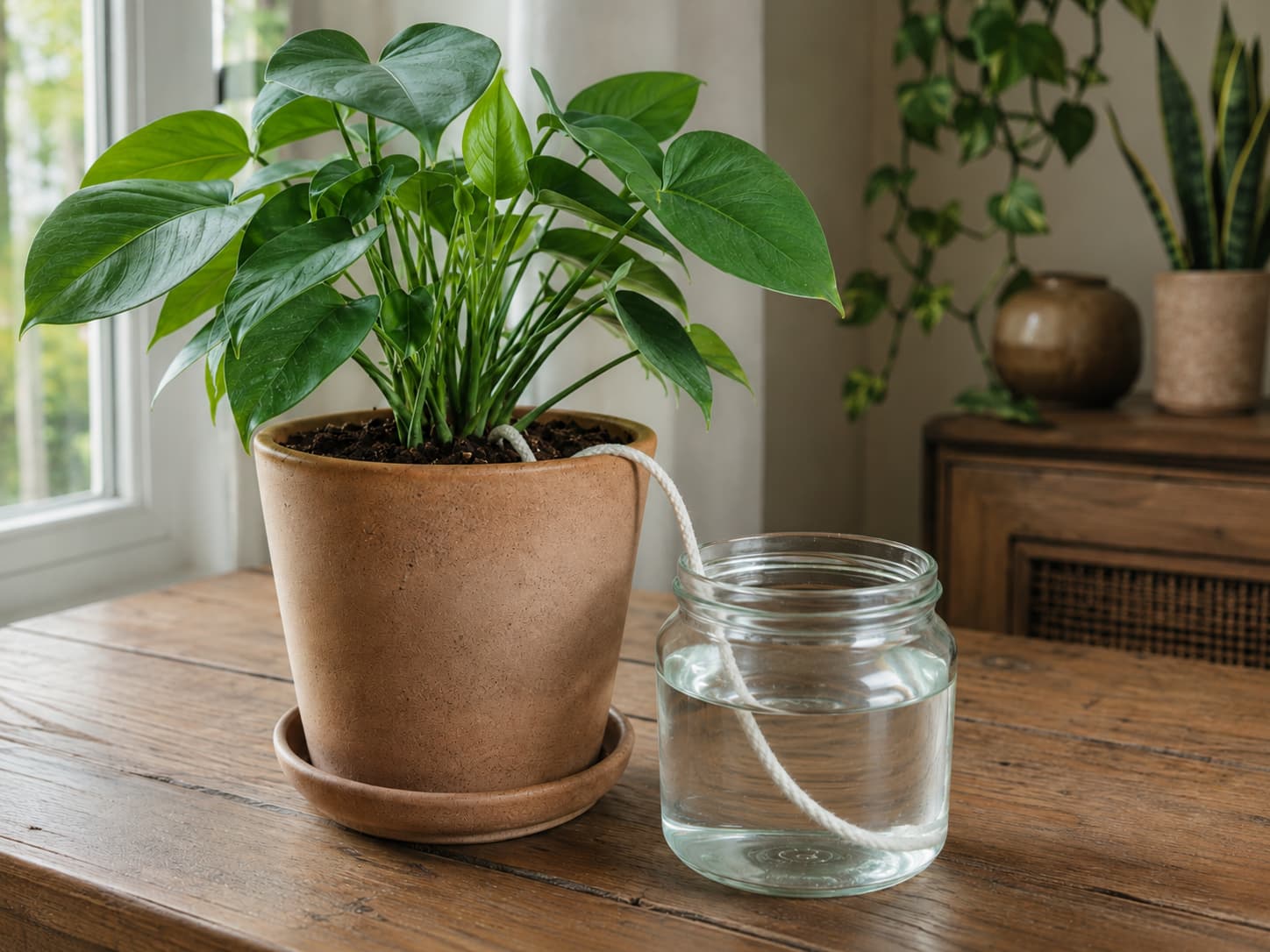
How it works: In other words, cotton string draws water from a reservoir into the soil by capillary action — the same force that pulls water up a paper towel. As a result, drier mix can draw more water along the wick. By contrast, the flow slows as the area around the wick becomes wetter. It's self-regulating.
How to Set Up the Cotton Wick System
- Buy 100% cotton twine or rope (not polyester — it won't wick). About $3 at any hardware store.
- Cut pieces long enough to reach from your water reservoir into each pot, plus 6 extra inches.
- Using a chopstick, poke a hole 2–3 inches deep into the soil near the plant's root zone.
- Push one end of the wick into the hole and firm the soil around it.
- Place the other end into a water container — a bowl, bucket, or large Tupperware. Weight it down with a clean rock so it stays submerged.
- Position the reservoir at the same height as the pot for consistent flow, or slightly below for slower drip.
- Fill the reservoir, wait 24 hours, and check that the soil near the wick is moistening.
Test the Wick Before You Leave
For best results, one reservoir can serve several plants if the wick flow is tested first. One 5-gallon bucket can wick-water 6–8 medium plants. For example, a suitable absorbent cotton lace can work when cotton twine is unavailable. However, reservoir size should be tested against the actual plant, pot, temperature, and trip length rather than a fixed rule.
Tested result: On my last 12-day trip, I wick-watered 7 plants from a single 5-gallon bucket. Six came back perfect. The basil was a lost cause — it drinks like crazy in summer heat and a single wick couldn't keep up. For thirsty herbs, double-wick (two strings per pot) or accept that basil needs a sitter.
Method 2: Bathtub Water Bath $0 7–10 days
By comparison, the bathtub method is simpler for small to medium tropical plants. In other words, the bathtub acts as a shared moisture tray for suitable pots.
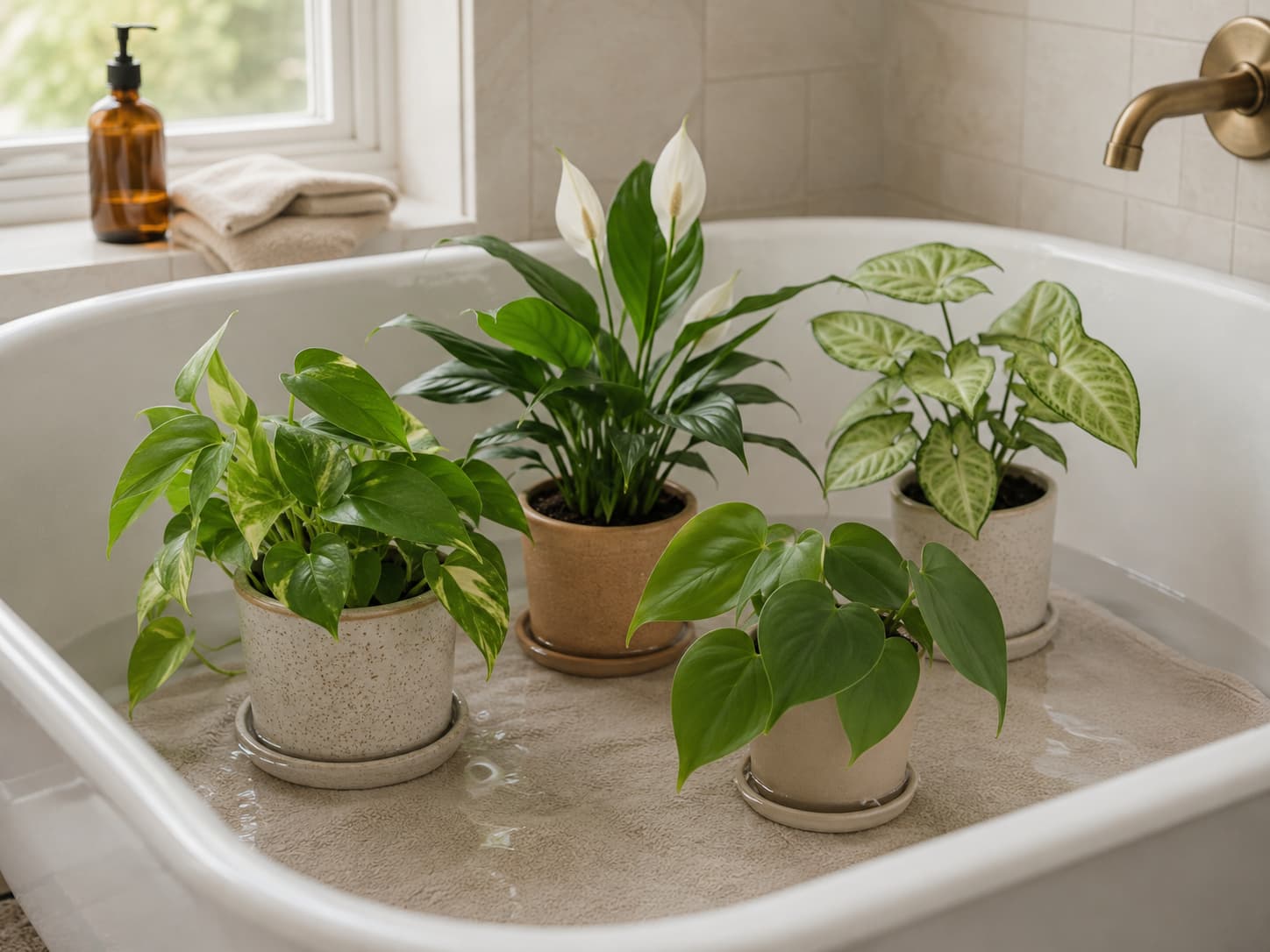
Step by step:
- Water all plants thoroughly the day before (so excess drains overnight).
- Lay a towel in the bathtub to protect the surface and keep pots from sitting in direct water.
- Arrange plants in the tub, grouped by size. Only include plants in pots with drainage holes.
- Add about 1 inch of water to the tub. The water should touch the bottom of the pots but not submerge them.
- Close the shower door or curtain to trap humidity.
- If your bathroom has no window, set a grow light on a cheap outlet timer (8 hours on).
Limitations: However, this setup is a poor fit for drought-tolerant plants that should not stay wet for long periods. Therefore, test the setup before using it for a longer trip, especially with plants that dislike constantly wet mix.
Tested result: I used this for a 9-day trip with 4 tropicals in my windowless guest bathroom, with a $12 grow light on a timer. All 4 survived, but the calathea had some crispy edges — it wanted more humidity than the tub provided alone. For humidity divas, add a second towel soaked in water next to (not under) the pots.
Method 3: Wine Bottle Drip $0 7–10 days per bottle
For a few medium pots, a bottle drip can help keep plants alive while on vacation when you test the flow before departure. This method is free and easy. In addition, the narrow neck of a wine bottle can slow the release of water that's surprisingly reliable.
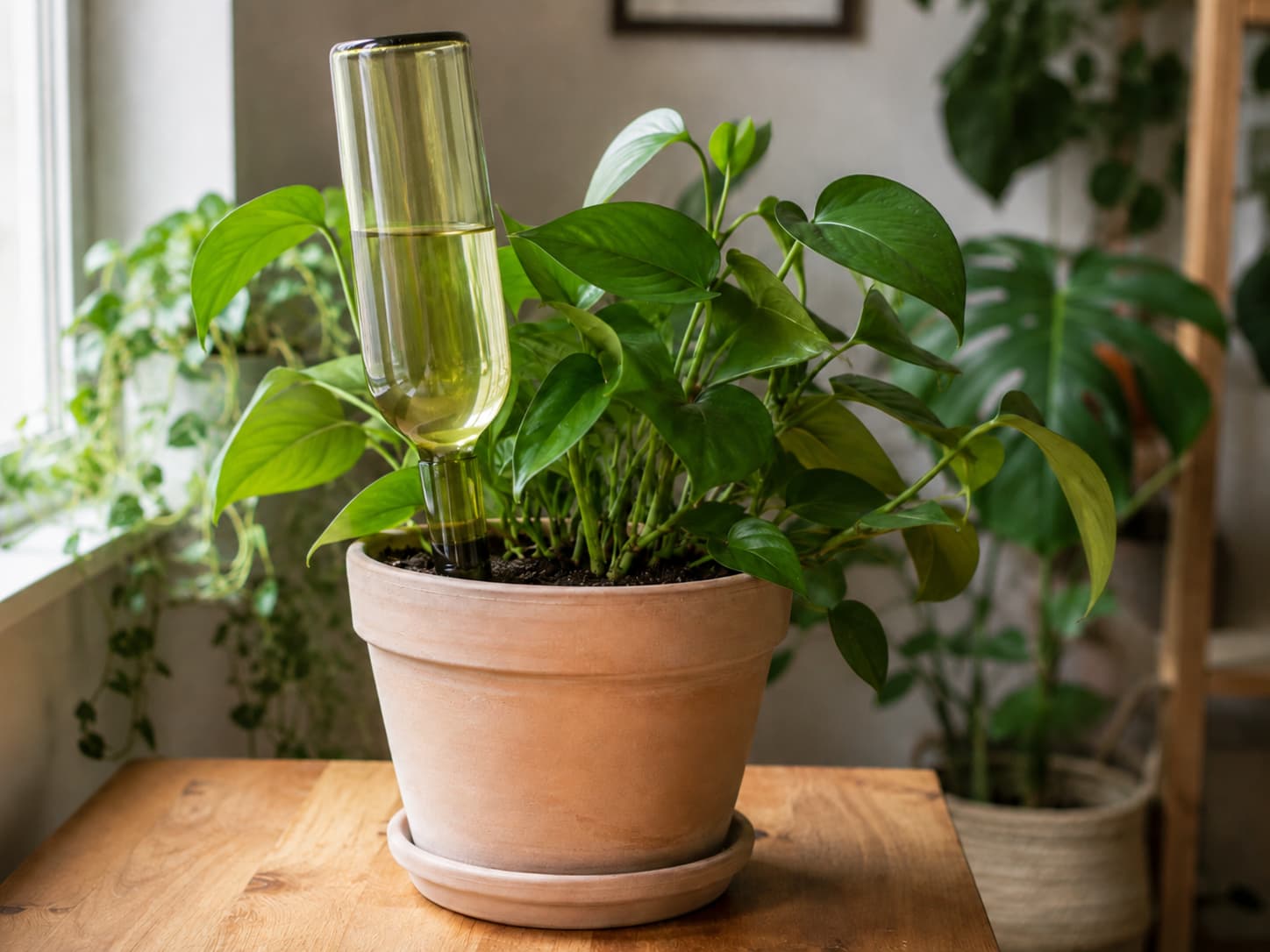
Step by step:
- Clean an empty wine bottle and fill with water.
- Water the plant thoroughly first — the moist soil creates a seal at the bottle neck.
- Invert the wine bottle and quickly push the neck about 2 inches into the soil.
- The soil seals the opening; water releases slowly as the soil dries and breaks the seal slightly.
- Push deeper for slower flow, shallower for faster flow.
Why wine bottles, not water bottles: By contrast, wide-mouth bottles can release water too quickly. The narrow wine bottle neck creates consistent slow release. However, the actual duration depends on pot size, soil texture, temperature, and how tightly the neck seals. For larger pots, test a larger reservoir before the trip rather than assuming one bottle will last a fixed number of days.
Tested result: Tested on a fiddle leaf fig during a 7-day trip. One 750ml bottle kept the soil consistently moist. Came back to zero leaf drop — a first for me with this plant on vacation. The trick was watering the soil first so it formed a seal around the neck.
Method 4: Terracotta Stake + Bottle $8–12 2–3 weeks per bottle
However, the terracotta stake gives you more control than a bare bottle. As a result, the porous stake can moderate water movement into the mix.
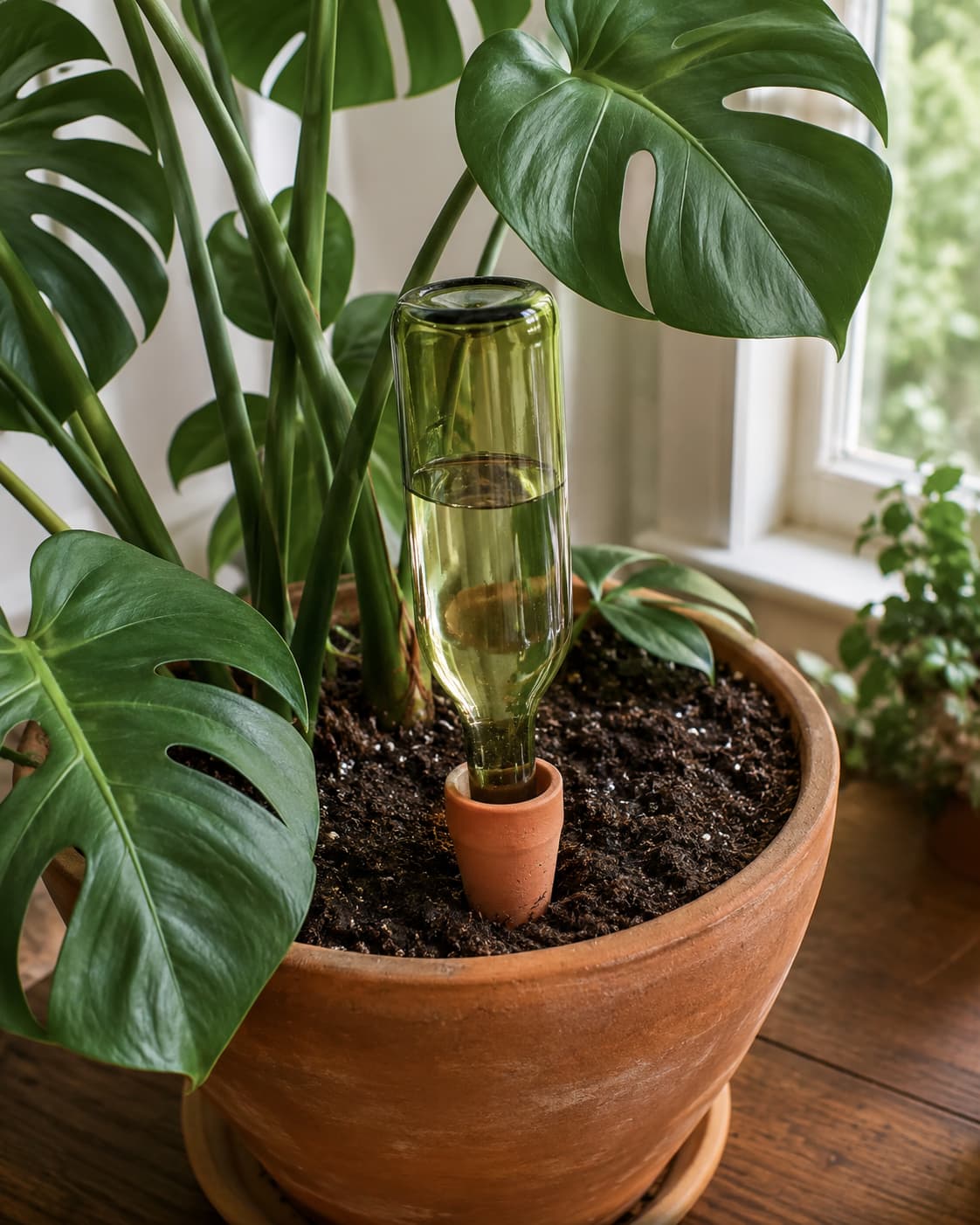
Step by step:
- Buy terracotta watering stakes (about $8–12 for a 4-pack on Amazon).
- Insert the stake into the soil, pointed end down.
- Fill a wine bottle with water, invert it, and insert the neck into the stake's opening.
- Water flows from the bottle through the porous terracotta and into the soil at the rate the soil demands.
For larger plants, this is the bottle-based setup I prefer when a pot cannot be moved easily. In practice, the porous terracotta helps moderate water movement between the reservoir and the potting mix. When soil dries, suction pulls water through. However, reservoir life varies with the stake, potting mix, root demand, and room conditions.
Tested result: This saved my monstera on a 16-day trip. Two stakes, two wine bottles, and it actually pushed a new leaf while I was gone. The terracotta regulation really does make a difference vs. bare wine bottles — flow is steadier and the reservoir lasts longer.
Method 5: Plastic Bag Greenhouse $0–1 2–3 weeks
Finally, the plastic-bag method is best reserved for individual humidity-loving plants. Then, moisture from transpiration can condense on the bag, and water drips back down — a self-contained water cycle.
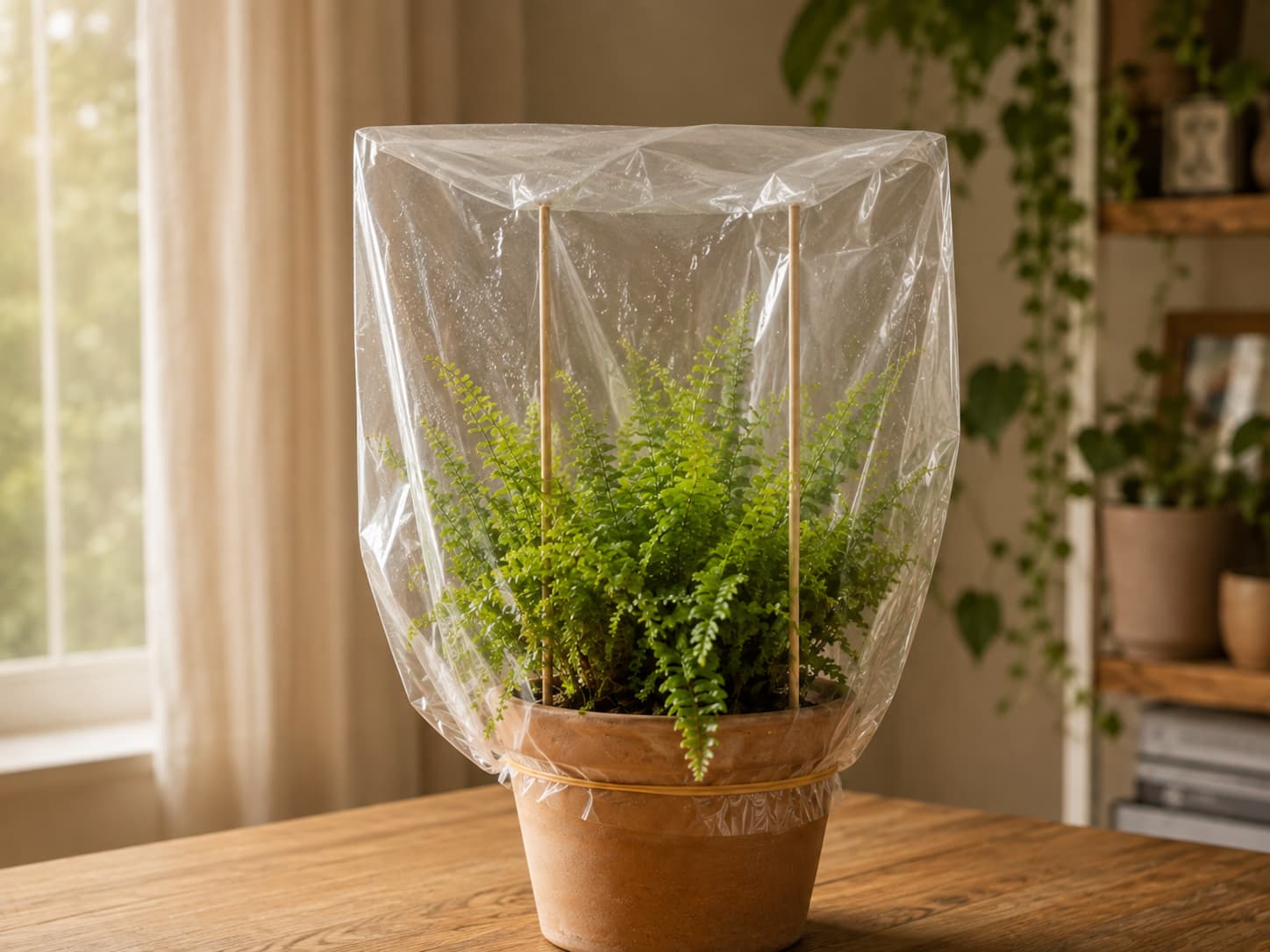
Step by step:
- Water the plant thoroughly.
- Insert 2–3 wooden skewers into the soil to keep the bag off the leaves.
- Place a clear plastic bag (Ziploc for small plants, clean garbage bag for large ones) over the plant.
- Seal the bag around the pot rim with a rubber band or twist tie.
- Place in indirect light only. Never in direct sun — the bag acts like a greenhouse and will cook the plant.
When you return: Don't yank the bag off. Instead, open the bag gradually before removing it completely.
Tested result: Used this for a fern during a 10-day winter trip (lower light, so less heat risk). It worked, but I forgot to harden it off — yanked the bag off and half the fronds crisped within hours. Open gradually over 2 days. Lesson learned the hard way.
What Doesn't Work (Stop Doing These)
Five Vacation-Watering Mistakes to Avoid
10 Plants That Survive 2+ Weeks Without Water
Drought-Tolerant Houseplants for Frequent Travelers
By contrast, choosing drought-tolerant species can make it much easier to keep plants alive while on vacation. Some of these plants barely notice a short trip. Therefore, these are easier choices if you travel often.
| Plant | Survives | Why it survives |
|---|---|---|
| ZZ Plant | 3–4 weeks | Thick rhizomes store water underground; waxy leaves reduce transpiration |
| Snake Plant | 3–4 weeks | CAM photosynthesis — stomata closed during day; thick succulent leaves store water |
| Ponytail Palm | 3–4 weeks | Swollen caudex base is literally a water tank |
| Cast Iron Plant | 3–4 weeks | Named for indestructibility; extremely slow transpiration |
| Jade Plant | 2–3 weeks | CAM photosynthesis; thick fleshy leaves are water storage organs |
| Aloe Vera | 2–3 weeks | Gel-filled succulent leaves; CAM photosynthesis |
| Hoya | 2–3 weeks | Thick waxy leaves; semi-succulent |
| Rubber Plant | 2 weeks | Thick leathery leaves with waxy cuticle; moderate water storage |
| Pothos | 2 weeks (barely) | Will droop dramatically but recovers when watered |
| Rosemary (indoors) | 2 weeks | Mediterranean native; prefers to dry out between waterings |
Plants That Need Extra Vacation Care
On the other hand, moisture-loving plants need a more reliable watering plan or a plant sitter. Therefore, do not assume these moisture-loving plants can handle a long absence without a tested plan:
For example, Calathea and Maranta (prayer plants) can dry quickly because their thin leaves lose water readily. Ferns, especially maidenhair and Boston ferns, also need more consistent moisture than drought-tolerant houseplants.
Likewise, fiddle leaf figs and peace lilies can show obvious stress when their root zones become too dry. Newly repotted plants also deserve extra attention because their roots are still adjusting to the new container. For help checking post-vacation root damage, see our aloe troubleshooting guide.
Pre-Vacation Plant Care Checklist
Before you leave, work through the checklist in stages. The best way to keep plants alive while on vacation is to test the watering setup before departure rather than discovering a problem after you have left.
1 Week Before
- Decide on your watering method (wick, bathtub, plant-sitter, etc.)
- Set up and test the system for 3 days minimum
- Check every plant for pests — treat any infestations now (they explode while you're gone)
- Prune dead or yellowing leaves (reduces water demand and pest habitat)
- Remove saucers under pots if using self-watering (prevents root rot from standing water)
2–3 Days Before
- Water all plants thoroughly but normally (don't flood)
- Fill all reservoirs, wicks, and bottles
- Set grow lights on timers if needed
- Adjust thermostat — don't set above 78°F / 26°C (higher temps = faster drying)
- Close curtains partially (reduces heat stress without blocking all light)
- Move sensitive plants away from south/west windows
- Group plants together (creates micro-humidity zone)
- Take photos of each plant (for comparison on return, and to show any helper)
Day of Departure
- Final check: reservoirs full, wicks wet, bottles in place
- Leave written care instructions if someone is helping
- Ensure no plants are baking in direct sunlight through glass
After Your Trip: Vacation Plant Care and Recovery
When you return, remember that even a good plan to keep plants alive while on vacation cannot prevent every dropped or damaged leaf. Don't panic when you see droopy leaves. However, recovery speed depends on the plant and the type of stress.
Day 1: Assessment
First, check each plant: crispy/brown leaves = underwatered (very recoverable). Mushy/yellow stems = overwatered/rot (harder to save). Instead, rehydrate a very dry root ball gradually and confirm that the mix is actually accepting water. For bone-dry pots, bottom-water by sitting the pot in a tray of water for 30–60 minutes.
Day 2–3: Damage Control
Next, remove dead leaves and stems. For example, if you find genuinely soft, decayed roots, remove damaged tissue with clean tools and repot only when the root condition calls for it. In addition, inspect stressed plants for pest activity. Don't fertilize stressed plants. Wait 2 weeks.
Week 1: Recovery
Then, resume normal watering. Meanwhile, plants that dropped leaves may still produce new growth if stems and roots remain healthy. Prune any leggy, etiolated growth. Therefore, avoid unnecessary repotting while a plant is still stabilizing. If your succulents survived and you want more, this is a great time to propagate succulents from the healthy leaves.
Self-Watering Products Worth Buying
When a Ready-Made System Is Easier
However, if you'd rather buy a ready-made solution, these are the ones that actually deliver:
| Product | Price | Duration | Best for |
|---|---|---|---|
| Terracotta watering stakes | $8–12 / 4-pack | 2–3 weeks | Medium-large pots; pair with wine bottles |
| Blumat ceramic cones | $15–25 each | 2–4 weeks | The gold standard; highly reliable for any pot size |
| Self-watering spikes (adjustable) | $10–15 / 4-pack | 1–2 weeks | Budget option; better than glass globes |
| Drip irrigation kit + timer | $20–40 | Indefinite | Outdoor container plants; needs hose access |
| Grow light + outlet timer | $15–25 | — | Rooms without natural light during your trip |
Quick Answers
Watering and Vacation Setup
1.Can I leave my succulents for 2 weeks without watering?
2.What about outdoor container plants?
3.Should I adjust my thermostat before leaving?
Plant Sitters and Self-Watering Systems
4.How do I leave instructions for a plant-sitter?
5.Can I use self-watering pots for the first time right before a trip?
How to Keep Plants Alive While on Vacation: Final Takeaway
For shorter trips, the bathtub method or wine bottle drip may help keep plants alive while on vacation, while many drought-tolerant plants need little or no extra intervention. By contrast, for longer trips, the cotton wick system is the most reliable, lowest-cost solution — $3 of cotton twine and a bucket can keep 6–8 plants alive for 3+ weeks.
Most importantly, test your system before you leave. That single step is one of the simplest ways to keep plants alive while on vacation. For example, set it up, wait 3 days, and check the soil moisture. As a result, a short test can reveal a reservoir that drains too fast, a wick that stays dry, or a pot that remains too wet. Finally, if you travel often, consider drought-tolerant plants — ZZ plants and snake plants don't care if you disappear for a month.