Frost Alert: How to Protect Your Plants Before, During, and After a Freeze
You just saw the forecast: 31°F tonight. Your tomatoes are still ripening, your begonias are blooming, and you have about 4 hours of daylight left to do something. What you do in those 4 hours determines whether your plants survive or turn to black mush by morning.
I've lost plants to frost twice—once because I didn't cover them at all, and once because I covered them wrong (plastic sheeting touching the leaves, which is worse than no cover at all). Since then, I've developed a three-phase frost response system: what to do before the freeze, what to do during, and how to save plants that got hit after. This guide is that system.
Know Your Frost: Light Frost vs Hard Freeze
First, not all cold is equal. Therefore, the action you take depends on which type of event is coming:
| Light Frost | Hard Freeze (Killing Frost) | |
|---|---|---|
| Temperature | 32–36°F (0–2°C) | Below 32°F / below 28°F for 4+ hours |
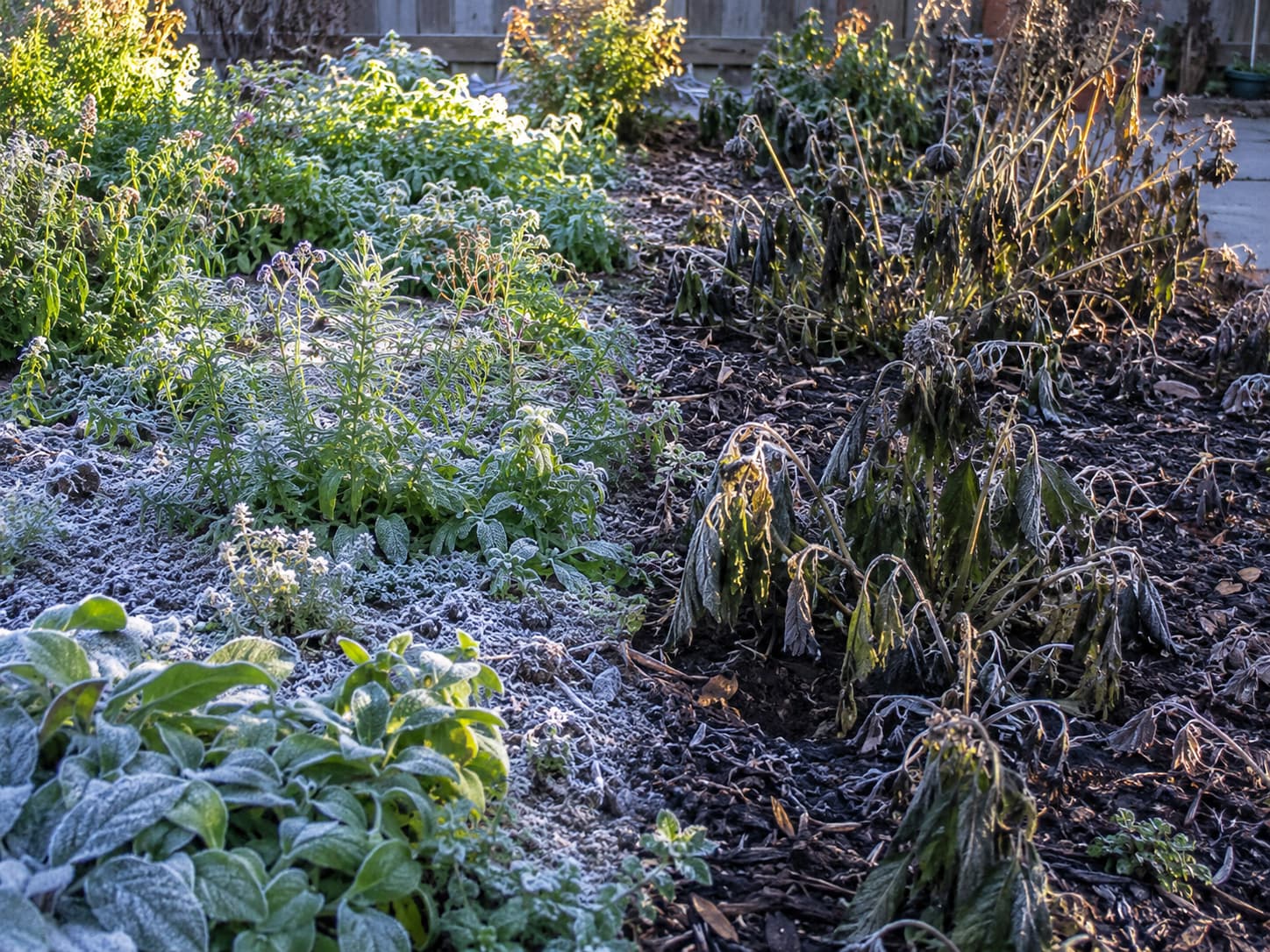
| What happens | Ice crystals can damage tender leaf tissue, while some plants recover after a light frost. | Freezing inside plant tissue can cause more extensive injury and plant death. |
| Plants at risk | Tomatoes, peppers, basil, begonias, impatiens, coleus | Everything above + semi-hardy plants (calendula, snapdragons, dusty miller) |
| Plants that survive | Pansies, kale, spinach, mums, ornamental cabbage | Very few unprotected plants survive a hard freeze |
| Your action | Cover tender plants; harvest ripe produce | Cover everything you want to save; bring containers inside; accept some losses |
Drag the bar below or swipe horizontally to view the remaining columns.
The 4-Hour Pre-Frost Checklist
When frost is in the forecast, you have a narrow window. So, prioritize the jobs that matter most:
Hour 4 (Before Sunset): Water and Harvest
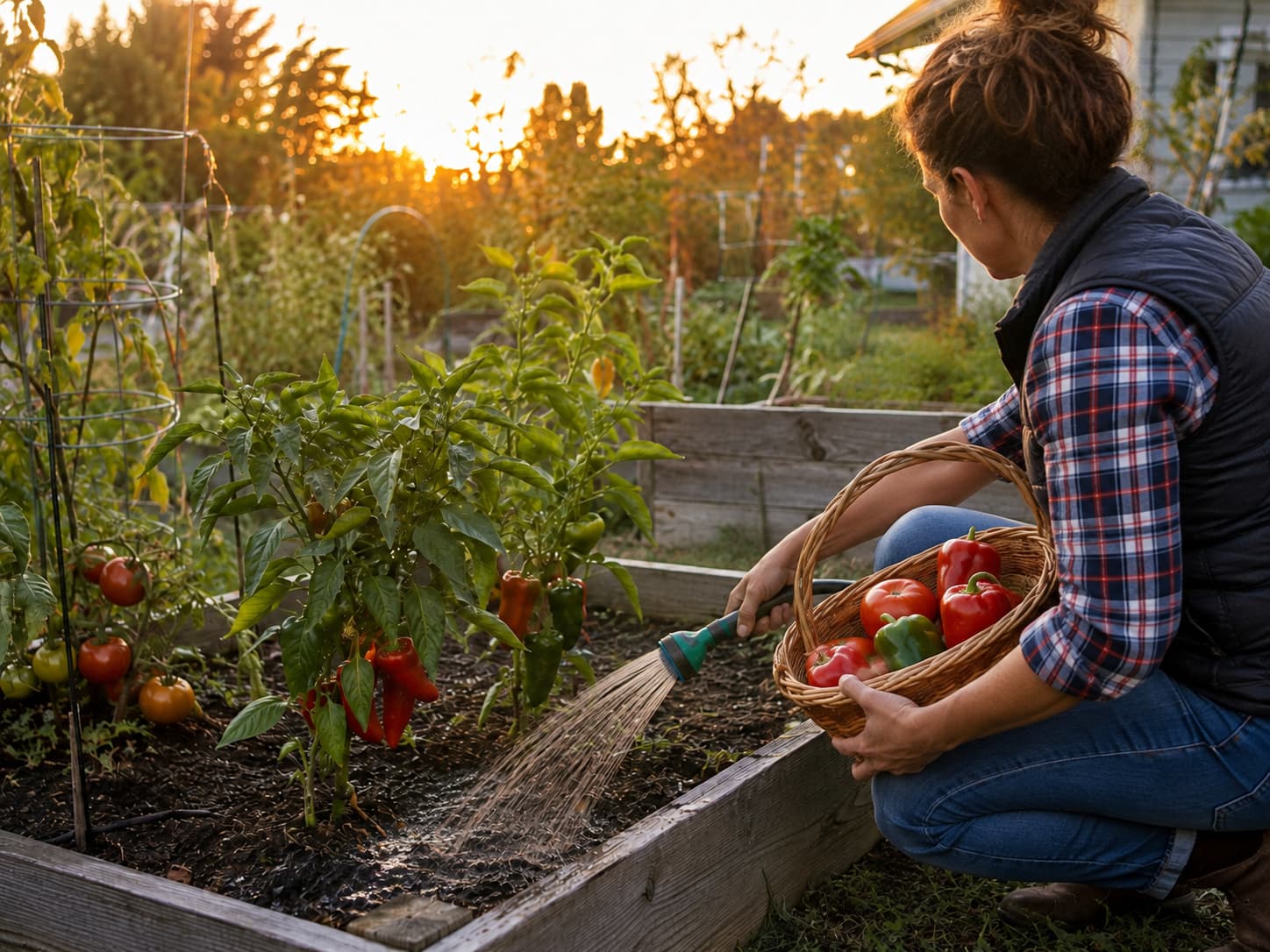
- Water the soil around vulnerable plants. In addition, moist soil can store more heat than very dry soil and release some of that warmth overnight. For that reason, water the root zone rather than intentionally wetting the foliage before a freeze.
- Harvest everything ripe. For example, tomatoes that have begun coloring can often continue ripening indoors after harvest. Pick them now. Peppers, basil, and squash should all come inside. Green tomatoes larger than a golf ball will ripen on the counter in 1–2 weeks.
- Dig up tender bulbs you want to save (dahlias, cannas, gladiolus). Store them in a cool, dry place (40–50°F).
Hour 3: Move What You Can
- Bring container plants indoors or into a garage/shed. Often, a sheltered unheated structure buffers plants from the coldest outdoor conditions.
- Group remaining containers together near a wall or fence—masonry and wood absorb daytime heat and radiate it back at night.
- For detailed instructions on transitioning outdoor plants inside, see our guide to hardening off and cold-night protection.
Hour 2: Cover What You Can't Move
- Then, cover the most valuable or cold-sensitive plants first. Likewise, if materials are limited, prioritize expensive, sentimental, or hard-to-replace plants.
- Also, use the right material (see comparison table below).
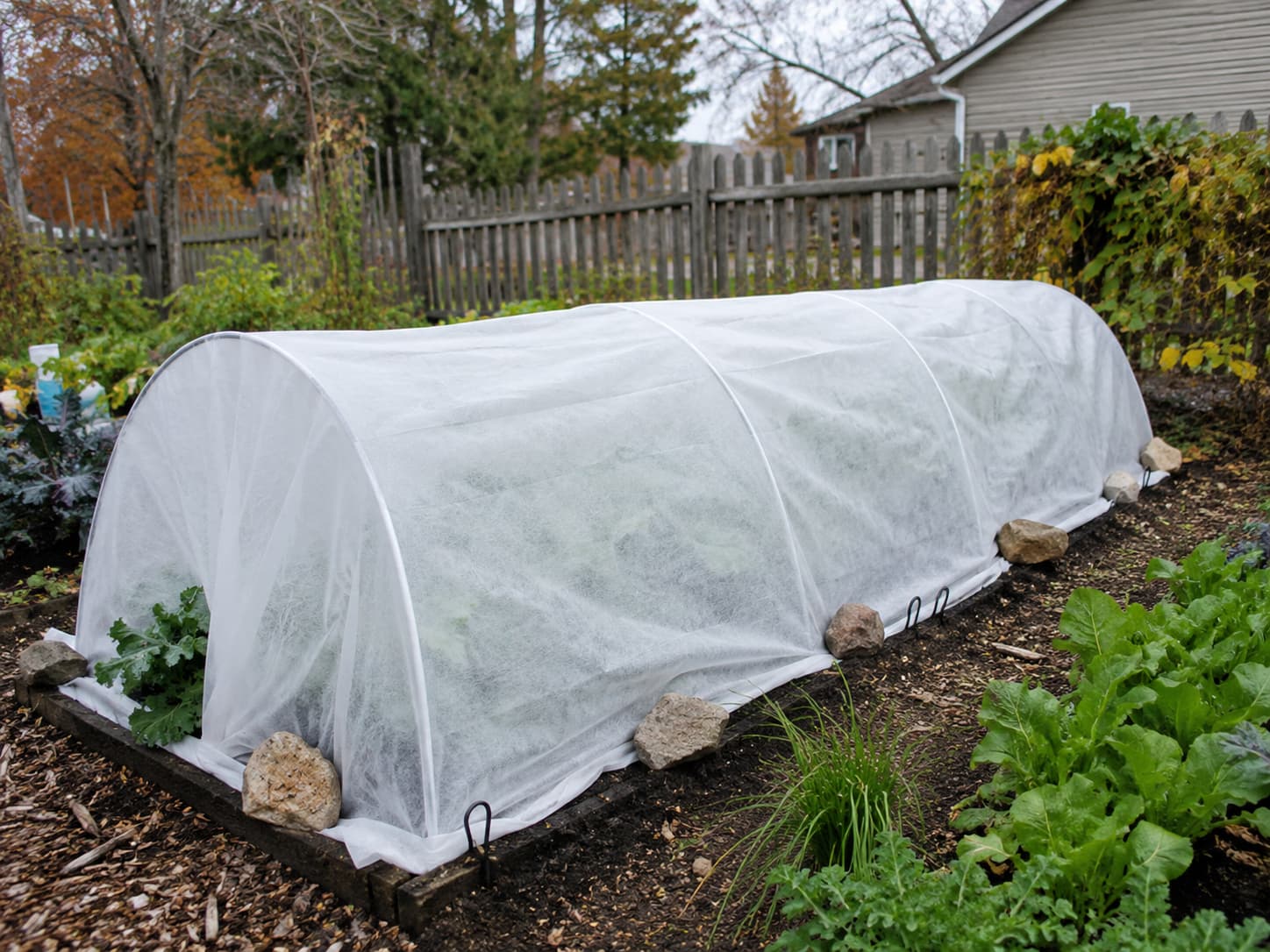
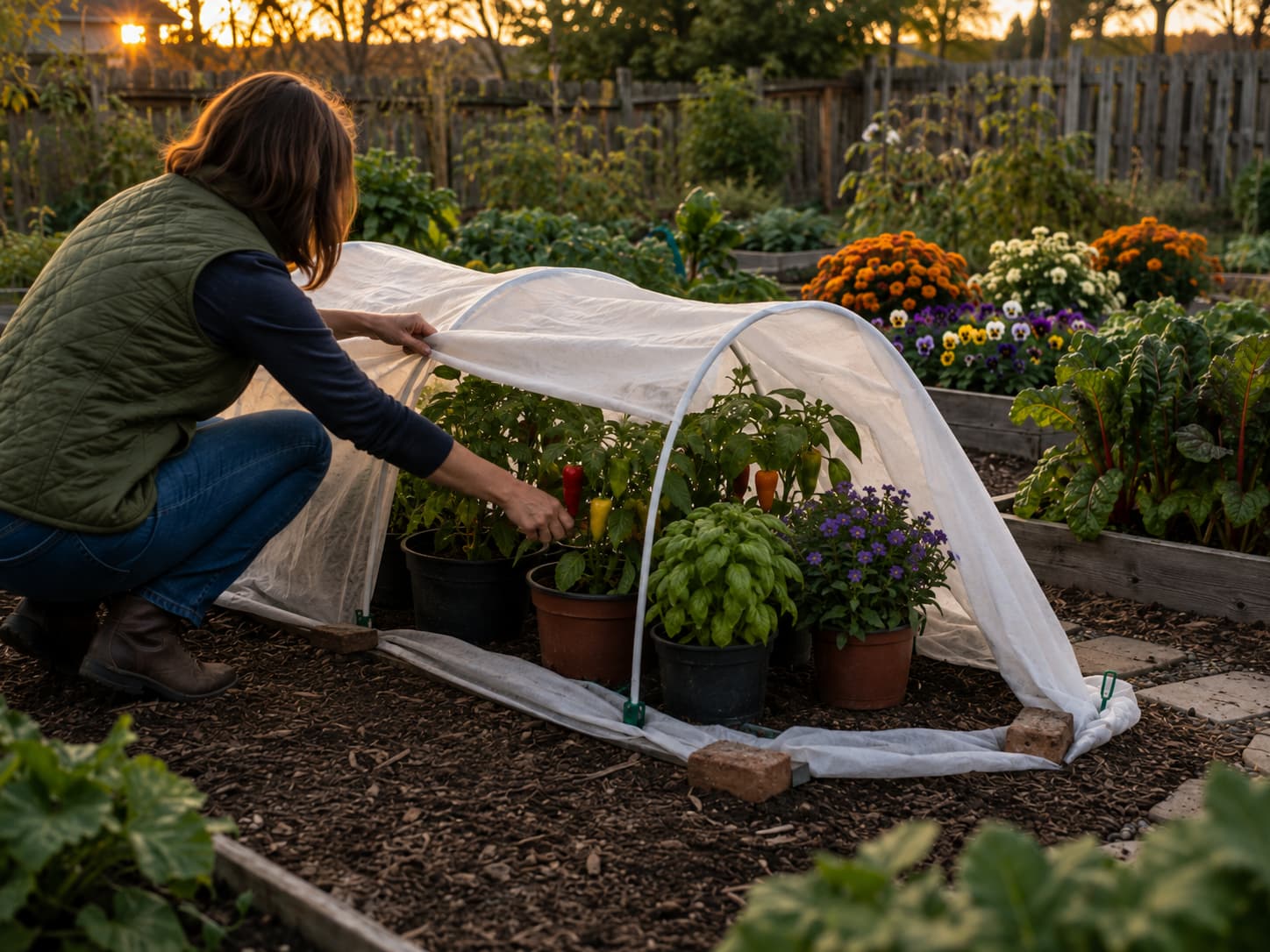
- Finally, anchor covers to the ground with rocks, bricks, or garden staples. The cover traps radiant heat from the soil—if it's not sealed at the bottom, the warm air escapes.
Hour 1: Final Check Before Dark
- Before dark, make sure covers are supported above tender foliage where practical. Where fabric touches a leaf, that leaf will freeze at the contact point. For example, use stakes, chairs, or tomato cages to create a simple tent structure.
- Add a heat source if you have one: a string of old-style incandescent Christmas lights (not LED—LED doesn't produce heat) under the cover adds 2–5°F of warmth.
- Finally, set an alarm for 30 minutes after sunrise. You need to remove covers before the sun heats the interior and cooks your plants.
Covering Materials Ranked: What Actually Works
Next, the material you choose makes a major difference. For example, compare the options below before choosing a cover:
| Material | Frost Protection | Cost | Pros | Cons |
|---|---|---|---|---|
| Frost cloth / row cover (1.5 oz) | 4–8°F | $12–20 for 10×50 ft roll | Designed for this; lets light and water through; can stay on for days | Needs anchoring; not enough for hard freezes below 25°F |
| Heavy frost blanket (2+ oz) | 6–10°F | $25–40 | Maximum fabric protection; good for hard freezes | Blocks some light; shouldn't stay on more than 3 days |
| Old bedsheets | 2–4°F | Free | Everyone has them; quick to deploy | Wet cotton freezes and transfers cold to leaves; minimal protection below 30°F |
| Plastic sheeting / tarp | 2–3°F if not touching plants | $5–10 | Waterproof; blocks wind | Must not touch foliage—plastic transfers cold directly; traps condensation that freezes; cooks plants in morning sun. Use ONLY as an outer layer over fabric. |
| Cardboard boxes | 3–5°F | Free | Great for individual small plants; rigid structure won't touch leaves | Won't fit large plants; gets soggy in rain |
| Straw / leaf mulch | 2–6°F at ground level | Free–$8/bale | Best for root protection; insulates soil and crown | Doesn't protect top growth; messy to remove |
Drag the bar below or swipe horizontally to view the remaining columns.
What to Avoid with Frost Covers
Plant-by-Plant Frost Survival Guide
Likewise, not every plant needs the same protection. As a result, a plant-by-plant lookup is more useful than one rule for the whole garden:
Must Cover or Bring Inside (Will Die at 32°F)
| Plant | Survives Down To | Best Protection Method |
|---|---|---|
| Tomatoes | 33°F | Harvest all fruit; cover plant with frost cloth + cloche; or just accept the season is over |
| Peppers | 33°F | Same as tomatoes; pick all peppers (they won't ripen indoors) |
| Basil | 35°F | Bring inside or harvest entirely; basil turns black at 35°F and doesn't recover |
| Impatiens, coleus | 33°F | Bring containers inside; cover in-ground plants with frost cloth |
| Begonias | 35°F | Dig up tuberous begonias; cover wax begonias with frost cloth |
| Citrus trees (potted) | 28–32°F (varies by variety) | Bring inside garage; wrap outdoor trees with frost blanket + incandescent lights |
Drag the bar below or swipe horizontally to view the remaining columns.
Cover During Hard Freeze (Survive Light Frost Alone)
| Plant | Survives Down To | Notes |
|---|---|---|
| Mums | 25°F | Flowers may brown but the plant survives; see our fall flowers guide |
| Kale, collards | 20°F | Frost actually improves flavor (converts starches to sugars) |
| Pansies, violas | 20°F | May look flat in morning but bounce back by afternoon |
| Calendula | 25°F | Cover for hard freeze; flowers may survive light frost |
| Snapdragons | 25°F | Established plants survive; new seedlings need cover |
| Spinach | 15°F | One of the cold-hardiest vegetables; rarely needs cover |
Drag the bar below or swipe horizontally to view the remaining columns.
Don't Bother Covering (Very Cold-Hardy)
- Ornamental cabbage and kale (survive to 5°F)
- Winterberry holly (survives to -30°F)
- Evergreen trees and shrubs (may get winter burn but won't die from one freeze)
- Garlic, onions, and shallots (planted in fall specifically to overwinter)
- Pansies in the ground (not in containers—containers freeze through faster)
3 Frost Protection Methods (Beyond Just Covering)
Method 1: The Cloche Tent
Best for: Individual plants, raised beds with spaced-out crops
For example, a cloche is a transparent or semi-transparent cover that creates a protected pocket around a single plant. However, traditional glass cloches are beautiful but expensive and fragile. Here's what works better:
- Milk jug cloches: Cut the bottom off a clean gallon milk jug. Set it over the plant with the cap off (for ventilation). Press it 1 inch into the soil to anchor. On warm days, remove the cap for ventilation. As a bonus, this option is inexpensive and easy to deploy for small plants.
- Commercial hot caps: Wax-paper cones sold in packs of 25 for about $8. They last one season and provide 3–5°F of protection. Moreover, the same basic cover can be useful for tender spring transplants.
- Upturned pots: Place a terra-cotta pot over the plant, then put a rock on top to keep it in place. In the morning, remove the pot cover. Provides 3–5°F of protection but blocks all light—don't leave it on for more than 18 hours.
Method 2: The Hoop Tunnel
Best for: Garden rows, raised beds, multiple plants in a line
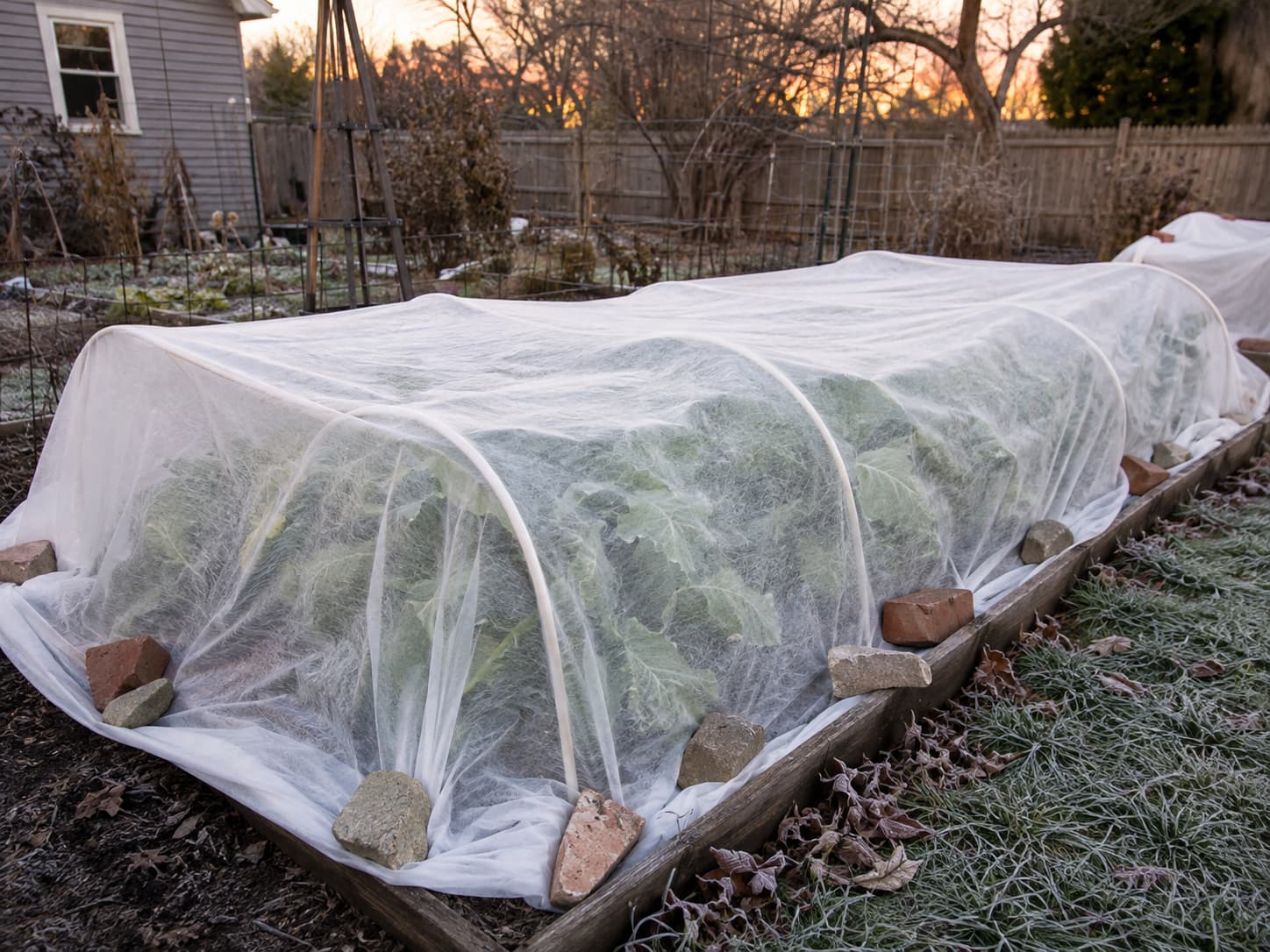
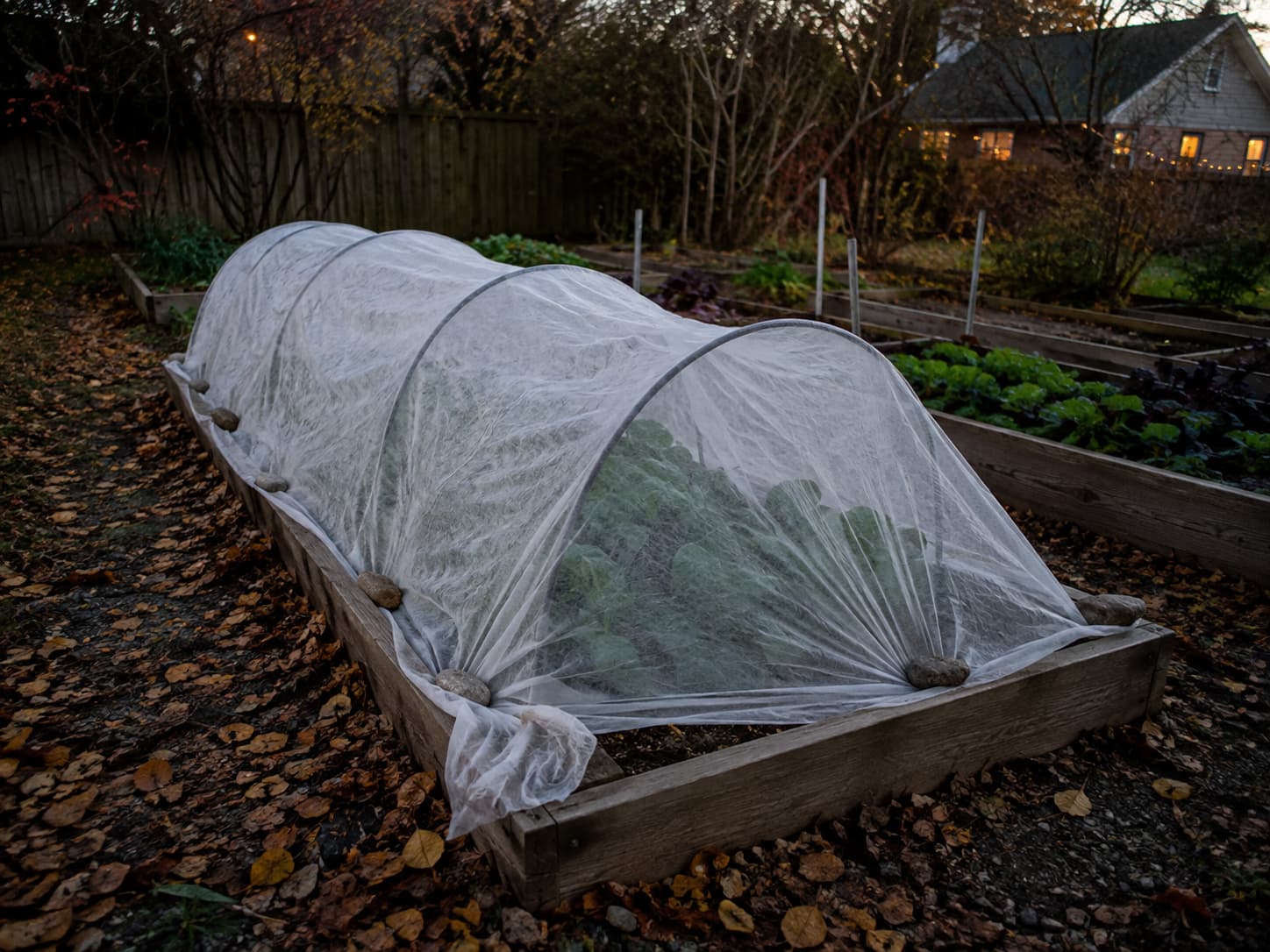
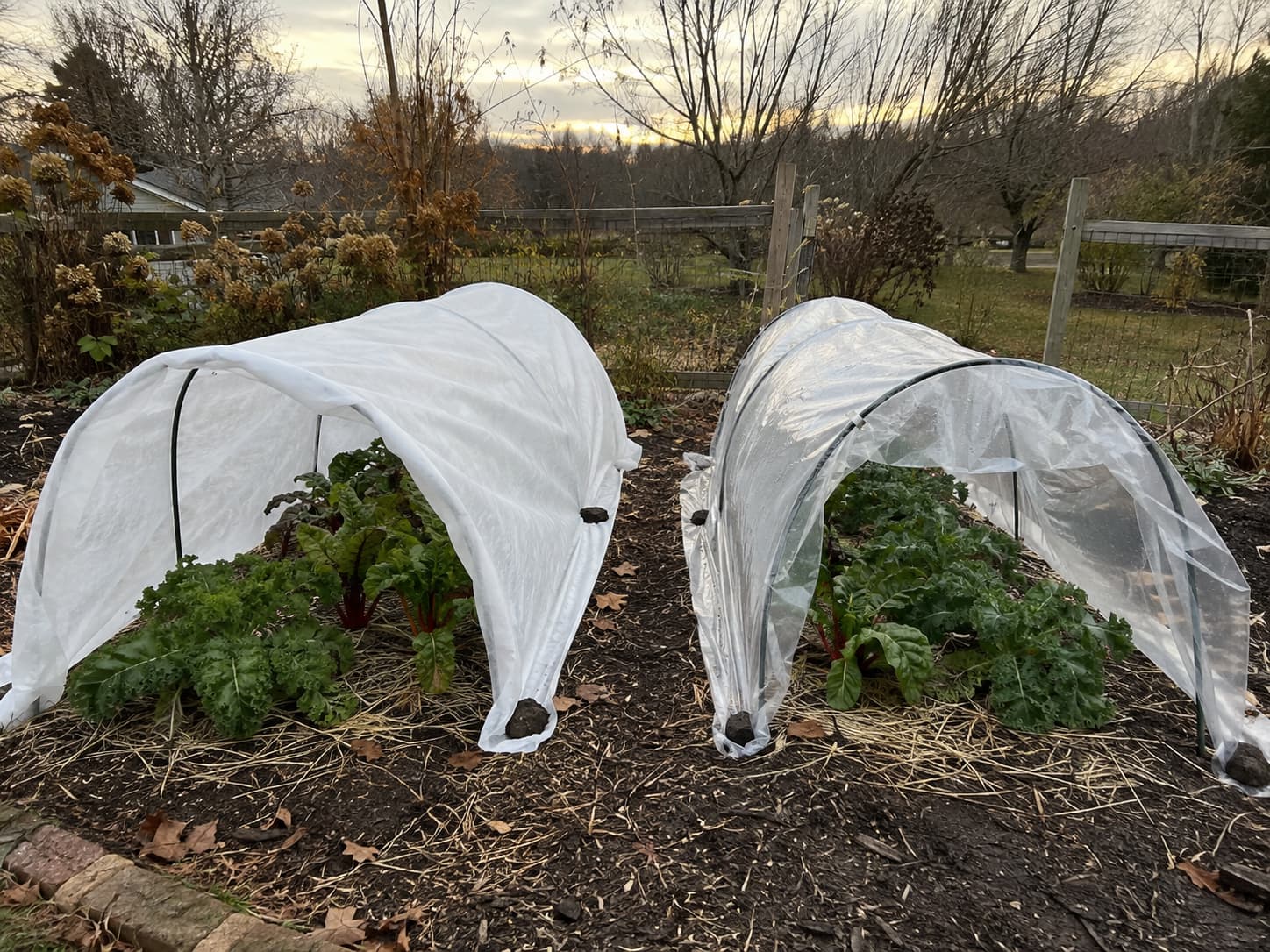
First, drive PVC hoops or bent wire into the ground at practical intervals along a row. Then, drape frost cloth over the hoops and secure the edges with soil or staples. In turn, this creates a sheltered pocket around the plants. In addition, the hoop structure keeps the fabric off the foliage. Reusable materials also help: a simple tunnel can serve through multiple cold events when the frame and fabric remain in good condition.
I built a 12-foot hoop tunnel over my fall lettuce bed in October 2024 using $14 of PVC piping and a $12 roll of frost cloth. That tunnel kept my lettuce producing through three frosts and one hard freeze (28°F). I harvested salad greens until December 15—four weeks longer than my uncovered neighbor. The same tunnel is ready to deploy again this fall. For more on container vs in-ground strategies, see our containers vs in-ground planting guide.
Method 3: The Straw Bale Fort
Best for: Semi-hardy perennials, rose bushes, small shrubs
First, arrange straw bales in a square or U-shape around the plant. Next, fill the interior with loose straw or dried leaves around the plant's crown. Finally, top the structure with a suitable cover such as frost cloth. This creates an insulated chamber that holds 8–12°F more than the outside temperature. However, this method is bulky, so reserve it for plants that genuinely need substantial crown and root-zone insulation. A single straw bale costs $5–8 at farm supply stores.
Container Plants: The Hidden Frost Trap
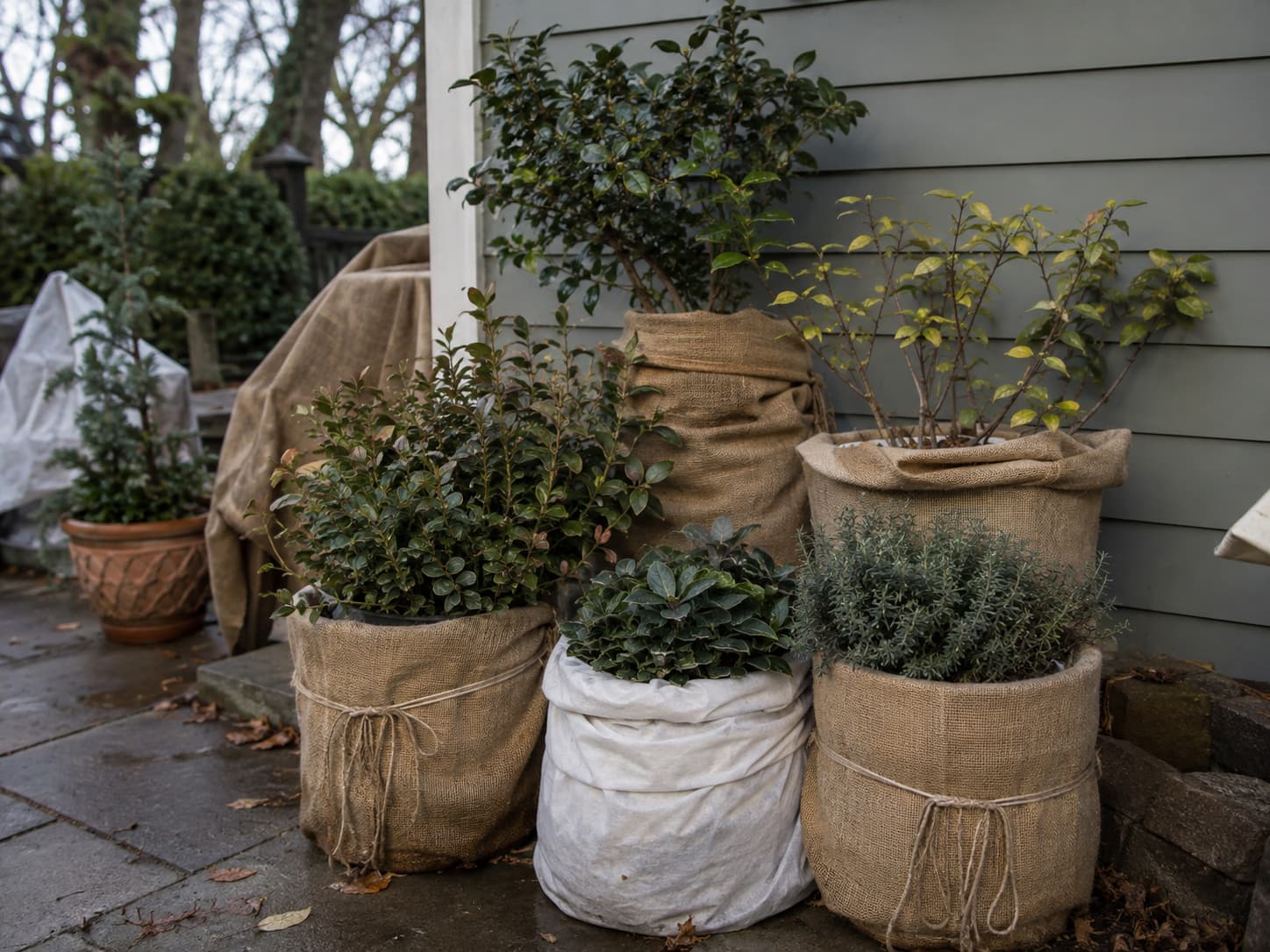
Meanwhile, container plants can be more vulnerable to cold than comparable in-ground plants because their roots have less surrounding soil for insulation. In-ground roots are insulated by the earth (soil temperature at 6 inches deep might be 45°F even when the air is 25°F). Container roots have no such protection—the soil in a pot freezes solid when air temperature drops below 28°F for more than 2 hours.
Container Freeze Priority List
| Priority | Plant Type | Action |
|---|---|---|
1Save first | Tropical houseplants summering outside (monstera, pothos, philodendron) | Move inside immediately; even one night at 40°F damages them |
2 | Citrus, bay laurel, olive trees in pots | Move to garage or wrap pot + plant in frost blanket |
3 | Tender perennials (dahlias, cannas, elephant ears) | Move to sheltered spot or dig up tubers for indoor storage |
4 | Hardy perennials in pots (hostas, ferns, heuchera) | Push pots against a protected wall; mulch the pot surface; they'll survive |
5Lowest | Annual flowers past their prime | Accept the loss; compost them |
Drag the bar below or swipe horizontally to view the remaining columns.
Post-Frost Recovery: What to Do the Morning After
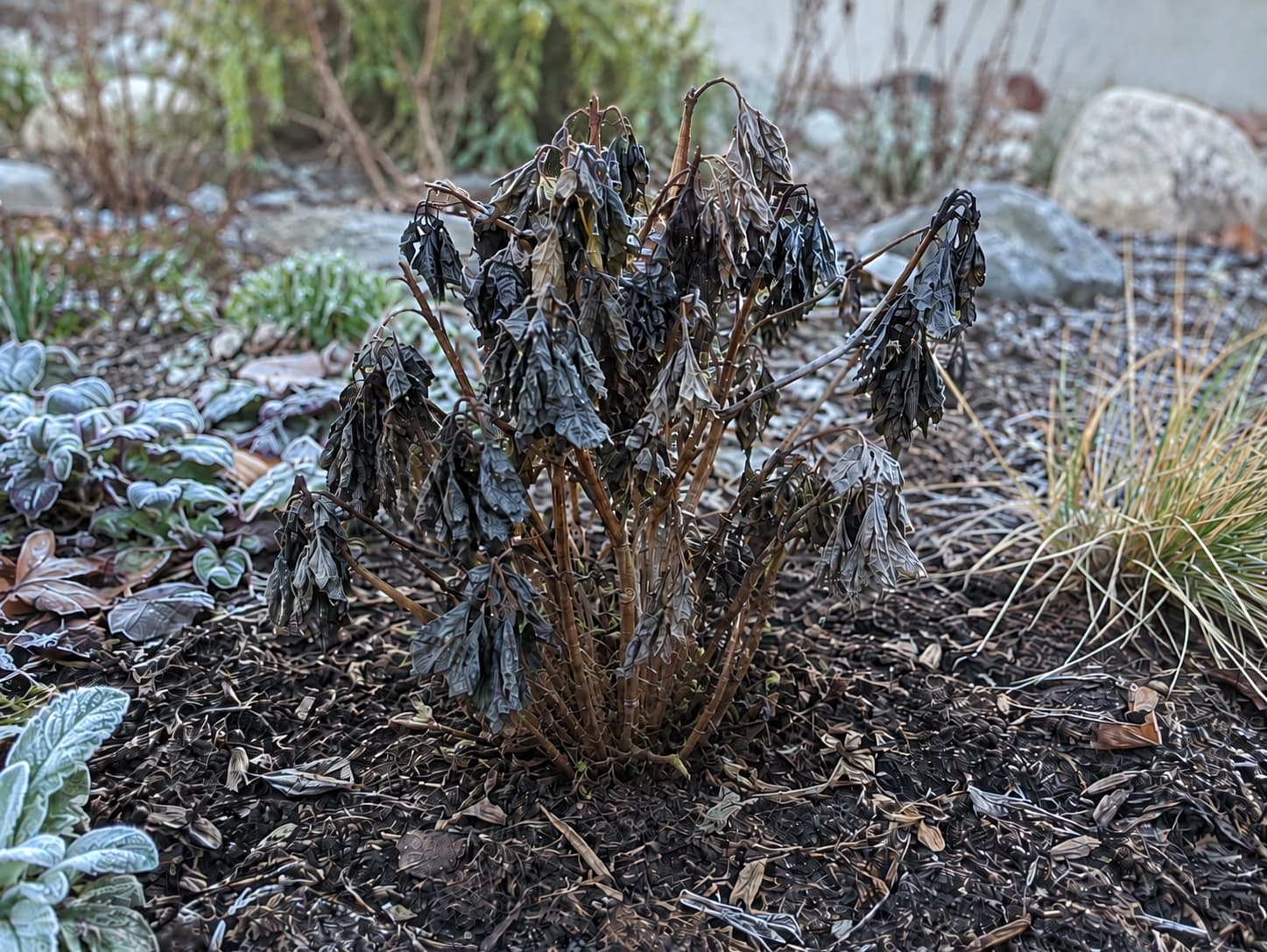
After the freeze, plants may look much worse before the full extent of damage is clear. Therefore, use the recovery steps below before deciding what is dead:
Do This
- Remove covers after the frost melts. Once the sun hits the plants and the ice crystals are gone, take off the fabric. Leaving covers on during warm days creates a sauna that damages plants faster than the frost did.
- For now, don't prune anything. Blackened, wilted foliage looks dead but may still be protecting the living tissue underneath. Wait at least 3–5 days before assessing real damage. The plant will show you what's truly dead (brittle, shriveled, dark brown/black) versus what's just damaged (wilted but still flexible, lighter brown).
- Water lightly if the soil is dry. Frost-damaged plants need moisture to recover, but don't soak them—damaged roots can't take up water efficiently and soggy soil causes rot.
- Watch the forecast. If another frost is coming in 2–3 days, put the covers back on. A plant that survived one frost may not survive a second hit while it's still recovering.
What to Avoid After a Freeze
- Avoid washing frost off with water. This is an old myth. Pouring water on frosted plants can actually cause cell rupture—the rapid temperature shift is more damaging than letting the frost melt naturally.
- Also, don't fertilize yet. Frost-stressed plants cannot process nutrients. Fertilizer now adds salt stress to cold stress.
- Finally, don't give up too soon. Many perennials that look completely dead above ground have live roots and crowns. Instead, wait for clear signs of living tissue and new growth before making major pruning decisions. I've seen rosemary and lavender that looked 100% dead in November push new growth the following April.
Zone-by-Zone First Frost Dates and Prep Timeline
| USDA Zone | Avg First Frost | Start Prepping By | Common Plants at Risk |
|---|---|---|---|
| Zone 3–4 | Early–mid September | Late August | Everything tender; frost cloth and tunnels essential |
| Zone 5 | Late September–early October | Mid September | Tomatoes, peppers, basil, tender annuals |
| Zone 6 | Early–mid October | Late September | Same as Zone 5 plus mums and late cole crops |
| Zone 7 | Late October–early November | Early October | Tropicals, citrus, extended harvest crops |
| Zone 8 | Mid–late November | Late October | Citrus, bougainvillea, succulents outdoors |
| Zone 9–10 | December–rare | November | Subtropicals; light frost only in cold years |
Drag the bar below or swipe horizontally to view the remaining columns.
However, zone-wide dates are only rough planning guides. Find local freeze records and climate information at the NOAA Climate Data Online tool—local microclimates can shift your date by 1–2 weeks in either direction.
The $30 Frost Protection Kit (Everything You Need in One Box)
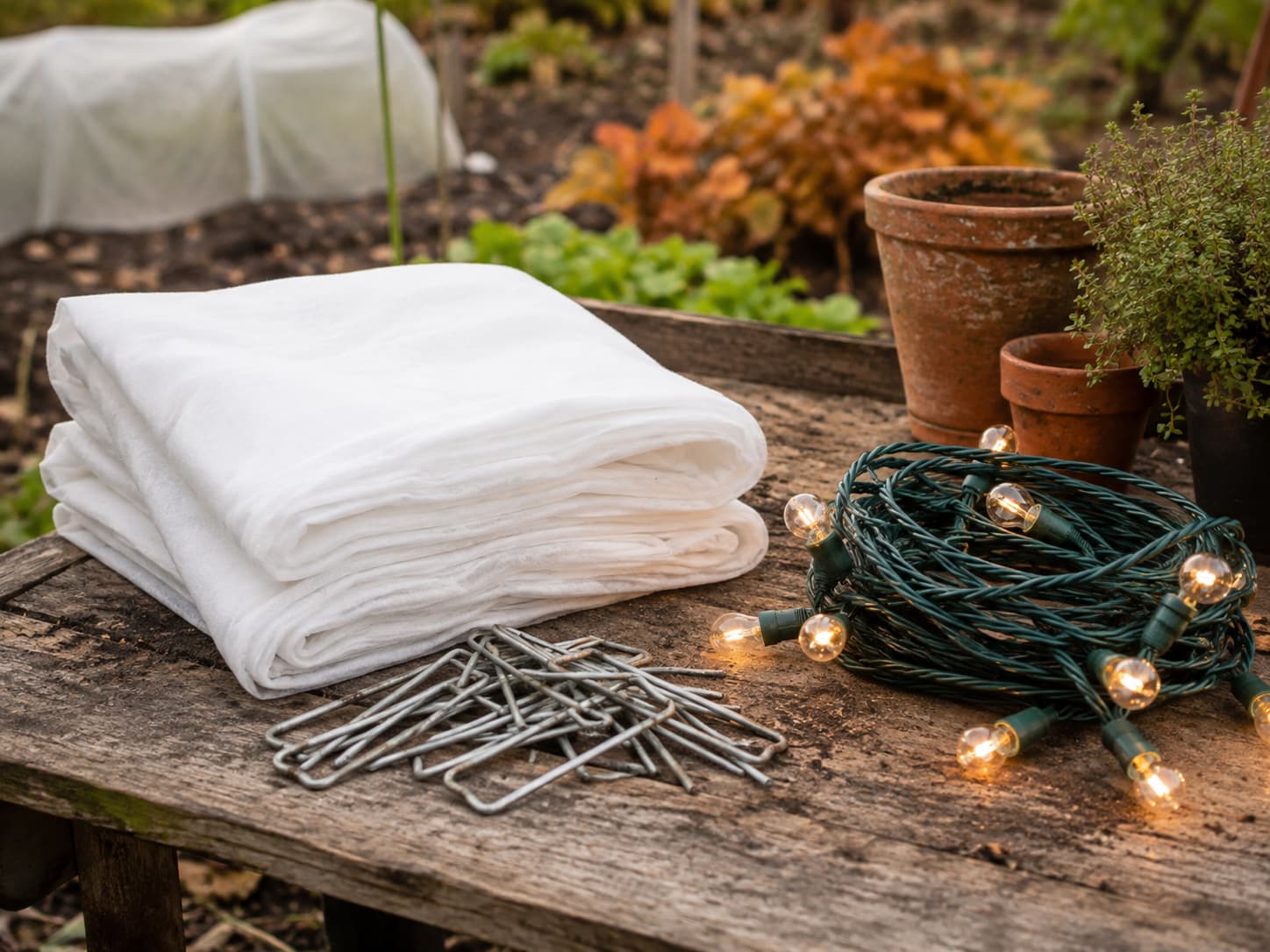
For a simple reusable kit, start with these three items:
| Item | What to Buy | Cost | Why |
|---|---|---|---|
| Frost cloth roll | 1.5 oz, 10×50 ft (e.g., Agribon AG-19) | $12–18 | 4–6°F protection; cut to size; reusable 2–3 seasons; lets rain through |
| Garden staples / pins | 6-inch, pack of 20 | $5–8 | Anchor cloth to soil so wind can't lift it and warm air can't escape |
| Incandescent Christmas lights | Old-style C7 or C9 (not LED) | $8–12 at thrift stores | Add 2–5°F under the cover; drape through shrubs or around trunks |
Drag the bar below or swipe horizontally to view the remaining columns.
Total: $25–38. Together, these supplies create a basic reusable kit for a small garden. In addition, durable cloth and staples can often be reused for multiple cold events when stored dry and intact.
5 Common Frost Protection Myths (Debunked)
Myth 1: "Spraying plants with water prevents frost damage"
Partially true but mostly dangerous. Commercial orchardists do use overhead irrigation to coat fruit blossoms in ice—the ice insulates the blossom at exactly 32°F, preventing colder damage. But this requires continuous water application starting before the freeze and running until the ice melts in the morning. If you stop watering even briefly, the ice drops below 32°F and causes worse damage than no water at all. For home gardeners, this technique is too risky. Don't try it.
Myth 2: "Plastic is the best frost cover"
False. However, plastic that rests directly on foliage can create damaging cold contact and condensation problems. In addition, it can trap condensation around foliage. Therefore, use frost cloth or breathable fabric as the primary cover when appropriate. If needed, plastic can serve as an outer weather layer over supported fabric, but it should not rest directly on foliage.
Myth 3: "Mulch protects everything from frost"
By contrast, mulch mainly protects roots and crowns rather than exposed top growth. For example, insulating mulch around a plant base can help protect the crown or root zone without protecting exposed stems and leaves. Therefore, mulch can complement, rather than replace, appropriate protection for tender top growth.
Myth 4: "Damaged plants should be cut back immediately"
No. In many cases, damaged foliage can temporarily shield lower tissue while you wait to see what recovers. Cutting it away exposes that tissue to the next frost. Instead, wait until the extent of damage is clear and the immediate freeze threat has passed before doing major pruning. However, clearly rotting tissue may need earlier sanitation to limit further decay.
Myth 5: "If it survived one frost, it'll survive them all"
False. Finally, repeated cold events can compound existing plant stress. A plant that survived 33°F last week may not survive 30°F this week—its cell walls are already stressed, and it has less energy reserves for repair. So, continue protecting a vulnerable plant when another damaging cold event is forecast.
Frequently Asked Questions
1. At what temperature should I cover my plants?
Cover tender plants (tomatoes, peppers, basil, impatiens) when the forecast drops to 36°F or below—frost can form on surfaces even when the air temperature is a few degrees above freezing, especially in low-lying areas and on clear, still nights. Hardy plants don't need covering until the forecast is below 28°F.
2. Can I leave frost cloth on during the day?
For example, some lightweight row-cover products are designed to remain in place briefly during extended cold, but follow the manufacturer's guidance. By contrast, heavier opaque coverings usually need more active removal or ventilation as daytime conditions warm. Never leave plastic on during the day—it turns into an oven.
3. What's the difference between frost cloth and a row cover?
In everyday gardening language, the terms often overlap. "Row cover" and "frost cloth" (also called "floating row cover" or "frost blanket") all refer to spun-bonded polypropylene fabric rated by weight: 0.5 oz for insect barrier (no frost protection), 1–1.5 oz for light frost (4–6°F), and 2+ oz for hard freeze (6–10°F). Buy the 1.5 oz weight for general use.
Frost-Damage and Container Questions
4. My plant got frosted and the leaves are black. Is it dead?
Not necessarily. However, blackened leaves do not always mean the entire plant is dead; the crown or lower stems may still be alive. Wait 5–7 days, then do a scratch test: scrape the bark with your fingernail. Green = alive and will regrow. Brown all the way down = dead. Many perennials and some shrubs regrow from the base even when all top growth is killed.
5. Should I bring my potted herbs inside before frost?
It depends on the herb. Basil must come inside at 40°F—it turns black at 35°F. Rosemary can stay outside to about 20°F if the pot is insulated, but a hard freeze in a container will kill it—see our plant care during absence guide for temperature thresholds. Mint and thyme are very cold-hardy and often don't need protection. For indoor options, see our grow light recommendations.
6. Do I need to protect evergreen trees from frost?
In general, established evergreens are less likely to need emergency frost protection than tender annuals or tropicals. However, newly planted evergreens (in their first winter) benefit from anti-desiccant spray (like Wilt-Pruf, about $12) applied in late fall. This coats the needles in a waxy film that reduces moisture loss through winter winds—frost itself rarely kills evergreens, but cold, dry wind desiccates them.
Sources
- University of New Hampshire Extension. "Protecting Plants from Frost." extension.unh.edu, 2024. extension.unh.edu
- Oregon State University Extension. "Frost Protection for Home Gardens." extension.oregonstate.edu, 2023. extension.oregonstate.edu
- Colorado State University Extension. "Frost and Freeze Protection." extension.colostate.edu, 2024. extension.colostate.edu
- NOAA National Centers for Environmental Information. "First and Last Freeze Dates." ncdc.noaa.gov, 2025. ncdc.noaa.gov