Still Getting Cold Nights? How to Harden Off Seedlings Without Stunting Them
Warm afternoons can make tomatoes, basil, peppers, and cucumbers look ready for outdoor life. But cold nights are usually what decide whether seedlings settle in — or stop growing for days.
Quick Answer
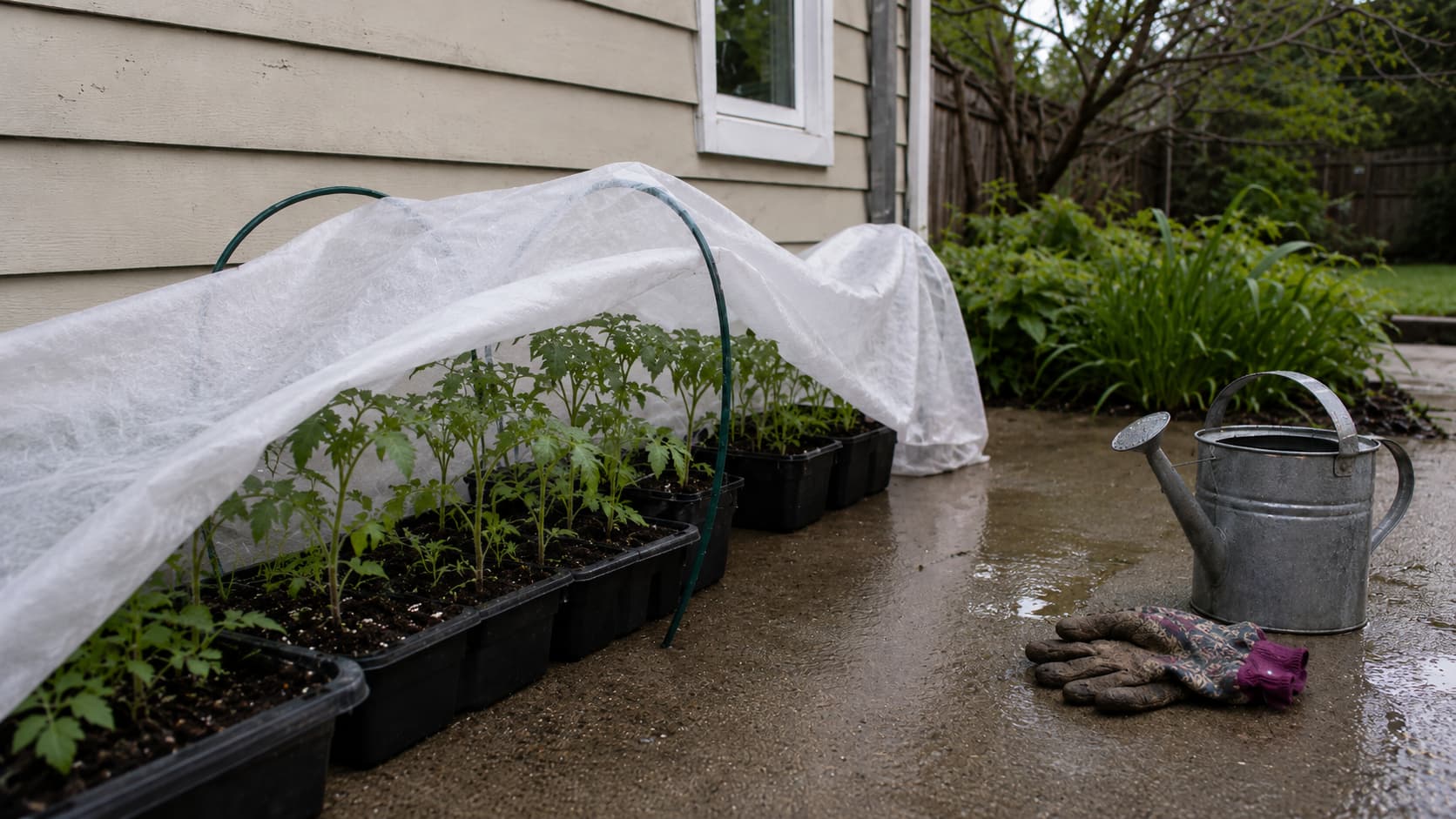
If nighttime temperatures are still dropping below 50°F / 10°C, keep basil and peppers indoors overnight and protect tomatoes and cucumbers from cold wind, cold rain, and sudden temperature drops. Even without frost, repeated cold nights can stall warm-season seedlings for days or weeks.
Why late spring can fool gardeners
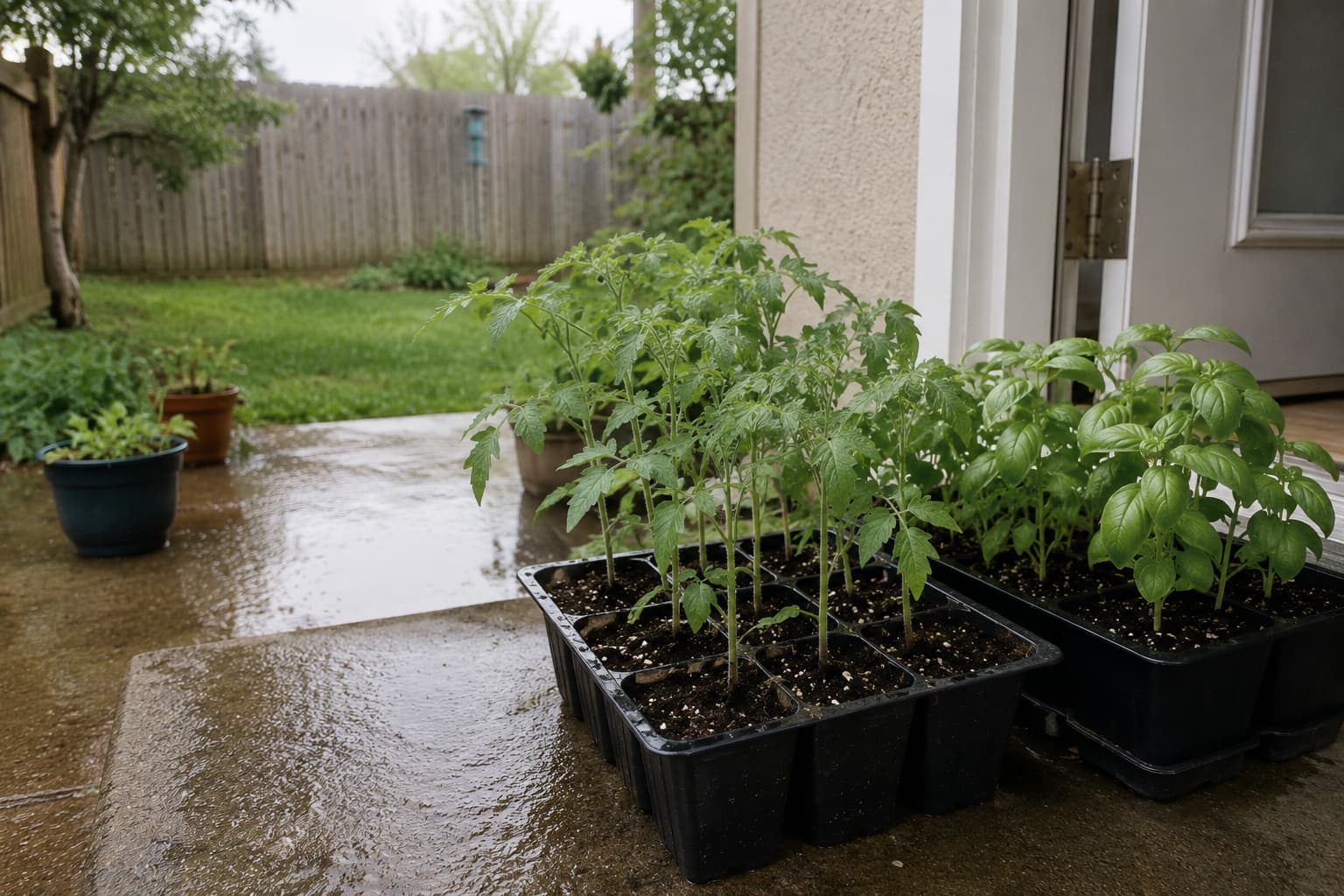
Your seedlings may look healthy. The garden center may be full. Your neighbors may already have tomatoes in the ground. Then one cold night arrives and everything changes.
Basil turns limp, peppers stop growing, tomato leaves curl, and cucumbers seem to freeze in place. That does not always mean you failed. It often means the weather changed faster than your seedlings could adapt.
Warm afternoons are not enough. Warm-season seedlings respond strongly to nighttime lows.
Wind matters. Dry, cold wind can stress soft indoor-grown seedlings even when the air temperature seems safe.
Cold soil matters too. Roots grow slowly when the soil stays cold, especially for peppers, basil, and cucumbers.
Can I leave seedlings outside tonight?
Use this simple check before leaving warm-season seedlings outdoors overnight.
Usually yes — if:
- Night temperatures stay above 50°F / 10°C.
- Seedlings have already been hardened off gradually.
- Wind exposure is mild.
- The soil is not cold and waterlogged.
Probably not yet — if:
- Nights still drop below 45–50°F.
- Basil or peppers still look soft or floppy.
- Cold rain or strong wind is forecast.
- The plants were moved outside suddenly.
Greenmuse rule of thumb: trust the nighttime forecast more than the sunny afternoon. A seedling can survive one cold night and still lose momentum for a long time afterward.
What hardening off actually means
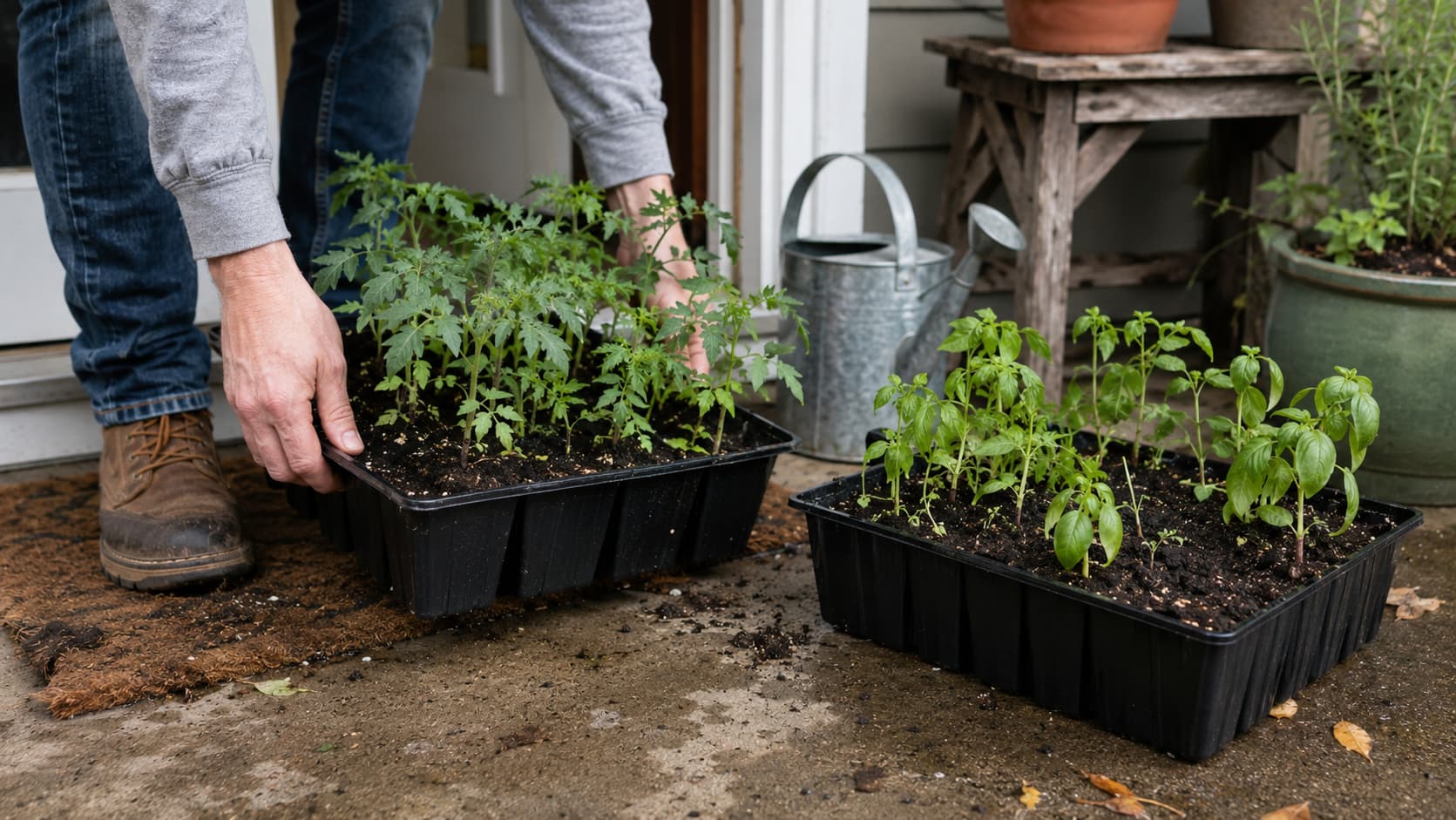
Hardening off is the slow process of helping indoor-grown seedlings adjust to outdoor conditions. Indoors, seedlings are protected from strong sun, wind movement, rapid moisture loss, cold nights, and temperature swings.
Outdoors changes everything. A seedling raised indoors needs time to learn the outdoors.
The Mid-May Hardening-Off Schedule
This schedule is gentle on purpose. If the forecast turns cold or windy, pause for a day and repeat the previous step instead of pushing forward.
Days 1–2
Bright shade only
- Start with 1–2 outdoor hours.
- Keep seedlings out of direct afternoon sun.
- Choose a calm spot with minimal wind.
Days 3–4
Add gentle morning sun
- Try 3–4 hours outdoors.
- Use morning sun, not harsh afternoon sun.
- Bring plants indoors before temperatures drop.
Days 5–6
Increase exposure slowly
- Move toward partial sun.
- Allow slightly longer outdoor time.
- Rotate trays so seedlings do not lean or scorch.
Days 7–10
Test longer days, then nights
- Only test overnight exposure if temperatures stay above 50°F for tomatoes, basil, peppers, and cucumbers.
- Tougher greens and some flowers may tolerate cooler nights, but still avoid sudden cold wind.
- If the forecast dips, bring seedlings back in and try again later.
Cold tolerance quick table
These are practical home-gardener ranges, not exact guarantees. Variety, soil temperature, wind, plant size, and recent hardening-off all matter.
| Plant | Stress often begins around | Higher damage risk | Greenmuse note |
|---|---|---|---|
| Tomato | About 55°F | Below 45°F | Can survive cool nights but may stall after repeated cold exposure. |
| Basil | About 50°F | Below 45°F | Usually one of the first herbs to collapse after a cold night. |
| Pepper | About 50°F | Below 45°F | Often stops growing before it looks seriously damaged. |
| Cucumber | About 50°F | Below 45°F | Dislikes cold soil and cold wet conditions. |
Why basil usually fails first
Basil is one of the least cold-tolerant herbs commonly grown in home gardens. Below about 50°F / 10°C, it can struggle with moisture balance and leaf function.
Cold-stressed basil may show blackened leaves, drooping stems, and stalled growth. Many gardeners think basil needs fertilizer, but often it simply got too cold.
A simple reminder
Basil usually doesn’t fail from lack of care. It often fails from one night that felt almost warm enough.
Tiny signs your seedlings are adjusting
After several days outdoors, seedlings stop looking so soft. Leaves may feel firmer, stems stay upright more naturally, and plants recover faster after a day outside.
That is usually when real adaptation begins. You are not just waiting for a date on the calendar — you are watching the plant build tolerance.
Regional notes for late spring
Exact timing depends on your local forecast and microclimate, but these patterns are common in mid-to-late spring.
Midwest U.S.
Late cold snaps can continue into May. Watch nighttime lows carefully before planting warm-season crops.
Northeast U.S.
Sunny afternoons may hide cold nights. Harden seedlings slowly and avoid rushing basil outdoors.
Pacific Northwest
Cold wet soil can slow peppers, basil, cucumbers, and other heat-loving seedlings.
UK gardens
Cold spring wind can stress seedlings even when frost is not forecast. Shelter matters.
A gentler way to think about spring planting
Experienced gardeners eventually stop treating planting season like a deadline. Some springs arrive early. Some hesitate. Some make every gardener second-guess the calendar.
Plants respond to conditions, not excitement. A patient seedling planted a little later often outgrows a stressed seedling planted too early.
FAQ
Can seedlings survive one cold night?
Sometimes, yes. But surviving and growing well are different. A cold night may not kill the plant, but it can slow growth and increase transplant stress.
Should I bring basil indoors if it will be 49°F?
Yes, that is usually the safer choice. Basil is sensitive to cool nights, especially if it has not been fully hardened off.
Can I harden off seedlings faster?
You can sometimes move faster in mild weather, but rushing often leads to sunburn, wind stress, and stalled growth. A steady 7–10 day transition is safer for most warm-season seedlings.
What matters more, air temperature or soil temperature?
Both matter. Warm air can make seedlings look ready, but cold soil slows roots. Warm-season crops settle in best when both nights and soil are reasonably warm.
What should I do if my seedlings already look stressed?
Move them out of harsh sun and wind, keep the soil lightly moist but not soggy, and avoid fertilizing immediately. Give them a few calm days to recover before increasing outdoor exposure again.
Still unsure tonight?
Check the nighttime low, wind, and rain forecast first. When the weather feels uncertain, bringing seedlings in for one more night is usually the kinder choice.