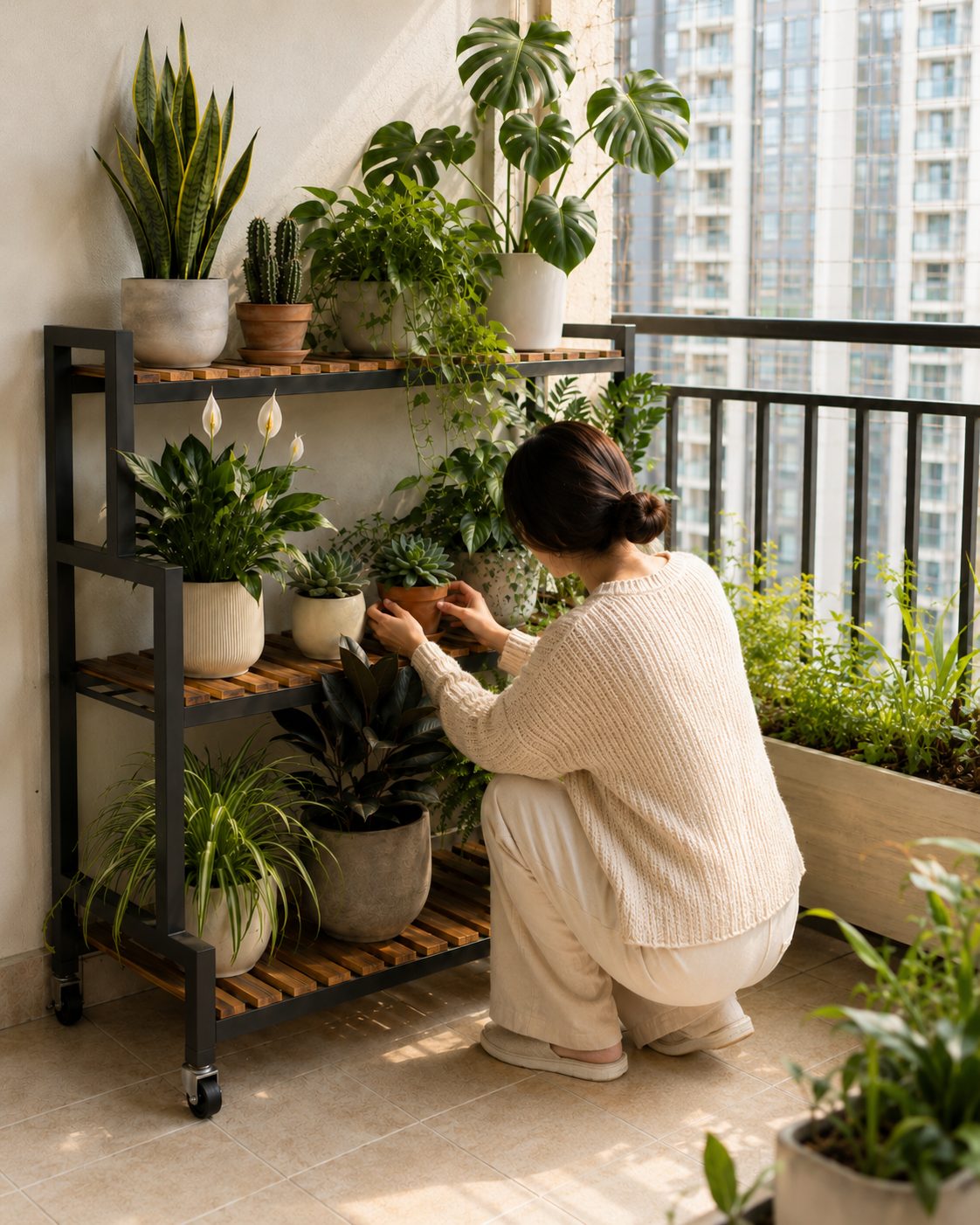
Houseplants Overheating in Summer? Signs, Fixes, and How to Prevent It
If your houseplant is wilting during summer heat, do not automatically water more. Heat stress often means the leaves are losing water faster than the roots can replace it. Move the plant gradually away from direct heat, raise humidity around it, check the soil before watering, and avoid pruning, repotting, or fertilizing until it stabilizes.
Houseplant Heat Stress at a Glance
- Common trigger
- Hot windows, failed AC, heat waves, and strong afternoon sun
- Early signs
- Wilting, leaf curling, crispy tips, pale patches, and sudden leaf drop
- First move
- Reduce heat and light intensity before adding more water
- Water rule
- Water only if the top soil is actually dry
- Avoid
- Direct AC drafts, midday misting, repotting, and fertilizer during recovery
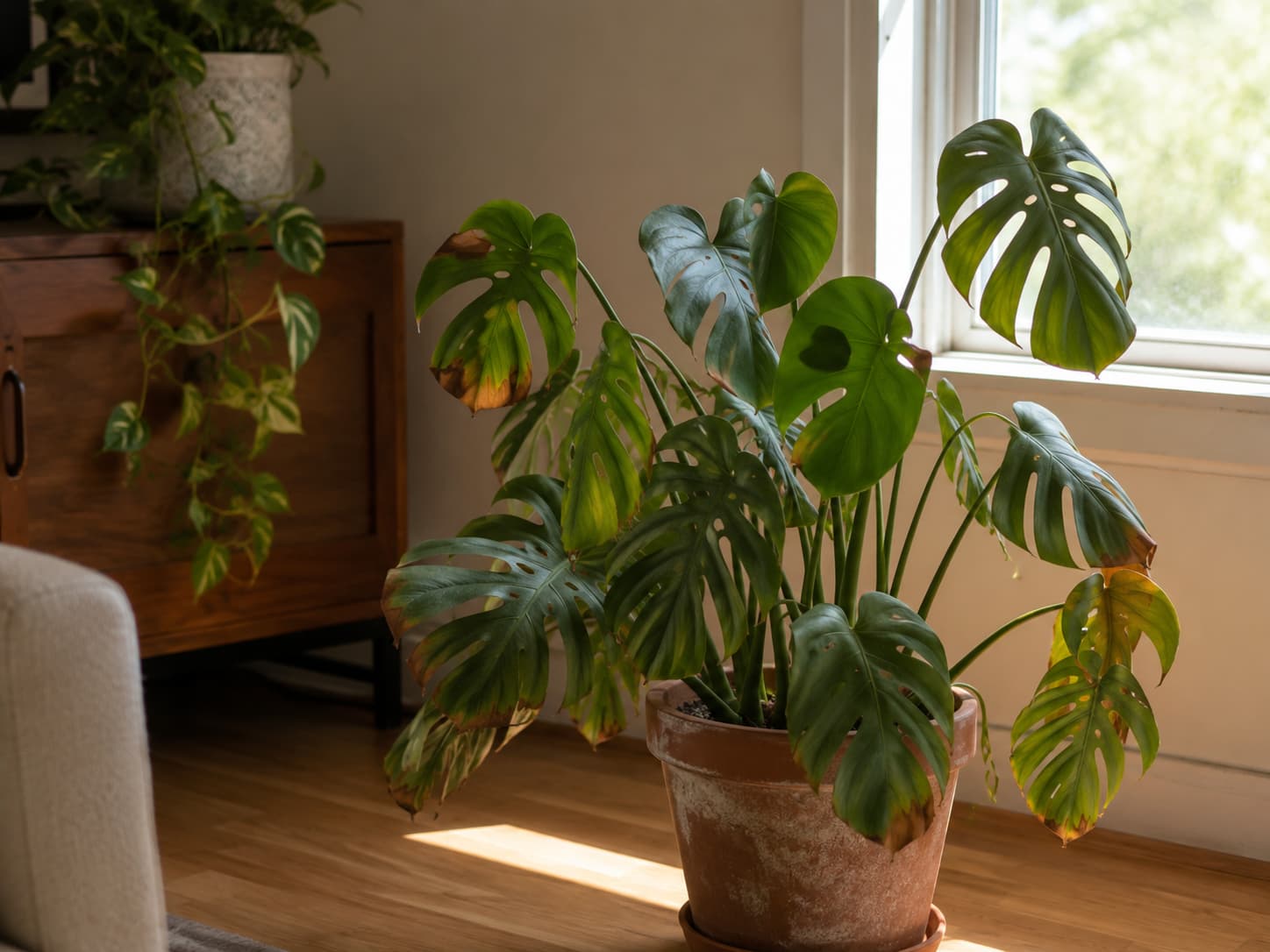
Last July, I came home from a weekend trip to find my Monstera deliciosa drooping like it had given up on life. The leaves that had been glossy and upright three days earlier were limp, pale, and curling inward at the edges. The thermostat read 91°F (33°C). The air conditioner had failed while I was gone, and my apartment had been baking for two days. I lost three leaves that week. More importantly, I learned exactly what heat does to houseplants — and what actually helps versus what makes it worse.
If you're searching for this topic right now, there's a good chance you're looking at a plant that's showing signs of heat stress. Maybe the leaves are curling, or the tips are browning, or the whole plant looks wilted despite wet soil. You're not alone — plant forums light up with these exact questions every summer. Here's what's happening to your plant, what to do right now, and how to prevent it from happening again.
What's Actually Happening When a Plant Overheats
What is houseplant overheating?: It is a chain reaction where heat, light, and dry air make leaves lose water faster than roots can replace it, even when soil is still moist.
This isn't just about the air temperature. When a room gets too hot, several things happen to a plant at once, and understanding the chain reaction makes it much easier to know what to fix.
First, the plant's rate of transpiration — the process of water moving from the roots through the plant and evaporating from the leaves — accelerates dramatically. At normal room temperatures, this is a controlled, sustainable process. Above roughly 85°F (29°C) for most tropical houseplants, the rate of water loss through the stomata begins to exceed the rate at which the roots can pull water from the soil. The plant begins to dehydrate from the leaves inward, even if the soil is wet. This is why a plant in 90°F heat can wilt while sitting in damp soil — the roots can't keep up with the demand from the leaves.
Second, photosynthesis begins to shut down. Most houseplants use a photosynthetic pathway called C3, which becomes less efficient as temperatures rise. Above about 90°F (32°C), the enzyme that drives carbon fixation — RuBisCO — starts to lose function. The plant stops producing energy and enters a kind of metabolic standby mode. It's not dying yet, but it's not growing either, and it has no energy reserves to repair damage.
Third, the combination of heat and light can cause photo-oxidative damage. Chloroplasts absorb light energy, but when the plant's metabolic machinery is too heat-stressed to use that energy for photosynthesis, the excess energy creates reactive oxygen species — essentially, free radicals that damage cell membranes. This is what causes the brown, scorched patches you see on leaves that have been in direct sun during a hot day. The plant is literally burning from the inside.
Heat Stress vs. Other Problems: How to Tell the Difference
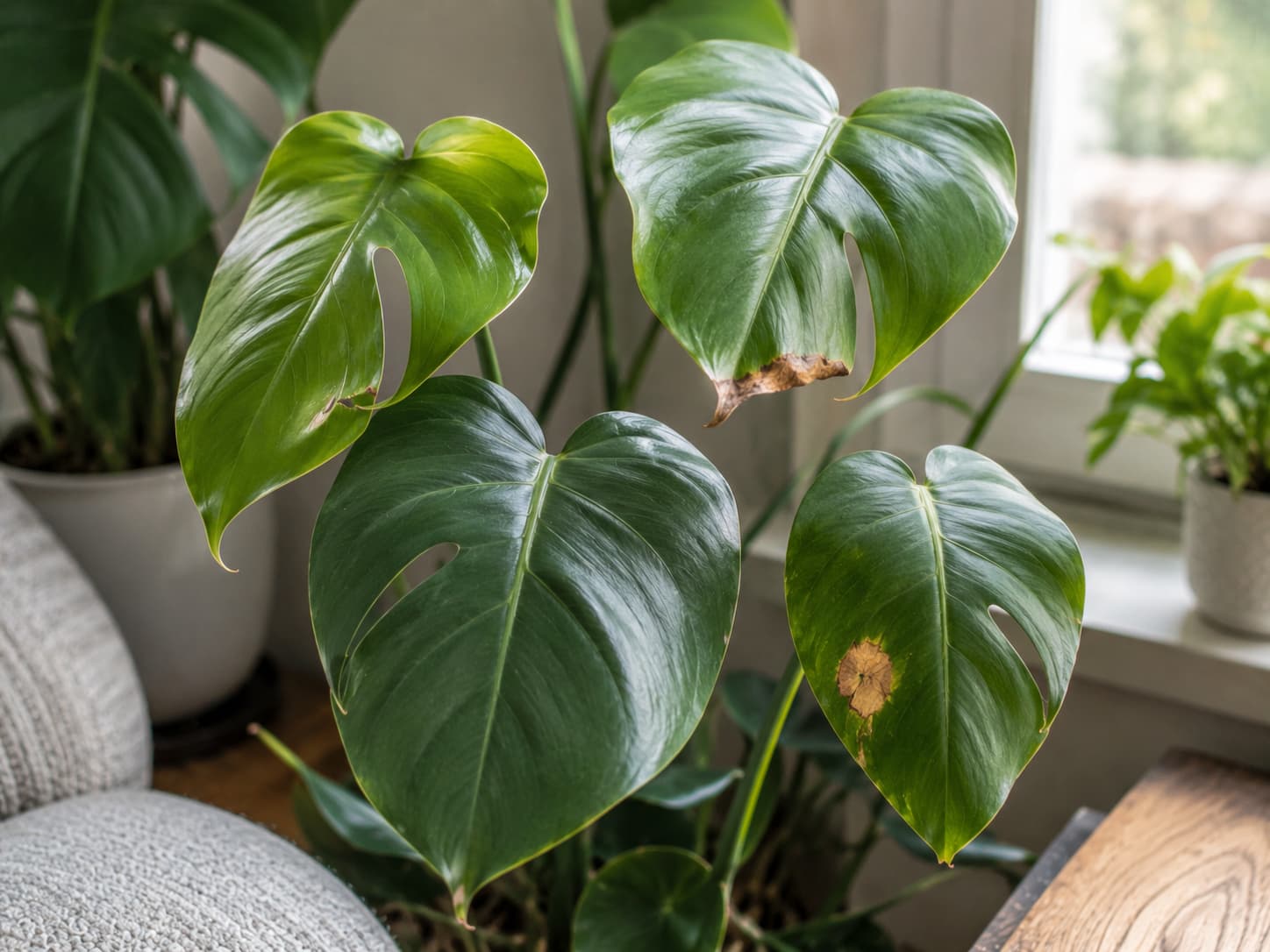
Fast diagnosis: Heat stress usually appears suddenly during a hot spell, often affects several plants at once, and is worse near windows or hot rooms.
One of the most common questions on plant forums every summer is "is this heat damage or something else?" The symptoms of heat stress can look like underwatering, overwatering, fertilizer burn, or pest damage. Here's a quick reference to help you tell them apart:
| Symptom | Likely heat stress if… | More likely something else if… |
|---|---|---|
| Wilting / drooping | Soil is moist but plant is limp; symptoms appear during hottest part of day | Soil is bone dry (underwatering) or soil is soggy and smells sour (root rot) |
| Brown, crispy leaf tips | Multiple plants affected at once; symptoms appear suddenly during a heat wave | Only one plant affected; symptoms develop gradually over weeks (low humidity or fertilizer burn) |
| Yellowing leaves | Leaves are also curling or wilting; yellowing is patchy or at leaf edges | Yellowing starts at bottom and moves up uniformly (overwatering or nitrogen deficiency) |
| Leaf curling / cupping | Leaves curl inward or upward like a taco; happens during hot afternoons | Leaves curl downward (overwatering) or only new growth is affected (pest damage) |
| Pale, bleached spots | Spots appear on leaves facing the window; pattern matches sun exposure | Spots are random, have yellow halos, or look wet (fungal or bacterial infection) |
| Sudden leaf drop | Multiple leaves drop in 1–2 days during or right after a heat wave | One leaf at a time drops over weeks (normal aging) or leaves are sticky first (pests) |
What to Do Right Now: The Four-Step Heat Emergency Protocol
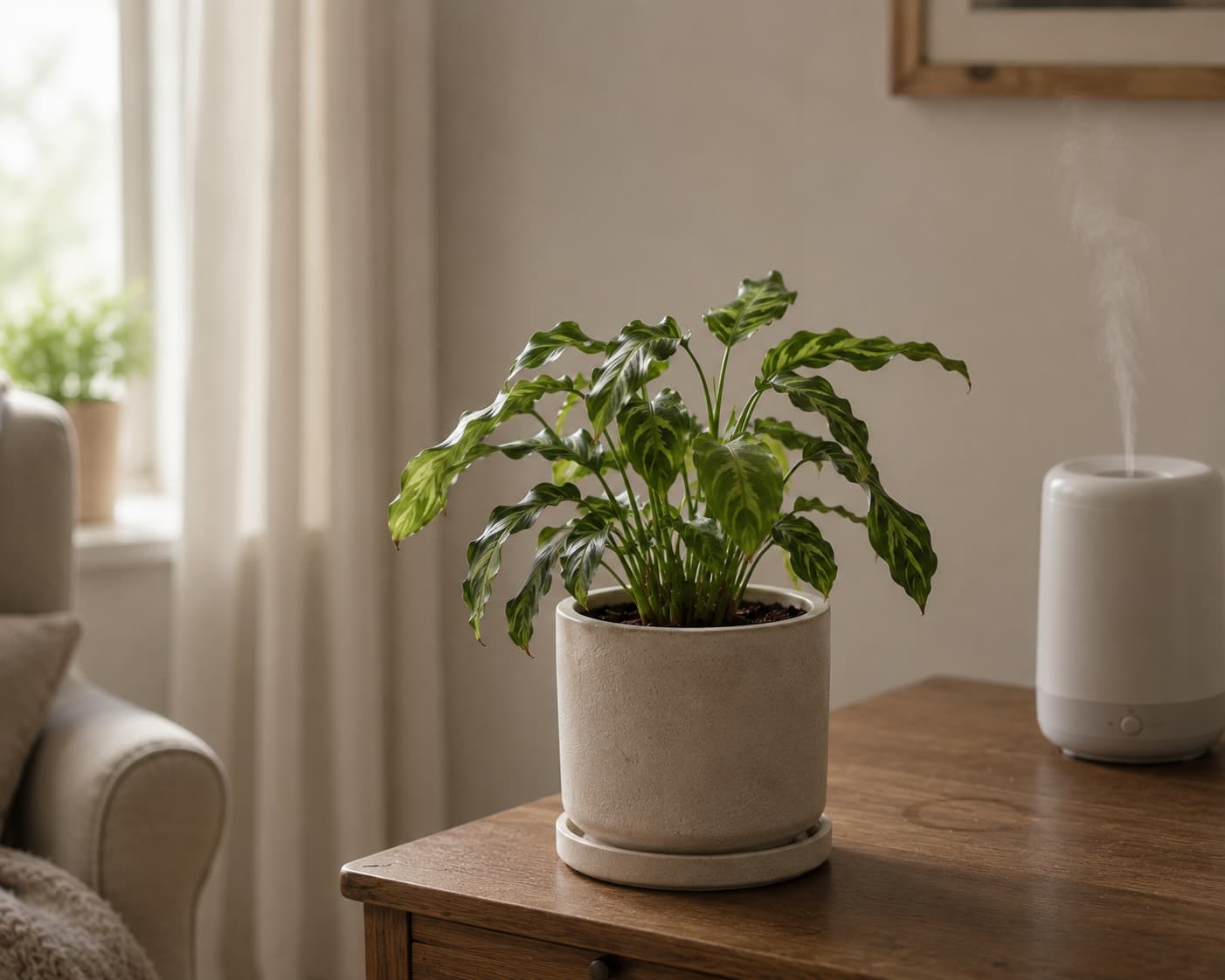
Start here: Move the plant away from heat, raise humidity nearby, check the soil before watering, and give the plant time before pruning or feeding.
If you've confirmed your plant is suffering from heat stress, here's the order of operations. Don't skip steps or do them out of order — some of the most common "fixes" can actually make heat stress worse if applied at the wrong time.
Step 1: Move the plant away from the heat source (but not into shock)
If the plant is in direct sun, move it to a spot with bright indirect light. If it's near a hot window, pull it back several feet. But here's the nuance that most quick-fix guides miss: don't move a heat-stressed plant from a 95°F windowsill directly into an air-conditioned 72°F room. The sudden temperature drop shocks the plant's system — it's already stressed, and a rapid 20°F change can cause additional leaf drop. Instead, move it to a cooler-but-not-cold transitional spot first, like a hallway or corner away from windows, and let it acclimate for a few hours before moving it to its final cooler location.
Step 2: Increase humidity around the plant — don't soak the soil
Remember: the problem is water loss from the leaves, not lack of water in the soil. If the soil is still moist, do not water more. Instead, mist the air around the plant (not the leaves directly — water droplets on hot leaves can act like tiny magnifying glasses and cause burn spots). Place a shallow dish of water near the plant. Group heat-stressed plants together — their collective transpiration creates a pocket of higher humidity. If you have a humidifier, run it. These measures slow the rate of water loss from the leaves, which is what the plant actually needs.
Step 3: Check the soil before you water
Only water if the top 2 inches of soil are dry. If the soil is still moist, the roots are functioning — they just can't keep up with the leaf demand. Adding more water to already-moist soil reduces oxygen availability to the roots and can trigger root rot, which is a far more serious problem than heat stress. When you do water, use room-temperature water — cold water on hot roots can cause thermal shock. Water in the early morning or evening when temperatures are lower, never during the peak heat of the day.
Step 4: Give it time — don't prune or fertilize
Heat-stressed plants need recovery time, not intervention. Don't prune damaged leaves immediately — even a partially scorched leaf is still producing some energy for the plant. Wait until the plant has stabilized (usually 1–2 weeks) before removing damaged foliage. Don't fertilize — the plant's metabolism is slowed, and fertilizer salts can accumulate in the soil and burn already-stressed roots. The plant needs rest, not food.
Three Things That Make Heat Stress Worse (and One Surprising Fix)
Do not overcorrect: Direct AC drafts, midday misting, emergency repotting, and extra fertilizer can all add stress to an already overheated plant.
These are the mistakes I see most often in plant groups when someone posts a photo of their heat-damaged plant and the comments section fills with well-meaning but counterproductive advice.
Mistake 1: Putting the plant directly in front of a fan or AC vent
The logic seems sound: the plant is hot, so cool it down. But the rapid, dry airflow from a fan or air conditioner accelerates transpiration — exactly what's already killing the plant. A plant that's already losing water too fast will lose it even faster in a direct draft. The leaf edges will crisp up within hours. If you're using AC to cool the room, that's fine — just make sure the plant isn't in the direct path of the airflow.
Mistake 2: Misting the leaves in direct sunlight
Water droplets on leaves in bright light can focus light like tiny lenses, creating burn spots. This is somewhat debated — the "lens effect" is more pronounced on leaves with hairs that hold spherical droplets — but in practice, misting a plant in direct sun during a heat wave reliably produces spotting. If you mist, do it in the evening when the light is low and the droplets can evaporate slowly.
Mistake 3: Repotting a heat-stressed plant
This one is particularly dangerous because it seems logical — the plant is struggling, maybe the pot is too small, maybe fresh soil would help. But repotting always damages fine root hairs, and a heat-stressed plant doesn't have the energy reserves to repair root damage. It's a double stressor that can push a struggling plant over the edge. Wait until the plant has fully recovered and is showing new growth before repotting — at least 2–3 weeks after the heat event.
The Surprising Fix: A damp towel, not a spray bottle
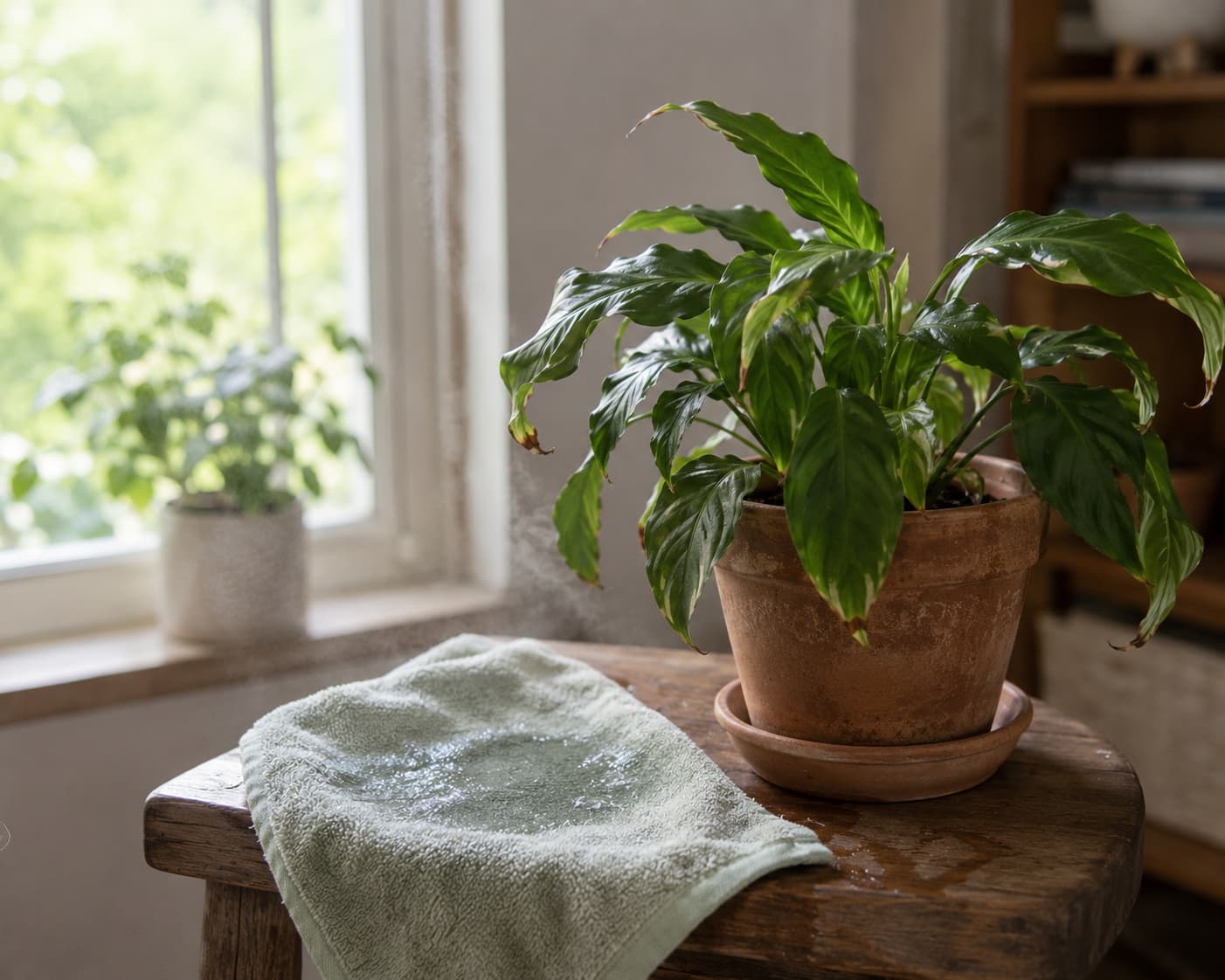
One of the most effective things I've found for cooling a plant in an emergency — and I've never seen this in a standard care guide — is to drape a damp (not wet) cotton towel over a drying rack or chair near the plant, not touching the leaves. As the water evaporates from the towel, it cools the surrounding air and raises the local humidity. It's essentially a low-tech evaporative cooler. A single damp bath towel can drop the temperature around a plant by 3–5°F and raise local humidity by 10–15% for several hours. I learned this during a heat wave when my AC broke and my Monstera was the first plant to show signs of stress. The towel trick bought me enough time to get the AC repaired without losing any more leaves.
Preventing Heat Stress Before It Happens
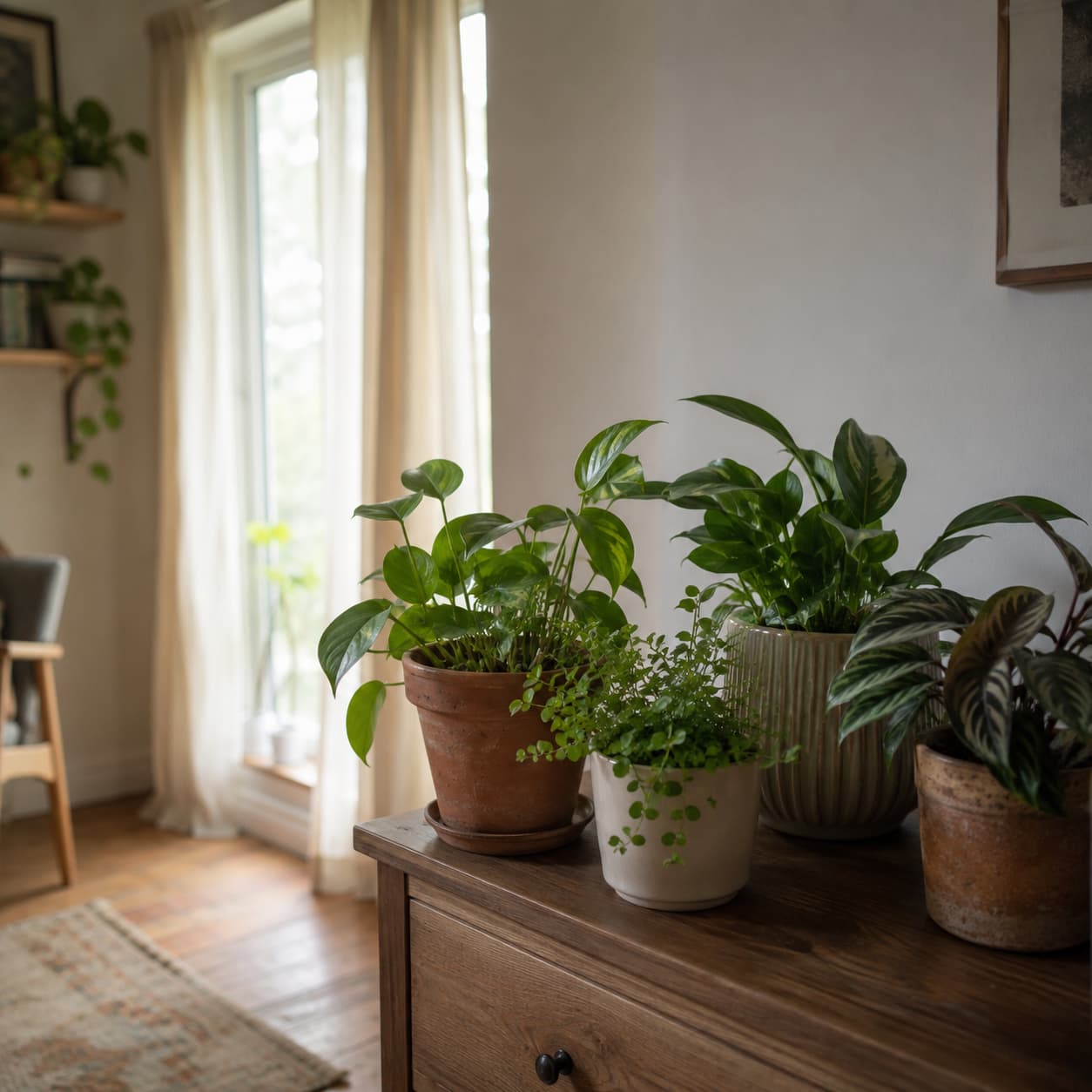
Prevention is easier than rescue: Soften hot window light, group plants together, water early before heat peaks, and move sensitive tropicals before a heat wave.
Once the heat wave passes, take these steps to make your plants more resilient for the next one. Most of these are one-time setup changes that pay off every summer.
| Plant group | Heat sensitivity | Best summer move |
|---|---|---|
| Calathea, Maranta, ferns | High | Move back from hot windows and raise humidity |
| Monstera, philodendron, pothos | Moderate | Keep in bright indirect light with steady moisture |
| Snake plant, ZZ plant, rubber plant | Lower | Avoid harsh window scorch but do not overwater |
| Succulents and cacti | Heat-tolerant, scorch-prone | Protect from hot glass and sudden direct sun |
Check your window situation. South and west-facing windows get the most intense afternoon heat. Sheer curtains, window film, or even a piece of parchment paper taped to the glass can reduce light intensity by 30–50% without blocking it entirely. If you have plants that can't be moved, this is the single most effective prevention measure.
Group plants together during summer. A cluster of plants creates a microclimate with higher humidity and more stable temperature. Each plant's transpiration benefits the others. This is especially helpful if you're going away for a few days — grouped plants can maintain a small humidity bubble that helps them survive a short heat spike.
Water deeply in the morning before a forecasted hot day. Well-hydrated plants handle heat better because their tissues are fully turgid. Morning watering gives the plant time to absorb water before the heat peaks. Avoid watering in the evening before a hot night — wet soil overnight in warm conditions is an invitation for root rot pathogens.
Know which plants are most vulnerable. Thin-leaved tropicals (Calathea, Maranta, ferns) are the most sensitive to heat and low humidity. Succulents and cacti handle heat better but can still scorch in direct sun through a window. Plants with thick, leathery leaves (Snake Plant, ZZ Plant, rubber plant) are the most heat-tolerant. If you're setting up a plant care plan for a summer trip, prioritize the thin-leaved ones for the coolest spots in your home.
FAQ
1.At what temperature do houseplants start to overheat?
Most tropical houseplants begin to show heat stress above 85°F (29°C). Above 90°F (32°C), many plants will stop growing and may show visible damage within 24–48 hours. Above 95°F (35°C), leaf damage is likely even with good care. These are general guidelines — each species has its own tolerance range.
2.Should I water my plants more during a heat wave?
Only if the soil is actually drying out faster. Heat increases evaporation from the soil surface, so you may need to water more frequently than usual. But always check the soil first — if it's still moist, don't water. The plant's wilting is more likely from water loss through the leaves than from dry soil.
3.Can I put my houseplants outside in the summer?
Yes, but only in full shade, and only after a gradual acclimation period. Move the plant to a shaded outdoor spot for 1–2 hours on the first day, then increase by an hour each day over a week. Even "full sun" outdoor plants need gradual introduction. Check the plant thoroughly for pests before bringing it back indoors. Bring everything back inside when nighttime temperatures drop below 55°F (13°C).
4.My plant lost several leaves during a heat wave. Will it recover?
Probably yes, as long as the stem and roots are healthy. A plant that drops leaves from heat stress is in survival mode, but it's not necessarily dying. Keep it in stable, moderate conditions — consistent indirect light, normal watering when the soil dries, no fertilizer — and new growth should appear within 2–4 weeks. If the stem is still firm and the roots are healthy, the plant will recover.
5.How do I keep my plants alive while I'm on vacation during summer?
Move all plants away from windows, water thoroughly the morning you leave, group them together for humidity, and close curtains or blinds partway. For trips longer than 5–7 days, ask a neighbor to water once mid-trip, or set up a simple wicking system (a container of water with cotton string running to each pot). The grouped humidity bubble will do more to keep them alive than you might expect.
The Bottom Line
Heat stress is one of the most common summer plant emergencies, and it's also one of the most recoverable. The key is to slow the plant's water loss — not to dump more water into the pot. Move the plant to a cooler, shaded spot gradually. Increase humidity around the leaves. Check the soil before watering. And give the plant time to recover before you prune, repot, or fertilize.
Most importantly, don't panic. A plant that's wilting in the heat is communicating, not dying. It's telling you that its water management system is overwhelmed. Fix the environment, and the plant will fix itself.