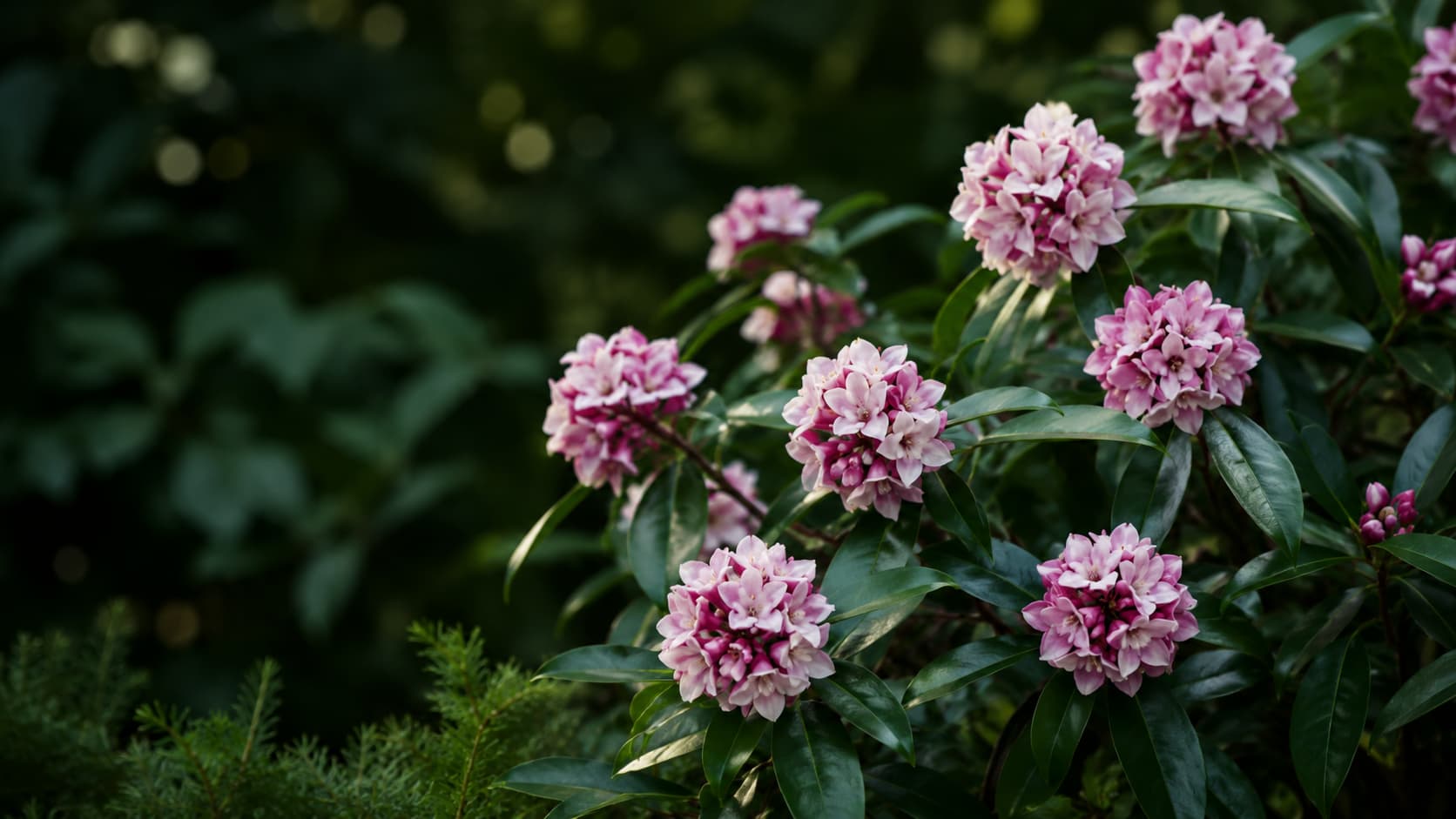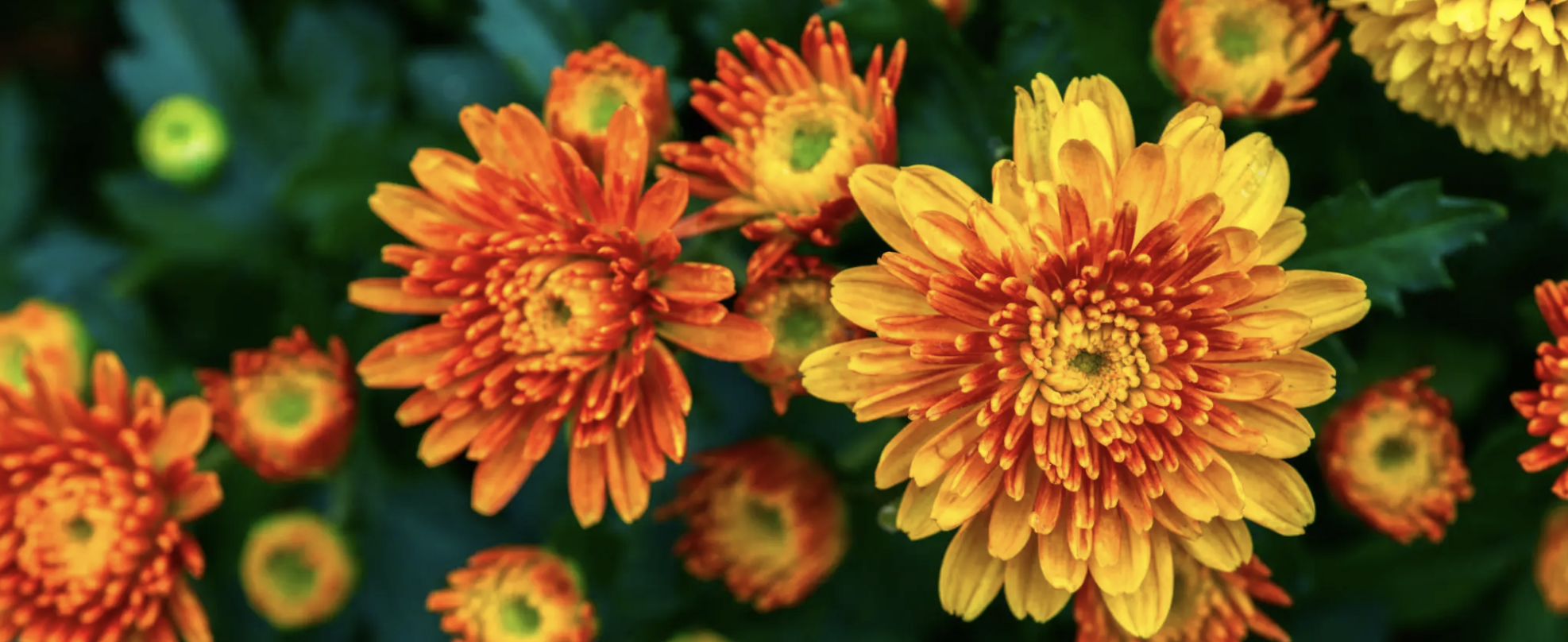
When most flowers fade in late summer, asters take the stage with their starry blossoms. These resilient perennials light up autumn borders, sustain pollinators, and carry a legacy of healing traditions across cultures.
Discover how asters can brighten your garden, soothe seasonal ailments, and stand as a symbol of resilience.
Botanical Overview
- Family: Asteraceae (Daisy family)
- Scientific Name: Aster spp., Symphyotrichum spp.
- Plant Type: Herbaceous perennial
- Bloom Time: August – October
- USDA Hardiness Zones: 3–8
Appearance & Garden Value
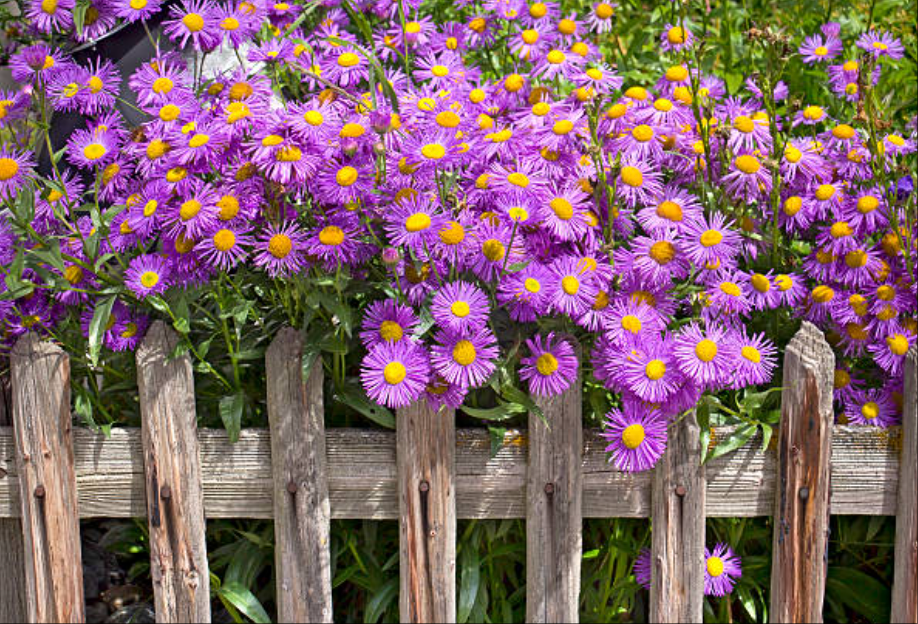
- Star-shaped, daisy-like flowers in purple, lavender, blue, pink, and white with golden centers.
- Provide vital late-season nectar for bees, butterflies, and other pollinators.
- Often called the “farewell flowers” of summer, symbolizing patience, wisdom, and hope.
- Excellent for cottage gardens, mixed borders, and pollinator habitats.
Cultivation & Care
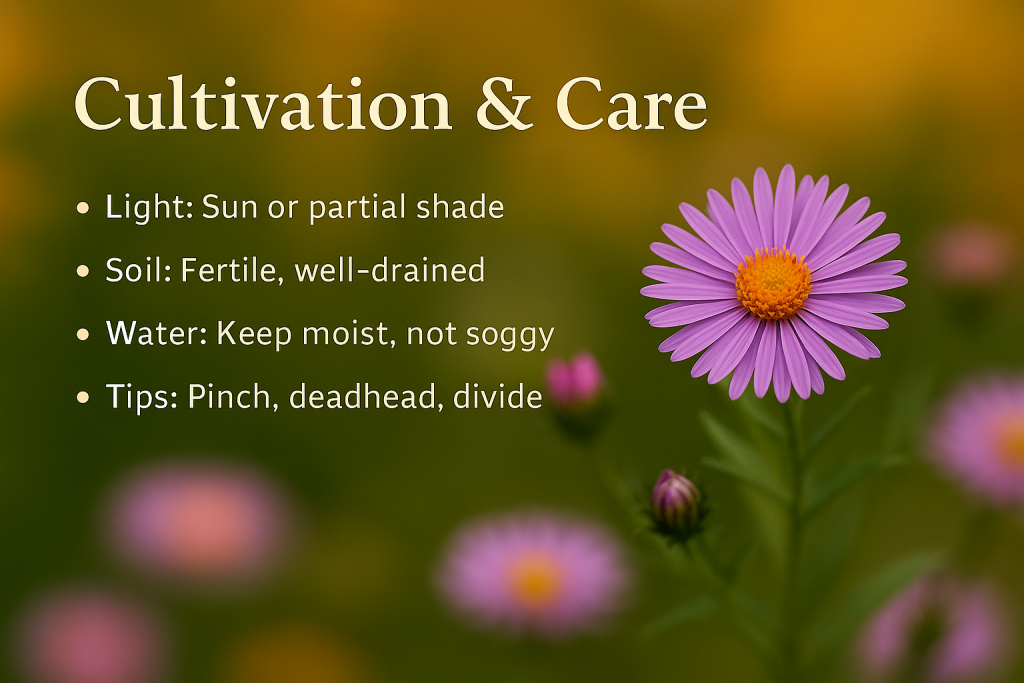
- Light: Full sun preferred; tolerates partial shade.
- Soil: Fertile, well-drained, slightly acidic to neutral.
- Watering: Keep soil evenly moist, but avoid waterlogging.
- Tips:
- Pinch stems in early summer for bushier plants.
- Deadhead blooms to extend flowering.
- Divide clumps every 2–3 years to prevent overcrowding.
Medicinal & Health Benefits
- Native American uses: Roots brewed for lung ailments, fevers, and colds.
- Contains flavonoids, saponins, and terpenes with proven anti-inflammatory and expectorant properties.
Potential Drawbacks
- May cause allergic reactions in individuals sensitive to daisies or ragweed.
- Some species can self-seed aggressively if unmanaged.
- Overcrowding increases risk of powdery mildew.
Common Pests & Diseases
- Powdery Mildew → Improve airflow, avoid overhead watering, use resistant cultivars.
- Aphids → Control with neem oil or insecticidal soap.
- Rust → Remove infected foliage; rotate planting sites.
Regional Care Tips
- Cold Climates (Zones 3–5): Choose hardy cultivars like Symphyotrichum novae-angliae. Apply mulch before frost.
- Temperate Climates (Zones 6–8): Ensure proper spacing and airflow to prevent mildew.
- Hot & Dry Climates (Zones 8–9): Provide afternoon shade and increase deep watering during heat waves.
FAQ
Q: Do asters spread easily?
A: Yes. Some varieties self-seed or spread by rhizomes. Divide clumps every few years to maintain control.
Q: How do I prevent powdery mildew?
A: Space plants properly, water at soil level, and choose resistant cultivars.
Q: Are asters safe for pets?
A: Generally, yes. Asters are considered non-toxic to cats and dogs, making them family-friendly garden plants.
Asters are not just ornamental — they are autumn’s final gift of color and hope. They nourish pollinators, support respiratory health in traditional medicine, and remind us of resilience in times of transition.
CTA
👉 Save this guide for your fall gardening plans.
👉 Follow Greenmuse for more healing plant wisdom.
👉 [Download the FREE Printable Aster Care Guide PDF]

Clara Moss is the gardener behind Greenmuse. Over the past 10+ years, she has grown herbs on windowsills, tested cactus and succulent soil mixes, rescued struggling houseplants, and learned many lessons through trial and error. Greenmuse is where she shares honest, practical plant care advice for real homes — based on hands-on experience, not perfect greenhouse conditions. When she’s not writing, Clara is usually propagating succulents or trying to keep a calathea happy.