Smoke Bush Guide: How to Grow, Prune & Choose Leaves or Flowers
A practical guide to growing Cotinus in full sun, choosing between giant foliage and smoky flower plumes, pruning at the right time, and solving poor bloom, color, and dieback problems.
Quick Summary
Smoke bush (Cotinus coggygria) is one of the most dramatic shrubs in the garden — clouds of pinkish "smoke" in summer, rich purple or gold foliage through the season, and fiery orange-red fall color. But it's also one of the most confusing shrubs to prune, because the rules depend entirely on what you want: flowers or leaves. Cut it hard to the ground each spring (coppicing) and you get enormous, tropical-looking leaves — but no flowers. Prune it lightly and you get the signature smoky blooms — but smaller leaves. Most guides skip this tradeoff entirely. This one puts it front and center, so you can choose the look you actually want.
In This Guide
What Is a Smoke Bush? (And Smoke Bush vs. Smoke Tree)
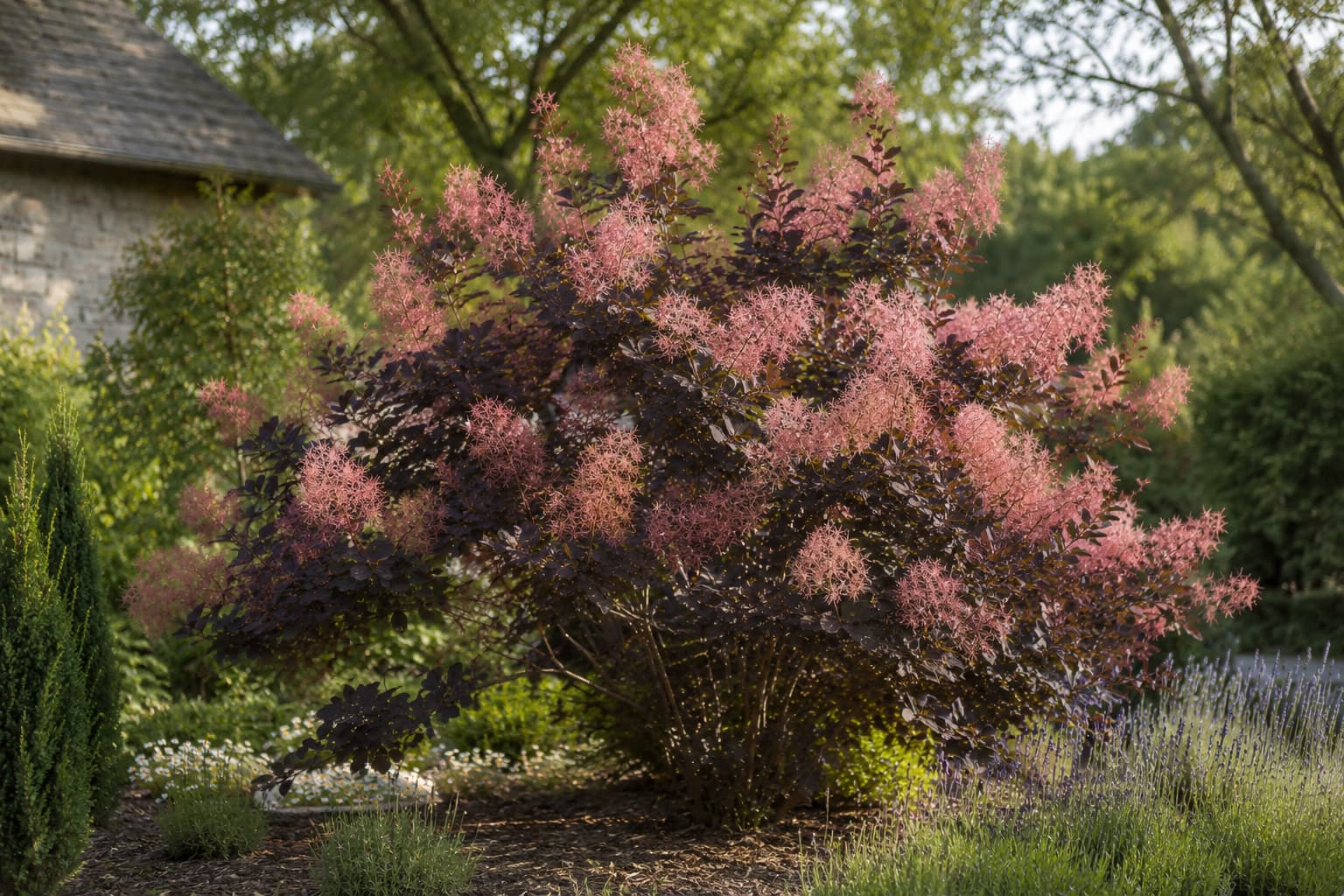
Smoke bush (Cotinus coggygria) is a deciduous shrub in the cashew family (Anacardiaceae) — which makes it a relative of sumacs, pistachios, and mangoes, not of anything else called "bush" in the garden. It's native to southern Europe through central China, where it grows on dry, rocky hillsides — which explains its exceptional drought tolerance.
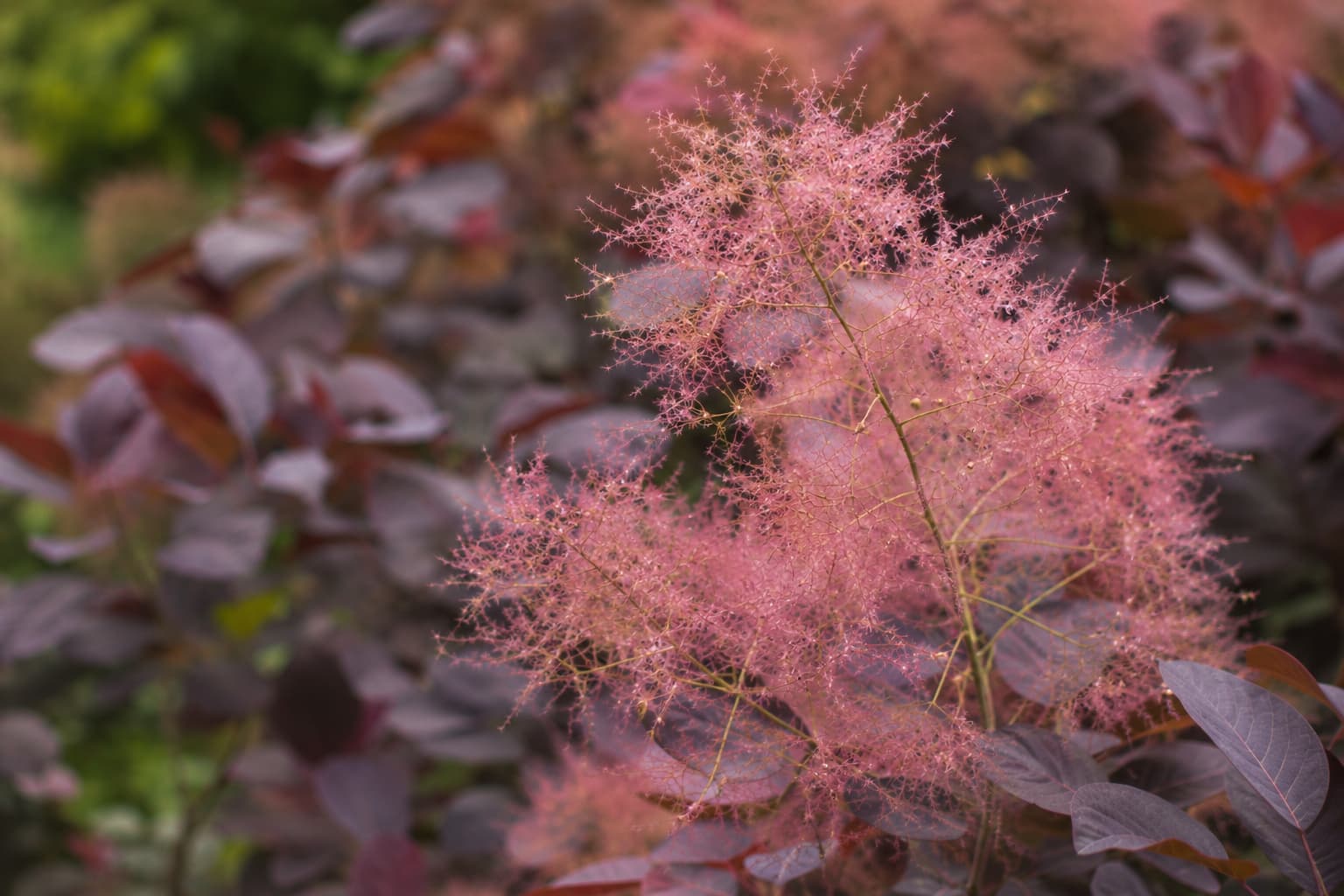
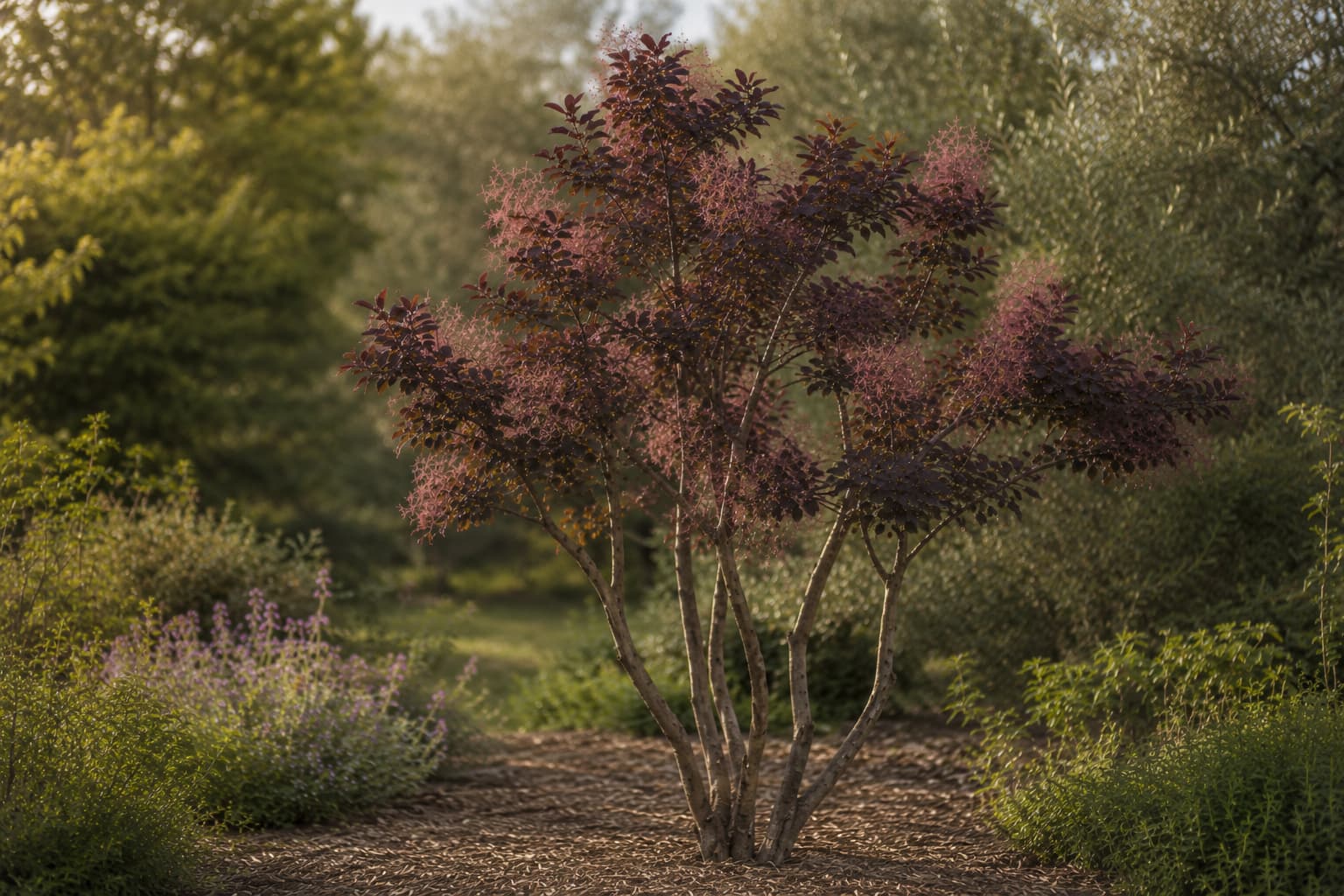
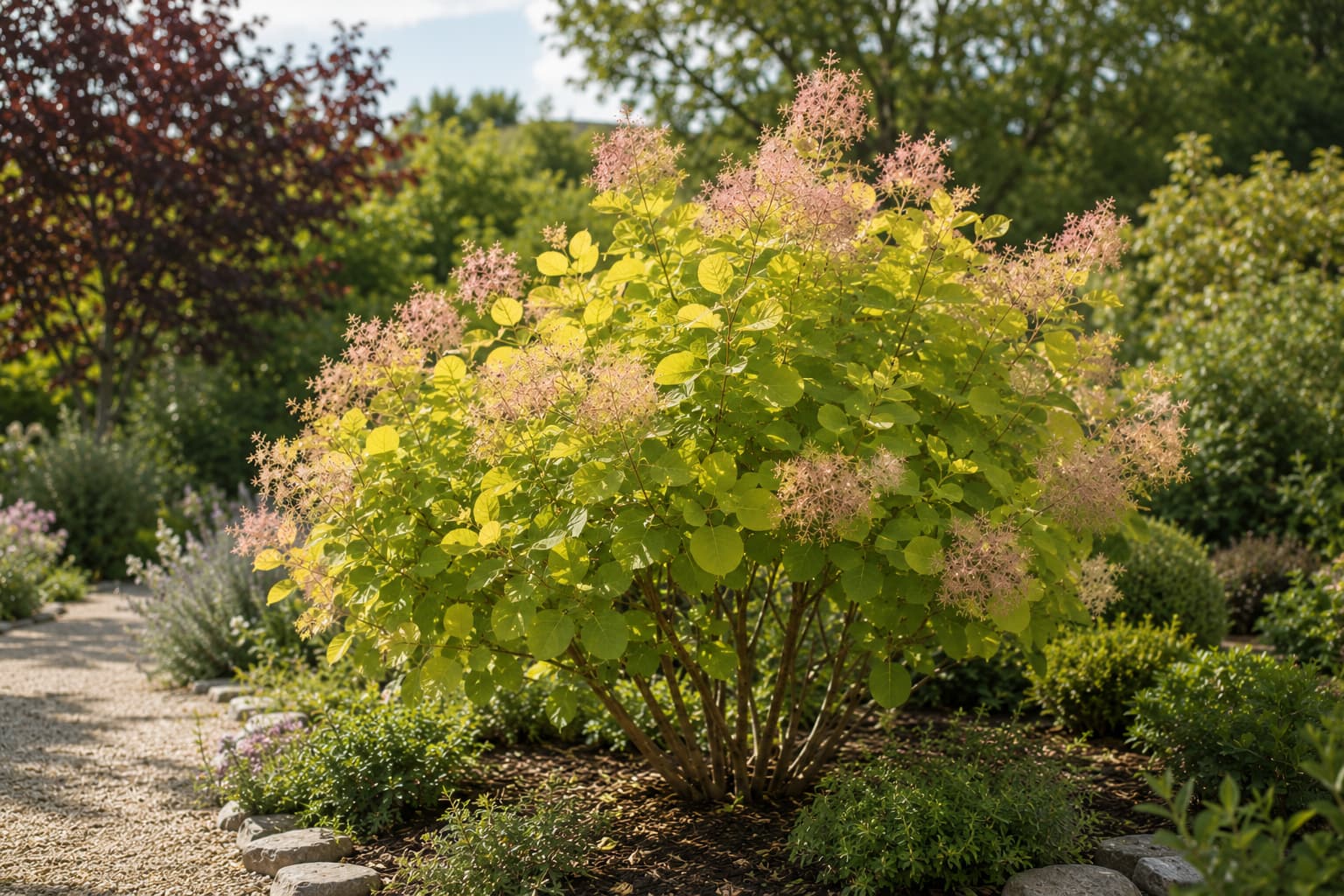
The "smoke" isn't smoke at all. It's the plumed remnants of spent flower stalks — thousands of tiny filaments covered in pinkish hairs that catch the light and create the illusion of puffs of smoke hovering over the foliage. The effect lasts for weeks in mid to late summer. Combined with the foliage — deep purple, burgundy, gold, or lime-green depending on variety — it's one of the most distinctive looks in ornamental horticulture.
Smoke bush vs. smoke tree: Same plant (Cotinus coggygria). The difference is entirely in pruning. A "smoke bush" is allowed to grow as a multi-stemmed shrub. A "smoke tree" is trained to a single trunk or a few main stems by removing lower branches and suckers. Both forms come from the same rootstock — it's your choice which shape you maintain.
Plant Profile at a Glance
| Feature | Details |
|---|---|
| Common Name | Smoke Bush, Smoke Tree, European Smoketree, Venetian Sumac |
| Scientific Name | Cotinus coggygria |
| Plant Type | Deciduous shrub or small tree |
| USDA Zones | 4–8 (some varieties to Zone 9) |
| Mature Size | 10–15 ft tall and wide (unpruned); coppiced: 4–6 ft |
| Bloom Time | Late spring to mid-summer; "smoke" effect persists for weeks |
| Flower Color | Pink, purplish-pink, or reddish plumes |
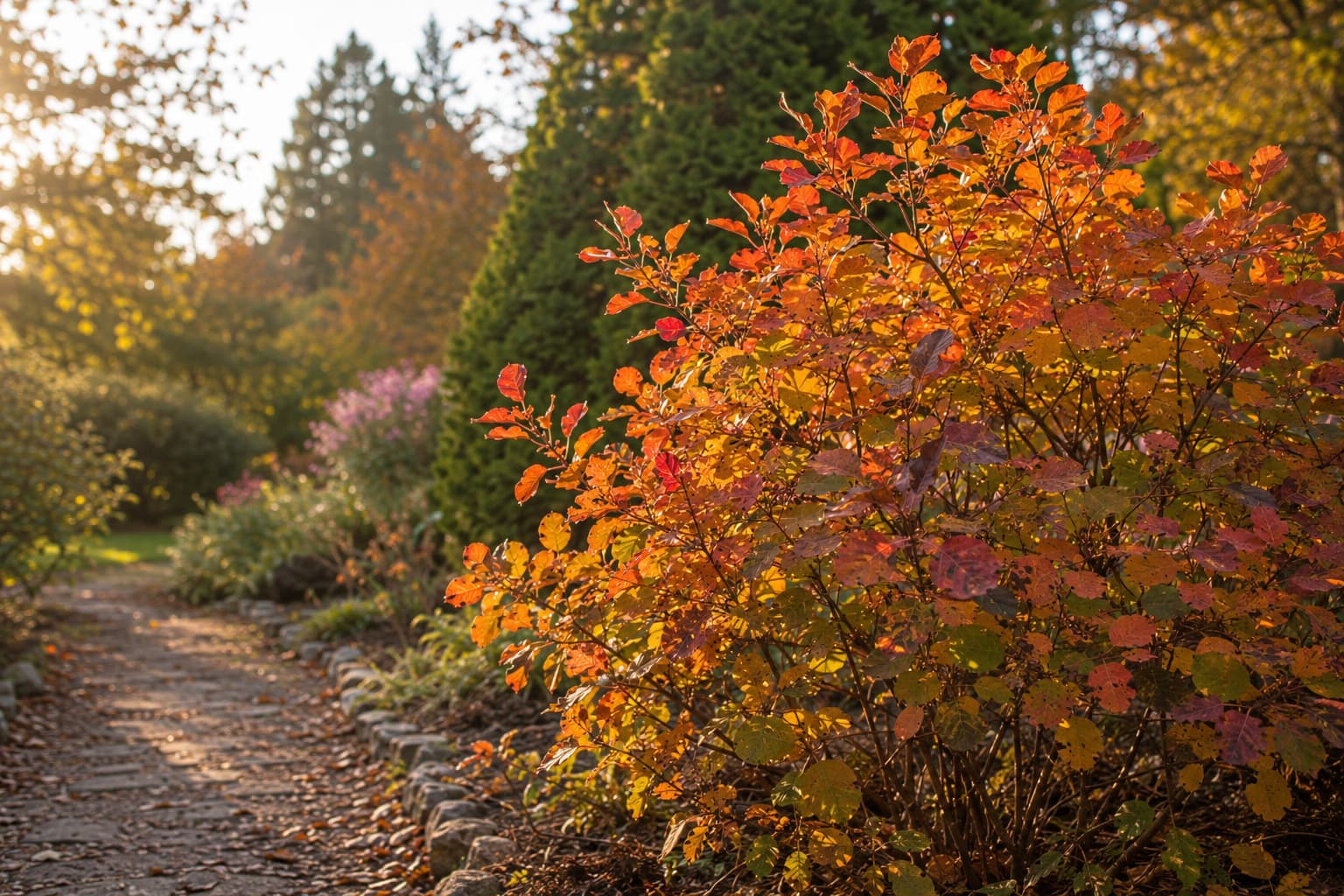
| Foliage Color | Deep purple, burgundy, gold, or green depending on variety; brilliant orange-red in fall |
| Sun Needs | Full sun — at least 6 hours direct for best color and bloom |
| Soil | Well-drained; tolerates poor, rocky, sandy, and alkaline soils |
| Drought Tolerance | Excellent once established |
| Toxicity | Generally non-toxic; sap may irritate sensitive skin |
The Coppice Tradeoff: Giant Leaves OR Flowers — Pick One
This is the single most important thing to understand about growing smoke bush, and it's missing from almost every guide. Cotinus has a unique response to pruning that creates two completely different looks from the same plant. You cannot have both at once.
Clara’s practical note: I learned this tradeoff after cutting a young smoke bush hard and waiting all summer for plumes that never came. Decide whether foliage or flowers matter more before the first cut.
| Hard Coppice (Cut to Ground) | Light Pruning | |
|---|---|---|
| What you do | Cut all stems to 6–12 inches in late winter | Remove dead wood, thin lightly, shape as needed |
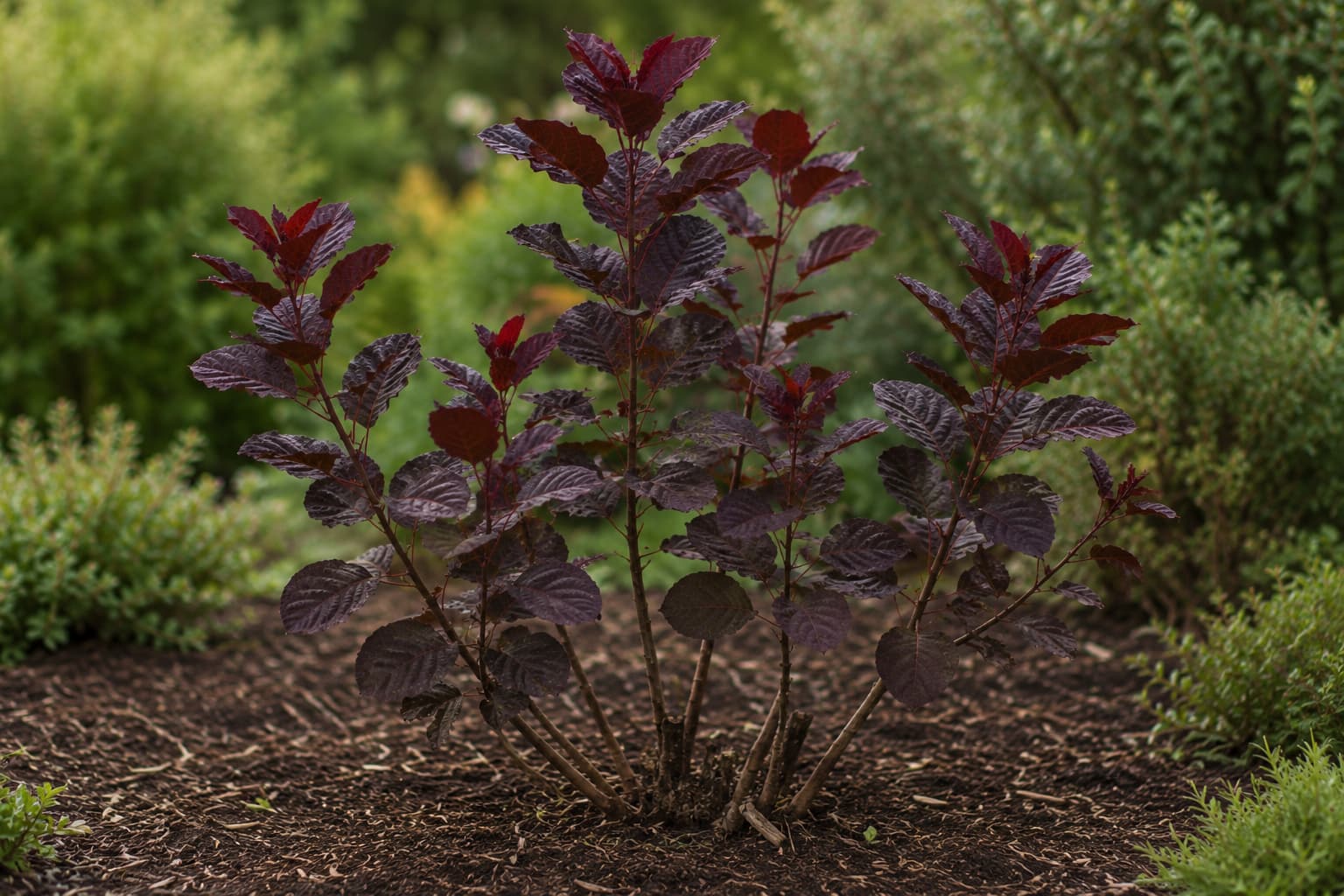
| Leaves | Enormous — up to 8–10 inches across. Intensely colored. Tropical-looking. | Normal size — 2–4 inches across. |
| Flowers / "Smoke" | None. The plant puts all its energy into leaf growth. No blooms this year. | Yes — full smoke display. Blooms on wood from the previous season. |
| Plant Height | 4–6 ft by end of season | 10–15 ft (natural mature size) |
| Best For | Foliage drama, small gardens, modern designs, purple/gold leaf contrast | Traditional shrub form, smoke display, mixed borders, screening |
The Mixed Approach (Best of Both, Sort Of)
Coppice one smoke bush for foliage and plant a second nearby that you prune lightly for flowers. Or coppice every other year — you'll get flowers one year and giant leaves the next. Some gardeners coppice half the stems each year (removing the oldest ones) to get both leaves and flowers, but the effect is diluted — neither as dramatic as committing fully to one approach.
This tradeoff exists because Cotinus blooms on wood that grew the previous year. If you cut all the stems to the ground in late winter, there's no old wood left to produce flowers — but the plant's entire root system pours its stored energy into a smaller number of new shoots, producing massive, intensely colored leaves. The choice is yours, but you need to make it consciously.
How to Plant Smoke Bush
When to Plant
Early spring or early fall. Container-grown plants can go in any time the ground isn't frozen. Spring planting gives the longest establishment before winter.
Where to Plant
- Full sun is non-negotiable for purple and gold varieties. In shade, purple varieties turn muddy green and gold varieties fade to chartreuse. Green-leaf varieties tolerate partial shade better.
- Well-drained soil. Smoke bush is remarkably tolerant of poor, rocky, sandy, and alkaline soils — but it will not survive standing water. Excellent drainage is the one soil requirement.
- Give it room. An unpruned smoke bush reaches 10–15 feet wide. A coppiced plant stays 4–6 feet but needs the same root space. Don't plant one 3 feet from a foundation.
- Excellent for dry slopes, hell strips, and neglected corners. This is a plant that thrives on neglect once established.
Planting Steps
- Dig a hole twice as wide as the root ball, exactly as deep.
- Position so the top of the root ball is level with the soil surface.
- Backfill with native soil. No heavy amending needed — smoke bush performs better in lean soil than in rich soil.
- Water deeply. Apply 2 inches of mulch, keeping it away from the stems.
- Do not fertilize at planting time.
Complete Care Guide: Sun, Water, Soil, and Fertilizer
Light
Full sun (6+ hours direct) is essential for purple and gold varieties — the foliage color intensity is directly proportional to sun exposure. Green-leaf varieties tolerate partial shade. In deep shade, all varieties become leggy with washed-out color and few flowers.
Watering
First year: Water deeply once a week to establish roots. Established plants: Smoke bush is genuinely drought-tolerant — one of the best shrubs for low-water landscapes. Water during extended dry periods (3+ weeks without rain). Overwatering is far more dangerous than underwatering — soggy soil causes root rot and kills smoke bushes faster than drought ever will.
Fertilizing
Do not fertilize smoke bush. This is one of the few shrubs where the standard advice is genuinely "don't." Smoke bush evolved on lean, rocky hillsides. Rich soil and fertilizer push fast, weak, sappy growth that's prone to wind damage, has less intense color, and produces fewer flowers. If you must feed it, a light layer of compost every 2–3 years is more than enough. If your smoke bush is near a fertilized lawn, it's already getting more nutrients than it wants.
Rich Soil = Less Color, Fewer Flowers
This is counterintuitive but true. The most intensely colored, flower-covered smoke bushes are growing in poor, well-drained soil with zero supplemental fertilizer. If your purple smoke bush is green and lanky with few flowers, overfeeding — not underfeeding — is the likely cause.
Pruning Smoke Bush: The Three Ways
Unlike most shrubs where there's one correct way to prune, smoke bush gives you three valid options — but you must choose one and commit. Mixing approaches produces inconsistent results.
Method 1: Hard Coppice (Giant Leaves, No Flowers)
- When: Late winter to very early spring, before buds swell.
- How: Cut all stems to 6–12 inches above the ground. Use loppers or a pruning saw — the stems can be thick.
- Result: A 4–6 foot shrub by end of season with enormous, intensely colored leaves. No flowers this year.
- Repeat: Every year or every other year. Annual coppicing produces the largest leaves.
- Best for: Modern garden designs, foliage-focused plantings, small gardens where a 15-foot shrub is too big.
Method 2: Light Thinning (Flowers, Normal Leaves)
- When: Late winter to early spring.
- How: Remove only dead, damaged, or crossing branches. Thin out 1–2 of the oldest stems at ground level each year to encourage renewal. Lightly shape if needed, but preserve most of the previous year's growth.
- Result: A 10–15 foot shrub with full smoke display and normal-sized leaves.
- Best for: Traditional shrub borders, screening, maximizing the smoke effect.
Method 3: Train as a Tree (Single-Trunk "Smoke Tree")
- When: Start when the plant is young. Ongoing maintenance in late winter.
- How: Select 1–3 of the strongest stems to become trunks. Remove all other stems at ground level. Each year, remove any new suckers and lower side branches, gradually raising the canopy to the desired height.
- Result: A small multi-trunk tree, 10–15 feet tall, with an umbrella-like canopy of leaves and smoke.
- Best for: Specimen plantings, underplanting with perennials, creating a focal point.
Troubleshooting: Why Isn’t My Smoke Bush Blooming?
The most common reasons, in order:
1. You Coppiced It (Most Common)
If you or a previous owner cut the shrub to the ground in late winter or spring, it will not bloom that year. This is the intended result of coppicing — giant leaves, no flowers. Wait until next year (and don't coppice) if you want smoke.
2. Not Enough Sun
Smoke bush needs full sun to bloom well. In partial shade, flowering is reduced or absent. If a nearby tree has grown and cast more shade, that's likely your cause.
3. Pruned at the Wrong Time
Smoke bush blooms on old wood — growth from the previous season. If you pruned in late spring, summer, or fall, you removed the developing flower buds. Light pruning in late winter is safe; any later and you're cutting off the coming season's smoke.
4. Too Much Nitrogen / Rich Soil
Lush, green, fast growth with few or no flowers = too much fertility. Stop fertilizing entirely. If the shrub is near a lawn that gets regular feeding, it's already getting too much nitrogen from runoff.
5. Plant Is Too Young
A newly planted smoke bush may not bloom significantly in its first 2–3 years. It's building roots and structure. Patience.Best Smoke Bush Varieties
| Variety | Size | Foliage | Smoke | Notes |
|---|---|---|---|---|
| 'Royal Purple' | 10–15 ft | Deep burgundy-purple all season; scarlet in fall | Pinkish-purple | The classic purple smoke bush. Most widely planted. Excellent coppiced for giant leaves. |
| 'Grace' | 10–15 ft | Purple-red with pink new growth; orange-red in fall | Deep pink | C. coggygria × C. obovatus hybrid. Larger leaves than 'Royal Purple'. Outstanding fall color. |
| 'Golden Spirit' | 8–12 ft | Bright lime-gold all season; coral-orange in fall | Pale pink | The gold-leaf variety. Needs full sun for best color. Striking against dark backgrounds. |
| 'Velvet Cloak' | 10–12 ft | Deep velvet-purple; orange-red in fall | Pink | Richer, darker purple than 'Royal Purple'. Holds color well through summer heat. |
| 'Young Lady' | 6–8 ft | Green with blue-green undertone | Very heavy pink | Compact green-leaf variety. Blooms younger and more heavily than purple types. Good for smaller gardens. |
| American Smoketree (C. obovatus) | 20–30 ft | Blue-green; brilliant orange-red in fall | Pinkish-tan | Native to the southeastern U.S. Much larger. Spectacular fall color. A true tree, not a shrub. |
Frequently Asked Questions
1.Why doesn't my smoke bush have any "smoke"?
The most common reason: it was coppiced (cut to the ground) in late winter or spring. A coppiced smoke bush puts all its energy into giant leaves and produces no flowers. Other causes: not enough sun (needs 6+ hours direct), pruned at the wrong time (blooms on old wood — prune after mid-spring and you've removed the buds), too much nitrogen (lush growth, no flowers), or the plant is too young (may not bloom in first 2–3 years).
2.What's the difference between smoke bush and smoke tree?
Same plant — Cotinus coggygria. The difference is entirely in pruning. A "smoke bush" is left as a multi-stemmed shrub. A "smoke tree" is trained by removing lower branches and suckers to create 1–3 main trunks with a raised canopy. You can turn a smoke bush into a smoke tree over 2–3 years of selective pruning, or vice versa.
3.When should I prune my smoke bush?
It depends on your goal. For flowers (smoke): Prune lightly in late winter — remove only dead wood and 1–2 oldest stems. Preserve last year's growth. For giant leaves (no flowers): Coppice in late winter — cut all stems to 6–12 inches. For tree form: Remove lower branches and suckers in late winter. Never prune after mid-spring if you want flowers — you'll remove the developing buds.
4.Why are my smoke bush leaves turning green instead of purple?
Not enough sun. Purple and gold varieties need full sun (6+ hours direct) to develop and maintain their color. In partial shade, purple varieties fade to muddy green and gold varieties wash out to chartreuse. Over-fertilization can also push green, sappy growth at the expense of color. Move the plant to more sun, stop fertilizing, and color should improve.
5.Is smoke bush drought-tolerant?
Yes — exceptionally. Once established (after the first year), smoke bush is one of the most drought-tolerant ornamental shrubs available. It evolved on dry, rocky hillsides and stores water in its woody root system. Water only during extended drought (3+ weeks without rain). Overwatering is far more dangerous than underwatering — soggy soil causes root rot.
6.Can smoke bush grow in containers?
Yes, but choose a large pot — at least 20–24 inches wide — and use a well-drained potting mix with extra perlite. Container-grown smoke bushes are typically coppiced annually to control size. Expect more frequent watering than in-ground plants, but still let the soil dry between waterings. Purple and gold varieties need full sun even in containers.
7.Is smoke bush toxic to dogs or children?
Smoke bush is generally considered non-toxic. It's in the same family as cashews and mangoes, not the nightshade or heath families that contain many toxic ornamentals. The sap may cause skin irritation in sensitive individuals — wear gloves when pruning. As always, discourage children and pets from eating any ornamental plant.
8.Why is my smoke bush dying back?
The most common causes: poor drainage / root rot (smoke bush cannot tolerate wet soil — check if water pools after rain), Verticillium wilt (a soil-borne fungus that causes sudden wilting and dieback of individual branches — cut into an affected branch and look for dark streaking in the wood), or winter damage in Zone 4 (stems may die back to the ground in severe winters but the roots usually survive and regrow). For root rot, improve drainage or move the plant. For Verticillium, prune out affected branches and support the plant with consistent care — there's no chemical cure.
Sources & Further Reading
- Royal Horticultural Society — Cotinus Growing Guide
- Missouri Botanical Garden — Cotinus coggygria Plant Finder
- NC State Extension — Cotinus coggygria (Smoke Tree)
- Arnold Arboretum of Harvard — Smoke Bush Collection
- Oregon State University Extension — Coppicing Smoke Bush
- ASPCA — Toxic and Non-Toxic Plants List
Final Thoughts
Smoke bush is one of those rare plants that offers two completely different looks from the same root system — but you have to know which one you're going for and prune accordingly. Coppiced for foliage: tropical, dramatic, compact, no flowers. Lightly pruned for smoke: traditional, airy, large, full of hazy pink plumes. Trained as a tree: sculptural, elegant, with an umbrella canopy.
The plant is notably resilient in the right conditions — full sun, well-drained soil, and a light hand with fertilizer. Give it those three things and it will reward you with decades of drama.
Here's what to remember:
- Decide: leaves or flowers? Coppice for giant leaves. Light-prune for smoke. You can't have both at once.
- Full sun, lean soil, minimal water. Once established, it needs little intervention. Rich soil and excess fertilizer can encourage soft growth and reduce flowering.
- Purple leaves turning green = not enough sun. Move it or accept the color change.
- Drought-tolerant and generally low-maintenance. A dependable choice for sunny, well-drained sites.
- Use normal garden precautions around children and pets. The sap may irritate sensitive skin, so gloves are useful when pruning.
If you found this guide helpful, you might also enjoy our guides on Forsythia Care and Lilac Care — two more flowering shrubs with strong opinions about how they want to be pruned.
Is your smoke bush refusing to bloom—or growing too large? Share its variety, sunlight, pruning history, climate zone, and a clear photo with the Greenmuse community.