Lilac Plant Guide: How to Grow, Prune & Rejuvenate Lilacs
A practical guide to planting lilacs in full sun, pruning at the right time, renewing old shrubs, managing suckers, and getting more fragrant spring flowers.
Quick Summary
Lilacs (Syringa vulgaris) are among the most nostalgic and beloved flowering shrubs in North American gardens — and also one of the most frequently mis-pruned. The #1 complaint on every gardening forum: "My lilac stopped blooming." The answer usually comes down to pruning at the wrong time, not enough sun, or an old shrub that needs rejuvenation. This guide covers the exact pruning calendar, the 3-year rejuvenation method for overgrown lilacs, how to handle the suckers that take over your yard, and why lilacs are actually one of the safest fragrant shrubs you can plant around kids and pets.
In This Guide
- What Are Lilacs? (And Why They're One of the Safest Fragrant Shrubs)
- Plant Profile at a Glance
- How to Plant Lilacs for Decades of Blooms
- Complete Care Guide: Sun, Water, Soil, Fertilizer
- Pruning Lilacs: The Timing Rule That Changes Everything
- How to Rejuvenate an Overgrown, Non-Blooming Lilac
- Managing Lilac Suckers: The Spread Problem
- 3 Common Lilac Problems (and How to Fix Them)
- Best Lilac Varieties for Home Gardens
- Frequently Asked Questions
What Are Lilacs? (And Why They're One of the Safest Fragrant Shrubs)
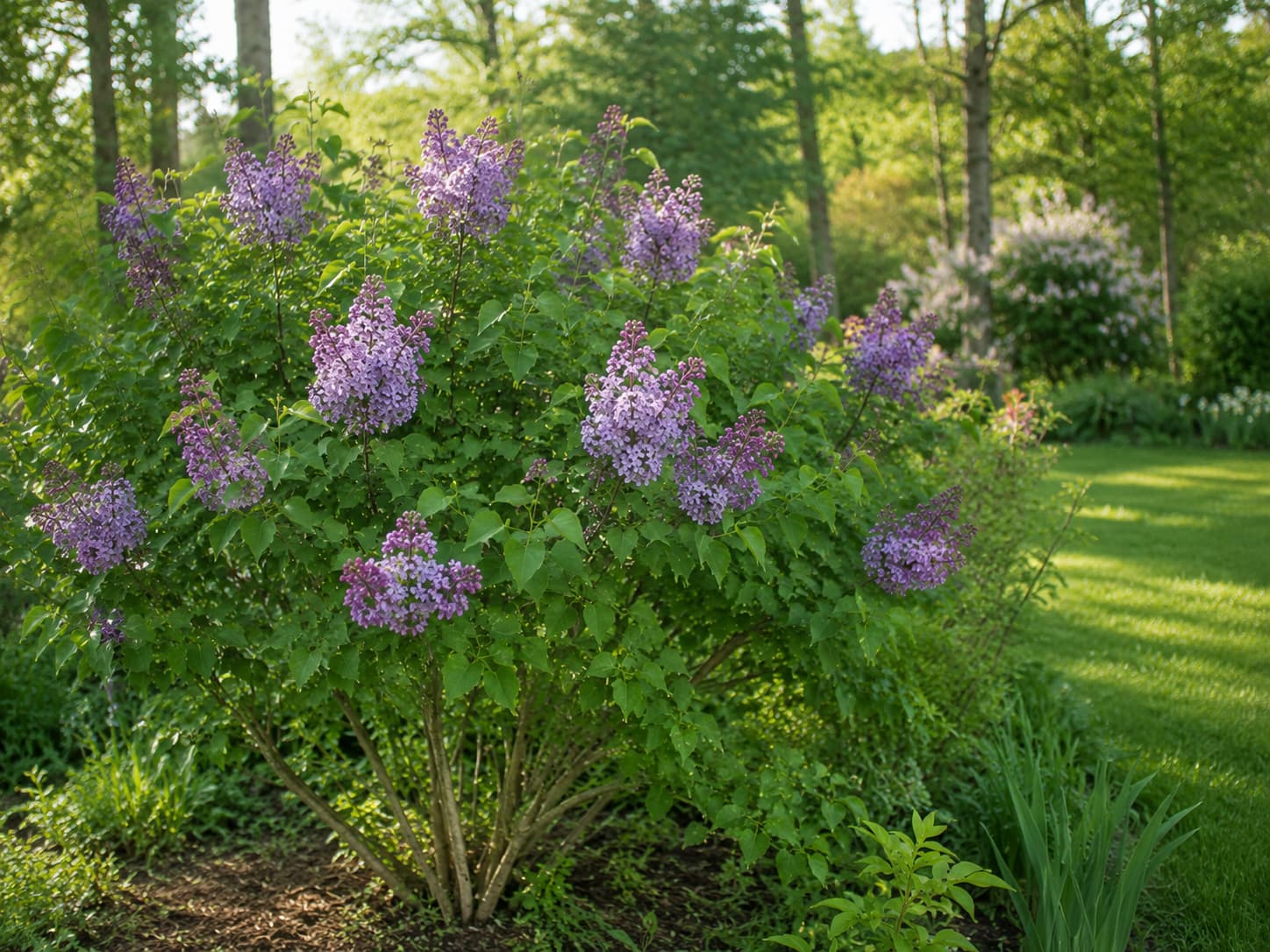
To begin with, lilacs (Syringa spp.) are deciduous shrubs in the olive family (Oleaceae), native to the mountains of southeastern Europe and Asia. The common lilac (Syringa vulgaris) has been cultivated in Western gardens since the 1600s and is now found across North America, from old farmsteads to suburban yards — often outliving the people who planted them.
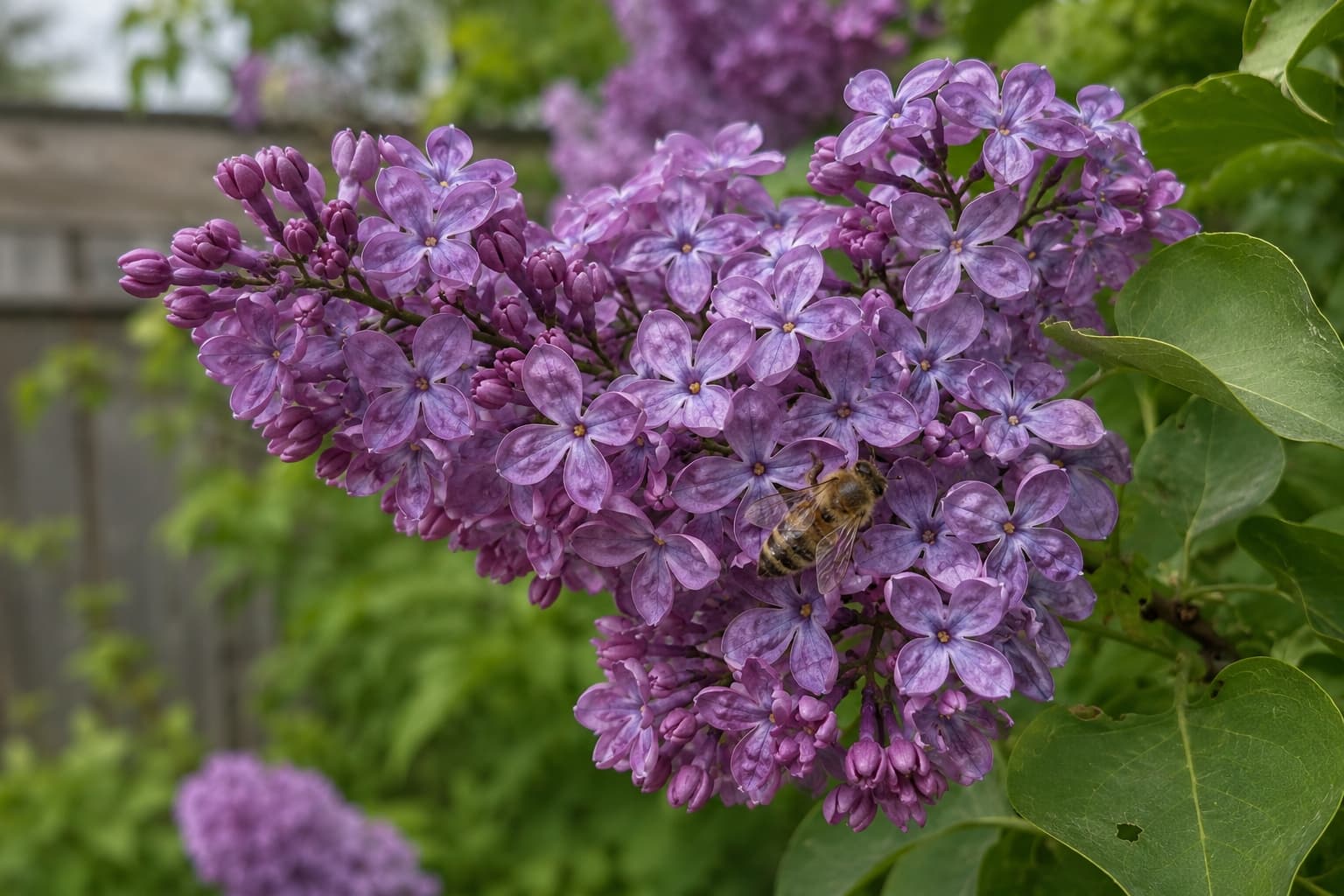
More importantly for most gardeners, what makes lilacs special is the fragrance. It's sweet, floral, and unmistakable — one of the defining scents of spring. In addition, the flowers appear in large, showy clusters called panicles, ranging from deep purple through lavender, pink, and pure white. As a result, a mature lilac in full bloom can become one of the strongest seasonal focal points in a spring garden.
Unlike several strongly fragrant ornamentals, true lilacs in the genus Syringa are generally regarded as comparatively low-risk garden shrubs. However, common names can be confusing, so confirm the botanical identity before making safety assumptions. As with any ornamental, discourage unsupervised eating of plant parts.
Lilac vs. Daphne vs. Rhododendron — The Safety Comparison
Lilac (Syringa): generally considered a lower-risk ornamental. Daphne: toxic if ingested. Rhododendron: also toxic if ingested. Therefore, confirm the botanical identity of any “lilac” before using safety as a deciding factor.
Plant Profile at a Glance
| Feature | Details |
|---|---|
| Common Name | Lilac |
| Scientific Name | Syringa vulgaris (common lilac) and other Syringa spp. |
| Plant Type | Deciduous shrub or small multi-stemmed tree |
| USDA Zones | 3–7 (needs winter chill; struggles in Zones 8+) |
| Mature Size | 5–15 ft tall, 5–12 ft wide (varies by variety) |
| Bloom Time | Mid to late spring (typically 2–3 weeks, April–May) |
| Flower Colors | Purple, lavender, pink, white, magenta, bicolors |
| Fragrance | Sweet, floral, strong — one of the most recognizable garden scents |
| Sun Needs | Full sun — at least 6 hours of direct light; 8+ is better |
| Soil | Well-drained, neutral to slightly alkaline (pH 6.5–7.5) |
| Lifespan | 50–100+ years; some specimens live well over a century |
| Toxicity | True lilacs (Syringa) are generally considered low-risk ornamentals; still discourage unsupervised ingestion |
How to Plant Lilacs for Decades of Blooms
When to Plant
For planting time, choose early spring (as soon as the ground can be worked) or early fall (at least 6 weeks before the ground freezes). However, container-grown lilacs can be planted whenever the ground is workable, but spring and fall give the best establishment. By contrast, hot summer weather can make establishment more stressful.
Where to Plant
- For flowering, full sun matters most. Lilacs need at least 6 hours of direct sun — 8+ is better. By comparison, partial shade often produces fewer flowers. This is the #1 cause of poor blooming after pruning mistakes.
- Good air circulation. In addition, powdery mildew is one of the most common lilac problems, and it's largely preventable by planting where air moves freely. Don't crowd lilacs against walls, fences, or other dense shrubs.
- Well-drained soil. However, lilacs tolerate a range of soil types but perform poorly in persistently wet, poorly drained spots. If water pools after rain, plant on a slight mound.
- Soil pH: In general, lilacs prefer neutral to slightly alkaline soil (pH 6.5–7.5). If your soil is very acidic (below 6.0), add garden lime. Unlike rhododendrons, they do NOT need acidic soil.
Planting Steps
- First, dig a hole twice as wide as the root ball and no deeper than the root ball.
- Next, position the plant so the root flare is at or slightly above the surrounding soil grade.
- Then, backfill mainly with the excavated native soil. If drainage is poor, amend with 25–30% compost and coarse sand. Don't create a pure-compost hole in clay — it fills with water.
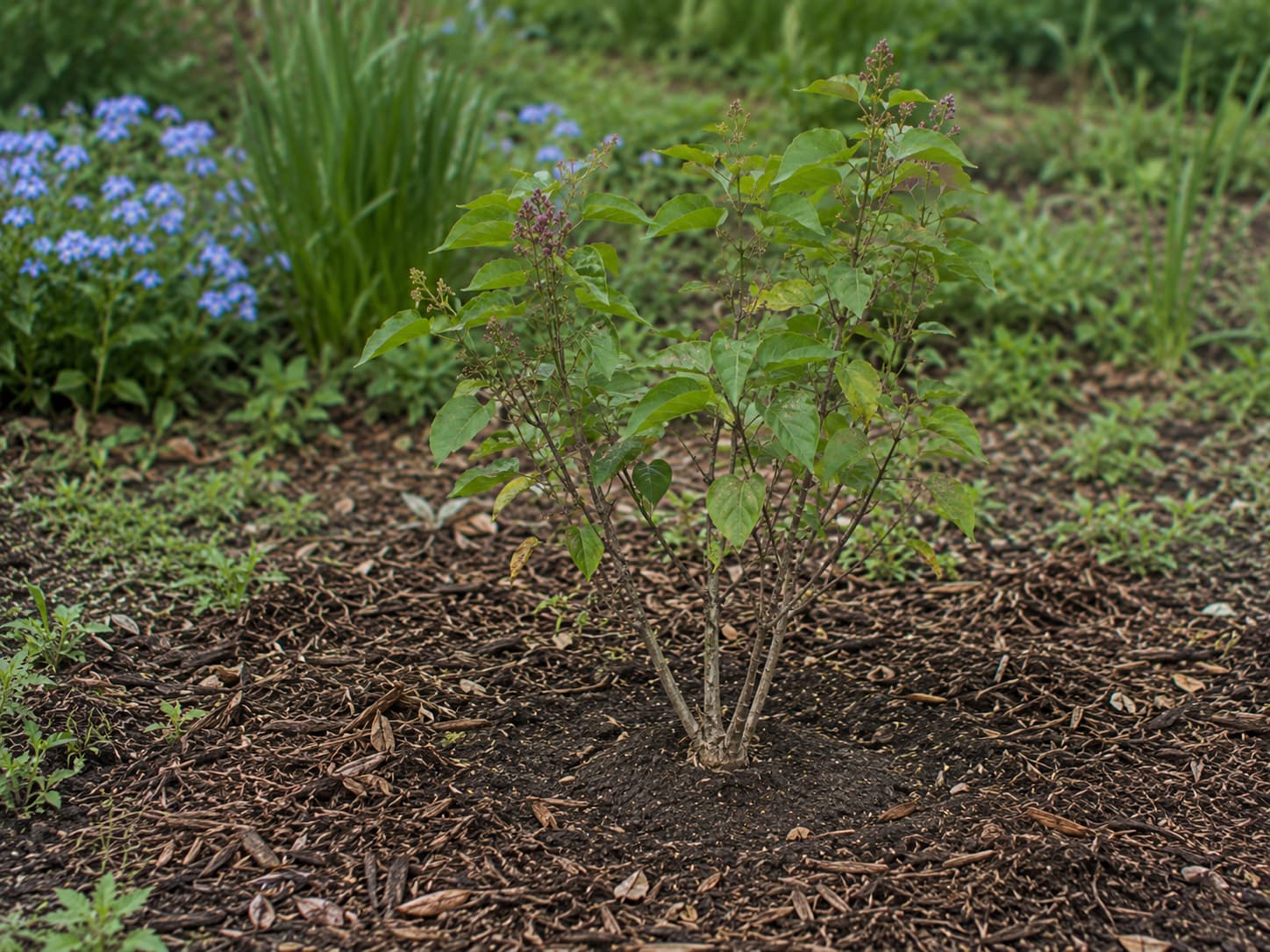
- Afterward, water deeply to settle the soil around the roots. Apply 2 inches of mulch in a ring, keeping it 2–3 inches away from the stems.
- Finally, skip fertilizer at planting time. Let the roots settle first.
Patience Pays: Lilacs Are Slow to Start
After planting, a young lilac may take 2–3 years to bloom significantly, and 4–5 years to reach full blooming potential. That delay is normal while the plant establishes roots and framework. Don't over-fertilize trying to speed things up; it won't help and may reduce blooms. If you buy a larger specimen from a nursery (5-gallon or larger), you'll get blooms sooner.
Complete Care Guide: Sun, Water, Soil, Fertilizer
Light
For established plants, light remains one of the biggest influences on flowering. Full sun (6+ hours direct, 8+ better) = heavy bloom. Partial shade = sparse bloom. Full shade = no bloom. Therefore, if a lilac has stopped flowering while nearby trees have grown larger, the expanding shade is likely your culprit.
Watering
During the first year, check moisture regularly and water deeply during dry spells while roots establish. Once established, lilacs tolerate short dry periods better, although prolonged drought can still reduce vigor. Water during extended dry periods (2+ weeks without rain), but don't keep the soil constantly moist — they prefer drying out between waterings. On the other hand, consistently wet soil can reduce vigor and increase root problems.
Fertilizing
When it comes to fertilizer, lilacs are relatively light feeders. For example, excess nitrogen — especially from nearby lawn fertilizer — produces lush green leaves and very few flowers. Apply a balanced fertilizer (10-10-10) once in early spring, at half the recommended rate. Alternatively, skip routine synthetic fertilizer and use a modest layer of compost if the site needs it. and spread a 1-inch layer of compost around the root zone each spring. If your lilac is near a fertilized lawn, it's probably getting enough nitrogen already.
The Lawn Fertilizer Problem
A common clue is this: a lilac looks large and leafy but flowers poorly while nearby turf receives regular high-nitrogen feeding. In that situation, stop feeding the lilac directly and keep lawn fertilizer away from the shrub's root zone. Then, reassess flowering over the following season rather than adding more fertilizer.
Mulching
For moisture management, a 2–3 inch layer of organic mulch (wood chips, shredded bark, leaf mold) over the root zone conserves moisture, suppresses weeds, and — critically — keeps lawn mowers and string trimmers away from the trunk. Repeated trunk damage from lawn equipment is a slow killer of landscape lilacs.
Pruning Lilacs: The Timing Rule That Changes Everything
For pruning, the key timing rule is this: lilacs bloom on old wood — growth made the previous summer. As a result, flower buds for the following spring are already developing on the plant during summer. Therefore, routine shaping in fall, winter, or early spring can remove the coming season's flower buds. In practice, poorly timed pruning is one of the most common reasons otherwise healthy lilacs fail to bloom, and it's almost always self-inflicted.
The Pruning Calendar
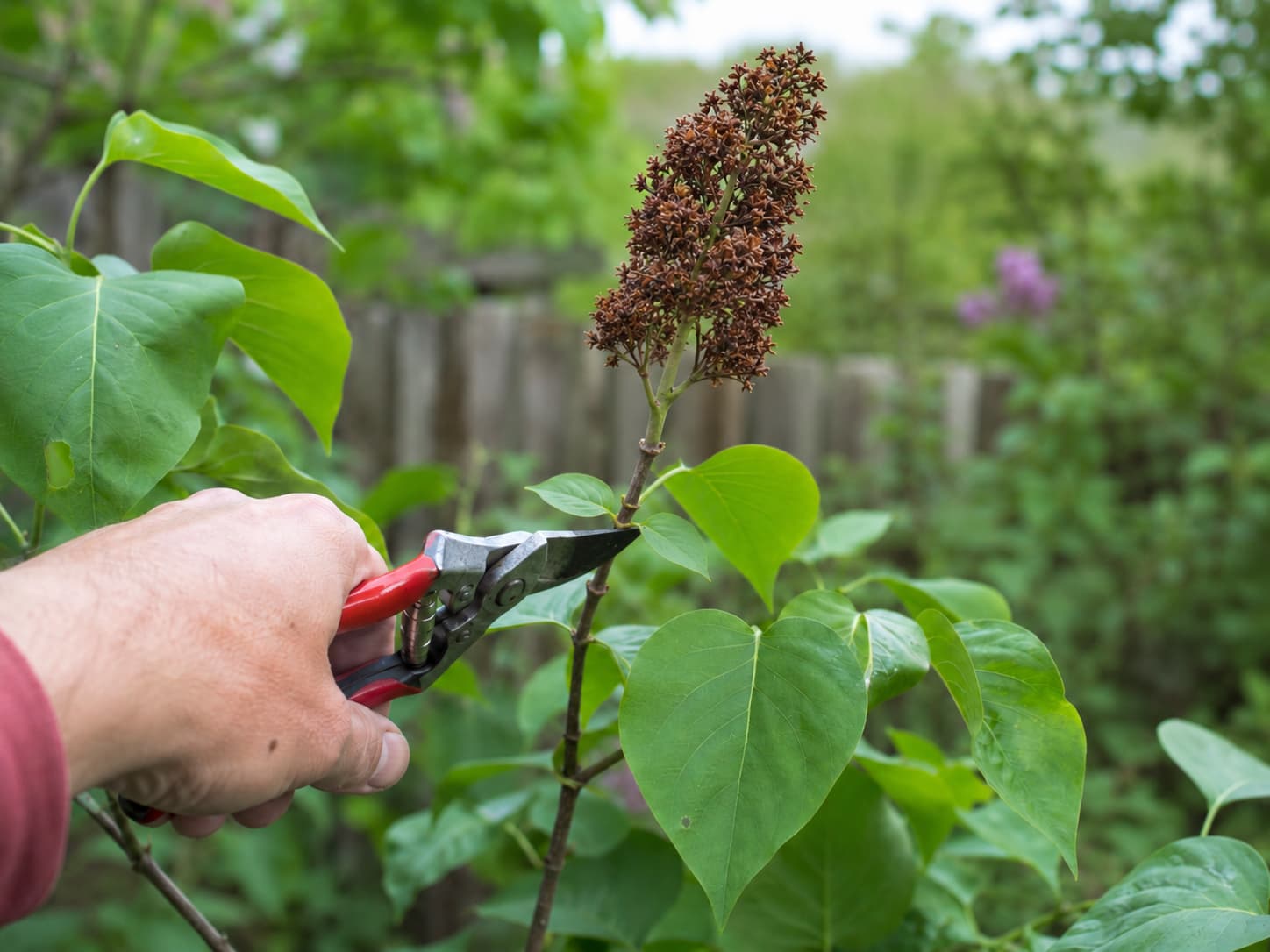
- First, immediately after blooming finishes (late spring): The ONLY safe window for pruning that affects flowering. Deadhead spent blooms, remove dead or crossing branches, shape lightly. Do it within 2–3 weeks of the flowers fading.
- Next, during summer (June–September): Flower buds are forming for next spring. Light maintenance only — remove dead or damaged wood. Do not shape or reduce the plant.
- Finally, in fall and winter: The plant is dormant but the flower buds are already set. Pruning now removes next spring's blooms. Only remove dead or hazardous branches.
Annual Pruning Routine
- Deadhead spent flower panicles as soon as they fade when practical. Cut back to the first healthy pair of leaves below the cluster. Besides improving appearance, this prevents the plant from putting resources into seed production.
- In addition, remove dead, damaged, or diseased wood — cut back to healthy growth or to the base.
- Then, remove crossing branches that rub against each other.
- After that, thin out a few of the oldest stems (the thickest, woodiest ones) at ground level each year. This encourages new shoots from the base and keeps the shrub renewing itself. Aim to remove 1–2 of the oldest stems per year, not all at once.
- Finally, remove any suckers you don't want (see the sucker section below).
How to Rejuvenate an Overgrown, Non-Blooming Lilac
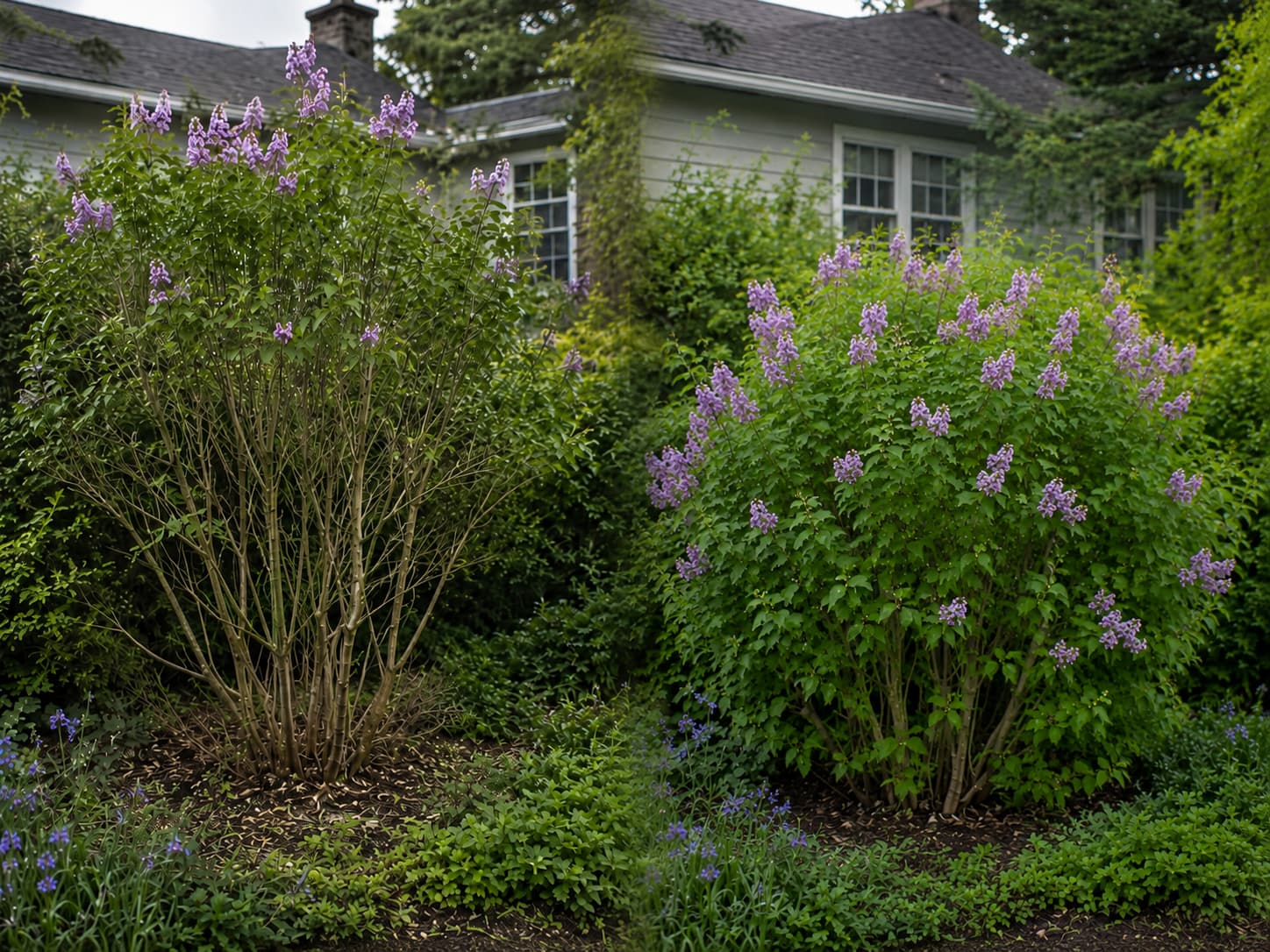
This is the section that addresses the second most common lilac complaint: "I bought a house with a 20-year-old lilac that's 15 feet tall, all bare stems at the bottom, and flowers only at the very top." Fortunately, many old lilacs can be renewed rather than removed.
Why Staged Renewal Is Usually Better
Very hard renovation pruning can remove most or all flowers for a period and trigger a large flush of leafy regrowth. For an old common lilac, a staged two- to three-year renewal is usually easier to manage because it replaces the oldest stems gradually while preserving part of the flowering structure.
The 3-Year Rejuvenation Method
Instead of removing everything at once, this technique replaces the oldest wood gradually over three years, giving the plant time to produce replacement growth from the base each season:
| Year | What to Remove | What Happens |
|---|---|---|
| Year 1 (late winter) | Remove one-third of the oldest, thickest stems — cut them to the ground. Also remove any dead or diseased wood. | The plant responds by pushing vigorous new shoots (suckers) from the base. You'll get fewer blooms this year. That's expected. |
| Year 2 (late winter) | Remove half of the remaining old stems. Select the best 3–5 of last year's new shoots and let them grow — remove the rest. | New shoots from Year 1 are now 3–5 feet tall and starting to branch. A few may produce small blooms. |
| Year 3 (late winter) | Remove the last of the original old stems. Thin new growth to keep 8–12 of the strongest, best-spaced stems. | By now, you have a completely renewed shrub at a manageable height. Full blooming resumes this year or next. |
After Rejuvenation: The Maintenance Routine
After renewal, keep the shrub younger by removing a small number of the oldest stems periodically., keep it that way by removing 1–2 of the oldest stems at ground level every year after blooming. As a result, periodic stem renewal helps prevent the shrub from becoming dominated by old wood again. Think of it as a haircut, not a rescue mission.
Managing Lilac Suckers: The Spread Problem
Another maintenance issue is suckering: lilacs can send up new shoots (suckers) from their root system — sometimes 10–15 feet from the original plant. For a hedge or naturalized planting, that habit can be useful. By contrast, it can become a maintenance issue in a formal bed. Here's how to manage them:
- If you want the suckers (free new plants): Let them grow for a season, then dig them up in early spring or fall with as much root as possible. Pot them up or transplant immediately. For propagation, rooted suckers can also be useful pass-along plants when they are true to the parent.
- If you don't want the suckers: Cut them to the ground as soon as you see them. Don't just mow over them — that encourages more sprouting. For persistent suckers, dig down and sever the root connection to the parent plant, then remove the sucker with its root piece.
- Chemical control: Avoid applying herbicide to suckers that are still connected to a wanted parent shrub, because connected tissues can increase the risk of injury to the main plant. Instead, use repeated cutting or careful root-level removal where practical.
- Prevention: In addition, some lilac types and rootstocks sucker less aggressively than common lilac. 'Miss Kim' and other Syringa patula types are less aggressive spreaders than common lilac. Grafted lilacs on privet rootstock may sucker from the rootstock — recognize and remove these (they won't produce lilac flowers).
3 Common Lilac Problems (and How to Fix Them)
1. Powdery Mildew
For powdery mildew, symptoms include a white to gray coating on leaves, usually appearing in mid-to-late summer. For example, symptoms are often more noticeable where humidity is high and air movement is poor. Leaves may look unsightly but the plant is rarely seriously harmed.
To reduce it, improve air circulation by thinning crowded stems during annual pruning. Water at the base, not overhead. Plant in full sun — shade and humidity favor mildew. For severe cases, apply a fungicide labeled for powdery mildew on ornamentals. In mild cases, many gardeners simply treat powdery mildew as a cosmetic issue — the lilac will leaf out fine the following spring.
2. Bacterial Blight
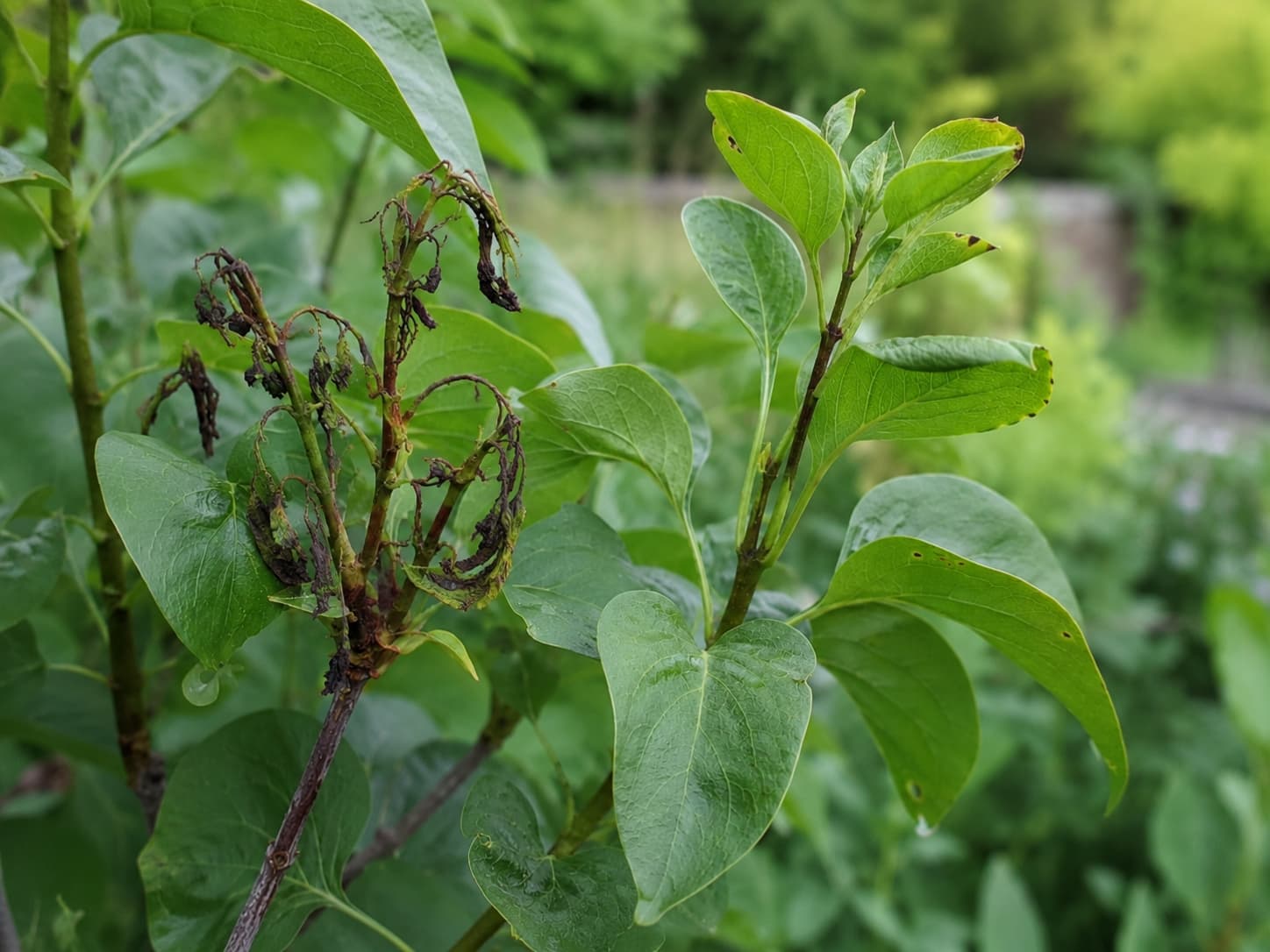
With bacterial blight, new shoots and leaves may wilt, turn black, and look scorched — as if hit by a blowtorch. Brown-black lesions may appear on stems. Most common in cool, wet springs.
The cause is Pseudomonas syringae, a bacterial pathogen that enters through natural openings and wounds. Because rain splash and wet foliage can move bacteria between tissues, sanitation and airflow matter.
Therefore, prune out affected branches 6–8 inches below visible damage, cutting into healthy wood. Sterilize pruners between cuts (10% bleach solution or rubbing alcohol). After pruning, dispose of affected material rather than leaving it beneath the shrub. Improve air circulation. Also, avoid unnecessary overhead watering when bacterial blight is active. Copper-based bactericides applied as buds swell in spring can help prevent recurrence, but timing is critical — they're preventive, not curative.
3. Lilac Borer
For lilac borer, symptoms can include wilting branches, small holes in stems with sawdust-like frass, swollen or cracked areas on older stems. Affected branches may break off easily.
In this case, the damage comes from larvae of a clearwing moth (Podosesia syringae) that bore into lilac stems and feed on the inner wood.
First, prune out and destroy infested stems. Meanwhile, keeping the shrub healthy can reduce the stress that makes older stems more vulnerable. In addition, pheromone traps can help monitor adult moth activity. For severe infestations, however,, a properly timed insecticide application (targeting newly hatched larvae before they enter the stem) may be needed — consult local extension guidance for timing in your area.
Best Lilac Varieties for Home Gardens
| Variety | Size | Flower Color | Zones | Notes |
|---|---|---|---|---|
| Common Lilac (S. vulgaris) | 8–15 ft | Purple, lavender | 3–7 | Overall, this is the classic large lilac type and is prized for fragrance. Most prone to powdery mildew. Long-lived (50–100+ years). |
| 'Miss Kim' (S. patula) | 4–7 ft | Pale lavender-blue | 3–8 | By contrast, this compact type grows more slowly and adds useful fall color. Less prone to mildew. Less aggressive suckering. |
| 'Bloomerang' Series | 4–5 ft | Purple, pink, or dark purple | 3–7 | In addition, this reblooming series combines a strong spring display with lighter repeat flowering from mid-summer through fall. Compact habit. |
| 'Sensation' | 8–10 ft | Purple with white picotee edge | 3–7 | For visual contrast, 'Sensation' offers distinctive bicolor flowers — each purple petal edged in white. A standout for cutting and bringing indoors. |
| 'President Lincoln' | 8–10 ft | True blue | 3–7 | For blue-toned flowers, 'President Lincoln' is a classic choice. Exceptional fragrance. Excellent cut flower. |
| Dwarf Korean Lilac (S. meyeri 'Palibin') | 4–5 ft | Lavender-pink | 3–7 | Finally, Dwarf Korean lilac has a compact, rounded form. Ideal for small gardens and foundation plantings. Blooms slightly later than common lilac. |
Frequently Asked Questions
Blooming, Pruning & Rejuvenation
1.Why isn't my lilac blooming?
Usually, the most common causes are: pruned at the wrong time (after mid-summer — you removed next spring's flower buds), not enough sun (needs 6+ hours direct light; if a nearby tree has grown larger, the increasing shade may be the cause), too much nitrogen (often from lawn fertilizer — lush leaves, no flowers), plant is too young (newly planted lilacs may take 2–5 years to bloom significantly), or the shrub is overgrown and needs rejuvenation (old wood produces few flowers).
2.When should I prune my lilac?
For routine pruning, immediately after the flowers fade — within 2–3 weeks. Lilacs bloom on old wood: the buds for next spring's flowers form on this summer's growth. Pruning in fall, winter, or early spring removes those buds. The only exception: dead, damaged, or diseased wood can be removed any time of year. Rejuvenation pruning of old stems is done in late winter — but understand you're sacrificing those stems' blooms for that year.
3.How do I fix an overgrown lilac that barely blooms?
For an overgrown common lilac, use the 3-year rejuvenation method: remove one-third of the oldest, thickest stems at ground level each year for three years, in late winter. The plant responds by sending up vigorous new shoots from the base. By Year 3, you'll have a completely renewed shrub at a manageable height. Do NOT cut the entire shrub to the ground at once — this often kills it. See the rejuvenation section above for the full step-by-step.
Safety, Suckers & Leaf Problems
4.Are lilacs poisonous to dogs or children?
True lilacs in the genus Syringa are generally considered low-risk ornamentals compared with many toxic shrubs. However, “lilac” also appears in common names of unrelated plants, so confirm the botanical name before making a safety judgment. As always, discourage children and pets from chewing ornamental plants.
5.How do I stop lilac suckers from taking over my yard?
For unwanted suckers, cut them to the ground as soon as they appear — don't mow over them, which encourages more sprouting. For persistent suckers, dig down to the root, sever the connection to the parent plant, and remove the sucker with its root piece. Do NOT use herbicide — it can travel through the root system and kill the main shrub. Some varieties ('Miss Kim', Dwarf Korean) sucker less aggressively than common lilac. Grafted lilacs on privet rootstock may produce privet suckers — identify these by their different leaf shape and remove them promptly.
6.What's the white powder on my lilac leaves in late summer?
Most likely, powdery mildew. It is a fungal disease favored by humidity and poor air circulation. It's unsightly but rarely harms the plant — many gardeners simply ignore it, and the lilac leafs out normally the following spring. To reduce it: thin crowded stems during annual pruning to improve air circulation, plant in full sun, water at the base (not overhead), and consider planting mildew-resistant varieties like 'Miss Kim' if you're in a humid climate.
Warm Climates & Long-Term Care
7.Can I grow lilacs in the South (Zone 8+)?
It can be difficult. Common lilacs (S. vulgaris) need a significant winter chill period (hours below 45°F) to bloom well — this is why they're classic plants of the Northeast and Midwest. In Zones 8–9, they often survive but bloom sparsely or not at all. If you're in the South, look for low-chill lilac varieties specifically bred for warmer climates, such as 'Lavender Lady', 'Blue Skies', or 'Angel White'. These Descanso hybrids were developed in Southern California and perform better with mild winters.
8.How long do lilac bushes live?
Under good conditions, common lilacs can be long-lived — 50–100+ years for common lilac in good conditions. Abandoned farmsteads across the Midwest and Northeast are often marked by lilacs still blooming decades after the houses are gone. The key to longevity: periodic rejuvenation pruning to keep the shrub renewing itself, good drainage, and full sun. Neglected lilacs don't die — they just become leggy and unproductive. With care, a lilac planted today could be blooming for your grandchildren.
Sources & Further Reading
- Royal Horticultural Society — Lilac Growing Guide
- University of Minnesota Extension — Lilacs for the Home Landscape
- Clemson Cooperative Extension — Lilac Factsheet
- Missouri Botanical Garden — Syringa vulgaris Plant Finder
- Arnold Arboretum of Harvard — Lilac Collection and Care
- ASPCA — Toxic and Non-Toxic Plants List
Final Thoughts
In the right climate, lilacs are among the most rewarding spring-flowering shrubs a gardener can plant — decades of fragrance, a defining moment of spring, and almost no drama once established. Fortunately, the most common problems are usually manageable: pruning at the wrong time, not enough sun, or letting an old shrub go too long without renewal.
Beyond the flowers, what makes lilacs especially appealing is that they don't come with the anxiety. They're non-toxic. They're cold-hardy. They live longer than you will. And that fragrance — on a warm May evening with the windows open — is one of the things that makes gardening worth doing.
Lilac Care Checklist
In short, here is what to remember:
- Full sun (6+ hours) is non-negotiable for blooms. Less sun = fewer flowers.
- Prune immediately after blooming. Any later and you're removing next year's flowers.
- Remove 1–2 oldest stems per year at ground level. This prevents overgrowth before it starts.
- For overgrown shrubs, use the 3-year rejuvenation method. Never cut the whole plant to the ground.
- Go easy on fertilizer. Especially if the lilac is near a lawn. Less nitrogen = more flowers.
- Lilacs are non-toxic. If you've been worried about daphne or rhododendron safety, this is your plant.
If you found this guide helpful, you might also enjoy our guides on Daphne Plant Care and Rhododendron Care — two more flowering shrubs, with very different opinions about how they want to be treated.
Is your lilac refusing to bloom? Share its age, sunlight, pruning history, climate zone, and nearby fertilizer use with the Greenmuse community.