Why Is My Christmas Cactus Dropping Buds? 7 Causes and the Fix for Each
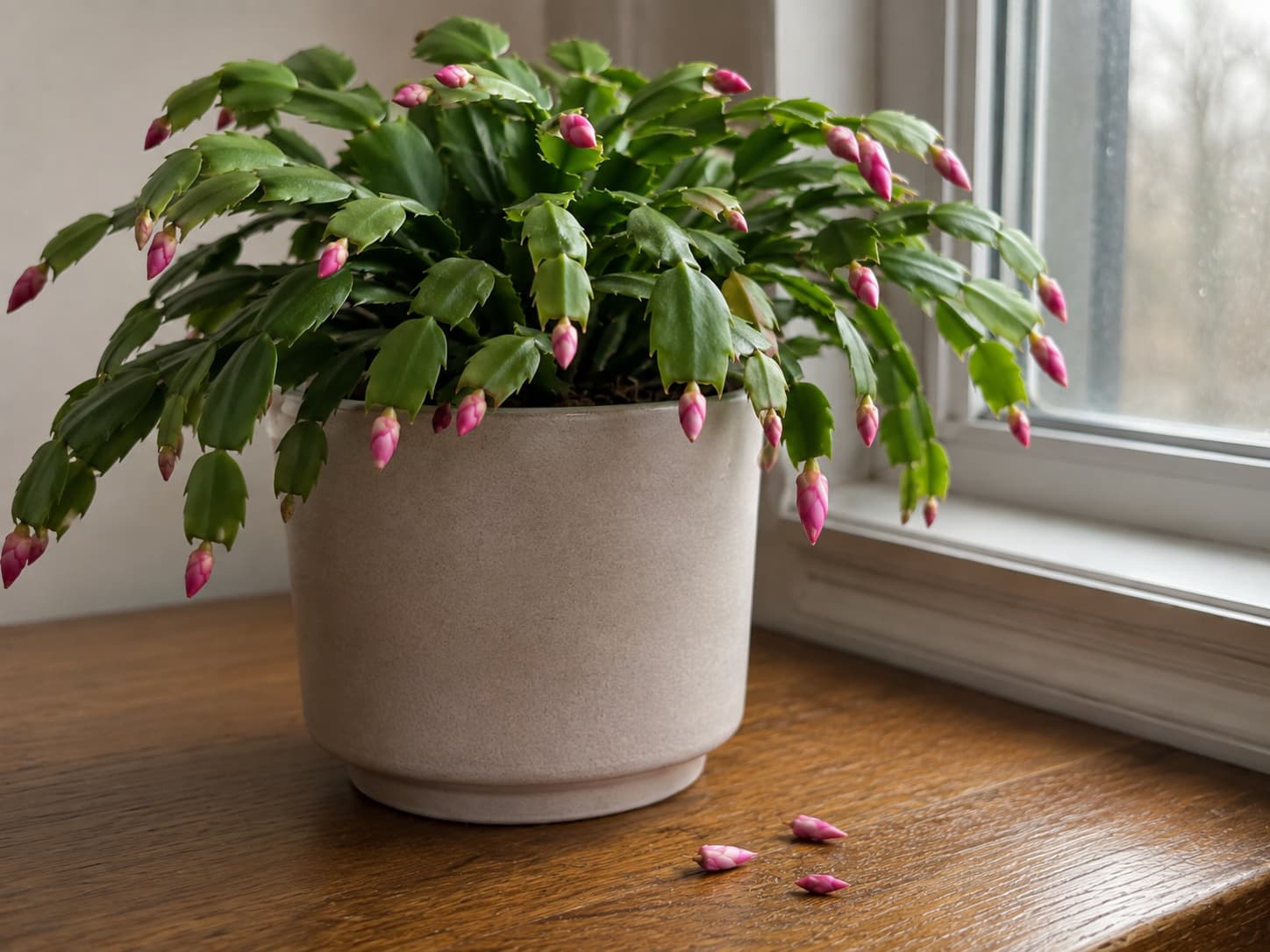
After months of waiting, your holiday cactus may finally be covered in developing buds. At first, the buds may look plump and promising. Then, you may suddenly find unopened buds beside the pot. If the stress continues, more buds can follow.
However, bud drop on holiday cacti is frustrating precisely because the plant may otherwise look healthy and still shed developing flowers. The useful part is that bud drop often points to a change in moisture, light, temperature, air movement, or another environmental condition that you can investigate. I haven't lost a bud in two years after losing my entire crop in 2023.
In this guide, seven common triggers of bud drop in Schlumbergera are used as a practical diagnostic framework. Although symptoms can overlap, the surrounding conditions usually help narrow down the most likely cause. So, start with the quick diagnostic below.
Quick Diagnostic: Match Your Symptom to the Cause
| What You See | Most Likely Cause | Jump To |
|---|---|---|
| Buds dropped after you moved the plant | Cause #1: Location change | Below |
| Buds shriveled and fell off; plant near a heater or drafty window | Cause #2: Temperature swings | Below |
| Stems look plump but buds yellow and drop; soil is wet | Cause #3: Overwatering | Below |
| Stems look wrinkled/shriveled; buds dry up and drop | Cause #4: Underwatering | Below |
| Buds are small, pale, or fail to develop; plant in low light | Cause #5: Insufficient light | Below |
| Buds drop near an exterior door, vent, or frequently opened window | Cause #6: Drafts | Below |
| Buds drop on a plant near ripening fruit or a gas stove | Cause #7: Ethylene gas | Below |
Drag the bar below or swipe horizontally to view the remaining columns.
Cause #1: Moving the Plant (The #1 Killer of Buds)
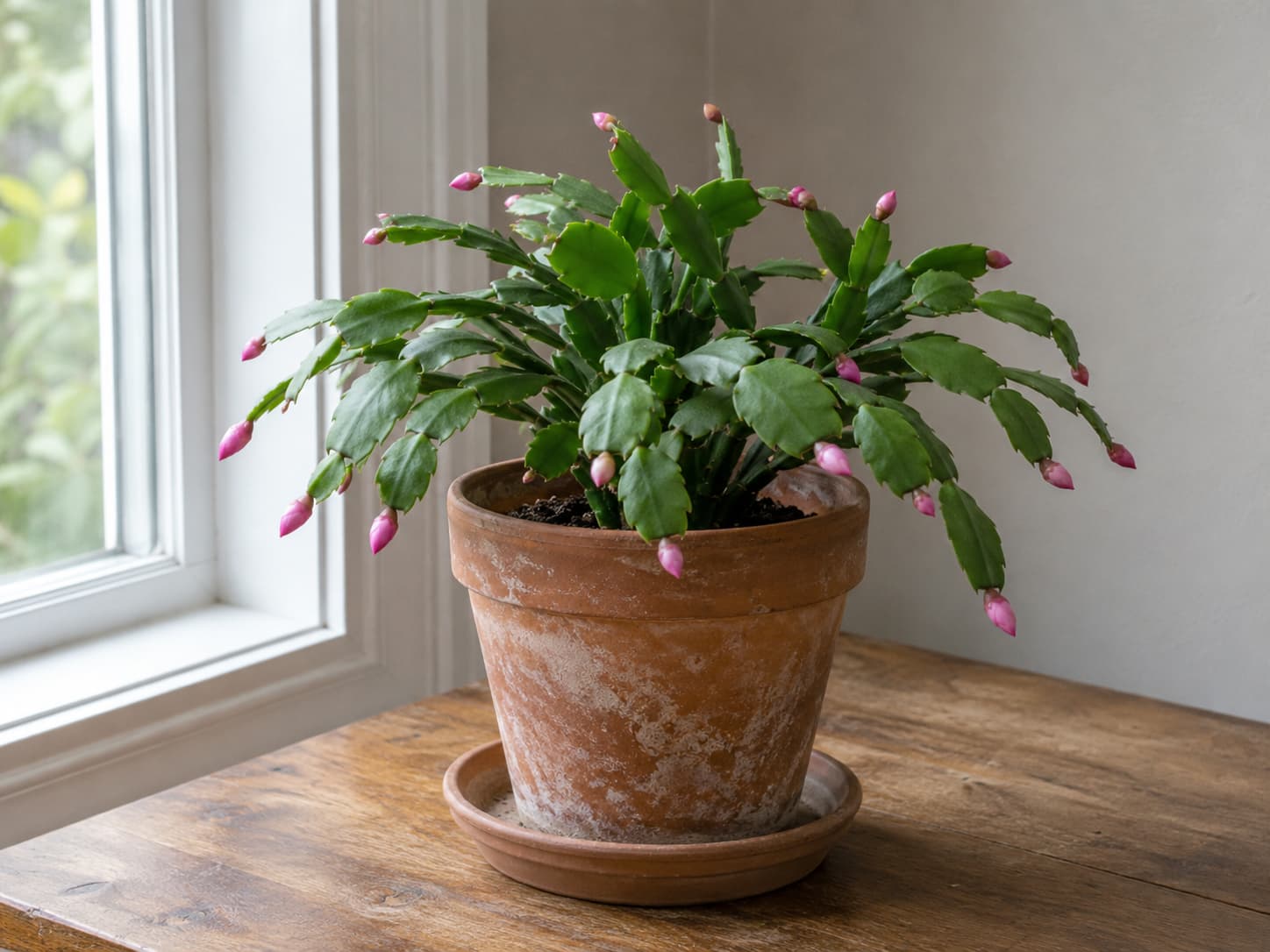
First, developing buds can react to abrupt environmental changes. For that reason, keeping conditions reasonably stable during bud development can reduce avoidable stress. For example, a move can change light, temperature, humidity, and airflow all at once, making it difficult to identify which factor triggered the drop.
Therefore, avoid unnecessary location changes once buds are developing.
The Fix
- Pick the display spot in September (before buds form) and leave the plant there through blooming. Don't move it to a "better" spot once you see buds.
- If you must move it (for example, from a bedroom to the living room for a holiday party), do it after the flowers have fully opened, not while they're still buds. Open flowers are more tolerant of change than developing buds.
- Never rotate the pot. Turning the plant to face a different direction changes which side of the plant gets light, which is enough to trigger bud drop on the shaded side.
In November 2023, I moved my Thanksgiving cactus from the guest bedroom (where it had set 30+ buds in a cool east window) to the living room (warm, south-facing, dry air) so guests could see it bloom. Within 4 days, every single bud fell off. Every one. The plant went from a bud-covered showpiece to a bare stem in less than a week. The next year, I left it in the guest room and just brought guests in to see it. Every bud opened. Lesson: the plant decides where it wants to live, not you.
Cause #2: Temperature Swings
Next, temperature and day length both influence flowering in holiday cacti. Once buds are present, relatively stable indoor temperatures are preferable to abrupt hot-cold swings. As a result, sudden temperature changes near heaters, fireplaces, cold glass, or exterior doors can contribute to bud loss.
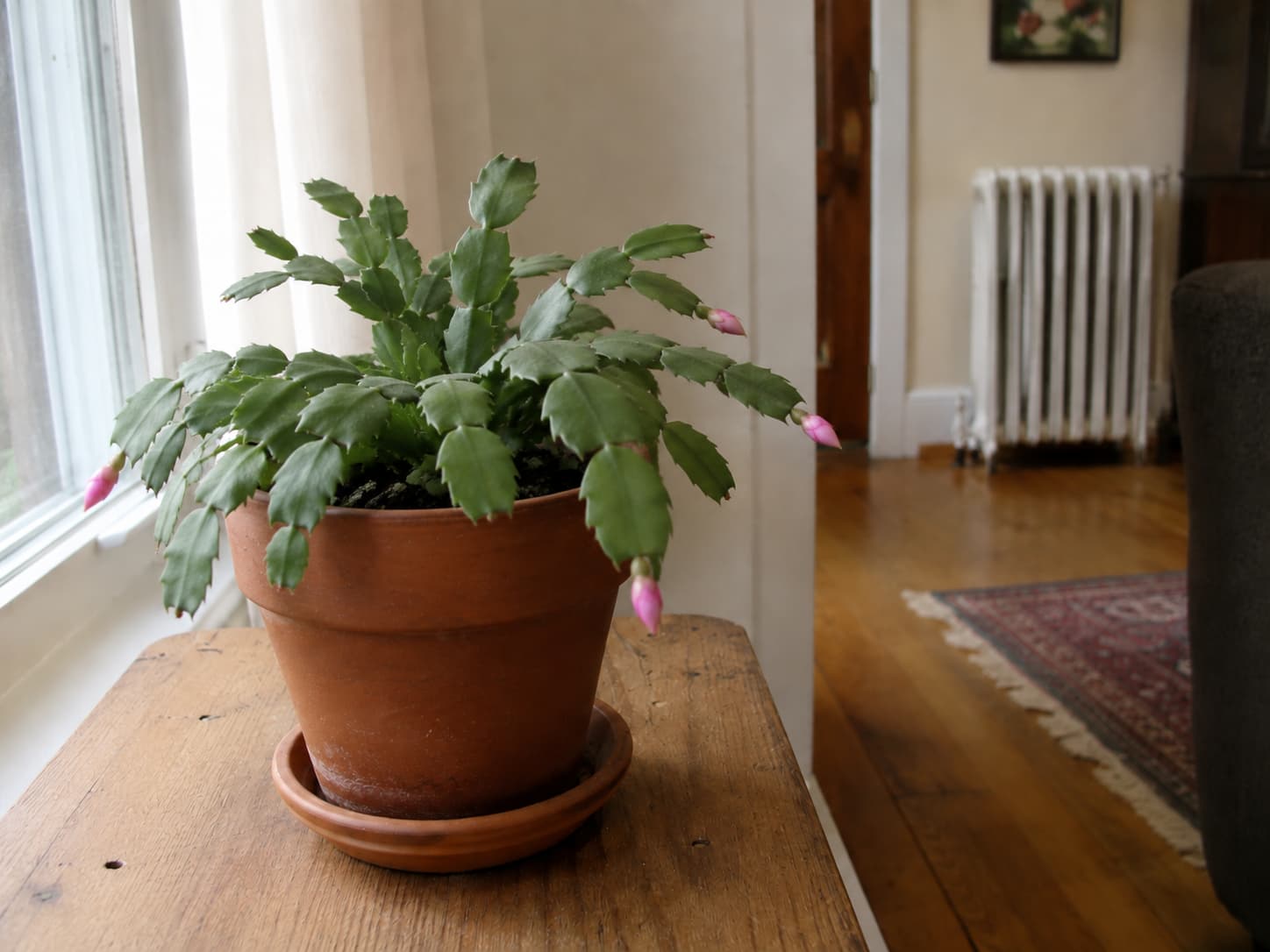
Common Temperature Scenarios That Cause Bud Drop
| Scenario | What Happens | Fix |
|---|---|---|
| Plant near a heating vent | Hot dry air blasts the buds; temperature swings 20°F between vent cycles | Close the vent or use a deflector; move plant 3+ feet away |
| Plant on a TV or electronics cabinet | Heat from the device raises the local temperature 5–10°F | Move the plant off any heat-generating surface |
| Plant near a fireplace | Extreme swings: 80°F when burning, 55°F when not | Keep at least 6 feet away; never place directly in front |
| Plant in a kitchen | Oven and stove create repeated temperature spikes | Don't keep holiday cacti in kitchens during bloom season |
Drag the bar below or swipe horizontally to view the remaining columns.
For more on temperature stress in houseplants, see our houseplant heat stress guide.
Cause #3: Overwatering
Unlike desert cacti, Schlumbergera is an epiphytic cactus from humid forest environments. Even so, its roots still need an airy medium rather than a persistently saturated one. Consequently, prolonged saturation and root stress can contribute to yellowing buds and bud drop.
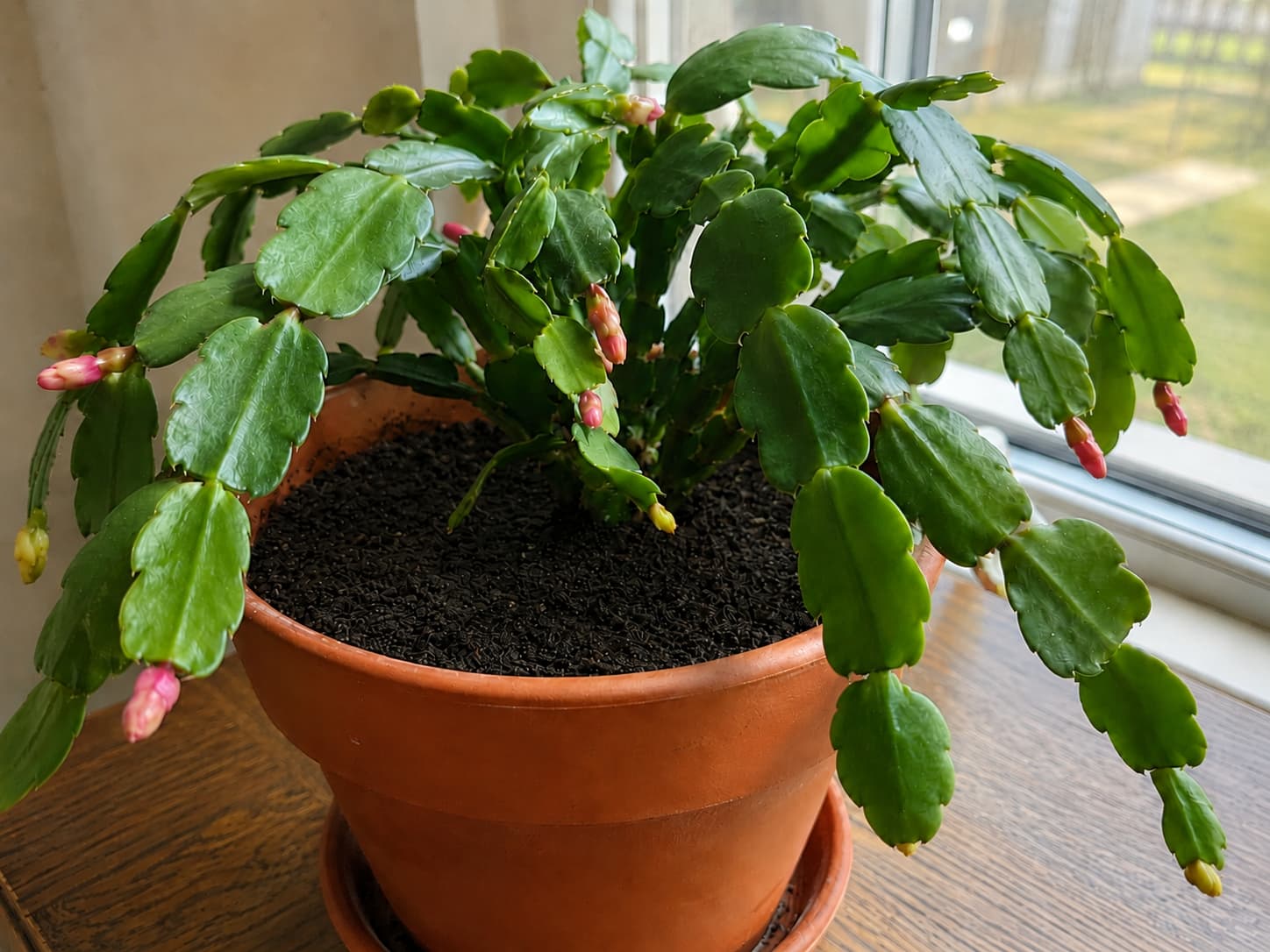
Signs of Overwatering Bud Drop
- Stems look plump and healthy (even over-inflated), but buds turn yellow-green and fall off
- Soil stays wet 4+ days after watering
- The pot feels surprisingly heavy
- White mold or fungus gnats on the soil surface
The Fix
- Water according to root-zone moisture rather than a fixed calendar. Let the upper part of the mix begin to dry, then water thoroughly and allow excess water to drain.
- Use the weight test: Pick up the pot right after watering and feel the weight. Pick it up again before the next watering. If it still feels heavy, don't water yet.
- Never let the pot sit in a saucer of water. Empty the saucer 30 minutes after watering. Standing water = root rot = bud drop.
- Use a well-draining potting mix. Standard cactus mix works, or make your own: 2 parts potting soil + 1 part perlite + 1 part orchid bark. The bark and perlite create air pockets that prevent waterlogging.
Cause #4: Underwatering
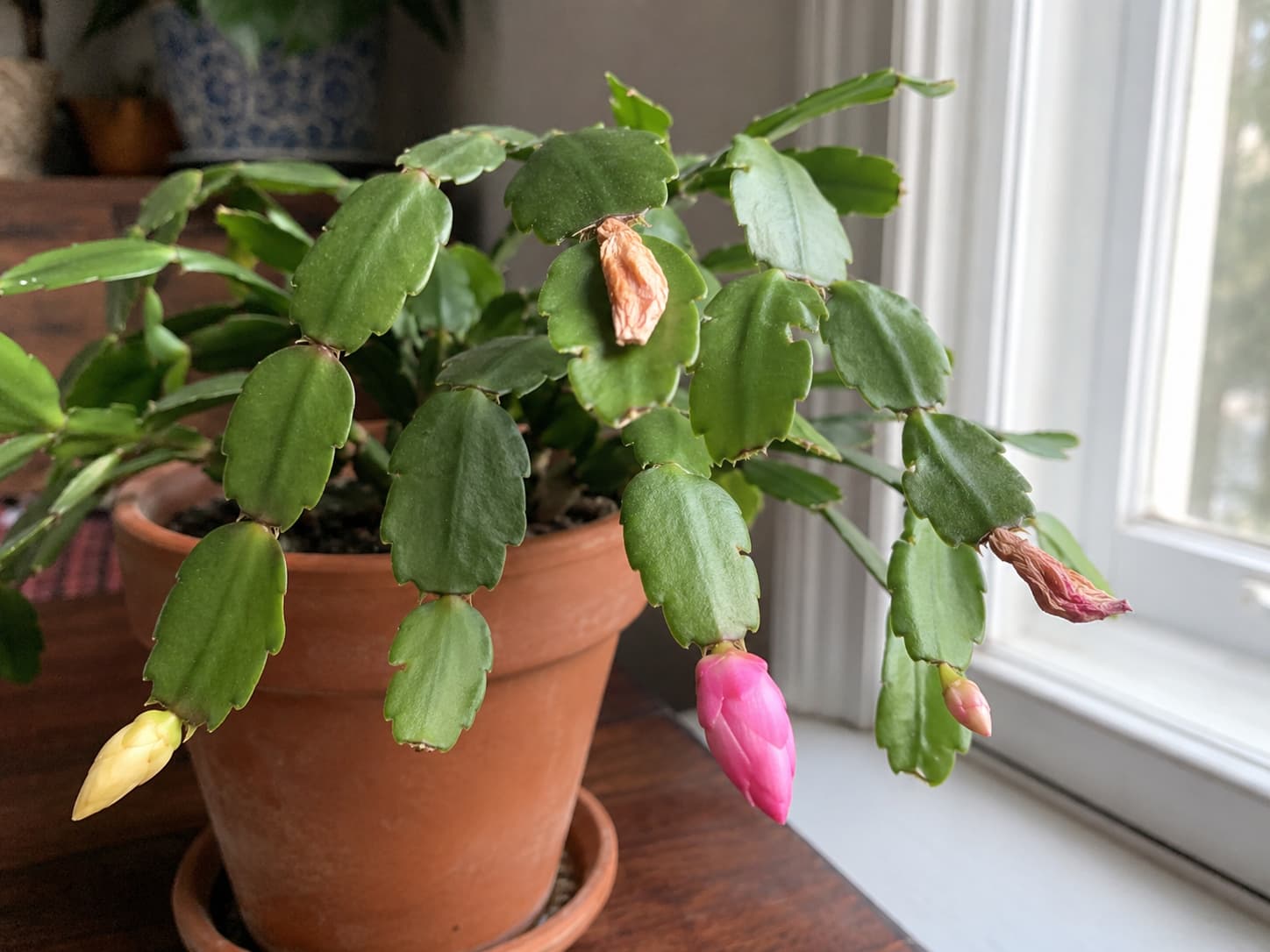
On the other hand, letting the mix become excessively dry during bud development can also stress the plant. In practice, wrinkled stem segments and dry, papery buds point toward moisture stress on the dry side.
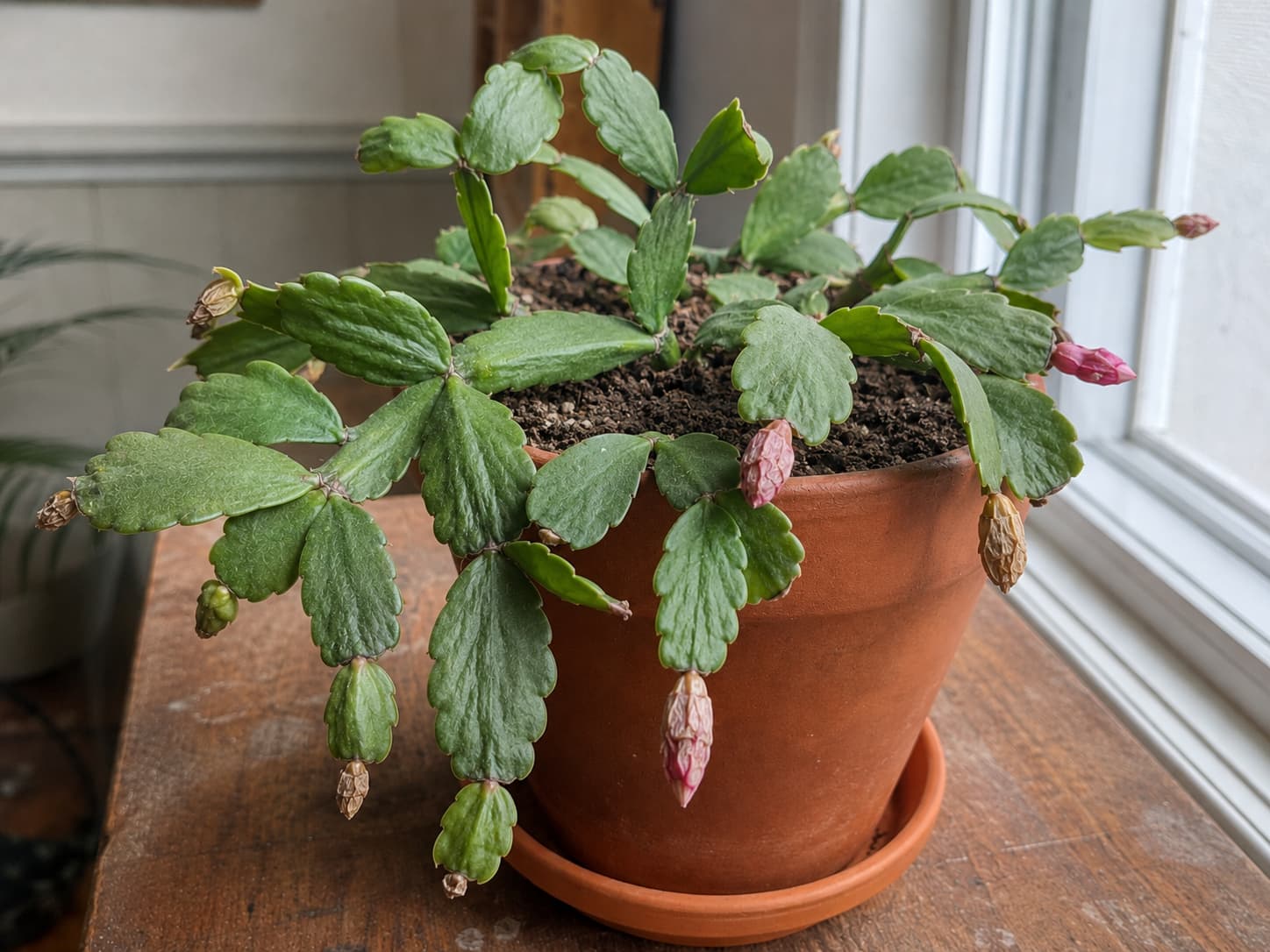
Signs of Underwatering Bud Drop
- Stem segments look slightly wrinkled, puckered, or thin
- Buds dry up and turn papery before falling (they don't yellow—they desiccate)
- Soil is pulling away from the edges of the pot
- The pot feels very light when you pick it up
The Fix
- Water thoroughly when the top 1/3 of soil is dry. "Thoroughly" means water until it runs from the drainage holes, then empty the saucer.
- Increase humidity if your home is very dry (below 30%). A room humidifier can be more effective when indoor air is consistently very dry.
- Avoid both extremes during bud formation. Do not leave the mix persistently saturated, but also avoid prolonged severe drying that wrinkles the stem segments.
Cause #5: Insufficient Light
Light matters too. Holiday cacti generally perform best with useful daytime light during bud development. For example, very low daytime light can leave buds weak or slow to develop. At the same time, a sufficiently long, reliably dark nighttime period helps initiate flowering. Therefore, think of bud formation as a balance between useful daytime light and long, uninterrupted nights.
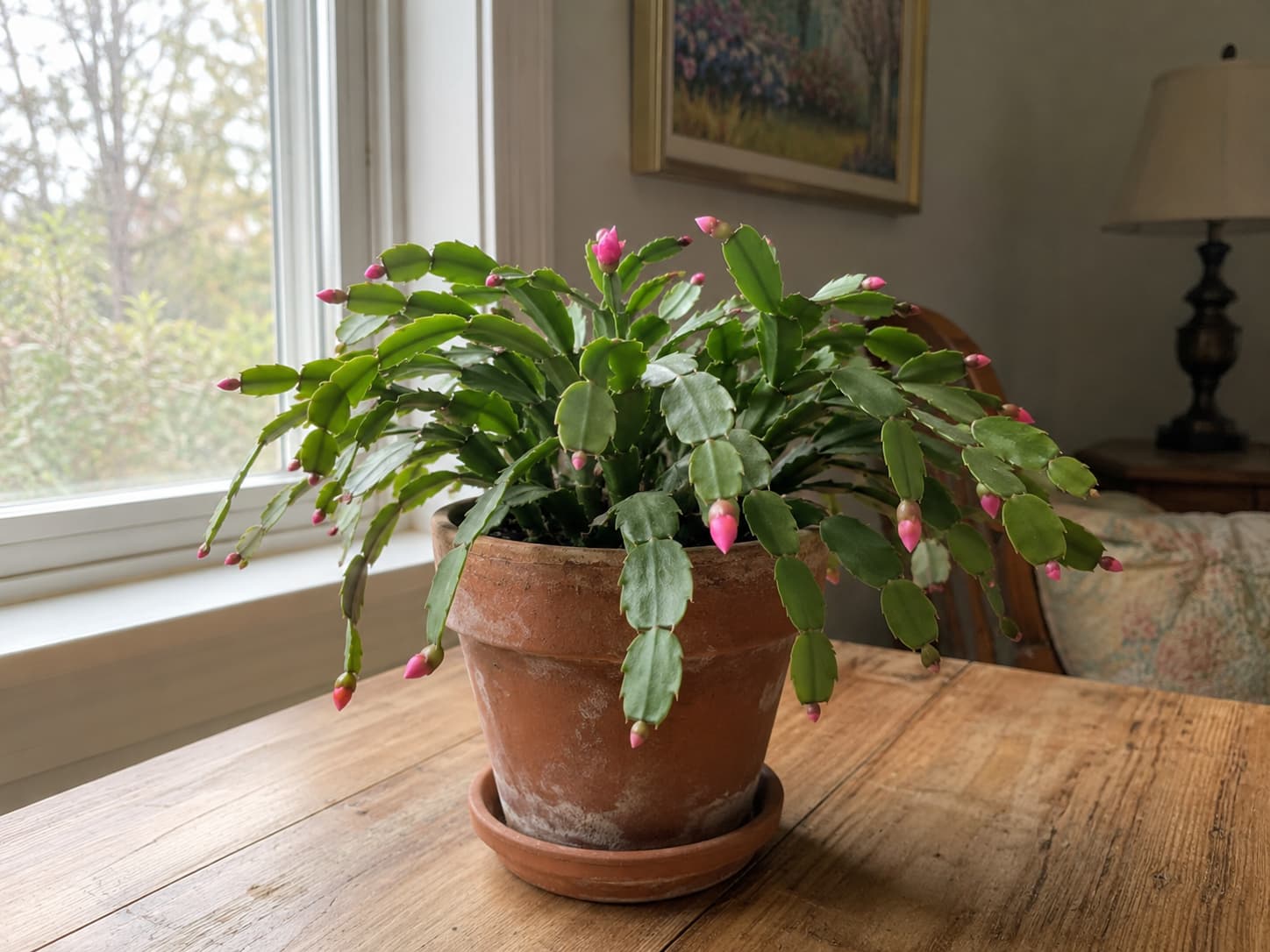
The Light Balance
| Light Condition | Effect on Buds | What to Do |
|---|---|---|
| Bright indirect light (east or north window) + 13+ hours dark | Ideal—buds form and develop fully | Keep it there |
| Medium light (a few feet from a window) + proper dark | Buds form but may be small or drop | Move closer to window |
| Low light (interior room, no natural light) | Buds may not form at all, or form then drop | Add a grow light for 8–10 hrs/day; see our grow light guide |
| Good light but interrupted darkness (streetlight, reading lamp, TV glow) | Buds don't form; plant stays in vegetative mode | Ensure 12–14 hrs of uninterrupted darkness nightly from September |
Drag the bar below or swipe horizontally to view the remaining columns.
The "Dark Treatment" Protocol for Stubborn Plants
If flowering is unreliable, a controlled short-day routine can help remove guesswork: from late September, put the plant in a room that gets no artificial light after sunset (a guest room or unused bathroom is ideal). If no such room exists, place a cardboard box over the plant from 6 PM to 8 AM daily. Continue the routine for the period recommended for your holiday-cactus type and local conditions. In other words, the goal is to provide consistent long nights without repeatedly moving the plant. Once buds are visible and pea-sized, you can stop the dark treatment—but don't change the plant's location.
Cause #6: Drafts
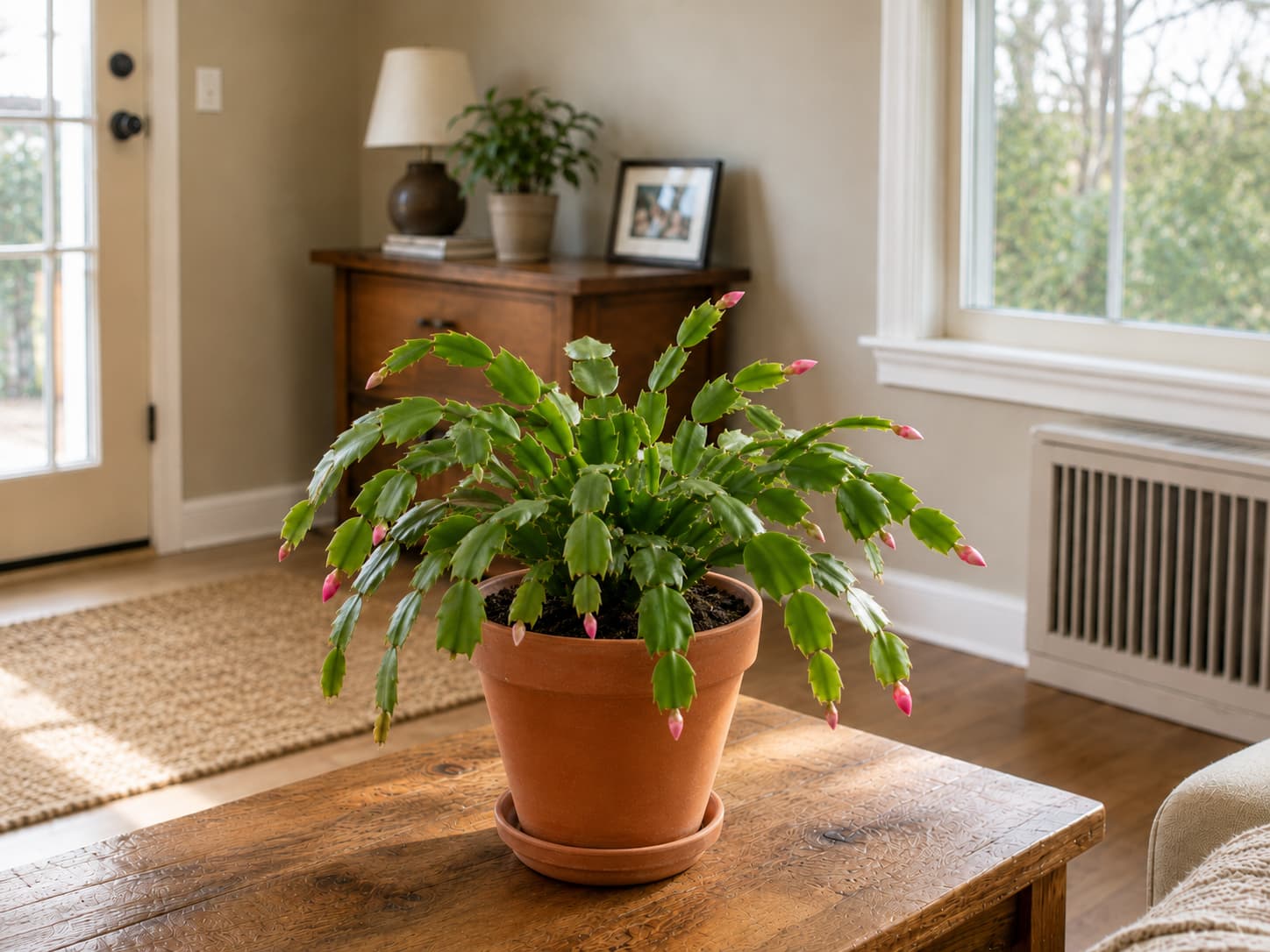
Similarly, cold drafts and direct heated airflow can create abrupt local changes in temperature and humidity. Therefore, keep a budding plant away from frequently opened exterior doors, cold glass, and direct vent airflow.
Draft Sources to Check
- Exterior doors that open frequently (front door, back door to patio)
- Windows with gaps or single-pane glass (the air within 6 inches of a single-pane window in winter is 10–15°F colder than room temperature)
- Heating vents and radiators (hot air dries buds directly)
- Ceiling fans (create air movement that increases transpiration from bud surfaces)
- Air conditioners (if you run AC in fall—some southern zones do)
The Fix
Move the plant far enough from draft sources that buds are not exposed to repeated cold or hot airflow. Near windows, keep foliage and buds from touching very cold glass. If it's near a frequently opened door, move it to a different wall in the same room. For more on protecting plants from environmental stress, see our plant care during absences guide.
Cause #7: Ethylene Gas (The Hidden Cause)
Another factor to consider is ethylene exposure. Because ethylene regulates ripening and senescence, sensitive flowers and buds can respond to elevated concentrations. For that reason, keeping a budding holiday cactus away from concentrated ethylene sources such as ripening fruit is a sensible precaution.
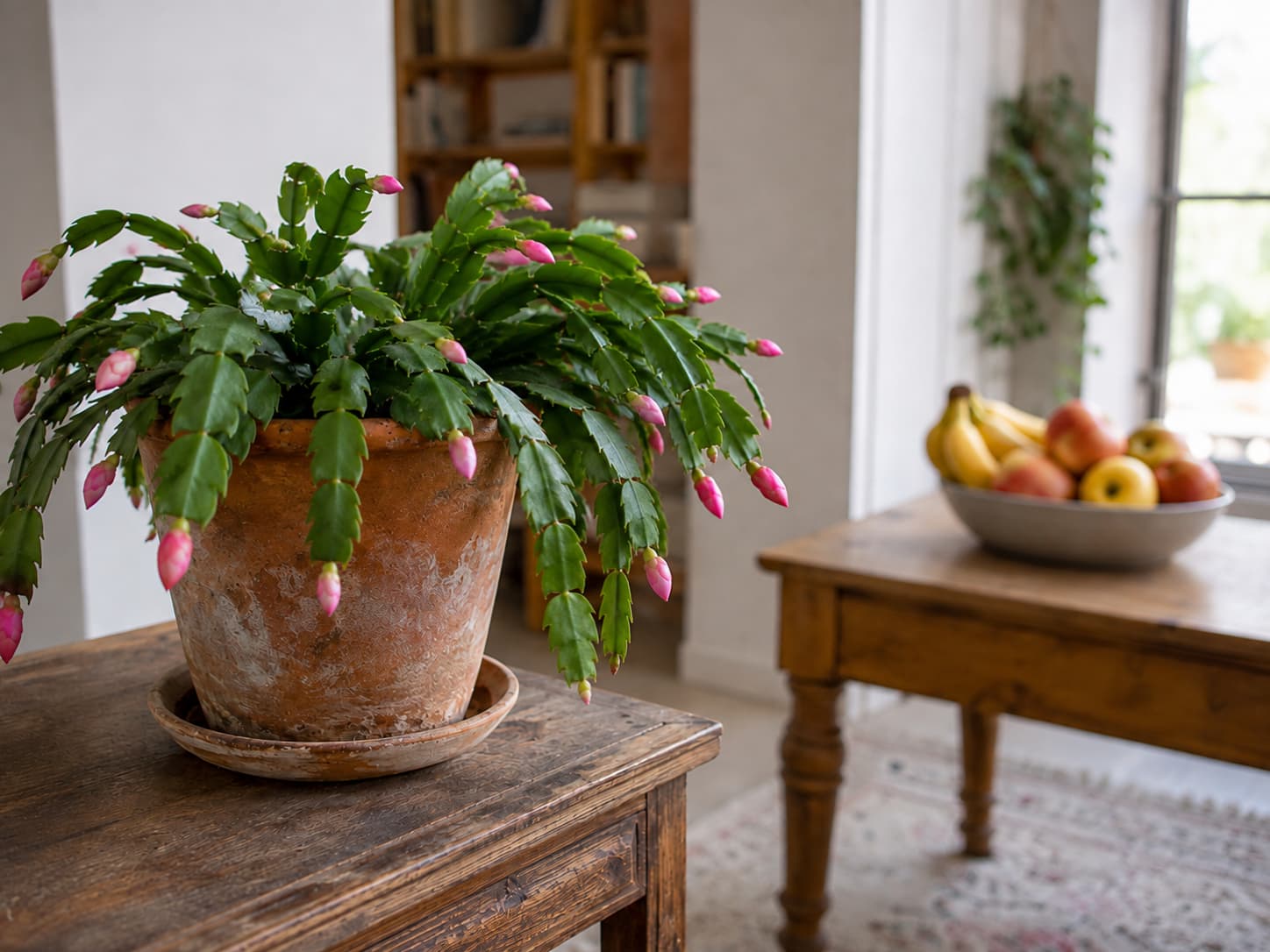
Common Sources of Ethylene in Homes
| Source | Ethylene Level | Risk |
|---|---|---|
| Ripening fruit bowl (apples, bananas, tomatoes) | High — especially in a closed room | Very high if within 6 feet of the plant |
| Gas stove/oven | Moderate — incomplete combustion releases ethylene | High in kitchens; don't keep cacti in kitchens |
| Car exhaust (attached garage) | High | High if plant is near the garage entrance |
| Smoke (candles, fireplaces, cigarettes) | Low–moderate | Low but cumulative over time |
| Other aging plants | Very low | Negligible |
Drag the bar below or swipe horizontally to view the remaining columns.
The Fix
- Keep the cactus away from concentrated sources of ripening fruit, especially in a small or poorly ventilated room
- Avoid placing a budding holiday cactus beside ripening fruit or combustion sources in a poorly ventilated kitchen
- Keep away from gas appliances
- Ensure the room has some air circulation (not draft—just gentle air exchange)
My mother kept a bowl of apples on the table next to her Christmas cactus for years and never understood why the buds kept falling off. When I told her about ethylene, she moved the apples to the kitchen. The next year, the cactus bloomed profusely for the first time in a decade. She'd been gassing her own plant with fruit. It sounds absurd, but it's one of the most common undiagnosed causes of bud drop.
Thanksgiving Cactus vs Christmas Cactus: Are You Growing the Right One?
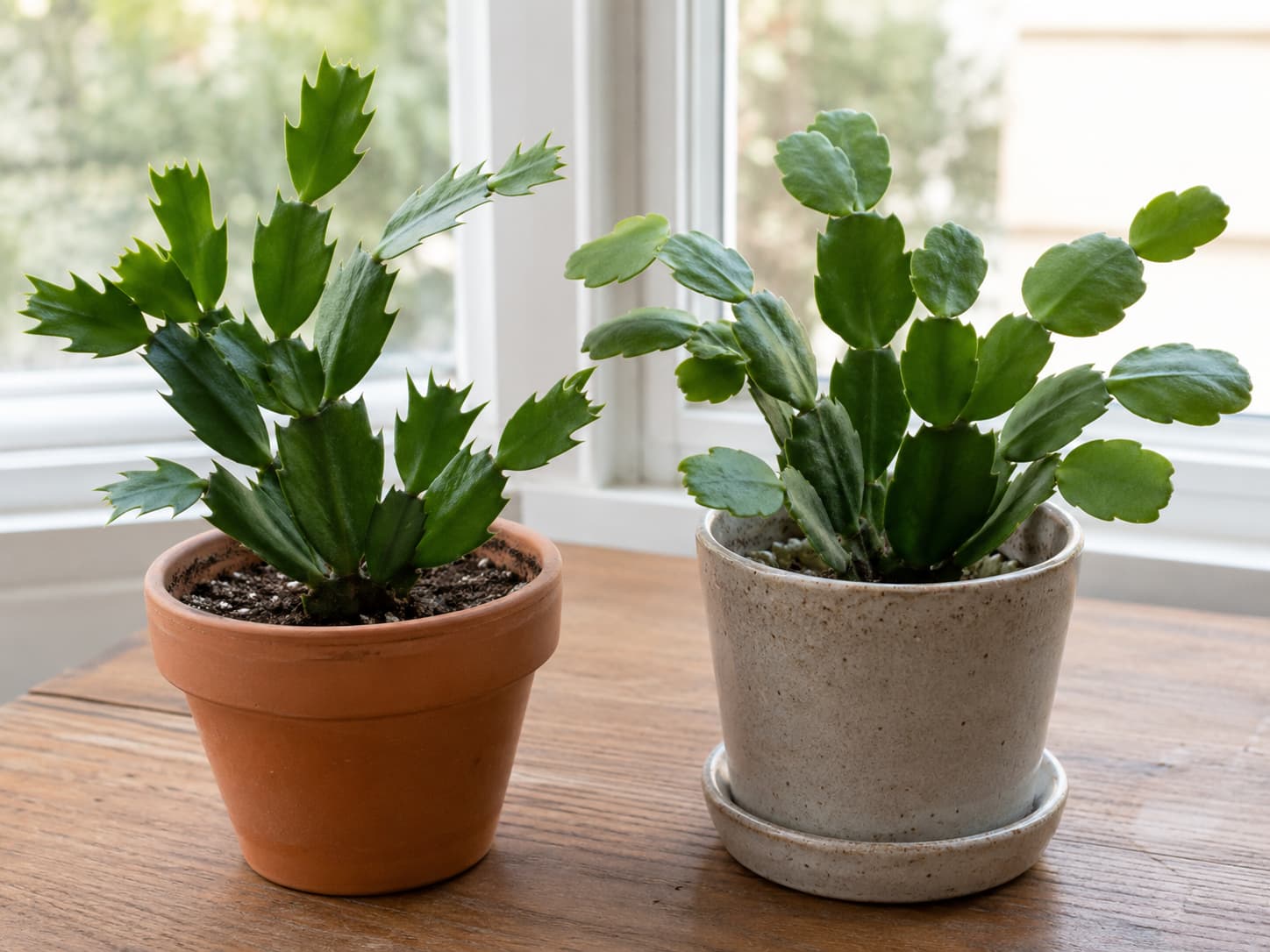
Identification also matters. Many holiday cacti sold around Christmas are actually Thanksgiving cactus (Schlumbergera truncata). Typically, Thanksgiving cactus has more pointed segment margins and often blooms earlier than true Christmas cactus. By contrast, Christmas cactus hybrids in the S. × buckleyi group usually have rounder, scalloped segment edges and often bloom later.
| Thanksgiving Cactus (S. truncata) | Christmas Cactus (S. × buckleyi) | |
|---|---|---|
| Bloom time | November | December–January |
| Segment edges | Pointed, claw-like teeth | Scalloped, rounded edges |
| Flower shape | Tube-shaped, horizontal, slightly asymmetrical | Pendant, more symmetrical, rose-like |
| Common in stores? | Yes — 90%+ of what's sold as "Christmas cactus" | Rare — seek from specialty growers |
| Bud drop tendency | Moderate | Slightly less prone (more tolerant of change) |
Drag the bar below or swipe horizontally to view the remaining columns.
Why does this matter? Bloom timing and segment shape can help you identify which holiday cactus you have and adjust seasonal care accordingly. As a result, identification makes the timing of short-day treatment and bloom expectations more realistic.
How to Get Your Christmas Cactus to Bloom Next Year
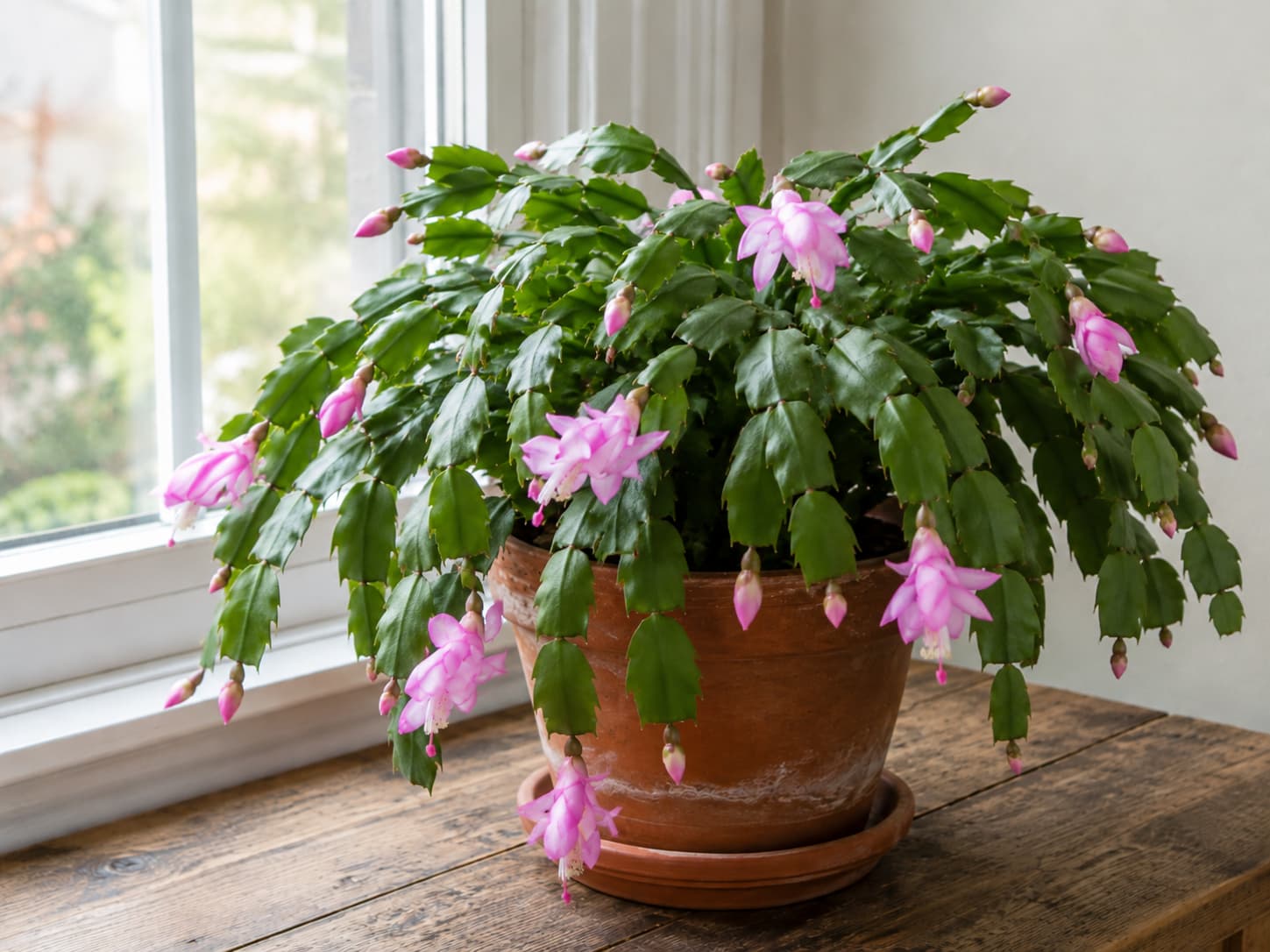
For next season, use a staged care plan rather than changing several conditions at once:
Phase 1: Post-Bloom Rest (January–March)
- Remove spent flowers by twisting gently at the joint
- Reduce watering as growth and dry-down slow; check the mix before watering
- Keep in a cool room (55–65°F)
- Pause or reduce fertilizer while active growth is minimal
Phase 2: Active Growth (April–September)
- Move to a bright spot (no direct midday sun)
- Water when top 1/3 of soil is dry
- Feed during active growth according to the fertilizer label and the plant's response
- Prune to shape in June if needed—pruned segments can be propagated; see our succulent propagation guide for the technique
Phase 3: Bud Formation (September–October)
- Reduce or pause feeding as the plant enters its bud-setting period
- Ensure 12–14 hours of uninterrupted darkness nightly (dark treatment if needed)
- Keep temperatures between 50–65°F at night
- Reduce watering slightly—let the top half of soil dry between waterings
- Do not move the plant during this phase
Phase 4: Blooming (November–January)
- Maintain stable conditions: 60–70°F, bright indirect light, consistent moisture
- Water when the top 1/3 of soil is dry
- Keep away from drafts, heaters, fruit bowls, and gas appliances
- Enjoy the blooms—they last 4–6 weeks per flower
The $5 Bud-Saving Toolkit
| Item | Why You Need It | Cost |
|---|---|---|
| Cardboard box | Dark treatment: cover plant for 13+ hours/night during bud-setting phase | Free (shipping box) |
| Moisture meter | Prevents over/underwatering—takes the guesswork out of when to water | $8–12 |
| Pebble tray | Raises local humidity 10–15% in dry winter homes | $3–5 (or a plate + pebbles) |
Drag the bar below or swipe horizontally to view the remaining columns.
Overall, simple monitoring tools can make watering and light routines easier, but none of them guarantees bud retention on its own.
Frequently Asked Questions
1. Is it normal for Christmas cactus to drop a few buds?
Yes, a small amount of bud loss can happen. However, repeated or sudden mass bud drop suggests that growing conditions deserve a closer look. Dropping 5+ buds, or a sudden mass drop, is not normal and signals one of the 7 causes above.
2. Can a Christmas cactus recover from bud drop and bloom again this year?
Usually, a dropped bud itself will not be replaced immediately. Once buds drop, the plant won't produce new buds until the next year's bud-setting period (September–October). Focus on keeping the plant healthy so it stores energy for next year's bloom. An exception: if you catch the problem early (only 2–3 buds dropped) and fix it immediately, the remaining buds may hold and open.
3. Should I remove the dropped buds from the soil?
Yes. Removing fallen buds keeps the pot surface tidy and reduces decaying plant material around the base. Remove them and check the remaining buds for signs of yellowing or softening—those are the next ones to drop.
Summer Care, Repeat Bud Drop & Propagation
4. Can I put my Christmas cactus outside for the summer?
Yes, holiday cacti can spend warm months outdoors in suitable shade and weather, provided they are acclimated gradually. But you must bring it back inside before nighttime temperatures drop below 50°F, and you must place it in its final indoor blooming spot at that time. Don't bring it inside, let it set buds, then move it again. For more on transitioning plants, see our plant care during absences guide.
5. Why does my Christmas cactus set buds every year but they always fall off?
Often, repeated bud drop follows an environmental change during bud development, but watering, temperature, light, drafts, and root condition should also be checked. The solution: set up your bloom station in September and never move the plant. If you want it visible during the holidays, put it in the display spot from the start and apply the dark treatment there.
6. Can I grow a Christmas cactus from a fallen stem segment?
Yes. Healthy stem segments can be propagated, although the exact rooting method differs from leaf-propagated succulents. Rooting time varies with temperature, moisture, and the cutting. Holiday cactus is propagated from stem segments rather than leaves, so use the succulent propagation guide only for general propagation principles, not as an exact Schlumbergera method.
Sources
- University of Minnesota Extension. "Holiday Cacti." extension.umn.edu, 2024. extension.umn.edu
- Iowa State University Extension. "Care of Holiday Cacti." extension.iastate.edu, 2023. extension.iastate.edu
- University of Missouri Extension. "Caring for Holiday Cacti." extension.missouri.edu, 2024. extension.missouri.edu
- Penn State Extension. "Ethylene Effects on Plants." extension.psu.edu, 2023. extension.psu.edu