Why Drought-Tolerant Gardening Matters
With rising temperatures, shrinking water reserves, and stricter watering bans in many regions, drought-tolerant gardening is more than a trend—it’s a climate-smart necessity.
Choosing low-water perennials helps:
- Conserve precious water
- Reduce irrigation costs
- Support native biodiversity
- Keep gardens lush during dry spells
Whether you’re gardening in USDA Zone 5 or Zone 10, these resilient plants are adaptable, beautiful, and sustainable.
What Makes a Plant Drought-Tolerant?
The best drought-tolerant perennials usually have:
- Deep or fibrous roots to access water efficiently
- Waxy, silver, or fuzzy leaves that reduce evaporation
- Native or Mediterranean origins suited to dry climates
- Low maintenance needs once established
Top 10 Drought-Tolerant Perennials (with Companion Ideas)
✔️ All plants listed are hardy in Zones 4–10 unless otherwise noted.
1. Lavender (Lavandula spp.)
- Zones: 5–9
- Best For: Borders, dry containers, pollinator gardens
- Why It Works: Aromatic, drought-loving, attracts bees
- Bonus: Deer-resistant and culinary uses
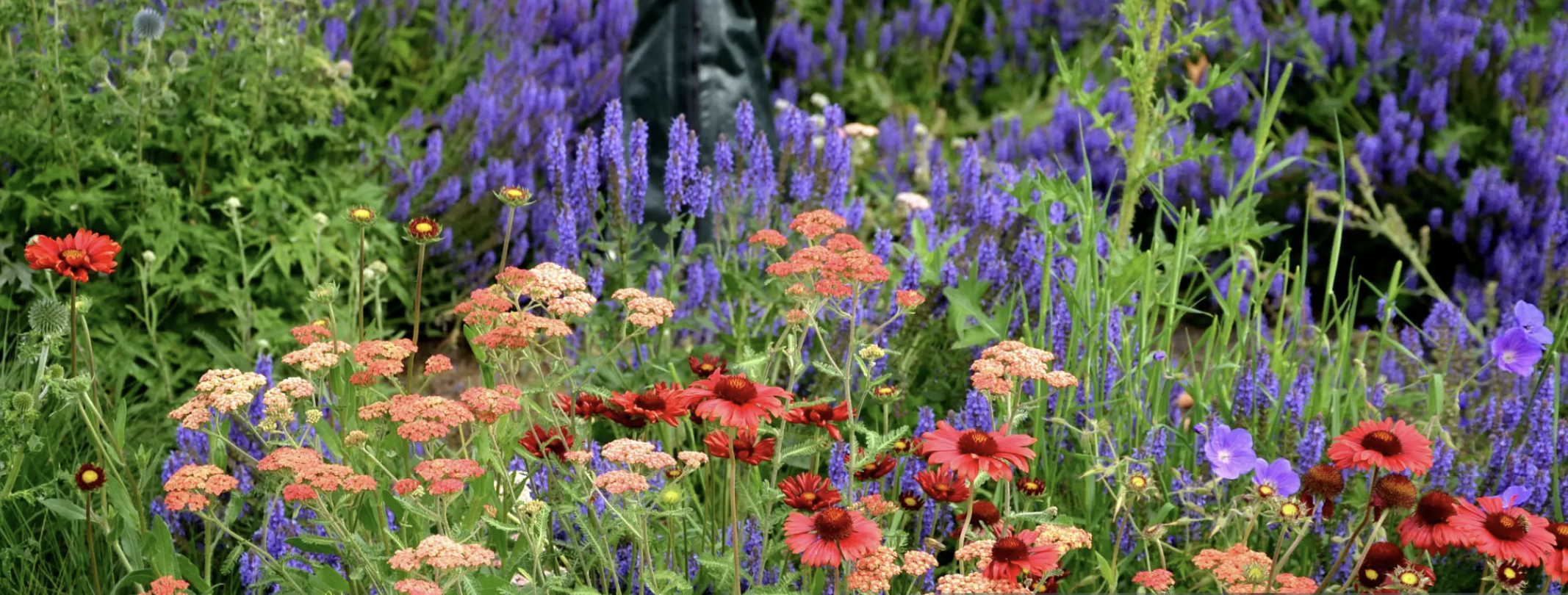
- Companion Plants: Rosemary, Russian Sage, Coneflower
2. Russian Sage (Perovskia atriplicifolia)
- Zones: 4–9
- Best For: Mass planting, dry backdrops
- Why It Works: Tall, airy spikes with bluish-purple flowers
- Bonus: Thrives in gravel and poor soils
- Companion Plants: Yarrow, Lavender, Sedum
3. Purple Coneflower (Echinacea)
- Zones: 3–9
- Best For: Native gardens, pollinator beds
- Why It Works: Thrives in full sun and poor soil
- Bonus: Seeds attract goldfinches in fall
- Companion Plants: Black-Eyed Susan, Bee Balm, Asters
4. Blanket Flower (Gaillardia spp.)
- Zones: 3–10
- Best For: Containers, front-of-border color
- Why It Works: Hot hues, long bloom period
- Bonus: Self-sows and reblooms reliably
- Companion Plants: Coreopsis, Sedum, Yarrow
5. Yarrow (Achillea millefolium)
- Zones: 3–9
- Best For: Meadows, wildflower mixes, cut flower beds
- Why It Works: Flat blooms for pollinators
- Bonus: Tolerates clay, sand, and drought equally well
- Companion Plants: Russian Sage, Coreopsis, Catmint
6. Black-Eyed Susan (Rudbeckia fulgida)
- Zones: 4–9
- Best For: Sunny flower beds, naturalized borders
- Why It Works: Bright, cheerful, self-reliant
- Bonus: Attracts butterflies & bees
- Companion Plants: Echinacea, Salvia, Grasses
7. Agastache (Hummingbird Mint)
- Zones: 5–10
- Best For: Xeriscapes, bee & hummingbird borders
- Why It Works: Heat-tolerant, scented foliage
- Bonus: Long bloom season
- Companion Plants: Penstemon, Gaura, Lavender
8. Salvia (Salvia nemorosa or greggii)
- Zones: 4–9
- Best For: Pollinator gardens, sunny edges
- Why It Works: Reblooming, drought-hardy
- Bonus: Deer and rabbit resistant
- Companion Plants: Echinacea, Catmint, Agastache
9. Sedum (Stonecrop)
- Zones: 3–9
- Best For: Rock gardens, green roofs
- Why It Works: Stores water in succulent leaves
- Bonus: 'Autumn Joy' blooms into fall
- Companion Plants: Sempervivum, Blanket Flower, Artemisia
10. Coreopsis (Tickseed)
- Zones: 4–10
- Best For: Mass planting, mixed perennials
- Why It Works: Self-seeding, heat-proof
- Bonus: Thrives on neglect
- Companion Plants: Gaillardia, Yarrow, Butterfly Weed
Water-Wise Design Tips
- Hydrozone: Group plants by water needs
- Mulch: Preserve moisture & suppress weeds
- Pathways: Use gravel or bark to reduce runoff
- Structure: Anchor beds with drought-hardy shrubs like Artemisia or Santolina
Soil Prep for Drought Defense
- Clay soil? Add grit or compost for better drainage
- Water deeply, less often to build root resilience
- Avoid over-fertilizing to keep growth compact and water-wise
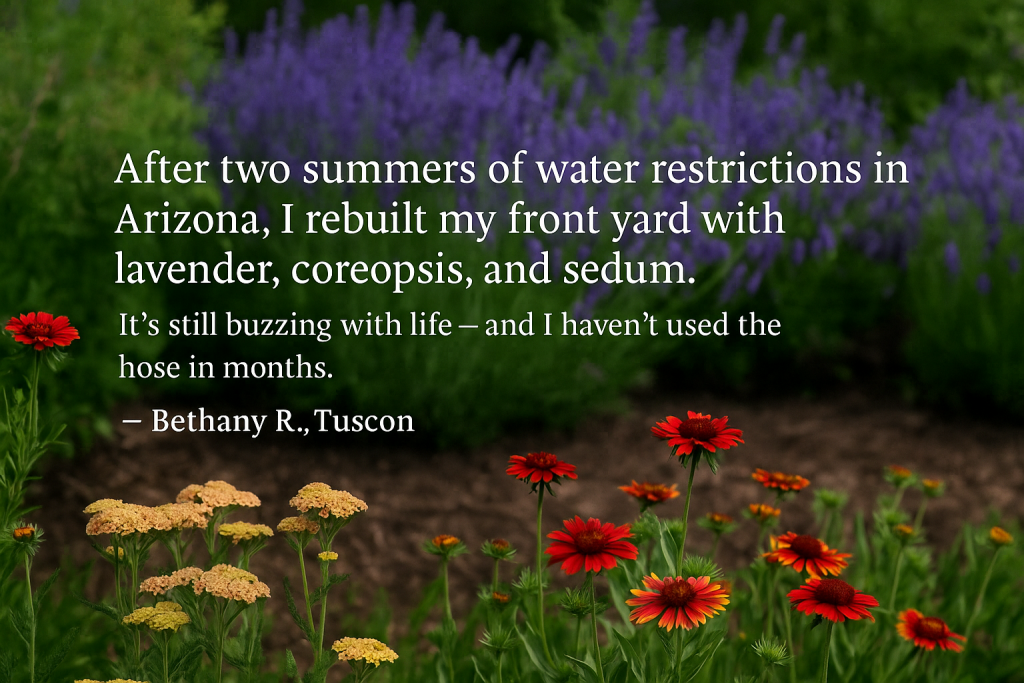
A Gardener's Voice
Maintenance Plan: First 90 Days
- Week 1–2: Water every 2–3 days until settled
- Week 3–6: Water once weekly, check drainage
- Week 7–12: Taper to every 10–14 days
Use this phase to establish root depth and prepare plants for long-term self-sufficiency.
Download Your Free Printable Drought Garden Plan
Includes:
- Sun & part-shade layout templates
- Bloom calendar by season
- Spacing & pairings by zone
Pin & Share This Guide
Help others create sustainable gardens that bloom on less.
What's growing in your dry garden? Share your success story below.
Clara Moss is the gardener behind Greenmuse. Over the past 10+ years, she has grown herbs on windowsills, tested cactus and succulent soil mixes, rescued struggling houseplants, and learned many lessons through trial and error. Greenmuse is where she shares honest, practical plant care advice for real homes — based on hands-on experience, not perfect greenhouse conditions. When she’s not writing, Clara is usually propagating succulents or trying to keep a calathea happy.