5 Heat-Tolerant Annuals for Full Sun: From Seed to Frost
Heat-tolerant annuals earn their place differently from perennials. You plant them for one fast season, then manage that season deliberately: sow, establish, pinch or cut when useful, keep flowers coming, and replace or resow plants when their first flush begins to fade.
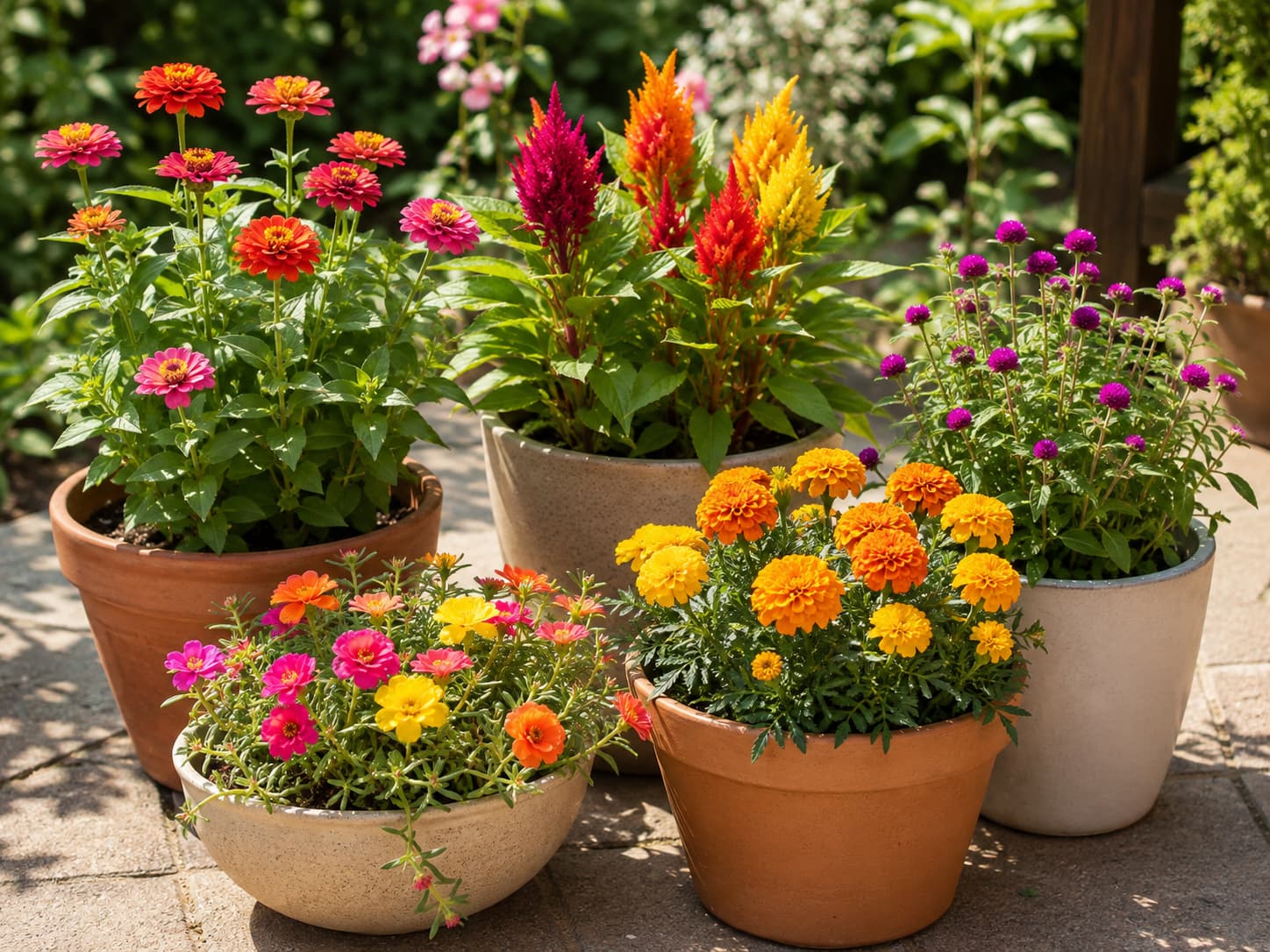
This guide focuses on that annual-growing cycle. The five plants here—zinnia, celosia, portulaca, marigold, and gomphrena—are useful because they combine warm-weather performance with fast growth, container flexibility, and a long flowering window when their basic needs are met.
If your main question is simply which flowers tolerate summer heat, start with our broader 7 Heat-Loving Flowers That Thrive in Summer Scorch guide. This article goes one level deeper: how to manage annual flowers from seed or transplant through the end of the season.
greenmuse-illustration-heat-tolerant-annuals-summer-containers.jpg
Start With the Season, Not the Shopping List
For annuals, the question is not only “Can this flower handle heat?” It is also “When should I sow it, how quickly will it flower, and what will keep it productive through late summer?” That seasonal view helps prevent the common pattern of buying one flush of flowers in spring and watching the display fade by midsummer.
| Annual | Best Start | Typical Time to Bloom | Best Midseason Move | Succession Value | Best Use |
|---|---|---|---|---|---|
| Zinnia | Direct sow after frost when soil is warm | Often about 2 months from seed | Cut or deadhead above a healthy node | High | Cut flowers, containers, sunny beds |
| Celosia | Start indoors or plant after warm weather settles | Usually slower than zinnia | Pinch branching types while young; harvest stems | Moderate | Vertical color, cut and dried flowers |
| Portulaca | Direct sow or transplant after soil warms | Fast once heat arrives | Keep in full sun; trim lightly if sprawling | Low to moderate | Shallow pots, edges, dry sunny spots |
| Marigold | Direct sow or transplant after frost | Fast | Deadhead taller or large-flowered types | Moderate to high | Borders, containers, vegetable-garden color |
| Gomphrena | Start early or transplant once conditions are warm | Slower start, long flowering period | Harvest stems regularly | Low | Cut flowers, dried flowers, pollinator planting |
Drag the bar below or swipe horizontally to view the remaining columns.
A Simple From-Seed-to-Frost Plan
| Stage | What to Do | Why It Matters |
|---|---|---|
| Before warm weather | Start slower annuals indoors if you want an earlier season, but wait to move heat lovers outside until conditions suit them. | Warm-season annuals stall in cold soil and cool nights. |
| After frost | Direct sow fast annuals such as zinnia and marigold, or plant sturdy transplants into containers and beds. | This establishes the first wave of summer color. |
| Early summer | Pinch selected celosia, begin cutting zinnias, and monitor container moisture as temperatures rise. | Early shaping and harvesting can encourage branching and repeated flowering. |
| Midsummer | Sow another small batch of fast annuals where your growing season is long enough. | New plants can take over as the first batch becomes tired or disease-prone. |
| Late summer to frost | Keep harvesting, deadhead where useful, and stop trying to rescue plants that are clearly declining beyond practical recovery. | Annual gardening is about maintaining the display, not preserving every original plant indefinitely. |
Drag the bar below or swipe horizontally to view the remaining columns.
1. Zinnia: The Succession-Sowing Workhorse
greenmuse-illustration-zinnia-summer-annual-container.jpg
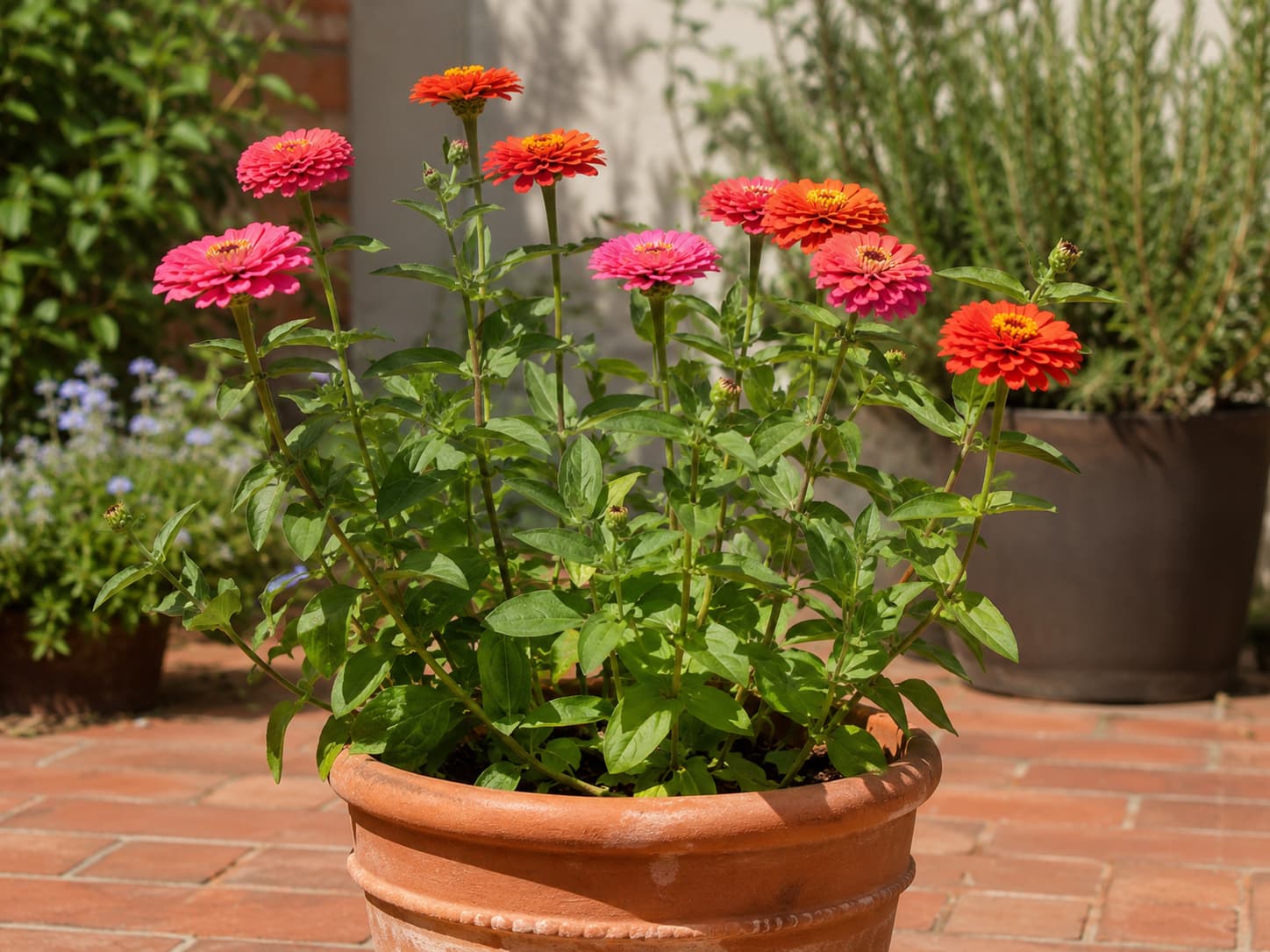
Zinnias are one of the easiest annuals to manage as a sequence rather than a single planting. They germinate quickly in warm conditions, establish fast, and respond well to cutting. That makes them ideal when your goal is fresh flowers from early summer into fall rather than one large spring display.
How to Start Them
Direct sow after frost once the soil has warmed. Zinnias dislike unnecessary root disturbance, so direct sowing is especially convenient in beds and larger containers. Sow only as many plants as the space can support; crowded foliage raises humidity around the leaves and makes powdery mildew harder to manage.
How to Keep Them Productive
- Cut above a healthy leaf node. Regular cutting encourages branching and gives the plant a reason to keep producing stems.
- Leave airflow around the foliage. A slightly open plant is easier to keep healthy than a dense mass of leaves.
- Start a second batch. In climates with a long warm season, another sowing can be more effective than trying to force an older, disease-prone plant through the rest of summer.
Powdery Mildew Without the Panic
Powdery mildew becomes more likely when susceptible varieties are crowded or air movement is poor. Start with resistant cultivars when available, water the root zone rather than repeatedly wetting foliage, and remove badly affected leaves when practical. If you use a fungicide, follow the product label for the specific plant and disease rather than relying on a universal homemade spray.
2. Celosia: Pinch, Branch, Cut, Dry
greenmuse-illustration-celosia-summer-annual-container.jpg
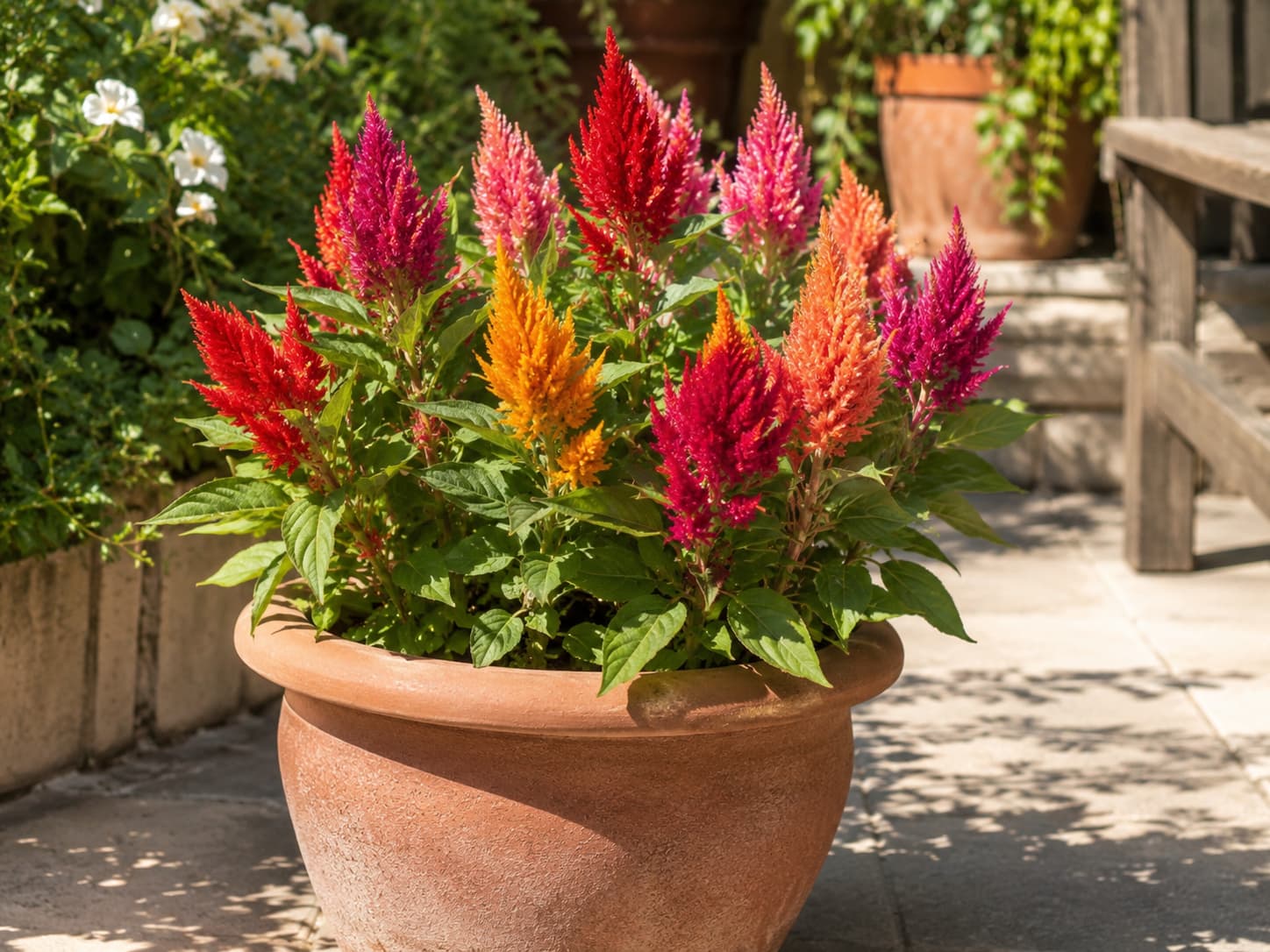
Celosia is most useful when you treat it as a plant to shape. Plumed and crested forms both enjoy warm conditions, but their design roles differ: plumed celosia adds vertical spikes, while crested forms are best used as focal plants.
Start Warm
Celosia does not appreciate cold soil. Start seeds indoors if you want an earlier display, or wait until outdoor conditions are reliably warm before sowing or transplanting. Harden indoor-grown seedlings gradually before exposing them to full outdoor sun.
Pinching for More Stems
For branching varieties, pinching the growing tip while the plant is young can create several flowering stems instead of one dominant central stem. Do not apply the rule blindly to every cultivar; very compact bedding types may already branch heavily on their own.
Harvesting for Fresh or Dried Use
Cut stems when the flower head has developed good color but before it becomes old and seedy. For drying, remove most foliage and hang small bundles in a dry, shaded place with good airflow. This is one reason celosia deserves a separate annual-growing guide: it can move from container display to vase to dried arrangement in the same season.
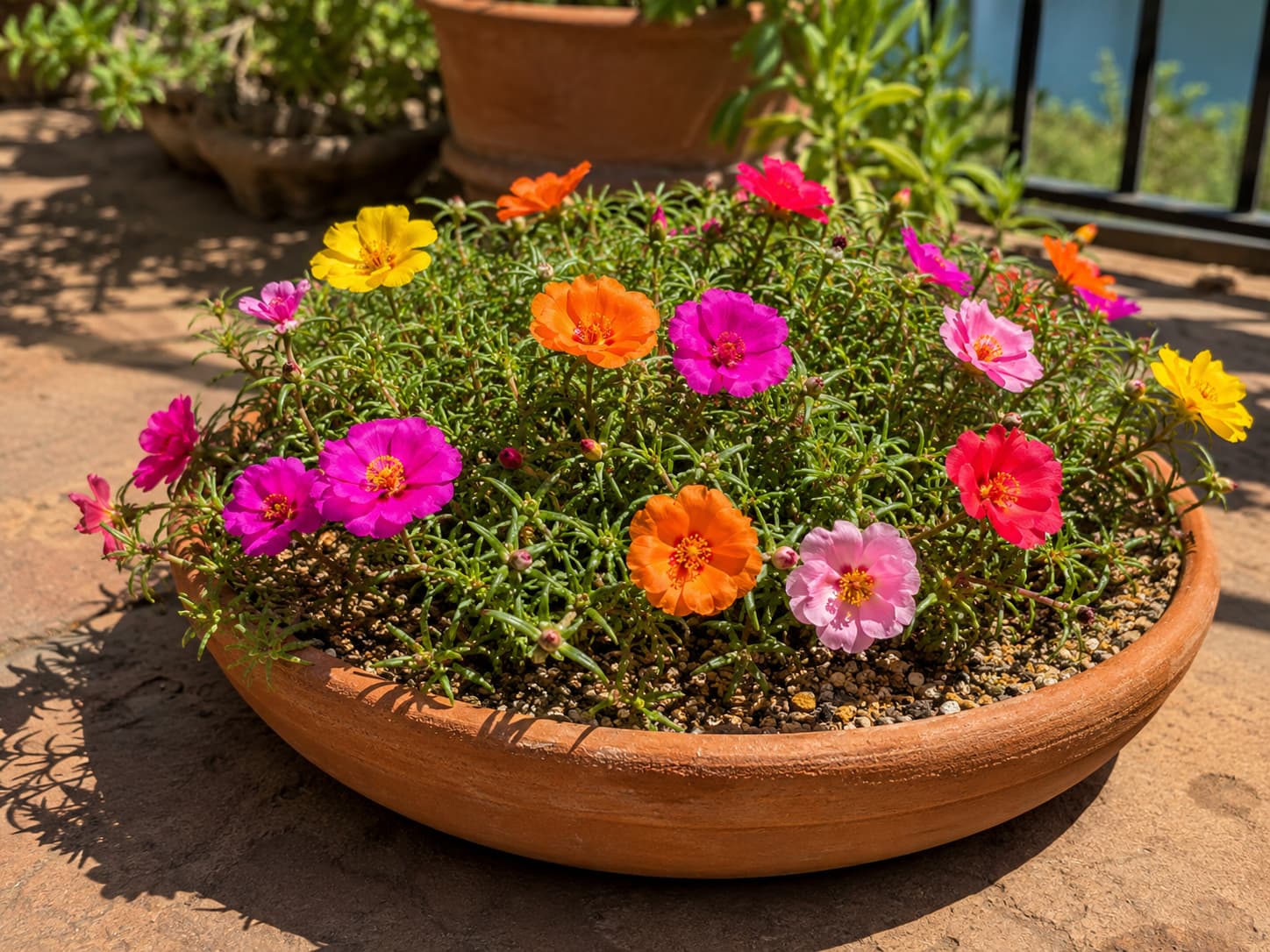
3. Portulaca: Full Sun, Shallow Containers, Minimal Fuss
greenmuse-illustration-portulaca-summer-annual-container.jpg
Portulaca behaves differently from the other annuals here because its succulent foliage stores water and its low, spreading growth suits shallow containers. It is less about pinching and succession and more about giving the plant the bright, dry conditions it is built for.
How to Start It
Portulaca seed is tiny. Sow shallowly and avoid burying it deeply. Transplants are also easy if you want faster results. Wait for warm conditions; growth accelerates when both air and soil are warm.
How to Keep It Flowering
- Prioritize direct sun. Weak flowering is often a light problem, not a fertilizer problem.
- Use fast-draining mix. A shallow pot is fine, but it still needs drainage holes.
- Water the root zone, then let the mix move toward dry. Constantly wet soil works against the plant's natural growth habit.
- Expect flowers to close. Many portulaca blooms close at night or during dull weather; that is normal.
Because portulaca can flower for a long stretch in good conditions, it usually needs less succession sowing than zinnia. If the planting becomes sparse, you can trim lightly and let new shoots fill the container rather than automatically starting over.
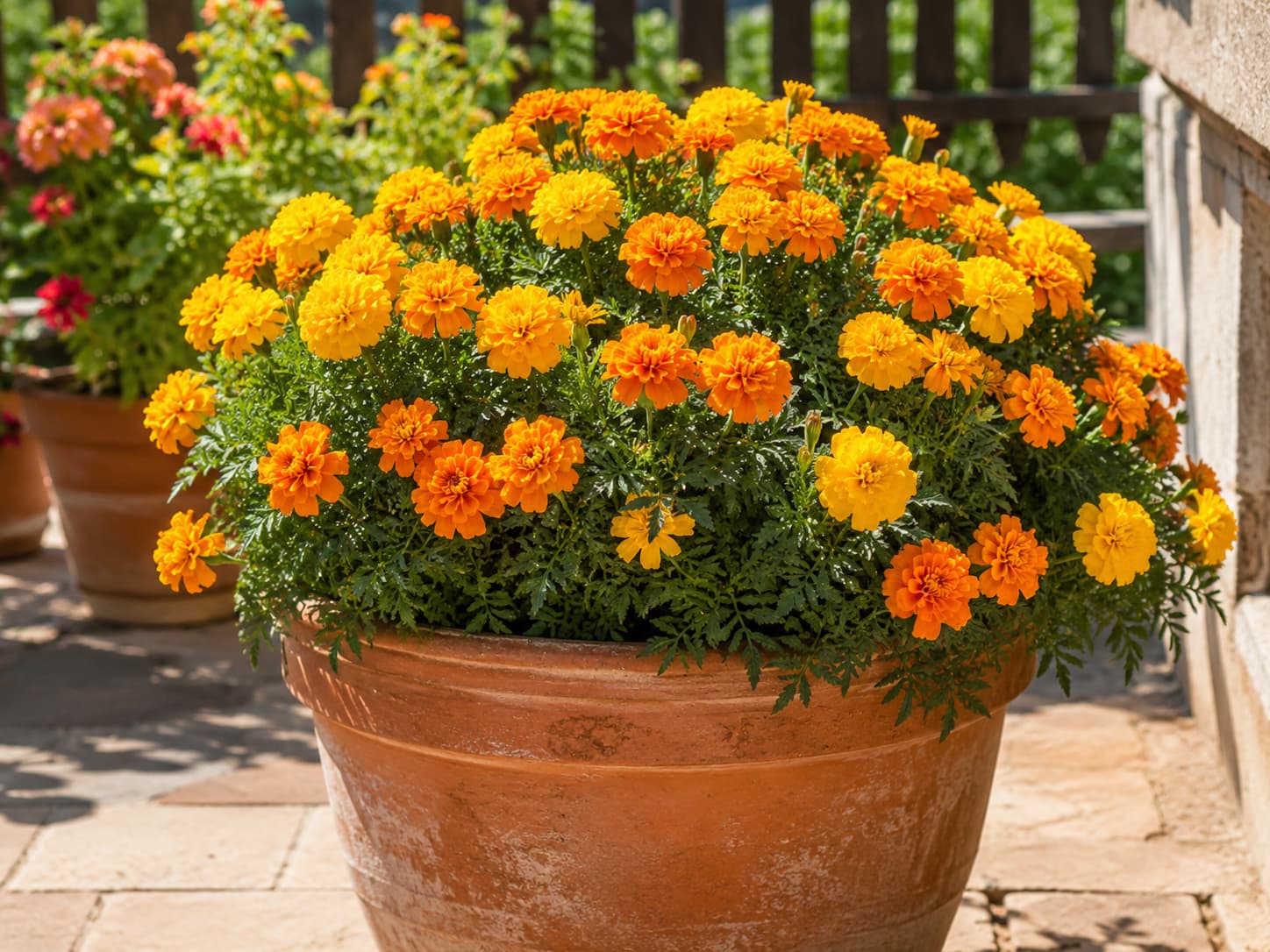
4. Marigold: Fast Color and Easy Resowing
greenmuse-illustration-marigold-summer-annual-container.jpg
Marigolds are valuable annuals because they are forgiving, fast, and available in genuinely different sizes. French marigolds (Tagetes patula) stay compact, African marigolds (Tagetes erecta) are taller with larger flower heads, and signet marigolds (Tagetes tenuifolia) have finer foliage and smaller flowers.
Use the Type to Control the Design
| Type | Typical Habit | Best Use | Annual-Growing Strategy |
|---|---|---|---|
| French marigold | Compact, branching | Containers, edging | Easy to sow in batches; deadhead if flower production slows |
| African marigold | Taller, larger blooms | Back of border, cutting | Give more root space and avoid crowding |
| Signet marigold | Fine foliage, small flowers | Edging, pollinator-friendly planting | Useful where you want lighter texture instead of large flower heads |
Drag the bar below or swipe horizontally to view the remaining columns.
A Note on Companion-Planting Claims
Marigolds are often marketed as universal pest-repellent companions, but the evidence is more specific. Certain marigolds can help suppress some plant-parasitic nematodes when used appropriately in the soil-management system. That does not mean one marigold beside a tomato creates a general pest shield. Grow marigolds because they are useful annual flowers first, and treat pest-management claims as species- and situation-specific.
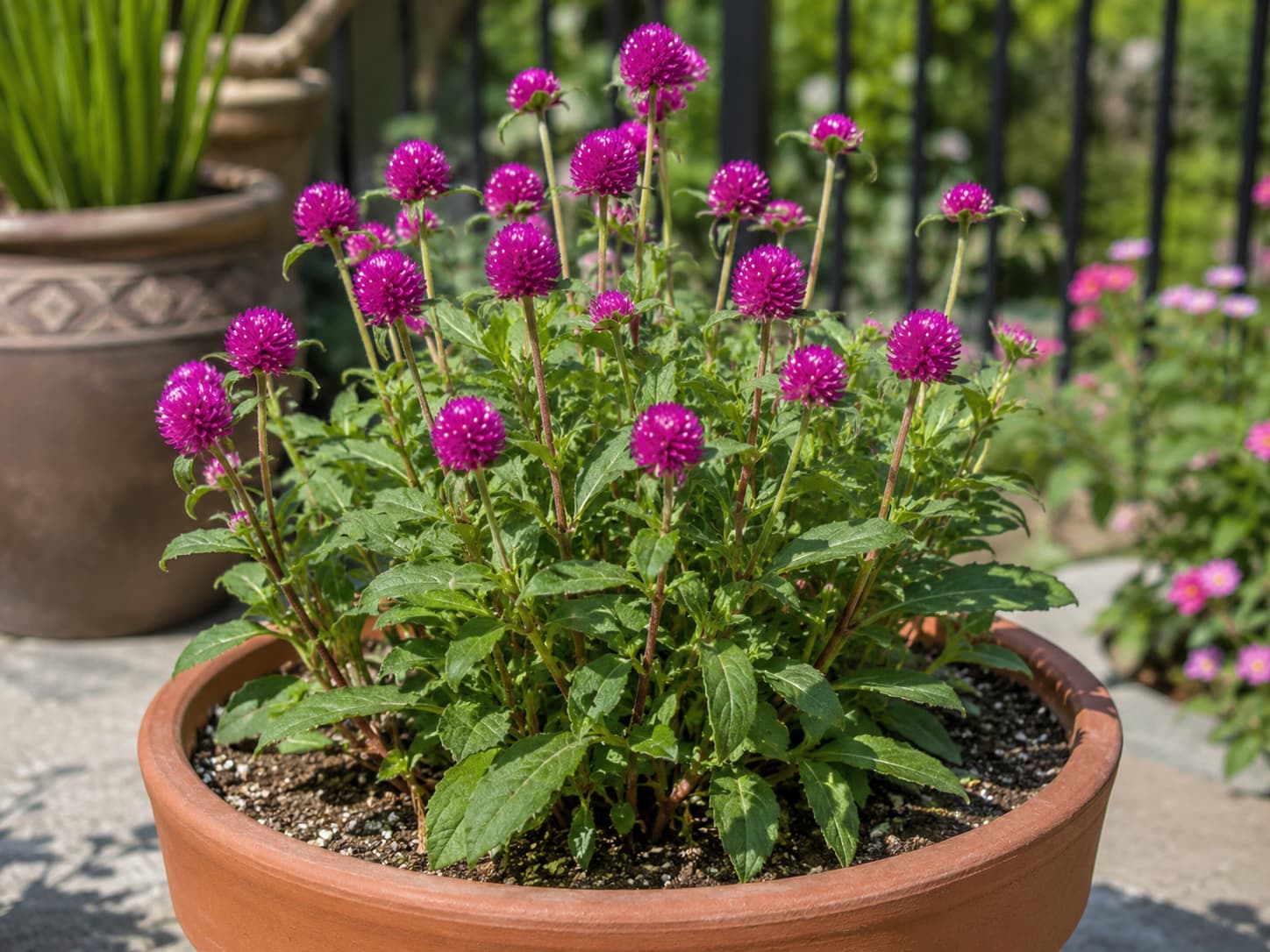
5. Gomphrena: One Sowing, Long Harvest
greenmuse-illustration-gomphrena-summer-annual-container.jpg
Gomphrena is the opposite of zinnia in one useful way: it is slower to get going, but once established it can keep producing harvestable, papery flower heads for a long stretch. That makes it a good “plant once, harvest repeatedly” annual.
Give It Time at the Beginning
If you grow gomphrena from seed, do not judge the plant by its first few weeks. Seedlings can feel slow compared with zinnias or marigolds. Start early enough for your climate, or buy transplants if you want the summer display without the wait.
Harvesting Is the Maintenance
Regular cutting keeps the planting useful. Harvest stems for fresh bouquets or dry them in small bundles away from direct sun. Because gomphrena flowers hold their shape well when dried, the crop can continue to be useful long after the garden season ends.
Does Gomphrena Need Succession Sowing?
Usually less than zinnia. If the first planting is healthy and your season is long, one established batch may be enough. A second sowing is mainly useful if you want staggered harvests or insurance against an early planting failure.
Succession Sowing: Where It Actually Pays Off
Not every annual needs repeated sowing. Use succession strategically rather than turning it into extra work.
| Annual | Succession Priority | Why | Practical Approach |
|---|---|---|---|
| Zinnia | High | Older plantings can become tall, tired, or disease-prone | Reserve seed for one or more later sowings if your frost window allows |
| Marigold | Moderate to high | Fast enough to replace gaps efficiently | Direct sow a later batch where early plants decline |
| Celosia | Moderate | Useful if you want fresh late-season stems | Start another small group rather than replacing every plant |
| Portulaca | Low to moderate | Can flower for a long period in strong sun | Resow only if the display becomes sparse or damaged |
| Gomphrena | Low | Long harvest once established | One strong planting is often enough |
Drag the bar below or swipe horizontally to view the remaining columns.
Container vs. In-Ground: Manage the Root Zone Differently
The same annual can behave very differently in a container and in the ground. Containers warm faster, dry faster, and lose nutrients more quickly through repeated watering. In-ground beds usually buffer roots better but may have more competition and less control over drainage.
| Issue | Containers | In-Ground Beds |
|---|---|---|
| Water | Check more often during heat; water thoroughly when the root zone needs it | Usually holds moisture longer, depending on soil type |
| Root temperature | Can rise quickly in dark or exposed pots | More buffered by surrounding soil |
| Feeding | Nutrients can leach with frequent watering | Depends more on existing soil fertility and amendment history |
| Replacement | Easy to swap one declining plant without disturbing the whole display | Better for larger drifts and succession rows |
Drag the bar below or swipe horizontally to view the remaining columns.
When to Cut, Deadhead, Pinch, or Replace
| Annual | Pinch? | Deadhead? | Cut for Harvest? | Replace When... |
|---|---|---|---|---|
| Zinnia | Optional for branching | Useful if not cutting | Yes | Plants become chronically diseased or stop producing useful new stems |
| Celosia | Useful for many branching types | Usually not essential | Yes | Stems become sparse, weak, or no longer fit the display |
| Portulaca | No | Usually unnecessary | Not usually | The plant becomes sparse and no longer refills after light trimming |
| Marigold | Usually unnecessary | Often useful | Optional | Plants become stretched, diseased, or stop reblooming after cleanup |
| Gomphrena | Optional | Harvesting does the job | Yes | Growth declines and new stems are no longer developing |
Drag the bar below or swipe horizontally to view the remaining columns.
Common Annual-Growing Problems
| Problem | Likely Direction to Check | Better First Response |
|---|---|---|
| Zinnia develops white coating on older leaves | Powdery mildew risk, crowding, susceptible variety | Improve airflow, remove badly affected material, use resistant cultivars next round |
| Celosia grows one tall stem and flops | Growth habit or lack of early branching | Support the current stem if needed; pinch suitable future plants while young |
| Portulaca stays green but barely flowers | Insufficient direct sun | Move to a brighter position before adding fertilizer |
| Marigold grows leafy with few blooms | Too much shade, excess nitrogen, or crowding | Increase light, reduce unnecessary feeding, and open spacing |
| Gomphrena seedlings seem stalled | Cool conditions or normal slow establishment | Give warmth and time; avoid repeatedly disturbing roots |
| Any container annual wilts while mix is wet | Root stress, heat, poor drainage, or disease | Check root-zone condition before adding more water |
Drag the bar below or swipe horizontally to view the remaining columns.