5 Cool-Season Greens That Love Your Balcony (Spinach, Kale, Arugula & Swiss Chard Growing Guide)
Why Cool-Season Greens Work on a Balcony
To begin with, on November 15, 2025, I harvested a bowl of 'Red Russian' kale from my 6th-floor balcony. At the same time, the overnight low had been 24°F (-4°C). Even so, the kale leaves had frost crystals on them. And they were the sweetest, most tender kale I'd eaten all year—sweeter than any spring crop, sweeter than the $6 organic bunches at Whole Foods. In other words, cold conditions can change the way kale stores sugars. The colder it gets, the sweeter it tastes.
However, this is the part summer gardeners often miss: fall and winter greens don't just survive cold weather—they're better because of it. In addition, some warm-season pest pressure declines as weather cools. Watering drops to once a week. Bolting becomes impossible. And the flavor of every leaf improves.
Therefore, if your balcony garden goes empty after Labor Day, you're leaving three to five months of free, fresh food on the table. This guide covers five greens that thrive in cool weather, with specific varieties, container sizes, and planting dates for every USDA zone.
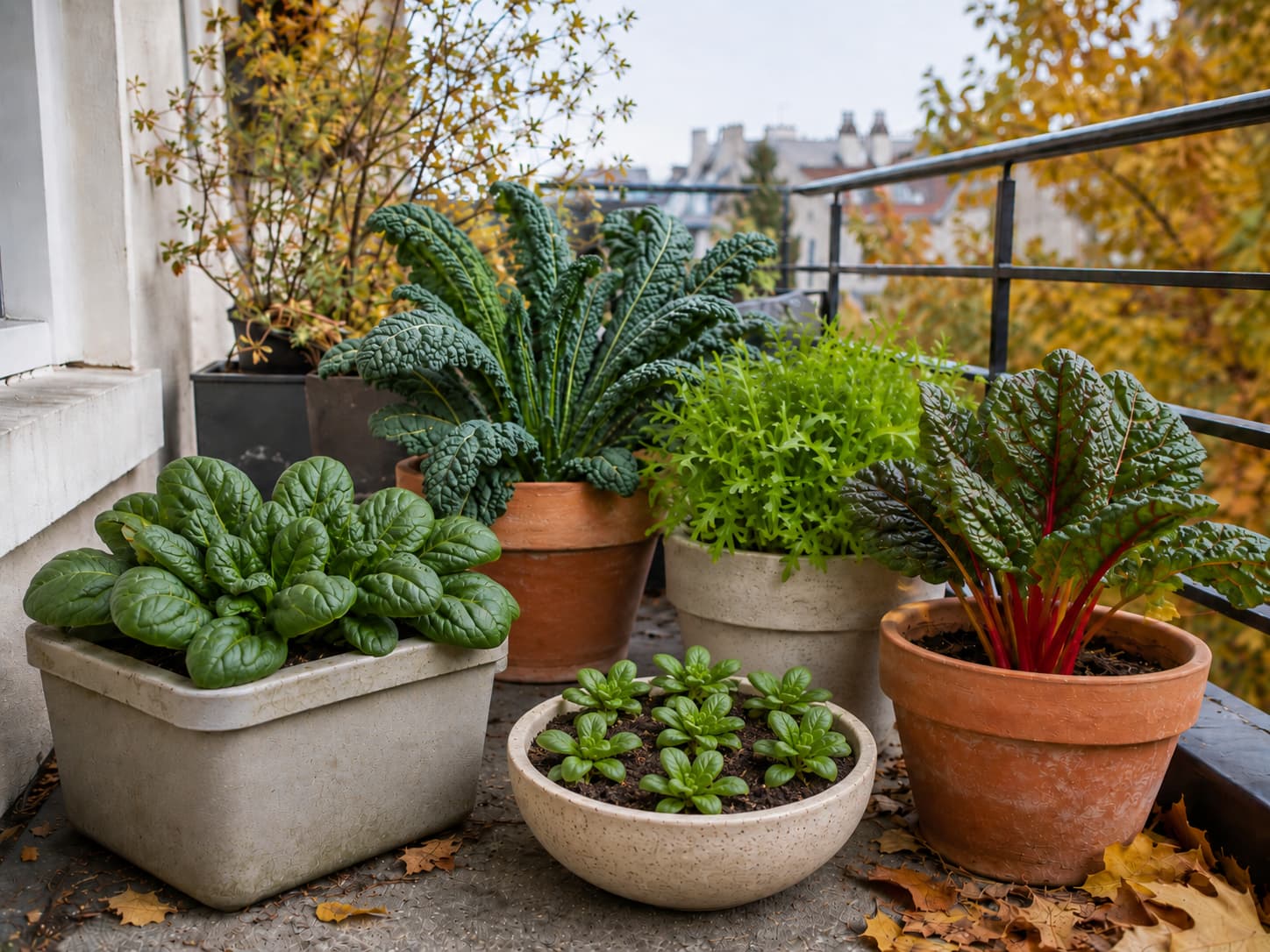
A Longer Cool-Season Growing Window
Which Cool-Season Green Is Right for Your Balcony?
| Your Situation | Best Green | Why |
|---|---|---|
| Complete beginner, never grown food before | Arugula | Germinates in 3 days, harvestable in 25 days, almost impossible to kill |
| Want maximum nutrition per square foot | Kale | Produce from a single 12-inch pot can replace $30+ in store-bought kale over a season |
| Small balcony, limited pots | Swiss Chard | One plant produces for 6+ months; cut-and-come-again keeps giving |
| Deep winter (Zone 5-6), want something alive | Mâche | Survives uncovered down to 5°F; the only green that keeps growing in deep freeze |
| Want salad greens for daily meals | Spinach + Arugula combo | Spinach for mild base, arugula for peppery kick; stagger sowing for continuous bowl |
| Hot autumn (Zone 8-10), still 80°F+ in October | Swiss Chard or Kale | Both tolerate warm soil better than spinach; won't bolt until temperatures consistently exceed 75°F |
Swipe for more
Quick Reference Chart
| Green | Days to First Harvest | Min Pot Size | Frost Tolerance | Bolt Resistance | Harvest Months |
|---|---|---|---|---|---|
| Spinach | 35–45 | 8 in. | About 15°F | Low (bolts in heat) | Sep–Dec, Feb–May |
| Kale | 50–60 | 12 in. | Around 10°F | Excellent | Sep–Mar |
| Arugula | 25–35 | 6 in. | About 20°F | Low (bolts fast in heat) | Sep–Nov, Mar–May |
| Swiss Chard | 45–55 | 10 in. | Around 20°F | Very good | Sep–Dec, Mar–Jun |
| Mâche | 50–60 | 6 in. | Near 5°F | Excellent (needs cold) | Oct–Mar |
Scroll for more
1. Spinach (Spinacia oleracea)
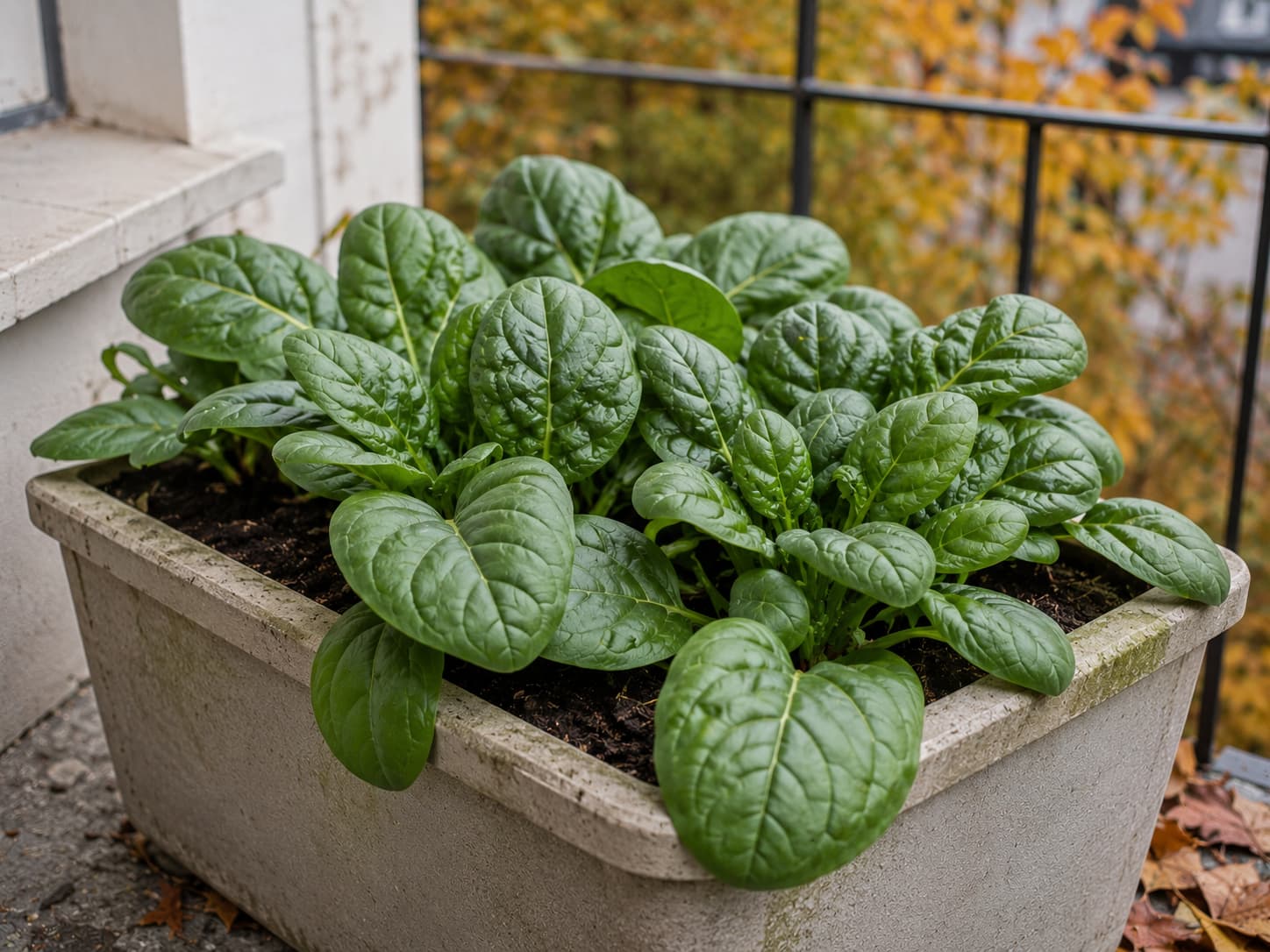
First, spinach is a practical gateway crop for cool-season gardening—it's fast, productive, and the flavor difference between home-grown and store-bought is dramatic. By comparison, store spinach is harvested with transport and shelf life in mind; yours can stay on the plant until you're ready to eat it.
Best Varieties for Containers
- 'Bloomsdale Long Standing' — The classic heirloom savoyed spinach. Dark green, heavily crinkled leaves. Cold-hardy and slow to bolt. Seeds: $3/packet from most suppliers. My go-to for fall planting.
- 'Giant Winter' — Bred specifically for overwintering. Large, smooth leaves that survive hard frost. Available from Johnny's Selected Seeds ($4/packet). Best for zones 5-7 where winter lows hit single digits.
- 'Space' — Smooth-leaf variety, very compact (6-8 inches), ideal for 8-inch pots. Fastest to harvest at 35 days. Good for small balconies where every inch counts.
Container Growing
For containers, use an 8-inch pot minimum (10-inch is better). In addition, standard potting mix can work as a base; amend only as needed for the crop. Therefore, give spinach enough root depth rather than focusing only on pot width.; choose a pot at least 8 inches deep.
Next, sow seeds 1/2 inch deep, 2 inches apart. Then, thin seedlings after true leaves develop. For a longer harvest, stagger sowings instead of planting every container at once. from late August through October (zones 5-7) or September through November (zones 8-10).
The Cutting Secret
Then, harvest outer leaves when they're 4-6 inches long, leaving the center rosette intact. As a result, the center can continue producing leaves for 6-8 weeks. Therefore, avoid removing the entire crown when you want continued harvest.—leave at least 5-6 inner leaves and it will regrow.
Spinach Downy Mildew
However, spinach can also develop downy mildew—yellow spots on upper leaf surfaces with gray-purple fuzzy growth underneath. It thrives in cool, humid conditions (exactly what fall provides). Prevention: (1) Water at soil level, never on leaves, (2) Space plants 6 inches apart for airflow, (3) Choose resistant varieties like 'Space' and 'Renegade'. If it appears, remove affected leaves immediately—do not compost them. Improve airflow with a small fan if growing indoors.
2. Kale (Brassica oleracea var. acephala)
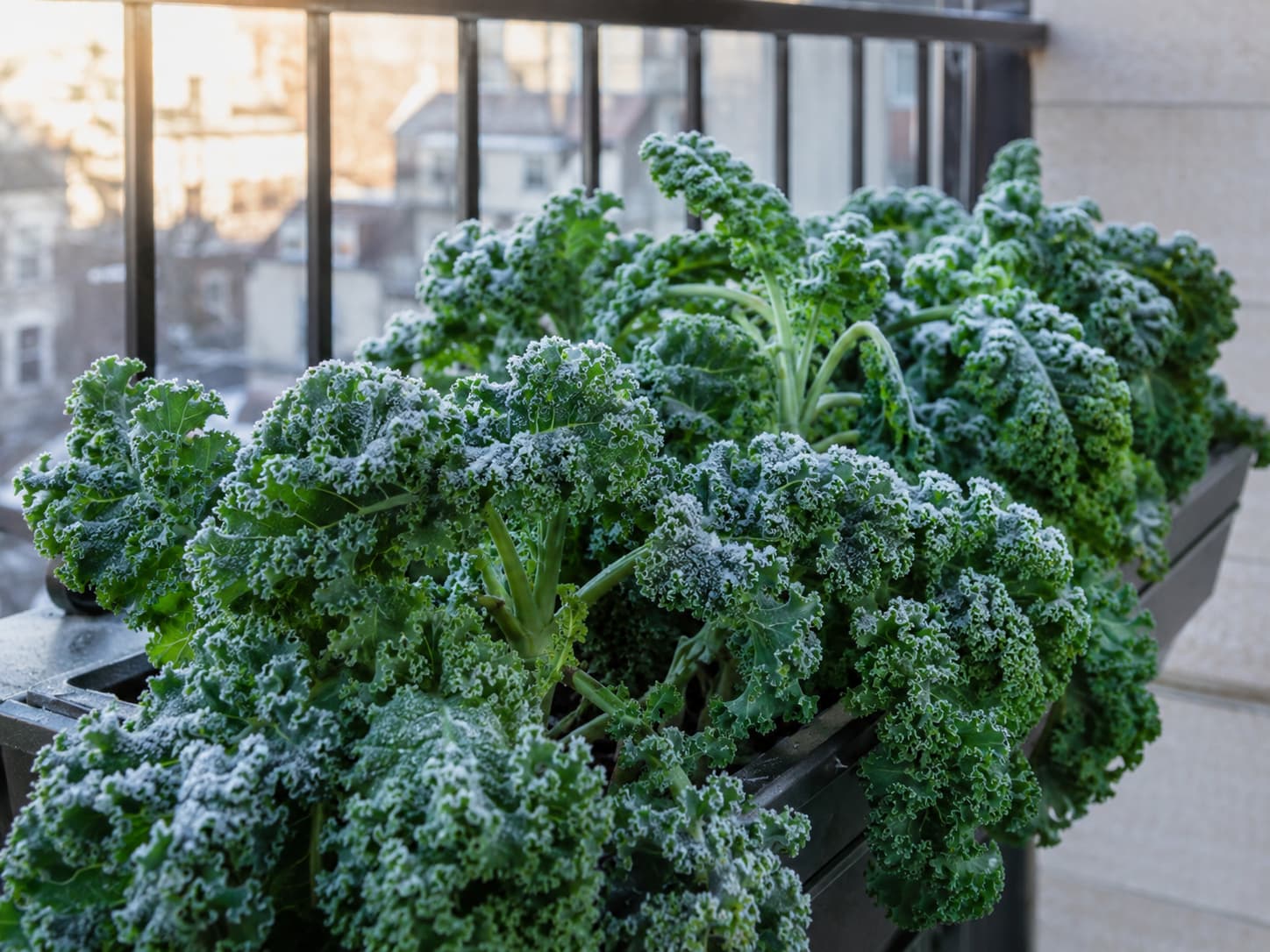
Next, kale is one of the strongest cool-season container crops. In practice, kale is productive and handles cool conditions well. In addition, cool weather can improve its flavor and texture. from a tough, slightly bitter leaf into something genuinely sweet and tender.
Best Varieties for Balconies
- 'Red Russian' — Flat, fringed leaves with red-purple stems. Sweetens dramatically after frost. 18-24 in. Plants: $3-4 per 4-inch pot at garden centers. The most cold-tolerant kale I've grown—survived 18°F on my balcony uncovered.
- 'Lacinato' (Dinosaur Kale) — Dark blue-green, pebbled texture, 24-30 in. Best for sautéing and making kale chips. For example, its firm texture holds up well in cooked dishes. Seeds: $3/packet.
- 'Winterbor' — Extremely curly, 24-36 in. In addition, 'Winterbor' is a productive choice when you have room for a larger container. Best if you have a large 14+ inch pot or a raised bed. Very frost-tolerant.
The Frost-Sweetening Effect
For example, cold exposure can increase soluble sugars in kale leaves: when temperatures drop below 32°F, kale converts its starch reserves into simple sugars. In other words, the plant's sugar balance changes as it acclimates to cold. (sugar water freezes at a lower temperature than plain water), but the side effect is that the leaves become noticeably sweeter. However, the exact response varies with cultivar and conditions. For example, in my informal taste test: pre-frost kale scored 6/10 for sweetness, post-frost scored 9/10. As a result, the post-frost leaves tasted noticeably sweeter in that small comparison.
Kale Pests (and Why You'll Have Fewer in Fall)
Meanwhile, kale's main summer pests—cabbage white butterfly caterpillars and aphids—are largely gone by fall. However, pest pressure does not disappear on the same date in every climate., and cabbage moths stop laying eggs when temperatures drop below 50°F. For example, if aphids remain on fall kale, a strong spray of water from a spray bottle knocks them off, and they don't return in cold weather. For summer kale pest issues, see our Summer Pest SOS guide.
3. Arugula (Eruca vesicaria)
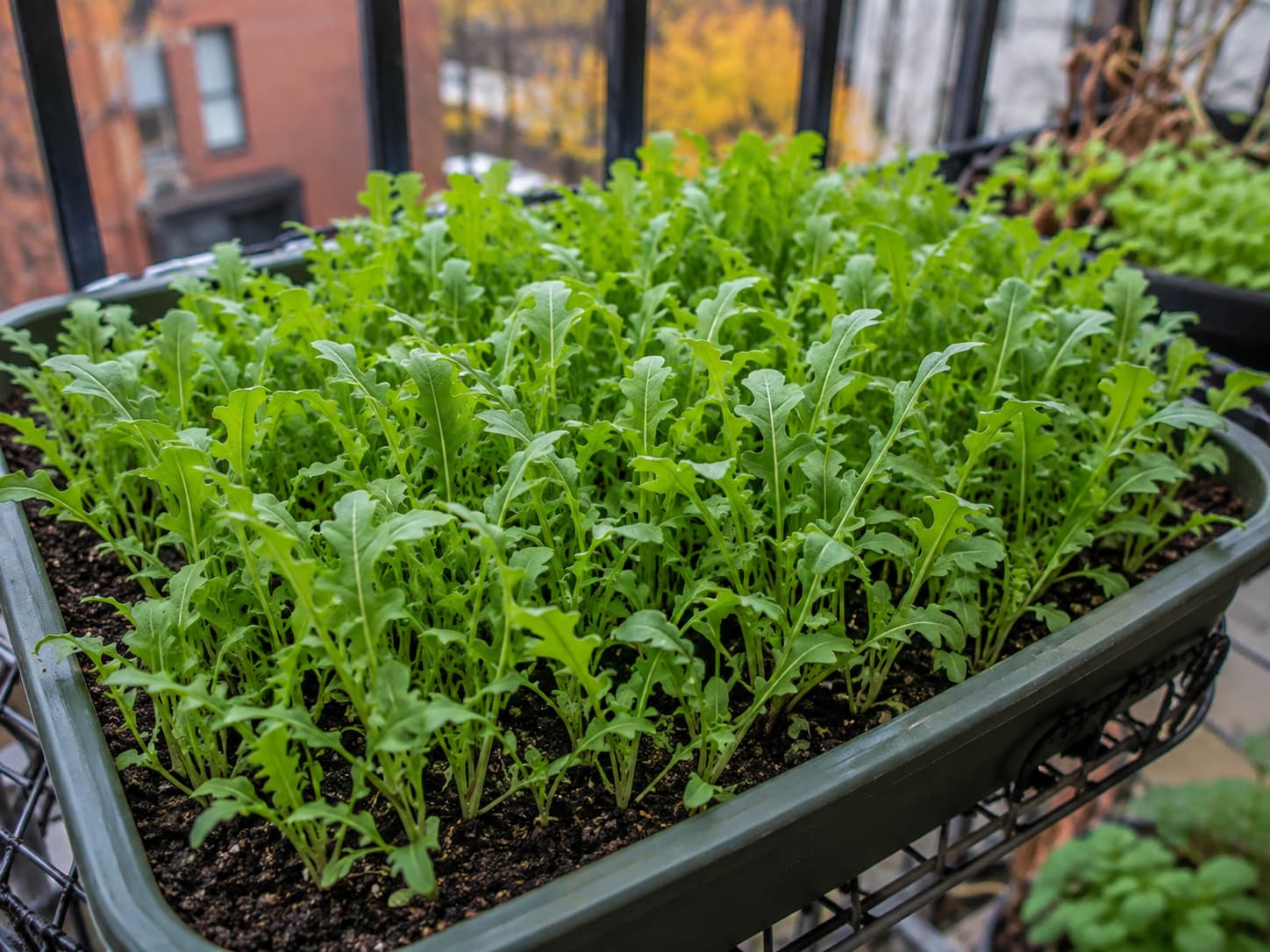
By contrast, arugula is one of the fastest greens from seed to plate on this list—25 days from sowing to first harvest. In addition, it is beginner-friendly, which makes it the perfect confidence-builder if you've never grown food before. In other words, arugula is a forgiving first edible crop for many beginners.
Best Varieties
- 'Rocket' (standard) — The classic peppery arugula. 25-35 days to harvest. Available everywhere ($2-3/packet). Therefore, standard 'Rocket' is a practical starting variety for beginners.
- 'Astro' — Slower to bolt than standard rocket by 1-2 weeks. Slightly milder flavor. Best for warm-zone gardeners who worry about early bolting. Seeds: $3-4/packet.
- 'Wild Arugula' (Diplotaxis tenuifolia) — Thinner, more deeply lobed leaves with a sharper, more peppery bite. Perennial in zones 6-10—comes back year after year. Slower growing but longer-lived. My secret weapon for a permanent balcony salad patch.
The Baby Greens Strategy
For baby greens, arugula excels as a cut-and-come-again crop. First, sow seeds fairly closely when growing baby leaves (1 inch apart) in a wide, shallow container—a 6-inch pot or a rectangular window box works perfectly. Then, when the plants reach 3-4 inches tall (about 25 days), cut them 1 inch above soil level with scissors. Afterward, healthy plants may produce another flush of leaves. However, the number of useful cuts varies with heat, light, moisture, and plant vigor. before the plants tire out.
Why Arugula Turns Bitter (and How to Prevent It)
However, heat and maturity can make arugula taste more bitter. Therefore, use three simple habits to reduce excess bitterness: (1) Grow in fall, not summer—arugula is a cool-season plant, (2) Harvest leaves young (3-4 inches), before they get large and tough, (3) Keep soil consistently moist—dry soil accelerates bitterness. For example, if your arugula is already bitter, harvest it all, cut it small, and use it in cooked dishes (sautéed with garlic) where the heat mellows the bite.
4. Swiss Chard (Beta vulgaris subsp. cicla)
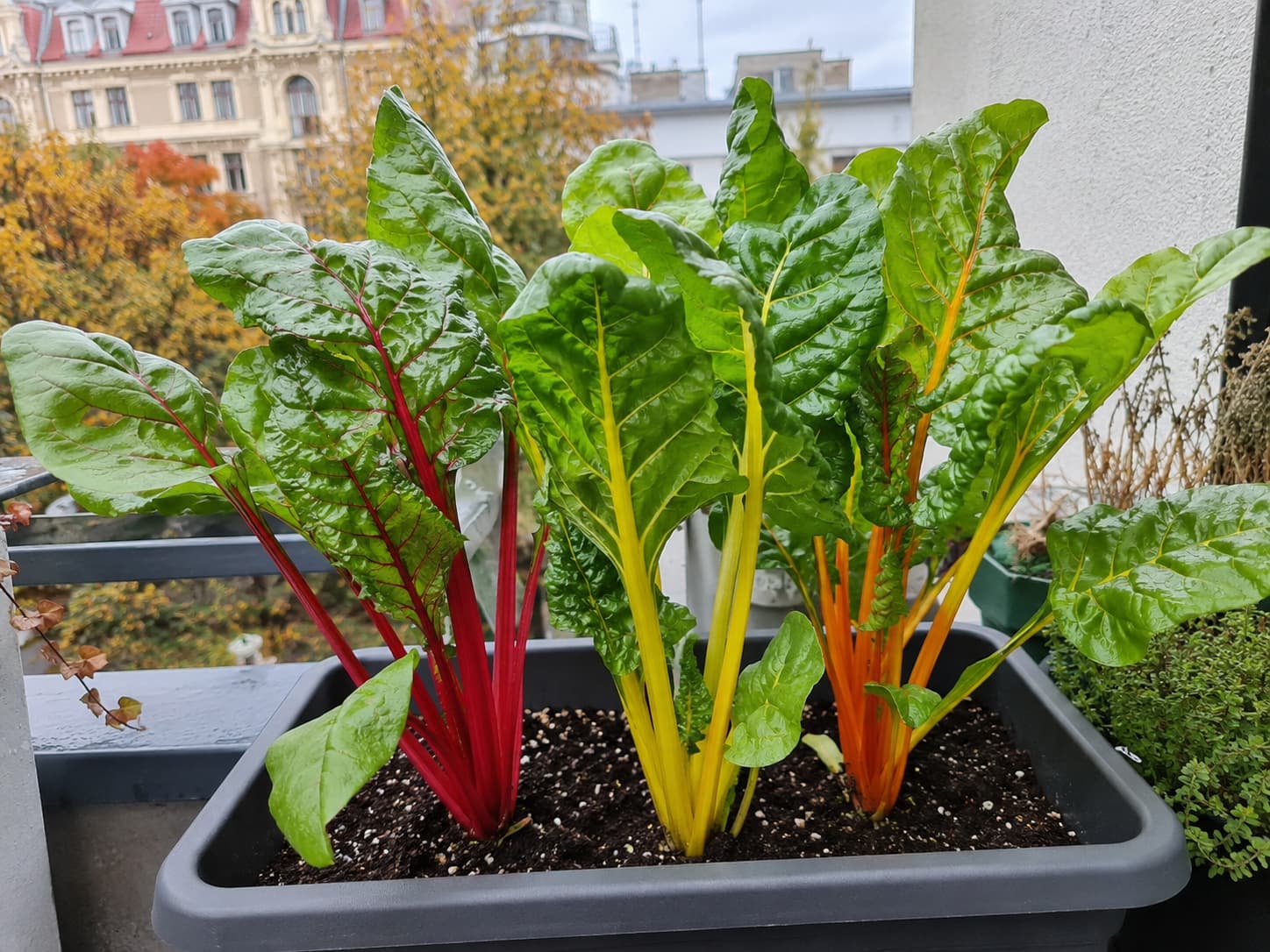
Meanwhile, Swiss chard adds both color and food value you can grow on a balcony—and one of the most productive. For example, 'Rainbow Mix' produces stems in pink, yellow, orange, red, and white., yellow, orange, red, and white from the same seed packet. As a result, it can work as both an edible and an ornamental container plant.
Best Varieties
- 'Rainbow Mix' (aka 'Bright Lights') — Multi-colored stems, 18-24 in. The most popular chard for a reason: it's beautiful, productive, and each plant is a different color. Seeds: $3/packet from Burpee, Renee's Garden, or Johnny's.
- 'Fordhook Giant' — Dark green, heavily crinkled leaves with thick white stems. 20-28 in. The most productive variety for sheer volume—produces larger, thicker leaves than any other. Best for cooking (stems hold their texture). Seeds: $2-3/packet.
- 'Ruby Red' (aka 'Rhubarb Chard') — Dark green leaves, bright red stems. Striking in containers. Slightly more cold-sensitive than other varieties—cover when temps drop below 25°F. Plants: $4/4-inch pot.
The Cut-and-Come-Again Champion
For long harvests, Swiss chard is one of the strongest options on this list. In addition, one healthy plant can keep producing when outer stalks are harvested selectively. for 6-9 months if harvested correctly. First, remove the outermost stalks at the base (don't cut—snap by bending outward until they separate from the crown). Then, leave enough inner stalks to keep the crown growing to keep the plant growing. As a result, the center can continue producing replacement leaves. to replace what you harvested.
Swiss Chard Leaf Miners
However, leaf miners can become a problem on Swiss chard—a tiny fly whose larvae tunnel inside the leaves, creating translucent, winding trails. For example, if you see leaf-miner trails, pinch the affected area and squash the larva inside. Then, remove badly damaged leaves when needed. For prevention, cover young plants with floating row cover (a lightweight mesh fabric, $8-12 for a 5×25 ft sheet from any garden supply) until the plants are 6 inches tall—this prevents the adult flies from laying eggs on the leaves.
5. Mâche (Valerianella locusta)
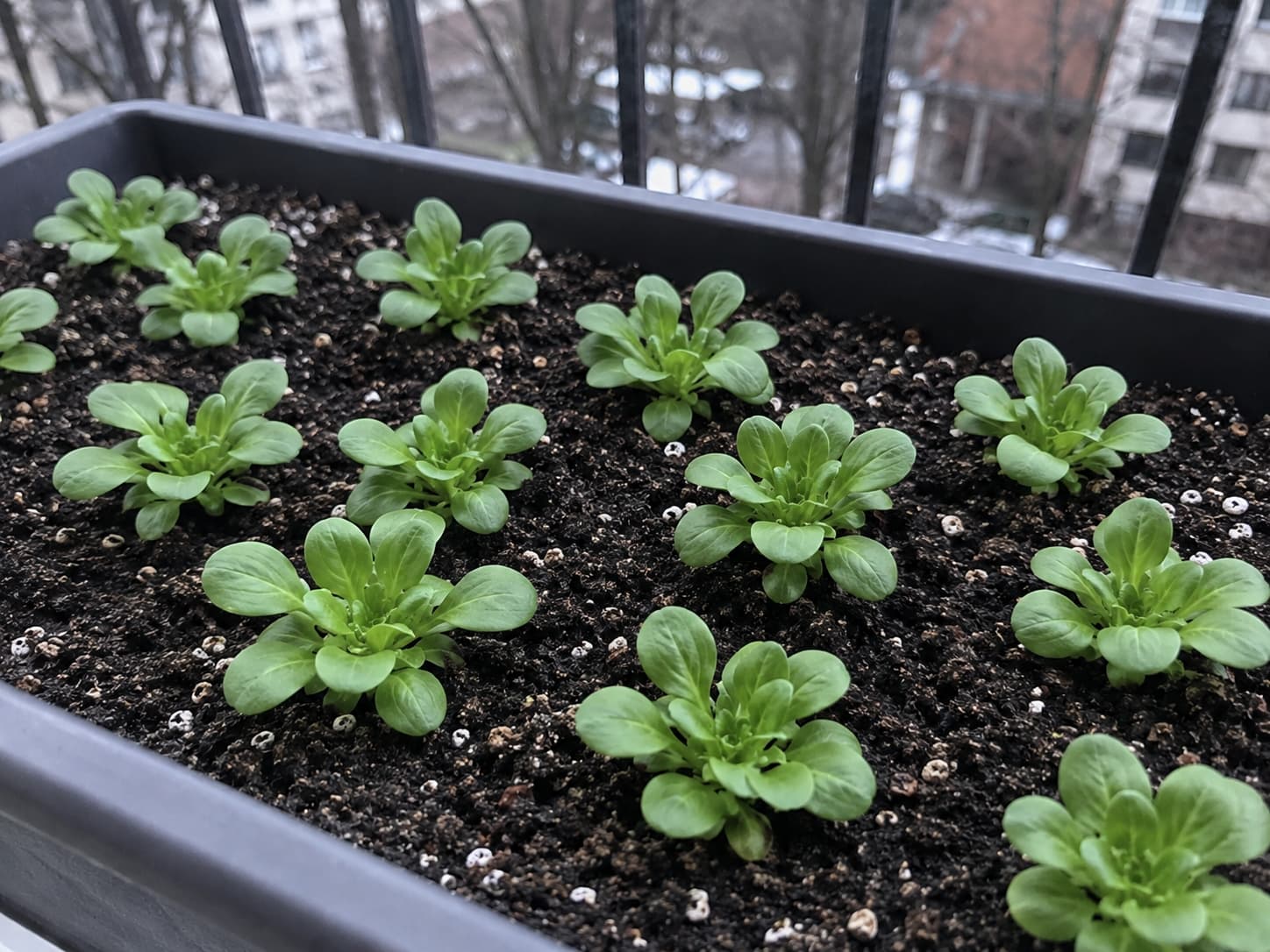
Finally, mâche—also called corn salad or lamb's lettuce—is a useful deep-winter option of cool-season gardening. Although it is less familiar to many American home gardeners, it is highly cold-tolerant, but it's the most cold-hardy salad green you can grow. Even so, actual survival depends on cultivar, exposure, container size, and the duration of cold., which means it keeps producing fresh salad greens in January when everything else is frozen solid or dead.
For example, I discovered mâche in 2024 when a European gardening friend sent me seeds. First, I sowed them in October, forgot about them, and found a thriving crop of tender, nutty-flavored rosettes in my balcony containers in January—after two weeks of temperatures that never rose above freezing. At that point, very little else on my balcony was still productive. As a result, mâche became one of my preferred greens for the coldest part of the season.
Growing Mâche
- Sowing: Direct-sow in October (zones 5-7) or November (zones 8-10). For sowing, scatter the small seeds according to the packet directions and press gently; don't bury. Germination in 10-14 days at 50-60°F.
- Spacing: 3-4 inches between plants. Because mâche stays compact, several plants can fit in a modest container. (2-3 inch rosettes), so you can pack them tight.
- Container: A 6-inch pot fits 3-4 plants. In addition, a window box can hold a useful small planting.
- Harvest: For harvest, cut a mature rosette or take selected outer leaves. when it's 3-4 inches across, or pick individual outer leaves. Flavor is mild, slightly nutty, with a buttery texture that's completely different from other greens.
Fall Planting Calendar
| Month | Spinach | Kale | Arugula | Swiss Chard | Mâche |
|---|---|---|---|---|---|
| August | — | Start indoors (Z5-6) | — | — | — |
| September | Prime 1st sowing | Prime Transplant / direct sow | Prime 1st sowing | Prime 1st sowing | — |
| October | 2nd sowing | — | 2nd sowing | — | Prime Sow (Z5-7) |
| November | 3rd sowing (Z7+) | — | Final sowing (Z8+) | — | Prime Sow (Z8-10) |
| December–Jan | Harvest only | Harvest (frost-sweetened) | Harvest (if covered) | Harvest (if covered) | Prime Active growing + harvest |
| February–Mar | Prime Spring sowing | Spring sowing | Prime Spring sowing | Spring sowing | Final harvest before heat |
More columns available
In short, “Prime” marks the main sowing or harvest window. Zones indicated where timing differs significantly. However, adjust timing for your local frost pattern rather than relying only on zone number. for every 2 zones colder than Zone 7.
Frost Protection for Balcony Containers
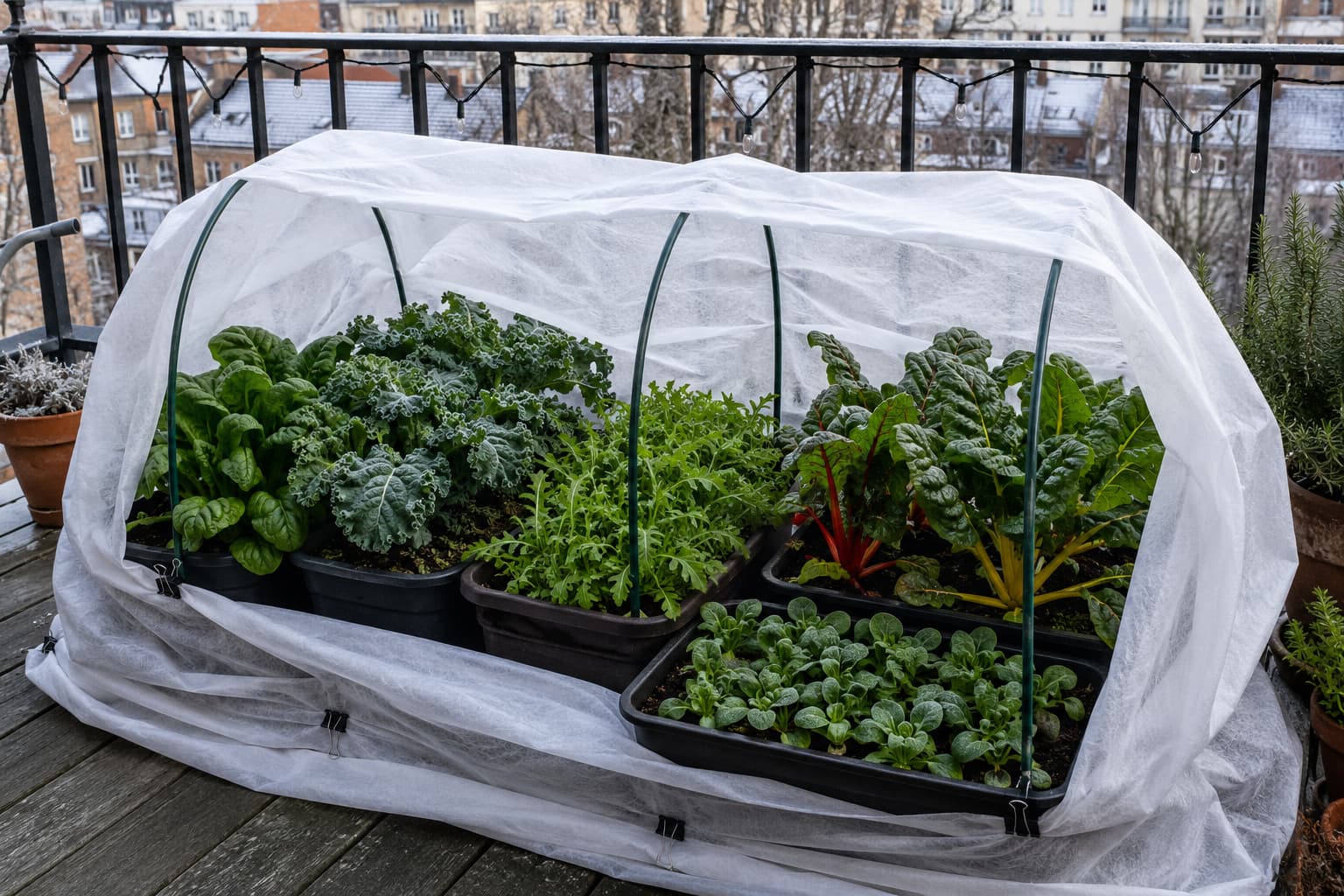
For winter care, container plants are more exposed to cold than in-ground plants because the roots don't have the earth's insulation. For example, roots in a container can cool much faster than roots protected by surrounding ground. can kill kale roots in a thin plastic pot. Therefore, use protection that matches the crop, container, and local conditions:
| Protection Level | Method | Cost | Protects Down To | Best For |
|---|---|---|---|---|
| Light | Floating row cover / horticultural fleece draped over plants | $8-12 per 5×25 ft | 28°F (-2°C) | Arugula, early fall spinach |
| Medium | Double layer of fleece, or single layer + move pots against building wall | Free (reuse fleece) | 20°F (-7°C) | Kale, Swiss chard, spinach |
| Heavy | Mini hoop house: flexible PVC hoops + fleece or clear plastic over a raised bed or group of pots | $15-25 for materials | 10°F (-12°C) | All five greens through deep winter |
| Maximum | Bring pots indoors on the coldest nights (below 15°F), return outdoors during the day | Free | Any temperature | Any green; works for balcony gardeners with floor space near a window |
Swipe sideways if needed
Common Problems and Quick Fixes
| Problem | Most Likely On | Cause | Fix |
|---|---|---|---|
| Leaves turning yellow | Spinach, Swiss chard | Overwatering (most common) or nitrogen deficiency | Let soil dry to 1 inch deep before watering; add diluted liquid fertilizer |
| Plants bolting (flowering) early | Spinach, arugula | Too warm; day length too long | Move to shadier spot; harvest immediately (leaves will turn bitter soon); re-sow in cooler window |
| Holes in leaves, no visible pest | Kale, Swiss chard | Cabbage white butterfly caterpillars (green, camouflaged on leaves) | Hand-pick caterpillars; check undersides of leaves; use row cover to prevent egg-laying |
| White powdery coating on leaves | Spinach | Downy mildew | Remove affected leaves; improve airflow; avoid overhead watering; switch to resistant variety |
| Translucent tunnels in leaves | Swiss chard | Leaf miners | Pinch and squash the larva inside the tunnel; remove heavily mined leaves; use row cover on young plants |
| Tiny pits/stippling on leaves | Arugula | Flea beetles | Cover with row cover immediately; they're most active in warm fall weather and disappear after frost |
| Plant froze solid, looks dead | Any | Root freeze in container | Wait 3-5 days before pulling—some greens (kale, mâche) recover from crown even if all leaves are dead. Don't cut frozen leaves off until they thaw naturally. |
Horizontal scroll available
From Balcony to Bowl: Simple Preparations
Kale, Arugula & Swiss Chard
After harvest, these are simple ways I use balcony greens—they're how I actually eat my balcony greens daily. In other words, the goal is quick everyday preparation:
- Kale massaged salad: First, strip kale leaves from thick stems, tear into pieces, drizzle olive oil and a pinch of salt, massage with your hands for 60 seconds until the leaves soften and turn bright green. Then, finish with lemon juice and grated Parmesan if desired. The massaging breaks down the tough cell walls and makes raw kale tender. Post-frost kale needs almost no massaging—it's already tender.
- Arugula on everything: For example, add arugula to pizza, pasta, or sandwiches near serving time., toss it into pasta at the last minute, or use it as a sandwich base. As a result, gentle heat wilts arugula slightly and softens its peppery bite. The best 10-second "cooking" method there is.
- Sautéed Swiss chard with garlic: First, separate chard stems from leaves. Next, cook the stems before the leaves because they need more time. (they take longer), add minced garlic for 30 seconds, then add the torn leaves. Cook 2-3 minutes until wilted. Finally, finish with lemon juice if you like. In addition, the stems stay pleasantly firm when cooked, so they are worth using.
Spinach & Mâche
- Spinach smoothie: For a smoothie, blend spinach with fruit and your preferred liquid., one frozen banana, one cup almond milk, blend. You cannot taste the spinach—the banana completely masks it. For example, a smoothie is an easy way to use a handful of fresh spinach.
- Mâche as a bed: For mâche, use whole rosettes as a salad base or side green. for any salad, or under grilled fish or chicken. Meanwhile, mâche's buttery texture and mild flavor pair well with richer foods. Finally, a simple finish of olive oil and salt is often enough.
Recommended Products
| Product | Brand | Price | What It Does | Best For |
|---|---|---|---|---|
| Floating Row Cover | Agribon (various) | $8-12 / 5×25 ft | Frost protection + pest barrier | All five greens; essential for zones 5-7 |
| All-Purpose Water Soluble Fertilizer | Miracle-Gro | $8 / 1.5 lb | Monthly feeding for leaf production | All five (especially heavy feeders: kale, chard) |
| Smart-Release Plant Food | Osmocote | $14 / 2 lb | 4-month slow release; set and forget | Long-season crops: kale, Swiss chard |
| Bubble Wrap (for pot insulation) | Any | $5 / large roll | Wraps pots to prevent root freeze | All container greens in zones 5-7 |
| Salad Spinner | OXO Good Grips | $18 | Dries greens quickly for storage; wet greens rot in 1-2 days, dry greens last 5-7 days in the fridge | Any home greens harvester |
Additional columns available
Frequently Asked Questions
Light, Containers & Feeding
1. Can I grow these greens indoors on a windowsill?
2. How many containers do I need for a daily salad?
3. Do I need to fertilize cool-season greens?
Sun, Soil Reuse & Winter Harvesting
4. What if my balcony only gets 4 hours of sun?
5. Can I reuse the same potting soil next season?
6. When should I stop harvesting and let the plant overwinter?
References
- University of Minnesota Extension — Growing Spinach — Variety selection, downy mildew management, and overwintering techniques
- Royal Horticultural Society — Growing Kale — Frost sweetening science, variety comparison, and year-round cultivation
- Oregon State University Extension — Frost Protection for Gardens — Row cover effectiveness data and container-specific cold protection strategies
- Seed Savers Exchange — Mâche Growing Guide — The definitive resource for this underappreciated winter green