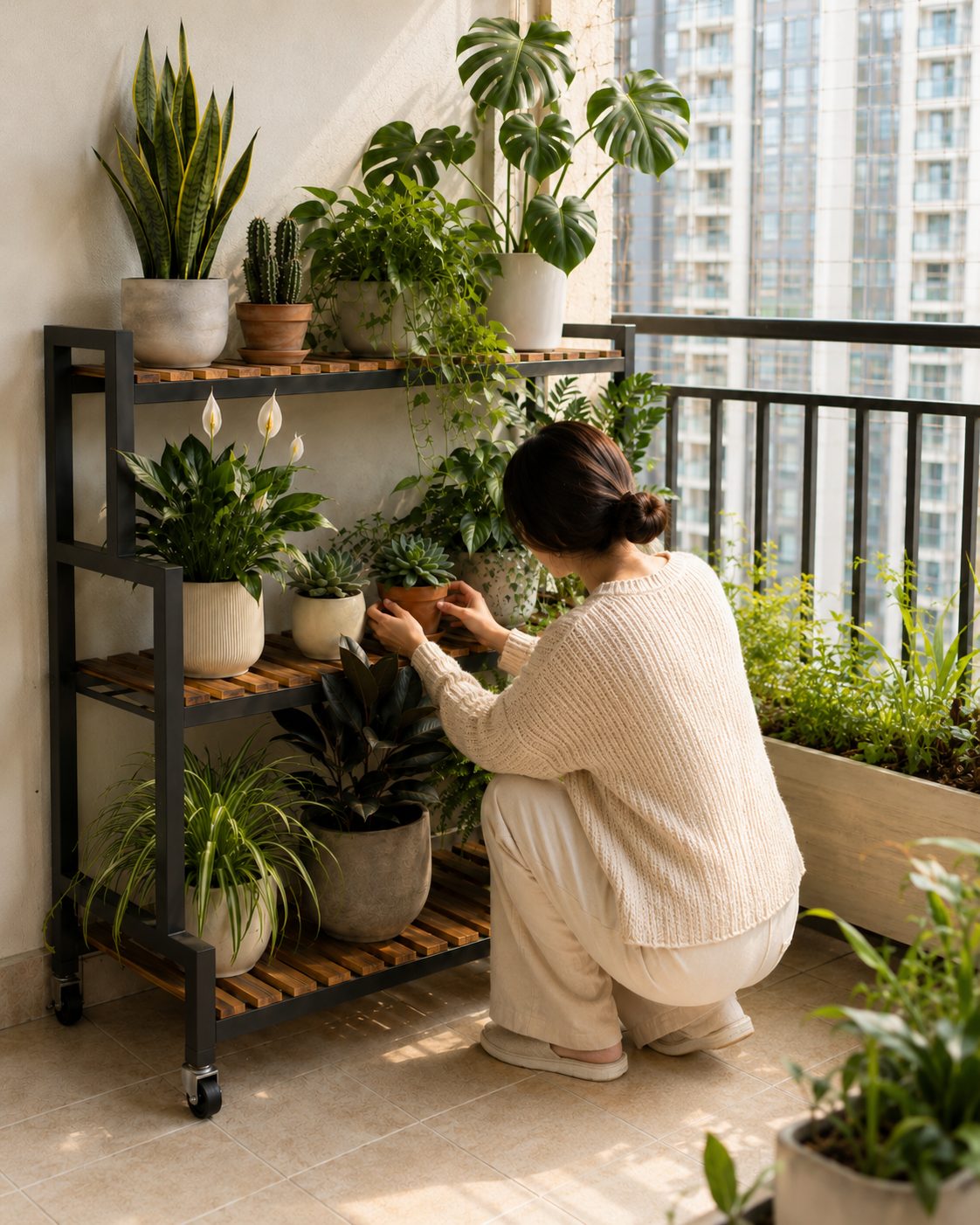
Plant Sunburn vs Disease: How to Diagnose and Save Your Summer Plants
Plant sunburn can appear quickly after a sudden increase in direct light or reflected heat. One summer, I moved a Monstera deliciosa from bright indirect light into a spot that received more direct sun. A few days later, brown and bleached patches appeared mainly on the exposed side of the plant. My first thought was disease, but the pattern lined up with the recent change in light. It was environmental injury rather than an infection.
The useful lesson was simple: do not reach for a spray bottle before checking the pattern. Oils, soaps, and fungicides can add stress when the real problem is excessive light or heat, while moving a diseased plant without addressing sanitation or moisture can allow an infection to continue.
Sunburn, leaf scorch, fungal leaf spots, bacterial lesions, and pest feeding can overlap visually. The goal is not to force every symptom into one category in 60 seconds; it is to narrow the possibilities using exposure history, lesion texture, location, spread, and what you see on leaf undersides.
This guide gives you a practical diagnostic framework so you can make a safer first decision, then keep observing before escalating treatment.
Plant Sunburn or Disease? The 60-Second Diagnosis
When you see leaf damage, don't spray anything yet. Run through these four questions in order. One "yes" is usually enough to tip the scale.
Swipe or drag the bar below if more columns are available.
| Question | Points More Toward Sun / Heat Injury | Points More Toward Disease or Another Cause |
|---|---|---|
| 1. Is damage concentrated on the most exposed leaves? | Often yes, especially after a sudden increase in light or reflected heat | Disease can be scattered or patterned by moisture and airflow rather than sun exposure |
| 2. Was there a recent change in light, heat, pruning, or placement? | A close timing match strengthens the case for environmental injury | No recent change makes disease, pests, nutrition, or watering problems more important to check |
| 3. What does the damaged tissue feel and look like? | Bleached, tan, papery, or dry patches are common with scorch | Water-soaked lesions, fuzzy growth, powder, expanding halos, or soft rot deserve disease investigation |
| 4. What is on the underside? | A clean underside can support an environmental diagnosis | Spores, insects, eggs, webbing, sticky residue, or matching lesions point elsewhere |
| 5. Is new damage still appearing after conditions are corrected? | Environmental injury should stop progressing once the stress is removed | Continued spread suggests disease, pests, or another unresolved cause |
Why Getting It Right Matters
Mistaking sunburn for disease isn't just a minor inconvenience—it can kill your plant through a cascade of wrong decisions:
- Spraying before diagnosing — Oils, soaps, surfactants, and some pesticides can cause phytotoxicity on stressed foliage, especially when used outside label temperature or light conditions.
- Leaving the stress unchanged — If excessive light or reflected heat is the cause, repeated sprays will not fix the exposure problem.
- Removing too much functioning foliage — Aggressive pruning can reduce the leaf area a stressed plant still uses for photosynthesis.
- Watering by appearance alone — Heat-stressed leaves can wilt even when the root zone is still moist. Check the potting mix before adding more water.
How to Identify and Fix Plant Sunburn
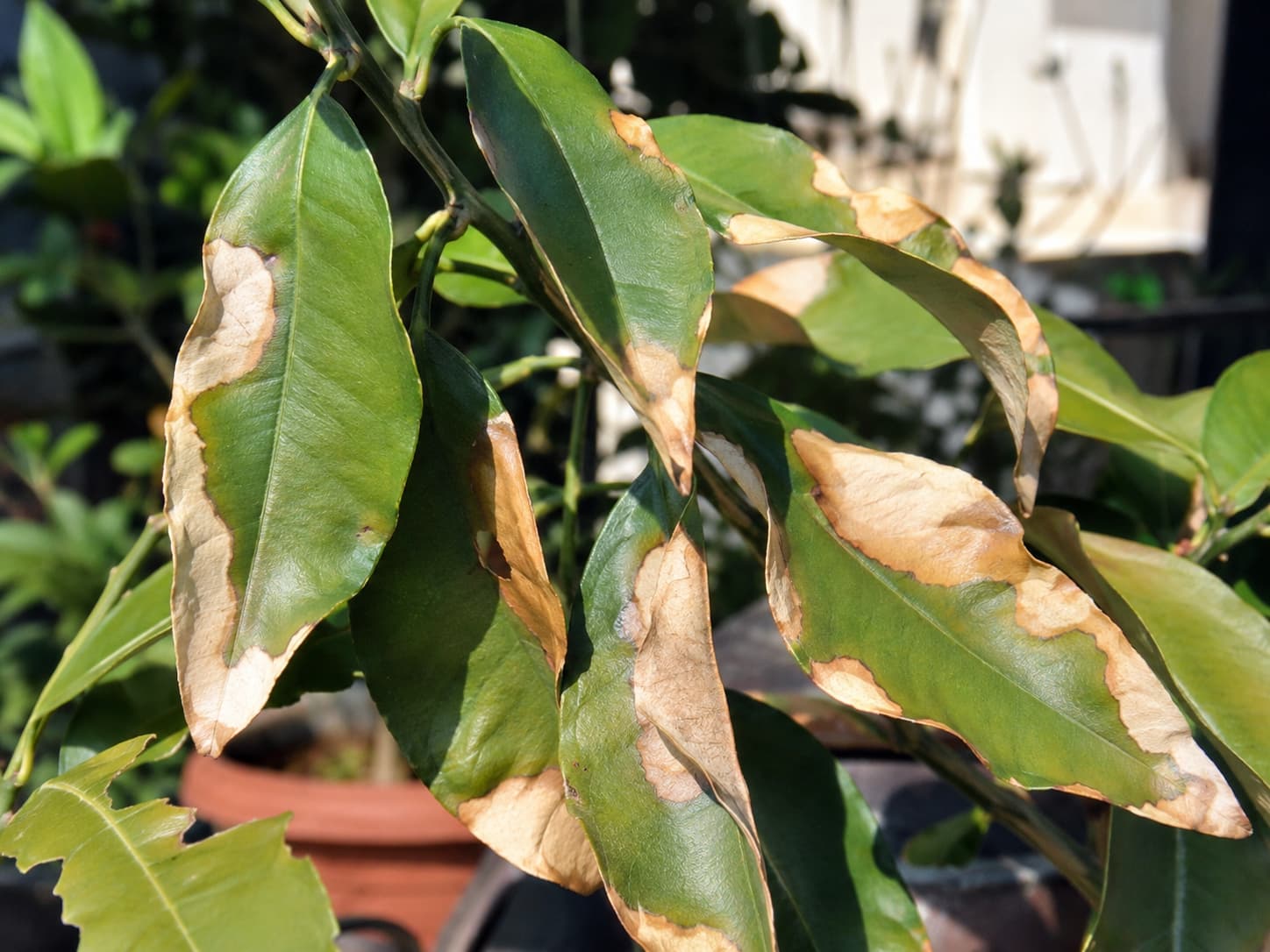
Suggested filename:
greenmuse-illustration-sunburn-exposed-leaf-pattern.jpgReplace
PASTE_IMAGE_URL_01_HERE with the final WordPress Media URL.What Plant Sunburn Looks Like
Sunburn has a distinct visual pattern that, once you know it, is hard to miss:
- Color: Starts as pale green or bleached white patches, then turns tan, brown, or papery gray. The spots are dry and brittle—if you gently rub them between your fingers, they crumble.
- Location: Often strongest on the most exposed leaves or the side facing the light source, though reflected heat and plant orientation can create less obvious patterns.
- Shape: Irregular patches rather than circular spots. Often follows the natural contours of the leaf between veins.
- Progression: Often follows a recent exposure change and should stop appearing on new tissue once the environmental stress is corrected.
- Edge pattern: On plants with thin leaves (ferns, Calathea, herbs), sunburn often starts at the leaf tips and margins, working inward.
Common Plant Sunburn Triggers
- Moving plants into much brighter conditions — Indoor or shaded leaves may not be adapted to full outdoor sun. Increase exposure gradually according to the species and local climate.
- Wet foliage during stressful conditions — Water droplets are not a general “magnifying glass” cause of leaf burn. The more important concerns are unsuitable foliar products, temperature stress, prolonged leaf wetness for disease-prone plants, and watering practices that do not address the root zone.
- Reflected heat — Glass, pale walls, metal railings, and hard balcony surfaces can raise leaf and root-zone temperatures beyond what the air temperature alone suggests.
- Pruning that exposes previously shaded leaves — You prune a bushy plant, and suddenly the inner leaves—which have never seen direct sun—are exposed. They will burn.
- Foliar products used outside label conditions — Horticultural oils, soaps, pesticides, and leaf products can injure foliage if applied in unsuitable heat or sunlight. Follow the exact label.
Plant Sunburn Treatment Protocol
Step 2: Delay major pruning until the pattern stabilizes. Keep partially green leaves when practical because they may still contribute energy. Remove tissue that is fully dead, diseased, or creating sanitation problems once you are confident it will not recover.
Step 3: Water according to the root zone, not the damaged leaves. Check the potting mix and water thoroughly when the plant actually needs it. Good drainage matters more than following a fixed depth or calendar.
Step 4: Avoid pushing growth while the plant is actively stressed. Resume feeding only after watering, light, and new growth are stable, following the needs of the species and the fertilizer label.
Step 5: Keep the recovery environment stable. Protect the plant from extreme heat and drying wind, maintain appropriate humidity for the species, and preserve airflow. Pebble trays usually have only a small local effect, so do not rely on them as the main treatment.
Fungal vs Bacterial Leaf Disease: How to Tell the Difference
If you've ruled out sunburn, you're dealing with disease. But which kind? Fungal and bacterial diseases require different treatments, and using the wrong one wastes time while the infection spreads.
Fungal Leaf Diseases
Swipe or drag the bar below if more columns are available.
| Symptom | What It Looks Like | Common Culprit |
|---|---|---|
| Powdery mildew | White or gray powdery coating on leaves, like someone dusted flour on them. Starts on upper surface, spreads to undersides | High humidity + poor air circulation |
| Leaf spot (fungal) | Brown or black circular spots, often with a darker border and lighter center. May have tiny black dots (spore-producing structures) visible with a magnifying glass | Overhead watering + wet leaves overnight |
| Rust | Orange, yellow, or reddish-brown pustules on leaf undersides. Upper surface shows yellow spots. Rubs off on your finger like rust powder | Warm, humid conditions |
| Downy mildew | Yellow or pale green angular spots on upper surface, with gray-purple fuzzy growth on underside | Cool, wet conditions (more common in spring/fall) |
| Botrytis (gray mold) | Brown, water-soaked spots that develop a fuzzy gray mold. Often starts on dead or dying tissue first | High humidity + poor air circulation + dead plant material |
Fungal treatment: Remove badly affected material when appropriate, improve airflow, avoid unnecessary leaf wetness, and confirm the likely disease before choosing a fungicide. If you use copper, sulfur, potassium bicarbonate, or another fungicide, make sure the label lists the plant and disease and follow temperature, concentration, and repeat-application directions exactly.
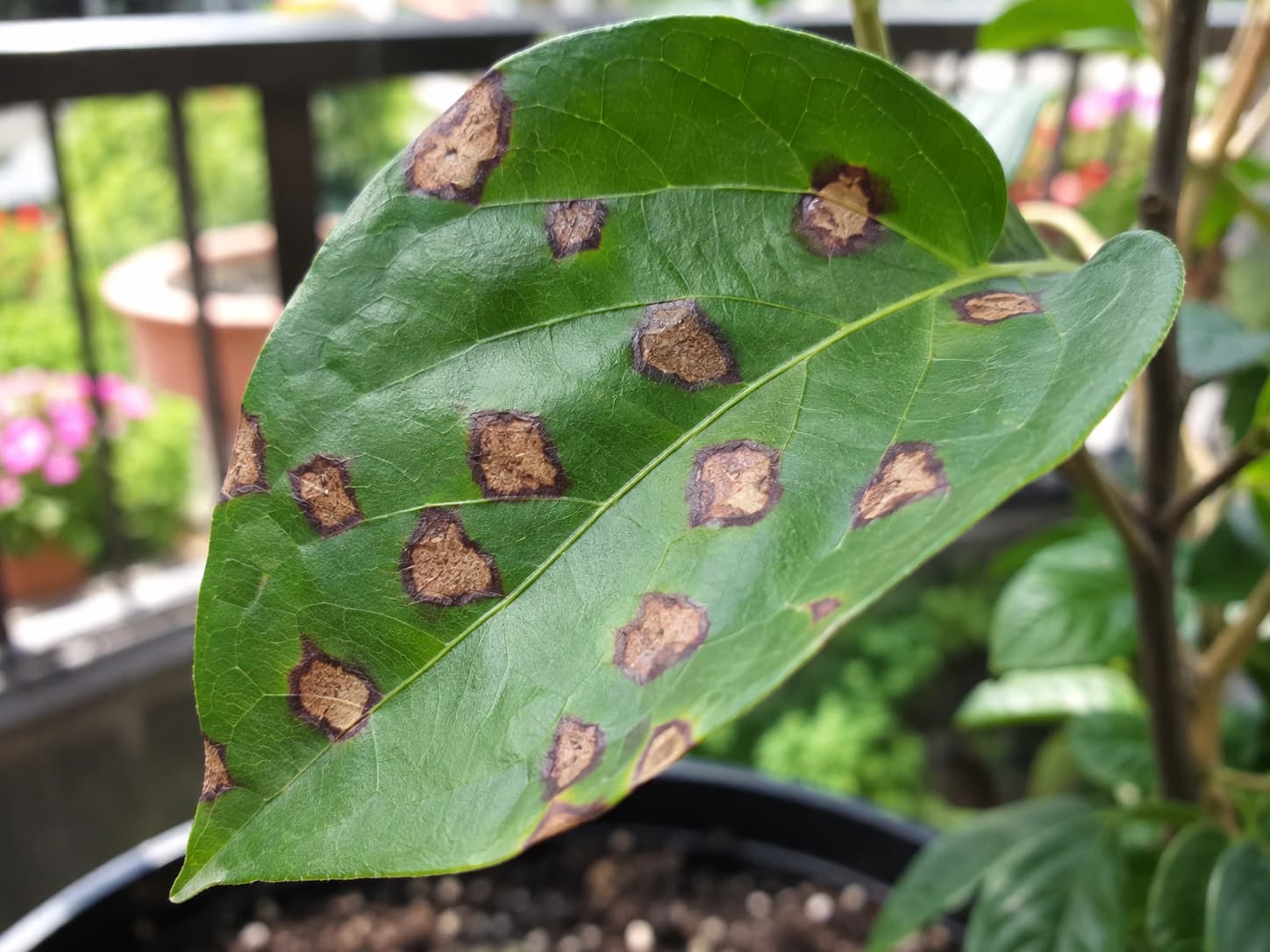
Suggested filename:
greenmuse-illustration-fungal-leaf-spot-example.jpgReplace
PASTE_IMAGE_URL_02_HERE with the final WordPress Media URL.Bacterial Leaf Diseases
Swipe or drag the bar below if more columns are available.
| Symptom | What It Looks Like | Common Culprit |
|---|---|---|
| Bacterial leaf spot | Dark, water-soaked spots that look greasy or wet. Often angular (bounded by leaf veins) rather than circular. May have a yellow halo | Splashing water + warm temperatures |
| Bacterial soft rot | Soft, mushy, foul-smelling tissue. Often starts at the stem base or crown | Overwatering + poor drainage |
| Fire blight | Branches and leaves look scorched—blackened, curled, but stay attached to the plant. Affects rose family plants (apple, pear, rose) | Spread by insects and rain splash in warm, humid weather |
Bacterial treatment: Remove and discard badly affected tissue, reduce splash, improve airflow, and sanitize pruning tools between plants. Copper products can suppress some bacterial diseases when the label permits, but they are not a universal cure. Correct identification and sanitation are especially important because home-garden bactericide options are limited.
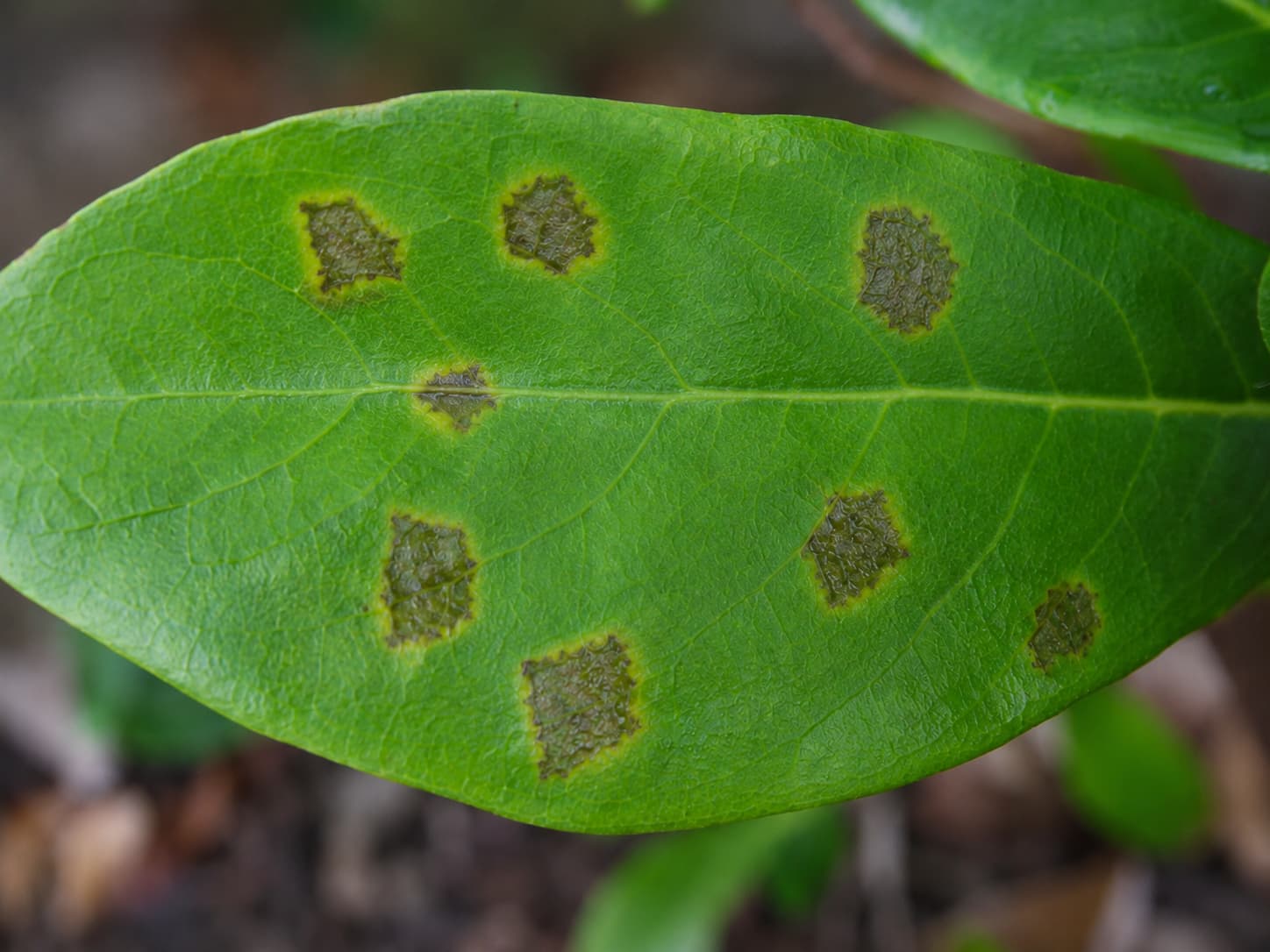
Suggested filename:
greenmuse-illustration-bacterial-leaf-spot-water-soaked.jpgReplace
PASTE_IMAGE_URL_03_HERE with the final WordPress Media URL.Quick Comparison: Plant Sunburn vs Fungal Disease vs Bacterial Disease vs Pest Damage
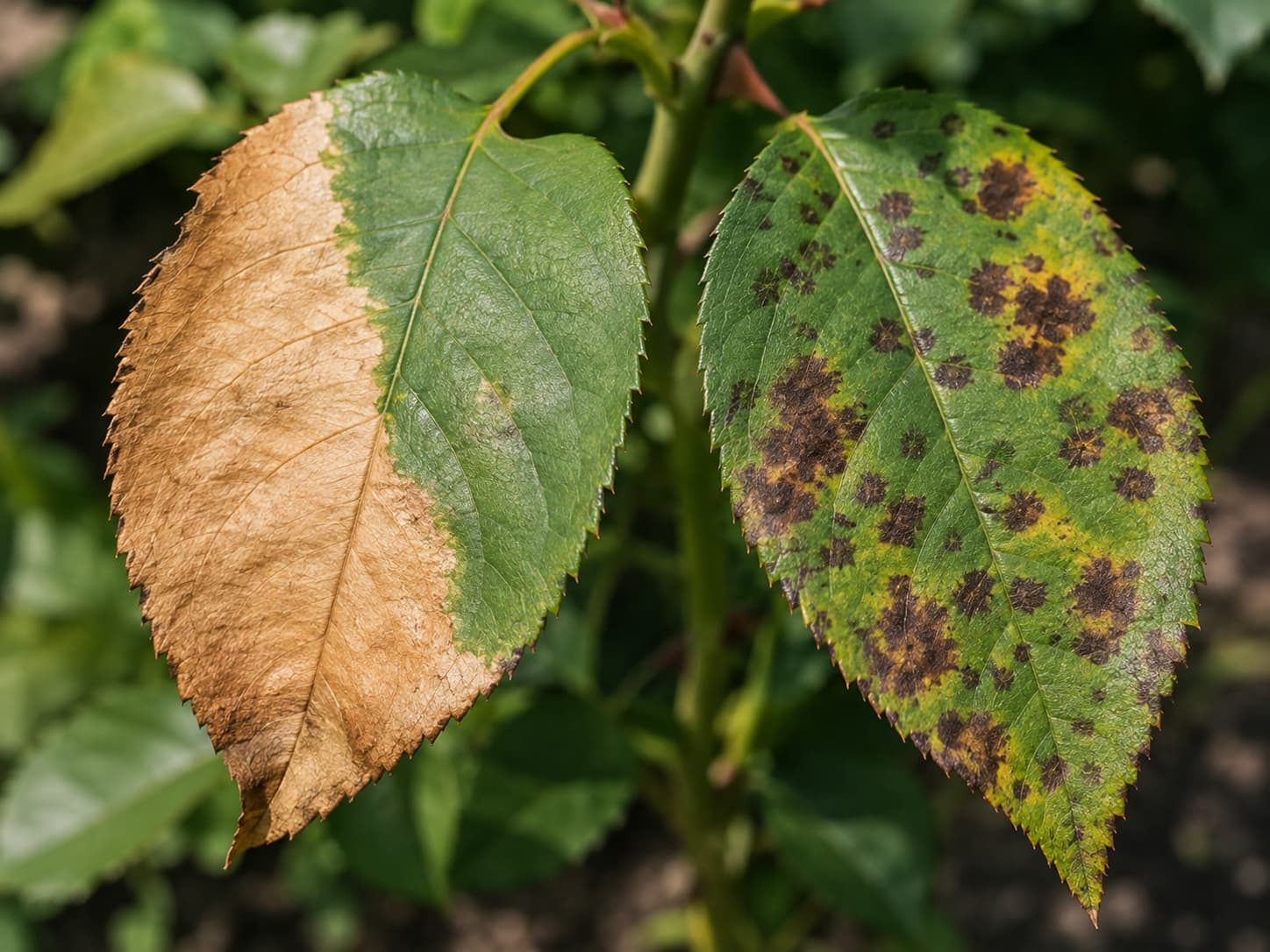
Suggested filename:
greenmuse-illustration-sunburn-vs-disease-leaf-comparison.jpgReplace
PASTE_IMAGE_URL_04_HERE with the final WordPress Media URL.Swipe or drag the bar below if more columns are available.
| Feature | Sun / Heat Injury | Fungal Disease | Bacterial Disease | Pest Damage |
|---|---|---|---|---|
| Typical onset | Often follows an exposure or heat change | Often develops progressively | Often develops progressively | Often builds as pest numbers increase |
| Texture | Bleached, tan, papery or dry | May be powdery, fuzzy, spotted or necrotic | May look water-soaked, greasy or soft | Stippling, scars, holes, distortion or sticky residue |
| Pattern | Frequently strongest on exposed tissue | Depends on pathogen, moisture and host | Can be angular or water-soaked, depending on disease | Often follows feeding sites, veins, buds or leaf undersides |
| Leaf underside | Often unremarkable | May show spores or matching lesions | May show water-soaked tissue or lesions | May show insects, eggs, webbing or residue |
| Does new damage continue? | Should stop once the stress is corrected | May continue spreading | May continue spreading | Continues while pests remain active |
| Best first action | Reduce excessive exposure and stabilize care | Isolate if needed, improve conditions, confirm disease | Isolate, reduce splash, sanitize tools, confirm disease | Isolate when practical and identify the pest |
Plant Sunburn Vulnerability Guide
Not all plants are equally vulnerable. Here's what to watch for on common balcony and houseplant varieties:
Swipe or drag the bar below if more columns are available.
| Plant Group | Relative Risk | What to Watch For | Safer Adjustment |
|---|---|---|---|
| Monstera | Moderate to high after sudden exposure changes | Bleached or tan patches on exposed leaves | Use bright filtered light and acclimate gradually |
| Fiddle Leaf Fig | High after abrupt moves | Dry tan or brown patches on exposed leaf surfaces | Increase direct light slowly and avoid hot reflected exposure |
| Succulents | Varies widely by species and acclimation | Pale, tan, corky or scarred tissue | Transition gradually from indoor to outdoor sun |
| Calathea / Prayer Plants | High | Bleaching, brown margins and crisping | Bright indirect light; avoid harsh direct sun |
| Herbs | Varies by species and container heat | Wilting, bleaching, edge scorch or premature flowering | Protect from extreme afternoon heat and manage root-zone moisture |
| Ferns | Often high, but species differ | Pale fronds and crispy tips or margins | Match light to the species; many prefer filtered conditions |
| Tomatoes & Peppers | Leaves usually tolerate sun when acclimated; fruit can sunscald | Pale leathery areas on exposed fruit | Preserve enough foliage to shade fruit during extreme heat |
| Phalaenopsis Orchids | High | Bleached or sunken leaf patches | Bright filtered light rather than hot direct sun |
What Doesn't Work (Stop Doing These)
- "I'll just water more" — Sunburn is leaf damage, not a water problem. Overwatering leads to root rot, which is harder to fix than sunburn. Check the soil before you water, every time.
- "I'll spray neem oil on everything" — Neem-based products are not a universal treatment. They do not repair sunburn, and they are not the default answer for every fungal or bacterial disease. Use them only when the label fits the diagnosed pest or disease and conditions are suitable.
- "I'll prune all the ugly leaves" — Keep partially functional foliage when practical. Prune once the plant is stable and you can clearly identify dead, diseased, or unnecessary tissue.
- "I'll fertilize to help it recover faster" — Fertilizer is not medicine. Resume feeding after the plant is stable and actively growing, according to the species and product label.
- "It's probably just sunburn, I'll ignore it" — If new lesions keep appearing after the light or heat problem is corrected, reassess for disease, pests, root problems, or another environmental stress.
- "I'll put it outside to 'get some fresh air' and recover" — Outdoor conditions are harsher than indoor in almost every way: more light, more wind, more temperature fluctuation. A stressed plant needs stable conditions, not a change of scenery.
Prevention: Stop Both Before They Start
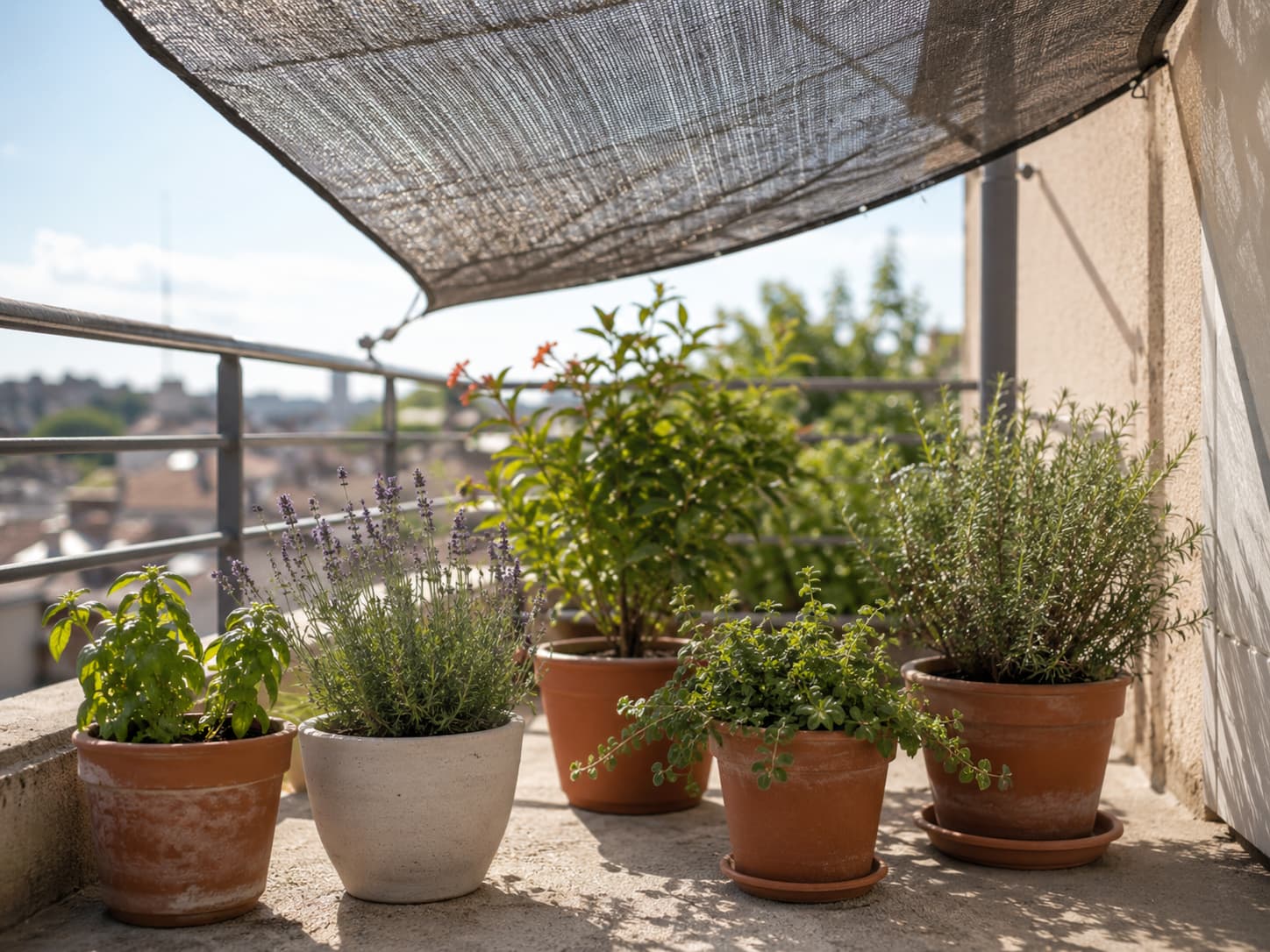
Suggested filename:
greenmuse-illustration-balcony-shade-prevention.jpgReplace
PASTE_IMAGE_URL_05_HERE with the final WordPress Media URL.Plant Sunburn Prevention Checklist
- Acclimate plants gradually when moving them into substantially brighter conditions. The pace depends on species, season, and local sun intensity.
- Use filtered light where needed for sensitive plants near strong south- or west-facing exposure.
- Use breathable shade cloth during extreme heat when appropriate, leaving airflow around foliage.
- Avoid sudden canopy changes that expose previously shaded leaves or fruit to intense sun.
- Keep containers from overheating with lighter outer pots, pot feet, shade, or other root-zone protection when surfaces become very hot.
- Know your exposure — morning and afternoon light differ in heat load, but the exact risk depends on season, latitude, reflection, glazing, and plant species.
Disease Prevention Checklist
- Water the root zone when practical and avoid unnecessary prolonged leaf wetness on disease-prone plants.
- Water early enough for foliage to dry if leaves do become wet.
- Space plants for airflow and thin overcrowded growth when appropriate.
- Remove dead or diseased debris from pots and growing areas.
- Clean pruning tools between affected plants using a suitable disinfecting method.
- Inspect and isolate new or suspicious plants long enough to observe them before mixing them closely with healthy plants.
- Use a well-drained potting mix matched to the plant rather than allowing roots to remain waterlogged.
Recovery: How to Save a Damaged Plant
Once you've correctly diagnosed and halted the damage, the recovery phase begins. Here's a timeline of what to expect:
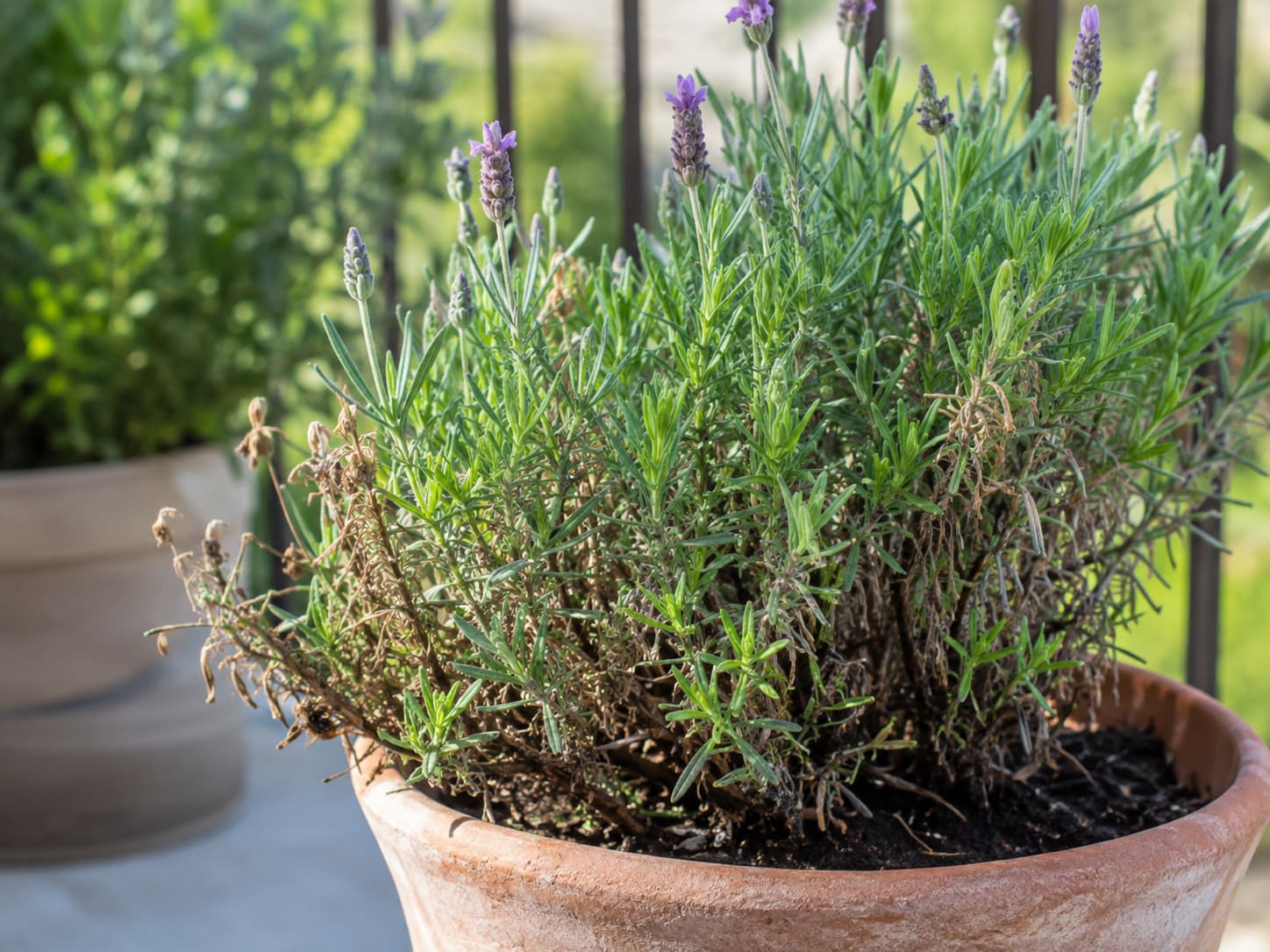
Suggested filename:
greenmuse-illustration-plant-recovery-new-growth.jpgReplace
PASTE_IMAGE_URL_06_HERE with the final WordPress Media URL.Plant Sunburn Recovery: What to Watch For
- First sign of success: no new scorch appears after the exposure problem is corrected.
- Existing damage may darken: dead tissue can become tan or brown even after the plant is safe.
- Healthy new growth matters most: new leaves or shoots show that the plant has enough resources to recover.
- Prune gradually: remove fully dead tissue once the plant is stable rather than stripping all damaged foliage at once.
- Recovery speed varies: fast-growing herbs and vines may respond quickly; woody or slow-growing plants can take much longer.
Disease Recovery: What to Watch For
- Spread should slow or stop once sanitation, environment, and any appropriate treatment are working.
- Existing lesions usually remain visible; judge success by whether new healthy tissue stays clean.
- Check the root zone if the plant continues declining despite cleaner foliage.
- Keep monitoring after improvement because humid or stressful conditions can trigger another round of symptoms.
Plant Sunburn vs Disease FAQ
1. Can a plant recover from sunburn on its own?
2. Should I cut off sunburned leaves?
3. Can a plant have both sunburn AND disease at the same time?
4. Is morning sun safer than afternoon sun?
5. Why did my succulent get sunburn? I thought they loved sun?
6. Can I use hydrogen peroxide for plant diseases?
7. How do I know if the spots are from pests and not disease?
References
- University of California IPM — Sunburn, Sunscald, or Excessive Heat — Comprehensive overview of sun damage in garden plants, including fruit sunscald and trunk sunburn
- Missouri Botanical Garden — Leaf Scorch — Detailed guide on environmental leaf damage, including the distinction between scorch and disease
- Royal Horticultural Society — Leaf Scorch — UK-focused but excellent on the physiological causes of leaf scorch across different plant types
- University of Wisconsin Extension — Bacterial Leaf Spot — Technical guide on identifying and managing bacterial leaf diseases in home gardens