Summer Cilantro Mastery: How to Keep Your Herb Patch Thriving All Season
Here's the scene every cilantro grower knows too well: you plant in May, harvest a few meals' worth in June, and by July 4th the plant has shot up a flower stalk and turned bitter. Your salsa has no cilantro for the rest of summer.
This isn't your fault. Cilantro (Coriandrum sativum) is hardwired to bolt when days are long and temperatures rise above 75°F. In its native Mediterranean climate, it grows in the cool season, sets seed, and dies before summer arrives. You're trying to grow a winter annual in the middle of summer.
But you can outsmart it. I've kept cilantro producing harvestable leaves through August for two consecutive years using five specific techniques—not one trick, but a system that addresses every trigger that causes bolting. This guide covers all five, plus variety selection, succession planting schedules, and what to do when bolting does happen (because it will, eventually).
For a complete year-round growing guide including varieties, container setup, and coriander seed harvest, see our full cilantro and coriander care guide. This article focuses specifically on summer survival.
greenmuse-illustration-summer-cilantro-bolting-overview.jpg
Why Cilantro Bolts: Understanding the Enemy
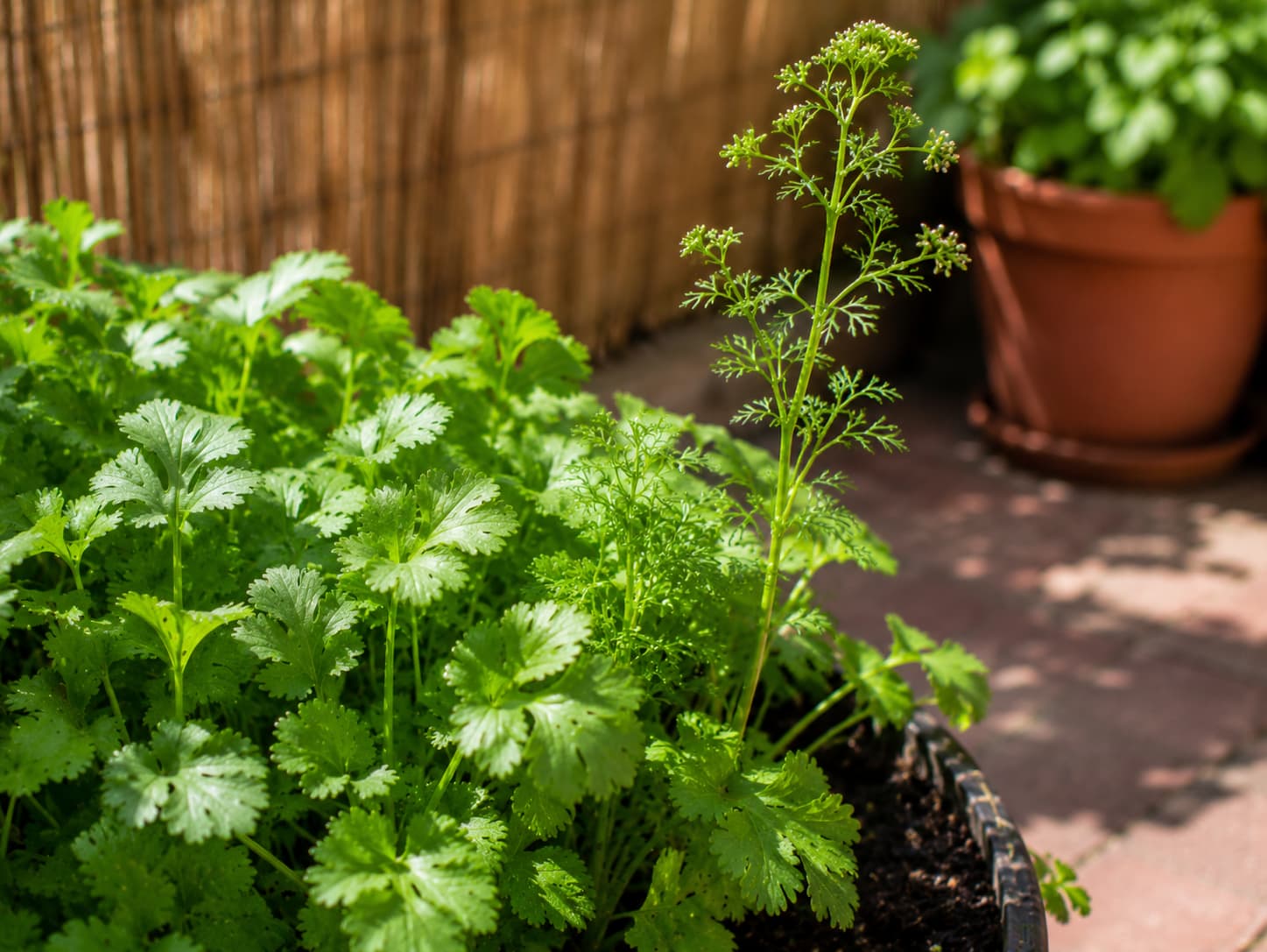
Bolting (premature flowering) isn't a disease—it's a survival strategy. Cilantro's biological program says: "When conditions become hostile to leaf growth (too hot, too dry, too much light), switch to reproduction." The plant produces a flower stalk, sets seed, and dies—completing its life cycle before heat kills it.
Three environmental triggers cause bolting, and each one accelerates the others:
| Trigger | Threshold | What Happens Inside the Plant |
|---|---|---|
| Temperature | Sustained days above 75°F; nights above 60°F | Heat-sensitive proteins activate flowering genes; growth hormones shift from auxin (leaf production) to gibberellin (stem elongation) |
| Day length | Days longer than 12 hours | Phytochrome pigments detect long days and trigger the floral meristem—even in "slow-bolt" varieties, just more slowly |
| Soil moisture stress | Soil dries out between waterings | Drought signals "emergency reproduction"—the plant races to set seed before it dies |
Drag the bar below or swipe horizontally to view the remaining columns.
Technique 1: Shade Strategies That Actually Lower the Temperature
greenmuse-illustration-cilantro-afternoon-shade-under-tomatoes.jpg
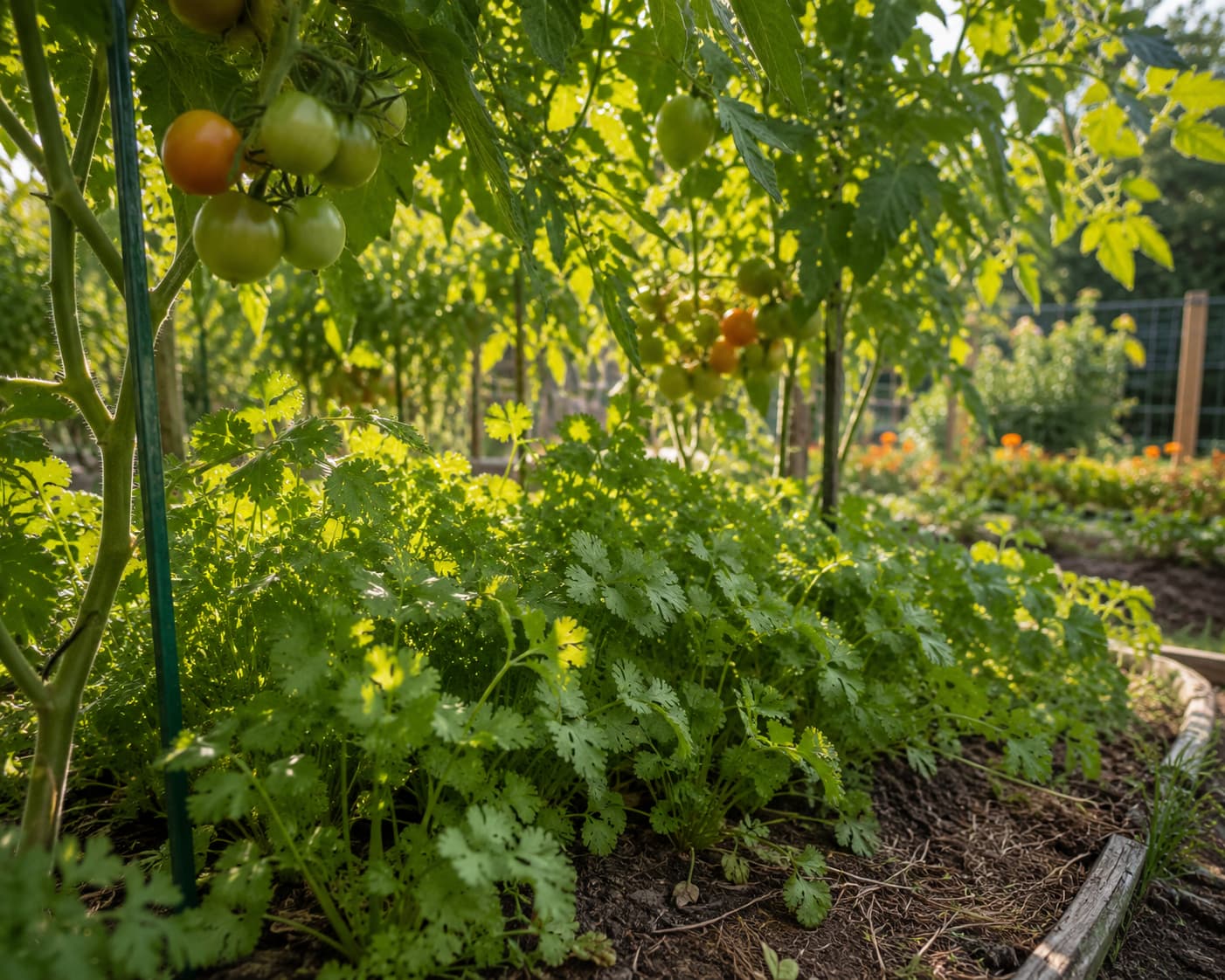
"Give cilantro afternoon shade" is standard advice. But there's a big difference between "a little shade" and "enough shade to prevent bolting." The goal isn't just to reduce light—it's to lower the temperature at the soil surface by 10–15°F, because soil temperature drives root activity, and cool roots delay bolting more than anything else.
3 Shade Methods Ranked by Effectiveness
| Method | How Much It Cools | Cost | Effort | My Verdict |
|---|---|---|---|---|
| Companion planting under tall crops | 5–10°F at soil level | Free (you're already growing tomatoes) | Plan at planting time | Best overall—permanent, free, natural |
| 30–40% shade cloth on hoops | 10–15°F at soil level | $12–18 for 6×20 ft roll + wire hoops | 30 min setup; remove when heatwave passes | Most effective for dedicated beds |
| Strategic container placement | 5–8°F | Free | Move pots daily | Works but tedious; best for small setups |
Drag the bar below or swipe horizontally to view the remaining columns.
Companion Planting: The "Living Shade" Setup
Plant cilantro at the base of determinate tomatoes, peppers, or okra. The tall crop provides afternoon shade while morning sun still reaches the cilantro. In my 2025 garden, I planted cilantro between 'Roma' tomatoes on a south-facing bed. The tomato canopy reduced soil temperature by 8°F compared to the uncovered section (measured with a soil thermometer at 2 PM on a 92°F day). The shaded cilantro lasted 5 weeks longer before bolting than the control row 3 feet away in full sun.
Best companion combinations:
- Determinate tomatoes (compact, bushy canopy) + cilantro at the north side of the row
- Okra (tall, narrow) + cilantro on the east side (morning sun, afternoon shade)
- Sweet corn (very tall) + cilantro between rows in the "shadow zone"
- Sunflowers + cilantro at the base—beautiful and functional, but harvest the sunflower heads before they drop seed or you'll have volunteers everywhere next year
Shade Cloth: When and How to Deploy
Use 30–40% shade cloth (not 50%+—cilantro still needs 4–6 hours of direct sun). Install on wire hoops or a simple PVC frame over your cilantro bed. Key rules:
- Put it up when forecasts show 5+ days above 85°F
- Remove it when temperatures drop back below 80°F—prolonged shading makes cilantro leggy and less flavorful
- Suspend it 12–18 inches above the plants for airflow; don't drape it directly on the foliage
I use a 4×8 ft piece of 30% shade cloth from Agfabric ($14 on Amazon) on wire hoops. It takes about 10 minutes to set up and 2 minutes to take down. It's the single most effective tool I've found for extending cilantro season.
Technique 2: Keep the Roots Cool and Moist
greenmuse-illustration-mulched-cilantro-cool-moist-soil.jpg
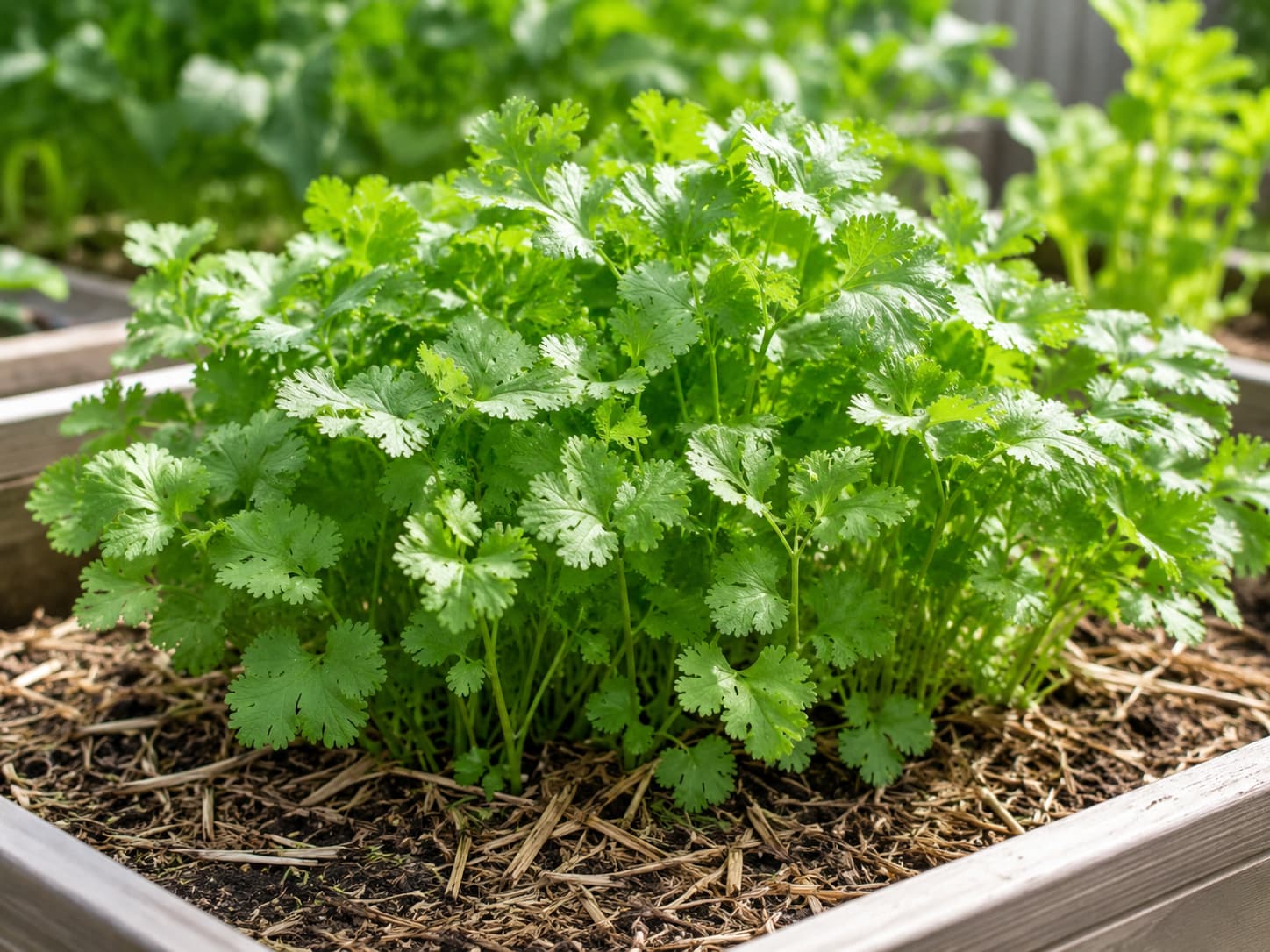
If shade addresses the air temperature trigger, soil management addresses the moisture and soil temperature triggers simultaneously. Cool, consistently moist soil is the #1 reason cilantro survives summer.
Mulch: Your First Line of Defense
A 2-inch layer of organic mulch (straw, shredded leaves, or grass clippings) reduces soil temperature by 5–10°F and cuts evaporation by up to 70%. This matters more than you think: bare soil at 2 PM on a July day can reach 110°F at the surface. Two inches of straw drops that to 85–90°F.
| Mulch Material | Cooling Effect | Moisture Retention | Watch Out For |
|---|---|---|---|
| Straw (not hay) | Excellent | Excellent | Can harbor slugs; may contain seed heads—use weed-free straw |
| Shredded leaves | Good | Good | Free; mat down when wet, reducing airflow. Fluff occasionally. |
| Grass clippings | Good | Good | Free; apply in thin layers (1″) or they mat and rot. Don't use clippings from lawns treated with herbicide. |
| Compost | Moderate | Moderate | Doubles as a light fertilizer; best as a base layer under straw |
Drag the bar below or swipe horizontally to view the remaining columns.
Watering: The "Never Dry" Rule
Cilantro's shallow root system (most roots in the top 6 inches of soil) dries out faster than deeper-rooted herbs like rosemary. When the top inch of soil dries, the plant starts stress-signaling toward bolting.
The rule: keep the top 2 inches of soil consistently moist, not soggy. This usually means:
- In-ground beds: Water deeply 2–3 times per week (1 inch total per week), adjusting for rainfall
- Containers: Check daily with the finger test; water when the top inch feels dry. In 90°F+ weather, containers may need water every day.
- Always water at the base, not overhead. Wet foliage + hot weather = fungal disease. Drip irrigation or a watering can with a narrow spout is ideal.
The Olla Method: Ancient Technology for Modern Gardens
An olla (OH-yah) is an unglazed terracotta pot you bury in the soil and fill with water. Moisture seeps through the porous clay walls directly into the root zone, providing slow, consistent hydration without surface evaporation. The soil stays evenly moist—never dry, never waterlogged.
University of Arizona trials found that ollas reduced water use by 50–70% compared to surface irrigation while maintaining more consistent soil moisture. For cilantro in raised beds, a 1-quart olla per 2 square feet of bed space is sufficient.
Buy them from Dripping Springs Ollas ($18–28 for a 1.5-liter size) or make your own: plug the drainage hole of an unglazed terracotta pot with silicone, bury it up to the rim, and fill with water every 2–3 days. I tested this in 2025 with a DIY version made from a $4 terracotta pot from Home Depot—my cilantro's soil stayed consistently moist even during a 5-day heatwave when I was out of town.
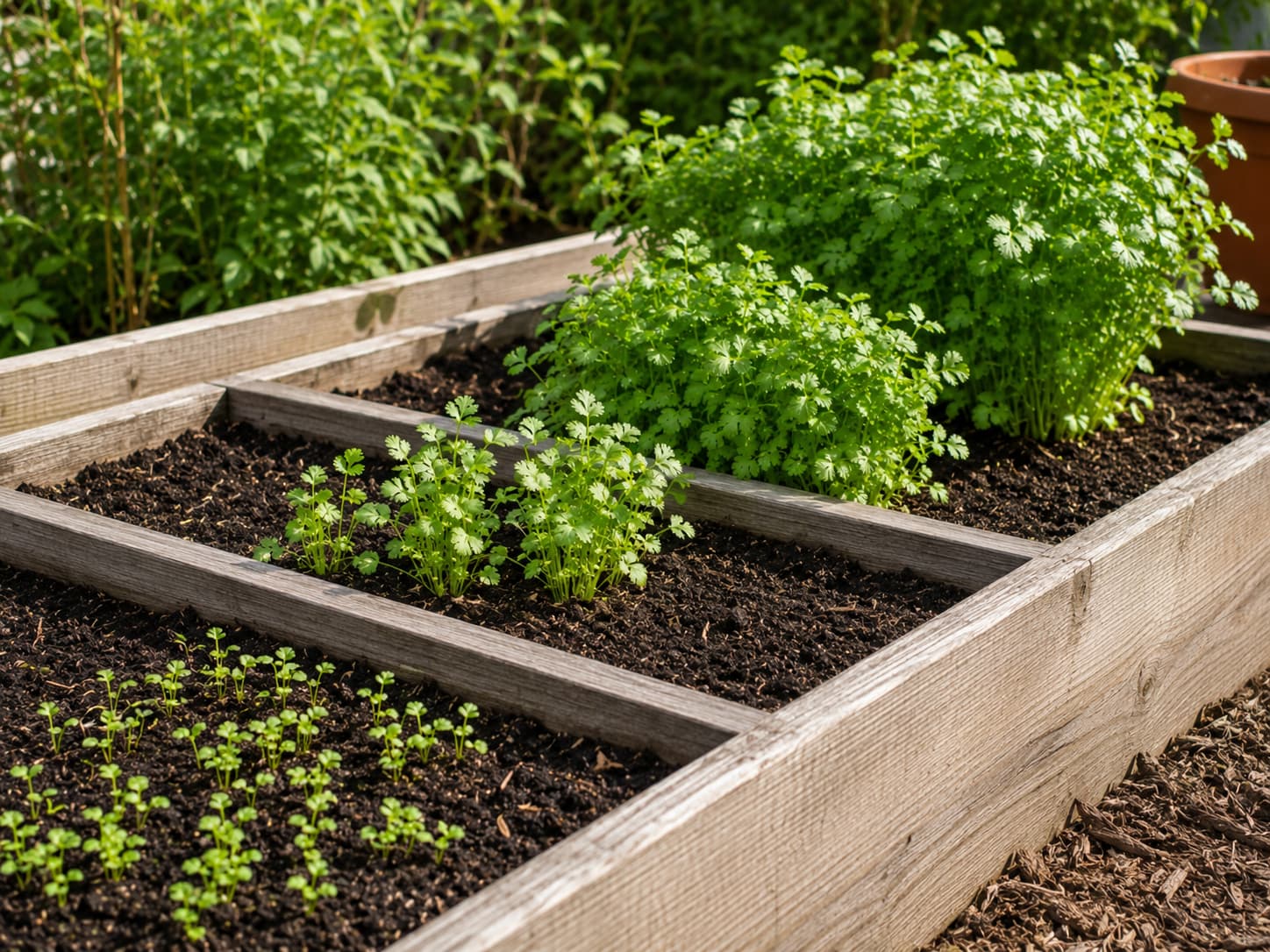
Technique 3: Succession Planting on a 3-Week Rotation
greenmuse-illustration-cilantro-succession-sowing-stages.jpg
No matter how carefully you manage shade and water, cilantro will eventually bolt. The solution: always have a new crop coming up behind the current one.
The Staggered Sowing Calendar
| Sowing Date | First Harvest | Bolt Date (estimated) | Notes |
|---|---|---|---|
| Early April (indoor start) | Mid-May | Late Jun | Transplant after last frost; earliest harvest |
| Late April (direct sow) | Early Jun | Early Jul | Direct sow is preferred—cilantro resents transplanting |
| Mid-May | Late Jun | Late Jul | With shade cloth, may last into August |
| Early June | Mid-Jul | Mid-Aug | Plant under companion crop canopy |
| Late June | Early Aug | Late Aug–Early Sep | Heat stress highest; shade + mulch critical |
| Mid-July | Late Aug | Late Sep | Days getting shorter = slower bolting; easier grow |
| Early August | Sep | Oct (first frost) | Best late-season sowing; may not bolt at all |
Drag the bar below or swipe horizontally to view the remaining columns.
Container Succession: The "Rotating Pot" Method
If you grow in containers, dedicate 3–4 pots to cilantro in a rotation:
- Pot 1: Currently producing—harvest from this one
- Pot 2: Seedlings growing—2–3 weeks from harvest
- Pot 3: Just sown—germinating
- Pot 4 (optional): Bolted plant—collect coriander seeds, then dump and re-sow
When Pot 1 bolts, shift: Pot 1 becomes the seed-collection pot, Pot 2 becomes your harvester, Pot 3 moves up, and you re-sow Pot 4. This rotation ensures you always have cilantro at peak leaf production.
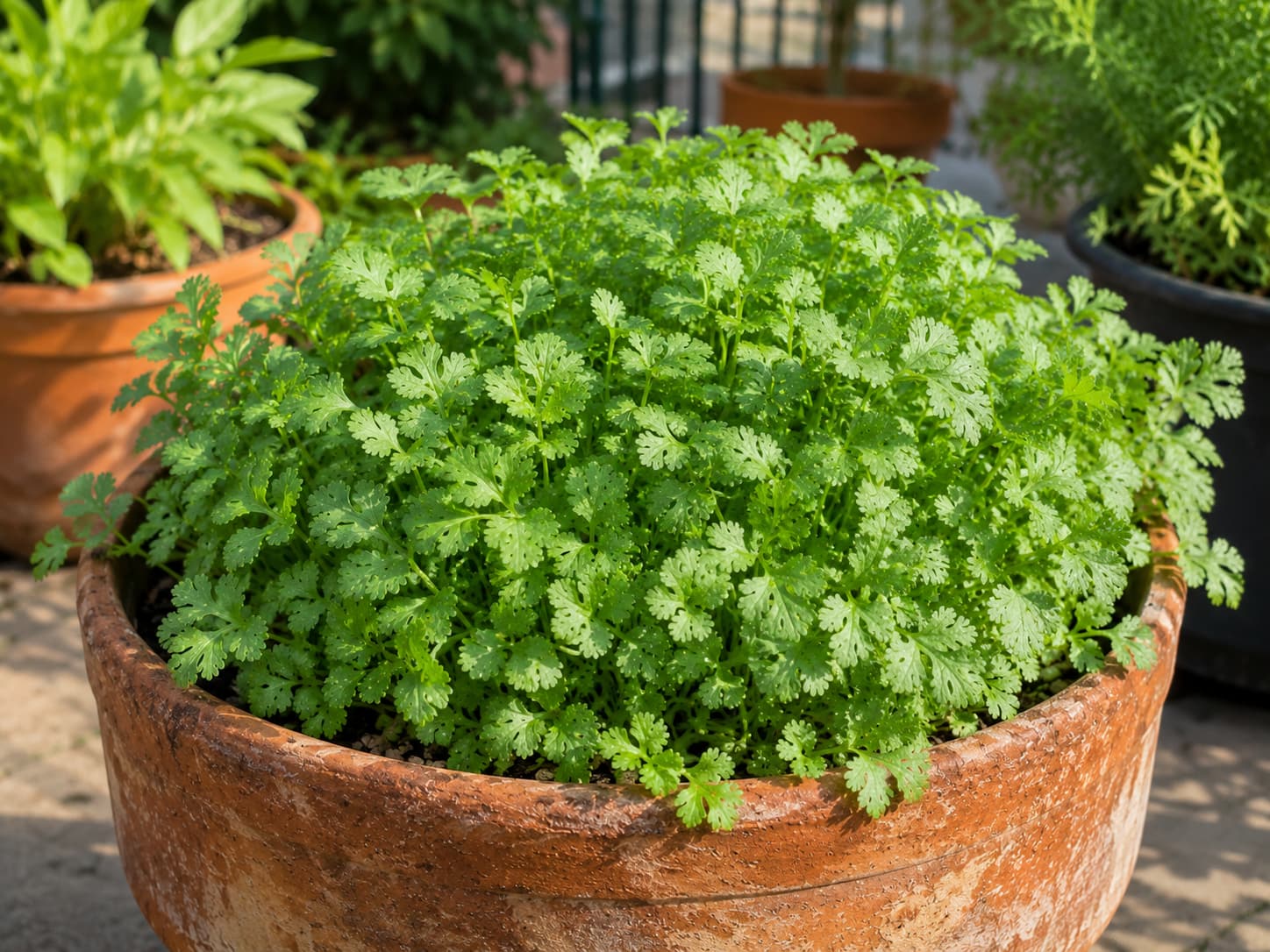
Technique 4: Choose Slow-Bolt Varieties (But Know Their Limits)
greenmuse-illustration-slow-bolt-cilantro-container.jpg
"Slow-bolt" cilantro varieties delay flowering by 2–4 weeks compared to standard types. They don't prevent bolting—they buy you time. Here's how the main varieties compare:
| Variety | Days to Bolt (75°F+ days) | Leaf Flavor | Best Use | Seed Source |
|---|---|---|---|---|
| 'Calypso' | 50–55 days (slowest) | Bold, citrusy | The gold standard for summer; bred for heat delay | Johnny's Selected Seeds ($4.25/pkt) |
| 'Caribe' | 45–50 days | Milder, sweeter | Good for succession; slightly less heat-tolerant than Calypso | Botanical Interests ($3.49/pkt) |
| 'Santo' | 40–45 days | Classic cilantro flavor | Widely available; reliable but not the slowest | Burpee, most garden centers ($3/pkt) |
| 'Leisure' | 35–40 days | Strong, pungent | Fast grower; good for spring and fall, not summer | Most seed racks ($2–3/pkt) |
| 'Delfino' | 42–48 days | Fine, ferny leaves; ornamental | All-America Selections winner; looks great + tastes great | Harris Seeds ($4/pkt) |
Drag the bar below or swipe horizontally to view the remaining columns.
I grow 'Calypso' for my summer crop and 'Leisure' for spring and fall. The difference is real: in my 2025 side-by-side test, 'Calypso' bolted 16 days later than 'Leisure' under identical conditions. That's 16 more days of salsa garnish from the same sowing.
Technique 5: Harvest Methods That Extend Leaf Production
greenmuse-illustration-harvesting-cilantro-outer-stems.jpg
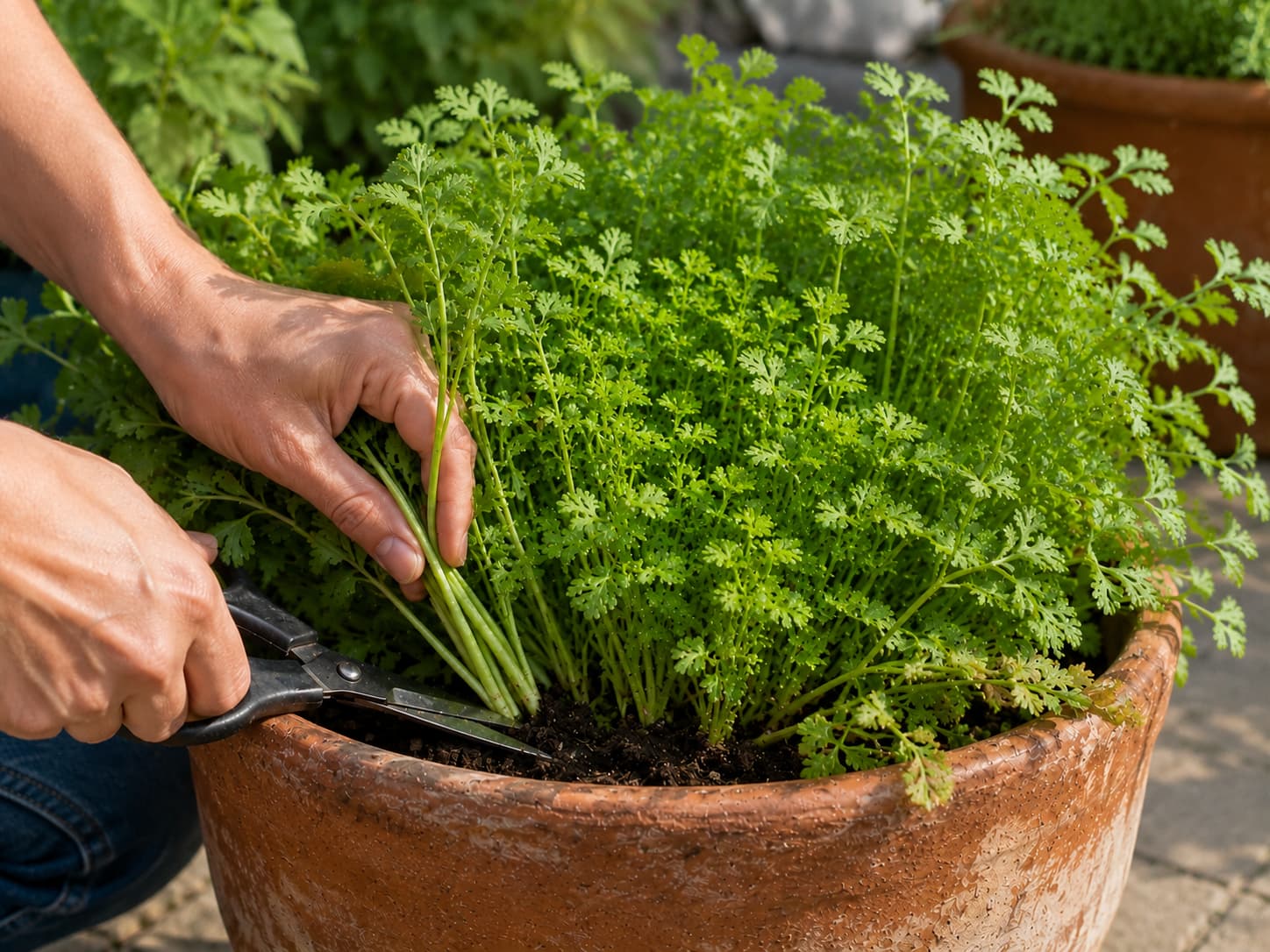
How you harvest affects how long the plant keeps producing. The wrong method accelerates bolting; the right one delays it.
The "Outer Leaves Only" Method
Never cut the entire plant to the ground. Instead:
- Cut outer stems at the base (where they meet the main stem), leaving the center 4–5 leaves intact.
- The center leaves continue photosynthesizing and pushing new growth from the crown.
- Harvest no more than ⅓ of the plant at once. Removing too much foliage shocks the plant into bolting.
- Harvest in the morning when essential oils are most concentrated (flavor peaks before heat stress sets in).
- Use sharp scissors. Tearing or pinching crushes the stem tissue, creating entry points for bacteria.
A single healthy cilantro plant harvested this way can produce 3–4 cuttings over its lifespan. Cut-the-whole-plant gets you one harvest.
Pinching the Center Growth Tip
When the plant is 4–6 inches tall, pinch the top center growing tip. This forces the plant to branch from the lower leaf nodes, producing a wider, bushier plant with more harvestable stems. It also delays bolting slightly because the plant spends energy on branching instead of elongating toward flowering.
I pinch the center of every cilantro seedling once it has 6 true leaves. It takes 2 seconds per plant, and the result is a plant that looks like a small shrub instead of a single spindly stem.
What to Do When Bolting Does Happen
greenmuse-illustration-bolted-cilantro-flowers-coriander-seeds.jpg
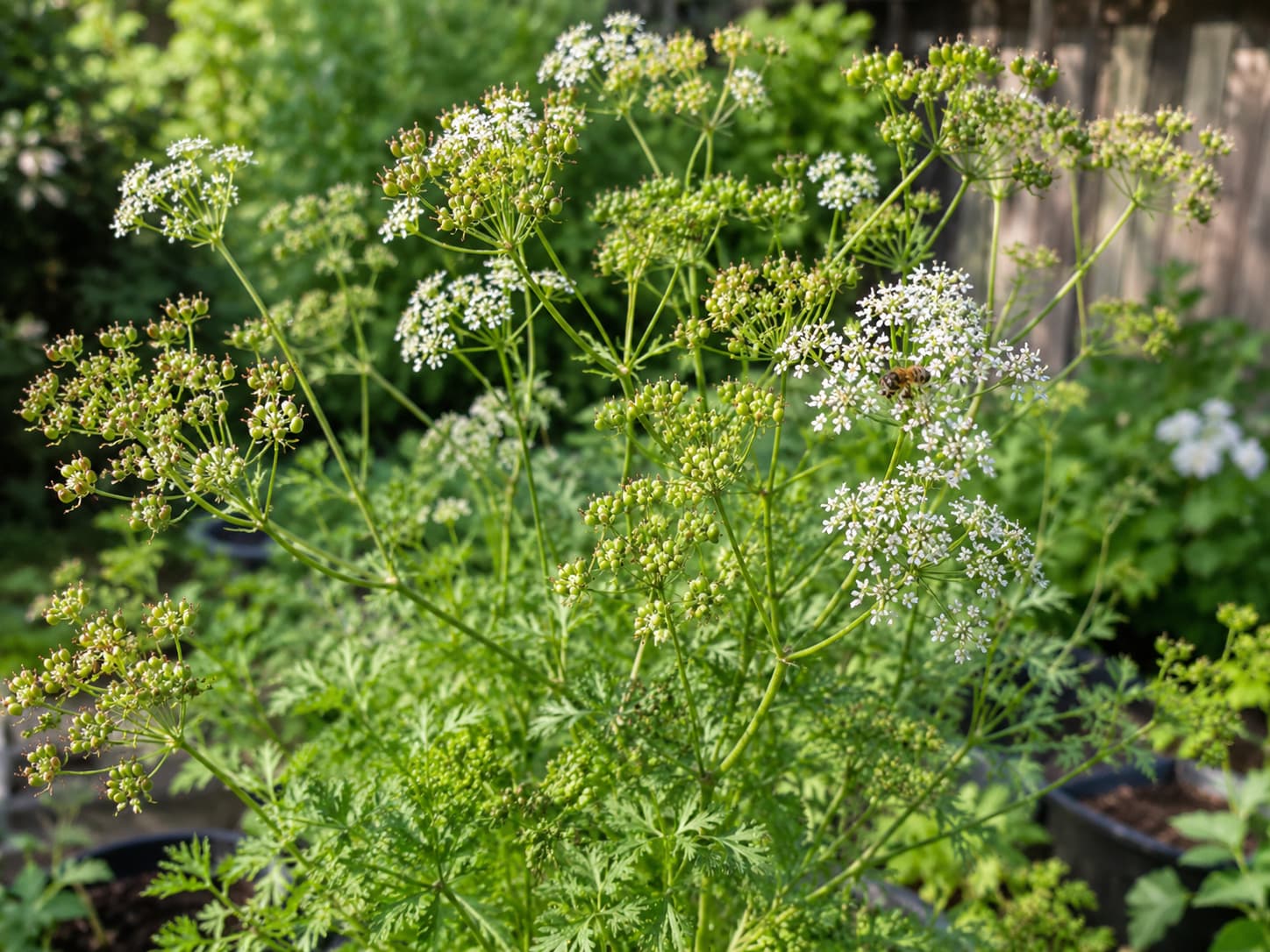
Despite your best efforts, cilantro will eventually bolt. When it does, you have three options—don't just pull the plant:
Option 1: Harvest the Flowers
Cilantro flowers are edible, with a milder version of the leaf flavor. Sprinkle them on salads, tacos, or soups as a garnish. They're also beautiful—delicate white umbels that look like baby's breath. Chefs pay premium prices for flowering cilantro at farmers' markets.
Option 2: Let It Set Seed (Coriander)
The seeds that form after flowering are coriander—a completely different spice. Harvest them when they turn brown and dry on the plant. For seed-saving details applicable to all herbs, see our basil & dill seed saving guide—the drying and storage process is the same for coriander. Fresh coriander seeds have a bright citrus-orange flavor that's far more complex than the store-bought version.
Option 3: Feed the Pollinators
Cilantro flowers are among the best pollinator attractors in the herb garden. University of Connecticut research found that cilantro umbels attracted more beneficial insect species than most common garden flowers—including tiny parasitic wasps that control aphids on nearby vegetables. Let some plants bolt near your tomatoes and peppers as a pest management strategy.
Container vs. In-Ground Cilantro in Summer
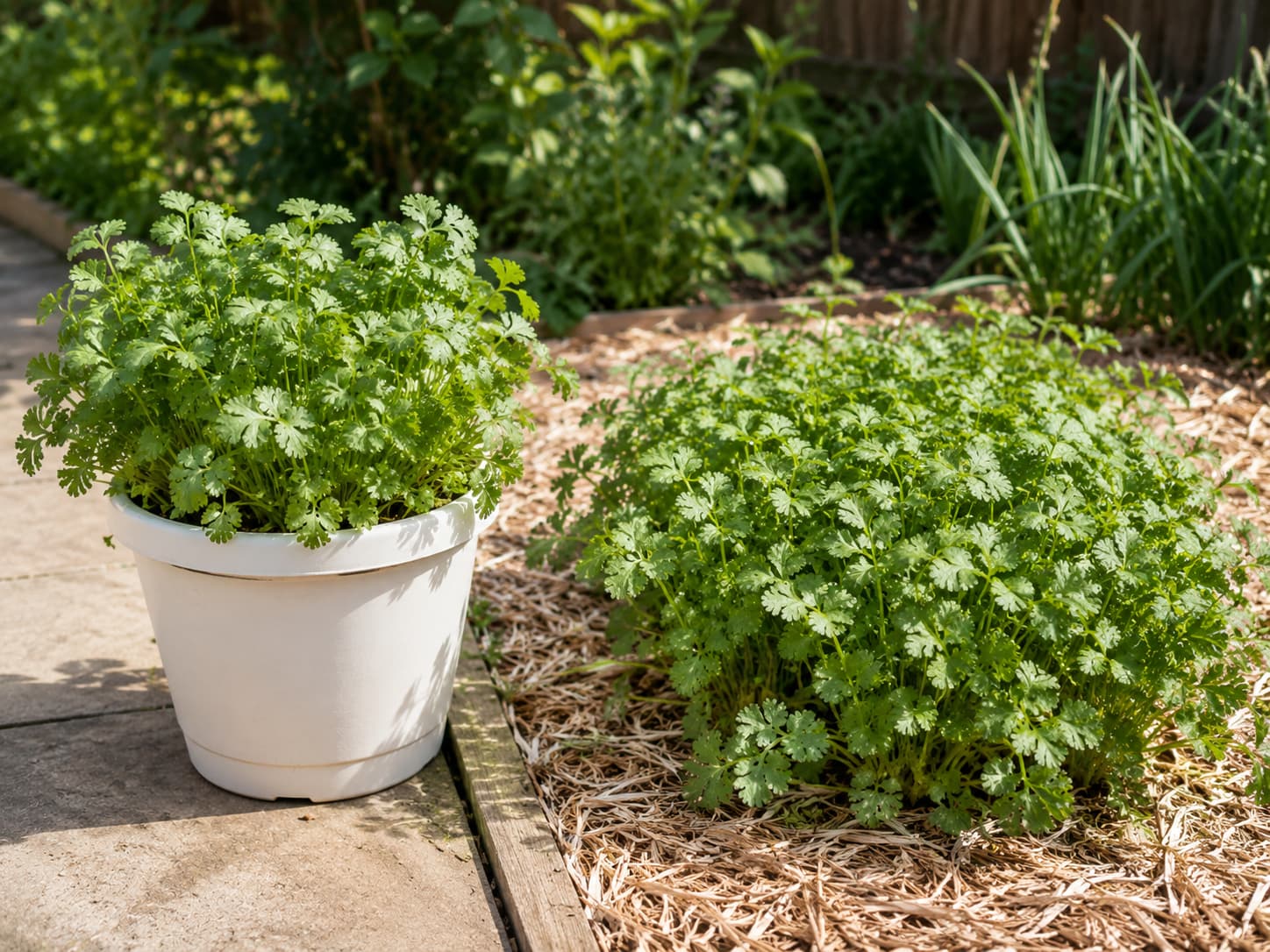
greenmuse-illustration-container-vs-ground-cilantro-summer.jpg
Your growing method changes which techniques matter most:
| Factor | Container | In-Ground |
|---|---|---|
| Soil temperature control | Harder—pots heat up fast. Move to shade, use light-colored pots, mulch heavily. | Easier—ground insulates. Mulch is usually sufficient. |
| Watering consistency | Must check daily; dries out in hours during heatwaves. Consider self-watering pots. | 2–3× per week usually enough; ollas are ideal. |
| Succession planting | Easy—rotate pots. Old bolted pot gets re-sown while new pot matures. | Requires planning—mark sowing dates and leave space for new rows. |
| Shade management | Simple—move the pot. No infrastructure needed. | Requires shade cloth or companion planting. |
| Bolting speed | Faster (roots get hotter in pots than ground soil) | Slower (ground soil stays cooler at depth) |
Drag the bar below or swipe horizontally to view the remaining columns.
For a deeper analysis of how container vs. in-ground conditions affect plant health across all crops, see our Containers vs In-Ground Planting guide.
Cilantro's "Soapy Taste" Gene: A Quick Science Detour
If someone tells you your cilantro tastes like soap, they're not being rude—they're genetically wired to perceive it that way. The OR6A2 olfactory receptor gene detects aldehyde compounds in cilantro the same way it detects aldehydes in soap. About 4–14% of people carry this gene variant, with higher rates in East Asian and Caucasian populations and lower rates in Latin American and South Asian populations (where cilantro has been a staple for centuries).
Why this matters for your garden: if you grow cilantro primarily for a household where someone has the "soap gene," consider growing culantro (Eryngium foetidum) instead. It's a completely different plant with a similar but more concentrated flavor, it thrives in partial shade, and it doesn't bolt in summer heat the way cilantro does. It's a staple in Caribbean and Southeast Asian cooking, often sold as "recao" in Latin grocery stores. Find it at Asian seed suppliers or grow from cuttings from a grocery store bunch.
Frequently Asked Questions
1. Can I grow cilantro indoors in summer to avoid heat?
2. My cilantro bolted in only 3 weeks. What went wrong?
3. Should I cut off the flower stalk to save the plant?
4. Can I grow cilantro in the same pot as other herbs?
5. Is fall cilantro easier than summer cilantro?
The 5-Technique Summer Cilantro System: Quick-Reference Card
| Technique | What You Do | Effort | Impact on Bolting |
|---|---|---|---|
| 1. Shade | Companion plant under tomatoes OR install 30% shade cloth | 30 min setup | Delays bolt 2–4 weeks |
| 2. Cool roots | 2″ mulch + consistent watering + olla (optional) | 5 min/day watering | Delays bolt 1–3 weeks |
| 3. Succession sowing | New row every 3 weeks, Apr–Aug | 5 min/sowing | Eliminates the "gap" problem entirely |
| 4. Slow-bolt varieties | Grow 'Calypso' or 'Caribe' in summer | Same as any variety | Delays bolt 2–3 weeks vs. standard |
| 5. Harvest technique | Outer leaves only; pinch center at 6 leaves | 2 min per harvest | Delays bolt 1 week; doubles harvest count |
Drag the bar below or swipe horizontally to view the remaining columns.
Combined effect: All five techniques together can extend your cilantro harvest from the typical 3–4 weeks to 10–12 weeks. That's the difference between "I give up on cilantro in summer" and "I always have fresh cilantro for dinner."
Sources
- University of Arizona Cooperative Extension. "Ollas: Ancient Technology for Efficient Irrigation." extension.arizona.edu, 2023. extension.arizona.edu
- University of Connecticut Integrated Pest Management. "Beneficial Insects Attracted to Cilantro Flowers." ipm.uconn.edu, 2022. ipm.uconn.edu
- Eriksson, N. et al. "A Genetic Variant Near Olfactory Receptor Genes Influences Cilantro Preference." Flavour, 2012. flavourjournal.biomedcentral.com
- University of Minnesota Extension. "Growing Cilantro." extension.umn.edu, 2024. extension.umn.edu