Tomatoes First, Peppers Second, Basil Last
A beginner-friendly guide to moving warm-season seedlings outdoors without letting cold nights, chilly soil, or spring impatience set them back.
Quick Answer
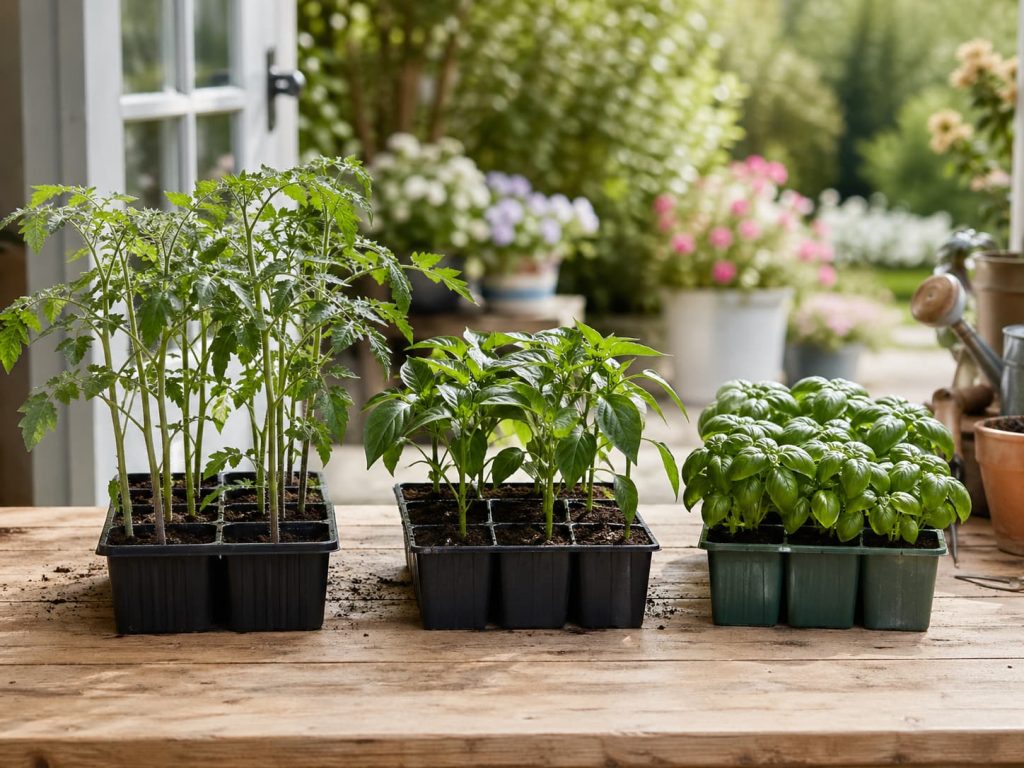
Tomatoes usually handle early spring transitions better than peppers and basil, but none of them should be rushed outdoors before frost danger has passed and the seedlings have been hardened off. Peppers need warmer soil than many beginners expect, and basil should usually wait until nights feel truly mild.
The simple order for beginners
If you want one easy rule to remember, use this order:
First
Tomatoes
Move them out after frost danger has passed, once the soil is warming and the forecast looks stable.
Second
Peppers
Wait for warmer, steadier conditions. Cold soil can make peppers sit still instead of growing.
Last
Basil
Treat basil as the most cold-sensitive of the three. It should wait until spring feels settled.
Greenmuse rule of thumb: do not use one warm afternoon as your signal. Watch the next 7 to 10 nights, check soil warmth, and make sure your seedlings have already adjusted to outdoor light and wind.
Why spring tricks beginners
Spring can be deceptive. A few warm afternoons arrive, seedlings look strong on the windowsill, and suddenly it feels like everything should be outside already.
But warm-season plants do not care how hopeful a sunny Saturday feels. They respond to cold nights, chilly soil, wind exposure, and whether they have been prepared for outdoor conditions.
Daytime warmth is not the whole story. Night temperatures often decide whether seedlings keep growing or stall.
Cold soil slows roots. This matters especially for peppers, basil, and other heat-loving seedlings.
Hardening off matters. Healthy indoor seedlings are not automatically ready for outdoor sun, wind, and temperature swings.
The beginner safety check
Before moving tomatoes, peppers, or basil outdoors, check more than the calendar. Your local last frost date is a useful starting point, but it is not the final answer.
Usually safer to plant if:
- Your local frost risk has passed.
- The next 7 to 10 nights look stable.
- The soil is warming, not cold and wet.
- Your seedlings have been hardened off gradually.
- You have protection ready in case temperatures dip.
Wait longer if:
- You are still checking the forecast nervously every night.
- Morning soil feels cold and damp.
- Cold rain, strong wind, or sudden chilly nights are forecast.
- Basil or peppers still look soft and tender.
- The seedlings have only lived indoors so far.
When tomatoes are ready
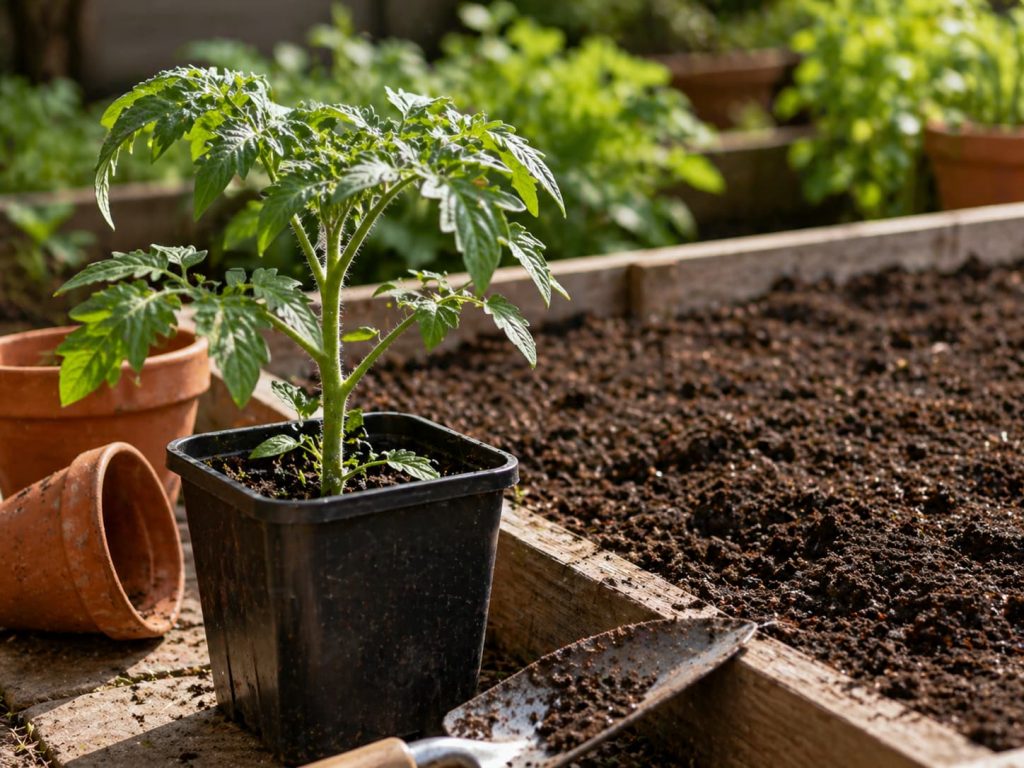
Tomatoes are usually the first warm-season crop beginners want to move outside. That does not mean they enjoy cold conditions. It simply means they often handle the transition better than peppers and basil once frost danger has passed.
Planting tomatoes too early rarely creates a real advantage. A cold-stressed tomato may survive, but it can pause growth and spend time recovering instead of building strong roots and leaves.
Tomatoes are usually ready when:
- Your local frost risk has passed.
- The next week of nights looks stable.
- The soil is warming into a comfortable range for warm-season crops.
- The seedlings are stocky, green, and already hardened off.
Why peppers need more warmth
Peppers need more patience than tomatoes. This is one of the most useful lessons a beginner can learn.
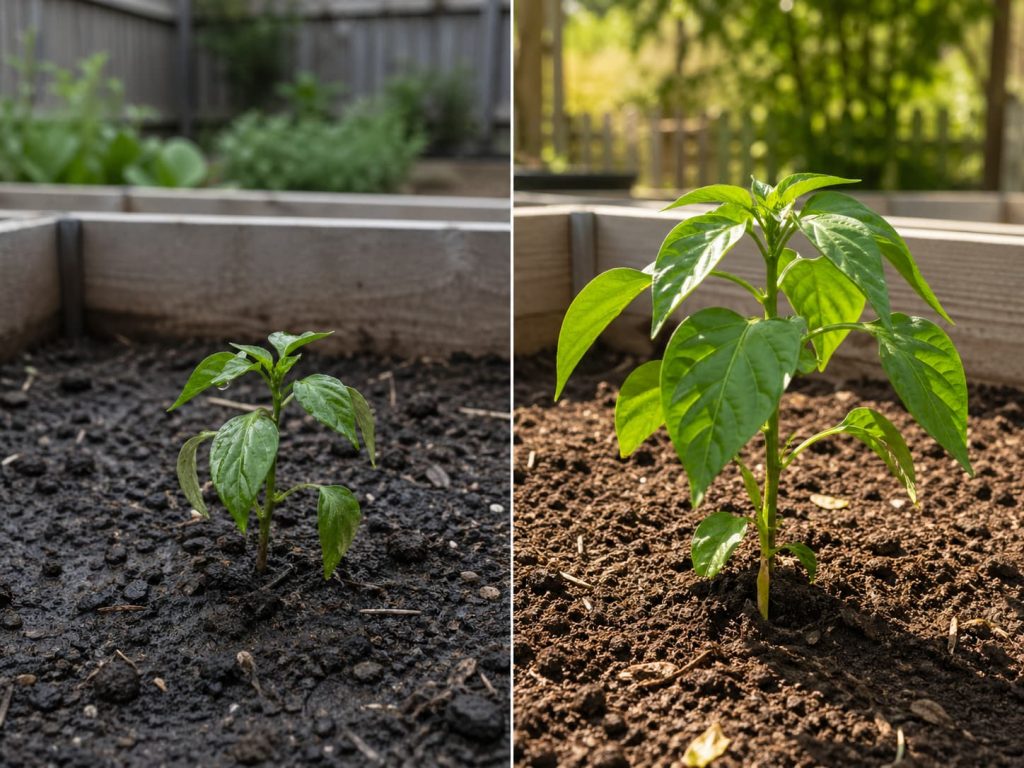
In cool spring soil, pepper plants often remain alive but barely grow. Gardeners describe this as peppers “just sitting there.” The plant is not failing dramatically — it is simply waiting for warmer conditions.
Peppers are usually ready when:
- Frost danger is well behind you.
- The garden feels consistently warm, not borderline.
- The soil is warm enough for active root growth.
- Nights are no longer dipping into a chilly range.
- The seedlings have been hardened off slowly.
Why basil should be last
Basil is often sold as an easy herb, and in summer it usually is. In spring, though, basil is one of the easiest warm-season plants to damage with poor timing.
Basil dislikes cold nights and sudden temperature dips. If spring still feels unsettled, basil should stay protected a little longer than tomatoes and peppers.
Basil is usually ready when:
- All frost risk has passed.
- Nights feel comfortably mild, not just barely acceptable.
- The plant has been hardened off gradually.
- The forecast looks calm for the next several days.
How to harden off seedlings
Hardening off is the gradual process of helping indoor-grown seedlings adjust to outdoor light, wind, temperature changes, and lower humidity. The goal is not to shock plants with cold. The goal is to build tolerance slowly.
Move slower when weather is windy, cold, wet, or unstable.
Days 1–3
Start in bright shade
- Choose a sheltered spot out of strong wind.
- Keep the first sessions short.
- Bring seedlings back inside afterward.
Days 4–7
Increase time outdoors
- Let seedlings experience more fresh air.
- Introduce brighter conditions slowly.
- Avoid harsh afternoon sun at first.
Days 8–10
Add gentle morning sun
- Use calm mornings for direct sun exposure.
- Watch for wilting, pale patches, or leaf scorch.
- Pause the schedule if plants look stressed.
Final step
Only test nights when mild
- Do not leave seedlings out overnight during cold dips.
- Keep basil and peppers protected longer if nights are uncertain.
- Plant out when the weather pattern is stable, not just sunny.
Quick comparison table
These are practical beginner guidelines. Your exact timing depends on your local climate, microclimate, variety, soil warmth, and forecast.
| Plant | Outdoor timing | Main risk | Beginner note |
|---|---|---|---|
| Tomato | First, after frost danger passes and soil is warming. | Cold nights can stall growth and stress the plant. | Early planting is not useful if the plant spends days recovering. |
| Pepper | Second, once warmth is steadier and soil is warmer. | Cold soil can stop active growth. | If tomatoes feel barely ready, peppers usually need more patience. |
| Basil | Last, after nights feel comfortably mild. | Cold-sensitive leaves and soft stems can be damaged quickly. | If you are unsure, keep basil protected a little longer. |
What to do if a cold snap is coming
A late cold snap does not mean your garden is ruined. It means you need a calm backup plan.
- Bring containers back under cover when possible.
- Cover in-ground plants overnight with frost cloth or other breathable protection.
- Remove covers during the day so plants do not overheat.
- Delay planting the next batch if the forecast still looks unstable.
- Keep basil protected first; it is usually the least forgiving.
Common beginner mistakes
Moving everything outside on the same day. Tomatoes, peppers, and basil do not all want the same spring timing.
Trusting daytime warmth too much. Warm afternoons feel convincing, but night temperatures often cause the stress.
Skipping hardening off. A seedling that looks healthy indoors still needs time to adjust outdoors.
Planting peppers into cold soil. This is one of the most common reasons peppers stop growing after transplanting.
Rushing basil outdoors. Basil is easy in settled summer weather, not in uncertain spring weather.
FAQ
Can I move tomatoes outdoors before my last frost date?
It is risky. Tomatoes are much safer after your local frost risk has passed, once the soil is warming and the forecast looks stable.
How warm should it be before moving peppers outdoors?
Peppers need more warmth than tomatoes. Wait until the weather feels consistently warm and the soil no longer feels cold and wet.
Is basil more sensitive to cold than tomatoes?
Yes. Basil is one of the most cold-sensitive warm-season plants commonly grown by beginners, which is why it should usually go out last.
How long should I harden off seedlings?
A gradual process of about 7 to 14 days works well for many home gardeners. Move slower if weather is cold, windy, wet, or unstable.
If my pepper plants are alive, does that mean they are happy?
Not always. Peppers can stay alive in cool conditions while barely growing. Survival and active growth are not the same thing.
Final thoughts
You do not lose warm-season seedlings because you are a bad gardener. You lose them because spring sends mixed signals.
Remember the simple order: tomatoes first, peppers second, basil last. Then let the weather make the final call.
Wait a little longer than your impatience suggests. Harden plants off slowly. Watch the nights, not just the afternoons. And when in doubt, keep basil protected one more week.
Save this rule for later
Tomatoes first. Peppers second. Basil last. Then check the forecast, the soil, and the plant itself before moving anything outdoors.