Why Your Houseplants Drop Leaves in Winter (And How to Stop It)
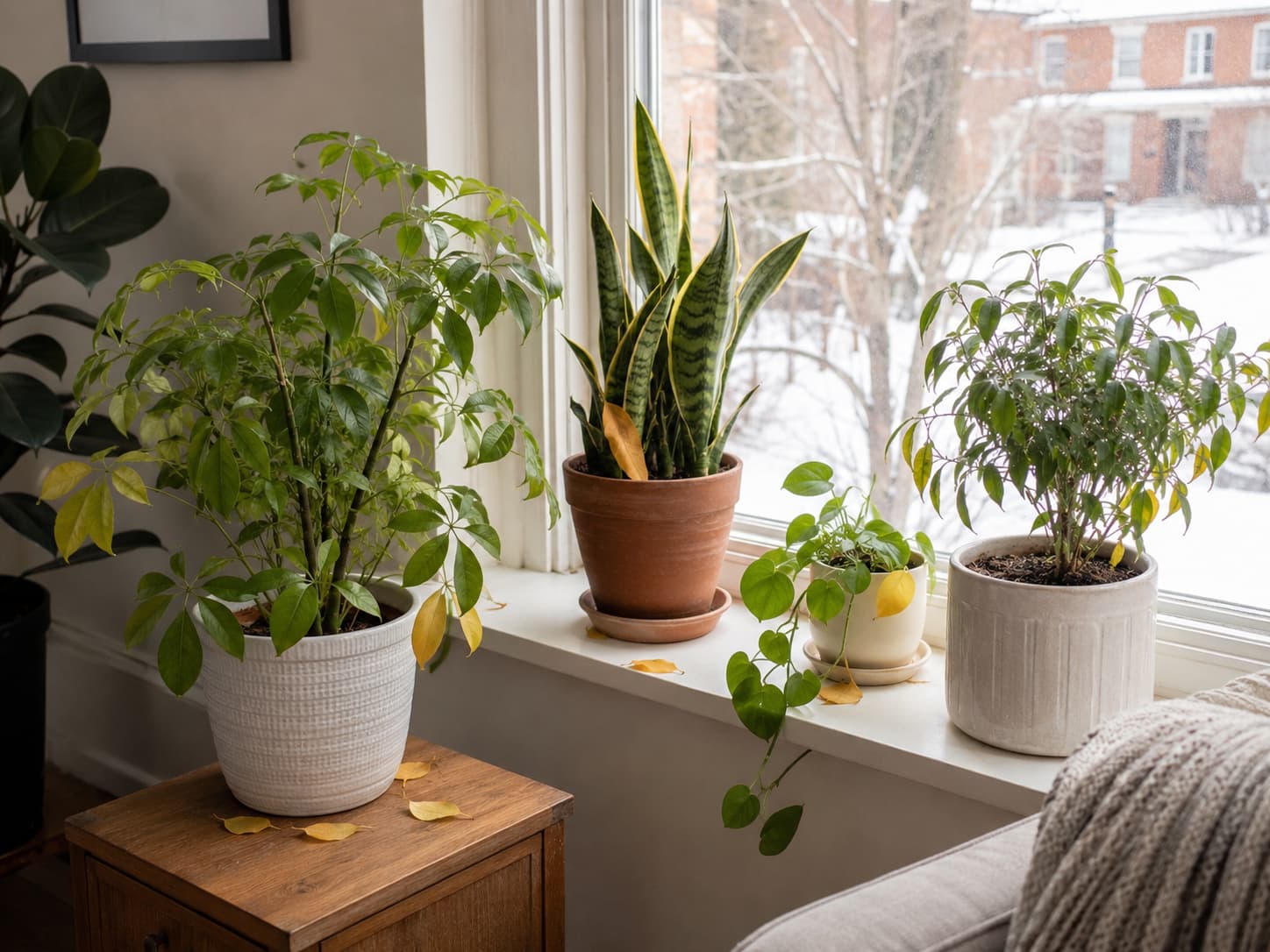
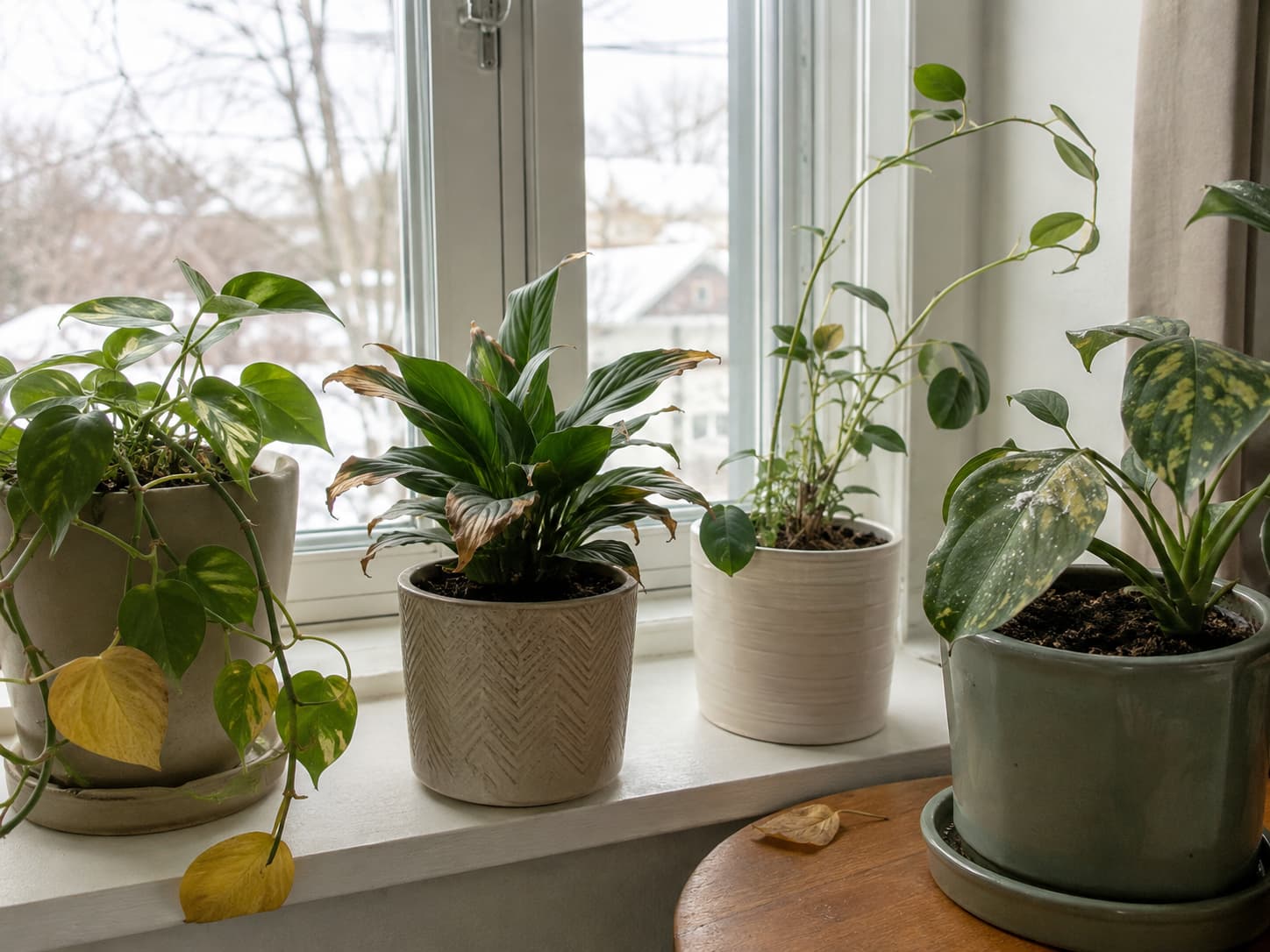
At first, you may notice only a few leaves on the floor beneath a ficus or another houseplant. Then, the drop may continue as winter conditions change indoors. By February, the plant is half bare and you're wondering if it's dying. Here's the reassuring truth: winter leaf drop is often manageable, and in many cases the plant is responding to environmental stress rather than irreversible damage—it's reacting to environmental stress that you can correct.
I lost a weeping fig to winter leaf drop in 2023 because I didn't understand what was happening. By the time I figured it out, the plant had lost 80% of its leaves and couldn't recover. Since then, I've developed a diagnostic system that helps narrow down the most likely cause quickly—because the six causes of winter leaf drop each have distinct symptoms, and each requires a different fix. Using the wrong fix (like watering more when the real problem is low light) makes things worse.
So, this guide walks you through that diagnostic system and then gives you the specific fix for each cause.
Quick Diagnostic: Which of the 6 Causes Is Your Problem?
First, look at your plant and match the symptoms to this table:
| What You See | Most Likely Cause | Jump To |
|---|---|---|
| Leaves turn yellow first, then drop; soil feels wet | Overwatering | Cause #1 |
| Leaves drop but stay green; plant looks thin and stretched | Low light | Cause #2 |
| Leaf tips turn brown and crispy; edges curl inward | Dry indoor air | Cause #3 |
| Leaves drop suddenly after being near a window, door, or vent | Cold drafts or heat vents | Cause #4 |
| Lower leaves yellow and drop slowly; no other symptoms | Natural dormancy (normal!) | Cause #5 |
| Sticky residue on leaves; tiny dots or webbing on undersides | Pests | Cause #6 |
Drag the bar below or swipe horizontally to view the remaining columns.
Cause #1: Overwatering — The #1 Winter Plant Killer
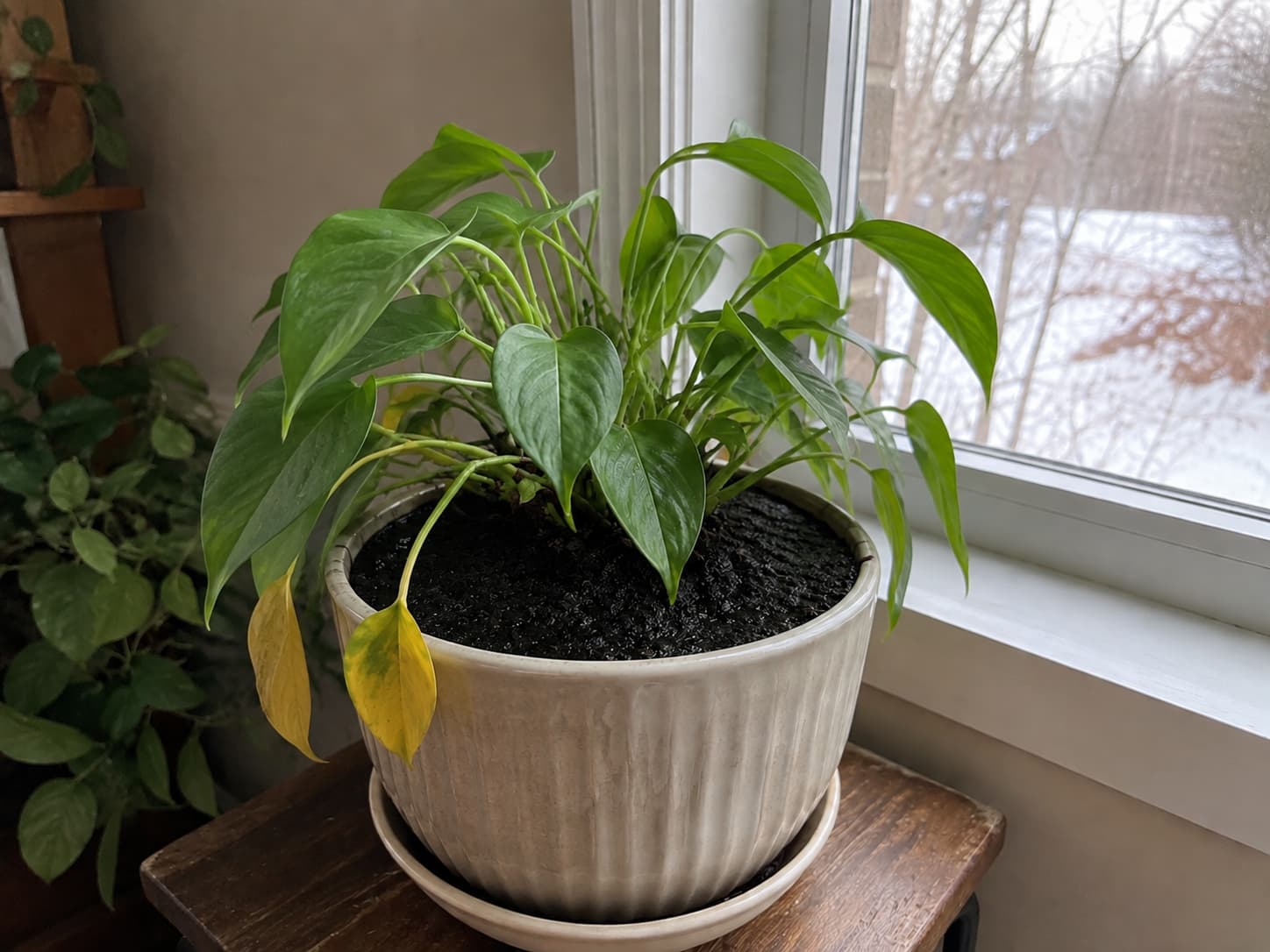
For many indoor plants, overwatering becomes more likely in winter because reduced light slows water use. In other words, slower winter growth often means slower moisture use. However, a summer watering routine can leave the potting mix wet for too long in winter. Roots suffocate, rot, and the plant drops leaves because it can't take up water through damaged roots—even though the soil is wet.
Signs of Overwatering
- Leaves turn pale yellow before dropping (not brown and crispy)
- Soil is wet or muddy 3+ days after watering
- Stems feel soft at the base
- Fungus gnats hover around the soil
- The pot feels unexpectedly heavy
The Fix
- Stop watering immediately. Let the soil dry out to 2 inches deep before watering again.
- Check drainage. Are the holes blocked? Is the saucer full? Fix both.
- Remove rotted roots if you suspect root rot (mushy, brown, or black roots). Slide the plant out, cut away damaged roots with clean scissors, and repot in fresh dry soil.
- Switch to the finger test permanently. Instead, don't water on a fixed calendar. Then, water when the root zone has dried to the level appropriate for that species and potting mix. For most houseplants in winter, this means less often than in summer, depending on the plant, pot size, soil mix, and indoor conditions.
In November 2024, I was watering my pothos every Sunday because "that's what I do in summer." By December, it had dropped 8 leaves and the soil was still wet from the previous week. I switched to the finger test—checking before every watering—and the plant stopped dropping leaves within 2 weeks. It went from watering every 7 days to every 12 days. Same plant, same window, different approach. See our pothos yellow leaves guide for more on this specific plant.
Cause #2: Low Light — The Silent Stressor
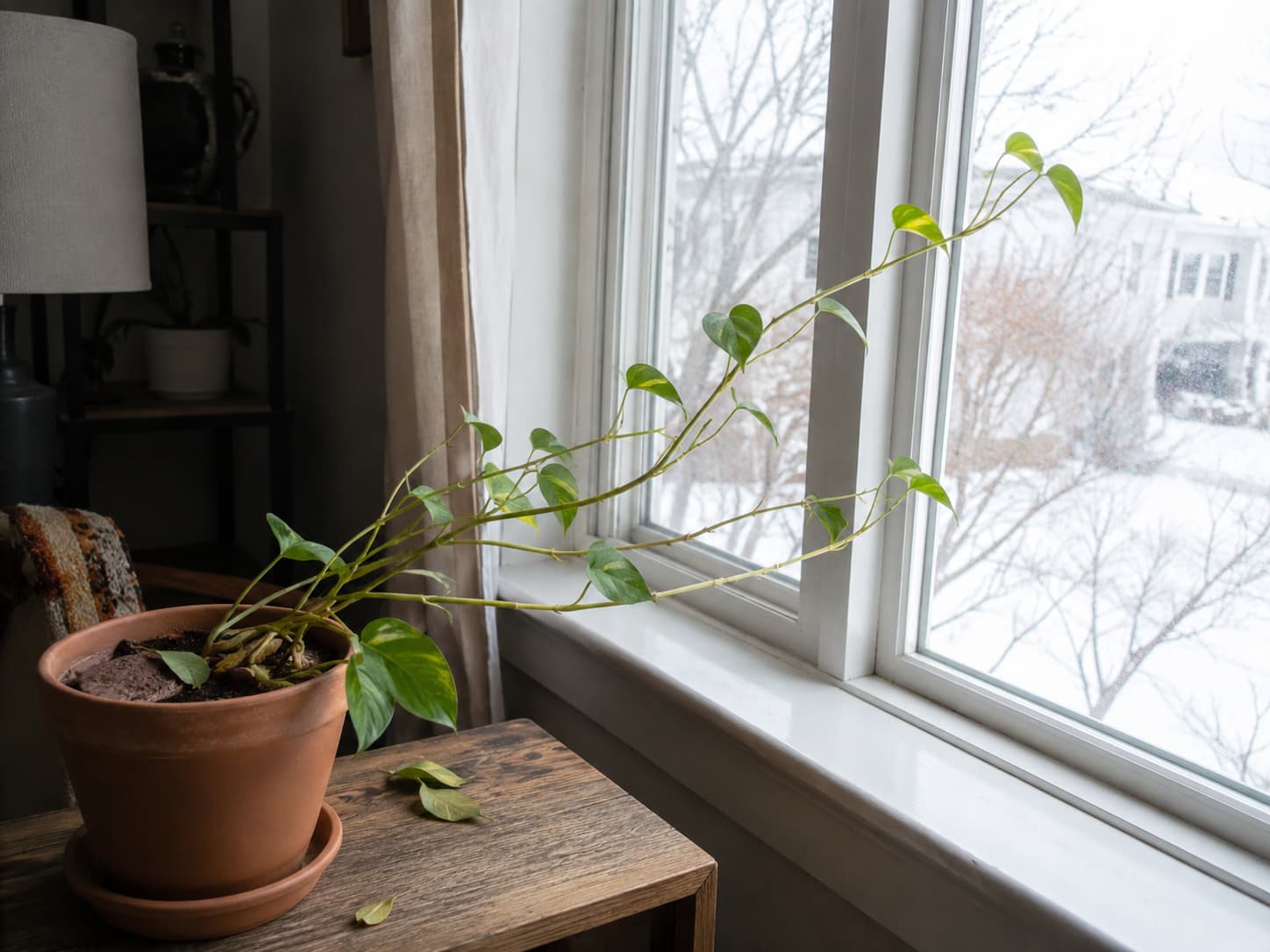
Meanwhile, winter days are shorter, the sun is lower in the sky, and many windows receive less useful light than in summer. A south window that provides 8 hours of direct sun in June may provide only 3–4 hours in December. As a result, a plant that was comfortable in autumn may shed foliage after weeks of lower light.
Signs of Low Light Stress
- Leaves drop from the bottom up (the plant is sacrificing older, less productive leaves)
- Remaining leaves are smaller than they were in summer
- Stems stretch toward the window (etiolation)
- New growth is pale green instead of rich, dark green
The Fix
| Solution | Effort | Cost | Effectiveness |
|---|---|---|---|
| Move plant to the brightest available window (south-facing, unobstructed) | 5 minutes | Free | High |
| Clean the window (dusty glass can reduce the light reaching leaves) | 10 minutes | Free | Moderate |
| Remove sheer curtains for winter | 5 minutes | Free | Moderate |
| Add a grow light (full-spectrum LED, 12–14 hrs/day) | 30 min setup | $15–25 | Very high |
| Accept the leaf drop and wait for spring | None | Free | Plant survives but looks sparse until March |
Drag the bar below or swipe horizontally to view the remaining columns.
If natural light is still inadequate, see our tested picks for herbs and succulents—the same lights work for all houseplants.
Cause #3: Dry Indoor Air — The Invisible Problem
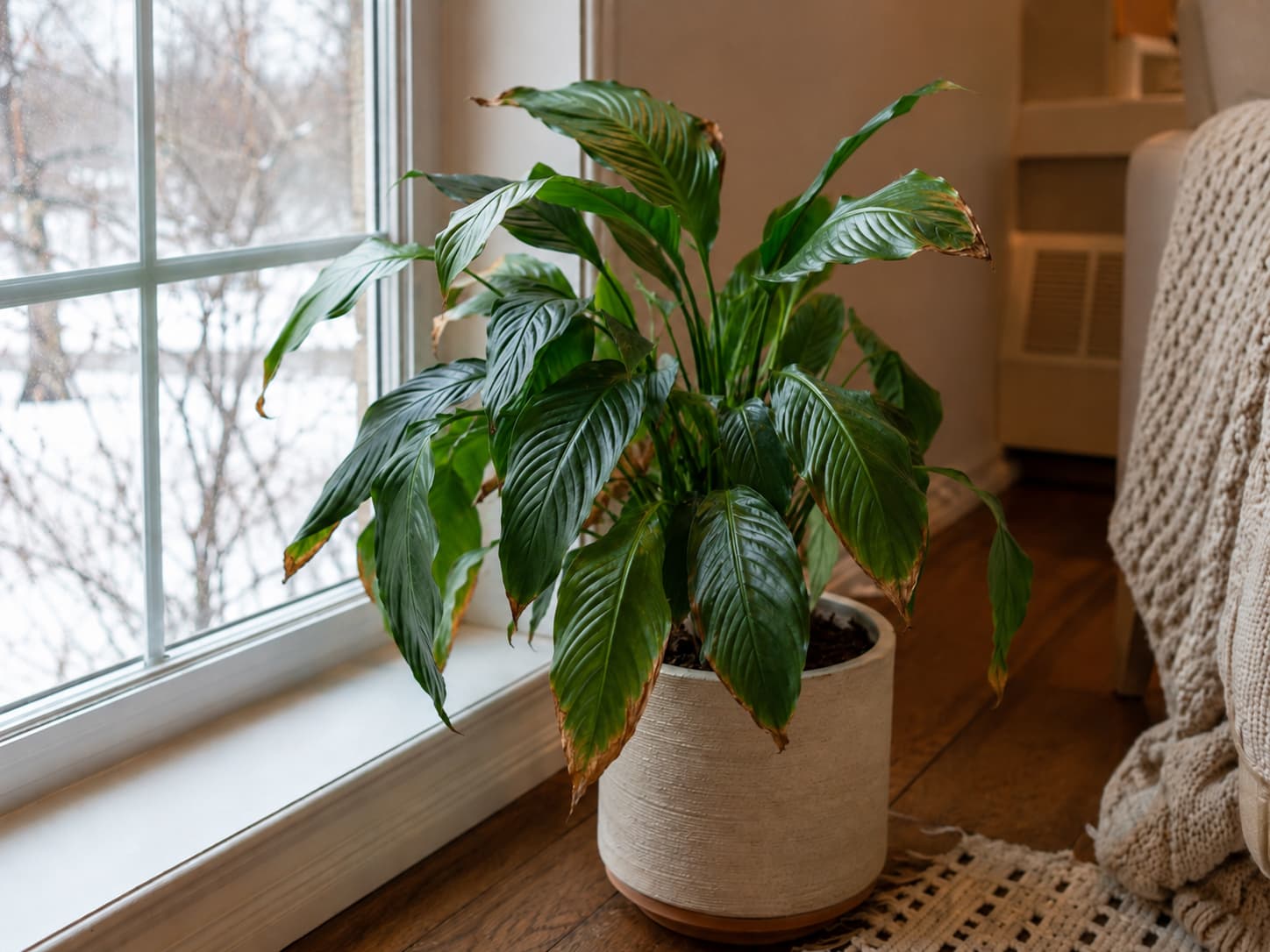
In addition, indoor humidity can drop substantially when heating systems run. For humidity-sensitive tropical plants, that change can increase water loss from foliage. Consequently, dry leaf tips, curled edges, and eventual leaf loss may appear when water loss outpaces replacement.
Signs of Low Humidity Stress
- Brown, crispy leaf tips and edges (even when soil is moist)
- Leaves curl inward at the edges
- Flower buds form but dry up and fall off before opening
- The problem is worst on plants near heating vents or radiators
4 Ways to Increase Humidity (Ranked)
| Method | Effectiveness | Cost | Effort |
|---|---|---|---|
| Room humidifier | Best — can raise whole-room humidity meaningfully | $30–50 | Refill daily; clean weekly |
| Pebble tray under the pot | Good — may create only a small local humidity effect | $3–5 | Refill water every 2–3 days |
| Group plants together | Moderate — each plant's transpiration helps neighbors | Free | Arrange once |
| Misting | Poor — usually changes humidity only briefly | Free | Daily; can promote fungal disease |
Drag the bar below or swipe horizontally to view the remaining columns.
Cause #4: Cold Drafts and Hot Vents — Temperature Shock
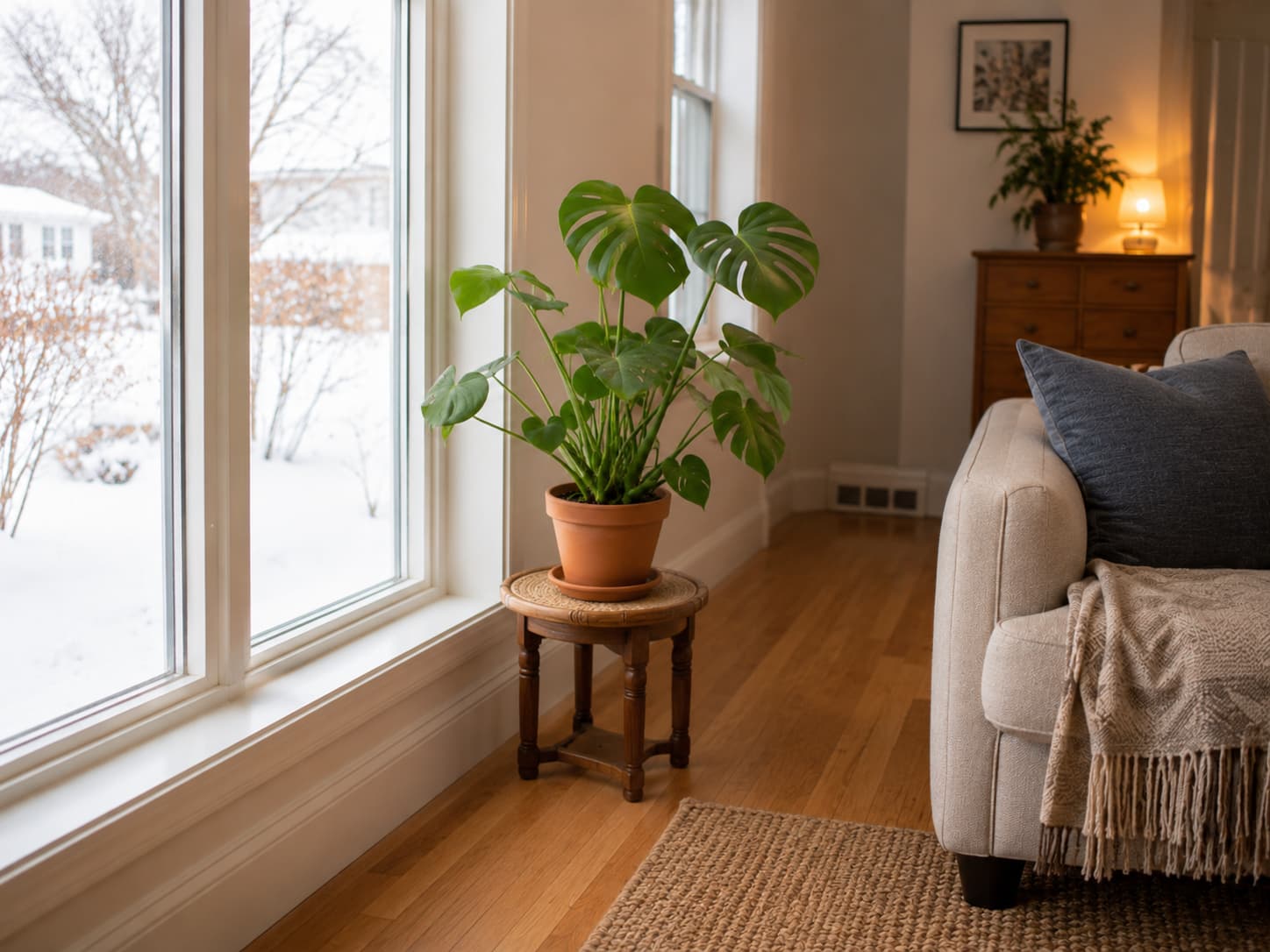
Temperature matters too. Many common tropical houseplants prefer relatively stable indoor conditions rather than abrupt hot-cold swings. For example, two common winter hazards are cold drafts and direct heating airflow:
- Cold drafts: When outdoor temps are 20°F, the air near a window can be 45–50°F even in a heated room. A plant touching the glass gets a constant cold blast that kills leaf tissue. Leaves turn dark or translucent, then drop.
- Hot air vents: Forced-air heating directed at a plant is like pointing a hair dryer at it. Direct hot, dry airflow can dehydrate foliage quickly and causes sudden, dramatic leaf drop.
The Fix
- Pull plants 6–12 inches away from window glass. If the leaf touches the glass, it's too close.
- Close air vents in the room where your plants live, or use a vent deflector ($5 at hardware stores) to redirect air away from plants.
- Don't place plants between a window and an interior door—the gap creates a wind tunnel when the door opens.
- If you bring outdoor plants inside for winter, see our complete indoor transition guide for the acclimation protocol.
Cause #5: Natural Dormancy — Not a Problem at All
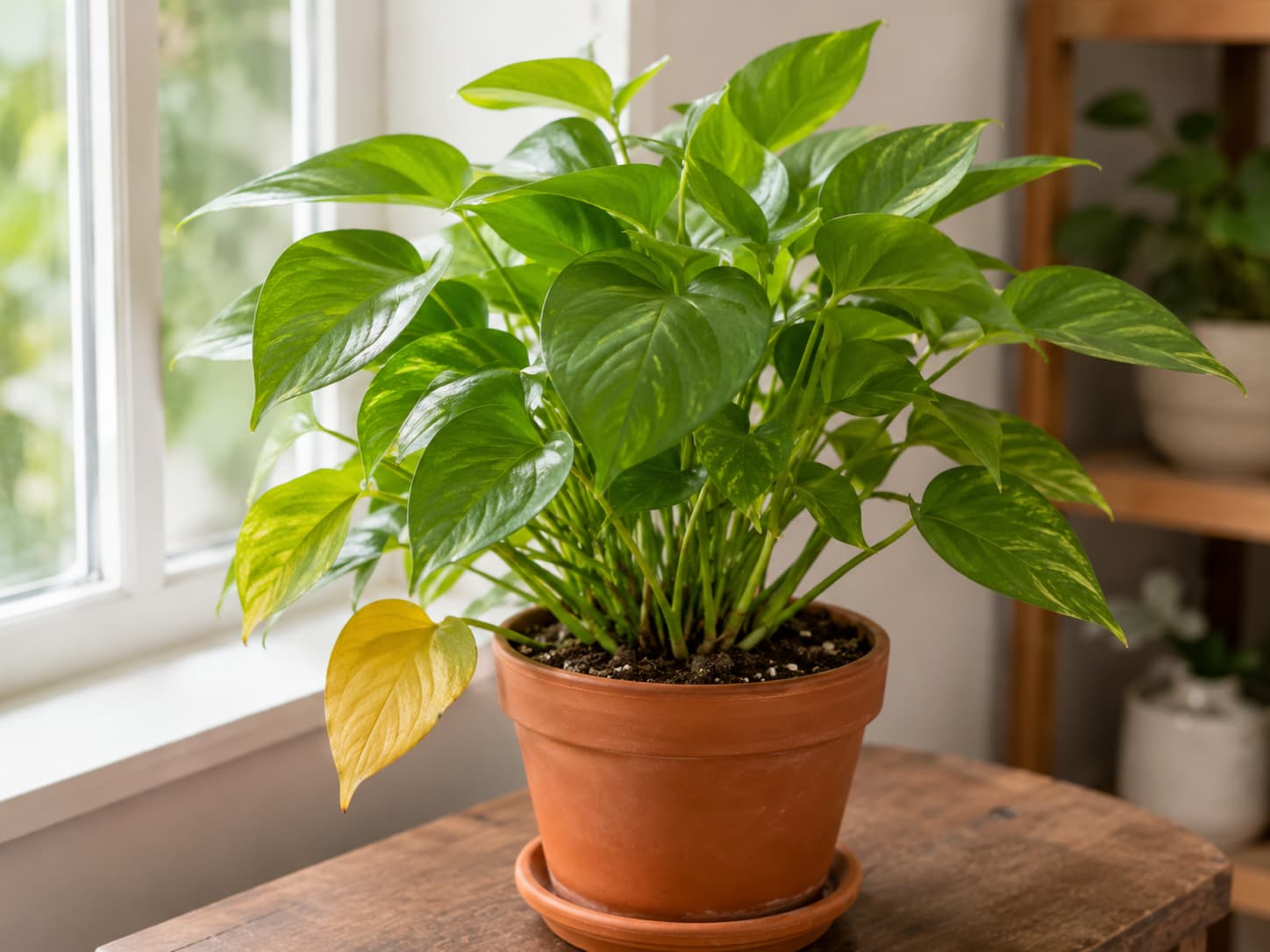
However, some winter leaf loss can be part of a normal seasonal slowdown. For example, many houseplants slow their growth in response to shorter days and lower light. As a result, a few older leaves may yellow and drop even when the roots and stems remain healthy.
How to Tell Normal Dormancy from a Real Problem
| Normal Dormancy | Real Problem | |
|---|---|---|
| Number of leaves dropping | 1–3 per week | 5+ per week, or accelerating |
| Which leaves | Older, lower leaves only | New growth, top leaves, or all at once |
| Color before dropping | Gradual yellowing | Sudden yellowing, browning, or blackening |
| New growth | Slowed but still present | No new growth for 6+ weeks |
| Stem condition | Firm and green | Soft, mushy, or shriveled |
| Soil moisture | Appropriate for the plant | Consistently wet or bone dry |
Drag the bar below or swipe horizontally to view the remaining columns.
If it's normal dormancy: Do nothing. Reduce watering only as dry-down slows, pause or reduce fertilizer while active growth is minimal, and keep conditions stable. Resume normal feeding when sustained new growth returns.
Cause #6: Pests — The Winter Explosion
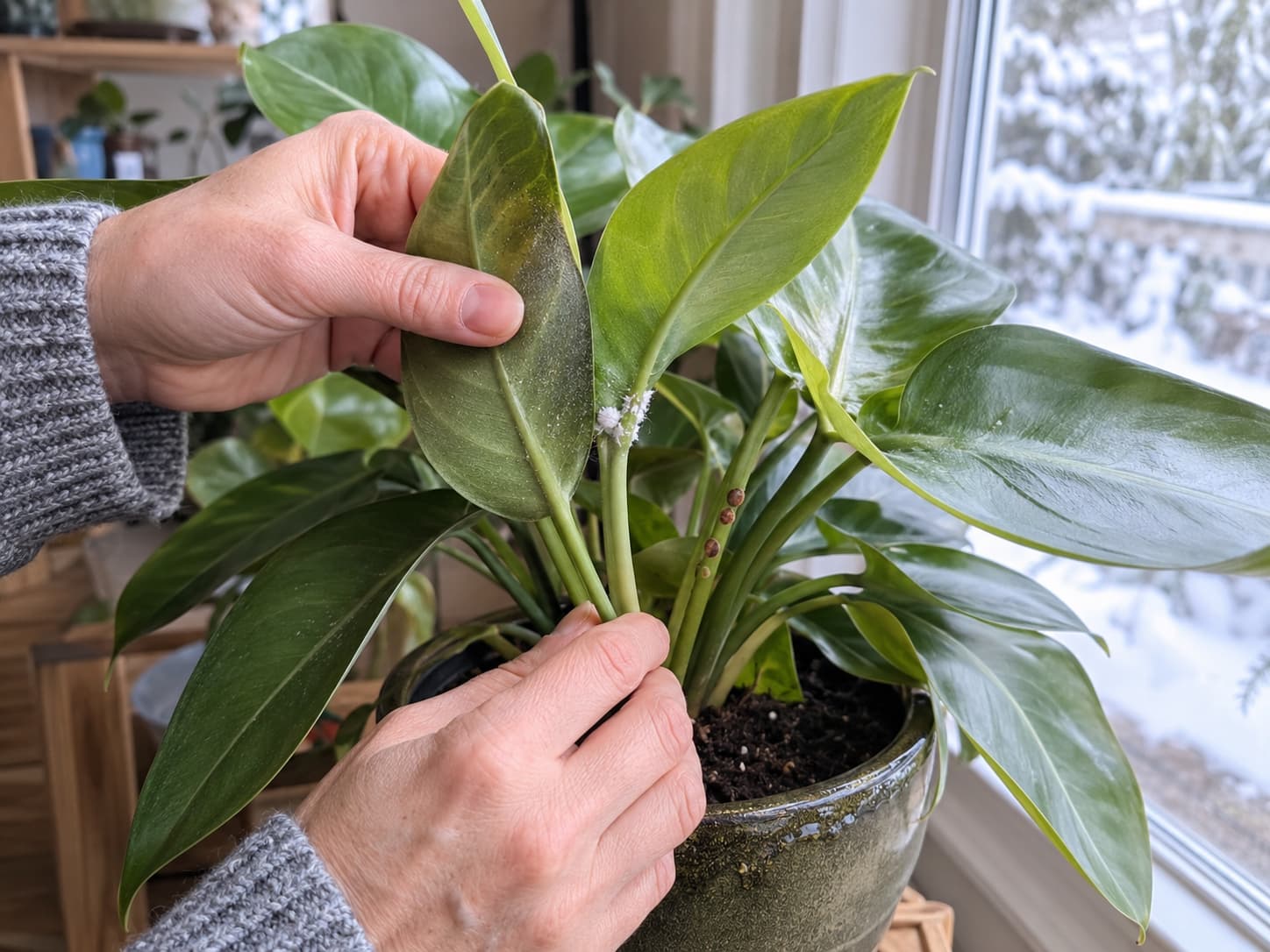
At the same time, indoor pest problems can become more noticeable in winter, especially when plants are stressed and natural outdoor checks are absent. For instance, spider mites often become troublesome in warm, dry indoor conditions. Similarly, mealybugs can spread unnoticed through protected leaf joints and stems. Likewise, scale can remain hidden when plants are inspected less often.
3 Winter Pests to Watch For
| Pest | Signs | Favorite Plants | Treatment |
|---|---|---|---|
| Spider mites | Fine webbing between stems; speckled yellow leaves; worst in dry, warm air | Citrus, ivy, palms, calathea | Inspect and rinse foliage when practical; if treatment is needed, use a product labeled for spider mites and indoor ornamental plants. See the Greenmuse neem guide for label-first guidance |
| Mealybugs | White cottony clusters in leaf joints and undersides | Succulents, citrus, hoyas, ferns | Remove visible mealybugs and use a treatment labeled for indoor ornamental plants if needed |
| Scale | Brown bumps on stems and leaf undersides; sticky honeydew on surfaces below | Ferns, ficus, orchids, ivy | Remove visible scale carefully and use an appropriate labeled treatment if infestation persists |
Drag the bar below or swipe horizontally to view the remaining columns.
Plant-by-Plant: Which Winter Problems Each Species Gets
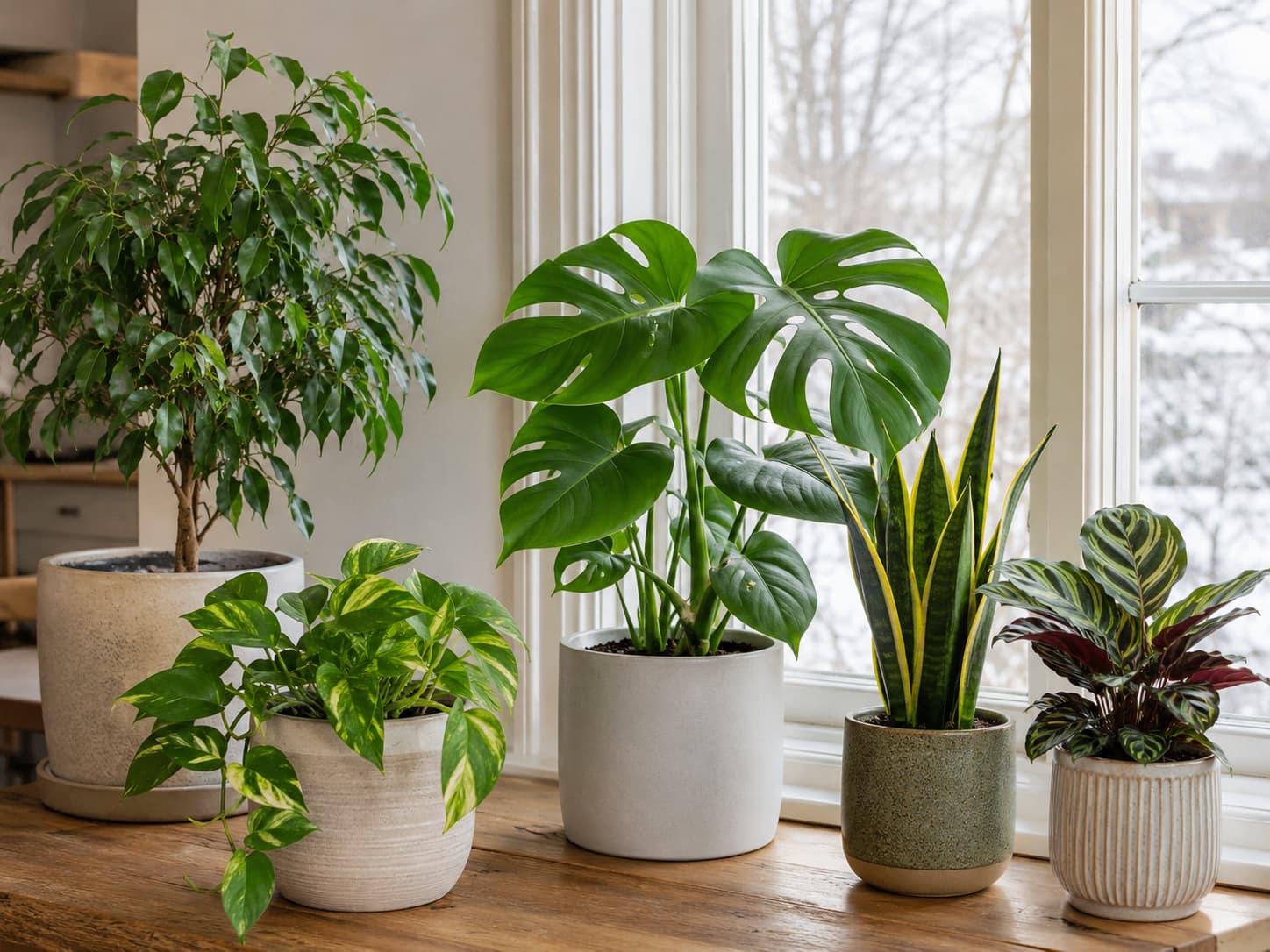
Because species respond differently, the most likely winter stress varies from plant to plant. Therefore, use the table below as a starting point rather than a universal rule:
| Plant | Most Vulnerable To | Expected Winter Leaf Drop | Key Winter Rule |
|---|---|---|---|
| Ficus benjamina (weeping fig) | Cold drafts, low light, any change | High — can drop a noticeable number of leaves | Never move it; don't let it touch cold glass |
| Pothos | Overwatering | Low — drops a few lower leaves | Water after checking root-zone moisture; see the pothos guide |
| Monstera | Low light, overwatering | Moderate — may drop some leaves | Move to brightest window; reduce water; see monstera guide |
| Snake plant | Overwatering | Minimal | Let the potting mix dry thoroughly between waterings |
| Aloe vera | Overwatering, cold | Low | Protect from damaging cold and water according to root-zone dry-down; see the aloe guide |
| Calathea/Maranta | Dry air, low humidity | High — crispy edges and leaf curl | Benefits from steadier humidity and protection from dry heating airflow |
| Rosemary | Dry air, powdery mildew, overwatering | Moderate | Cool room + fan + careful watering; see rosemary guide |
| Philodendron | Low light | Moderate | Move to brighter spot; accept some drop; see philodendron guide |
Drag the bar below or swipe horizontally to view the remaining columns.
The Winter Houseplant Care Schedule
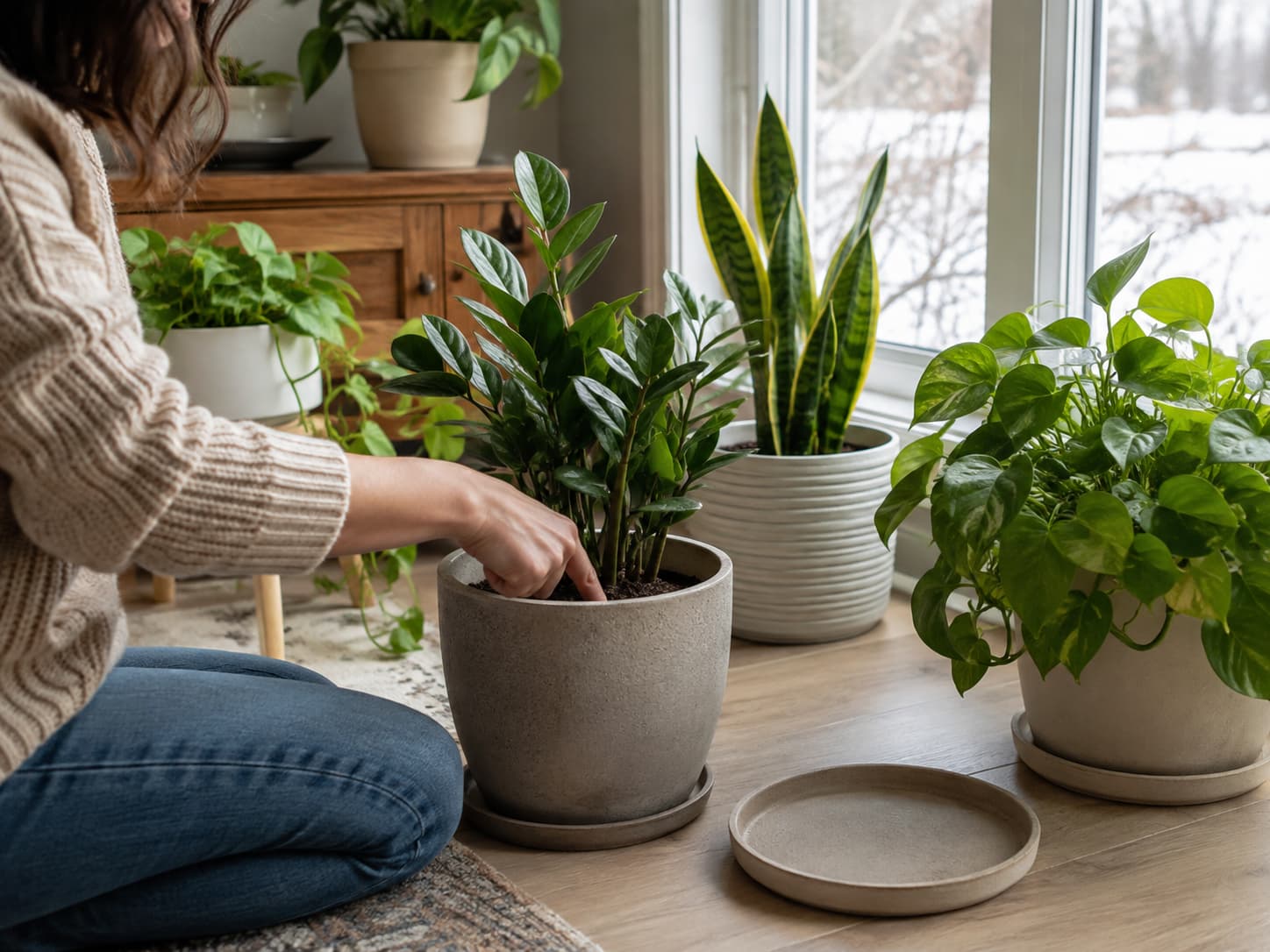
Overall, winter changes the balance among light, water use, humidity, and temperature. For comparison, the table below shows how care often shifts between seasons:
| Task | Summer | Winter |
|---|---|---|
| Watering frequency | Weekly (most plants) | Water only after checking the potting mix |
| Fertilizer | Every 2–3 weeks | Reduce or pause feeding while growth is minimal; resume when active growth returns |
| Light management | Whatever window works | Maximize—move to brightest window; clean glass |
| Humidity | Natural (usually fine) | Active management (humidifier or pebble tray) |
| Pest inspection | Every 2 weeks | Inspect regularly, especially in warm, dry indoor conditions |
| Repotting | Acceptable during active growth | Don't repot unless root rot is present |
| Pruning | As needed | Only remove dead/damaged leaves; don't shape-prune |
Drag the bar below or swipe horizontally to view the remaining columns.
5 Winter Mistakes That Make Leaf Drop Worse
Unfortunately, some well-intended winter-care habits can add stress instead of reducing it:
Mistake 1: Watering on a Schedule Year-Round
For example, a fixed summer watering routine can become excessive when winter dry-down slows. A plant using less water (because of reduced light) sitting in the same wet soil can develop root problems if the mix stays saturated. Instead, check the potting mix before watering. Then, wait to water if the root zone still feels appropriately moist for that plant. I keep a wooden chopstick near my watering can—it's my soil moisture probe. Insert, wait 5 seconds, pull out. If it comes out with soil stuck to it, the plant doesn't need water yet.
Mistake 2: Moving a Struggling Plant to a "Better" Spot
Likewise, ficus, schefflera, and croton can respond to abrupt location changes with leaf loss. If your plant is already stressed, moving it adds another stressor. However, relocation makes sense when the current position exposes the plant to a cold draft or direct heating airflow. In that case, move it—but move it once, to the best available permanent spot, and then leave it alone. Don't keep shuffling it around trying to find the "perfect" location.
Mistake 3: Repotting in Winter "to Give It Fresh Soil"
In addition, unnecessary repotting can disturb fine roots when the plant is already growing slowly. The plant then has to grow new roots at a time when it has the least energy to do so. Therefore, unless you have a clear reason such as active root decay or a failing medium, avoid unnecessary winter repotting. If the soil surface looks crusty or has salt buildup, gently scratch off the top half-inch and replace it with fresh soil instead—this is called top-dressing and doesn't disturb the roots.
Winter Recovery Mistakes to Avoid
Mistake 4: Fertilizing a Stressed Plant
Similarly, fertilizer is not medicine. Instead, diagnose light, watering, roots, temperature, and pests before deciding whether nutrition is relevant. Adding nitrogen to a dormant plant is like pouring gasoline on an engine that's already flooded. Pause or reduce fertilizer while growth is minimal, and only resume at half-strength when you see active new growth in spring.
Mistake 5: Overcorrecting with Heat
Finally, moving a cold-stressed plant next to a radiator or heating vent can create a new problem. As a result, direct hot airflow can replace cold stress with dehydration and temperature shock. Instead, keep tropical houseplants in relatively stable indoor conditions away from both cold drafts and direct heat sources. Overall, stable conditions are usually more useful than chasing the warmest possible spot.
Can a Leafless Plant Be Saved?
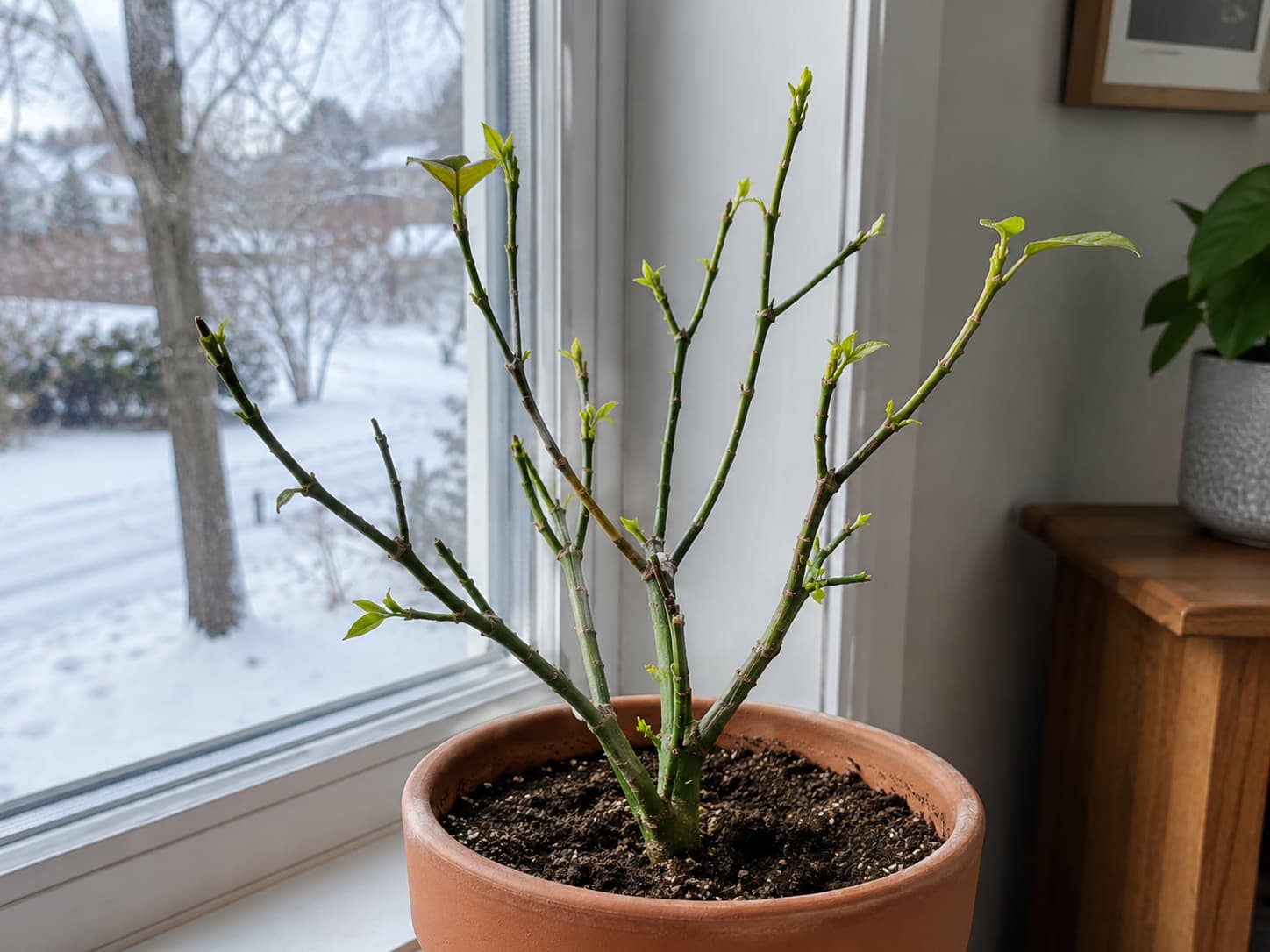
Fortunately, a leafless plant may still recover when its stems, crown, and roots remain alive. In that case, use this simple rescue sequence:
- Scratch-test the stems. First, use your fingernail to scratch a very small patch of bark. Generally, green or moist tissue is more encouraging than tissue that is completely brown, dry, and brittle. Cut back to the first green scratch you find.
- Move to the brightest possible spot. Next, give a recovering leafless plant the brightest appropriate light available without suddenly scorching previously shaded tissue.
- Water very sparingly. Because a leafless plant may use water more slowly, the potting mix can remain wet much longer. Water only when the soil is dry 2–3 inches deep—this might be every 2–3 weeks.
- Don't fertilize. Also, avoid routine fertilizing until the plant resumes active growth.
- Be patient. Finally, recovery can take several weeks or longer, depending on the plant and the damage. Eventually, healthy new buds may appear at viable nodes along the stems. At that point, adjust watering gradually to match the plant's renewed water use.
My ficus dropped every single leaf in January 2025 after I moved it 3 feet closer to a heating vent. The stems were green when I scratch-tested, so I followed the protocol: moved it away from the vent, stopped watering for 2 weeks, and waited. On February 20, I noticed tiny green buds at 6 different nodes. By April, it had a full canopy of new leaves. It looked better than before the drop. The lesson: don't throw out a bare-sticked plant until you've scratch-tested.
Frequently Asked Questions
1. Is it normal for houseplants to lose leaves in winter?
2. Should I fertilize my houseplants in winter?
3. My ficus dropped all its leaves after I moved it. Will it recover?
Humidity, Yellow Leaves & Winter Heat
4. Should I mist my plants in winter?
5. Why do my plant's leaves turn yellow before dropping?
6. Can I put my plants near a fireplace for warmth?
Sources
- University of Minnesota Extension. "Caring for Houseplants." extension.umn.edu, 2024. extension.umn.edu
- Iowa State University Extension. "Houseplant Care in Winter." extension.iastate.edu, 2023. extension.iastate.edu
- University of Connecticut Extension. "Indoor Plant Pests." ipm.uconn.edu, 2024. ipm.uconn.edu
- Colorado State University Extension. "Environmental Stress in Houseplants." extension.colostate.edu, 2023. extension.colostate.edu