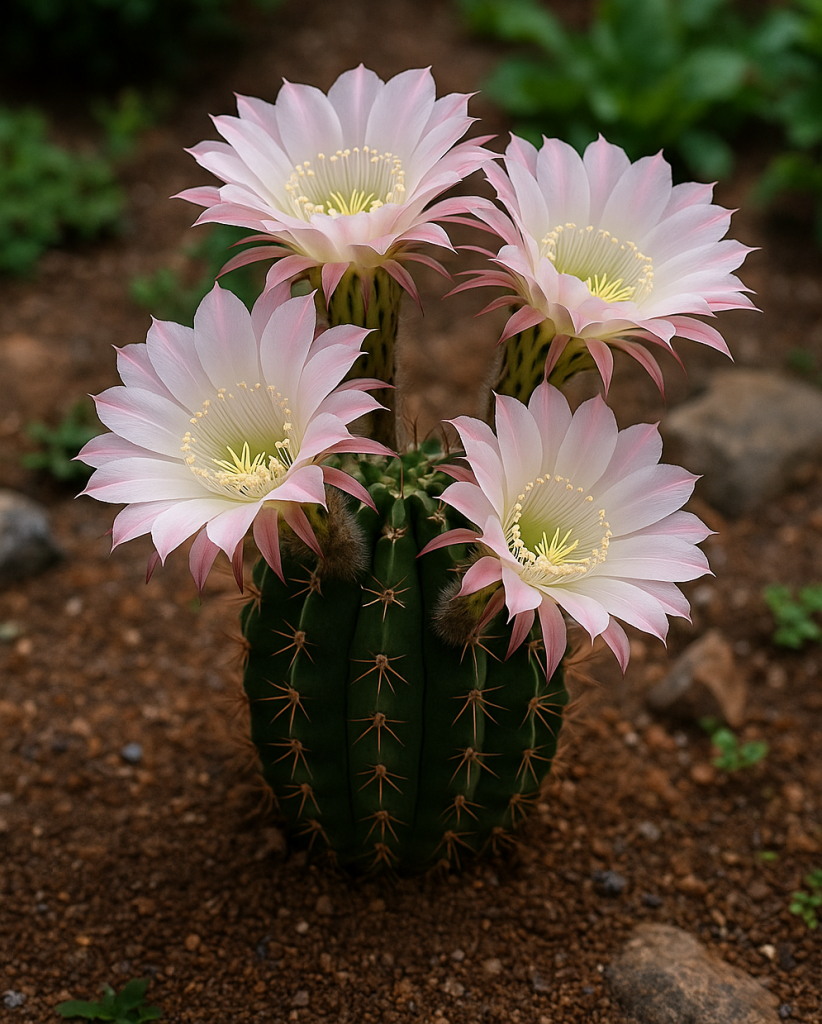
Also known as Easter Lily Cactus, this garden star brings stunning blooms with minimal effort.
“When one flower fades, another rises — like a fireworks show in slow motion.”
What is Echinopsis?
Botanical name: Echinopsis spp.
Common names: Easter Lily Cactus
Plant type: Flowering globular or columnar cactus
USDA Zones: 8–11 (can be container-grown in cooler climates)
Ideal Growing Conditions
Sunlight:
- Requires full sun (6–8+ hours per day)
- Choose a south-facing spot in the garden with maximum exposure
Soil:
- Prefers sandy or gritty soil with excellent drainage
- Add gravel or pumice to avoid water retention
Temperature:
- Tolerates heat and drought extremely well
- Not frost-hardy: provide winter cover or grow in containers if below 25°F (-4°C)
Flowering Highlights
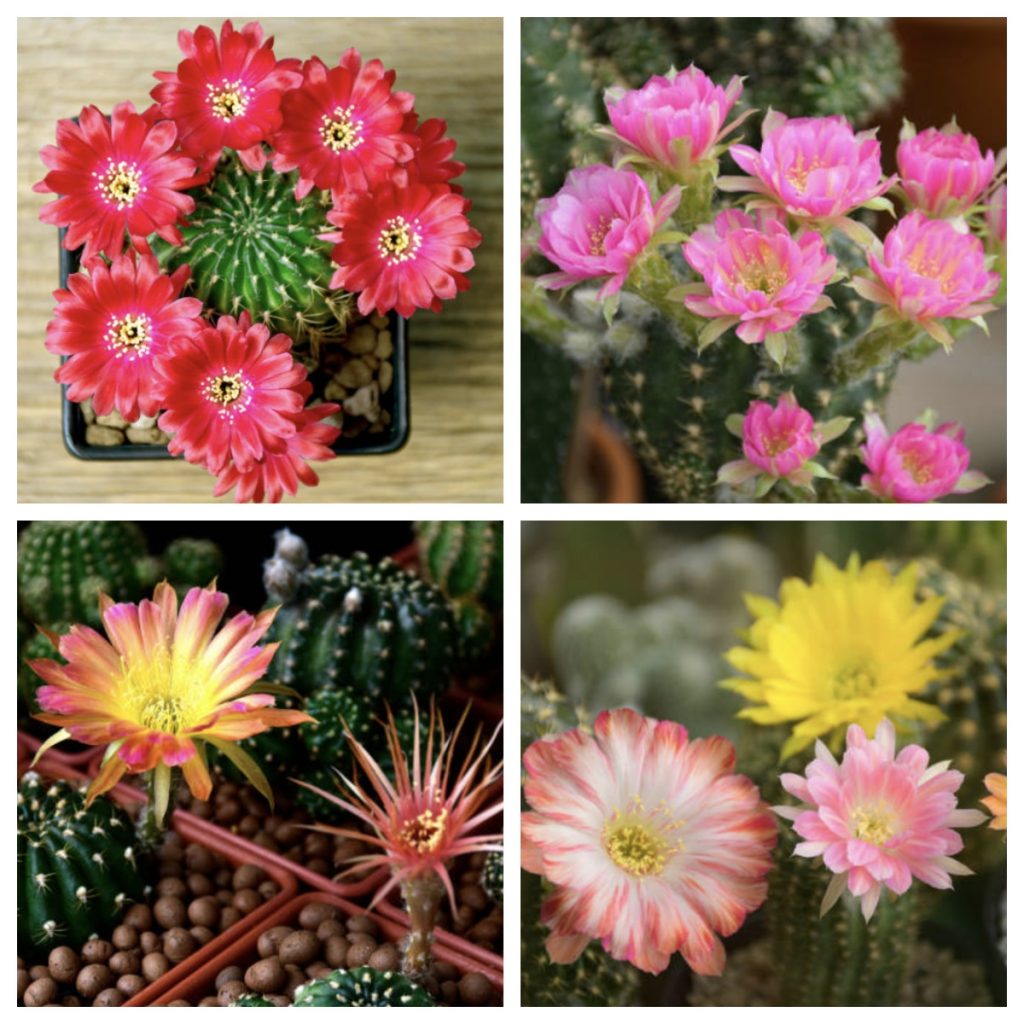
- Blooms are large, trumpet-shaped, often 4–6 inches wide
- Colors range from white, pink, orange, red to purple
- Most varieties bloom in late spring to early summer, some open at night
- Each bloom lasts 1–2 days but are frequent in succession
A blooming Echinopsis turns a quiet corner into a gallery of light.
💬 “The first time my Echinopsis bloomed, it felt like fireworks on a quiet morning.” — Julia, Arizona
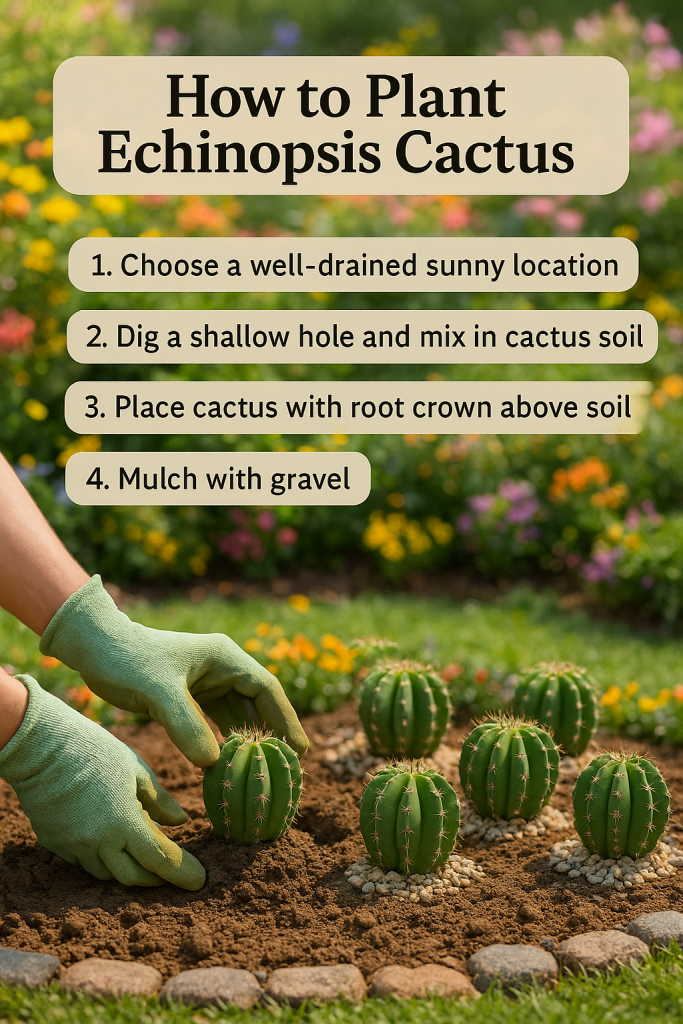
How to Plant Echinopsis in Your Garden
Step-by-Step:
- Choose a well-drained sunny location with minimal lawn watering nearby
- Dig a shallow hole and mix in cactus soil or amend with sand/gravel
- Place the cactus with the root crown above soil level
- Water once lightly, then allow the soil to completely dry out before next watering
- Mulch with gravel to retain warmth and prevent rot
Watering & Maintenance
- Water only when soil is dry, typically every 2–3 weeks in hot months
- Do not water in winter dormancy unless indoors
- Avoid overhead watering to prevent fungal issues on flowers
Pruning & Propagation
- No pruning needed; remove dead blooms if desired
- Propagate easily by separating offsets (pups) at the base and replanting
Garden Safety Tips
- Use gloves or tongs when handling — spines can be sharp
- Keep away from high foot traffic areas to prevent accidental injury
Landscape Styling Ideas
- Plant in clusters along gravel pathways for desert elegance
- Combine with Aloe, Agave, or Lavender for texture and color
- Use white stones or terracotta edging to make blooms stand out
Seasonal Care Tips
| Season | Care Tip |
| Spring | Resume light watering as buds emerge |
| Summer | Peak bloom season — enjoy and observe spacing |
| Fall | Reduce watering gradually |
| Winter | Keep dry, protect from frost or bring indoors |
Frequently Asked Questions
Q: Can Echinopsis survive frost in my garden?
A: Most varieties tolerate down to 25°F (-4°C), but it's best to cover or container-plant if you live in colder zones.
Q: Why do my Echinopsis buds dry up before blooming?
A: This may be caused by inconsistent watering, sudden temperature shifts, or not enough light.
Q: How often do Echinopsis bloom?
A: Mature plants can bloom multiple times from spring through summer with strong sun and proper rest in winter.
Want a printable version?
Explore more blooming cacti for small gardens: Check our Mammillaria Indoor Guide
Few plants reward so richly for so little care. Let Echinopsis bloom bright in your garden corner.
Clara Moss is the gardener behind Greenmuse. Over the past 10+ years, she has grown herbs on windowsills, tested cactus and succulent soil mixes, rescued struggling houseplants, and learned many lessons through trial and error. Greenmuse is where she shares honest, practical plant care advice for real homes — based on hands-on experience, not perfect greenhouse conditions. When she’s not writing, Clara is usually propagating succulents or trying to keep a calathea happy.