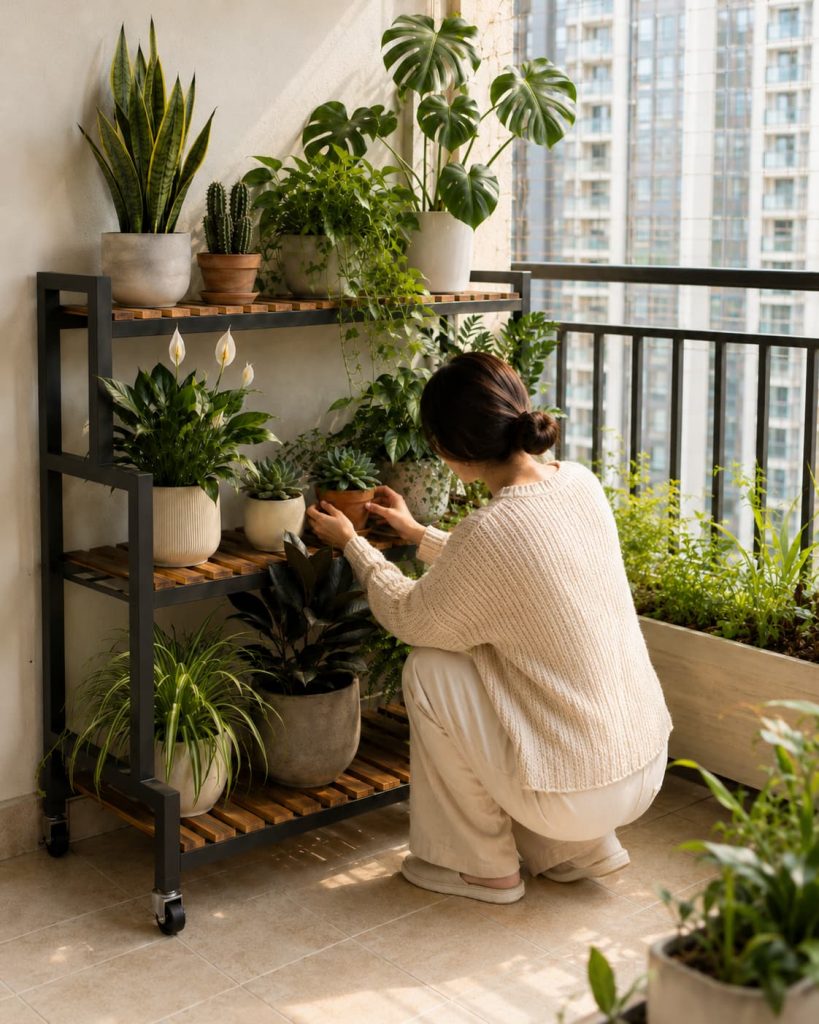
Succulent Soil Mix: 3 Fast-Draining Recipes for Healthy Roots
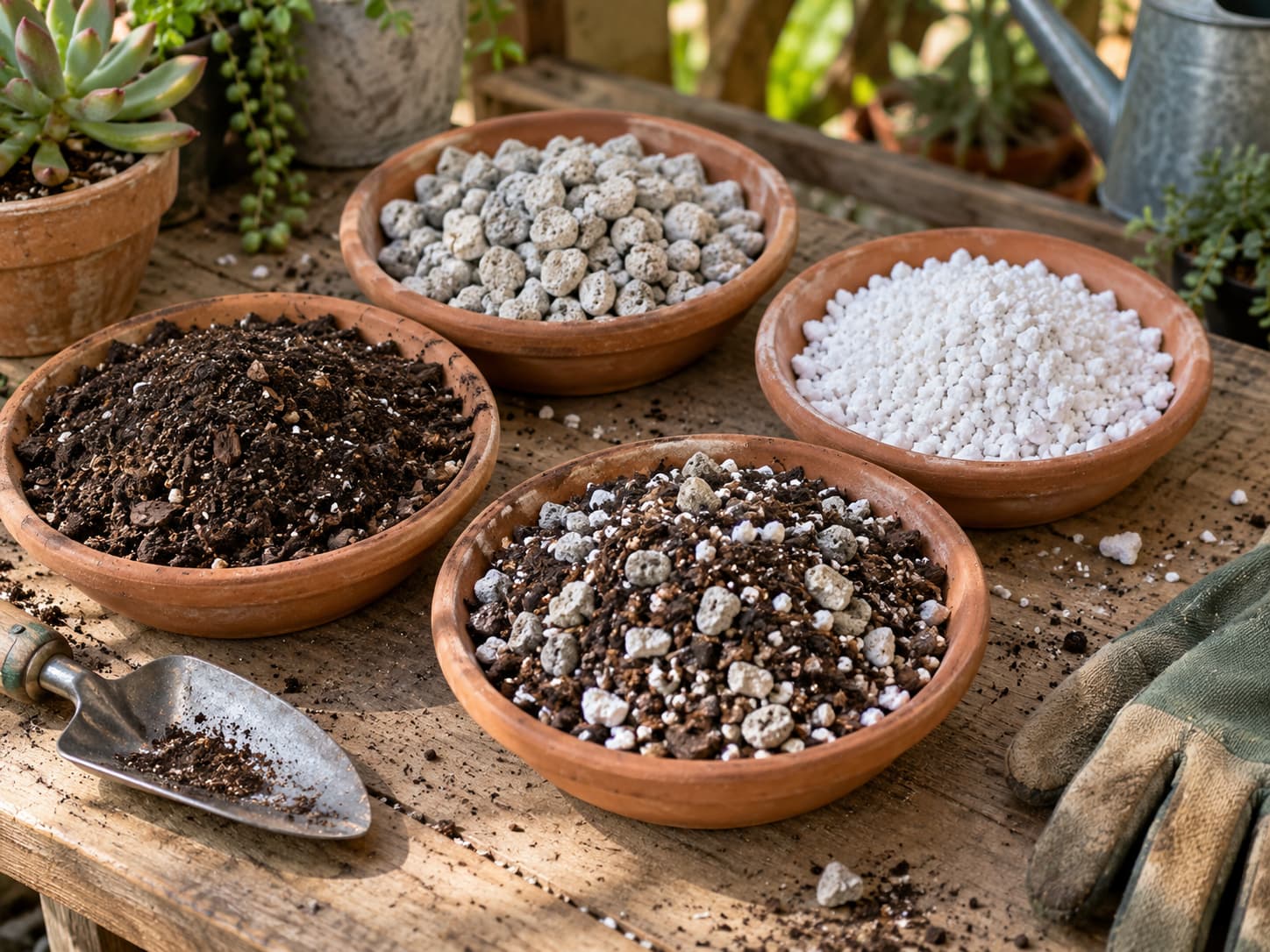
A good succulent soil mix should drain freely, hold enough moisture for roots to use, and then move back toward dry before the next watering. In other words, the goal is balance rather than maximum dryness. Therefore, you do not need an extreme “90% rock” recipe or a rigid two-day dry-down target. Start with a porous mix, use a pot with drainage holes, and adjust the mineral fraction to your light, container, climate, and plant.
Quick Diagnosis: Is the Pot Staying Too Wet?
| What you notice | What it may suggest | What to check first |
|---|---|---|
| Leaves become soft, translucent, or unusually mushy | Excess moisture or tissue rot may be developing | Roots, stem base, watering frequency, drainage holes |
| Lower leaves collapse while the medium stays wet | Root-zone stress is possible | Remove the plant and inspect for soft or decayed roots |
| Pot remains saturated for a long time in bright conditions | The mix, pot size, or container material may be retaining too much water | Pot-to-root-ball ratio, particle size, airflow, light |
| Fungus gnats appear around the pot | The organic surface is staying moist enough to support them | Moisture management, sanitation, stored media, drainage |
| Plant stretches toward light | Etiolation is primarily a light problem | Increase appropriate light gradually; do not blame soil alone |
What Succulent Roots Actually Need
However, “succulents need dry soil” is only half the story. After all, roots still need water. The goal is a medium that wets thoroughly, drains excess water, leaves air-filled pores, and then dries enough before the next irrigation.
For example, University of Minnesota Extension recommends well-drained, sandy media for indoor cacti and succulents and gives a simple starting blend of one part potting soil to one part coarse sand. Similarly, UC Master Gardeners recommend light, granular mixes and list pumice, perlite, crushed lava, and coarse sand as useful amendments.
- Drainage holes matter. Excess water needs a path out of the container.
- Particle size matters. Coarse particles create larger pores that fine peat or compost alone cannot provide.
- Pot size matters. A large volume of unused wet mix around a small root ball can stay moist far longer.
- Light and temperature matter. The same mix can dry quickly in warm bright conditions and slowly in a cool dim room.
- Species matter. Echeveria, Haworthia, Aloe, Lithops, and epiphytic holiday cacti do not all want the same water-holding capacity.
Three Practical Succulent Soil Mix Recipes
Recipe 1: The Easy 1:1 Mix
1 part cactus/succulent potting mix + 1 part coarse pumice or perlite.
For beginners, this is the simplest Greenmuse starting point for indoor Echeveria, Sedum, Crassula, Aloe, and many other common succulents. In addition, it is easy to reproduce and follows the same general principle used by UC Master Gardener guidance: pair an organic container-mix fraction with a substantial porous mineral fraction.
Use it when: you want a forgiving upgrade to a commercial cactus mix without building a specialist substrate from scratch.
Recipe 2: The 1:1:1 Mineral-Forward Mix
1 part potting mix + 1 part pumice + 1 part coarse grit or clean coarse sand.
Likewise, UC Master Gardeners list a similar one-third / one-third / one-third combination using potting mix, coarse sand, and pumice. As a result, this version can be useful when your climate is humid, your home stays cool, or your current mix remains wet longer than your plants tolerate.
Use it when: the 1:1 recipe still dries too slowly or you grow rot-sensitive plants in a moisture-retentive environment.
Recipe 3: A Bark-and-Mineral Gritty Mix
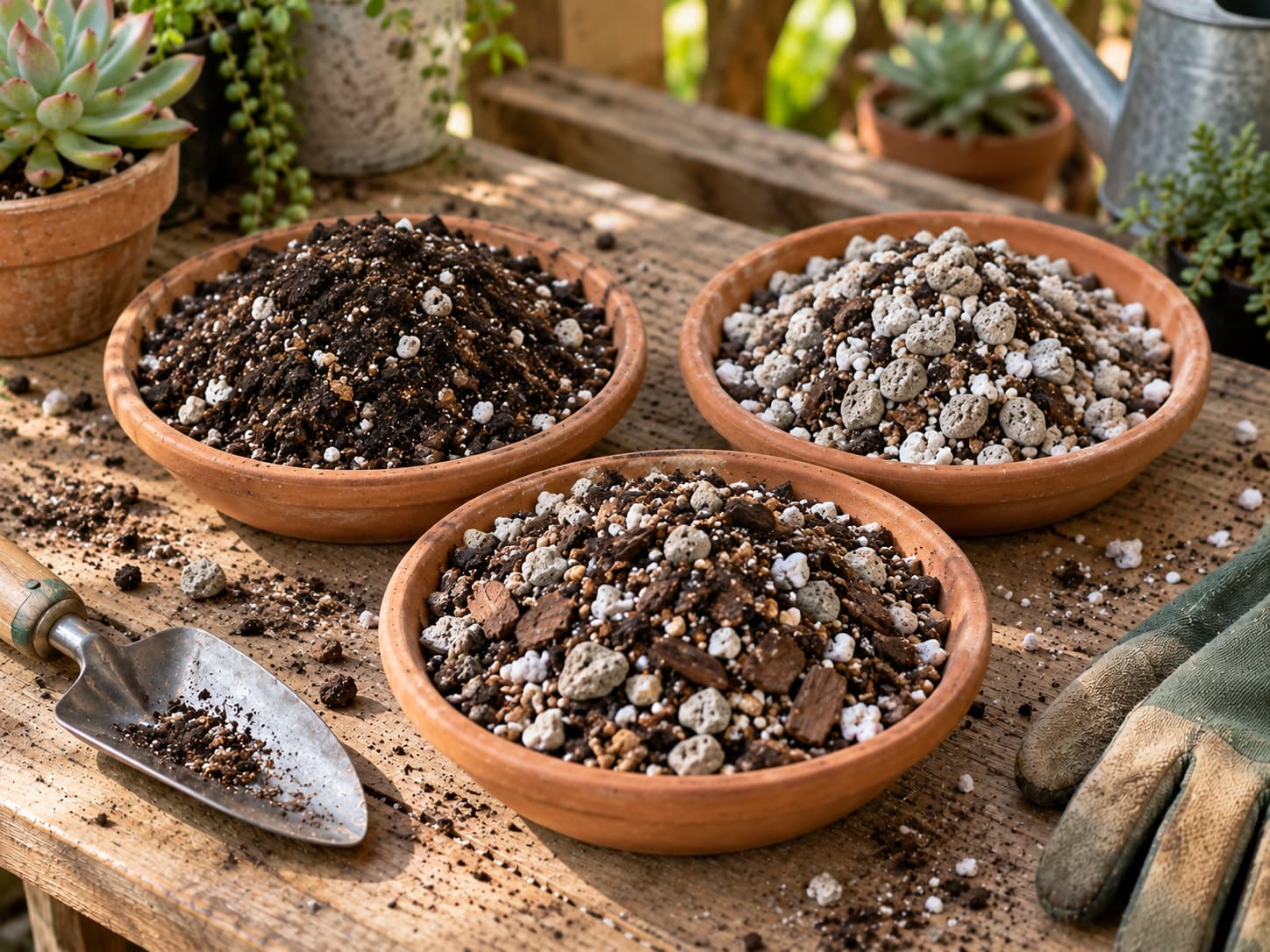
1 part screened pine bark fines + 1 part horticultural calcined clay + 1 part pumice or coarse mineral aggregate.
By contrast, this recipe borrows the structure of classic gritty-mix systems. For example, current Bonsai Jack 111 is not “100% inorganic” as the old draft claimed: Bonsai Jack currently lists roughly equal parts pine bark, calcined clay, and Monto Clay. The exact best ratio still depends on the plant and microclimate.
Use it when: you enjoy managing a highly structured mix and are comfortable adjusting watering and fertilizer rather than relying on a conventional peat-based base.
| Recipe | Best starting use | Main advantage | Watch-out |
|---|---|---|---|
| 1:1 potting mix + pumice/perlite | Most beginners | Simple, inexpensive, easy to source | Perlite can migrate upward; some bases still retain more water than others |
| 1:1:1 potting mix + pumice + coarse grit | Humid or slow-drying conditions | More mineral structure without going fully soilless | Heavy mixes may need more frequent nutrient management |
| Bark + calcined clay + mineral aggregate | Experienced gritty-mix growers | Consistent coarse structure | Ingredient sourcing and watering style matter more |
Does Store-Bought Cactus Soil Need Fixing?
Sometimes, yes. However, “store soil kills succulents” is too broad to be useful. Miracle-Gro Cactus, Palm & Citrus Potting Mix, for example, is currently described by the manufacturer as a fast-draining blend of forest products, sphagnum peat moss, sand, and perlite, with plant food included.
Still, that does not guarantee it will be ideal in every indoor setup. A peat-containing cactus mix can still dry slowly in a large plastic pot, low light, cool temperatures, or humid conditions. The better question is not “Is this brand bad?” It is:
Therefore, if a commercial cactus mix remains wet too long in your conditions, blend in coarse pumice, perlite, or another horticultural mineral amendment. Start around equal volumes of base mix and mineral amendment, then adjust from there.
On the other hand, if it dries so fast that the roots repeatedly desiccate before you can water, reduce the mineral fraction slightly or use a less porous container. Terracotta dries faster than glazed or plastic pots, so container material is part of the recipe.
The NAPA Floor-Dry Claim: What the Product Actually Is
Some older hobbyist recipes circulate with incorrect NAPA part numbers or describe Floor-Dry as calcined clay. NAPA’s current Floor-Dry product commonly referenced in bonsai and succulent discussions is NFD 8822, and NAPA identifies it as a diatomaceous-earth absorbent, not calcined clay.
Importantly, that distinction matters because floor absorbents are not interchangeable. Different SKUs can be made from different minerals and can behave differently when wet. NAPA 8822 is also sold as an automotive absorbent — not as a horticultural substrate.
In short, if you already use NAPA 8822 successfully, treat it as a personal substrate experiment rather than a universal “secret ingredient.” NAPA describes it as medium-coarse, porous diatomaceous earth, which explains why hobbyists have explored it as a structural aggregate, but Greenmuse would not tell a beginner that an automotive absorbent is required to grow healthy succulents.
How to Read the Greenmuse 12-Week Home Trial
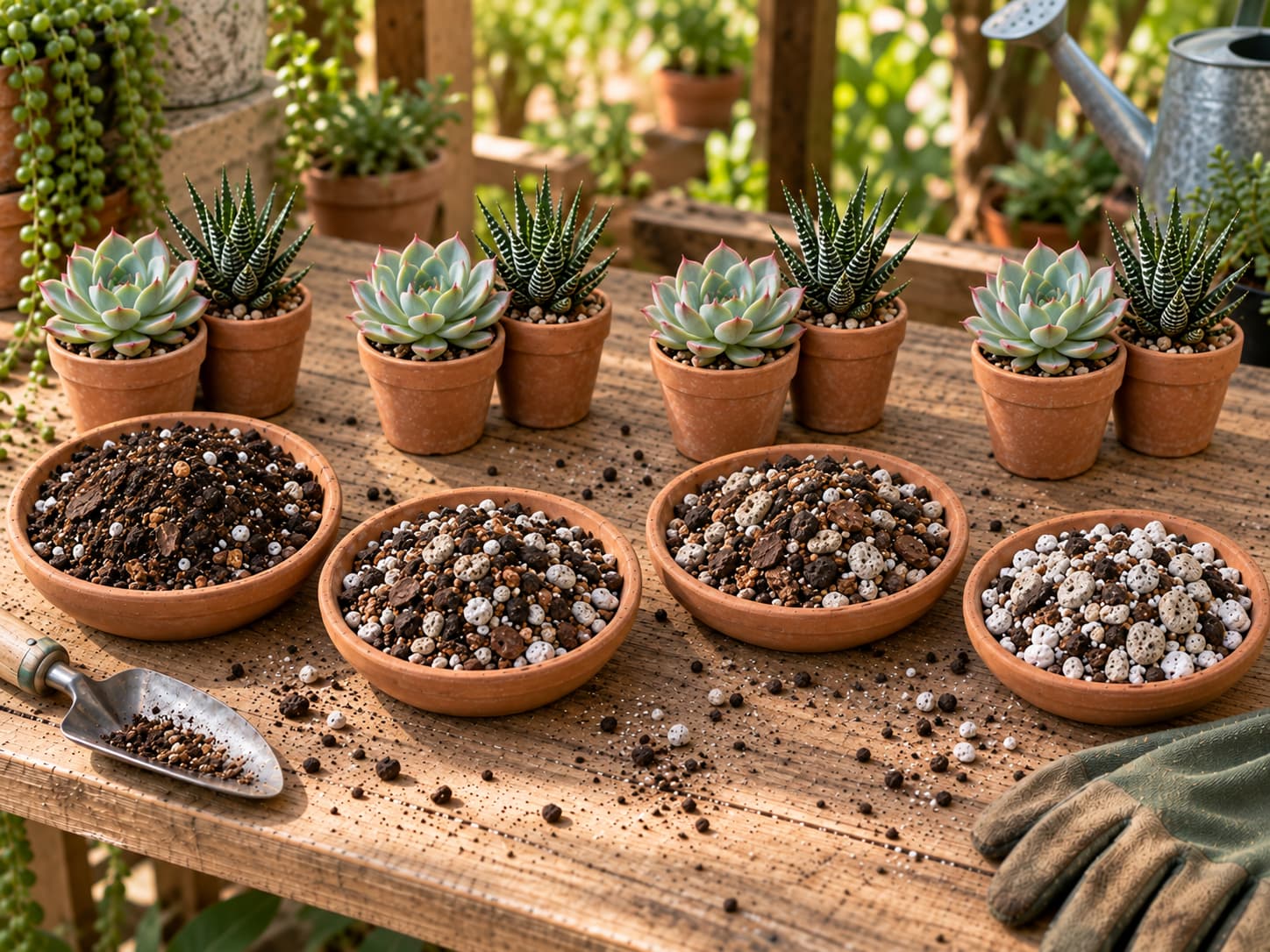
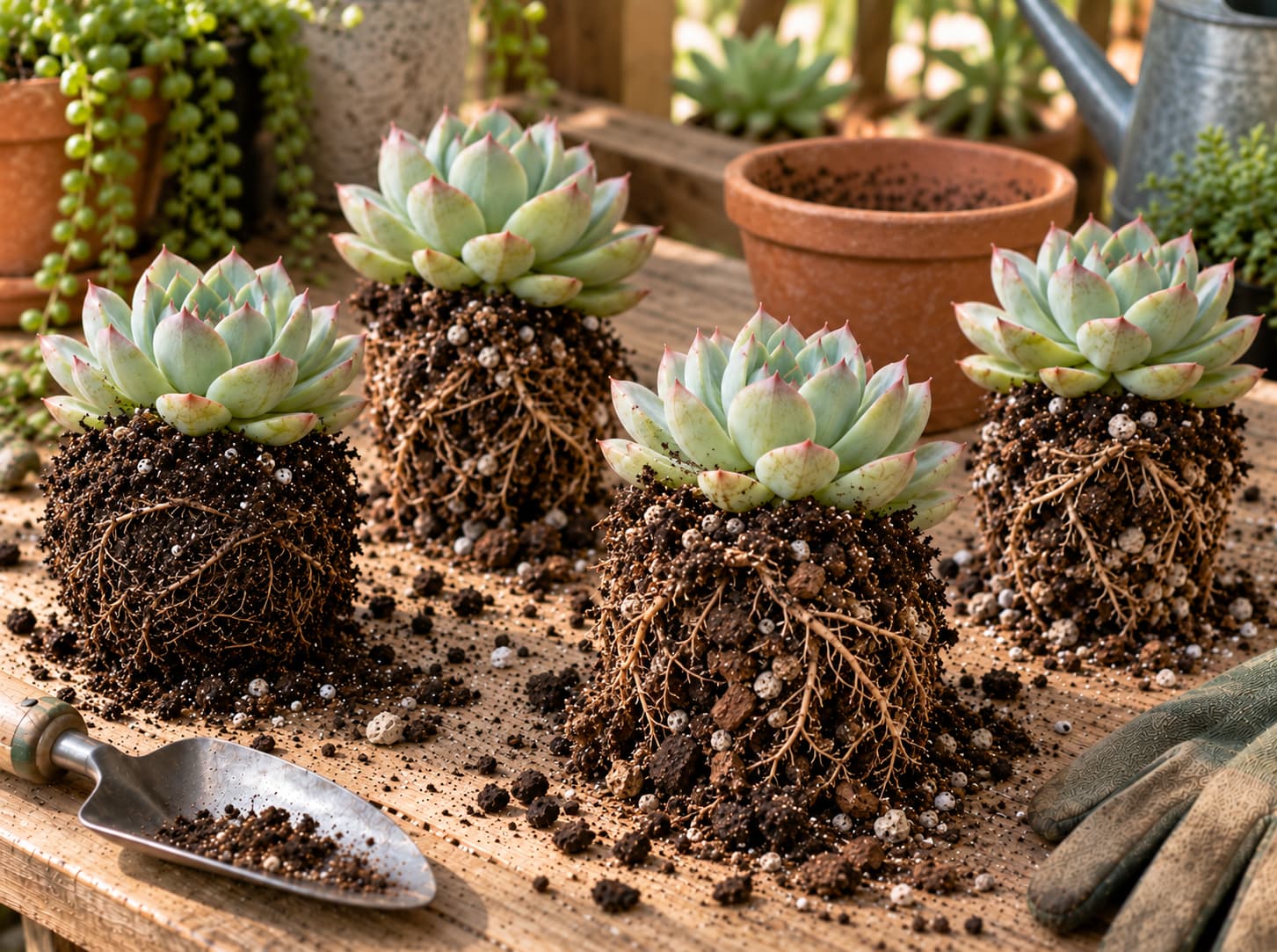
Greenmuse’s source notes record an 18-plant home comparison across four soil approaches using Echeveria, Sedum, Haworthia, Crassula, and Aloe over 12 weeks. However, these observations are useful as a small home comparison, but they are not a replicated scientific experiment, and the results should not be treated as universal.
| Soil approach in source notes | Survival recorded | Dry-down recorded | How to interpret it |
|---|---|---|---|
| Mineral-heavy floor-dry gritty mix | 5/5 | 2–3 days | Promising in this home trial; not proof that automotive absorbent is necessary |
| Bonsai Jack gritty mix | 5/5 | 1–2 days | Fast-draining structure performed well in these notes |
| Budget gritty mix | 4/5 | 3–4 days | Good overall result, with one loss |
| Miracle-Gro cactus mix | 2/5 | 7–10 days | Slowest dry-down in this setup; do not generalize into a universal brand claim |
Overall, the most useful pattern in these notes is that the coarser mixes dried faster in that particular environment. By contrast, the less useful conclusion would be “Miracle-Gro kills succulents.” Light, pot size, container material, root mass, starting plant health, and irrigation can all affect outcomes.
5 Succulent Soil Myths to Stop Repeating
Myth 1: “A Gravel Layer in the Bottom Improves Drainage”
Instead, skip it. Illinois Extension explains that water tends to perch in the finer potting medium above the coarse gravel layer instead of instantly draining into it. Use an appropriate mix all the way to the bottom and choose a pot with drainage holes.
Myth 2: “All Succulents Need 70–90% Inorganic Material”
Likewise, there is no single mineral percentage that fits every succulent and every climate. Extension recipes range from roughly equal organic/mineral blends to one-third potting mix, one-third coarse sand, and one-third pumice. Start with the plant and your conditions, not a forum percentage.
Myth 3: “A Good Mix Must Dry in 48–72 Hours”
Similarly, a fixed dry-down target ignores pot size, humidity, airflow, temperature, root mass, and light. The goal is to avoid prolonged saturation while still giving roots access to water. Watch the pot rather than the calendar.
Myth 4: “Terracotta Fixes Bad Soil”
Although terracotta can accelerate moisture loss through its porous walls, it cannot make an oversized pot or a collapsed, waterlogged medium ideal. Think of pot material and soil structure as two parts of the same moisture system.
Myth 5: “Most Succulents Need Deep Pots”
In fact, many common succulents have relatively shallow root systems and do well in shallower containers. UC guidance specifically recommends shallow pots with drainage holes for many container succulents. Some plants have deeper or fleshy roots, so match the container to the actual root ball rather than using a blanket depth rule.
How to Repot Into a Faster-Draining Mix
Step 1: Repot for a Reason
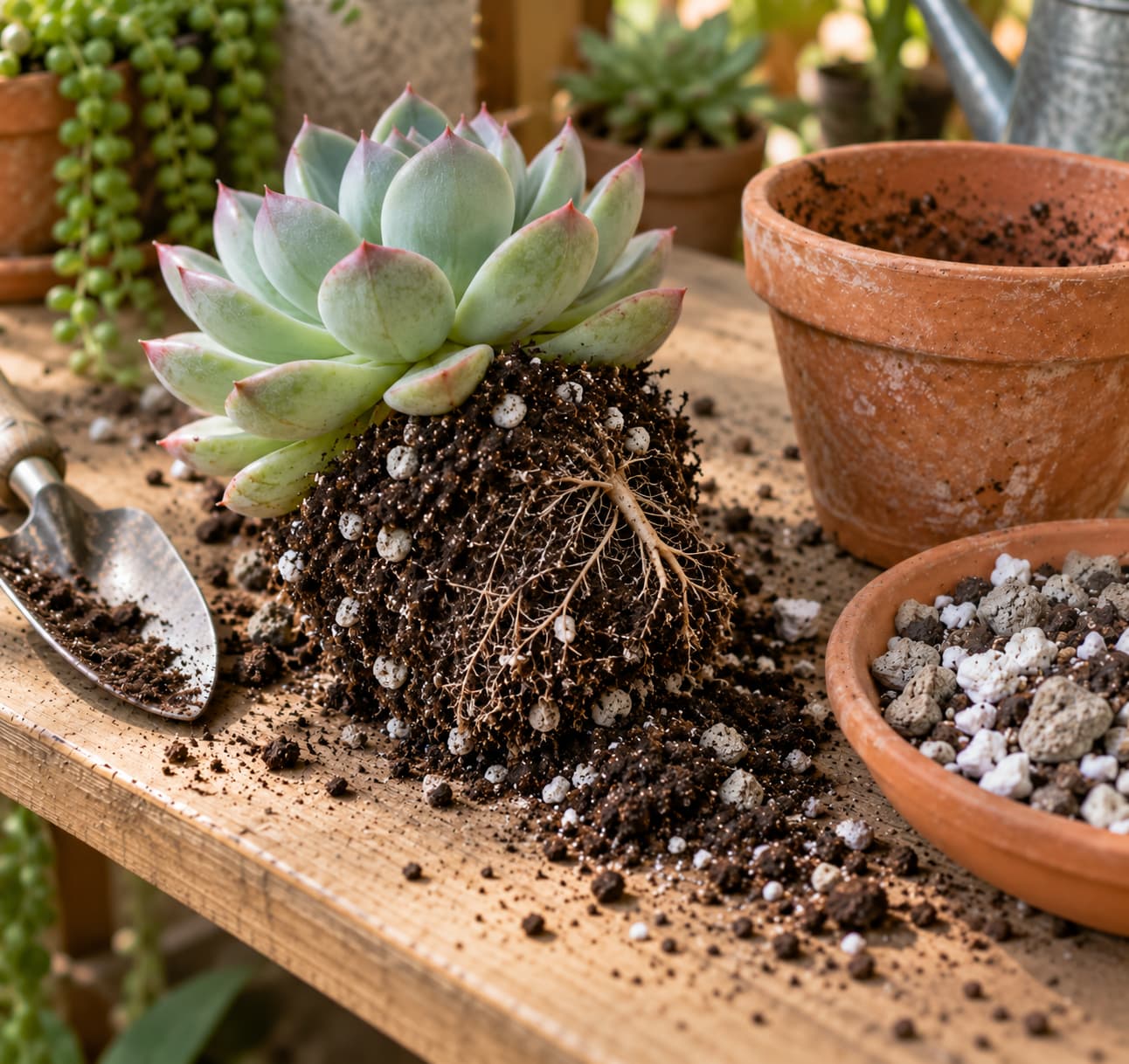
Prioritize plants with obvious root-zone problems, a badly collapsed nursery medium, or a pot that stays saturated far longer than the plant tolerates. A healthy succulent does not need emergency repotting simply because you found a new recipe online.
Step 2: Remove the Old Mix and Inspect the Roots
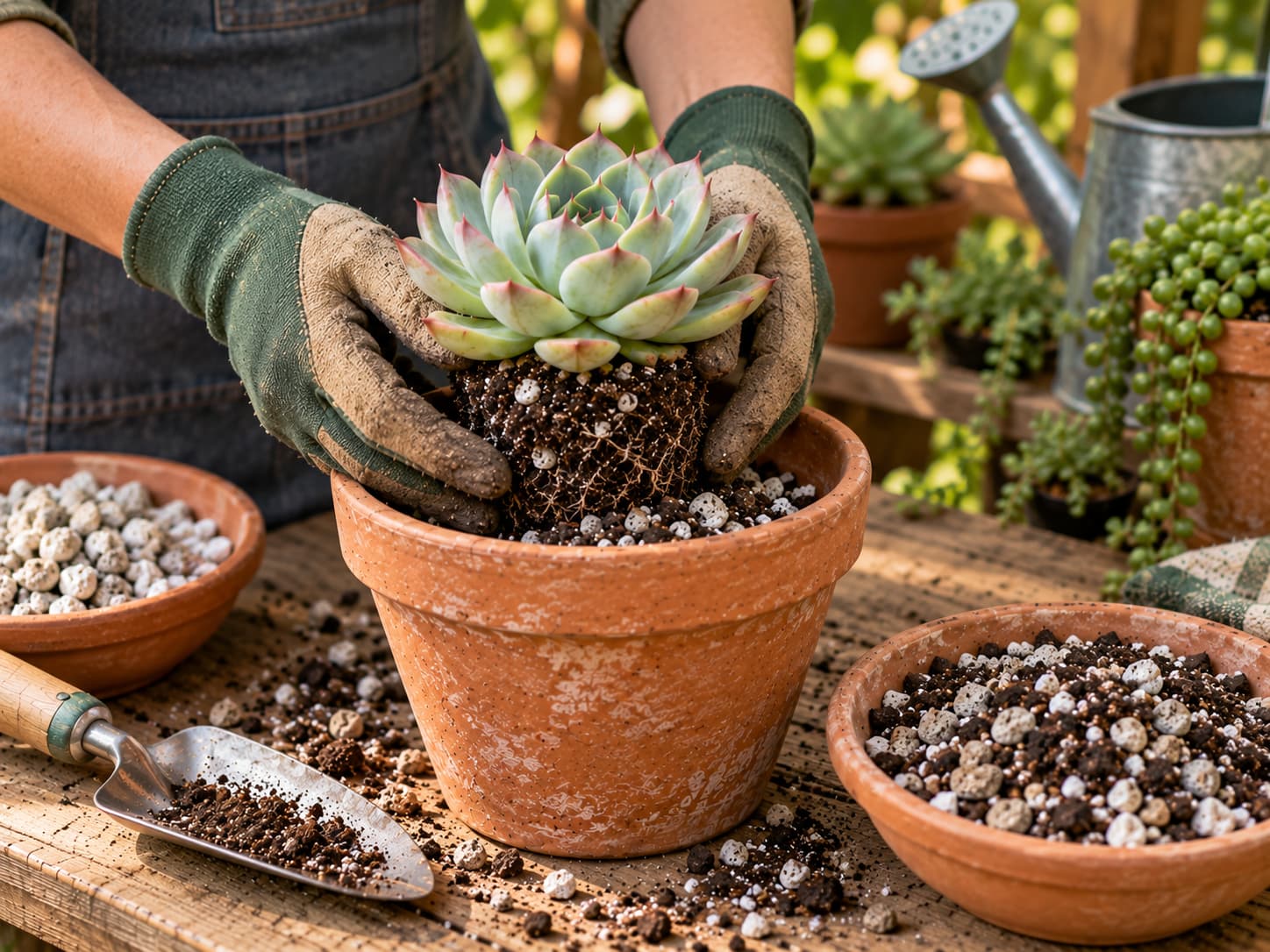
Next, work gently. Shake or tease away loose old media without stripping every fine root bare. Healthy roots vary in color by species and age, so focus on texture: firm tissue is more reassuring than soft, collapsing, foul-smelling tissue.
Step 3: Trim Only What Is Truly Compromised
Then, use clean tools for soft or decayed roots. If significant root tissue is cut, allowing the wounds to dry before watering can reduce risk. UC Master Gardener guidance commonly suggests delaying the initial watering for several days after planting succulents, but species and root damage matter — avoid turning “wait exactly five days” into another rigid rule.
Step 4: Pot at the Same Crown Depth
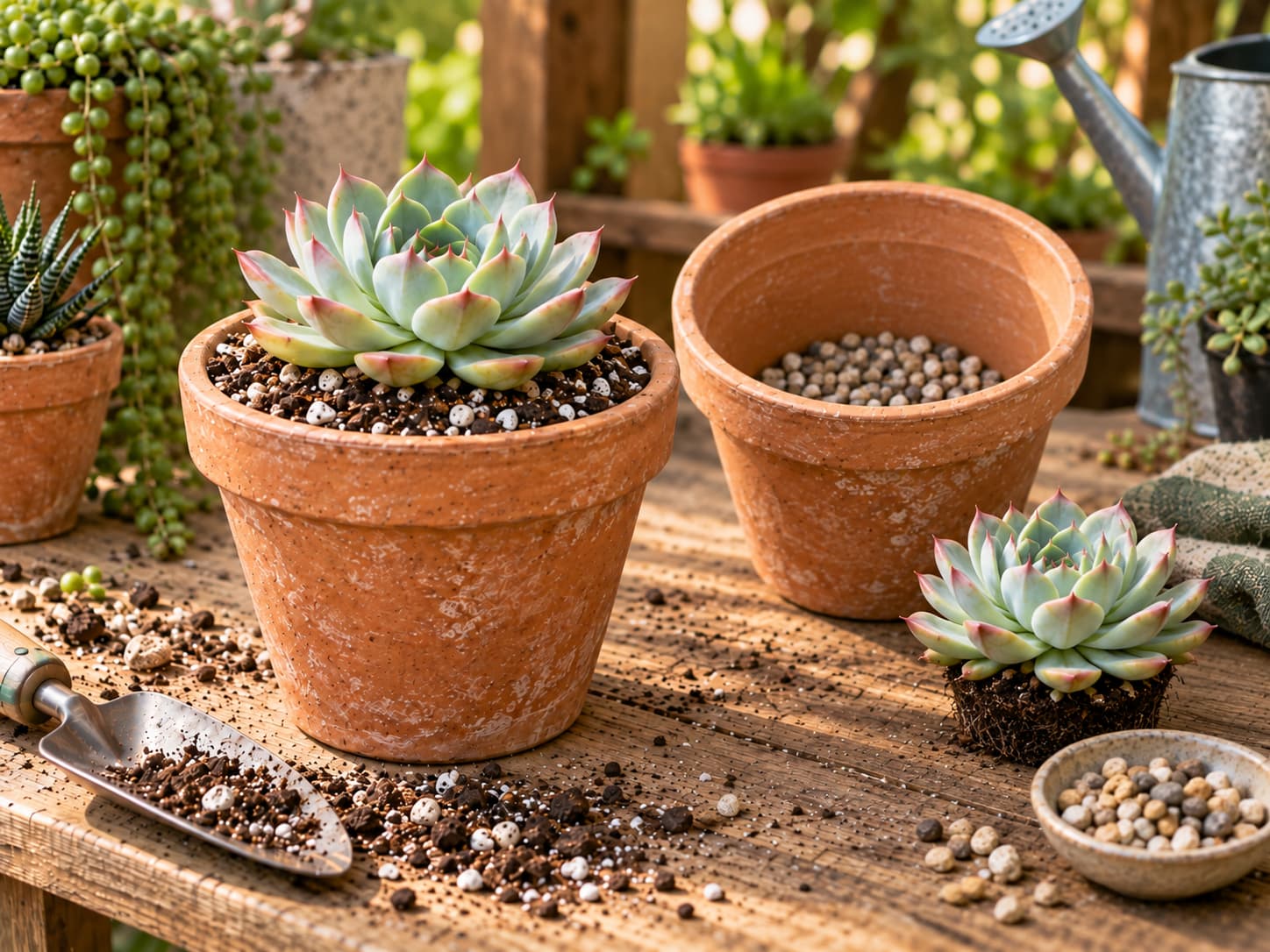
Afterward, use a container only modestly larger than the root ball, keep the crown at an appropriate depth, and fill around the roots without crushing the mix into a dense block.
Step 5: Water Based on Root-Zone Dryness
Finally, when it is time to water, water thoroughly enough that excess drains from the holes, then let the medium move back toward dry before watering again. University of Minnesota specifically recommends thorough watering followed by complete dry-down between irrigations for indoor cacti and succulents.
Do Cacti Use the Same Soil?
Often, but not always. For example, “cactus” includes plants from very different habitats. Desert cacti generally benefit from porous, mineral-rich media and careful watering, while epiphytic forest cacti such as holiday cacti naturally grow in more organic environments and usually want a different balance.
| Plant group | Useful starting direction | Why |
|---|---|---|
| Desert cacti | Mineral-forward, fast-draining mix | Designed to avoid prolonged saturation around roots |
| Echeveria / Sedum / Sempervivum | 1:1 commercial succulent mix + pumice/perlite, then adjust | Simple general-purpose starting point |
| Haworthia / Gasteria | Porous mix with careful attention to species and season | Fleshy roots can be sensitive to prolonged wet conditions |
| Aloe | Well-drained succulent mix with moderate mineral fraction | Often adaptable but still dislikes waterlogged roots |
| Holiday / forest cacti | More organic, airy mix rather than desert-style grit | Epiphytic forest origin changes the moisture balance |
For holiday cacti, see the Greenmuse chunky aroid soil mix guide as a conceptual reference for a more organic, airy root zone — then adjust for the specific cactus.
Seasonal Watering: Let Growth and Conditions Lead
Previously, the source draft assigned universal weekly schedules to spring, summer, fall, and winter. Succulent growth cycles are too diverse for that. Some species grow actively in warm weather; others slow during heat. Indoor light can change dramatically between seasons even when room temperature does not.
Instead, a better seasonal rule is:
- Brighter, warmer, actively growing conditions: pots generally dry faster and plants may use water sooner.
- Cooler, dimmer, slower-growth conditions: pots dry more slowly, so watering intervals naturally lengthen.
- Heat dormancy or winter dormancy: reduce watering according to the species rather than assuming every succulent shares the same calendar.
- Outdoor containers: wind, rain, sun exposure, and terracotta can change dry-down more than the USDA zone number itself.
Frequently Asked Questions
What is the best succulent soil mix for beginners?
A practical starting point is equal parts commercial cactus/succulent potting mix and coarse pumice or perlite by volume. It is simple, easy to source, and easy to adjust after you see how quickly the pot dries in your home.
Is Miracle-Gro cactus soil bad for succulents?
First, no brand is automatically bad. Miracle-Gro currently markets its cactus, palm, and citrus mix as fast-draining and lists forest products, sphagnum peat moss, sand, and perlite. If it stays wet too long in your particular pot and conditions, amend it with more coarse mineral material rather than assuming the brand itself is the entire problem.
Is NAPA Floor-Dry 8822 the same as calcined clay?
No. NAPA identifies NFD 8822 as a diatomaceous-earth absorbent. It is not calcined clay, and it is not marketed as a horticultural substrate. If you experiment with any automotive absorbent, verify the exact current product and SDS first.
Drainage, Watering & Mix Longevity
Do succulent pots need drainage holes?
Drainage holes are the safest and most forgiving setup. University of Minnesota and UC guidance both emphasize containers with drainage holes so excess water can leave the root zone. If you like a decorative cachepot without holes, keep the plant in a draining inner nursery pot.
Should I put gravel in the bottom of a succulent pot?
No. A gravel layer does not improve drainage the way people expect. Water can perch in the finer medium above the coarse layer. Fill the usable root zone with an appropriate porous mix and use drainage holes instead.
How often should I water succulents in gritty soil?
Likewise, there is no universal schedule. Water thoroughly when the root zone has dried enough for that species and growing condition, then allow excess water to drain. Light, season, pot material, temperature, and root mass can all change the interval.
How long does succulent soil mix last?
Finally, there is no exact expiration date. Mineral components are long-lasting, while bark and other organic particles gradually change. Refresh or repot when the mix has become compacted, structurally degraded, contaminated, difficult to re-wet, or no longer behaves appropriately for the plant.
Related Greenmuse Guides
- Aroid Soil Mix Recipe: A Simple 1-1-1 Mix
- Cactus Care 101: Watering, Potting & Growing Healthy Cacti
- How to Propagate Succulents from Leaves
- Containers vs In-Ground Planting
- How to Bring Outdoor Plants Indoors Before Winter
- Houseplant Heat Stress: Signs, Causes & Fixes
- FoxFarm vs Miracle-Gro vs PRO-MIX HP
Sources & Product References
- University of Minnesota Extension — Cacti and Succulents
- UC Master Gardeners of Orange County — Succulent soil, containers, and watering
- University of Illinois Extension — Container Drainage Options
- ScottsMiracle-Gro — Cactus, Palm & Citrus Potting Mix
- NAPA — NFD 8822 Diatomaceous Earth Absorbent
- Bonsai Jack — Current 111 Gritty Mix ingredients