FoxFarm vs Miracle-Gro vs PRO-MIX HP: An 8-Week Potting Mix Comparison
This potting mix comparison looks at FoxFarm Ocean Forest, Miracle-Gro Potting Mix, and PRO-MIX HP across a small 12-houseplant Greenmuse home trial, then separates those observations from what current product labels and university extension guidance actually support.
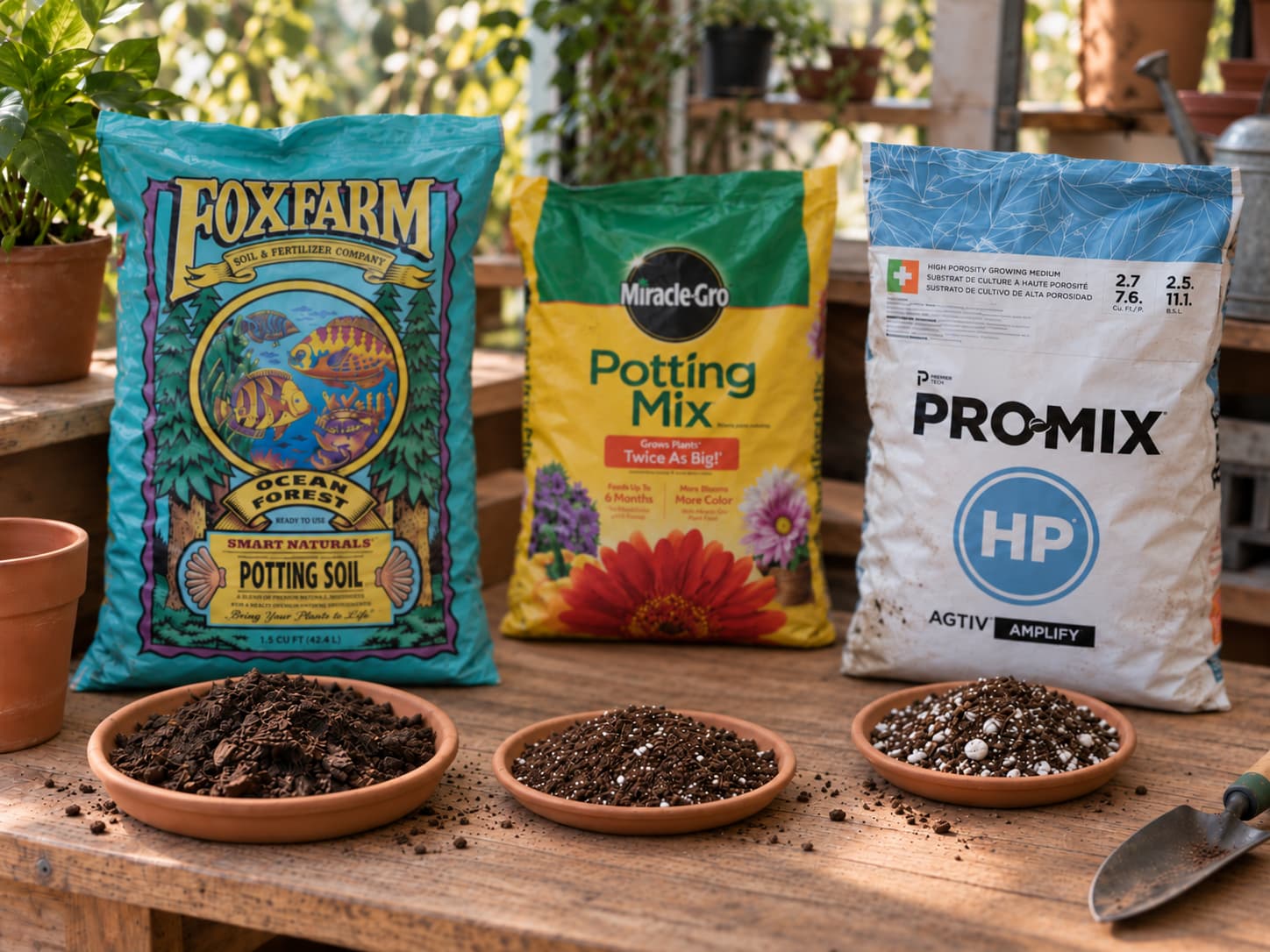
Potting Mix Comparison: FoxFarm vs Miracle-Gro vs PRO-MIX HP
| Feature | FoxFarm Ocean Forest | Miracle-Gro Potting Mix | PRO-MIX HP |
|---|---|---|---|
| Product type | Ready-to-use, nutrient-containing potting soil | All-purpose potting mix for indoor and outdoor containers | Professional high-porosity, peat-based soilless growing medium |
| Main structure | Aged forest products, sphagnum peat moss, perlite, sandy loam and organic-derived amendments | Peat/bark/coir-based blend with perlite; exact formulation can vary by market and package | 65–75% sphagnum peat moss plus a high proportion of coarse perlite, limestone and wetting agent in the HP line |
| Built-in nutrients | Yes. Current U.S. label lists fertilizer in the formulation; feeding timing should follow the plant and label rather than a fixed “30-day” rule | Yes. Current U.S. product page says feeds for up to 6 months | Yes, but only a starter charge. Manufacturer recommends beginning a fertilizer program about 7–10 days after planting |
| Water behavior | Balanced moisture retention with aeration | Designed to retain useful moisture while still draining in containers | High air porosity, lower water retention, dries more frequently than general-purpose peat mixes |
| Best fit | Growers who want a richer ready-to-use base for many tropical foliage plants and container crops | Beginners and general container use where convenience and broad availability matter | Growers who want more control over irrigation and feeding, or need a high-porosity root zone |
| Watch-out | Can be more nutrient-rich than needed for plants that prefer lean, mineral-heavy media | Watering frequency still has to match pot size, light and plant demand; no brand is “gnat-proof” | Not fertilizer-free, but the starter charge is short-lived; regular feeding becomes part of the system |
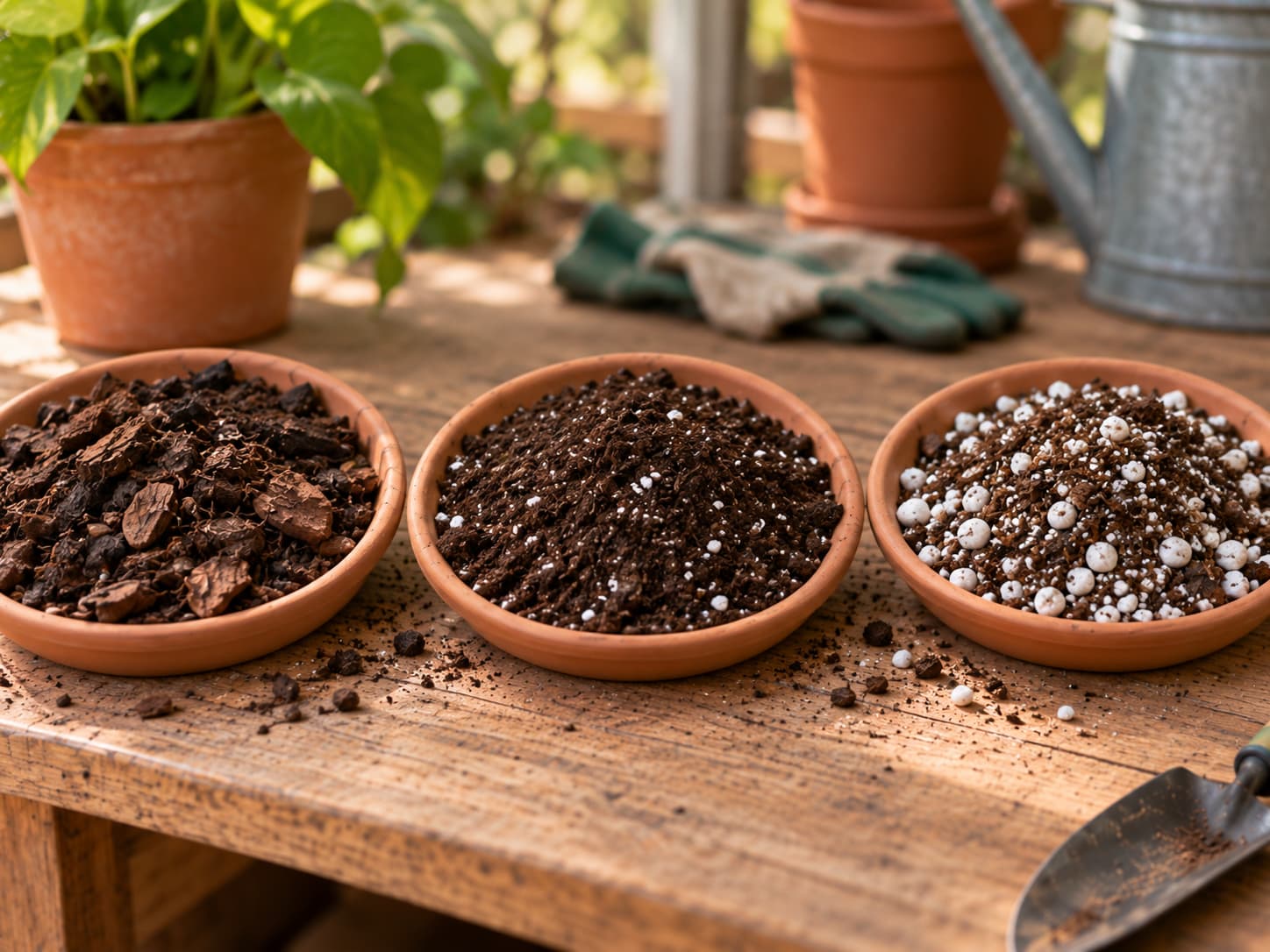
How I Read This 8-Week Potting Mix Comparison
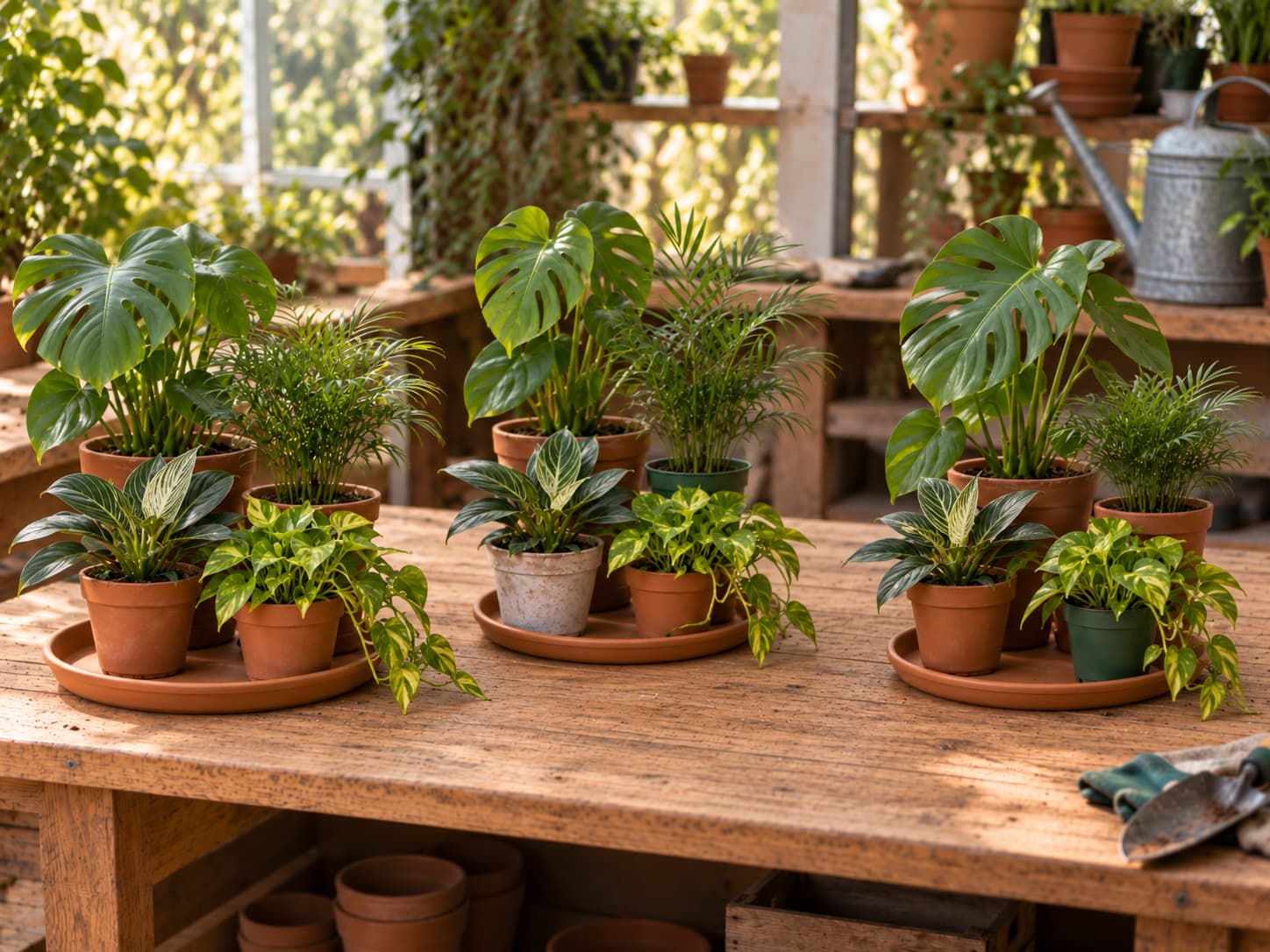
The original test notes tracked four plant types in each medium for eight weeks: Monstera deliciosa, Philodendron Birkin, Parlor Palm, and Golden Pothos. That gives 12 plants total, not 12 plants per soil. The useful part of a test this size is not declaring a universal winner; it is spotting patterns worth paying attention to in a real home.
I looked at four practical signals: visible new growth, root condition at the end of the trial, how forgiving the medium felt around watering, and whether fungus gnats appeared. Those observations are kept below, but they are framed as observations rather than proof that a brand will behave the same way in every home.
FoxFarm Ocean Forest: Rich and Ready to Use
FoxFarm Ocean Forest is built as a ready-to-use container medium. FoxFarm currently lists aged forest products, sphagnum peat moss, earthworm castings, bat guano, fish emulsion and crab meal among its ingredients, with perlite and sandy loam contributing to texture and aeration. The U.S. label also lists fertilizer in the mix.
That matters because the old version of this article treated Ocean Forest as if it had a fixed “about 30 days” of nutrition. The manufacturer does not give a universal 30-day expiration point. How quickly plants need supplemental feeding depends on crop demand, watering, container size and growing conditions.
Observed in the 8-week Greenmuse trial
| Plant | Week 4 observation | Week 8 observation | Gnats observed? |
|---|---|---|---|
| Monstera deliciosa | 2 new leaves unfurling | 4 new leaves, deep green | None recorded |
| Philodendron Birkin | 1 new leaf | 3 new leaves | None recorded |
| Parlor Palm | Steady | 2 new fronds | 1–2 adults recorded |
| Golden Pothos | 3 new vine extensions | 8+ new leaves | None recorded |
In this small trial, Ocean Forest produced the strongest visible foliage growth overall. That is a useful observation, but it does not prove that the bag itself caused every difference. One plant per species per treatment is too small a sample to separate genetics, starting root mass and individual watering response.
Where I would not use it unchanged
I would not treat Ocean Forest as a universal mix. For cacti, many succulents and other plants that prefer a leaner, faster-drying root zone, I would either use a purpose-built succulent mix or make the organic component a smaller share of a much more mineral-heavy blend. For seed germination, a dedicated fine-textured seed-starting mix is the cleaner choice; FoxFarm itself markets Ocean Forest for containers and plant starts, but it is not the same thing as a specialized germination medium.
Miracle-Gro Potting Mix: Convenient, but Moisture Management Matters
Miracle-Gro Potting Mix is designed for indoor and outdoor containers, and the current U.S. product page says it feeds plants for up to six months. ScottsMiracle-Gro also describes the blend as using moisture-holding components such as peat, bark fines and coir, with perlite contributing aeration.
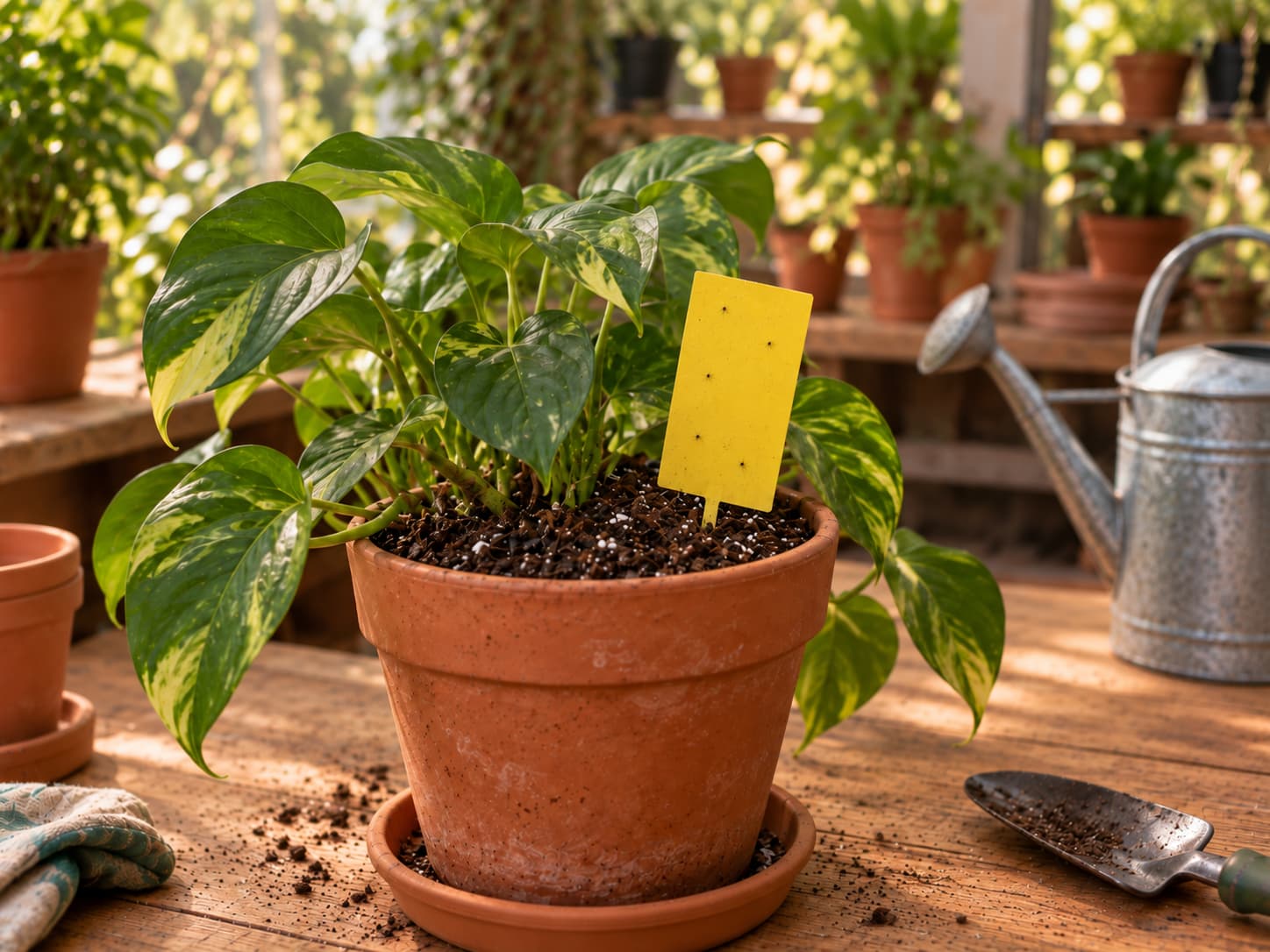
The previous draft blamed Miracle-Gro itself for fungus gnats. That is too strong. University of California IPM guidance is more useful: fungus gnats thrive in moist organic media, especially where overwatering, poor drainage and prolonged surface moisture are present. Almost any organic-containing growing medium can become infested if it stays wet or is stored exposed.
Observed in the 8-week Greenmuse trial
| Plant | Week 4 observation | Week 8 observation | Gnats observed? |
|---|---|---|---|
| Monstera deliciosa | 1 new leaf, lighter green | 2 new leaves | Moderate in this pot |
| Philodendron Birkin | 1 small new leaf | 2 new leaves | Heavy in this pot |
| Parlor Palm | Steady | 1 new frond | Moderate in this pot |
| Golden Pothos | 2 vine extensions | 6 new leaves | Light in this pot |
Gnats appeared in the Miracle-Gro group in this particular trial, but the scientifically useful takeaway is “this group stayed favorable to gnats under these home conditions,” not “every bag of Miracle-Gro contains gnats.” If a pot remains damp for long stretches, adjust watering, pot size, drainage and light before assuming the brand is the only cause.
When Miracle-Gro can be a sensible choice
- General indoor and outdoor containers where you want a widely available, ready-to-use mix.
- Large seasonal planters where cost and availability matter more than building a custom substrate.
- Plants that prefer more even moisture — as long as the pot still has drainage and the mix is allowed to breathe.
- Situations where you are willing to add coarse aeration material if the mix stays wet too long in your specific home.
PRO-MIX HP: High Porosity and More Grower Control
PRO-MIX HP is different from the other two because it is a professional high-porosity growing medium rather than a consumer “feed for months” potting mix. In the current HP BIOFUNGICIDE + MYCORRHIZAE formulation, Premier Tech lists 65–75% sphagnum peat moss plus coarse perlite, limestone and a wetting agent. The manufacturer describes the medium as high in air porosity and relatively low in water retention.
The original article said PRO-MIX HP contains no fertilizer. That is incorrect. Premier Tech says the HP line includes a starter fertilizer charge and recommends beginning a regular fertilizer program within about 7–10 days of planting. Exact biological additives also depend on the HP SKU, so check the bale label rather than assuming every “HP” package contains the same Bacillus/mycorrhizae combination.
About the mycorrhizae claim
Mycorrhizal fungi can increase a plant root system’s access to water and nutrients when a compatible relationship establishes successfully. University of Minnesota soil-biology material shows substantial nutrient-uptake differences in mycorrhizal systems, but the effect is not a universal “20–40% container-plant boost.” Plant species, phosphorus level, inoculant viability and growing conditions all matter.
Observed in the 8-week Greenmuse trial
| Plant | Week 4 observation | Week 8 observation | Gnats observed? |
|---|---|---|---|
| Monstera deliciosa | 1 new leaf, strong roots | 3 new leaves, dense pale roots | None recorded |
| Philodendron Birkin | 2 new leaves | 4 new leaves | None recorded |
| Parlor Palm | 1 new frond | 3 new fronds | None recorded |
| Golden Pothos | 3 vine extensions | 7 new leaves | None recorded |
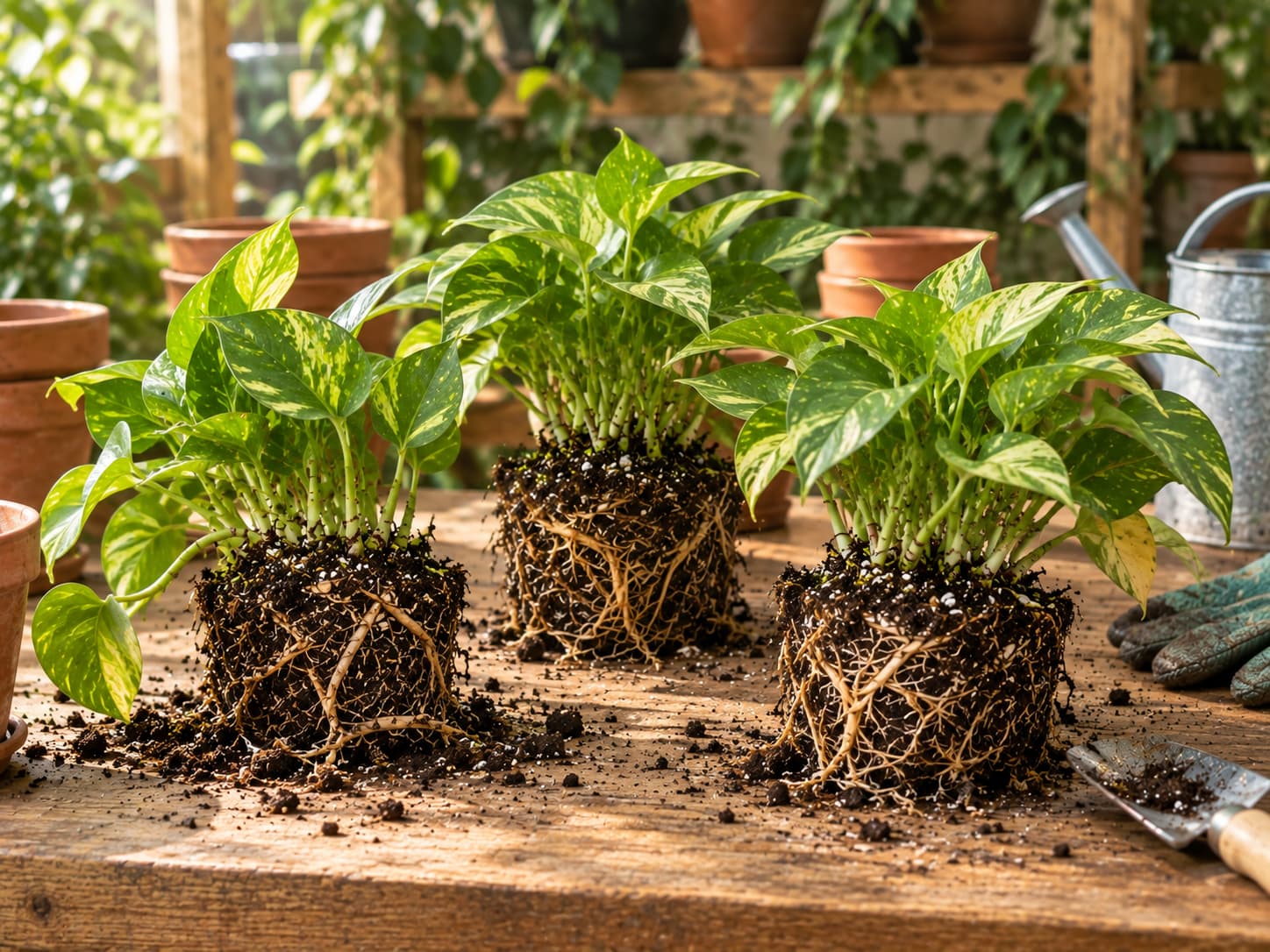
In this trial, PRO-MIX HP produced the strongest-looking root system and the best Parlor Palm response. That result fits the product’s high-porosity design, but again, it should be read as a home observation, not a brand guarantee.
Potting Mix Comparison Results: What the 12-Plant Trial Suggests
| Question | Best signal in this trial | How to interpret it |
|---|---|---|
| Most visible foliage growth | FoxFarm Ocean Forest | Convenient nutrient-containing base performed well on the tropical foliage plants used here |
| Best-looking roots | PRO-MIX HP | High porosity appeared to suit the root systems in this setup |
| Most control over feeding | PRO-MIX HP | Short starter charge means the grower takes over nutrition early |
| Most straightforward “open bag and pot” option | FoxFarm / Miracle-Gro | Both are designed as ready-to-use consumer potting mixes |
| Gnats in this specific trial | Lowest in PRO-MIX HP group | Do not generalize this into a brand guarantee; moisture and sanitation remain the major controls |
5 Potting-Mix Mistakes That Matter More Than the Brand Name
1. Using one mix unchanged for every plant
A Monstera, fern and cactus do not need the same air-to-water balance. Start with the plant’s root ecology, then choose or amend a medium that dries at an appropriate speed in your home.
2. Adding amendments by recipe without checking how your pot actually dries
Adding perlite, pumice or bark can increase air space, but there is no universal 20% or 30% rule that is perfect for every plant. A useful starting ratio is only a starting ratio. Pot material, root mass, light and room humidity can change the result dramatically.
3. Reusing old media automatically
Used potting media can lose structure, accumulate fertilizer salts, and carry root pathogens or pests. Premier Tech specifically advises against reusing PRO-MIX growing media. For high-value indoor plants, fresh disease- and pest-free media is usually the cleaner choice.
4. Putting gravel in the bottom of a normal pot “for drainage”
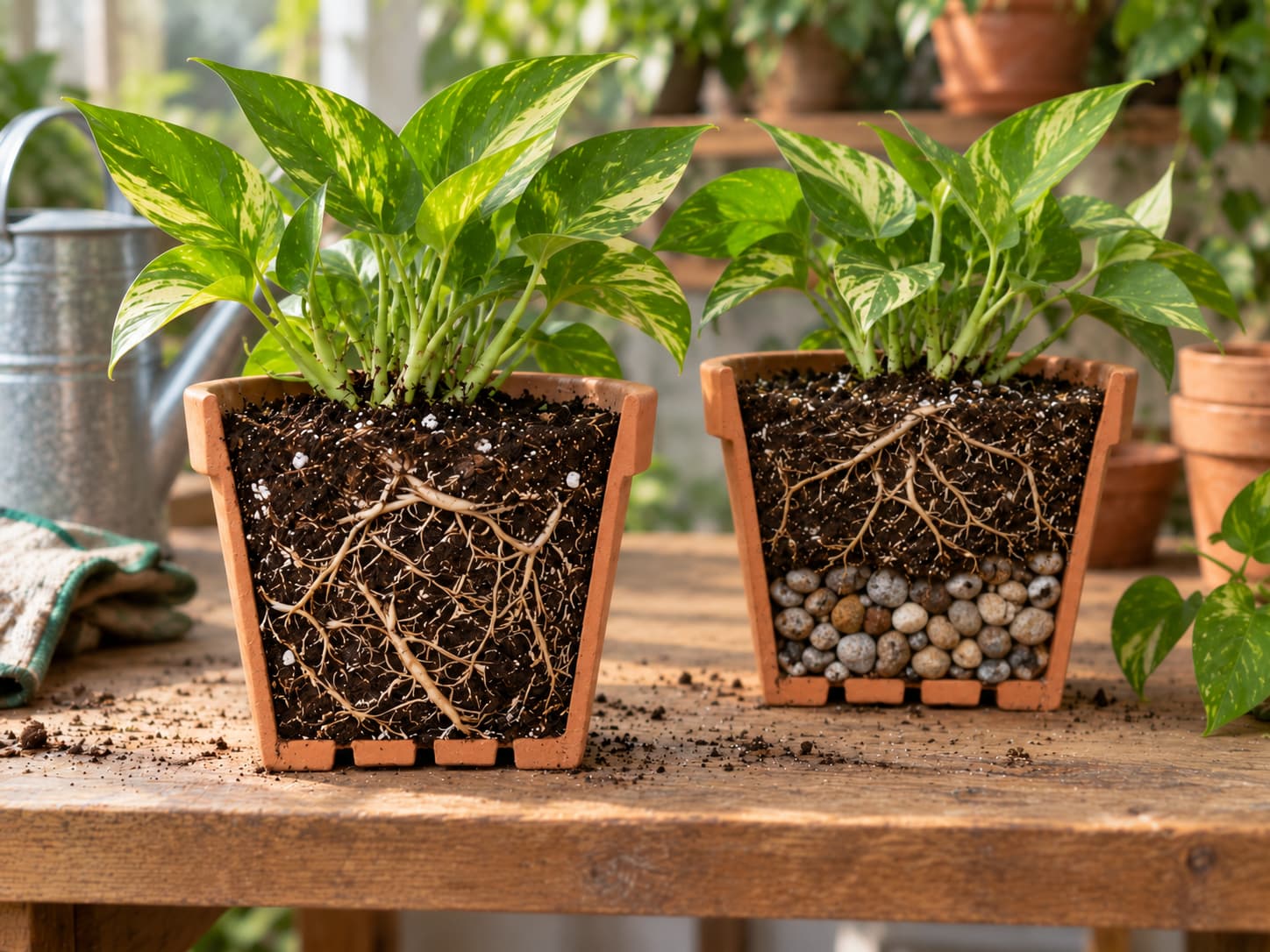
Skip the gravel layer inside a regular pot. University of Illinois Extension explains that water tends to perch in the finer potting medium above the coarse layer, so gravel does not improve drainage the way people expect. Use drainage holes and a suitable medium all the way to the bottom.
5. Choosing by price without comparing usable volume and amendments
The old draft’s price-per-quart table was mathematically unreliable and mixed package sizes. Prices also move too quickly for an evergreen article. A better checkout test is simple: compare the current price per expanded quart or cubic foot, then add the cost of any perlite, bark, pumice or fertilizer you will need to make that medium work for your plants.
Simple Mix Recipes I Would Actually Use
You do not need a shelf full of ingredients. Two or three components can cover most home situations. Treat the ratios below as starting points and adjust after watching how quickly the pot dries.
For Monstera, Philodendron and Pothos
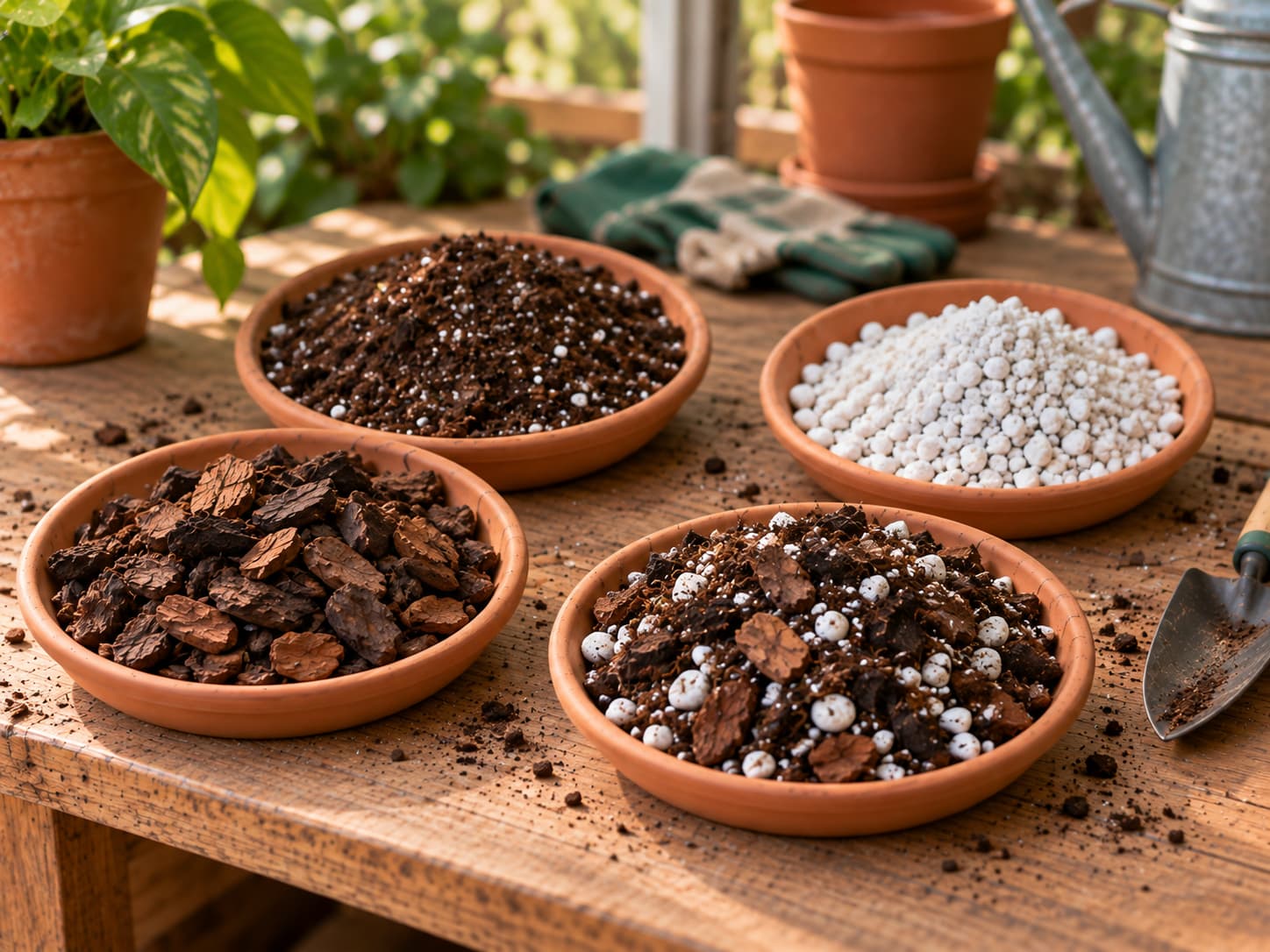
2 parts FoxFarm Ocean Forest + 1 part coarse perlite or pumice + 1 part orchid bark. This keeps the nutrient-containing base while opening more air space around aroid roots.
For moisture-loving foliage plants
3 parts FoxFarm Ocean Forest + 1 part perlite. Keep more moisture-holding material, but still use a pot with drainage. If the plant sits in low light and dries slowly, increase the aeration fraction rather than watering by a fixed schedule.
For succulents and cacti
Use a dedicated fast-draining succulent/cactus medium or make the organic component a minority of a mineral-heavy blend. If PRO-MIX HP is your base, combine it with additional pumice/perlite and coarse mineral grit, then test the dry-down rate before using the recipe across an entire collection.
For seed starting
Use a purpose-made seed-starting medium. Premier Tech says HP can be used for transplanting seedlings, but recommends its finer FPX-type medium for germination. A dedicated fine mix gives tiny roots more uniform contact than a coarse aroid or high-bark recipe.
Potting Mix Comparison: Which One Should You Buy?
| Your situation | Best starting choice | Why |
|---|---|---|
| First-time plant parent with common tropical houseplants | FoxFarm Ocean Forest or Miracle-Gro Potting Mix | Both are designed to work out of the bag; choose based on local price, availability and how quickly your pots dry |
| Collector who already fertilizes on a routine | PRO-MIX HP | High porosity and early grower-controlled nutrition make it easy to tune |
| Monstera / Philodendron / Pothos collection | FoxFarm + coarse aeration + bark | Combines a richer base with a chunkier aroid-friendly structure |
| Succulent or cactus collection | Purpose-built gritty mix or PRO-MIX HP used as only part of a more mineral-heavy blend | Prioritizes rapid drainage and higher air space |
| Seed germination | Dedicated seed-starting mix | Fine texture and predictable early moisture matter more than choosing one of these three general products |
| Current fungus gnat problem | Fresh, clean potting medium + moisture correction + labeled Bti if needed | Changing brands alone will not break the lifecycle if the new pot remains continuously damp |
What this potting mix comparison means in practice: choose the medium that best matches your plant, container, light, watering habits, and desired level of feeding control rather than treating one brand as the universal winner.
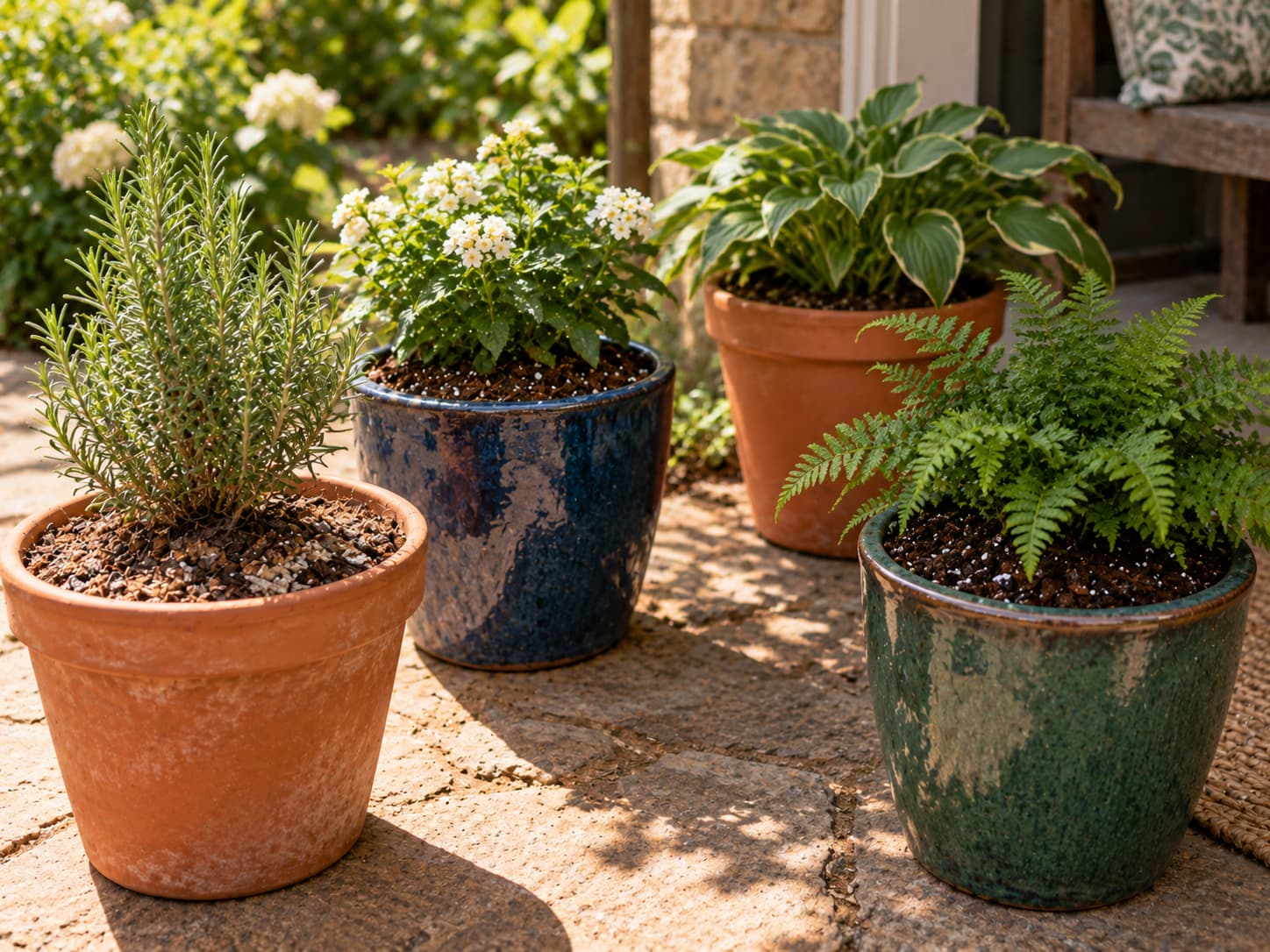
Outdoor Containers: Climate and Exposure Matter More Than USDA Zone
The previous draft used USDA hardiness zones to decide which bag should retain more or less water. That is not what the zone map measures. USDA Plant Hardiness Zones are based on average annual extreme minimum winter temperature — useful for perennial cold hardiness, but not a shortcut for summer heat, wind, humidity, rainfall or container dry-down.
For outdoor pots, make your medium decision from the conditions the container actually experiences:
- Hot sun + terracotta + wind: the same mix will dry faster, so you may want more water-holding capacity or larger containers.
- Humid shade + glazed or plastic pot: the mix may stay wet much longer, so extra air space can be useful.
- Heavy seasonal rain: prioritize drainage holes and structure that does not collapse into a dense, waterlogged mass.
- Balcony or rooftop: wind can accelerate drying dramatically even when the USDA zone is the same as a sheltered ground-level garden nearby.
Frequently Asked Questions
Is FoxFarm Ocean Forest worth more than Miracle-Gro?
It can be, especially if you value its ingredient profile and want a nutrient-containing base for tropical foliage plants. But “worth it” depends on your local price and whether you would need to amend either product. Compare cost per usable volume at the time you buy rather than relying on a fixed national price table.
Does Miracle-Gro Potting Mix cause fungus gnats?
Not automatically. Fungus gnats reproduce in moist organic media, and UC IPM notes that almost any organic-containing growing medium can become infested if it stays wet or is stored exposed. In the Greenmuse home trial, the Miracle-Gro pots had the most gnats, but that observation should not be turned into a universal brand claim.
Is PRO-MIX HP fertilizer-free?
No. Premier Tech says PRO-MIX HP contains a starter fertilizer charge and recommends starting a regular fertilizer program within about 7–10 days after planting. It gives you more feeding control than a months-long slow-release consumer mix, but it is not nutrient-free out of the package.
Can I use PRO-MIX HP for succulents?
It can be a useful high-porosity base, but many succulents still benefit from additional mineral aeration such as pumice or perlite. The right ratio depends on species, pot size, light and climate. For beginners, a dedicated gritty succulent mix is often simpler.
How should I treat fungus gnats in potting mix?
Start with the conditions that sustain them: reduce overwatering, improve drainage, let the surface dry when the plant tolerates it, remove decaying debris, and use yellow sticky cards to monitor adults. UC IPM also supports Bti products labeled for fungus gnat larvae; follow the product label rather than making a homemade concentration.
Should I bake potting soil in my kitchen oven before using it?
Usually no. For routine houseplant repotting, buy clean commercial potting mix and store opened bags sealed, dry and off the ground. UC IPM recommends pasteurized mix and describes solarization as a home option for suspect media. Commercial heat treatment is different from casually overheating a peat-based mix in a kitchen oven.
How long does opened potting mix last?
There is no reliable universal “six months after opening” rule across all brands. Keep the bag closed, dry, protected from pests and off the ground. Replace media that has become waterlogged, badly compacted, pest-infested, contaminated, or structurally degraded. Follow the storage guidance on the specific product label.
Related Greenmuse Guides
- Why Your Monstera Leaves Are Turning Yellow (And How to Fix It)
- Containers vs In-Ground Planting: Which Is Better?
- How to Bring Outdoor Plants Indoors Before Winter
- Succulents Made Simple: Beginner Care Guide
- How to Propagate Succulents from Leaves
- Houseplant Heat Stress: Signs, Causes & Fixes
- Apartment Composting: 5 Easy Methods for Small Spaces
Sources & Product References
- FoxFarm — Ocean Forest Potting Soil
- ScottsMiracle-Gro — Miracle-Gro Potting Mix
- Premier Tech — PRO-MIX HP BIOFUNGICIDE + MYCORRHIZAE
- University of California IPM — Fungus Gnats
- University of Minnesota Extension — Fertilizing and Watering Container Plants
- University of Minnesota Extension — Soil Biology and Mycorrhizae
- University of Illinois Extension — Container Drainage Options
- USDA — How to Use the Plant Hardiness Zone Map