5 Herbs You Can Grow Indoors All Winter (No Grow Light Needed)
Here's what happens every November: you're making soup, you reach for fresh herbs, and you realize the garden is frozen. You could buy those $3.50 plastic clamshells of wilted basil at the grocery store—or you could have a windowsill herb garden that produces fresh flavor all winter.
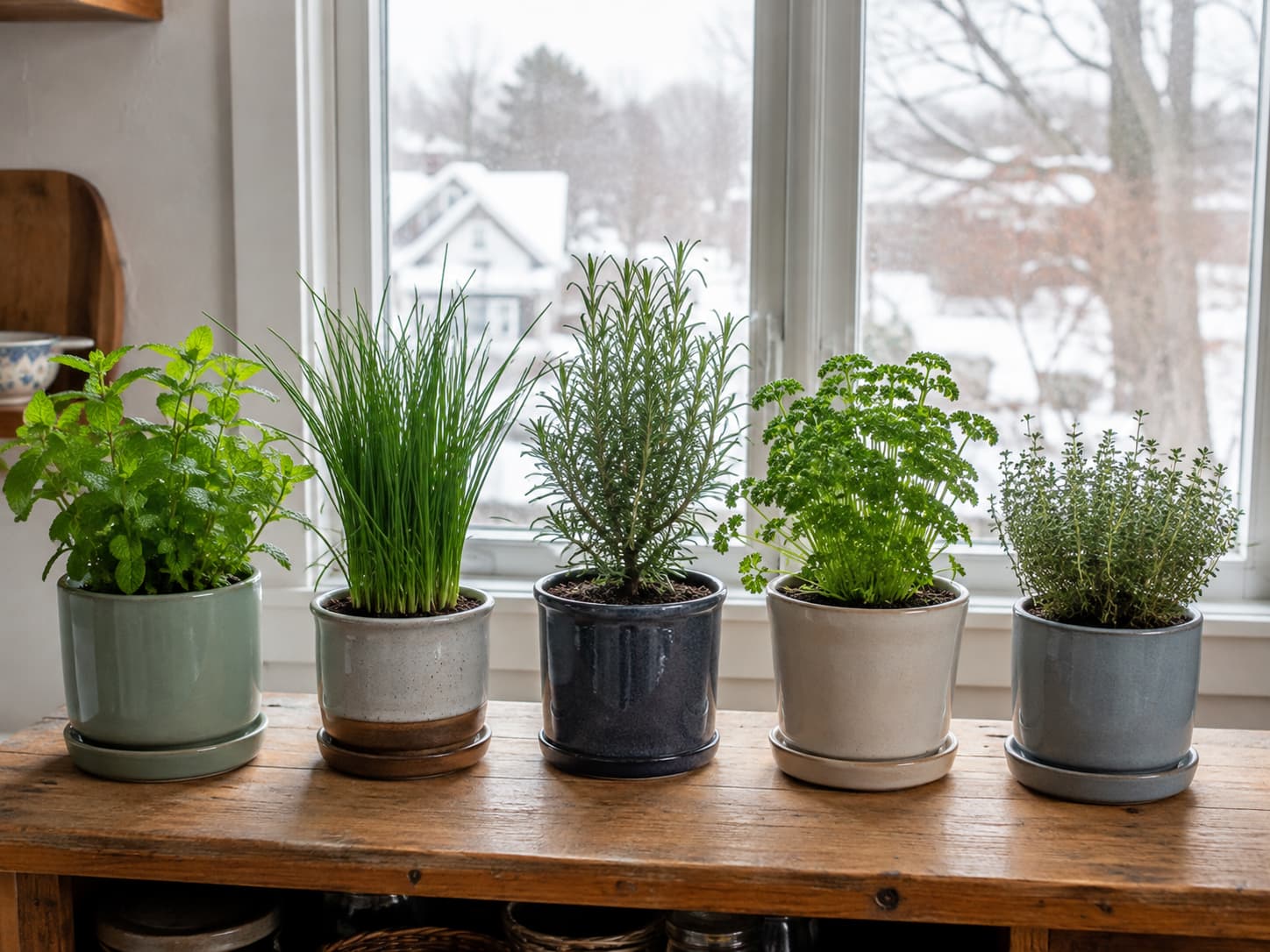
I've been growing herbs indoors through winter for three years, and I've figured out which ones actually survive and which ones waste your time. The key insight: most popular herbs are terrible indoors. Basil, cilantro, and dill need more light and heat than winter windowsills provide. But five herbs—mint, chives, rosemary, parsley, and thyme—are among the more practical choices for a bright winter windowsill when their individual light and watering needs are met.
This guide covers those five: how to start them, where to put them, how often to water, and how much you can realistically harvest. The focus is natural window light, simple containers, and realistic winter growth rather than maximum production.
greenmuse-illustration-five-herbs-indoor-winter-windowsill.jpg
Why These 5 and Not Others
I tested 10 herbs indoors over two winters. Here's what worked and what didn't:
| Herb | Survived Winter Indoors? | Why |
|---|---|---|
| Mint | Thrived | Tolerates low light; grows in any condition; more forgiving than many culinary herbs |
| Chives | Thrived | Cold-hardy perennial; naturally goes dormant then regrows; can tolerate somewhat lower winter light than sun-loving herbs |
| Rosemary | Survived (with attention) | Needs good airflow and careful watering; worth the effort for the flavor |
| Parsley | Survived | Biennial that keeps producing leaves through winter; slow but steady |
| Thyme | Survived | Mediterranean herb that tolerates dry indoor air; needs sun but not much water |
| Basil | Died by December | Needs 70°F+ and 8+ hours direct sun; usually struggles on a dim winter windowsill without supplemental light |
| Cilantro | Bolted immediately | Long days + warm indoor temps = instant bolting; often becomes difficult to keep productive indoors without stronger light and cooler growing conditions |
| Dill | Stretched and flopped | Too tall for windowsills; needs more light than winter provides |
| Sage | Barely survived | Powdery mildew in stagnant indoor air; survives but looks terrible |
| Oregano | Survived but weak | Very slow growth; flavor is weak compared to outdoor-grown |
Drag the bar below or swipe horizontally to view the remaining columns.
The Windowsill Reality Check
greenmuse-illustration-indoor-herbs-bright-winter-window-light.jpg
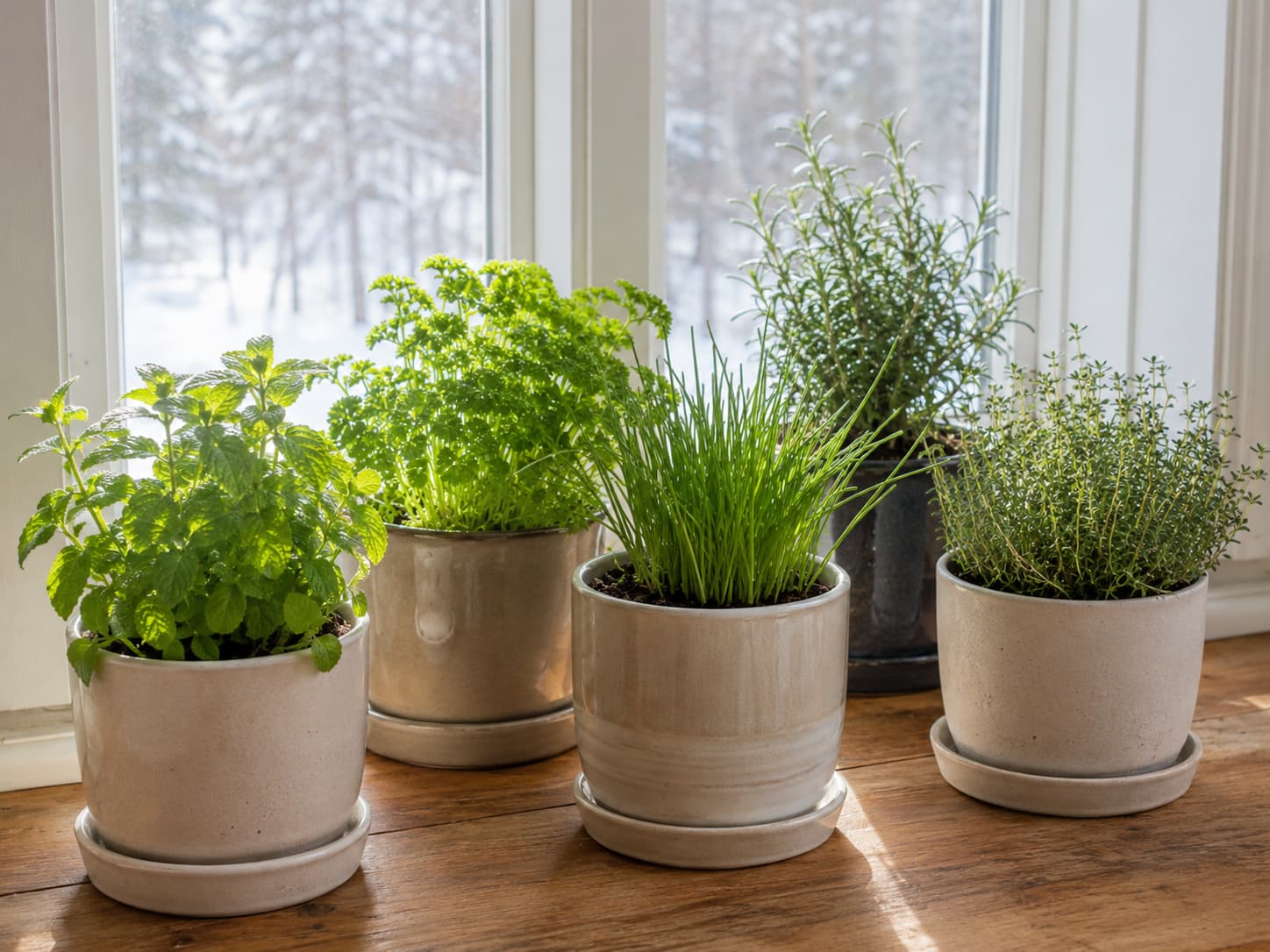
Before you buy anything, assess your light honestly. Herbs need at least 4 hours of direct sunlight on the leaves to produce flavorful growth. "Bright room" doesn't count—direct means you can see a defined shadow from the plant's leaves at midday.
| Window Direction | Direct Sun Hours (Winter) | Can Grow Herbs? | Best Herbs for This Window |
|---|---|---|---|
| South-facing, unobstructed | 4–6 hours | All 5 herbs | Rosemary, thyme (sun-lovers), plus the others |
| East-facing | 2–3 hours morning sun | Some herbs | Mint, chives, parsley (more shade-tolerant) |
| West-facing | 2–4 hours afternoon sun | Some herbs | Mint, parsley, chives; rosemary might work |
| North-facing | 0–1 hour | Not enough | Mint only (and it'll be leggy) |
Drag the bar below or swipe horizontally to view the remaining columns.
If your best window gets less than 3 hours of direct sun, your herbs will grow slowly and have weaker flavor. They won't die (mint survives almost anything), but you won't get much to harvest. Consider a single grow bulb in a desk lamp as a supplement—it makes a real difference for $15.
Herb #1: Mint — The Unkillable Indoor Herb
greenmuse-illustration-mint-growing-indoors-winter-window.jpg
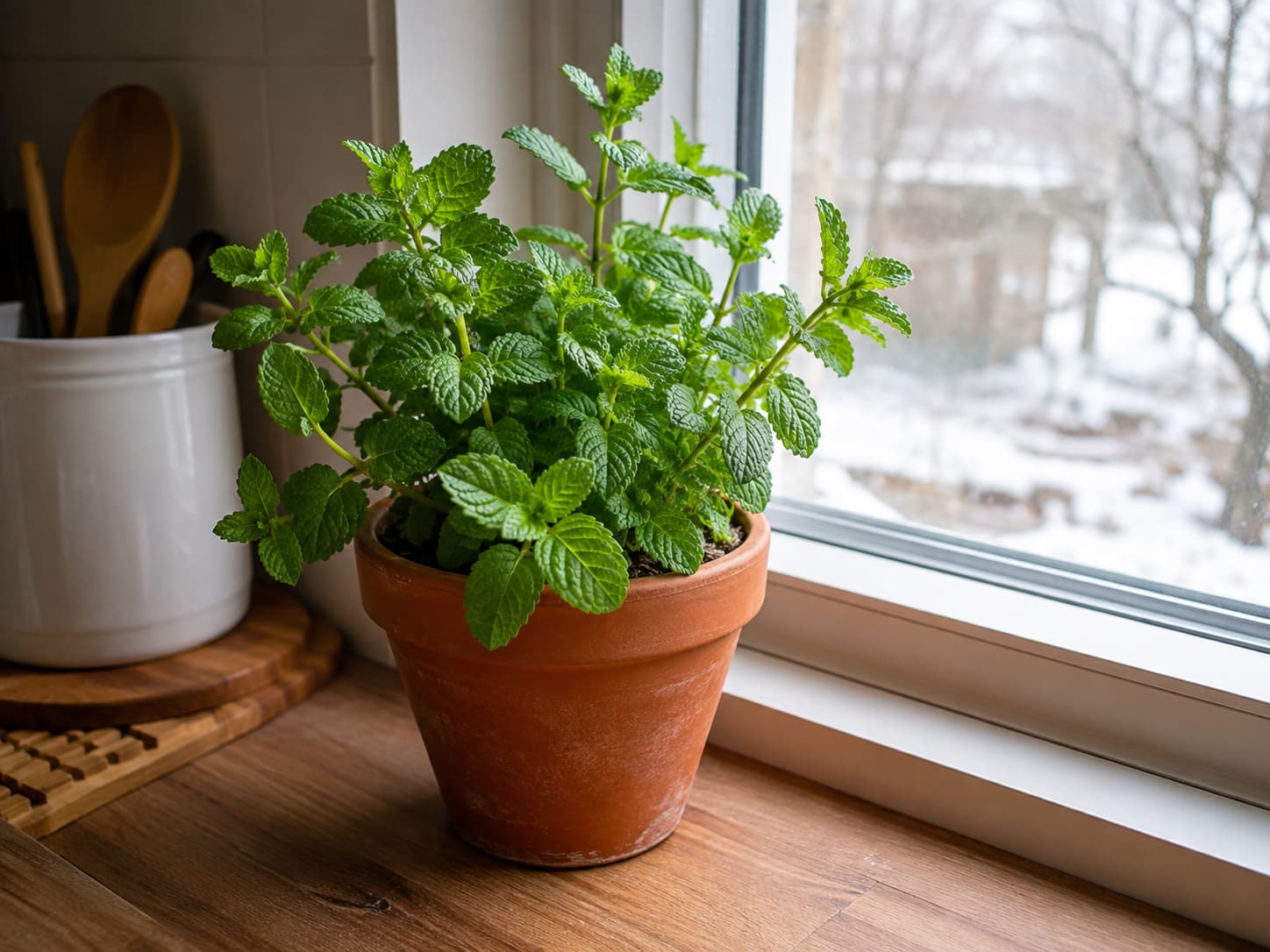
If you've ever grown mint outdoors, you know it spreads like a weed. That same vigor makes it the #1 easiest herb to grow indoors. It tolerates low light, inconsistent watering, and neglect better than any other culinary herb.
3 Rules for Indoor Mint
- Keep it in its own pot. Always. Mint's roots are aggressive and will choke out any other plant sharing its container. I use a 6-inch terracotta pot dedicated to mint and nothing else. For more on mint's container behavior, see our complete mint growing guide.
- Water when the top inch of soil is dry. Mint likes consistent moisture but not soggy soil. In winter, this usually means every 5–7 days.
- Harvest often. Pinch stems regularly to keep the plant bushy. If you don't harvest, mint gets leggy and the lower leaves yellow. Every time you make tea or a cocktail, snip a few sprigs—it's pruning disguised as cooking.
Best Varieties for Indoors
- Spearmint (Mentha spicata) — Classic mint flavor; most versatile for cooking
- Peppermint (M. × piperita) — Stronger, cooler flavor; best for tea
- Chocolate mint (M. × piperita 'Chocolate') — Subtle chocolate undertone; fun for desserts and hot cocoa
My indoor spearmint has been producing harvestable leaves for 18 consecutive months through three winters. I water it when I remember (roughly weekly) and it sits on an east-facing kitchen windowsill. I harvest small sprigs regularly for tea. It's the lowest-effort, highest-return plant in my house.
Herb #2: Chives — The Comeback Champion
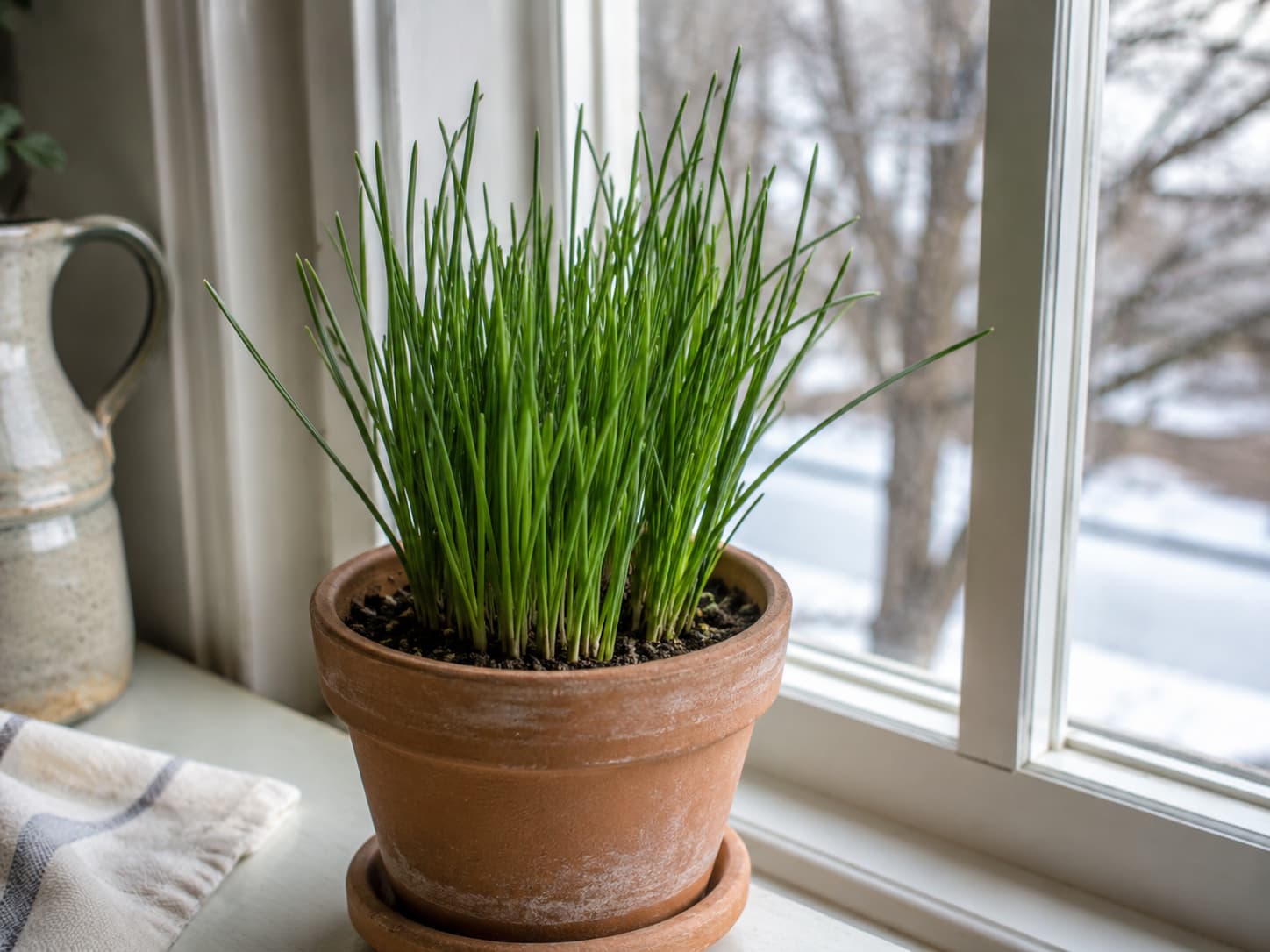
greenmuse-illustration-chives-growing-indoors-winter.jpg
Chives are a cold-hardy perennial that naturally dies back in winter and regrows in spring. When you bring a pot indoors, you're essentially tricking it into skipping dormancy. Growth is slower than outdoors, but you'll get enough for garnishing soups, salads, and eggs through the cold months.
3 Rules for Indoor Chives
- Start from an existing plant, not seeds. Dig up a clump from your garden in fall, pot it in a 6-inch container, and bring it inside. Seeds take 8–12 weeks to reach harvestable size—not practical for winter use.
- Cut leaves from the outside, 1 inch above the soil. New growth comes from the center. Never cut all the leaves at once—leave at least ⅔ of the clump intact so it can keep growing.
- Expect a brief dormancy. In November or December, your chives may yellow and stop growing for 2–3 weeks. This is normal—don't throw the plant out. Reduce watering, and new green shoots will appear by January.
Chive flowers are edible too—break them into individual florets and scatter over salads for a mild onion flavor and a beautiful purple accent. I let one indoor plant flower each February just for this.
Herb #3: Rosemary — Worth the Extra Attention
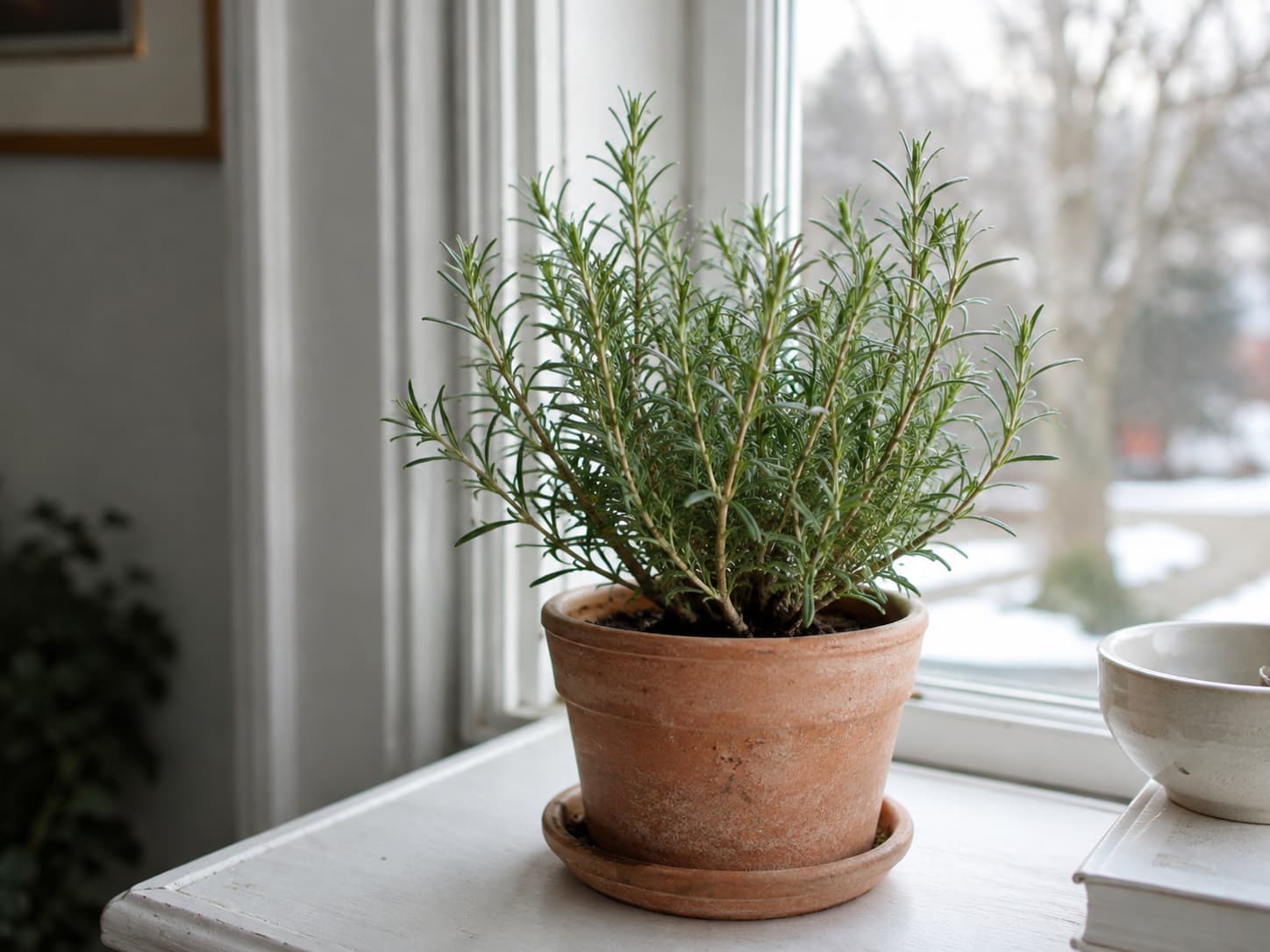
greenmuse-illustration-rosemary-growing-indoors-winter-window.jpg
Rosemary is the most challenging herb on this list indoors, but it's also the most valuable—fresh rosemary at the grocery store costs $3–4 per pack, and a single indoor plant can supply you all winter for the cost of one purchase.
The challenge: rosemary hates warm, stagnant indoor air. It needs cool temperatures, good airflow, and careful watering. For complete troubleshooting, see our indoor rosemary dying guide and our full indoor rosemary growing guide.
4 Rules for Indoor Rosemary
- Put it in the coolest room with the brightest window. Rosemary generally appreciates a bright, relatively cool indoor location with good air movement. A south-facing window in an unheated spare room is ideal. A hot, stuffy kitchen is the worst.
- Water only when the top 2 inches of soil are dry. Overwatering kills rosemary faster than anything—the roots rot in soggy soil. Err on the dry side.
- Never let it sit in drained water. Empty the saucer religiously. Do not leave the pot standing in drained water, because persistently saturated conditions increase the risk of root problems.
- Provide airflow. Gentle air circulation can help reduce the humid, stagnant conditions that favor powdery mildew. If you see white powder on the leaves, treat immediately with neem oil spray.
The Overwintering Strategy for Outdoor Rosemary
If you have rosemary in a pot outdoors, follow the transition protocol from our bringing plants indoors guide: debug thoroughly, quarantine for 2 weeks, and acclimate gradually to reduced light. The key difference with rosemary: it needs a cooler indoor spot than most other herbs. Don't put it near a heating vent.
Herb #4: Parsley — Slow but Steady
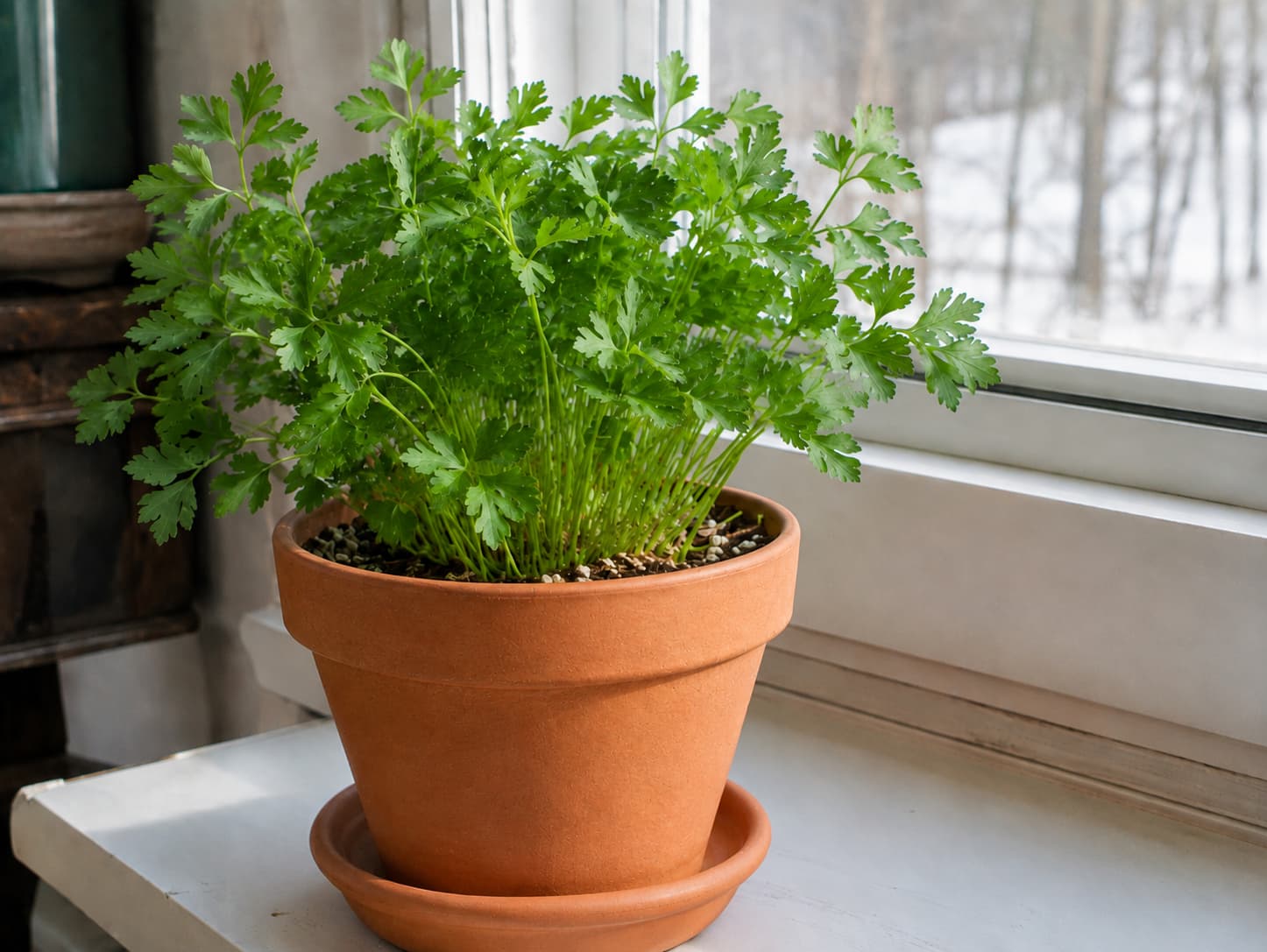
greenmuse-illustration-flat-leaf-parsley-indoors-winter.jpg
Parsley is a biennial—it grows leaves the first year and flowers the second. In its second year, leaf production slows as the plant shifts energy toward flowering. But even a second-year parsley plant produces enough leaves indoors for garnishing and cooking through winter.
3 Rules for Indoor Parsley
- Grow flat-leaf (Italian) parsley, not curly. Flat-leaf has better flavor and grows more vigorously indoors. Curly parsley is more decorative but produces less harvestable leaf area.
- Be patient. Parsley usually grows more slowly indoors in winter than it does outdoors in brighter conditions. You'll harvest a few sprigs per week, not handfuls. Think of it as a garnish supply, not a bulk ingredient.
- Keep the soil consistently moist but not wet. Parsley has a taproot and doesn't like to dry out completely. Water when the top inch of soil feels dry—usually every 4–5 days indoors.
My indoor parsley produces a modest but useful supply of stems from a single plant in a bright south window. That's enough for garnishing soups, adding to pasta, and making the occasional tabbouleh. It's not abundant, but it's fresh—and that beats the wilted grocery store alternative.
Herb #5: Thyme — The Set-and-Forget Herb
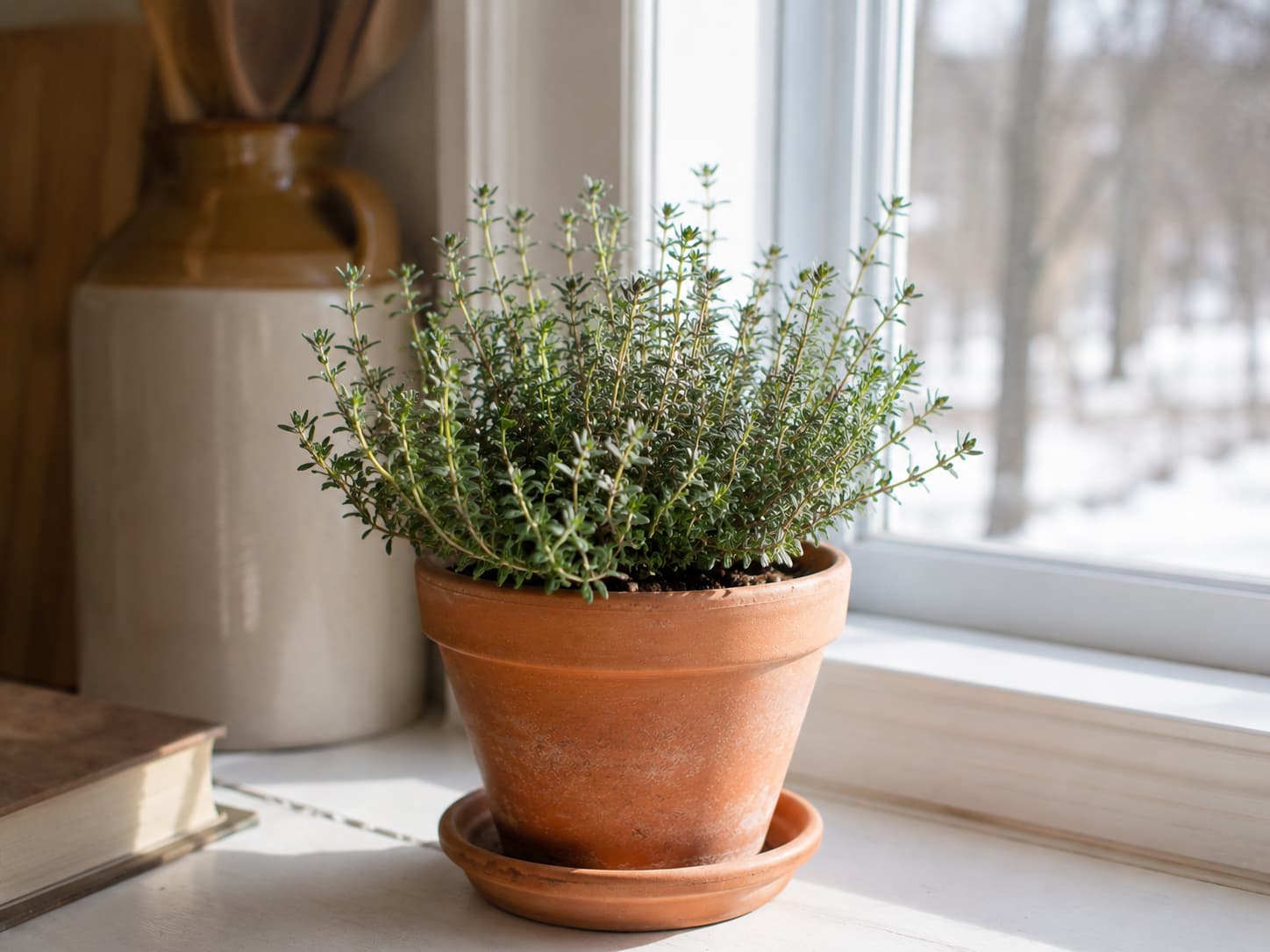
greenmuse-illustration-thyme-growing-indoors-sunny-winter-window.jpg
Thyme is a Mediterranean herb that's adapted to dry, sunny conditions—making it naturally suited to the dry air and reduced watering of indoor winter life. It's the most drought-tolerant herb on this list and the one most likely to survive neglect.
3 Rules for Indoor Thyme
- South-facing window only. Thyme is one of the most light-demanding herbs on this list. A bright south-facing window is ideal; east- or west-facing exposure may work if it receives enough direct winter sun.
- Water only after the potting mix has dried substantially. Thyme prefers to dry out completely between waterings. If the soil feels even slightly moist at 2 inches deep, wait. Overwatered thyme rots at the base and turns black.
- Harvest by snipping stems, not individual leaves. Cut a stem back to a branching point, and use the whole stem (strip the leaves off for cooking). This keeps the plant compact and encourages new branching.
Best Thyme Varieties for Indoors
- Common thyme (Thymus vulgaris) — Standard culinary flavor; most versatile
- Lemon thyme (T. × citriodorus) — Citrus notes; excellent with fish and chicken
- Creeping thyme — Not ideal indoors (it wants to spread horizontally); stick to upright varieties
The Winter Herb Garden Setup (Under $30)
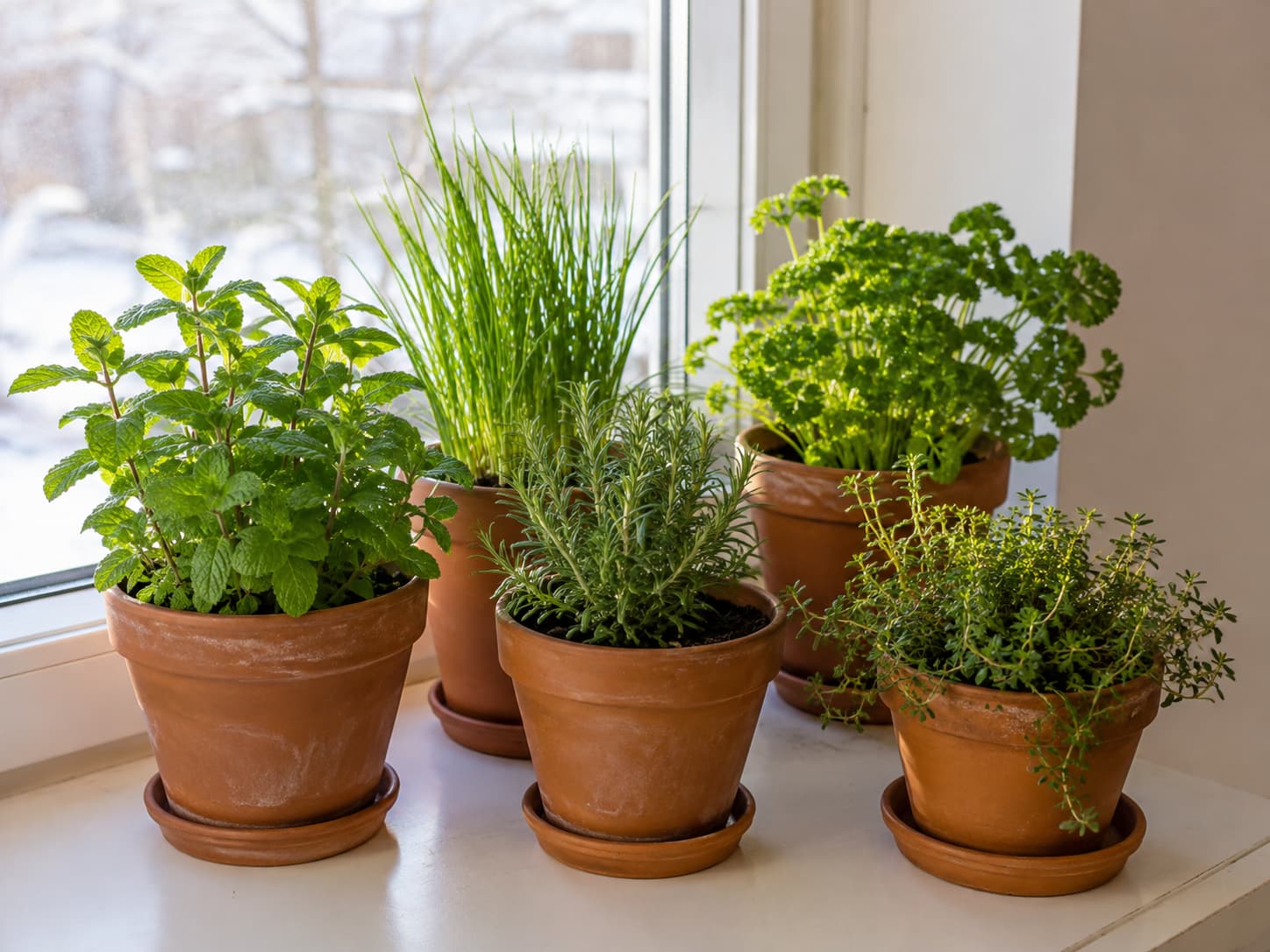
greenmuse-illustration-winter-herb-garden-terracotta-pots-setup.jpg
Here's everything you need for all five herbs on a single windowsill:
| Item | What to Buy | Price |
|---|---|---|
| 5 terracotta pots (6″) | Any garden center or Home Depot | $2 × 5 = $10 |
| Potting soil (1 bag, 8 qt) | Miracle-Gro or similar | $7 |
| Perlite (1 bag, 8 qt) | Mix 50/50 with soil for rosemary and thyme | $5 |
| Mint plant (4″ pot) | Grocery store or garden center | $3–4 |
| Chives (dig from garden) | Free if you have a garden | $0 |
| Rosemary plant (4″ pot) | Garden center | $4–6 |
| Parsley plant (4″ pot) | Garden center | $3–4 |
| Thyme plant (4″ pot) | Garden center | $3–4 |
| Total | ~$35–40 |
Drag the bar below or swipe horizontally to view the remaining columns.
The Winter Watering Schedule
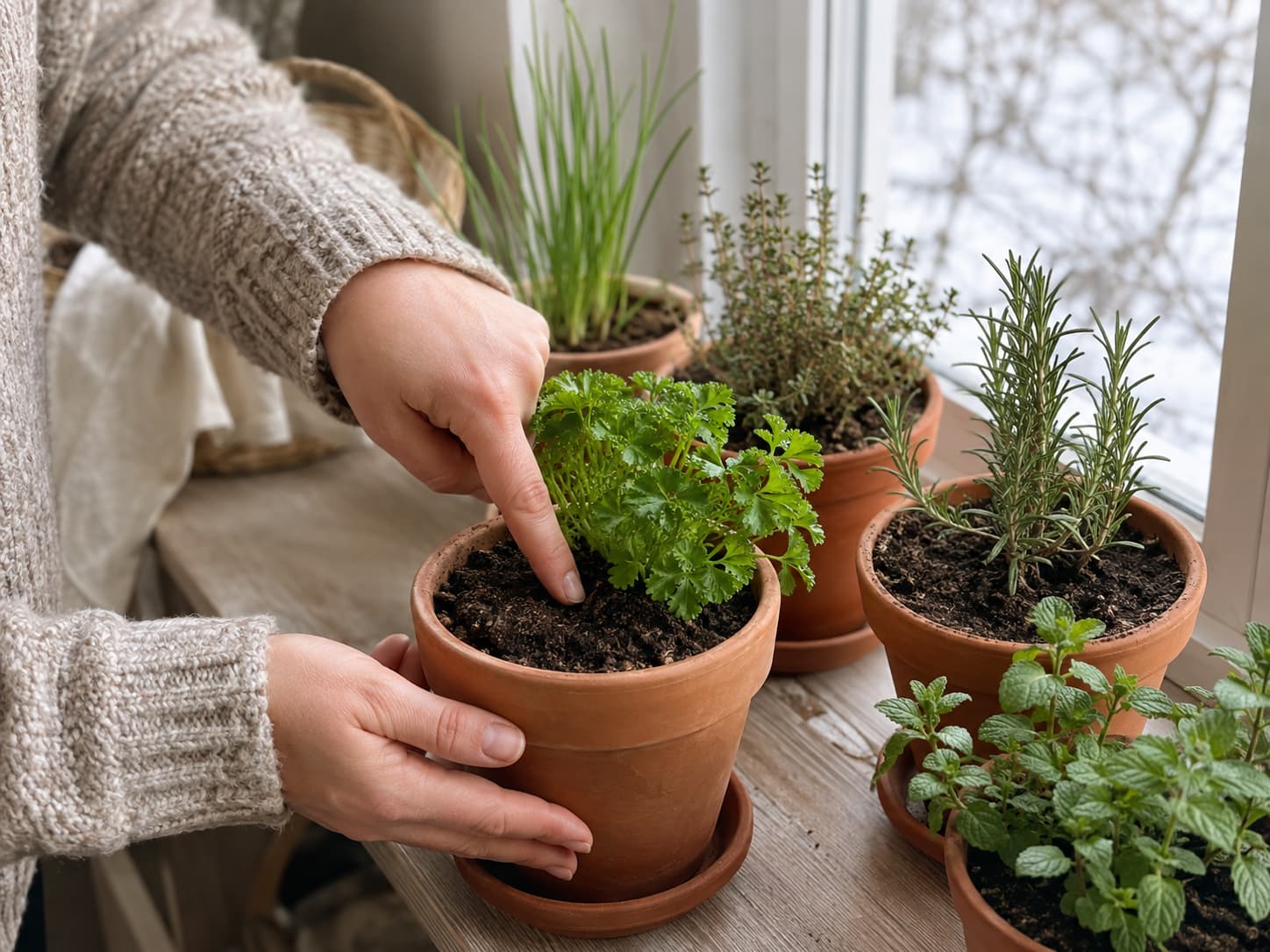
greenmuse-illustration-checking-indoor-herb-soil-moisture-winter.jpg
Indoor herbs need far less water in winter than summer. The lower light and cooler temperatures mean plants grow slower and use less water. Overwatering is the #1 killer of indoor winter herbs.
| Herb | Water When... | Approximate Frequency | Amount |
|---|---|---|---|
| Mint | Top 1″ of soil is dry | Every 5–7 days | Until water drains from bottom |
| Chives | Top 1″ of soil is dry | Every 5–7 days | Until water drains |
| Rosemary | Top 2″ of soil is dry | Every 10–14 days | Until water drains; empty saucer immediately |
| Parsley | Top 1″ of soil is dry | Every 4–5 days | Until water drains |
| Thyme | Top 2″ of soil is dry | Every 10–14 days | Until water drains; empty saucer |
Drag the bar below or swipe horizontally to view the remaining columns.
One universal rule: Always water until it drains from the bottom. Shallow watering encourages shallow roots and salt buildup in the soil. Deep, infrequent watering is always better than frequent, shallow sips.
What to Cook with Your Winter Herb Harvest
Five herbs, five quick meals that showcase each one:
- Mint: Toss torn mint leaves into lentil soup just before serving. The heat releases the aroma without cooking away the flavor. Also: muddle mint + honey + hot water = instant herbal tea.
- Chives: Snip over scrambled eggs in the last 30 seconds of cooking. The mild onion flavor is perfect with eggs—better than any dried herb could provide.
- Rosemary: Strip leaves from a 4-inch stem, chop roughly, and rub onto chicken thighs with olive oil, salt, and pepper before roasting. One stem flavors 4 servings.
- Parsley: Make gremolata: chop 2 tbsp parsley + 1 clove minced garlic + zest of half a lemon. Spoon over roasted vegetables or grilled fish. It takes 2 minutes and transforms a plain dish.
- Thyme: Add 3–4 thyme sprigs to a pot of simmering chicken stock. Remove before serving. Thyme infuses broth with a savory depth that dried thyme can't match.
Common Winter Herb Problems (And Quick Fixes)
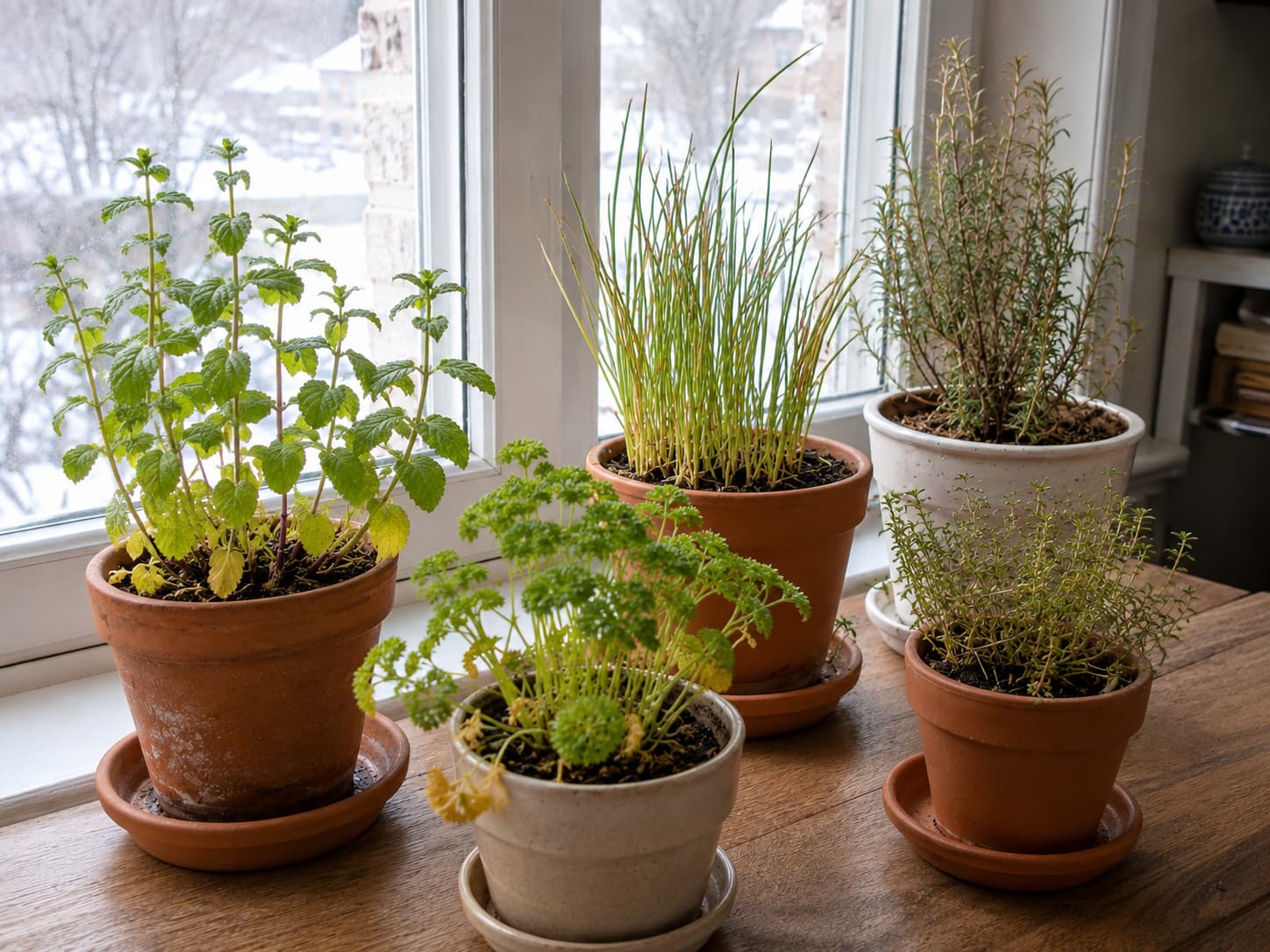
greenmuse-illustration-indoor-herb-winter-stress-comparison.jpg
| Problem | Which Herb | Cause | Fix |
|---|---|---|---|
| Leggy, pale growth | All | Not enough light | Move to a brighter window; rotate pot 90° every 3 days |
| Yellow lower leaves | Mint, parsley | Overwatering | Let soil dry out more between waterings; check drainage |
| Brown, crispy leaf tips | Rosemary, thyme | Dry indoor air | Place pot on a pebble tray with water; don't mist (promotes mildew) |
| White powder on leaves | Rosemary, sage | Powdery mildew | Improve airflow (small fan); treat with neem oil; remove affected leaves |
| Tiny black flies near soil | All | Fungus gnats from overwatering | Let soil dry between waterings; sticky yellow traps ($6/10 pack) |
| Plant stops growing | Chives | Natural winter dormancy | Reduce watering; wait—new growth appears in 2–3 weeks |
Drag the bar below or swipe horizontally to view the remaining columns.
Transitioning Herbs Back Outside in Spring
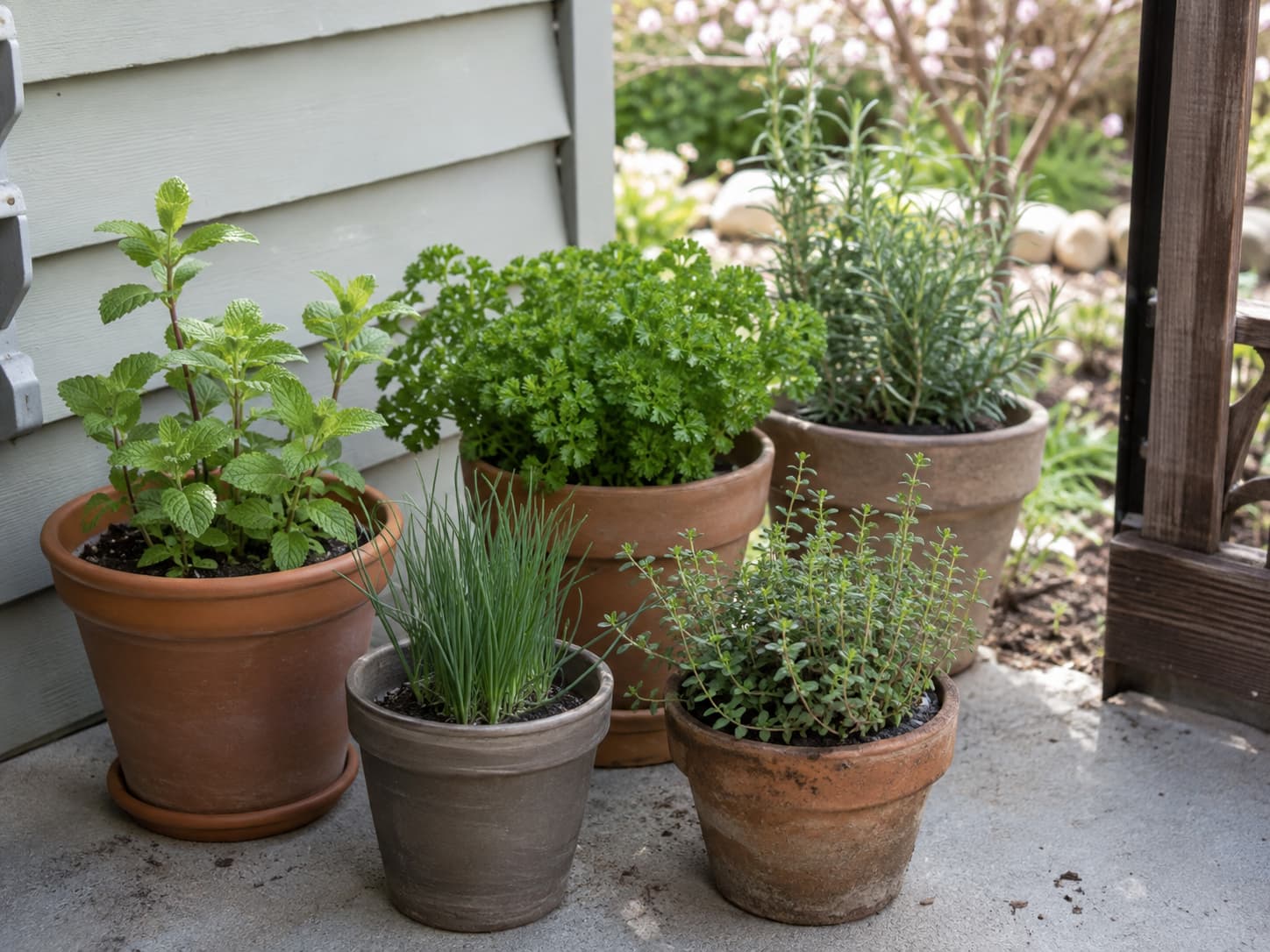
greenmuse-illustration-hardening-off-indoor-herbs-spring.jpg
When nighttime temperatures stay consistently above 50°F in spring, your indoor herbs can go back outside. But don't just put them in full sun on day one—they'll sunburn after months of filtered window light.
The 7-day hardening-off schedule:
- Days 1–2: Put plants outside in shade for 2–3 hours, then back inside
- Days 3–4: Outside in shade for 4–6 hours
- Days 5–6: Outside in shade all day; bring in at night
- Day 7: Leave outside full-time in their permanent spot
This gradual transition prevents transplant shock and sunburn. For the complete hardening-off protocol, see our seedling hardening guide—the same principles apply to mature plants.
Frequently Asked Questions
1. Can I grow basil indoors in winter?
2. Why does my indoor rosemary keep dying?
3. Should I fertilize my indoor herbs in winter?
4. Can I grow all five herbs in one pot?
5. How much can I harvest from indoor herbs?
Sources
- University of New Hampshire Extension. "Growing Herbs Indoors." extension.unh.edu, 2024. extension.unh.edu
- University of Illinois Extension. "Indoor Herbs." extension.illinois.edu, 2023. extension.illinois.edu
- West Virginia University Extension. "Growing Herbs in the Home Garden." extension.wvu.edu, 2024. extension.wvu.edu
- University of Maryland Extension. "Herbs." extension.umd.edu, 2023. extension.umd.edu