How to Bring Outdoor Plants Indoors Before Winter (Without Killing Them)
Bringing outdoor plants indoors for winter sounds simple: pick up the pot, carry it through the door, and find a sunny window. But the plant is also moving from wind, rain, intense outdoor light, and fluctuating temperatures into a much dimmer and more stable indoor environment. Pests that were barely noticeable outside can also become a serious problem once they lose outdoor weather and natural predators.
If you want to bring plants indoors for winter successfully, treat it as a transition rather than a one-day move. The safest routine is to watch nighttime temperatures, decide which plants are worth overwintering, inspect and clean them outdoors, acclimate them to lower light, quarantine them away from your established houseplants, and then reset watering for slower indoor drying.
This guide gives you a practical fall system for potted herbs, tender perennials, tropicals, citrus, ferns, peppers, and succulents—plus the warning signs that tell you whether leaf drop is normal adjustment or a real pest, light, or watering problem.
When Should You Bring Outdoor Plants Indoors for Winter?
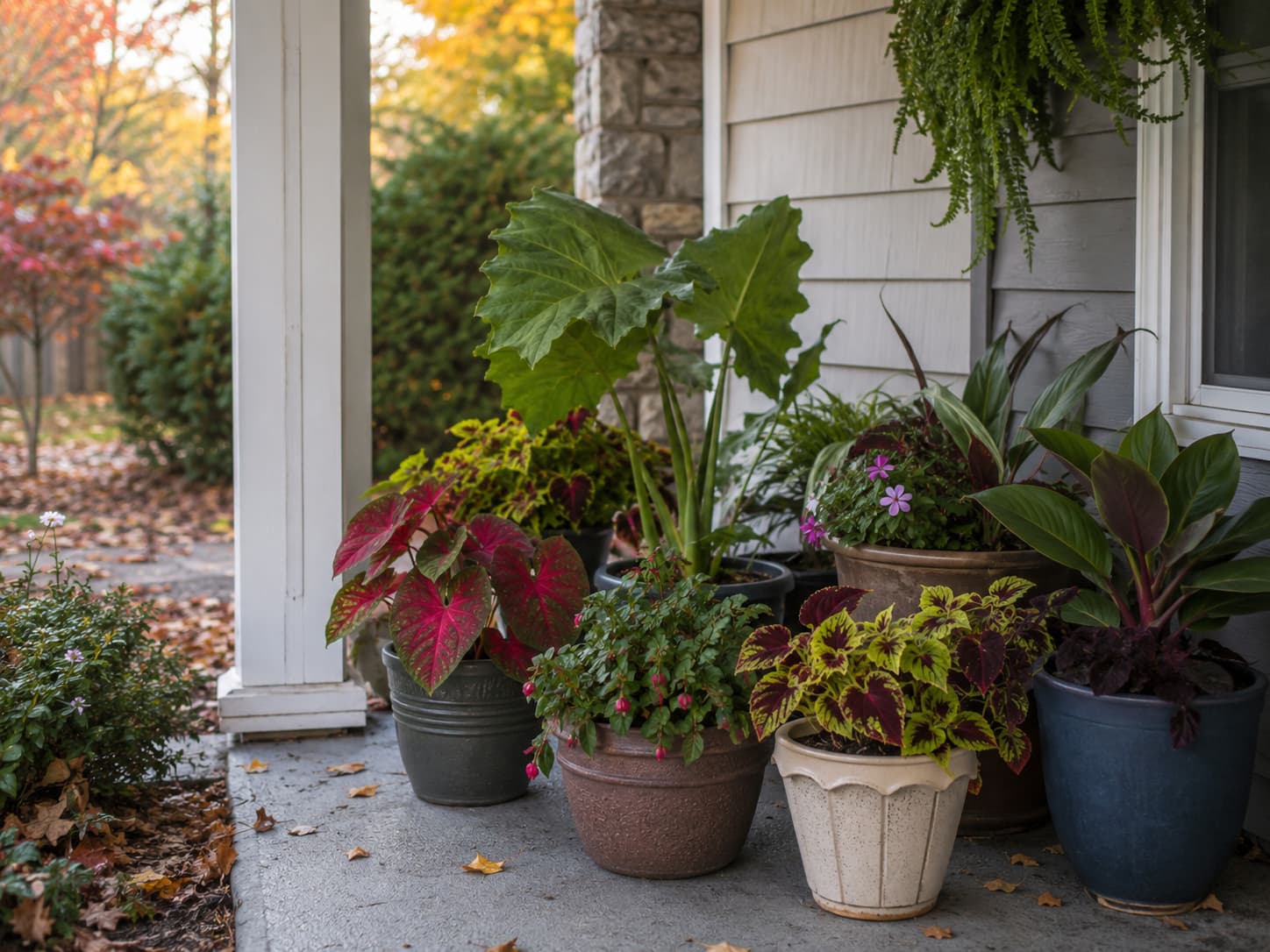
For many common tropical houseplants, nighttime temperatures around 50°F are a useful warning that outdoor season is ending. Iowa State University Extension advises moving houseplants back indoors when nights consistently dip into the 50s, and University of Minnesota Extension notes that some species can be damaged once temperatures drop below roughly 45–50°F. The exact threshold still depends on species, cultivar, exposure, container size, and how long the cold lasts.
| Plant group | Conservative fall cue | Indoor priority | Important note |
|---|---|---|---|
| Tropical foliage plants, hibiscus, coleus | Act as nights approach the low 50s°F | Bright indoor light | Cold-sensitive foliage may react before frost. |
| Tender succulents | Move before cold injury or frost | Brightest suitable window | Cold tolerance varies widely by species. |
| Potted citrus | Move before damaging cold for your citrus type | Very bright light | Do not assume all citrus has the same tolerance. |
| Rosemary and pelargoniums | Move before temperatures exceed local hardiness | Bright, airy, preferably cooler room | Rosemary cultivars vary greatly in outdoor hardiness. |
| Hardy mint, chives, thyme | Often better outdoors if hardy in your zone | Usually not needed indoors | Containers may need winter protection even when the plant is hardy. |
Drag the bar below or swipe horizontally to view the remaining columns.
The 5-Step Indoor Transition System
Use the forecast rather than a fixed calendar date. In colder climates the transition may begin in September; in warmer climates it may be October or later. Start early enough that you still have several mild days for inspection, cleaning, and acclimation.
Step 1: Inspect for Pests Before the Plant Crosses the Door
Do the first inspection outdoors in bright light. Look closely at leaf undersides, new growth, stem joints, petioles, the pot rim, the soil surface, and the drainage area. Common hitchhikers include aphids, whiteflies, spider mites, mealybugs, scale, ants, and soil-associated insects.
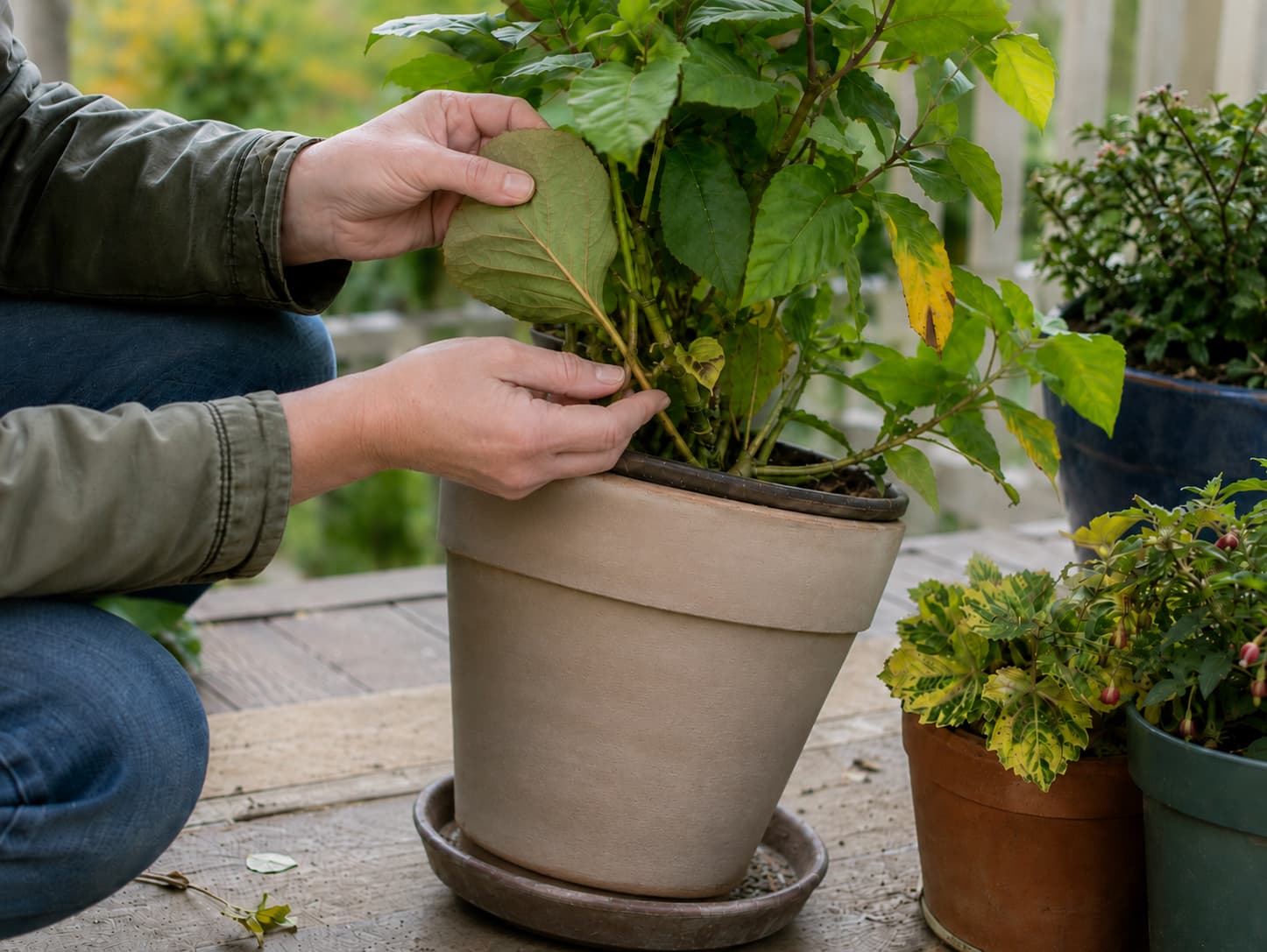
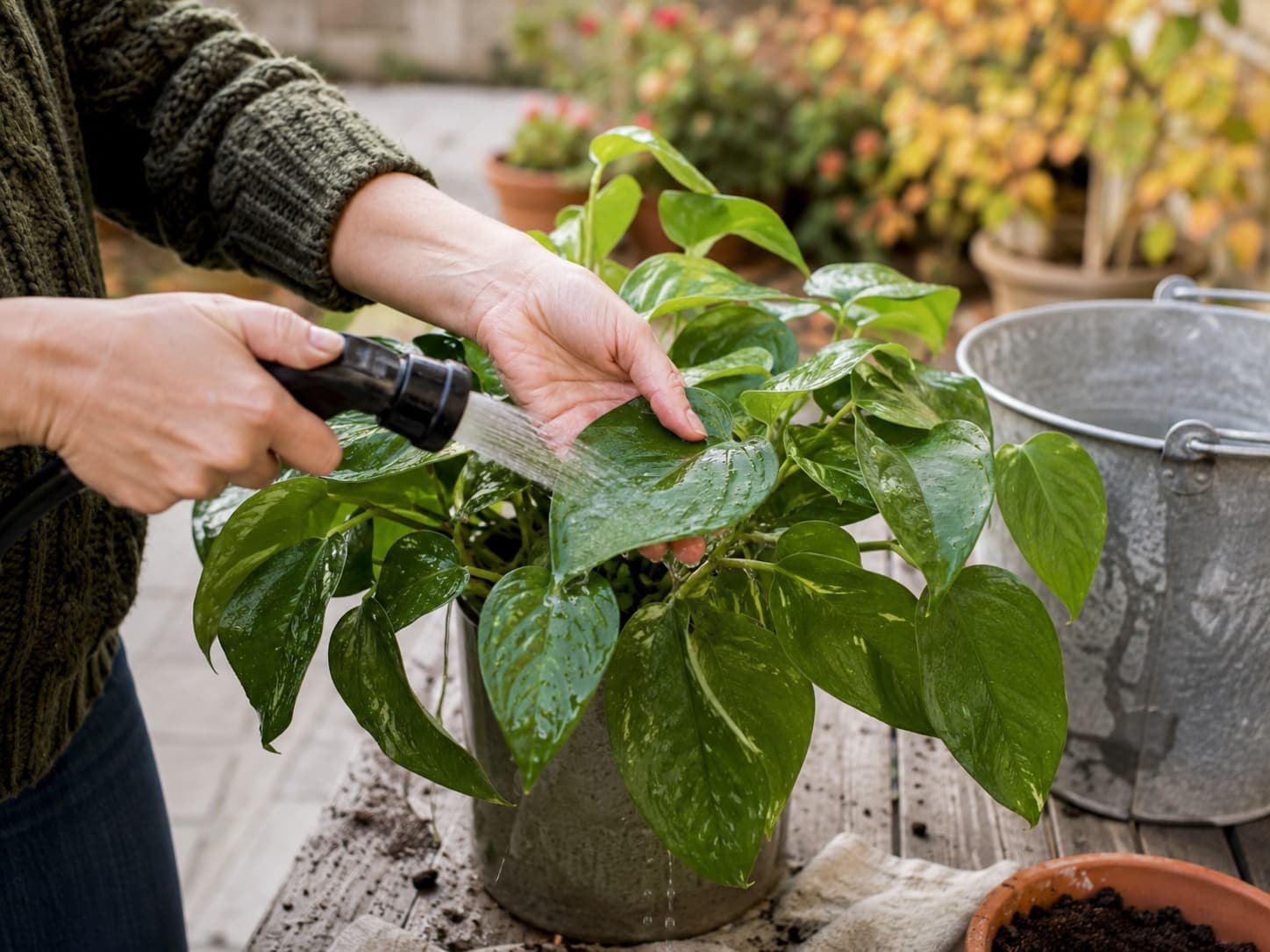
Remove dead leaves and debris from the pot surface. Then rinse the plant thoroughly outdoors, spraying the tops and undersides of leaves and the stems. Clean the outside of the pot and let foliage dry before the plant comes inside.
Step 2: Gradual Light Acclimation
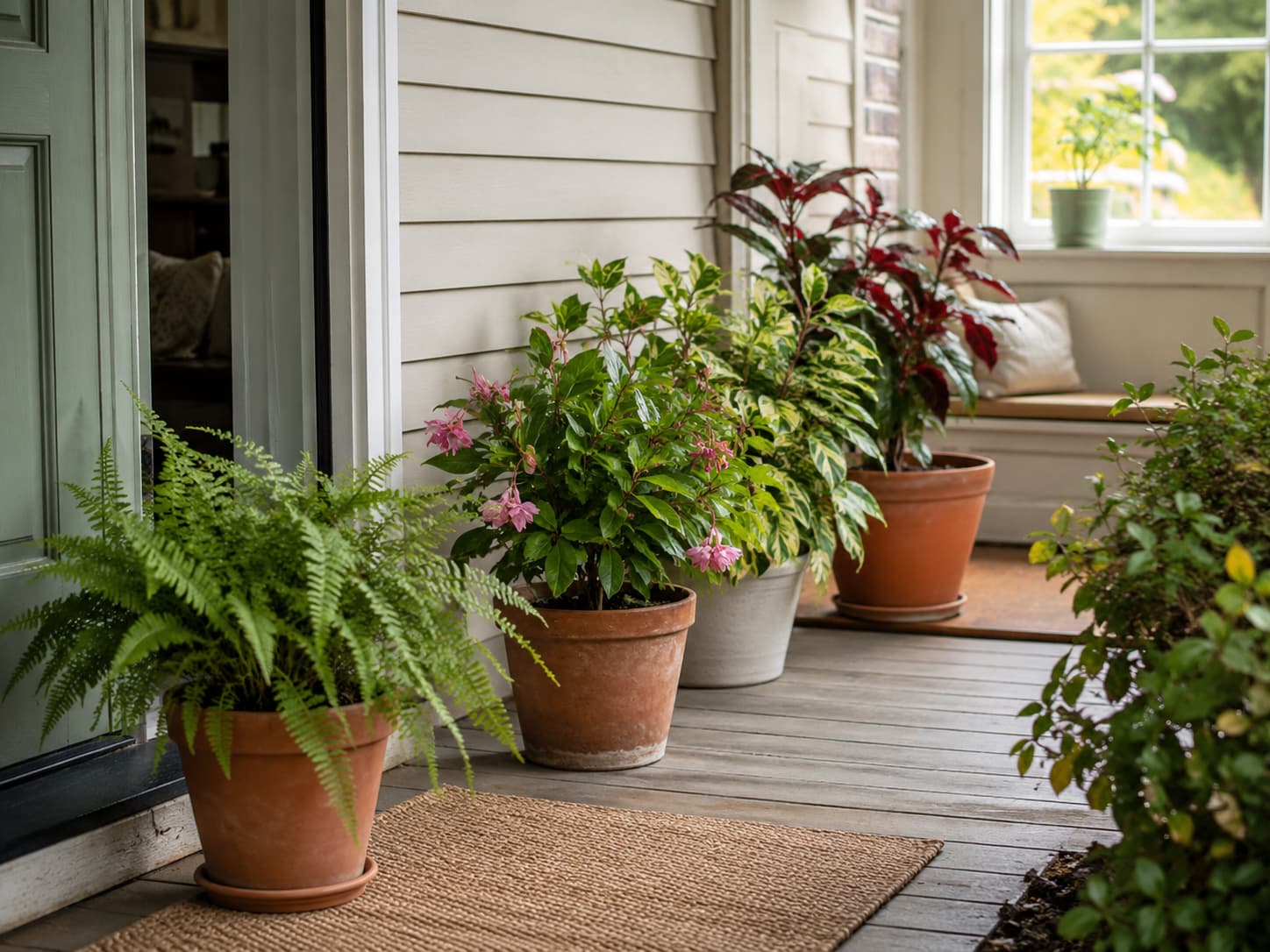
Indoor light is much less intense than outdoor light, even near a good window. Instead of taking a sun-grown plant directly from a patio into a dim room, move it first to a sheltered porch, under an overhang, or another bright-but-less-intense location for several days. Then move it indoors to the brightest appropriate window. University of Vermont Extension describes this as a reverse version of spring hardening-off.
The 7-day light acclimation:
| Stage | What to do |
|---|---|
| Outdoor full exposure | Begin while weather is still mild enough to avoid a rushed move. |
| Sheltered outdoor light | Move to a porch, under an overhang, or another bright location with less intense sun for several days. |
| Bright indoor location | Move to the brightest suitable window and watch for leaf drop or stretching. |
| Permanent winter position | Keep the plant where its species-specific light needs can be met; add supplemental light if necessary. |
Drag the bar below or swipe horizontally to view the remaining columns.
Step 3: Quarantine for 3–4 Weeks
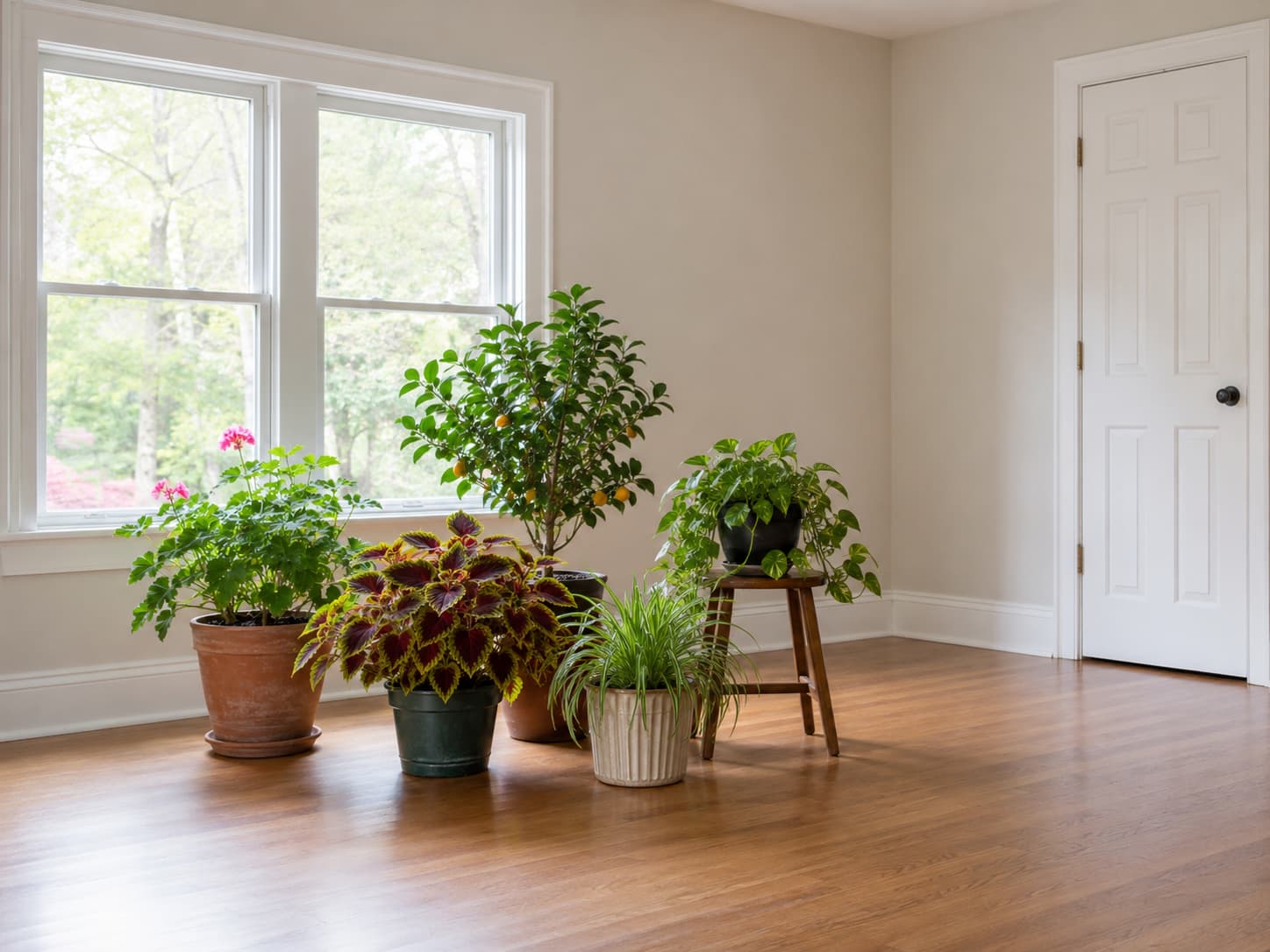
Once the plant is inside, keep it separated from houseplants that have lived indoors all year. Iowa State University Extension recommends 3–4 weeks of isolation, because pests missed outdoors may become visible only after time in the warmer indoor environment.
- Inspect leaves and stems every few days.
- Watch for sticky honeydew, fine webbing, white cottony material, scale-like bumps, or flying insects near the soil.
- Remove fallen leaves and keep the quarantine area clean.
- Avoid crowding plants so tightly that inspection becomes difficult.
- Do not end quarantine early just because the plant looked clean on day one.
Step 4: Reset Watering for Indoor Conditions
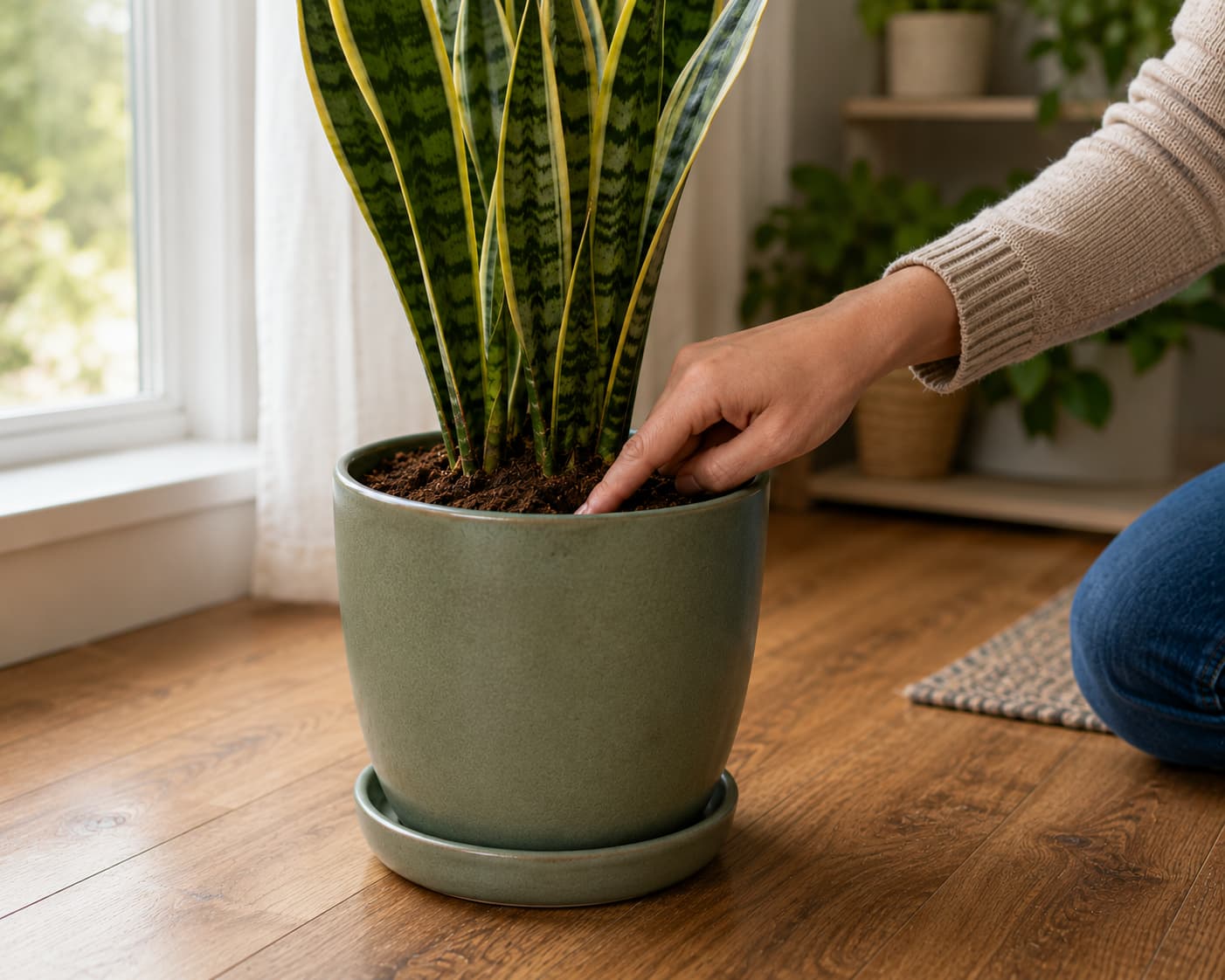
The most important watering change is usually frequency, not the completeness of each watering. A pot that dried rapidly in outdoor wind and sun may stay moist much longer inside. Check the mix before watering, then water thoroughly enough to moisten the root zone and let excess water drain. Empty the saucer afterward.
Do not automatically give a smaller sip on a fixed schedule. Let the plant, pot size, light level, temperature, and potting mix determine the interval. If a plant is wilting while the soil stays wet, review houseplant stress symptoms; if you will be away during the holidays, use the condition-based strategies in How to Keep Plants Alive While on Vacation.
Step 5: Choose the Right Indoor Location
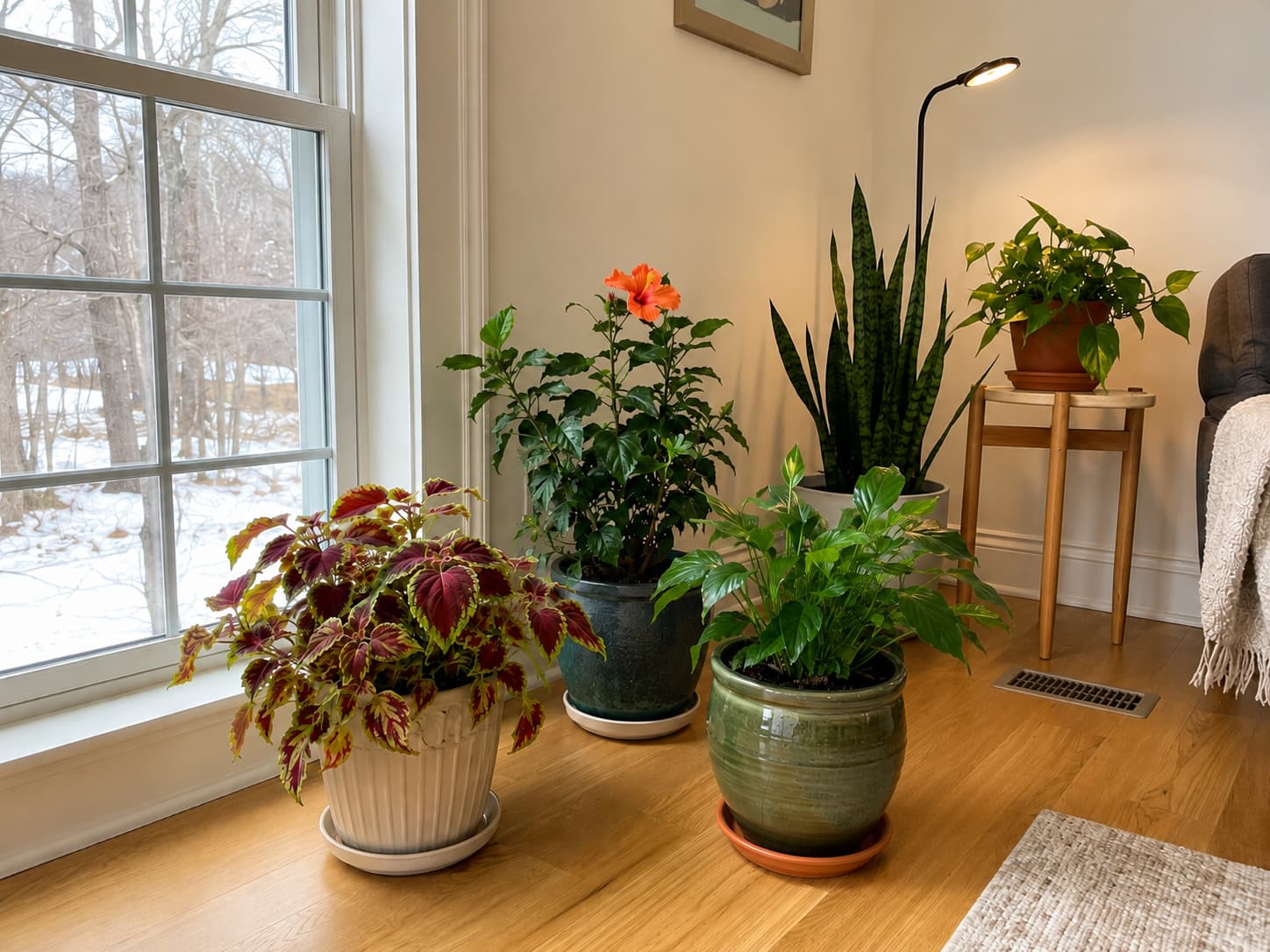
Once quarantine ends, give the plant the brightest location that matches its needs. Keep foliage away from cold window glass and away from hot, drying drafts from radiators, wood stoves, or heating vents. Supplemental lighting can make the difference for sun-loving plants that cannot get enough winter light from windows alone.
| Window Direction | Light Level | Best For |
|---|---|---|
| South-facing, unobstructed | Bright direct (4–6 hours of sun on leaves) | Rosemary, hibiscus, citrus, succulents, peppers |
| East-facing | Moderate (morning sun, bright indirect rest of day) | Coleus, ferns, geraniums, basil |
| West-facing | Moderate to bright (afternoon sun, which is hotter) | Hibiscus, rosemary, succulents (watch for leaf scorch in first week) |
| North-facing | Low (no direct sun) | Ferns, pothos, peace lily—not outdoor transition plants |
Drag the bar below or swipe horizontally to view the remaining columns.
8 Plants Worth Bringing Indoors (And How Each One Behaves)
Not every outdoor plant is worth the effort of transitioning. Some are cheap to replace, some never adapt well, and some are more trouble than they're worth. Here are the 8 I consistently bring inside every fall:
| Plant | Indoor Difficulty | Best Indoor Spot | Winter Behavior | Is It Worth It? |
|---|---|---|---|---|
| Rosemary | Moderate | South window; cool room (55–65°F ideal) | Slow growth; needs good airflow to prevent powdery mildew | Yes — expensive to buy fresh; see How to Grow Rosemary: Indoors, in Pots & Outdoors |
| Tropical hibiscus | Moderate | South or west window | May drop all leaves in protest; usually recovers in 3–4 weeks | Yes — a 3-ft hibiscus costs $30+ to replace |
| Coleus | Easy | East or bright indirect | Continues growing; may get leggy without enough light—pinch to bush out | Yes — easy to propagate from cuttings too |
| Lemon/lime tree (potted) | Moderate | South window; needs 6+ hours direct sun | Semi-dormant; may drop some leaves; don't fertilize until March | |
| Geranium (Pelargonium) | Easy | South or west window | Can bloom all winter with enough light; reduce watering significantly | Yes — free flowers all winter |
| Pepper plant | Hard | South window + grow light recommended | Likely to drop most leaves; may produce a few peppers if light is strong enough | Marginal — only worth it for expensive specialty peppers (ghost, habanero) |
| Ferns (Boston) | Moderate | East window; bathroom ideal for humidity | Some frond loss; needs regular misting or a pebble tray | Yes — Boston ferns cost $15–25 to replace |
| Succulents (tender) | Easy | South window | Semi-dormant; water once per month max | Yes — see aloe care guide for one common example |
Drag the bar below or swipe horizontally to view the remaining columns.
Plants That Are Often Easier to Replace, Propagate, or Finish Outside
- Tomatoes: By late season, most container tomatoes are more practical to finish outside than overwinter as large indoor plants. Mature-green tomatoes can continue ripening off the vine indoors.
- Large annual flower containers: Zinnias and marigolds are usually easier to restart next year. Tender plants such as coleus or some petunias may be worth saving as cuttings instead of moving the entire pot.
- Basil: A tired late-season plant may not be worth the window space. Healthy tip cuttings or a fresh indoor sowing under strong light are often easier to manage.
Transition Shock: What Is Normal and What Needs Attention?
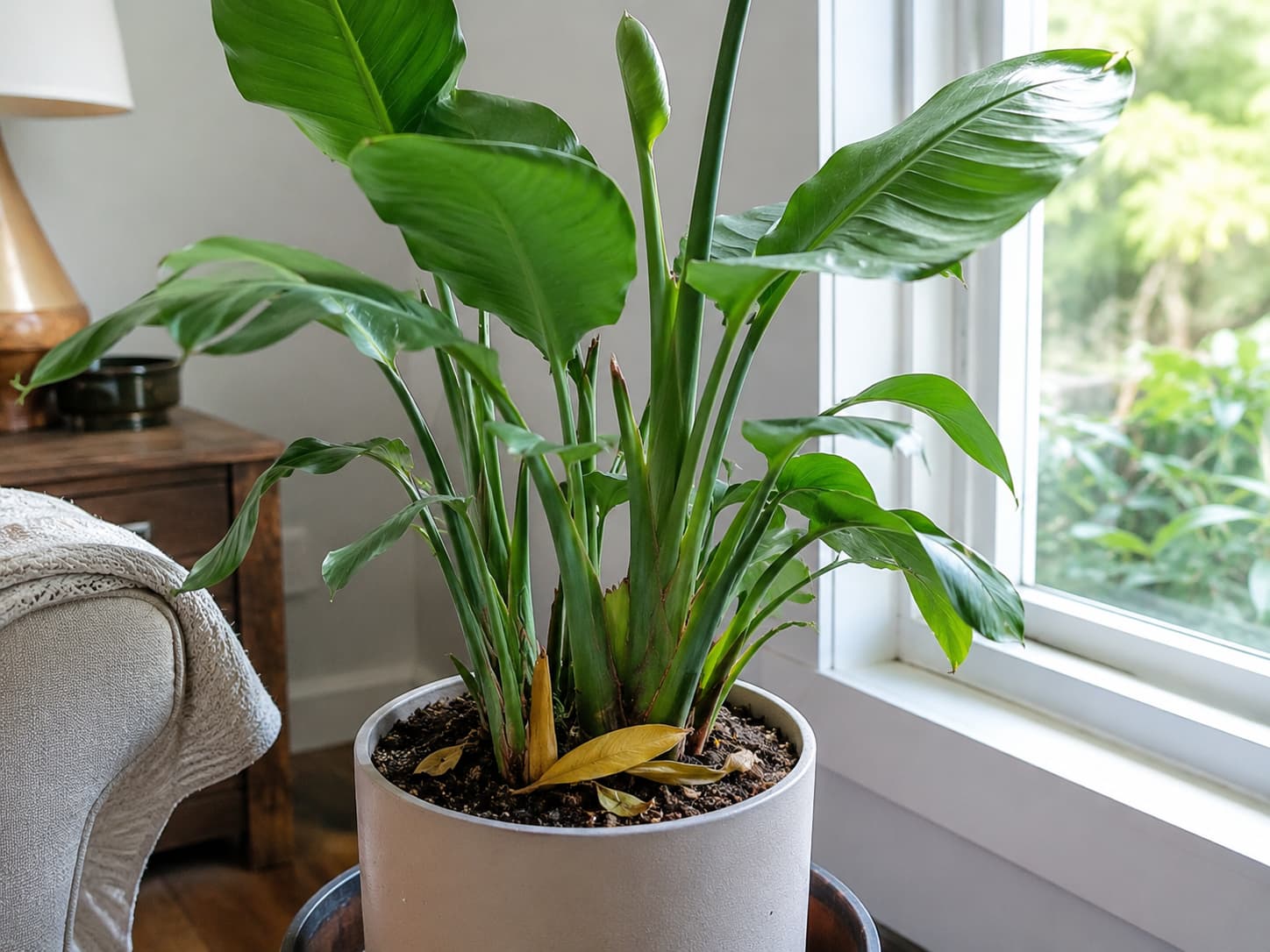
Some leaf drop and adjustment is expected. Here's how to tell the difference between normal transition stress and a real problem:
| Symptom | Normal (Wait It Out) | Not Normal (Take Action) |
|---|---|---|
| Lower leaves yellowing and dropping | A few older leaves can yellow after a large light change. | Investigate if yellowing or leaf drop accelerates through most of the plant. |
| Slight wilting in afternoon | Short-lived wilting can follow a move. | Persistent wilting while the mix stays wet needs investigation. |
| Slower new growth | Slower growth is common under shorter winter days. | Weak, pale, stretched growth points to insufficient light. |
| Fewer flowers | Fewer flowers can be normal in lower light. | Repeated bud drop can indicate light, temperature, or moisture stress. |
| Sticky residue on leaves or nearby surfaces | Sticky residue is not a normal transition symptom; inspect for sap-feeding pests. | Take action immediately—treat with neem oil and isolate |
| Fine webbing between stems | Fine webbing is not normal; inspect for spider mites. | Treat immediately; mites spread fast indoors |
| White cottony patches | White cottony clusters are not normal; inspect for mealybugs. | Spot-treat with alcohol on a cotton swab + neem spray |
Drag the bar below or swipe horizontally to view the remaining columns.
Judge recovery by stable stems, appropriate moisture use, and healthy new growth rather than by a rigid number of days. Different plants recover at different speeds.
Indoor Humidity: The Hidden Problem
Winter heating can make indoor air dry. Humidity-loving tropical plants and ferns may benefit from more humid air, while rosemary and many succulents generally care more about adequate light, airflow, and avoiding wet soil.
For plants that need more humidity, a room humidifier is the most direct way to change the room environment. Grouping plants can modestly improve the microclimate around the cluster. A pebble tray may add some local moisture, but the pot should sit above the water rather than in it.
Winter Care After the First Month
Once a transitioned plant is settled, the routine becomes simpler, but winter care should still respond to the plant rather than a fixed calendar.
| Task | Winter approach | What to watch |
|---|---|---|
| Watering | Check the root zone and water when the plant actually needs it. | Mix that stays wet much longer than expected. |
| Fertilizer | Reduce or pause when growth has slowed; resume as active growth returns. | Do not feed a stressed, poorly lit plant simply because a date arrives. |
| Light | Maximize appropriate window light; add supplemental light where needed. | Stretching, pale growth, or directional leaning. |
| Pest monitoring | Inspect regularly, especially during quarantine and dry winter weather. | Webbing, honeydew, scale, mealybugs, whiteflies, fungus gnats. |
| Repotting | Avoid unnecessary winter root disturbance. | Repot if root rot, container failure, severe crowding, or a pest problem makes it necessary. |
Drag the bar below or swipe horizontally to view the remaining columns.
Sensitive Plants: A Softer Landing Indoors
Tropical hibiscus, citrus, ficus, and other high-light plants may react dramatically to the move. A modest amount of leaf drop can be part of the adjustment, especially when indoor light is much lower than outside.
- Give the plant the brightest appropriate indoor location rather than parking it in a dark corner.
- Remove dead or damaged growth, but avoid assuming every plant needs a hard one-third pruning.
- If a plant becomes partly leafless, reduce watering frequency because water use will usually fall with leaf area.
- Keep checking for pests before assuming every yellow leaf is transition shock.
- Use stem firmness, healthy buds, and new growth as recovery signals.
Frequently Asked Questions
1. Can I bring my potted rosemary inside for winter?
Yes, but rosemary usually performs best with very bright light, good airflow, and cooler indoor conditions than many tropical houseplants prefer. Keep it away from hot heating vents and let the potting mix dry appropriately between waterings. For detailed growing guidance, see How to Grow Rosemary: Indoors, in Pots & Outdoors.
2. Should I repot my outdoor plant before bringing it inside?
Not by default. Repot when there is a clear reason such as severe root crowding, poor drainage, container damage, or a soil-pest problem. Routine repotting adds root disturbance at the same time the plant is adapting to a new environment.
3. My plant has spider mites. Can I still bring it inside?
Keep it isolated and treat the mites before it joins your indoor collection. Use an appropriate product labeled for the plant and pest, follow the label directions, and continue quarantine until you are confident the infestation is controlled.
4. Do I need to cut back plants before bringing them inside?
Remove dead, damaged, or diseased growth and prune only as much as the species and your indoor space justify. A hard one-third cutback is not a universal rule. Healthy foliage is still useful for photosynthesis during the transition.
5. Can I leave plants in the garage instead of the house?
Only if the garage stays within the temperature range that the specific plant can tolerate and receives enough light for the overwintering method you are using. An attached garage can work for some cool-tolerant plants, but it is usually too cold and too dim for tropical hibiscus or citrus unless conditions are controlled.
6. How do I handle plants that were growing in the ground?
Digging causes more root disturbance than moving a container. Preserve as much of the root system as practical, pot into an appropriate clean mix, and give the plant time to recover. For easy-to-root plants such as coleus or geraniums, cuttings may be simpler and use much less indoor space.
Quick Checklist: Bring Plants Indoors for Winter
- Check 7-day forecast for nighttime lows approaching your plant's threshold
- Hose down entire plant with strong water jet (morning, 3 days before move)
- Inspect all surfaces with flashlight—leaf undersides, stem joints, drainage holes
- Spray with neem oil solution (repeat 3 days later)
- Prune dead/damaged growth; optionally cut back by up to ⅓
- Begin 7-day light acclimation (shade → partial indoor → full indoor)
- Place in quarantine away from existing indoor plants (2 weeks minimum)
- Check for pests every 2–3 days during quarantine
- Reduce watering frequency to half of outdoor schedule
- Choose permanent indoor location based on plant's light needs
- Add humidity support (pebble tray or humidifier)
- Stop fertilizing until February
- Monitor for leaf drop—normal in first 3 weeks, concerning after that
- Scratch-test bare stems before giving up: green = alive, brown = dead
Sources
- Iowa State University Extension and Outreach. How and when do I bring my houseplants back indoors before winter?
- University of Minnesota Extension. When to bring houseplants inside for the winter
- University of Vermont Extension. Moving Houseplants Back Indoors for Winter
- University of Vermont Extension. Saving Tender Perennials