Beat the Heat: 5 Expert Tips for Balcony Gardening in a Summer Heatwave
Quick answer: The biggest balcony heatwave wins come from switching to lighter, cooler containers, watering slowly at dawn, elevating pots off hot flooring, adding breathable shade, and choosing heat-tolerant plants instead of forcing cool-season plants through extreme weather.
Suggested filename:
greenmuse-illustration-balcony-heatwave-overview.jpgReplace
PASTE_IMAGE_URL_01_HERE with the final image URL.One midsummer afternoon, my balcony in full afternoon sun was noticeably hotter than the surrounding air. The concrete floor, metal railing, and dark plastic pots were all radiating heat. By late summer, I'd lost a rosemary plant that had survived several previous hot seasons, along with two pots of basil and the petunias I'd optimistically bought earlier in the season.
That was the summer I stopped gardening like I had a backyard and started treating my balcony like the extreme microclimate it actually is.
Why this matters: Heatwaves are an increasing challenge for container gardeners, especially on exposed urban balconies where concrete, glass, metal, and reflected sunlight can push plant and root-zone temperatures well above the surrounding air temperature. The strategies in this guide focus on reducing heat load, slowing moisture loss, and choosing plants that are better suited to exposed conditions.
This guide is what I learned. It's not about "water a little more" or "buy shade cloth" — those are the obvious answers. It's about understanding why your balcony behaves like a heat trap, choosing plants that cope better with prolonged hot weather, and making small changes that reduce stress around the root zone. Whether you're gardening on a fire escape in Brooklyn, a terrace in Phoenix, or a Juliet balcony in London during a heatwave, these five strategies can make container plants much easier to manage.
Why Your Balcony Is a Death Trap in Summer (And Why the Old Rules Don't Apply)
A balcony is not a small backyard. It's a fundamentally different environment, and most gardening advice wasn't written for it.
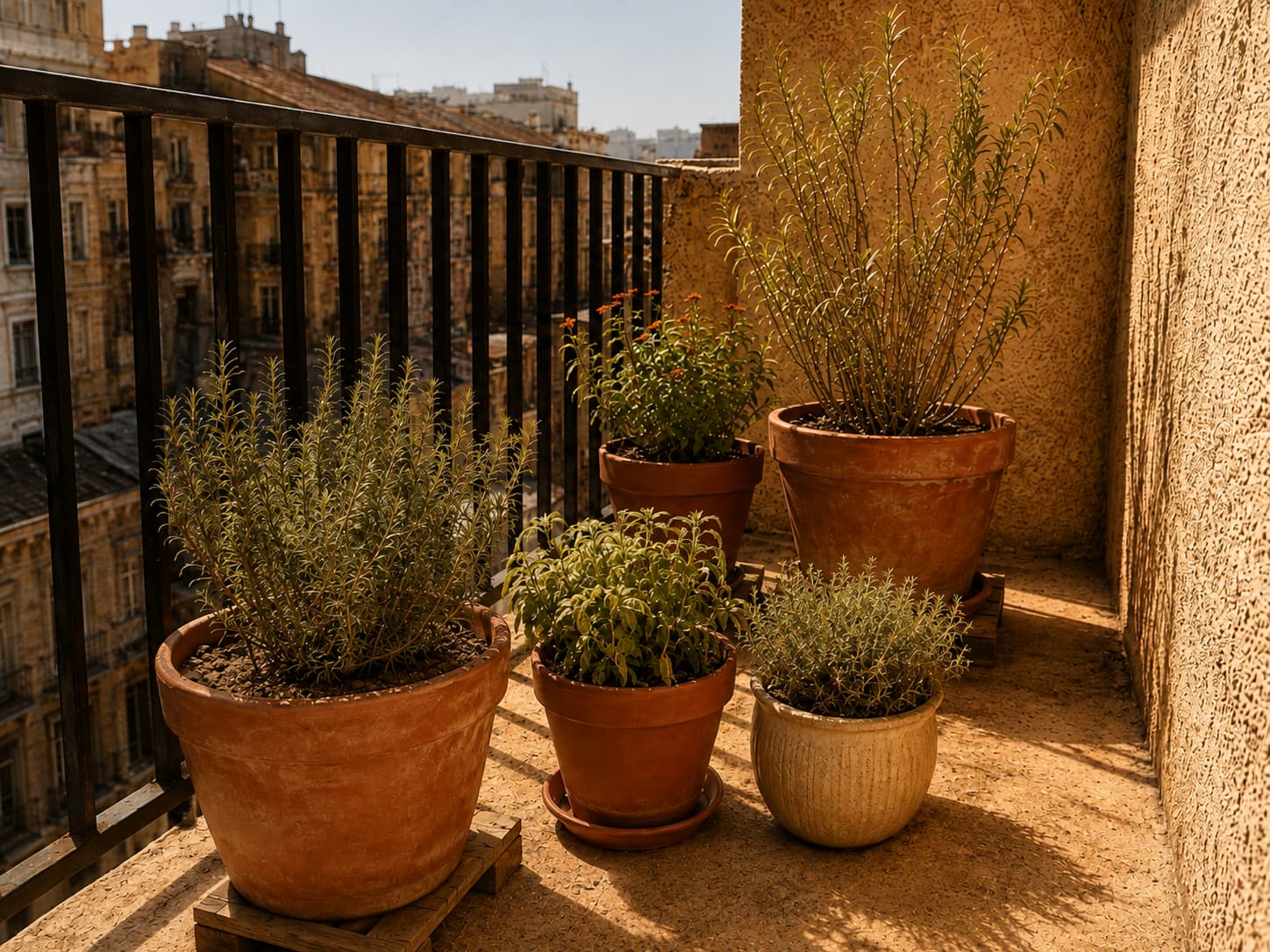
The physics of a hot balcony: Three surfaces absorb and radiate heat — the floor (concrete, tile, or wood), the railing (metal or glass), and the building wall. Together they can create a much hotter microclimate than the weather forecast suggests, especially where afternoon sun reflects from masonry, glass, or dark metal surfaces.
The other problem is evaporation rate. A small pot that stays moist for days indoors may dry surprisingly fast on an exposed balcony. Wind accelerates moisture loss, and elevated balconies can be particularly breezy. The combination of radiant heat, airflow, and limited soil volume means container plants often need closer moisture checks than plants growing in the ground.
This is why the standard advice — "water deeply once a week" — doesn't apply. By the time you notice drooping leaves, the root zone has already been stressed for hours.
Suggested filename:
greenmuse-illustration-balcony-heat-trap-microclimate.jpgReplace
PASTE_IMAGE_URL_02_HERE with the final image URL.Balcony observation: In a side-by-side setup with similar basil plants, the dark plastic container heated up much more aggressively in afternoon sun, while the terracotta pot stayed noticeably cooler to the touch. The basil in the cooler container also held up better through the hot spell. Treat this as a practical observation rather than a universal temperature rule — pot size, color, wind, humidity, and watering all change the result.
5 Expert Strategies That Actually Work
These strategies come from real balcony use rather than ideal garden-bed conditions. The key rule is simple: test any change before the heatwave hits. The worst time to discover that new shade blocks too much light or restricts airflow is during the hottest part of the day.
1. Choose Plants Better Suited to Extreme Heat — and Understand Why
Most people pick plants based on how they look in the garden center in May. By July, those same plants are crispy. The difference is in the plant's native climate.
Plants native to Mediterranean, desert, and tropical regions have built-in heat adaptations that temperate-climate plants lack. These adaptations fall into three categories:
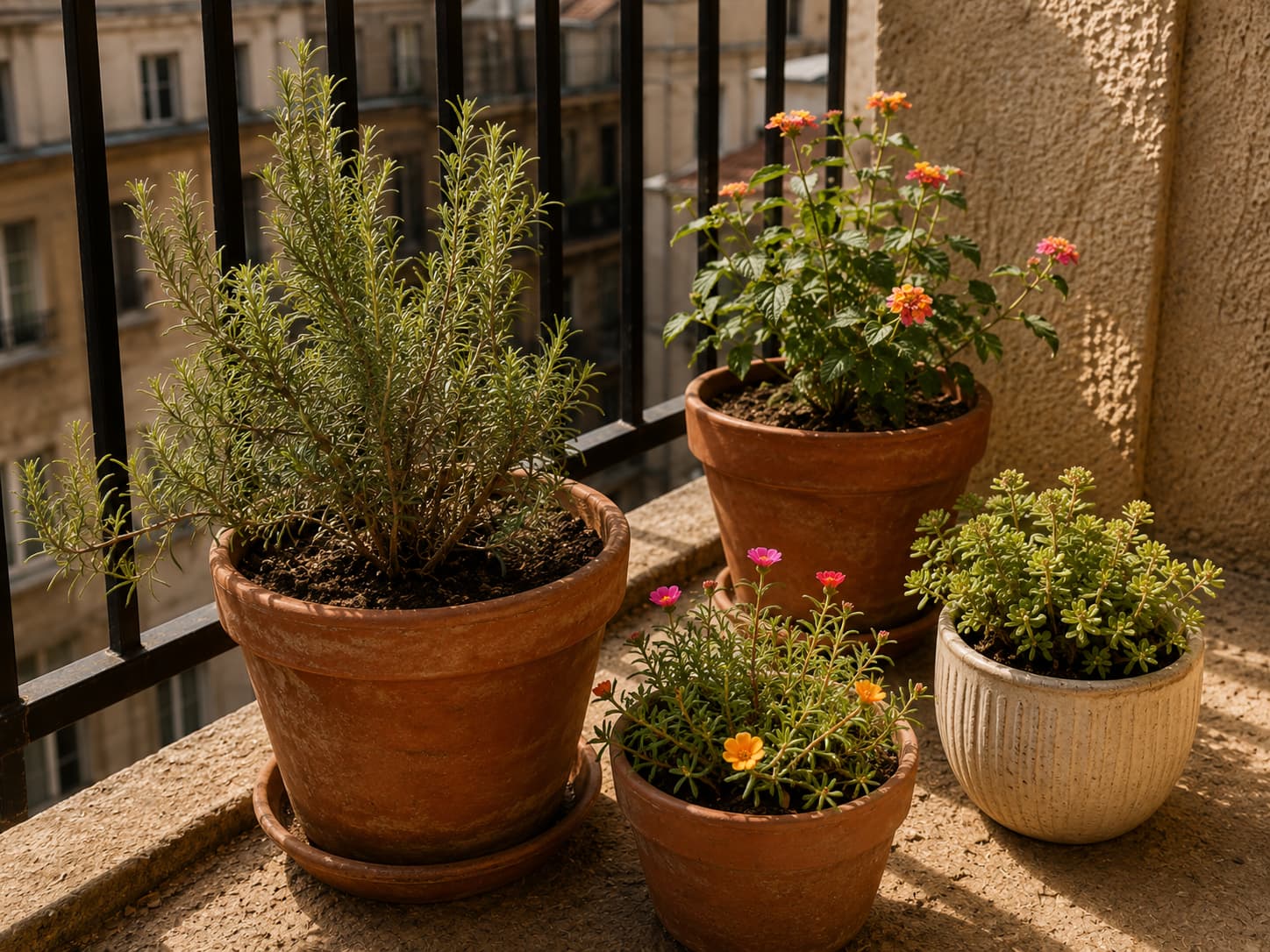
Small, narrow, or hairy leaves (reduced exposure and slower moisture loss): Rosemary, thyme, lavender, and dusty miller have leaf structures that help them cope with bright, dry conditions more efficiently than many broad, tender-leaved plants.
Succulent water storage (internal water reserves): Portulaca, sedum, echeveria, and jade plants store water in thick leaves and stems. Many tolerate drying between waterings better than soft-leaved annuals, although containers should still be checked regularly during prolonged heat.
Deep taproots or extensive root systems (access to cooler, deeper soil): Lantana, bougainvillea, and Russian sage send roots deep enough to reach moisture that surface heat can't evaporate. In containers, give these plants deeper pots (12+ inches) so they can use this strategy.
| Plant | Heat Adaptation | Container Size | Watering Approach in Heat |
|---|---|---|---|
| Portulaca (Moss Rose) | Succulent leaves; CAM photosynthesis | 6–8 inch | Let the mix dry noticeably between waterings; check more often in small pots |
| Lantana | Deep roots; small leaves | 10–12 inch | Water thoroughly when the upper mix begins to dry |
| Calibrachoa (Million Bells) | Compact foliage; performs well in bright containers | 8–10 inch | Check moisture frequently; do not let a small container stay bone-dry |
| Rosemary | Needle-like leaves; Mediterranean native | 10–12 inch | Allow some drying between thorough waterings; avoid constantly wet mix |
| Sedum (Stonecrop) | Succulent leaves; shallow roots | 6–8 inch | Let the mix dry between waterings; avoid prolonged saturation |
| Echeveria | Succulent rosette; CAM photosynthesis | 4–6 inch | Water only after the mix has dried well; protect from trapped moisture |
| Bougainvillea | Woody, heat-tolerant growth; extensive roots | 14+ inch | Water deeply, then allow partial drying before watering again |
| Zinnia | Warm-season annual; strong sun tolerance | 8–10 inch | Check moisture frequently in flower; water when the upper mix begins to dry |
Suggested filename:
greenmuse-illustration-heat-tolerant-balcony-plants.jpgReplace
PASTE_IMAGE_URL_03_HERE with the final image URL.Common fail: Buying plants labeled "full sun" and assuming they can handle balcony heat. "Full sun" on a plant tag means 6+ hours of direct sun in a garden bed — not 10 hours of reflected heat on a concrete balcony. Always check the plant's native climate, not just the tag.
2. Master the Art of Heatwave Watering — Timing, Depth, and Technique
Watering in a heatwave isn't about quantity — it's about timing, depth, and delivery method. Most balcony gardeners get all three wrong.
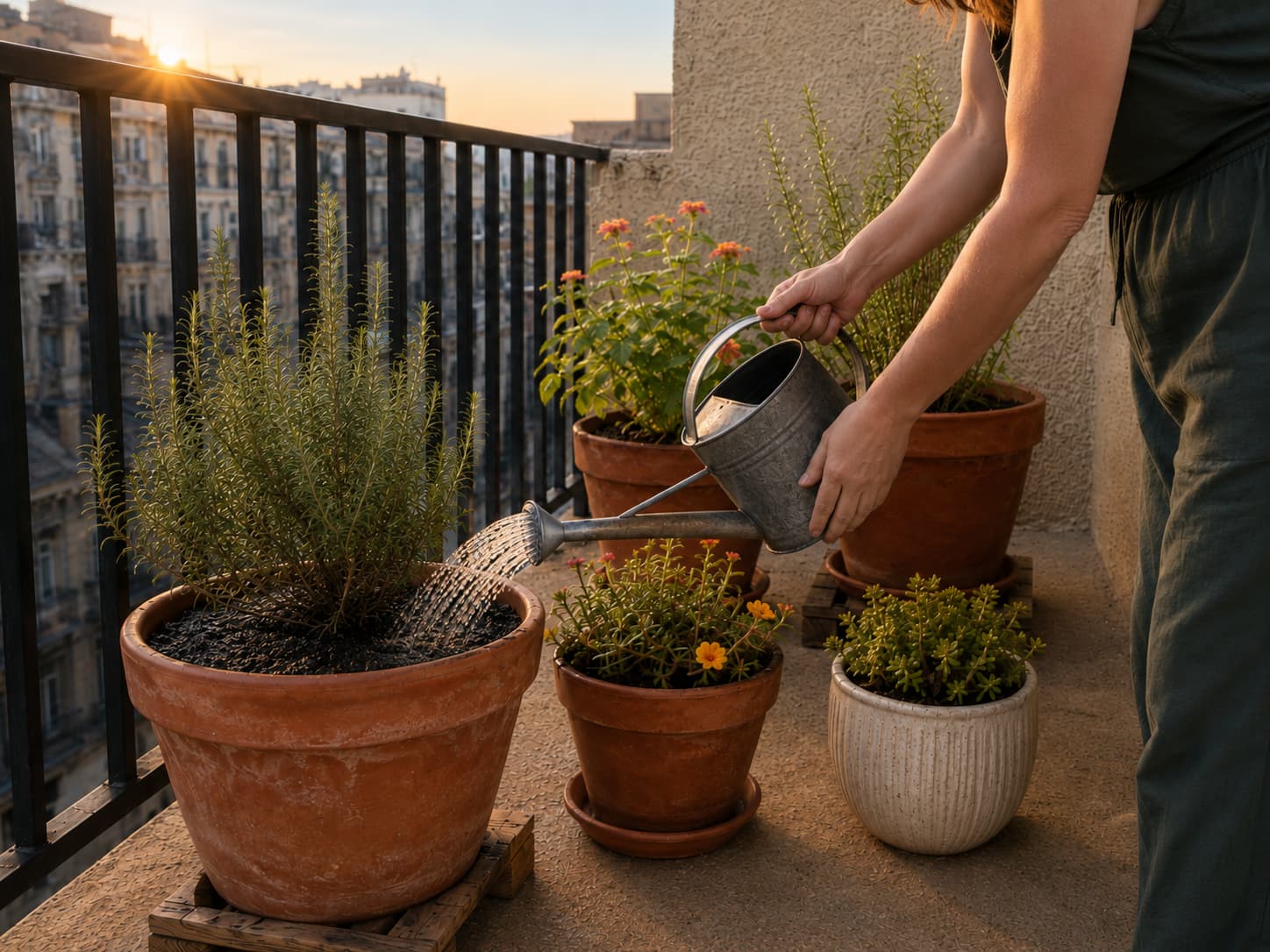
Timing: Early morning is usually easiest. Watering before peak heat gives the root zone time to take up moisture before the hottest part of the day. If you need to water later, aim the water at the soil and avoid leaving foliage unnecessarily wet overnight, since persistent leaf wetness can increase disease risk in some conditions.
Depth: Slow and thorough, not fast and shallow. A quick pour can wet only the surface or run down dry channels in the potting mix. Instead, water gradually and give the mix time to absorb moisture. When appropriate for the container and plant, continue until excess water begins to drain so the full root zone is moistened rather than just the surface.
Delivery: Use slow, controlled watering when containers dry quickly. A simple bottle-drip setup can release water gradually instead of dumping it into dry potting mix all at once. Test the flow rate before relying on it, because bottle size, hole size, soil texture, and pot size all affect delivery. This follows the same principle as our vacation plant care method: slower delivery can help dry potting mix absorb water more evenly.
Suggested filename:
greenmuse-illustration-dawn-watering-balcony-containers.jpgReplace
PASTE_IMAGE_URL_04_HERE with the final image URL.Balcony observation: During a prolonged hot spell, containers watered slowly and in stages stayed more evenly moist than containers that received a fast pour. The quickly watered pots were more likely to develop dry pockets lower in the mix, especially after the potting medium had already become very dry.
Common fail: Using midday misting as a heatwave fix. A quick mist does very little to cool the root zone and usually evaporates fast. For routine watering, aim at the potting mix instead of the foliage. If you need to wet leaves for cleaning or pest management, do it during a cooler part of the day and allow good airflow.
3. Create Shade That Cools — Not Just Covers
Not all shade is equal. The goal isn't to block all light — it's to block the infrared radiation that heats surfaces while letting through enough visible light for photosynthesis.
What works (tested temperature reductions):
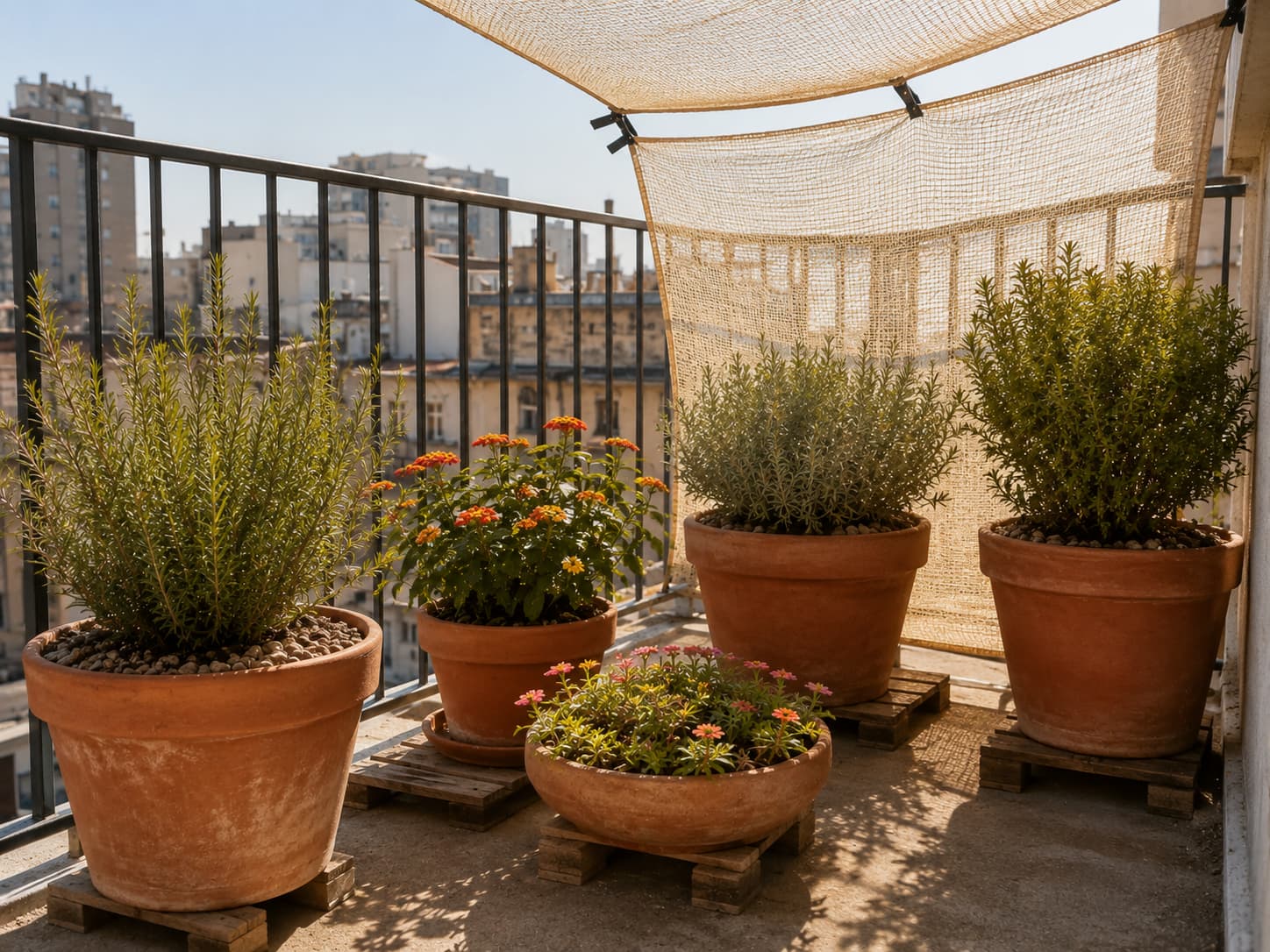
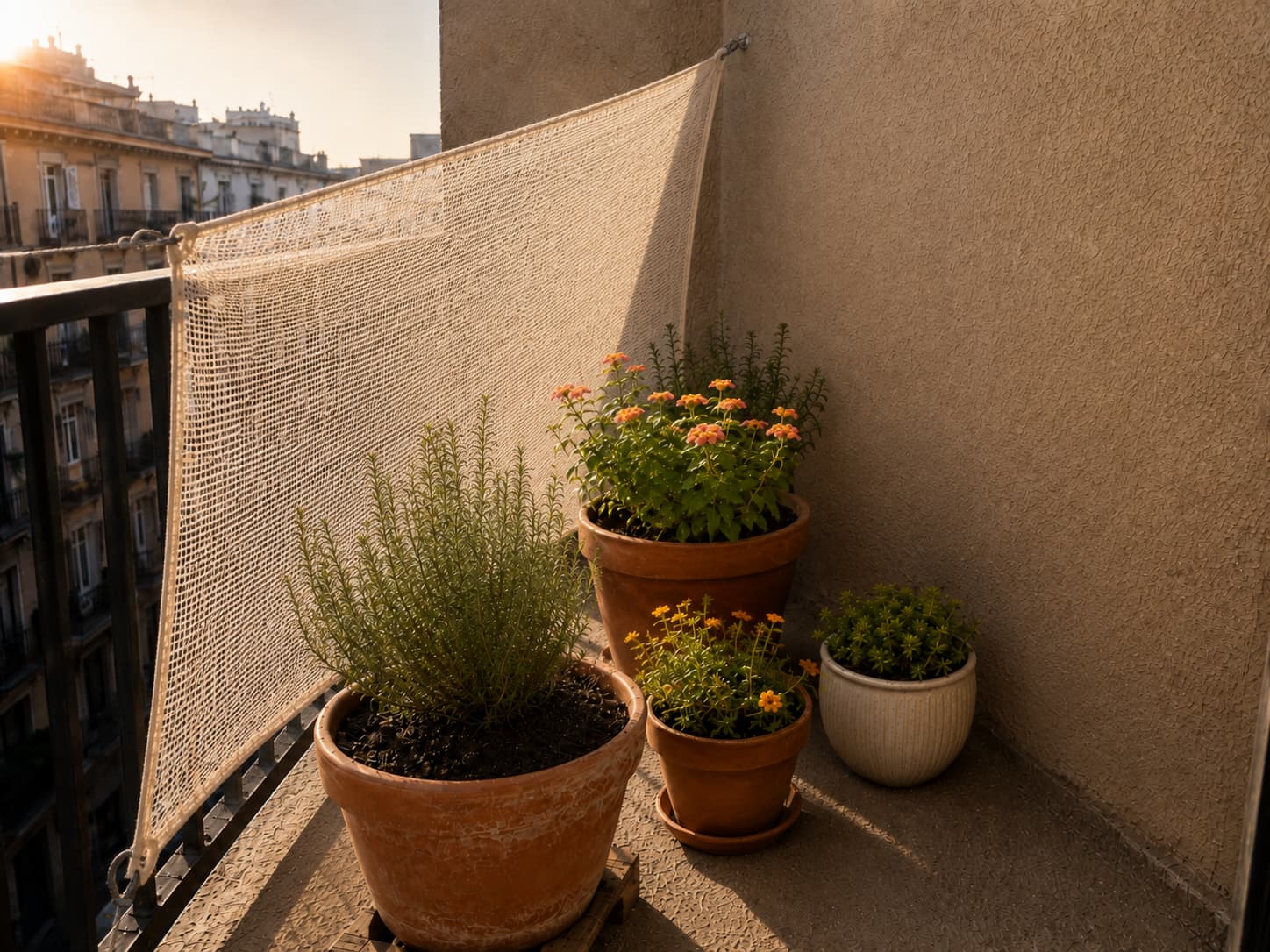
Moderate shade cloth (often sold around the 30–40% range): Can reduce the intensity of harsh afternoon sun while still allowing useful light through for many balcony plants. Light-colored cloth is often more comfortable around reflective urban surfaces. Whatever material you use, leave an air gap between the shade and the plants rather than wrapping the balcony tightly.
Bamboo roller blinds: A practical option when you want adjustable afternoon shade without permanently darkening the balcony. Mount them on the side that receives the strongest late-day sun and roll them up again when conditions moderate.
Living shade wall: Tall, heat-tolerant plants such as sunflowers, okra, or climbing beans on a trellis can shade shorter containers behind them. This can soften direct afternoon exposure while keeping the balcony visually green and breathable.
What doesn't work: White sheets or thin curtains — they block light but not infrared. They make the balcony feel dim without actually cooling it. Umbrellas — they shade a small circle and blow over in wind. Reflective emergency blankets — they create blinding glare and can overheat adjacent surfaces.
Suggested filename:
greenmuse-illustration-balcony-shade-cloth-setup.jpgReplace
PASTE_IMAGE_URL_05_HERE with the final image URL.Balcony observation: A light-colored shade cloth on my west-facing railing noticeably reduced the harshness of late-afternoon exposure. The most important detail was leaving space between the cloth and the plants so air could continue moving through the balcony instead of turning the shade into a heat-trapping screen.
4. Upgrade Your Containers for Extreme Heat — Why Pot Choice Matters
Your choice of pot material and color determines your soil temperature more than any other factor. This is the single most overlooked variable in balcony gardening.
How common container materials behave in strong summer sun:
| Pot Material | Heat Behavior | Moisture Behavior | Best Use in Heat |
|---|---|---|---|
| Black plastic | Absorbs strong solar heat quickly | Retains moisture well | Shade the pot or use a cachepot |
| Dark ceramic | Can become very warm in direct sun | Usually retains moisture well | Better with afternoon protection |
| Light plastic | Generally heats less than dark plastic | Retains moisture well | Useful for fast-drying balconies |
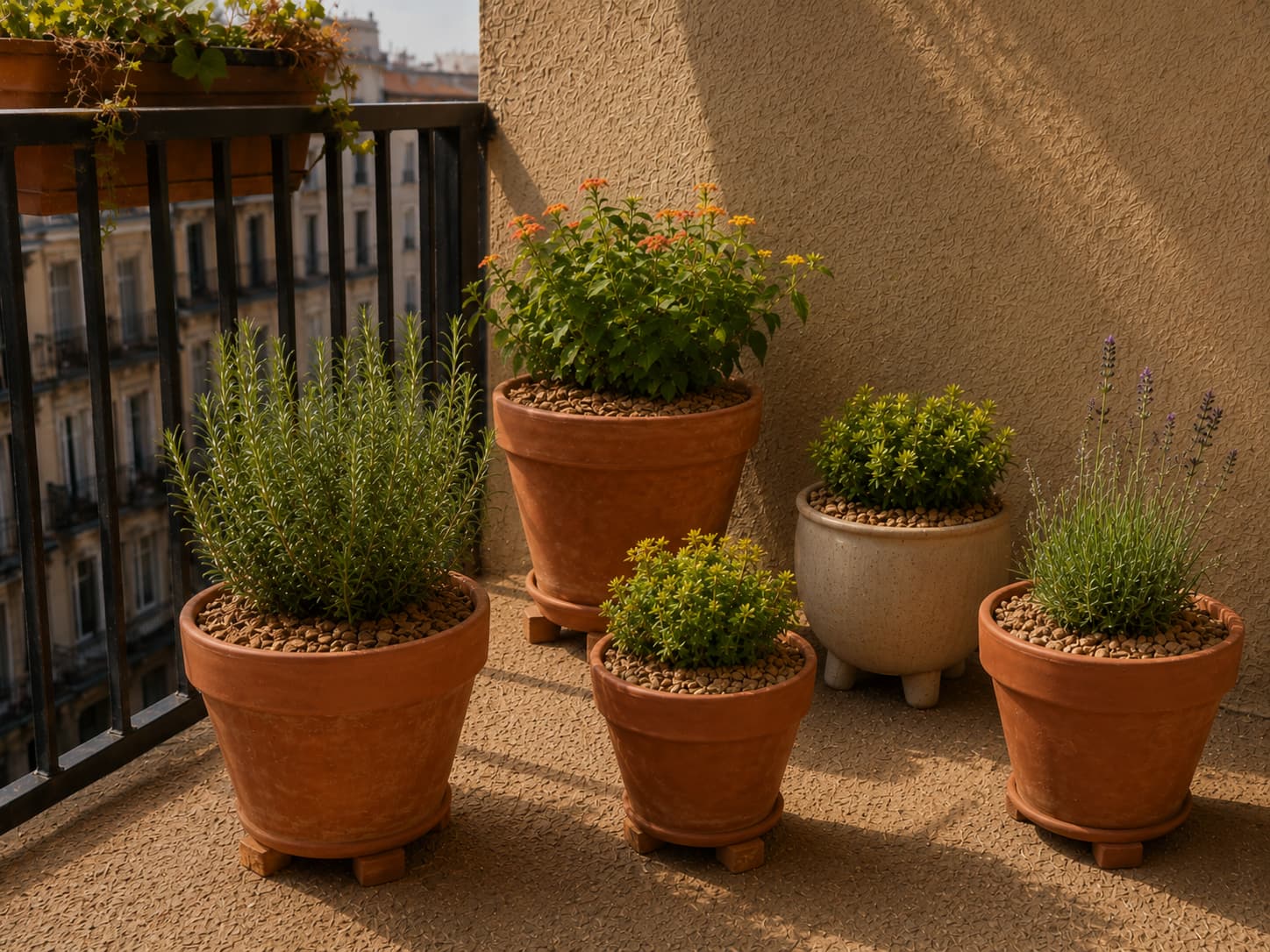
| Terracotta (unglazed) | Porous surface can support evaporative cooling | Dries faster through pot walls | Good when you can monitor moisture closely |
| Light ceramic (glazed) | Lighter surface can reduce solar heat gain | Retains moisture well | Good general-purpose option |
| Wood planter | Does not heat as aggressively as thin dark plastic | Varies with liner and construction | Useful for larger balcony containers |
Suggested filename:
greenmuse-illustration-cooler-balcony-containers.jpgReplace
PASTE_IMAGE_URL_06_HERE with the final image URL.Terracotta's useful feature is porosity — moisture can move through the clay and evaporate from the outer surface, which may help moderate pot temperature in hot, dry conditions. The trade-off is faster moisture loss, so terracotta containers need closer checking during heatwaves than glazed or plastic pots.
Three upgrades that cost under $20 total:
1. Pot feet or wood slats. Elevate containers slightly off a very hot balcony floor. The air gap reduces direct conductive heat from concrete or tile and can also improve drainage around the base of the pot.
2. Mulch the surface. A modest layer of suitable mulch can shade the potting mix and slow surface evaporation. Choose a material that suits the plant and does not keep moisture trapped against a crown or stem that prefers to stay dry.
3. Double-pot your most vulnerable plants. Place a nursery pot inside a larger light-colored outer container so the outer pot shades the root zone from direct sun. Keep drainage unobstructed and avoid leaving the inner pot standing in water.
Water conservation bonus: Where local rules allow it, some clean household water can be reused for container plants. Cool, unsalted vegetable-rinse water or clean shower warm-up water can be useful. Avoid water containing soap, detergent, cleaning products, grease, or significant salt, and follow any local greywater restrictions.
Common fail: Letting containers sit in standing water for long periods. Saucers are useful where balcony runoff needs to be controlled, but empty excess water after irrigation or use pot feet so the drainage holes are not submerged. Persistent saturation can increase root-rot risk, especially in warm conditions.
5. Outsmart Heat-Triggered Pests and Diseases — Before They Start
Heat-stressed plants are often less resilient to pest pressure, and hot, dry conditions can be especially favorable for spider mites. A small infestation can build quickly, so frequent inspection matters more during prolonged heat.
The heat-pest connection: Spider mites thrive in hot, dry, dusty conditions — exactly what a balcony becomes in a heatwave. Aphids explode in population when plants are nitrogen-stressed from rapid growth in heat. Powdery mildew appears when hot days are followed by cool nights with high humidity — the temperature swing stresses the plant's defenses.
Prevention protocol (5 minutes, twice a week):
- Inspect leaf undersides. This is where spider mites and aphids hide. Use your phone camera zoomed in — you'll see mites as tiny moving dots before you see the webbing. Check the newest growth first (pests target tender tissue).
- Rinse pests off when appropriate. A firm but plant-safe stream of water can dislodge many aphids and spider mites from leaf undersides. Do it during a cooler part of the day and repeat as needed while monitoring the plant.
- Use neem oil only when it fits the pest problem. Neem oil works primarily through contact and feeding deterrence, so careful coverage matters. Follow the product label, cover target surfaces carefully, avoid open flowers and active pollinators, and spot-test sensitive plants before broader application.
- Remove stressed leaves immediately. Yellowing, curling, or spotted leaves are pest magnets. Cut them off at the base — don't leave them on the balcony floor where pests can migrate.
- Plant pest-repelling companions. Basil repels tomato hornworms and whiteflies. Marigolds repel aphids and nematodes. Mint repels ants and aphids (but keep mint in its own pot — it's aggressive).
Balcony lesson: I once missed an early spider-mite outbreak until webbing was obvious and the plants were already badly stressed. Since then, I check the newest growth and leaf undersides twice a week during hot, dry weather. Catching a problem early is much easier than trying to reverse a heavy infestation.
Common fail: Applying oil-based treatments to already heat-stressed foliage during the hottest part of the day. Strong sun and high temperatures can increase the risk of phytotoxicity. Follow the product label, treat during cooler conditions, and avoid applying horticultural oils when the label warns against high-temperature use.
What Doesn't Work (Stop Doing These)
1. "Just water more." Increasing watering frequency without checking the potting mix can create a different problem: some containers stay saturated while others still develop dry pockets. Improve shade, container placement, and water delivery first, then adjust frequency according to actual soil moisture.
2. Relying on midday misting for cooling. A brief mist usually evaporates quickly and does little for the root zone, where heat stress is often most serious. Frequent leaf wetting can also be unhelpful where airflow is poor or disease pressure is high. Prioritize root-zone moisture, shade, and airflow instead.
3. Heavy fertilizing during severe heat. A plant already coping with heat and irregular moisture usually does not need an extra push of nutrients. Pause aggressive feeding during extreme conditions and resume normal fertilizing once the plant is actively growing again.
4. Unnecessary repotting during extreme heat. Repotting disturbs the root system at a time when the plant is already under environmental stress. Unless there is an urgent drainage or root-health problem, wait for milder conditions before making a major container change.
5 Plants That Often Struggle on Hot, Exposed Balconies
Some plants are much harder to keep happy on an exposed, heat-reflective balcony. They may still work in cooler climates, morning sun, or protected shade, but they usually need more careful positioning and moisture management:
1. Impatiens. Traditional impatiens prefer more moderate temperatures and steady moisture. On a balcony with intense afternoon sun and fast-drying containers, they can wilt repeatedly and decline unless they receive reliable shade and moisture.
2. Fuchsia. Fuchsias generally perform best in cooler, protected conditions. Prolonged heat can reduce flowering, scorch foliage, and make container moisture difficult to manage, so they are a poor fit for many exposed west- or south-facing balconies.
3. Pansies and violas. These are cool-season flowers. They often fade, stretch, or stop performing well once sustained summer heat arrives, making them better choices for spring, fall, or mild-winter containers in many climates.
4. Lettuce and spinach. Both are cool-season crops that tend to bolt more quickly as temperatures and day length rise. In hot balcony conditions, heat-tolerant greens such as Swiss chard or Malabar spinach are usually easier summer choices.
5. Hydrangeas (in exposed containers). Their large leaves can lose moisture quickly, and container roots have less buffering against heat than roots in the ground. Hydrangeas can work on balconies with morning sun, generous root volume, and reliable moisture, but exposed afternoon heat makes them much more demanding.
Post-Heatwave: How to Revive Scorched Plants
The heatwave broke. Now what? Don't assume your drooping, crispy plants are dead. Many plants look worse than they are after extreme heat — and most recover with the right approach.
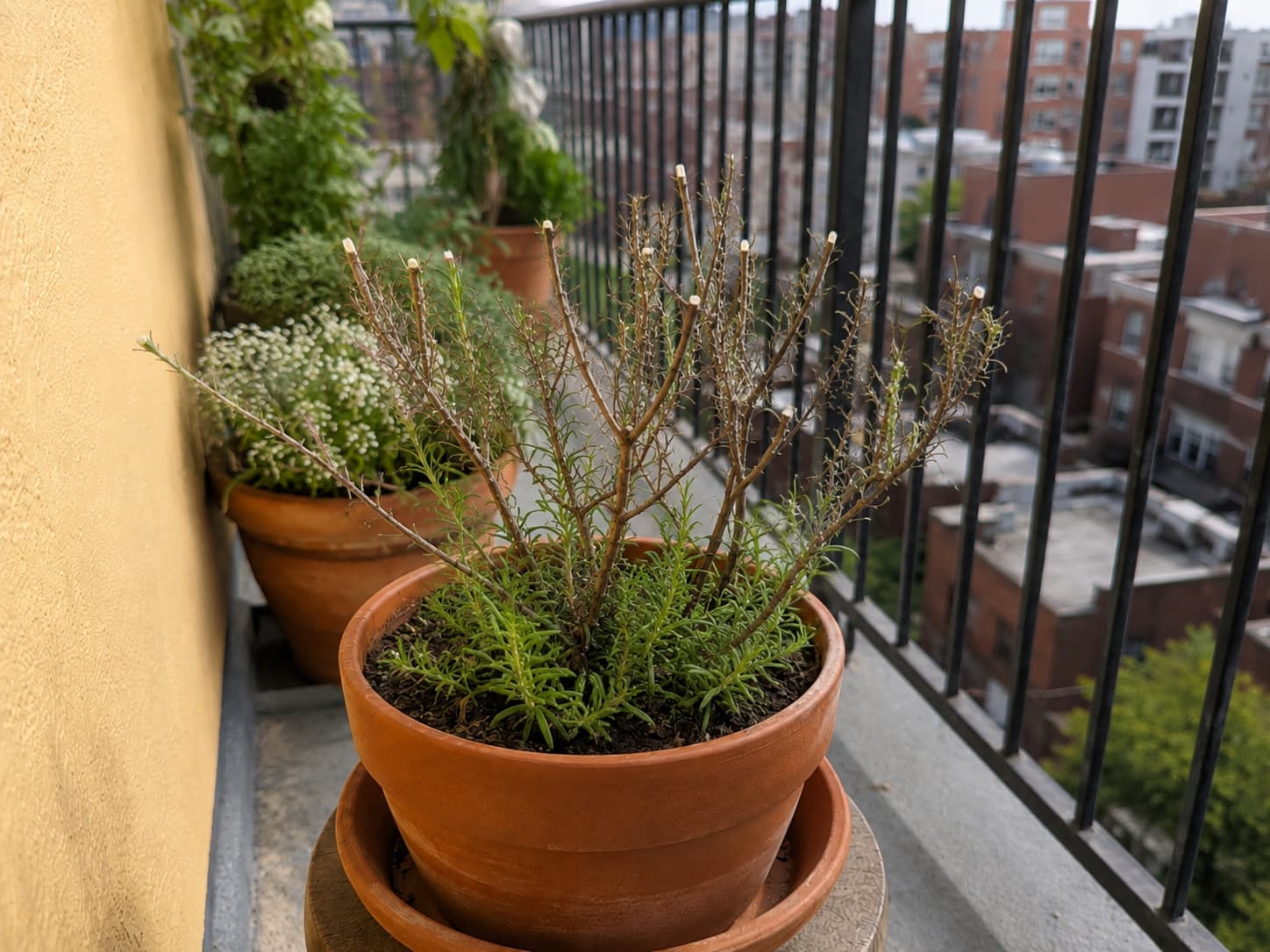
Day 1: Assessment, not action. Move plants out of direct sun but don't flood them with water. Check: are the stems firm or mushy? Firm stems = alive. Mushy stems = rot. Do the scratch test: lightly scratch the main stem with your fingernail. Green underneath = alive. Brown and dry = dead. For woody plants like rosemary, bend a small branch — if it snaps, that branch is dead; if it bends, it's alive. Wait until evening to water, and water slowly.
After the plant has had time to stabilize: clean up obvious damage. Remove foliage that is fully brown, brittle, or clearly dead, but avoid aggressive pruning while you're still unsure which stems may recover. Hold fertilizer until you see active new growth and the plant is using water normally again.
Over the next couple of weeks: wait and watch. Water according to actual soil moisture rather than the old schedule, because a plant with fewer leaves may use water more slowly. Watch for fresh buds or new growth from the base and stems before deciding the plant is beyond recovery.
Suggested filename:
greenmuse-illustration-rosemary-heatwave-recovery.jpgReplace
PASTE_IMAGE_URL_07_HERE with the final image URL.Recovery truth: Rosemary that looks badly scorched may still be alive lower on the plant. I've had a heat-damaged rosemary push fresh green growth from the base after the weather moderated. Before discarding a woody herb, check whether lower stems are still flexible or green beneath a light scratch, then give the plant time to respond.
Balcony Heatwave FAQ
1. What's the single most effective thing I can do for my balcony plants in a heatwave?
2. Can I use ice cubes to cool down my plants?
3. Should I bring my plants inside during a heatwave?
4. How do I know if my plant is heat-stressed vs. underwatered?
5. Can I reuse heat-damaged soil next season?
The Bottom Line
Balcony gardening in a heatwave isn't about fighting the weather — it's about reducing avoidable stress. Plants adapted to Mediterranean, desert, and other hot-season climates often cope better with exposed containers, while your job is to manage the root zone, light, airflow, and water consistently.
The five changes that matter most are straightforward: use containers that do not absorb excessive heat, lift pots slightly off scorching surfaces, add breathable shade where afternoon exposure is harshest, water slowly during the cooler part of the day, and inspect plants regularly for early pest activity.
And when the heatwave breaks, give your plants time to recover before you prune, repot, or fertilize. They're tougher than they look — most of the time, what looks dead is just waiting for cooler weather to push out new growth.