14 Purple Perennial Flowers That Come Back Every Year
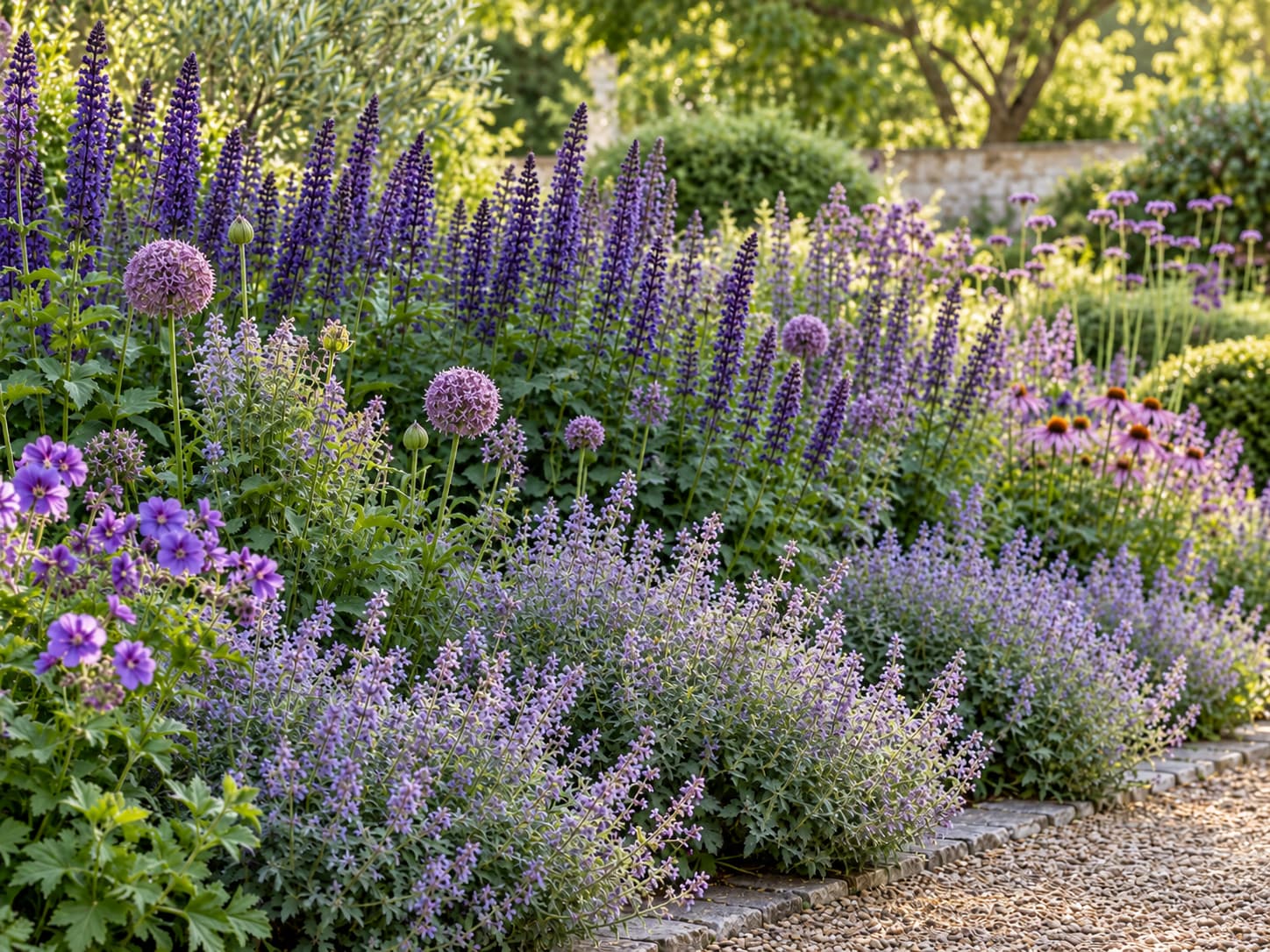
Looking for purple perennial flowers that return after winter? Start with catmint, meadow sage, and purple coneflower for a sunny, beginner-friendly border. Then layer in spring alliums and late-season asters so the color lasts beyond one short flush of bloom.
Below are 14 garden perennials with flowers ranging from lavender-blue and violet to pink-purple and mauve. You'll find their typical bloom seasons, light preferences, and practical planting tips. However, a perennial only returns reliably when its species or cultivar suits your climate and winter drainage.
Quick Answer: The Three Easiest to Start With
Before You Plant: Hardiness, Color, and Timing
For U.S. gardens, find your local USDA plant hardiness zone, then check the zone rating of the specific plant or cultivar. The zone map reflects average extreme winter lows; it does not measure summer humidity, soil drainage, or drought. In the UK and much of Europe, compare your winters with RHS hardiness ratings and local nursery guidance.
Bloom months below describe a typical Northern Hemisphere temperate garden. In warmer climates, flowering may begin earlier; in colder regions, later. In addition, some varieties have pinkish-purple rather than true violet petals. Choose by the color you want to see in your own light.
Spring to Early Summer: Four Purple Perennials
01. Ornamental Allium — Purple Globes Above the Border
Bloom: mainly late spring to early summer, depending on species. Ornamental alliums carry rounded heads of tiny purple flowers above neighboring foliage. Grow: give bulb-forming types full sun and well-drained soil. Plant their bulbs in autumn at the depth recommended on the label. Later, leave the sculptural seed heads standing if you like their dry texture.
02. Baptisia — Long-Lived False Indigo
Bloom: late spring to early summer. Baptisia australis bears blue-violet, pea-like flowers above attractive foliage. Although young plants can be slow to establish, settled clumps are remarkably long-lived. Grow: choose sun to light shade and a permanent location. Its deep roots make established plants difficult to move.
03. Catmint — An Airy Lavender-Blue Edge
Bloom: late spring into summer, with possible repeat flowers. Many Nepeta varieties form soft mounds of aromatic foliage topped by hazy purple-blue spikes. Grow: provide full sun and freely draining soil. After the first bloom, trim spent stems to encourage fresh growth and sometimes another flush. However, rebloom depends on the variety and growing season.
04. Hardy Geranium — Purple Flowers for Softer Light
Bloom: late spring through summer, depending on cultivar. Hardy cranesbills make low mounds of saucer-shaped flowers, often in violet, blue-purple, or magenta shades. Grow: look for a cultivar suited to partial shade if your border gets less sun. Unlike tender bedding pelargoniums, these are hardy Geranium species and hybrids, though winter tolerance still varies.
Summer: Seven Purple Perennials
05. Meadow Sage — Upright Violet Spikes
Bloom: early to midsummer, sometimes repeating. Salvia nemorosa and related garden salvias supply strong vertical accents that contrast with the softer clouds of catmint. Grow: choose full sun and a draining site. Once the first spikes fade, cut them back to encourage new flowering where conditions allow.
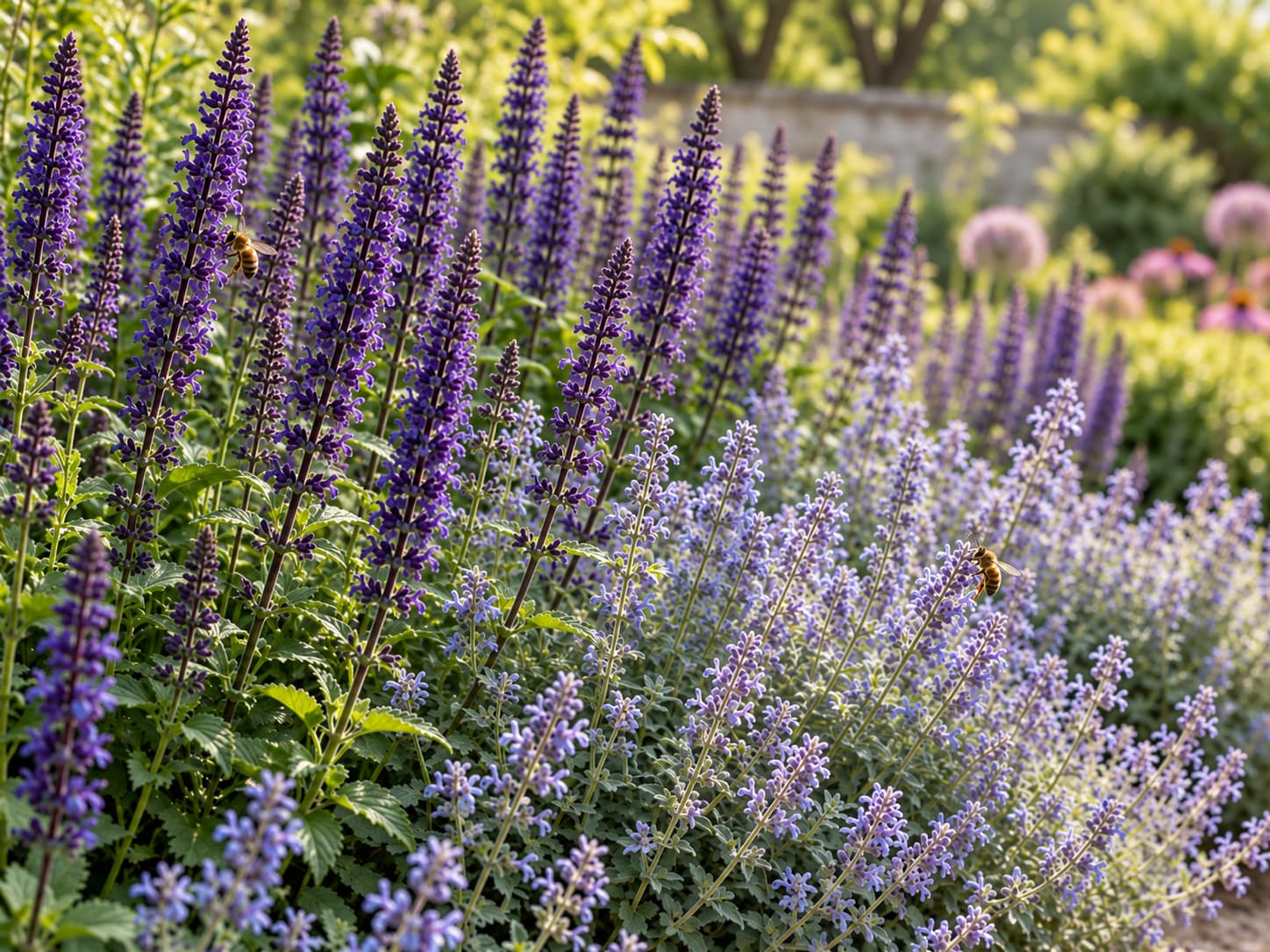
06. Lavender — Fragrance with a Drainage Requirement
Bloom: mainly summer. Lavender brings purple flower spikes, silvery foliage, and a familiar fragrance. Grow: give it full sun, excellent drainage, and plenty of airflow. In persistently humid weather or wet winter soil, lavender may be short-lived. Therefore, do not assume it will behave as a permanent perennial in every climate.
07. Veronica — Neat Spires of Color
Bloom: early to midsummer. Spike speedwells, including Veronica spicata cultivars, produce slender purple or violet-blue flowers in a compact clump. Grow: provide sun and soil that drains well. Deadheading can keep the plant tidy and may encourage additional stems.
08. Russian Sage — A Silver-and-Violet Haze
Bloom: midsummer into early autumn. Russian sage, often sold as Perovskia atriplicifolia and also known as Salvia yangii, has airy blue-violet flowers above finely cut gray-green foliage. Grow: choose full sun and lean, fast-draining soil. Too much shade or rich, wet soil can lead to floppy growth.
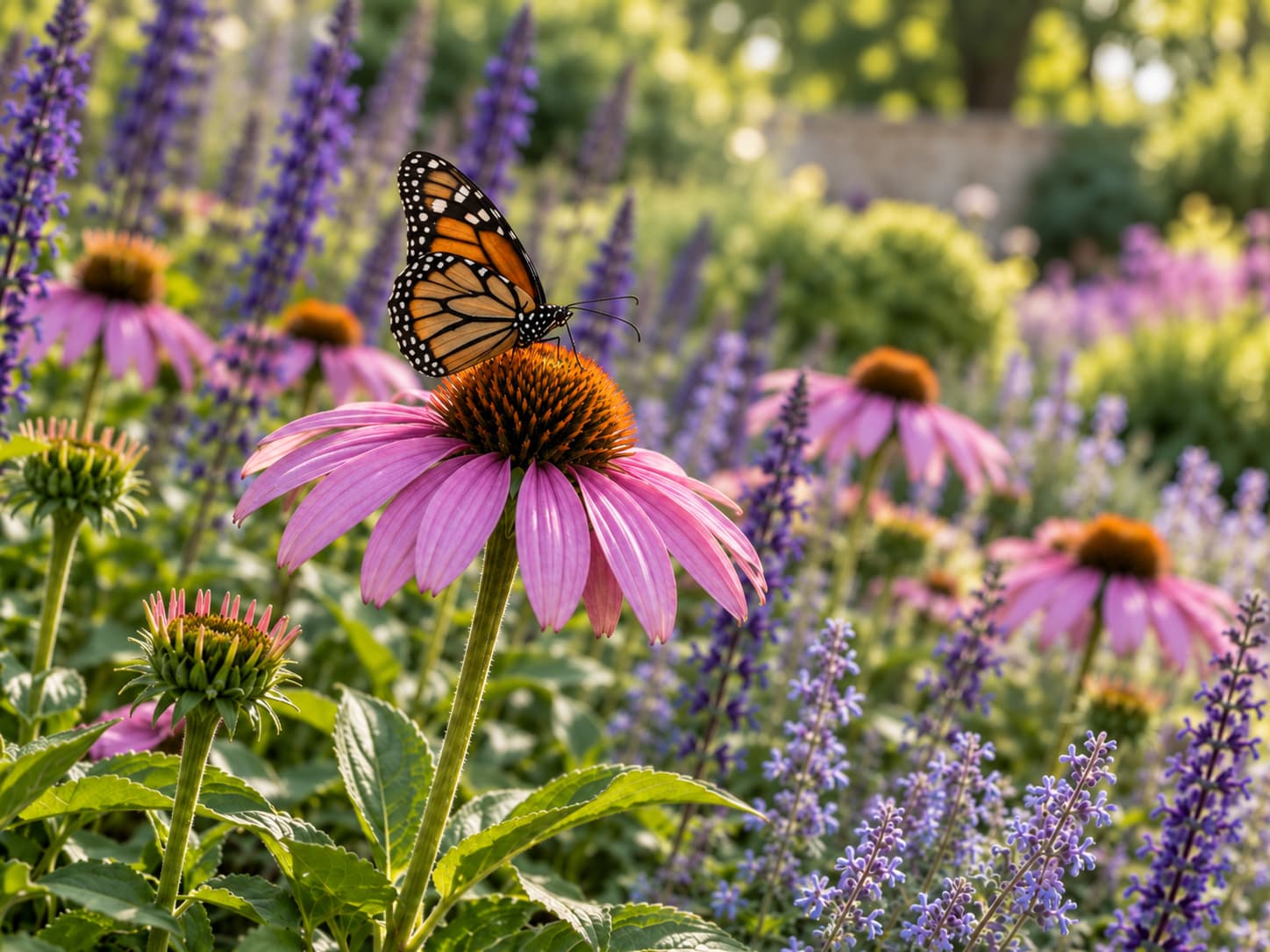
09. Purple Coneflower — Summer Daisies for Wildlife
Bloom: summer into early fall in many gardens. Echinacea purpurea bears pink-purple rays around raised copper-orange cones. Grow: plant in sun or light shade with reasonably well-drained soil. Bees and butterflies visit the flowers; later, seed-eating birds may feed on the dry cones. You can deadhead some blooms and leave others for wildlife.
10. Liatris — Purple Blazing Star
Bloom: usually midsummer. Blazing star forms distinctive bottlebrush-like purple flower spikes, often opening from the top downward. Grow: many garden selections prefer full sun, while soil-moisture needs vary with species. Check the label before choosing a very dry or damp bed. The flowers are especially useful in pollinator plantings.
11. Garden Phlox — Fragrant Late-Summer Clusters
Bloom: midsummer to late summer. Phlox paniculata forms rounded clusters of scented flowers, including purple and lavender cultivars. Grow: provide sun, fairly consistent moisture, and generous airflow. To reduce powdery mildew, avoid crowding, and choose resistant cultivars where available.
Late Summer Into Fall: Three More Choices
12. New England Aster — Purple Fall Daisies
Bloom: late summer through fall. Symphyotrichum novae-angliae brings purple-violet daisies with yellow centers when many summer plants are fading. Grow: aim for full sun and suitable moisture; tall varieties may need support or an early-season pinch. For variety ideas, read our New England aster guide.
13. Autumn Stonecrop — Mauve-Pink Fall Color
Bloom: late summer into fall. Upright stonecrops, commonly called sedum and often classified as Hylotelephium, produce fleshy foliage and flower heads that can age from rosy pink toward mauve or rusty tones. Grow: plant in sun and well-drained soil. Note that cultivars such as 'Autumn Joy' are pink to mauve, not true deep purple; choose a darker cultivar if purple is your goal.
14. Monkshood — Beautiful but Highly Toxic
Bloom: summer to fall, depending on the species. Aconitum bears striking hood-shaped violet or dark-purple flowers and often prefers cooler conditions with moisture-retentive, well-drained soil. Important safety warning: all parts are highly poisonous. Wear gloves when handling monkshood, and do not grow it where children or pets may touch, dig up, or ingest it. For family gardens, choose a safer purple-flowering alternative.
Compare All 14 at a Glance
| Plant | Typical bloom | Light | Main consideration |
|---|---|---|---|
| 01 · Allium | Late spring–early summer | Full sun | Plant bulbs in fall; drain well |
| 02 · Baptisia | Late spring–early summer | Sun–light shade | Allow a permanent position |
| 03 · Catmint | Late spring–summer | Full sun | Shear for possible rebloom |
| 04 · Hardy geranium | Spring–summer | Sun–part shade | Select a shade-tolerant cultivar |
| 05 · Meadow sage | Early–midsummer | Full sun | Cut faded spikes back |
| 06 · Lavender | Summer | Full sun | Excellent drainage is essential |
| 07 · Veronica | Early–midsummer | Full sun | Compact flower spikes |
| 08 · Russian sage | Midsummer–early fall | Full sun | Lean, well-drained soil |
| 09 · Coneflower | Summer–early fall | Sun–light shade | Pink-purple flowers; seed heads for birds |
| 10 · Liatris | Midsummer | Full sun | Check moisture needs by species |
| 11 · Garden phlox | Mid–late summer | Sun–light shade | Air circulation helps limit mildew |
| 12 · New England aster | Late summer–fall | Full sun | Late-season pollinator flowers |
| 13 · Autumn stonecrop | Late summer–fall | Full sun | Often pink-mauve, not deep violet |
| 14 · Monkshood | Summer–fall | Part shade–sun | Highly toxic; avoid around children and pets |
When to Plant Purple Perennials
Spring is a useful planting window in colder regions, especially for less-established container plants. In many temperate gardens, early autumn is also suitable while soil remains warm enough for root growth. However, if your first hard freeze is close, wait until spring rather than rushing tender young plants into cold ground.
Ornamental allium bulbs are an exception worth remembering: many spring-blooming types are planted in fall. Meanwhile, hot and humid or mild-winter climates need species-specific advice rather than a universal calendar. Water new plantings during establishment even when the chosen species becomes drought-tolerant later.
Designing a Purple Border in Three Steps
- Choose one plant for each season. For example, combine spring alliums, summer meadow sage or coneflower, and fall New England aster. This spreads flowering rather than concentrating everything in June.
- Repeat colors in groups. Small drifts of three or five of the same plant often look more cohesive than many isolated singles. Use silvery foliage or chartreuse leaves for contrast.
- Layer plants by their mature height and moisture needs. Position shorter catmint at the front, midheight salvia or phlox behind it, and tall aster or Russian sage farther back where appropriate. Importantly, do not group thirsty phlox in the driest lavender bed simply because the colors match.
Frequently Asked Questions
01Which purple perennial flowers bloom the longest?
Many catmints and meadow sages have a long display and may rebloom after trimming. In addition, Russian sage provides color across much of late summer in suitable sunny, dry sites. Exact flowering duration varies by cultivar and climate.
02What purple perennials grow in partial shade?
Some hardy geraniums perform well in partial shade, making them a practical starting point. Certain phlox and baptisia also tolerate light shade but may flower less. Most lavender, Russian sage, and many salvias prefer stronger sun.
03Are these flowers deer-resistant?
Aromatic plants such as catmint, lavender, and Russian sage are often less appealing to deer. Nevertheless, browsing pressure varies, and no plant is reliably deer-proof in every garden.
04Which purple perennials attract pollinators?
Catmint, meadow sage, coneflower, liatris, and asters can provide nectar or pollen during different parts of the growing season. For greater value, combine several flowering periods and favor accessible flower forms.
05Can I plant purple perennials in October?
Often yes, in temperate locations with sufficient time for roots to establish before frozen soil. However, late October may be too late in colder regions. Check your first-frost timing, nursery advice, and the needs of each plant; spring is a safer fallback.
06Do they really come back every year?
Perennials can return over multiple years when they are hardy for the location and have appropriate growing conditions. However, individual plants may be short-lived or fail in wet winters, extreme heat, or unsuitable soil. Always check the specific cultivar.
07Should I deadhead purple perennial flowers?
Trim faded catmint, salvia, or veronica if you want a tidier plant and possible repeat blooms. By contrast, leaving some coneflower and aster seed heads can benefit wildlife. You can mix both approaches in the same border.
Related Reading
- New England Aster: Fall Color and Growing Tips — a closer look at the late-season purple favorite.
- Low-Maintenance Flowers That Bloom All Summer — more easy summer-border ideas.
Sources and Further Reading
- USDA — Plant Hardiness Zone Map (climate zones and winter hardiness).
- Royal Horticultural Society — Nepeta (catmint growth and trimming).
- NC State Extension — Echinacea purpurea (coneflower identification and care).
- NC State Extension — Salvia nemorosa (meadow sage care).
- NC State Extension — Nepeta × faassenii (catmint care).
- Royal Horticultural Society — Russian Sage (plant form and flowering).
- NC State Extension — Autumn Joy Stonecrop (pink flowers and drainage).
- NC State Extension — Aconitum (monkshood identification and toxicity).