Potentilla Plant Guide: How to Grow Shrubby Cinquefoil
A practical guide to planting, pruning, and troubleshooting one of the toughest, longest-blooming shrubs for cold-climate gardens.
Quick Summary
Potentilla (Potentilla fruticosa, also reclassified as Dasiphora fruticosa) is arguably the toughest, longest-blooming flowering shrub available to cold-climate gardeners. It produces cheerful five-petaled flowers — yellow, white, pink, or orange — continuously from late spring through the first frost, often for 4–5 months straight. It shrugs off drought, poor soil, road salt, deer browsing, and Zone 2 winters. But it has one Achilles' heel: without renewal pruning every few years, it becomes a leggy, twiggy mess with flowers only at the tips. This guide covers the simple pruning routine that keeps it dense and covered in blooms — plus the best varieties for every garden role.
In This Guide
- What Is Potentilla? (And the Name Change You Should Know About)
- Plant Profile at a Glance
- Why Potentilla Might Be the Toughest Shrub in Your Garden
- How to Plant Potentilla
- Complete Care Guide
- Pruning Potentilla: The Renewal Routine That Prevents Legginess
- Why Isn't My Potentilla Blooming?
- Best Potentilla Varieties by Color and Size
- Frequently Asked Questions
What Is Potentilla? (And the Name Change You Should Know About)
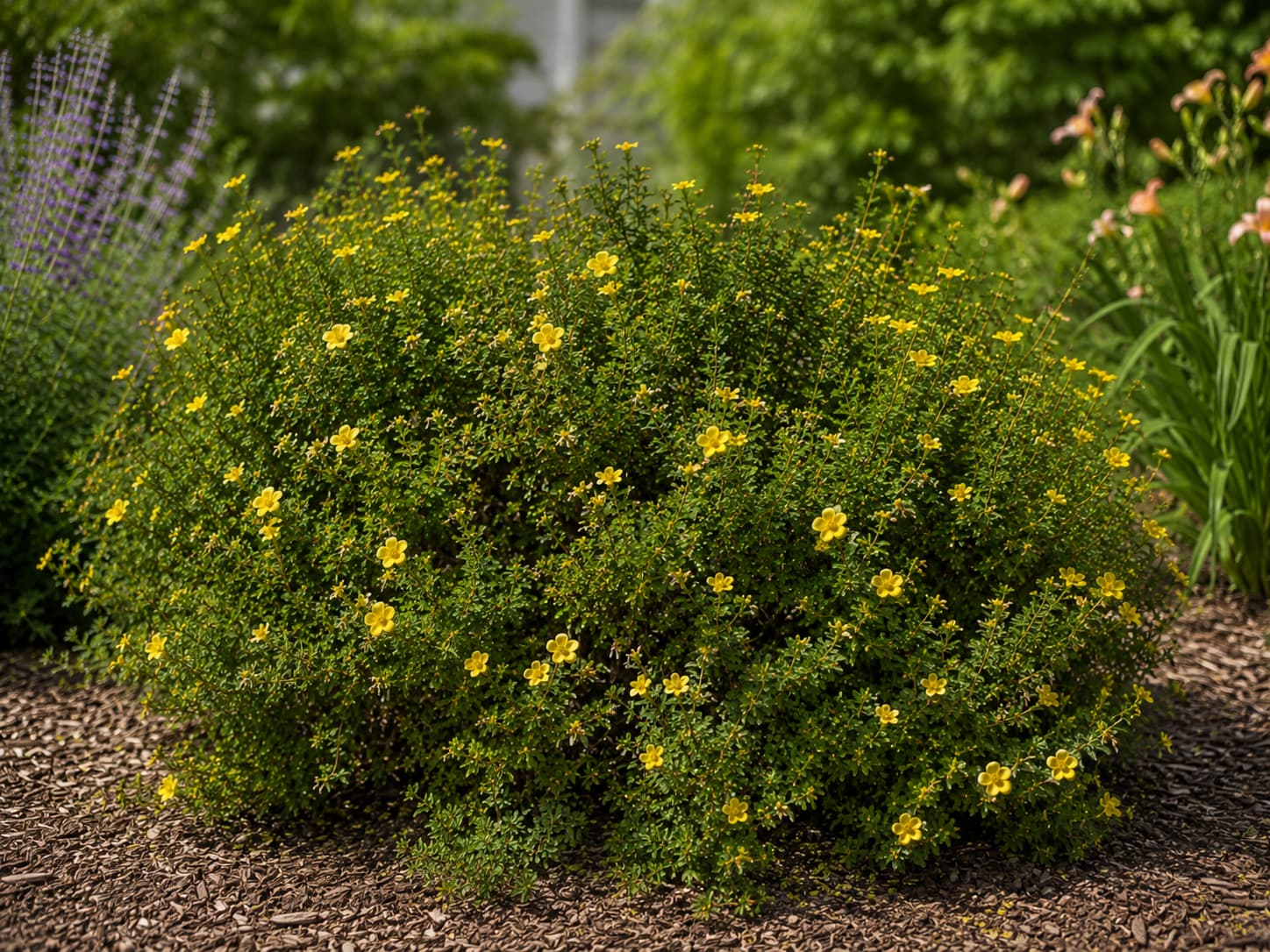
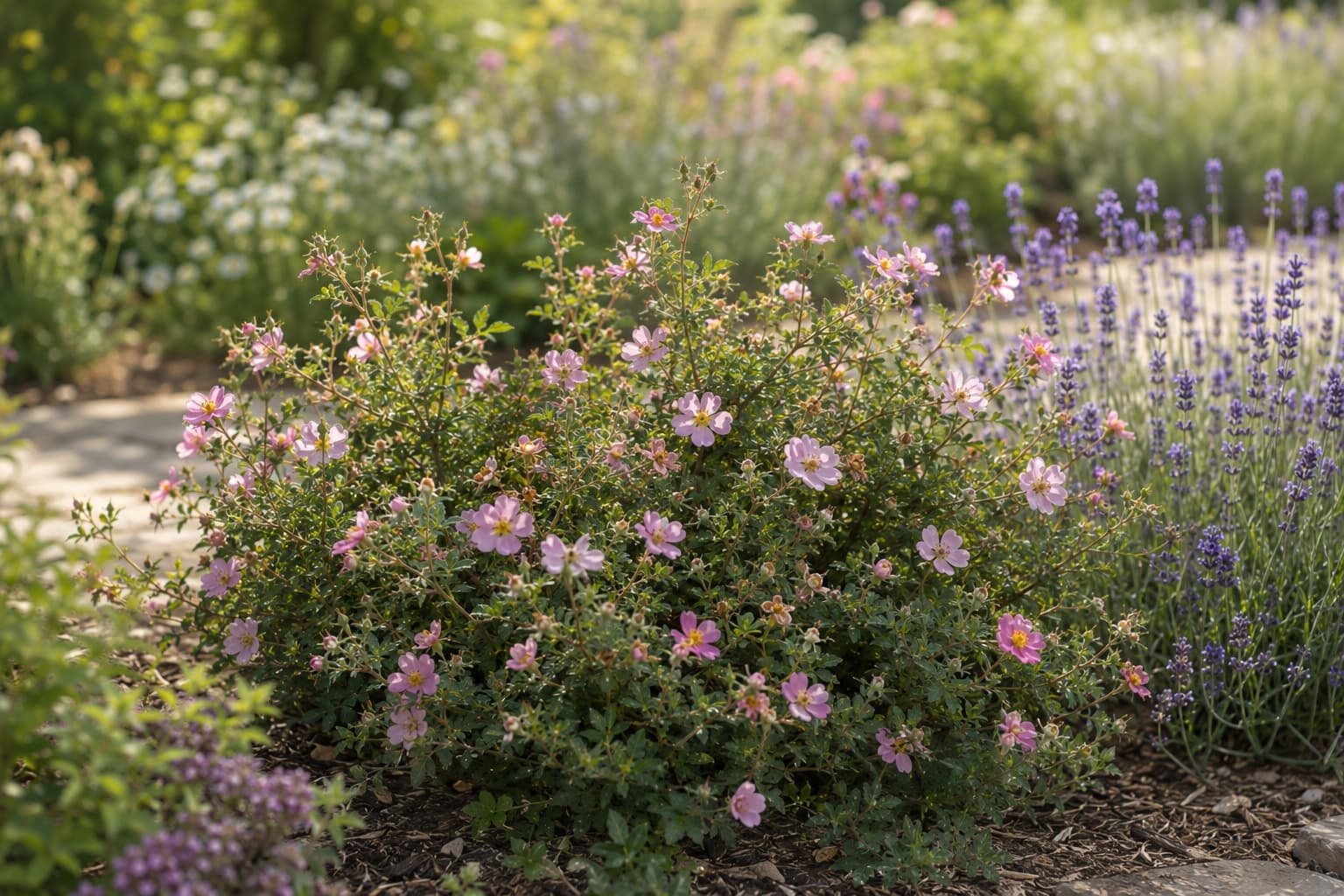
Potentilla, commonly called shrubby cinquefoil (from the French "cinq feuilles" — five leaves — referring to the five leaflets of each compound leaf), is a compact deciduous shrub in the rose family (Rosaceae). It's native across the Northern Hemisphere — from the Arctic Circle through the Rocky Mountains to the Himalayas — which explains its extraordinary cold tolerance and adaptability.
Botanically, the plant most gardeners know as Potentilla fruticosa has been reclassified by many authorities as Dasiphora fruticosa. The Royal Horticultural Society, the USDA PLANTS database, and many botanical gardens now use Dasiphora. In practice, garden centers still sell it as Potentilla, and that's what you'll find on plant tags. Both names refer to the same plant — don't be confused if you see either one.
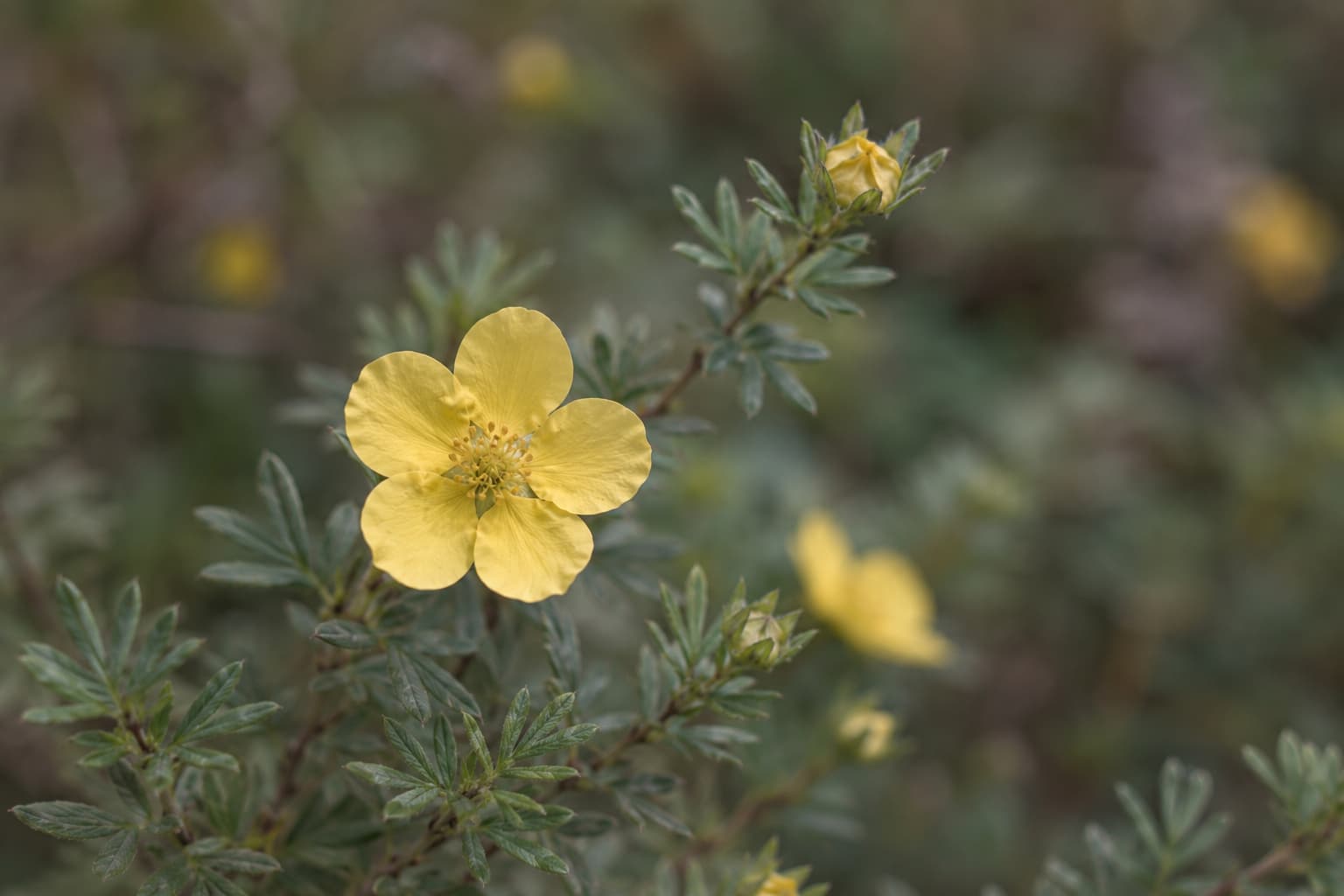
The flowers are small — about 1–1.5 inches across — but produced in extraordinary numbers. A healthy shrub can be covered in hundreds of blooms at once, and it keeps producing new ones continuously rather than in a single flush. The foliage is fine-textured, blue-green to dark green, and turns yellow to bronze in fall on some varieties.
Plant Profile at a Glance
| Feature | Details |
|---|---|
| Common Name | Potentilla, Shrubby Cinquefoil, Bush Cinquefoil |
| Scientific Name | Potentilla fruticosa (syn. Dasiphora fruticosa) |
| Plant Type | Compact deciduous shrub |
| USDA Zones | 2–7 (one of the most cold-hardy flowering shrubs; some varieties to Zone 8) |
| Mature Size | 1–4 ft tall, 2–4 ft wide (varies by variety) |
| Bloom Time | Late spring through first hard frost (often 4–5 months) |
| Flower Colors | Yellow, white, pink, orange, peach, red |
| Foliage | Fine-textured, compound, blue-green to dark green; some varieties have fall color |
| Sun Needs | Full sun for best bloom; tolerates light shade |
| Soil | Well-drained; tolerates poor, sandy, rocky, alkaline, and clay soils |
| Deer Resistance | Excellent — rarely browsed |
| Toxicity | Non-toxic — safe for children and pets |
Why Potentilla Might Be the Toughest Shrub in Your Garden
Potentilla doesn't get the attention it deserves because it's not dramatic — no giant blooms, no intoxicating fragrance, no fiery fall color. What it offers instead is relentless reliability in conditions that would kill almost anything else:
- Zone 2 cold-hardy. This is one of the very few flowering shrubs that thrives where winter temperatures drop to -50°F. It's native to the Arctic. If you garden in the northern Plains, Canada, or high-elevation mountain regions, potentilla should be on your very short list.
- Blooms for 4–5 months. Few shrubs bloom this long. From late May through October (in many climates), potentilla produces new flowers continuously.
- Drought-tolerant once established. After the first year, it needs almost no supplemental water.
- Salt-tolerant. Road salt, coastal salt spray, alkaline soils — potentilla handles them all. It's an excellent choice for hell strips, parking lot islands, and roadside plantings.
- Deer-resistant. Deer almost never browse potentilla. It's not toxic — they just don't like it.
- Non-toxic and safe. Unlike oleander, daphne, or rhododendron, potentilla poses zero risk to children and pets.
- Pollinator-friendly. Bees and butterflies work the flowers heavily throughout the long bloom season.
How to Plant Potentilla
When to Plant
Early spring or early fall. Container-grown potentillas can be planted any time the ground isn't frozen, but spring gives the longest establishment before winter. In Zones 2–3, spring planting is strongly preferred — fall-planted shrubs may not root sufficiently before the ground freezes.
Where to Plant
- Full sun for maximum bloom. Potentilla tolerates partial shade but blooms significantly less — in anything less than 4 hours of direct sun, expect sparse flowers.
- Well-drained soil. Potentilla adapts to almost any soil type — sand, loam, clay, alkaline, slightly acidic — but it will not tolerate standing water. If drainage is poor, plant on a slight mound.
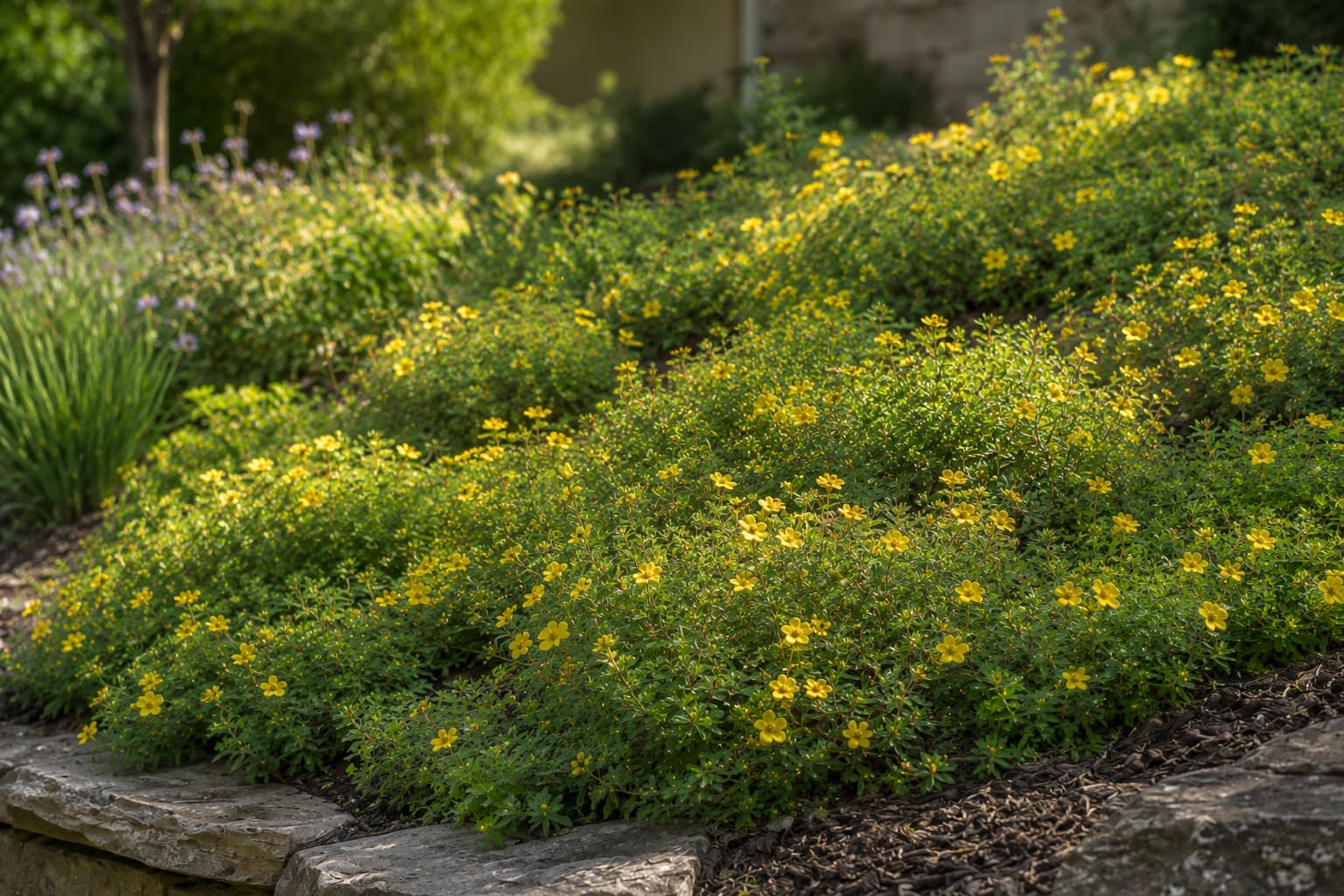
- Excellent for challenging spots: parking strips, roadside plantings, rock gardens, slopes, xeriscapes, coastal gardens, and high-altitude landscapes.
- Spacing: 2–3 feet apart for a continuous low hedge or mass planting; 3–4 feet for individual shrubs.
Planting Steps
- Dig a hole twice as wide as the root ball, exactly as deep.
- Position so the top of the root ball is level with the soil surface.
- Backfill with native soil. No amending needed — potentilla thrives in lean soil.
- Water deeply. Apply 2 inches of mulch, keeping it away from the stems.
- Do not fertilize at planting time.
Complete Care Guide
Light
Full sun (6+ hours direct) for maximum bloom. In partial shade (4–6 hours), bloom is reduced. In deep shade, potentilla survives but produces almost no flowers and becomes leggy.
Watering
First year: Water deeply once a week during dry spells. Established plants: Potentilla is genuinely drought-tolerant. Water during extended dry periods (3+ weeks without rain), but it doesn't need regular irrigation. Overwatering is far more dangerous than underwatering — soggy soil causes root rot.
Fertilizing
Potentilla is a light feeder. Apply a balanced slow-release fertilizer (10-10-10) once in early spring at half the recommended rate — or skip it entirely. Over-fertilizing, especially with nitrogen, produces weak, leggy growth and reduces flowering. In average garden soil, potentilla needs no supplemental fertilizer at all.
The Nitrogen Problem
If your potentilla is near a fertilized lawn, it's already getting nitrogen runoff. Additional fertilizer will push green growth and suppress blooming. The most flower-covered potentillas are typically the most neglected ones.
Pruning Potentilla: The Renewal Routine That Prevents Legginess
This is the section that addresses the #1 complaint about potentilla: "It looked great for a few years, but now it's all twigs with a few flowers at the tips."
Potentilla blooms on new wood — growth made in the current season. This is good news: it means pruning in early spring does not remove flowers. But it also means the shrub will naturally become leggy and unproductive if old wood is never removed. The oldest stems stop producing vigorous new growth after 3–4 years.
The Annual Pruning Routine
- Timing: Early spring, before new growth begins. In Zones 2–4, wait until the worst of winter has passed — late March to early April.
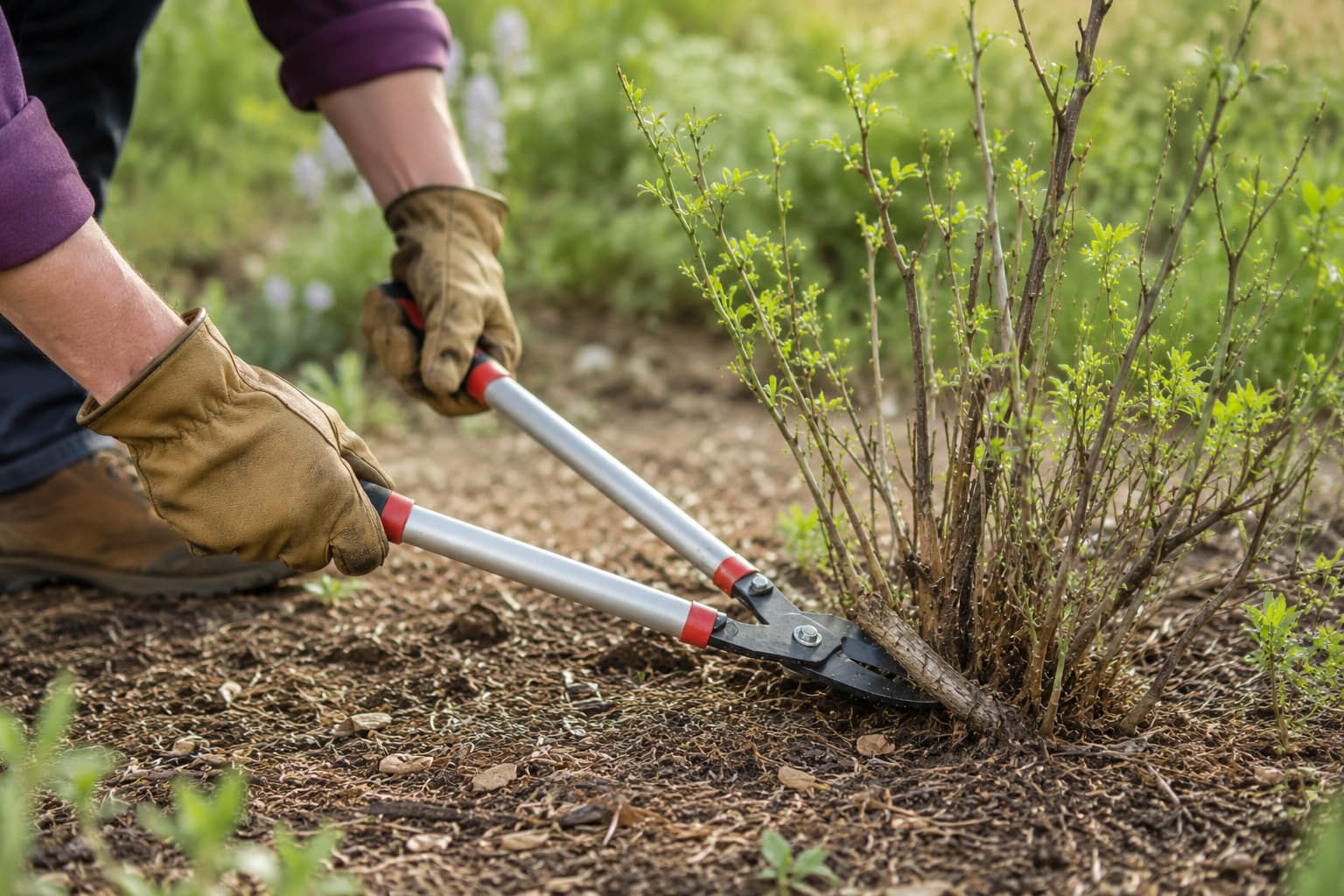
- Remove 20–25% of the oldest stems at ground level each year. These are the thickest, woodiest stems. Cut them as close to the base as possible. This is the single most important step — it constantly renews the shrub from the base.
- Remove any dead or damaged wood. Potentilla can experience some winter tip dieback in Zones 2–3. Cut back to healthy wood.
- Shape lightly if desired. Potentilla has a naturally compact, mounded form. Light tip-pruning for shape is fine. Avoid shearing into tight geometric shapes — this removes the new growth where flowers form.
Rescuing a Leggy, Overgrown Potentilla
If your potentilla has already become a twiggy mess, you can cut the entire shrub to 4–6 inches above the ground in early spring. It will look drastic, but potentilla regenerates vigorously from the base. You'll have a flush of new growth within weeks and blooms by early summer. This hard renovation can be done every 5–7 years if the shrub has been neglected, or you can prevent it entirely with the annual renewal pruning described above.
The 5-Minute Annual Routine
Every spring, take a pair of loppers and remove 2–3 of the oldest stems at ground level. That's it. Five minutes a year prevents the leggy decline that otherwise requires a drastic renovation every few years. This is the single most valuable habit for potentilla growers.
Why Isn't My Potentilla Blooming?
1. Not Enough Sun (Most Common)
Potentilla needs full sun for heavy bloom. In partial shade, flowers are sparse. In deep shade, almost none. If a tree has grown and cast more shade over the years, that's your cause.
2. Too Much Nitrogen
Lush, green, leggy growth with few flowers = nitrogen overdose — usually from lawn fertilizer runoff. Stop all fertilizing and wait a season.
3. Needs Renewal Pruning
Old, woody stems produce few flowers. If your potentilla is 4+ years old and has never been renewal-pruned, remove 20–25% of the oldest stems at ground level in early spring.
4. Extreme Heat
In Zones 7–8, potentilla may reduce or pause blooming during the hottest weeks of summer (90°F+). This is normal — it resumes when temperatures moderate. Pink and red varieties are more prone to heat-related bloom reduction than yellow varieties.
Best Potentilla Varieties by Color and Size
| Variety | Size | Flower Color | Zones | Notes |
|---|---|---|---|---|
| 'Goldfinger' | 3–4 ft | Deep yellow, large flowers | 2–7 | The classic. Large, bright blooms. Exceptionally cold-hardy and reliable. |
| 'Abbotswood' | 2–3 ft | Pure white | 2–7 | Best white variety. Compact, blue-green foliage. Prolific bloomer. |
| 'Pink Beauty' | 2–3 ft | Soft pink with yellow center | 2–7 | Clear pink flowers. Color fades in extreme heat — best in Zones 2–6. |
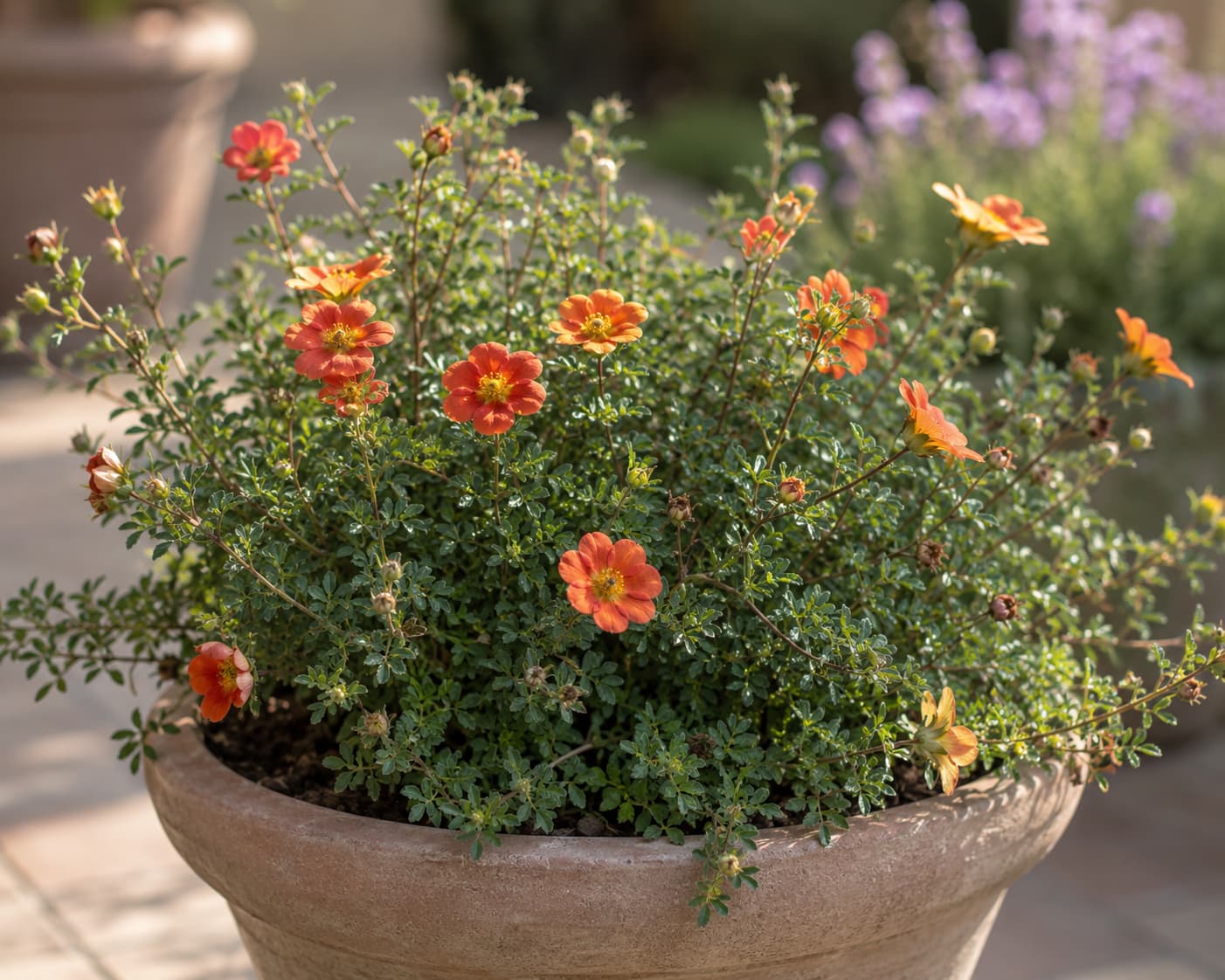
| 'Mango Tango' | 2 ft | Orange-red with yellow reverse | 2–7 | Striking bicolor effect. Compact habit. Good for containers. |
| 'Happy Face' Series | 2–3 ft | Yellow, white, or pink | 2–7 | Dense, mounded habit. Heavy bloomer. Excellent disease resistance. |
| 'McKay's White' | 2–3 ft | Creamy white | 2–7 | More compact than 'Abbotswood'. Good for small spaces and edging. |
Frequently Asked Questions
1.Why is my potentilla leggy with flowers only at the tips?
This is the #1 complaint about potentilla, and the fix is simple: renewal pruning. Potentilla blooms on new wood. Old stems stop producing vigorous new growth after 3–4 years, resulting in bare lower stems with a few flowers at the top. Remove 20–25% of the oldest stems at ground level each spring. For severely neglected shrubs, cut the entire plant to 4–6 inches in early spring — it will regenerate vigorously.
2.Why isn't my potentilla blooming?
The most common causes: not enough sun (needs 6+ hours direct), too much nitrogen from lawn fertilizer (lush leaves, few flowers), needs renewal pruning (old wood doesn't bloom well), or extreme heat (in Zones 7–8, potentilla may pause blooming during 90°F+ weather — this is normal and temporary).
3.When should I prune my potentilla?
Early spring, before new growth begins. Potentilla blooms on new wood, so spring pruning does not reduce flowering (unlike lilacs and forsythias, which bloom on old wood). Remove 2–3 of the oldest stems at ground level each year. Light shaping is fine. Hard renovation (cutting the entire shrub to 4–6 inches) can be done in early spring if the plant has become severely overgrown.
4.Is potentilla deer-resistant?
Yes — excellent deer resistance. Deer almost never browse potentilla. It's not toxic — they simply don't prefer it. This makes it one of the best flowering shrubs for gardens with heavy deer pressure, alongside boxwood, Russian sage, and lavender.
5.How cold-hardy is potentilla?
Zone 2 — one of the most cold-hardy flowering shrubs in existence. Potentilla is native to Arctic and subarctic regions and survives winter temperatures down to -50°F. It's an essential plant for northern gardeners in the Plains, Canada, Alaska, and high-elevation mountain regions where few other flowering shrubs survive. In Zones 2–3, some winter tip dieback is normal — prune it off in spring and the plant recovers fully.
6.Is potentilla the same as Dasiphora?
Yes — same plant, different name. Potentilla fruticosa has been reclassified by many botanical authorities as Dasiphora fruticosa. The RHS, USDA PLANTS database, and many botanical gardens now use Dasiphora. Garden centers still sell it as Potentilla. Both names refer to the same shrub — don't be confused.
7.Can potentilla grow in containers?
Yes — compact varieties like 'Mango Tango', 'Pink Beauty', and 'McKay's White' do well in containers. Use a pot at least 14–16 inches wide with good drainage. Container plants need more frequent watering than in-ground plants but still prefer to dry out between waterings. In Zones 2–4, overwinter containers in an unheated garage or bury the pot in the ground to protect roots from freeze-thaw cycles.
8.Is potentilla toxic to dogs or children?
No — potentilla is non-toxic. All parts are safe for children and pets. Combined with its deer resistance and pollinator friendliness, this makes it one of the safest flowering shrubs for family gardens. As always, discourage children from eating any ornamental plant, but potentilla poses no toxic risk.
Sources & Further Reading:
- Royal Horticultural Society — Potentilla Growing Guide
- University of Minnesota Extension — Potentilla for Northern Gardens
- Missouri Botanical Garden — Potentilla fruticosa Plant Finder
- USDA PLANTS Database — Dasiphora fruticosa
- Arnold Arboretum of Harvard — Potentilla Collection
- ASPCA — Toxic and Non-Toxic Plants List
Final Thoughts
Potentilla is not the flashiest shrub in the garden — and that's exactly why it belongs in more gardens. It asks for almost nothing, blooms for months, survives winters that kill most flowering shrubs, and comes back every spring ready to do it again. The one thing it asks: five minutes of renewal pruning each spring to keep it from becoming a twiggy mess.
Here's what to remember:
- Full sun = maximum bloom. Less sun = fewer flowers.
- Prune in early spring — remove 2–3 oldest stems at ground level. Five minutes a year prevents legginess.
- Don't fertilize. Especially near lawns. Lean soil = more flowers.
- Drought-tolerant, deer-resistant, salt-tolerant, Zone 2 hardy, non-toxic. One of the toughest shrubs available.
- Blooms for 4–5 months straight. Few shrubs can match this flowering duration.
If you found this guide helpful, you might also enjoy our guides on Forsythia Care and Smoke Bush Care — two more shrubs that reward you for pruning them the right way.