Poinsettia Care: How to Keep It Alive Past the Holidays
Good poinsettia care comes down to a few small habits: keep the plant warm, give it plenty of daylight, and never let water collect around the roots. A fresh poinsettia can stay colorful well beyond Christmas. Better yet, you can keep it growing after the decorations are packed away.
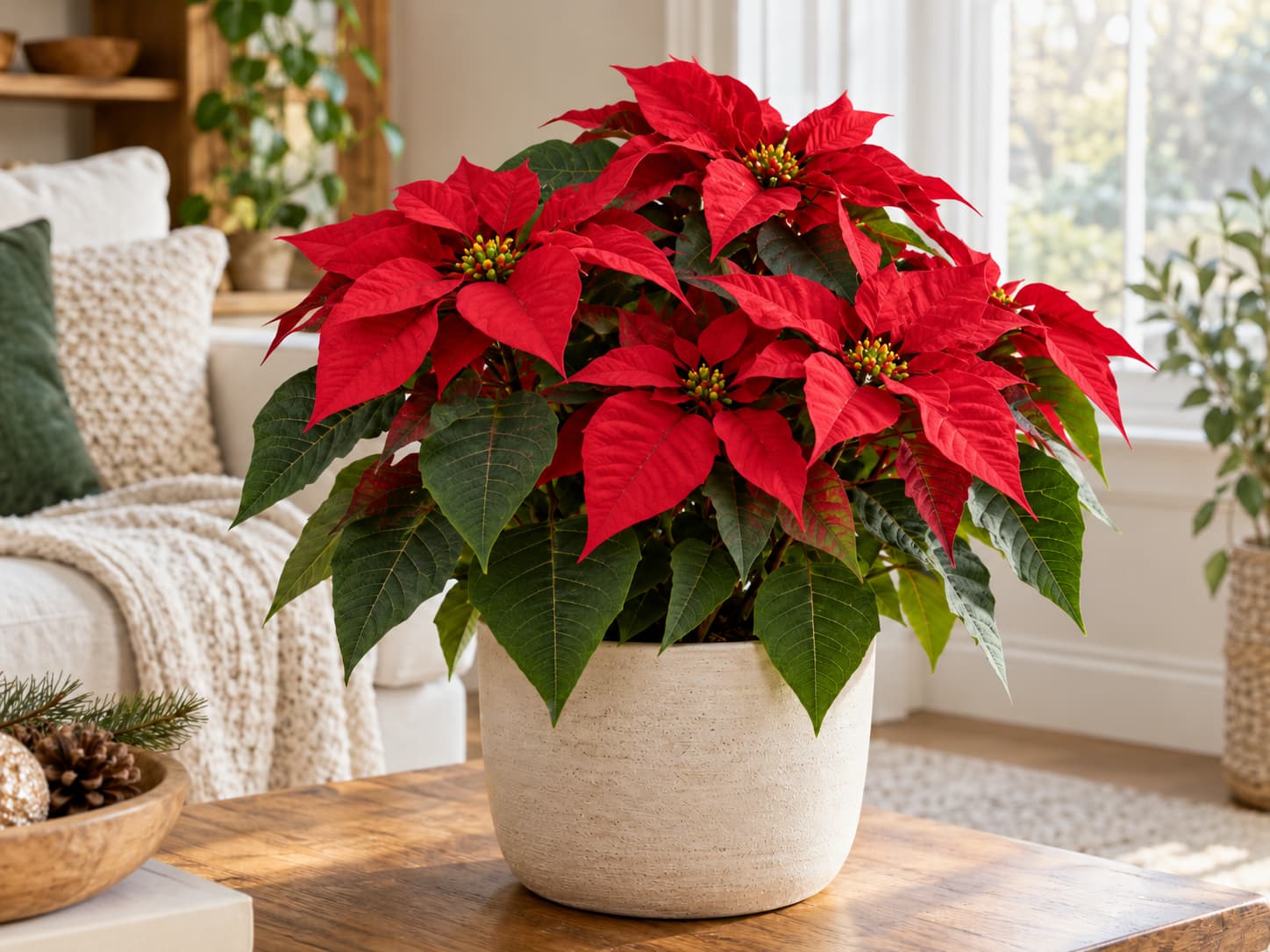
The bright red, pink, or cream-colored parts are bracts—modified leaves rather than petals. Look closely at their centers and you'll find the tiny true flowers. Their condition can even help you choose a fresher plant at the store.
Quick Answer: How Do You Care for a Poinsettia?
Choose a Healthy Poinsettia Before You Bring It Home
A little care at the shop can make a big difference. Inspect the plant rather than choosing by bract color alone.
- Look at the center. Small, relatively tight yellow-green flower structures are generally a better sign of freshness than centers that are already shedding pollen or drying out.
- Check the lower leaves. Choose a full plant with green foliage and firm stems. Heavy yellowing, drooping, or bare stems may point to stress.
- Notice where it is displayed. A plant beside an open shop door may have been exposed to repeated cold drafts.
- Protect it on the way home. Ask for a paper sleeve or protective wrapping in cold weather, then remove it promptly indoors. Temperatures below about 50°F (10°C) can damage poinsettias.
Once home, pick a spot and allow the plant to settle. Constantly moving it between warm rooms and cold windowsills can be harder on it than keeping it in one stable location.
How to Water a Poinsettia Without Drowning the Roots
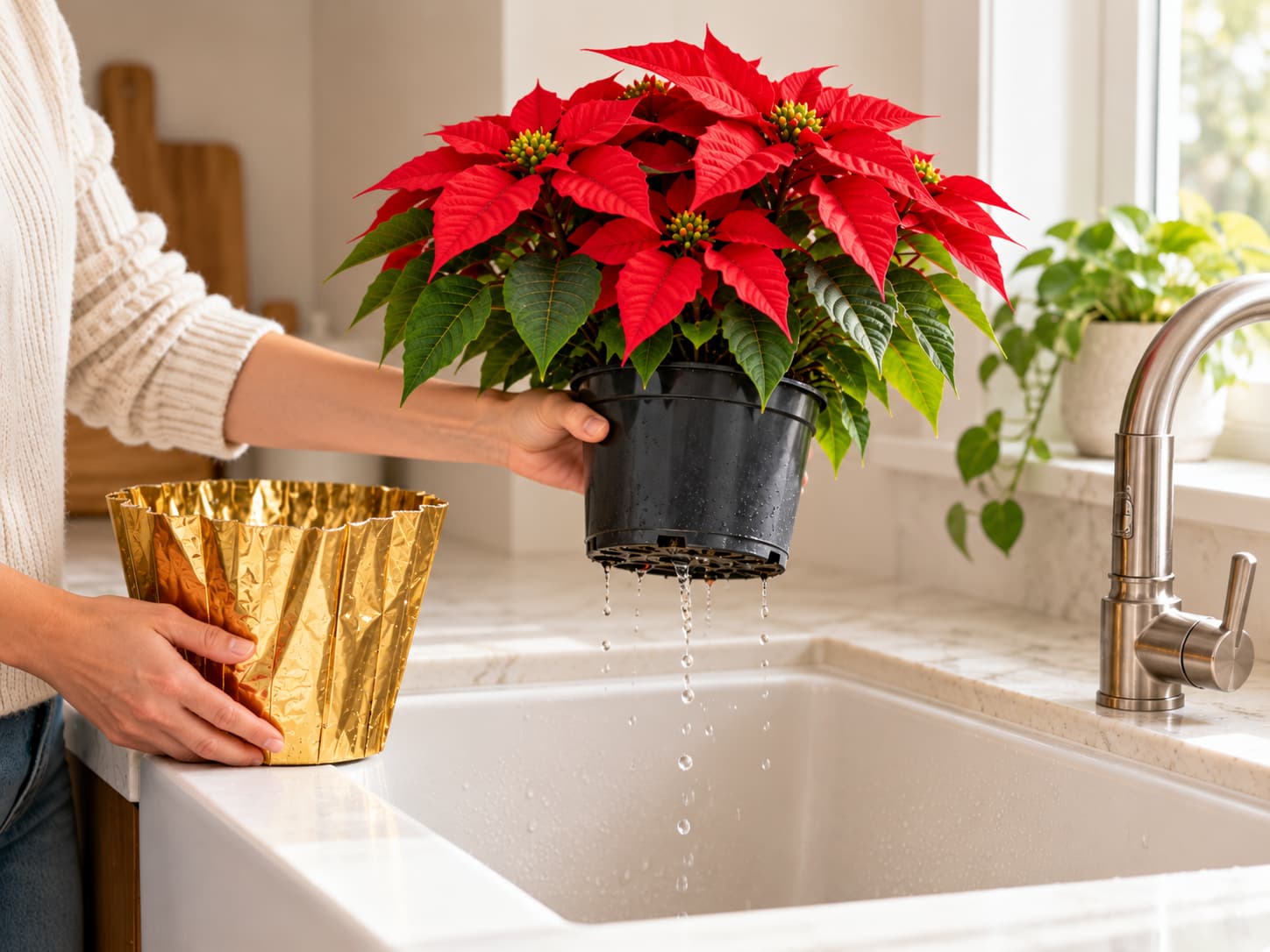
Decorative foil is useful for presentation, but it often traps drainage water. The nursery pot may have holes while the shiny wrapper has none. Consequently, the soil stays wet much longer than expected.
- Feel the soil first. When the surface feels dry to a light touch, check that the pot is not still heavy and saturated below.
- Take the nursery pot out of its cover. Remove it from foil or a watertight decorative cachepot before watering.
- Water over the sink. Add water evenly until some runs through the drainage holes. Let it finish draining.
- Put it back only when drained. Empty the saucer or outer pot so the roots never sit in pooled water.
Don't follow a rigid every-three-days schedule. Warmth, sunlight, pot size, and room humidity all affect how quickly the mix dries. On the other hand, allowing the entire rootball to dry until the leaves wilt can also cause leaf drop.
The Best Light and Temperature for Poinsettias
Give It Bright Daylight
Choose a bright east-, south-, or west-facing window, adjusting for the strength of your local sunlight. Indoors, a position with plenty of daylight usually works well. If the glass gets very cold, keep the leaves from touching it; if intense afternoon sun overheats the plant, move it slightly back or use a sheer curtain.
Keep the Room Warm but Not Hot
Steady temperatures near 65–70°F (18–21°C) are a useful target. More importantly, avoid sudden changes. Cold entryways, open windows, fireplaces, and heating vents can all cause stress. Freezing exposure may seriously damage or kill the plant.
Hold Off on Fertilizer During the Display
A flowering holiday poinsettia generally needs no extra feeding. Later, if you keep it as a houseplant and fresh green growth appears, you can begin a diluted houseplant fertilizer according to its label. Avoid feeding a plant with waterlogged or damaged roots.
Why Is My Poinsettia Dropping Leaves?
Leaf drop is usually a sign to inspect the growing conditions before reaching for fertilizer or a pest spray. Start with the soil and the plant's recent exposure to cold.
| What you see | Possible cause | First thing to check |
|---|---|---|
| Leaves drop soon after purchase | Cold shock or an abrupt change in conditions | Drafts, cold transport, and window contact |
| Yellow lower leaves; persistently wet soil | Overwatering or poor drainage | Foil cover, standing water, and drainage holes |
| Wilted leaves; dry, lightweight pot | Soil dried too far | Rootball moisture; water and drain thoroughly |
| Brown, crispy edges | Drying heat, inconsistent moisture, or other stress | Nearby vents, soil moisture, and light exposure |
| Sticky leaves or visible insects | Possible whiteflies, scale, or mealybugs | Leaf undersides and stems; isolate if needed |
If the mix smells sour, stems soften near the soil, or roots look rotten, a drainage problem may already be advanced. Correct the conditions promptly, but be aware that severely damaged plants do not always recover. For more help, see our guide to houseplants dropping leaves in winter.
Are Poinsettias Poisonous to Cats, Dogs, or Children?
Poinsettias are sometimes described as deadly poisonous, which overstates the usual risk. However, that does not make them edible or entirely harmless. The ASPCA lists poinsettias as toxic to cats and dogs because their irritating sap may cause mouth or stomach discomfort and occasionally vomiting; serious poisoning is uncommon.
The white sap can also irritate sensitive skin and eyes. Wear gloves for pruning, wash off any sap, and keep the plant away from pets and young children who might chew it. If a pet eats part of the plant, contact your veterinarian or an animal poison service for advice, especially if symptoms occur. If sap gets into an eye, rinse promptly and seek medical advice.
What to Do With a Poinsettia After Christmas
There is no need to treat the plant as disposable, although keeping it is a choice rather than an obligation. If you want to continue, follow the season rather than forcing the plant to remain brightly colored.
Winter and Early Spring: Keep It Comfortable
Continue watering when the surface begins to dry. As the bracts age, they may fade or fall; this isn't necessarily a sign that the plant is dying. When new growth starts, feed lightly. If the stems become long and sparse, prune in spring, using clean tools and gloves.
Late Spring and Summer: Encourage New Growth
After frost danger has passed and nights are reliably mild, you can gradually move a healthy plant outdoors. Begin in sheltered, bright shade before allowing more sun, and keep it in a free-draining pot. Alternatively, it can stay indoors in bright light. If the root system has filled the pot, repot one size larger rather than into an oversized container.
Fall: Try to Bring Back the Color
Poinsettias respond to long nights. To encourage colorful bracts for the next holiday season, begin a consistent light-and-dark routine around late September or early October. Many university extension guides recommend approximately 14–16 hours of uninterrupted darkness each night, with bright daylight during the remaining hours, for roughly 8–10 weeks; exact timing varies by cultivar and growing conditions.
Use a truly dark room or a ventilated, light-blocking cover that does not crush the leaves. Even brief artificial light during the dark period can interfere with bract coloration. Keep temperatures moderate, water normally, and do not leave the plant sealed in a hot box. This process takes patience, and a home-grown plant may not be as compact as a commercially produced one.
Can Poinsettias Grow Outdoors Year-Round?
In suitable frost-free climates, poinsettias can grow as large shrubs. NC State Extension lists a broad outdoor hardiness range of USDA zones 9–11, but a particular garden's frost exposure still matters. In colder climates, grow poinsettias indoors during winter and move them outdoors only for the warm season. For that seasonal move, use our guide to bringing plants indoors before winter.
Frequently Asked Questions
01 How long can a poinsettia last indoors?
With good care, the colorful bracts may last for weeks or months beyond the holiday season. The plant itself can survive much longer as a houseplant, though it will eventually lose its original display.
02 How often should I water a poinsettia?
Check the pot rather than using a fixed schedule. Water when the surface of the mix feels dry, then let the excess drain fully. Cooler, darker rooms generally need water less often than warm, bright ones.
03 Why are my poinsettia leaves turning yellow and falling off?
Standing water, cold drafts, and an overly dry rootball are common causes. First, check the decorative cover for pooled water and consider whether the plant was chilled during transport.
04 Does a poinsettia need direct sunlight?
It needs plenty of bright daylight. Some gentle direct sun can be suitable, but prevent overheating in strong afternoon sun and keep foliage away from cold window glass.
05 Can I make a poinsettia turn red again?
Yes. A healthy plant can develop colorful bracts again after weeks of reliable long nights and bright days in fall. The exact schedule varies, and stray light at night can delay the process.
06 Are poinsettias safe around pets?
They are usually less dangerous than their reputation suggests, but the ASPCA still lists them as toxic to cats and dogs because of their irritating sap. Keep them out of reach and seek veterinary advice after ingestion.
07 Can I put my poinsettia outside after Christmas?
Not during freezing weather. In cold climates, wait until spring or summer when frost danger has passed and nights are reliably mild. Introduce outdoor light gradually.
Related Reading
- Christmas Cactus Soil and Repotting Guide — drainage advice for another popular holiday houseplant.
- How to Bring Outdoor Plants Indoors Before Winter — a safe transition for plants summered outside.
- Why Houseplants Drop Leaves in Winter — how drafts, light, and moisture affect foliage.
Sources and Further Reading
- University of Minnesota Extension — Growing and Caring for Poinsettia (light, watering, temperature, and reblooming).
- NC State Extension — Euphorbia pulcherrima (plant identification, outdoor hardiness, and sap precautions).
- Royal Horticultural Society — How to Grow Poinsettias (post-holiday care and coloring bracts).
- ASPCA — Poinsettia (pet toxicity and typical effects).