Christmas Cactus Soil: The Best Mix for Healthy Roots
A Christmas cactus is a rainforest cactus, but its roots still need air and reliable drainage. The best potting mix holds some moisture without remaining waterlogged. That balance matters more than whether a bag says “cactus,” “orchid,” or “houseplant.”
Below, you’ll find a practical mix, ways to evaluate a bag you already own, and a moisture check you can use instead of a fixed watering calendar. The advice applies to the holiday cacti commonly sold as Christmas or Thanksgiving cactus (Schlumbergera).
Quick Answer: What Soil Does a Christmas Cactus Need?
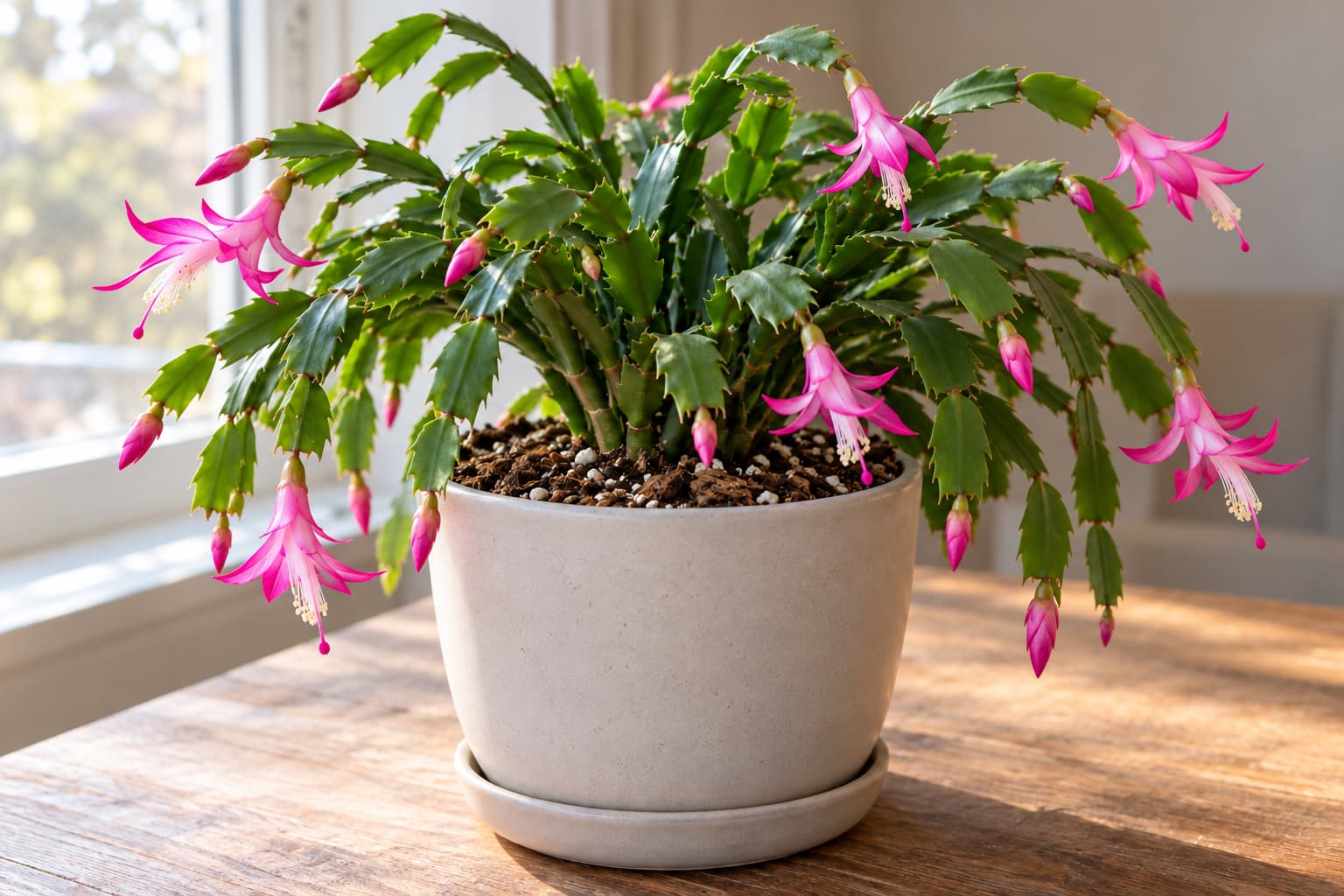
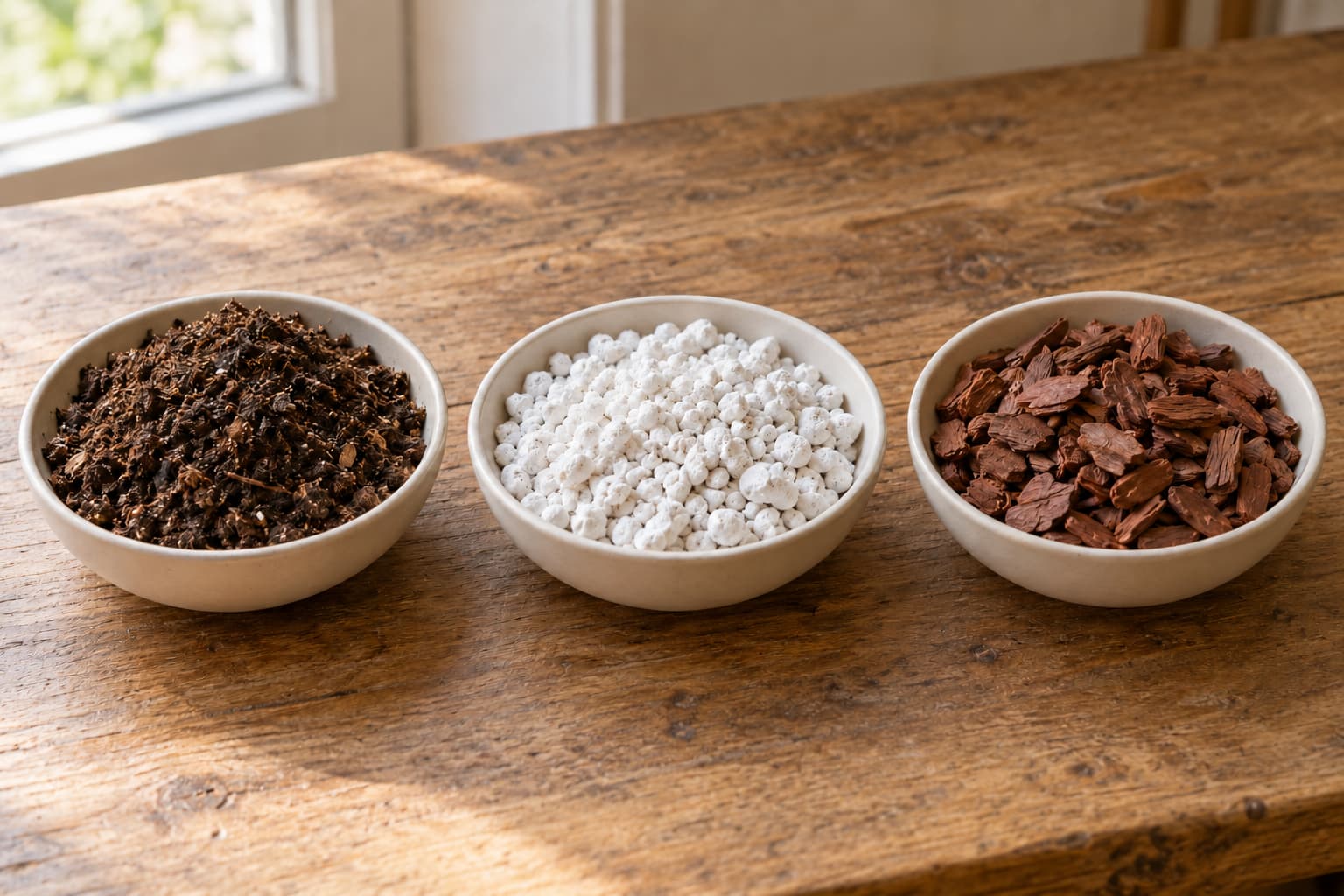
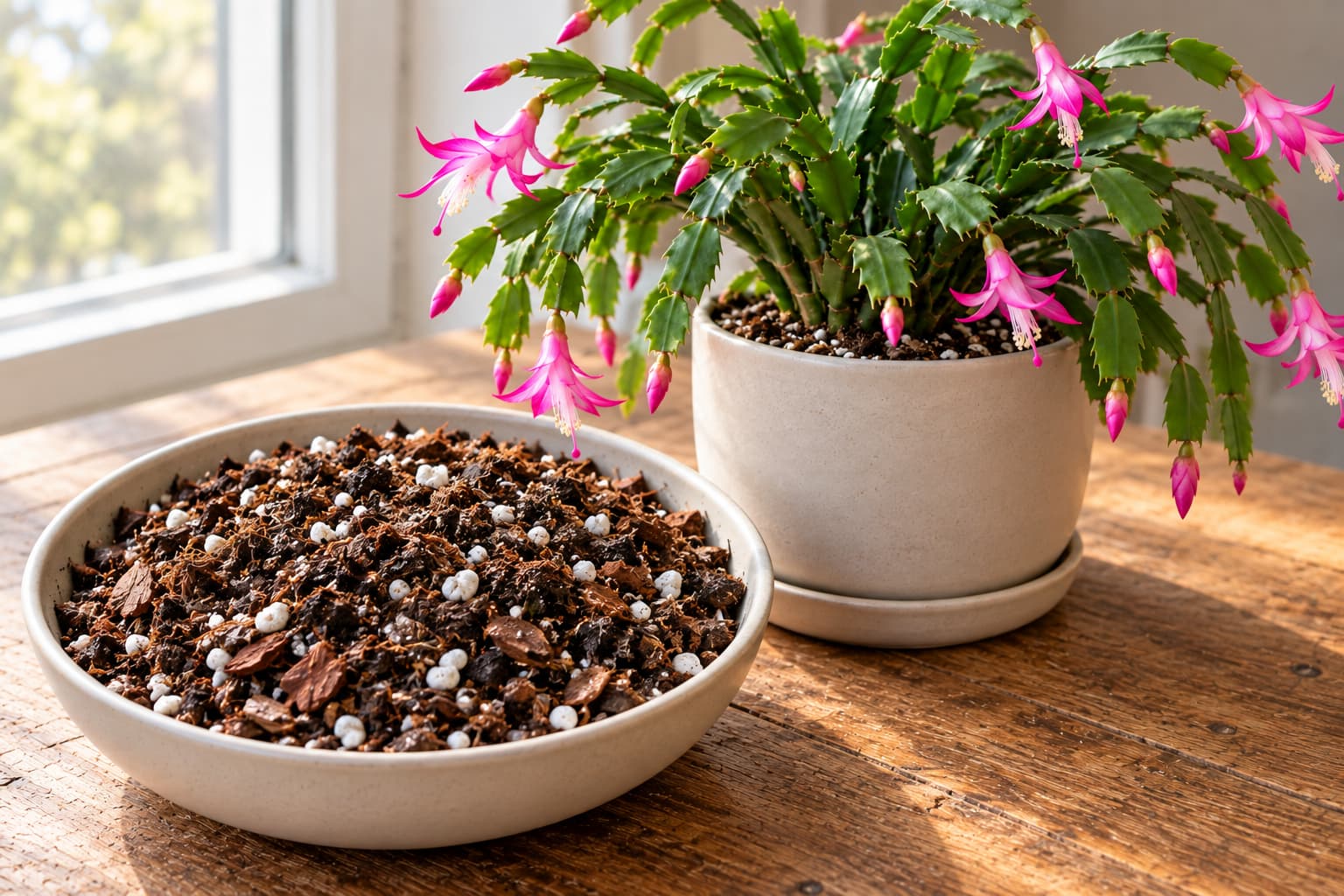
Use a light, organic potting mix with added drainage and air space in a pot with a working drainage hole. One starting recipe is 2 parts quality houseplant potting mix + 1 part perlite or pumice. If the base mix is fine and dense, add a small amount of fine orchid bark; if it is already coarse and airy, skip the bark.
| Check | Useful condition | Warning sign |
|---|---|---|
| Texture | Loose, organic, with visible air spaces | Compacted mud or an almost entirely coarse, dry mineral mix |
| After watering | Water drains freely; mix remains lightly damp for a while | Water pools for days or the root ball becomes bone-dry immediately |
| Container | A modest-sized pot with drainage holes | An oversized pot or standing water in a cachepot or saucer |
| pH | Slightly acidic is suitable | No need to chase an exact number without a tested problem |
Why a Rainforest Cactus Still Needs Drainage
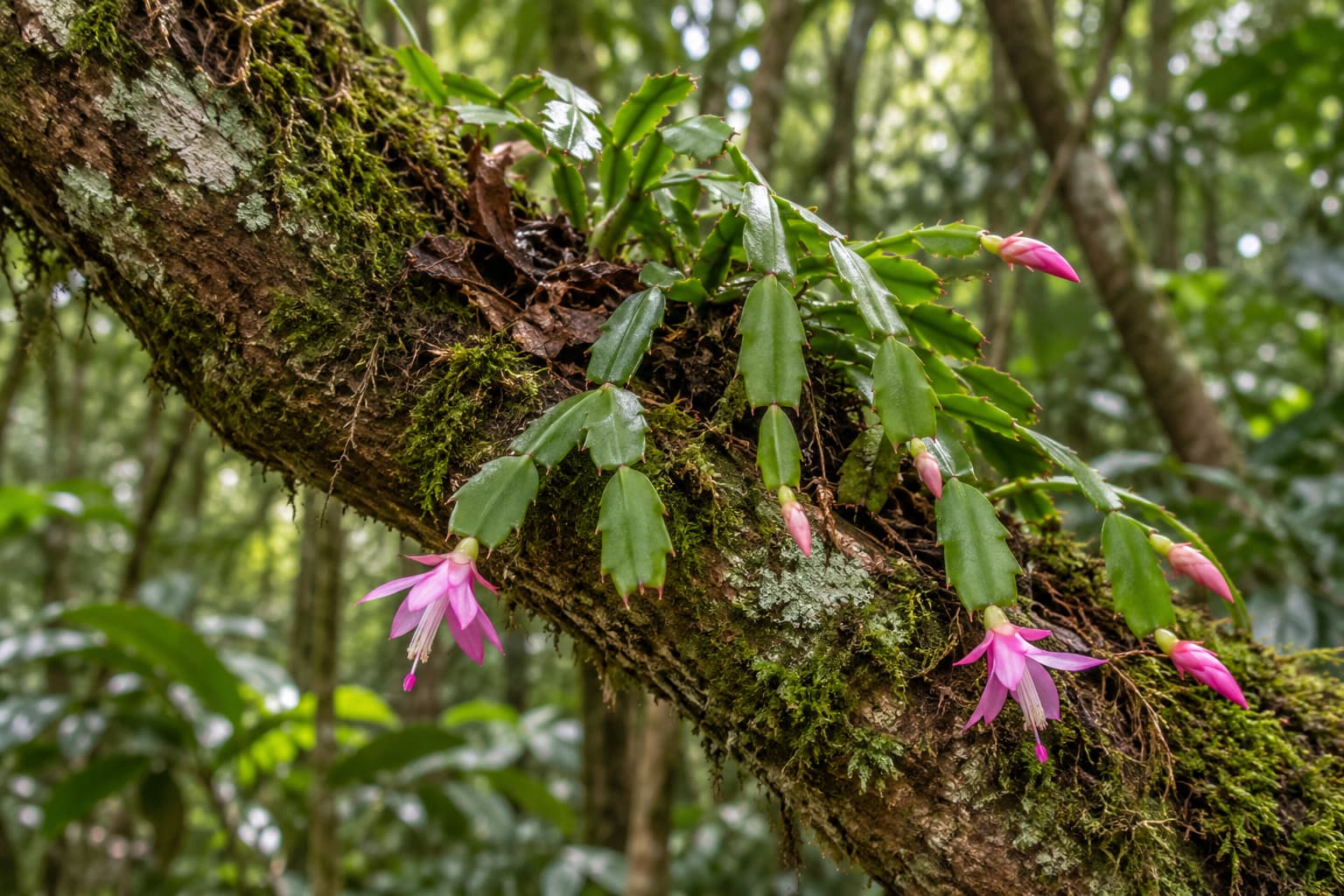
Holiday cacti come from the mountainous forests of Brazil. In nature they can root on tree branches or among rocks, where rainfall passes through organic debris rather than collecting around the roots. That explains the apparent contradiction: they appreciate more regular moisture than many desert cacti, yet they do not tolerate a stagnant, airless root zone. University of Wisconsin–Madison Extension describes a slightly acidic, organic, well-drained growing medium for these plants.
The label on a bag is therefore only a clue. Some standard cactus potting composts work well for Christmas cactus; the RHS includes one among its options. A very gritty desert-style blend may need more organic material if it dries too fast in your conditions. A heavy all-purpose mix may need perlite or pumice if it remains wet for too long.
What the Roots Need From a Potting Mix
- Air: Perlite, pumice, or suitably sized bark helps the mix resist compaction. Roots still need oxygen after watering.
- Some moisture retention: A quality peat-, coir-, or other organic-based houseplant mix gives roots access to moisture between waterings.
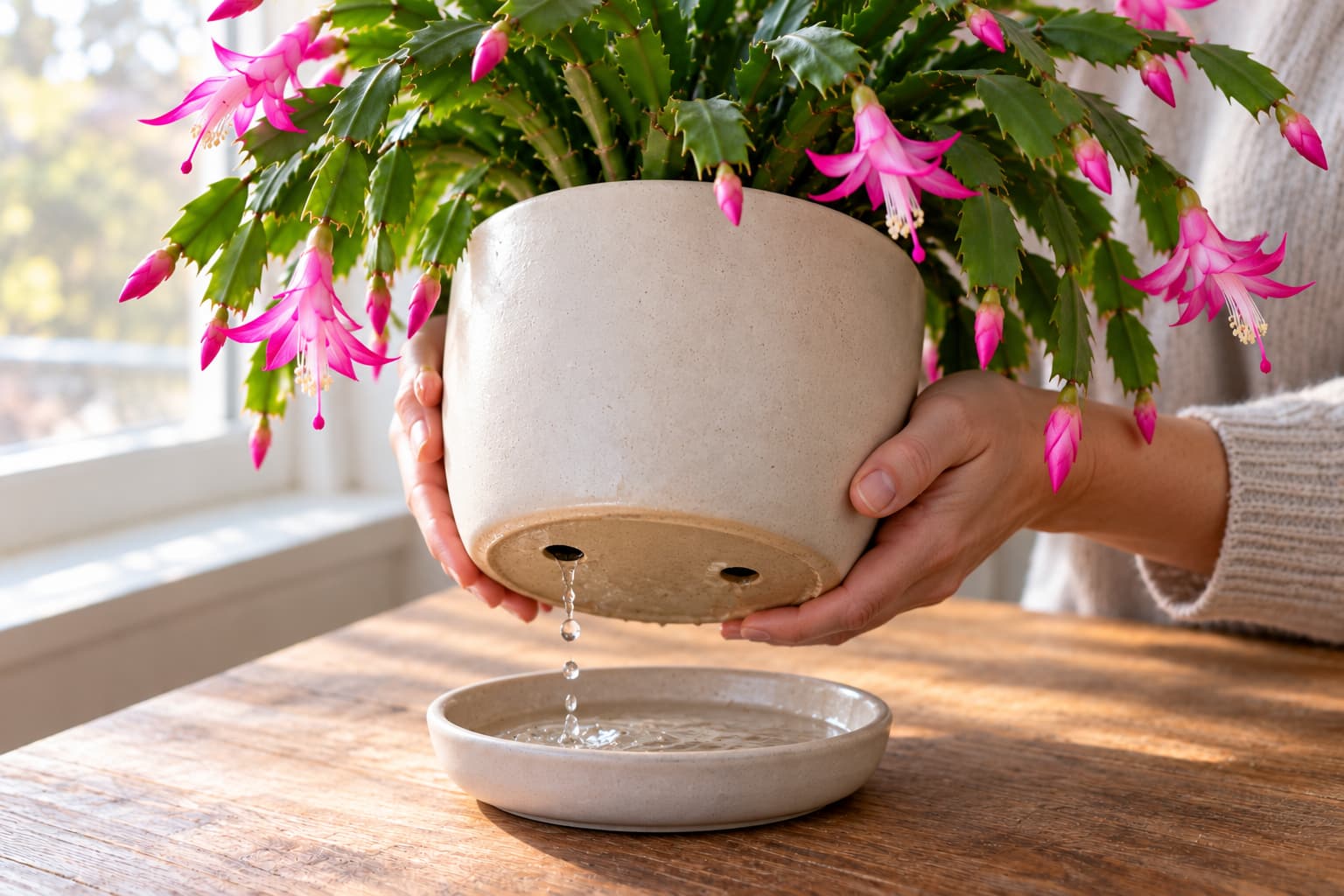
- Drainage: The mix and the pot’s bottom holes must allow excess water to leave. Empty the saucer or decorative outer pot after watering.
- A slightly acidic medium: This is a reasonable preference, but routine pH adjustments are unnecessary for a healthy plant in a suitable commercial mix.
Both the University of Minnesota Extension and Wisconsin Extension emphasize drainage and aeration. Their published recipes differ, which is a useful reminder that there is no single mandatory formula.
Three Practical Christmas Cactus Soil Mixes
Measure parts by volume with the same scoop. Moisten very dry ingredients before potting, then assess how the finished mix behaves in your room and pot.
1. Everyday Organic Mix
- 2 parts light houseplant potting mix
- 1 part perlite or pumice
- Optional: a small handful of fine orchid bark if the base mix is dense
This is a convenient starting point for many homes. Use a base mix that is already suitable for containers. The optional bark should be small enough to mix evenly around the roots; large orchid chunks alone leave too little fine material in a small pot.
2. Extension-Style Peat and Perlite Mix
- 2 parts peat moss
- 1 part sterile potting mix
- 1 part perlite
This follows the proportions published by the University of Minnesota Extension, using perlite rather than its alternative of sharp sand. Peat can be difficult to rewet once completely dry, so pre-moisten it and do not let the root ball repeatedly become bone-dry.
3. Adjust a Bag You Already Have
First wet a small sample and observe it. If a cactus mix drains well and retains enough moisture for your plant, you may use it as sold. If it is almost entirely coarse mineral particles and dries too rapidly, blend in some quality organic potting mix. If an all-purpose mix stays dense and wet, blend in perlite or pumice. Recheck before repotting; adding more perlite to an already very dry mix can make the problem worse.
Store-Bought Mix: Read the Texture, Not Just the Label
A light houseplant mix, a suitable standard cactus compost, or an African violet mix can all be starting points. Commercial formulas vary. Open the bag and check whether it contains fine organic material plus enough coarse particles to avoid compaction. Add perlite only if the mix needs more air space.
Orchid bark can be an ingredient, but a pot filled with large bark chunks alone usually dries unevenly and leaves poor contact with fine roots. Plain garden soil is also a poor choice for a small indoor pot because it can compact and drain unpredictably.
Watering: Let the Mix Guide You
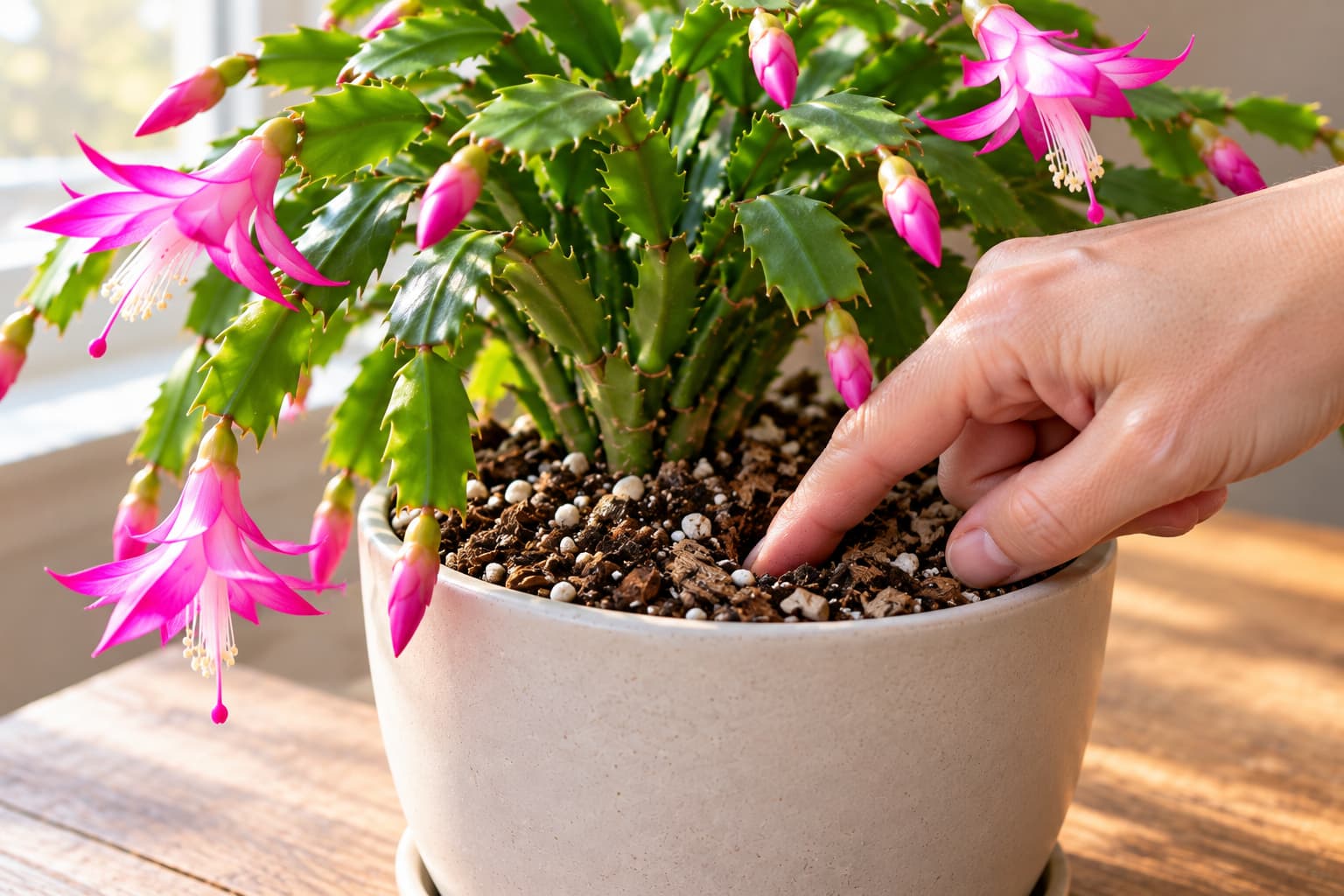
During active growth, water thoroughly, let the excess drain, then check the mix before watering again. The upper layer can become drier while some moisture remains below. Use your finger or a wooden skewer to assess the root zone; adjust for the pot size, room temperature, light, and season. A fixed weekly schedule can overwater a large plastic pot or underwater a small terracotta one.
Reduce watering during the cooler rest after flowering and during the autumn bud-setting period, without allowing the entire root ball to become completely dry for an extended time. Once buds appear and the plant returns to its usual growing conditions, resume attentive watering. The RHS seasonal guide explains these rest periods and the need to avoid waterlogging.
pH and Fertilizer: Keep Both Simple
A slightly acidic, well-drained organic medium is suitable, but the original draft’s narrow pH target is not a necessary home-growing rule. If a plant is healthy, avoid routinely adding acidifiers or changing water sources solely to hit a number. If you suspect a persistent pH or mineral problem, test the water and mix before correcting them.
Feed modestly with a liquid houseplant fertilizer during active spring and summer growth, following the label at a gentle rate. Stopping fertilizer does not itself trigger buds. Shorter days and cooler nights are the primary flowering signals; the RHS recommends a cooler spell and reduced watering in autumn. Avoid forcing a stressed, waterlogged plant with extra fertilizer.
When and How to Repot a Christmas Cactus
Repot after flowering or as spring growth starts, especially if the old medium has compacted, drainage has worsened, or the roots have filled the pot. Healthy holiday cacti often tolerate being somewhat snug; repotting may be needed roughly every one to three years depending on growth and medium condition, rather than on a rigid calendar.
Choose a container only slightly larger than the root ball and with bottom drainage holes. Plastic and glazed ceramic hold moisture longer; terracotta dries faster but can work if you check the mix and water accordingly. Pot material is a watering variable, not a ban.
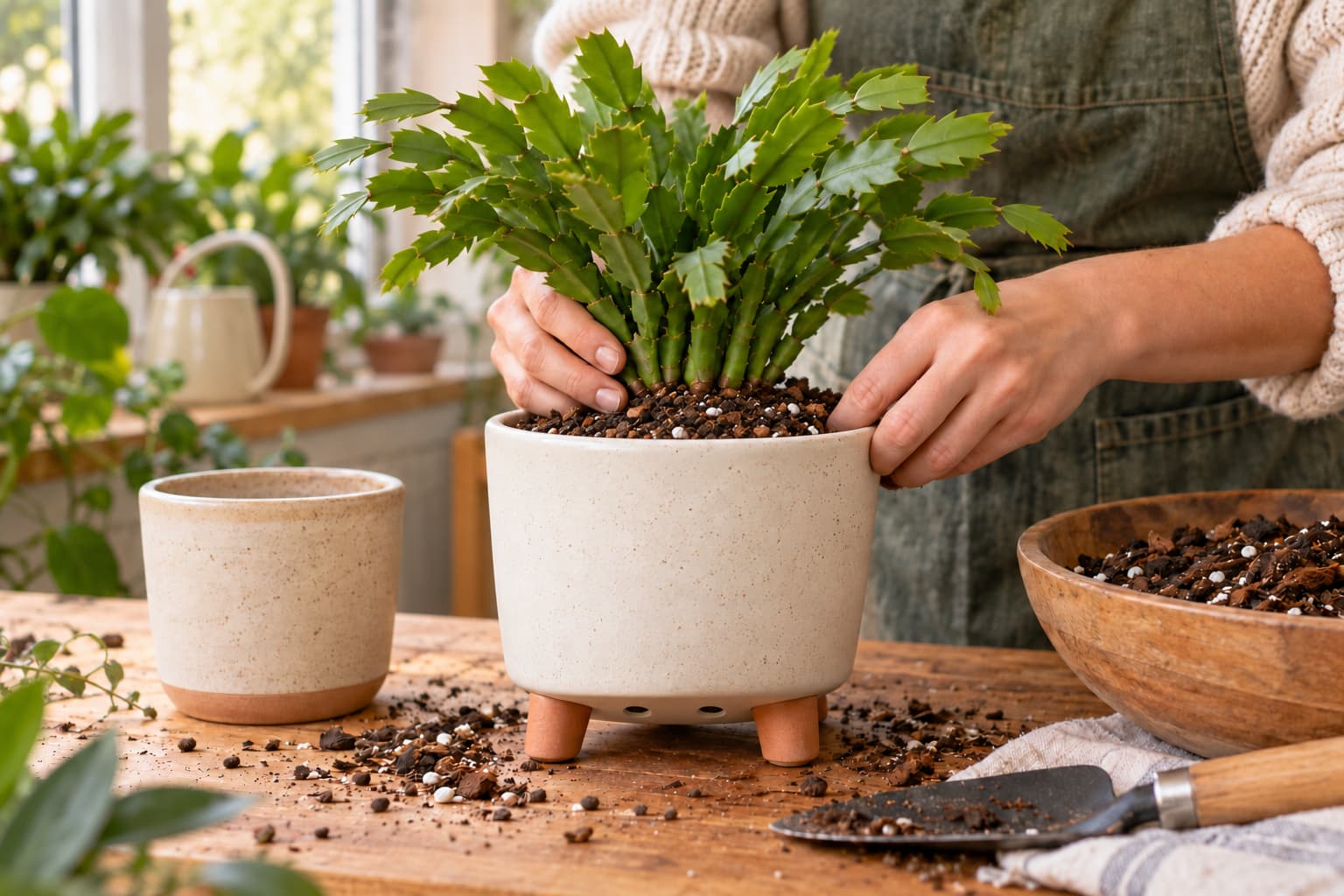
Repotting Steps
- Water lightly ahead of time if the old mix is very dry, then ease the plant from its pot after flowering.
- Inspect roots. Trim only roots that are clearly dead or mushy with clean tools; avoid tearing healthy fine roots.
- Put a little fresh, lightly moistened mix in the new pot. Do not create a gravel layer at the bottom.
- Set the plant at its previous depth, fill around the root ball without packing the mix hard, and leave a little space below the rim.
- Water enough to settle the mix and let it drain. If many roots were removed, water more cautiously while they recover.
- Keep the plant in bright, indirect light and wait for active growth before resuming routine feeding.
Five Signs to Check the Roots and Mix
These symptoms are clues, not proof that soil is the only cause. Inspect moisture, roots, light, temperature, and pests before replacing the mix.
| What you see | Possible causes | First check |
|---|---|---|
| Buds dropping | Temperature swings, cold drafts, overwatering, or other stress | Check recent moves and temperature, then root-zone moisture |
| Wrinkled segments | Dry root ball or damaged roots in wet mix | Feel the mix and inspect roots if it remains wet |
| Soft base or dropping segments | Root or stem rot, prolonged wetness, other stress | Unpot promptly and inspect roots and crown |
| Little new growth | Low light, overlarge pot, exhausted medium, or root trouble | Assess light, pot size, root health, and medium condition |
| Water pooling or mix staying wet for days | Poor drainage, oversized pot, compacted mix, or impaired roots | Check bottom holes and roots before watering again |
In particular, RHS guidance names temperature fluctuation and overwatering among causes of bud drop. A soil change by itself cannot promise a bloom.
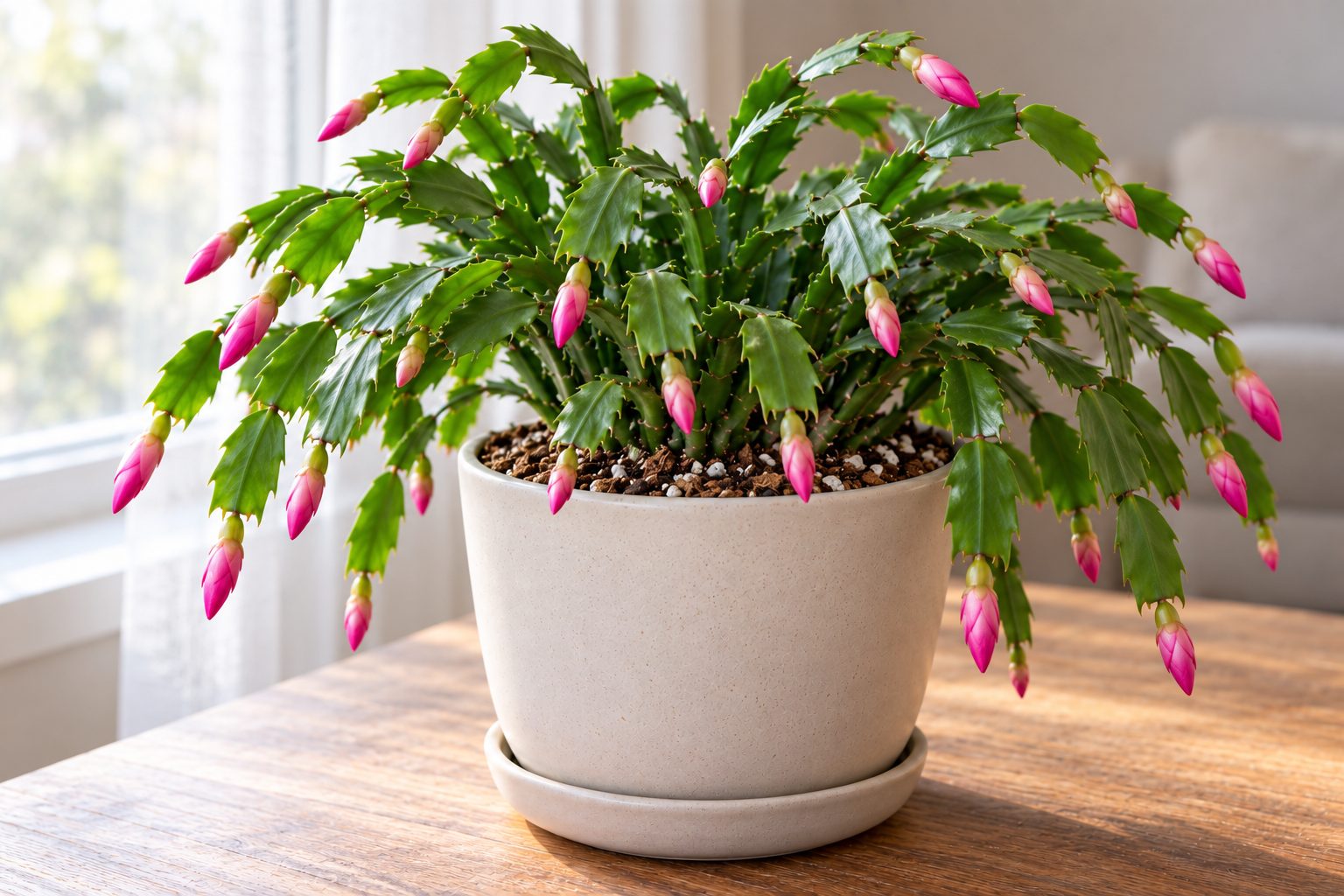
Is Christmas Cactus Toxic to Cats and Dogs?
The ASPCA lists Christmas cactus as non-toxic to cats and dogs. “Non-toxic” does not mean you should encourage chewing: eating a large amount of any plant material can upset an animal’s stomach, and the plant may be damaged. Contact your veterinarian if a pet develops concerning symptoms or you are unsure which plant it ate.
Frequently Asked Questions
01What is the best soil for a Christmas cactus?
An organic potting mix that drains freely and stays airy. A practical starting point is two parts light houseplant mix to one part perlite or pumice; change it if your specific mix stays too wet or dries too fast.
02Can I use cactus soil for a Christmas cactus?
Sometimes. A standard cactus compost that retains some moisture can work; a very gritty desert mix that dries almost immediately may need organic potting mix added. Test the actual bag rather than relying on its name.
03Is orchid bark useful in the mix?
A little fine orchid bark can add structure to a dense base. Large, coarse orchid bark on its own is usually a poor fit for a small potted holiday cactus.
04How often should I repot?
Check the roots and medium after flowering. A somewhat snug, healthy plant may wait; repot when roots fill the pot or the mix breaks down and drains poorly. The interval varies with growth and conditions.
05Is terracotta a bad pot choice?
No. It loses moisture faster than plastic or glazed ceramic, so you may need to water more often. Whichever material you choose, use bottom drainage holes and check the mix before watering.
06Why are the flower buds dropping?
Check temperature swings, cold drafts, recent relocation, and overwatering first. Examine the mix and roots if the plant is persistently wilted or the pot stays wet. Bud drop is not a reliable diagnosis of one soil problem.
07Are Thanksgiving and Christmas cacti cared for the same way?
Both are Schlumbergera holiday cacti and share broadly similar root and potting needs. Thanksgiving cactus (S. truncata) usually has more pointed segment edges; the true Christmas cactus (S. × buckleyi) has rounder scallops.
Related Reading
- Succulent Soil Mix — compare how other succulents use a drier blend.
- Aroid Soil Mix Recipe — another example of matching air spaces to the plant’s roots.
- Christmas Plants That Feel at Home Indoors — more indoor holiday plants.
Sources
- University of Minnesota Extension — Holiday Cacti (potting recipe, drainage, watering, and flowering cues).
- University of Wisconsin–Madison Extension — Holiday Cactus (habitat, medium, root health, and bud stress).
- Royal Horticultural Society — How to Grow Christmas Cactus (mix options, seasonal care, repotting, and bud drop).
- ASPCA — Christmas Cactus (pet toxicity classification).