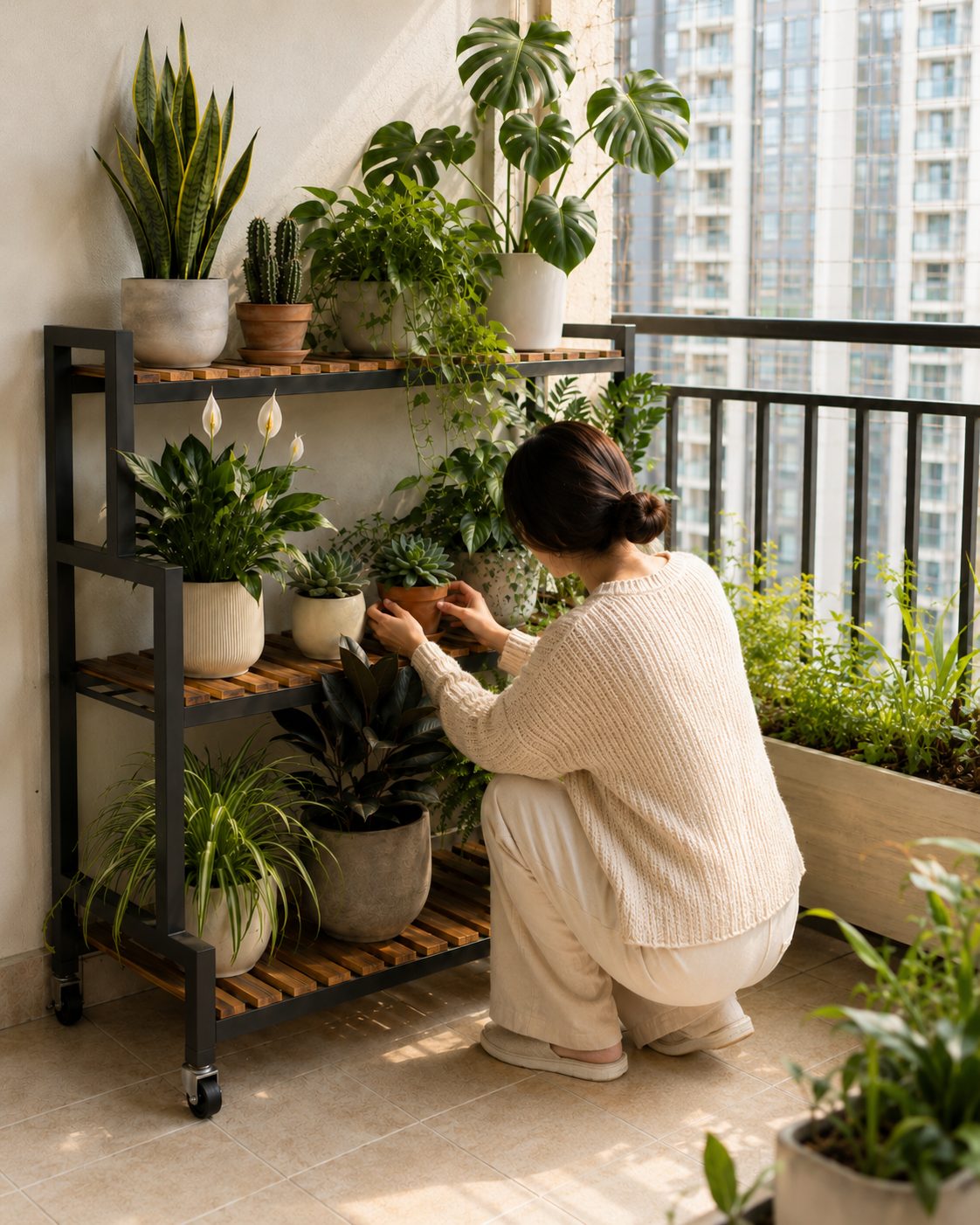
5 Indoor Plants for Christmas Decor: Calm Greenery That Lasts Beyond the Holidays
Indoor plants for Christmas decor do not have to be temporary holiday props. The right houseplants can bring warmth, texture, and living color to a winter room, then return to ordinary plant life after the decorations come down.
Quick Answer
For a calm, low-fuss holiday home, start with philodendron, pothos, snake plant, ZZ plant, or peace lily. However, “easy” does not mean identical care: light, watering, and pet safety still vary by plant. Choose one that fits your room first, then style around it rather than treating it as a seasonal prop.
Traditional Christmas Plants vs. Long-Lasting Houseplants
Poinsettias, amaryllis, paperwhites, cyclamen, Christmas cactus, and Norfolk Island pine all have strong seasonal associations. However, this guide has a different purpose: it focuses on established houseplants that can support Christmas decor without becoming disposable seasonal purchases.
That distinction matters for search intent and for real homes. Traditional Christmas plants are excellent when you want flowers, fragrance, or a clearly festive silhouette. By contrast, pothos, philodendron, snake plant, ZZ plant, and peace lily work best when you want greenery that still makes sense in January, March, and beyond.
| Choose this approach | Best when you want | Examples | After Christmas |
|---|---|---|---|
| Traditional Christmas plants | Seasonal flowers, fragrance, or a festive silhouette | Poinsettia, amaryllis, paperwhites, cyclamen, Christmas cactus, Norfolk Island pine | Some remain excellent long-term plants, but seasonal care and reblooming needs vary |
| Everyday houseplants used for Christmas decor | Calm greenery that blends into normal home styling | Pothos, philodendron, snake plant, ZZ plant, peace lily | Return them to their best light and normal care routine after decorations come down |
Why Indoor Plants Feel Especially Good at Christmas
During winter, we naturally spend more time indoors. As a result, the textures, colors, and small routines inside a room become more noticeable. Living greenery can soften hard surfaces and add visual continuity while outdoor gardens are resting.
Unlike cut greenery, houseplants also continue beyond December. In other words, a healthy plant can carry the feeling of the season forward without becoming another decoration that has to be packed away.
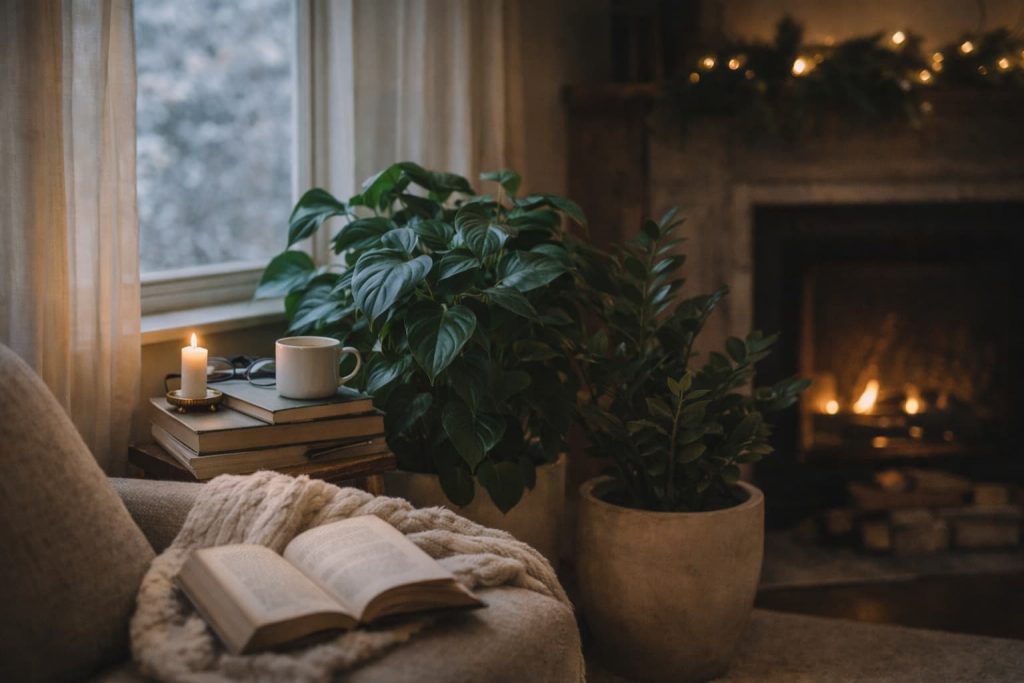
What Makes a Plant “Christmas-Ready” Indoors?
The best Christmas indoor plants are not necessarily the flashiest. Instead, they are plants that remain attractive under ordinary winter conditions and do not require constant adjustment during a busy season.
Look for forgiving light needs
Short winter days can reduce usable indoor light. Therefore, choose plants that tolerate bright indirect light or moderate indoor conditions rather than species that need intense sun all day.
Choose a realistic watering rhythm
Winter often slows growth, so many houseplants use water more slowly. Consequently, checking the potting mix before watering is usually safer than following a fixed weekly calendar.
Match the plant to your household
Finally, consider pets, children, available shelf space, and the room’s temperature. A plant only feels low-maintenance when its needs actually fit the home.
5 Christmas Indoor Plants for a Calm, Green Home
Quick Comparison: Which Plant Fits Your Room?
| Plant | Best placement | Winter watering | Pet safety | Why it works for Christmas decor |
|---|---|---|---|---|
| Pothos | Shelf or hanging planter near useful indirect light | Let part of the mix dry before watering again | Not pet-safe | Soft trailing greenery |
| Philodendron | Shelf, trellis, or bright corner | Allow partial dry-down; avoid staying wet | Not pet-safe | Relaxed tropical texture |
| Snake plant | Floor or architectural corner | Low; let the mix dry well | Not pet-safe | Strong upright shape |
| ZZ plant | Side table or lower-light room with usable ambient light | Low; allow substantial dry-down | Not pet-safe | Glossy dark foliage |
| Peace lily | Bright room away from harsh direct sun | More consistent moisture than the others | Not pet-safe | Broad leaves and white blooms |
1. Philodendron
Philodendrons bring soft foliage and an easy trailing or climbing habit to shelves, side tables, and bright corners. Moreover, many common indoor types adapt well to typical household conditions when they are kept away from cold drafts and overwatering.
2. Pothos
Pothos is reliable, flexible, and especially useful when you want trailing greenery without a complicated routine. It can tolerate lower light than many colorful houseplants, although brighter indirect light usually supports fuller growth and stronger variegation. For the full routine, see our Golden Pothos care guide.
Winter yellowing deserves a closer look because it can come from several different causes. If your plant starts losing color, use our Pothos yellow leaves troubleshooting guide to compare watering, drainage, light, root stress, and natural leaf aging before changing its care.
3. Snake Plant
Snake plants add upright structure where trailing plants would feel too busy. In addition, they prefer to dry well between waterings, which can make them easier to manage during slower winter growth. Avoid leaving the potting mix wet for long periods.
4. ZZ Plant
With glossy, deep-green foliage, ZZ plant works well in minimal rooms and darker winter interiors. However, low-light tolerance does not mean no-light tolerance. Give it usable ambient light and let the potting mix dry substantially between waterings.
5. Peace Lily
Peace lilies add broad foliage and occasional white blooms to a softer holiday palette. By contrast with snake plants and ZZ plants, they generally prefer more consistent moisture. They can also react dramatically when very dry, so check the soil instead of waiting for severe wilting.
Pet and child safety matters
Pothos, philodendron, peace lily, snake plant, and ZZ plant are not plants to place where a curious pet or small child can chew them. If pet access is a concern, choose a verified pet-safe plant and confirm the exact species before bringing it home.
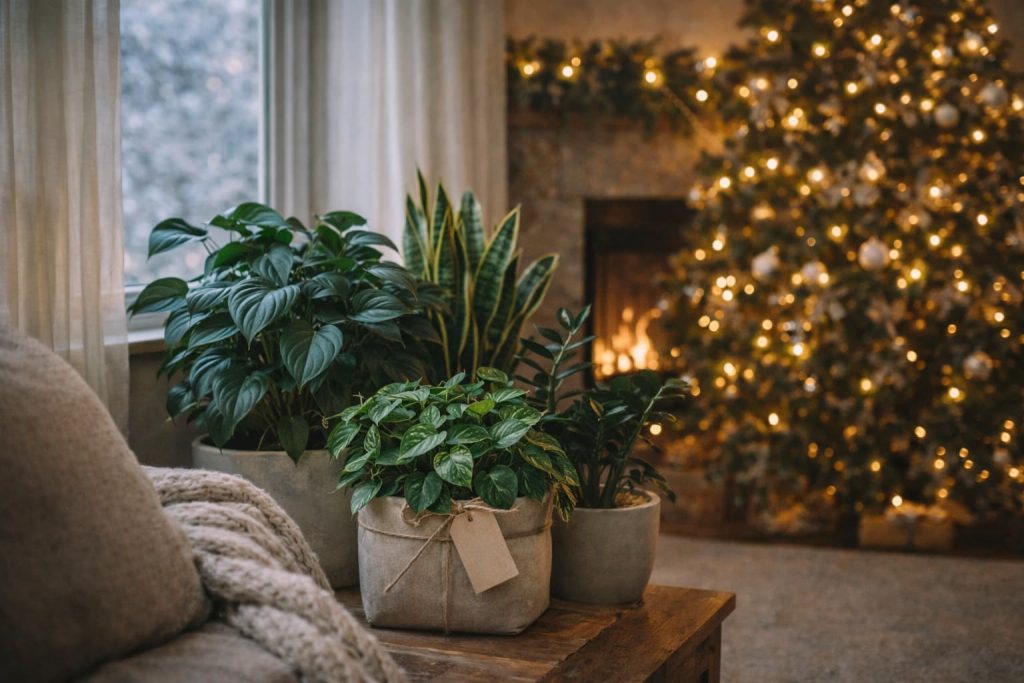
Winter Care: Three Things That Matter Most
1. Check light before moving plants
Holiday decorating can accidentally push plants away from their best window or block daylight with temporary displays. Therefore, keep the plant’s normal light needs ahead of styling.
2. Water the soil, not the calendar
Cooler rooms and shorter days often slow dry-down. As a result, the same plant that needed frequent watering in summer may stay moist much longer in December.
3. Keep plants away from temperature extremes
Finally, avoid placing foliage directly beside heating vents, fireplaces, frequently opened exterior doors, or cold window glass. Stable conditions are usually more helpful than chasing perfect humidity numbers. If you are moving seasonal patio plants indoors as well, use our guide to bringing outdoor plants indoors before winter so pests, light changes, and watering adjustments do not get mixed into the holiday setup.
Styling Indoor Plants for the Holidays Without Overdoing It
Greenmuse 3-Step Christmas Plant Styling
- Choose one anchor plant. Start with a plant whose natural shape already suits the room: trailing, upright, or broad-leaved.
- Add natural materials around it. Use wood, linen, ceramics, glass, or a restrained strand of warm lights nearby rather than decorating the foliage itself.
- Keep care access open. Leave enough space to check the soil, reach the drainage area, and keep the plant in the light it actually needs.
The strongest plant styling usually starts with restraint. For example, warm wood, linen, ceramics, and clear glass can support greenery without turning every leaf into part of a holiday display.
- Use warm nearby lighting for atmosphere, but do not replace the plant’s actual daylight needs.
- Keep containers simple so leaf shape and texture remain the focus.
- Leave breathing room instead of surrounding every pot with ornaments.
- Group by care needs when several plants share one display area.
Most importantly, the plant should still be easy to water, inspect, rotate, or move after the decorations are in place.
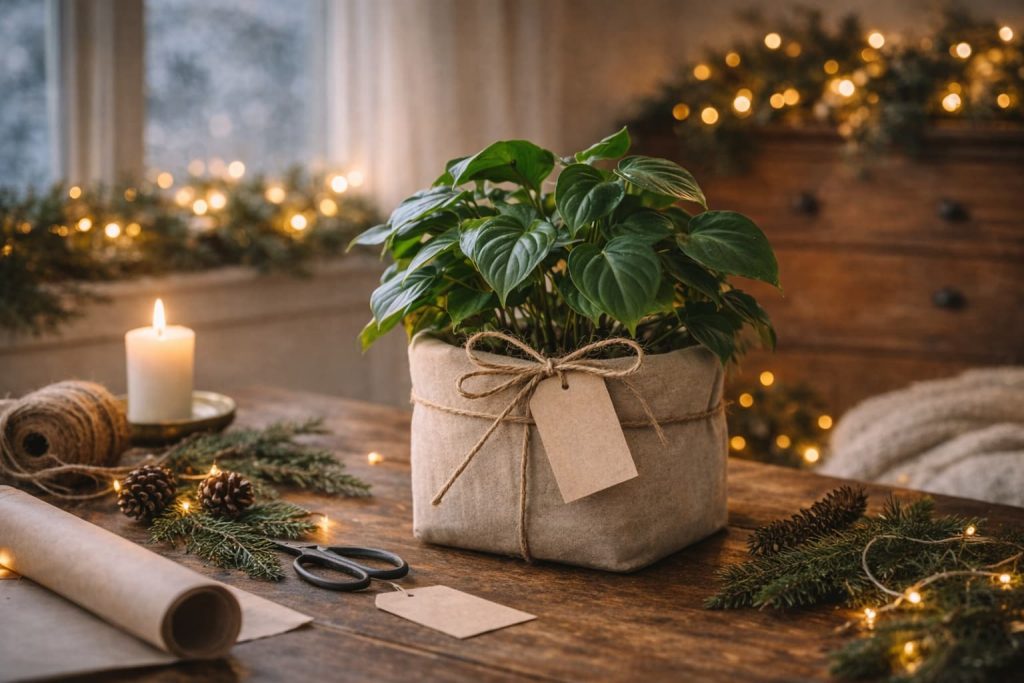
Plants as Christmas Gifts That Actually Last
A healthy houseplant can make a meaningful gift because it continues growing after the season ends. However, the best gift plant is not simply the prettiest one at the store.
Choose for the recipient’s real space
For example, a bright-window plant may frustrate someone in a dim apartment, while a large floor plant may overwhelm a small room. Match the plant to the person’s light, space, and routine.
Add one simple care note
Instead of attaching a long instruction sheet, give three useful facts: where to place it, when to check for water, and whether it needs to stay away from pets or children.
What to Do With Your Plants After Christmas
The strongest reason to decorate with everyday houseplants is that they still have a job after the holiday. Therefore, treat January as a reset rather than the end of the display.
1. Remove decorative covers that trap water
Foil sleeves, cachepots, baskets, and fabric wraps can hide standing water. Remove or loosen them, confirm that drainage holes are open, and let excess water leave the pot freely.
2. Return each plant to its best light
Holiday styling sometimes moves plants away from windows or into darker corners. Afterward, return each plant to the position that best matches its normal light needs. If winter light is still weak, avoid compensating with extra watering.
3. Recheck the watering rhythm
Once visitors, lights, heaters, and temporary decorations are gone, the room may dry or cool differently. As a result, check the potting mix instead of assuming the December schedule still applies.
4. Inspect leaves before fertilizing
Do not use fertilizer as the first response to winter yellowing or slow growth. For pothos specifically, yellow leaves can reflect watering, drainage, light, root stress, or natural aging. Use the Pothos yellow leaves troubleshooting guide before changing several things at once.
One January rule
If the plant looks stable, do less. Stable light, drainage, and a condition-based watering rhythm are usually more useful than a burst of post-holiday “catch-up” care.
A Green Christmas That Feels Like Home
Christmas does not have to be visually loud to feel memorable. Sometimes a room feels calmer simply because there is something living in it: a new leaf unfolding, soft green against winter light, or a plant that quietly keeps its place after the decorations come down.
In short, choose plants that fit the home, protect their normal care routine, and let the greenery do the visual work. That approach feels more natural during the holidays and remains useful in January.
Frequently Asked Questions
1. What are easy Christmas indoor plants for beginners?
Pothos, snake plant, ZZ plant, philodendron, and peace lily are common beginner-friendly choices when their light and watering needs fit the room. However, pet and child safety should also be considered before choosing.
2. Do indoor plants need less water in winter?
Often, yes, because shorter days and cooler conditions can slow growth and soil dry-down. Therefore, check the potting mix before watering instead of automatically keeping the same summer schedule.
3. Why is my pothos turning yellow during winter?
Yellow leaves can come from overly wet soil, prolonged dryness, reduced light, root stress, or normal aging. Start by checking potting-mix moisture, leaf texture, and any recent changes in light before adjusting care.
4. Can I decorate the pots?
Yes. However, keep drainage holes open, avoid wrapping the pot so tightly that water becomes trapped, and make sure decorations do not block light or make routine care difficult.
5. Are these Christmas houseplants pet-safe?
No. Several plants in this article, including pothos, philodendron, peace lily, snake plant, and ZZ plant, should be kept away from chewing pets and small children. Choose a verified pet-safe species when access cannot be controlled.
6. Can these plants stay indoors after Christmas?
Yes. In fact, that is the main advantage of using established houseplants rather than temporary cut greenery: they can return to their normal indoor growing position after the holiday display is removed.
Sources & Safety References:
Greenmuse Note
A holiday plant should make the room easier to live with, not harder to care for. Start with one plant whose light and watering needs match your home, then build from there.