Mimosa Pudica Care: How to Keep Your Sensitive Plant Alive (And Why Its Leaves Won't Close)
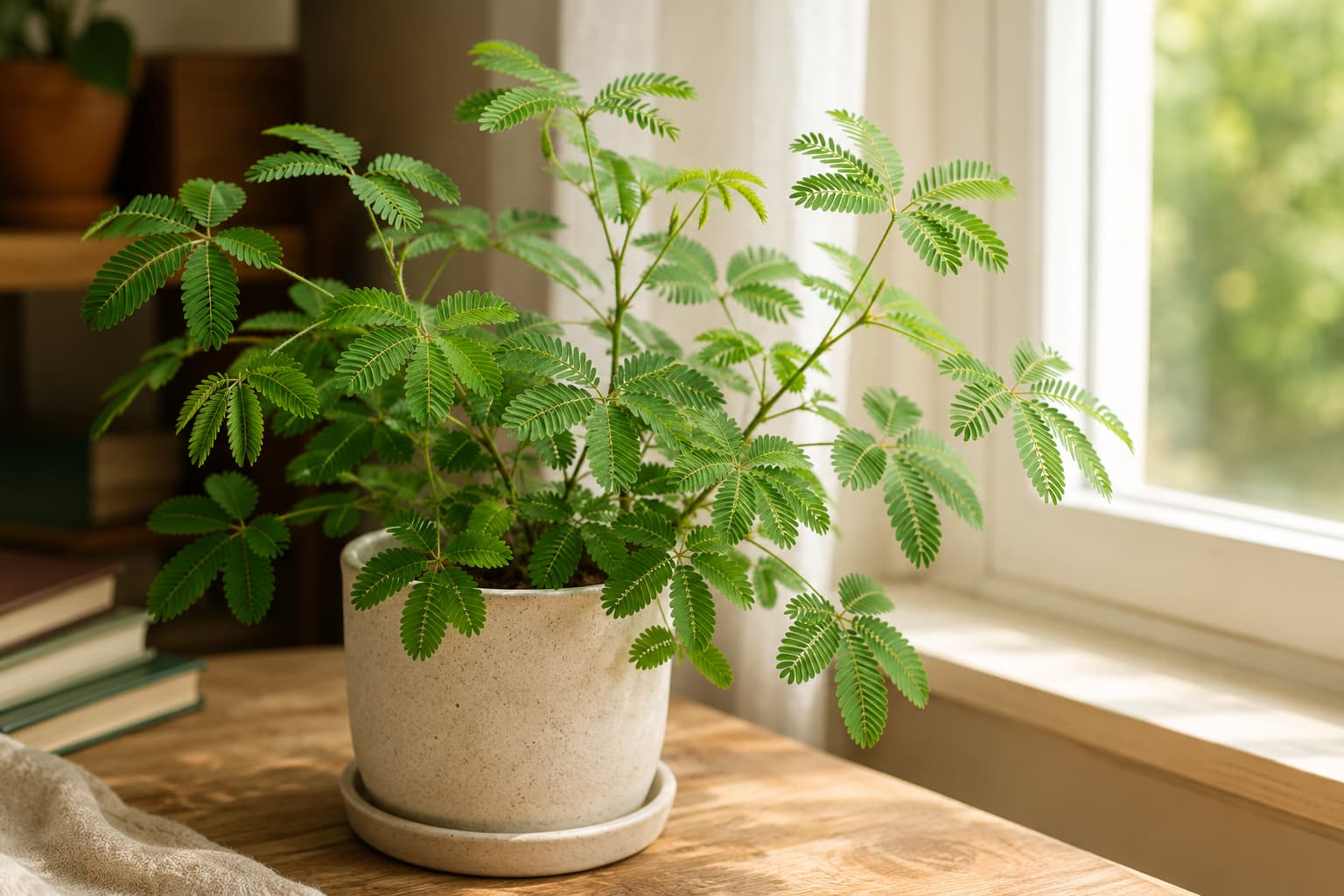
Mimosa pudica is famous for folding its fern-like leaves when touched, but keeping a sensitive plant healthy takes more than making it perform. The essentials are bright light, steady warmth, evenly moist but well-drained soil, and enough restraint to let the plant recover between touch responses.
greenmuse-illustration-mimosa-pudica-care-sensitive-plant-window.jpgMimosa Pudica Care at a Glance
| Care factor | Best starting point | What to avoid |
|---|---|---|
| Light | Very bright light; full light with protection from hot, scorching sun | Dim rooms or a sudden move into intense afternoon sun |
| Water | Water moderately during active growth and keep the mix moist but well drained | A fixed daily schedule or a pot that stays saturated |
| Soil | Peat-free, loam-based or similarly moisture-retentive, well-drained potting mix | Dense garden soil or a container without drainage holes |
| Temperature | Warm, stable conditions; about 55°F / 13°C or warmer in winter | Cold glass, cold drafts, and strong air-conditioning |
| Feeding | Balanced liquid fertilizer about monthly during active growth | Heavy feeding when the plant is cold, stressed, or barely growing |
| Propagation | Seed is the preferred method; softwood cuttings are also possible | Routine division of the root ball |
Mimosa pudica, often called sensitive plant or touch-me-not, is a spiny annual or short-lived tropical perennial. Its finely divided leaves and pink-purple flower heads are attractive, but its rapid folding response is what turns it into a plant people watch as much as they grow.
Why Does Mimosa Pudica Close Its Leaves?
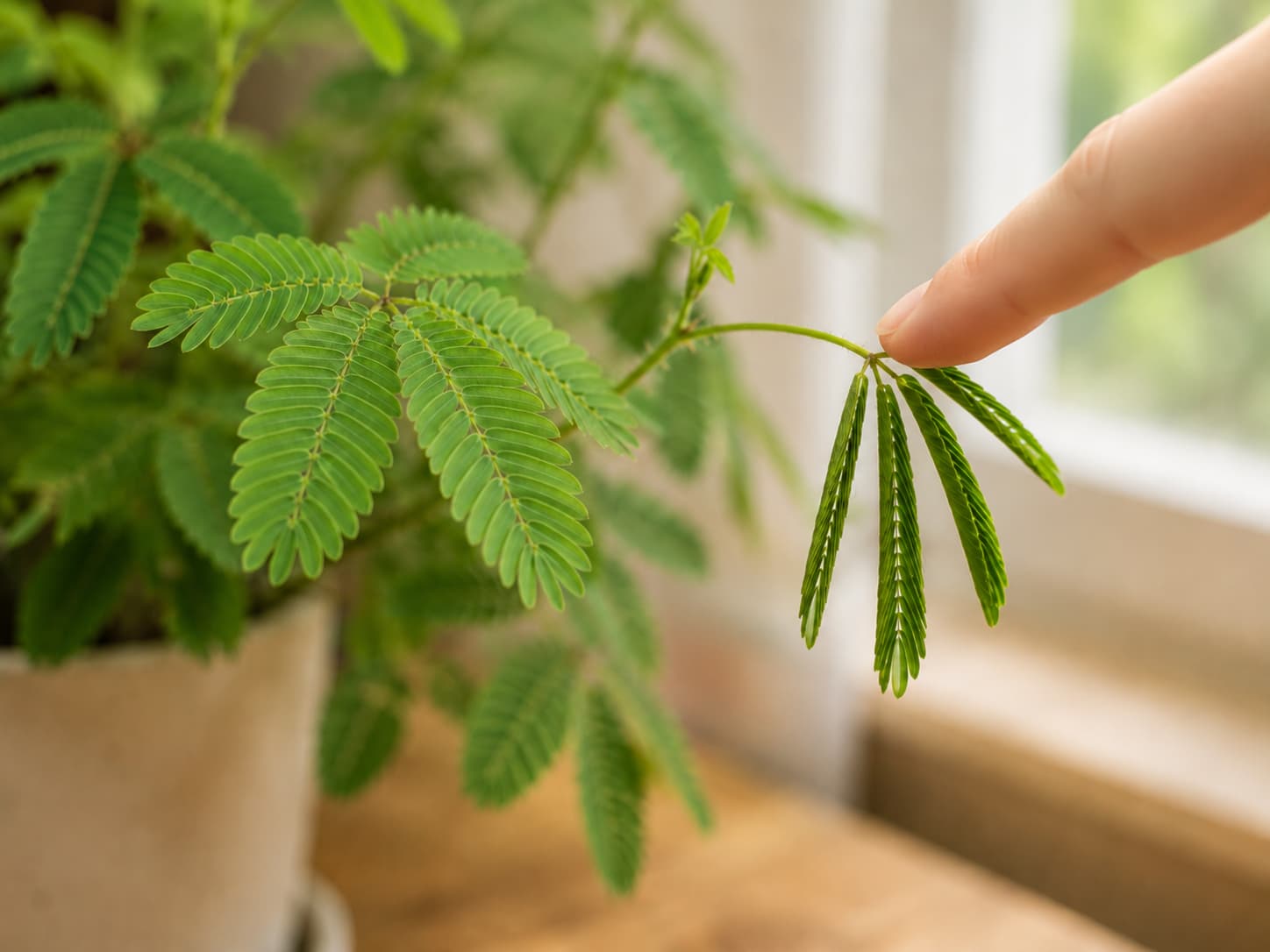
The folding response is a real plant movement, not a trick. Touch or vibration can trigger electrical signaling through the plant. Specialized joint-like structures called pulvini rapidly change turgor as ions and water move between cells, causing leaflets to fold and the leaf stalk to droop.
Mimosa pudica also closes its leaves at night. This normal day-night movement, called nyctinasty, means a plant that looks folded after dark is not automatically stressed.
greenmuse-illustration-mimosa-pudica-open-folded-leaf-response.jpgWhy repeated touching is a bad habit
There is a real cost to repeatedly making the plant close during the day. Research on Mimosa pudica has documented photosynthetic and reproductive costs associated with repeated daytime leaf closure. In everyday care, the practical lesson is simple: enjoy the response occasionally, then let the plant reopen and return to normal photosynthesis.
With children, make it an observation exercise rather than a repeated test: touch one healthy leaf gently, watch what happens, and then leave the plant alone.
How to Care for Mimosa Pudica Indoors
1. Give it brighter light than an average low-light houseplant
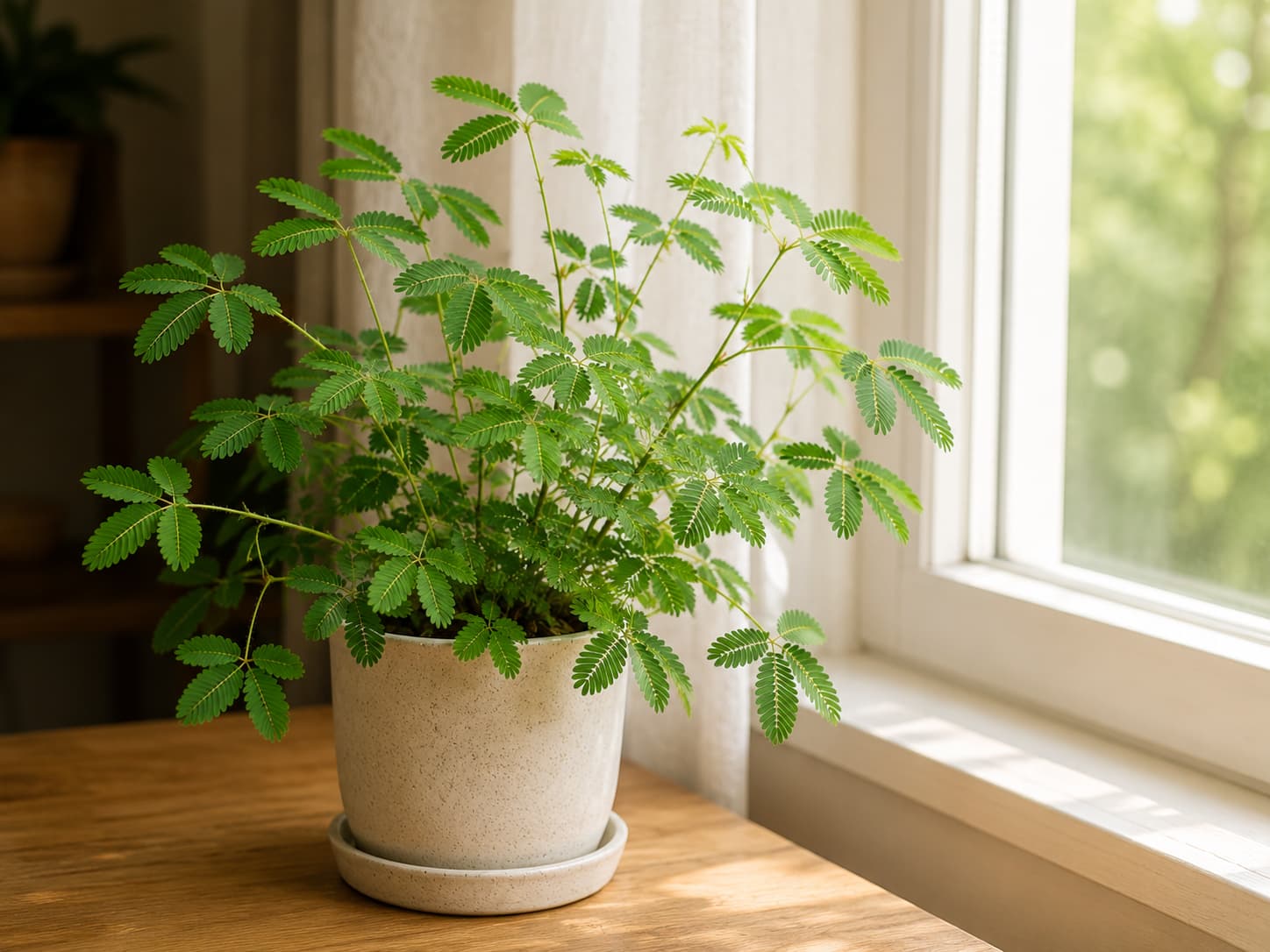
The Royal Horticultural Society recommends full light with protection from hot sun. Indoors, that usually means keeping the plant close to a bright window rather than several feet back in a room. A south- or west-facing window can work when the plant is acclimated, but tender foliage may scorch against very hot glass.
If stems become stretched and sparse or new leaves look weak and pale, review the light before reaching for fertilizer. In a dark winter room, supplemental lighting may help; Greenmuse's grow-light guide explains the basic setup choices.
greenmuse-illustration-mimosa-pudica-bright-window-light.jpg2. Keep the soil moist but never permanently waterlogged
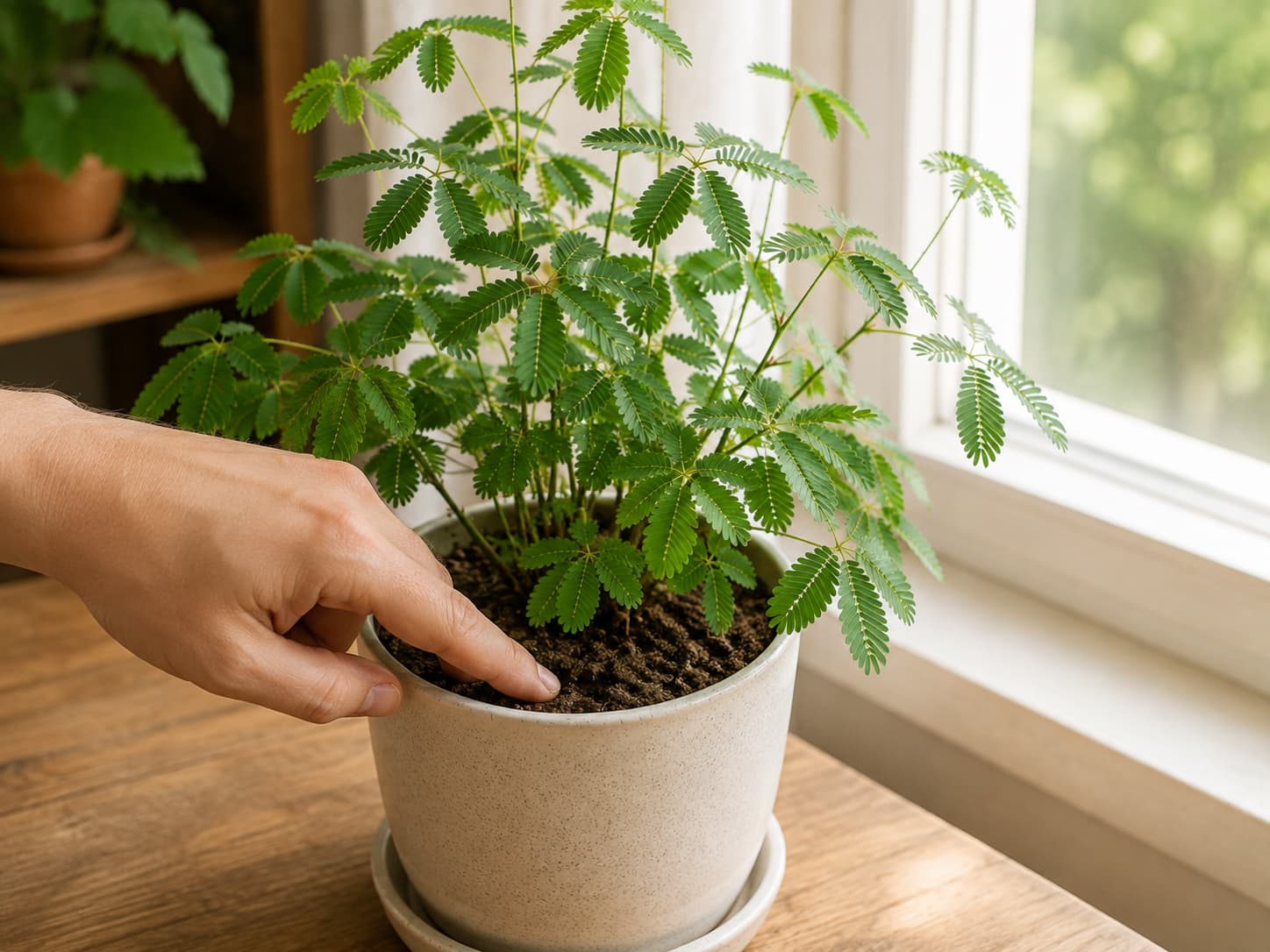
Sensitive plant likes more consistent moisture than a cactus or succulent, but that does not mean it should sit in saturated compost. Water moderately during active growth. A practical home routine is to check the upper layer of mix and the weight of the pot, then water thoroughly when the surface is beginning to dry while the root zone still retains some moisture.
Let excess water escape through drainage holes and empty any filled saucer. In brighter, warmer conditions the pot may need checking more often; in winter, RHS specifically notes that less water is required.
greenmuse-illustration-mimosa-pudica-soil-moisture-watering-check.jpg3. Use an airy potting mix that still holds some moisture
RHS recommends a peat-free, loam-based compost. The exact brand matters less than the behavior of the mix: it should wet evenly, hold enough moisture for fine roots, and still contain air after watering.
A normal quality houseplant mix with some added coarse material for aeration can work. Avoid heavy garden soil in containers, and do not swing to the opposite extreme with an ultra-gritty cactus mix that dries almost immediately.
4. Keep it warm and away from cold drafts
Mimosa pudica is a warm-climate plant. RHS advises keeping winter temperatures at about 55°F / 13°C or above. A stable indoor position is safer than a windowsill where foliage touches cold glass or a spot directly under air-conditioning.
Strong summer sun through glass can create the opposite problem. If leaves wilt or scorch beside a hot window, compare the symptoms with Greenmuse's houseplant heat-stress guide.
5. Feed only while the plant is actively growing
A balanced liquid fertilizer roughly once a month during active growth is enough for most potted sensitive plants. Feeding is not a cure for poor drainage, cold stress, weak light, or damaged roots. Correct those first.
Why Won't My Mimosa Pudica Leaves Close?
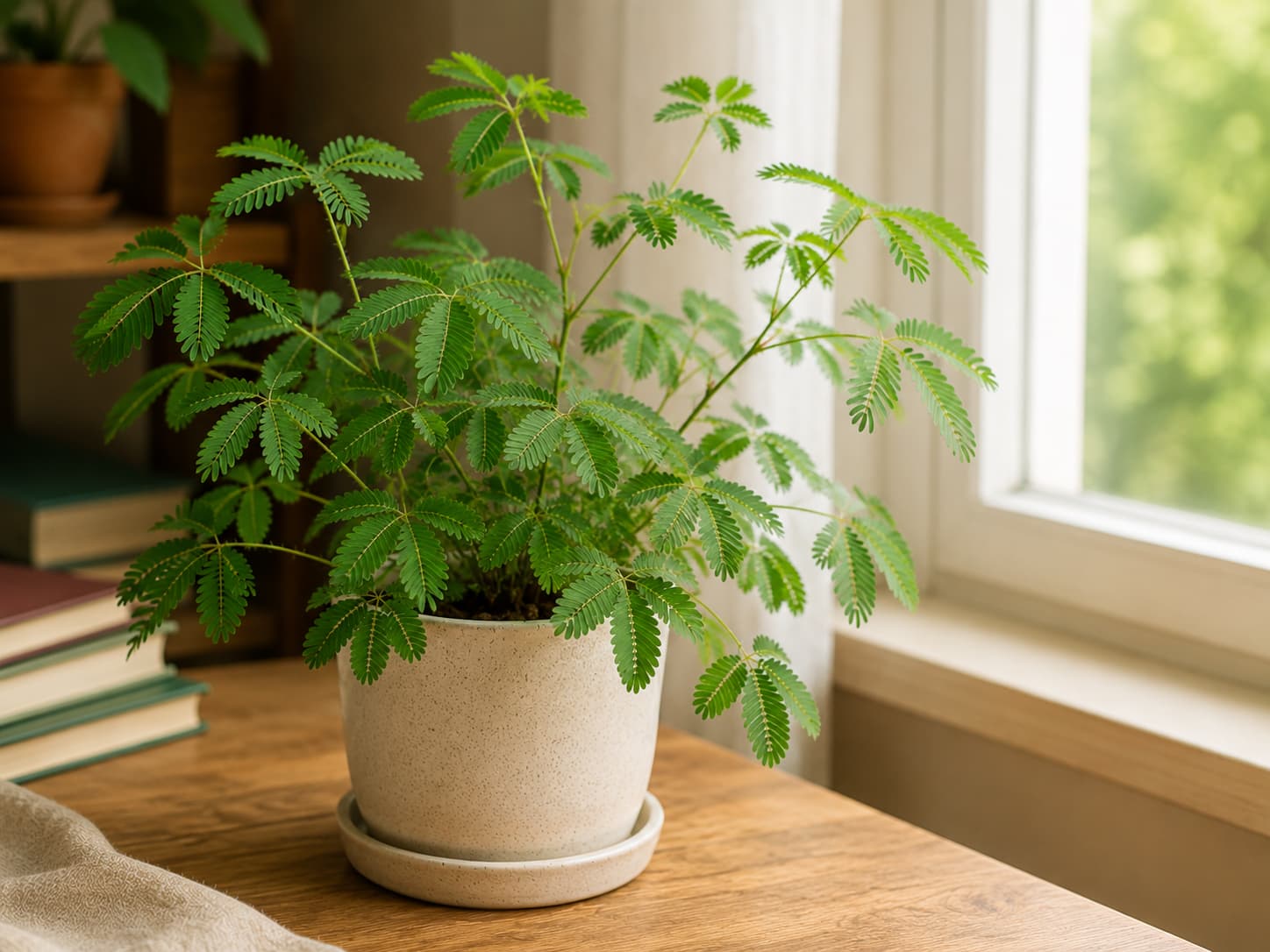
“Leaves not closing” is a symptom, not a diagnosis. The fastest way to troubleshoot it is to stop testing the plant and work through its basic growing conditions.
The Greenmuse 3-Step Reset
Also check the time of day. Leaves that are already folded as part of normal nighttime movement will not give the same dramatic daytime response. A severely wilted or cold-stressed plant may also behave differently from a healthy, fully hydrated one.
greenmuse-illustration-mimosa-pudica-leaves-not-closing-rest.jpgWhy Are My Mimosa Pudica Leaves Turning Yellow?
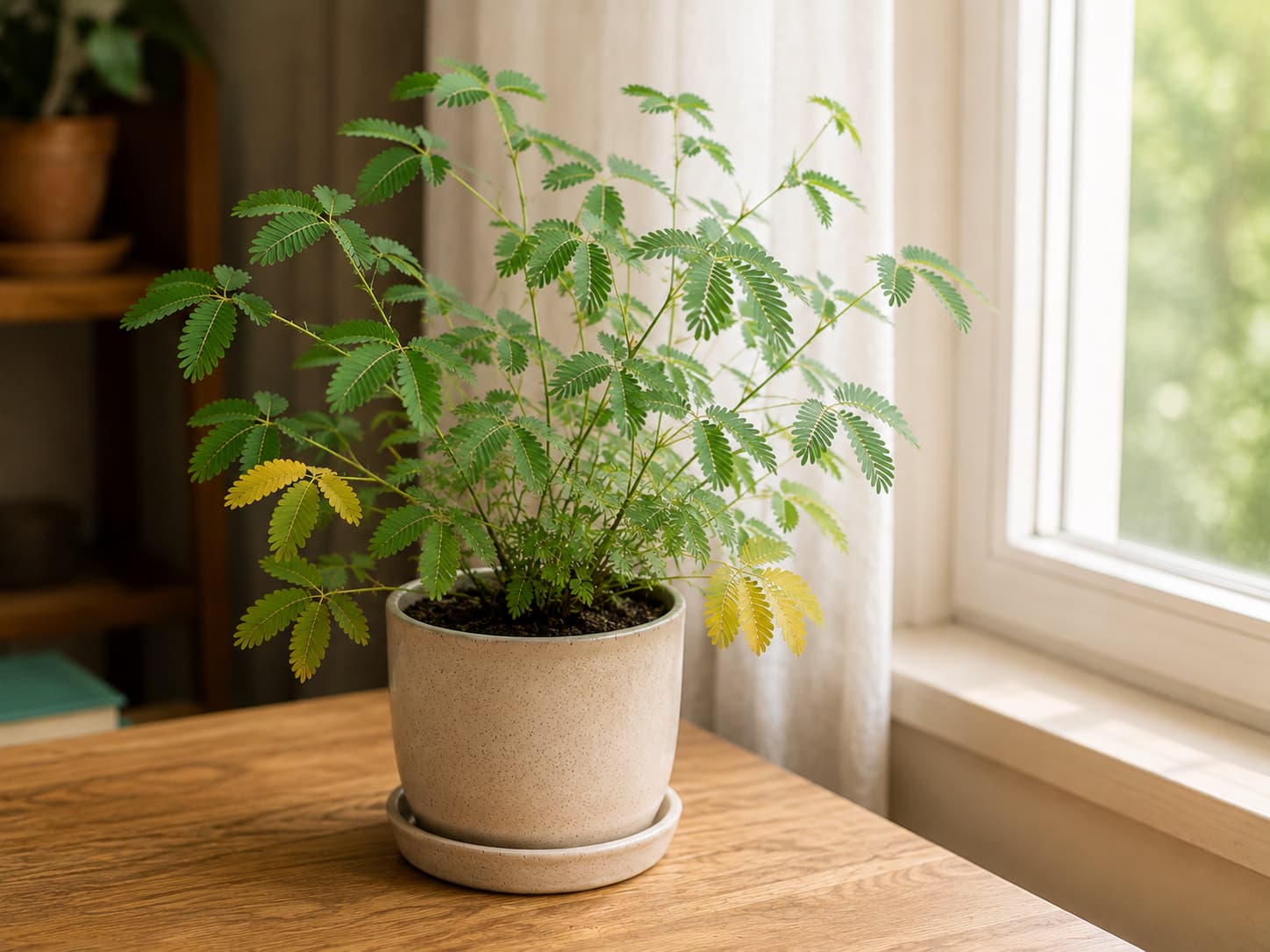
Yellowing becomes easier to diagnose when you read the pattern. One old lower leaf fading is different from several leaves yellowing while the potting mix remains wet for days.
| What you see | Most useful clue | What to do first |
|---|---|---|
| Lower leaves yellowing while the mix stays wet | Excess moisture or poor root-zone aeration | Pause watering, confirm drainage, and let the surface begin to dry |
| Yellowing with limp foliage and a very light pot | Excessive drying | Water thoroughly and start checking the pot more consistently |
| Pale, stretched growth with wide gaps between leaves | Insufficient light | Move gradually toward brighter light or use suitable supplemental light |
| Yellowing after cold-window or draft exposure | Temperature stress | Move the plant to a warmer, more stable position |
| Fine pale stippling or very fine webbing | Spider mites | Isolate the plant and inspect leaf undersides closely |
| Only the oldest leaves fade while new growth is healthy | Normal leaf aging may be involved | Monitor before changing the whole care routine |
greenmuse-illustration-mimosa-pudica-yellow-leaves-wet-soil.jpgDo not fertilize first
Yellow foliage often makes gardeners reach for plant food. Resist that reflex. If roots are cold, oxygen-starved, or otherwise stressed, adding fertilizer does not solve the cause. Check water, drainage, temperature, light, and pests before feeding.
Can You Grow Mimosa Pudica Outdoors?
Yes, but the answer depends heavily on climate and local invasive-plant guidance. In frost-prone regions, the simplest approach is to keep it as a houseplant or use it as a warm-season container plant. Move a pot outdoors only after cold weather has passed, acclimate it gradually to stronger sun, and bring it back before temperatures become chilly.
In tropical and subtropical climates, containment matters more. The University of Florida IFAS Assessment currently classifies Mimosa pudica as a high invasion risk in North, Central, and South Florida and does not recommend it for general planting there.
If you move container plants between seasons, Greenmuse's guide to bringing outdoor plants indoors covers acclimation, pest inspection, quarantine, and the light change that happens indoors.
How to Propagate Mimosa Pudica
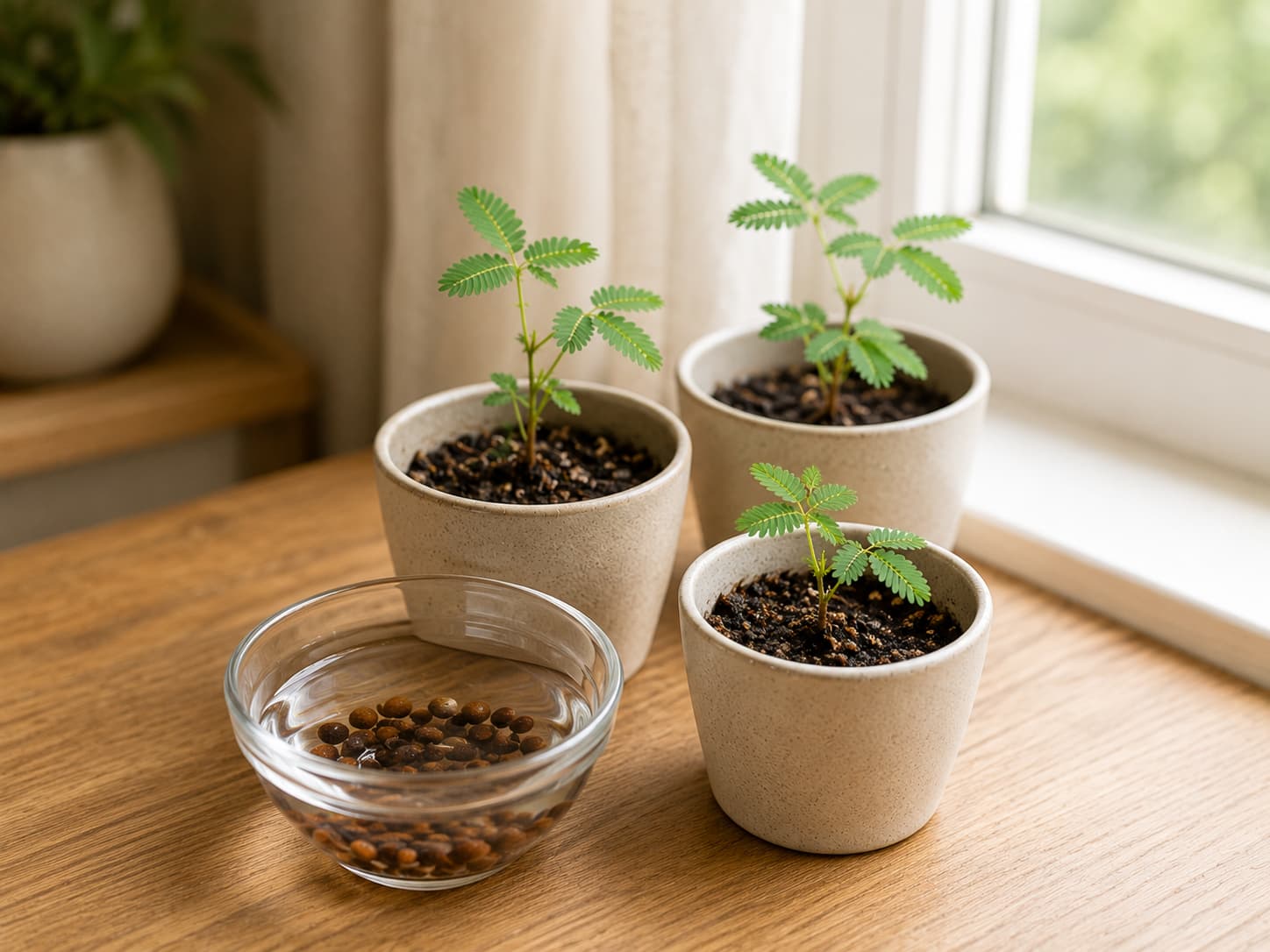
Seed is the preferred method. This corrects older Greenmuse guidance that treated division as a routine option. RHS recommends seed propagation and also notes that softwood cuttings can be taken with bottom heat in early summer.
- Start with viable seed. The hard seed coat can slow water entry.
- Soak overnight. An overnight soak helps prepare the hard-coated seeds for sowing.
- Sow into a clean, moist seed-starting mix. Keep the medium moist rather than saturated.
- Keep seeds warm. Aim for about 64–75°F / 18–24°C.
- Give seedlings bright light. Young plants become leggy quickly in dim conditions.
- Pot up gently. Move established seedlings without repeatedly disturbing their roots.
greenmuse-illustration-mimosa-pudica-seed-soaking-seedlings.jpgPests and Treatment Cautions
RHS lists glasshouse red spider mite as a potential pest. Kew also notes thrips and mealybugs. Look closely when foliage develops fine stippling, distortion, cottony clusters, tiny dark specks, or very fine webbing.
- Spider mites: inspect leaf undersides for pale stippling and fine webbing.
- Thrips: look for silvery feeding scars, distorted young growth, and tiny dark specks.
- Mealybugs: look for white cottony clusters around stems and leaf joints.
Is Mimosa Pudica Safe for Cats, Dogs, and Children?
Do not market this plant as simply “non-toxic.” Mimosa pudica contains mimosine, which can be toxic to humans and animals in large doses, and the stems can carry sharp prickles.
A Better Way to Enjoy the Sensitive Plant
The best way to grow Mimosa pudica is not to make it perform every few minutes. Watch the leaves open in daylight. Notice the normal evening fold. Touch one leaf gently once in a while, then give the plant time to reopen.
That small shift fits the Greenmuse approach: observe first, intervene second. The plant becomes more interesting when the goal is understanding its rhythm rather than repeatedly proving that it moves.
Frequently Asked Questions
How often should I water Mimosa pudica?
Do not water on a fixed daily schedule. During active growth, keep the mix moist but well drained and check it regularly. Water thoroughly when the surface is beginning to dry, then let excess water drain away. Reduce watering in winter when growth slows.
Why does Mimosa pudica stay closed at night?
That is normal. Sensitive plant closes its leaves as part of a natural day-night rhythm as well as in response to touch and vibration.
Why does my Mimosa pudica not close when I touch it?
First check whether it is already partly closed, then stop repeatedly touching it. Review soil moisture, temperature, light, wilt, pest damage, and overall plant health. After conditions stabilize, test one healthy daytime leaf once rather than repeatedly tapping the plant.
Can Mimosa pudica live indoors year-round?
Yes, provided it has enough light and warmth. It is a short-lived perennial, so an older specimen may decline even with good care. Many gardeners start fresh plants from seed.
Does Mimosa pudica need direct sunlight?
It needs very bright light. Keep it close to a bright window and acclimate it gradually to stronger direct light.
Can I propagate Mimosa pudica by division?
Seed is the preferred method, and softwood cuttings are also possible. Routine root-ball division is not the propagation method Greenmuse recommends for this species.
Is Mimosa pudica invasive?
It can be in some warm climates. Check local guidance before planting it outdoors in tropical or subtropical areas.
Is Mimosa pudica pet-safe?
It should not be described as pet-safe. Prevent pets from chewing the plant.
The Bottom Line
Good Mimosa pudica care comes down to four priorities: strong light, steady warmth, moist but well-drained potting mix, and restraint with repeated touching. If leaves yellow, diagnose moisture, temperature, light, and pests before feeding. If the leaves stop closing, let the plant rest and check its growing conditions instead of forcing another response.
Grow it for the curiosity, but care for it as a living plant rather than a toy. That change alone prevents many of the problems sensitive-plant owners run into.
Sources
- Royal Horticultural Society (RHS). Mimosa pudica — sensitive plant.
- University of Florida IFAS Assessment. Mimosa pudica.
- Royal Botanic Gardens, Kew. Mimosa pudica L..
- Toyota M. et al. Mechanical Signaling in the Sensitive Plant Mimosa pudica L. Plants, 2020.
- Bao T., Roy G., Cahill J.F. Jr. Photosynthetic opportunity cost and energetic cost of a rapid leaf closure behavior in Mimosa pudica. American Journal of Botany, 2018.