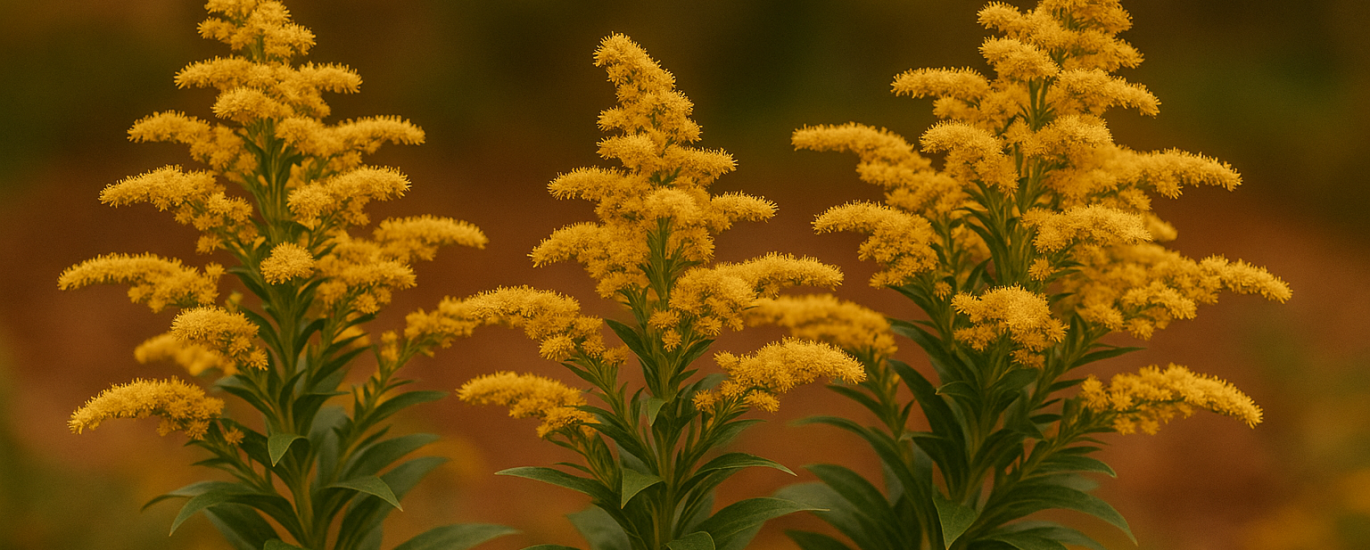
When the air cools and days grow shorter, Goldenrod steps forward like a spark of sunshine, glowing across meadows, front yards, and woodland edges. It’s one of the most misunderstood—and most valuable—plants of the fall season.
Whether you’re decorating for Labor Day picnics, Harvest festivals, Halloween porch displays, or a simple Thanksgiving backyard gathering, Goldenrod brings a natural, effortless warmth that no other plant can replicate.
And despite the myths, it is not responsible for fall allergies.
But more on that later.
Why Goldenrod Fits Fall Celebrations Perfectly
In folklore and seasonal traditions, Goldenrod stands for:
Good fortune
Energy and vitality
Unexpected joy
Guidance and protection during seasonal transitions
It’s the perfect flower for holidays tied to harvest, gratitude, and homecoming.
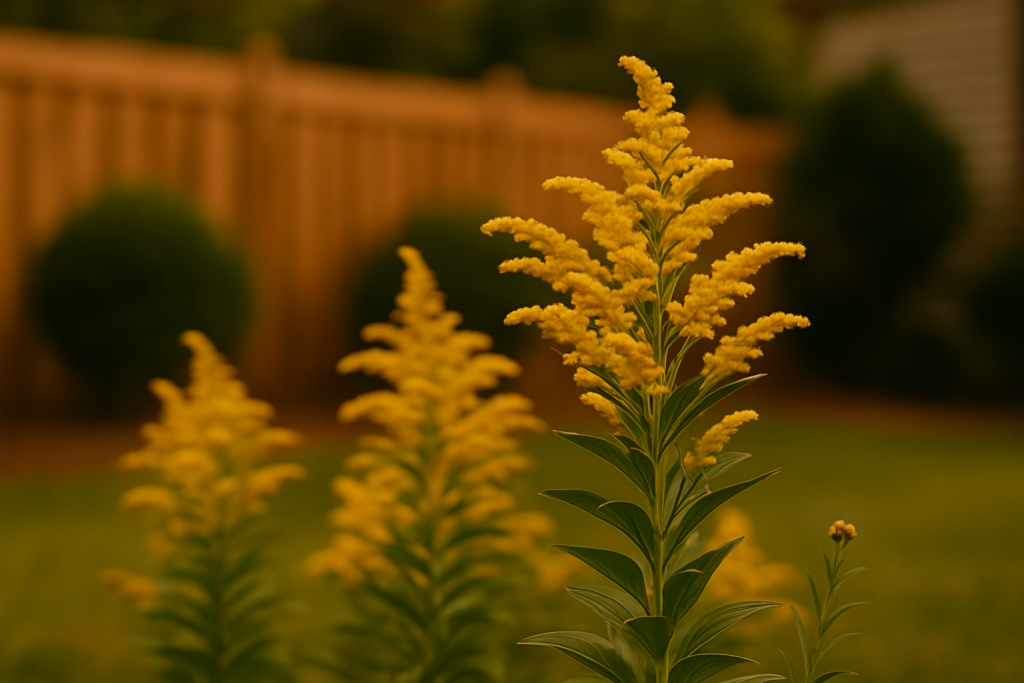
Its golden plumes evoke the colors of grain fields, falling leaves, and warm candlelit evenings—timeless imagery woven deeply into autumn celebrations across many cultures.
How to Identify Goldenrod (Visual Profile)
Goldenrod is easy to spot—and even easier to love once you know its true nature.
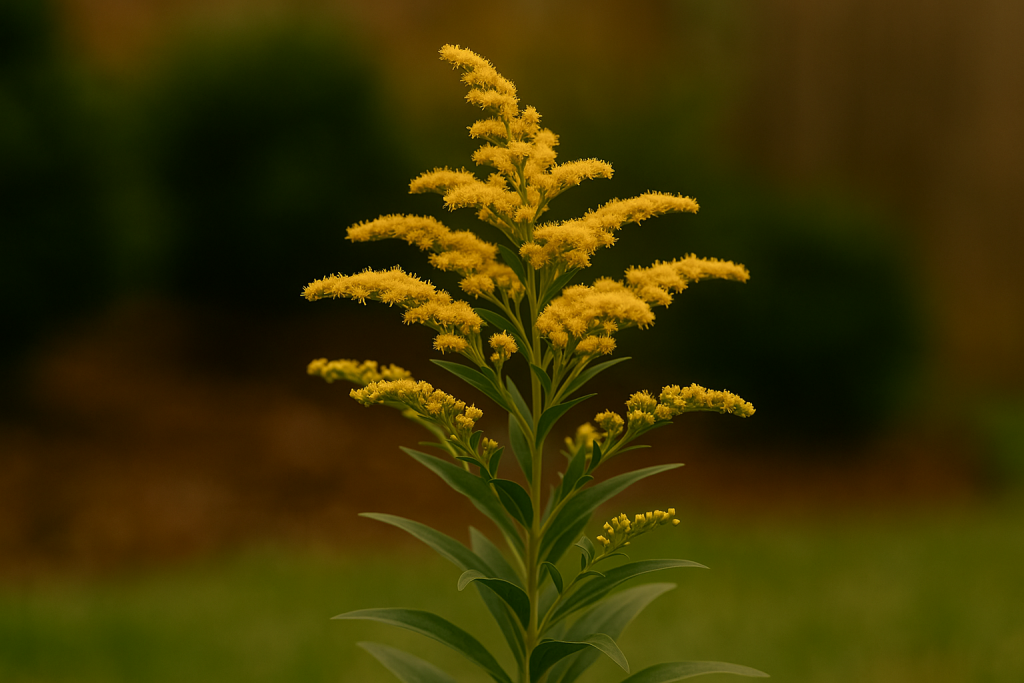
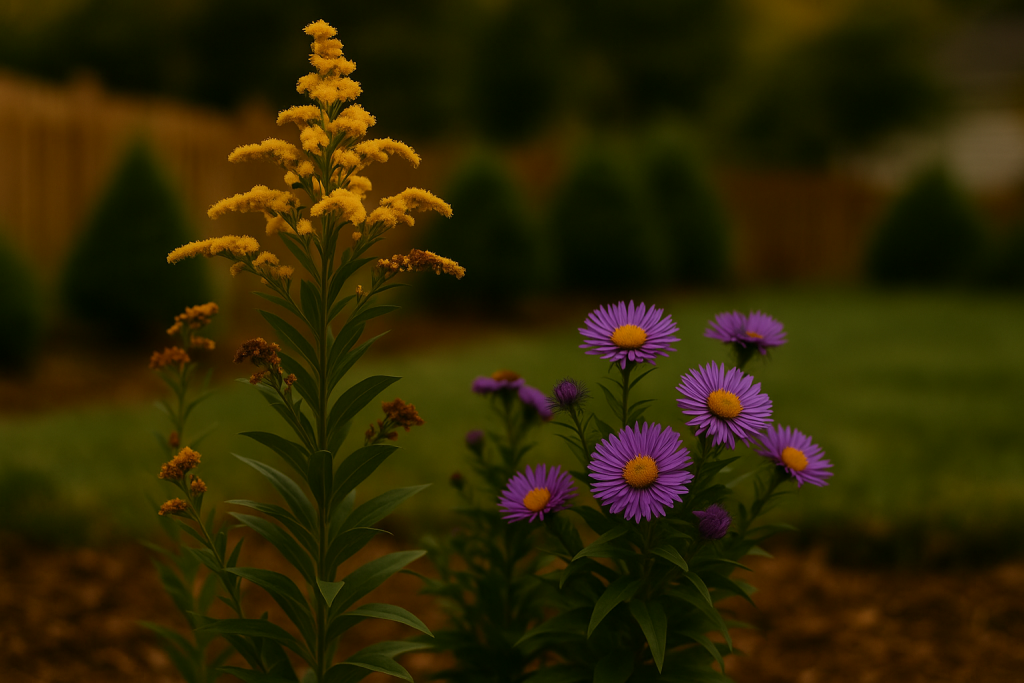
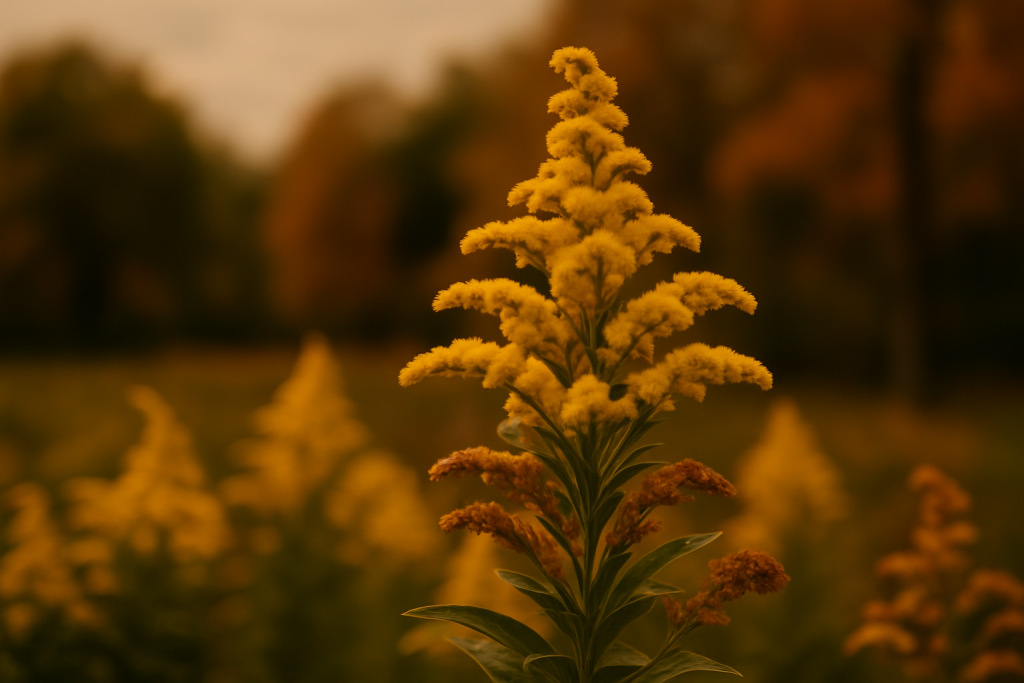
- Bright yellow plumes of tiny flowers
- Feathery or arching clusters that sway gracefully
- High flower volume, visible from across the garden
- A naturally “wild” charm, ideal for cottage and prairie gardens
- Clump-forming growth habit, upright and airy
It is one of the most photogenic fall perennials for backyard gardens.
Growing Conditions (Beginner-Friendly)
Light: Full sun
Soil: Thrives in well-drained soils; adaptable to clay, loam, or sandy soils
Hardiness: USDA Zones 3–9
Height: Typically 2–4 feet depending on species
Water: Low–moderate; drought-tolerant once established
Goldenrod is one of the easiest native perennials you can grow—perfect for gardeners of all experience levels.
Seasonal Performance
Goldenrod shines from early fall into late autumn, often blooming until the first frost.
It bridges the gap between summer’s fading color and winter’s muted tones, making it essential for long-lasting garden displays.
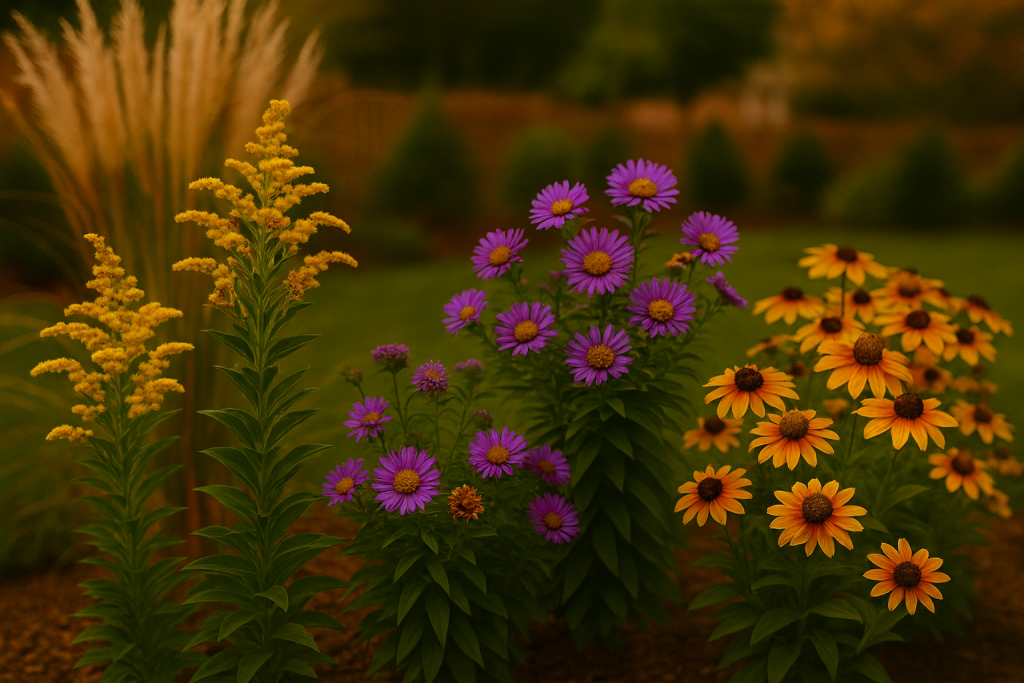
Pair it with:
- New England Aster (purple)
- Black-eyed Susan (gold & black contrast)
- Switchgrass or Fountain grass
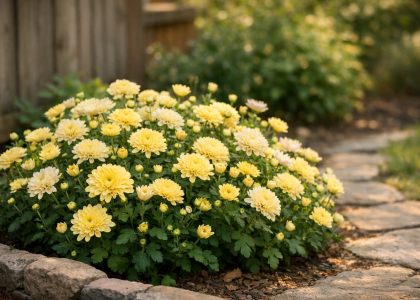
- Chrysanthemums
This creates the iconic “American fall garden palette.”
A Lifeline for Pollinators
Goldenrod is a top-tier pollinator plant in North America.
It provides:
Late-season nectar for honeybees and native bees
Fuel for migrating monarchs and painted lady butterflies
Habitat for beneficial insects overwintering at ground level
Clearing Up the Allergy Myth
Goldenrod does not cause fall allergies.
Its pollen is heavy and sticky, carried by insects—not wind.
The real culprit is ragweed, which blooms at the same time.
Educating readers on this one fact alone solves a major market hesitation.
How to Use Goldenrod in Fall Garden & Holiday Design
Goldenrod fits beautifully into many seasonal themes.
Halloween Porch & Pathway Displays
Combine with pumpkins, purple asters, and corn bundles for a magical, moody October entrance.
Thanksgiving Garden Corners
Place near outdoor dining areas or firepit spaces for warm golden light during cozy gatherings.
Prairie-Style Naturalistic Gardens
Goldenrod is a foundational species—essential for authenticity and ecosystem health.
Fall Bouquets & Table Arrangements
Goldenrod adds:
✔ texture
✔ color
✔ volume
✔ longevity
A budget-friendly way to decorate indoors for festive dinners.
Real Problems Gardeners Have—And How Goldenrod Solves Them
Problem 1: Fall garden looks dull or tired
☑ Goldenrod instantly restores color and life.
Problem 2: Seasonal décor feels artificial or expensive
☑ Goldenrod offers natural, low-cost alternatives to store-bought decorations.
Problem 3: Few plants bloom late in the season
☑ Goldenrod is a reliable late-bloomer, filling critical color gaps.
Problem 4: You want a pollinator-friendly garden, but most flowers are done by fall
☑ Goldenrod is a literal life support system for insects in October–November.
Goldenrod as a Symbol of Seasonal Resilience
Not just a flower—Goldenrod is a reminder that beauty doesn’t disappear with change.
It evolves, softens, and glows with a quiet confidence.
In a season that often symbolizes endings, Goldenrod shows us the beauty in transition.
It’s the perfect plant for fall holidays… because it embodies the season itself.
If you’re planning your fall garden or decorating for autumn holidays, Goldenrod is one of the most rewarding plants you can grow.
It brings:
✔ color
✔ ecological value
✔ warmth
✔ symbolism
✔ and a deeply natural autumn atmosphere
All in a single golden plume.