Flowering Dogwood Care: How to Grow Cornus florida
Learn where flowering dogwood grows best, how to plant and prune it, how to recognize anthracnose, and when Kousa dogwood may be the better choice.
Published June 25, 2026 · Last updated September 2026
Quick Summary
Flowering dogwood (Cornus florida) is a small native tree of eastern North America valued for spring bracts, red fall color, and wildlife-supporting fruit. It performs best in a well-drained site with consistent moisture and some protection from harsh heat. Because dogwood anthracnose can be serious in cool, wet conditions, site selection, sanitation, and resistant cultivars matter. Also, do not confuse the red fruit of C. florida with edible Kousa dogwood fruit: flowering dogwood fruit should not be eaten.
What Is Flowering Dogwood?
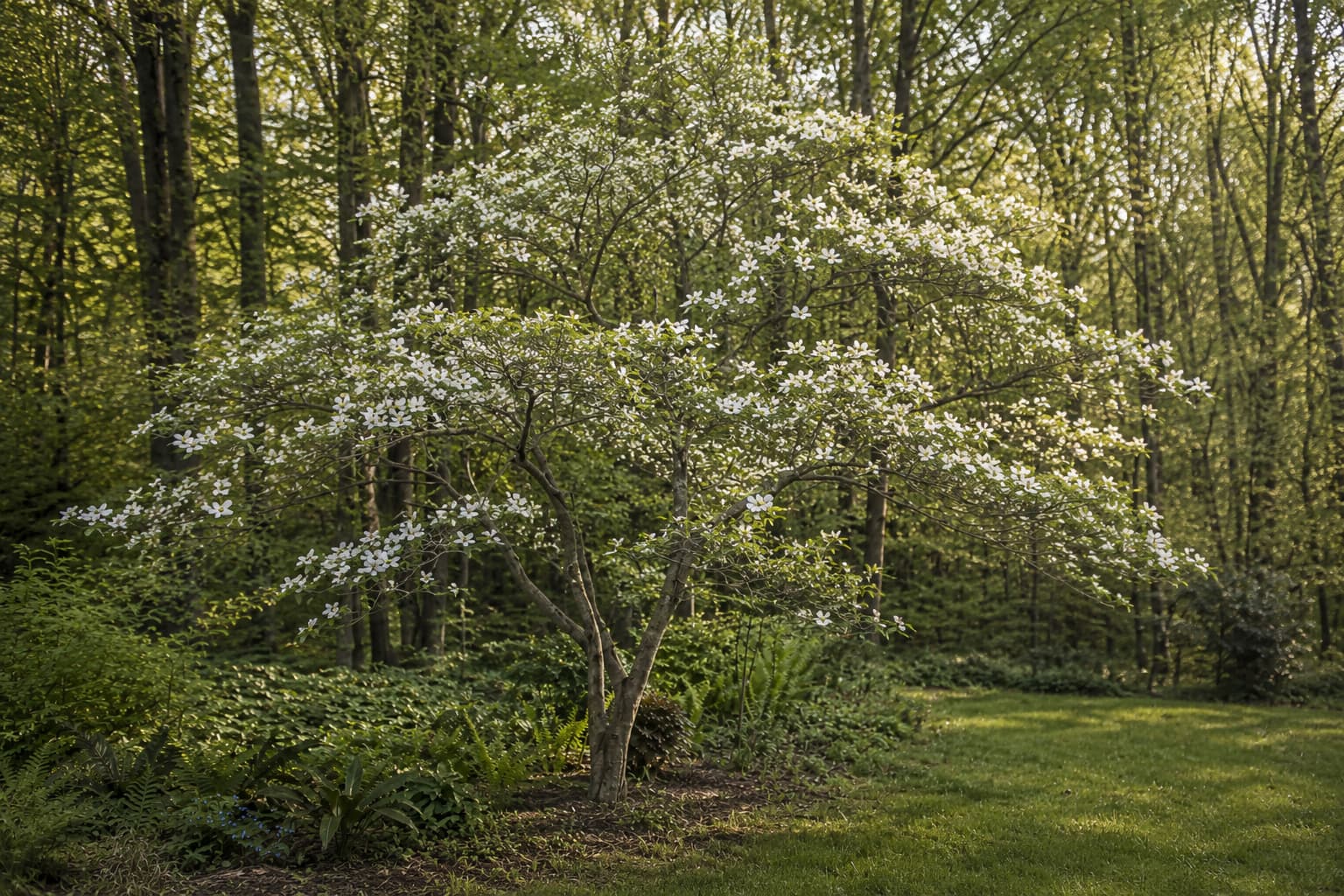
To begin with, flowering dogwood (Cornus florida) is a small deciduous tree native across much of eastern North America. As a result, its roots are accustomed to leaf litter, good drainage, and relatively even soil moisture in the understory or woodland edge.
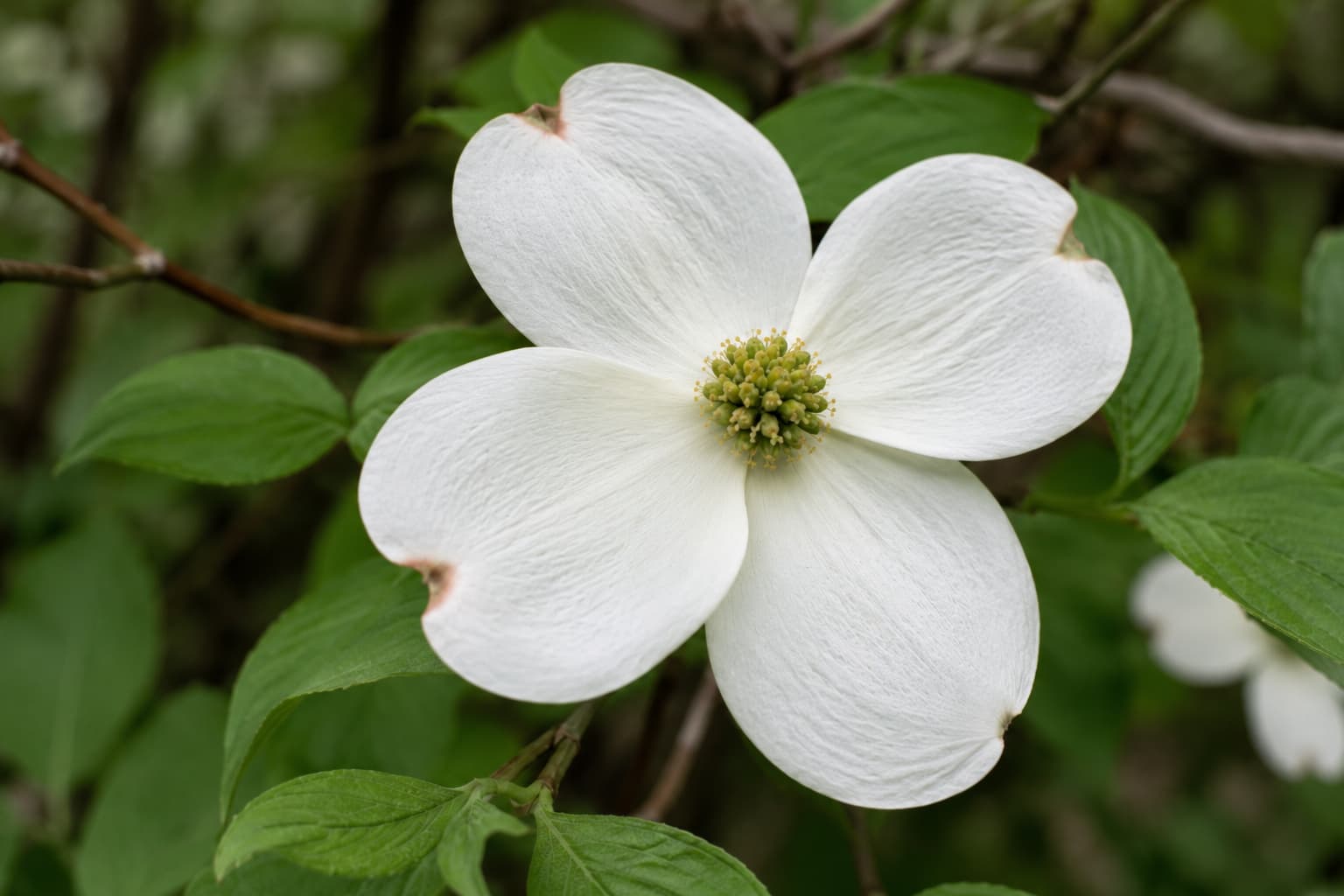
Those “petals” are actually bracts
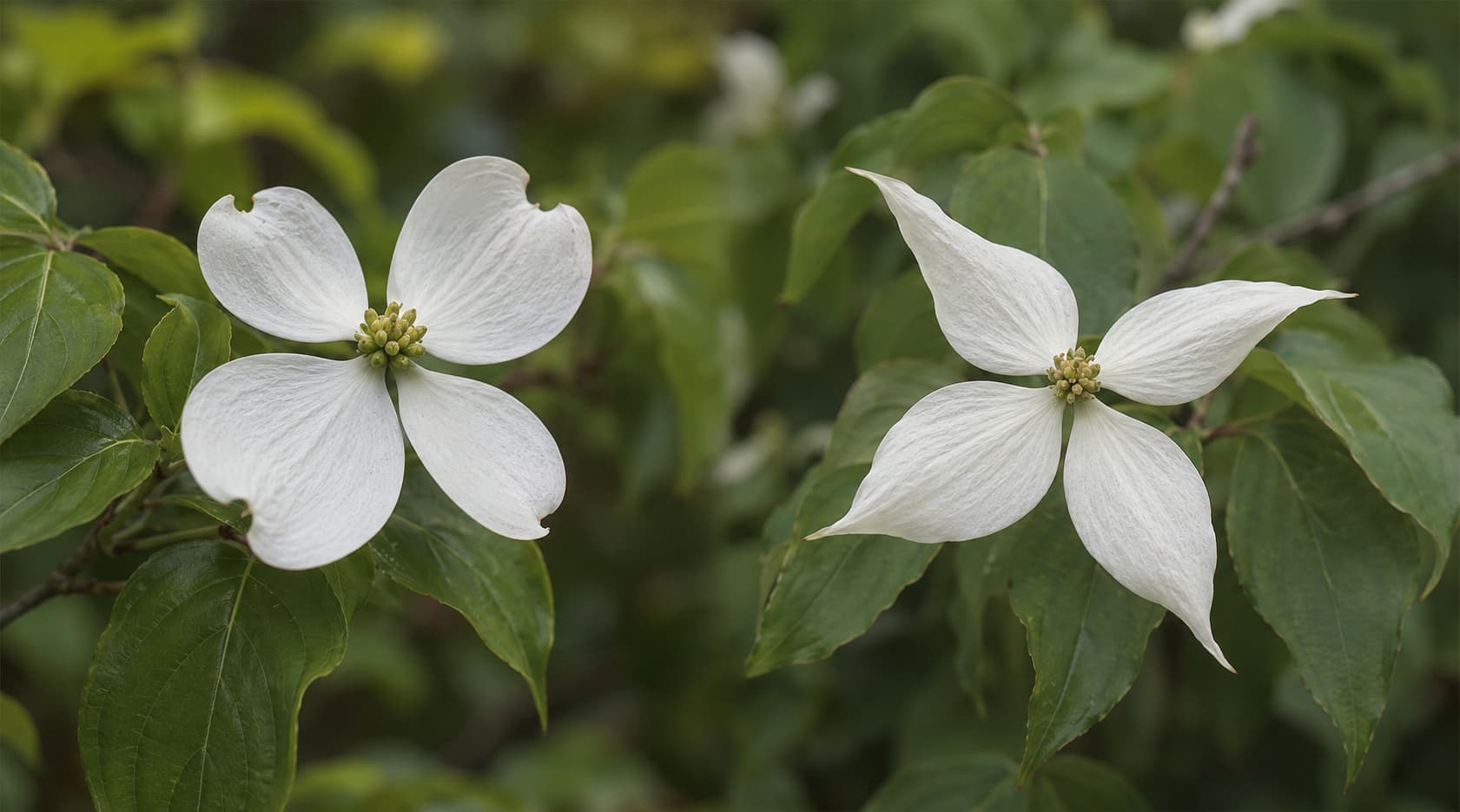
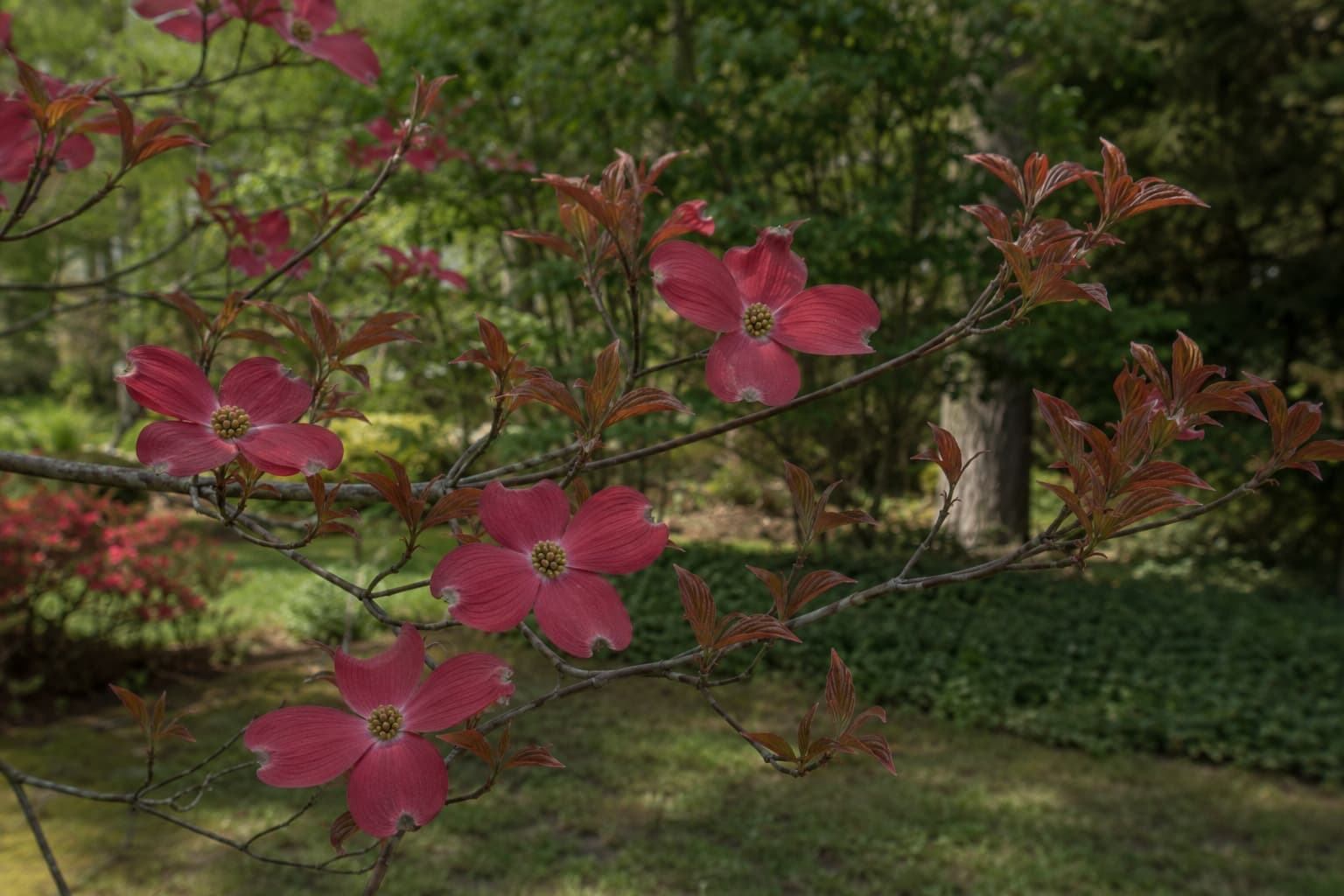
Botanically, the showy white or pink parts are not petals. Instead, they are bracts — modified leaves that surround a cluster of small true flowers. The classic C. florida bracts usually have a notch at the tip, which is one useful clue when comparing it with Kousa dogwood.
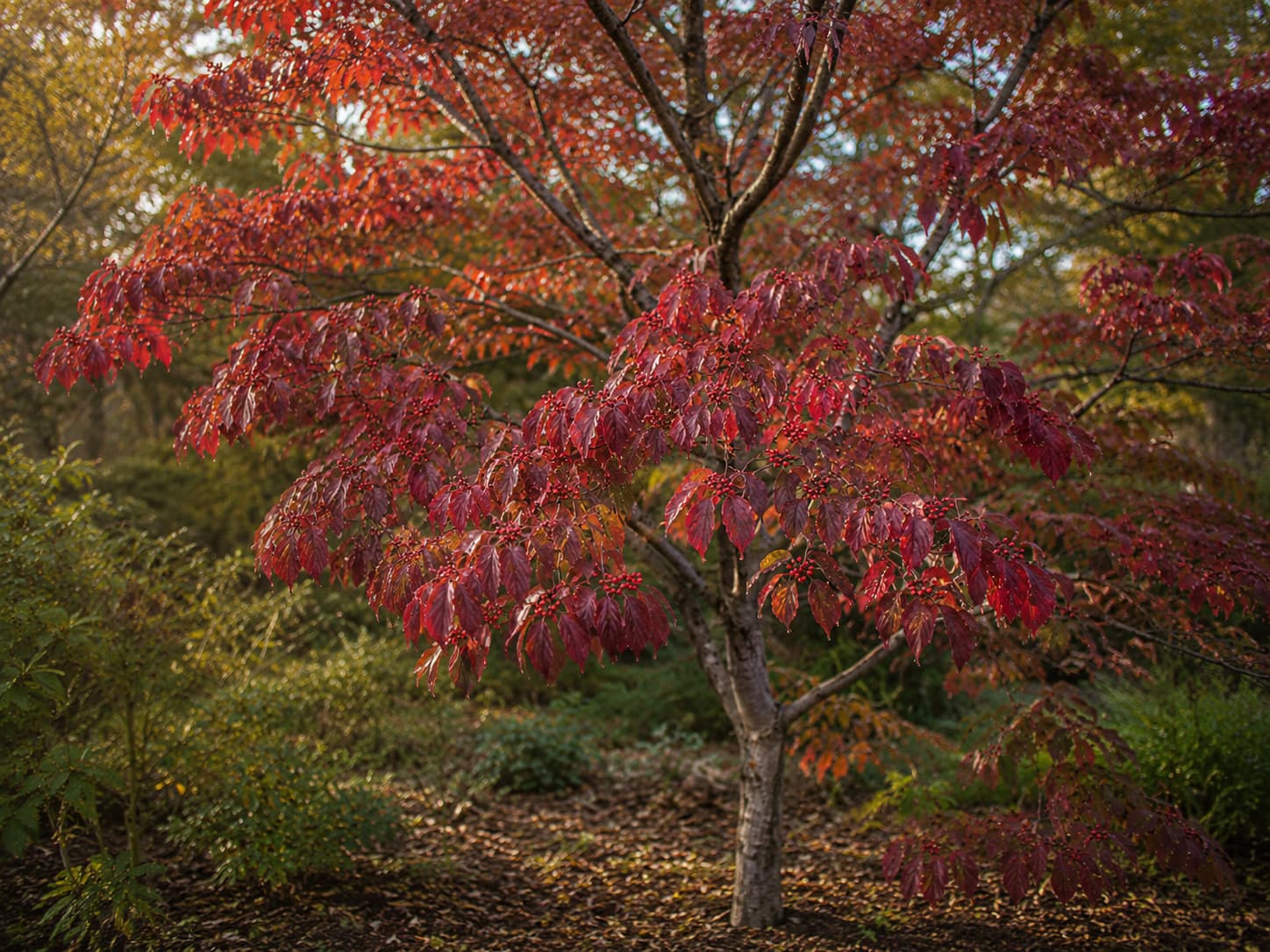
In addition, flowering dogwood offers more than spring display. Its foliage can turn red to purple-red in autumn, while clusters of red drupes provide food for many birds and other wildlife. For people, however, those fruits should not be treated as food.
Plant Profile at a Glance
| Feature | Practical guidance |
|---|---|
| Scientific name | Cornus florida |
| Plant type | Small deciduous tree |
| Native range | Much of eastern North America, extending west into parts of the central and southern United States |
| Typical hardiness | Commonly grown in USDA Zones 5–9; cultivar and site conditions matter |
| Mature size | Often 15–30 ft tall and broad in landscapes |
| Spring display | White, pink, or reddish bracts surrounding small true flowers |
| Fall interest | Red to purple-red foliage and clusters of red fruit |
| Light | Part sun to sun; afternoon protection is helpful in hot or dry exposures |
| Soil | Moist, well-drained soil; avoid persistently waterlogged sites |
| Water | Consistent moisture is especially important while establishing and during drought |
| Fruit safety | Do not eat C. florida fruit; it is for wildlife, not the kitchen |
Cornus florida vs. Cornus kousa: Which Fits Your Garden?
Before buying, make sure you know which dogwood you are looking at. Even though flowering dogwood and Kousa dogwood can fill a similar ornamental role, they differ in flowering time, fruit, bark, and disease susceptibility.
| Characteristic | Cornus florida | Cornus kousa |
|---|---|---|
| Origin | Eastern North America | East Asia |
| Bloom timing | Usually spring, before or around leaf-out | Usually later, after leaves have expanded |
| Bract shape | Typically notched at the tip | Typically pointed at the tip |
| Dogwood anthracnose | Can be highly susceptible | Generally less susceptible |
| Fruit | Clusters of red drupes; do not eat | Larger, round, raspberry-like fruit; the pulp is eaten when correctly identified and ripe |
| Bark | Develops blocky, checkered bark with age | Often develops mottled, exfoliating bark |
| Best reason to choose it | Native ecology and classic early-spring display | Later bloom, distinctive fruit and bark, and generally lower anthracnose susceptibility |
A Better Rule of Thumb
Choose C. florida when you want an eastern North American native and can provide a suitable site. By contrast, choose C. kousa when later flowering, distinctive bark, or lower susceptibility to dogwood anthracnose is more important. In either case, local climate, drainage, heat exposure, and cultivar performance should guide the final choice.
Dogwood Anthracnose: What to Watch For
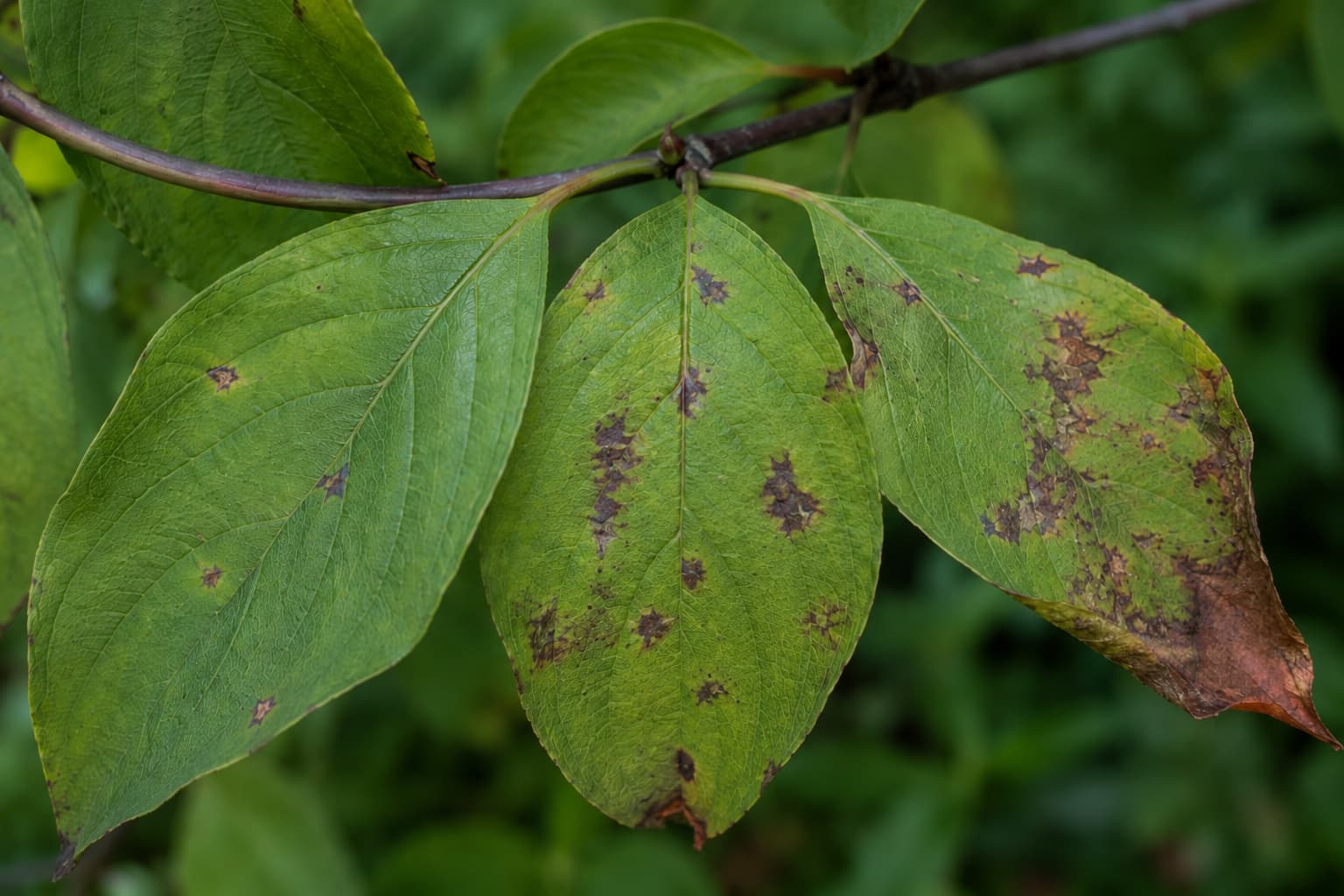
Most importantly, dogwood anthracnose is a fungal disease caused by Discula destructiva. It became a major problem in flowering dogwood populations in parts of the eastern United States, especially where cool, moist conditions favor disease development.
Symptoms can overlap with other problems
- Leaf spots and blotches: tan or brown lesions may develop purple margins.
- Leaf and shoot blight: infected leaves and young shoots may brown and die.
- Twig and branch dieback: disease can move into twigs and larger branches.
- Epicormic shoots: stressed trees may produce shoots along the trunk or larger limbs.
However, a brown dogwood leaf does not automatically mean anthracnose. For example, drought stress, leaf scorch, powdery mildew, root problems, and other diseases can produce overlapping symptoms. Therefore, persistent decline is worth confirming through a local extension service or plant diagnostic laboratory before you make major treatment decisions.
How Anthracnose Differs from Ordinary Leaf Scorch
In simple terms, environmental leaf scorch often follows heat, drought, root damage, or drying winds, while dogwood anthracnose is an infectious fungal disease. Because the two can look similar at first, use the whole pattern of symptoms rather than one brown leaf edge to make a diagnosis.
Reduce disease pressure rather than promising a cure
- Start with the site. Provide good air movement, suitable light, and drainage without putting the roots through repeated drought.
- Remove dead or clearly diseased twigs. When possible, prune during suitable dry weather and follow regional disease-management advice.
- Clean up fallen infected material. In turn, sanitation can reduce sources of fungal inoculum around high-value landscape trees.
- Water the root zone. Avoid routinely wetting foliage when irrigation at soil level is practical.
- Use resistant plants where disease pressure is high. Resistant C. florida selections and other dogwood species can reduce risk.
- Use fungicides only when justified. If a local extension program recommends preventive fungicide protection for a valuable tree, follow the exact product label and regional timing guidance.
Site Conditions Matter, but They Are Not a Guarantee
Morning light and good airflow can help foliage dry faster, which may reduce disease-favorable leaf wetness. Still, no planting position can guarantee that a susceptible tree will never develop anthracnose.
How to Plant a Flowering Dogwood
Choose a site that protects the root zone
For most home gardens, flowering dogwood does well with morning sun or filtered light plus some protection from intense afternoon heat. For example, full sun can work in suitable climates when soil moisture is dependable, while deep shade may reduce flowering.
At the same time, drainage matters. Dogwoods have relatively shallow root systems and can struggle in extremely dry sites, but they also perform poorly in chronically waterlogged soil. Therefore, aim for a site that stays evenly moist without remaining saturated.
Planting steps
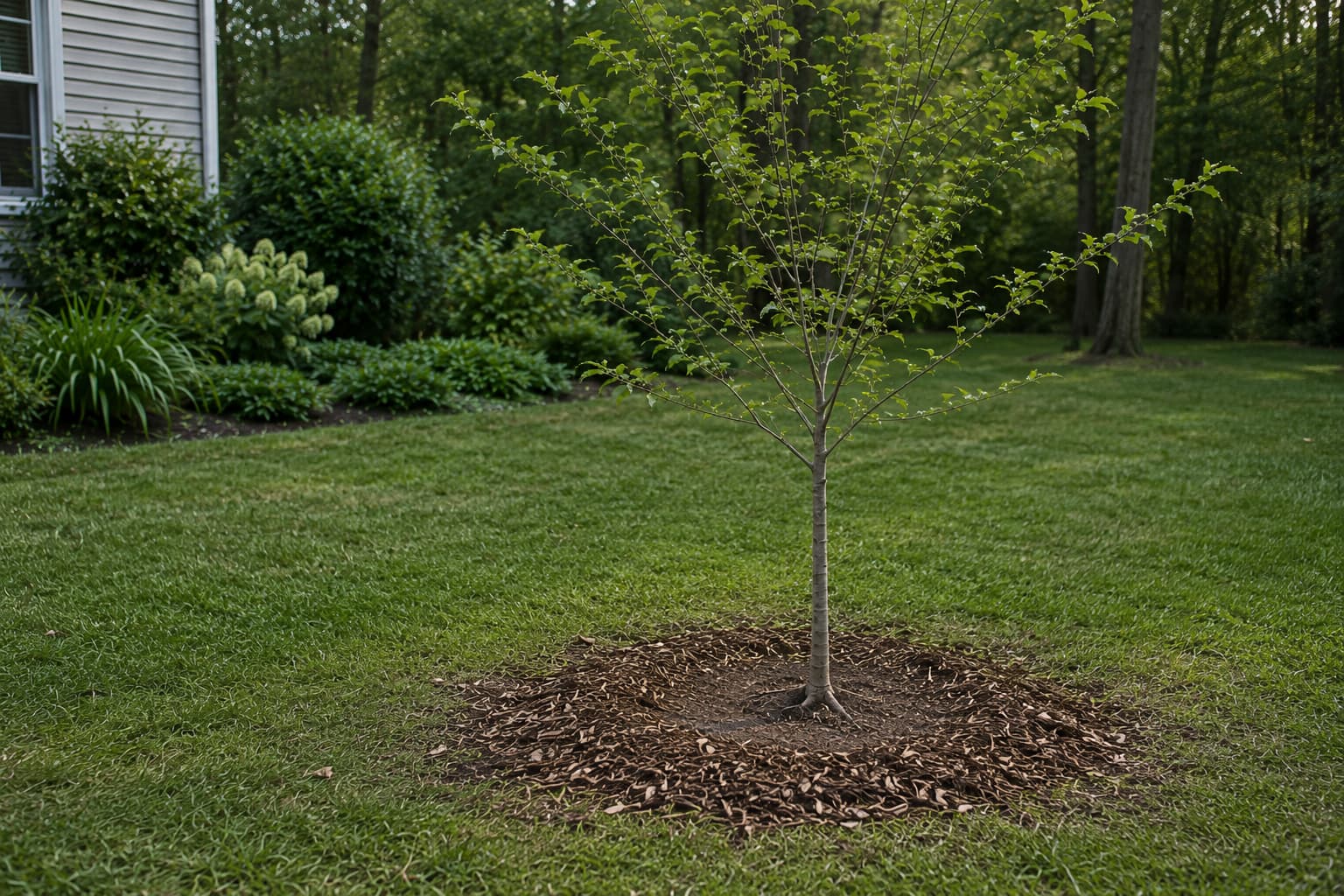
- Find the root flare. The point where the trunk widens into major roots should remain visible at or just above the final soil grade.
- Dig wide, not deep. Next, make the planting hole wider than the root ball but no deeper than necessary.
- Backfill mainly with the existing soil. Avoid creating a heavily amended pocket that differs sharply from the surrounding ground.
- Water thoroughly. Then, settle soil around the roots without compacting it aggressively.
- Mulch widely and shallowly. Keep mulch off the trunk and root flare.
In colder parts of its range, spring planting can give a young tree a full growing season to establish before winter. In milder climates, fall can also be suitable when soil moisture and weather are favorable.
Flowering Dogwood Care: Light, Water, Soil & Feeding
Light
For balanced growth, match light to climate and soil moisture. A bright woodland-edge position often works well. In hotter or drier exposures, afternoon shade can reduce stress; in cooler climates, a tree may tolerate more direct sun if the root zone stays adequately moist.
Watering
During establishment, check soil moisture regularly and water deeply when the root zone begins to dry. Do not rely on a rigid “once a week” rule because rainfall, temperature, soil type, mulch, and tree size all change water demand.
Later on, established trees still benefit from supplemental water during prolonged drought. Premature fall color, wilting, and crispy leaf margins can indicate stress, although those symptoms are not specific enough to diagnose drought on their own.
Soil and mulch
Ideally, the soil should be well drained and rich enough to support steady root growth. In addition, a broad organic mulch layer helps buffer soil temperature and moisture. However, keep mulch away from the trunk rather than building a “mulch volcano.”
Fertilizing
In many landscapes, flowering dogwood does not need routine fertilizer. If growth is weak or foliage is pale, first check planting depth, root-zone moisture, drainage, disease, and soil conditions. Then use a soil test or local extension guidance before adding nutrients.
How to Prune Flowering Dogwood
In general, flowering dogwood needs less pruning than many ornamental trees. Therefore, structural correction and removal of damaged wood are more useful than routine shearing because its layered branching is part of the appeal.
Prune with next spring's display in mind
- Remove dead, damaged, diseased, or rubbing branches.
- Make cuts just outside the branch collar. Avoid flush cuts and long stubs.
- Keep live-canopy removal conservative. Heavy pruning can stress a shallow-rooted tree.
- Remember that flower buds develop before the following spring display. Unnecessary late-season pruning can remove some of those buds.
For comparison, different woody plants need different pruning schedules. Our Maple Tree Care Guide explains how pruning and seasonal stress differ in another common landscape tree.
Why Isn't My Flowering Dogwood Blooming?
1. The tree is still establishing
First, newly planted or young trees may need time before producing a strong display. As a result, genetics, propagation method, age, and establishment conditions all influence when flowering becomes reliable.
2. Light is too low
Next, deep shade can reduce flowering even though the tree survives. If the canopy above has become denser over time, light may be part of the problem.
3. Flower buds were removed or damaged
Likewise, pruning after flower buds have formed can reduce the following display. Late frost or winter injury may also damage buds in exposed sites.
4. The tree was stressed the previous season
Finally, drought, root injury, transplant stress, or disease can reduce energy available for flowering. Improve the underlying growing conditions instead of trying to force blooms with extra fertilizer.
Dogwood Cultivars to Know
When choosing a dogwood, prioritize regional performance and disease resistance rather than choosing only by bract color. Because availability varies, confirm mature size and hardiness with a reputable local nursery.
| Cultivar or type | General character | Why consider it |
|---|---|---|
| 'Cherokee Princess' | C. florida with large white bracts | Classic flowering-dogwood look; choose based on local disease pressure and nursery guidance |
| 'Cherokee Chief' | C. florida with deep reddish-pink bracts | Strong spring color and attractive fall foliage |
| 'Appalachian Spring' | C. florida selection with strong dogwood-anthracnose resistance | Useful where retaining a native flowering-dogwood character is important |
| Cornus kousa | Later-blooming Asian dogwood | Generally lower susceptibility to dogwood anthracnose plus distinctive bark and fruit |
| 'Stellar Pink' | C. florida × C. kousa hybrid | Pink bracts and disease-resistant hybrid background |
Frequently Asked Questions
Identification, Fruit & Species Choice
01Why are my dogwood leaves turning brown?
Several conditions can cause browning. Drought or heat stress often affects leaf margins, while powdery mildew, anthracnose, root problems, or other diseases can produce different patterns. Because symptoms overlap, persistent dieback or spotting is best confirmed before treatment.
02What's the difference between Cornus florida and Cornus kousa?
C. florida is an eastern North American native that usually flowers earlier and has notched bracts. By contrast, C. kousa flowers later, usually has pointed bracts, develops distinctive round fruit, and is generally less susceptible to dogwood anthracnose.
03Are the white “petals” on flowering dogwood really petals?
No. They are modified leaves called bracts. The true flowers are the small structures clustered in the center.
04Can people eat flowering dogwood berries?
No — do not eat the red fruit of Cornus florida. It is important wildlife food, but authoritative U.S. Forest Service references describe flowering-dogwood fruit as poisonous to humans. Kousa dogwood fruit is different and should not be confused with it.
Flowering, Disease & Growing Conditions
05Why isn't my flowering dogwood blooming?
Check age, establishment, light, pruning, and stress. A young or recently planted tree may flower lightly, deep shade can reduce bloom, and pruning after buds have formed can remove part of the next display. Drought, root stress, or freeze damage can also reduce flowering.
06Is dogwood anthracnose curable?
There is no simple curative treatment once a tree is infected. Management focuses on reducing disease pressure, pruning diseased tissue where appropriate, sanitation, maintaining tree vigor, and using preventive fungicides only when local guidance justifies them.
07How do I lower anthracnose risk when planting?
Start with cultivar choice and site conditions. Choose a well-drained location with good airflow, avoid repeated drought stress, and consider resistant C. florida selections or a less susceptible dogwood type where anthracnose pressure is high.
08Can flowering dogwood grow in full sun?
Yes, in suitable conditions. For example, full sun can work where climate and soil moisture are favorable. However, afternoon shade is often helpful in hotter or drier settings because it reduces heat and water stress.
Sources & Further Reading
Final Thoughts
Ultimately, flowering dogwood succeeds when the site matches the tree. Give it well-drained soil, steady moisture during stress, enough light to flower, and protection from the harshest exposure where summers are hot. Then let its natural layered form do most of the visual work.
Just as important, treat anthracnose as a diagnosis rather than a label for every brown leaf. Instead, choose resistant material where disease pressure is high, confirm persistent symptoms, and avoid “one-size-fits-all” spray schedules.
Are you growing flowering dogwood? Share your climate zone, sun exposure, and whether you're growing Cornus florida, Kousa dogwood, or a hybrid.