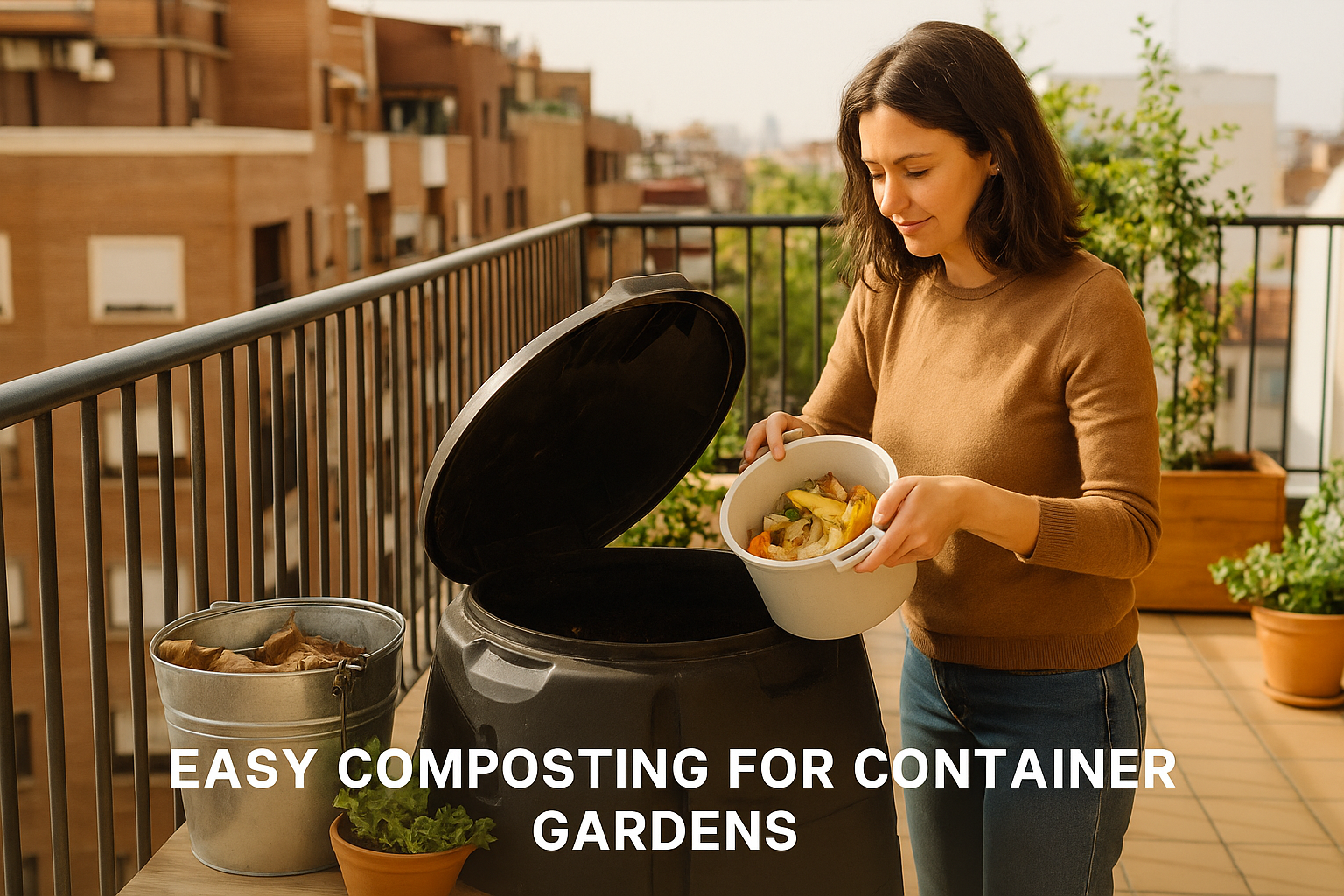
Turn food scraps into garden gold—even on the smallest balcony. This beginner-friendly guide walks you through everything you need to compost in containers successfully.
Table of Contents
- Why Compost in Containers?
- What You Need to Start
- 5 Steps to Compost Success
- Troubleshooting Common Problems
- Benefits of Composting
- Download the Free Cheat Sheet
- Final Tips and Call to Action
Why Compost in Containers?
If you’re limited on space but still want to garden organically, container composting is your best friend. It:
- Recycles kitchen waste and fallen leaves
- Creates free, nutrient-rich soil conditioner
- Reduces landfill contribution and greenhouse gases
- Works great on balconies, patios, even fire escapes
What You Need to Start
| Item | Description |
| A compost container | Bucket, bin, or plastic box with lid and drainage holes |
| Browns | Dry leaves, shredded paper, cardboard |
| Greens | Veggie peels, coffee grounds, green garden trimmings |
| Mixing tool | Stick, trowel, or gloved hands to stir |
| Moisture control | Spray bottle or cover to maintain proper damp conditions |
Tip: A 10–15 liter container is ideal for most balconies.
5 Steps to Compost Success
Step 1: Create a base layer
Start with shredded newspaper or cardboard to help absorb moisture and encourage airflow.
Step 2: Alternate greens and browns
Layer roughly 1 part greens to 2–3 parts browns. Avoid compacting the layers too tightly.
Step 3: Stir or turn weekly
Turn the compost every 3–7 days to introduce oxygen and speed up decomposition.
Step 4: Maintain moisture
The texture should feel like a wrung-out sponge. Add water or browns as needed.
Step 5: Harvest finished compost
In 4–8 weeks, your compost should be dark, crumbly, and earthy-smelling—ready to use.
Troubleshooting Common Problems
| Problem | Cause | Solution |
| Rotten smell | Too wet, poor airflow | Add more browns and mix more often |
| Dry, slow breakdown | Not enough greens or water | Add more greens and spray water |
| Fruit flies | Exposed food scraps | Cover food waste with dry browns |
| White mold | Natural fungi | Harmless—just mix it into the pile |
Benefits of Composting
Healthier plants – improves soil texture and introduces beneficial microbes
Budget-friendly – reduces need for commercial fertilizers
Eco-conscious – minimizes landfill waste and carbon emissions
Mentally calming – composting can be meditative and fulfilling
"Every banana peel saved is a small act of climate healing."
Download the Free Cheat Sheet
Want a printable reference for your composting journey?
Get the Container Composting Cheat Sheet (PDF) at greenmuse.io.
It includes:
- A categorized list of compostable materials
- Items you should never compost
- Moisture tips and compost layering guidance
Final Tips and Call to Action
Start small, observe weekly changes, and adjust as needed. Composting is a learning process.
Ask questions or share your experience in the Greenmuse community.
Share this guide with friends and help others compost sustainably.
Ready to compost like a pro—even in a small space? You've got this.
Pin this Guide | Share on Facebook | Subscribe for More Garden Wisdom
Visit greenmuse.io for more sustainable gardening inspiration.
Clara Moss is the gardener behind Greenmuse. Over the past 10+ years, she has grown herbs on windowsills, tested cactus and succulent soil mixes, rescued struggling houseplants, and learned many lessons through trial and error. Greenmuse is where she shares honest, practical plant care advice for real homes — based on hands-on experience, not perfect greenhouse conditions. When she’s not writing, Clara is usually propagating succulents or trying to keep a calathea happy.