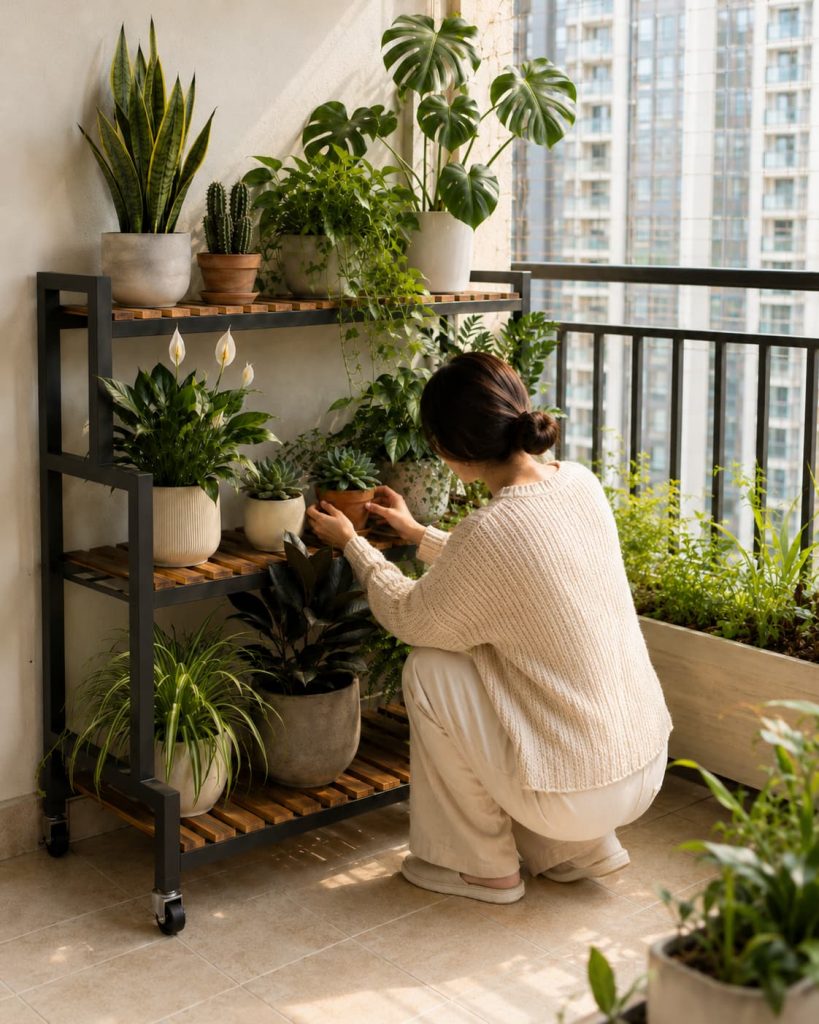
12 Best Low-Light Indoor Plants for Winter (Plus 5 That Need More Light)
Winter can turn a perfectly workable summer plant corner into a much dimmer space. The good news is that some houseplants adapt to lower indoor light far better than others—as long as “low light” still means some usable daylight or adequate artificial light.
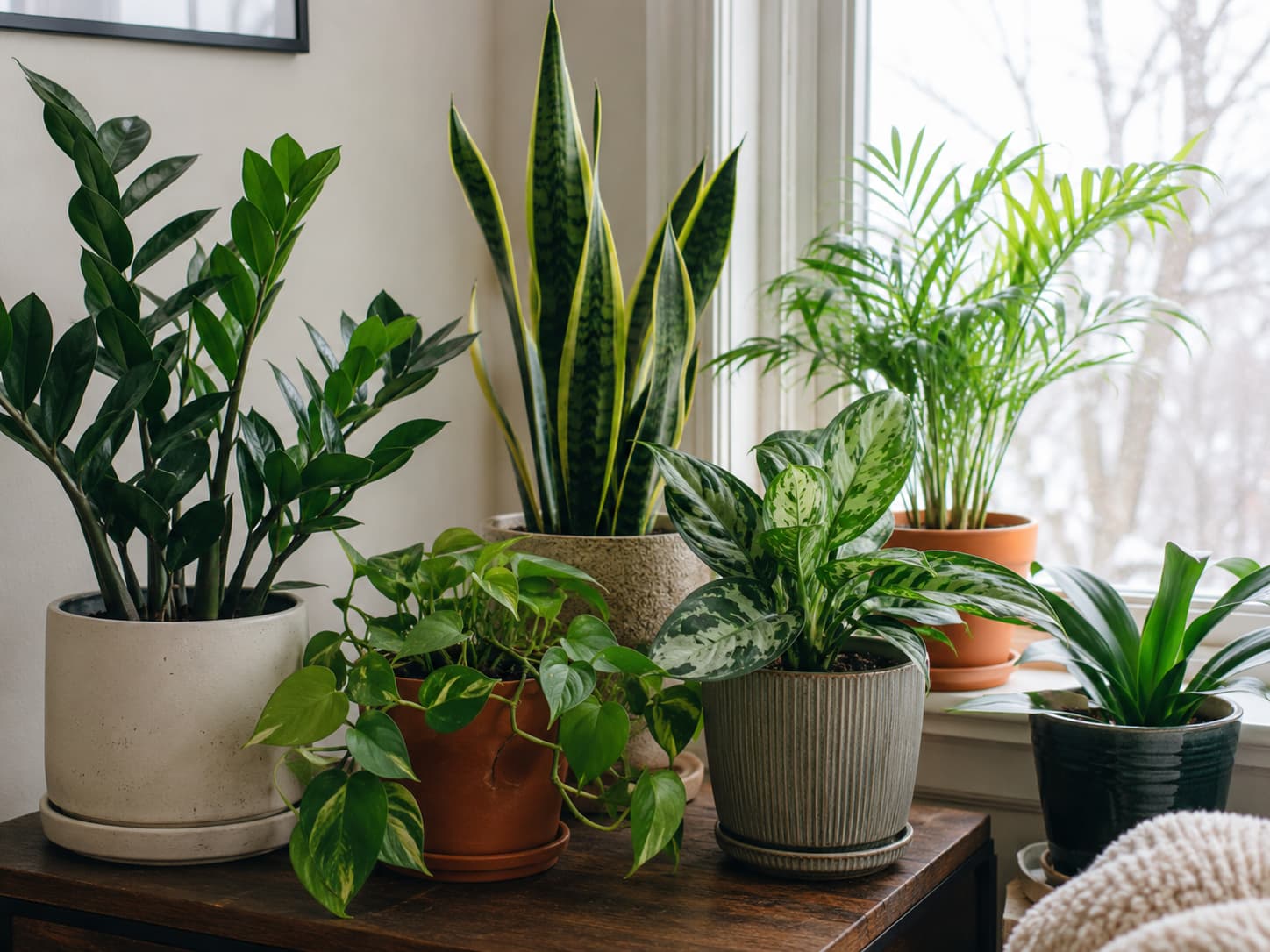
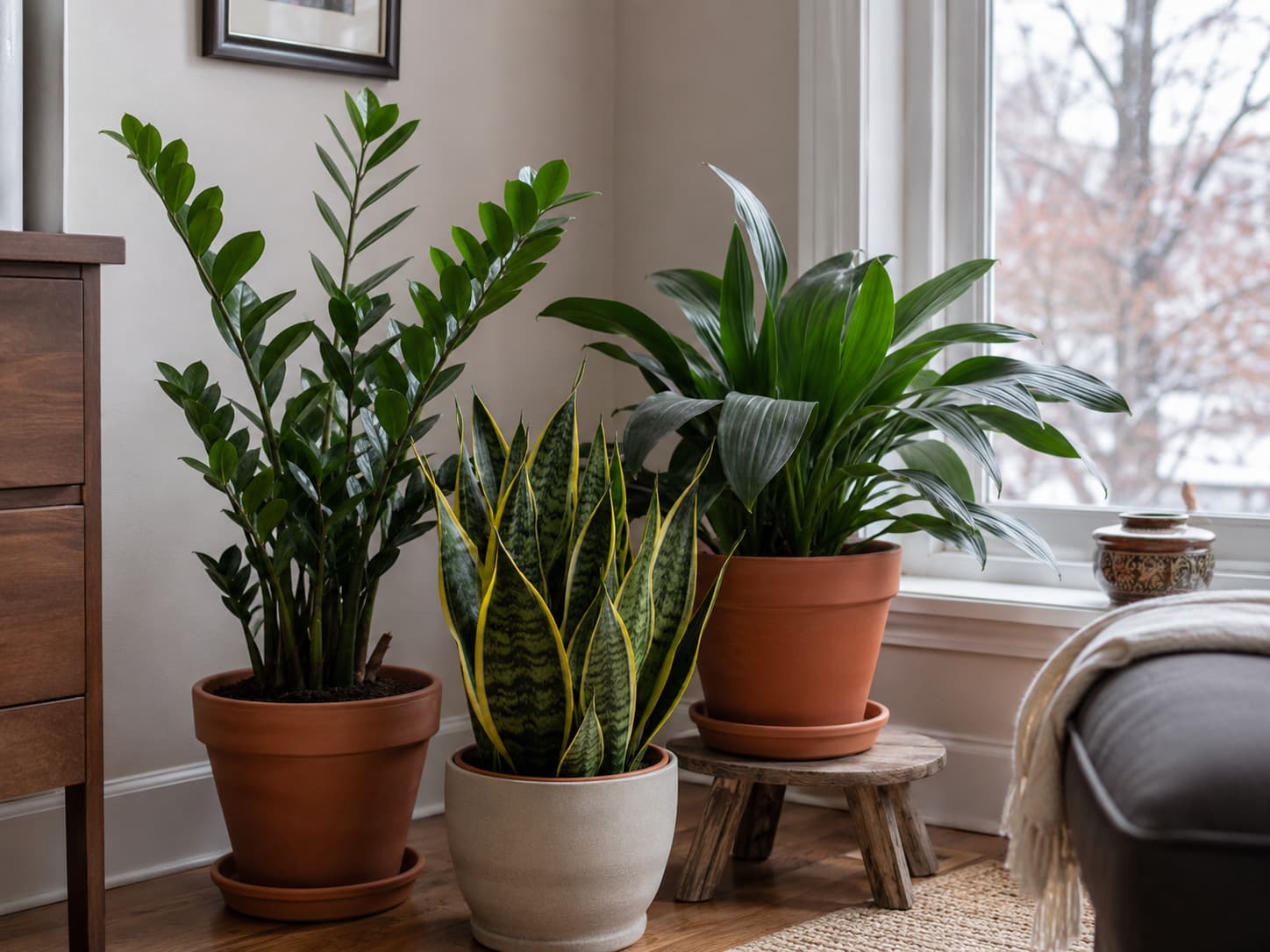
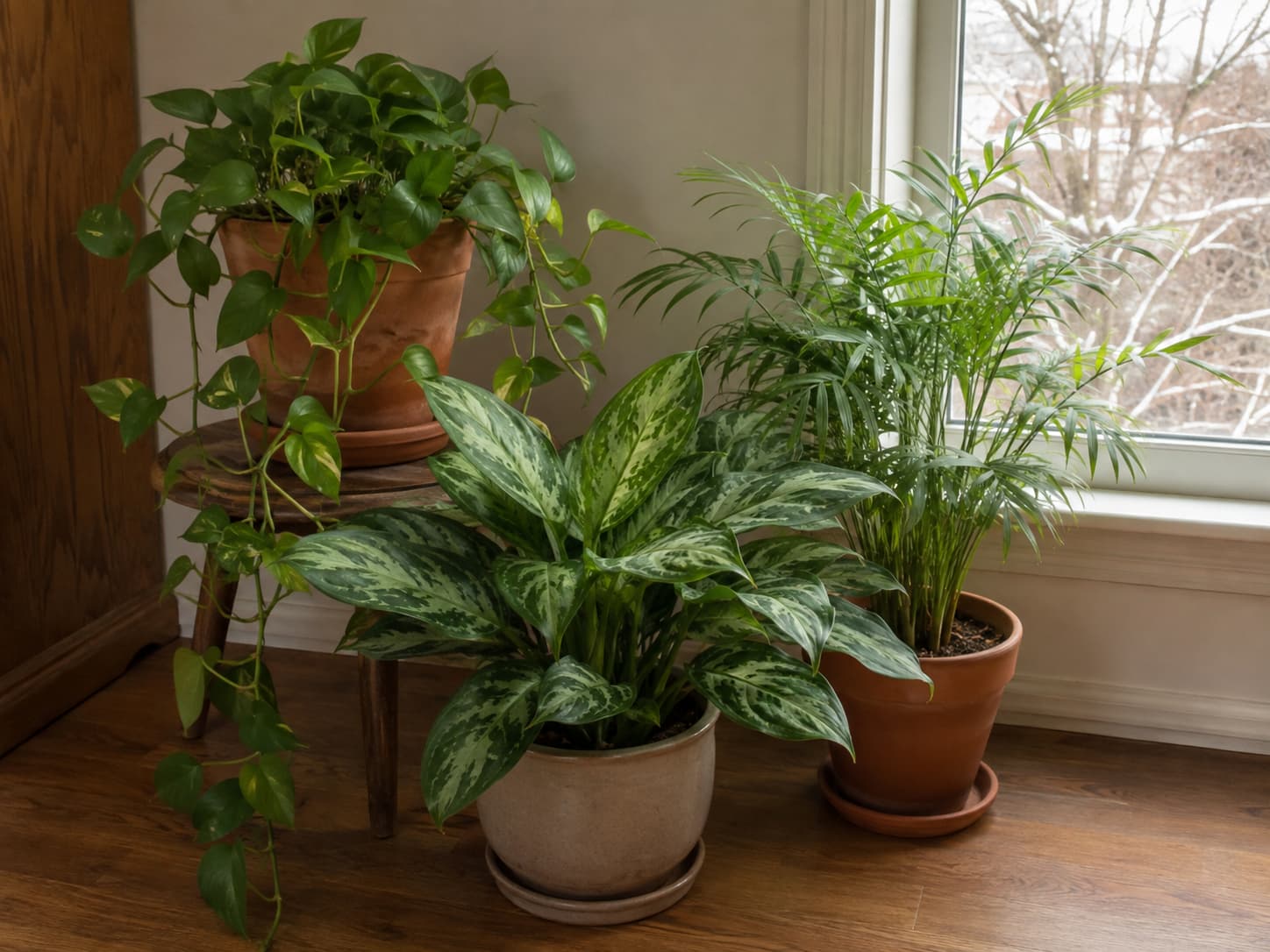
I learned that distinction the expensive way. In my north-facing guest room, several plants marketed as “adaptable” slowly stretched, lost leaves, or stalled through winter. Others—especially ZZ plant, snake plant, cast iron plant, pothos, and Chinese evergreen—held up far better. This guide separates genuinely tolerant choices from plants that simply cope with dim conditions for a short time.
What “Low Light” Actually Means in Winter
Low-light houseplants are often described as if they can live anywhere, but light is still the energy source that powers photosynthesis. University of Maryland Extension notes that insufficient light can lead to weak, stretched growth and fewer flowers, while Penn State emphasizes that many shade-tolerant houseplants adapt to lower light rather than truly preferring darkness.
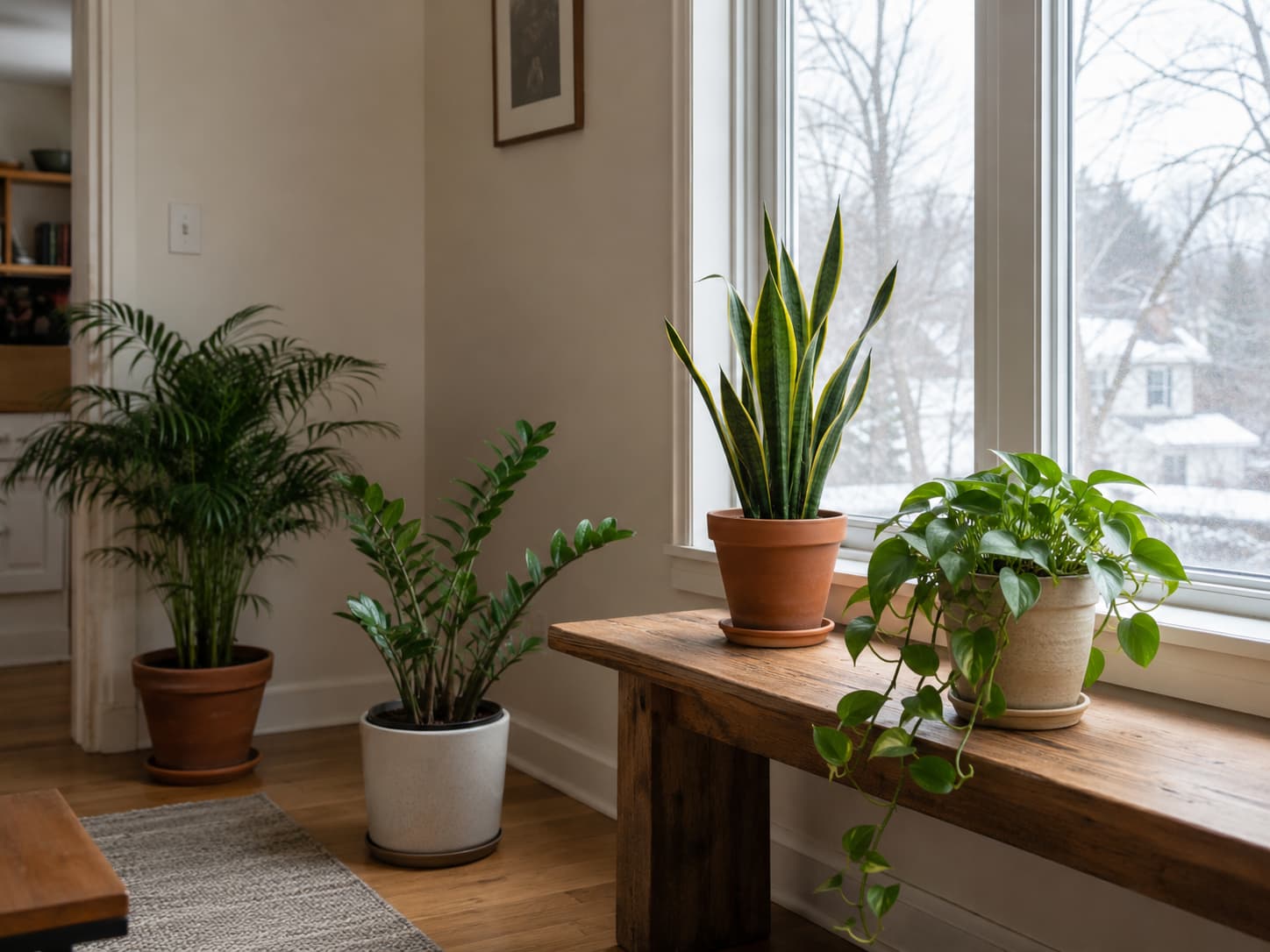
For Greenmuse, a practical indoor definition is simple: low light is a place that receives soft, indirect daylight for part of the day but little or no direct sun. A north-facing window often qualifies. A spot several feet into the room may also qualify if it still receives visible daytime light. A windowless corner with no meaningful daylight does not—it needs artificial light.
| Winter location | What it usually means | Best approach |
|---|---|---|
| Unobstructed north-facing window | Low to moderate indirect light | Good for most plants in this guide |
| A few feet from a bright window | Light falls off quickly with distance | Use the most tolerant plants and watch for stretching |
| Windowless office with overhead lighting | Depends entirely on artificial light intensity and duration | Add a dedicated LED if growth weakens |
| Dark corner with no useful daylight | Too dim for healthy long-term growth | Move the plant or add supplemental light |
The 12 Best Low-Light Indoor Plants for Winter
This list is ranked by how forgiving each plant tends to be when winter light drops. The first six are the strongest choices for dimmer rooms; the final six are better treated as low-to-medium-light plants rather than true dark-corner plants.
| # | Plant | Best winter placement | Watering cue | Pet safety |
|---|---|---|---|---|
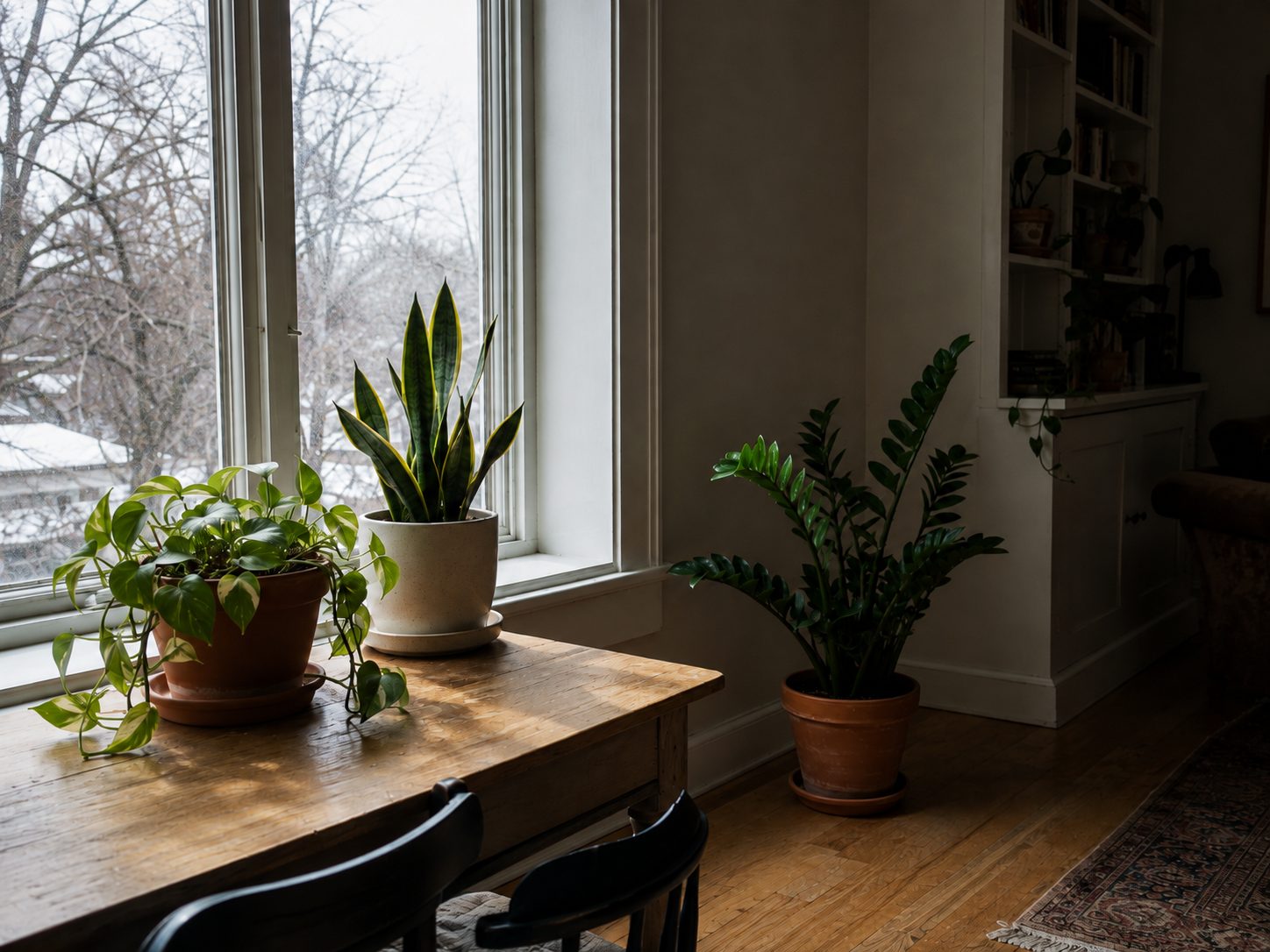
| 1 | ZZ plant Zamioculcas zamiifolia | Low to medium indirect light | Let mix dry very thoroughly before watering | ASPCA: toxic |
| 2 | Snake plant Dracaena trifasciata | Low to bright indirect light | Let mix dry very thoroughly | ASPCA: toxic |
| 3 | Cast iron plant Aspidistra elatior | Low to medium indirect light | Water after upper mix dries | ASPCA: non-toxic |
| 4 | Pothos Epipremnum aureum | Low to bright indirect light | Water when upper 1–2 inches dry | ASPCA: toxic |
| 5 | Chinese evergreen Aglaonema | Low to medium indirect light | Let upper mix partly dry | ASPCA: toxic |
| 6 | Heartleaf philodendron Philodendron hederaceum | Low to medium indirect light | Water when upper 1–2 inches dry | ASPCA: toxic |
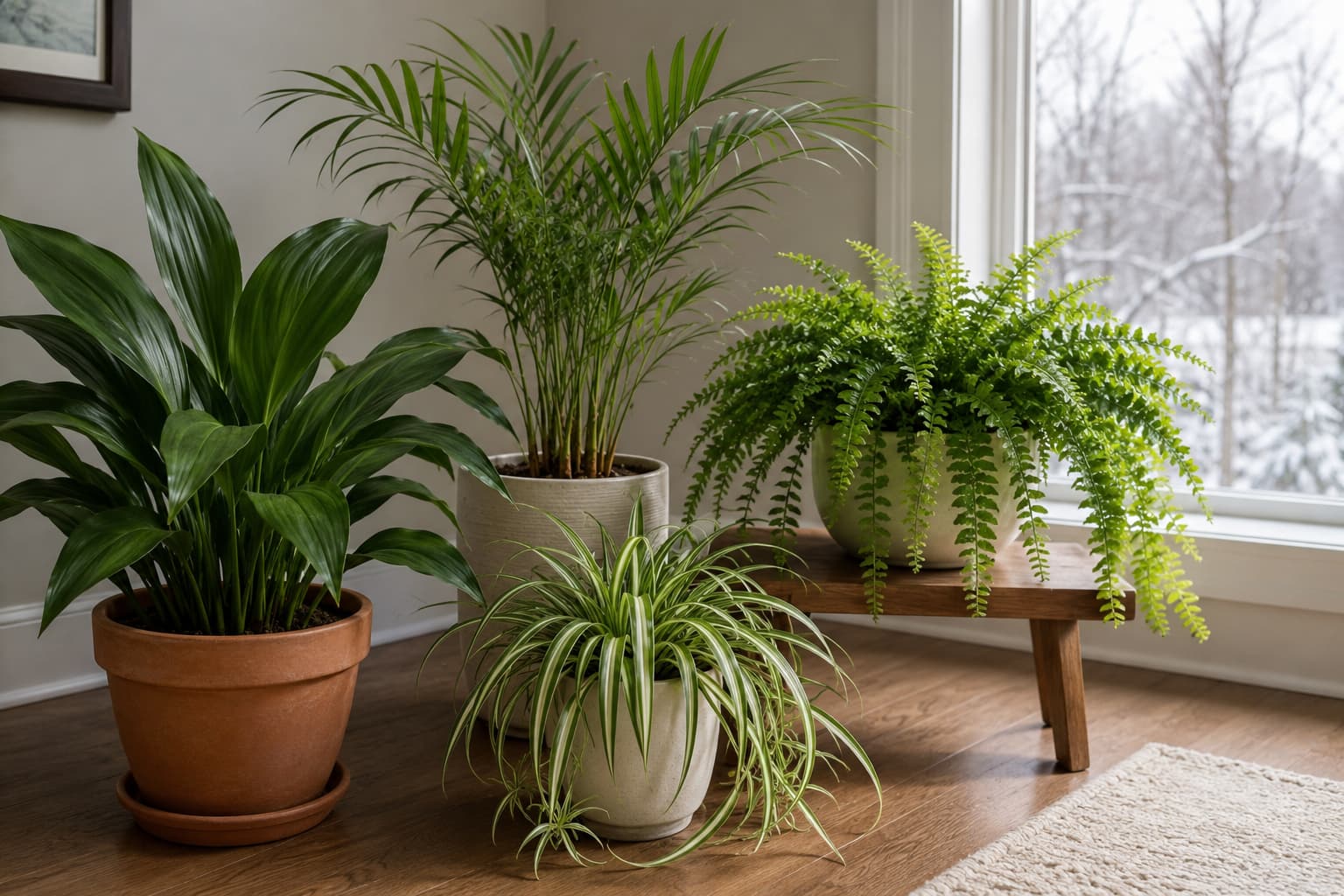
| 7 | Parlor palm Chamaedorea elegans | Low to medium indirect light | Let surface dry slightly | ASPCA: non-toxic |
| 8 | Dracaena Dracaena spp. | Low to medium indirect light | Let upper mix dry before watering | ASPCA: toxic |
| 9 | Peace lily Spathiphyllum | Low to medium indirect light; more light for flowers | Water when surface begins to dry | ASPCA: toxic |
| 10 | Dieffenbachia Dieffenbachia | Low to medium indirect light | Keep lightly moist, not soggy | ASPCA: toxic |
| 11 | Spider plant Chlorophytum comosum | Medium indirect; tolerates some lower light | Water after surface dries | ASPCA: non-toxic |
| 12 | Boston fern Nephrolepis exaltata | Low-to-medium indirect with good humidity | Keep evenly moist; do not let dry hard | ASPCA: non-toxic |
Six Most Reliable Picks for Dim Winter Rooms
1. ZZ Plant — Best for Forgetful Waterers
ZZ plant is one of the strongest choices for a room that stays dim through winter. Its thick rhizomes and fleshy leaf stalks store water, so the bigger winter risk is usually watering too often, not letting it dry too much. In low light, growth may pause almost completely. That is not automatically a problem.
Best placement: near a north-facing window or in a room with steady indirect daylight. If the plant begins producing weak, stretched growth, move it closer to the light rather than watering or fertilizing more.
2. Snake Plant — Tolerant, but Not a Cave Plant
Snake plant has a deserved reputation for adapting to low indoor light. Penn State specifically notes its use in north-facing windows. It can also handle brighter locations, which makes it easy to reposition as seasonal light changes.
Winter rule: let the potting mix dry very thoroughly between waterings. Cool soil plus low light plus frequent watering is a common path to root and crown rot.
3. Cast Iron Plant — Best Pet-Safer Choice for Low Light
Cast iron plant earns its name. It grows slowly, tolerates dim indirect light, and is less demanding than many tropical foliage plants. The ASPCA lists Aspidistra elatior as non-toxic to cats and dogs, making it especially useful in homes where floor-level plants are accessible to pets.
4. Pothos — Best Trailing Option
Pothos tolerates lower light well, but it still changes in response to dim conditions. Growth slows, internodes may lengthen, and variegated cultivars often produce greener leaves because green tissue captures more light. That is an adaptation signal, not necessarily a disease.
If leaves yellow, diagnose moisture before blaming winter light. Our pothos yellow leaves guide walks through the most common causes, while the golden pothos care guide covers year-round placement and watering.
5. Chinese Evergreen — Strong Foliage for Soft Light
Aglaonema is a classic low-light foliage plant. Darker-green varieties are generally better bets for dimmer rooms than heavily variegated cultivars. Keep it away from cold glass and drafts, and avoid leaving the root zone wet for long periods during slow winter growth.
6. Heartleaf Philodendron — Forgiving, but Watch Stretching
Heartleaf philodendron can remain attractive in low indirect light, especially if it has enough daylight to maintain compact spacing between leaves. Long bare sections between leaves are a sign to move it closer to the window or add supplemental light. See our philodendron indoor care guide for a fuller care routine.
Four Pet-Safer Options From This List
If pets are part of the household, cast iron plant, parlor palm, spider plant, and Boston fern are useful places to start. The ASPCA lists all four as non-toxic to cats and dogs. They are not identical in care, though: Boston fern wants more consistent moisture and humidity, while cast iron plant tolerates drying much better.
| Plant | Light tolerance | Moisture preference | Best fit |
|---|---|---|---|
| Cast iron plant | Low to medium | Allow upper mix to dry | Dim rooms, low-maintenance homes |
| Parlor palm | Low to medium | Lightly moist, good drainage | Tropical look without strong light |
| Spider plant | Medium; tolerates lower | Moderate moisture | Brighter end of low light |
| Boston fern | Low-to-medium indirect | Even moisture + humidity | Bathrooms or humid rooms with daylight |
5 Popular Houseplants That Usually Need More Light
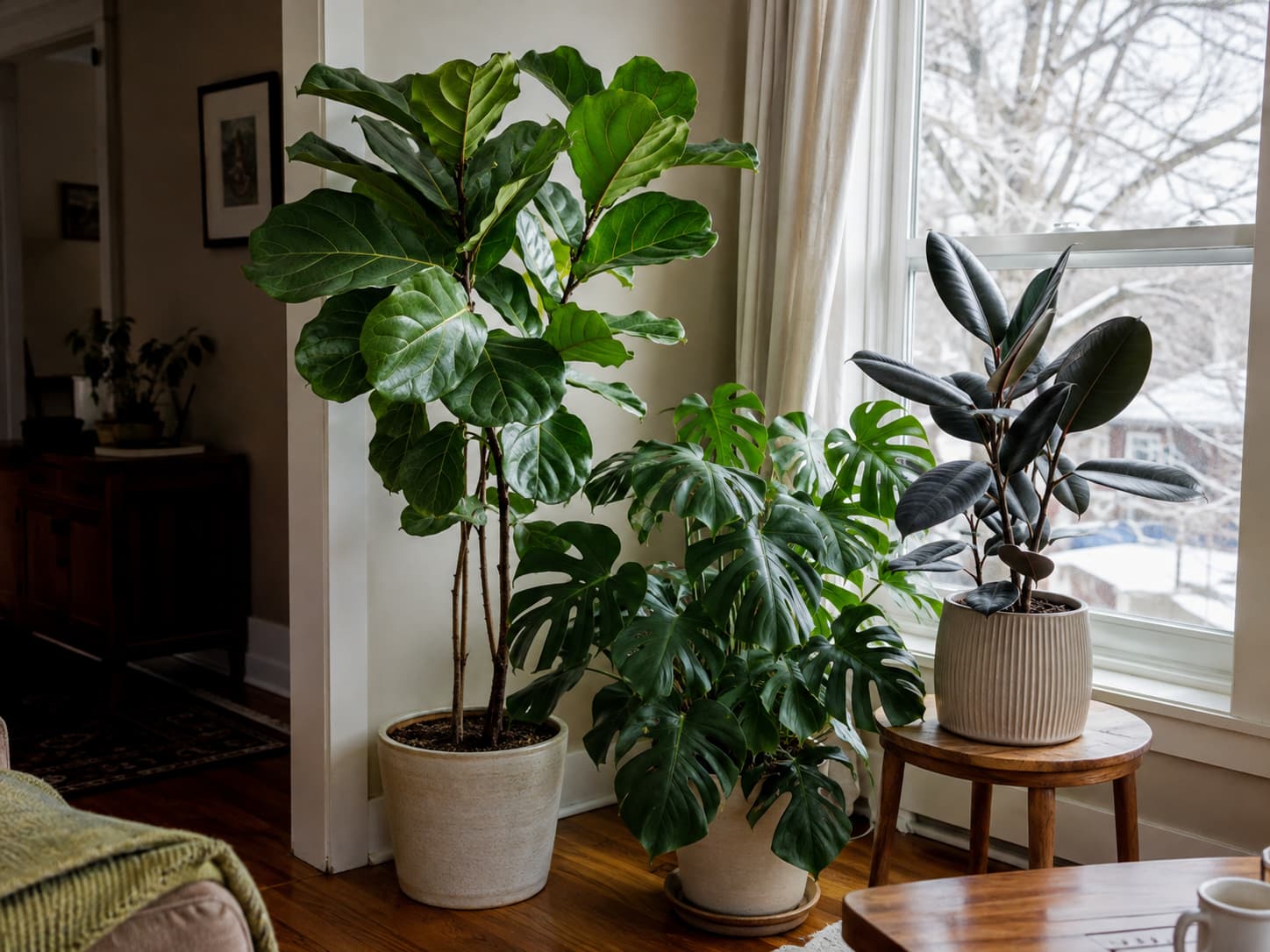
These plants are often described as “adaptable,” but that does not make them ideal for a dim winter corner. They may survive temporary lower light, yet long-term form, color, and growth are usually better closer to a brighter window.
| Plant | What happens when light stays too low | Better winter placement |
|---|---|---|
| Fiddle-leaf fig | Leaf drop, weak growth, long recovery after stress | Bright indirect light close to a window |
| Monstera deliciosa | Smaller leaves, longer spacing, fewer mature fenestrations | Medium to bright indirect light |
| Rubber plant | Slower growth and lower-leaf loss in prolonged dim conditions | Bright indirect light |
| Croton | Color fades and growth weakens | Very bright light, including some gentle direct sun |
| Calathea | Can tolerate shade, but very dim light compounds humidity and watering stress | Medium filtered light with stable humidity |
If your monstera is already yellowing after a move to a darker winter position, use our monstera yellow leaves guide to separate light stress from watering or root problems.
How to Check the Light You Actually Have
1. Use the Winter Shadow Test
Do the test in the darkest part of the year, around the middle of the day. Hold your hand between the window and the plant location. A soft but visible shadow suggests usable indirect light. If there is almost no shadow and the room feels dim even to your eyes, the spot may be too dark for healthy long-term growth.
2. Pay Attention to Distance From the Window
Light intensity drops quickly as you move into a room. A plant on a north-facing sill and the same plant eight feet away are not receiving the same conditions. Before buying a “low-light” plant for a deep corner, ask whether moving the plant closer to the window would solve the problem more simply.
3. Use Phone Light-Meter Apps as a Comparison Tool
Phone sensors are not calibrated horticultural instruments, but they can be useful for comparing one location with another. Measure the same way at the same time of day. If one shelf consistently reads far lower than your successful plant locations, that is useful information even if the absolute lux number is imperfect.
Winter Watering Rules for Low-Light Plants
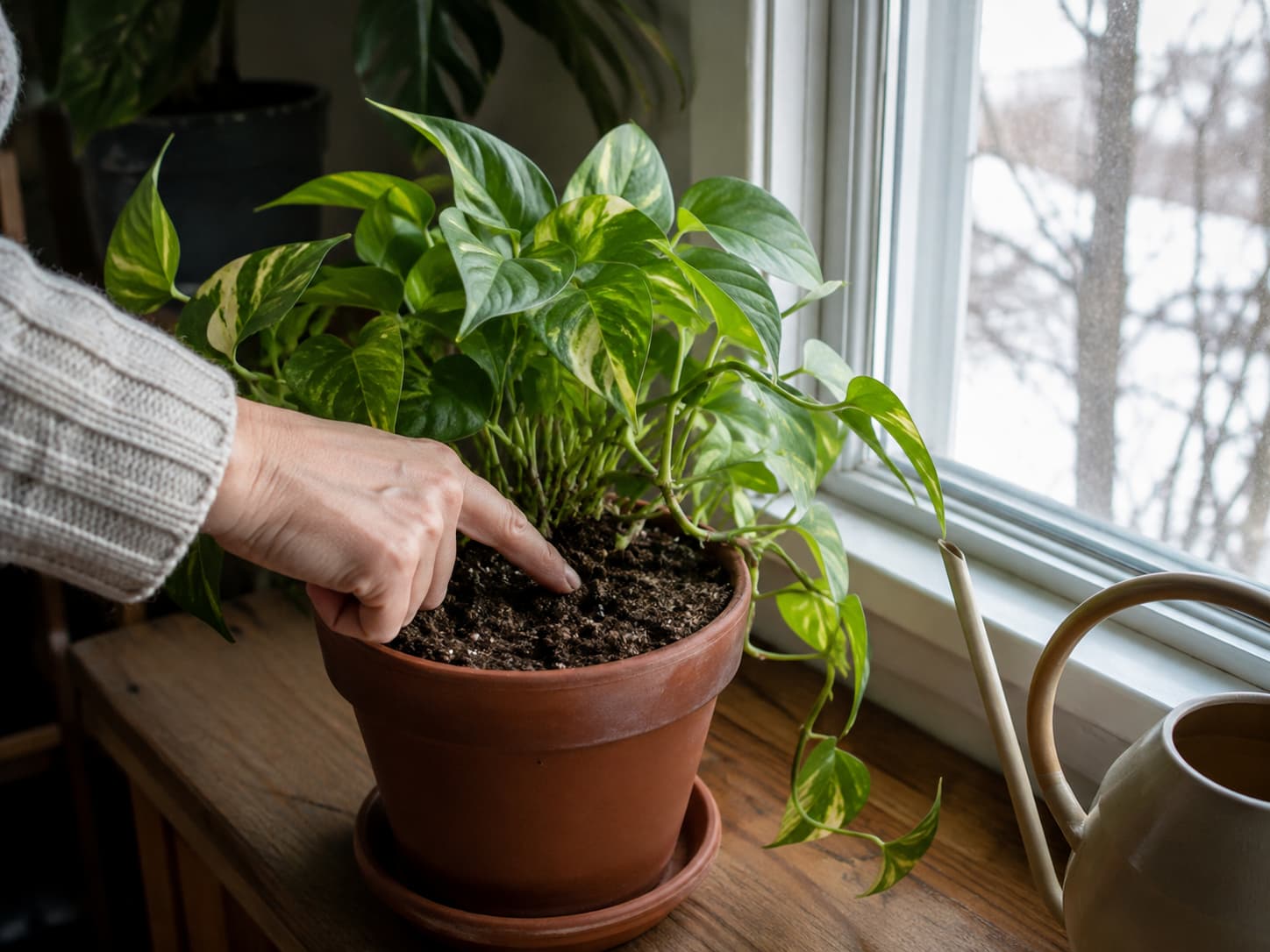
Lower light usually means slower water use. University of Maryland Extension identifies overwatering as a major winter houseplant problem, which is why Greenmuse recommends watering by soil condition, not by a fixed calendar.
- Check before you water. Feel the mix at the depth appropriate for the plant, or learn how light the pot feels when it is ready for water.
- Water thoroughly when it is time. Let excess water drain, then empty the saucer.
- Do not use one schedule for every species. ZZ and snake plants should dry much more than peace lilies or ferns.
- Reduce feeding when growth stalls. If a plant is barely growing in winter, heavy fertilizing adds salts without solving the light problem.
- Watch the room, not the calendar. Heat vents, indoor humidity, pot size, and soil mix all change how quickly a container dries.
Regional Winter Light: Adjust the Room, Not the Plant Label
| Region | Common winter challenge | Practical adjustment |
|---|---|---|
| Pacific Northwest | Frequent cloud cover and short days | Move low-light plants closer to windows or supplement earlier |
| New England / Upper Midwest | Short days and low sun angle | Use the brightest winter window available; keep foliage off cold glass |
| South | Longer days but variable cloud cover | Many low-light plants can stay farther from windows than in northern regions |
| Southwest | Strong sun plus very dry indoor air | Filter intense afternoon sun; pay attention to humidity-sensitive species |
When a Grow Light Is the Better Answer
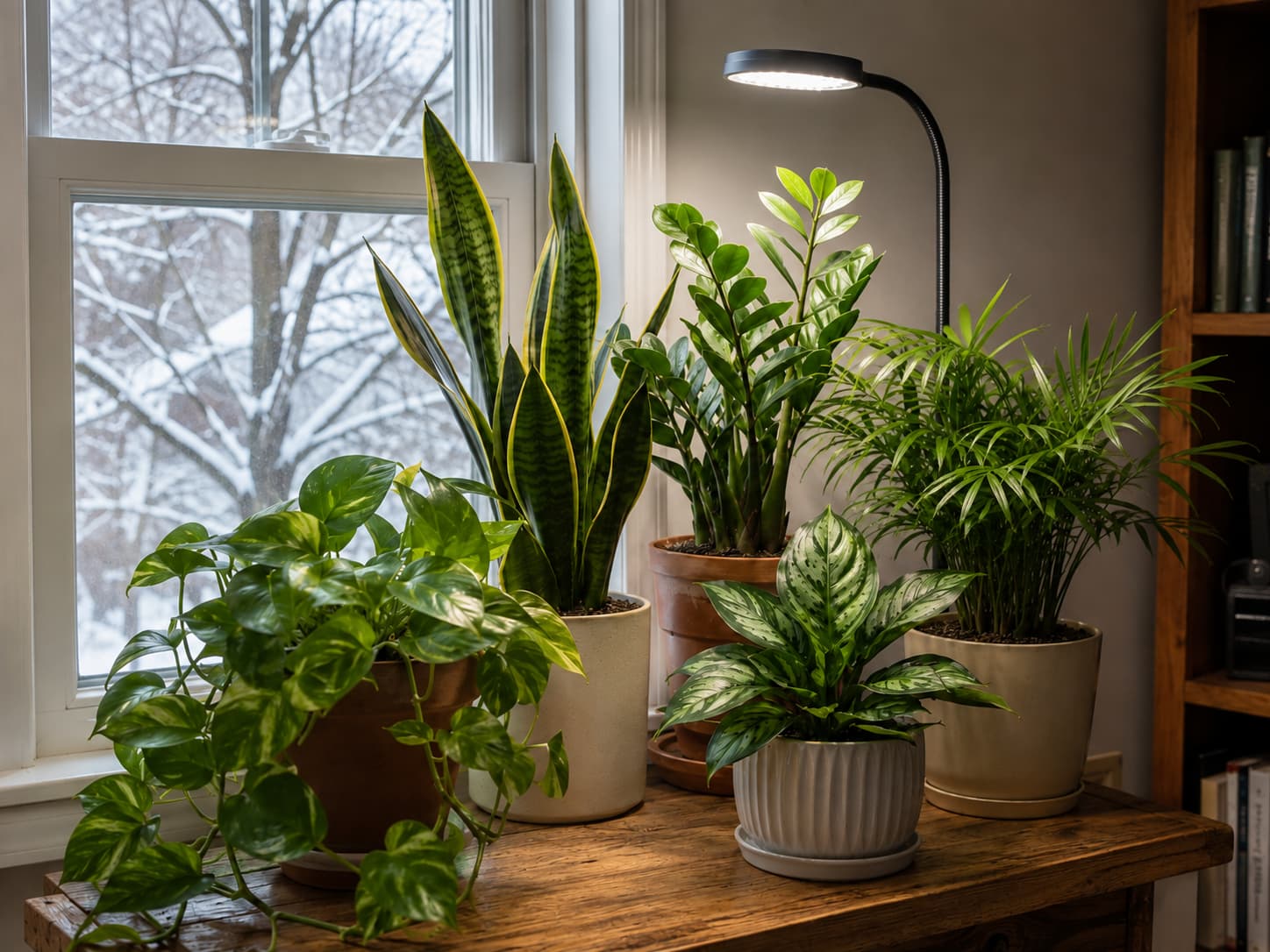
If a plant is stretching toward the window, producing noticeably smaller leaves, losing variegation quickly, or sitting in a location with almost no useful daylight, supplemental light is usually more effective than searching for an even tougher plant.
University of Minnesota Extension recommends supplemental lighting when winter light is insufficient and notes that a full-spectrum LED can work. A timer makes consistency easier. Aim for a normal day/night rhythm rather than leaving lights on around the clock; many houseplants do well with roughly 12–14 total hours of light when supplemental lighting is needed.
For fixture ideas and placement, see our grow light guide.
My Simple Winter Shortlist
If you want to avoid overthinking the decision, use this shortlist:
- Darkest practical room with some daylight: ZZ plant or snake plant.
- Pet-accessible low-light room: cast iron plant.
- Trailing plant: pothos or heartleaf philodendron.
- Soft tropical look: parlor palm.
- Humid bathroom with a window: Boston fern.
- Want a colorful foliage plant: choose a darker-green Chinese evergreen rather than a heavily variegated cultivar.
FAQ: Low-Light Indoor Plants in Winter
1. Can any houseplant live permanently in a room with no windows?
Not without adequate artificial light. Plants need light for photosynthesis. Some species can remain visually unchanged for a while in very dim conditions because they grow slowly and store energy, but that is different from healthy long-term growth. A simple LED grow light is the more reliable solution for a windowless room.
2. What is the easiest low-light plant for a beginner?
ZZ plant is one of the easiest because it handles low indirect light and infrequent watering well. Snake plant and cast iron plant are also strong beginner choices. The main caution with ZZ and snake plants is overwatering during slow winter growth.
3. Which low-light plants are safer around cats and dogs?
ASPCA-listed non-toxic options in this guide include cast iron plant, parlor palm, spider plant, and Boston fern. Always confirm the exact species before buying, especially when common names are shared by unrelated plants.
4. Why is my pothos losing variegation in winter?
Variegated leaves contain less chlorophyll in their pale areas, so darker conditions often favor greener growth. Move the plant closer to bright indirect light or add supplemental lighting if maintaining variegation matters to you. This is usually a light response rather than a disease.
5. How often should I water low-light plants in winter?
There is no single safe schedule. Check the potting mix before every watering. Drought-tolerant plants such as ZZ and snake plant should dry much more thoroughly than peace lily or Boston fern. Lower winter light generally slows water use, so many plants need less frequent watering than they did in summer.
6. Can I keep a low-light plant in a bathroom?
Yes, if the bathroom receives usable daylight or has adequate artificial plant lighting. The extra humidity can be helpful for ferns and other humidity-sensitive plants. A completely windowless bathroom still needs supplemental light for long-term plant health.
Sources
- Penn State Extension. Low Light Houseplants. Updated December 13, 2024.
- University of Maryland Extension. Low Light Impacts on Indoor Plants.
- University of Minnesota Extension. Winter Houseplant Tips. 2026.
- ASPCA. Toxic and Non-Toxic Plants Database.
- ASPCA. Cast Iron Plant; Parlor Palm; Spider Plant; Boston Fern.
Publishing Checklist
- Publish date: October 30, 2026
- Primary category: Indoor Gardening
- Secondary category: Seasonal Gardening only if already used consistently on Greenmuse
- Focus keyphrase: best low-light indoor plants for winter
- Synonyms: low-light houseplants for winter; indoor plants for dark rooms; winter low-light houseplants
- SEO title: 12 Best Low-Light Indoor Plants for Winter
- Slug: best-low-light-indoor-plants-winter
- Meta description: Find 12 low-light indoor plants that handle darker winter rooms, plus 5 popular houseplants that need more light and simple winter care tips.
- Excerpt: Winter light can turn a bright summer corner into a dim room. These 12 houseplants handle lower indoor light better than most, with pet-safety notes, watering cues, and five popular plants that are better kept closer to a brighter window.
- Index: index, follow
- Canonical: self-referencing final URL
- Images: 10 direct-SRC placeholders, unique Image 01–10 mapping
- Featured image concept: natural group of 4–5 low-light houseplants near a north-facing winter window, no text, 10–15% crop-safe space