How to Make Organic Neem Spray at Home
Quick Summary
Homemade neem spray can be useful for some garden pest problems, but oil-based sprays can also injure sensitive or stressed foliage when the product, rate, or application conditions are wrong. The pesticide label takes priority over any generic recipe. Cold-pressed neem oil and clarified hydrophobic extract are different neem-derived pesticide ingredients: cold-pressed oil can retain azadirachtin, while clarified hydrophobic extract has most azadirachtin removed but still has registered pesticidal uses. This guide explains the difference, safer mixing, spot testing, application timing, storage, and how to keep label directions as the final authority.
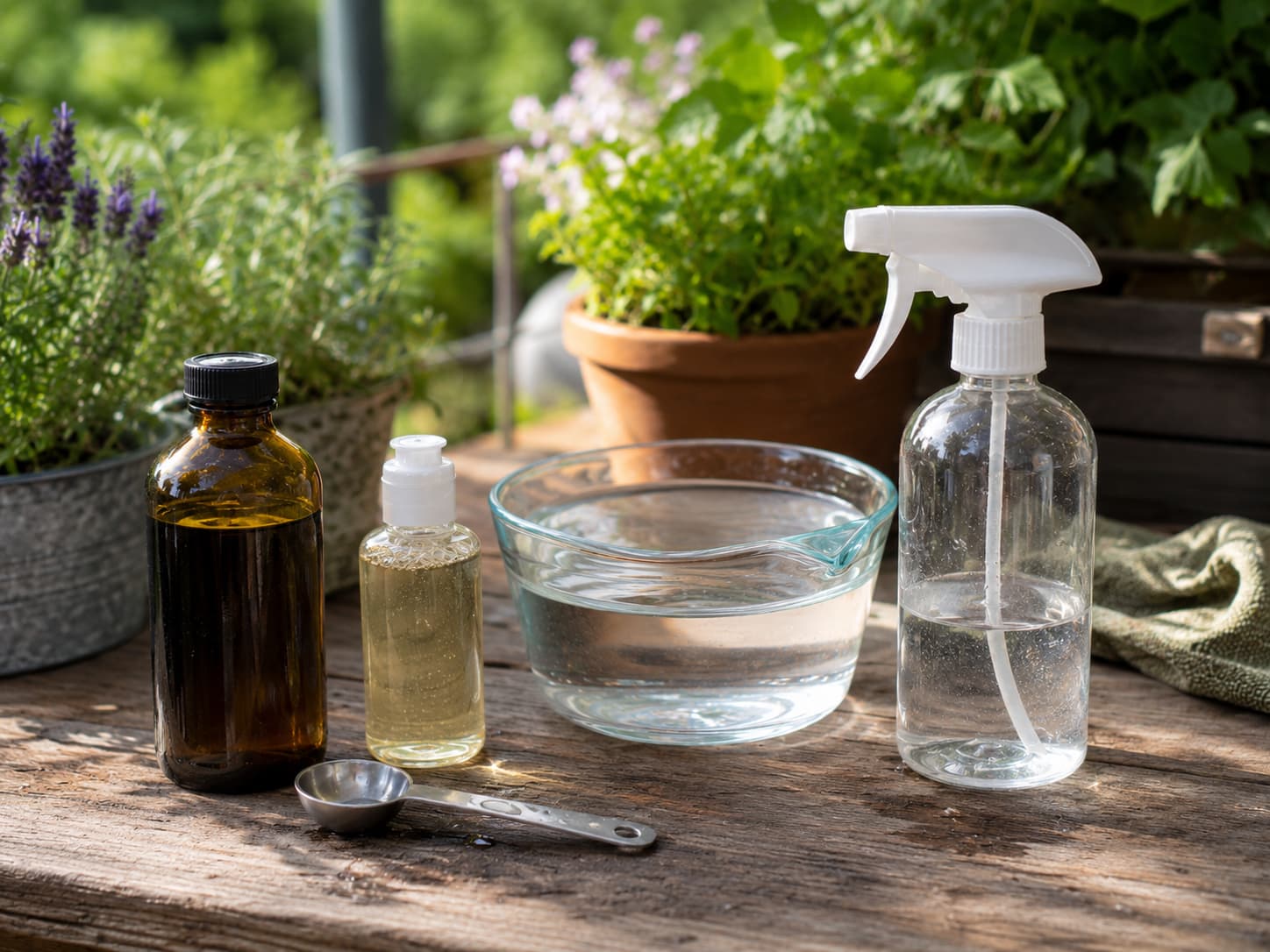
What Is Neem Oil? (Cold-Pressed vs. Clarified — The Difference Matters)
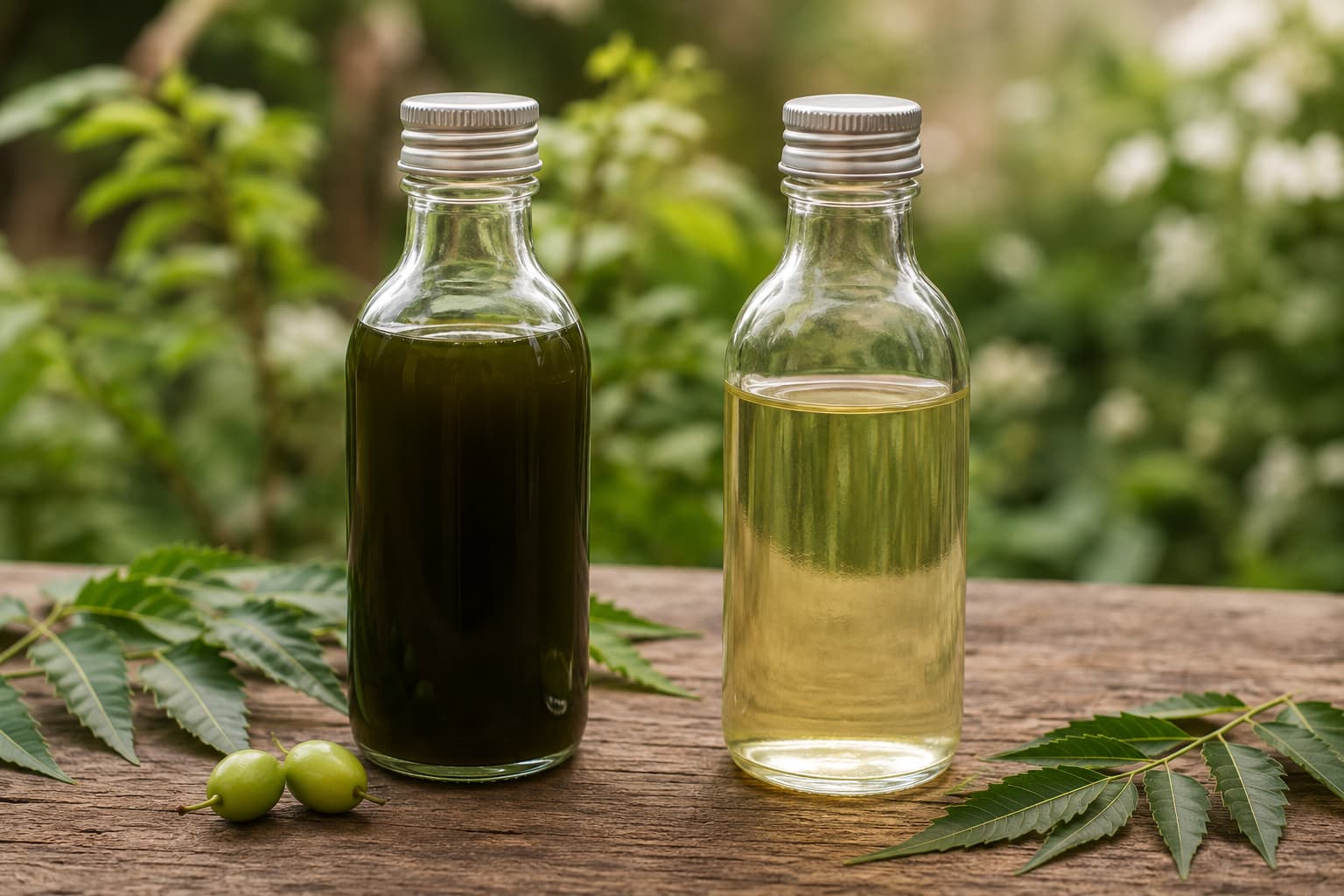
Neem oil is pressed from the seeds of the neem tree (Azadirachta indica), native to the Indian subcontinent and used for over 2,000 years in agriculture, medicine, and cosmetics. But not all neem oil is the same, and buying the wrong type is the #1 reason homemade neem spray doesn't work.
| Cold-Pressed Neem Oil | Clarified Hydrophobic Extract | |
|---|---|---|
| Azadirachtin Content | Varies by product and extraction method; check the active-ingredient statement or manufacturer information | Most azadirachtin is removed during processing |
| Color / Smell | Dark yellow-brown; strong garlic-sulfur odor | Clear to pale yellow; mild or no odor |
| What It Does | Depending on the product, azadirachtin can deter feeding and interfere with insect growth, molting, mating, and egg laying; other oil components may also provide contact effects | Most azadirachtin is removed, but clarified hydrophobic extract is itself a registered pesticidal active ingredient used in labeled products for certain insects, mites, and plant diseases |
| Best For | Use only where the product label lists the plant and target pest or disease | Use only where the product label lists the plant and target pest or disease |
| Label Words to Look For | "Cold-pressed," "crude," "100% pure neem oil," "unrefined" | "Clarified," "hydrophobic extract," "neem oil extract" |
Buy the Right Oil or It Won't Work
Read the active-ingredient panel instead of judging a product by the words “neem oil” on the front. Cold-pressed neem oil may retain azadirachtin, while clarified hydrophobic extract has most azadirachtin removed. Both can appear in pesticide products, but they do not work in exactly the same way. Choose a product whose label lists your plant and target pest or disease, and follow that label for rate, timing, reapplication, harvest restrictions, and plant-safety precautions.
How Azadirachtin Actually Works Against Pests
Azadirachtin does not behave like a fast knockdown contact insecticide. It can affect pests through several mechanisms, but that does not make resistance impossible or remove the need for integrated pest management. Depending on the target and formulation, important effects can include:
- Antifeedant: Azadirachtin can reduce feeding in susceptible pests, which may slow plant damage before population numbers visibly decline.
- Insect Growth Regulator (IGR): Azadirachtin mimics natural insect hormones (ecdysones) that control molting and metamorphosis. Nymphs and larvae that ingest it can't molt properly, can't pupate, and can't develop into reproducing adults. The population collapses over one to two generations.
- Oviposition Deterrent: Adult females avoid laying eggs on treated plants. This breaks the reproductive cycle.
Neem-derived pesticide products are labeled for different target pests, so check the specific product rather than assuming one mixture covers every insect or mite. They can fit into an integrated pest-management program, but direct spray can still contact non-target organisms. Avoid spraying pollinators directly and follow label restrictions around flowers and pollinator activity.
Why Neem Doesn't Kill Instantly (and Why That's Good)
Do not judge every neem-derived product by whether pests stop moving immediately. Azadirachtin-based products can act through feeding and development effects, while clarified neem-oil products may rely more on contact coverage. The response time varies with the pest, life stage, formulation, weather, and coverage. Use the label's repeat interval rather than increasing the concentration or reapplying early.
A Conservative Homemade Neem Spray Example (Label First)
Label First — Especially for Registered Pesticides
If you are using a commercial neem pesticide, follow its label instead of this generic household ratio. The example below is only a mixing framework for 100% pure cold-pressed neem oil where such use is permitted and not contradicted by the product's instructions. Local pesticide rules can differ.
What You Need
| Item | How to Choose It | Why It Matters |
|---|---|---|
| Neem product | Use a product whose label or manufacturer directions identify the active ingredient and provide mixing or application instructions for your intended use | Neem products differ in formulation, concentration, target pests, and legal uses |
| Compatible emulsifier, if required | Use only an emulsifier recommended by the neem-oil product or reliable manufacturer guidance | Household dish detergents are not equivalent to registered insecticidal soaps and can injure plants |
| Water | Use the amount and water quality specified by the product directions | Correct dilution helps produce even coverage and reduces the risk of overconcentration |
| Clean garden-use sprayer | Use a dedicated, clearly labeled sprayer | Avoid cross-contamination with food, household cleaners, fertilizers, or incompatible pesticides |
Step-by-Step Mixing Method
- Read the entire label first. Confirm that the plant, target pest or disease, rate, application site, and timing are allowed. If the label conflicts with any advice in this article, the label wins.
- Measure the labeled amount. Do not estimate or increase the rate because an infestation looks severe.
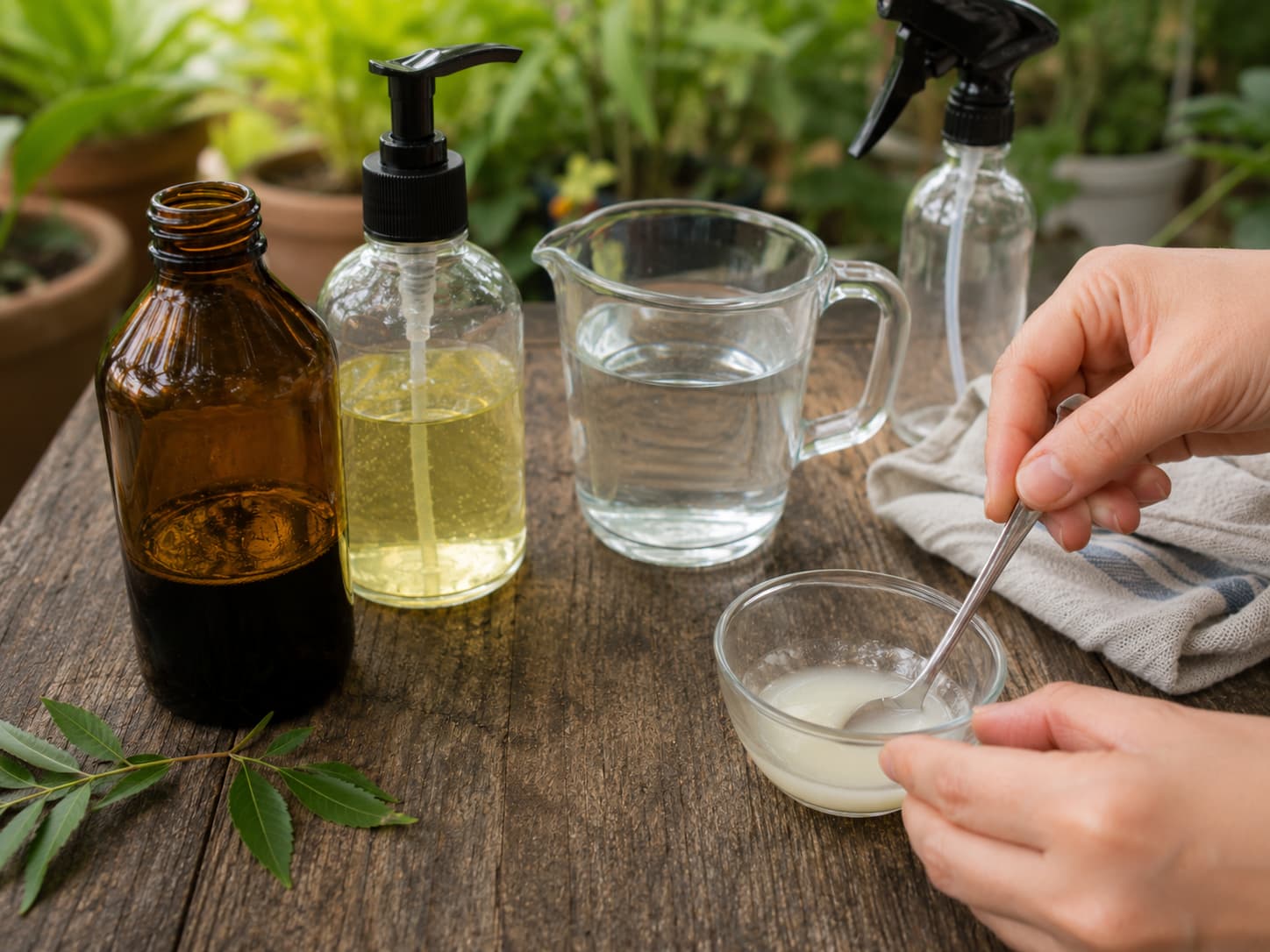
- Emulsify only as directed. If the product requires or recommends a separate emulsifier, use a compatible one in the specified amount. Avoid substituting household dish detergent; extension guidance warns that household cleaning products can injure foliage.
- Add water in the recommended order and mix thoroughly. Keep the mixture uniform during application if the directions call for agitation.
- Mix only what you need unless the label says otherwise. Azadirachtin can degrade in water and light, and homemade emulsions can separate. Follow the product label for storage and disposal of any diluted solution.
Why the Emulsifier Matters
Neem oil is hydrophobic, so an oil-based concentrate needs a stable way to disperse in water. Poor dispersion can create uneven coverage and localized overconcentration. Use the emulsification method supplied by the manufacturer rather than improvising with household detergents.
5 Mistakes That Make Neem Spray Useless or Harmful
These are the mistakes that generate the most frustrated posts on gardening forums — and they're all preventable.
1. Using the Wrong Type of Neem Oil
Clarified hydrophobic neem oil has had most azadirachtin removed, so it should not be treated as equivalent to an azadirachtin-rich cold-pressed product. But it is not useless: EPA recognizes clarified hydrophobic extract of neem oil as a pesticidal active ingredient. Compare the active ingredient and label claims rather than using smell or color as an efficacy test.
2. Skipping or Botching the Emulsifier
Neem oil and water do not mix on their own. Poor dispersion can create uneven coverage and localized overconcentration. Use the emulsification method recommended by the product manufacturer, and do not substitute household dish detergent unless the product directions specifically permit it.
3. Spraying in Direct Sunlight or Midday Heat
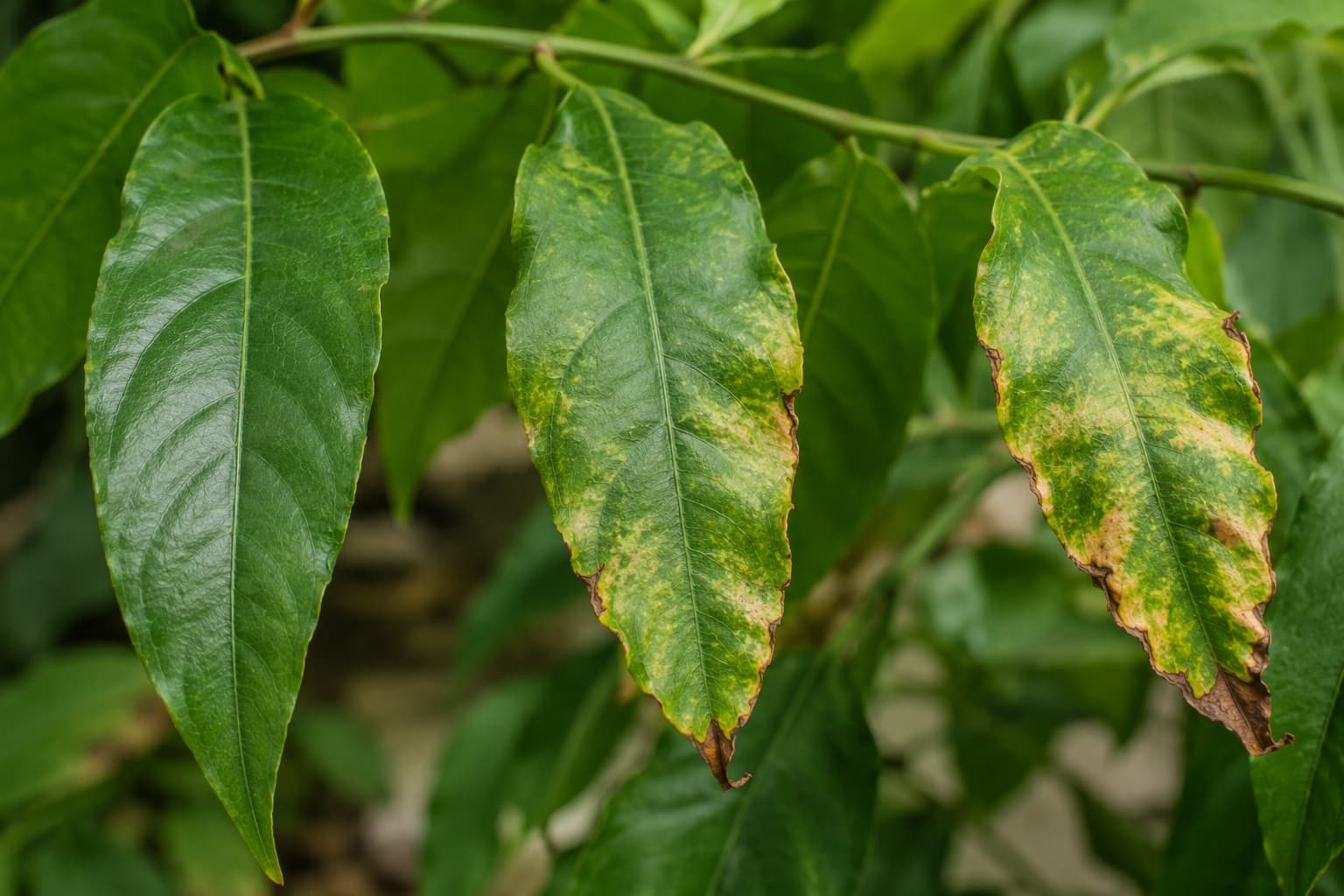
Oil sprays can cause phytotoxicity when plants are sensitive, heat- or drought-stressed, or treated under unsuitable conditions. The problem is not that oil literally magnifies sunlight. Follow the product label for temperature, light, humidity, and plant-stress restrictions. When the label allows flexibility, a cooler low-light period is generally easier on foliage than the hottest part of the day.
4. Using Too High a Concentration
More oil is not automatically more effective, and heavier-than-directed rates can raise the risk of leaf injury. Do not exceed the label rate or shorten the label interval. If you are using the household example above with pure cold-pressed oil, do not increase the concentration simply because an infestation looks severe; switch to a labeled product or another integrated-control method when stronger intervention is needed.
5. Storing Mixed Spray and Using It Days Later
Azadirachtin degrades in water and on plant surfaces, but there is no universal countdown for every mixture. NPIC reports a half-life in water ranging from about 48 minutes to 4 days and about 1–2.5 days on leaves, depending on conditions. For a homemade mix, preparing only what you need for one application avoids guessing about potency and emulsion stability.
Plants and Situations That Need Extra Caution
Oil sensitivity varies by species, cultivar, plant condition, product, and weather. A blanket “safe” or “never spray” list is less reliable than the product label. Before treating a plant for the first time, check the label and spot-test a small area, then watch for injury before treating more broadly.
| Situation | Why Caution Matters | Safer Approach |
|---|---|---|
| Tender seedlings, new transplants, or fresh soft growth | Young or recently disturbed tissue can be more sensitive to oil injury | Wait until the plant is established and unstressed if the label permits; spot-test first |
| Heat-, drought-, or root-stressed plants | Oil injury risk can increase when plants are already under stress | Correct the stress first and follow label temperature and moisture restrictions |
| Flowers and plants being visited by pollinators | Direct spray can contact non-target insects and some oil products can injure flowers | Avoid spraying pollinators directly and follow label restrictions for bloom and bee activity |
| Species or cultivars known to be oil-sensitive | Some plants and cultivars react poorly to horticultural oils | Check the specific label and extension guidance; test a small area before wider use |
| Plants recently treated with sulfur or another incompatible product | Oil/sulfur combinations or close sequencing can cause phytotoxicity | Follow both labels for compatibility and required separation intervals |
If mint is one of the herbs you are treating, our complete mint growing guide covers container growing, watering, pruning, propagation, and how to keep vigorous runners under control.
Tender Growth Rule
Young seedlings, new transplants, and soft fresh growth can be more sensitive to oil sprays. There is no universal “4–6 true leaves” or “2 weeks” rule for every plant and product. Check the label, avoid treating stressed plants, and spot-test before a broader application.
When and How Often to Apply
Best Time of Day
- Start with the label. Follow any temperature, light, humidity, rain, and plant-stress restrictions printed on the product.
- When the label allows flexibility, choose a cooler, lower-light part of the day rather than the hottest period.
- Avoid treating stressed plants and avoid direct application to pollinators or open flowers when the label restricts use during bee activity.
Application Frequency
| Situation | What to Do | Why |
|---|---|---|
| Preventive use | Use only if the label includes preventive use on that plant and target | Not every neem-derived product is labeled for the same purpose |
| Active infestation | Repeat only at the interval printed on the product label | Shortening the interval can increase phytotoxicity without improving control |
| Heavy infestation | Reassess pest identification, coverage, and alternative IPM tools instead of increasing rate or frequency | A stronger schedule is not automatically a safer or more effective schedule |
| After rain or irrigation | Follow the label's rainfastness and reapplication directions | Products differ in formulation and persistence |
How to Apply
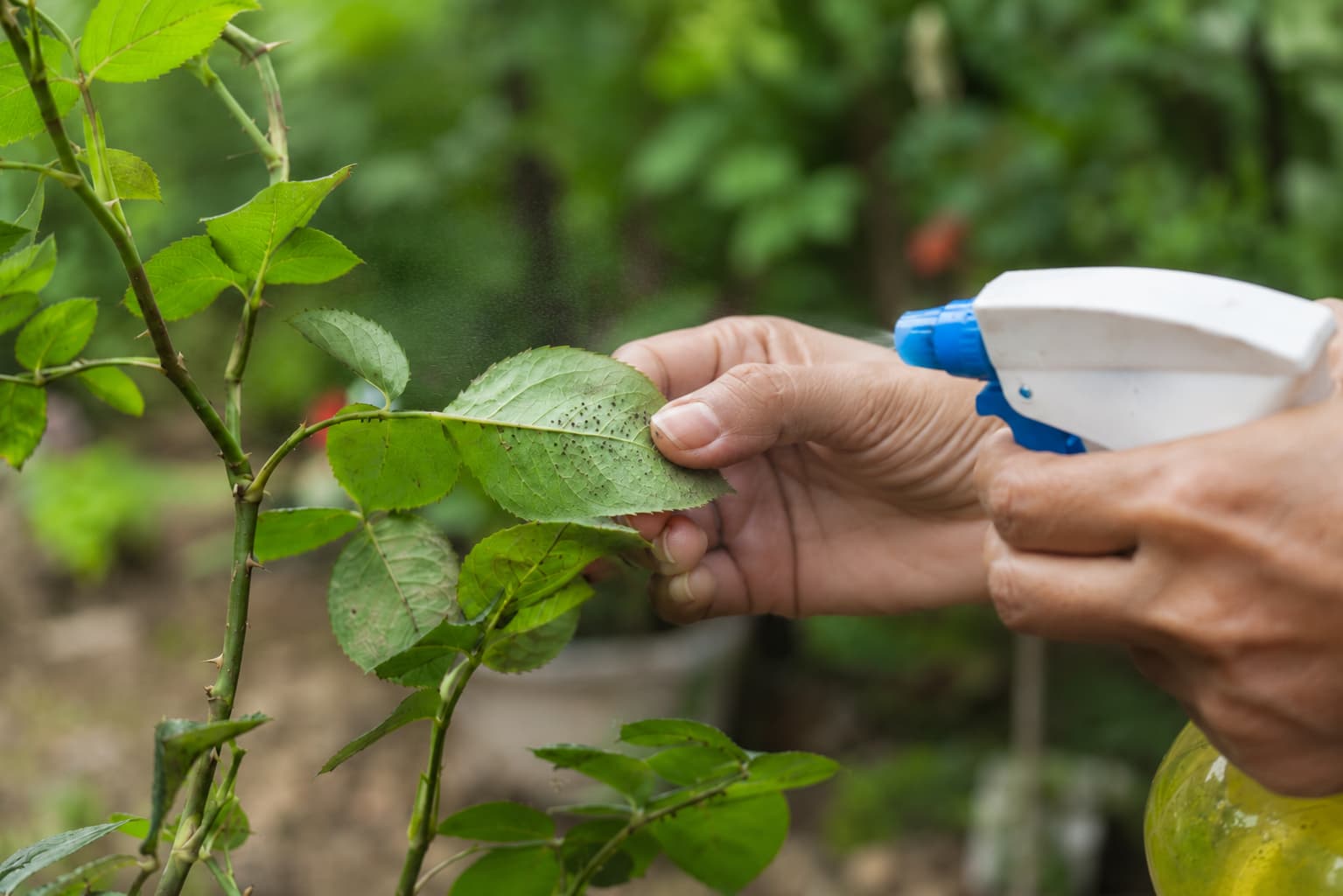
- Cover both sides of every leaf. Most pests — especially spider mites and whiteflies — live on the undersides. Spraying only the tops misses 80% of the target.
- Spray stems and leaf axils where pests hide.
- Apply until the spray just begins to drip — a light mist isn't enough. You need thorough coverage.
- Shake the bottle every 30–60 seconds while spraying to keep the emulsion from separating.
Storage: Why Fresh Mixing Is the Safer Default
Azadirachtin can break down through water, light, and microbial activity, but degradation is highly condition-dependent. NPIC reports a half-life of roughly 48 minutes to 4 days in water and about 1–2.5 days on plant leaves. Those ranges are why a fixed claim such as “most potency is gone after 12 hours” is too precise for every mixture.
For homemade emulsions: mix only what you expect to use in one application so you do not have to guess about emulsion stability or remaining activity. For registered pesticide products: follow the label for mixing, storage, disposal, and whether diluted product may be kept.
Storing the concentrate: keep it in the original labeled container and follow the manufacturer's temperature and shelf-life directions. Do not rely on odor alone to decide whether a pesticide product is still effective.
Frequently Asked Questions
Why did neem oil burn my plants?
Leaf injury can follow an excessive rate, poor mixing, treatment of a heat- or drought-stressed plant, or application outside the product's temperature and plant-safety directions. Oil does not literally “magnify sunlight.” Stop treatment, stabilize the plant, and review the label before applying again. If using a homemade pure-oil mixture where permitted, keep the emulsion uniform and spot-test first.
What's the difference between cold-pressed and clarified neem oil?
Cold-pressed neem oil can retain azadirachtin, which affects insect feeding and development. Clarified hydrophobic extract of neem oil has most azadirachtin removed, but it is still a registered pesticidal active ingredient in products labeled for certain insects, mites, and diseases. Choose by active ingredient, target pest, crop, and label directions — not by assuming one type is always effective and the other is not.
Can I use neem spray on edible herbs and vegetables?
Only use a neem-derived pesticide on an edible crop when the specific product label lists that crop or use. Follow the label's pre-harvest interval, washing directions, application rate, and maximum number of applications. There is no universal 3–5 day harvest interval for every neem product. Spot-test sensitive foliage when the label permits.
Does neem oil kill bees?
Neem-derived products can be relatively low risk to bees when used according to label directions, but that does not make direct exposure harmless. EPA labeling for neem actives directs users not to apply when honeybees are actively visiting flowers in the treatment area. Avoid spraying pollinators directly and follow all bloom and bee restrictions on the product label.
Why didn't my neem spray kill the aphids?
First check whether the product label lists aphids and the plant you are treating. Then check coverage, especially leaf undersides and growing tips, and confirm that you used the labeled rate and repeat interval. Azadirachtin-based products may not give an immediate knockdown, while clarified neem-oil products can work differently through contact. If control remains poor, reassess the pest and use another labeled IPM option rather than increasing concentration.
Can I mix neem oil with other pesticides or fertilizers?
Do not tank-mix neem or horticultural-oil products with another pesticide or fertilizer unless the label specifically allows it. Oil and sulfur products are a well-known phytotoxicity concern, and labels may require a separation interval. Check both labels rather than using a universal 5–7 day rule.
Why does my neem spray smell so bad?
Cold-pressed neem oil often has a strong characteristic odor, while more refined or clarified products can smell milder. Odor is not a reliable efficacy test. Use the active-ingredient statement, concentration, target-pest claims, and product label to determine what the product is designed to do.
How do I store neem oil long-term?
Keep the concentrate in its original labeled container and follow the manufacturer's storage-temperature, freezing, and shelf-life directions. For a homemade emulsion, mixing only what you need for one application avoids uncertainty about separation and degradation. For a registered pesticide, follow its label for storage and disposal of diluted product.
Sources & Further Reading:
- UC IPM — Neem Oil Pest Management Guide
- National Pesticide Information Center — Neem Oil General Fact Sheet
- Colorado State University Extension — Horticultural Oils for Insect Control
- U.S. Environmental Protection Agency — Azadirachtin and Neem Oil
- Royal Horticultural Society — Neem Oil in the Garden
- University of Florida IFAS — Neem Oil for Home Gardeners
Final Thoughts
Neem-derived sprays can be useful tools, but there is no single homemade recipe that is automatically right for every plant, pest, or product. Start with the active ingredient and label, use the labeled rate and repeat interval, avoid treating stressed or known oil-sensitive plants, and spot-test unfamiliar foliage before a broader application.
Cold-pressed neem oil and clarified hydrophobic neem oil are different tools, not a simple “good versus useless” comparison. The safest approach is to match the product to the diagnosed problem and use it as one part of an integrated pest-management plan.
Here's what to remember:
- Read the active ingredient and product label. Cold-pressed and clarified neem products are not interchangeable, but both can have pesticidal uses.
- Use the labeled concentration and interval. Do not increase either because an infestation looks severe.
- Respect temperature, plant-stress, bloom, and pollinator restrictions. Oil safety depends on application conditions.
- For homemade emulsions, mix only what you need. Azadirachtin degradation varies with water, light, and other conditions.
- Spot-test unfamiliar or sensitive plants. Watch for injury before treating the whole plant.
- Judge control by the target pest and label expectations. If it is not working, reassess identification and use another labeled IPM option instead of escalating the rate.
If you found this guide helpful, you might also enjoy our guides on Abelia Care and Potentilla Care — two of the most pest-resistant shrubs you can plant, so you'll need less neem spray in the first place.