Herbs That Should Not Be Planted Together: 7 Pairings to Separate
Most herbs do not “hate” each other. The real problems are usually simpler: one plant wants wetter soil, another wants a faster dry-down; one stays compact, another spreads through the whole root zone. This guide explains herbs that should not be planted together in the same pot or tight bed, why those pairings are awkward, and the easier combinations to grow instead.
Quick Answer
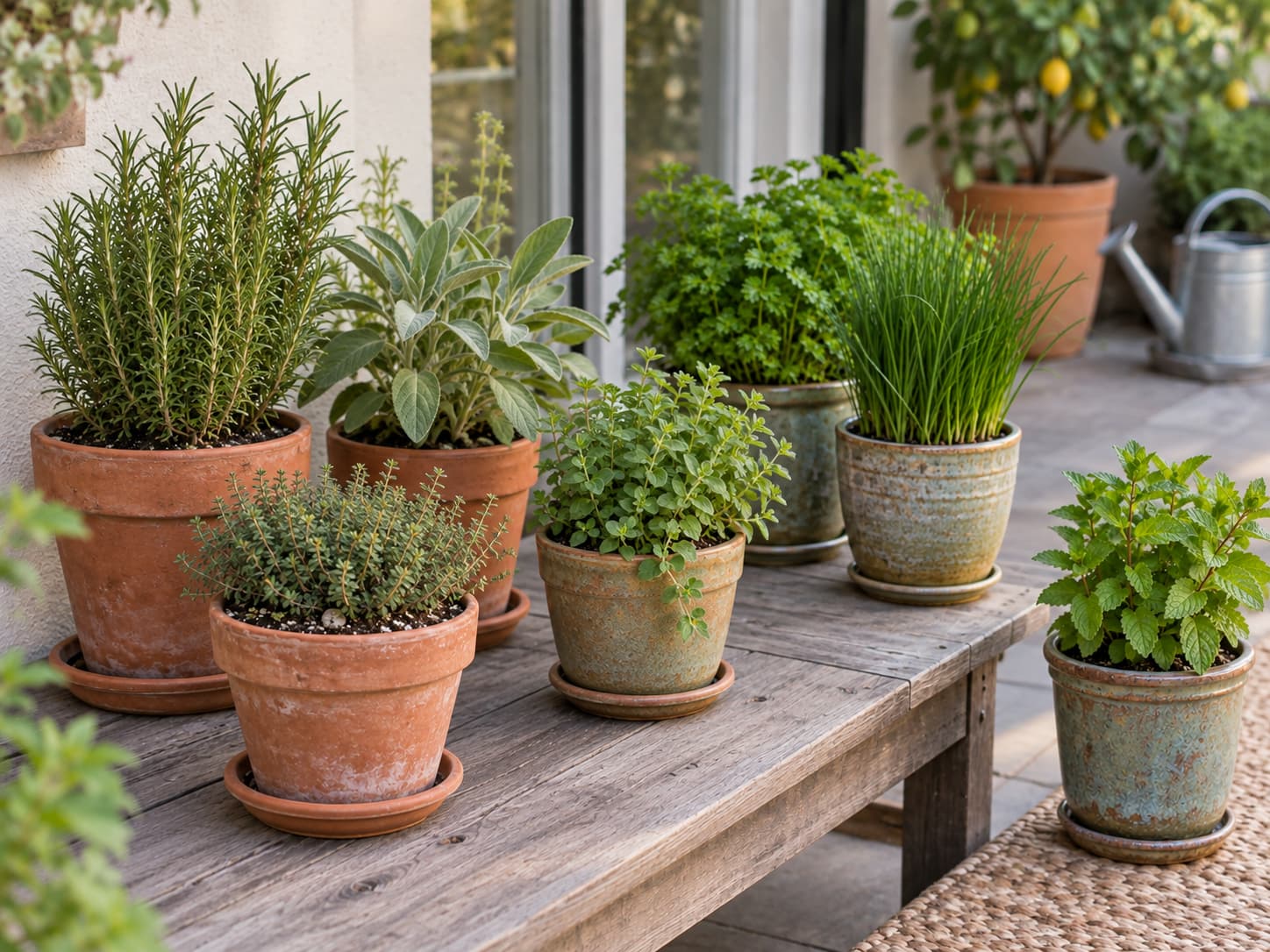
Herbs that should not be planted together are usually herbs with conflicting moisture needs, very different growth habits, or incompatible seasonal rhythms. Mint is the clearest example: its spreading rhizomes can crowd neighboring herbs, so it is usually easier to keep mint contained. Mediterranean herbs such as rosemary, sage, thyme, oregano, and lavender generally prefer a faster-draining, drier root zone than parsley, mint, or leafy cilantro.
This is not a list of plants that chemically “poison” one another. Think of it as a same-container compatibility guide.
What “Herbs That Should Not Be Planted Together” Really Means
Companion-planting charts often make herb relationships sound absolute: this plant helps that one, this herb harms another, and a single bad neighbor will ruin the bed. However, research-based gardening guidance is more cautious. University of Minnesota Extension notes that many popular companion-planting lists are not well supported by research, while Penn State recommends focusing on documented benefits and practical garden design rather than repeating anecdotal claims.
When deciding which herbs that should not be planted together belong on your avoid list, focus on root-zone needs rather than folklore. In practice, four conflicts matter much more than “friend” or “enemy” labels:
- Water mismatch: a drought-tolerant herb and an evenly moist herb share one root zone, so one of them is always being watered for the other.
- Growth mismatch: vigorous spreaders can take over the root and light space of slower neighbors.
- Season mismatch: cool-season herbs may bolt or decline under the hot, dry conditions preferred by Mediterranean herbs.
- Container mismatch: a tall or deep-rooted plant can dominate a small mixed pot even when it would be perfectly fine nearby in the ground.
Greenmuse rule
If two herbs can be watered, drained, spaced, and harvested the same way, they are usually easier to combine. If they need different root-zone conditions, give them separate pots or separate irrigation zones.
7 Pairings of Herbs That Should Not Be Planted Together in One Pot
| Pairing | Main conflict | Better setup |
|---|---|---|
| Mint + parsley | Mint spreads aggressively through the root zone | Keep mint in its own container; grow parsley separately |
| Rosemary + basil | Different dry-down and seasonal preferences | Separate pots or clearly separated watering zones |
| Sage + parsley | Sage prefers drier conditions; parsley performs best with more consistent moisture | Put sage with other Mediterranean herbs |
| Thyme + cilantro | Thyme likes lean, dry conditions; cilantro is a short-lived leafy crop that dislikes hot, dry stress | Grow cilantro in a cooler, separately watered pot |
| Oregano + parsley | Oregano tolerates dry soil; parsley likes moisture-retentive soil | Oregano with thyme/sage; parsley with chives |
| Lavender + mint | Dry-rooted lavender versus moisture-loving, spreading mint | Lavender in a sharply drained pot; mint contained elsewhere |
| Fennel + compact herbs | Fennel becomes tall and needs space; it can dominate a small mixed container | Give fennel its own large pot or open position |
Mint + Parsley: The Problem Is Space, Not “Bad Chemistry”
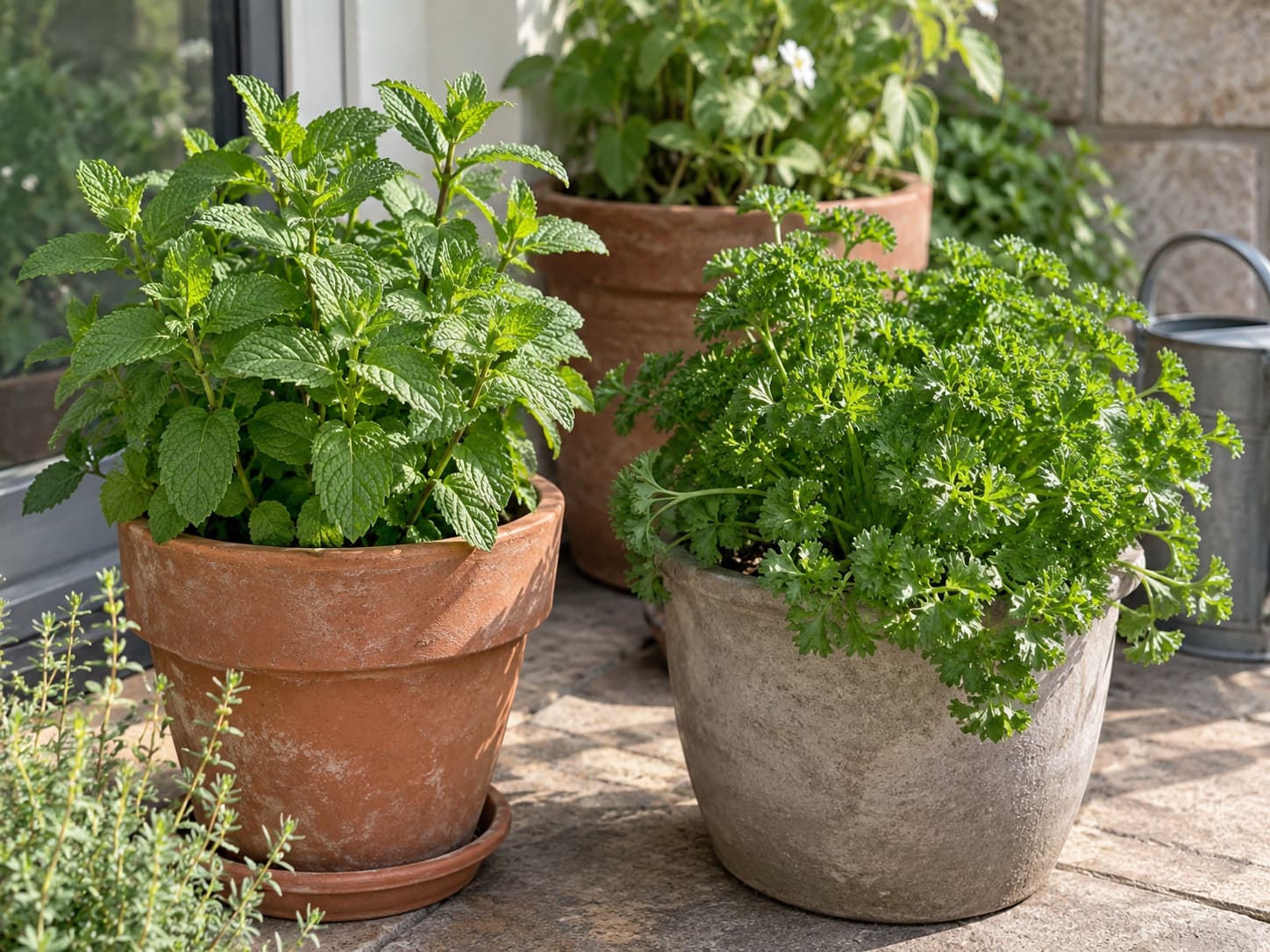
First, mint and parsley are not chemically incompatible. Instead, the practical problem is mint’s growth habit. For example, RHS describes many mints as vigorous spreading plants and recommends growing them in pots to prevent underground rhizomes from moving into surrounding soil. Parsley, by contrast, is a relatively compact biennial herb.
Therefore, in a roomy garden bed you can physically contain mint and still grow parsley nearby. By contrast, in one pot the mint can fill the root zone faster than the parsley can compete.
Better setup
Give mint its own container and keep it near the rest of the herb garden for easy harvesting. For varieties, watering, pruning, propagation, and containment, use our complete guide to growing mint.
Rosemary + Basil: Fine Neighbors, Awkward Potmates
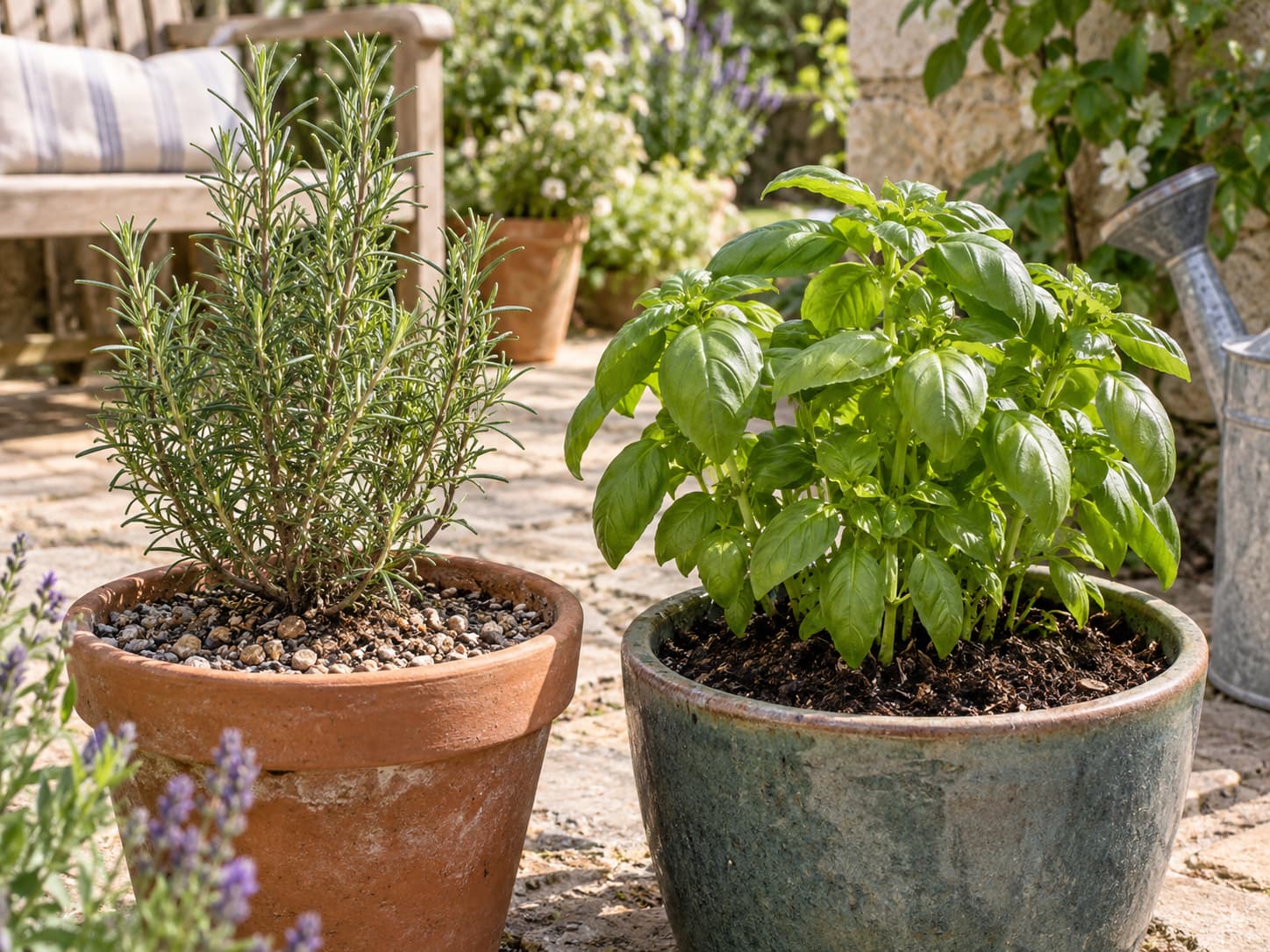
Next, rosemary and basil are often described as herbs that “should never touch,” but that goes too far. In fact, they can grow near each other. However, the difficulty shows up when they share a small container and one watering routine.
For example, RHS describes rosemary as a Mediterranean shrub that needs free-draining soil and is vulnerable to wet roots. Basil also needs drainage, but it grows fast in warm weather and is less tolerant of being repeatedly dried hard while actively producing leafy growth. As a result, in a small shared pot, watering for the basil can keep rosemary wetter than ideal; watering for rosemary can leave basil stressed during hot weather.
Better setup: keep rosemary in a free-draining pot and basil in a separate container where you can respond to its faster summer water use. If both are in a large raised bed, place them in different irrigation zones rather than treating the whole bed as one pot.
Sage + Parsley: Dry-Loving Shrub Meets Moisture-Loving Leaf Crop
Meanwhile, sage is drought tolerant once established and likes a sunny, free-draining root zone. Parsley performs best in fertile, moisture-retentive soil that stays moist but not waterlogged. However, those are not opposite worlds, but they create unnecessary compromise in one small pot.
For example, if you keep the mix consistently moist for parsley, sage can spend more time wet than it needs. By contrast, if you let the container dry as far as established sage can tolerate, parsley can lose leaf quality faster.
Better setup: pair sage with thyme, oregano, or rosemary in a sufficiently large, sharply drained container. Grow parsley with other herbs that appreciate more even moisture. This is a useful example of herbs that should not be planted together when one small pot forces both plants into the same watering routine.
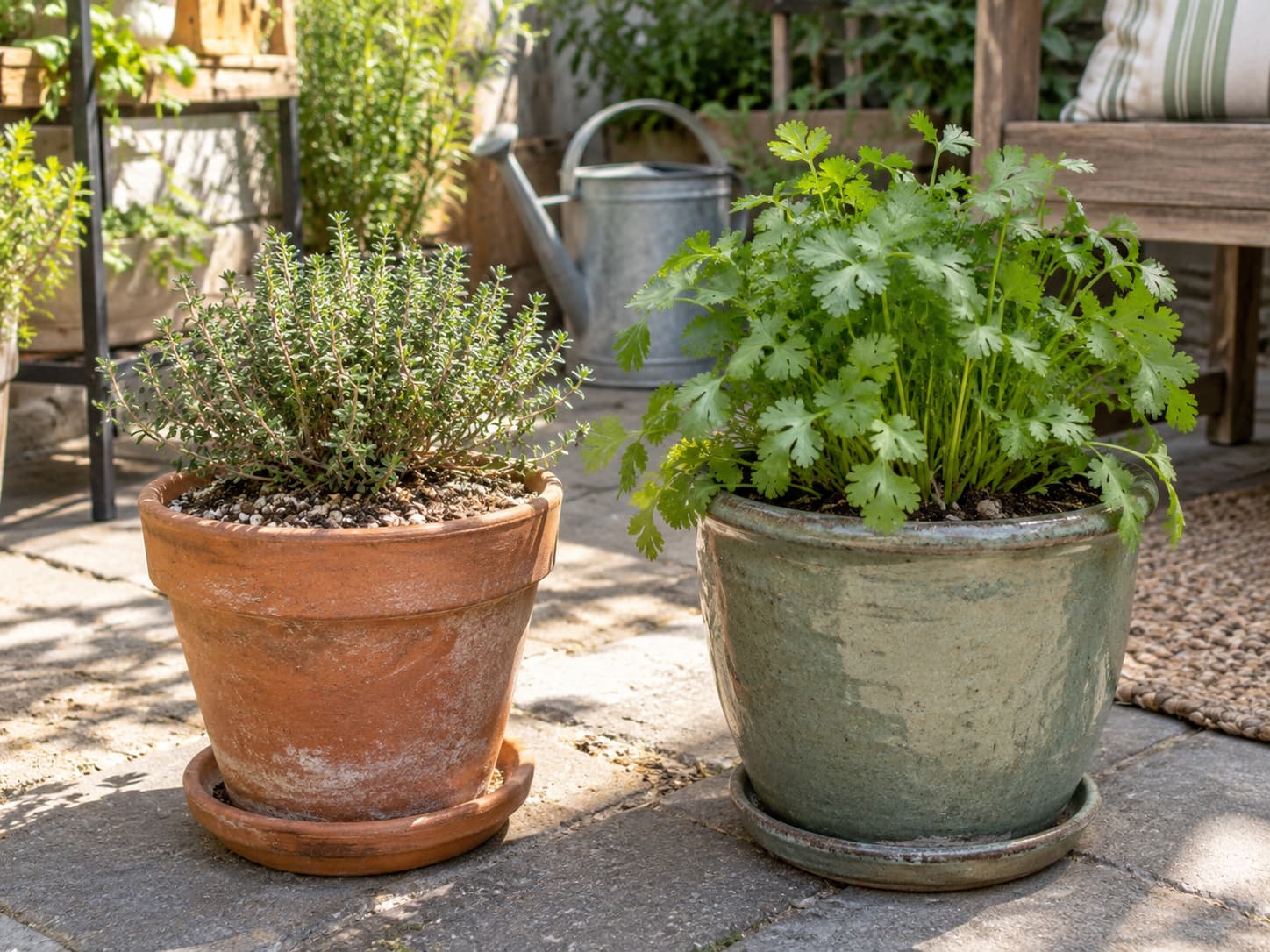
Thyme + Cilantro: Their Best Seasons Pull in Different Directions
By comparison, thyme is built for sunny, well-drained, even stony soil. However, cilantro (coriander), especially when grown for leaves, is a quick annual crop that bolts faster in hot, dry conditions. RHS recommends keeping container-grown cilantro just moist and moving summer leaf crops away from the hottest midday exposure when necessary.
Therefore, a pot managed for thyme’s lean, dry preference can push cilantro toward stress and bolting. A pot managed to keep cilantro evenly moist can be more water than established thyme needs.
Better setup: give cilantro a separate seasonal pot where you can succession sow and move it to a cooler position during summer heat. Keep thyme in the permanent Mediterranean-herb group.
Oregano + Parsley: Similar Sun, Different Root-Zone Comfort
Similarly, oregano grows well in well-drained to dry soil, while parsley is more productive in fertile, moisture-retentive soil. However, they may both look happy in sun, but the shared container can become a watering compromise.
In other words, this does not mean oregano will harm parsley. It means the gardener has to choose which plant sets the moisture target.
Better setup: grow oregano with other Mediterranean herbs and put parsley in a separate pot with chives or another herb that accepts more even moisture.
Lavender + Mint: Opposite Ends of the Herb-Pot Spectrum
By contrast, mint prefers fertile soil and regular moisture and can spread vigorously. Lavender is generally managed more like rosemary and thyme: full sun, excellent drainage, and a root zone that is not kept continuously wet. As a result, in one container, the watering target is difficult to satisfy for both—and mint adds a space-competition problem on top.
Better setup: keep lavender in its own sharply drained container or with compatible Mediterranean herbs, and keep mint contained separately.
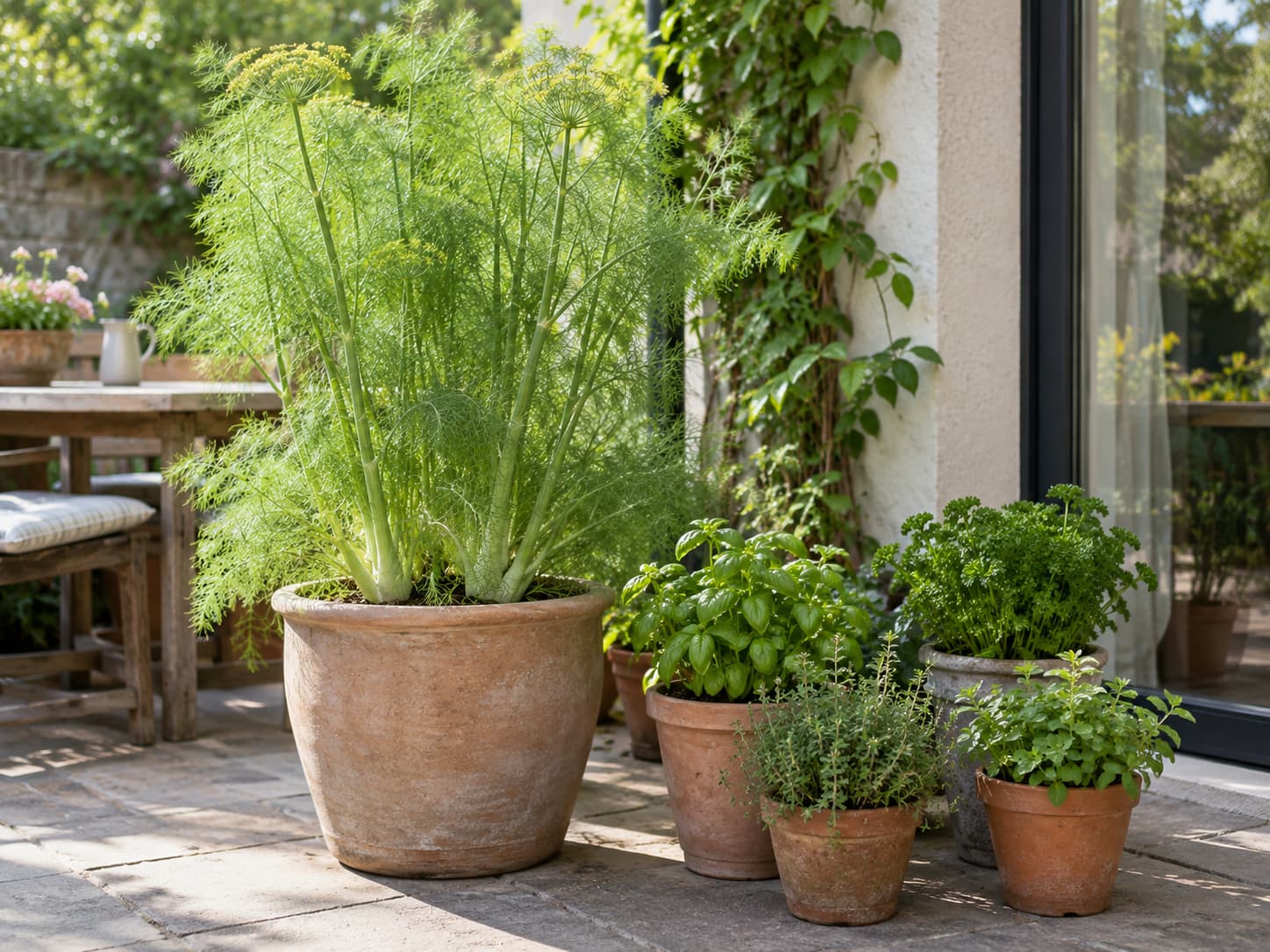
Fennel + Compact Herbs: Give the Tall One Room
Finally, old companion charts often say fennel should be isolated because it “poisons” almost everything nearby. That is too absolute for a practical home-garden guide. Instead, a clearer reason to separate fennel in a container garden is simply its size and growth habit.
For example, RHS notes that fennel can become a tall plant, recommends spacing plants at least 30 cm (1 ft) from others, and suggests a large, stable container. In addition, established fennel can also self-seed readily. Therefore, in a small mixed pot, it can shade and crowd compact herbs long before any alleged chemical effect becomes relevant.
Better setup: give fennel a large pot or an open position where its height is useful rather than disruptive.
3 Companion-Planting Myths Worth Dropping
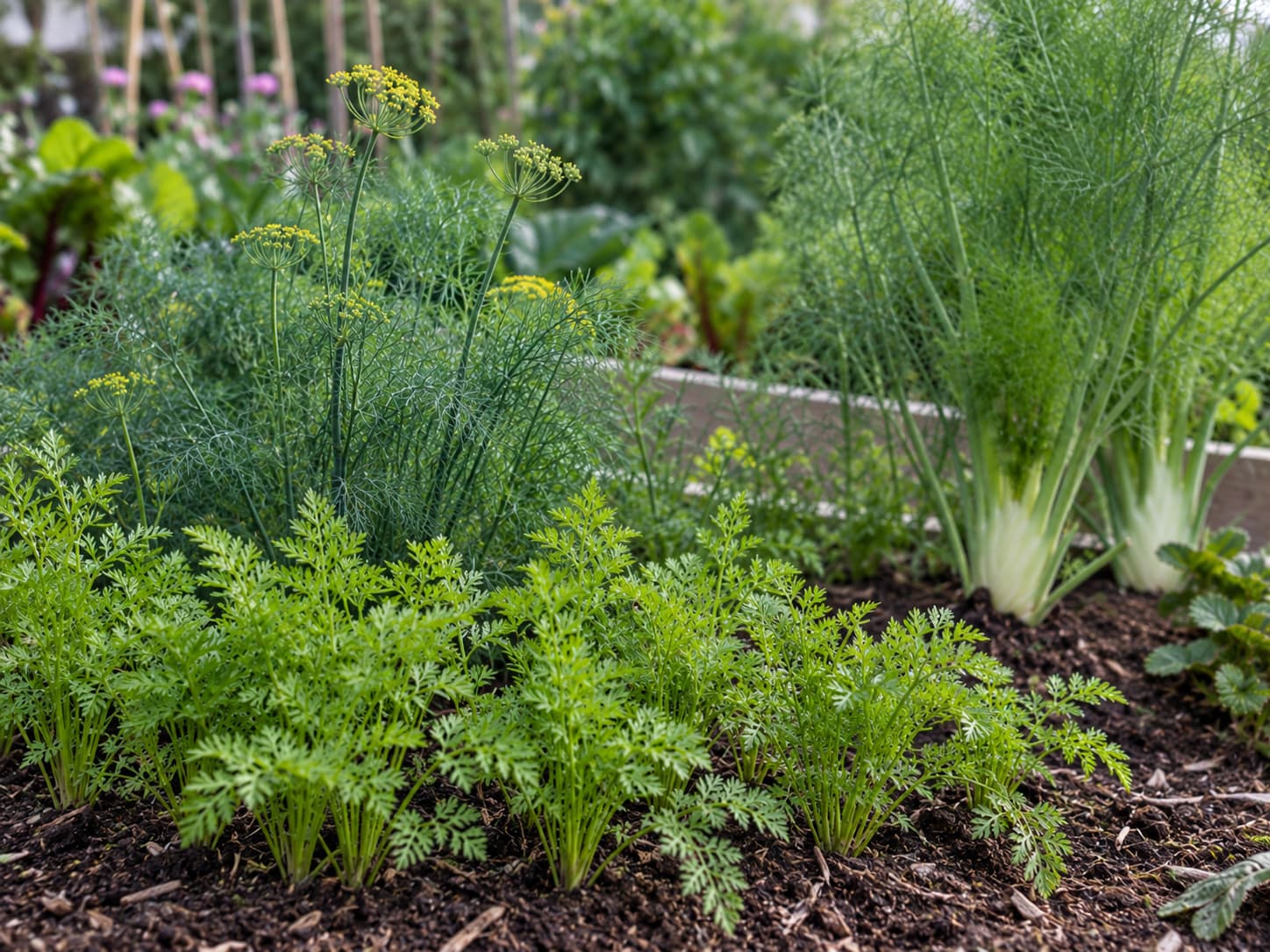
1. “Dill and carrots cross-pollinate and make malformed roots.”
No. Dill is Anethum graveolens; carrot is Daucus carota. Sharing the Apiaceae family does not make them the same species. Carrot root shape is much more directly affected by soil structure, stones, crowding, and root disturbance. The old Greenmuse version repeated this claim; this refresh removes it.
2. “Fennel kills almost everything around it.”
However, there are many traditional allelopathy claims around fennel, but they are not a good basis for telling home gardeners that every nearby herb will fail. In a container garden, fennel’s size, spacing, and self-seeding behavior are practical reasons enough to give it room.
3. “A companion chart can replace plant care.”
In short, it cannot. University of Minnesota Extension specifically warns that many internet companion-planting claims lack research support. Therefore, start with light, soil, water, spacing, and growth habit. Treat pest-repelling or growth-boosting claims as something to verify, not a guarantee.
Better Alternatives to Incompatible Herb Pairings
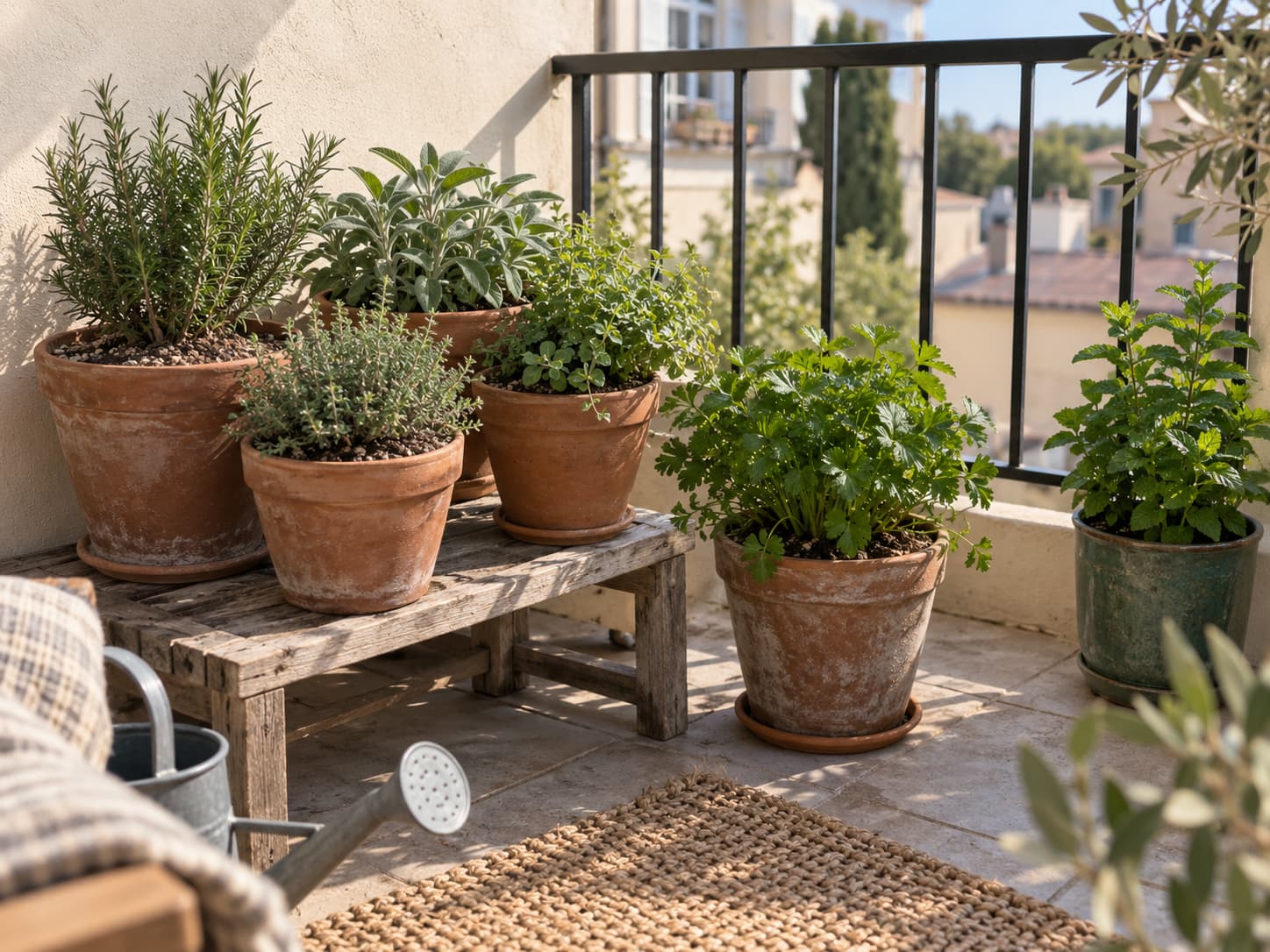
Instead, the easiest herb combinations are not magical companion pairs. After separating herbs that should not be planted together, group plants that let you use one sensible care routine. In other words, compatibility starts with practical care.
| Group | Good candidates | Why it works |
|---|---|---|
| Mediterranean / faster dry-down | Rosemary, sage, thyme, oregano | Sunny positions and free-draining soil suit the group; mature size still matters |
| More even moisture | Parsley, chives | Both are easier to manage when the root zone does not repeatedly dry hard |
| Seasonal leafy pot | Cilantro with other cool-season leafy herbs | You can move, succession sow, and retire the pot as weather changes |
| Contained vigorous herb | Mint alone | Its rhizomes stay out of neighboring root zones while the pot remains easy to harvest |
| Large structural herb | Fennel in its own large container or open bed position | Its height and spread stop competing with compact herbs |
Herb Pairings to Avoid: Climate and Small-Space Adjustments
However, the same herb pairing can behave differently in London, Seattle, Phoenix, or a windy apartment balcony. Even herbs that should not be planted together in one small pot may grow perfectly well side by side when their root zones are separate. Therefore, use the pairings above as a starting point, then adjust for your actual dry-down rate.
- Hot, dry climates: even Mediterranean herbs in containers may need more frequent watering than expected. Keep “dry-loving” from becoming “bone-dry all week.”
- Humid or rainy climates: drainage and airflow become more important, especially for rosemary, sage, thyme, oregano, and lavender.
- Cool-summer climates: cilantro may stay leafy longer, while basil may need the warmest available position.
- Balconies: wind, reflected heat, container material, and pot volume can change moisture use faster than the plant label suggests.
For context, USDA hardiness zones are useful mainly for perennial winter survival; they do not tell you how quickly a container dries in July. Meanwhile, for European gardens, local rainfall, winter wet, and summer heat can matter more than a single zone number when grouping herbs in pots.
The Greenmuse 3-Step Check for Herbs Not to Plant Together
Step 1: Compare Water and Drainage
First, when checking herbs that should not be planted together, ask whether you would happily water both herbs on the same day, in the same mix, for a whole season. If not, split the root zones.
Step 2: Compare Mature Size and Spread
Next, look beyond the nursery pot. Mint runs. Fennel gets tall. Sage and rosemary become woody shrubs. For example, a pairing that looks balanced in May can be completely one-sided by August.
Step 3: Compare the Season
Finally, ask whether both herbs want the same temperatures and day length. A permanent thyme pot and a short-lived cilantro crop do not need to share a container just because both are culinary herbs.
A calmer way to plan a herb garden
You do not need the “perfect” companion chart. Give each plant the root conditions it can live with, make one sensible grouping decision at a time, and adjust if one herb starts dominating the pot. Good garden design should reduce daily care—not make you anxious about invisible plant rivalries.
Frequently Asked Questions
Root-Zone Compatibility & Watering
01What herbs should not be planted together?
In general, avoid putting herbs with very different moisture needs or growth habits in the same small container. Examples include mint with compact herbs, rosemary with moisture-demanding leafy herbs, sage with parsley, thyme with cilantro, and lavender with mint. However, they can often grow near each other when their root zones are managed separately.
02Can rosemary and basil grow together?
Yes. However, they are easier to manage in separate pots. Rosemary needs excellent drainage and dislikes wet roots, while actively growing basil often uses water faster during warm weather. Therefore, separate root zones let you water each plant according to the pot rather than compromise.
03Can mint and parsley grow together?
Yes. For example, they can sit next to each other, but sharing one small root zone is less convenient because mint spreads vigorously through rhizomes. Therefore, keeping mint in its own pot prevents it from occupying the parsley’s root space.
Fennel, Dill & Easier Herb Groupings
04Does fennel stop other herbs from growing?
However, blanket claims that fennel suppresses nearly every neighboring plant are stronger than the evidence justifies. In practice, in home container gardens, fennel’s mature height, space requirement, and tendency to self-seed are more practical reasons to give it its own large pot or open position.
05Can dill and carrots be planted near each other?
For example, the old claim that dill and carrots readily cross because both belong to Apiaceae is incorrect. Dill is Anethum graveolens and carrot is Daucus carota. Therefore, manage each crop for spacing, light, pests, and harvest rather than separating them because of a supposed dill-carrot hybrid.
Easier Same-Pot Herb Groups & Mint Containment
06Which herbs are easiest to grow in one pot?
In general, rosemary, sage, thyme, and oregano are usually easier to group because they share a preference for sun and free-draining conditions. However, use a pot large enough for their mature sizes and do not assume every species will stay compact indefinitely.
07How do I stop mint from taking over my herb garden?
Finally, grow mint in a container and divide or repot it as the root mass fills the pot. For example, RHS specifically recommends containers for vigorous mints because underground rhizomes can spread into surrounding soil. See our mint growing guide for the full containment routine.
- University of Minnesota Extension — Companion planting in home gardens
- Penn State Extension — Herbs Make Good Plant Partners and Companions
- Royal Horticultural Society — Herbs: Growing and Harvesting
- RHS — How to Grow Mint
- RHS — How to Grow Rosemary
- RHS — How to Grow Parsley
- RHS — How to Grow Coriander (Cilantro)
- RHS — How to Grow Sage
- RHS — How to Grow Fennel
- RHS — How to Grow Dill
- RHS — How to Grow Carrots
Final Takeaway
Ultimately, the useful question is not “Which herbs hate each other?” It is: Which herbs make me fight the container every time I water? A practical list of herbs that should not be planted together should help you separate aggressive spreaders, group plants with similar root-zone needs, and give tall herbs enough space. Therefore, use compatibility as a care tool rather than treating companion-planting folklore as a set of hard rules.
What herbs are you trying to combine? Share your container size, light, and climate in the comments. Greenmuse can help you decide whether they belong in one pot or simply side by side.