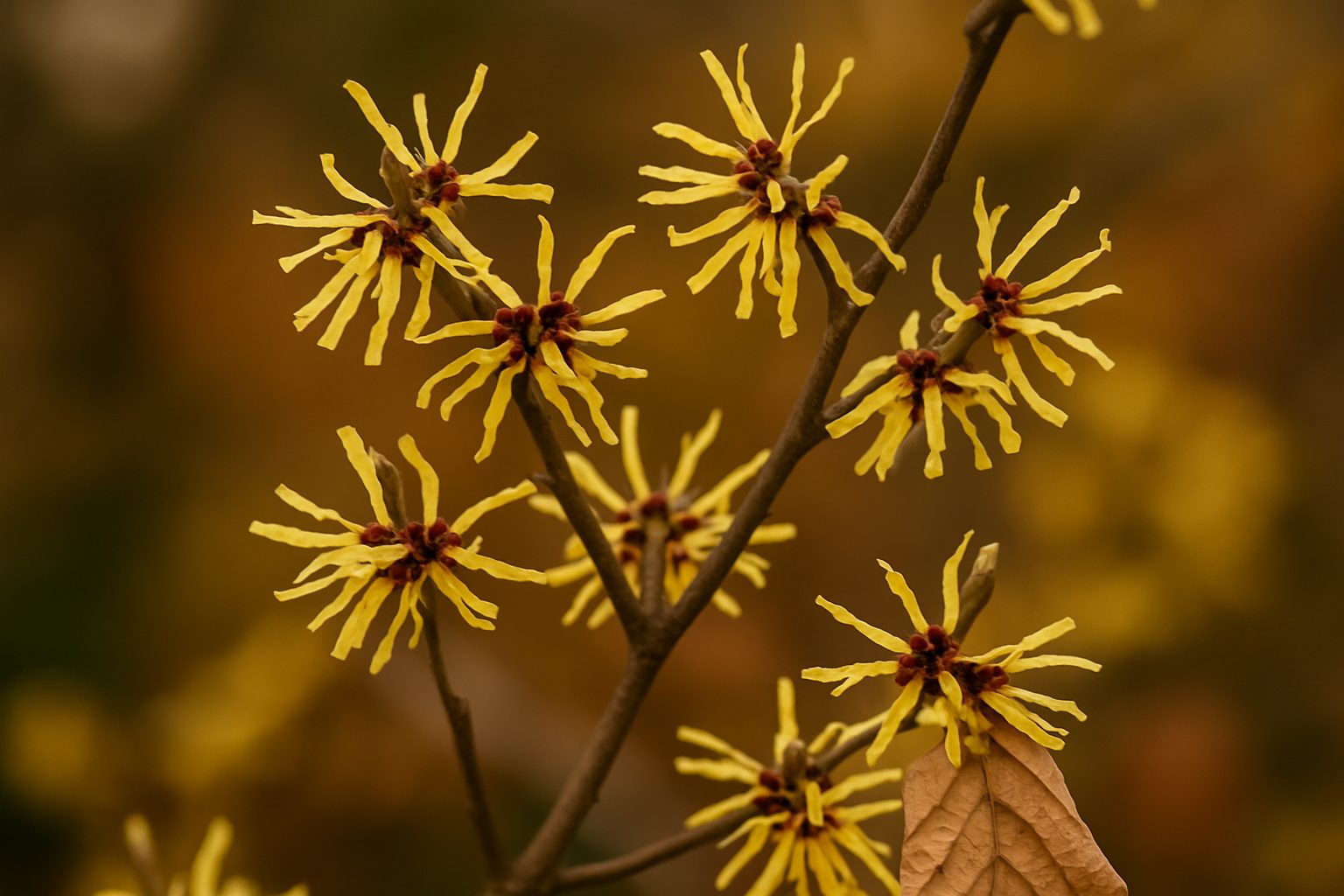
When winter quiets the garden and most plants retreat into dormancy, Witch Hazel steps forward with a burst of unexpected beauty. Its ribbon-like petals unfurl on the coldest days of late fall and winter, glowing like tiny lanterns against bare branches and muted landscapes.
Few shrubs offer such magic during the darkest stretch of the year.
Why Gardeners Treasure Witch Hazel
Witch Hazel isn’t just admired for its unusual bloom time—it carries deep emotional and cultural symbolism:
- Hope and renewal during the cold season
- Protection and inner strength
- Gentle healing, connected to its long herbal history
- Light in darkness, a reminder that beauty persists even in winter
It’s a perfect shrub for seasonal moments like:
- Winter solstice celebrations
- Christmas and New Year garden styling
- Late-fall front-yard refreshes
- Quiet winter walks in the garden
How to Identify Witch Hazel (Plant Profile)
Witch Hazel is easily recognized by its:
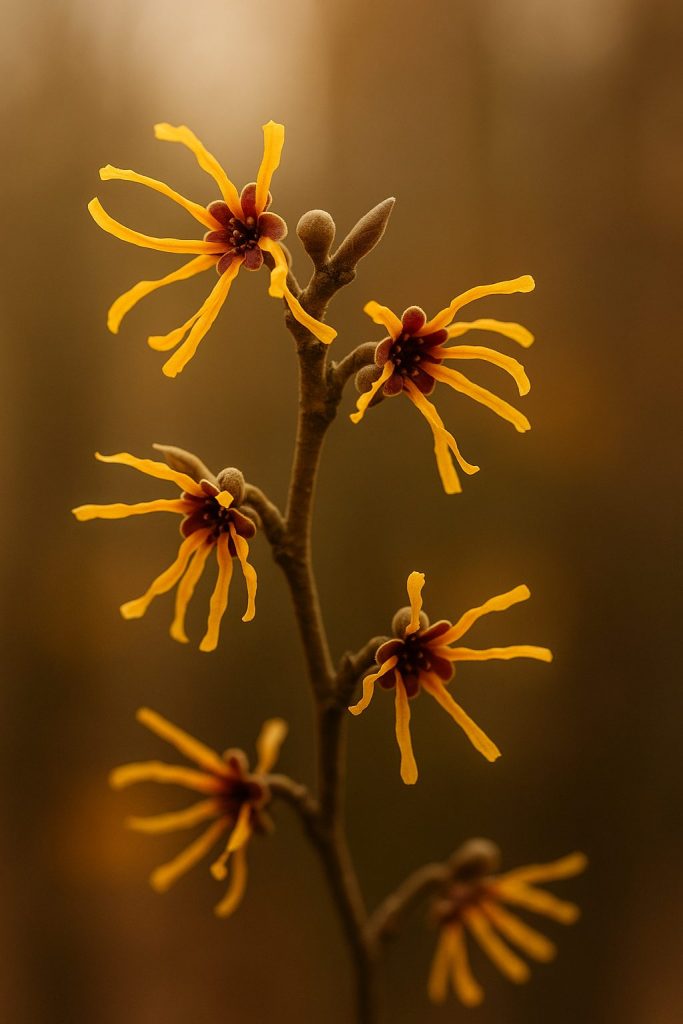
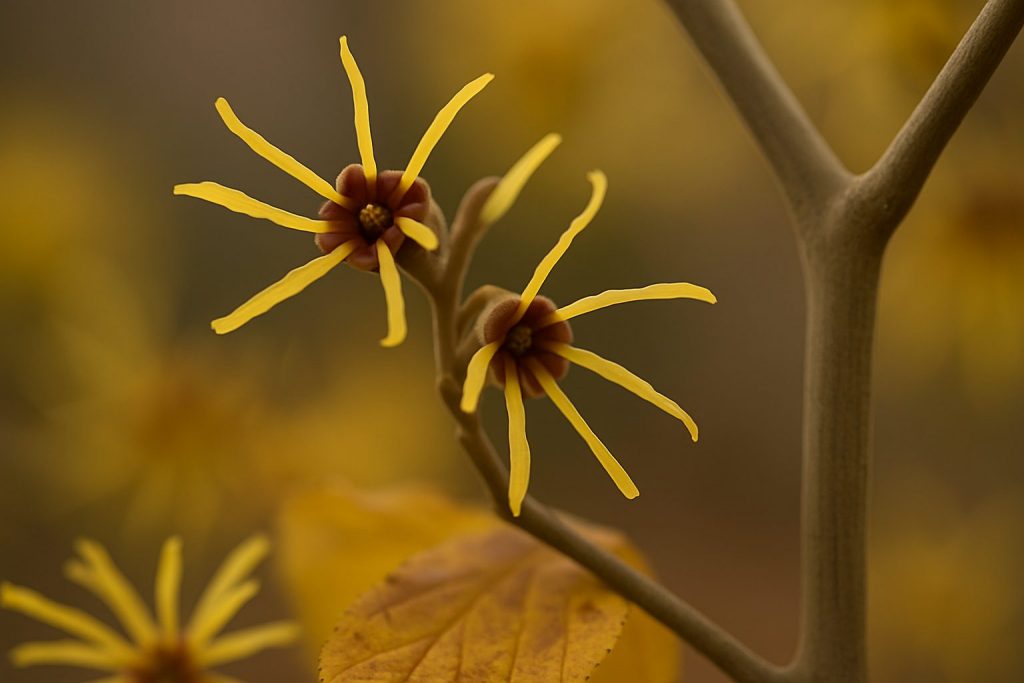
- Strappy, spider-like flowers in shades of yellow, amber, orange, or red
- Fragrant blooms that carry a spicy, citrus-like scent
- Graceful, vase-shaped branching
- Golden fall foliage, often turning deep amber before leaf drop
When bloom season starts, petals curl tightly during frost and reopen as temperatures rise—a charming, almost animated quality unique to this shrub.
Growing Conditions (Reliable & Beginner-Friendly)
Light
Full sun to partial shade.
More sun equals stronger flowering.
Soil
Moist, well-drained soil is ideal.
Prefers slightly acidic conditions, similar to azaleas.
Hardiness
USDA Zones 3–8
Mature Size
8–12 feet tall, with a wide, elegant spread.
Water
Moderate. Keep soil evenly moist during establishment, especially in dry autumns.
Bloom Time: A Rare Winter Show
Witch Hazel blooms from late fall into winter, often starting as early as November and continuing through February—depending on the species.
This makes it one of the very few plants capable of offering true winter color and fragrance.
Even in freezing temperatures, the flowers persist—creating small bursts of sunshine in a sleeping garden.
Ecological Benefits: Quiet Support for Winter Wildlife
Although winter seems lifeless, many insects emerge during warm spells. Witch Hazel provides:
- Early pollen for native bees
- Nectar for insects waking from winter dormancy
- Shelter within its branching structure
- Habitat value throughout the offseason
It plays a surprisingly important role in supporting biodiversity during cold months.
Garden Uses: Where Witch Hazel Truly Shines
1. Winter Garden Structure
Acts as a sculptural anchor in garden beds that look bare in winter.
2. Entryway Highlight
Plant near doors or patios so the fragrance greets you on milder winter days.
3. Four-Season Interest
Spring leaf-out → summer green → fall color → winter flowers.
4. Woodland Edge or Mixed Borders
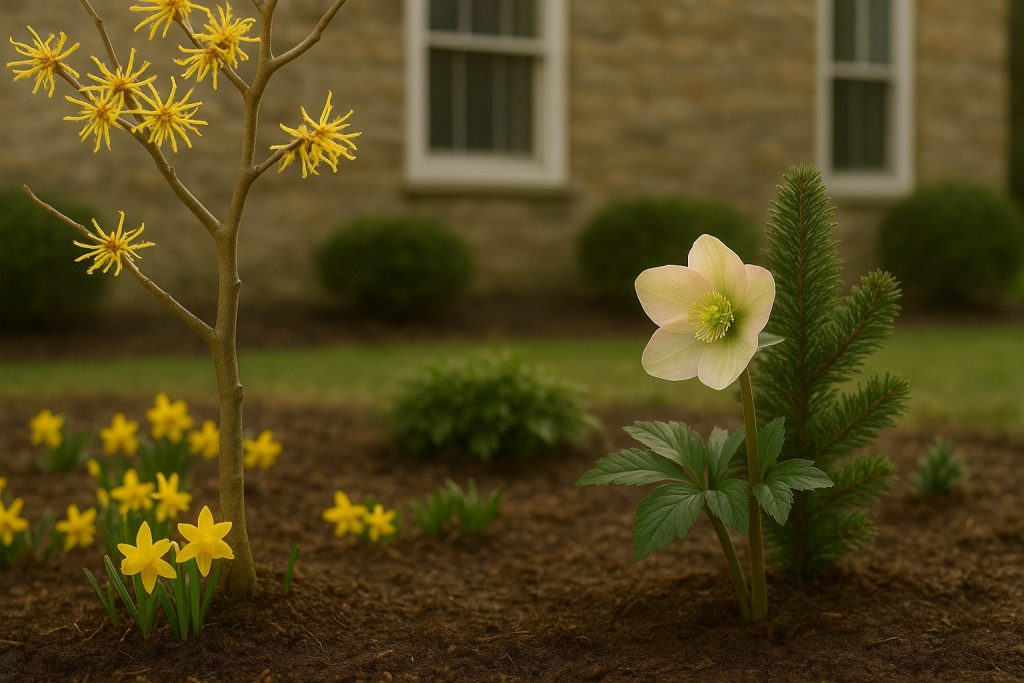
Pairs beautifully with hellebores, ferns, dwarf conifers, and early bulbs.
Common Problems Gardeners Face (and Solutions)
Problem 1: “My winter garden lacks color.”
Solution: Witch Hazel provides vibrant yellow or orange blooms for 2–3 months.
Problem 2: “Most shrubs don’t offer interest year-round.”
Solution: Witch Hazel delivers four seasons of character: foliage, fragrance, form, and bloom.
Problem 3: “I need something special for a small front yard.”
Solution: Many Witch Hazel varieties stay compact and architectural.
Witch Hazel as Winter’s Lantern
There is something deeply grounding about finding flowers in winter.
Witch Hazel doesn’t wait for spring—it insists on blooming through cold winds and short days, offering color right when the garden feels the most still.
It’s a shrub that represents resilience, quiet confidence, and the beauty of slow seasons.
For gardeners who crave life and light in winter, Witch Hazel is unforgettable.
Its luminous, fragrant flowers brighten the cold months, its structure enriches the garden year-round, and its symbolism brings emotional warmth to the season.
Plant one, and your winter landscape will never feel the same again.
Clara Moss is the gardener behind Greenmuse. Over the past 10+ years, she has grown herbs on windowsills, tested cactus and succulent soil mixes, rescued struggling houseplants, and learned many lessons through trial and error. Greenmuse is where she shares honest, practical plant care advice for real homes — based on hands-on experience, not perfect greenhouse conditions. When she’s not writing, Clara is usually propagating succulents or trying to keep a calathea happy.