Botanical Name: Opuntia spp.
Common Names: Prickly pear cactus, nopal, paddle cactus
Plant Family: Cactaceae
Native Range: North and South America — especially Mexico and the southwestern United States
What Is Opuntia?
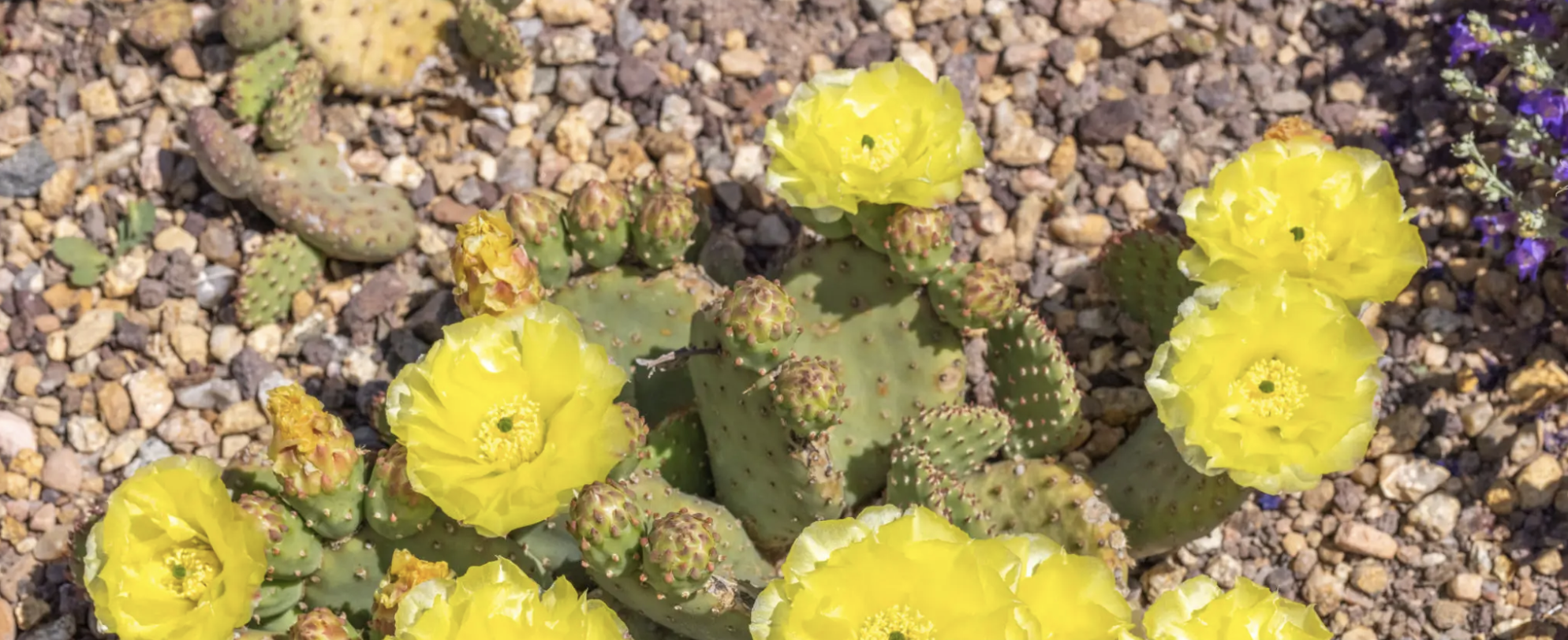
Opuntia is a genus of flowering cacti widely known as the prickly pear cactus. Recognizable by its flat, oval-shaped pads (technically called cladodes) and spiny surface, this hardy plant is famous not only for its architectural desert appeal but also for its practical value — as a drought-tolerant landscaping plant, erosion controller, edible crop, and pollinator-friendly species.
With over 150 species and countless hybrids, Opuntia has become a poster plant for xeriscaping and regenerative gardening.
Key Features
| Feature | Description |
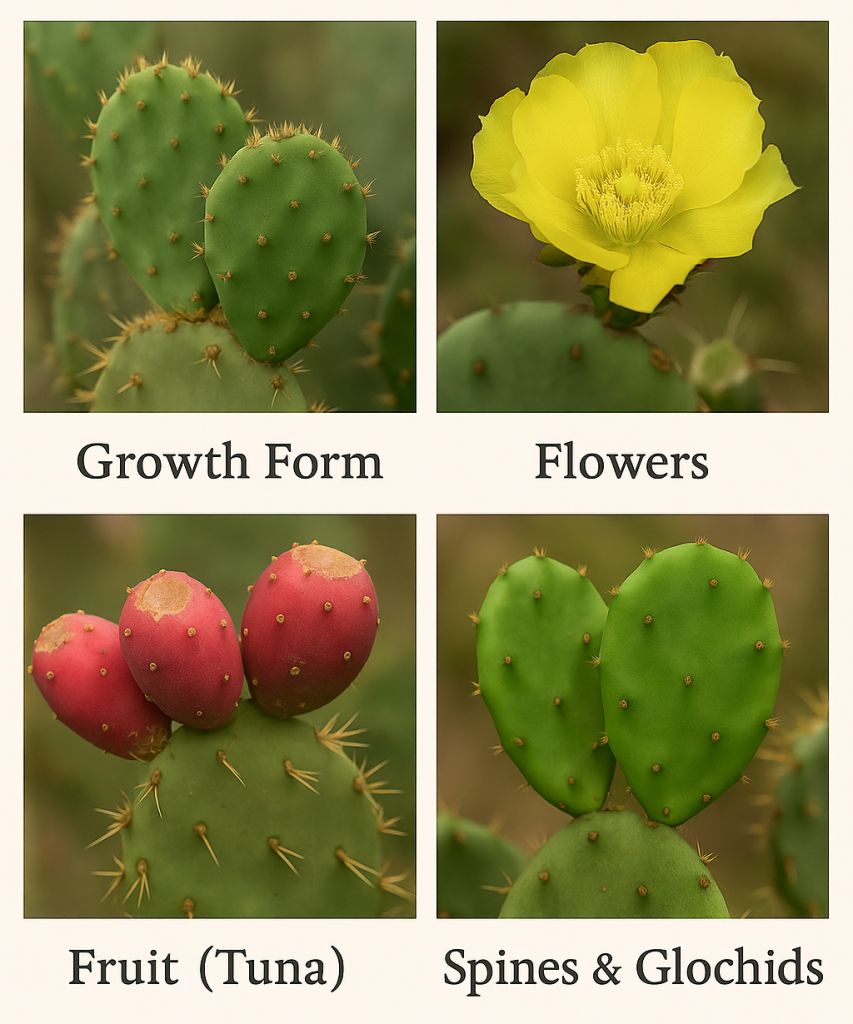
| Growth Form | Clumping or upright cactus with fleshy green pads stacked atop each other |
| Flowers | Large, cup-shaped blooms in yellow, pink, orange, or red; often followed by fruit |
| Fruit (Tuna) | Ripe prickly pear fruit is edible, sweet, and rich in antioxidants |
| Pads (Nopales) | Young pads are harvested as vegetables in Mexican and Mediterranean cuisine |
| Spines & Glochids | Long central spines and tiny barbed hairs (glochids) that require careful handling |
Why Gardeners Love Opuntia
- Extremely drought-tolerant (perfect for hot, dry, or low-maintenance gardens)
- Edible and versatile (both pads and fruits are nutritious and delicious)
- Wildlife-friendly (flowers attract bees, butterflies, and hummingbirds)
- Great for erosion control (roots hold soil in place on hillsides)
- Visually striking (adds drama and texture to rock gardens and borders)
- Low-input and zero-waste (no need for fertilizers, mulch with its own trimmings)
Sustainable Benefits
- Performs CAM photosynthesis to conserve water
- Acts as a living fence in permaculture gardens
- Biodegradable pads can enrich compost or be used as natural water purifiers
- Survives with minimal intervention even in poor soils
How to Grow Opuntia
- Hardiness: USDA Zones 5–11 (depending on species)
- Light: Full sun (6–8+ hours daily)
- Soil: Well-draining sandy or gravelly soil
- Water: Very low — water only when soil is completely dry
- Spacing: 2–3 feet apart to allow for air flow and pad expansion
- Propagation: Easy from pad cuttings; no rooting hormone needed
- Pruning: Use tongs or gloves to trim pads; wear long sleeves to avoid glochids
Culinary & Medicinal Uses
| Plant Part | Use |
| Nopales (pads) | Grilled, stewed, or added to tacos, salads, and stir-fry |
| Tunas (fruit) | Used in jams, syrups, drinks, or eaten fresh (after peeling) |
| Mucilage | Traditional use in water purification or skin-soothing salves |
Handling Tip
Always wear thick gloves or use kitchen tongs when working with Opuntia pads. While some varieties are spineless (e.g., Opuntia ellisiana), most contain irritating glochids — tiny, barbed hairs that are hard to see but cause skin irritation.
Popular Garden Varieties
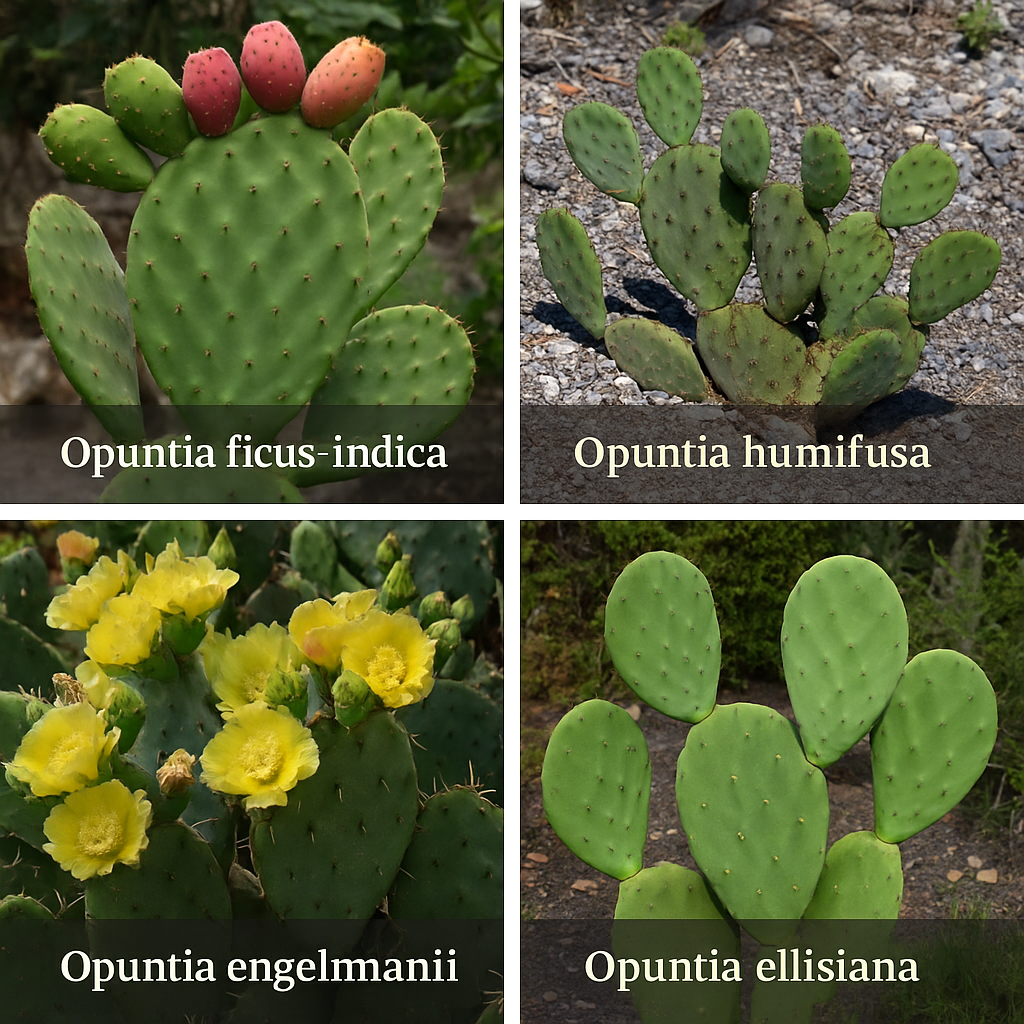
- Opuntia ficus-indica – Cultivated prickly pear, large pads, edible fruit
- Opuntia humifusa – Cold-hardy groundcover variety
- Opuntia engelmannii – Tree-like form with striking yellow flowers
- Opuntia ellisiana – Nearly spineless, great for family gardens
📌 Want to learn more about how to integrate Opuntia into your sustainable landscape?
Explore companion planting, edible garden design, and xeriscaping layouts at Greenmuse.io.
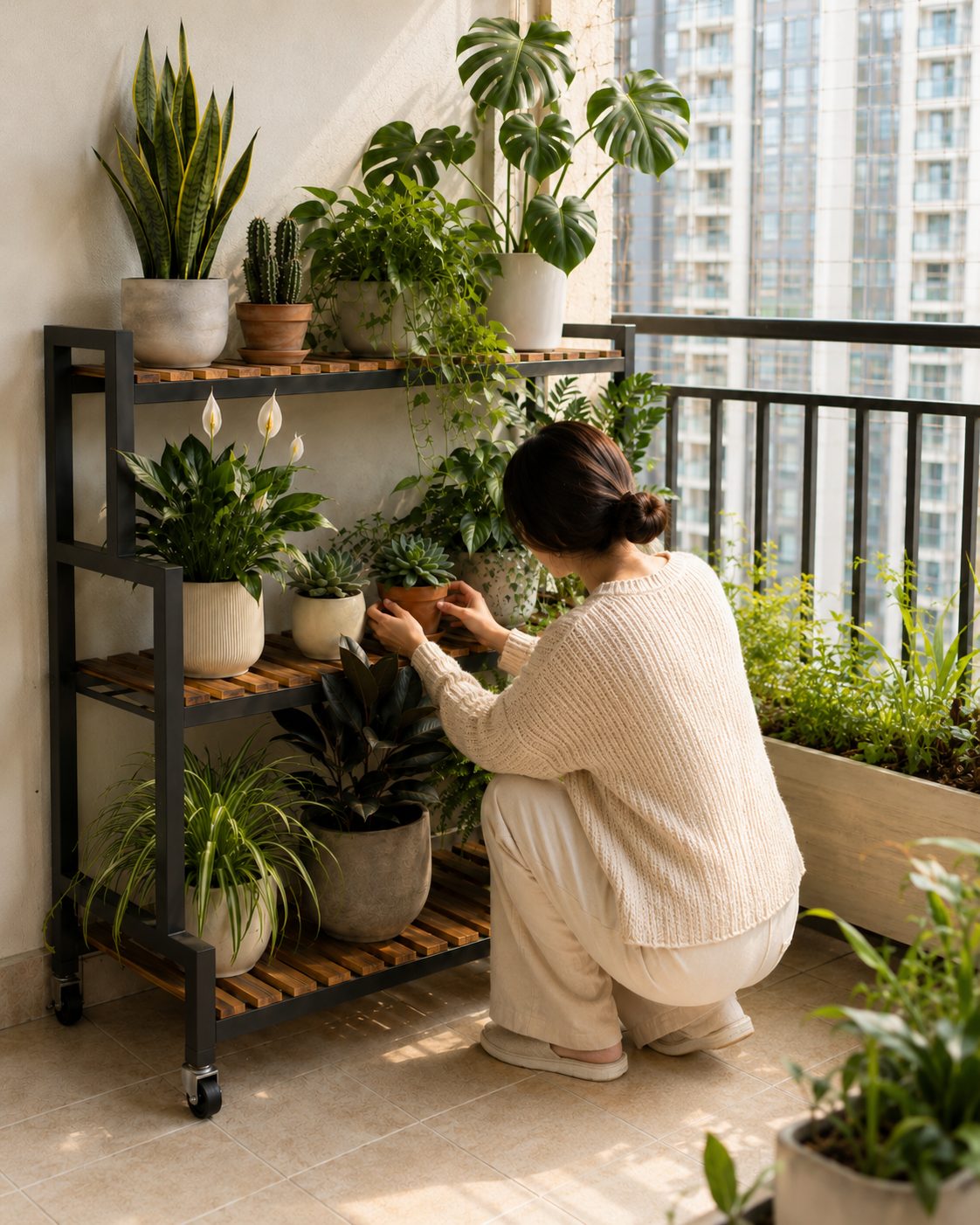
Clara Moss is the gardener behind Greenmuse. Over the past 10+ years, she has grown herbs on windowsills, tested cactus and succulent soil mixes, rescued struggling houseplants, and learned many lessons through trial and error. Greenmuse is where she shares honest, practical plant care advice for real homes — based on hands-on experience, not perfect greenhouse conditions. When she’s not writing, Clara is usually propagating succulents or trying to keep a calathea happy.