Oleander Plant Guide: Care, Pruning, Safety & Common Problems
A practical guide to oleander care in hot, sunny gardens — including safer placement, pruning, winter protection, container growing, and the disease checks that matter most.
Last updated September 2026
Quick Summary
Oleander (Nerium oleander) is a heat-, drought-, and salt-tolerant evergreen shrub for warm, sunny conditions. It is also highly poisonous if eaten. All parts contain cardiac glycosides, so households with young children, plant-chewing pets, or livestock should consider whether another shrub is a better fit. If you grow oleander, use protective clothing when pruning, keep cut material inaccessible, and never burn the plant.
What Is Oleander?
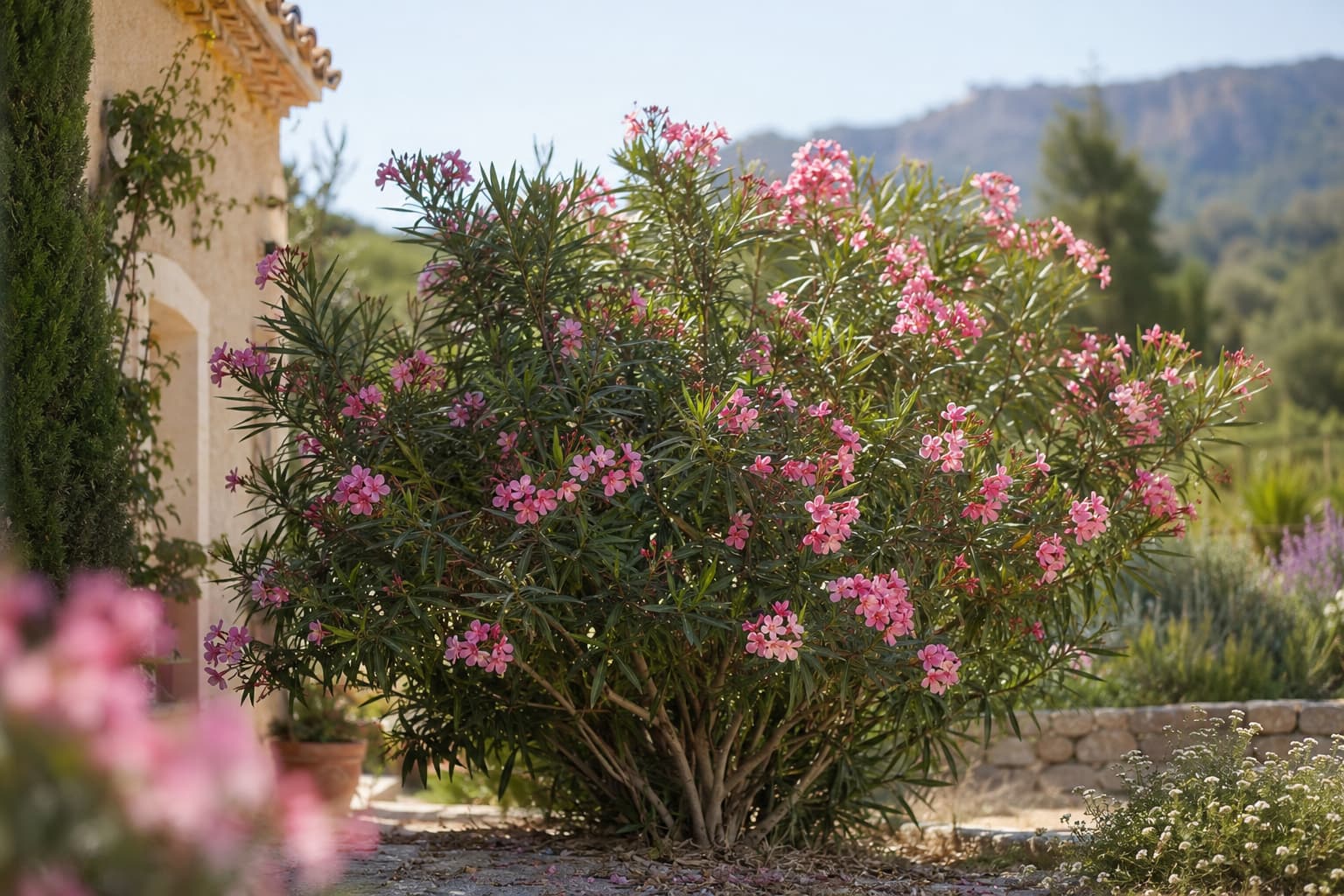
To begin with, oleander (Nerium oleander) is an evergreen shrub or small tree in the dogbane family, Apocynaceae. Its natural range extends from the Mediterranean region into western Asia and toward western China. As a result, the plant is widely used in hot-climate landscapes because it is adapted to bright sun and can tolerate dry conditions once established.
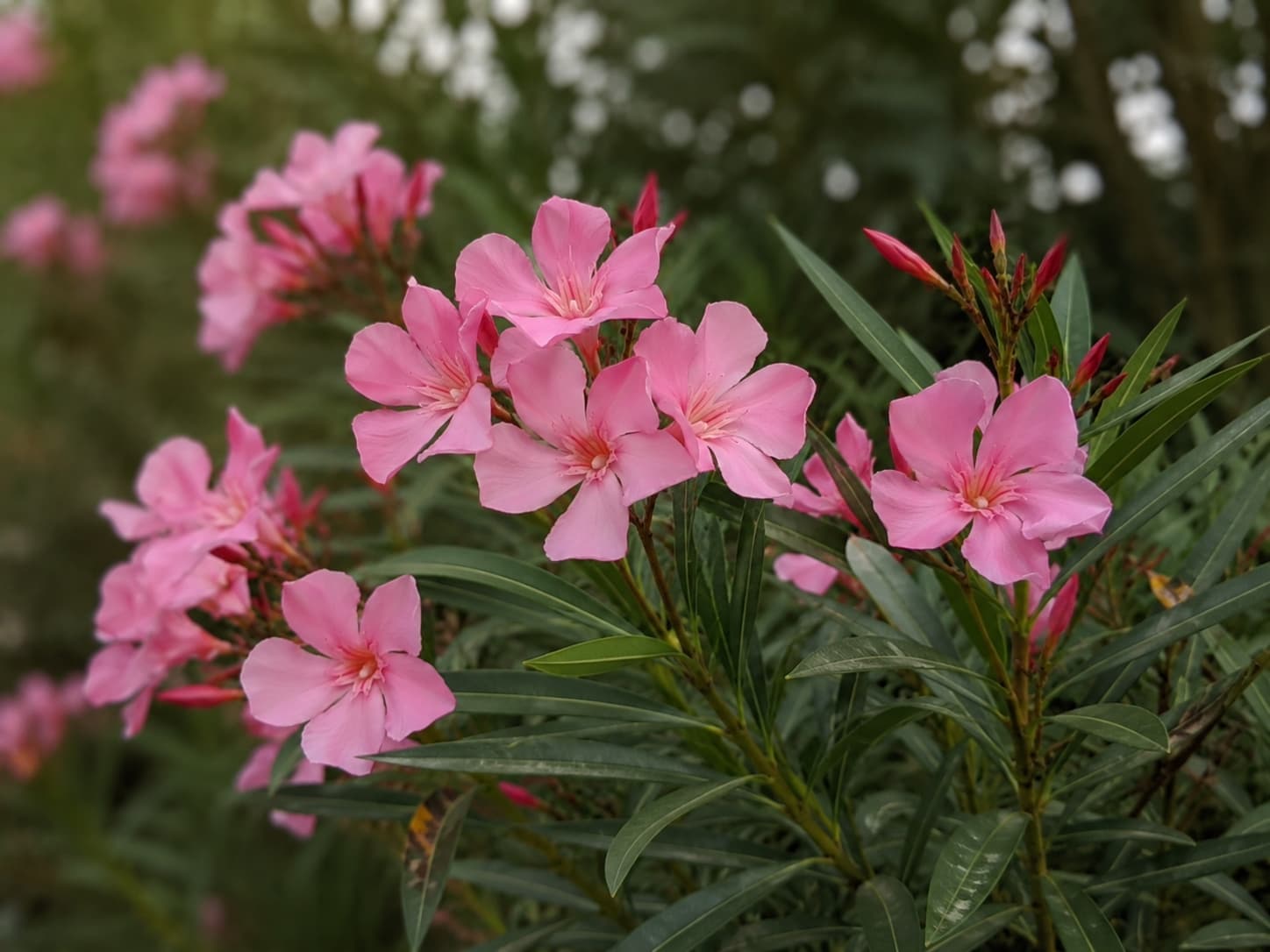
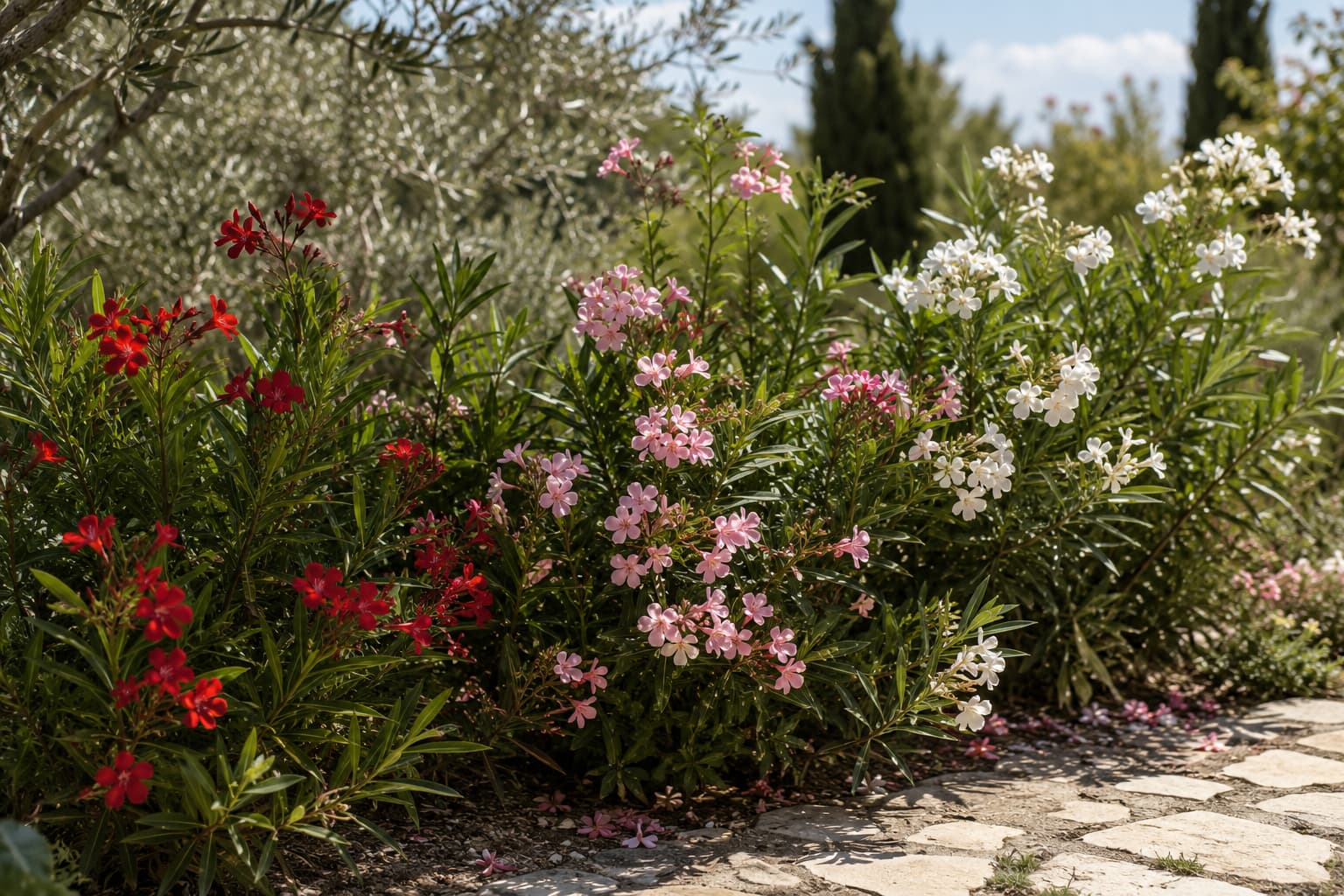
Visually, oleander has narrow, leathery leaves and terminal clusters of funnel-shaped flowers. For example, cultivars may flower in white, pink, red, salmon, peach, or pale yellow. Mature size varies considerably: compact selections may stay around 3–4 feet with pruning, while standard plants can become large shrubs or small trees.
However, the most important fact about oleander is not its flowers. The plant has high-severity poison characteristics. All parts should be treated as toxic if eaten, and exposure can be especially serious for pets and livestock. Therefore, placement and handling should be treated as part of basic oleander care rather than as an afterthought.
Plant Profile at a Glance
| Feature | Practical guidance |
|---|---|
| Scientific name | Nerium oleander |
| Plant type | Evergreen shrub or small tree in frost-free climates |
| Typical outdoor range | Best in warm climates; cold tolerance varies by cultivar and exposure |
| Mature size | Often 6–12 ft or more; dwarf cultivars may remain around 3–4 ft with light pruning |
| Bloom season | Late spring through summer, often longer in warm climates |
| Light | Full sun for strongest flowering; some light shade is tolerated |
| Soil | Moist but well-drained while establishing; adaptable once rooted |
| Drought resistance | Good once established |
| Salt tolerance | High, including coastal salt spray |
| Toxicity | Highly toxic if eaten; all parts should be handled and disposed of carefully |
Oleander Safety and Toxicity
Most importantly, oleander contains cardiac glycosides. Ingestion can affect the gastrointestinal tract and heart, and severe poisoning can be life-threatening. For that reason, the safest approach is prevention: do not place the shrub where a young child, pet, or grazing animal can easily chew leaves, flowers, stems, or fallen material.
High-Severity Poison Risk
Do not eat any part of oleander. Do not use its stems as skewers, cooking sticks, or plant supports for food preparation. Never burn oleander trimmings because smoke from burning the plant can be harmful. If ingestion is suspected, seek professional poison-control, medical, or veterinary advice promptly rather than waiting for symptoms.
Four rules for safer handling
- Control access. Avoid planting where young children, plant-chewing pets, or livestock can reach the shrub.
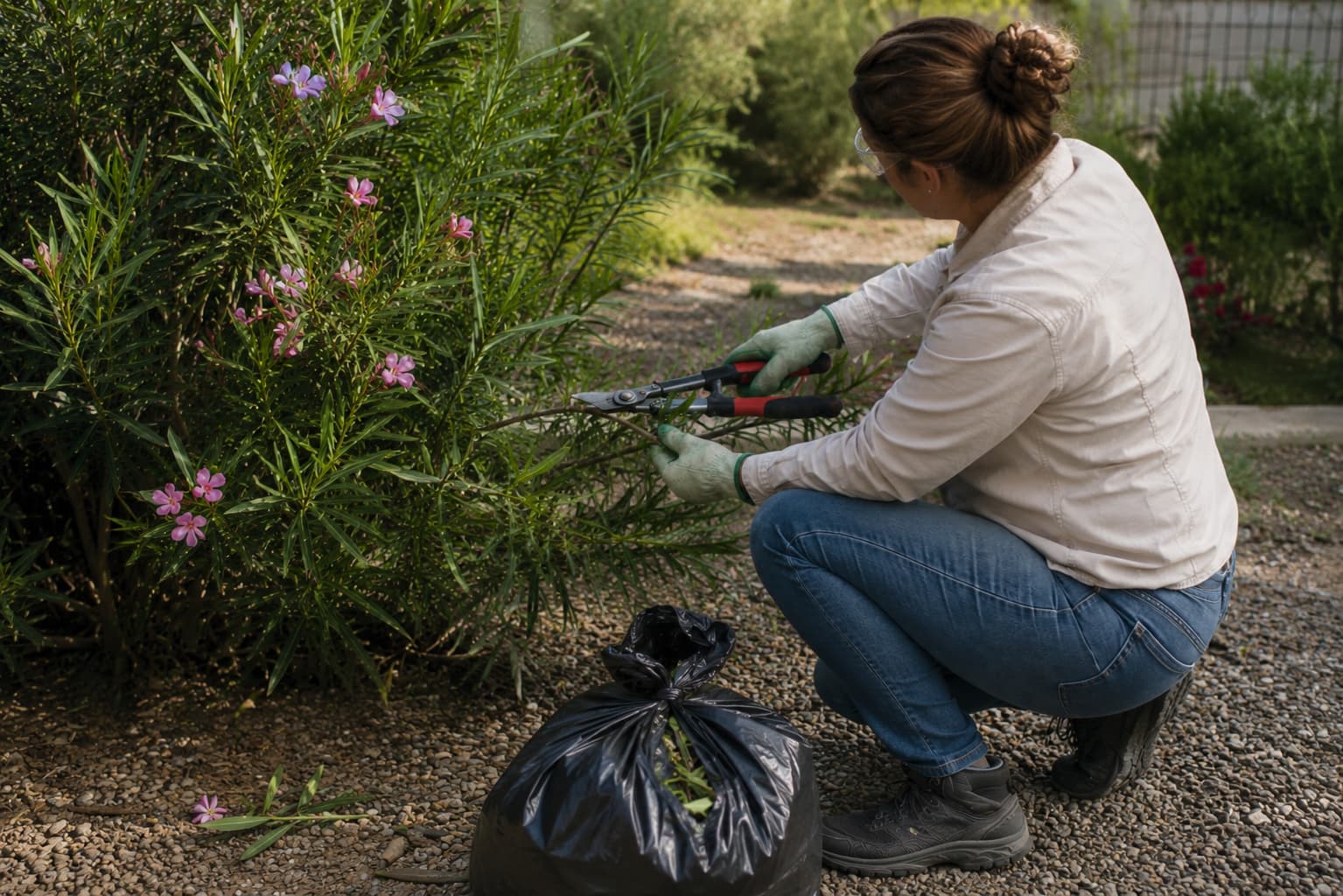
- Wear protection. Gloves, long sleeves, and eye protection reduce direct contact with sap and cut surfaces.
- Secure cut material. Keep pruned stems and leaves away from children and animals, then follow local disposal guidance.
- Never burn the plant. Do not put oleander into bonfires, cooking fires, or fireplaces.
| Garden situation | Recommendation | Why |
|---|---|---|
| Young children | Prefer another shrub | Accidental mouthing or handling is harder to prevent consistently. |
| Plant-chewing dogs or livestock | Prefer another shrub | Oleander is toxic to dogs, cats, horses, and other animals if eaten. |
| Controlled adult garden | Possible with precautions | Careful siting, protective clothing, and secure cleanup reduce exposure. |
| Public or shared landscape | Assess access carefully | Consider who can reach the plant and who will maintain it. |
If Oleander Is Not a Good Fit
Choose a shrub that suits the same site conditions without the same poisoning concern. For a different ornamental shrub option, see our Smoke Bush Care Guide. Always verify a replacement plant's regional suitability and household safety before planting.
How to Plant Oleander
Choose the site first
Before planting, prioritize full sun, drainage, mature size, and safe access. At the same time, oleander tolerates coastal exposure and dry conditions well once established, but it still performs best when roots are not sitting in persistently saturated soil.
- Light: choose a sunny position for the strongest flowering.
- Drainage: avoid low spots where water remains after rain.
- Space: use the cultivar's mature width rather than a universal spacing rule.
- Safety: keep the plant away from play areas, livestock access, and places where pets routinely chew vegetation.
Planting steps
- Dig a hole about as deep as the root ball and wider than the container.
- Set the top of the root ball level with the surrounding soil rather than burying the crown.
- Backfill with the existing soil unless local soil conditions require a specific correction.
- Water thoroughly to settle the soil around the roots.
- Add a modest mulch layer while keeping mulch away from the main stems.
For timing, spring is a reliable choice in climates where winter cold is a concern. In reliably mild climates, fall planting can also work because roots can establish while temperatures are moderate.
Oleander Care: Light, Water & Feeding
Light
For flowering, full sun is best. Plants grown in more shade can survive, but they tend to flower less densely and may develop a looser habit. If a mature oleander suddenly blooms less than it used to, check whether nearby trees or structures are now reducing its light.
Watering
During establishment, water deeply enough to moisten the root zone, then let the soil move toward slight dryness before watering again. Instead, weather, soil texture, and plant size matter more than a fixed weekly schedule.
Once established, oleander is drought-resistant, but that does not mean every plant should be left completely unirrigated. During prolonged heat or drought, inspect the soil and foliage and water when the root zone has become dry. By contrast, chronically waterlogged soil can damage roots.
Important Disease Distinction
Soggy soil can contribute to root problems, but it does not cause oleander leaf scorch. Oleander leaf scorch is caused by Xylella fastidiosa and is spread by xylem-feeding insects. Keeping those problems separate prevents the wrong diagnosis.
Fertilizing
In most established landscapes, feeding should be based on plant performance and local soil conditions rather than an automatic schedule. For example, if the shrub is growing and flowering normally, additional fertilizer may not be necessary. If growth is weak or leaves are pale, first rule out poor drainage, root stress, pests, and disease; then use a suitable fertilizer according to the product label or local soil-test guidance.
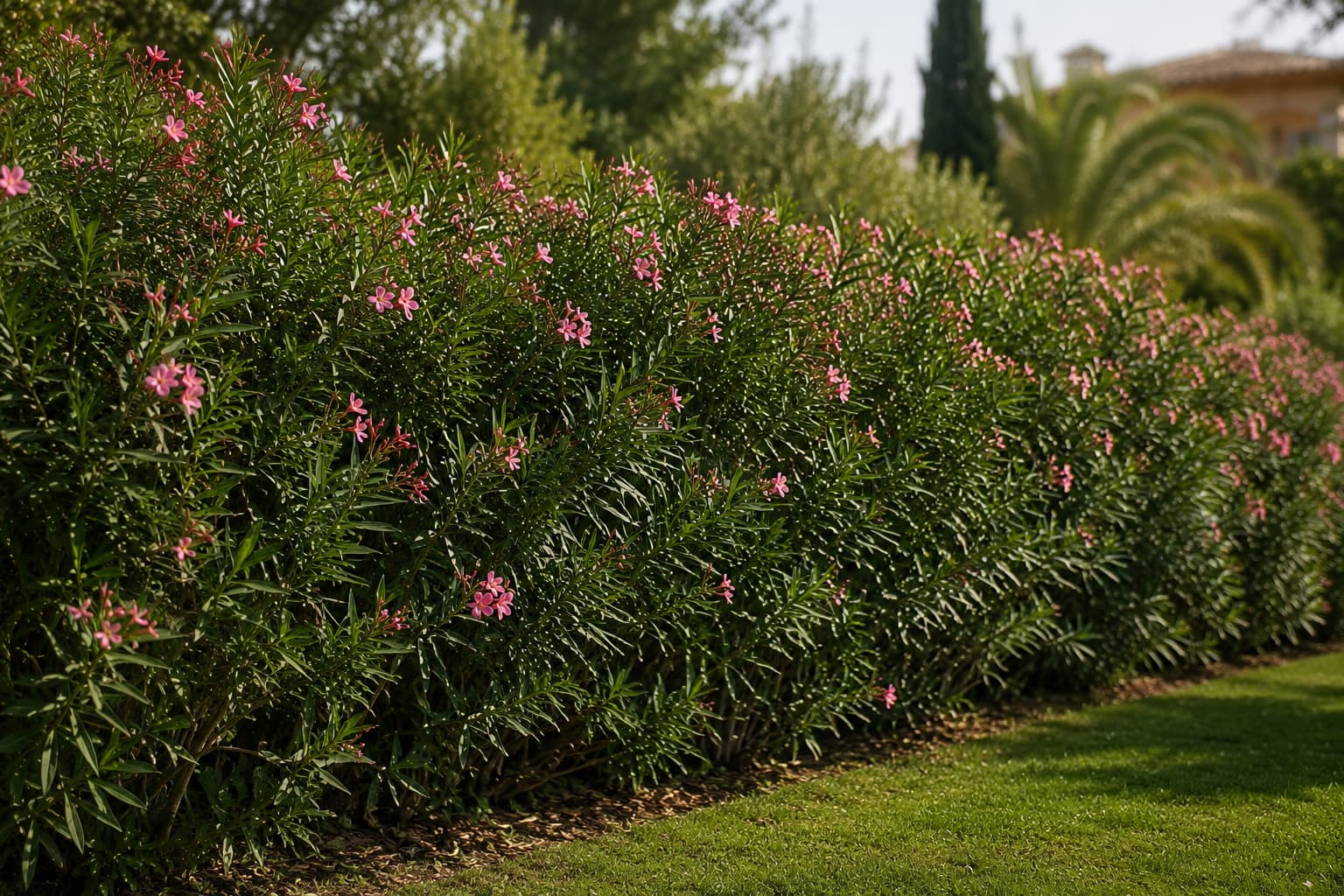
Winter Care and Container Growing
In colder climates, container growing gives you more control. Oleander is damaged by freezing temperatures, although cold tolerance varies among cultivars. Therefore, where winters are not reliably mild, a container can be moved to a bright, protected frost-free space.
Overwintering a container plant
- Move it before damaging freezes. Do not wait for repeated hard frost.
- Give it bright light. A greenhouse, sunroom, or similarly bright protected space is preferable to a dark room.
- Reduce watering. Cooler, slower-growing plants use less water, so keep the mix from staying wet.
- Pause routine feeding. Resume only when active growth restarts and feeding is actually needed.
- Keep it inaccessible. Indoor storage must still prevent children and pets from contacting the plant.
In spring, return the plant outdoors gradually after frost risk has passed. Reintroducing strong sun over several days helps reduce leaf scorch from sudden exposure.
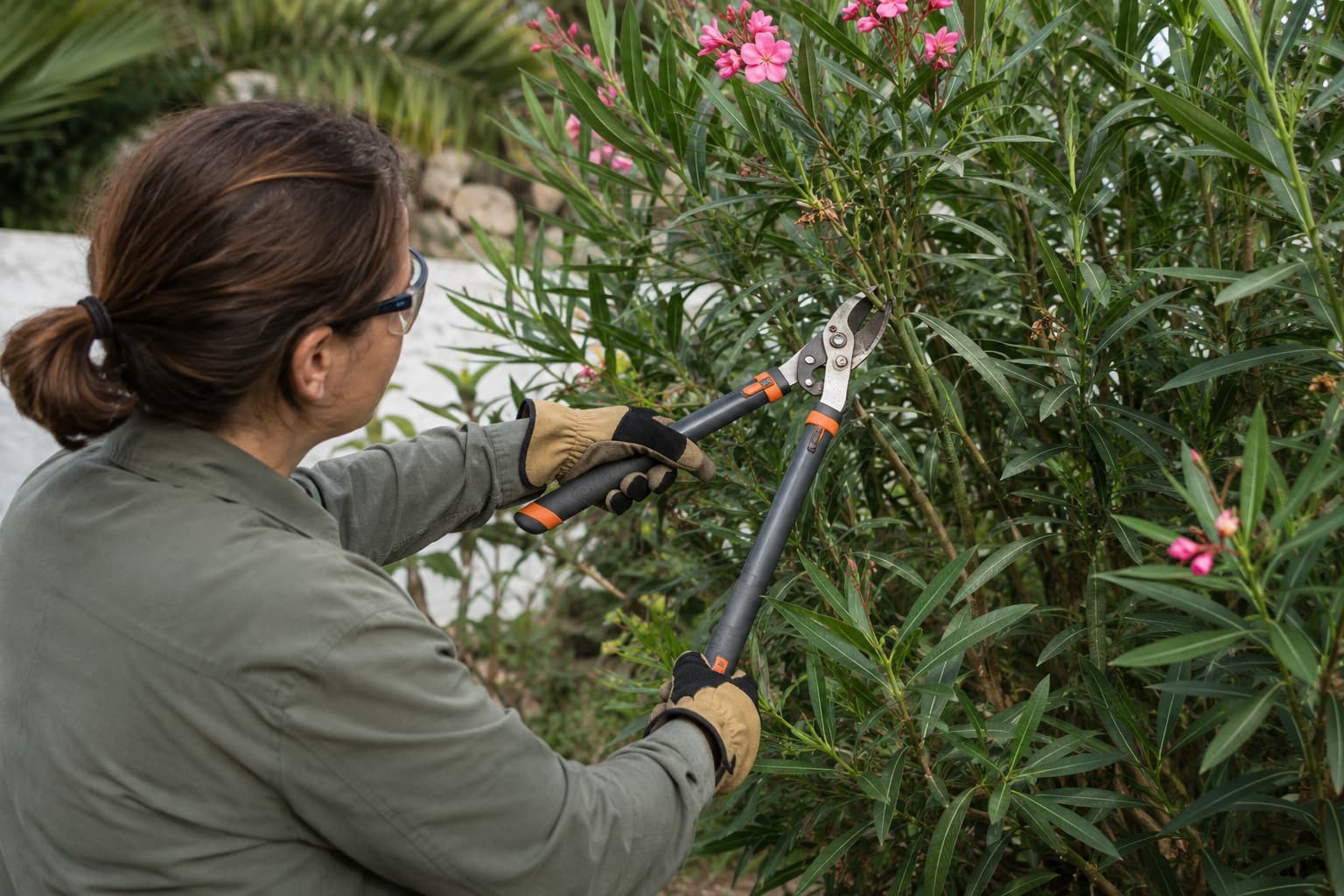
How to Prune Oleander Safely
Because oleander flowers on new growth, it tolerates pruning better than spring shrubs that flower on older wood. Even so, pruning time can influence that season's display, so avoid unnecessary heavy pruning once flowering growth is developing.
When to prune
For routine shaping, light pruning after flowering can improve form. Restrictive or rejuvenation pruning can be done in late winter or early spring where climate allows. Avoid repeated shearing if you want a more natural shrub with better interior structure.
This is different from shrubs such as forsythia, which is normally pruned after spring bloom because it carries next year's flowers on older wood.
A safer pruning sequence
- Put on protective clothing. Wear gloves, long sleeves, and eye protection before making cuts.
- Remove dead or damaged wood first. This makes the remaining structure easier to assess.
- Thin rather than only shear. Where the shrub is crowded, remove selected older stems rather than clipping every shoot to one flat surface.
- Make clean cuts. Cut just above a suitable node or back to an appropriate branch junction.
- Clean up immediately. Secure every cut stem and leaf so people and animals cannot reach the material.
Hard Pruning
Oleander can tolerate substantial size reduction when necessary. However, the amount of regrowth and flowering after hard pruning depends on plant health, climate, cultivar, and timing. If an old shrub needs major rejuvenation, reduce it in a controlled way rather than promising a fixed recovery schedule.
Oleander Diseases and Pests
Oleander leaf scorch (Xylella fastidiosa)
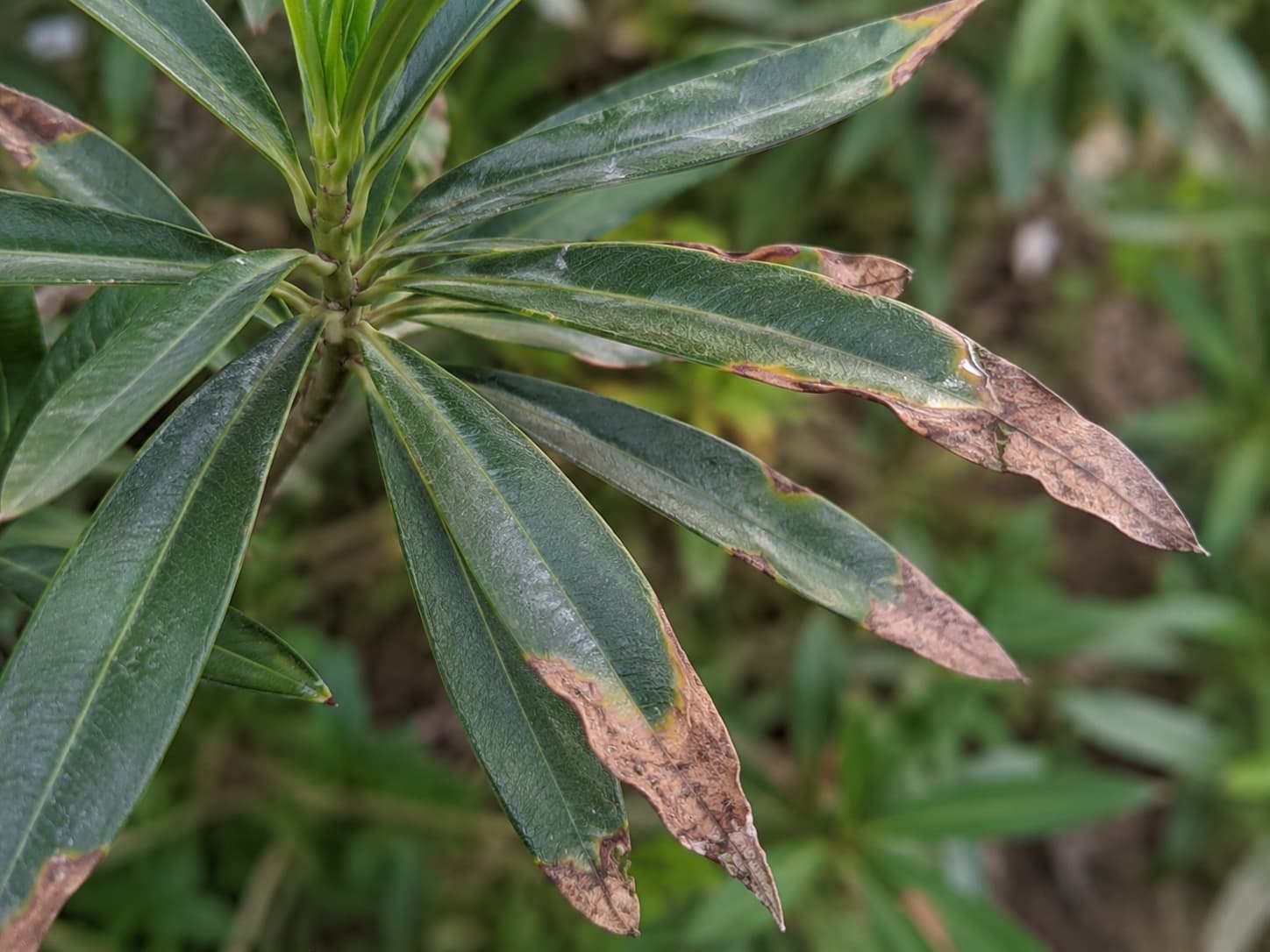
First, oleander leaf scorch is a serious bacterial disease caused by Xylella fastidiosa. It is spread by xylem-feeding insects, including sharpshooters. Because symptoms can resemble drought stress, diagnosis matters.
Look for a pattern: affected branches may yellow and droop, while leaf margins progress from yellow to brown. Drought stress tends to affect the plant more uniformly and may improve after watering. By contrast, a plant with bacterial leaf scorch does not recover simply because it receives water.
Unfortunately, there is no known cure. Pruning symptomatic branches may improve appearance, but it does not reliably save an infected plant because the bacterium can already be present elsewhere in the vascular system. If the pattern persists, contact a local extension service or plant diagnostic laboratory before deciding on removal.
Oleander caterpillar (Syntomeida epilais)
Meanwhile, the oleander caterpillar is a conspicuous pest in parts of the southeastern United States. In particular, young larvae often feed together and can remove large areas of foliage quickly.
For small infestations, UF/IFAS recommends removing infested foliage or hand-picking larvae where practical. Wear gloves because you are handling oleander tissue. If a pesticide is needed, a Bacillus thuringiensis product labeled for caterpillars can work best on younger larvae; always follow the product label.
Aphids, scale, and indoor pests
In addition, aphids and scale insects can occur on stressed or tender growth, and container plants overwintered under glass may also develop mealybugs or spider mites. Start with inspection and physical removal where practical. If you use insecticidal soap, horticultural oil, or another pesticide, confirm that the product is labeled for the pest and plant and follow all directions.
Oleander Varieties to Know
When choosing a cultivar, flower color is only one factor. In addition, mature size and cold tolerance matter just as much, especially near the colder edge of oleander's outdoor range.
| Cultivar | General character | Best use |
|---|---|---|
| 'Hardy Red' | Large red-flowering selection known for better cold tolerance than many oleanders | Warm gardens near the colder edge of oleander culture; verify local performance |
| 'Petite Pink' | Compact pink-flowering selection, often around 3–4 ft with light pruning | Containers and smaller gardens in suitably mild climates |
| 'Sister Agnes' | Vigorous white-flowering cultivar that can become a large shrub | Large screens or specimen planting where space allows |
| 'Mrs. Roeding' | Double salmon-pink flowers | Flower-focused warm-climate planting |
| 'Variegatum' | Variegated foliage with pink flowers | Foliage interest as well as summer bloom |
Frequently Asked Questions
Safety & Placement
01How toxic is oleander?
Oleander is highly toxic if eaten. All parts contain cardiac glycosides, and poisoning can cause serious gastrointestinal and cardiac effects. If a person or animal may have eaten oleander, contact a poison-control service, medical professional, or veterinarian promptly.
02Can I burn oleander trimmings?
No. Do not burn oleander. Authoritative horticultural sources warn that smoke from burning the plant can be harmful. Keep trimmings inaccessible to children and animals and follow local disposal guidance.
03Should I grow oleander around dogs or young children?
Usually, a lower-risk shrub is the better choice where accidental chewing or mouthing is plausible. Fencing or rules do not eliminate every exposure risk, so evaluate your household and garden access before planting.
Care, Pruning & Troubleshooting
04Why are my oleander leaves turning brown at the edges?
Several problems can cause marginal browning. Drought, salt or mineral injury, root stress, and oleander leaf scorch can overlap visually. Because Xylella fastidiosa cannot be cured by pruning or watering, persistent branch-by-branch decline should be professionally diagnosed before you remove the shrub.
05Why isn't my oleander blooming?
Start with light. Oleander flowers best in full sun. Then check recent heavy pruning, excessive nitrogen, cold damage, and general plant stress. A healthy shrub in strong light usually flowers more reliably than one pushed with extra fertilizer.
06Can oleander grow in a container?
Yes. Dwarf cultivars are particularly useful in large containers with drainage. Container growing is also practical where winters are too cold for reliable outdoor survival because the plant can be moved to a bright, frost-free location.
07What are the orange caterpillars on my oleander?
They may be oleander caterpillars. In regions where this pest occurs, remove infested foliage or hand-pick larvae when practical. For larger outbreaks, use only a product labeled for the pest and follow label directions; Bt products can be effective against young caterpillars.
08Is oleander salt-tolerant?
Yes. Oleander is well known for tolerating coastal salt spray, which is one reason it is used in seaside landscapes. Even so, drainage, cold exposure, and safe placement still determine whether it is a good choice for a particular garden.
Sources & Further Reading
Final Thoughts
Ultimately, oleander is valuable because it handles sun, heat, drought, coastal exposure, and repeated flowering better than many landscape shrubs. At the same time, its toxicity changes the decision. Therefore, a beautiful plant is not the right plant if household access makes safe management unrealistic.
If oleander does fit your garden, keep the routine simple: give it strong light, well-drained soil, sensible watering, restrained feeding, and careful pruning. Watch persistent scorch symptoms rather than assuming every brown edge is drought. Above all, treat every leaf, stem, flower, and cutting as poisonous material.
Are you growing oleander? Share your climate zone, container or in-ground setup, and the biggest care or pruning question you are trying to solve.