How to Create a Night-Blooming Garden from Scratch
A night-blooming garden is designed for the hours when the rest of the yard starts to disappear. Pale flowers, evening fragrance, dark foliage, and restrained lighting can turn a small patio or garden path into a calmer space after sunset.
Quick Answer
Start with three decisions: choose the evening view you actually use, plant a mix of pale or fragrant flowers with overlapping bloom times, and keep artificial lighting low, warm, and targeted. A successful night garden does not need to be large. In fact, one vine, one fragrant container, and one small seating area can be enough.
What Is a Night-Blooming Garden?
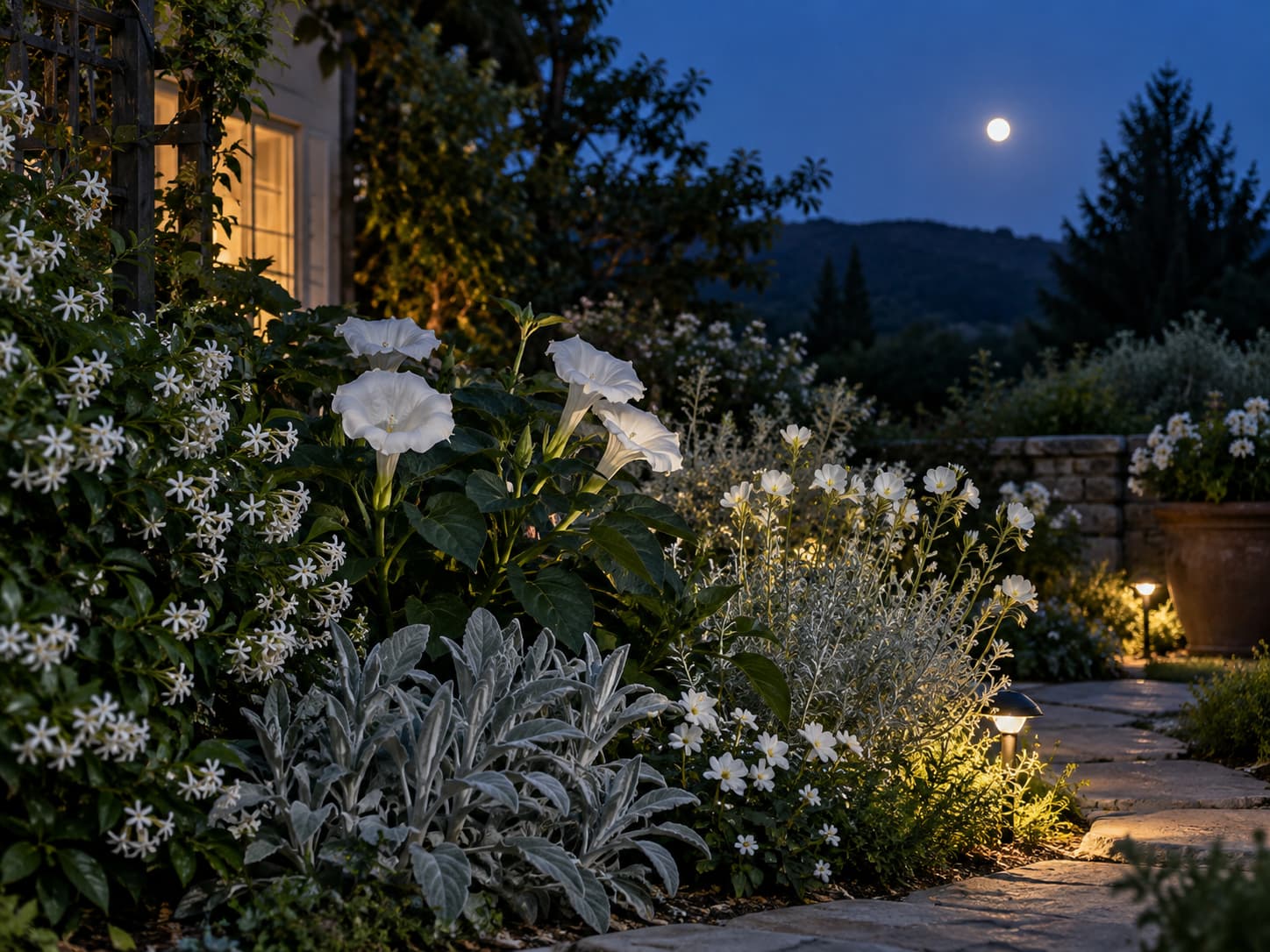
A night-blooming garden — often called a moon garden or evening garden — is simply a garden designed to be noticed after dusk. The strongest designs combine three sensory layers: flowers that open or release more fragrance in the evening, pale surfaces that remain visible in low light, and enough darkness for nocturnal wildlife to function normally.
Importantly, not every plant has to bloom at night. White or silver foliage can remain visually useful after sunset, while daytime flowers can still support pollinators before the evening shift begins.
Greenmuse 3-Step Night-Garden Plan
1. Choose the view before you choose the plants
Start with the place you actually use after dark: a patio chair, kitchen window, bedroom window, porch, or short garden path. Then, design the planting so the evening flowers are visible from that point. This is more practical than building a moon garden in a remote corner you rarely visit.
2. Build one vertical layer, one middle layer, and one edge layer
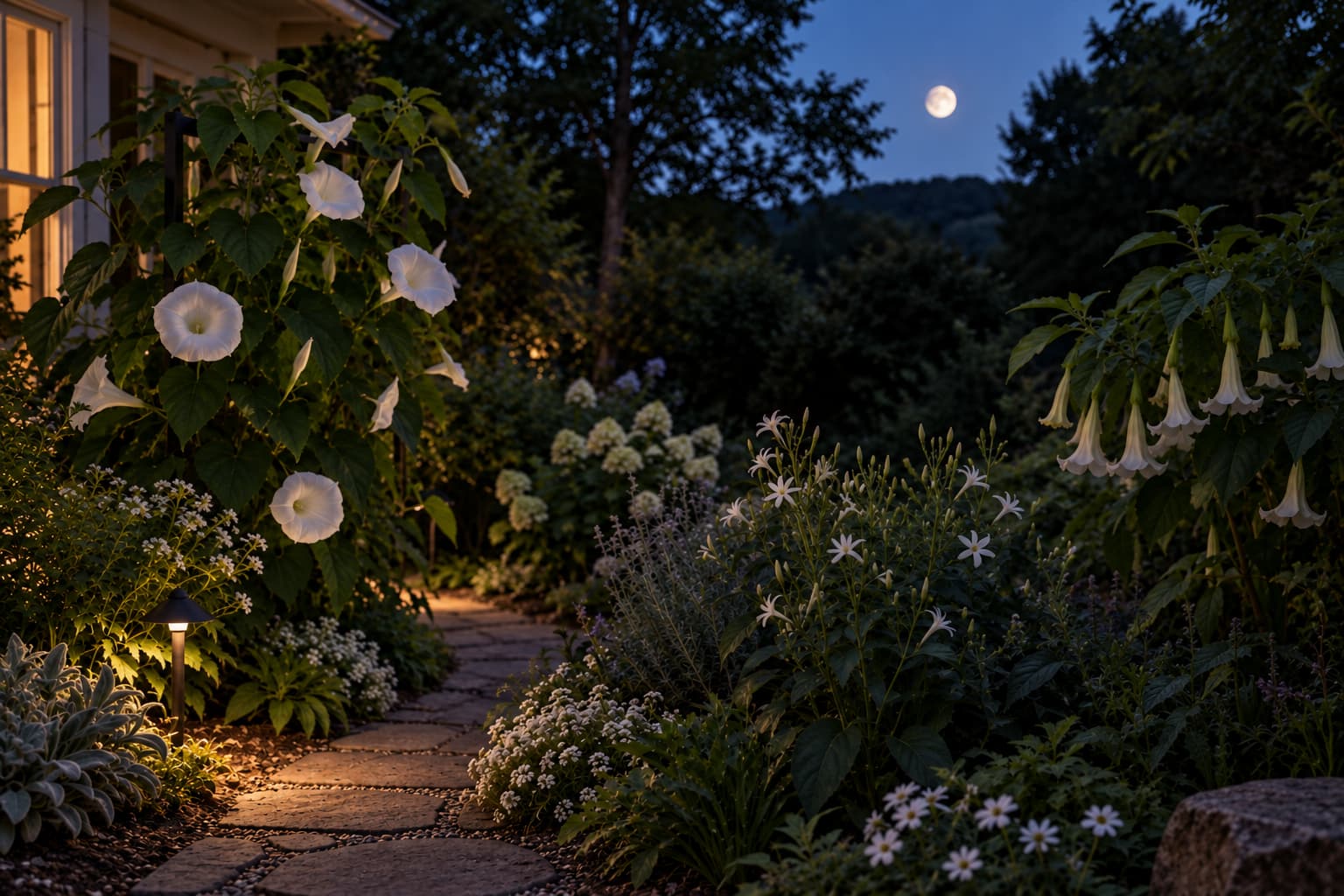
Use a climber such as moonflower for height, a fragrant upright plant such as flowering tobacco or tuberose in the middle, and a lower plant near the path or container edge. As a result, even a small bed feels layered rather than flat.
3. Add only the light you truly need
Instead of flooding the flowers with decorative light, illuminate steps, edges, and seating surfaces. For nighttime pollinators, darkness is part of the habitat, not an empty space that needs to be filled.
6 Plants for a Night-Blooming Garden
| Plant | Habit | Evening feature | Good for | Important note |
|---|---|---|---|---|
| Moonflower Ipomoea alba | Fast twining vine | Large white flowers open at night | Trellis, fence, arch | Seeds can be harmful if eaten; keep away from children and pets |
| Evening primrose Oenothera biennis | Upright biennial | Yellow flowers open toward evening | Naturalistic beds | Can self-seed freely |
| Night phlox Zaluzianskya capensis | Compact flowering plant | Evening fragrance | Containers, path edges | Best treated according to local climate |
| Tuberose Agave amica | Upright bulbous perennial | Powerful white-flower fragrance | Containers, sheltered sunny sites | Tender in cold climates; harmful if eaten by pets |
| Flowering tobacco Nicotiana alata | Tall annual / tender perennial | Strongly scented tubular flowers at night | Back of border, large containers | Ornamental tobacco is not edible; site away from children and pets |
| Night-blooming jasmine Cestrum nocturnum | Large woody shrub | Very strong nighttime fragrance | Warm-climate gardens, large containers | Toxic if ingested; invasive in some warm regions |
Moonflower: the vertical anchor
Moonflower (Ipomoea alba) is useful when you need height without using a shrub. It climbs fences, arches, and trellises, then opens large pale flowers after dark. For a full planting and care walkthrough, see our Moonflower guide.
Because the seeds contain potentially harmful compounds, treat moonflower as an ornamental rather than something children or pets should handle casually.
Evening primrose: an easy naturalistic layer
Common evening primrose (Oenothera biennis) opens yellow flowers toward dusk and can attract night-flying moths. However, it can reseed readily, so it works best in a relaxed planting where some movement is acceptable.
Night phlox: fragrance near the path
Night phlox works well closer to a seating area or path because its fragrance is more useful at human scale. Pair it with pale gravel, a simple pot, or darker foliage so the flowers remain visible as the light fades.
Tuberose: strong fragrance in a movable container
Tuberose is famous for its rich scent and prefers a sunny, sheltered, well-drained position. In colder climates, a container makes seasonal protection easier. Because pet-safety references flag tuberose as harmful if eaten, place containers where chewing pets cannot reach them.
Flowering tobacco: choose the fragrant type
True Nicotiana alata produces fragrant tubular flowers that open at night. By contrast, some compact nursery hybrids have weaker fragrance or flowers that stay open during the day, so check the label rather than buying by common name alone.
Night-blooming jasmine: powerful, but not a default choice
Night-blooming jasmine is an intensely fragrant shrub, but it is not a true jasmine. It belongs to the nightshade family, can become invasive in some warm climates, and all parts should be treated as toxic if ingested. For that reason, it should be a deliberate choice rather than a default moon-garden plant.
For an intensely fragrant shrub option, see our guide to growing night-blooming jasmine safely, including its toxicity, fragrance, container care, and invasive potential.
Check invasive status before planting
Warm-climate ornamentals can behave very differently from one region to another. Before planting night-blooming jasmine or any vigorous self-seeder, check local extension or invasive-species guidance for your area.
How to Arrange a Moon Garden
The simplest layout is based on distance, height, and scent strength.
Put the strongest fragrance farther away
A powerful scent is more pleasant when it drifts toward you than when the source is directly beside your chair. Therefore, place very fragrant shrubs or tuberose farther from a small seating area, while lighter fragrance can sit closer to the path.
Use pale flowers where the eye naturally lands
White, cream, pale yellow, and silvery foliage reflect more available light than dark flower colors. For example, use pale plants at a bend in the path, beside a gate, or behind a bench rather than distributing them evenly everywhere.
Leave dark gaps
A moon garden needs contrast. Empty space, mulch, darker foliage, and unlit corners make the pale flowers easier to notice. In other words, you do not need to fill every square foot.
Lighting: Use Less, Not More
The old version of this article recommended cool white 5000–6000K bulbs to imitate moonlight. That advice has been removed. Artificial light at night can disrupt moths and other nocturnal pollinators, especially when bright fixtures shine directly into flower beds.
If lighting is necessary for safety, use the lowest practical brightness, shield the fixture, point it downward, and keep it off when nobody needs it. DarkSky guidance also favors warmer-colored outdoor light, while the Xerces Society recommends reducing unnecessary nighttime illumination around pollinator habitat.
Greenmuse night-light rule
- Light the step or path, not the flower.
- Use warm, low-level light rather than bright blue-white light.
- Add a timer, dimmer, or motion control.
- Preserve at least part of the garden as a genuinely dark zone.
Night-Garden Care Without the Myths
Water based on the soil, not the clock
The old post recommended watering in early evening “before blooming.” That is not a useful universal rule. Instead, water according to the needs of each plant and the moisture in its root zone. Morning watering is often easier because foliage has time to dry and you can see drainage clearly.
Deadhead only when it helps the plant or controls seed
Deadheading can improve appearance and reduce self-seeding, but it does not automatically force every species to bloom more. For example, removing spent flowers is especially useful when you are trying to prevent unwanted seed formation.
Skip routine pesticide use around evening flowers
If the goal is to support moths and other nighttime visitors, avoid preventive insecticide treatments. Instead, identify the actual pest first and use the least disruptive solution that fits the problem.
A Small-Space Night Garden
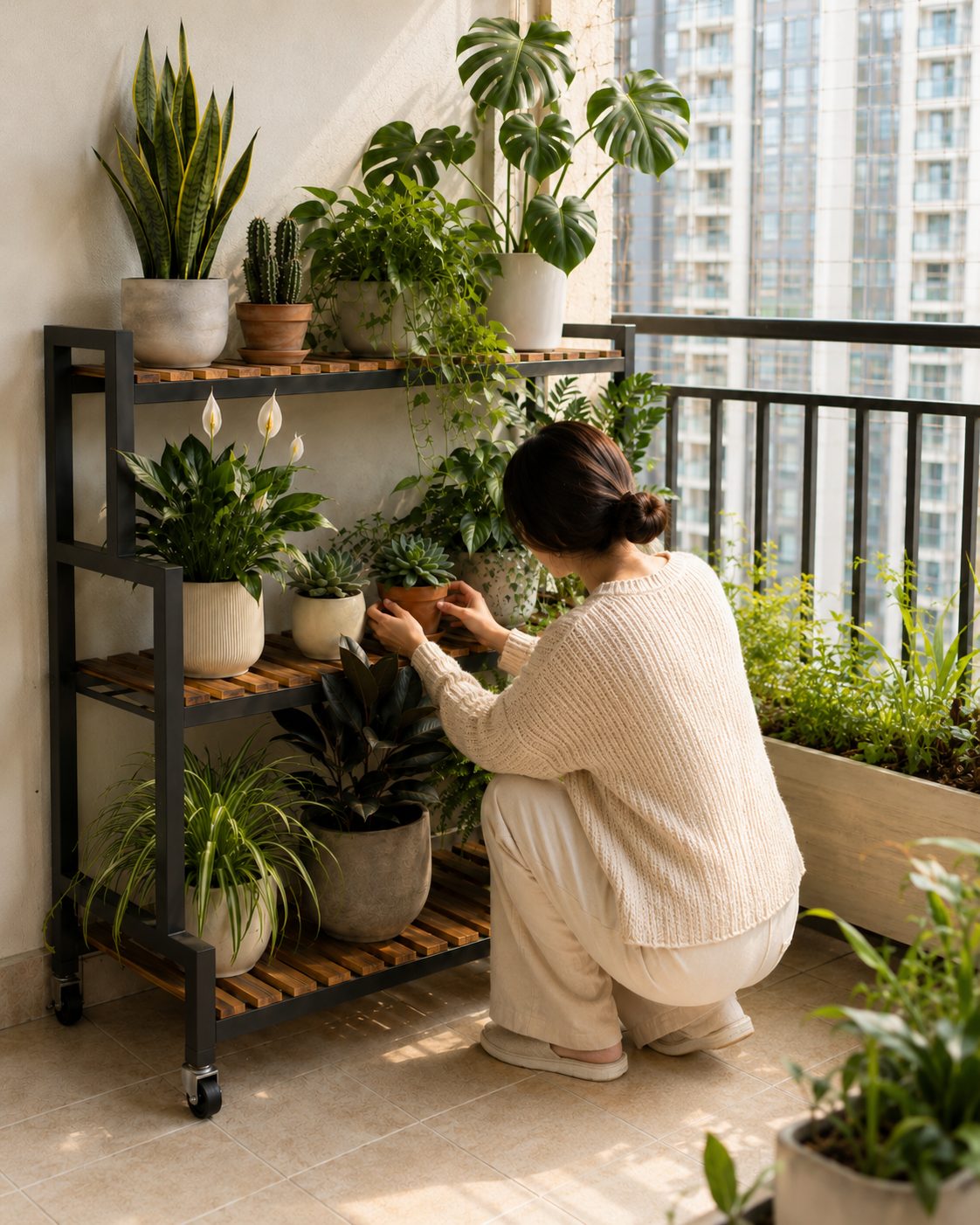
You do not need a full garden bed. A balcony or patio can use the same design logic in three containers:
- One vertical pot: moonflower on a secure trellis.
- One fragrance pot: flowering tobacco or tuberose, depending on climate and household safety.
- One low edge pot: a compact pale or fragrant plant suited to your region.
Then, leave one small chair or standing spot where you can actually experience the scent without surrounding yourself with too many competing fragrances.
A Garden for Slower Evenings
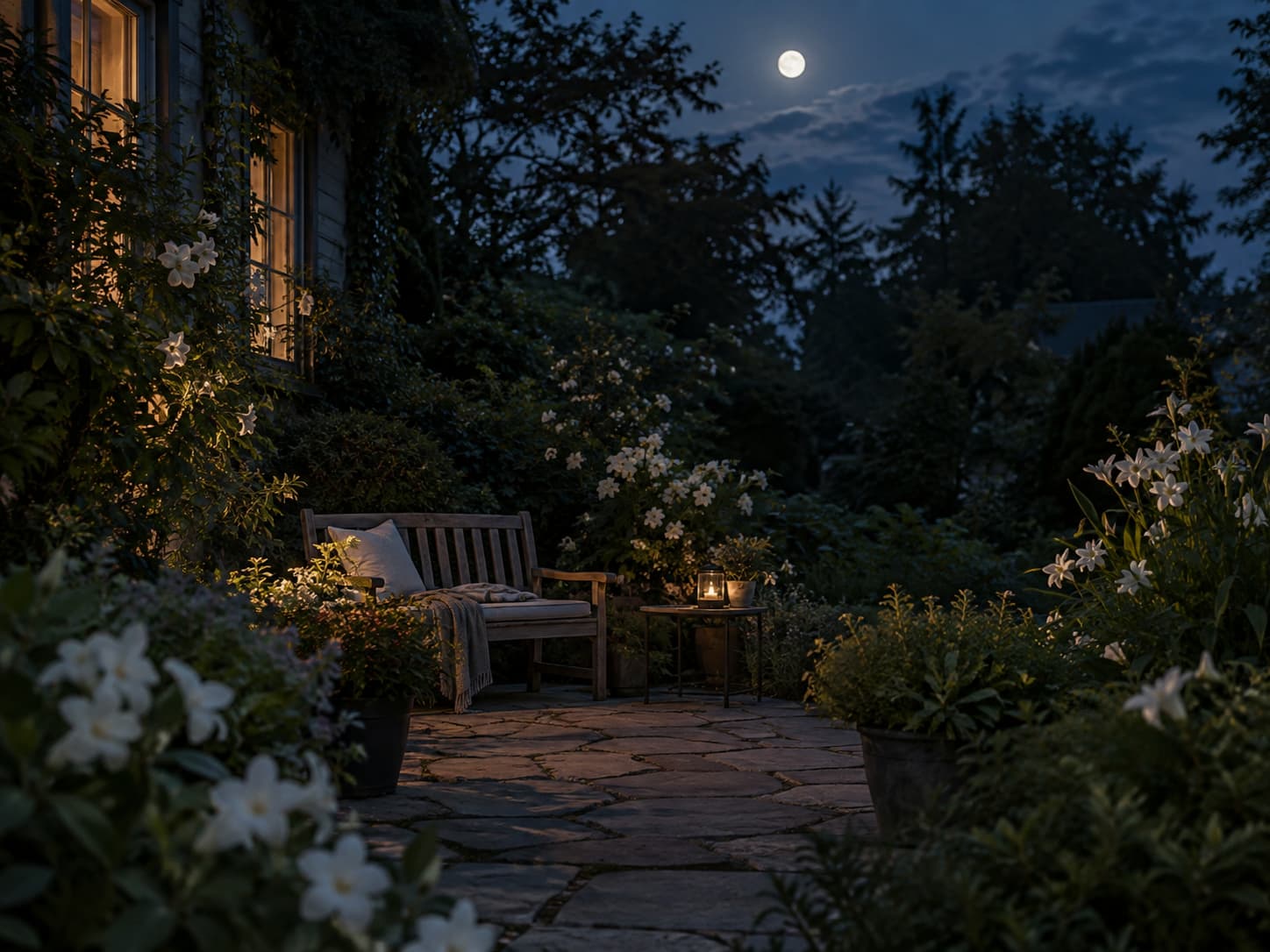
The best night garden is not simply a daytime garden with white flowers added to it. It is a place designed around how the garden feels after the visual noise of the day disappears.
In practice, that may mean sitting outside for ten minutes, noticing which flower opens first, watching a moth move between blossoms, or simply letting one fragrant plant mark the end of the day. The therapeutic value comes from the routine and attention, not from making the garden perfect.
Frequently Asked Questions
1. What is the best plant for a beginner night garden?
Choose by climate and available light. Moonflower is useful when you have strong sun and a trellis, while flowering tobacco can work well in a sunny or partly shaded border. A simple two- or three-plant combination is easier to manage than a large collection.
2. Do I need white flowers for a moon garden?
No. White and pale flowers remain more visible in low light, but silver foliage, scent, flower shape, and plant movement can all contribute to the evening effect.
3. Should I use bright lights so the flowers show at night?
No. Use only the light needed for safe movement. Keep fixtures low, shielded, warm in color, and directed away from flowers whenever possible so nocturnal insects still have dark habitat.
4. Is night-blooming jasmine a good moon-garden plant?
It can be striking in the right climate and location, but it has important tradeoffs: very strong fragrance, toxicity if ingested, and invasive potential in some warm regions. Check local guidance before planting and read our dedicated night-blooming jasmine guide first.
5. When should I water a night garden?
Water according to soil moisture and the needs of each species rather than because the flowers open at night. Morning is a practical default for many gardens because leaves and soil surfaces have time to dry during the day.
6. How do I make a night garden better for moths?
Reduce unnecessary artificial light, include locally appropriate nectar and host plants, avoid preventive pesticide use, and preserve some dark, sheltered habitat.
Sources & Further Reading:
- NC State Extension — Moonflower (Ipomoea alba)
- NC State Extension — Nicotiana alata
- Missouri Botanical Garden — Common Evening Primrose
- RHS — Tuberose
- NC State Extension — Cestrum
- DarkSky International — Five Principles for Responsible Outdoor Lighting
- Xerces Society — Artificial Light and Nocturnal Pollinators
What opens first in your garden after sunset? Share your climate zone, favorite evening flower, and whether you garden in beds, containers, or a balcony.