What to Do in the Garden in November
Wondering what to do in the garden in November? Start by checking what the weather is doing where you live. In a cold region, the priority may be protecting pots and finishing bulb planting. In a milder garden, you could still have time for garlic, leaf composting, and outdoor jobs that would be impossible farther north.
This November garden checklist keeps things manageable: finish time-sensitive planting, make useful choices about fallen leaves, protect plants from winter damage, and prepare tools and indoor plants for the quieter season. You do not have to do everything in one weekend.
Quick Answer: Your November Garden Checklist
| Your conditions | Do first | Wait or skip |
|---|---|---|
| Cold region; soil already frozen | Protect containers, secure watering systems, check mulch and tree guards | Do not force bulbs or shrubs into frozen soil |
| Cool, workable soil; freezing weather approaching | Finish locally appropriate bulbs and garlic, water dry evergreens, prepare winter protection | Avoid planting into saturated soil or making major late pruning cuts |
| Mild or rainy winter climate | Prioritize drainage, leaf collection, disease cleanup, and planting when soil is suitable | Do not apply heavy insulation simply because the calendar says November |
One important distinction: the USDA Plant Hardiness Zone Map describes average extreme winter minimum temperatures, not your first frost date. For November decisions, use the local forecast, soil conditions, and your region's usual freeze pattern as well. In the UK and Europe, local frost forecasts and winter-wet soil conditions are just as important.
Last Call: What Can You Still Plant in November?
Spring-Flowering Bulbs
In many temperate gardens, you can still plant tulips, daffodils, and other spring bulbs in November if the soil can be dug and drains well. Place them at the depth recommended for the bulb type, with the pointed end up where that shape is clear. If the ground has frozen solid, stop rather than trying to force a planting hole.
Bulb timing is not identical everywhere. Warm-winter gardens may need pre-chilled tulips or other special treatment, while cold gardens may have finished planting weeks earlier. Check our spring-bulb planting guide for depth, spacing, and container options.
Garlic
Fall-planted garlic establishes roots before winter in many regions. November can still work where soil remains unfrozen and the local planting window has not passed. Separate sound cloves shortly before planting, keep the papery coverings on, and place them in a sunny, well-drained bed with the pointed end up.
However, planting dates vary widely. If your ground is already deeply frozen, a generic November calendar should not persuade you to plant. See our fall garlic guide for climate-specific timing and planting details.
Hardy Trees, Shrubs, and Perennials
In mild areas, autumn can still be a practical time to plant hardy nursery stock. Roots may continue to grow while the soil remains workable. In a cold region with an imminent hard freeze, though, a newly planted container shrub may not have enough time to settle. Consider holding it safely and planting in spring instead.
Whatever you plant, water it in and check drainage. The goal is moist soil around the roots, not a soggy hole that stays saturated through winter.
Put Fallen Leaves to Work Instead of Throwing Them Away
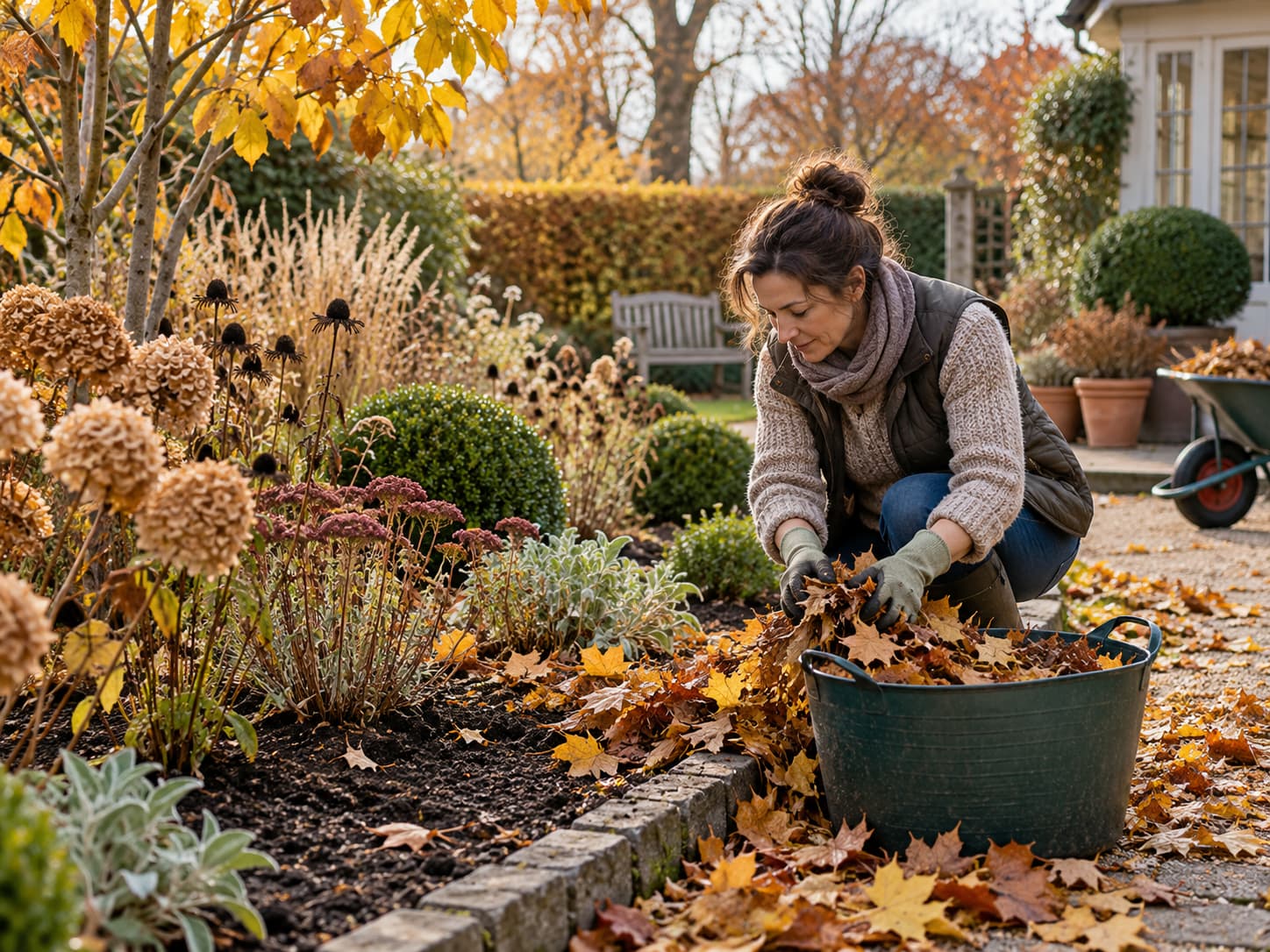
Dry autumn leaves can become leaf mold, a useful compost ingredient, or protective material for the garden. Shredding leaves with a mower or leaf shredder helps them break down and prevents thick, slippery mats from forming on lawns.
- On the lawn: chop and distribute a modest layer of leaves so grass remains visible. Remove excess piles that would smother turf.
- In the compost bin: store dry shredded leaves as carbon-rich “browns” for balancing vegetable scraps and other nitrogen-rich ingredients. Keep a reserve dry enough to use throughout winter.
- In garden beds: leave some leaves where they provide habitat, but avoid thick, wet mats over small evergreen crowns and plants prone to rot.
- On paths and drains: clear leaves that create slip hazards or block drainage.
For a simple kitchen-scraps-and-leaves method, follow our green vs. brown compost guide. Shredded leaves are useful, but they do not need to be removed from every bed to make a tidy-looking garden.
Protect What Stays Outside Over Winter
Mulch Where Freeze–Thaw Damage Is a Risk
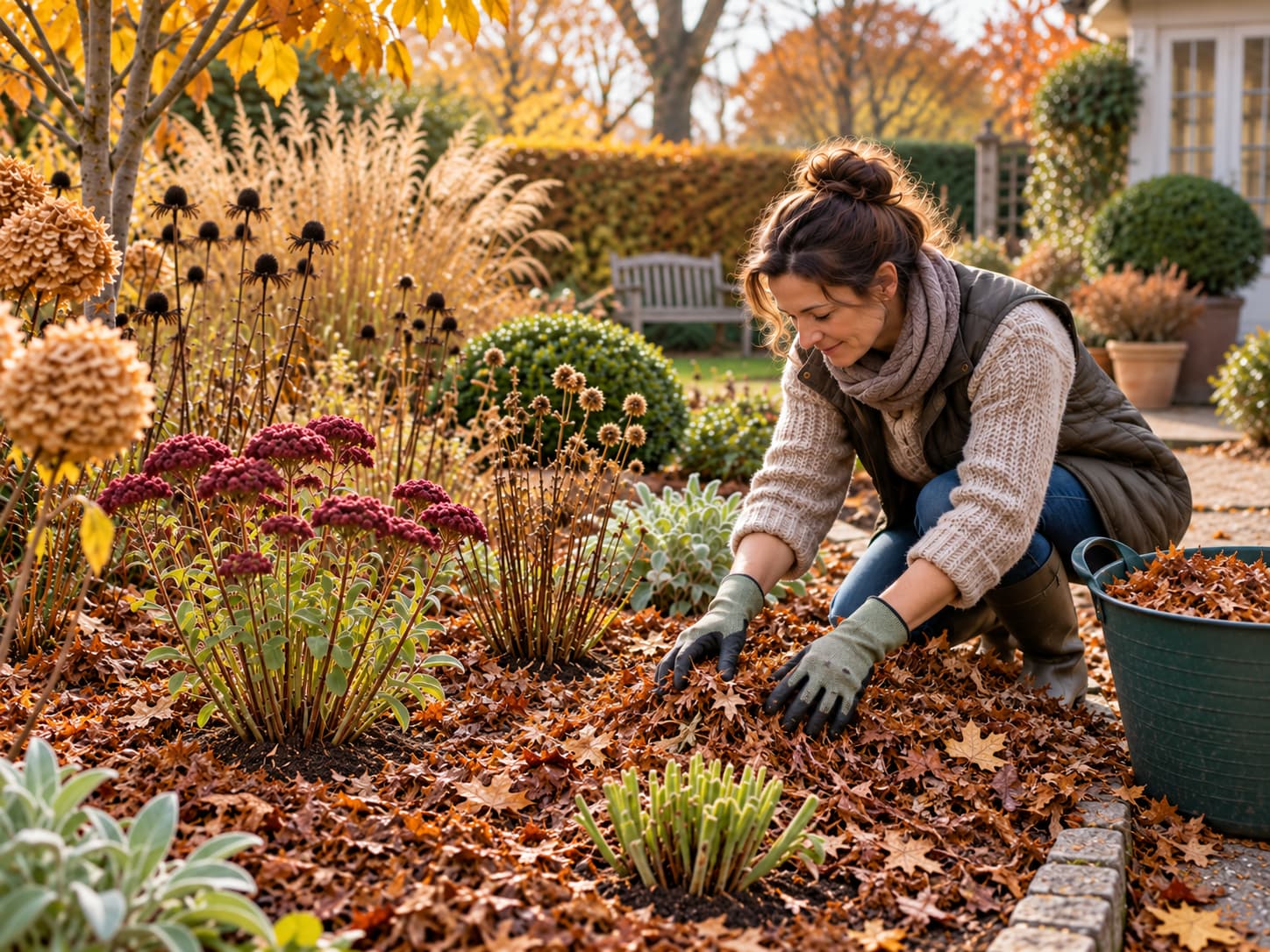
In regions with repeated freezing and thawing, protective mulch can reduce frost heaving around shallow-rooted or newly established perennials. Wait until the soil has cooled and plants have entered dormancy; for winter protection, many extension services recommend applying the extra insulating layer after several frosts or once the ground begins freezing.
A loose layer of shredded leaves or straw may help, with depth chosen for the plant and local winter. Keep mulch from packing tightly against woody trunks and disease-prone crowns, and remove excess winter protection when spring growth resumes. Mild, wet-winter gardens often need less insulation and more attention to drainage. Iowa State University Extension explains why timing matters.
Water Trees and Evergreens if Autumn Has Been Dry
Evergreens can lose moisture from their foliage on sunny, windy winter days, even when roots cannot take up water from frozen ground. If autumn has been unusually dry and the soil is still unfrozen, water the root area thoroughly before deep cold arrives. Skip watering when soil is waterlogged or frozen.
Protect Young Tree Trunks and Exposed Containers
Where winter sun, fluctuating temperatures, or wildlife cause damage, fit suitable tree guards to vulnerable young trunks. Avoid trapping moisture against bark, and follow local guidance for when guards should be removed.
Containers need special care because their roots are exposed to colder air on all sides. Group hardy pots in a sheltered location, insulate the outside of pots where appropriate, or sink suitable containers into soil for greater root protection. Ensure drainage still works; insulating a waterlogged pot will not save its roots. For step-by-step choices, see How to Overwinter Potted Plants Outdoors.
Cut Back Only Where It Helps
Remove badly diseased foliage and dispose of it appropriately rather than adding suspect material to a cold compost pile. Otherwise, consider leaving healthy hollow stems, seed heads, and some leaf litter through winter. Birds use seeds, and beneficial insects may shelter in standing vegetation. This is one of the few jobs that can be better done less thoroughly.
Clean, Drain, and Store Your Garden Tools
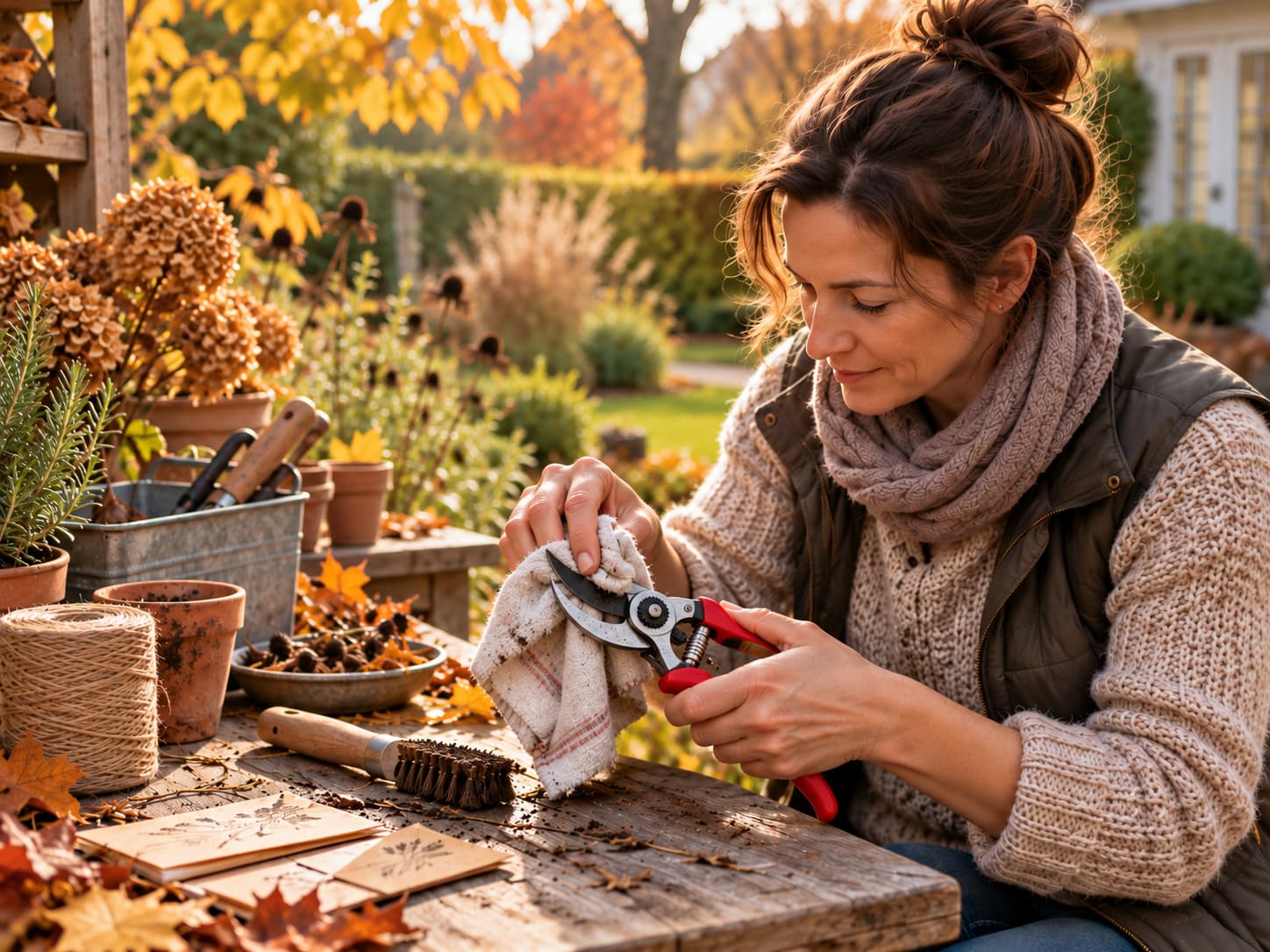
This part of the November checklist is useful in almost every climate. A short session now can prevent broken fittings, rusty tools, and cracked containers when spring arrives.
- Disconnect and drain hoses. Where freezing is possible, turn off exterior water supplies as directed by your plumbing setup, drain hoses, and winterize irrigation systems properly.
- Clean hand tools. Brush off soil, dry metal surfaces, and remove sap from pruners. Disinfect tools when moving between diseased plants; then apply an appropriate light protective oil to metal parts.
- Check cutting edges. Sharpen dull pruners carefully and store them dry. Replace loose or damaged parts before next season.
- Store vulnerable pots and equipment. Empty non-frostproof terracotta pots, let them dry, and place them somewhere sheltered. Service the mower and follow the manufacturer's fuel or battery storage guidance.
Start the Indoor Season and Plan for Spring
Move Tender Plants Before Damaging Cold
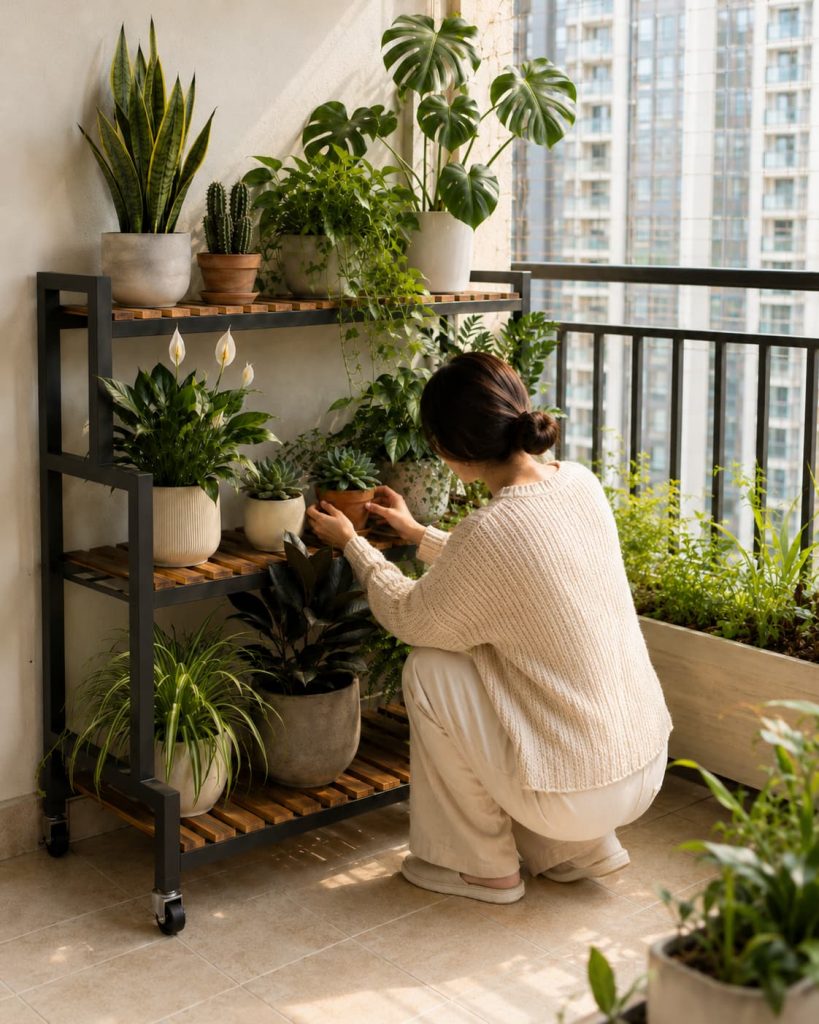
Tropical foliage plants, tender succulents, and other cold-sensitive containers may need moving well before frost. Check each plant's temperature tolerance rather than waiting for a single calendar date. Inspect leaf undersides, stems, and the pot for pests before bringing anything into the house.
Indoor light and watering needs will differ from outdoor conditions. Our guide to bringing plants indoors for winter explains the transition and quarantine steps.
Pot Holiday Bulbs If You Want Indoor Flowers
Amaryllis and paperwhites are useful choices for late-autumn indoor projects, although the time they take to flower depends on the bulb, temperature, and whether it is prepared for forcing. Plant in a suitable container and follow the bulb supplier's instructions. Paperwhites often bloom within several weeks, while amaryllis can take longer.
Review the Garden While It Is Fresh in Your Mind
Before putting your notebook away, record three things: a plant that performed well, a bed that stayed too wet or dry, and one change you want to make next year. You can also save seed packets and take a photograph of plant spacing before the borders disappear into winter. There is no need to order everything today; a short list makes spring planning easier.
November Garden Jobs by Region
November is a Northern Hemisphere autumn month, so this guide is intended mainly for North America and Europe. Even within those regions, the same job can be urgent in one garden and unnecessary in another.
| Typical climate | November priority | Watch out for |
|---|---|---|
| Cold continental winters | Finish winterizing pipes and pots; protect vulnerable crowns after cooling; stop planting once soil freezes | Sudden hard freezes and freeze–thaw heaving |
| Cool maritime or rainy winters | Improve drainage, collect excess leaves, plant suitable bulbs in workable soil | Long periods of saturated soil and crown rot |
| Mild, frost-light winters | Continue locally suitable planting, composting, and pruning of clearly damaged growth | Applying cold-climate winter protection that keeps plants too wet or warm |
If you garden in Australia, New Zealand, or the Southern Hemisphere, November falls in spring rather than autumn; use a local spring calendar instead of following these winter-preparation tasks.
Frequently Asked Questions
01Is November too late to plant spring bulbs?
Not always. Tulips and daffodils may still be planted where the soil remains workable and well drained. However, once the ground freezes solid, postpone in-ground planting and follow bulb-specific guidance for containers or storage.
02Can I still plant garlic in November?
In some regions, yes. Garlic planting dates depend on local weather and how soon the soil freezes. Check the recommended fall planting window for your area rather than assuming November is suitable everywhere.
03Do I need to rake up every fallen leaf?
No. Leave suitable leaf litter in beds for habitat, and mow or shred a light layer into lawns where it will not smother grass. Clear leaves from slippery paths, drains, and excessively thick lawn piles; store extras for composting.
04When should I add mulch for winter?
For freeze–thaw protection of tender or shallow-rooted perennials, wait until soil has cooled significantly, often after several frosts. The right timing and depth depend on local conditions, and very wet winter climates may need less insulation.
05Should I cut back all my perennials now?
No. Remove diseased foliage or material that needs special management, but consider leaving sound stems and seed heads for birds and overwintering insects. Many perennial cleanups can wait until spring.
06How can I protect potted plants outdoors?
Choose containers and plants hardy for your area, group them away from drying wind, insulate the root zone where needed, and prevent standing water. Some hardy plants can overwinter in sheltered pots, but tender species may require indoor protection.
07What if November is still warm where I live?
Follow local conditions rather than a cold-climate checklist. Continue suitable planting and cleanup while soil is workable, watch drainage and rainfall, and wait to apply heavy winter protection until it is actually useful.
Related Reading
- When and How to Plant Spring Bulbs in Fall — planting depths, timing, and containers.
- How to Plant Garlic in Fall — when to plant and what to avoid.
- Green vs Brown Compost — using saved autumn leaves in the compost pile.
- How to Overwinter Potted Plants Outdoors — protection options for exposed containers.
- How to Bring Outdoor Plants Indoors Before Winter — pest checks and light transition.
Sources and Further Reading
- University of Maryland Extension — November Gardening Tips and Tasks (fall planting, winter mulch, bulbs, and compost).
- Cornell Cooperative Extension — November Garden Checklist (garlic, bulbs, leaf handling, and tool care).
- Iowa State University Extension — Preparing Perennial Beds for Winter (mulch timing and freeze–thaw heaving).
- University of Minnesota Extension — November Garden Checklist (trees, shrubs, containers, and late-fall watering).
- USDA — Plant Hardiness Zone Map (winter minimum temperatures, not first-frost dates).